* The Earth Below by Katy Barnett, a dystopian novel that seems promising but has way too much “My heart was racing and sweat poured down my face” and “for a moment his eyes lit up with an unalloyed smile” kinds of sentences. There isn’t much novel in the language of this novel, though “Then, like a drop of black ink diffusing through water, a dark thought spread across my mind” is impressive. Problem is, The Earth Below loses the war against cliché. I’d read the next one Barnett writes; The Earth Below shows promise.
* A Mind at Play by Jimmy Soni and Rob Goodman, an okay biography of Claude Shannon, a guy whose accomplishments happen almost entirely in the mind, leaving us not much of interest in his life itself. If you’re deeply interested in information theory and its history, this is probably good. If you’re looking for a good yarn, less so. The lives of brilliant intellectuals often don’t lend themselves to interesting biographies.
* An Economist Walks Into a Brothel: And Other Unexpected Places to Understand Risk by Allison Schrager. It sounds entertaining and is entertaining; there is a bit of the Gladwellian strategy or formula of story leads to research leads to conclusion, so if you’re tired of that structure you may not like this book so much. I wonder how many people are like this woman: “Before starting at the brothel, Starr lived a double life: marketing executive by day and exotic dancer on the site. Or it might be more accurate to say she was a high-paid exotic dancer ‘on the conference circuit’ who had a corporate job on the side.” There is also an implicit warning about academia, as Schrager describes her dissertation: “I shut myself away in the library and spent the better part of my twenties isolated, trying to solve that single math problem. Five years later, when I actually solved it, I expected something wonderful to happen; instead, everything fell apart. My relationship with my adviser deteriorated, and the sudden death of a close friend left me emotionally shattered. My worse enemy, however, was my ambivalence.” This would be an interesting book to read next to Lonesome Dove. Have you read Lonesome Dove? I saw copies of it many times before I did and wish I’d read it sooner.
* The Ape That Understood the Universe: How the Mind and Culture Evolve by Steve Stewart-Williams. This is more evolutionary biology; if you’ve already read a lot of it, you don’t need this one. The highs are high, though:
In many ways, the world today is a primate paradise. Compared to any other period in human history, we’ve got lower infant mortality rates, longer lifespans, less violence, greater wealth, and more opportunities to pursue the goals that suit us. We should be over the moon… but we’re not. Most of us are reasonably happy, sure. But we’re hardly ecstatic, and some of us are simply miserable. As Geoffrey Miller observes, the world has never been better, and yet many people have to take special medications to avoid suicidal despair. Now obviously, life has never been a picnic. However, some aspects of the modern world may be misaligned with human nature in ways that produce novel psychological problems – problems that, like breast cancer and endometriosis, are largely diseases of modernity.
or
We’re carnivores that sympathize with our food. We’re biological mechanisms designed to pass on our genes, but which fritter away our time playing games and weaving a web of fantasy around ourselves. We’re clusters of chemical reactions that contemplate deep truths about the nature of reality. And we’re little pieces of the Earth that can get outside our mother planet and venture to other worlds.
I found myself skimming a lot of familiar material.
As always if you know what I should read, let me know.
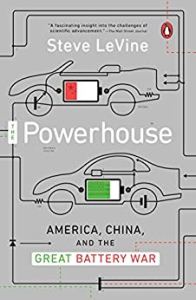 In the late ’00s and early ’10s, almost no one foresaw the rise of fracking, which has put a lid on oil prices. If fracking hadn’t come along when it did, oil would probably be between $100 and $200 a barrel today, and GM wouldn’t be able to build enough Volts. GM’s management would look like geniuses. Instead, as has been widely reported,
  Our biggest barriers to good human space were and are legal and regulatory:
 “Obviously;” where else does one meet a beardy Scottish musician? I say it’s representative because of the odd, jangly alliteration, “was while I was,” which sounds not quite right, especially due to the repeat of the word “was;” the unneeded comma in the second sentence; and obviously that “obviously” at the end. But I still laughed, and laughter is probably the best test for a book like this. It’s easy to condemn the frequent use of “honestly,” “whatever,” and “obviously,” but try not to do that. Yes, you will read “shout out to Hester Prynne, OG high priestess of slut-shaming.” The jokes redeem the book and the language is part of the joke. People in coffee shops looked at me not just because of the book’s eye-catching cover but because I was laughing.
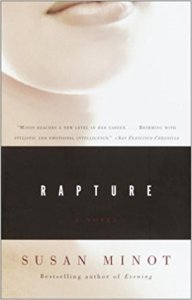 Still, to my mind it’s about three people who aren’t ready or able to leap towards the obvious relationship-structure conclusion, even if the wrapping around that core idea is Kay’s afternoon with Benjamin. The narrative perspective shifting from Kay to Benjamin and back. Their thoughts are not so dissimilar but retain dissimilar enough to retain interest. They think in similar ways, as perhaps people in similar milieus and with similar “wrong” desires might. Neither Benjamin nor Kay knows each other, like we all don’t really know anyone, and we get that from the first page:
 The Story's Story