Links: James Wood, news and fiction, sexuality and narrative, the paperback, bars and babysitting

* James Wood: “On Not Going Home.”

* “Is the News Replacing Literature?” Unlikely, but high-quality analysis of the news often has a literary quality. But quantity still has a quality all its own and writing 800 words, 8,000 words, and 80,000 words are all very different beasts and having written pieces of all three lengths I can say that what works at one length won’t at another.

I’m also fond of saying that not-very-good nonfiction can still be useful while not-very-good fiction rarely is.

* Someone on Reddit “capture[s] the vagaries of sexual consent through a series of personal stories;” many people have such stories but few share them widely, for obvious reasons. See also “The power of conventional narratives and the great lie.”

* The tooth fairy and the traditionality of modernity.

* “How Paperbacks Transformed the Way Americans Read;” ebooks are now doing something analogous.

* Smartphone sales growth slows, presumably for obvious reasons: when I first got one I used it for the same stuff everyone else does: maps, looking up random stuff, sending/receiving naked pictures, listening to music, and maybe one or two other things. With the model I have now I do basically the same stuff, as well as find Citi Bike locations and coffee shops. The new version does some of those things slightly better / faster, but were it not a business expense I doubt I’d bother.

* “Bars are too loud and cafes too quiet.” Mostly, bars are too loud.

* “My bad baby sitters year;” mostly a lost world, especially when it comes to finding forbidden objects / photos.

Bad boy Amazon and George Packer’s latest salvo

Until five or so years ago, every time I read yet another article about the perilous state of literary fiction I’d see complaints about how publishers ignore it in favor of airport thrillers and stupid self-help and romance and Michael Crichton and on and on. On or about December 2009 everything about the book business and human nature changed. Today, I read about how publishers are priestly custodians of high culture and the Amazon barbarians are knocking at the gate. Although George Packer doesn’t quite say as much in “Cheap Words: Amazon is good for customers. But is it good for books?“, it fits the genre.

Packer is concerned that Amazon has too much power and that it is indifferent to quality. By contrast, the small publisher Melville House “puts out quality fiction and nonfiction,” while “Bezos announced that the price of best-sellers and new titles would be nine-ninety-nine, regardless of length or quality” and “Several editors, agents, and authors told me that the money for serious fiction and nonfiction has eroded dramatically in recent years; advances on mid-list titles—books that are expected to sell modestly but whose quality gives them a strong chance of enduring—have declined by a quarter.”

Maybe all of this is true, but here’s another possibility: thanks to Amazon, people writing the most abstruse literary fiction possible don’t have to beg giant multinational megacorps for a print run of 3,000 copies. Amazon doesn’t care if you’re going to sell one million or one hundred copies; you still get a spot, and now midlist authors aren’t going to be forcibly ejected from the publishing industry by publishing houses.

Read Martha McPhee’s novel Dear Money. It verges on annoying at first but shifts to being delightful. The protagonist, Emma Chapman, is a “midlist” novelist sinking towards being a no-list novelist, and pay attention to her descriptions about “the details of how our lives really were” and how “not one of my novels had sold more than five thousand copies” and that “the awards by this point had been received long ago.” She makes money from teaching, not fiction, and her money barely adds up to rent and private schools and the rest of the New York bullshit. Under the system Packer describes, Emma is a relative success.

OLYMPUS DIGITAL CAMERASince Dear Money is a novel everything works out in the end, but in real life for many writers things don’t work out. Still, I would note that self-publishing as the norm has one major flaw: the absence of professional content editors, who are often key to writers’s growth can often turn a mess with potential into a great book (here’s one example of a promising self-published book that could’ve been saved; there are no doubt others).

Still, Amazon must save more books than it destroys. If you read any amount of literary criticism, journalism, or scholarly articles, you’ve read innumerable sentences like these: “[Malcolm] Cowley persuaded Viking to accept ‘On the Road’ after many publishers had turned it down. He worked to get Kerouac, who was broke, financial support.” How many Kerouacs and Nabokovs didn’t make it to publication, and are unknown to history because no Cowley persuaded a publisher to act in its own best interests? How many will now, thanks to Amazon?

Having spent half a decade banging around on various publishers’ and agents’ doors I’m not convinced that publishers are doing a great job of gatekeeping. I’d also note that it may be possible for many people to sell far fewer copies of a work and still be “successful;” a publisher apparently needs to sell at least 10,000 copies of a standard hardcover release, at $15 – $30 per hardcover and $9.99 – $14.99 for each ebook, to stay afloat. If I sell 10,000 copies of Asking Anna for $10 to $4 I’ll be doing peachy.

Amazon has done an incredible job setting up a fantastic amount of infrastructure, physical and electronic, and Packer doesn’t even mention that.

Amazon also offers referral fees to anyone with a website; most of the books linked to in this blog have my own referral tag attached. Not only does Amazon give a fee if someone buys the linked item directly, but Amazon gives out the fee for any other item that person buys the same day. So if a person buys a camera lens for $400 after clicking a link in my blog, I get a couple bucks.

It’s not a lot and I doubt anyone quits their day job to get rich on referral links, but it’s more than zero. I like to say that I’ve made tens of dollars through those fees; by now I’ve made a little more, though not so much that it’ll pay for both beer and books.

Publishing’s golden age has always just ended. In 1994, Larissa MacFarquhar could write in the introduction to Robert Gottlieb’s Paris Review interview that in the 1950s—when Gottlieb got started—”publishers were frequently willing and able to lose money publishing books they liked, and tended to foster a sense that theirs were houses with missions more lofty than profit.” Then Gottlieb is quoted directly:

It is not a happy business now [. . .] and once it was. It was smaller. The stakes were lower. It was a less sophisticated world.

Today publishers are noble keepers of a sacred flame; before December 2009 they were rapacious capitalists. Today writers can also run a million experiments in what people want to read. Had I been an editor with 50 Shades of Grey passed my desk, I would’ve rejected it. Oops.

But the Internet is very good at getting to revealed preferences. Maybe Americans say they want to read high-quality books but many want to read about the stuff they’re not getting in real life: sex with attractive people; car chases; being important; being quasi-omniscient; and so on. Some people who provide those things are going to succeed.

More than anything else, the Internet demonstrates that a lot of people really like porn (in its visual forms and its written form). People want what they want and while I not surprisingly think that a lot of people would be better off reading more and more interesting stuff, on a fundamental level everyone lives their own lives how they see fit. A lot of people would also be better off if they ran more, watched reality TV less, ate more broccoli, and the other usual stuff. The world is full of ignored messages. In the end each individual suffers or doesn’t according to the way they live their own life.

I don’t love Amazon or any company, but Amazon and the Internet more generally has enabled me to do things that wouldn’t have been possible or pragmatic in 1995. Since Amazon is ascending, however, it’s the bad guy in many narratives. Big publishers are wobbling, so they’re the good guys. We have always been at war with East Asia and will always be at war with East Asia.

Packer is a good writer, skilled with details and particularities, but he can’t translate those skills into generalities. He fits stories into political / intellectual frameworks that don’t quite fit, as happened last his Silicon Valley article (I responded: “George Packer’s Silicon Valley myopia“). Packer’s high quality makes him worth responding to. But Packer presumably ignores his critics on the uncouth Interwebs, since he occupies the high ground of the old-school New Yorker. Too bad. There are things to be learned from the Internet, even about the past.

Life: The writing life edition

“Writing has laws of perspective, of light and shade, just as painting does, or music. If you are born knowing them, fine. If not, learn them. Then rearrange the rules to suit yourself. Even Joyce, our most extreme disregarder, was a superb craftsman; he could write Ulysses because he could write Dubliners.”

—Truman Capote, The Paris Review Interviews

The power of conventional narratives and the great lie

In Confessions of a Sociopath M. E. Thomas describes manipulating bureaucratic sexual harassment structures in a way that reminds me of Francine Prose’s Blue Angel. That novel is about a college freshman who sleeps with her creative writing instructor, thinking that he’ll get her book published, and then alleges sexual harassment when he doesn’t. The school’s bureaucracy largely rallies around Angela’s dubious claims. I wouldn’t argue that Angela, the female protagonist (or antagonist) is a sociopath, but the novel itself is good and the story about what happens when people of bad will have access to institutional structures designed around imagined goodwill.

I sent a note to Thomas about Blue Angel, and she replied that many “well-intentioned people having access to institutional structures designed around imagined ability to ascertain the real ‘truth’ of a situation and accordingly enact justice.”

She’s right, and that theme keeps showing up in various novels and nonfiction pieces. “What happened to Jamie Leigh Jones in Iraq?” is one; the whole story is worth reading and difficult to excerpt, but I will note this:

As it turned out, I found smoking guns, but not of the sort I was expecting. The next morning, I started looking through the filings posted online on PACER, the federal judiciary’s Web site. There I found expert witness reports filed by KBR, psychological evaluations of Jones conducted by workers’ comp companies, medical records, and much of what later came out at trial about her many previous rape claims and complicated mental health history. The trial record was so at odds with Jones’s public story that I was simply dumbfounded.

As best that reporter can say, Jones probably fabricated a rape story and in doing so tapped into a powerful narrative about sexuality and about the way evil corporations (and men) try to abuse and suppress women. Her case is at the very least much more complicated than that and at worst she made up her story. But powerful narratives have a way of overriding specific particulars that don’t support the narrative.

Gone Girl by Gillian Flynn does very well in playing out the way a media circus creates heroes and villains based on limited information. Like Blue Angel it’s also a lot of fun. Both also contain an element of terror: what happens if you’re the one the narrative turns against. There must be others.

Philip Greenspun’s review of Divorce Corp. is also relevant:

What is important is a story and it is always the same story: “There is a victim and a victimizer. Then you need a third person, a rescuer, which is sometimes an attorney and sometimes a judge.”

We’ve got these stories in circulation and almost no one is publicly fighting back against them.

Why “tit-for-tat” might be so hard to implement in a romantic/dating context

The other day a friend with love problems described them, and I offered a solution applicable to a wide range of similar issues: tit-for-tat, in which you respond to another person’s response. If the other person is cooling off, cool off in turn; if the other person is heating up, heat up in turn. This avoids wasted effort in pursing someone unavailable and also prevents the (frequently) unattractive behavior of being too available.*

There’s a large challenge in TFT, however: it’s really hard for most of us to implement, even among people who know, intellectually, that it’s a good idea. We often want the world to arrange itself according to our wishes. In most endeavors increased effort leads to increased reward. But there is a class of endeavors—getting a job, finding romance, succeeding in book proposals—where too much effort is a negative signal that shows desperation or low status.**

In that problem class, TFT is a pretty good way of checking a sense of hope against the reality of a situation. In the real world we can’t control what other people do but we can control our reactions. That’s not a new idea but it is a really important one, and one that a lot of people (especially when they’re romantically inexperienced) fail to really understand.

I suspect that the roots of misunderstanding romantic behavior starts in childhood. When you’re a child your parents love you unconditionally and tell you that you’re special (because you are, to them), and your teachers try to help you (for the most part) and encourage you even when you fuck up. If you show your parents or family or teachers that you’re really trying hard or care or whatever they usually reward you.

But eventually you hit puberty, get some hair on your beanbag or a righteous set of jugs, and you start splashing around with dating. Except in that domain a lot of people you may be interested in don’t care about you no matter what you do or how much you care. You care so much—why don’t they? If you’re overly demonstrative in this, however, at best you’ll be taken advantage of and at worse you’ll be ignored.

smoking-0730The real solution is to realize that you can’t force other people to be romantically (or otherwise) interested in you. In a romantic context, extended ambiguity sucks, and one effective way to end it may be to introduce a rival. Find some guy or girl and make sure the real target knows. If that doesn’t spur the love interest to action nothing will, because it says, “Hey, either take this spot or lose it.”

That’s not quite TFT, but it is one way to force decisions.

In books and movies, almost no one employs TFT, and things tend to work out anyway—but that’s because most books and movies are fantasies that give us what we wish were true, rather than what is true. Which may be why inexperienced people have so much trouble: their only guidelines are really poor.

Most of the stuff I imbibed from pop culture between birth and age 16 or so, for example, did absolutely nothing to prepare me for the real world and if anything it was harmful. Part of this was my own fault—I had a penchant for pulp fantasy novels in which not only the dragons were imaginary but so too were the female characters—but not all of it. Consequently, almost everyone has to discover the same lessons for themselves, over and over again, often without any useful guidance whatsoever. Parents are of little help because their own interests diverge in systematic ways from their children’s interests. Peers are often equally ignorant. Non-parent adults by and large don’t interact with highly inexperienced teens or early 20-somethings. So people are left with pop culture and its wish-fulfillment fantasies.

There are some people building a theory of reality—like Esther Perel or Roosh—but little of it has filtered into the culture at large so far. Maybe it never will.


* I’m not the first to notice these issues: “Sexual Attraction and Game Theory” popped up in my RSS feed about a week after the discussion.

** This post had its origins in a much more specific (and explicit!) email, but it’s been generalized and (somewhat) sanitized.

Links: Schools, TSA voyeurs, parenting, and more

* “The end of higher education’s golden age” (maybe; if the problems Shirky discusses have existed since 1975, why can’t they exist for another 40 years?)

* In “Hit ’Em Where It Hurts: The solution to the higher-ed adjunct crisis lies in the U.S. News rankings,” Rebecca Schuman proposes that colleges be discouraged from hiring adjuncts by having U.S. News and similar college raters penalize colleges for hiring adjuncts. But I see two big problems: I haven’t seen any conclusive evidence that adjuncts are worse teachers than full-time faculty; yeah, we can provide a lot of anecdotes for either side, and, based on a very minor study, the answer so far appears to be “no.”

The second problem: how many colleges care about rankings, or play rankings games? Maybe 300 or 400 out of 3,000. Matthew Reed over at Confessions of a Community College Dean is fond of pointing out that everyone in the media focuses obsessively on those 300 or 400 colleges and especially on the ones perceived as elite, despite them representing a tiny portion of the college population or market.

* “TSA Agent Confessions;” these are the people “keeping you safe.”

* “Fight Over Effective Teachers Shifts to Courtroom.” Brilliant maneuver.

* “How the left’s embrace of busing hurt the cause of integration;” file under “unintended consequences.”

* “Is Parenting Really All Joy and No Fun? A Happily Childless Reviewer Investigates Jennifer Senior’s Book.” I read the book and find the behavior of many of the women in it bizarre. There is an interesting long-form magazine article to be written about All Joy and No Fun, Esther Perel’s Mating in Captivity, Bryan Caplan’s Selfish Reasons to Have More Kids, and a few other of the baby-crazy-backlash books (perhaps the one about French parenting). It does seem that the more children are objectively safer, the more parents and especially mothers worry.

* Humans of New York: The Dating Coach. Fiction has for the most part not written about individuals like John Keegan.

* The terrifying surveillance case of Brandon Mayfield.

* “Mooconomics,” a terrible title for a fascinating piece about how we might get to online education works (or it may already be here).

The modern art (and photography) problem

In “Modern art: I could have done that… so I did: After years of going to photography exhibitions and thinking he could do better, Julian Baggini gave it a go. But could he convince The Royal West of England Academy with his work?“, Baggini writes:

there are times when we come across something so simple, so unimpressive, and so devoid of technical merit that we just can’t help believing we could have done as well or better ourselves.

He’s right—except that this happens entirely too often and helps explain much of modern art’s bogosity. I’m not the only person to have noticed—in Glittering Images, Camille Paglia writes:

the big draws [for museums] remain Old Master or Impressionist painting, not contemporary art. No galvanizing new style has emerged since Pop Art, which killed the avant-garde by embracing commercial culture. Art makes news today only when a painting is stolen or auctioned at a record price.

She’s right too; many people have noticed this but few apparently have in the art world itself, which seems to have become more interested in marketing than making (a problem afflicting the humanities in academia too). But there are enough people invested in and profiting from propagating bogosity that they can remain indifferent to countervailing indifference.

OLYMPUS DIGITAL CAMERAYears ago I was at the Seattle Art Museum and looking various pieces of modern supposed “art” that consisted mostly of a couple lines or splotches and what not, and they made me think: “there’s a hilarious novel in here about a director who surreptitiously hangs her own work—and no one notices.” Unfortunately, now I’ve realized that people have already done this, or things like it, in the real world—and no one cared. It’s barely possible to generate scandal in the art world anymore; conservatives have mostly learned about the Streisand effect and thus don’t react to the latest faux provocation. The artists themselves often lack both anything to say and any coherent way of saying it.

To the extent people respond to art, they respond to the art that people made when it took skill be an artist.

Photography has a somewhat similar problem, except that it’s been created by technology. Up until relatively recent it took a lot of time, money, and patience to become a reasonably skilled photographer. Now it doesn’t take nearly as much of any of those things: last year’s cameras and lenses still work incredibly well; improvements in autofocus, auto-exposure, and related technologies make photos look much better; and it’s possible to take, review, and edit hundreds or thousands of photos at a time, reducing the time necessary to go from “I took a picture” to expert.

The results are obvious for anyone who pays attention. Look through Flickr, or 500px, or any number of other sites and you’ll see thousands of brilliant, beautiful photos. I won’t say “anyone can do it,” but many people can. It’s also possible to take great photos by accident, with the machine doing almost all the work apart from the pointing and clicking. Adding a little bit of knowledge to the process is only likely to increase the keeper rate. Marketing seems to be one of the primary differentiators among professional photographers; tools like Lightroom expand the range of possibility for recovering from error.

One of the all-time top posts on Reddit’s photography section is “I am a professional photographer. I’d like to share some uncomfortable truths about photography,” where the author writes that “It’s more about equipment than we’d like to admit” and “Photography is easier than we’d like to admit.”

The profession is dying, for reasons not identical to painting but adjacent to it. In photography, we’re drowning in quality. In fine art, we’re drowning in bogosity, and few people appear to be interested in rescuing the victim.

What we signal when we speak: Verbal tee-ups, honesty, and tact

In “Why Verbal Tee-Ups Like ‘To Be Honest’ Often Signal Insincerity: James W. Pennebaker, of the University of Texas, Austin, says these phrases are a form of dishonesty,” Elizabeth Bernstein ends with a quote: “You are more likely to seem like someone who is perfectly honest when you are no longer commenting on it.”

That’s probably true in some situations, but verbal tee-ups are (often) a decorous way of saying, “I’m going to say something you don’t want to hear” or “I’m potentially going to violate social convention by saying this.” They’re demonstrating social deftness by pre-empting feelings of the receiver saying or thinking, “This person is a jerk.”

In many cases qualifiers should be eliminated, but they exist for a reason and, as someone sometimes accused of being an asshole when I’m being honest (or trying to be), I’m aware of why verbal tee-ups are often deployed the way they’re deployed. Bernstein says, “for the listener, these phrases are confusing. They make it fairly impossible to understand, or even accurately hear, what the speaker is trying to say.” She’s right—the phrases are sometimes confusing. But sometimes they make it easier to hear what the speaker is saying. Bernstein does write:

Her advice is either to abort your speaking mission and think about whether what you wanted to say is something you should say, or to say what you want to say without using the phrase. “Eliminating it will automatically force you to find other more productive ways to be diplomatic,” Ms. Jovin says.

In general thinking about what you say, to the extent you can do so on the fly, is a good idea, but it’s also hard to do—which is probably why we get encouraged to do so so often. Qualifiers are a way of keeping your identity small while still speaking substantively. We could call the judicious use of verbal tee-ups “tact.”

The Second Machine Age — Brynjolfsson and McAfee

The Second Machine Age: Work, Progress, and Prosperity in a Time of Brilliant Technologies is worth reading if you haven’t read Tyler Cowen’s Average is Over or the various other books about the influence of computers, networks, and the Internet on society and the labor market. If you’ve already read some of those books, then by osmosis you’ve already The Second Machine Age.

The Second Machine AgeIn it many now-familiar stories appear: Moore’s Law, superstar economics, Coming Apart: The State of White America, 1960-2010, chess-playing computers, the importance of teachers in education. Each subject is worthy in itself but much of the content has appeared elsewhere. Brynjolfsson and McAfee are decent writers but no one, except maybe a machine, will mistake them for excellent stylists. They wisely import wits at appropriate moments, thus achieving specialization and appropriately divided labor:*

The journalist A. J. Liebling famously remarked that, ‘Freedom of the press is limited to those who own one.’ It is no exaggeration to say that billions of people will soon have a printing press, reference library, school, and computer all at their fingertips.

Maybe: but we’re also in a race against censorship, as anyone in China knows well. The UK has instituted a mandatory porn filter on ISPs (which is the start of censorship creep) and that filter has already blocked a videogame update; how long until it “accidentally” blocks the opposition party’s website in the days before an election? The revelations from Snowden indicate that the U.S. may already have the ability to shut down Internet “printing presses” or block dissemination of their content. When such efforts are made in the future the reasoning will no doubt involve Protecting Our Children, which is already how the U.S. limits speech and conduct that is distasteful and/or disliked by most voters and the politicians they elect.

The parts about education stand out for their policy implications:

Conclusions by education researchers Ernest Pascarella and Patrick Terenzini [. . .] summarized more than twenty years of research in their book How College Affects Students. They write that ‘the impact of college is largely determined by individual effort and involvement in academic, interpersonal, and extracurricular offerings on campus.’

This work leads directly to our most fundamental recommendation to students and their parents: study hard, using technology and all other available resources to ‘fill up your toolkit’ and acquire skills and abilities that will be needed in the second machine age.

Schools often won’t do this effectively; right now it’s up to students to take on the burden themselves as best they can. But motivation is hard, and many if not all things are more easily imbibed when they’re presented by a guide who knows how to explain by analogy and where to find effective resources for learning. A lot of books are bad and that includes how-to books; one small but rarely stated purpose of teachers and professors is to read thousands of books and then recommend the handful of really good ones, or the ones most likely to be of utility to students. “Good” and “good for young / inexperienced people” are often different and experienced people can forget such an important difference.

Brynjolfsson and McAfee also write:

Perhaps unsurprisingly, records show that the electric motors did not lead to much of an improvement in performance [in early factories]. There might have been less smoke and a little less noise, but the new technology was not always reliable. Overall, productivity barely budged.

Only after thirty years—long enough for the original managers to retire and be replaced by a new generation—did factory layouts change [to accommodate electric motors]. The new factories looked much like those we see today: a single story spread out over an acre or more. Instead of a single massive engine, each piece of equipment had its own small electric motor.

Universities appear to suffer from this too, as do hospitals; perhaps we will see them change in response to conditions and to pressure generated from rising prices.

I had enough context to read the book in a few hours and wish that I’d waited for a library copy instead of buying. If you’re looking for a big-picture view of the contemporary world that grounds itself in many micro-observations, you should read The Second Machine Age. It will also help you think about your own career and life and where both should go. To some extent everyone is in the technology business, whether they realize it or not.


* Things economists love almost as much as children.

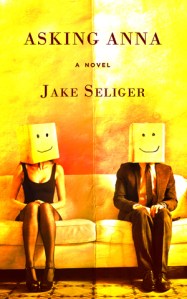
The Asking Anna paperback is out:

Wordpress cover image-3A couple people asked about the paper version of Asking Anna, and it’s now out. Take a look at the link.

(The original announcement is here.)