Links: Service, evil, math, writing, death, David Fincher, and more

* “It is often more satisfying to serve others than to cultivate your own egotistical freedom.”

* Camille Paglia: “The Modern Campus Cannot Comprehend Evil.” In some domains it also cannot understand ambiguity. See also my essay “If you want to understand frats, talk to the women who party at them (paging Caitlin Flanagan).”

* “How I Rewired My Brain to Become Fluent in Math: Sorry, education reformers, it’s still memorization and repetition we need.”

* Someone got here by searching for “why chose pa instead of medical school.” Brilliant. That sort of person is exactly the one I sought to reach.

gazing-2018* Why academic writing sucks.

* Why are so few politicians willing to admit error?

* D.G. passes; see also his last post “Choosing life in the face of death.”

* “‘Any boy who tells you that he hasn’t seen porn is lying. Porn changes what you expect from girls:’ In the age of relentless online pornography, chatrooms, sexting and smartphones, the way teenage boys learn about relationships has changed dramatically.

* Playboy’s David Fincher interview.

* “Forfeiting The Patriarchal Dividend,” which is interesting for novelists and others; note again that linking does not imply endorsement.

Paul Graham and the artist

Paul Graham’s new essay “Before the Startup” is as always fascinating, but Graham also says several things that apply to artists:

The way to come up with good startup ideas is to take a step back. Instead of making a conscious effort to think of startup ideas, turn your mind into the type that startup ideas form in without any conscious effort. In fact, so unconsciously that you don’t even realize at first that they’re startup ideas.

The same is true of ideas for novels, which often come from minute observations or moments or studies of character. They often don’t feel like novels at first: they feel like a situation (“What if a guy did this…”) and the full novel comes later. Artists often work at the margins.

He also writes in a footnote:

I did manage to think of a heuristic for detecting whether you have a taste for interesting ideas: whether you find known boring ideas intolerable. Could you endure studying literary theory, or working in middle management at a large company?

This may be why I and perhaps many other grad students find grad school worse as time goes on, and why MFA programs have been growing. Too many critics have ceased focusing not on how “to be an expert on your users and the problem you’re solving for them”—or, in this example, “readers” instead of “users”—and instead focus on straight forward careerism, which rarely seems to overlap with what people want to read.Paul Graham and the artist

What happened with Deconstruction? And why is there so much bad writing in academia?

How To Deconstruct Almost Anything” has been making the online rounds for 20 years for a good reason: it’s an effective satire of writing in the humanities and some of the dumber currents of contemporary thought in academia.* It also usually raises an obvious question: How did “Deconstruction,” or its siblings “Poststructuralism” or “Postmodernism,” get started in the first place?

My take is a “meta” idea about institutions rather than a direct comment on the merits of deconstruction as a method or philosophy. The rise of deconstruction has more to do with the needs of academia as an institution than the quality of deconstruction as a tool, method, or philosophy. To understand why, however, one has to go far back in time.

Since at least the 18th Century, writers of various sorts have been systematically (key word: before the Enlightenment and Industrial Revolution, investigations were rarely systematic by modern standards) asking fundamental questions about what words mean and how they mean them, along with what works made of words mean and how they mean them. Though critical ideas go back to Plato and Aristotle, Dr. Johnson is a decent place to start. We eventually began calling such people “critics.” In the 19th Century this habit gets a big boost from the Romantics and then writers like Matthew Arnold.

Many of the debates about what things mean and why have inherent tensions, like: “Should you consider the author’s time period or point in history when evaluating a work?” or “Can art be inherently aesthetic or must it be political?” Others can be formulated. Different answers predominate in different periods.

In the 20th Century, critics start getting caught up in academia (I. A. Richards is one example); before that, most of them were what we’d now call freelancers who wrote for their own fancy or for general, education audiences. The shift happens for many reasons, and one is the invention of “research” universities; this may seem incidental to questions about Deconstruction, but it isn’t because Deconstruction wouldn’t exist or wouldn’t exist in the way it does without academia. Anyway, research universities get started in Germany, then spread to the U.S. through Johns Hopkins, which was founded in 1876. Professors of English start getting appointed. In research universities, professors need to produce “original research” to qualify for hiring, tenure, and promotion. This makes a lot of sense in the sciences, which have a very clear discover-and-build model in which new work is right and old work is wrong. This doesn’t work quite as well in the humanities and especially in fields like English.

English professors initially study words—these days we’d primarily call them philologists—and where they come from, and there is also a large contingent of professors of Greek or Latin who also teach some English. Over time English professors move from being primarily philological in nature towards being critics. The first people to really ratchet up the research-on-original-works game were the New Critics, starting in the 1930s. In the 1930s they are young whippersnappers who can ignore their elders in part because getting a job as a professor is a relatively easy, relatively genteel endeavor.

New Critics predominate until the 1950s, when Structuralists seize the high ground (think of someone like Northrop Frye) and begin asking about what sorts of universal questions literature might ask, or what universal qualities it might possess. After 1945, too, universities expand like crazy due to the G.I. Bill and then baby boomers goes to college. Pretty much anyone who can get a PhD can get a tenure-track job teaching English. That lets waves of people with new ideas who want to overthrow the ideas of their elders into academia. In the 1970s, Deconstructionists (otherwise known as Post-structuralists) show up. They’re the French theorists who are routinely mocked outside of academia for obvious reasons:

The move from a structuralist account in which capital is understood to structure social relations in relatively homologous ways to a view of hegemony in which power relations are subject to repetition, convergence, and rearticulation brought the question of temporality into the thinking of structure, and marked a shift from a form of Althusserian theory that takes structural totalities as theoretical objects to one in which the insights into the contingent possibility of structure inaugurate a renewed conception of hegemony as bound up with the contingent sites and strategies of the rearticulation of power.

That’s Judith Butler, quoted in Steven Pinker’s witty, readable The Sense of Style, in which he explains why this passage is terrible and how to avoid inflicting passages like it onto others. Inside of academia, she’s considered beyond criticism.

In each generational change of method and ideology, from philology to New Criticism to Structuralism to Poststructuralism, newly-minted professors needed to get PhDs, get hired by departments (often though not always in English), and get tenure by producing “original research.” One way to produce original research is to denounce the methods and ideas of your predecessors as horse shit and then set up a new set of methods and ideas, which can also be less charitably called “assumptions.”

But a funny thing happens to the critical-industrial complex in universities starting around 1975: the baby boomers finish college. The absolute number of students stops growing and even shrinks for a number of years. Colleges have all these tenured professors who can’t be gotten rid of, because tenure prevents them from being fired. So colleges stop hiring (see Menand’s The Marketplace of Ideas for a good account of this dynamic).

Colleges never really hired en masse again.

Other factors also reduced or discouraged the hiring of professors by colleges. In the 1980s and 1990s court decisions strike down mandatory retirement. Instead of getting a gold watch (or whatever academics gave), professors could continue being full profs well into their 70s or even 80s. Life expectancies lengthened throughout the 20th Century, and by now a professor gets tenure at say 35 could still be teaching at 85. In college I had a couple of professors who should have been forcibly retired at least a decade before I encountered them, but that is no longer possible.

Consequently, the personnel churn that used to produce new dominant ideologies in academia stops around the 1970s. The relatively few new faculty slots from 1975 to the present go to people who already believed in Deconstructionist ideals, though those ideals tend to go by the term “Literary Theory,” or just “Theory,” by the 1980s. When hundreds of plausible applications arrive for each faculty position, it’s very easy to select for comfortable ideological conformity. As noted above, the humanities don’t even have the backstop of experiment and reality against which radicals can base major changes. People who are gadflies like me can get blogs, but blogs don’t pay the bills and still don’t have much suck inside the academic edifice itself. Critics might also write academic novels, but those don’t seem to have had much of an impact on those inside. Perhaps the most salient example of institutional change is the rise of the MFA program for both undergrads and grad students, since those who teach in MFA programs tend to believe that it is possible to write well and that it is possible and even desirable to write for people who aren’t themselves academics.

Let’s return to Deconstruction as a concept. It has some interesting ideas, like this one: “he asks us to question not whether something is an X or a Y, but rather to get ‘meta’ and start examining what makes it possible for us to go through life assigning things too ontological categories (X or Y) in the first place” and others, like those pointing out that a work of art can mean two opposing things simultaneously, and that there often isn’t a single best reading of a particular work.

The problem, however, is that Deconstruction’s sillier adherents—who are all over universities—take a misreading of Saussure to argue that Deconstruction means that nothing means anything, except that everything means that men, white people, and Western imperialists oppress women, non-white people, and everyone else, and hell, as long as we’re at it capitalism is evil. History also means nothing because nothing means anything, or everything means nothing, or nothing means everything. But dressed up in sufficiently confusing language—see the Butler passage from earlier in this essay—no one can tell what if anything is really being argued.

There has been some blowback against this (Paglia, Falck, Windschuttle), but the sillier parts of Deconstructionist / Post-structuralist nonsense won, and the institutional forces operating within academia mean that that victory has been depressingly permanent. Those forces show no signs of abating. Almost no one in academia asks, “Is the work I’m doing actually important, for any reasonable value of ‘important?'” The ones who ask it tend to find something else to do. As my roommate from my first year of grad school observed when she quit after her M.A., “It’s all a bunch of bullshit.”

The people who would normally produce intellectual churn have mostly been shut out of the job market, or have moved to the healthier world of ideas online or in journalism, or have been marginalized (Paglia). Few people welcome genuine attacks on their ideas and few of us are as open-minded as we’d like to believe; academics like to think they’re open-minded, but my experience with peer review thus far indicates otherwise. So real critics tend to follow the “Exit, Voice, Loyalty” model described by Albert Hirschman in his eponymous book and exit.

The smarter ones who still want to write go for MFAs, where the goal is to produce art that someone else might actually want to read. The MFA option has grown for many reasons, but one is as an alternative for literary-minded people who want to produce writing that might matter to someone other than other English PhDs.

Few important thinkers have emerged from the humanities in the last 25 or so years. Many have in the sciences, which should be apparent through the Edge.org writers. As John Brockman, the Edge.org founder, says:

The third culture consists of those scientists and other thinkers in the empirical world who, through their work and expository writing, are taking the place of the traditional intellectual in rendering visible the deeper meanings of our lives, redefining who and what we are.

One would think that “the traditional intellectual” would wake up and do something about this. There have been some signs of this happening—like Franco Moretti or Jonathan Gottschall—but so far those green shoots have been easy to miss and far from the mainstream. “Theory” and the bad writing associated with remains king.

Works not cited but from which this reply draws:

Menand, Louis. The Marketplace of Ideas: Reform and Resistance in the American University. New York: W.W. Norton, 2010.

Paglia, Camille. “Junk Bonds and Corporate Raiders: Academe in the Hour of the Wolf.” Arion Third Series 1.2 (1991/04/01): 139-212.

Paglia, Camille. Sex, Art, and American Culture: Essays. 1 ed. New York: Vintage, 1992.

Falck, Colin. Myth, Truth and Literature: Towards a True Post-modernism. 2 ed. New York: Cambridge University Press, 1994.

Windschuttle, Keith. The Killing of History: How Literary Critics and Social Theorists are Murdering Our Past. 1st Free Press Ed., 1997 ed. New York: Free Press, 1997.

Star, Alexander. Quick Studies: The Best of Lingua Franca. 1st ed. Farrar, Straus and Giroux, 2002.

Cusset, Francois. French Theory: How Foucault, Derrida, Deleuze, & Co. Transformed the Intellectual Life of the United States. Trans. Jeff Fort. Minneapolis: University Of Minnesota Press, 2008.

Pinker, Steven. The Sense of Style: the Thinking Person’s Guide to Writing in the 21st Century. New York: Viking Adult, 2014.


* Here is one recent discussion, from which the original version of this essay was drawn. “How To Deconstruct Almost Anything” remains popular for the same reason academic novels remain popular: it is often easier to criticize through humor and satire than direct attack.

Life: Cosmopolitian edition

“The wide world is all about you; you can fence yourselves in, but you cannot for ever fence it out.”

—J. R. R. Tolkien, as said by Gildor Inglorion, The Fellowship of the Ring

Links: Productivity, adultery (not related to point 1), politics, firings, Caitlin Moran, and more

* “Why Your Cousin With a Ph.D. Is a Basket Case: Understanding the Byzantine hiring process that drives academics up the wall,” or, don’t go to grad school.

* Megan McArdle: “California Accidentally Legalizes Campus Sex:” “It is, in other words, an impossibly overspecific standard that seems impossible to enforce consistently. And yet, while most of the commentariat views this overspecificity as a bug, I wonder if it isn’t actually a feature.” In general I am increasingly leery of new laws, since by now no one is innocent.

* David Mitchell on How to Write: “Neglect Everything Else”.

* 28 Steal-Worthy Tips From the Most Productive People on the Planet.

* “Up With Adultery! An Italian Woman’s Manifesto;” speculative.

* Someone found this blog by searching for “kayden kross y anna love,” though I suspect they are disappointed.

* Someone else found this blog by searching for “best english literature graduate programs,” the answer to which is: “Don’t go.”

* Forbes fires columnist for being a columnist; weirdly, none of the current talk in the pundit-o-sphere has moved past what Camille Paglia wrote 20 years ago.

* “‘I was terrified we’d lose all our money’: banks tell US customers they won’t work with Americans,” an underreported story.

* “Interview: Caitlin Moran on the Working Class, Masturbation, and Writing a Novel,” which sounds stupid but isn’t. I still don’t want to read the novel; it sounds too overtly political.

Finally! Someone else notices that the best instructors aren’t necessarily the most credentialed

Finally! Someone else notices that a lot of academic practices don’t make any sense: “Pictures from an Institution: Leon Botstein made Bard College what it is, but can he insure that it outlasts him?” makes me like Bard; this in particular stands out: “In the thirty-nine years that Botstein has been president of Bard, the college has served as a kind of petri dish for his many pedagogical hypotheses [. . . including] that public intellectuals are often better teachers than newly minted Ph.D.s are.” Why isn’t anyone else following the Bard model?

The question is partially rhetorical. College presidents and trustees are probably systematically selected for conformity, but I’ve gotta think there are other people out there who are going, “Aping the Ivy League model is not going to work for us. What can we do differently?” The current order of things, driven by bogus ranking systems, discourages this sort of thinking. Colleges love the rhetoric of being different, but very few follow that rhetoric to actually being different. Perhaps rising costs will eventually force them to be differentiate or die. Then again, the article says that Bard may be on its way to death or drastic restructuring because of financial problems. Still I don’t see overspending as being fundamentally and intrinsically linked with other issues. Instead, it seems that being a maverick in one field may simply translate to being a maverick in many, including places one doesn’t want mavericks (like finances).

A few weeks ago I wrote about donating to Clark, my alma mater. Although I still think Clark a good school, I’d love to see it move in a more Bard-ish direction. the current President and trustees, however, appear to have come through the system and do not seem like shake-it-up types, regardless of their rhetoric.

Women like to watch other women

Although I would classify this as speculative, Noah Berlatsky writes that “Women Appreciate Good Booty-Shaking, Too” and that “Women can look at sexualized images of women all day every day.” Moreover, and perhaps more importantly, they do: look at the covers of magazines targeting women and you’ll mostly find… pictures of other women. Look at magazines devoted to men and you’ll also tend to find… women. Men like looking at women and apparently women like looking at other women.

This link may be NSFW, though it is primarily text, but the blog Pornhub Insights (which probably got started after the success of OkTrend’s data-driven blog about online dating) has a post called “What Women Want” that observes how “Pornhub’s Lesbian category is the leading favorite among the ladies, with Gay (male) following close at second place.” That’s a revealed preference not dissimilar to what magazines targeting women have also found.

IMG_0382A couple people have observed that my Flickr photos tend to feature more women than men, and likewise the photos on this blog. That may be true, but that may be because I’m giving audiences what they want.

I don’t have any good theories or research on the politics, cultural, or biology of why we might be seeing this phenomenon, but I do have a rationale for why I choose what I choose. Not every photographer will care about this, of course, but those who are contemplating what subjects people want to see should at least be cognizant of popularity.

Zero to One — Peter Thiel and Blake Masters

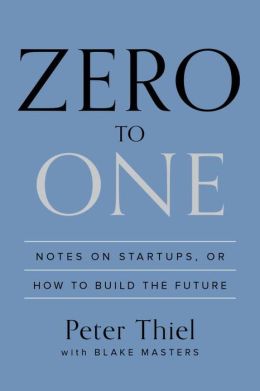
Zero to One: Notes on Startups, or How to Build the Future is out and you, like everyone, should read it; the book is of course about startups but its deeper themes are philosophical in nature: how we should think about and relate to the world. The writing is elegant and clear without having a distinctive style that can be easily labeled by calling attention to itself. It is Robertson Davies’s plain style, used well here.

Those who have already read Blake Masters’s CS 183 classnotes—I have—may be disappointed, since they form the core of the book. Nonetheless those notes have been cleaned up, organized, and updated with more recent examples. The thrust Zero to One is also beautiful and optimistic: the future is important, it can be shaped and improved, and individual choices matter. In believing those three things, and especially the second two, Thiel and Masters are swimming upstream against much of contemporary culture.

zero to oneOthers can no doubt comment on the technical aspects of the book, but I will note that much of what Thiel and Masters write sounds like an artists’ manifesto: “The act of creation is singular, as is the moment of creation, and the result is something fresh and strange.” I very rarely read about business as “strange,” and yet the word is apt: all things are strange before they become domesticated by time and ubiquity. Artists usually focus directly on creating new things, but Zero to One describes “how to build companies that create new things.” More people extend the reach of what a single individual can do, but though Thiel has “noticed many patterns [. . .] this book offers no formula for success.” There is none, because innovation is by definition strange and new. He is trying to “help my students see beyond the tracks laid down by academic specialties to the broader future that is theirs to create.”

Academia has many problems and he notices them; I don’t think he uses this as a specific example, but one issue is treating school like a job or primary occupation. It shouldn’t in most cases be. It should be a day job that enables and ideally complements the other things one does. Teachers and professors rarely inculcate this attitude, however, because they themselves have been selected by the school system and have bought into its prejudices and cultures. Charter schools are important for many reasons, one being that they give an opportunity to create new schooling cultures. Montessori is specifically attempting to do that, and it is striking how many successful tech guys went through Montessori schools.

They note that “The business version of our contrarian question is: what valuable company is nobody building?” This question is harder than it looks” (23). The novelists’ version is, “What valuable novel is nobody writing?” One challenge, of course, is that different people have different values for “valuable:” I find most “thrillers” to be boring and un-thrilling, and most thriller readers probably find literary fiction the same.

This could be a description of most narrative fiction: “Our ancestors lived in static, zero-sum societies where success meant seizing things from others. They created new sources of wealth only rarely, and in the long run they could never create enough to save the average person from an extremely hard life.” Romance, the driver of so much fiction, is usually zero-sum: if the protagonist wins the guy or girl, no one else can; if the rival wins the guy or girl, no one else can, while in the real world there are a de facto infinite number of good guys or girls, provided the protagonist—that is, you—are willing to find and attract them. There are an infinite number of jobs, too, and one person getting a job doesn’t prevent someone else from getting another, or making another. Much narrative fiction taps into the zero-sum dynamic. Maybe it shouldn’t, or should more often explicitly question that dynamic.

Thiel and Masters are writing about everything, though they write specifically about startups. They discuss the nature of mass delusion (“Usually, it’s considered weird to be a 40-year-old graduate student. Usually, it’s considered insane to start a half-dozen companies at once. But int he late ’90s, people could believe that this was a winning combination”) and the psychology of founders (“Of the six people who started PayPal, four had built bombs in high school” and “We alternately worship and despise technology founders just as we do celebrities”); there is a hint of a Paglian reading of myth here, and such readings are too rare in a de-mythologized, de-ritualized society. There is more of the journey of the mythic hero in tech startups than is commonly supposed.

Psychology and cultural criticism have a long border; Thiel and Masters write that “competition is an ideology—the ideology—that pervades our society and distorts our thinking” (35). The opposite of competition, which may be something like cooperation or stasis, could be even worse: static societies and companies do not appear to do well or even exist in a world of competitive societies. But I don’t think Thiel and Masters are going in this direction: they are rather reminding us that it is useful to remember that we don’t live in a zero-sum world, largely because of technology and specialization. Most of human existence probably was zero sum, however, and that may explain some psychological quirks that aren’t terribly adaptive in contemporary information and industrial societies.

Competitive ideology has another problem too: it encourages us to compete with everyone, all the time. Picking good competitors is probably almost as important as picking good friends. Most competitive arenas are pointless. People often fight for control, and against other people like them:

Consider the opening line from Romeo and Juliet: “Two houses, both alike in dignity.” The two houses are alike, yet they hate each other. They grow even more similar as the feud escalates. Eventually, they lose sight of why they started fighting in the first place.

I’ve noticed this continually among professors, often specialists in the same area, who are from the outside identical and yet bash each other over minor differences. People more generally seem to seek fights for the sake of fighting, and without realizing that direct fighting is usually a terrible way to change minds—as has been known for decades. It’s often better to not respond to critics and instead to make something new. As Thiel and Masters write: “Rivalry causes us to overemphasize old opportunities and slavishly copy what has worked in the past.” One can see this at an individual level or even a national level: think of the petro-states that exist as they do primarily because they can sell oil to innovation states.

I mentioned psychology already; here is another passage on that theme that also applies to artists, who are often skilled at ignoring or repudiating group beliefs / delusions:

The hazards of imitative competition may partially explain why individuals with an Asperger’s-like social ineptitude seem to be at an advantage in Silicon Valley today. If you’re less sensitive to social cues, you’re less likely to do the same thing as everyone else around you. If you’re interested in making things or programming computers, you’ll be less afraid to pursue those activities single-mindedly and thereby become incredibly good at them. Then when you apply your skills, you’re a little less likely than others to give up your own convictions: this can save you from getting caught up in crowds competing for obvious prizes.

“Making things:” properly read, Zero to One is a recipe book for makers across disciplines. And “getting caught up in crowds competing for obvious prizes:” I remember talking about college sexual adventures with a friend who went to an Ivy-League school and who lamented that so many of the girls were, in his view though not in his words, neurotic achievement-obsessed basket cases. Maybe he misunderstood what those girls were seeking, but maybe he chose the wrong environment for that part of life.

Making things happens at large and small scales. Though we are still somewhat good at making things happen at small scales—as, say, the iPhone shows, or many Kickstarter projects show—we have become less ambitious and too obsessed with vetoes on large projects. Launching the Innovation Renaissance discusses this; so too does Thiel, in a cultural-political context: In the 1950s, people welcome big plans and asked whether they would work. Today, a grant plan coming from a schoolteacher would be dismissed as crankery, and a long-range vision coming from anyone more powerful would be derided as hubris.” We are collectively unable to even muster the political will to build denser cities and reasonable public transportation systems, let alone next-generation nuclear plants and systems for getting cheaply into space. This is a dark problem too rarely discussed by anyone.

It is also a tremendous and tremendously dangerous problem: “Without new technology to relieve competitive pressures, stagnation is likely to erupt into conflict. In case of conflict on a global scale, stagnation collapses into extinction.” There is a direct, underappreciated link between novelty, innovation, and survival. Artist and scientists are arguably at the forefront of ideas, though not always good ideas. Still, there is a brilliant statement at the end, which I’ve read more often in books targeted at novelists:

Only by seeing our world anew, as fresh and strange as it was to the ancients who saw it first, can we both re-create it and preserve it for the future.

This is not an ordinary book about “business.” It is a book about everything, as the best books always are.

Almost every human endeavor is also about relationships, whether we want it to be or not:

The lawyers I worked with ran a valuable business, and they were impressive individuals one by one. But the relationships between them were oddly thin. They spent all day together, but few of them seemed to have much to say to each other outside the office. Why work with a group of people who don’t even like each other? Many seem to think it’s a sacrifice necessary for making money. But taking a merely professional view of the workplace, in which free agents check in and out on a transactional basis, is worse than cold: it’s not even rational. Since time is your most valuable asset, it’s odd to spend it working with people who don’t envision any long-term future together. If you can’t count durable relationships among the fruits of your time at work, you haven’t invested your time well—even in purely financial terms.

This is again a good description of academia, and it’s also a restatement of the Coase theorem, which I wrote about in similar terms at the link. In most life domains a purely transactional model makes everyone poorer in the ways that count.

Thiel and Masters note that in school “Students who don’t learn best by sitting still at a desk are made to feel somehow inferior, while children who end up defining their identities in terms of this weirdly contrived academic parallel reality.” If you’re awake and paying attention to the school system, it’s hard not to notice its many bizarre perversities—and its problems harm not only the low achieving students but also the high achieving students. Although I spent years being a dumbass, I mostly got tracked to the high-achieving parts of school, and as an adult discussions with others who were stuck on the high-achieving track involve the ways the value system of that track warps those on it. But no one or almost no one tells students that at the time, and parents, teachers, and administrators are in on the conspiracy. Maybe that’s why so many Silicon Valley bigwigs want their kids in Montessori or similar schools.

Moreover, the prestige / rivalry system reinforces a zero-sum mindset, at least for those who buy in, as Thiel did (and only barley escaped):

Higher education is the place where people who had big plans in high school get stuck in fierce rivalries with equally smart peers over conventional careers like management consulting and investment banking. For the privilege of being turned into conformists, students (or their families) pay hundreds of thousands of dollars in skyrocketing tuition that continues to outpace inflation. Why are we doing this to ourselves?

I wonder if Thiel and Masters have read Excellent Sheep yet. Deresiewicz has similarly scalding views, though he comes from a different vantage point and throws some pointless, ill-formed bombs at startup culture. Thiel and Masters, however, ask the deep questions, and give major structural advice that one rarely hears from professors: “You should focus relentlessly on something you’re good at doing, but before that you must think hard about whether it will be valuable in the future.” I have focused relentlessly on writing better novels, but so far it has not proven valuable in a financial sense. If it weren’t for other ways of monetizing my skills, I would be doing something else, and probably not even writing this post.

Let me return, for a moment, to relationships, since your friends and surroundings count, as Tolkien knew and many others know: “it’s hard to develop new things in big organizations, and it’s even harder to do it by yourself. Bureaucratic hierarchies move slowly, and entrenched interests shy away from risks.” This is another, accurate, critique of academia, and a reminder to attend to our environment. Thiel does say that “a lone genius might create a classic work of art or literature, but he could never create an entire industry.” Even the lone-genius model appears less true than is often imagined: reaching into the biographies of famous artists tends to reveal an ecosystem of friends, rivals, mentors, and helpers. Hemingway famously derided creative writing classes, but he spent much of his early working life showing drafts of his work to Gertrude Stein and Sherwood Anderson. Few of us succeed fully in art or business without helpers along the way: hence, perhaps, the Joseph Campbell model that calls for such helpers in The Hero With a Thousand Faces. Even in myth the hero does not succeed alone: Frodo and Aragorn need Gandalf. Luke Skywalker needs Han and Obi-Wan. In His Dark Materials Lyra finds an array of helpers.

There are sections I think wrong, like the one on page 78 when Thiel and Masters criticize contemporary Silicon Valley buzzwords, which may reflect generations of learning about startups and the startup environment. Thiel and Masters say that “Secrets about people are relatively underappreciated,” while the opposite is true: we call secrets about people “gossip,” and most narrative art is relentlessly focused on personality, competitive, and “secrets” about people that almost always turn out to be about sex, money, and death. The supposed “secrets” that people hold tend to be more uniform than not. That pattern has persisted in Western art for millennia: the ultimate “secret” at the heart of Oedipus the King (first written circa 400 BC) and Game of Thrones is the same. The only human secret that matters is that one shouldn’t be surprised by human secrets.

These are quibbles about an otherwise great book. Great books do not have to be long. This one isn’t. They have to pack a lot of ideas in the space they h ave. This one does.

To reiterate the first paragraph of this post, you need to read this book. The less you think you need to read it, the more you do. It is in some ways similar to Rework, another anti-conventional-business business book written by nerds. Zero to One is a tremendously important book; although I admire and appreciate trivial books, particularly because most books including my own are, find one that is important—which does not mean “pompous” or “serious”—matters. You should read it. Your friends should read it. Its ideas should be common currency, readily known whether accepted or rejected. It is possible that the future of the world depends on Zero to One finding the right person at the right time, which is true of few other books.

The physical book is itself nicely made; though the binding appears to be glue rather than thread, the paper quality is high, and much higher than most books in its class and most contemporary books, period. The physical book reflects their emphasis on long-term thinking, as too few physical books do. One can read publishers’s opinions on their own works in the ways they choose to manufacture books. Those opinions do not appear to be high. If publishers have a low opinion of their own products, what should investors think?


Here is a good Fortune profile of Thiel. And

Links: Survival / apocalypse, cops, PhDs, bravery, writing, gender roles, rape dark numbers, and more

* “An Astrobiologist Asks a Sci-fi Novelist How to Survive the Anthropocene;” I’ve said it before, but extinction is an underrated risk.

* More about cops being jerks.

* “Why Haven’t Humanities Ph.D. Programs Collapsed?

* The Great Unravelling, which reads like a Peter Watts novel and doesn’t feel like the world I inhabit, or feel like I inhabit.

* “The Astonishing Story of the Federal Reserve on 9-11,” which is indeed astonishing and fascinating.

* Terry Teachout: “Advice to young authors,” or, expect to do almost everything and not make a lot of money. This was written before the eBook age.

Disagree-9180019* In his fascinating new book the developmental biologist Lewis Wolpert argues that there is actually hard science behind many of our stereotypical gender roles.

* Amazon releases interesting Kindle hardware for the first time in ages; if you buy it from the link I get a kickback, FWIW.

* New York is actually a relatively poor place, at least in income terms; however, I think that New Yorkers are consuming non-income amenities (or just stealing from landlords  via rent control) as compensation.

* “How Sugar Daddies Are Financing College Education,” though it lacks data.

* How Many Rape Reports Are False? Be wary of anyone who wants to emphasize or parade the more general issue while wanting to minimize this question.

* Israel’s NSA scandal.

“All American fiction is young adult fiction: Discuss”

Via Twitter Hollis Robbins offers a prompt: “‘[A]ll American fiction is young-adult fiction.’ Discuss.” Her takeoff is A. O. Scott’s excellent “The Death of Adulthood in American Culture,” which you should go read; oddly, it does not mention the show Entourage, which may be the best contemporary narrative artifact / fantasy about the perpetual party.*

American fiction tends toward comedy more than “young-adult” because comedy = tragedy – consequences. AIDS fiction is tragic because people die. Most contemporary heterosexual love stories are comedy because the STIs tend to be curable or not that important; people who are diligent with birth control rarely get pregnant. Facing death, starvation, or other privations have always been the adult’s lot, and adults who made sufficiently bad choices regarding resource allocation or politics died. Think of the numerous adults who could have done everything they could to flee the area between Russia and Germany in 1914 and didn’t, or the ones who didn’t after 1918 and before the Holocaust. The example is extreme but it illustrates the principle. Frontier and farm life was relentlessly difficult and perilous.

Today by contrast we live in the a world of second chances. America is a “victim,” although that is the wrong word, of its own success. If you color more or less inside the lines and don’t do anything horrendous, life can be awesome. People with an agreeable and conscientious disposition can experience intense pleasures and avoid serious pain for decades; not everyone takes to this (see for example the works of Michel Houellebecq) but many do. The literary can write essays, the scientists can do science, the philosophers can argue with each other, the business guys have a fecund environment, and the world’s major problems are usually over “there” somewhere, across the oceans. If we ever get around to legalizing drugs we’ll immediately stabilize every country from Mexico to Chile.**

What are the serious challenges that Americans face as a whole? In the larger world there is no real or serious—”serious” being a word associated with adulthood—ideological alternatives to democracy or capitalism. Dictatorships still exist but politics are on the whole progressing instead of regressing, Russia and parts of the Middle East excepted.

One could reframe the question of all American fiction being young adult fiction to: “Why not young adult fiction?” Adults send young people to war to die; adulthood is World War II, us against them, thinking that if we don’t fight them in Saigon we’ll have to fight them in Seattle. Adults brought us Vietnam. Young people brought us rock ‘n’ roll, rap, and EDM. Adults want to be dictators, whether politically or religiously, and the young want to party and snag the girl(s) or guy(s) of their dreams.

Adulthood is associated with boredom, stagnation, suburbs, and death. Responsibility is for someone else, if possible, and those who voluntarily assume responsibility rarely seem to be rewarded for it in the ways that really count (I will be deliberately ambiguous on what those ways are). Gender politics and incentives in the U.S. and arguably Western Europe are more screwed up than many of us would want to admit, and in ways that current chat among the clerisy and intellectual class do not reflect or discuss. If adulthood means responsibility, steady jobs, and intense fidelity, then we’ve been dis-incentivizing it for decades, though we rarely want to confront that.

Many people are so wealthy and safe that they are bored. In the absence of real threats they invent fake ones (vaccines) or worry disproportionately about extremely unlikely events (kidnapping). Being a steady person in a steady (seeming) world is often thus perceived as being dull. In contemporary dating, does the stolid guy or girl win, or does hot funny and unreliable guy or girl win?

A lot of guys have read the tea leaves: divorce can be a dangerous gamble while marriage offers few relationship rewards that can’t be achieved without involving the legal establishment or the state more generally. A shockingly large number of women are willing to bear the children of men they aren’t married to: 40.7%$ of births now occur to unmarried women, and that number has been rising for decades.

Why take on responsibility when no one punishes you for evading it and arguably active irresponsibility is rewarded in many ways, while safety nets exist to catch those who are hurt by the consequences of their actions? That’s our world, and it’s often the world of young adulthood; in fiction we can give ourselves monsters to fight and true enduring love that lasts forever, doesn’t have bad breath in the morning, and doesn’t get bored of us in four years. Young adult fiction gives us the structure lacking in the rest of our lives.

Moreover, there has always been something childlike in the greatest scientists and artists. Children feel unconstrained by boundaries, and as they grow older they feel boundaries more and more acutely. I’m not about to argue that no one should have boundaries, but I am going to argue that retaining an adult version of the curiosity children have and the freedom they have is useful today and in many cases has always been useful.

The world has gotten so efficient that vast pools of money are available for venture capitalists to fund the future and tech guys to build or make it. The biggest “problem” may be that so many of us want to watch TV instead of writing code, but that may be a totally bunk argument because consumption has probably always been more common and easier than production.

In this world fiction should tend towards comedy, not the seriousness too typically associated with Literature.

If American fiction is young adult fiction, that may be a sign of progress.***


* Another show, Californication, mines similar themes but with (even weaker) plots and total implausibility. Here is an essay disagreeing with Scott: Adulthood Isn’t Dead.

** Breaking Bad and innumerable crime novels would have no driving impetus without drug prohibition. The entire crime sector would be drastically smaller almost overnight were we to legalize drugs and prostitution. That would be a huge win for society but harmful to fiction writers.

*** Usually I eschew polemics but today I make an exception.