Briefly noted: Leviathan Wakes — James S. A. Corey

Leviathan Wakes is defiantly, definitely okay; the biggest problem with it isn’t the novel itself but having already read Blindsight, which its some similar notes but is just a much, much better novel.

Leviathan Wakes is big on game theory, empathy, and political questions. They start early—”The temptation to have an unexplained comm failure, erase the logs, and let the great god Darwin have his way was always there” happens on page 14—and don’t really relent. Still, I dislike the implication that “the great god Darwin” thinks that individuals and small groups are inwardly selfish; evolution has also endowed us with the ability to cooperate, and humans are super-cooperators, alone among animals.

Leviathan_WakesBut the divisions among people may change shape and form, but they always remain, at least as long as we live in a world of economic scarcity. In Leviathan Wakes, Earthers, Martians, and Belters (those who grow up and/or live in the Asteroid Belt) are the primary divisions. I write this in 2016, and in the current European and American political systems there are spasms around divisions that, viewed from the proper perspective, will seem trivial. The other day I heard someone say that Trump has a point about immigrants. I agreed and amplified, suggesting that he do something about the filthy, lazy Irish and Italians, with their Papist ways and mooching dispositions. The guy I was talking to didn’t know what to do with that; the Know Nothing Party may be gone, but its ideas live on for as long as humans have a powerful psychological need to divide ourselves into tribes.

In Leviathan Wakes some descriptions are good (on a space station, “The air smelled beery with old protein yeast and mushrooms” or “The circle of life on Ceres was so small you could see the curve”), but the text can usually be described as nondescript. It’s rarely bad but rarely stellar. For example, the sentence after the one about the circle of life on Ceres is “He liked it that way,” which is representative of the novel’s language.

The sense of mystery is strong, though, and mostly excuses the sentences. You’ve read worse. You’ve read better. The plot gets sillier as the novel progresses.

What else? There is a convenient magic drive that gets people from place to place relatively rapidly. It’s hard to imagine that genetic engineering won’t have re-made the human species by the time we develop advanced space stations with room for millions of people. Did people in 1750 imagine that in 2000 we’d still be riding horses and firing muskets? Because imagining 2250 without substantial genetic engineering is hard (unless there’s an apocalypse in the meantime, which is also possible).

Leviathan Wakes is guilty of many of Charlie Stross’s space opera clichés, but I mostly forgive it. I just can’t imagine wanting to re-read it.

Straight to Hell: True Tales of Deviance, Debauchery, and Billion-Dollar Deals — John Lefevre

Masters of one medium, like Twitter, aren’t necessarily masters of another medium, like the 80,000-word memoir. They can be but don’t have to be. Lefevre mastered Twitter, but his long-form game is not as strong. That being said I did laugh when reading Straight To Hell; I feel like I couldn’t drink anywhere near the amount Lefevre does, or take anywhere near the amount of drugs. I don’t imagine I’d want to be friends with him. As he puts his life philosophy, “As we see it, if you’re dumb enough to get caught cheating, you probably don’t belong on Wall Street.”* That sounds like a sentence from a Bernie Sanders rally. It isn’t.

Straight_To_HellLeFevre writes, “From my experience, the rich and unscrupulous tend to make for entertaining company.” Speaking of political connections, he could be talking about Donald Trump, which is part of the reason he makes a popular, evil presidential candidates (and I don’t use the word “evil” lightly, but he is evil: the evil of pure id, untempered by knowledge or self-awareness). Straight to Hell has more political resonances than it should, and that may help explain its popularity, as it works on readers’ subconscious.

Still, LeFevre’s company is often entertaining, and the best one can say about his scruples is that he makes public what many would like to be private. The speaker of unpleasant truths has a kind of honor. The book is his unpleasant truths, though it is often about the unpleasant truths he dodged (“Now I know for sure, this deal is never going to work. But I still don’t want to be the one who gets blamed for killing it.”) Machiavelli has a vital role in history for a reason.

Even for people like me, who don’t see money as evil, LeFevre will make them want to see money as evil. (Consider how Sylvia Nasar puts it in Grand Pursuit: The Story of Economic Genius: “Historically, money had been seen as powerful, desirable, very likely evil, and mysterious, like natural calamities or epidemics.”) Money can be earned in ways that tend to benefit humanity or, in LeFevre’s world, in ways that tend to be about rent seeking and stealing pieces of the pie, rather than earning them, or expanding the size of the pie. Finance here looks like the latter part. That being said one doesn’t and maybe can’t know whether LeFevre’s book is representative, any more than a movie like Bad Teacher is representative of the teaching industry.

Straight To Hell is a memoir about signaling. The finance world presented in it has descended to an almost-pure signaling hell, in which there is no content, only surface. Hence the ceaseless references to luxury brands and luxury-brand schools. The two have become synonymous, however much humanities-department Marxists may want to deny it. There is a weird kinship between high school memoirs or novels and Straight To Hell. American high schools are painful because there is no content to shape form. Lefevre’s finance world is similar. In it, seniority beats skill (count the number of times the word “senior” appears). Many American high schools are so bad because there is no financially viable way to start an alternative high school that can siphon off smarter students and parents. Banks, in Straight To Hell, operate the same way. If contemporary investment banks operate anything like the way Lefevre depicts them operating, then “fin tech” (or “financial technology companies and products,” to use a phrase du jour) should be a ripe opportunity for startups, because the banks, and their personnel and culture, are so internally fucked up that smart startups ought to be able to eat them.

Unless, of course, regulatory and other barriers kill startups before the startups can really succeed. Still, anyone investing in financial companies should read Straight to Hell. It ought to give them courage, if it’s accurate. I can’t really judge whether it is. I’m too far from the industry. It seems unlikely, but unlikely things turn out to be true all the time. It seemed unlikely that the U.S. government would massively spy on virtually all of its citizens, but Snowden showed that it does. It seemed unlikely that an electric car startup could succeed, but Tesla showed that it can. I won’t discount Straight to Hell without trying to triangulate its portrayals. Still, if it is to be believed then many bankers are redistributing money to escorts and drug dealers. Not that I’m opposed, necessarily, to either group, but it is interesting given recent noise about financial inequality to see money flow from the rich to middle-skill service providers (though the book is not conceptualized or framed in that way; still, often the most interesting parts of a book are those that are unintended).

One could write an interesting piece comparing temperaments in Houellebecq and LeFevre. One could also write an interesting piece comparing Thiel in Zero to One and LeFevre. As Thiel notes, in a discussion about why startups (and other companies) must incentivize their employees with stock and other methods that align incentives:

Cash is attractive. It offers pure optionality: once you get your paycheck, you can do anything you want with it. [. . .] A cash bonus is slightly better than a cash salary—at least it’s contingent on a job well done. But even so-called incentive pay encourages short-term thinking and value grabbing. Any kind of cash is more about the present than the future.

zero to oneStraight to Hell can be seen as a document about “value grabbing” and about living in the hedonistic present. The value grabbing is not purely financial, either: It’s also sexual. The team lives or dies by the current roadshow. Slickness rules. One could also compare Straight to Hell and Zero to One in terms of humor versus earnestness. Zero to One has its moments of humor (think of the brief section comparing hipsters to the Unabomber, or the part about Richard Branson and the naked windsurfing model) but the preponderance of the book is about how to make serious, real improvements in the quality of life for all humans. Straight to Hell is about getting a bonus and getting your dick wet (concern over women’s pleasure is mostly absent, or I’d add something appropriate for women as well). There is nothing intrinsically wrong about either and indeed both have concerned me greatly at various points, but there is something distinctly sublunar about the relentlessness of those concerns, and the way one never looks up from the bonus or the girl or the meal.

Is it a satire? Is the joke on me because I don’t get it? There is much like, “There’s no justice in this world—a valuable lesson to learn at a young age, especially if you want to end up on Wall Street.” Is it bravado, trolling, or truth? After many words I still don’t know.


* If they’ll cheat someone else, they’ll cheat you when they get a chance.

All Things Shining: Reading the Western Classics to Find Meaning in a Secular Age — Hubert Dreyfus and Sean Kelly

The first chapter of All Things Shining is strong and so is the second, on David Foster Wallace, but the book gets duller as it goes on, sustaining as it does its readings based on other books. There is something curiously empty about it, like a modern art museum that is much duller than a celebrity’s Instagram account. It is too well mannered. Academia’s mores rules. All Things Shining encourages us to find shining meaning in things but it itself doesn’t feel shiningly meaningful, as even sections like Lewis Hyde’s The Gift do.

Deciding that something is boring is easier than fully understanding why something is boring. I haven’t quite figured out the “Why” question regarding All Things Shining. The book does remind one of why great novels endure; story is still powerful and narratives without story are hard to sustain, especially when many claims seem somewhat dubious:

Modern life can seem to be defined by [uncertainty]. An unrelenting flow of choices confronts us at nearly every moment of our lives, and most of us could admit to finding ourselves at last occasionally wavering. Far from being certain and unhesitating, our lives can at the extreme seem shot through with hesitation and indecision, culminating in choices finally made on the basis of nothing at all.

I said that this is “somewhat dubious” because it is, even if we do face many choices. At bottom we each have to choose for ourselves what is important, and then pursue that thing. It might be pleasure or technology or words or research or money. Universals are likely absent and “The burden of choice is a peculiarly modern phenomenon. It proliferates in a world that no longer has any God or gods, nor even any sense of what is sacred and inviolable, to focus on our understanding of what we are.” The “burden of choice” also comes from the fact that many of us can pay the rent and pay for food, which leaves us with more time for self-contemplation. Maybe too much time.

I’m fond of telling students that you know you’re an adult when you realize that, if you can’t pay the rent and pay for food, you won’t have anywhere to live or anything to eat. Sometimes a focus on base material conditions is helpful. And forgetting that a very large number of people are justifiably focused on this issues is sometimes too easy for tenured academics.

Some paragraphs are both useful and yet I wonder what polls would say:

The Greeks of Homer’s era lived intense and meaningful lives, constantly open to being overwhelmed by the shining presence of the Olympian gods. As happy polytheists, their world was the opposite of our contemporary nihilistic age.

Did the average Greek of Homer’s era live intense and meaningful lives? What about their children? What happened when their children died? Or was the average Greek covered in shit (link likely safe for work), slaving away to support a tiny number of nobles who focused on political games, consuming the marginal product of labor of the peasants, and fighting pointless, zero-sum wars with other nobles?

Still, the book has some interesting sections, and it is a deeper discussion of its issues than you’ll find on most of the Internet The discussions of craftsmanship are glancing but perhaps most interesting. Maybe if Wallace had conceptualized himself first as a craftsman and then as an everything else things would have gone better. Maybe not, though, and it’s hard to criticize one of the most truthful writers of his generation for not doing even better than he did.

Man’s search for meaning goes on.

Onwards.

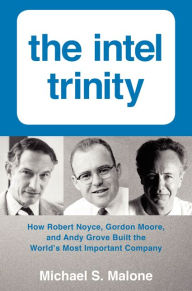
Briefly noted: The Intel Trinity: How Robert Noyce, Gordon Moore, and Andy Grove Built the World’s Most Important Company — Michael S. Malone

The Intel Trinity is another of these books that one wishes were better written but that remains interesting throughout nonetheless. For one thing, I bought the party line about Intel being essentially indomitable from its inception to the present. It wasn’t (“Frankly, the evidence argues that Intel may have been the most successful technology company ever founded by a dysfunctional start-up team—certainly by such a team that stayed together”). The book also injects ideas about history and legacy into a very contemporary culture:

Thanks to the amnesia of Silicon Valley and the digital world, [Robert Noyce] had almost been forgotten by each subsequent generation of techies as they elbowed their way to fame at a thousand dot-com companies, and then at Google, Facebook, and Twitter.

Intel_TrinityOver time, “Silicon Valley had finally and unexpectedly become history,” at least to its founders. Over a long enough time period anything becomes history, although Alan Kay famously said, “I also happen to believe in history. The lack of interest, the disdain for history is what makes computing not-quite-a-field. [. . . Computing is] complete pop culture. I’m not against pop culture. Developed music, for instance, needs a pop culture.”

It will take many more books and maybe many more years before it becomes less of a pop culture, if it ever does. The Intel Trinity is history, but the paper quality of the hardcover is oddly poor, as if the publishers themselves imagined the book to be non-essential and disposable. That contrast between the historical comments and the quality of the physical object itself is odd.

Still, it does trace the story of Intel from its beginnings and from the Fairchild exodus. Fairchild employees were apparently more dissolute and fun than modern tech company workers, or at least compared to the image of modern tech workers:

Just to repeat the anecdotes of the era is insufficient. There were endless after-work drunken gatherings at the nearby Wagon Wheel saloon, where women employees were hustled, marriages were broken, feuds were fed, and in time, employees were stolen by competitors.

Intel itself, however, was apparently less exciting, at least for most people.

The Intel Trinity also points to some of the reasons why Silicon Valley has been so hard to dislodge as a startup capitol (much as NYC is still a publishing capitol, despite outrageously high housing costs): “between 1967 and 1973, [hundreds of new companies] created not only a vast and prosperous business-technology community, but also the greatest start-up company incubator the world had ever seen” (59). At a time when most people were focused on free love and the word “start-up” to connote a new company didn’t really exist, northern California was blossoming. That’s a tremendous head start that’s hard to overcome today and will be hard to overcome tomorrow, despite San Francisco’s completely insane politics.

I haven’t yet got to the stories of Noyce, Moore and Grove. The latter has the most flabbergasting story, since he barely escaped World War II-era Hungary, when Hungary first fought on the side of the Germans, then was occupied by Germany, then was occupied by the Soviets, and eventually had its fledgling democracy crushed by the Soviets. Grove was Jewish and his survival story is amazing enough to have made me order his memoir, Swimming Across, which Malone draws from.

One has to wonder why the Intel trinity is less famous than, say, Bill Gates. I think the answer is simple: there were three of them. Larry Page and Sergey Brin are less famous than Gates, though their company is at least as important, largely because I think the press needs a single person to deify and to hate. Multiple founders makes the process of adulation and despair harder to conduct. Mark Zuckerberg is perhaps the most famous modern startup founder because he stands alone in the spotlight. This reading owes something to Zero to One, which is as much about culture and it is about startups. Culture is everywhere, even in technology, as Malone reminds us.

Submission — Michel Houellebecq

Like almost all Houellebecq, Submission and invites diagnoses of anhedonia (Page 1: “I realized that part of my life, probably the best part, was behind me;” Houellebecq rarely if ever writes of the “best part” of any character’s life). The weird mixture of ideas, from YouPorn (it is namechecked) to Huysmans, works and doesn’t work at the same time, and it is this paradoxical quality that I think attracts readers to Houellebecq.
Submission HouellebecqThat, and Houellebecq continues to be different in a way that almost no writers are. See also Adam Gopnik on Submission. Here is The Guardian. I mention Houellebecq in “All American fiction is young adult fiction: Discuss.” Here is Mark Lilla, in the New York Review of Books. All these pieces are excellent.

Oddly, almost no one has noticed Houellebecq’s attraction to Islam. Except for Elif Batuman, in the last part of the linked essay. In Public Enemies: Dueling Writers Take On Each Other and the World, Houellebecq writes:

It’s painful for me to admit, when I think of my atheist, politically committed friends, but I’ve never really understood the root of their commitment, it has always seemed to me to have more to do with a Christian tradition than they themselves suspected. I am speaking from pure intuition here, but in all the Christian groups I tried in vain to belong to, one of the things I completely understood was their commitment. It was very clear: they had accepted the idea that, being sons of God, all men are brothers, and behaved accordingly.

Which is quite close to what the idealized Muslims in Submission do, and, I suspect, quite far from what many real-life Muslims do (or real-life adherents of any high-commitment, high-demand creed). Commitment itself, to something, is appealing, and one characteristic of all Houellebecq’s characters is their seeming lack of commitment (even those seemingly committed to hedonism don’t seem to enjoy it that much, or as much as I would).

There are many of the weird juxtapositions one sees in classic Houellebecq: “Cro-Magnon man hunted mammoth and reindeer; the man of today can choose between an Auchan and a Leclerc, both supermarkets located in Souillac.” Or: “Even the word humanism made me want to vomit, but that might have been the canapés.” Is this no context or overwhelming context? François seems to oscillate between the two. He cares deeply about observing what’s going on and does nothing with those observations; the word “bored” appears repeatedly, almost a stand-in for “whatever.”

Plus, modern grocery stores are amazing: their convenience is incredible and price competition means that consumers win. Grocery stores means that the man of today can choose to worry about something other than where to get food from. Or, maybe, he can worry about nothing at all. Even access to pornography had to be fought for, over decades. Submission implies that maybe we’d be better off without it, but the term “revealed preferences” comes to mind (and there is a small but noisy movement for “no fap,” which is what it sounds like).

No one feels a sense of a job well done. The presence of absence is felt everywhere. François never emerges from a class feeling that he’s reached someone. Has he tried? Does he want to? The answers seem to be no. Even the attractive women he improbably sleeps with seem to move him little. We find this about Steve, his colleague: “He’d almost always invite me for a drink—usually mint tea in the Paris Mosque a few blocks from school. I didn’t like mint tea, or the Paris Mosque, and I didn’t much like Steve, but I still went.” Usually I don’t go out with people I don’t like, and I don’t think I’m exceptional in this regard, but I am capable of liking people, which François it would seem is not.

Houellebecq respects ideas as almost no contemporary novelists do, but he doesn’t do so in an academically trendy way (as, say, Alena Graedon does in The Word Exchange). If anything he does so in an academically un-trendy way.

Houellebecq does not seem to believe in Enlightenment ideas of progress. For François, private tutoring only “soon convinced me that the transmission of knowledge was generally impossible, the variance of intelligence extreme, and that nothing could undo or even mitigate this basic inequality.” The last couple centuries of relentless progress would seem to invalidate this claim, however true it may feel in the moment, at the micro level. François thinks that his “boring, predictable life continued to resemble Huysmans’s a century and a half before.” Odd. I don’t feel like my life resembles the lives of people 150 years ago. Perhaps François has this problem because education as a sector has changed very little. This contrasts with numerous other sectors.

Maybe the problem with Houellebecq narrators is that few if any discover anything or make anything—even dinner. The true hero of Submission may be the microwaved dinner. No one I’ve read more frequently mentions microwaved food. But if microwaved food signifies tedium, what signifies the opposite? Did making food from scratch, as virtually all people 60 years ago had to do for economic reasons, somehow better?

Houellebecq imagines a France in which large, politically active blocs call for Sharia Law. Yet people fleeing from many Muslim and Arab countries in the Middle East are getting fleeing from people who’d like to impose Sharia. To be sure the West imposes major culture shocks. But when you want to see whose ideas are winning, look at where people are fleeing from and where they are fleeing to. During the Cold War the number of French, English, or Americans who wanted to move to Russia was dwarfed by the number of Russians who wanted to get the fuck out.

In “The Sexual Misery of the Arab World,” Kamel Daoud writes of how

Today sex is a great paradox in many countries of the Arab world: One acts as though it doesn’t exist, and yet it determines everything that’s unspoken. Denied, it weighs on the mind by its very concealment. Although women are veiled, they are at the center of our connections, exchanges and concerns.

Daoud ends his essay by saying, “People in the West are discovering, with anxiety and fear, that sex in the Muslim world is sick, and that the disease is spreading to their own lands.” I’m not convinced the sickness is spreading: Ideas in the West about the right of individual to control his or her own body are winning. Terror in many Middle Eastern countries is a sign of weakness, not strength. Ideas cannot win on their merits; they can only be imposed via the gun. There are no real votes for Sharia, even in countries that practice it, or a modified form of it.

Other events have overtaken Submission’s world. It imagines Saudi princes lavishly funding French universities. As of this writing, in February 2016, cheap oil prices are roiling petro economies like Saudi Arabia and Iran. The Chevy Bolt will arrive in the U.S. later this year. Tesla’s Model 3 is going to be unveiled shortly. These cars may permanently cap oil prices by allowing most people to switch to electric cars as oil prices rise. France shouldn’t worry about radical Muslim takeover. Petro states should worry about what will happen when every Western economy is not wildly, wholly dependent on oil.

The previous paragraph may be bizarre in the context of a discussion about a novel, but part of Houellebecq’s world in Submission depends on the financial condition of radically Islamic countries. Those countries’ positions and stability depend on selling oil. Take away the oil and we’ll see how stable and popular many of them really are. Their leaders are able to lead lives of incredible decadence and sexual pleasure because they can afford to. That may not be true three years from now, let alone in the elections of 2022.

In another moment, François asks, rhetorically, “How could anyone argue that Europe wasn’t in decline?” Easily: First, look at where people want to go, as mentioned previously. Second, consider an article like, “Plasma physicist discusses the Wendelstein 7-X stellarator.” That stellerator, built in Germany, is an important step towards fusion power plants. It’s an incredible achievement that is primarily being accomplished by Europeans. If that’s decline then sign me up. And when was Europe in ascent? Robert Rediger notes that Huysmans “was living at at a time when the European nations were at their apogee.” Which led them straight into two insane wars, the lead-up to which can only be compared to mental illness. European temperament may be oddly negative and declinist, but the temperament and being can be further apart than Europe and Mars.

Many of you will dislike Submission. I see people on the subway and in coffeeshops reading Ferrante and Knausgaard, today’s perversely trendy writers, but none reading Houellebecq.

Houellebecq is the sort of writer who makes reading his entire oeuvre rewarding. Not all writers are like this.

It is sometimes hard to write coherently on a work that itself seems to lack coherence.

The Professor in the Cage: Why Men Fight and Why We Like to Watch — Jonathan Gottschall

How many people are willing to admit: “I concluded that I’d been wrong about MMA people, fighters and fans alike?” Admitting to being wrong is a paradoxical show of power: the power to say that you’re weak, rather than pretending to be strong, which only the strong can do. The Professor in the Cage is full of paradox, beginning maybe with the author himself: a cerebral professor who pursues fighting. I get why he does and why he gets the reactions he does. I don’t do MMA but people are surprised that I run and lift. Are those activities in natural opposition to cerebral writers? To anyone in cerebral professions? Not to me, but, evidently, to many.

prof_in_cageA lot guys start MMA because they fear for their own masculinity and want to prove it: “Football captains and bullies don’t need martial arts. They already know they are strong and tough. Guys turn to martial arts when they fear they are weak.” Or, at least, they do in situations—like most of the contemporary Western world—when their physical safety is mostly assured. Much later, in the final chapters, Gottschall says, “half my reason for taking the fight was to try to do a brave thing—to redeem myself, at least in my own eyes, for all the times I’d flinched when I was young.” There may be other possibilities for redemption. Like, say, letting go.

Or channeling your energy in different directions.

The stories of entrepreneurial competition are legion. Gottscahll puts his energy in physical direction, in part because he’s an English professor by day—and a failing one at that. We have certain things in common, Gottschall and me, except I got out earlier, and I haven’t published the books he has. In some ways, though, Gottschall is a warning: How can someone who has done so much interesting work still get no traction in English departments? He could be a cautionary tale in my own warning essay about grad school.

Towards the end of the book Gottschall writes,

I’ve said I took up fighting partly in hopes of getting fired. But that’s only half-true. Becoming a real college professor has been the great ambition of my adult life, and a big part of me is still reluctant to give up on it. In truth, I probably feared being fired as much as I hoped for it.

He also observes that, contrary to what he thought he should do, he finds that “if you train in MMA, it’s hard to stay in the closet about it.” Which may true of any passion or activity that makes you feel most alive. However much you’re supposed to hide it, it’s hard to suppress that instinct. It’s who you are. It makes you slightly evangelical. For Gottschall, too, he finds himself “on crutches, or limping in a walking boot,” which makes MMA fighting particularly hard to ignore. I sometimes reach for metaphors related to lifting and running because they’re handy and relatively easy to understand. They’re also what I know. All of us have stocks of experience and knowledge and that’s part of what colors, filters, or constructs our world.

At base Gottschall is looking for life. In this respect he is like a novelist. He finds it fighting more, maybe, than fucking (or perhaps another book on that subject is yet to emerge). It may not be a mistake that one of James Wood’s books is The Nearest Thing to Life and it in turn discusses novels. Life and life-feeling are tricky to define yet continually sought. Cooperation and competition are perpetually cooperating and competing with each other. In The Professor and the Cage they are physically embodied. That physical embodiment propels the book forward. I don’t think I’ll spoil the book by saying that its denouement is a 47-second fight. In ritualized fighting the journey is the destination.

We find life in many places. Gottschall finds it in the cage.

Other have written about him. “Survival of the Fittest in the English Department: Jonathan Gottschall tried to save literary studies. Instead he ruined his career” is interesting throughout. Is it a surprise that three of the most interesting academics in and around English—Gottschall, Camille Paglia, and William Deresiewicz—have such a strained relationship with the rest of the discipline? I don’t have their fortitude or seeming indifference to material possessions. Give me a new iMac and a $14 hipster cocktail stat. More importantly, Paglia’s two-decades-long protest has led to near-zero change. The structure of the system impedes change and will at least until tenure goes away. In the meantime, though, there is life in the cage.

Becoming Freud: The Making of a Psychoanalyst — Adam Philips

Becoming Freud could be called “Reading Freud” or “Defending Freud,” because it has little to do with how Freud became Freud—there are decent, let alone good, answers to this question—and much to do with other matters, worthy in their own regard. The story—it is only tenuously a biography—is consistently elegant, though not in a flashy way; Philips reminds me of Louis Menand and the better New Yorker writers in general in this regard. Consider this: “Freud developed psychoanalysis, in his later years, by describing how it didn’t work; clinically, his failures were often more revealing to him than his successes.” Twelve words before the semicolon are balanced by eleven after, and the paradox of failure being more “revealing” than success is unexpected and yet feels right. As the same passage shows, Becoming Freud is also pleasantly undogmatic, unlike many modern-day Freudians, or people who claim Freud’s mantle or cite his work. I ran into some of those people in academia, and the experience was rarely positive on an intellectual level. Some were lovely people, though.

becoming_FreudIt is hard to get around how much Freud was wrong about, yet Philips manages this deftly by interpreting him interpreting others, rather than on his conceivably disprovable claims. Freud in this reading is literary. In Becoming Freud we get sentences like:


Freud’s work shows us not merely that nothing in our lives is self-evident, that not even the facts of our lives speak for themselves; but that facts themselves look different from a psychoanalytic point of view.

But this sounds like a description of language or of literary interpretation, rather than the final statement on the relation of facts to the mind.Plus, I’m not sure facts are all that different—but I sense that Philips would argue that’s because of Freud’s influence. Philips further tells us that “We spend our lives, Freud will tell us in his always lucid prose, not facing the facts, the facts of our history, in all their complication; above all the facts of our childhood.”

In short, Becoming Freud is closer to literary interpretation than to biography, much as Freud was closer to a literary critic than a psychologist. I’m not the first to notice that he writes of patients more like characters than like people. Philips reminds us that Freud’s “writing is studded with references to great men—Plato, Moses, Hannibal, Michelangelo, Leonardo da Vinci, Goethe, Shakespeare, among others—most of them artists; and all of them, in Freud’s account, men who defined their moment, not men struggling to assimilate to their societies. . .” These passages also, I think, show the book’s interpretative strengths and its sometimes exhausting qualities.

There is no real summing of Freud’s influence, when remains even when few will take his supposed science seriously. Yet despite the unseriousness of the science, talking therapy is still with us. The word “despite” seems appropriate in discussions of Freud: Despite the dubious effectiveness of talking therapy it remains in widespread use because we don’t have good alternatives. Many of us are socially isolated and lack friends; Bowling Alonew is prescient and TV and Facebook are not good substitutes for coffee or 3 a.m. phone calls. For centuries the West has valorized individual freedom and attempted to vaporize community bonds. We may be victims of our own success in this respect, and we’re now tasked with building communities based primarily on common interests. In therapeutic terms, we use the tools we have not because they are good but because they are better than nothing. Freud is in contemporary respects not good but he did articulate some of the ideas that would define the 20th Century. Getting a couple of major peaks is often more important than consistently being minorly right. I may be more inclined temperamentally towards the latter.

Sentences like this abound: “In this period of Freud’s life—as in any period in anyone’s life—the discrepancy between the documented and the undocumented life is striking, and can only be imagined.” Yet such issues sort of defeat the purpose of biography, no? It may also be why novelists like writing the lives of famous people: one gets to imagine their inner and outer selves without the pesky need for proof.

Philips’s Freud is an idealized person and for that reason I like this Freud better than most writers’s Freud. As Philips points out repeatedly the book is inadequate as a biography; he says all biographies are, which may be true to some extent, but the fewer the facts the less adequate the interpretations that might be drawn from them. Becoming Freud is similar to Alain de Botton’s Kiss & Tell, though Botton’s book is a novel. Here is The New Yorker’s take. There is a novel in there somewhere. We don’t know and likely can never know Freud. Few modern writers have such privilege, unless maybe they delete their entire email histories before they die.

There is not enough known about Freud to even make his biography feel novelistic. Whether this is good or bad depends on the reader.

Review: The CODE Keyboard (With Cherry MX “Clear” switches)

In the last three months, a bunch of people have written to ask if I’ve tried any keyboards since 2011’s “Further thoughts on the Kinesis Advantage, Unicomp Space Saver, and Das Keyboards” (evidently Google has brought my keyboard articles to the top of its search rankings again). The short answer is yes, but only one, and I bought it: the 87-key CODE Keyboard with Cherry MX “Clear” switches. The switches are slightly quieter than the Kinesis Advantage’s Cherry MX “Brown” switches, while still retaining excellent tactile feel. If I were using a conventional keyboard, I’d very slightly prefer the Unicomp Ultra Classic to the CODE keyboard, but in real-world usage the difference is tiny. Anyone who is noise sensitive or works in the same room as other people should use the CODE Keyboard, however, which is substantially quieter at little cost to feeling.

87-key CODE keyboard

There isn’t much more to say about the CODE Keyboard: it has backlighting, which is nice if you care about that sort of thing (I don’t). It comes in a 87-key version, which is also nice because it’s smaller and because many of us don’t need extensive number pad use. It feels durable and in the two or so years I’ve had it I haven’t detected wear. The Unicomp Ultra Classic has a slight edge in the durability rankings because its predecessors—the IBM Model M—have been in service for decades. Unicomp and IBM keyboards are so good that Unicomp suffers because it sells a product that doesn’t need to be replaced. The CODE Keyboard is likely to be similarly durable, though it’s only been on the market for a couple years. If it has any weaknesses they’re not apparent to me. The profile is close to as slim as it can be without compromising function. I’ve never been a fan of Apple’s chiclet-style keyboards, though they’re obviously necessary for laptops.

I haven’t been posting about keyboards, though, because companies haven’t been sending them lately—I guess that since Anandtech and Ars Technica have begun reviewing keyboards, a site targeting writers and readers rather than hackers and gamers gets bumped to the bottom of the priority queue. Outlet proliferation is even greater: there’s an active Reddit subsection devoted to them, and Googling “mechanical keyboards” brings up more background than I have time or inclination to digest. Writers also tend to be less vocal about their love for gadgets than tech people.

I’m also much less interested in experimenting with different keyboards because I don’t perceive much room for improvement over the good keyboards we have now. Until neural implants get developed and keyboards become as weird a curiosity as Victorian-era telegraph machines are today, we’ve probably gotten to be around as good as we’re likely to get.

87-key CODE keyboardWhen I first bought a Unicomp Ultra Classic I was in college and a couple tiny companies made mechanical keyboards, including Unicomp and Matias (whose early products were so screwed up I never tried the later ones). Today web startups are common and people are used to buying things online; dozen companies or more are making mechanical keyboards, and it’s hard to pick a bad keyboard. Any of them will be much better than the keyboards that ship with most computers.

Plus, as said earlier, the good options have mostly driven out the bad, or forced the weak early keyboards to be improved. Matias’s more recent keyboards apparently don’t have the ghosting that made earlier versions useless. Companies like Vortex are producing physically small keyboards that have programmable keys, as is the obnoxiously named POK3R. Other companies have produced wireless Bluetooth versions and versions with extra USB ports, neither of which matter to me. A profusion of ultra minor variations is a hallmark of maturity. Most of the keyboards still have Darth Vader or computer nerd aesthetics, but that probably speaks to their target audience. Except, possibly, for the CODE Keyboard, none of the current mechanical keyboards seem like Apple made them.

87-key CODE keyboardBut the real news is no news: a bunch of keyboards exist and they’re all pretty good. The word “slight” appears three times in the first two paragraphs because there aren’t clear winners. If you type a lot and aren’t interested in the minutia, get a CODE Keyboard and put the rest out of your mind. If you want a more ergonomic experience and have the cash, get a Kinesis Advantage and learn how to use it (and be ready for weird looks from your friends when they see it). Options are beautiful but don’t let them drive you mad.
Briefly noted: Mozart in the Jungle — Blair Tindall

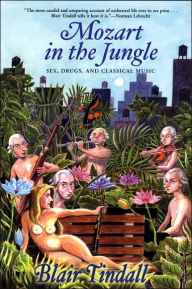
Mozart in the Jungle is surprisingly good and an ode to all the sex musicians have, the drugs musicians do (“I watched Janet bent over the desk to snort cocaine through a straw” occurs on page 2), and most notably a cautionary tale about the economics that underlie their industry. In Mozart in the Jungle Tindall succeeds as few do yet still barely succeeds enough to feed herself. The later sections, as she contemplates her own approaching infertility, she turns melancholy, because she knows that while others in her age group have families she has an oboe. Many adventures at age 22 are slogs at 40, and this is something many 22-year-olds know in passing but don’t feel till they’re much older.

Mozart_in_the_jungleTindall’s relative success still feels like failure to her, financially and, often, artistically. Megan McArdle’s recent post on journalism strikes many notes similar to Tindall’s; the two are both writing about glamour industries battered by changing economics and excess supply (facilitated by digital transmission) relative to demand. In Tindall’s case, the number of financially secure oboe players is probably in the single and low double digits. She makes that threshold, but only in an artistically tedious way. For her, the smart thing to do is get out. When she makes decisions as a 20-year-old, she fails to realize that as a 35- or 40-year-old she will want and feel different things.

In school she finds that “my classmates toiled harder over their textbooks than I did over my oboe, yet they didn’t receive the same special attention.” Attention, though, is a dangerous stimulant, and so too are other stimulants, here recalled and made comic by an older mind reviewing a younger event:

Jose took off the same black turtleneck and dashiki he wore every day, the odor of his unwashed body mixing with cheap musk. We kissed, embracing as the climate of Brahams’s G-minor quintet washed over us. Jose peeled away my top gently, caressing my shoulders, nuzzling my neck and pulling back the covers. I could see another woman’s menstrual blood smeared on the bottom sheet, but I let him push me back on the bedding.

It goes… okay. The gap between fantasy and reality recurs through the memoir, to the very end:

A young person who dreamily “wants to go to Juilliard” or “be a concert pianist” should research the reality of those statements. [. . .] I’m one of those part-time musicians now. When I do play music, it is a joy. The reality of performing full-time wasn’t the fantasy I’d imagined as a little girl. What offers me a meaningful life today are the infinite possibilities in our modern world, of which music is only one. Thousands of people have been influenced by the Sierra magazine articles I’ve written about environmental conservation.

Incidentally, that quote also sums my feeling about grad school in the humanities.

Tindall also wistfully sees her Upper West Side neighbors go from libidinously ravenous, providing her a voyeuristic thrill as they have continual passionate sex, to parents, while Tindall plays the oboe and can’t or won’t maintain long-term relationships as her child-bearing years slip away like leaves off a tree in Boston in autumn. The memoir also came out before Tindall stalked her ex-boyfriend, Bill Nye, so there may be more to her story and character than Mozart in the Jungle.

Briefly noted: “Mate” is out and it’s good — Tucker Max and Geoffrey Miller

As previously noted, Mate: Become the Man Women Want is out and it’s good.* As the book says in the introduction, “Your culture has failed you and the women you’re trying to meet.” The book is part of the remedy. When I read the draft a couple months ago I told Tucker, “I wish I could teleport a copy of Mate back in time and give it to my 13-year-old self, and then instruct him to read it once a year for the next decade.” That’s still true. If you know any teenage or early 20s guys who are likely straight, give them a copy of this book. It is not going to be useful for everyone and indeed I expect some of you to strongly dislike it. People like how-to in many fields but often not this one.

Mate_CoverThe book emphasizes empathy: “If you always try to understand the woman’s perspective—what they want, why they want it, and how to ethically give it to them—then you will find it much easier to become attractive to them, and you’ll be much more successful with your mating efforts.” There are no shortcuts. For a while I’ve been describing the empathy gap, because I increasingly think that the average man doesn’t much understand or try to understand the average woman—and vice-versa. That’s why books like Mate, or Self-Made Man: One Woman’s Year Disguised as a Man, are valuable: they work to close the empathy gap.

Parts of the book will be obvious to older guys who have their lives together—that showering and grooming are important will not be news, but most of us can also probably remember the shambling smelly kids in school. Other parts counteract some of the more dubious parts of our culture, like the claim that women are attracted most by money and that all women are “gold diggers.” For most women most of the time other things matter most, like how “individual women just your fuckability by your social network. So you had better have proof—social proof—that it exists.” Most people, men and women, who want a relationship reasonably want to know the person they’re having a relationship with, and that means knowing friends and family—and knowing they exist. Many of us have had the experience of sleeping with someone who keeps us totally separate from the rest of their lives. Sometimes that can be good—we don’t “count”—but for actual relationships it’s not.

There are still hilarious metaphors and comparisons, like “[A lot of guys think they need to have a ton of money,] then the women will just magically appear, like monarch butterflies to milkweed, flies to honey, rappers to Scarface posters.” But there are fewer of them: The book is entertaining but it leans informational. I at least felt rueful for my teenage and college self when I read some sections. Perhaps my favorite moment occurs two-thirds through the book, when Max and Miller are noting some of the artistic skills that women like, like music, storytelling, and, saliently for this quote, drawing:

The key thing here is to cultivate actual skill rather than indulge in modernist expressionism or abstract art. The poet John Ciardi pointed out, “Modern art is what happens when painters stop looking at women and persuade themselves they have a better idea.”

I’ve never read as concise and accurate description of why so much modern art is so bogus.

The bibliography is useful.


* As also previously noted, I now know Tucker well enough to not be an unbiased critic.