The Truth is poorly named but it’s also amazing and you should read it, preferably in the biblical, imitation-leather edition. Unfortunately, The Truth buries the lede: the weakest, most tedious section by far is the beginning, when Strauss goes to therapy for “sex addiction” (which may not exist, at least for reasonable definitions of “exist”).* Don’t give up. Get past the first third and pay special attention to the rest, where Strauss’s sharp, comedic / absurdist observations strike.
 In the first section, we learn that there is such a thing as “a CSAT,” that is, “a Certified Sex Addiction Therapist.” The therapists seem at least as mad as the patients, which seems to be a recurring theme in life (you know what they say about psych majors…). The treatment does not work, at least at first. Strauss, seeking answers, gets what appears to be an fMRI, hoping that his brain makes hedonic and novelty-seeking, only to be told that he chooses relationships or the chase. Score one for free will or something like it.
The middle section is about the chase. The chase is about women, yes, but it’s also about finding a way to be. Strauss meets people whose new-age and pseudo-religious or -mystical bullshit is vile. At one moment, meeting a woman who presents herself as a guru, “Common sense tells me to leave; curiosity drives me forward.” That’s the writer coming out. I wish I could say that I always follow common sense. I don’t, for the same reason. Strauss’s Guru attempts “mix spirituality with business” and then says, “Let me know if you have any ET experiences in Peru.”
He doesn’t. He runs.
Unfortunately he runs to a polyamory retreat that’s also infused with spirituality nonsense that should’ve died with the ’70s. That doesn’t work out either:
I look up and see a yoga stud from Kamala’s pod.
“Have you rounded up any more girls?” the orbiter asks him.
Kamala Devi and Shama Helena said polyamory was about loving relationships, not casual sex. But these guys seem more like next-level pickup artists, coming to these conferences with the intention of sucking any available women into their powerful reality.
Understanding things as they are, as opposed to how they “seem,” is rarely easy for anyone, anywhere—which may be one reason we have literature. The supposedly selfless caring for others that Strauss hears about is more like socialism, with its attendant problems: Equality for you and special privileges for me.
Later, things do not improve for Strauss: “This is truly the blackest day of my life: I’ve been kicked out of an orgy for eating popcorn.” He’s eating popcorn because he can’t fake bogosity at the level necessary for that world.
So he tries another (there are more worlds out there than most of us know). His next stop involves something like conventional swingers, if that phrase isn’t an oxymoron, at a club or party called Bliss. Towards the height of his first experience, he writes that “I would’ve paid every penny in the bank for this experience ten years ago—If I’d known it was even possible.” Many things are possible, but the mind holds us back; the same theme in a different context plays out repeatedly in Elon Musk: Tesla, SpaceX, and the Quest for a Fantastic Future. For Strauss, that moment is “the closest thing to heaven I’ve ever experienced.”
Then he passes out. He’s taken too much GHB.
So, in short, Strauss attends an orgy that should be everything he’s ever wanted, but he takes drugs he shouldn’t and doesn’t have the sex he should, or that he thinks he wants. While there, he meets a woman who seems mostly like a groupie but who also demands monogamy and yet goes to an orgy, chiefly because her “friend” is there (that people are not internally consistent or even interested in internal consistency could be a shadow theme of The Truth—or maybe it’s just been written by an “ambivalent,” as Strauss is, or is termed).
He goes to another and decides he is “determined not to wreck this orgy like all the others.” I won’t speak to what happens, but one does get the sense that Strauss is well attuned to self-criticism and understanding how others will see him.
Wanting to be a swinger or polyamorous person can make internal, logical, and consistent sense; one cannot say the same for what comes next, when Strauss, on his own, sticks three straight women in the same domicile and attempts to date all of them, simultaneously, while living with them. The preceding sentence’s length and complexity is deliberately designed to evoke the complexity of Strauss’s arrangement.
In sports there is a term called “unforced errors,” which occur when a player does something transparently wrong that is not caused by the opponent or some other outside force. What Strauss attempts is an unforced error and one that ought to be easily foreseen. But one might attribute this to that previous mentioned issue between common sense and curiosity. The three women more or less come to Strauss, in his telling. Mastering “the game” has evidently done things for him.
In The Truth Strauss ultimately assigns the genesis of his adult relationship habits to his upbringing. In his case maybe that’s true, but I’m reluctant to assume a casual relationship between upbringing and adult life: how many people who had childhoods similar to his grew up to be functional adults? Since at least the time of Freud it’s been popular to ascribe adult personality traits to childhood, but I’m not convinced those are robustly supported and that they’re more than just-so stories we tell ourselves to make sense of a deeply chaotic, multi-faceted world.
Psychiatry and psychology in particular are deeply troubled fields because we don’t have good models for the brain. In those domains it may be obvious when someone is too dysfunctional to live independently, but the supposed treatments and models are derived from poor or nonexistent premises. Imagine trying to start a car and discovering that one third of the time it starts, one third it doesn’t nothing, and another third of the time the engine dies. That’s close to the current state of real knowledge about psychiatry and psychology.
We tell ourselves stories, which is great—in some ways I am a professional storyteller—but we use science to figure out what’s reliably and consistently true, and the childhood traumas leading to adult reenactments does not appear to be reliably and consistently true. Perhaps the stories Strauss tells himself now allow him to live in a particular and better way, and in that sense they’re functional. But they may not be causal.
On page 10 of The Truth Strauss writes of his then-girlfriend and now-wife, “She is reliving her mother’s relationship with her cheating father. I am reliving my father’s secret sex life. We are repeating a pattern handed down by generations of lying, cheating assholes and the poor fools who trust them.” They specifically seem to be repeating generational trauma. The idea that we repeat our childhood experiences has been commonplace since Freud, but is it true? Do we really have any evidence of it, or, again, are we just telling ourselves stories? Pop culture loves Freudian ideas. I’m not so sure that the psychosexual narrative Strauss constructs is more real than one that accepts the null hypothesis.
By the end Strauss is married. I wonder how Strauss’s marriage will hold up over time. I wouldn’t bet on “well” without favorable odds. Many beliefs that feel firm at a given moment turn out to be provisional in the fullness of time. It’s striking that Strauss never, so far as I know, mentions his age or the age of his lover, Ingrid.
For all of his problems, I can’t imagine most guys doing what Strauss has done or accomplishing what Strauss has accomplished. For all the psychic trauma in his childhood, the outcome is impressive.
The Truth is the sort of book I can’t imagine being made, in any sort of honest way, into a movie. Oddly, perhaps, I can imagine The Game being made into a reasonably honest movie and am somewhat surprised that it hasn’t been.
The final truth about relationships is that there is no final, universal truth about relationships. We make things up as we go along and universal experiences aren’t universal. It’s not a real sexy truth. It also doesn’t require a book to say. Instead, we tell all our stories about relationships in the book of life and the stories we draw from it.**
Let us return to the beginning of The Truth again. Strauss starts by saying he is “the king of ambivalence.” He wants what he can’t have or doesn’t have at that moment. This is not good and is perhaps generalizable:
Most married people I know don’t seem to be any happier. One day Orlando Bloom, an actor I’d written a Rolling Stone article about, came over to visit. At the time he was married to one of the world’s most successful and beautiful women, Victoria’s Secret supermodel Miranda Kerr [. . .] And one of the first things out of his mouth? “I don’t know if marriage is worth it. I don’t know why anyone does it. I mean, I want romance and I want to be with someone, but I just don’t think it works.”
My other married friends haven’t fared much better.
Yet he does it anyway. To his credit, Esther Perel’s Mating in Captivity does eventually get name-checked, since Perel has done unusual work in questioning our usual arrangements. Still. On the first page Strauss considers a woman and writes a sentence that could be an alternate title: “Not my type, but I would.” The book processes his motion from “but I would” to “but I won’t,” even if she is his type (and it seems that most women are).
* Psychiatry and psychology in general aren’t in good epistemological shape. There is no good functional, reproducible model of the brain. Both fields may essentially be wielding beads and rattles rather than science and be closer to shamanism than medicine.
** This is a post I’ve meant to write for a long time, but it hasn’t been an easy write.
 The difference between that guy then is that he was seen as an isolated weirdo loser (I think, anyway). Now, the way he lives has become for many of us the way we all live. For that reason Deep Work: Rules for Focused Success in a Distracted World is, properly read, an indictment of me and probably of you. Because it’s an indictment it can be hard to read because it wounds through its accurate dissection of the way many of us live—or rather, don’t live. Newport writes:
 I don’t know. Certainly the topic has a long history—the Marquis de Sade wrote extensively and famously about what we now call BDSM in the 18th Century—but Never the Face never got going. Thompson attempts to find out why some of the answers as to why many if not most people have heard of 50 Shades while Never the Face is likely to remain forever obscure. He even has a chapter devoted to 50 Shades, and while he traces the mechanics of the book back to its fan fiction origins, he doesn’t answer—and probably can’t—why that particular work of fan fiction took off. He notes that E. L. James vigorously networked with other readers, but I bet other fan fic writers did too. We don’t see them, however—they’re cultural dark matter to us.
 The “tremendously important” part is important for many reasons, one being that most people don’t seem to even know the (many) biases humans are prone to, let alone that knowing the biases often isn’t enough to change the behavior. We can understand the problems and still not turn understanding into action.*
 Perelman was born into Soviet Russia, a place where the professional study and practice of math were frequently under peril. Soviet math survived Stalinism and the horror of the Soviet Union more generally in part from luck and in part from need, but they suffered from being cut off from the rest of the math world. Still, as Gessen writes:
 On the Internet you really can say whatever the fuck you want, including “fuck,” and becoming accustomed to that makes Sex and the City feel a little linguistically reticent. To be sure, it goes a lot of places in terms of description but it doesn’t get to all the explicit places the online-only writers do; Sex and the City generally stops at the bedroom door and resumes at the restaurant recap the next day.
 Reality TV has that quality too, and Klosterman discusses it in another chapter. I don’t care about it either, though it has spawned one amazing TV show (
 You will find many ridiculous lines like, “in New York City there are absolutely no rules.” The sort of lines that, spoken on a reality TV show, the literati would condescend to, justifiably, but here, in this package, it’s literature, or the sort of novel that makes literary moves. Maybe I’m unfair and the things that are profound or profound-seeming at 22 are different than the things that are profound or profound-seeming later. But there is too much, “Do you know what it means to be a server?” too much concern about “totems of who I was.”
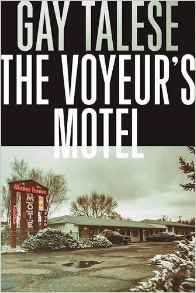 Most of the people Foos observes over decades in his hotel are little more interesting; the epigraph to The Voyeur’s Motel could be that famous quote from Walden, “The mass of men lead lives of quiet desperation.” Except that most of the individuals and couples Foos observes seem not to know enough to even feel desperation. Instead, to the extent they have or show feelings, they seem to be consumed with petty bickering and
  Except that he is a cynic, he reaches for the sardonic joke, he is the asshole hipster, he grabs the clichés. He has much mud to sling, but he ought to also know the problem with mud as a weapon. What kind of person calls out everyone else for being a poseur and faker? It is odd to read about “a man [who] oozed an off-putting smarminess” in a book about a man who oozed an off-putting smarminess.
 The Story's Story