Re-reading Cryptonomicon

It’s still excellent, and it’s so excellent that it’s one of the books I re-read when I can’t find anything good to read. The density of Cryptonomicon’s ideas and the strange (at first) construction of its plot makes it a particularly promising re-reading, since getting the full effect the first time through is almost impossible.

CryptonomiconThe novel is very fond of explaining things and so are its characters. “Things” seems like a vague, loose word here but it’s appropriate given the diversity of explanation. To list the topics that come up would be too tedious for this post but would be in keeping with the novel. Take one example, as a character explains startup financing in the ’90s:

We begin with nothing but the idea. That’s what the NDA is for—to protect your idea. We work on the idea together—put our brainpower to it—and get stock in return.

Except that, as we know now, ideas aren’t that important (the execution is important) and the best ideas are usually mocked at first. But the rest is pretty accurate, and the dialogue shows that the characters have ideas, share ideas, care about ideas, and fight over ideas. Ideas—actual ideas, as opposed to what many intellectuals think of as ideas—don’t appear often in novels. To the extent they do, ideas usually appear as grand abstractions tediously embodied in specific characters.

Skip some sections if they don’t speak to you the first time through; they may later, though the famous Cap’n’Crunch scene still does little for me, or to me.

Few books describe real nerd culture:

“You have jet lag now?” Goto asks brightly—following (Randy assumes) a script from an English textbook. He’s a handsome guy with a winning smile. He’s probably in his forties, though Nipponese people seem to have a whole different aging algorithm so this may be way off.
“No,” Randy answers. Being a nerd, he answers such questions badly, succinctly, and truthfully. He knows that Goto essentially does not care whether Randy has jet lag or not. He is vaguely conscious that Avi, if he were here, would use Goto’s question as it was intended—as an opening for cheery social batter. Until he reached thirty, Randy felt bad about the fact that he was not socially deft. Now he doesn’t give a damn. Pretty soon he’ll probably start being proud of it.

Conversation is a skill and it’s a skill most nerds don’t develop, which may be why they face troubles in dating. Nerds spend lots of time with machines and to some extent that time begins to shape their minds to think like machines.

The psychologies of innovators and deep thinkers may not be viable subjects for literary writers, or, if they are, I haven’t seen the fruit of those writers’ labor.

Most novels that are called “novels of ideas” are actually not. Finding a novel of ideas embedded congenially in a novel of intense action is unusual, especially when most novels of ideas are actually novels of navel gazing. Cryptonomicon also violates many of the rules one hears from MFA types and is useful for that reason: many “novels” are not actually novel.

Copies are available for $.01 on Amazon (which means $4 with shipping), and that’s a steal.

Where does personality come from?

In “Sentences to ponder, The Strong Situation Hypothesis,” Tyler Cowen quotes from a study:

This hypothesis, based on the work of Mischel (1977), proposes that personality differences are especially like to be outwardly expressed in “weak” situations offering no clear situational clues and a wide range of possibilities as to how to behave. Conversely, individual differences are expected to have less room for expression in “strong” situations where the choice of behavioral outcomes is severely limited and where everyone is bound to behave in a similar way.

That’s especially interesting to me because I’ve long said that many literary novels are concerned with family, love, politics, and the like because those are open-ended domains that tend to be places where personalities can be expressed. In many “flat” thrillers, by contrast, there is one obvious right thing to do (stop the bad guys, don’t let the nuclear device go off, etc.) and the only important question is whether the thing can be accomplished and how it can be accomplished. In that respect personality becomes backgrounded to the task at hand. The interior mental state of the characters become binary: They succeed or they fail. Their sense of interiority isn’t that important.

In a genre like science fiction one can see the thriller model at work in a novel like The Martian, in which survival is the only important question, and the broader model at work in a novel like Stranger in a Strange Land, or in many others. In real life, the kind of music a person who is starving to death likes is not very important, but the kind of music a person who is on a date likes may be very important.

Alternately, one could say that personality is a relatively high point on Maslow’s Hierarchy of Needs (whatever the other deficiencies of the hierarchy model).

(In another world, this point could be part of the “Character” chapter in How Fiction Works.)


I wrote a little more about this here, previously, in 2011.

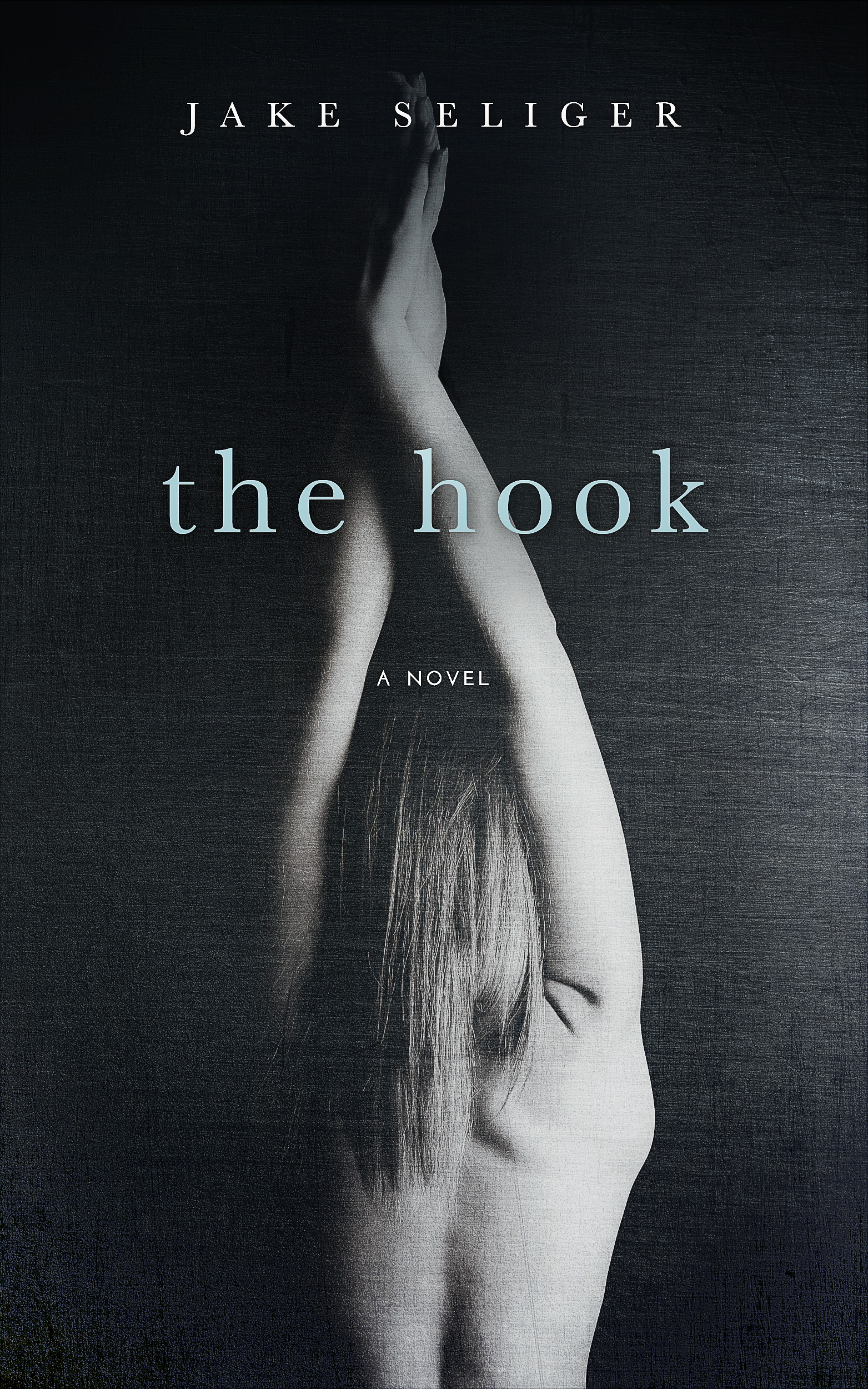
My next novel, THE HOOK, is out today

The HookMy latest novel, The Hook, is out today as a paperback and Kindle book. It’s even available on the iTunes Bookstore for the masochists among you. The Hook is fun and cheap and you should definitely read it. Here’s the dust-jacket description:

Scott Sole might be a teacher, but outside of school hours he likes to think he lives in the adult world. That’s why he indulges his sometime-girlfriend’s request to install an adjustable length hook in his apartment wall—of the sort appropriate for hanging people, not paintings. The project goes so well that, at her urging, he writes a blog post about it. Nobody cares about Scott’s blog—until three students find the post and think they can use it for their own purposes.

Each has a motive: Stacy wants to find out if there’s any truth in the whispers that Scott and her older sister had an affair during her sister’s senior year; Arianna thinks she can use it to weasel out of a semester-long writing assignment; and Sheldon wants a way onto the school newspaper to pad his college application. At the same time, one of Scott’s former students returns to his classroom as a student-teacher with a crush on her supervisor. But as accusations fly regarding the blog post, his students, and the rest of Scott’s less-than-perfect life, Scott discovers that once rumors begin, they’re as hard to stop as dirty pictures on the Internet. They might not just cost him his job, but his freedom. It turns out that a good hook can keep you reading, hold up a kinky girlfriend, and hang your career all at the same time.

My last novel, Asking Anna came out on January 17, 2014. In the last year I’ve quit some things and started others; written about a quarter of my next (likely) novel; read a lot; almost died; and wrote down too many ideas to execute in the next twenty years. But the Asking Anna announcement post is similar to this one, and everything I wrote then is still true:

I’ve been writing fiction with what I’d call a reasonably high level of seriousness since I was 19; I’d rather not do the math on how long ago that was, but let’s call it more than a decade. It took me four to six false starts to get to the first complete novel (as described in slightly more detail here) and another two completed novels to finish one that someone else might actually want to read. Asking Anna came a couple novels after that.

What else? Other writers warned me about bad reviews. They were right that I’d get them, but they were wrong about my reaction: I mostly view bad reviews as entertainment. This “review” may be the best in that respect: “This is surely one of the worst books I have ever read.the author envisions himself as being cerebral by using vocabulary that does not even have any place in the story.” I’m not sure how anyone would envision the author of a novel envisioning himself just through reading the novel in question, but life on the wilds of the Internet entails some pretty confusing commentary.

I’d also like to thank everyone reading this who bought a copy of Asking Anna, and everyone who has bought or is going to buy a copy of The Hook. Books exist to be read. It’s because of your support of Asking Anna that I’ve been able to bring out The Hook. If you’ve gotten this far, let me suggest that you stop by Goodreads and leave comments there.

Defining fiction

“The relentless definition of feelings, states, and relationships” could be one definition of literature.

I’m reading Paul Hawkins’s The Girl on the Train, and it includes this: “In Cathy’s flat I always feel like a guest at the very out limit of her welcome.” It’s a brilliant description of a feeling I’ve both had and inflicted on others and never thought explicitly about before. The description, while brilliant, is also brilliant like millions of similar descriptions in millions of other books; I’m not singling it out because it’s extraordinary, but because it’s ordinary, and for whatever reason it triggered in my mind the description that composes the first paragraph of this post.

Why we like characters who battle institutions

David Brin’s “Our Favorite Cliché: A World Filled With Idiots… or Why Film and Fiction Routinely Depict Society and its Citizens as Fools” is great, and you should read it. He observes that novels, TV shows, and movies routinely depict heroic individuals standing up to corrupt or evil institutions or organizations. This tendency is “a reflex shared by left and right” to associate villainy with organization. Moreover, “Even when they aren’t portrayed as evil, bureaucrats are stupid and public officials short-sighted.” Brin notes some exceptions (Contagion is another, and the link goes to an article titled “Bureaucratic Heroism”), but those exceptions are exceptionally exceptional.

Nonetheless, I’d like to posit a reason why institutions and organizations are often portrayed as evil: they behave in ways that are evil enough with shocking regularity, and few of us have the means or fortitude to resist broken, evil, or corrupt institutions. The most obvious and salient example, much taught in schools, is Nazi Germany; while some individuals fought against the state murder apparatus, the vast majority went along with it, leading pretty much everyone who learned afterwards about the Holocaust to ask, “What would I do in that situation?” Most of us want to think we’d be heroic resisters, but the push to conform is strong—as the Milgram Experiment and Philip Zimbardo’s research shows. The Soviet Union murdered tens of millions of its own citizens.

Other examples exist closer to home: the Civil Rights movement fought corrupt institutions in the U.S. All the President’s Men exposed criminal actions, cruelty, and simple mendacity at the heart of the White House. The Vietnma War got started based on the invented Gulf of Tonkin. More recently, the Bush Administration made up evidence (or incompetently accepted made-up evidence) to justify the Iraq War. On a smaller basis, many of us have gotten caught in various nasty government bureaucracies in schools, universities, or elsewhere. Here’s one example from Megan McArdle’s struggles with the DMV.

Brin observes:

Now imagine that your typical film director ever found herself in real trouble, or the novelist fell afoul of deadly peril. What would they do? They would dial 9-1-1! They’d call for help and expect — demand — swift-competent intervention by skilled professionals who are tax-paid, to deal with urgent matters skillfully and well.

He’s right. I called the cops when a random asshole pounded on my door and threatened to kill me. They did show up (albeit later than I would’ve hoped!) and did arrest the guy. I’m grateful to them and for the police in that circumstance. But a lot of us are less grateful to cops, as reading Alice Goffman’s amazing book On the Run: Fugitive Life in an American City. Police as an institution have largely failed inner cities. Ask black people about their interactions with the police, and you’ll get a very different view of police than that of many white Americans.

So we may be getting stories of (exaggerated) institutional incompetence both due to history and due to everyday experience with institutions that (sometimes) don’t work well. Nonetheless it’s worthwhile for those of us who write stories to contemplate the truth of Brin’s observations about cliché on the level of plot, because we should try to be aware of our own dependence on cliché and to break that dependence whenever possible.

Nick Hornby in New York City for “Funny Girl”

Nick Hornby spoke at the Union Square Barnes and Noble on Wednesday, in support of his novel Funny Girl, parts of which he read and supported the claim to comedy in the title. Comedic writers may in general read more successfully than other sorts of writers, or perhaps Hornby is unusually engaging. His talk and the book suggested that perhaps obsession makes us interesting and shows who we are, though Sophie, the protagonist of the novel, has nothing in its beginning save what she wants to become.

Nick HornbyFunny Girl is well-observed (“He said that the bevy of beauties in front of him—and he was just the sort of man who’d use the expression ‘bevy of beauties’—made him even prouder of the town than he already was”) and a keen sense of absurdity shadows the opening of the novel (which is all I can comment on so far).

At one point Hornby said that “Acquiring a family of choice is the dream, isn’t it?” but the challenge of a family of choice may be that it is easier to choose to leave such a family than a genetically intertwined family. Some of his talk also implicitly asked why collaboration is simultaneously so hard yet so essential; the book explores that question on an interpersonal level but per Peter Watts it may also apply on a cellular level.

The audience questions were as usual mumbly democracy in action, but Hornby, like T. C. Boyle, seemed to like or fake liking them. Many, many of them took photos with their cellphones held up high, as depicted above; many saw Hornby through their phones as much as their eyes.

On a separate note, Hornby’s novel High Fidelity holds up well and among other things implies that lists are a way of eliding criticism, real knowledge, and rhetoric. This description however makes it sound boring when it is not.

Hornby Funny GirlHere is a Slate interview between Hornby and Dan Kois.

“All American fiction is young adult fiction: Discuss”

Via Twitter Hollis Robbins offers a prompt: “‘[A]ll American fiction is young-adult fiction.’ Discuss.” Her takeoff is A. O. Scott’s excellent “The Death of Adulthood in American Culture,” which you should go read; oddly, it does not mention the show Entourage, which may be the best contemporary narrative artifact / fantasy about the perpetual party.*

American fiction tends toward comedy more than “young-adult” because comedy = tragedy – consequences. AIDS fiction is tragic because people die. Most contemporary heterosexual love stories are comedy because the STIs tend to be curable or not that important; people who are diligent with birth control rarely get pregnant. Facing death, starvation, or other privations have always been the adult’s lot, and adults who made sufficiently bad choices regarding resource allocation or politics died. Think of the numerous adults who could have done everything they could to flee the area between Russia and Germany in 1914 and didn’t, or the ones who didn’t after 1918 and before the Holocaust. The example is extreme but it illustrates the principle. Frontier and farm life was relentlessly difficult and perilous.

Today by contrast we live in the a world of second chances. America is a “victim,” although that is the wrong word, of its own success. If you color more or less inside the lines and don’t do anything horrendous, life can be awesome. People with an agreeable and conscientious disposition can experience intense pleasures and avoid serious pain for decades; not everyone takes to this (see for example the works of Michel Houellebecq) but many do. The literary can write essays, the scientists can do science, the philosophers can argue with each other, the business guys have a fecund environment, and the world’s major problems are usually over “there” somewhere, across the oceans. If we ever get around to legalizing drugs we’ll immediately stabilize every country from Mexico to Chile.**

What are the serious challenges that Americans face as a whole? In the larger world there is no real or serious—”serious” being a word associated with adulthood—ideological alternatives to democracy or capitalism. Dictatorships still exist but politics are on the whole progressing instead of regressing, Russia and parts of the Middle East excepted.

One could reframe the question of all American fiction being young adult fiction to: “Why not young adult fiction?” Adults send young people to war to die; adulthood is World War II, us against them, thinking that if we don’t fight them in Saigon we’ll have to fight them in Seattle. Adults brought us Vietnam. Young people brought us rock ‘n’ roll, rap, and EDM. Adults want to be dictators, whether politically or religiously, and the young want to party and snag the girl(s) or guy(s) of their dreams.

Adulthood is associated with boredom, stagnation, suburbs, and death. Responsibility is for someone else, if possible, and those who voluntarily assume responsibility rarely seem to be rewarded for it in the ways that really count (I will be deliberately ambiguous on what those ways are). Gender politics and incentives in the U.S. and arguably Western Europe are more screwed up than many of us would want to admit, and in ways that current chat among the clerisy and intellectual class do not reflect or discuss. If adulthood means responsibility, steady jobs, and intense fidelity, then we’ve been dis-incentivizing it for decades, though we rarely want to confront that.

Many people are so wealthy and safe that they are bored. In the absence of real threats they invent fake ones (vaccines) or worry disproportionately about extremely unlikely events (kidnapping). Being a steady person in a steady (seeming) world is often thus perceived as being dull. In contemporary dating, does the stolid guy or girl win, or does hot funny and unreliable guy or girl win?

A lot of guys have read the tea leaves: divorce can be a dangerous gamble while marriage offers few relationship rewards that can’t be achieved without involving the legal establishment or the state more generally. A shockingly large number of women are willing to bear the children of men they aren’t married to: 40.7%$ of births now occur to unmarried women, and that number has been rising for decades.

Why take on responsibility when no one punishes you for evading it and arguably active irresponsibility is rewarded in many ways, while safety nets exist to catch those who are hurt by the consequences of their actions? That’s our world, and it’s often the world of young adulthood; in fiction we can give ourselves monsters to fight and true enduring love that lasts forever, doesn’t have bad breath in the morning, and doesn’t get bored of us in four years. Young adult fiction gives us the structure lacking in the rest of our lives.

Moreover, there has always been something childlike in the greatest scientists and artists. Children feel unconstrained by boundaries, and as they grow older they feel boundaries more and more acutely. I’m not about to argue that no one should have boundaries, but I am going to argue that retaining an adult version of the curiosity children have and the freedom they have is useful today and in many cases has always been useful.

The world has gotten so efficient that vast pools of money are available for venture capitalists to fund the future and tech guys to build or make it. The biggest “problem” may be that so many of us want to watch TV instead of writing code, but that may be a totally bunk argument because consumption has probably always been more common and easier than production.

In this world fiction should tend towards comedy, not the seriousness too typically associated with Literature.

If American fiction is young adult fiction, that may be a sign of progress.***


* Another show, Californication, mines similar themes but with (even weaker) plots and total implausibility. Here is an essay disagreeing with Scott: Adulthood Isn’t Dead.

** Breaking Bad and innumerable crime novels would have no driving impetus without drug prohibition. The entire crime sector would be drastically smaller almost overnight were we to legalize drugs and prostitution. That would be a huge win for society but harmful to fiction writers.

*** Usually I eschew polemics but today I make an exception.

Briefly Noted: “The Fever” — Megan Abbott

I’ve already reviewed The Fever—it’s just under the title Dare Me, with its similar subject matter (high-school girls, transformation, darkness in women, sexuality) and style (half-knowing, unwilling to admit, chopped up narrative). This is not a criticism, Dare Me readers who want more of the same will find The Fever delivers. Like Dare Me the principle concern is female rivalry over high-status guys and female judgment of each other’s sexuality. I won’t say it’s a critique of those topics, though it could be read that way. It could also be seen as a commentary on the eternal conflict between children and parents.

Similarity is not always a bad thing—Elmore Leonard’s many caper novels consistently delivered similar characters, styles, and plots, and again that could be read as weakness or strength as he played with variations around a central concern or set of concerns (which I read as coolness and silence—subjects for an academic paper yet to be written).

the_feverThere is a Paglian tinge to Abbott’s last two novels (sample: “In the school’s hallways, Tom could see it: Gabby carried the glamour of experience, like a dark queen with a bloody train trailing behind.” Unlikely, but poetic, and it tells us about Tom’s overwrought perspective). They may be of less interest to those far from high school or offspring in high school. Abbot is willing to probe darkness in a way rarely seen in TV or movies, which tend to lag books by decades in terms of their willingness to portray what lurks within. Even the better TV stations like HBO and Showtime need to appeal to “Heads of Households,” which explains why the teen series tend to be on network TV or basic cable.

There are comparisons to be made with Caitlin Flanagan, and Abbott wins them; Flanagan’s book Girl Land was published in only 2012 and already the hardcover is justifiably available for $.01 from Amazon. I think I read a library copy. Both the Flanagan essays and the Abbott novels show how little we tend to know about things when we’re young and have no context or framework for understanding them. One could argue that the knowledge for understanding the world is out there, and most teenagers choose not to access it. This leads to confusion. That confusion is reproduced to good effect in the narrative voice and structure of The Fever:

I’m next, Deenie thinks, a few minutes and it’ll be me.
If only she’d gotten it over with a year ago. But she’d heard about how much it hurt and no one else had done it yet, at least not anyone she knew.
Now she’s one of the last one.

The tense moves from present to past back to present, with the “it” deliberately ambiguous in that it sounds like sexuality but may actually be the fever of the title. Naturally hypocrisy appears too, with slightly incestuous overtones, when Eli thinks that “Since then, he could only ever think about his sister, one wall away. And how he hoped Deenie never did things like this. With guys like him.” To be thinking about his sister in this context seems like a mistake of focus. About some things there is little to say; people are people and want what they want, as teenagers are probably taught not to know or admit. The characters are also mostly ignorant: Deenie thinks, “Why did everything have to be about sex, she wondered. Didn’t it make a lot more sense that it was something else?” She hasn’t read or probably even heard of evolutionary biology or Darwin’s The Descent of Man and Selection in Relation to Sex. I hadn’t either in high school, and I don’t remember my first introduction, but I do know that a couple books on the subject made a lot of previously puzzling behavior fall into place. It’s true that not everything is about sex but so much is about it because we’ve evolved to pay close attention to matters relating to survival and reproduction.

Simple principles give rise to dizzyingly complex behaviors and patterns. Deenie doesn’t know that and in some ways her society conspires with her towards ignorance. One reading of Abbott’s last two novels could be as a move from utter ignorance to slightly greater knowledge. Jealousy is a perpetual companion because there are so few real status ladders to climb in high school (“Everything was so easy for Skye, with her older boyfriends, the way her aunt bought her cool old-time lingerie from vintage shops, the strip of birth control pills she once unfurled for them like candy.”) Skye, however, probably doesn’t think things are easy for Skye, but few high schoolers have the ability to get out of their own heads and into the heads of their companions. The last two paragraphs may be unfair, like saying that Faulkner is merely writing about the machinations of slack-jawed southern yokels who need education and functioning political infrastructure, but there is also some accuracy to them.

The question of whether the fever has supernatural, psychological, microbiological, or other origins does get resolved, but its mechanics are dubious.

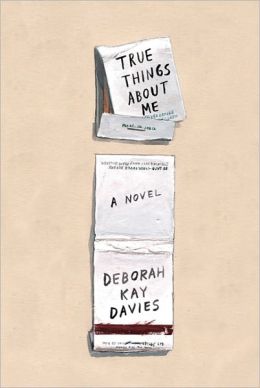
True Things About Me — Deborah Kay Davies

True Things About Me is disturbing and compelling, especially because it doesn’t want to explain. Its unnamed protagonist doesn’t want to explain. She just wants to act and in acting without explanation she may in some ways be truer to life, in which we so often act and then come up with rationalizations about why we acted after the fact. The disturbing implication of the novel may be that our reasons for doing things are opaque even to us and always will be. Like markets, we just can’t predict our own behavior.

True_things_about_meIn the novel the unnamed narrator has unplanned, unexpected sex with a man just out of prison who is registering for benefits. It is unexpected, a disjunction, a call to action in a mythic sense, and beyond the initial bang, so to speak, True Things About Me is at most loosely plotted. The scary thing about the story is not that it may be sick but that it may be normal, or at least more common than is commonly supposed, despite the evidence in fiction and art that few of us, Paglia aside, want to face. Much of the online commentary mentions “mental illness,” which is a comforting but wrong misreading. Desire can be neither legislated nor medicalized away. It will reemerge in different forms, and its verbal component is weak or nonexistent. When Alison, the narrator’s boring foil friend, wants to know what’s happening with the narrator, the narrator says “Somehow I couldn’t be bothered to explain it all.” “Somehow:” why bother analyzing what can’t be fully analyzed?

Her parents are either delusional or right; when the narrator invents a boyfriend for her parents’ benefit her mother says, “I just hope he’s a nice boy.” The irony is obvious. Her mother describes Alison as “so sensible,” which may read here as a synonym for boring. There may be no greater modern relationship sin than being boring or needy.* When madness intrudes in normal life we don’t know how to react, unless perhaps we live a continually mad life, like a different Alison, the protagonist in Story of My Life. For the narrator of True Things About Me everything is permitted and nothing matters, which may be the nature of modern adulthood for many nulliparous people.

For the narrator internal changes inspire external changes. After her encounter she thinks that “It seemed to me that I hadn’t looked at clothes properly before.” The clothes she buys says things other than what her old clothes presumably said: “a pair of low-slung cream linen trouser, and a scarlet and cream striped bustier” are new to her, and make one see fashion as part of the story. Silence is power, which is strange in a book composed of words; at one point she says that “He didn’t say much.” What and how he does counts.

Alison and her coworkers are twits. At one moment “They were talking about a television programme. Everyone was really into it. Alison was the most knowledgable.” There is nothing wrong with being into a TV show but in this context the TV show is a stand-in for a life the coworkers are too scared to live. The narrator becomes an outsider by dint of secret knowledge. She drifts away or is separated from from Alison’s world and that is arguably an improvement. Halfway through the novel she considers getting “back into the real world,” raising the usual question of what constitutes reality beyond knowing it when you see it.

In Nine and a Half Weeks one gets many sentences like “His face is blank. The gray pupils on which mine are focused reflect two miniature faces.” There are many descriptions of movement (same page: “I walk slowly across the carpet”) but few of feeling or context. Here is one extended, reasonably representative passage from True Things About Me, and it’s representative in both style and in raising questions about whether one should trust this narrator:

I began to see how it was, how it had always been. Alison was one of those types who loved to sit on the sidelines of someone else’s fascinating life and shout advice at them. She fed off me, and I let her. It made people like that feel even more smug about themselves when they could observe another human being struggling. Unravelling, if they were lucky. . . . She sounded like a second-rate actress in a daytime soap.

Who does the narrator sound like?

True Things About Me may be obliquely related to Susan Minot’s Rapture. Both could be construed as arguments that things don’t matter—people and experiences do. True Things About Me is also a commentary on soulless bureaucratic jobs and their deadening effects on the human condition.

At one point an old woman says, “That girl is on the game [. . .] living off immoral earnings. It’s disgusting. Someone ought to come round and investigate.” The contemporary term “hater” describes her well. The old woman hates the player because she is “living like she doesn’t have a care in the world. It shouldn’t be allowed.” Why not? The narrator doesn’t ask and the old woman doesn’t volunteer. The narrator is about to live without a seeming care in the world either. She leaves her work as an anonymous, Houellebecq-esque bureaucrat processing welfare claims forms to meet a dissolute but presumably sexy man. She blows off her friend, Alison, who is the voice of boredom, restraint, wisdom, and creation, to go “underground.”

There are numerous references to going underground, with connotations that go back to Persephone if not earlier. While there her mind “had stretched and blanked, like a washed sheet on a clothes line.” Is that how the best sexual encounters always happen? Maybe. But the metaphor can be extended through the novel, in which her mind is never really not “blank.”

True Things About Me is probably too uncomfortable to be of interest to most people; in this respect it resembles Never the Face, an underrated and under-known book. I imagine True Things About Me doing better in Europe than here, based solely on stereotype. The truth is out there, the book implies, and you will not like it.

See also Rebecca Barry’s NYT review, although she doesn’t get the novel and wants to throw around the word “abuse,” as if the novel is a cautionary, modern liberal, story about leading a sanitized life purged of dark impulses. Camille Paglia would be the ideal reviewer: she might not like the book—in some ways it may stick too close to the tradition—but she would get it.


* Reminder: Linking does not imply endorsement.

Arts & Entertainments — Christopher Beha

Arts & Entertainments is among other things very good, very New York, a comedy complement to Gillian Flynn’s Gone Girl (mid book: “I don’t like living this way. I’ve barely been outside in a week. I want to come home”), a defense of privacy and explanation of its importance (see also “Solitude and Leadership“), a surprise critique of the NSA, a reminder to trust liars, and a reminder that attention is the scarcest commodity of all and becoming scarcer.

Arts and entertainmentsI want to write that the plot is absurd. But is it? The vast celebrity-industrial complex is so large and amorphous that it is difficult to judge the plausibility of the plot, or of Eddie’s fatal sex-tape miscalculation. Does he not read the news? Every week some teacher or other gets fired not for being a stripper but for becoming known as one. Digital life is rife with such stories. People as a whole (and the culture we create) are hypocritical, as the novel is aware; though this is taken out of context it reinforces the point:

People don’t want to go overboard with the sad stuff. Mostly, they want to be able to judge people, and they can’t judge a girl in a coma. If she was older and had some kids, they could judge her for being selfish and irresponsible. But she’s too young for that. Maybe they can judge her father for a little while, but that’s his daughter in the coma, so that will only last so long. They can judge, like, the culture at large, but that means judging themselves, so that gets tiresome too. And there’s another episode of Desperately Expecting Susan to watch on Tuesday. Everyone will want an excuse to return their attention to the usual entertainment. We give them a nice opportunity.

The judgment reflex and public morality lag behind reality and rarely moreso than in putative education. The joy of altruistic punishment is real and rarely more powerful than in sexual mattes, with financial matters probably coming in second.

Arts & Entertainments picks up a millennia-old conversation about the self and how much, if at all, we can really know another person. In “In its second season premiere, Masters of Sex takes on the hardest questions of love,” Todd VanDerWerff writes:

One reason so many have tried to repress their sexual desires or legislate them away throughout human history is because when it comes to sex, we’re reduced to our most basic selves. There’s a moment where we are uncontrolled, and our true face appears, even if only for a second. To “fix” this, we try to introduce a rigidity, a script to stick to. We try to set up carefully delineated divisions between that true self and the version of ourselves we present to the world. Yet the fear is always there that in a moment of weakness, that face will appear, and we’ll finally be seen for who we truly are, even if no one would blink for a second.

This may be one reason people like porn, especially of celebrities or other people they know: they imagine that they are getting a moment of the “true” self, and that one gets to see through the personality. But Masters of Sex undercuts that: think of the scene in which Masters is told by Jane Martin, a prostitute in the show, that virtually all women can fake it and have faked it. Masters is astonished, and his astonishment comes from a massive revision about human nature. Most people, I suspect, go through such revisions over and over again, their views on nature changing until they come to a realization like this paraphrase of Terence, by way of Montaigne: “Nothing human is foreign to me.”

Art is filled with moments that remind us of the liars we are. Can we accept an answer of “no,” we do not know and cannot really know another person? Take a moment at the end of Generation War, a fantastic German miniseries that follows five German friends through World War II, in which a Jewish survivor returns to Germany after the war only to discover that a highly-placed Nazi shifted allegiances after the war and continued to be part of the German government. The Nazi’s allegiance was to power itself, and the implication is that we don’t know what a person will do when the circumstances in which they live change.

That we may not be able to know another is not a new idea, but the jones for “reality” TV and celebrity gossip fuels it. There is also an old idea that only God can see our true selves, but the true self may be an outgrown idea, like that other somewhat outgrown idea. In “Scientists discover that atheists might not exist, and that’s not a joke,” Nury Vittachi writes that “a metaphysical outlook may be so deeply ingrained in human thought processes that it cannot be expunged.” I’m unconvinced but I do think most if not all people need an attachment to an idea greater than and outside themselves. Celebrity, Arts & Entertainments suggests, could be that idea, but it is ultimately a hollow one. The cameras lie as effectively as we lie to each other and ourselves. Eddie’s weakness as an actor and a character is his inability to lie effectively. Poor deception skills make him ironically unable to exist on reality TV. The book is filled with subtle ironies like this, and that’s one reason why I think it catches the attention of critics who might be otherwise inclined to write it off as basic, lightweight satire. It isn’t just that. It’s a book of pleasures and of depth.

People who truly live and die an ideology or belief are the real exceptions. Standing for something is the uncommon thing, which may be why it’s so valorized in proportion to the number of people who actually do it. It may also be one of the many reasons religion keeps sneaking into this book. Eddie went to a Catholic school at which he teaches, and he appears to want on some level to do the time without doing the crime, so to speak, but this comment will appear inscrutable without having read the book, but I don’t want to give it more context for fear of spoiling the surprisingly twisty plot. Nothing feels like it’s happening as everything does.

One character, a reality TV producer named Moody, describes how he spent time in “a retreat house in Minnesota, run by the Order of St. Clement” while studying to become a priest; but he left after contact with a film crew that had arrived to make a video that showed what happened. As he says

The crew had their own problems. The things that were really going on in that place couldn’t be captured on film, because they were meant for God, not for the audience. They happened inside people. I watched all this, and somehow I knew what the audience would want to see.

If what you’re doing, or thinking, or feeling can’t be seen, does it matter? Does it “exist?” Is the audience God? Moody also highlights a challenge in any sort of narrative fiction, which can’t effectively depict what happens during the having of an idea, or when someone is doing an intellectual activity. Intellectual effort is mostly invisible, though it may be represented by books or typing or the like. Biographies of many artists are boring because the artists don’t necessarily do that much with their lives. Unless they’re unusually social or unusually sexual, they draw, they pain, they write—none of which lend themselves to narrative. One can write about influences and encounters and so on, but many people have interesting influences and encounters but never go on to do important work, as the artist does.

Movies have an especially hard time with boring writers and thinkers. The Social Network needs a lot of tarted-up, amped up drama to make it compelling; in real life Mark Zuckerberg appears to have spent most of his life at a keyboard and to have been in a monogamous relationship since he was 19 or 20. A Beautiful Mind also dramatizes the discovery moments in math, but the bulk of the movie focuses on dramatizing schizophrenia instead. Novels have similar problems. Few works of narrative art have plots that are motivated by ideas or intellectual curiosity—instead they focus on the interwoven meanings of sex, money, social status, and death. All are fine topics but one wonders if there is more out there.

TV and film, even more than the novel, are about dramatizing the exterior. Anything inside that can’t be represented outside doesn’t exist, but it’s so often what’s inside that counts most. If the soul does not live outside the body, it must not exist at all. The camera reminds us that we do exist, and we live for the adulation of others. That is so hard to resist that we barely know the people who do resist it; for one thing, they aren’t on TV, are rarely in any media, and as such they are the dark matter of contemporary society, everywhere and nowhere simultaneously. Yet they may be the real-ist people of all. If there once was such a thing as natural existence, TV has taken that away, and those who actively cultivate the TV-social-media-Internet-gossip mindset may not have it all. They are faux people, pod people, and that scares because they cannot be relied on to produce a consistent set of behaviors over time, which we usually call personality. One purpose of religion is to enforce a set of behavior codes that allow reasonable forward planning and projection. Arts & Entertainments encourages us to think that maybe there are parts of religion that we think more seriously about, and that fame as a secular religion has its perils that are often not seen until after it has been achieved.