Exploring the limits in art, writing, and science

In the poorly-titled but otherwise interesting essay “The Disquiet of Ziggy Zeitgeist: Unsettled by the sense that reality itself is dwindling, fading like sunstruck wallpaper,” Henry Allen says that “For the first time in my 72 years, I have no idea what’s going on,” because a lot of culture has splintered, for lack of a better term, and as a result “I don’t know what’s going on. I doubt that anyone does.”

That sense is a result of reaching boundaries or borders in many if not most artistic fields. In music, for example, John Cage famously “recorded” a track that is entirely silent. Composers have created songs or symphonies or whatever that seem indistinguishable from noise. Popular music’s last major style shift was the early 90s, with rap and grunge; since then, we’ve mostly heard dance-disco-hip-hop variations.

In the fine arts, the avant-garde is probably dead, as Camille Paglia has argued in various places for, what is perhaps not surprisingly, twenty years. What people call concept art or non-art or art from life appears indistinguishable from noise or pranks. Or, as Allen says, “Now I go to New York and look at a work of art in Chelsea and say: ‘Oh, that’s one of those.’ (Dripping, elephant dung, monochrome, squalor, scribbling.)”

Literature in some ways “got there” first, with Joyce (Finnegans Wake) and Beckett (whose novels are the whole of boredom) about which I wrote more in “Martin Amis, the essay, the novel, and how to have fun in fiction.” If you’re trying to write a novel that truly pushes the boundaries of the novel, you’re going to have a very hard time doing so while being comprehensible to readers.

OLYMPUS DIGITAL CAMERASex mores have fallen too: this weekend I’ve been reading Katherine Frank’s book Plays Well in Groups: A Journey Through the World of Group Sex, she describes gang bangs involving hundreds of participants, along with BDSM and assorted other sex adventures. Most people in developed countries have nothing between them and that, provided they want it. As a side note, she describes swingers who were featured on a TV show called Swing, and the swingers talked to the show’s crew, who said in this rendition that “We don’t know how you’ve done it but most people would kill to have this life.” But you don’t have to kill for that life: you only have to love for it, and most people probably could have it, or a version of it, if they want it. No murder necessary!

Porn has also reached limits or gotten asymptotically. The market has devolved from the monolithic Playboy to innumerable small, online outlets, some commercial and some not, and porn faces the same availability issues that any information does: perpetual availability. Although I’m not an expert, porn videos or pictures from, say, 2005 are still being passed around and viewed in 2013 and may continue to be in 2023. There is already more out there than a single person can digest and the amount is growing over time. Curating, searching, and sorting become the problem amid what is effectively infinite. If you want it, you can probably already find it, and if you don’t like what you find, you can probably make it for a couple hundred to a couple thousand dollars.

Video games are an intriguing exception to the trends described above. They’re a young medium, since they’ve only been popular in the last 30 to 40 years and have consequently seen a tremendous explosion in sophistication: compare Pong to a modern game versus a novel published in 1980 to a novel published in 2012. Video games also piggyback on growing computational capabilities. Video games, like the Internet, are still in relative infancy, and they appear to be very far from technical or comprehensibility limits.

I’m not saying that art or artists or culture is dead, but I am saying that the boundaries of comprehensibility have been reached in many fields. If I were more of a blowhard I would also pontificate about the role of the Internet in this—Allen picks 1993 by coincidence, perhaps, but 1993 was also just before the Internet reached the masses in the developed world. Within the next decade or two more than half of the people on the planet will probably get access, and that may further splinter culture. Already it’s possible for people with weird, niche interests to easily explore those interests, like Borgen, in the absence of social feedback.

Some fields, like math, appear inexhaustible. Others, like delivering things people want (which goes by the otherwise dull name “business”) appear if not inexhaustible then nearly so, since material desires keep expanding with GDP. I also doubt that art per se will ever be exhausted; the limits of comprehensibility don’t mean people will stop making art, only that we have to find ways to make it meaningful without being able to push constantly against a conservative establishment, which has been the animating force since Romanticism and now makes little sense.

Counterpoint to the sex-plot post: Jenny Diski on The Sexual Life of Catherine M.

It’s intellectually important to acknowledge being wrong and to look for ways you can be wrong and yet very few people do this or do it honestly. I probably don’t do it honestly either, but I will still post a long quote that somewhat contravenes my recent essay “The sex plot: a discussion for novelists and readers:”

the great open space of sexuality permits all the possibilities of abjection, power, narcissism, pleasure-seeking, dour determination, creativity and mechanisation. It would be very hard to devote such a great deal of life and thought, time and effort to it as Millet does without getting it all pretty much confused. Everyday pornography is linear in order to keep a single idea afloat in an ocean of polymorphous potential. Sexuality gets out of hand, it runs rampant with meaning unless you keep to a very firm remit. The sexual story can transform from pumpkin to princess to swan with injured wing and back again in the blink of a thought. It is a nothing, an empty arena, that might be everything. And everything is more than we can cope with. The obsessive, fetishistic, single account that pornography provides is what keeps sexuality within bounds. Here is the danger of writing the sexual life: you lose the boundaries unless you steadfastly restrict yourself to the detail. At times Millet seems to be attempting to do this, but again and again, like a painter who writes explanatory notes over her picture, she tries to explicate, to flesh out the doing with her intellect, and then the sexual life is shown up for the kaleidoscopic and random playground of ideas it is.

That’s from Jenny Diski’s 2002 review of The Sexual Life of Catherine M; if sexuality is “a great open space” that “permits all the possibilities of objection, power, narcissism” and so forth then sex plots really can or should propel a lot of fiction. Diski’s view (I believe she is speaking for herself here and not describing the memoir in question) is not necessarily incompatible with the essay but certainly it feels different, especially with the way she says that “sexuality gets out of hand, it runs rampant with meaning.”

A subject or person or feeling that “runs rampant with meaning” could be one surprisingly complete definition of art, which may also encourage “the kaleidoscopic and random playground of ideas” that nonetheless must be somehow restricted if a work of art is going to take any form at all. Art without some form does not exist, like a platonically perfect work of art that never goes further than conception. Execution is everything.

Still, I’m not sure that sexuality can really get “out of hand” and run “rampant with meaning,” at least in terms of the physical act itself, because there are a limited number of physical acts and, in practical terms, a limited number of partners and configurations. Contrast this with, say, science: there doesn’t appear to be any obvious limits to the things that people want or the weirdness of the present universe. That doesn’t mean that sexuality doesn’t usually interact with other parts of life, but in the modern Western world I’m not sure that sexuality and relationships need to be the primary focus of so many novels.

Links: Libido, computers and education, distraction, prisons, art, and more

* Sexually unexcited? There may be a pill for that.

* Visualizing America’s absurd parking requirements; this could be seen as a complement to The High Cost of Free Parking.

* Giving computers to low-income kids does nothing to change outcomes.

* Focusing in a maddening distracting world.

* Flash eBook deals appear; another way of looking at this is seeing the rising value of older books that are just as accessible as newer ones.

* Ten minute lesbian sex scene sets Cannes ablaze; Blue Is the Warmest Color added to Netflix queues everywhere.

* “Solitary in Iran Nearly Broke Me. Then I Went Inside America’s Prisons.”

* How Capitalism Can Save Art, and has already in my view, though I would say “has changed” rather than “Can Save” art.

* What is happening in Istanbul.

* “To ‘the’ or Not to ‘the’?

Summary Judgement: Sweet Tooth — Ian McEwan

For a novel about a spy, Sweet Tooth is surprisingly slack. Maybe it’s slack in defense of realism. The cause eludes me, since the writing is as customarily crisp as the story isn’t. Excellent quotes are easy, from the first page, with this description of Serena’s father, an Anglican Bishop: his “belief in God was muted and reasonable, did not intrude much on our lives and was just sufficient to raise him smoothly through the Church hierarchy and install us in a comfortable Queen Anne House.” The parents are distant to the point of barely believable indifference: much later in the novel, Serena thinks, “Would the Bishop even notice I’d been away?” She’s free of parents, like an orphan in a 19th Century novel or a teenager in a contemporary TV show.

That doesn’t detract from the aforementioned beauty, like this, to go back to the second page: “We liked to think of ourselves as bad girls, but actually we were rather good.” Serena, on learning about the difficulties of writing, “went for important walks,” the silliness and accuracy of the phrase “important walks” working so well to conceptualize her state of mind and what many people with intellectual dispositions end up doing.

But the beauty of sentences eventually feels like backdrop when a second or third act fails to develop. The novel ends with a great, revisionary secret, the sort of secret that powers PhD dissertations more often than it does readerly love. We’ve seen these surprise techniques before—most notably in Atonement, but also, after a fashion, On Chesil Beach.

Like many writers, including this one, McEwan, through Serena, is at least interested in and perhaps obsessed by what reading and books do to people. Serena works in books as much as she’s a spy and sleeps with authors (which is the sort of practice I’d like to encourage). She notes what she reads and how she reads it. The book becomes about a love of books, but it does so to the point that the occupant of this book becomes dull. What does the book talk add up to? I’m a person sympathetic to books and book talk, but in Sweet Tooth the answer is “not much.” It becomes easy to lose focus midway through. Sure, for Serena, reading is how she both constructs and understands her world, but then you have to, you know, go do something. That’s not to say that she isn’t artful or funny. Consider this problem, about Jeremy, Serena’s first lover who turns out, predictably, to prefer men:

I wanted him to have a secret and shameful desire that only I could satisfy. I wanted to make this lofty, courteous man all mind. Did he want to smack my backside, or have me smack his? Was he wanting to try on my underwear? This mystery obsessed me when I was away from him, and made it all the harder to stop thinking about him when I was supposed to be concentrating on the maths. Colette was my escape.

Colette was her escape, but into what and from what? From mysteries? From something she can’t quite articulate, perhaps. And Serena, as a narrator, is also willing to ostentatiously tell us that she’s older and wiser now: “What I took to be the norm—taut, smooth, supple—was the transient special case of youth. To me, the old were a separate species, like sparrows or foxes. And now, what I would give to be fifty-four again!” This intrusion of the future self reminds us that we’re reading something from the future of events, with two pairs of eyes: the eyes of the undergraduate Serena and the eyes of the much older Serena, imagining her younger self from a position of greater articulacy and knowledge. Done too often, though, it becomes tedious. The notes in my copy trail off as the novel advances, and as I hope for Serena to become more than an acted-upon reporter of events. Her own life feels like it happened to someone else. Later in the novel, much later, the reason for this is revealed. But the view at the end of a long trail doesn’t always redeem the journey. The reason is clever, cerebral, not expected and not forced, and doesn’t make me want to read Sweet Tooth again, unless the next reading is part of some academic project about the usual sorts of academic things.

Serena says this of her reading habit:

All thanks to my mother, I didn’t stop reading. I’d never read much poetry or any plays at school, but I think I had more pleasure out of novels than my university friends, who were obliged to sweat over weekly essays on Middlemarch or Vanity Fair. I raced through the same books, chatted about them perhaps, if there was someone around who could tolerate my base level of discourse, then I moved on. Reading was my way of not thinking about maths. More than that (or do I mean less?), it was my way of not thinking.

Reading can be a powerful way of not thinking. I know from experience, even if most people think of reading as a highbrow, intensely intellectual activity these days. It isn’t, necessarily. And the assigned essay can be a chore instead of a pleasure. Serena wants it to be a pleasure:

My needs were simple. I didn’t bother much with themes or felicitous phrases and skipped fine descriptions of weather, landscapes, and interiors. I wanted characters I could believe in, and I wanted to be made curious about what was to happen to them. Generally, I preferred people to be falling in and out of love, but I didn’t mind so much if they tried their hand at something else. It was vulgar to want it, but I liked someone to say ‘Marry me’ by the end. Novels without female characters were a lifeless desert. Conrad was beyond my consideration, as were most stories by Kipling and Hemingway. Nor was I impressed by reputations. I read anything I saw lying around. Pulp fiction, great literature and everything in between—I gave them all the same rough treatment.

Simple intellectual and erotic needs might be easier to fulfill than complex ones, in one sense, but also harder, in the way that a simple task executed perfectly may be harder than a complex task executed with a margin for error. Still, Serena should have known that it isn’t vulgar to want love and marriage and plot. It’s vulgar that professors and highbrow critics might make her think it is vulgar to want those things, to want fiction that might be, to use that overused term, “relatable.” That one might be able to follow effectively. Serena isn’t a close reader, or someone practicing towards being a professional.

But she is someone who learns how to be through books, which makes her different from someone who learns how to be from in other ways, or someone who never learns how to be. She says, “I caused amusement among my Newnham friends studying English when I told them that Valley of the Dolls was as good as anything Jane Austen ever wrote. They laughed, they teased me for months. And they hadn’t read a line of Susann’s work.” Her friends are snobby and dismissive. Given the choice between snobby and unrefined but passionate, I’ll take the latter. The difference between those becomes a running issue, as when Serena begins to write a little column, and, like bloggers, something unfortunate happens: “I had written half a dozen jaunty pieces when something went wrong. Like many writers who come by a little success, I began to take myself too seriously.”

It’s a narrow act, the stance that straddles too serious and not serious enough. When I’m waffling between them, I try for “not serious enough:” after all, we’re talking about fiction here, not life and death. But for Serena the two become bound together because of her work. That’s an interesting theme; if only the plot were drilled more vigorously through the loam of Serena’s mind and story.

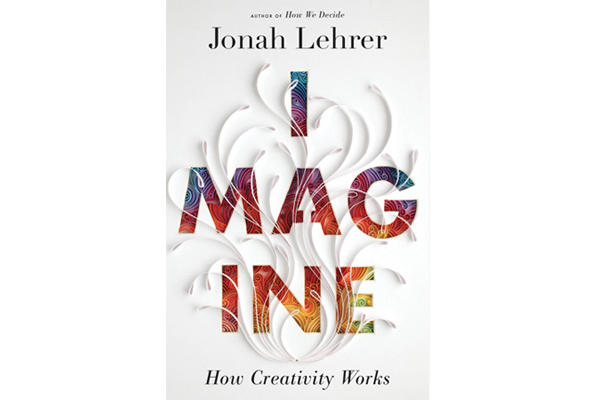
Jonah Lehrer’s Imagine is still worth reading

Jonah Lehrer, as is now well known, repeatedly misrepresented research and plagiarized other people’s writing in Imagine: How Creativity Works. But, as Roy Peter Clark points out, “Jonah Lehrer’s ‘Imagine’ is worth reading, despite the problems.” Clark goes on to say, “not all the sins [Lehrer commits . . .] are equally grievous,” but, despite that, “the reading of the book ‘Imagine’ helped me understand my world and my craft, and what else can you hope for from a non-fiction book.”

I’ve found the same thing after reading Imagine based on Clark’s endorsement. But reading it in light of Lehrer’s indiscretions reveals new potential layers of meaning, because a couple of passages have a very different resonance, like this one, about Shakespeare’s milieu:

His [Shakespeare’s] peers repeatedly accused him of plagiarism, and he was often guilty, at least by contemporary standards. What these allegations failed to take into account, however, was that Shakespeare was pioneering a new creative method in which every conceivable source informed his art. For Shakespeare, the act of creation was inseparable from the act of connection. {Lehrer “Imagine”@221}

Lehrer seems to be using the same method. But the age of the Internet makes tracking sources much, much easier than it used to be. And he goes on:

The point isn’t that Shakespeare stole. It’s that, for the first time in a long time, there was stuff worth stealing—and nobody stopped him. Shakespeare seemed to know this—he was intensely aware that his genius depended on the culture around him. {Lehrer “Imagine”@221}

In retrospect, this reads as a preemptive defense of Lehrer’s own method. But I don’t get why Lehrer made stuff up: most of what he invented doesn’t seem to be very important, and it’s the kind of peripheral material that makes for good reading but isn’t essential. Given contemporary attitudes towards plagiarism—the passages above show that he knows and understands those attitudes—why risk so much for so little gain? It’s like a millionaire stealing a pair of $20 jeans. Why tarnish success? I can imagine some possible answers to these questions, but none of them are very satisfying, and I ultimately want to ascribe Lehrer’s lies to simple human vanity.

Imagine is still pretty interesting. I doubt it’s a perfect book, and I wouldn’t cite Lehrer in my neuroscience PhD dissertation. But I am now conscious of the tension between free-form creative thought and focused attention to a particular, grinding problem (“We need structure or everything falls apart. But we also need spaces that surprise us. Because it is the exchanges we don’t expect, with the people we just met, that will change the way we think about everything”); I am conscious of the need for both longtime collaborators and for new faces; and I am conscious of how people with deep domain expertise may benefit from applying that expertise elsewhere. Some of Lehrer’s points, like his description of the virtues of cities or the eccentric greatness of Paul Erdos, are already familiar. But he helps me see them in new ways. A moment like this, for example, shows me something important about my own writing and creative work:

Friedrich Nietzsche, in The Birth of Tragedy, distinguished between two archetypes of creativity, both borrowed from Greek mythology. There was the Dionysian drive—Dionysus was the god of wine and intoxication—which led people to embrace their unconscious and create radically new forms of art. [. . .] The Apollonian artist, by contrast, attempted to resolve the messiness and impose a sober order onto the disorder of reality. Like Auden, creators in the spirit of Apollo distrust the rumors of the right hemisphere. Instead, they insist on paying careful attention, scrutinizing their thoughts until they make sense. Auden put it best: ‘All genuine poetry is in a sense the formation of private spheres out of public chaos.’ {Lehrer “Imagine”@64}

I am far more in the Apollonian mode than the Dionysian mode, but, perhaps for that reason, I’m fascinated by and perhaps even envious of Dionysian thinking, acting, and living. A novel like The Secret History thus becomes all the more important to me, because it has an Apollonian narrator, Richard, dealing with the aftermath of an attempt to reach Dionysian ecstasy. In the novel, not surprisingly, the outcomes are pretty bad, but the idea of deliberately trying to reach an ecstatic experience resonates with my temperament.

There are some moments that appear, on the surface, self-contradictory. Lehrer says, “The most creative ideas, it turns out, don’t occur when we’re alone. Rather, they emerge from our social circles, from collections of acquaintances who inspire novel thoughts. Sometimes the most important people in life are the people we barely know” {Lehrer “Imagine”@204}.

Earlier in Imagine, however, Lehrer discusses how many creative ideas when people are taking morning showers—where most are presumably alone. So do creative ideas emerge from chatting with others, or when our mind is a relaxed state that lets it make disparate connections among ideas? The answer appears to be “both,” but Lehrer doesn’t explicitly discuss the implied contradictions. I’m not saying he couldn’t reconcile them, but I am saying that someone should’ve pointed these kinds of contradictions out.

Even if all of Imagine’s research and stories are somehow wrong—and I don’t think they are—the book still offers novel ways to think about creativity and how to structure one’s life or work more effectively and in ways that I hadn’t foreseen. I wish the publisher hadn’t withdrawn it altogether. Used copies on Amazon now start at $25. It may be that the existing copies thus continue to rise in value because of their scarcity; alternately, readers might turn to pirate editions on the Internet, which I can only assume are easy enough to find (my book came from the University of Arizona’s library).

The Facebook Eye and the artist’s eye

“We are increasingly aware of how our lives will look as a Facebook photo, status update or check-in,” according to Nathan Jurgenson in “The Facebook Eye,” and the quote stood out not only because I think it’s true, but because this kind of double awareness has long been characteristic of writers, photographers, artists, and professional videographers. Now it’s simply being disseminated through the population at large.

I’m especially aware of this tendency among writers, and in my own life I even encourage and cultivate it by carrying around a notebook. Now, a notebook obviously doesn’t have the connectivity of a cell phone, but it does still encourage a certain performative aspect, and a readiness to harvest the material of every day life in order to turn it into art. Facebook probably isn’t art—at least to me it isn’t, although I can imagine some people arguing that it is—and I think that’s the key difference between the Facebook Eye and what artists are doing and have been doing for a very long time. I’ve actually been contemplating and taking notes on a novel about a photographer who lives behind his (potentially magic) camera instead of in the moment, and that might be part of the reason why I’m more cognizant of the feeling being expressed.

Anyway, Michael Lewis’s recently gave an NPR interview about his recent Obama article (which is worth reading on its own merits, and, like Tucker Max’s “What it’s like to play basketball with Obama,” uses the sport as a way of drawing larger conclusions about Obama’s personality and presidency). In the interview, Lewis sees Obama as having that writer’s temperament, and even says that “he really is, at bottom, a writer,” and goes on to say Obama is “in a moment, and not in a moment at the same time.” Lewis says Obama can be “in a room, but detach himself at the same time,” and he calls it “a curious inside-outside thing.” As I indicated, I don’t think this is unique to writers, although it may be more prevalent or pronounced in writers. Perhaps that’s why writers love great art and, in some ways, sex, more than normal people: both offer a way into living in the present. If writers are more predisposed towards alcoholism—I’m not sure if they are or not, though many salient examples spring to mind—getting out of the double perspective might be part of the reason why.

I think the key differences between what I do, with a notebook, and what Facebook enables via phones, are distance and perspective. My goal isn’t to have an instantaneous audience for the fact that I just did Cool Activity X. Whatever may emerge from what I’m observing is only going to emerge in a wholly different context that obscures its origins as a conversation, a snatch of overheard dialogue, a thing read in a magazine, or an observation from a friend. The lack of immediacy means that I don’t think I’m as immediately performative in most circumstances.

But the similarities remain: Jurgenson writes that “my concern is that the ultimate power of social media is how it burrows into us, our minds, our consciousness, changing how we consciously experience the world even when logged off.” And I think writing and other forms of art do the same thing: they “burrow into us,” like parasites that we welcome, and change the way we experience the world.

Still, the way we experience the world has probably been changing continuously throughout human history. The idea of having “human history” is a relatively recent idea: most hunter-gatherers didn’t have it, for example. The changes Facebook (and its analogues; I’m only using Facebook as a placeholder for a broader swath of technologies) is bringing seem new, weird, and different because they are, obviously, new. For all I know, most of my students already have the Facebook Eye more than any other kind of eye or way of being. This has its problems, as William Deresiewicz points out in “Solitude and Leadership,” but presumably people who watch with the Facebook Eye are getting something—even a very cheap kind of fame—out of what they do. And writers generally want fame too, regardless of what they say—if they didn’t, they’d be silent.

I think the real problem is that artists become aware of their double consciousness, while most normal people probably aren’t—they just think of it as “normal.” But then again, very few us probably contemplate how “normal” changes by time and place in general.


Thanks to Elena for sending me “The Facebook Eye”.

Thinking about the process of being an artist and a writer: Lessons from David Galenson’s Old Masters and Young Geniuses

David Galenson’s Old Masters and Young Geniuses: The Two Life Cycles of Artistic Creativity is the rare academic book that’s also useful for artists—most academic books are as useful for artists as syphilis is for prostitutes (the metaphor is intentionally gross, as it’s designed to express the artist’s reaction to turgid academic books).* This long quote encapsulates Galenson’s main point:

There have been two very different types of artist in the modern era. These two types are distinguished not by their importance, for both are prominently represented among the greatest artists of the era. They are distinguished instead by the methods by which they arrive at their major contributions. In each case their method results from a specific conception of artistic goals, and each method is associated with specific practices in creating art. I call one of these methods aesthetically motivated experimentation, and the other conceptual execution.

Artists who have produced experimental innovations have been motivated by aesthetic criteria: they have aimed at presenting visual perceptions. Their goals are imprecise, so their procedure is tentative and incremental. The imprecision of their goals means that these artists rarely feel they have succeeded, and their careers are consequently often dominated by the pursuit of a single objective. These artists repeat themselves, painting the same subject many times, and gradually changing its treatment in an experimental process of trial and error. Each work leads to the next, and none is generally privileged over others, so experimental painters rarely make specific preparatory sketches or plans for a painting. They consider the production of a painting as a process of searching, in which they aim to discover the image in the course of making it; they typically believe that learning is a more important goal than making finished paintings. Experimental artists build their skills gradually over the course of their careers, improving their work slowly over long periods. These artists are perfectionists and are typically plagued by frustration at their inability to achieve their goals.

In contrast, artists who have made conceptual innovations have been motivated by the desire to communicate specific ideas or emotions. Their goals for a particular work can usually be stated precisely, before its production, either as a desired image or as a desired process for the work’s execution. Conceptual artists consequently often make detailed preparatory sketches or plans for their paintings. Their execution of their painting is often systematic, since they may think of it as primarily making a preconceived image, and often simply a process of transferring an image they have already created from one surface to another. Conceptual innovators appear suddenly, as a new idea immediately produces a result quite different not only from other artists’ work, but also from the artist’s own previous work. Because it is the idea that is the contribution, conceptual innovations can usually be implemented immediately and completely, and therefore are often embodied in individual breakthrough works that become recognized as the first statement of the innovation.

Malcolm Gladwell steals much of Galenson’s work for his article “Late Bloomers: Why do we equate genius with precocity?” I say “steals” because Gladwell’s treatment doesn’t go very far beyond Galenson’s. That might be overwrought, but I still find it mostly true. Gladwell, however, does cite Galenson, which is how I found Old Masters.

I tend more towards the experimental mode: I rarely feel that I’ve succeeded, per se, although I am committed to finishing works—largely because I’ve discovered that finishing is essential to any artist, and one way to separate posers, of whom there are many, from people with real potential is to see if they have something they can show: a story, a picture, a song, whatever—no matter how bad. Then see if they produce something else. I also often repeat themes about growing up, the possibility of real friendship (especially between men and women), the power and estrangement of metaphor, and how to have an artistic temperament that nonetheless is rigorous and interested in understanding the world. I think so, anyway, although it’s naturally hard to judge one’s own works: perhaps someone else would derive different ideas.

I do, however, “tend to make specific preparatory sketches or plans” when I write, more so than I used to, but I’m not bound by them and those plans tend to be discarded about midway through a novel. Some writers apparently make very elaborate plans that they then simply execute, and I am not one, and I do feel very much like I am in “a process of searching” and of discovery, with the discovery being quite pleasurable. In most of my novels, I want to tell a story—I am not as interested in being able to express or communicate “specific ideas or emotions.” Emotions are the reader’s responsibility. Most of the time I start with characters and/or situations and want to see what might happen when those characters or situations develop. Writers who seem highly conceptual and not very interested in narrative, like Joyce, Pynchon, Morrison, and DeLillo are in turn not very interesting to me; they seem bloodless and dull, whatever their virtuosity with language. Unfortunately, they also occupy the academic high ground at the moment, perhaps because their methods and output lend themselves more easily to abstruse literary articles.

Writers like Robertson Davies, Elmore Leonard, (parts of) Tom Wolfe, and (parts of) Francine Prose are of much more interest. Someone like Philip Roth falls in the middle, but to me many of his novels become dull when their characters get bogged down in family or identity or political dilemmas (think of Sabbath in Sabbath’s Theater). In addition, there are very few writers whose entire oeuvres I like (Davies is an exception); most of the time I like particular books, or one or two books. Umberto Eco’s novels The Name of the Rose and Foucault’s Pendulum have not been matched, not even close, by anything else he’s done; ditto for Neal Stephenson’s Cryptonomicon, or Richard Russo’s Straight Man and Empire Falls. Martin Amis seems to me to be at the peak of his powers with Money, and nothing else he’s written that I’ve read has the same appeal.

Galenson also sees conceptual innovators as tending to peak when they’re younger. I wonder if this is also related to something Doris Lessing discussed in her Nobel Lecture:

Let us now jump to an apparently very different scene. We are in London, one of the big cities. There is a new writer. We cynically enquire: “Is she good-looking?” If this is a man: “Charismatic? Handsome?” We joke, but it is not a joke.

This new find is acclaimed, possibly given a lot of money. The buzzing of hype begins in their poor ears. They are feted, lauded, whisked about the world. Us old ones, who have seen it all, are sorry for this neophyte, who has no idea of what is really happening. He, she, is flattered, pleased. But ask in a year’s time what he or she is thinking: “This is the worst thing that could have happened to me.”

Some much-publicised new writers haven’t written again, or haven’t written what they wanted to, meant to. And we, the old ones, want to whisper into those innocent ears: “Have you still got your space? Your soul, your own and necessary place where your own voices may speak to you, you alone, where you may dream. Oh, hold on to it, don’t let it go.”

Perhaps this happens chiefly because the feted young writers are conceptual innovators who have run out of concepts they wish to explore. If I have eventual fame and critical praise—not likely, and not something I spend a lot of time thinking about, but the idea arose in the course of writing this—I don’t think it would affect me very much. I would still probably spend a lot of time reading and writing, and going running, and so on. I don’t think I’d want to buy a boat, or believe the flattering lies I’d sometimes hear, or perceive myself as literature’s New Jesus.

It’s also possible that artistic innovators are becoming relatively older than they once were, thanks to increases in the artistic search space. Benjamin Jones sees this happening in scientific and technical leaders in “Age and Great Invention:”

Great achievements in knowledge are produced by older innovators today than they were a century ago. Using data on Nobel Prize winners and great inventors, I find that the mean age at which noted innovations are produced has increased by 6 years over the 20th Century. I estimate shifts in life-cycle productivity and show that innovators have become especially unproductive at younger ages. Meanwhile, the later start to the career is not compensated for by increasing productivity beyond early middle age.

It’s also not clear or obvious to me about the extent to which cultures and societies affect artistic and technical innovations. I do suspect the Internet allows these to spread more rapidly, but beyond that somewhat obvious point I don’t have any other useful, or possibly useful, observations. There’s a strong artistic culture of borrowing and adapting ideas that pays off, especially for Galenson’s conceptual innovators, and it may also pay off for his experimental innovators, who can more easily access works and ideas to react against in creating their own works. It does seem like artists are very good at “questioning, experimenting, observing, associating and networking,” to use Steve Lohr’s phrase, with that last one being associated with broader fame and the dissemination of one’s ideas to others. Galeson even mentions this:

Rapid borrowing and utilization of new artistic devices, across ever wider geographic areas, has become increasingly common in recent decades, in which conceptual approaches to art have predominated. One indication of this progressive globalization of modern art is that art historians are finding that they are no longer able to divide their subject as neatly along geographic lines as in the past.

But I suspect I don’t like conceptual visual art very much: most of it looks facile and superficial to me—exactly the claims that Galenson said tend to be made against such art. The Museum of Modern Art in New York was particularly disappointing: a lot of supposed artists there were trying to be sexually shocking, but they still have nothing on what one can find online. A lot of their stuff also simply seemed random. An iMac or a C-class never seem random. Perhaps modern artists only have to please a small coterie of art insiders, while industrial designers have to please people who want to see and use beautiful, not random.

Another note on art and age: Many people who are programmers / hackers make their greatest technical contributions when they’re young—think of Bill Joy, Bill Gates, Linus Torvalds (who created the operating system that bears his name in 1991, while he was a 22-year-old student), Mark Zuckerberg, or the general cult of the young hacker genius. This might be because computer programming is a relatively young field, and it’s still relatively easy for people without a lot of formal training to make major contributions to it at an early age. There are also other effects related to Moore’s Law, the Internet, and so on, but I still find the young age of many major contributors intriguing. It’s possible that people in their 40s or older have made major contributions that I’m simply not aware of, and that the press has an obsession with youth that means I’m drawing on unrepresentative sample because the examples I can come up with are only the salient ones.

Galenson shouldn’t be considered the final word in artistic methods or outcomes, and he knows that his binary is not absolute (“it may be useful to consider the experimental-conceptual distinction not simply as a binary categorization, but rather as a quantitative difference. In this view there is a continuum, with extreme practitioners of either type at the far ends, and moderate practitioners of the two categories arrayed along the intermediate positions of the scale”). Nonetheless, Galenson offers a useful framework for considering how different people with different sorts of artistic temperaments tend to work. I would also add that he can only categorize artists who have actually finished work. Those who start many works and finish none presumably never achieve the fame that would be necessary for him to discuss.

Many artists probably don’t need or want a meta-awareness of their processes. Still, I don’t think anyone who is any kind of artist fails to think at all about how they do what they do, or how their processes might affect their outcomes. Some, however, publicly say that they just follow their feelings, or that they go into a kind of trance. When artists say things like that, they’re probably being partially truthful, but they could start asking: where do feelings come from, and how do I translate feelings that begin as chemicals or electrical impulses in the brain to colors or words? What’s the nature of the artistic trance? But they don’t ask those questions, or, if they do, they don’t share the answer publicly. That’s okay, but it strikes me as deliberate mystification (they’d probably see my relatively high level of awareness as false, as a set of intellectual pretenses masquerading as method).

Nor is one kind of artist necessarily better than the other: notice that I have said I have tendencies towards being experimental more than conceptual, but that doesn’t mean I would denigrate conceptual artists.

Other interesting moments from Old Masters:

“[A]rtistic innovations are not made by isolated geniuses, but are usually based on the lessons of teachers and the collaboration of colleagues.”

“What appears to be necessary for radical conceptual innovation is not youth, but an absence of acquired habits of thought that inhibit sudden departures from existing conventions.”

“Experimental movie directors typically stress the importance of telling a story, with a clear narrative. They generally consider visual images the most important element of a movie, with the script and sound track used to support the images. Many experimental directors specifically state that their primary goal is to entertain the audience, and they often take commercial success to be a sign of their achievement of that goal. Experimental directors typically aim to make the technical aspects of their movies unobtrusive, for they usually believe that the purpose of technique is to create an illusion of reality.”


* Galenson also wrote Conceptual Revolutions in Twentieth-Century Art, which might be interesting to visual artists; I haven’t read it, because I don’t find paintings and other non-cinematic forms of visual art compelling for consumption, let alone production.

Thinking about the process of being an artist and a writer: Lessons from David Galenson's Old Masters and Young Geniuses

David Galenson’s Old Masters and Young Geniuses: The Two Life Cycles of Artistic Creativity is the rare academic book that’s also useful for artists—most academic books are as useful for artists as syphilis is for prostitutes (the metaphor is intentionally gross, as it’s designed to express the artist’s reaction to turgid academic books).* This long quote encapsulates Galenson’s main point:

There have been two very different types of artist in the modern era. These two types are distinguished not by their importance, for both are prominently represented among the greatest artists of the era. They are distinguished instead by the methods by which they arrive at their major contributions. In each case their method results from a specific conception of artistic goals, and each method is associated with specific practices in creating art. I call one of these methods aesthetically motivated experimentation, and the other conceptual execution.

Artists who have produced experimental innovations have been motivated by aesthetic criteria: they have aimed at presenting visual perceptions. Their goals are imprecise, so their procedure is tentative and incremental. The imprecision of their goals means that these artists rarely feel they have succeeded, and their careers are consequently often dominated by the pursuit of a single objective. These artists repeat themselves, painting the same subject many times, and gradually changing its treatment in an experimental process of trial and error. Each work leads to the next, and none is generally privileged over others, so experimental painters rarely make specific preparatory sketches or plans for a painting. They consider the production of a painting as a process of searching, in which they aim to discover the image in the course of making it; they typically believe that learning is a more important goal than making finished paintings. Experimental artists build their skills gradually over the course of their careers, improving their work slowly over long periods. These artists are perfectionists and are typically plagued by frustration at their inability to achieve their goals.

In contrast, artists who have made conceptual innovations have been motivated by the desire to communicate specific ideas or emotions. Their goals for a particular work can usually be stated precisely, before its production, either as a desired image or as a desired process for the work’s execution. Conceptual artists consequently often make detailed preparatory sketches or plans for their paintings. Their execution of their painting is often systematic, since they may think of it as primarily making a preconceived image, and often simply a process of transferring an image they have already created from one surface to another. Conceptual innovators appear suddenly, as a new idea immediately produces a result quite different not only from other artists’ work, but also from the artist’s own previous work. Because it is the idea that is the contribution, conceptual innovations can usually be implemented immediately and completely, and therefore are often embodied in individual breakthrough works that become recognized as the first statement of the innovation.

Malcolm Gladwell steals much of Galenson’s work for his article “Late Bloomers: Why do we equate genius with precocity?” I say “steals” because Gladwell’s treatment doesn’t go very far beyond Galenson’s. That might be overwrought, but I still find it mostly true. Gladwell, however, does cite Galenson, which is how I found Old Masters.

I tend more towards the experimental mode: I rarely feel that I’ve succeeded, per se, although I am committed to finishing works—largely because I’ve discovered that finishing is essential to any artist, and one way to separate posers, of whom there are many, from people with real potential is to see if they have something they can show: a story, a picture, a song, whatever—no matter how bad. Then see if they produce something else. I also often repeat themes about growing up, the possibility of real friendship (especially between men and women), the power and estrangement of metaphor, and how to have an artistic temperament that nonetheless is rigorous and interested in understanding the world. I think so, anyway, although it’s naturally hard to judge one’s own works: perhaps someone else would derive different ideas.

I do, however, “tend to make specific preparatory sketches or plans” when I write, more so than I used to, but I’m not bound by them and those plans tend to be discarded about midway through a novel. Some writers apparently make very elaborate plans that they then simply execute, and I am not one, and I do feel very much like I am in “a process of searching” and of discovery, with the discovery being quite pleasurable. In most of my novels, I want to tell a story—I am not as interested in being able to express or communicate “specific ideas or emotions.” Emotions are the reader’s responsibility. Most of the time I start with characters and/or situations and want to see what might happen when those characters or situations develop. Writers who seem highly conceptual and not very interested in narrative, like Joyce, Pynchon, Morrison, and DeLillo are in turn not very interesting to me; they seem bloodless and dull, whatever their virtuosity with language. Unfortunately, they also occupy the academic high ground at the moment, perhaps because their methods and output lend themselves more easily to abstruse literary articles.

Writers like Robertson Davies, Elmore Leonard, (parts of) Tom Wolfe, and (parts of) Francine Prose are of much more interest. Someone like Philip Roth falls in the middle, but to me many of his novels become dull when their characters get bogged down in family or identity or political dilemmas (think of Sabbath in Sabbath’s Theater). In addition, there are very few writers whose entire oeuvres I like (Davies is an exception); most of the time I like particular books, or one or two books. Umberto Eco’s novels The Name of the Rose and Foucault’s Pendulum have not been matched, not even close, by anything else he’s done; ditto for Neal Stephenson’s Cryptonomicon, or Richard Russo’s Straight Man and Empire Falls. Martin Amis seems to me to be at the peak of his powers with Money, and nothing else he’s written that I’ve read has the same appeal.

Galenson also sees conceptual innovators as tending to peak when they’re younger. I wonder if this is also related to something Doris Lessing discussed in her Nobel Lecture:

Let us now jump to an apparently very different scene. We are in London, one of the big cities. There is a new writer. We cynically enquire: “Is she good-looking?” If this is a man: “Charismatic? Handsome?” We joke, but it is not a joke.

This new find is acclaimed, possibly given a lot of money. The buzzing of hype begins in their poor ears. They are feted, lauded, whisked about the world. Us old ones, who have seen it all, are sorry for this neophyte, who has no idea of what is really happening. He, she, is flattered, pleased. But ask in a year’s time what he or she is thinking: “This is the worst thing that could have happened to me.”

Some much-publicised new writers haven’t written again, or haven’t written what they wanted to, meant to. And we, the old ones, want to whisper into those innocent ears: “Have you still got your space? Your soul, your own and necessary place where your own voices may speak to you, you alone, where you may dream. Oh, hold on to it, don’t let it go.”

Perhaps this happens chiefly because the feted young writers are conceptual innovators who have run out of concepts they wish to explore. If I have eventual fame and critical praise—not likely, and not something I spend a lot of time thinking about, but the idea arose in the course of writing this—I don’t think it would affect me very much. I would still probably spend a lot of time reading and writing, and going running, and so on. I don’t think I’d want to buy a boat, or believe the flattering lies I’d sometimes hear, or perceive myself as literature’s New Jesus.

It’s also possible that artistic innovators are becoming relatively older than they once were, thanks to increases in the artistic search space. Benjamin Jones sees this happening in scientific and technical leaders in “Age and Great Invention:”

Great achievements in knowledge are produced by older innovators today than they were a century ago. Using data on Nobel Prize winners and great inventors, I find that the mean age at which noted innovations are produced has increased by 6 years over the 20th Century. I estimate shifts in life-cycle productivity and show that innovators have become especially unproductive at younger ages. Meanwhile, the later start to the career is not compensated for by increasing productivity beyond early middle age.

It’s also not clear or obvious to me about the extent to which cultures and societies affect artistic and technical innovations. I do suspect the Internet allows these to spread more rapidly, but beyond that somewhat obvious point I don’t have any other useful, or possibly useful, observations. There’s a strong artistic culture of borrowing and adapting ideas that pays off, especially for Galenson’s conceptual innovators, and it may also pay off for his experimental innovators, who can more easily access works and ideas to react against in creating their own works. It does seem like artists are very good at “questioning, experimenting, observing, associating and networking,” to use Steve Lohr’s phrase, with that last one being associated with broader fame and the dissemination of one’s ideas to others. Galeson even mentions this:

Rapid borrowing and utilization of new artistic devices, across ever wider geographic areas, has become increasingly common in recent decades, in which conceptual approaches to art have predominated. One indication of this progressive globalization of modern art is that art historians are finding that they are no longer able to divide their subject as neatly along geographic lines as in the past.

But I suspect I don’t like conceptual visual art very much: most of it looks facile and superficial to me—exactly the claims that Galenson said tend to be made against such art. The Museum of Modern Art in New York was particularly disappointing: a lot of supposed artists there were trying to be sexually shocking, but they still have nothing on what one can find online. A lot of their stuff also simply seemed random. An iMac or a C-class never seem random. Perhaps modern artists only have to please a small coterie of art insiders, while industrial designers have to please people who want to see and use beautiful, not random.

Another note on art and age: Many people who are programmers / hackers make their greatest technical contributions when they’re young—think of Bill Joy, Bill Gates, Linus Torvalds (who created the operating system that bears his name in 1991, while he was a 22-year-old student), Mark Zuckerberg, or the general cult of the young hacker genius. This might be because computer programming is a relatively young field, and it’s still relatively easy for people without a lot of formal training to make major contributions to it at an early age. There are also other effects related to Moore’s Law, the Internet, and so on, but I still find the young age of many major contributors intriguing. It’s possible that people in their 40s or older have made major contributions that I’m simply not aware of, and that the press has an obsession with youth that means I’m drawing on unrepresentative sample because the examples I can come up with are only the salient ones.

Galenson shouldn’t be considered the final word in artistic methods or outcomes, and he knows that his binary is not absolute (“it may be useful to consider the experimental-conceptual distinction not simply as a binary categorization, but rather as a quantitative difference. In this view there is a continuum, with extreme practitioners of either type at the far ends, and moderate practitioners of the two categories arrayed along the intermediate positions of the scale”). Nonetheless, Galenson offers a useful framework for considering how different people with different sorts of artistic temperaments tend to work. I would also add that he can only categorize artists who have actually finished work. Those who start many works and finish none presumably never achieve the fame that would be necessary for him to discuss.

Many artists probably don’t need or want a meta-awareness of their processes. Still, I don’t think anyone who is any kind of artist fails to think at all about how they do what they do, or how their processes might affect their outcomes. Some, however, publicly say that they just follow their feelings, or that they go into a kind of trance. When artists say things like that, they’re probably being partially truthful, but they could start asking: where do feelings come from, and how do I translate feelings that begin as chemicals or electrical impulses in the brain to colors or words? What’s the nature of the artistic trance? But they don’t ask those questions, or, if they do, they don’t share the answer publicly. That’s okay, but it strikes me as deliberate mystification (they’d probably see my relatively high level of awareness as false, as a set of intellectual pretenses masquerading as method).

Nor is one kind of artist necessarily better than the other: notice that I have said I have tendencies towards being experimental more than conceptual, but that doesn’t mean I would denigrate conceptual artists.

Other interesting moments from Old Masters:

“[A]rtistic innovations are not made by isolated geniuses, but are usually based on the lessons of teachers and the collaboration of colleagues.”

“What appears to be necessary for radical conceptual innovation is not youth, but an absence of acquired habits of thought that inhibit sudden departures from existing conventions.”

“Experimental movie directors typically stress the importance of telling a story, with a clear narrative. They generally consider visual images the most important element of a movie, with the script and sound track used to support the images. Many experimental directors specifically state that their primary goal is to entertain the audience, and they often take commercial success to be a sign of their achievement of that goal. Experimental directors typically aim to make the technical aspects of their movies unobtrusive, for they usually believe that the purpose of technique is to create an illusion of reality.”


* Galenson also wrote Conceptual Revolutions in Twentieth-Century Art, which might be interesting to visual artists; I haven’t read it, because I don’t find paintings and other non-cinematic forms of visual art compelling for consumption, let alone production.

Conversation: Typographers and fontists

Girl: “The guy who did it was a typographer.”
Me: “Notorious perverts, certainly.”
Girl: “Exactly. You understand.”

I mean, have you seen the movie Helvetica?