Links: Dwellings, drugs, don’t be a writer, Thiel, code, and more!

* “The best cure for wage stagnation nobody in Washington is talking about;” the larger absence of this issue among most of the commentariat is bizarre to me.

* “Why Are So Few Blockbuster Drugs Invented Today?” Weirdly, the article doesn’t mention Alex Tabarrok’s Launching the Innovation Renaissance.

* Pulitzer prize-winner has no money; contemplate this when making your own life choices.

* Inside Peter Thiel’s mind, an interview between him and Ezra Klein.

* “ A Cautionary Tale of Learning to Code. My own,” or, why you should do things the easy way when possible.

* In “New Factor in Campus Sexual Assault Cases: Counsel for the Accused,” the New York Times describes how men accused of rape or rape-like offenses are getting lawyers. But the writer, Ariel Kaminer, doesn’t observe the obvious: serious crimes should be dealt with by cops and courts, not campus committees.

Sex, Drugs, and Cocoa Puffs: A Low Culture Manifesto — Chuck Klosterman

Pop-culture essays age in dog years while retaining the occasional long-term insight that stays fresh by accident. I’m reading Sex, Drugs, and Cocoa Puffs: A Low Culture Manifesto and mostly noticed age spots but also saw a few prescient moments, like this:

But Junod claims that he [made up details about Michael Stripe of R.E.M. in an article] in order to make people reevaluate how the press covers celebrity, and that’s valid. It’s valid because conventional celebrity journalism is inevitably hounded by two problems: Either the subject is lying, or the writer is guessing. Junod just happened to embrace both of those obstacles simultaneously.

The relationship of the Klosterman essay to say John Jeremiah Sullivan’s more recent Real World essay, “Leaving Reality” essay is obvious, but I think Kloosterman is also forgetting—or doesn’t want to simply say—that people read celebrity profiles in part because they want to be lied to. There is more than a little complicity in the lie, which changes the relations of the liar to the person being lied to. Or perhaps people want to feel false intimacy, which can be achieved partially through lying.

klostermanThe “subject” of these profiles—like the Michael Stripe one, or others in its genre—is probably trying mostly not to say or do anything that will make him or her look like an asshole when taken out of context. This can be shockingly hard to do, since the subject can’t tell when the writer is “guessing” or what the writer is “guessing.” In this context “guessing” can be another word for “interpretation.” One reason to read the New Yorker, incidentally, is that its writers appear to attempt to be scrumptiously fair and to avoid gossip—yet those are the very qualities that can give rise to accusations of being “boring.” One person’s boring is another’s accurate.

Imagine someone followed you around, all the time, for a couple of days and maybe for longer, and that the person has some bad will, or at least wants to make your life into a story. Could the person get some stuff that would make you look bad? Probably. I know that someone who could observe everything I wrote, and watch everything I do could make me look really bad. So smart celebrities avoid the real press, or only interact with the relatively small, non-jerk parts of the press—like The New Yorker.

Let’s take a specific example of an article about the world behind celebrity journalism: Sarah Miller’s hilarious “Anna Nicole Smith Kind of Made a Pass at Me.” I dramatically read parts of it to some friends the other night. This paragraph stands out in particular:

I wrote a first draft, in which, without spelling everything out, I attempted to give some real sense of that day. “I can’t publish this,” my editor said, and in her defense, I’m sure she was right. I wrote another version that made it sound like I’d had fun, which took hours and hours, because it was not real; writing something that is not real is not impossible, but it is very close to it. Through every long moment I worked on it I cursed myself for not taking that stupid trip to Magic Mountain, which would have made it all so much easier. Anyway, they published that version, and I got my money.

Miller describes what actually happened this way:

“Sarah Miller,” [Anna Nicole Smith] said, “You’ve got the prettiest blue eyes.” If we were in a movie, she’d have added, “I do declare.”

“Thank you,” I said formally.

“You ever had sex with a girl?”

It was none of her business, but I thought being honest might somehow give her back some of the dignity my mind had robbed her of, and I thought she might sense it, and that we might have a real conversation. “Yes, actually, Anna. I have.”

“Well, did you like it?” The word “like” lasted for several seconds.

“I actually did not,” I said. “It was a…misbegotten adventure.” I was pleased at how much I sounded like my father.

But that can’t be published, not at the time Miller was trying to get the story. Her editor, however, doesn’t want “real.” The number of readers who do is small. How many people watch PBS versus celebutainment shows? How many read The New Yorker versus US Weekly? The truth is hard and amusing fictions easy, so we choose the latter. In the introduction to Sex, Drugs, and Cocoa Puffs Klosterman writes that “accelerated culture [. . .] doesn’t speed things up as much as it jams everything into the same wall of sound. But that’s not necessarily tragic.” I’m not convinced there is such a thing as “accelerated culture,” but I am convinced that elements of what passes for low or contemporary or whatever culture do emerge from the collective decisions of millions of individuals.

But it is also worth stepping back and looking for larger patterns, which is what Klosterman almost but doesn’t quite do. He is a little too fond too of grand pronouncements. Like:

The main problem with mass media is that it makes it impossible to fall in love with any acumen of normalcy. There is no “normal,” because everybody is being twisted by the same forces simultaneously. You can’t compare your relationship with the playful couple who lives next door, because they’re probably modeling themselves after Chandler Bing and Monica Geller. Real people are actively trying to live like fake people, so real people are no less fake. Every comparison becomes impractical. This is why the impractical has become totally acceptable; impracticality almost seems cool.

What is an “acumen of normalcy?” I’m not sure either. I had to check Google for “Chandler Bing” and “Monica Geller.” And has it ever been the case that “real people” have not tried to model themselves on “fake people?” If you read major religious texts as fundamentally mythological, as I do, the answer is “no:” people have been trying to emulate the Christian Bible and the Old Testament for literally thousands of years. Early novels with melodramatic endings encouraged their readers to attempt to reenact those ending. We seek narrative fiction in order to learn how to live—and that isn’t at all new. I don’t think there has ever been as firm a normal as we’d like to project on the past.

Eventually, with paragraphs like the quoted section, one comes to the conclusion that either everything is “fake” or everything is “real”—which is the sort of conclusion high freshmen hit when they’re in their dorm rooms at 2:00 a.m. The next day they still get up for class and go to breakfast. What is one supposed to do differently if one decides that real people are fake?

Perhaps not surprisingly, the next essay in the Kloserman collection concerns the video game “The Sims.” Also not surprisingly, some SF writers have wondered what might happen if we get a wholly immersive and wholly fake world. One possible solution to the Fermi Paradox is that sufficiently advanced civilizations make video games that are so cool that they’d rather live in constructed worlds than explore the real universe.

That’s an interesting thought experiment, but like the high freshmen mentioned above no one does anything differently today based on it. Klosterman tells tales about meaningless arguments. Eventually, however, generative people come to realize that arguments that don’t lead to any sort of change or growth are pointless, and they get on with their lives. One sign of “low culture” may be that winning or losing the argument means nothing, and the participants should go build or make something instead.

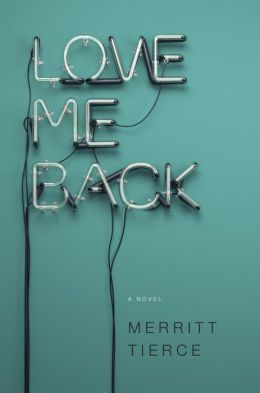
Love Me Back — Merritt Tierce

Love Me Back is compelling, worth reading, and strange: it is a novel almost without psychology, in which the protagonist, Marie, acts without asking herself why she acts (“Whatever is in me that makes decisions is now full of an accretion of plaque”). It is a strange book too to read back-to-back with Peter Thiel and Blake Masters’s Zero to One: that book is about startups, innovation, change, and societies, while Love Me Back is about Sisyphean repetition, ancient industries, grunt labor, and sex. The two books o occupy different market worlds, and Thiel and Masters mention restaurants repeatedly as the sort of low-margin high-competition businesses one doesn’t want to be in. Marie is in the business from necessity and because it provides opportunities she wouldn’t have otherwise: opportunities for sex and drugs, and opportunities to turn her mind off and make the money she can’t or couldn’t make otherwise.

Love_Me_BackThe novel’s chronology is chopped in an appealing way: Marie starts the story as an experienced worker and then jumps back and forward. It’s disorienting in a way that perhaps mirrors the disorientation of service at a restaurant. She is observational, though, from the start, imagining a customer thinking, “Would I be like Jordan?”, since Jordan “was a young blond waitress liberated by one of her customers.” The word “liberated” is key and yet Marie doesn’t seem to want to be liberated: she wants not slavery but structure. The novel is partially addressed to her daughter, who Marie bears as a teenager and whose father is unnamed, and in one early encounter with a man who “reminded me of a hairless mole we’d seen at the zoo” she snorts coke and then says:

I imagined her sitting on the counter, her short legs hanging off, swinging. I went back into the bedroom and said, I’m sorry, I have to go, I’m not well. I was shaking and I felt beautiful. I thought how beautiful it was that I had only one garment to put back on, my black cocktail dress there on the floor. I pulled it over my head. I don’t wear underwear. See you, I said. He didn’t try to stop me.

There is no antecedent to the pronoun “her:” we infer that Marie is speaking of her daughter. For a moment Marie feels something; it isn’t obvious that she often feels beautiful despite the action she gets. She senses without articulating it the power of glamour (one of her first restaurant men wears aviators, an object Postrel specifically discusses at the link). Marie is ambiguous in general; at moment she says “I hated staying the night because it was always different in the morning.” Was it? Is it? Why? The party ends, yes, and perhaps the illusion can’t be sustained and Marie wants the illusion. But relationships of any duration are the breaking of the illusion and the creation of something else in its place.

It is impossible to intelligently discuss Love Me Back without mentioning sex and the restaurant business. When Marie begins she says:

That was the best body I ever had, and the worst mind. I was seventeen. I was slender and strong and I also had swollen C-cup breasts. [. . . ] my mind was an open sore. It was black. I couldn’t tell if I was deep inside it or totally outside it. I would imagine being fatally cleaved all day long.

She never stops imagining being “fatally cleaved,” or so it would appear. The next three paragraphs spoils the novel to a minor extent, but the novel ends with Marie’s description of her getting ready for work, in a “professional” manner (with “professional” repeated often enough to make us skeptical of the term) and she says:

He starches everything to spec, so my long bistro apron can stand on its own and the creases in my sleeves will be so pointy that even at ten thirty tonight when I walk up to my last table for the first time they will see those creases and they’ll trust me just a little. My name is Marie, and I’ll take care of you tonight.

She’s where she started. Nothing changes in the restaurant business, or change happens so slowly that it isn’t perceived by the workers in the business. The work is cyclical, mythic, like economics prior to the Industrial Revolution. Hence the jarring feeling of reading Thiel and Masters next to Tierce. Love Me Back is about elemental matters, sexual and economic, and their book is about change. Both are beautifully written but in very, very different ways; Love Me Back took longer to enter but its proffered rewards turned out to be real.

The restaurant business is ugly and fascinating and un-PC. One man, Christopher, dispenses this advice, before he fucks teenaged Marie: “There’s only two times in a restaurant: before and after. You walk in, you white-knuckle it, try not to fuck up till it’s over and then it’s over. You made your money or you didn’t.” The third time in a restaurant business might be when you write about it. Marie likes it because exhaustion keeps her from thinking: she is “always that heavy, iron kind of tired” and her “exhaustion was metallic.” She likes it. She doesn’t have to think and doesn’t want to, which is curious given another seemingly throwaway detail: Marie has been admitted to Yale but shows few real interests or abstract thoughts. What is she interested in? Art? Science? Startups? Philosophy? We don’t see much. Certainly plenty of otherwise vapid students with good grades and test scores get into high-status, highly marketed schools, but Marie seems an extreme example.

She does learn outside of work:

I learned a lot of things while I worked [at Chili’s]. I learned how to sweep aggressively and efficiently. I learned how to anticipate and consolidate, which is all waiting tables is. I learned how to use work to forget. I learned how to have an orgasm and I learned I was a bad wife.

Many of those things are not like other things; they are so disparate that one learns both much and little about Marie at once. Marie learns that “there were rules to being a waitress. The main one was don’t fuck up.” Arguably that’s a rule of relationships too; the lack of punctuation, italics, or some other separation between the word “was” and “don’t fuck up” is also characteristics of the novel’s overall tone, which is chatty but not shallow. It seems like one should tire of it by the end, but I didn’t.

Marie rejects the support system she has: she leaves her parents because they treat her daughter more like their daughter, and while when she first leaves “They didn’t live far from us” she “didn’t know what to report. I hate that I hate my life?” The language here is clever: a weaker writer would’ve simply said “I hate my life,” but hating that she hates her life makes sense, and makes me pause: she chose her life and as such it doesn’t make sense to hate it. She’s too smart for simple teenage hate, but the perpetual restaurant life and the perpetual need for cash don’t sound fun either. Reading between the lines might also make Love Me Back a very subtle argument for making IUDs widely available, since they are tremendously effective and safe. But that would require acknowledging what people and especially teenagers want, and we live in a culture where that doesn’t happen; Marie doesn’t quite want to acknowledge what she wants, either. Want is somewhere in the rush to perpetual action, whether at the job or through sex. Let’s not ask why.

I hesitate to include the above paragraph because it makes the novel sound like a policy brief, which it isn’t. But it will in some quarters be read as one. Marie’s poverty is too persistent; for one holiday she says that “Thanksgiving dinner was the rice and beans with the onion and Ro*Tel added for flavor, which is what we usually ate, and the pie. He said the pie was the best thing he had ever eaten in his life.” But that’s also the night her husband learns that “it hurts when I piss,” and Marie knows why: “I knew that I had given Danny chlamydia and I knew I’d slept with my husband since then.” That undercuts whatever domestic success Thanksgiving might otherwise have entailed. One of the guys she chooses to fuck is described this way:

On his chest the tattooed face of a pit bull he said was the best friend he’d ever had, on his left calf a beckoning, bare-titted mermaid. Over his entire back a flaming skull, the fire burning up toward the nape of his neck [. . .] On his wedding finger a black band where a ring would go.

He is signaling his beliefs and attitudes effectively. During a three-way with two men, neither of whom is her husband, Marie says that one “Held me in place like that and I kept myself taut against him almost as if I were trying to resist or get away but it was the best thing I had ever felt with a man.” The divorce is almost foreordained. The other guys are too good, the variety too fun. A different sort of person could say, “Be wary of marrying teenage mothers.”

Does Marie learn over the course of the book? I think not. She does, however, speak, and her voice keeps me reading, and keeps me thinking about Love Me Back after I’ve moved onto other books, other worlds, other words. Marie’s words stay with me. She is like the narrator in True Things About Me or Catherine Millet in The Sexual Life of Catherine M. bizarrely, powerfully honest. I wish I’d read all three books long ago—perhaps the trajectory described in detail here would have been faster. But then again I might not have had the base of knowledge I do know, and into which Marie’s life can be incorporated and seen for what it is, rather than what others wish it to be.


Love Me Back is too intense to be for everyone and yet as you can gather above I love it. Here is an interview with Tierce, and here is a visual review.

“Amazon is doing the world a favor by crushing book publishers”

I have read many lamentations about the evils of Amazon but have yet to see anyone effectively rebut Matt Yglesias’s points in “Amazon is doing the world a favor by crushing book publishers.” The section about marketing is particularly interesting, since seemingly everyone agrees:

When I was a kid, my father was a novelist as were both of my grandparents. So I heard a lot of stories about how useless publishers are at marketing books. Then I got to know other people who wrote books and they had the same complaints. Then I wrote a book, and their complaints became my complaints. But it’s easy to whine that other people aren’t marketing your product effectively. It took the Amazon/Hachette dispute to conclusively prove that the whiners are correct. [. . .]

The real risk for publishers is that major authors might discover that they do have the ability to market books.

Publishers also appear to be bad at identifying which books readers want to read and which books readers don’t want to read; we’re now going to find that out by writers writing and then releasing their books into the wild.

Incidentally, though, it’s hard for me to find good books that are either self-published or conventionally published; if you have any suggestions please email me.

See also “Tyler Cowen on Paul Krugman on Amazon on the buzz.”

Two kinds of nurses, two kinds of professionals

“In adult film, there is only one kind of nurse, but in real life, there are two, though they both come in the same range of shapes, sizes, and colors. The first remembers what it is like to be weak and frightened and tries to tell sick people the kinds of things they wish they had been told when they were weak and frightened. They make you realize that nursing is one of those professions that maybe some people were actually, biochemically, born to do. The second type have the malevolent, sated languor of tropical predators and have never won an argument with a grown-up in their entire lives and feel anodyne throbs of reptilian anticipation at the thought of finally being placed in a situation where they know slightly more than another person.”

Zak Smith, We Did Porn: Memoir and Drawing, which is more humane than expected but does not have linear narrative coherence. Whether the latter is a virtue or drawback I leave to readers. I lean towards “drawback.”

How could the quoted paragraph apply too to teachers?

Getting good with women and how I’ve done almost everything in my life wrong: Part III

This is the conclusion to a series; the first part is here. The second is here.

An interview between me and Tucker Max about how I used to suck with women and now I’m okay went up on his Mating Grounds podcast. This essay grew out of my notes for that podcast.

Context and environment

Surroundings matter enormously in many contexts, and dating is a major one. Enough people who are dating form a dating market, and you should see this podcast and its transcript for details about markets. It can be important to change contexts if the current context is bad. Particularly bad contexts for straight guys include the military, engineering schools, rural areas, and Silicon Valley. My high school context was very bad and my college context very good. The ratio of men to women in a given situation has more short-term impact on success or failure than almost any other variable.

Let me tell another story to illustrate this. My fiancée went to Arizona State University for undergrad and she says that at ASU she didn’t like the pretty one, which is baffling to me. Maybe she felt that way presumably because a lot of the culture there revolves around sorority girls, bleached blond hair, and so forth. Nonetheless that she feels she got little attention seems insane to me.

Still, now we’re in New York City, and other guys hit on her all the time; she might be in the right cultural environment for her temperament. There are lots of attractive people in New York, but there’s a much stronger intellectual, change-the-world vibe than there is in Arizona (or L.A.).

The above paragraphs remind me of another point that’s applicable when you, the guy reading this, starts to get successful: If you’re going to be with a high-status, attractive woman, other guys are going to hit on her. If she responds to that in a really positive way you have a problem. But it’s going to happen. If you’re in a relationship you’ll find other women hitting on you too, albeit usually in a less obvious and less overt way. In high school and college, a lot of the smartest guys have exit options ready to go in the event they leave their relationship or their girlfriend leaves them; girls like guys with options and like guys who other girls have approved.

It’s also possible to check on girls in a relationship in a reasonable way. For example, we were part of a group in Arizona, and one guy was my fiancée’s colleague, and he eventually moved away. A couple years later they were chatting on Facebook, and he was like, “Are you still with Jake?” She said yes, and he replied, “Well, that’s too bad. If you break up, call me.” Which is a way you hit on someone without being a giant asshole about it. She told me about it and I was like, “Well, that’s fair.” People do break up for various reasons.

This illustrates another point: if you’re with a woman who wants to leave, she’s going to leave, either cleanly and reasonably or in a foot-dragging, poisonous way. You can’t force a person to stay. Desirable people are always in short supply. Learning to live with loss is part of learning to live with success.

To return to market issues, I don’t think I would’ve thrived at ASU or the University of Arizona as an undergrad: the bro-ish frat types seem to be optimized for those schools, and I wasn’t either one. I didn’t aspire to go to them. If you’re like I was in high school, you shouldn’t either, regardless of whether your friends are a fratty, party-down types. I did reasonably really well with women in college because I was a) athletic by the standards of my school, b) had learned a lot through painful trial and error in high school, and c) my school was about 60% female and 40% male. That meant there were always single girls around who were looking for guys. Friends who went to engineering schools had the opposite experience, since those schools were 60 – 70% male; some would have been better served romantically by majoring in engineering at big public schools.

If you’re in high school you’ll likely find it difficult or impossible to dramatically change your environment in the short term. There aren’t good solutions for you. Sorry. I don’t believe in telling comforting lies, however, and I do believe that some problems don’t have real or good solutions. I wish I’d admitted so earlier.

Miscellaneous

* The way a girl who says no will sometimes say yes if you find another girl. If one girl says no, move on. It is at best extremely difficult and more likely impossible to change someone’s initial response. To the extent it can be done, it can be done through rivalry.

* It is very hard, if not impossible, to fix most broken people. Don’t try. If you get with a girl who has very serious mental health problems, or makes very bad choices, let her be someone else’s problems. You don’t need to fix the world, and broken people can be dangerous. If you’re a straight guy you’re presumably not too worried about dating guys who are fundamentally broken, but women with serious mental issues can be really bad.

If you identify someone like this, let her go. If you’re inexperienced you might be bad at identifying this kind of person, but if you do, keep your distance. Move on. Don’t return their emails, texts, and phone calls.

* I’ve gone through very promiscuous phases and very monogamous phases, and this is probably typical of a lot of college / urban young people who aren’t participating in some religious sub-culture and who are paying attention to sex and dating.

* Most of the world’s major religions discourage sex for reasons that probably made sense in say the year 1,000 but may or may not make sense anymore. Decide for yourself whether a set of rules and principles for running a society in the year 1,000 make sense in a modern, urbanized, industrialized society.

* I’d emphasize this: “a shockingly large amount of human social life, or like intellectual life, or other life boils down to trying to prove that you’re not a moron and trying to test to see if other people are.” The sooner you learn to do this, the better.

* So much of life consists of defaults. Understanding and in some circumstances getting away from those defaults is vital. The Internet can actually help enormously in this regard by making a lot of information much more available—for those willing to seek it.

* Schools like prestige because it makes the schools look good; parents like prestige for similar reasons, and because they want their children to be economically independent. But prestige isn’t necessarily that good or important for average people. Success in school isn’t essential to success with women. Prestige as conceived by schools and parents isn’t necessary or often  even helpful for success with women, and it may be counterproductive. In the long term we’re all dead and there is no absolute definition for prestige.

* What people say and what people do are often vastly different. What they do counts ten times as much as what they say. Take note of people whose behaviors habitually don’t match their words. With women, if she wants to be with you but does anything else except be with you, she doesn’t want to be with you. In this and many life domains, it should be HELL YES or no.

* When someone says no, take it gracefully and move on. “No” is permission and encouragement to do other things.

* You will very rarely if ever truly know another human being, and another human being will rarely if ever truly know you. Accept it and be ready to be surprised.

* People who don’t read usually don’t know much (or they know a lot about a single, narrow area that’s usually related to their work). A good book distills years or decades of experience, insight, and knowledge into a single volume that can be read over a couple of hours. Consider that when you’re allocating your time.

Not the best

In most domains I’m not the best. You don’t have to be the “best” either. I’m not the best athlete, I’m (probably) not the best intellectual (depending on one’s definition), I don’t make the most money, I don’t have the coolest job, I’m not the most outgoing, I’m not the best conversationalist, I don’t have the best sense of humor. But in all of these domains I’m above average and by now I’ve been above average for a long time, and that’s a huge advantage over guys who don’t even try. Success in any domain starts with trying.

But trying can be scary because it comes with it the possibility of failure. It took me a long time to embrace failure as a part of the process that leads to success. The link in the preceding sentence goes to Megan McArdle’s book The Up Side of Down: Why Failing ell is the Key to Success. In it she writes of the “deep, soul-crushing periods of misery following stupid mistakes that kept me awake until the small hours of the morning in a fog of anxiety and regret.” But while that was obviously horrible:

It was only later—much later—that I saw the wreckage of my previous hopes become the foundation for something bigger and better.

Writers in particular are terrible procrastinators because they were good at English in school. They know on some level that no actual piece of writing is as good as it seems in their heads. The trick in becoming a productive writer is to either have tons of deadlines or to realize that an actualized piece of writing is always better than a perfect piece of writing that only exists in the head. And “Falling short: seven writers reflect on failure” is a great piece in which seven writers reflect on failure. Success also rarely comes from not failing, since not failing implies not trying; success comes from failing, learning, and then trying again. In the real world there are no no-lose propositions.

In most domains, even the ones I’m now “good” at, I’ve failed in some respect, and I’m still not the best. But that’s okay. For most guys, being the absolute best at a thing is overrated compared to being above average in a range of domains. During my initial interview with Tucker I related the story of Scott Adams, who has said he’s not the best artist and he’s not the funniest guy but he combines both effectively in Dilbert (he also discusses the role of failure in his own life). Combining disparate skills is still underrated. Steven Berlin Johnson’s book Where Good Ideas Come From is good on this subject.

Most guys don’t have to be the best athlete or musician. They should, however, be better than other guys, and the amount of effort it takes to be “better” is often much smaller than anticipated (and also depends on the comparison group). I’m not and never have been the best athlete, but by now I’m probably better than 80% of other guys simply because I care enough to run and lift. This is a huge, key advantage, because women do evaluate men based on physicality, especially in short-term situations; arguably women can afford to be choosier than men in short-term situations because women are warier of those situations.

Anyway, as I said earlier, this essay was supposed to be a couple notes but it turned into more, in part because I suffer from logorrhea and in part because most of the content in this essay is already drifting around in my head.


See also “The appeal of ‘pickup’ or ‘game’ or ‘The Redpill’ is a failure of education and socialization” (note: “Feminism didn’t come from nowhere. Neither has pickup.”) and “The inequality that matters II: Why does dating in Seattle get left out?

Links: Markets, sexuality, public transport, and failure

* “A Rare (Earth) Case of Wisdom,” or “markets work.” That the latter is still worth saying in 2014 is distressing.

* “The Boardroom and the Bedroom: How both dating and finance have been screwed by the Internet” is entertaining throughout but consider that both may raise the returns to people with long-term orientations as all the short-term oriented people flee the market. Plus those who tire of volatility will return to fundamentals. Who has written the Random Walk Down Wall Street of dating? I only invest in index funds.

* Falling short: seven writers reflect on failure.

* “Public Transit: All About Density.” Supporting dense development means supporting the environment.

* “Why Schools Can’t Teach Sex Ed in the Internet Age,” and, perhaps relatedly though on another site, “Everybody Sexts.”

* Markets matter in general and mating markets matter in particular.

* Canon G7-X review; I have an RX-100, bought used, and it is excellent.

Getting good with women and how I’ve done almost everything in my life wrong: Part II

This is the second part in a series; The first part is here.

An interview between me and Tucker Max about how I used to suck with women and now I’m okay just went up on his Mating Grounds podcast. You should go listen or read the transcript. This essay grew out of my notes for that podcast.

Empathy

I did some online dating years ago, primarily in Seattle and a little bit in Tucson, and some of the girls I got to know showed me their message streams. Some messages were disgusting or outright idiotic, but most they were boring and poorly thought out: “Hey.” “How are you?” “Your profile is interesting.” Pretty girls get dozens of them every week. Hell, even average girls do. I was thinking, “If I were a girl, I’d get turned off by all this crap too.”

Most of the girls I talked to—even the ones who just wanted to get laid—were in fact tired of all that crap. They got so many low-quality messages, or messages from guys who’d copied and pasted an initially clever come-on but couldn’t follow-up. Those women wanted something a little different. They were bored, which is a point I’ll come back to later. Dating for women is different in important ways than dating for men, and I wish I’d understood that sooner.

Reading those messages also explained why I was doing fairly well, since I was deliberately trying to say something non-obvious and ideally slightly lascivious without being gross. That class of message stood out. Being tall and in shape obviously helped too. My photos were pretty good. I didn’t spend much time playing games, and if women didn’t want to meet quickly I would stop messaging them (which would often lead those who were reluctant to meet for whatever reason to want to meet).

The girls from the Internet taught me something else useful too: some said they liked online dating because it let them meet guys without their bitchy, judgmental, hypocritical friends around (they didn’t use those words, but that’s what they meant). Without the chorus of shame squawking in their ears, real desires emerge. The real upholders of the sexual double standard are actually women, not men.

Somewhere along the way I realized that lots of women are lonely and looking for connection, and that loosened me up as far as approaching women and asking them out. I’ve asked out women on the street, in buses (if you’re a guy on the prowl you should love public transportation), in grocery lines, on running trails. Usually the conversation starts with something observational, then moves to whatever is going on that day or week. If you have nothing going on, get something going on and get talking about it. Energetic people are on average more attractive than sluggards.

I’m still not inured to rejection—is anyone?—but if a girl on the street says no, it doesn’t matter. Move on. She’ll forget, and perhaps I’ll make some other girl’s day, and she’ll go home and tell her friends that a cute stranger was hitting on her.

This isn’t something I experienced directly, but a friend’s recent adventures helped teach me too. She’s posted to a well-known amateur porn site (without her face in the shots). On this site she gets a lot of responses from viewers, and she’s shown them to my fiancée and me. They’re voluminous, amazingly bad, and unintentionally hilarious. Hundreds of guys write to her, almost all of them saying some variation on “You’re so hot” or “I want to fuck you.” And these guys have no idea where she lives.

The messages were pathetic, and when we were reading them my fiancée said something like, “This is what all women have to deal with.” In that moment so much became clear to me. I knew that, intellectually, but seeing the really low-value, unsuccessful messages from guys on the Internet reinforced that point. It’s such a waste of time to send those messages. They’re more a fantasy projection that a real attempt to meet women, but every minute or second they spend sending “Ur so hot show me ur butthole” is a minute or second they’re not doing something useful. If I were a woman I couldn’t imagine looking for quality men on amateur porn sites. Yet these are doing so, and the way they’re doing it is all wrong, and yet they persist in doing it the wrong way.

And our friend is not the primary motivator for them. She’s reasonably attractive but not incredibly spectacular—most guys and girls who have a taste for other girls would be happy to date her. But you won’t see her on a Victoria’s Secret runway. she’s getting this kind of response, which is a distillation and intensification of what many women experience otherwise. In real life most guys won’t go up to women and say “show me ur butthole” for good reason; online, with the cloak of pseudonymity, they’re willing to. In real life, guys would probably like to say that, but they can’t or don’t.

On a separate subject, reading Norah Vincent’s book Self-Made Man taught me about the lack of empathy women have for men. So did stories told by women about gross and very insistent guys, or nasty comments from parents and other girls. Reading “The Daughter-Guarding Hypothesis,” since it showed how fear and loathing around sexual behaviors get inculcated in women from an early age.

Looks count

Looks and style matter, and like many nerds (and especially nerds growing up in nerd-infested places like Seattle) I wanted to believe they didn’t. But people make snap judgments for reasons that I now realize are quite good: we communicate a huge amount of information based on what we wear, how we hold ourselves, and so forth. For both men and women wearing clothes that fit matters. Women learn this almost immediately; it took me until I was 25 to figure it out.

Still, when I was 14 or 15 I started lifting and running consistently relatively early, and that was a definitive advantage that continues to be an advantage—not only in dating but in long-term relationships. If you’re old enough to know people who’ve been in long-term relationships, you’ll have seen the pattern in which one or both parties in a long-term relationship let themselves go, which usually coincides taking their partner for granted. That’s probably a mistake at any time or place, but it’s really a mistake in contemporary American society, since in this society and culture the rigors of the dating market never really end. That may be a bad thing but it is a thing. You can’t let yourself go, both for your partner’s sake and because you never know when you’re going to be involuntarily dumped back into the market.

Younger people probably shouldn’t be focused on very long-term relationships because they change so much. I didn’t have a somewhat stable, developed personality until I was 24 or so. People evolve through their lives but that evolution is particularly rapid and pronounced from puberty well into the 20s. If you’re 20, chances are you won’t be dating the same person for five years. Understand that you’re going to be on the market a lot, and it’s difficult or impossible to hide from market tests.

Guys who pay attention to their posture, to what they wear, and to their workouts are in the game. Guys who don’t probably aren’t. That doesn’t mean guys have to become obsessed with these issues—I never have been—but it does mean being aware of them and taking care to do them right.

The last part is here.

Getting good with women and how I’ve done almost everything in my life wrong: Part I

An interview between me and Tucker Max about how I used to suck with women and now I’m okay just went up on his Mating Grounds podcast. You should go listen or read the transcript. Then again, when I told my fiancée that I used to suck with women and now I’m okay, she said, “Wait, when did that happen?”, so know that at least one knowledgeable person thinks I’m advertising falsely.

Let’s take this paragraph to wait for you to listen to the podcast and come back.

When Tucker asked if I wanted to be on the podcast, I thought I should say no, primarily because my child-adolescent-adult trajectory hits the broad bounds of normal. But a lot of the guys listening to the podcast are 13 – 22 and having struggles similar to mine. I began imagining what I would tell my earlier self and what I think I’ve learned. The answer turned out to be “quite a bit” (though most of the following is likely to be obvious to older guys who have their lives together).

This started as notes, eventually morphed into paragraphs, and then by accident I had an essay. Call it a hazard of the writing life. I really meant it to be shorter.

Growing up

Last month my Dad said, correctly, that I was a pretty weird kid. When your parents say you’re weird, you know it’s true. I don’t entirely know now why I was weird from ages 10 – 14 or so and I still don’t know why I chose a lot of non-functional behaviors, like obsessively playing video games and Magic Cards. I had an exacting, precise, nerdish disposition, but that alone doesn’t explain why I was such an anti-social loser. Computer games can to some extent substitute for the real world and for that reason they can be dangerous. For me computer games were a real-world substitute. Anything that makes you avoid the real world, broadly defined, for long periods of time is not good.

Eventually and with much effort I grew out of that phase, and despite the unpleasantness at the time I did learn some useful, actionable things. Like: choose hobbies that increase your overall attractiveness. Such hobbies are very rarely video games. Almost no girl says, “I want a level 50 wizard” or “I want a guy who gets home from school and watches five hours of TV.” Girls want the guy who makes the TV or the music, or who is an athlete, or who has some other status markers that matter to both men and to women.

In high school and college, sports and music are probably the biggest, most prominent, and most important actionable things (choose “action” wherever possible) that attract women. If you have the choice between playing the latest video game or playing your guitar, choose guitar. If you have a Friday night in which you can play video games, alone or with your video-game fanatic friends, like you always do, or go do almost anything else, choose “anything else.” It took me shockingly long to realize this. Try to make “anything else” happen.

(My fiancée was listening to the Podcast and heard me describe playing Starcraft on Korean servers, and she said, “How many hours did you spend playing?” The answer is… depressing. During that period I built almost no useful skills.)

Let me emphasize that choosing “actionable” things matters. To some extent, thoughts and beliefs that do nothing to change actions don’t matter. So if you’re reading this and thinking, “I suck” or “I suck with women” or whatever, that may be interesting, but the only really interesting thing is the steps you can take right now to make things better. For me, quitting video games was in and of itself a huge boost. I’d argue that quitting video games is going to be good for almost any guy.

Certain domains simply don’t interest most women or interest them very little. As noted, video games are one. Sports, as a spectator activity are another. Few women want to know about the travails of the Knicks, or how the ’92 NBA Championships. Guys who watch four hours of sports a day are, all else being equal, handicapping themselves.

I’m not saying you should never play video games or watch sports—plenty of successful guys do—but if they must be done they should be done in measured ways. As a teenager I was for whatever reason incapable of playing video games in a measured way. They became a substitute, rather than a complement, to the real world, and that is a problem.

Some valuable domains that still don’t in and of themselves interest women much. I’ve never heard women discuss among themselves Unix systems programming, or for that matter any kind of programming. Few women hunt live animals or express deep interest in car minutia. It is possible to attract women as a second-order effect by doing these things—tech millionaires probably do okay if they’re famous, and domain mastery can be sexy in the right circumstances—but they’re not as good as being an athlete, or a musician, or a comedian, or better still an athletic musician who does some comedy too.

What else? I wish I’d learned when I was younger how to relax. Talk to people. Try to have fun. Simple stuff that comes naturally to many but didn’t come naturally for me. I wish I’d understood that almost everyone has the same problems and feelings I was, but they weren’t expressing those feelings. That includes all the embarrassing experiences and sensations. I wish I’d realized that funny stories often follow a simple formula: they are embarrassment + time. Reading, and especially reading fiction, helped teach me these things.

These comments now sound insanely simple, but for whatever reason I was really bad at interacting with people, and I terrified of social judgment. But that judgment isn’t actually all that important, and most people will respect effort more than no effort at all.

I was really afraid of girls when I was an early-ish teenager, for reasons not obvious to me anymore. It’s really hard to debug the mind of the 13-year-old you used to be. I don’t think it was totally logical. Maybe it was evolutionary. Maybe it was my own psychology at the time. I had a disproportionate fear of negative consequences. Maybe I was scared of being isolated than I already felt. I hadn’t realized that in many if not most domains, any individual can choose to be in the game or out of the game, and I chose to be out of the game.

Change came slowly. At some point too I began thinking about most of the magazines that women read and the shows they watch, and they’re all about relationships, all the time. The vast majority of women are intensely interested in men and attracting men. Seems obvious in hindsight, but it’s useful to state explicitly. The metrics they use to evaluate men are similar to but subtly different than the ones men use to evaluate women. So many attractive women are insecure about their bodies, and they make themselves more insecure by looking at all these Photoshopped models. It’s crazy. In some ways women have more unreasonable standards for themselves than men do for them!

I also had almost no positive role models for dealing with women. I didn’t have older cousins or brothers or whatever, and I wasn’t easily mentored (this is one reason why I think Mate, the book Tucker and Geoff Miller are writing, is so important). My ideas about women came from Disney movies or pop culture or fantasy novels, none of which are terribly accurate or do a good job representing real women (in advertising everyone is ready to fall into bed all the time, or buying the right jeans makes you sleep with someone).

In fantasy novels of the sort I read, to put it politely, the psychology of the female characters did not (and does not now) map well onto actual women. To put it less politely, these novels idiotically portrayed women as either highly virtuous prizes to be won by male heroes or villains or as evil sluts. This generalization includes fantasy novels written by women.

In life, of course, the vast majority of women are neither and dislike being treated as highly virtuous prizes or as evil sluts. I don’t even like using the word “slut” for reasons articulated well by Mark Liberman; the word “projects bad associations based on a framework of ideas that I don’t endorse.” I’ve also realized that most sexual shaming occurs from women to women, rather than from men to women, and most man to woman sexual shaming occurs because the former can’t get the latter and retreats to social attacks as compensation.

Teachers or other adult figures didn’t help much either, and being a teenager can be very isolating in American society because one only has equally ignorant peers for information. Teachers have strong incentives not to be level with students. If teachers tell students important truths about social relations or male-female relationships, parents will go ballistic. As kids begin discovering essential truths they often feel “the world [is] corrupt from end to end,” but we then propagate the cycle with our own children. Even today, in 2015, it seems radical to ask, as this article does, “What If We Admitted to Children That Sex Is Primarily About Pleasure?” Instead, we collectively leave each generation to rediscover everything for themselves. Then we get made when someone like Neil Strauss writes a book like The Game, which, while not a perfect work, is still a net improvement for average guys who know nothing, like I once did.

For me getting hobbies helped. I noticed that guys who were more successful with women did a lot of stuff, with “stuff” being defined broadly. Hobbies meant running and working out. They meant getting jobs. They meant writing for the newspaper. They meant reading. Reading is essential, and when I moved on from fantasy I mostly read literary fiction and interesting nonfiction. Both helped me develop more empathy and understand what other people feel, even if most people won’t admit those feelings to anyone but their closest friends. Fiction is often a forum that paradoxically offers greater honesty that nonfiction.

Recognizing that other people were doing the sorts of things I wanted to be doing helped. What were they doing that made them successful, and what was I doing that made me unsuccessful? I began asking those kinds of questions and fishing for answers, which took a long time to come to fruition. Have you ever been in a situation in which the obvious losers of a group call the obvious winners of a group losers in order to make themselves feel better? Me too. Except that I was among the losers, and I wanted to not be.

Clearly some guys do much better with women than others, and it’s not a bad idea to figure out what those guys are doing. The same is true of women: I’ve met women who are great at flirting, who are great at making guys feel like a million bucks, and who are pragmatic about the guys around them. They do great. I’m thinking of one girl in particular who I was friends with in high school, who consistently had boyfriends and fuckbuddies and so forth because she was fantastic at making guys feel great about themselves. She smiled at guys she liked, laughed a lot, made plans to meet (and didn’t flake), and so forth. She not surprisingly batted way out of her league and had a spectacular sex life for someone her age.

Reading

No single book from that period stands out as definitive, but in college I discovered evolutionary biology, which was tremendous. Evolutionary biology gets unfairly maligned in various forums, and the pop version of it sometimes get fairly maligned in others, but reading it suddenly made a lot of previously inexplicable behaviors explicable. Why do girls say they hate dating assholes yet keep dating assholes? Why are “nice” guys so often unsuccessful (the scare quotes around “nice” are key). Why do so many people say various things and then act contrary to the things they say? Why is Saturday night behavior so often regretted Sunday morning?

I wouldn’t argue that evolutionary biology has all the answers about every facet of human behavior, and I would argue that people diverge widely along many axes, but I will argue that evolutionary biology describes the way average human male and female reproductive incentives differ and how that gives rise to most of the observable conflict one sees on average between the sexes. I’d also argue that understanding evolutionary biology is one way of consciously overcoming whatever ingrained behavior might be primarily genetic; if you want to act contrary to what you think the default path might be, it helps to understand the default path and how it came to be. Where did I start? I don’t remember. Miller’s book The Mating Mind found its way to me early. So did The Evolution of Desire. Both are excellent places to start.

There are also a reasonable number of people—though they’ve got to be a small percentage, for obvious reasons—for whom understanding sex and dating simply isn’t a priority, and if you’re one of those people, I don’t know why you’re reading this essay. Those people presumably go find other productive things to do.

Most of what I began to do in high school is in the podcast. I mentioned getting a job (briefly at an Old Navy, then at a YMCA, and later in college as a lifeguard, which I should’ve started in high school). I started doing simple stuff like… talking to people, and saying yes to events, and so on. For someone who was pathologically unhappy from ages 10 – 14, that was a big step.

There wasn’t a definitive, epiphanic moment for me. Progress was slow, and had I somehow known what I know now it would’ve been much faster. But I did notice that when I was a teenager—and really for my entire life—I’ve heard people confidently state stuff that is totally wrong. In high school heard all these guys bragging about all this stuff that at the time I couldn’t judge, really, but that I now know to be at best wrong and at worst incomplete.

Let’s take one example: You’ve guys confidently pronounce, “Women just want money” (Tucker and Miller did a whole podcast on the subject.) But I know plenty of guys who do really well with lots of great women yet don’t have a lot of money. Some have none at all. Musicians are a classic example: Many have no money and tons of groupies. For most guys, having “enough” money helps, but the amount a guy has to have to hit the gold digger set is astonishingly high—so high that it’s probably not worth pursuing if your goal in a modern Western country is to maximize your success, defined however you’d define it, with women.

Consider one literary example of too much money focus: Matt from Megan Abbott’s novel Dare Me. The novel is about a cheer team ruled by a top mean girl, but the team is roiled when a young coach shows up (this sounds like a teen novel, but it’s not: the rivalry leads to murder, affairs, and to real-world issues rather than “young-adult,” literature-world issues). Matt, the coach’s sad sack husband, barely appears in the novel because he works all the time.

His wife cheats on for many reasons, but boredom is a prominent one. Matt’s “child” might not even be is. This is how Matt appears to the novel’s protagonist and to his wife: “He’s working. He never, ever stops.” Or: “He is always on his cell phone and he always looks tired.” Or: “He works very hard, and he’s not interesting at all.” Among many contemporary women boredom is the greatest enemy.

Most have “enough” money, and even those who don’t are often bored by their low-skill service-sector jobs or by their schooling and would rather choose fun, exciting, louche guys over stable boring guys. That may be a fault of the women themselves—now more than ever a propensity to boredom is really a character fault in those lacking curiosity—but it’s still pervasive enough to merit mentioning.

A guy can’t cure every woman’s boredom. Nor should he try. I’ve tried without much success. In the process I did learn that I’m the wrong guy for a lot of girls—if you don’t like books or talking about ideas, or if you want to go out four nights a week, I’m the wrong guy for you. But I am really, really the right guy for some girls. Those same girls find a lot of guys annoying, shallow, or boring. I’ve met girls at book readings, where the baseline crowd is 40+. A girl in her 20s stands out, like I did as a guy at the same age. But we gravitated to each other because the kinds of people who show up at book readings are very different from most people.

I won’t call Dare Me a great novel. But its unusual voice makes it more honest than most novels that might loosely define its genre. It does have a less varnished understanding of how many women feel than most novels. Much narrative art is designed to flatter its readers’ and watchers’ existing prejudices and self-conceptions. Finding art that challenges prejudices and self-concepts is harder (have you noticed how I keep saying and implying that the hard things are worth doing?). Matt has an important lesson for guys: he misallocates resources because he assumes that coach just wants more money.

She doesn’t: she wants attention, she wants sex, she wants to feel desired—she wants the things most women want. Money is great, and more is obviously better than less, but in most situations most guys don’t need that much money. They need to be able to buy drinks and event tickets and pay rent. They need enough cash to have clothes that fit, and that amount is arguably lower than it ever has been thanks to “fast fashion.” Advertising has wrongly convinced guys that material goods get the girl. That’s not true. Guys don’t need enough money for luxury cars or exotic vacations or flying first class or the many other things that guys imagine will get them laid. That’s one of many important points Miller makes in Spent.

The amount of money needed to play the money game is absurd. The money game demands hundreds of thousands of dollars a year—or having a million dollars or more. For most guys, the jobs and businesses that yield so much cash also consume way too much time and energy. Unless you love the work for its own sake—if you get your jollies from building website backends or financial accounting, do it—playing the money game is a waste of time.

I’m not entirely sure where the association with money and romantic success comes from; perhaps it’s from art, or from the fact that guys who are ridiculously, absurdly wealthy can use their money to attract women, but even then they’re a) probably not having the highest quality relationships and b) again, that domain is blocked for most guys most of the time. By definition we can’t all be in the top 5%. The key is understanding when being in the top 5% or top 1% matters and when being average or above average is sufficient.

Most women also aren’t gold diggers and don’t like being treated as such. The number of actual gold diggers is small, but, as with sociopaths or bipolar people, they can be quite costly if they’re not recognized rapid. A significant number of women will also be turned off by guys who transparently want to buy them.

You’re better off focusing on knowledge and activities that don’t require tons of money. In addition, the more you as a guy reading this interact with women, the better off you’ll be. You’ll start to empathize with women, and that will help. I’ve had a couple experiences that really helped me in that regard.

Part II is here.

Links: Polyamory is boring, Israel, relationships and books, startups, adjuncts and more

* “Polyamory Is Boring” (see especially the Know-Nothing thought experiment) and, relatedly, “Polyhacking.” The comments are great in both, especially about fiction’s relationship with monogamy.

* Jeffrey Goldberg: “Even Israel’s Best Friends Understand That It Is Disconnecting From Reality.” Following Israeli politics even from a distance is depressing.

* New York Times essays: “Have You Ever Had a Relationship End Because of a Book?” I haven’t, but I have had relationships end due to a total lack of books.

* “Fundraising Acceleration Is The New VC Investment Thesis;” for many years I’ve thought about writing a novel set in and around startups and it may now be number two or three on the docket. I think I may go very lascivious first.

* The Myth of Chinese Super Schools.

* Someone found this blog by searching for “sex japan drunk,” for reasons not obvious to me.

* Catherine Stukel delivers what shouldn’t be news: Is That Whining Adjunct Someone We Want Teaching Our Young?

* “A sexual harassment policy that nearly ruined my life;” expect to see more of these stories.