Links: Schools, TSA voyeurs, parenting, and more

* “The end of higher education’s golden age” (maybe; if the problems Shirky discusses have existed since 1975, why can’t they exist for another 40 years?)

* In “Hit ’Em Where It Hurts: The solution to the higher-ed adjunct crisis lies in the U.S. News rankings,” Rebecca Schuman proposes that colleges be discouraged from hiring adjuncts by having U.S. News and similar college raters penalize colleges for hiring adjuncts. But I see two big problems: I haven’t seen any conclusive evidence that adjuncts are worse teachers than full-time faculty; yeah, we can provide a lot of anecdotes for either side, and, based on a very minor study, the answer so far appears to be “no.”

The second problem: how many colleges care about rankings, or play rankings games? Maybe 300 or 400 out of 3,000. Matthew Reed over at Confessions of a Community College Dean is fond of pointing out that everyone in the media focuses obsessively on those 300 or 400 colleges and especially on the ones perceived as elite, despite them representing a tiny portion of the college population or market.

* “TSA Agent Confessions;” these are the people “keeping you safe.”

* “Fight Over Effective Teachers Shifts to Courtroom.” Brilliant maneuver.

* “How the left’s embrace of busing hurt the cause of integration;” file under “unintended consequences.”

* “Is Parenting Really All Joy and No Fun? A Happily Childless Reviewer Investigates Jennifer Senior’s Book.” I read the book and find the behavior of many of the women in it bizarre. There is an interesting long-form magazine article to be written about All Joy and No Fun, Esther Perel’s Mating in Captivity, Bryan Caplan’s Selfish Reasons to Have More Kids, and a few other of the baby-crazy-backlash books (perhaps the one about French parenting). It does seem that the more children are objectively safer, the more parents and especially mothers worry.

* Humans of New York: The Dating Coach. Fiction has for the most part not written about individuals like John Keegan.

* The terrifying surveillance case of Brandon Mayfield.

* “Mooconomics,” a terrible title for a fascinating piece about how we might get to online education works (or it may already be here).

The modern art (and photography) problem

In “Modern art: I could have done that… so I did: After years of going to photography exhibitions and thinking he could do better, Julian Baggini gave it a go. But could he convince The Royal West of England Academy with his work?“, Baggini writes:

there are times when we come across something so simple, so unimpressive, and so devoid of technical merit that we just can’t help believing we could have done as well or better ourselves.

He’s right—except that this happens entirely too often and helps explain much of modern art’s bogosity. I’m not the only person to have noticed—in Glittering Images, Camille Paglia writes:

the big draws [for museums] remain Old Master or Impressionist painting, not contemporary art. No galvanizing new style has emerged since Pop Art, which killed the avant-garde by embracing commercial culture. Art makes news today only when a painting is stolen or auctioned at a record price.

She’s right too; many people have noticed this but few apparently have in the art world itself, which seems to have become more interested in marketing than making (a problem afflicting the humanities in academia too). But there are enough people invested in and profiting from propagating bogosity that they can remain indifferent to countervailing indifference.

OLYMPUS DIGITAL CAMERAYears ago I was at the Seattle Art Museum and looking various pieces of modern supposed “art” that consisted mostly of a couple lines or splotches and what not, and they made me think: “there’s a hilarious novel in here about a director who surreptitiously hangs her own work—and no one notices.” Unfortunately, now I’ve realized that people have already done this, or things like it, in the real world—and no one cared. It’s barely possible to generate scandal in the art world anymore; conservatives have mostly learned about the Streisand effect and thus don’t react to the latest faux provocation. The artists themselves often lack both anything to say and any coherent way of saying it.

To the extent people respond to art, they respond to the art that people made when it took skill be an artist.

Photography has a somewhat similar problem, except that it’s been created by technology. Up until relatively recent it took a lot of time, money, and patience to become a reasonably skilled photographer. Now it doesn’t take nearly as much of any of those things: last year’s cameras and lenses still work incredibly well; improvements in autofocus, auto-exposure, and related technologies make photos look much better; and it’s possible to take, review, and edit hundreds or thousands of photos at a time, reducing the time necessary to go from “I took a picture” to expert.

The results are obvious for anyone who pays attention. Look through Flickr, or 500px, or any number of other sites and you’ll see thousands of brilliant, beautiful photos. I won’t say “anyone can do it,” but many people can. It’s also possible to take great photos by accident, with the machine doing almost all the work apart from the pointing and clicking. Adding a little bit of knowledge to the process is only likely to increase the keeper rate. Marketing seems to be one of the primary differentiators among professional photographers; tools like Lightroom expand the range of possibility for recovering from error.

One of the all-time top posts on Reddit’s photography section is “I am a professional photographer. I’d like to share some uncomfortable truths about photography,” where the author writes that “It’s more about equipment than we’d like to admit” and “Photography is easier than we’d like to admit.”

The profession is dying, for reasons not identical to painting but adjacent to it. In photography, we’re drowning in quality. In fine art, we’re drowning in bogosity, and few people appear to be interested in rescuing the victim.

What we signal when we speak: Verbal tee-ups, honesty, and tact

In “Why Verbal Tee-Ups Like ‘To Be Honest’ Often Signal Insincerity: James W. Pennebaker, of the University of Texas, Austin, says these phrases are a form of dishonesty,” Elizabeth Bernstein ends with a quote: “You are more likely to seem like someone who is perfectly honest when you are no longer commenting on it.”

That’s probably true in some situations, but verbal tee-ups are (often) a decorous way of saying, “I’m going to say something you don’t want to hear” or “I’m potentially going to violate social convention by saying this.” They’re demonstrating social deftness by pre-empting feelings of the receiver saying or thinking, “This person is a jerk.”

In many cases qualifiers should be eliminated, but they exist for a reason and, as someone sometimes accused of being an asshole when I’m being honest (or trying to be), I’m aware of why verbal tee-ups are often deployed the way they’re deployed. Bernstein says, “for the listener, these phrases are confusing. They make it fairly impossible to understand, or even accurately hear, what the speaker is trying to say.” She’s right—the phrases are sometimes confusing. But sometimes they make it easier to hear what the speaker is saying. Bernstein does write:

Her advice is either to abort your speaking mission and think about whether what you wanted to say is something you should say, or to say what you want to say without using the phrase. “Eliminating it will automatically force you to find other more productive ways to be diplomatic,” Ms. Jovin says.

In general thinking about what you say, to the extent you can do so on the fly, is a good idea, but it’s also hard to do—which is probably why we get encouraged to do so so often. Qualifiers are a way of keeping your identity small while still speaking substantively. We could call the judicious use of verbal tee-ups “tact.”

The Second Machine Age — Brynjolfsson and McAfee

The Second Machine Age: Work, Progress, and Prosperity in a Time of Brilliant Technologies is worth reading if you haven’t read Tyler Cowen’s Average is Over or the various other books about the influence of computers, networks, and the Internet on society and the labor market. If you’ve already read some of those books, then by osmosis you’ve already The Second Machine Age.

The Second Machine AgeIn it many now-familiar stories appear: Moore’s Law, superstar economics, Coming Apart: The State of White America, 1960-2010, chess-playing computers, the importance of teachers in education. Each subject is worthy in itself but much of the content has appeared elsewhere. Brynjolfsson and McAfee are decent writers but no one, except maybe a machine, will mistake them for excellent stylists. They wisely import wits at appropriate moments, thus achieving specialization and appropriately divided labor:*

The journalist A. J. Liebling famously remarked that, ‘Freedom of the press is limited to those who own one.’ It is no exaggeration to say that billions of people will soon have a printing press, reference library, school, and computer all at their fingertips.

Maybe: but we’re also in a race against censorship, as anyone in China knows well. The UK has instituted a mandatory porn filter on ISPs (which is the start of censorship creep) and that filter has already blocked a videogame update; how long until it “accidentally” blocks the opposition party’s website in the days before an election? The revelations from Snowden indicate that the U.S. may already have the ability to shut down Internet “printing presses” or block dissemination of their content. When such efforts are made in the future the reasoning will no doubt involve Protecting Our Children, which is already how the U.S. limits speech and conduct that is distasteful and/or disliked by most voters and the politicians they elect.

The parts about education stand out for their policy implications:

Conclusions by education researchers Ernest Pascarella and Patrick Terenzini [. . .] summarized more than twenty years of research in their book How College Affects Students. They write that ‘the impact of college is largely determined by individual effort and involvement in academic, interpersonal, and extracurricular offerings on campus.’

This work leads directly to our most fundamental recommendation to students and their parents: study hard, using technology and all other available resources to ‘fill up your toolkit’ and acquire skills and abilities that will be needed in the second machine age.

Schools often won’t do this effectively; right now it’s up to students to take on the burden themselves as best they can. But motivation is hard, and many if not all things are more easily imbibed when they’re presented by a guide who knows how to explain by analogy and where to find effective resources for learning. A lot of books are bad and that includes how-to books; one small but rarely stated purpose of teachers and professors is to read thousands of books and then recommend the handful of really good ones, or the ones most likely to be of utility to students. “Good” and “good for young / inexperienced people” are often different and experienced people can forget such an important difference.

Brynjolfsson and McAfee also write:

Perhaps unsurprisingly, records show that the electric motors did not lead to much of an improvement in performance [in early factories]. There might have been less smoke and a little less noise, but the new technology was not always reliable. Overall, productivity barely budged.

Only after thirty years—long enough for the original managers to retire and be replaced by a new generation—did factory layouts change [to accommodate electric motors]. The new factories looked much like those we see today: a single story spread out over an acre or more. Instead of a single massive engine, each piece of equipment had its own small electric motor.

Universities appear to suffer from this too, as do hospitals; perhaps we will see them change in response to conditions and to pressure generated from rising prices.

I had enough context to read the book in a few hours and wish that I’d waited for a library copy instead of buying. If you’re looking for a big-picture view of the contemporary world that grounds itself in many micro-observations, you should read The Second Machine Age. It will also help you think about your own career and life and where both should go. To some extent everyone is in the technology business, whether they realize it or not.


* Things economists love almost as much as children.

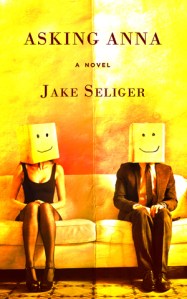
The Asking Anna paperback is out:

Wordpress cover image-3A couple people asked about the paper version of Asking Anna, and it’s now out. Take a look at the link.

(The original announcement is here.)

Links: Goodbye theory, the artists’s lives, coffee, Dr. Strangelove, Divorce Corp., molly, and more

* “David Winters on Elegy for Theory: Bye, Bye, Theory, Goodbye.” Except that undergrad and grad classes on theory are still mandatory in many places and much dubious “theory” still gets cited in conferences or by editors and peer reviewers. Actual death would be an improvement.

* Most writers of books don’t make enough money to live from their writing; notice this: “Together, what these patterns suggest is that few authors are getting rich off of their writing or even earning enough from their writing to quit their day jobs.”

* In keeping with the above: “Entrepreneurs of the spirit;” I’d add that the number of people who write a blog, continuously, for at least a couple years is very small.

* In keeping with a theme: Barry Eisler and Robert Gottlieb debate the future of publishing; in the short term I buy Gottlieb and in the long term I buy Eisler. The challenge is defining the terms.

* “Almost Everything in ‘Dr. Strangelove’ Was True,” which you should remember anytime you see someone working for any branch of government move their lips.

* Divorce Corp: A Movie Review, which is really a society review that should scare you.

* Why is coffee in France so bad?

* “‘I say, Charles, don’t you ever crave…’“, or, the 1200th anniversary of Charlemagne’s death.

* Politicians and cops are essentially indifferent to many people’s deaths, although the story is titled very differently; see also Daniel Okrent’s Last Call.

Life: The loss of memory and the living in the moment edition

“A public that tries to do without criticism, and asserts that it knows what it wants or likes, brutalizes the arts and loses its cultural memory.”

—Northrop Frye, Anatomy of Criticism, first published in 1957 and yet a shockingly good description of today.

One definition of brilliance: willingness to appear to be the fool

From The Making of the Atomic Bomb:

[In 1939] Szilard told Einstein about the Columbia secondary-neutron experiments and his calculations toward a chain reaction in uranium and graphite. Long afterward he would recall his surprised that Einstein had not yet heard of the possibility of a chain reaction. When he mentioned it Einstein interjected, “Daran habe ich gar nicht gedacht!“—”I never thought of that!” He was nevertheless, says Szilard, “very quick to see the implications and perfectly willing to do anything that needed to be done. He was willing to assume responsibility for sounding the alarm even though it was quite possible that the alarm might prove to be a false alarm. The one thing most scientists are really afraid of is to make fools of themselves. Einstein was free from such a fear and this above all is what made his position unique on this occasion.

“Einstein was free from such a fear:” are you?

(Incidentally, as Eric R. Weinstein points out, “Over the past two decades I have been involved with the war on excellence:”

In the past, many scientists lived on or even over the edge of respectability with reputations as skirt chasing, hard drinking, bigoted, misogynistic, childish, slutty, lazy, politically treacherous, incompetent, murderous, meddlesome, monstrous and mentally unstable individuals such as von Neumann, Gamow, Shockley, Watson, Einstein, Curie, Smale, Oppenheimer, Crick, Ehrenfest, Lang, Teller and Grothendieck (respectively) who fueled such epithets with behaviors that indicated they appeared to care little for what even other scientists thought of their choices.

But such disregard, bordering on deviance and delinquency, was often outweighed by feats of genius and heroism. We have spent the last decades inhibiting such socially marginal individuals or chasing them to drop out of our research enterprise and into startups and hedge funds. As a result our universities are increasingly populated by the over-vetted specialist to become the dreaded centers of excellence that infantilize and uniformize the promising minds of greatest agency.

Are you part of that war? I suspect Einstein cared little for respectability except when it came to being right.)

Looks matter and always will because they convey valuable information, and a note about the media

In “The Revolution Will Not Be Screen-Printed on a Thong” Maureen O’Connor laments that people judge each other based on looks (“Why can’t we just not obsess about bodies?”), and then kind of answers her own question:

I ask that in earnest — it’s possible that we actually can’t stop, that this compulsive corporeal scrutiny is some sort of biological imperative, or species-wide neurosis left over from millennia of treating women as chattel.

We judge each based on looks because, as Geoffrey Miller describes in Spent and others have described elsewhere, looks convey a lot of useful information about age, fertility, and health. Beyond that, women are competitive with each other in this domain because they know (correctly) that men judge them based on looks (among other things).

In addition, as Tim Harford discusses in The Logic of Life, speed dating and other research shows that women reject about 90% of those in any given speed-dating event, and men reject about 80% of women. Both men and women usually report that they want similar things—men want youth and beauty; women want height and humor. But researchers devised clever experiments in which dating pools of either men or women have changed systematically—for example, by having entirely very tall men or very short men. Yet the rate at which men and women accept or decline dates remains the same.

That implies “compulsive corporeal scrutiny” is based partially on the knowledge that any particular person will be judged based on the other people around.

I don’t bring this up merely to correct a point in an article; it’s also to observe that a lot of the stuff one reads online is based on limited knowledge. As I get older I increasingly get the impression that a lot of journalists would be better served, at least intellectually speaking, to spend more time reading books and less time… doing other things?

One thing I like about journalists or journalist-blogger hybrids like Megan McArdle and Matt Yglesias is their wide, deep reading, and their willingness to connect wide, deep reading with the subjects they write about. One might disagree with them for ideological or other reasons, but they do at least know what they’re talking about and usually try to learn when they don’t. Too much of the media—whether in The Seattle Times or The Wall Street Journal or New York Magazine—is just making noise.*

Given the choice between most media and books, choose books. The challenge, of course, is finding them.

EDIT: Maybe Ezra Klein’s new mystery venture will solve some of the complaints above; he mentions “the deficiencies in how we present information” and promises “context.” I hope so, and certainly I’m not the first person to notice the many problems with the way much of the media works.


* Granted, I may be contributing to this in my own small way by contributing a link and possibly hits to a noise-making article that should be better than it is.

Links: Intellectual cowardice, fiction, child support threats, writing, oppression, and more!

* “Our Intellectual Cowardice,” which the structure of academia makes rife. That being said, I also suspect that a lot of academics are silent regarding the weakness or silliness of other academics because none of their work matters: it’s already so widely ignored that another silly journal article is never going to have any impact anyway.

* Be wary of fMRI brain scan studies like this one, but it does at least get around the correlation-is-not-causation problem that plagues similar claims: “Study: Reading a Novel Changes Your Brain: College students experienced heightened connectivity in their left temporal cortexes after reading fiction.”

* Child support and the threat point.

* What is it like to operate on obese patients?

* “Writing to Win;” why do we obsess over the moment of a writer’s publication?

* Great news for pot smokers: drug cartels are building massive underground railroads into the U.S. to transport goods that Americans desperately want to buy.

* Are Bedrooms Superfluous? The next-generation Murphy bed.

* “How the Drug War Disappeared the Jury Trial,” which everyone needs to read and which should also scare everyone who does read it.

* “An MLA Story;” takeaway: Don’t go to grad school.

* “Why Does A Good Kettle Cost $90+?” Since I started drinking tea I have wondered about this and now have an answer. The Hacker News discussion is also good, except for the top comment.

* “The Humanities and Us: Don’t listen to today’s narcissistic academics—the West’s cultural inheritance is indispensable;” on some level you’ve read this before and as usual the writer goes too far in imagining a golden, magical past but nonetheless it is worth reading and complements “An MLA Story” and “Our Intellectual Cowardice.”