Cheap Sex: The Transformation of Men, Marriage, and Monogamy — Mark Regnerus

Cheap Sex is more useful, interesting, and informative than many books on the same or adjacent topics, and it pairs nicely with Date-onomics. The books can be read as differing reactions to similar social phenomenon on the ground, with the latter having a more left-wing tilt that nonetheless describes how people should pragmatically react to current conditions, while the former has a more right-wing tilt that nonetheless describes how these conditions came to be. We live in an age in which everyone is outraged or offended by something; when you find something that outrages or offends you, leave a note in the comments. You may find that cathartic.

Although neither book makes this point, I think they’re part of the continuing social reaction to the Industrial Revolution. “What,” you might be thinking, “does the Industrial Revolution have to do with contemporary books on love, marriage, and dating?” Prior to the Industrial Revolution, most societies were (relatively) stable most of the time, at least for the duration of a human life; the technological and social conditions one’s parents faced were likely the same an individual would face and the same that individual’s children would face. Cultural and technological change was of course real for much of human history, but it was also relatively slow, allowing people to acclimate to it over generations instead of years or decades.

Since the Industrial Revolution, though, we’ve seen technologies that radically and repeatedly reshape the technological and social worlds. This leads to periodic moral panics, especially but not exclusively around sexuality and religion, in part because we never get a chance to get used to new technologies.

(It’s hard to think of a single book that summarizes the Industrial Revolution; Joel Mokyr has some, Deidre McCloskey has others).

Today, we’re still grappling with the reshaping of society due to pretty reliable contraception. In some ways we’ve had pretty reliable contraception for a very long time (since the ’60s), but in the view of human history, or even human history since the 1750s, we’ve had it a very short time. We’ve spent pretty much the entirety of human evolution without pretty reliable contraception, and that’s shaped our minds, our bodies, our societies, and our practices. And it’s still reshaping all of those things, without most of us stopping to think about what it all means to look at these things in the course of a very wide and long history.

That’s part of what Regnerus is doing. The present moment is the product of a whole lot of past, most of which most of us don’t think about most of the time. But a lot of our current conflicts come from past conflicts that we don’t fully understand. And he’s pointing to that history, when he writes in subheaders about “The transformation of intimacy.” Or when he writes about the “obsession of romance among many, and yet stability seems increasingly elusive.” At the same time, “the ramifications of cheaper sex are just beginning to unfold on a panoramic scale.”

No wonder people are confused. For most of human history, cultural notions around sexuality have been pretty stable. Now they’re incredibly unstable and we’re all making things up as we go along and responding to technologies that have unpredictable consequences.

Regnerus may not be right about many of his conclusions, but he is thinking differently and also not stupidly, which is valuable in and of itself.

I’m also not sure how much you can trust the book’s conclusions, as many are drawn from “nationally representative survey data” as well as “in-person interviews,” the problem being that people notoriously lie in surveys, especially about sensitive subjects, and the same biases occur in in-person interviews. Those weaknesses are part of the reason why books like A Billion Wicked Thoughts, Dataclysm, and Everybody Lies are so interesting: rather than relying on the surveys in which everybody lies, they look at revealed preferences in the form of data from the Internet (and online dating itself).

Cheap Sex itself is written competently but not beautifully. You will not stop to admire individual sentences, and that’s why I’ve not quoted much from it so far. Read it for the knowledge, not the prose. Like many academic books (this one is published by Oxford) it has its share of “You don’t say?” statements, like, “When it comes to relational happiness, then, sexual frequency is neither necessary nor sufficient, but it is certainly a net positive for most.” “A net positive:” really? I’m shocked! I would never have guessed.

But it also has its moments of humor, as when an interviewee discusses at length his own romantic dilemmas and then Regnerus writes, “After we turned off the microphone at the end of the interview, Brent asked if we though the and Betsy should break up. (We declined to respond).”

There are also moments I’m still mulling and don’t yet understand:

Meant to be a “haven in a heartless world,” as the late social critic Christopher Lasch described it, marriage is fast becoming a contest, another tenuous social arena in competition with the economic marketplace (for our limited time and energy) and the remarriage market (for second chances and variety).

A “haven in a heartless world:” Regnerus implies here and elsewhere in the book that maybe there isn’t such a place. I’m not arguing that he’s right. But I don’t see a compelling reason he isn’t.
Links: Solidia and low-carbon concrete, political analysis, college’s perils, diamonds, and more!

* “Solidia has a way to make cement that absorbs greenhouse gases instead of emitting them.” Very cool if true.

* “The G.O.P. Is Rotting.” Seems obvious to anyone paying attention; note the source.

* Could the human mind limit our comprehension of reality? The answer seems almost too obviously to be “yes.” This is my favorite essay of the group.

* “The World Might Be Better Off Without College for Everyone” from Bryan Caplan’s book The Case Against Education, which you need to preorder if you haven’t already.

* Why we need art: evolutionary biology and the impulse to create.

* Borrowing From Solar and Chip Tech to Make Diamonds Faster and Cheaper.

* “Dr. Strangelove Was a Documentary: Daniel Ellsberg’s new memoir would be an urgent warning about the monumental danger of nuclear weapons—even if Trump weren’t president.” Nuclear war is an underrated fear, and I worry about the analogy of our era being like 1910, with grave, unexpected catastrophe ahead despite many decades of relative peace behind. To be sure, I think the likely outcome is a continuation of peace and trade, but unlikely outcomes are still possible.

* “The Importance of Dumb Mistakes in College.”

* “The Warlock Hunt: The #MeToo moment has now morphed into a moral panic that poses as much danger to women as it does to men.”

* I previously posted “The right really was coming after college next;” see now “My Rejection of Academia Over the Lindsay Shepherd and Jordan Peterson Affair” for more in that vein. Note that I didn’t argue that the right is right (in many ways it isn’t), but academia ought to be thinking about what it means to actively alienate half the electorate. The Lindsay Shepherd affair is in Canada, but similar dynamics seem to apply.

* College Presidents Making $1M Rise with Tuition and Student Debt.

* Alaska is warming so fast, quality-control algorithms are rejecting the data.

“The right really was coming after college next”

Excuse the awkward headline and focus on the content in “The right really was coming after college next.” Relatively few people point out that college has been coming after the right for a very long time; sometimes college correctly comes after the right (e.g. Iraq War II), but the coming after is usually indiscriminate. I’ve spent my entire adult life hearing professors say that Republicans are stupid or people who vote for Romney or whoever are stupid. Perhaps we ought not to be surprised when the right eventually hits back?

A few have noticed that “Elite colleges are making it easy for conservatives to dislike them.” A few have also noticed that we ought to be working towards greater civility and respect, especially regarding ideological disagreement; that’s one purpose of Jonathan Haidt’s Heterodox Academy. Still, on the ground and on a day-to-day level, the academic vituperation towards the right in the humanities and most social sciences (excluding economics) has been so obvious and so clear that I’m surprised it’s taken this long for a backlash.

Because I’m already imagining the assumptions in the comments and on Twitter, let me note that I’m not arguing this from the right—I find that I’m on the side of neither the right nor the left, in part because neither the right nor the left is on my side—but I am arguing this as someone who cares about freedom of speech and freedom of thought, which have never been free and have often been unpopular. It’s important to work towards understanding before judgment or condemnation, even though that principle too has likely never been popular or widely adopted.

It seems to me that homogeneous, lockstep thought is dangerous wherever it occurs, and increasingly it appears to be occurring in large parts of colleges. One hopes that the colleges notice this and try to self-correct. Self-correction will likely be more pleasant than whatever political solution might be devised in statehouses.


Links: Lonely deaths, fantasy life beyond Tolkien, the nuclear family and zoning, fitness classes as religion, and more!

* “Why a Generation in Japan Is Facing a Lonely Death,” a completely fascinating but also depressing piece.

* “Out of the Shire: Life Beyond Tolkien.” It’s interesting to me that almost no one gets to Tolkien’s quality level except Philip Pullman and Ursula K. le Guin.

* The western elite from a Chinese perspective.

* “Sex Through the Looking Glass:” “The New Politics of Sex: The Sexual Revolution, Civil Liberties, and The Growth of Governmental Power is a comprehensive analysis of this process of overturning, showing how it has played out in virtually every social venue.” As usual things have not gone according to utopian plan.

* “A tad of gay holds sway,” or why homosexuality persists in the gene pool when it seemingly shouldn’t.

* “The Great American Single-Family Home Problem” will be familiar to readers but is still useful.

* Noah Smith: “Trump happened because conservatism failed.” A better reading than many.

* “Pretty Birds in Pretty Cages: Could the Nuclear Family Be the Reason We’re All Miserable?” Not just the usual. I’d like to see the way current living arrangements are straightjacketed by zoning.

* The Consumerist Church of Fitness Classes. I’m partway through Helen Dale’s amazing novel The Kingdom of the Wicked, which engages this idea (among many, many others). Many people also treat art as a kind of secular religion.

* “Generational Moralizing Is Not Enough: To defend free speech, its proponents must step outside their own echo chamber.”

* “How to Get Your Mind to Read.” Note: “Don’t blame the internet, or smartphones, or fake news for Americans’ poor reading. Blame ignorance. Turning the tide will require profound changes in how reading is taught, in standardized testing and in school curriculums.” I’m not sure how much of this is schools’ fault and how much is the “fault” of individuals in the general population: people who want to read, read, and those who don’t, don’t.

Links: Elon Musk, fancy jeans, optimism, energy, Martin Amis, and more!

* “Elon Musk: The Architect of Tomorrow.” Not the usual.

* “No Room for America Left in Those Jeans:” on the closing of White Oak, America’s last heritage denim mill. Now people must go to Japan for that kind of denim.

* “Definite optimism as human capital.”

* “‘I see things differently’: James Damore on his autism and the Google memo.” Not just the usual and working towards explanation, rather than prosecution or defense.

* “Republicans should admit to themselves they mostly don’t want big change: It’s a cranky old person party, not a policy visionary party.”

* FYI, tenure track jobs in English and other languages are down yet again. As you likely know, it is not smart to get a humanities PhD.

* “The left’s nuclear problem,” an underrated point.

* “E-bikes: time to saddle up with low-cost energy and no sweat?” An underrated story.

* “Team Amis,” on Martin’s latest as well as his oeuvre. An impressive essay, and I’d missed the Wilde connection like (I suspect) most of you. I’m more self-conscious about sentences after reading Amis or about Amis.

* “What to Worry About in This Surreal Bull Market,” which is entertaining because the answer is almost… everything. Japan (and debt). Europe (and debt). The United States (and debt). Debt itself. “Quants.” China. Indexes. Make enough predictions and eventually one will prove right!

* “Elite colleges are making it easy for conservatives to dislike them.”

* “Sex, Consent, and the Dangers of ‘Misplaced Scale,’” the only good article on its subject I’ve seen lately, especially those last lines: “This should give us pause. Being infantilized has never worked out well for women.”

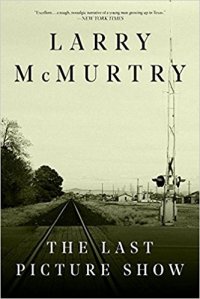
The Last Picture Show — Larry McMurtry

The Last Picture Show ought to be one of the most boring novels ever written: It’s about a handful of losers in a nowhere town who don’t do very much. Stated like that you wouldn’t want to read it. But the delivery makes it work and that delivery can’t be easily excerpted.

The Last Picture Show feels humane; I can’t exactly define that term in this context and I can’t point to a single sentence that encompasses it, but the feel permeates the novel. When people talk about politically correct art, they are talking about the opposite of The Last Picture Show, which is never doctrinaire yet often honest about its characters their foibles. Maybe the best is Lois, Jacy’s mom, who is scary and desiring and wants everyone around her to fuck off and wants to be gone but never quite can be.

Part of being humane entails familiarity with brutality, desperation, and annihilation—all of which appear, in various guises, as when Ruth Popper finds that a teenage boy has become everything to her: he “was what made the days worth confronting” (the word “confronting” being a better one here than “living”) and “the thought of going back to the existence she had had before he came was too much to face.” Yet on some level she must face it: he’s a high school senior and she’s married to his former football coach. Their relationship is by its nature has a terminus, but fighting the terminal nature is part of what makes the novel work—and part of the nature of its melancholy, melancholy being a feeling that is rarely if ever named yet one that pervades the whole thing. It isn’t melancholy the way someone like Houellebecq is, but all the characters yearn to be somewhere else.

The Last Picture Show world is very different from today; we learn that Sonny played football for four years at the local high school, but the football coach is “a man of most uncertain temper. He had already shot at Sonny once in his life, and with a new under-over he might not miss.” It’s hard to get the tone of this sentence in the context of the novel. Is it supposed to be farcically funny? Reported straight? A sign of the town and the boy’s resignation? Something else? I don’t know and not knowing is part of what makes it good.

Sometimes, but not too often, the sentences hit classic beautiful metaphors:

after an hour’s slopping necking with Charlene even the fantasy that he was kissing Jacy had a dangerous power. Charlene kissed convulsively, as if she had just swallowed a golf ball and was trying to force it back up.

If that is Charlene to Sonny, we know everything about their relationship.

Or, not in metaphor form:

“But I don’t care about money,” Jacy said solemnly. “I don’t care about it at all.”
Lois sighed. “You’re pretty stupid then,” she said. “If you’re that stupid you ought to go and marry him—it would be the cheapest way to educate you.”
Jacy was so shocked at being called stupid that she didn’t even cry. Her mother knew she made straight-A report cards!

And report cards are of course the surest, most steady sign of intellect devised by man.

The first sentence is, “Sometimes Sonny felt like he was the only human creature in the town.” “Human creature?” What and where is “the town?” “Lonely,” “lonesome” and similar words about the lack of human contact and camaraderie are the most-used in the novel. There is of course no social media, but even if there were it probably wouldn’t help much. The town is too far from the big city. For Sonny and Duane, the military may be a way out. For many others, there is no obvious out.

I love this book because I don’t get it, and it should be bad, but it isn’t.

Links: Drugs ought to be legalized, epistemology, The Case Against Education, homes for humans, and more!

* “Against the Demonization of Drugs.” Again, this ought to be obvious.

* Behind the Beautiful Forevers by Katherine Boo is an amazing, highly recommended book.

* “Why Are Conservatives More Susceptible to Believing Lies?“, although I’d like to see more about “are they?” beforehand.

* Bryan Caplan’s next book, The Case Against Education, is available for pre-order here. I’ve been looking forward to it for years.

* “‘Homes for human beings’: Millennial-driven anti-NIMBY movement is winning with a simple message.” Good.

* “Mind the gap:” a long, riveting story about how land-use policy scuppered new businesses.

* “How One Las Vegas ED Saved Hundreds of Lives After the Worst Mass Shooting in U.S. History.”

* “Shades of Greene:” Zadie Smith on Graham Greene.

* “Students are leading the assault on free speech — and faculty members and administrators are enabling them.”

* “Why dating is drudgery;” note that the article is in The New Yorker and thus better than its headline may imply.

* “Outbreak: Our Next Global Pandemic.” Be scared.

Links: Teaching Madame Bovary, Amsterdam, how faxes impair medicine, startups and farming, and more!

* “Teaching Madame Bovary,” a marvelous essay, and I would add that students like to judge before understanding. In this they’re only supported by the entire culture. But one thing instructors can and should ask for is understanding, and only after that judgment. Maybe I make the same error.

* “Bitter pill,” on second-, third-, and fourth-order effects from reliable contraception; not much of my views in it but consistently interesting and plausible.

* Douthat asks, “What’s the Matter With Republicans?

* “Five reasons why Amsterdam works so well for bikes.” Note that any American city could copy all five factors.

* “The Broken Check and Balance,” on how the Constitution is ill-suited to today’s U.S., which is polarized as has rarely if ever happened before.

* The fax of life: It’s 2017. American medicine still runs on fax machines because doctors and administrators think that making medical records easier to transfer will make patients change providers more easily. In other words, this is yet another patient-unfriendly, anti-competitive part of the healthcare landscape.

* “Philosophy Professor Tells Bisexual Student Who Criticized Islam ‘We’re Not Going to Let You Damage the Program.'” Wow, if true, and yet secret recordings are also not good.

* “Many Academics Are Eager to Publish in Worthless Journals.” This time from the NYT.

* Why Timber Towers Are on the Rise in France.

* “Mimesis Machines and Millennials.”

* “When the Academy Retreats: Thought-policing and value-signaling are pre-empting free and open discussion on college campuses.” It’s pretty depressing that we’re still fighting for free speech in 2017.

* Denver Radically Expanded Its Transit. So Why Are More People Driving Cars?

* “Meet the startups fighting Bay Area’s soaring housing costs.” These efforts are useful but pretty marginal; the basic problem remains: it’s illegal to build the housing that people want to live in.

* “Seven megatrends that could beat global warming: ‘There is reason for hope.'”

* “Startup ‘Plenty’ wants to build a giant indoor farm next to every major city.”

* “Could Rome Have Had an Industrial Revolution?

* “Forfeiting The Patriarchal Dividend,” a piece likely to anger some of you and not necessarily my view.

The Hard Thing About Hard Things — Ben Horowitz

The Hard Thing About Hard Things is one of the best books I’ve read recently and one of those books whose subject matter is unlikely to interest most of you, but the execution is so good that you ought to read it anyway. The best books transcend their subject; this is probably the best passage in an already great book:

Most business relationships either become too tense to tolerate or not tense enough to be productive after a while. Either people challenge each other to the point where they don’t like each other or they become complacent about each other’s feedback and no longer benefit from the relationship.

Implicitly, you could strike the adjective “business” and replace it with a lot of others… or perhaps strike it altogether and still achieve a similar effect. I’ve often felt exactly what Horowitz is describing but never conceptualized it that way. Over and over again, I found myself marking passages and putting checkmarks next to them. In most books, that practice falls off a third of the way through; in this one, I kept going to the very end.

Many sections just demonstrate that Horowitz gets things. Like:

“What would you do if capital were free?” is a dangerous question to ask an entrepreneur. It’s kind of like asking a fat person, “What would you do if ice cream had the exact same nutritional value as broccoli?” The thinking this question leads to can be extremely dangerous.

Wishful thinking can block useful thinking. Which most of us don’t think, or don’t think consciously.

He’s thinking about antifragility before Nassim Taleb wrote the eponymous book:

The close call was a sign to me that the entire operation was far too fragile. I got another sign when our largest competitor, Exodus, filed for bankruptcy on September 26. It was a truly incredible bankruptcy in that the company had been valued at $50 billion a little more than a year earlier. It was also remarkable because Exodus had raised $800 million on a “fully funded plan” just nine months earlier. An Exodus executive later joked to me: “When we drove off a cliff, we left no skid marks.” It Exodus could lose $50 billion in market capitalization and $800 million in cash that fast, I needed a backup plan.

I’m surprised there aren’t more novels set among venture capitalists or startups. The drama is all there. Maybe most writers don’t realize it, but Horowitz is good at stakes and drama. His stories are too often to quote in full, but they’re full of narrative drama and tension in a way most books aren’t. And some character descriptions are as good as anything in fiction:

Wow. I had no idea who I was dealing with until that point. Understanding how differently Frank viewed the world than the people at Opsware helped clarify my thoughts. Frank expected to get screwed by us. It’s what always happened to him in his job and presumably in his personal life. We needed something dramatic to break his psychology. We needed to be associated with the airport bar, not with his job or his family.

Horowitz had an epiphany and he acted on it. Hard Things could be seen as a series of epiphanies, and we get to follow him through.

We’re often told to attend to data, likely because most people don’t, but once you attend to data, “Sometimes only the founder has the courage to ignore the data.” Like Peter Thiel, Horowitz argues that your life is not a lottery ticket and that markets are often wrong (or at least that insiders can see things that the outsiders who create market values cannot):

If I’d learned anything it was that conventional wisdom had nothing to do with the truth and the efficient markets hypothesis was deceptive. How else could one explain Opsware trading at half of the cash we had in the bank when we had a $20 million a year contract and fifty of the smartest engineers in the world? No, markets weren’t “efficient” at finding the truth; they were just very efficient at converging on a conclusion—often the wrong conclusion.

Almost anyone trying to do anything useful should be thinking about what good ideas are not being pursued: “Wall Street does not believe Opsware is a good idea, but I do.”

“The wrong conclusion:” if markets can converge on “the wrong conclusion,” so can individuals and societies. Some of Hard Things can be read as a critique of American society: “My single biggest personal improvement as CEO occurred on the day when I stopped being too positive.” American society is regularly considered to be positive, but in a way that isn’t necessarily founded on skill or improvement. The “self-esteem” movement is part of this trend, even though moving towards self-efficacy would be an improvement. In class, when I started teaching I was often too positive. Now I’m less positive and more likely to emphasize that growth often comes from pain and struggle. The deadlift doesn’t get higher without some pain, and the best lifters learn to love the pain. Same with intellectual, psychological, or emotional growth. Yet we have a society that shies away from those truths.

I’ve heard about Hard Things many times but this recommendation tipped me into reading it, and I hope my recommendation tips you. The best books can be read many ways and applied to many situations, and this is one of the best. I didn’t expect it to be, which makes it all the more delightful.

Links: More on lab-grown meat, a vaccine for the common cold, the university and reformation, and more!

* Memphis Meats Bets That Lab-Grown Meat Can Solve the Global Food Crisis.

* “Why can’t we cure the common cold?” Turns out that we likely can be choose not to for economic, legal, and regulatory reasons, which is terrible.

* “Rising Rents Are Pushing More Tenants Past the Breaking Point.” Maybe this will get more voters interested in the seemingly boring issue of zoning.

* From The Economist (and thus likely not an outright crank or virtue signaling piece), “Why do women still earn a lot less than men? When they do the same job, though, their salaries are practically the same.”

* The university must be the site of the next Reformation – here’s why.” I’m not convinced this must be true, but it could be true. The writer is also missing a lot of the other functions universities serve, the most important of which may actually be coaching, encouragement, and goal setting.

* “The White-Minstrel Show,” which went all over the Internet when it was published but which I’m just now getting to.

* “Too Many People Dream of a Charmed Life in Academia: Brilliant colleagues. Curious students. High status. Earning less than half of what a kindergarten teacher makes.” Regular readers of course know this, but based on the way grad schools keep filling up it appears most people do not.

* “An argument that professors shouldn’t stay silent about threats to speech on campus.” More easily said than done, especially because most faculty are contingent; I think the story of administration cowardice is most interesting here.

* “The Last Days of the Leather Fortress,” about the Armory in San Francisco and its longtime use by an adult film company; link is likely SFW as the story is published by Hazlitt.

* “The world in 2076: The population bomb has imploded.” Anyone worried about overpopulation is fighting the last war and ought to read Bryan Caplan’s Selfish Reasons to Have More Kids.

* “Record surge in atmospheric CO2 seen in 2016.”

* “Why Professors Are Writing Crap That Nobody Reads.” In short, they’re incentivized to.

* “Russia Uses Its Oil Giant, Rosneft, as a Foreign Policy Tool.” Another reason to prefer electric cars.