The Complacent Class came out last week and it’s excellent. Drop everything and read it. That said, if you read Cowen’s previous two books on related subjects, The Great Stagnation and Average is Over, you will recognize some of the underlying facts that drive the narrative (the preceding links go to my previous essays on those two books).
 I’m not going to summarize The Complacent Class because it’s already been well-summarized in many places, like “Dreaming small: how America lost its taste for risk” (though you may not be able to cross the FT paywall). This piece is also good. Here is another. Here is another. More may be found.
That being said, the summaries don’t and can’t account for the many, many small details and sometimes counterintuitive swoops the book makes, and some of the articles I’ve seen argue with strawmen. So I’m going to discuss some of the smaller details and possible counterexamples while attempting to avoid fights with inanimate bags of straw.
Cowen enumerates the many ways our desire for safety actually increases risk, but I can think of one macro trend that defies this general point. For all the complacency of the complacent classes, guns are one domain that remains wildly dangerous. Politicians are reluctant to touch anything to do with guns; by at least some measures, gun laws are more lax than ever and it’s easier than ever for anyone, including mentally ill or deranged people, to get guns. Guns kill tens of thousands of people a year; among non-medical issues, only cars rival them (and opioids, if one considers them non-medical). Yet the collective response has been to make guns easier to get, rather than less. We’re over-obsessed with safety in some domains and seemingly under-obsessed in others, including cars and guns.
In the chapter “Why Americans Stopped Creating” Cowen writes:
A recent report by Wells Fargo showed productivity slowdowns in almost every sector of the American economy. Perhaps most strikingly, the sector “professional and technical services” showed no increase in the productivity of the average office worker at all. You might think IT and the wired office has boosted productivity substantially, and it has in some ways, such as enabling rapid-fire communications across great distances or after work hours are over. But the evidence has yet to materialize for any kind of recent boost in office productivity. We don’t yet know why this is, but maybe the time Americans waste on Facebook and texting and social media takes back some of the gains from all that added connectivity and greater ability to network.
This is plausible, and I’ll add that it may not only be that we’re wasting time “on Facebook and texting and social media.” We may also be deploying technological gains in efficiency terms to create more onerous, bureaucratic, or difficult processes that don’t necessarily add value. In 2015, I wrote a post on “How Computers Have Made Grant Writing Worse.” Computers have enabled us to produce more drafts for clients; clients to comment more on each draft; and, perhaps worst of all, funders to produce longer, harder-to-understand RFPs.
Funders can also just become more demanding in general. When I started working for Seliger + Associates, most foundation and corporate funders wanted a one-, three, or five-page letter proposal, and writing one such proposal was enough to ensure that it could be cleanly and quickly customized for each funder. Many funders are moving to online systems that are hard to use and that often demand persnickety, weird answers to non-standard questions. Our productivity has fallen in some ways, because funders can demand more onerous application processes—which may be attractive to them while raising costs to nonprofit and public agencies.
Email may be another example of technology slowing things down by almost as much as it speeds things up. While email can be very useful often it isn’t, which many of us know as we check it compulsively anyway. In addition to grant writing I do some work as an adjunct professor; I get lots of emails from students, very few of them substantive and most about material covered by the syllabus or about persnickety issues that are best struggled with (the word “persnickety” is useful in dealing with technological availability). I don’t want to turn this into an ill-advised kids-these-days rant, but I’m definitely not convinced that email has improved teaching, learning, or the university experience.
The email bombardment is significant enough that I’ve instead banned email, in part using the rationale at the link, and the results have been good. But not everyone can ban email and it’s still hard for me to separate the substantive from the substanceless. Still, I don’t think being able to receive student emails about sicknesses and petty points around assignments and so forth has improved the education process. Students used to have to wrestle with more problems for themselves, while today they can and do often email questions and concerns that they ought to be able to decide autonomously.
The ways computers have made us more productive are obvious; it’s much faster to write a proposal via computer than typewriter, and it’s more pleasant writing on a 27″ iMac than the 10″ IBM CRT my Dad bought when he started Seliger + Associates. Yet the ways we’ve clawed back gains, through a kind of information Jevons Paradox, are also on my mind. Books like Deep Work take on special salience. How many of you are reading as many books as you used to? I don’t: I do read a lot more longform articles and essays, using Instapaper.com and a Kindle, and while this may be a net improvement I wonder about the costs.
Earlier I mentioned opioids. Cowen writes about what our drugs may say about us:
The 1960s was also an era that called for greater freedom with drug experimentation. But of all the drugs that might have been legalized, American citizens chose the one—marijuana—that makes users spacey, calm, and sleepy. LSD attracted great interest in the 1960s for its ability—for better or worse—to help users see and experience an entirely different world, often with different physical laws. That is now out of fashion.
That point is well-taken, especially regarding marijuana legalization, yet we’ve also seen the growth of molly / ecstasy / MDMA-style uppers that make people better able to connect with each other and that seem most often used in shared, group spaces far from computers. Ayahuasca is popular (or trendy) enough to merit a New Yorker article, “The Drug of Choice for the Age of Kale.” I’m not sure molly helps people imagine a different world, like LSD does, but it’s far from the spacey, calming effects of marijuana.
We also all live in our own bubbles, but I’ve been offered that class of drug more often probably than any other. Or maybe people today want to be different enough to be interesting but not so different as to be dangerous; the molly class of drugs, if synthesized in pure form, seems much less dangerous than, say, coke (back to The Complacent Class: “Crack cocaine, a major drug in the 1980s, can rile people up, but for a few decades now it’s been losing ground to heroin and other opioids…”). I don’t have good data on the molly class of drugs and their popularity, and I’d be curious to see if any readers do.
On transport Cowen writes:
The more general picture on transportation can be described with two words: less and slower. The number of bus routes has decreased, and America has done very little to build up its train network, even when additional or faster train lines would be profitable. Although American cities have growing populations and wealth, they haven’t built many new subway systems in the last thirty-five years, with the exception of the partial system in Los Angeles. The Department of Transportation has written, “All indicators show declines in personal travel for every age group, particularly among young people since the early 2000s.”
To me the problems are obvious: traffic is horrendous in many cities; parking is horrendous; plane travel is a relentless horror show, especially given the relentless security theater encountered in airports. For the last six months I’ve been meaning to visit L.A., but I despise going through airports and dealing with the unaccountable TSA goons who man them—and, speaking of subways, there’s no subway from LAX to the rest of the system.
To Seattle’s slight credit, it is (too slowly) building a subway system, which works well so far. Over the next 25 years, it will expand dramatically, but there is no planned route across the 520 floating bridge—people familiar with Seattle will know this is a huge problem. There is progress, but too little, and while Seattle is doing better on housing affordability than San Francisco and some other cities, it isn’t doing as well as it could and should.
Still, in some ways maybe driving less is getting closer to a green energy utopia: we don’t have to drive as much as we once did. In an era of climate change, cell phones, Netflix, and Internet porn may help us avoid or alleviate some of the challenges that arise from the oil economy.
The Complacent Class’s humor is real, underrated, and mostly unnoticed by the commenters I’ve noticed. For example: “There are dating or sex services to find people of specific nationalities, religions, ages, breast sizes, preferred sexual practices, and various weight sizes, including for those who prefer the very obese. Facebook helps people hook up with their exes and their junior high school crushes—not always for the better, of course.” An understatement: one can imagine that junior high crushes are best left in the imaginary past than the somewhat cruel light of the present.
In addition, part of the book’s overall and grimly focused humor comes from the way members of the complacent class (like me) are the people most likely to be reading it and discussing it.
This is an unfair criticism and mostly about my personal preference, but I would’ve liked to see more about books. The comment about Jane Austen being the canonical canonical writer of today, given her interest in matching, versus Dostoyevsky being the canonical canonical writer of the ’60s, being obsessed with morals, murder, and ethics, is good, and I wanted more. Is Gone Girl a fantasy about complacency shattered? Is Seveneves another way of yearning for complacency’s end? Is the seeming end of high culture itself a form of complacency?
I haven’t written much about the chapter on matching, which is interesting throughout, and the chapter “How a Dynamic Society Looks and Feels” is especially good. The last chapter is more speculative, and one wonders what “The Return of Chaos” might mean, beyond current political problems. Still, it’s striking to me that we barely avoided a global catastrophe in the form of Ebola. But I do think we’ve become collectively unaware of how bad, bad can really be. I wrote some about those issues in “Trump fears and the nuclear apocalypse,” especially regarding how it’s possible to sleepwalk into war. Many of the things done by Trump so far are bad but not catastrophic. Some catastrophic things may yet come to pass through his action, inaction, or simple incompetence, and we will all bear its costs. Everything, including complacency, has a cost.
 You will find many ridiculous lines like, “in New York City there are absolutely no rules.” The sort of lines that, spoken on a reality TV show, the literati would condescend to, justifiably, but here, in this package, it’s literature, or the sort of novel that makes literary moves. Maybe I’m unfair and the things that are profound or profound-seeming at 22 are different than the things that are profound or profound-seeming later. But there is too much, “Do you know what it means to be a server?” too much concern about “totems of who I was.”
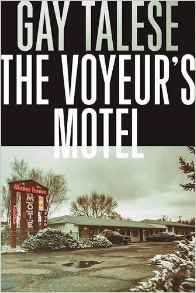 Most of the people Foos observes over decades in his hotel are little more interesting; the epigraph to The Voyeur’s Motel could be that famous quote from Walden, “The mass of men lead lives of quiet desperation.” Except that most of the individuals and couples Foos observes seem not to know enough to even feel desperation. Instead, to the extent they have or show feelings, they seem to be consumed with petty bickering and
 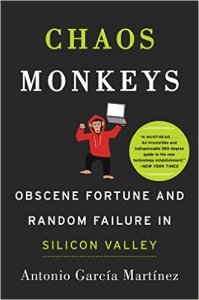 Except that he is a cynic, he reaches for the sardonic joke, he is the asshole hipster, he grabs the clichés. He has much mud to sling, but he ought to also know the problem with mud as a weapon. What kind of person calls out everyone else for being a poseur and faker? It is odd to read about “a man [who] oozed an off-putting smarminess” in a book about a man who oozed an off-putting smarminess.
 In the first section, we learn that there is such a thing as “a CSAT,” that is, “a Certified Sex Addiction Therapist.” The therapists seem at least as mad as the patients, which seems to be a recurring theme in life (you know what they say about psych majors…). The treatment does not work, at least at first. Strauss, seeking answers, gets what appears to be an fMRI, hoping that his brain makes hedonic and novelty-seeking, only to be told that he chooses relationships or the chase. Score one for free will or something like it.
 But the divisions among people may change shape and form, but they always remain, at least as long as we live in a world of economic scarcity. In Leviathan Wakes, Earthers, Martians, and Belters (those who grow up and/or live in the Asteroid Belt) are the primary divisions. I write this in 2016, and in the current European and American political systems there are spasms around divisions that, viewed from the proper perspective, will seem trivial. The other day I heard someone say that Trump has a point about immigrants. I agreed and amplified, suggesting that he do something about the filthy, lazy Irish and Italians, with their Papist ways and mooching dispositions. The guy I was talking to didn’t know what to do with that; the
  LeFevre writes, “From my experience, the rich and unscrupulous tend to make for entertaining company.” Speaking of political connections, he could be talking about Donald Trump, which is part of the reason he makes a popular, evil presidential candidates (and I don’t use the word “evil” lightly, but he is evil: the evil of pure id, untempered by knowledge or self-awareness). Straight to Hell has more political resonances than it should, and that may help explain its popularity, as it works on readers’ subconscious.
 Straight to Hell can be seen as a document about “value grabbing” and about living in the hedonistic present. The value grabbing is not purely financial, either: It’s also sexual. The team lives or dies by the current roadshow. Slickness rules. One could also compare Straight to Hell and Zero to One in terms of humor versus earnestness. Zero to One has its moments of humor (think of the brief section comparing hipsters to the Unabomber, or the part about Richard Branson and the naked windsurfing model) but the preponderance of the book is about how to make serious, real improvements in the quality of life for all humans. Straight to Hell is about getting a bonus and getting your dick wet (concern over women’s pleasure is mostly absent, or I’d add something appropriate for women as well). There is nothing intrinsically wrong about either and indeed both have concerned me greatly at various points, but there is something distinctly sublunar about the relentlessness of those concerns, and the way one never looks up from the bonus or the girl or the meal.
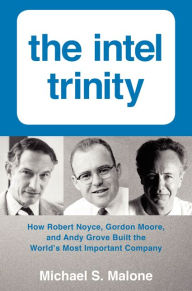 Over time, “Silicon Valley had finally and unexpectedly become history,” at least to its founders. Over a long enough time period anything becomes history, although
  A lot guys start MMA because they fear for their own masculinity and want to prove it: “Football captains and bullies don’t need martial arts. They already know they are strong and tough. Guys turn to martial arts when they fear they are weak.” Or, at least, they do in situations—like most of the contemporary Western world—when their physical safety is mostly assured. Much later, in the final chapters, Gottschall says, “half my reason for taking the fight was to try to do a brave thing—to redeem myself, at least in my own eyes, for all the times I’d flinched when I was young.” There may be other possibilities for redemption. Like, say, letting go.
 The Story's Story