Briefly noted: Mozart in the Jungle — Blair Tindall

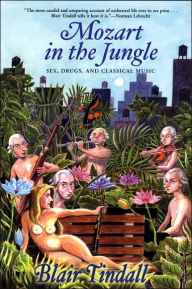
Mozart in the Jungle is surprisingly good and an ode to all the sex musicians have, the drugs musicians do (“I watched Janet bent over the desk to snort cocaine through a straw” occurs on page 2), and most notably a cautionary tale about the economics that underlie their industry. In Mozart in the Jungle Tindall succeeds as few do yet still barely succeeds enough to feed herself. The later sections, as she contemplates her own approaching infertility, she turns melancholy, because she knows that while others in her age group have families she has an oboe. Many adventures at age 22 are slogs at 40, and this is something many 22-year-olds know in passing but don’t feel till they’re much older.

Mozart_in_the_jungleTindall’s relative success still feels like failure to her, financially and, often, artistically. Megan McArdle’s recent post on journalism strikes many notes similar to Tindall’s; the two are both writing about glamour industries battered by changing economics and excess supply (facilitated by digital transmission) relative to demand. In Tindall’s case, the number of financially secure oboe players is probably in the single and low double digits. She makes that threshold, but only in an artistically tedious way. For her, the smart thing to do is get out. When she makes decisions as a 20-year-old, she fails to realize that as a 35- or 40-year-old she will want and feel different things.

In school she finds that “my classmates toiled harder over their textbooks than I did over my oboe, yet they didn’t receive the same special attention.” Attention, though, is a dangerous stimulant, and so too are other stimulants, here recalled and made comic by an older mind reviewing a younger event:

Jose took off the same black turtleneck and dashiki he wore every day, the odor of his unwashed body mixing with cheap musk. We kissed, embracing as the climate of Brahams’s G-minor quintet washed over us. Jose peeled away my top gently, caressing my shoulders, nuzzling my neck and pulling back the covers. I could see another woman’s menstrual blood smeared on the bottom sheet, but I let him push me back on the bedding.

It goes… okay. The gap between fantasy and reality recurs through the memoir, to the very end:

A young person who dreamily “wants to go to Juilliard” or “be a concert pianist” should research the reality of those statements. [. . .] I’m one of those part-time musicians now. When I do play music, it is a joy. The reality of performing full-time wasn’t the fantasy I’d imagined as a little girl. What offers me a meaningful life today are the infinite possibilities in our modern world, of which music is only one. Thousands of people have been influenced by the Sierra magazine articles I’ve written about environmental conservation.

Incidentally, that quote also sums my feeling about grad school in the humanities.

Tindall also wistfully sees her Upper West Side neighbors go from libidinously ravenous, providing her a voyeuristic thrill as they have continual passionate sex, to parents, while Tindall plays the oboe and can’t or won’t maintain long-term relationships as her child-bearing years slip away like leaves off a tree in Boston in autumn. The memoir also came out before Tindall stalked her ex-boyfriend, Bill Nye, so there may be more to her story and character than Mozart in the Jungle.

Briefly noted: “Mate” is out and it’s good — Tucker Max and Geoffrey Miller

As previously noted, Mate: Become the Man Women Want is out and it’s good.* As the book says in the introduction, “Your culture has failed you and the women you’re trying to meet.” The book is part of the remedy. When I read the draft a couple months ago I told Tucker, “I wish I could teleport a copy of Mate back in time and give it to my 13-year-old self, and then instruct him to read it once a year for the next decade.” That’s still true. If you know any teenage or early 20s guys who are likely straight, give them a copy of this book. It is not going to be useful for everyone and indeed I expect some of you to strongly dislike it. People like how-to in many fields but often not this one.

Mate_CoverThe book emphasizes empathy: “If you always try to understand the woman’s perspective—what they want, why they want it, and how to ethically give it to them—then you will find it much easier to become attractive to them, and you’ll be much more successful with your mating efforts.” There are no shortcuts. For a while I’ve been describing the empathy gap, because I increasingly think that the average man doesn’t much understand or try to understand the average woman—and vice-versa. That’s why books like Mate, or Self-Made Man: One Woman’s Year Disguised as a Man, are valuable: they work to close the empathy gap.

Parts of the book will be obvious to older guys who have their lives together—that showering and grooming are important will not be news, but most of us can also probably remember the shambling smelly kids in school. Other parts counteract some of the more dubious parts of our culture, like the claim that women are attracted most by money and that all women are “gold diggers.” For most women most of the time other things matter most, like how “individual women just your fuckability by your social network. So you had better have proof—social proof—that it exists.” Most people, men and women, who want a relationship reasonably want to know the person they’re having a relationship with, and that means knowing friends and family—and knowing they exist. Many of us have had the experience of sleeping with someone who keeps us totally separate from the rest of their lives. Sometimes that can be good—we don’t “count”—but for actual relationships it’s not.

There are still hilarious metaphors and comparisons, like “[A lot of guys think they need to have a ton of money,] then the women will just magically appear, like monarch butterflies to milkweed, flies to honey, rappers to Scarface posters.” But there are fewer of them: The book is entertaining but it leans informational. I at least felt rueful for my teenage and college self when I read some sections. Perhaps my favorite moment occurs two-thirds through the book, when Max and Miller are noting some of the artistic skills that women like, like music, storytelling, and, saliently for this quote, drawing:

The key thing here is to cultivate actual skill rather than indulge in modernist expressionism or abstract art. The poet John Ciardi pointed out, “Modern art is what happens when painters stop looking at women and persuade themselves they have a better idea.”

I’ve never read as concise and accurate description of why so much modern art is so bogus.

The bibliography is useful.


* As also previously noted, I now know Tucker well enough to not be an unbiased critic.

Briefly noted: Why The Allies Won – Richard Overy

Why the Allies Won is just right in every way: just the right level of detail; just the right level of analysis; just the right tone; just the right amount of acknowledgment of other points of view; just the right level of specifics versus general lessons. Regarding that last, consider this: “By December [1941] the Panzer armies were using horses again. These were rates of loss never anticipated by German leaders. Little thought or preparation had gone into the question of what to do if the quick campaign of annihilation failed. The German army too needed to modernise in 1942.” Lesson: Always consider the worst-case scenario. What do you do if things go spectacularly wrong? It’s a lesson the Bush administration didn’t learn before invading Iraq. It’s a lesson many of us don’t learn romantically: If we entwine ourselves with this person, move for this person, marry this person, what should we do if things go totally wrong? What’s a best worst-case outcome? Humans seem to find it almost impossible to ask this. The Germans didn’t ask this. Stalin didn’t either when he agreed to a non-aggression pact with Germany. Few asked about worst-case scenarios before World War I.

why the allies wonTom Ricks’s The Generals has a similar quality. If you have to choose between books I’d say take The Generals but they’re both excellent. Overy has a charm and flow in his writing that is difficult to convey via a single quote; for example, he writes that “Despite numerous warnings from sources even the Soviet intelligence authorities could have regarded as unimpeachable, Stalin insisted to the very last moment that Hitler would not attack. He thought he had the measure of his fellow dictator. The shock was complete.” Those sentences cascade from longer to short. The words “unimpeachable” and “measure” are somehow just right but not totally obvious. The last sentence is as short as it can be and completely evocative. Overy writes sentences like, “On the face of things, no rational man in early 1942 would have guessed at the eventual outcome of the war. In the jargon of modern strategy, the Allies faced the worst-case scenario.” The word “rational” does a lot of work in that first sentence: to unpack it here would be too wordy, but in some sense describing how that rational man turned out to be wrong is the book’s job.

Hardcover editions in good shape are cheaply available on Amazon.

Enlightenment 2.0: Restoring sanity to our politics, our economy, and our lives — Joseph Heath

There is something futile about this otherwise consistently interesting book, and Heath says as much towards the end:

It should go without saying that writing books about the decline of reason is not the sort of thing that is likely to slow the decline of reason. It is simply preaching to the choir. Anyone who makes it to the end of a three-hundred-page book on the subject is obviously not part of the problem. Furthermore, the project of reversing the trend is too big and too complicated for any one person to accomplish much.

Enlightenment_heathNonetheless I enjoyed and recommend Enlightenment 2.0; here is Alex Tabarrok’s review, which introduced me to the book. Its subjects and sources seem eclectic at first: Hollywood movies, Fox News, politics, 18th Century writers, philosophers, economists. Not all its examples are plausible. But the single golden braid of what rationality means runs through the book, and Heath identifies patterns I’ve inchoately felt but never quite described. Readers who are familiar with the extensive irrationality literature—Thinking, Fast and Slow is perhaps the best, though not the only, example—may find sections repetitive. Yet the overall impact is strong.

Reading the irrationality shows how rational, logical people are proving that people are irrational and illogical. Yet it takes rationality to demonstrate how we aren’t, and that alone may justify rationality (the existence of the contemporary world shows that it is possible for rationality to flourish). In most domains, too, individuals suffer most of the consequences of irrationality: If you spend more than you make, you suffer more than me; if you sleep with people you shouldn’t, you suffer more than me. The exception comes from voting; I don’t see Bryan Caplan cited in the index but Heath points to many of the themes Caplan does in The Myth of the Rational Voter, another recommended and yet depressing book because it posits a problem to which there is no good solution. Comedy is one partial solution, as Heath says about liberal comedians attacking conservative lunatic initiatives, and so is setting up the right systems, or right sort of systems:

To the extent we are able to achieve something resembling rationality, it is usually because we have good kludges. As productivity expert David Allen put it, ‘To a great degree, the highest-performing people I know are those who have installed the best tricks in their lives. I know that’s true of me. The smart part of us sets things for us to do that the non-so-smart [sic] part responds to almost automatically, creating behavior that produces high-performance results. We trick ourselves into doing what we ought to be doing.’

I would call myself a “high-performing person” and would not call myself a productivity expert, but one of my most-used programs prevents me from using other programs effectively: Mac Freedom. For ten dollars, this program will turn off your Internet access for a specified period of time (you can get it back by rebooting, should you really need it). The Internet is amazing but can also be noxious and distracting. Freedom reminds me that I should pursue my long-term goals and that most “news” is total garbage and that my life (and the world) is not going to get better based on whether I inhale someone else’s intellectual garbage. I’d argue Facebook is even worse than news in this respect, and, now that everyone is on Facebook, the quality of Facebook has declined further: people are worried about what their moms and bosses and employers will think, so they shunt the real parts of their lives to pseudonymous services.

Still, much news is superficially attractive and has that dangerous quality of feeling like learning even when it isn’t. I’m susceptible to it and, even before reading about Allen, I’d developed some strategies for resisting. Those strategies aren’t perfect and depending on what I’m working on I may genuinely need the Internet, but most of the time concentration is the scarcest resource, rather than information. And well-structured information is scarcer than “information,” which makes books more valuable than many articles. Still, I need to trick myself into remembering this.

Heath notes that some concepts are not intuitive, don’t make us “feel” correctly, and yet are essential for the workings of modern life. But it’s easy for demagogues or just plainly ignorant politicians to appeal to feelings that are popular but simplistic and wrong. Heath says that liberals have a harder time with this, as their preferred policies require coordination and complex understanding of multiple moving parts.

I like the observation in “I can tolerate anything except the outgroup,” in which Scott Alexander observes that Team Red and Team Blue seem more often to decide on issues based on opposing whatever the other one wants, rather than initial dispassionate analysis followed by decision.

My favorite issue that works along these lines is housing policy, which is especially interesting because both Team Red and Team Blue tend to oppose sensible, affordable housing policies, but for slightly different reasons. As I wrote here (and have written elsewhere), housing affects everything from schools to the real power of money (which may be different from “income”) to the environment to intellectual growth and development. Yet housing policy has devolved in the last forty or so years and is barely on most people’s radar. Markets are dysfunctional due to land-control uses. Team Blue is concerned about incomes, and sometimes even real incomes, and housing policy is hugely important in this domain. Team red is concerned about markets, at least superficially, and yet housing and land development is widely distorted. (Team Red often opposes markets when markets don’t produce their desired social outcomes, which is a topic for another time.)

As a side note regarding the subtitle, I’ll say that I don’t feel my life to be insane or not sane. I’ll also say that this is not true only of politics, but also some weirdly large swaths of the humanities:

[Harry] Frankfurt’s important contribution [via the book On Bullshit] was to have distinguished between lying and bullshitting. What characterizes the bullshitter is that, unlike the liar, who at least maintains the pretense of telling the truth, the bullshitter has simply opted out of the truth-telling game. There is no pretense with the bullshitter. Although producing ordinary declarative sentences that would normally be evaluated under the categories of truth and falsity, the bullshitter is not even trying to say something that sounds true.

When someone has opted out of the truth-telling game there is almost no reason to talk to them.

Much of Enlightenment 2.0 is distressing to those of us who like to imagine ourselves as rationalists. Yet the world is still by many metrics improving. I’m tempted to start a new series in which every December I post “Good news in review,” since most news is biased towards problems, deaths, fuck-ups, and the like. Yet overall by most metrics people are living longer, healthier, and more productive lives. That’s a huge but under-emphasized point. Many of the big, preventable killers in the United States—like cars and guns—could be better dealt with through policy, as long as people understand just how many other people die from those causes. Most of us don’t attend to them, however, and prefer salient deaths like shark attacks and terrorism.

The Alliance: Managing Talent in the Networked Age — Hoffman, Casnocha, and Yeh

It is especially odd to read The Alliance next to “A longtime proponent of marriage wants to reassess the institution’s future,” since the book and the article describe the same suite of ideas but apply them to different arenas: business and love/marriage/sex, respectively. One could do a find and replace for key words and phrases in The Alliance and have an entirely different book. The structure of dating markets and economic markets are more similar than is commonly supposed (though that may be changing).

The_AllianceThe Alliance is excellent and should be read; the authors note that the “family” model many corporations deploy when describing employees is at best dishonest and at worst fraudulent in a way likely to engender tremendous, justified ill-will. Individuals can’t rely on companies to look out for them (“Both parties act in ways that blatantly contradict their official positions”). Despite this, however, a world of strict, consultant-like free agents is not a happy one either, per the Coase Theorem—though Coase is not cited directly. The solution proposed is an “alliance” that doesn’t promise lifetime employment but does attempt to set explicit expectations for employer-employee interactions.

The book is not as heavily researched as I might have hoped but there are numerous useful bits, like this:

The Towers Watson 2012 Global Workforce Study found that even though about half of employees wanted to stay with their current employer, most of them felt that they would have to take a job at a different company in order to advance their careers.

And those workers are probably right. Still, “A business without loyalty is a business without long-term thinking.” Stock options do a little to ameliorate short-term thinking, but not enough; one reason for startups may be to enforce long-term thinking by putting companies in the control of founders. Large companies, however, are here to stay, and The Alliance offers a way to navigate through them.

As the quotes above show, the book is not gorgeously written, but it is competently written and held my attention throughout. It begs to be given.

The Anthropology of Childhood and the common rejoinder to your friends’s parenting delusions

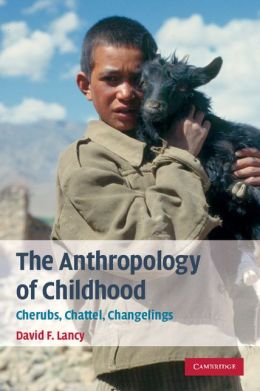
The only baby book you’ll ever need” has been widely shared for good reason, and as of this writing I’m about 15% through The Anthropology of Childhood but know it’s going to become the default gift to reproducing friends. Something about American culture seems to bring out neuroticism in people doing what billions of others have done before them; see also Jennifer Senior’s All Joy and No Fun: The Paradox of Modern Parenthood. Expensive, large-scale programs like New York’s Universal Pre-Kindergarten (UPK) or the national Early Head Start (EHS) get launched under the assumption that more schooling, earlier, is better for children, it is not obvious that that is true: “While schooling for us may begin with the fetus (if you can believe the hype about expectant mothers listening to Mozart), most societies don’t see children as readily teachable until their cognitive and linguistic skills have mature. This change usually occurs during the fifth to seventh year [. . .]” (16).

anthropology_of_childhoodInsights occur at the national and personal level. I for example was a mostly unhappy child and adolescent, not I think due to my parents or circumstances or whatever but due to inner disposition, and I interestingly became happier when I realized that we’ve not evolved to be happy: we’ve evolved to survive and reproduce. I wish someone had pointed that out earlier. Happiness may or may not be a byproduct and our default “happiness point” probably varies substantially by individual. Furthermore, in an evolutionary sense happiness may be much more contingent than it is widely considered to be in contemporary America: “In the decision to create a child – whether in an Ethiopian village or elsewhere – their wellbeing and happiness is rarely the issue” (26). And farmer societies tend to take small children and put them to work, while forager societies tend to take steps to limit the number of total children had because children take much longer to become economically viable.

To return to my own experience, even as a child I found other children brutal and stupid. Yet almost no one speaks to this idea. Lancy notes that “Our own society views children as precious, innocent, and preternaturally cute cherubs. However, for much of human history, children have been seen as anything but cherubic.” That was my intuition and still is to some extent; few others, apart from Camille Paglia and Robertson Davies have made this point. It may be wrong but it’s barely part of the debate. Many cultures consider babies and small children “sub-human” (16). To be clear, I’m not arguing that American society should do so, but I am arguing that we should know more about our species’s own history and the contingency of our own widespread practices and assumptions.

This topic may, however, be especially resistant to inquiry; childhood and parenting may be particularly fraught because almost everyone has opinions on them (and every adult has been a child) but few of us try to figure out what the research says. The Anthropology of Childhood is a $40 academic book and thus may not be a particularly accessibly way of entering the mainstream, but it should be better known.

It is the sort of book that will repay rereading many times over; this post was meant to be a link, but the writing kept pouring forth until it was a post. Lancy writes that the book began as a short article that was 500 words over his journal’s limit, and he just kept going. It could be read in conjunction with Melvin Konner’s The Evolution of Childhood successfully.

Interesting books I read this year

“The best books of the year” articles are useful but annoying: useful because there are often interesting books I missed but annoying because a book isn’t worth reading simply because it was published in a given year. So I’m doing a list not of books published this year but that I read this year and think deserve attention.

* Mating in Captivity by Esther Perel: Almost nothing in pop culture prepared anyone for long-term relationships, and Perel’s book is about many, many things, among them what happens after most novels, movies, and TV shows end. When it came out Tyler Cowen called it “the most dangerous book I read this year,” and that was in 2006. It is not a good book to admit to liking publicly.

* Arts & Entertainments by Christopher Beha, about a failed actor who becomes an inadvertent teacher who becomes an inadvertent amateur pornographer who becomes an inadvertent reality TV personage. I laughed, and the book’s final dialogues are still funny but also offer unexpected, powerful commentary on our time. Why isn’t this book more popular and getting more attention?

* The Power of Glamour by Virginia Postrel, about a latent yet pervasive phenomenon that was until recently underrated and even ignored by me.

* Related to The Power of Glamour, The Rosie Project, as recommended by Bill Gates. It starts promisingly and ends brilliantly, with me laughing at almost every page; if you know any geek, nerds, or programmers, you need to both read this and give it to them.

* The Great Man, by Kate Christensen, also very funny and with sentences that delight from start to finish.

* Love Me Back by Merritt Tierce, another book that should be better known and hits many valences simultaneously.

* Zero to One by Thiel and Masters, which is notionally about startups but is really about the world.

* Echopraxia by Peter Watts, but do read Blindsight first. So good it’s hard to write about.

* Trust Me, I’m Lying, which I didn’t read when I first heard about it because I thought, “Meh, I already know.” I didn’t, and the prose is delightful. Note too the comments at the link.

* Bess adds Dear Leader: Poet, Spy, Escapee–A Look Inside North Korea, about a defector’s astonishing story. The sentences are strong, yet I feel like I already knew enough about North Korea prior to reading.

What have I missed?

Zero to One — Peter Thiel and Blake Masters

Zero to One: Notes on Startups, or How to Build the Future is out and you, like everyone, should read it; the book is of course about startups but its deeper themes are philosophical in nature: how we should think about and relate to the world. The writing is elegant and clear without having a distinctive style that can be easily labeled by calling attention to itself. It is Robertson Davies’s plain style, used well here.

Those who have already read Blake Masters’s CS 183 classnotes—I have—may be disappointed, since they form the core of the book. Nonetheless those notes have been cleaned up, organized, and updated with more recent examples. The thrust Zero to One is also beautiful and optimistic: the future is important, it can be shaped and improved, and individual choices matter. In believing those three things, and especially the second two, Thiel and Masters are swimming upstream against much of contemporary culture.

zero to oneOthers can no doubt comment on the technical aspects of the book, but I will note that much of what Thiel and Masters write sounds like an artists’ manifesto: “The act of creation is singular, as is the moment of creation, and the result is something fresh and strange.” I very rarely read about business as “strange,” and yet the word is apt: all things are strange before they become domesticated by time and ubiquity. Artists usually focus directly on creating new things, but Zero to One describes “how to build companies that create new things.” More people extend the reach of what a single individual can do, but though Thiel has “noticed many patterns [. . .] this book offers no formula for success.” There is none, because innovation is by definition strange and new. He is trying to “help my students see beyond the tracks laid down by academic specialties to the broader future that is theirs to create.”

Academia has many problems and he notices them; I don’t think he uses this as a specific example, but one issue is treating school like a job or primary occupation. It shouldn’t in most cases be. It should be a day job that enables and ideally complements the other things one does. Teachers and professors rarely inculcate this attitude, however, because they themselves have been selected by the school system and have bought into its prejudices and cultures. Charter schools are important for many reasons, one being that they give an opportunity to create new schooling cultures. Montessori is specifically attempting to do that, and it is striking how many successful tech guys went through Montessori schools.

They note that “The business version of our contrarian question is: what valuable company is nobody building?” This question is harder than it looks” (23). The novelists’ version is, “What valuable novel is nobody writing?” One challenge, of course, is that different people have different values for “valuable:” I find most “thrillers” to be boring and un-thrilling, and most thriller readers probably find literary fiction the same.

This could be a description of most narrative fiction: “Our ancestors lived in static, zero-sum societies where success meant seizing things from others. They created new sources of wealth only rarely, and in the long run they could never create enough to save the average person from an extremely hard life.” Romance, the driver of so much fiction, is usually zero-sum: if the protagonist wins the guy or girl, no one else can; if the rival wins the guy or girl, no one else can, while in the real world there are a de facto infinite number of good guys or girls, provided the protagonist—that is, you—are willing to find and attract them. There are an infinite number of jobs, too, and one person getting a job doesn’t prevent someone else from getting another, or making another. Much narrative fiction taps into the zero-sum dynamic. Maybe it shouldn’t, or should more often explicitly question that dynamic.

Thiel and Masters are writing about everything, though they write specifically about startups. They discuss the nature of mass delusion (“Usually, it’s considered weird to be a 40-year-old graduate student. Usually, it’s considered insane to start a half-dozen companies at once. But int he late ’90s, people could believe that this was a winning combination”) and the psychology of founders (“Of the six people who started PayPal, four had built bombs in high school” and “We alternately worship and despise technology founders just as we do celebrities”); there is a hint of a Paglian reading of myth here, and such readings are too rare in a de-mythologized, de-ritualized society. There is more of the journey of the mythic hero in tech startups than is commonly supposed.

Psychology and cultural criticism have a long border; Thiel and Masters write that “competition is an ideology—the ideology—that pervades our society and distorts our thinking” (35). The opposite of competition, which may be something like cooperation or stasis, could be even worse: static societies and companies do not appear to do well or even exist in a world of competitive societies. But I don’t think Thiel and Masters are going in this direction: they are rather reminding us that it is useful to remember that we don’t live in a zero-sum world, largely because of technology and specialization. Most of human existence probably was zero sum, however, and that may explain some psychological quirks that aren’t terribly adaptive in contemporary information and industrial societies.

Competitive ideology has another problem too: it encourages us to compete with everyone, all the time. Picking good competitors is probably almost as important as picking good friends. Most competitive arenas are pointless. People often fight for control, and against other people like them:

Consider the opening line from Romeo and Juliet: “Two houses, both alike in dignity.” The two houses are alike, yet they hate each other. They grow even more similar as the feud escalates. Eventually, they lose sight of why they started fighting in the first place.

I’ve noticed this continually among professors, often specialists in the same area, who are from the outside identical and yet bash each other over minor differences. People more generally seem to seek fights for the sake of fighting, and without realizing that direct fighting is usually a terrible way to change minds—as has been known for decades. It’s often better to not respond to critics and instead to make something new. As Thiel and Masters write: “Rivalry causes us to overemphasize old opportunities and slavishly copy what has worked in the past.” One can see this at an individual level or even a national level: think of the petro-states that exist as they do primarily because they can sell oil to innovation states.

I mentioned psychology already; here is another passage on that theme that also applies to artists, who are often skilled at ignoring or repudiating group beliefs / delusions:

The hazards of imitative competition may partially explain why individuals with an Asperger’s-like social ineptitude seem to be at an advantage in Silicon Valley today. If you’re less sensitive to social cues, you’re less likely to do the same thing as everyone else around you. If you’re interested in making things or programming computers, you’ll be less afraid to pursue those activities single-mindedly and thereby become incredibly good at them. Then when you apply your skills, you’re a little less likely than others to give up your own convictions: this can save you from getting caught up in crowds competing for obvious prizes.

“Making things:” properly read, Zero to One is a recipe book for makers across disciplines. And “getting caught up in crowds competing for obvious prizes:” I remember talking about college sexual adventures with a friend who went to an Ivy-League school and who lamented that so many of the girls were, in his view though not in his words, neurotic achievement-obsessed basket cases. Maybe he misunderstood what those girls were seeking, but maybe he chose the wrong environment for that part of life.

Making things happens at large and small scales. Though we are still somewhat good at making things happen at small scales—as, say, the iPhone shows, or many Kickstarter projects show—we have become less ambitious and too obsessed with vetoes on large projects. Launching the Innovation Renaissance discusses this; so too does Thiel, in a cultural-political context: In the 1950s, people welcome big plans and asked whether they would work. Today, a grant plan coming from a schoolteacher would be dismissed as crankery, and a long-range vision coming from anyone more powerful would be derided as hubris.” We are collectively unable to even muster the political will to build denser cities and reasonable public transportation systems, let alone next-generation nuclear plants and systems for getting cheaply into space. This is a dark problem too rarely discussed by anyone.

It is also a tremendous and tremendously dangerous problem: “Without new technology to relieve competitive pressures, stagnation is likely to erupt into conflict. In case of conflict on a global scale, stagnation collapses into extinction.” There is a direct, underappreciated link between novelty, innovation, and survival. Artist and scientists are arguably at the forefront of ideas, though not always good ideas. Still, there is a brilliant statement at the end, which I’ve read more often in books targeted at novelists:

Only by seeing our world anew, as fresh and strange as it was to the ancients who saw it first, can we both re-create it and preserve it for the future.

This is not an ordinary book about “business.” It is a book about everything, as the best books always are.

Almost every human endeavor is also about relationships, whether we want it to be or not:

The lawyers I worked with ran a valuable business, and they were impressive individuals one by one. But the relationships between them were oddly thin. They spent all day together, but few of them seemed to have much to say to each other outside the office. Why work with a group of people who don’t even like each other? Many seem to think it’s a sacrifice necessary for making money. But taking a merely professional view of the workplace, in which free agents check in and out on a transactional basis, is worse than cold: it’s not even rational. Since time is your most valuable asset, it’s odd to spend it working with people who don’t envision any long-term future together. If you can’t count durable relationships among the fruits of your time at work, you haven’t invested your time well—even in purely financial terms.

This is again a good description of academia, and it’s also a restatement of the Coase theorem, which I wrote about in similar terms at the link. In most life domains a purely transactional model makes everyone poorer in the ways that count.

Thiel and Masters note that in school “Students who don’t learn best by sitting still at a desk are made to feel somehow inferior, while children who end up defining their identities in terms of this weirdly contrived academic parallel reality.” If you’re awake and paying attention to the school system, it’s hard not to notice its many bizarre perversities—and its problems harm not only the low achieving students but also the high achieving students. Although I spent years being a dumbass, I mostly got tracked to the high-achieving parts of school, and as an adult discussions with others who were stuck on the high-achieving track involve the ways the value system of that track warps those on it. But no one or almost no one tells students that at the time, and parents, teachers, and administrators are in on the conspiracy. Maybe that’s why so many Silicon Valley bigwigs want their kids in Montessori or similar schools.

Moreover, the prestige / rivalry system reinforces a zero-sum mindset, at least for those who buy in, as Thiel did (and only barley escaped):

Higher education is the place where people who had big plans in high school get stuck in fierce rivalries with equally smart peers over conventional careers like management consulting and investment banking. For the privilege of being turned into conformists, students (or their families) pay hundreds of thousands of dollars in skyrocketing tuition that continues to outpace inflation. Why are we doing this to ourselves?

I wonder if Thiel and Masters have read Excellent Sheep yet. Deresiewicz has similarly scalding views, though he comes from a different vantage point and throws some pointless, ill-formed bombs at startup culture. Thiel and Masters, however, ask the deep questions, and give major structural advice that one rarely hears from professors: “You should focus relentlessly on something you’re good at doing, but before that you must think hard about whether it will be valuable in the future.” I have focused relentlessly on writing better novels, but so far it has not proven valuable in a financial sense. If it weren’t for other ways of monetizing my skills, I would be doing something else, and probably not even writing this post.

Let me return, for a moment, to relationships, since your friends and surroundings count, as Tolkien knew and many others know: “it’s hard to develop new things in big organizations, and it’s even harder to do it by yourself. Bureaucratic hierarchies move slowly, and entrenched interests shy away from risks.” This is another, accurate, critique of academia, and a reminder to attend to our environment. Thiel does say that “a lone genius might create a classic work of art or literature, but he could never create an entire industry.” Even the lone-genius model appears less true than is often imagined: reaching into the biographies of famous artists tends to reveal an ecosystem of friends, rivals, mentors, and helpers. Hemingway famously derided creative writing classes, but he spent much of his early working life showing drafts of his work to Gertrude Stein and Sherwood Anderson. Few of us succeed fully in art or business without helpers along the way: hence, perhaps, the Joseph Campbell model that calls for such helpers in The Hero With a Thousand Faces. Even in myth the hero does not succeed alone: Frodo and Aragorn need Gandalf. Luke Skywalker needs Han and Obi-Wan. In His Dark Materials Lyra finds an array of helpers.

There are sections I think wrong, like the one on page 78 when Thiel and Masters criticize contemporary Silicon Valley buzzwords, which may reflect generations of learning about startups and the startup environment. Thiel and Masters say that “Secrets about people are relatively underappreciated,” while the opposite is true: we call secrets about people “gossip,” and most narrative art is relentlessly focused on personality, competitive, and “secrets” about people that almost always turn out to be about sex, money, and death. The supposed “secrets” that people hold tend to be more uniform than not. That pattern has persisted in Western art for millennia: the ultimate “secret” at the heart of Oedipus the King (first written circa 400 BC) and Game of Thrones is the same. The only human secret that matters is that one shouldn’t be surprised by human secrets.

These are quibbles about an otherwise great book. Great books do not have to be long. This one isn’t. They have to pack a lot of ideas in the space they h ave. This one does.

To reiterate the first paragraph of this post, you need to read this book. The less you think you need to read it, the more you do. It is in some ways similar to Rework, another anti-conventional-business business book written by nerds. Zero to One is a tremendously important book; although I admire and appreciate trivial books, particularly because most books including my own are, find one that is important—which does not mean “pompous” or “serious”—matters. You should read it. Your friends should read it. Its ideas should be common currency, readily known whether accepted or rejected. It is possible that the future of the world depends on Zero to One finding the right person at the right time, which is true of few other books.

The physical book is itself nicely made; though the binding appears to be glue rather than thread, the paper quality is high, and much higher than most books in its class and most contemporary books, period. The physical book reflects their emphasis on long-term thinking, as too few physical books do. One can read publishers’s opinions on their own works in the ways they choose to manufacture books. Those opinions do not appear to be high. If publishers have a low opinion of their own products, what should investors think?


Here is a good Fortune profile of Thiel. And
Creativity, Inc.: Overcoming the Unseen Forces That Stand in the Way of True Inspiration — Ed Catmull and Amy Wallace

Creativity, Inc. is an interesting book marred by consistently, distractingly bad writing. I read it based on John Siracusa’s review, which doesn’t mention style (and doesn’t quote). But writing about a book without discussing style is like writing about Apple’s laptops without mentioning it.

Many of Catmull’s stories are interesting; for example, he tells one about holding meetings around a long, narrow table that by its physicality tended to exclude people and produce hierarchy, especially since some people would get reserved seats. But he missed the problems at the time: “the seating arrangements and place cards were designed for the convenience of the leaders, including me. Sincerely believing that we were in an inclusive meeting, we saw nothing amiss because we didn’t feel excluded.”

But two of Creativity, Inc.’s main points—about the need to tolerate failure in the right circumstances and the need to foster a creative working environment—are dealt with by much better-written books: Megan McArdle’s The Up Side of Down: Why Failing Well Is the Key to Success and Steven Berlin Johnson’s Where Good Ideas Come From. Not surprisingly they’re both professional writers; either would’ve been a better choice to ghost / “assist” with his book, but they might’ve been a lot more expensive too.

The book should be great; instead, Creativity, Inc. is decent, with redeeming qualities. Had it been a Pixar movie subjected to the process Catmull describes, I think it would’ve been trashed or straightened out before hitting the metaphorical screen. Creativity, Inc. is so painful because it has the potential to be a monument rather than a moment. Its errors are elementary; its insights aren’t. In writing, it appears that Catmull doesn’t know what he doesn’t know. At Pixar he learned to know what he doesn’t know, but in writing he’s not there yet.

There are weird metaphors: “Sutherland and Dave Evans, who was chair of the university’s computer science department, were magnets for bright students with diverse interests, and they led us with a light touch.” So are they like magnets, which attract metal rapidly, or are they like human riding horses, which is probably where the “light touch” metaphor comes from? The mixing in this sentence is jarring. He has “a ringside seat” to ARPANET. Catmull writes that early film editors at Lucasfilm “couldn’t have been less interested in making changes that would slow them down in the short term.” But that seems unlikely: it’s almost impossible to get to a true zero level of interest. Chances are those editors could have been less interested, perhaps through hostility. In 1983, we learn that “George [Lucas] hadn’t lost an ounce of his ambition,” but how many ounces are there in the average person’s ambition? How many in Lucas’s? Talking about ambition in terms of ounces is common but whatever freshness and vitality the metaphor might have once had is gone. These examples come from the first 37 pages. There are so many other examples of weak writing and clichés that I stopped marking them.

Not every sentence must be brilliant or unexpected—that would be alienating—but some should be.

The best part of Creativity, Inc. is the last pages: “Afterword: The Steve We Knew:”

[Steve Jobs] used to say regularly that as brilliant as Apple products were, eventually they all ended up in landfills. Pixar movies, on the other hand, would live forever. He believed, as I do, that because they dig for deeper truths, our movies will endure, and he found beauty in that idea. John talks about ‘the nobility of entertaining people.’

It has fewer clichés, though I’m not sure why. Nonetheless, I wish the rest of the book had been more like the last ten pages. For the right person in the right industry at the right time, Creativity, Inc. is still worth reading. For the rest of us it’s a lesson in what might have and should have been.

Why fiction? Why reading?

When we pick up a decent book, we live not once but twice, and each new book allows us to live again and absorb the thoughts of someone who has absorbed thousands of other people’s thoughts. The book is the most powerful medium yet invented for intellectual stimulation, growth, and change. The bounty is endless and in the contemporary world very cheap. Most, though, reject the gift. Is this not strange?

Pretty much everyone who is deeply interested in reading gets and/or writing gets some version of the utility question that I answered in the first paragraph (and have answered in other places). Each answer has its own idiosyncrasies, but I think they have a common core that revolves around knowledge and pleasure. The issue is on my mind because a friend wrote me to say regarding Asking Anna, “thanks for having thought through that book content and made it available for people like me to read and then not have to do some of the work. I like that.” The crazy thing is that crazy people have been doing this for centuries: packaging many thousands of hours of thinking into works that take only a few hours to read.

That’s true of fiction and nonfiction, and in some ways lately nonfiction has been leading the perceive quality race. But historically fiction has tended to advance the state of the art in prose, with novelists especially leading the charge towards renewing the language. Arguably this tendency has decreased over time, but I’ve never read a great nonfiction writer who didn’t also read fiction, or read a lot of fiction at one point.

Good novelists tend to be obsessed with the quality of their prose in a way fewer nonfiction writers are. Too many nonfiction writers focus on content at the expense of form and beauty; some have been glamored by some of the stupid literary theory that passes for erudition in some academic circles (Katharine Frank’s books, like Plays Well in Groups: A Journey Through the World of Group Sex, suffer from this, though she is merely a salient example and far from the only offender).

Fiction tends to train us to attend to language, and books like Wood’s How Fiction Works and Francine Prose’s Reading Like a Writer do the same. When one becomes sufficiently attuned to language, poorly written work or even work that is merely competent becomes aggravating, like a song messed by a drunk guitarist.

That’s my short utilitarian defense of fiction, but I read it for pleasure. The history of the West is one in which pleasure is suspect, especially in the Judeo-Christian tradition; sometimes for good reasons and sometimes for less-good reasons. That tradition encourages us to make sure that pleasure is always deferred, and that’s the tradition that led to the Enlightenment and Industrial Revolution and hence to the present day. We’re still getting somewhat used to enormous material wealth, at least by historical standards. But pleasure has its own importance, and there is pleasure in the many lives we can choose to live through books. Perhaps the most interesting thing is that so many people do not make the choice.

Every great book is the result of years or decades of studying and experience, distilled into a volume you can read in a few hours. How could you not want that?