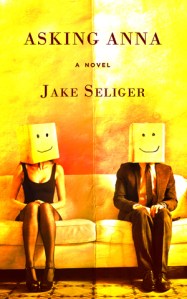
 A couple people asked about the paper version of Asking Anna, and it’s now out. Take a look at the link.
(The original announcement is here.)
A couple people asked about the paper version of Asking Anna, and it’s now out. Take a look at the link.
(The original announcement is here.)
* “Our Intellectual Cowardice,” which the structure of academia makes rife. That being said, I also suspect that a lot of academics are silent regarding the weakness or silliness of other academics because none of their work matters: it’s already so widely ignored that another silly journal article is never going to have any impact anyway.
* Be wary of fMRI brain scan studies like this one, but it does at least get around the correlation-is-not-causation problem that plagues similar claims: “Study: Reading a Novel Changes Your Brain: College students experienced heightened connectivity in their left temporal cortexes after reading fiction.”
* Child support and the threat point.
* What is it like to operate on obese patients?
* “Writing to Win;” why do we obsess over the moment of a writer’s publication?
* Great news for pot smokers: drug cartels are building massive underground railroads into the U.S. to transport goods that Americans desperately want to buy.
* Are Bedrooms Superfluous? The next-generation Murphy bed.
* “How the Drug War Disappeared the Jury Trial,” which everyone needs to read and which should also scare everyone who does read it.
* “An MLA Story;” takeaway: Don’t go to grad school.
* “Why Does A Good Kettle Cost $90+?” Since I started drinking tea I have wondered about this and now have an answer. The Hacker News discussion is also good, except for the top comment.
* “The Humanities and Us: Don’t listen to today’s narcissistic academics—the West’s cultural inheritance is indispensable;” on some level you’ve read this before and as usual the writer goes too far in imagining a golden, magical past but nonetheless it is worth reading and complements “An MLA Story” and “Our Intellectual Cowardice.”
 My first published novel, Asking Anna, is out today as an eBook; the print book should follow next week. It’s fun and cheap and you should definitely read it. Here’s the dust-jacket description:
Maybe marriage would be like a tumor: something that grows on you with time. At least that’s what Steven Deutsch thinks as he fingers the ring in his pocket, trying to decide whether he should ask Anna Sherman to marry him. Steven is almost thirty, going on twenty, and the future still feels like something that happens to other people. Still, he knows Anna won’t simply agree to be his long-term girlfriend forever.
When Steven flies to Seattle for what should be a routine medical follow up, he brings Anna and hits on a plan: he’ll introduce her to his friends from home and poll them about whether, based on their immediate judgment, he should ask Anna. But the plan goes awry when old lovers resurface, along with the cancer Steven thought he’d beaten, and the simple scheme he hoped would solve his problem does everything but.
Asking Anna is a comedy, in the tradition of Alain de Botton’s On Love and Nick Hornby’s High Fidelity, about how the baggage you bring on a trip isn’t just the kind packed in a suitcase.
I’ll be writing more about Asking Anna next week. I’ve been writing fiction with what I’d call a reasonably high level of seriousness since I was 19; I’d rather not do the math on how long ago that was, but let’s call it more than a decade. It took me four to six false starts to get to the first complete novel (as described in slightly more detail here) and another two completed novels to finish one that someone else might actually want to read. Asking Anna came a couple novels after that.
People who don’t write novels are often surprised to hear about aborted and unreadably bad novels, but producing a few before finding the knack is a pretty common trajectory among writers who, again, produce work that someone else might actually want to read (this may sound like a low standard, but even hitting it is much harder than is widely supposed). It takes a long time to really figure out how to tell a story and how to use the primary tool authors use to tell stories (words) effectively. It’s also hard to find other people who can a) know enough to give good feedback (which doesn’t mean “nice” feedback), b) who are sufficiently sympathetic to what you’re trying to do to not dismiss it outright and c) are interested enough to really talk about writing in general and one’s work in specific.
The preceding paragraph may be getting too far into the weeds of novel writing, but everything in it was a surprise to me when I finally figured it out, and surprises are often worth sharing and worth writing about.
“George Saunders Has Written the Best Book You’ll Read This Year” inspired me to read Tenth of December, but as often happens the headlines deceive. In the last twelve months I’ve read phenomenal books like The Great Man and The Black Swan. I’ve also read Tenth of December, which isn’t exactly bad; I felt like a Good Person for having read it.
Yet feeling like a Good Person isn’t the same as saying a book is fun or great (which are not always the same thing). Some stories in Tenth of December are funny; “Exhortation” in particular made me laugh, written as a deranged memo from the “Divisional Director” to the “Staff” and saying things like
We all know very well that that ‘shelf’ is going to be cleaned, given the current climate, either by you or the guy who replaces you and gets your paycheck…
Saunders does corporate euphemism frequently (“given the current climate”) and often well. He also does sad, as in this diary extract:
When kids born, Pam and I dropped everything (youthful dreams of travel, adventure, etc., etc.) to be good parents. Has not been exciting life. Has been much drudgery. Many nights, tasks undone, have stayed up late, exhausted, doing tasks. On many occasions, disheveled + tired, baby-poop and/or -vomit on our shirt or blouse, one of us has stood smiling wearily/angrily at camera being held by other, hair shaggy because haircuts expensive, unfashionable glasses slipping down noses because never had time to get glasses tightened.
There’s a Raymond Carver feel* (the dropped “youthful dreams of travel,” the unforeseen children, the sense of potential squandered in the detailed “unfashionable glasses”) mixed with Modernism’s dropped words. Yet it’s hard for me to get excited about passages like this one, which I feel like I’ve read before; too many stories leave me saying, “So what?”, even though there are some extravagantly wonderful passages:
At that point, I started feeling like a chump, like I was being held down by a bunch of guys so another guy could come over and put his New Age fist up my ass while explaining that having his fist up my ass was far from his first choice and was actually making him feel conflicted.
Yet these sections are too rare for me and the random detritus of fiction too frequent. Too often I found myself thinking, “So what?” There is admirable weirdness in some stories but less so perhaps than Ian McEwan’s early short stories. I read people saying things about how Saunders has the pulse of America or writes about an America others don’t or whatever, but I’m not sure that his work reflects America so much as it does an imagined reflection of America common in many journalistic and academic minds.
In addition, literary fiction habitually condescends to jobs, workplaces, and businesses. Sometimes that condescension is justified but more often it feels like misunderstanding intensified by the expert use of language. Saunders treads the lines where satire, condescension, and realism meet. There are interesting literary novels set in workplaces that have yet to be written—something like Last Night at the Lobster, a novel that I think will stay with me long after Tenth of December has faded.
More Carvarian, reproduction-related unhappiness, from another story: “We left home, married, had children of our own, found the seeds of meanness blooming also within us.” From this and countless similar renditions of the same perhaps we should assume that maintaining equanimity in the face of children should be an explicit goal.
The Great Man is one of the best novels I’ve read recently; it should be cited more often. Almost every page delights. It’s the sort of novel I should hate but yet don’t. A longer essay on it is coming, but it’s coming far behind work on Asking Anna, a novel of mine you’ll see more about shortly, and work-for-money. Nonetheless here is one characteristic passage from early in the novel:
“Please sit down,” said Teddy; she intended it as a command. She wasn’t impressed by Henry. She guessed he was forty or thereabouts. He looked like a lightweight, the kind of young man you saw everywhere these days, gutless and bland. He wore soft cotton clothing, a little rumpled from the heat and long drive in the car—she would have bet it was a Volvo. She could smell domesticity on him, the technologically up-to-date apartment on the Upper West Side, the ambitious, hard-edged wife—women were the hard ones at that age. Men turned sheepish and eager to please after about forty. Oscar had been the same way; he’d turned into a bit of hangdog at around forty and hadn’t fully regained his chutzpah until he’d hit fifty or so, but even then, she had never lost interest in him, and she was still interested in him now, even though he was gone.
We learn more about Teddy than about the stages of life and yet she, like almost every character, is half right half the time. One could spend an hour well on this paragraph in a fiction-writing class.
Most people, if you describe a train of events to them, will tell you what the result would be. They can put those events together in their minds, and argue from them that something will come to pass. There are few people, however, who, if you told them a result, would be able to evolve from their own inner consciousness what the steps were which led up to that result.
That’s Arthur Conan Doyle, from A Study in Scarlet, and it applies to what novelists do too: not just describe events, but put “events together in their minds” and see what happens as those events play out.
One reason I tend to argue against people who say they have no time or inclination for fiction is reality: in the form of nonfiction, even narrative nonfiction, it imposes limits on the imagination in a story (which may be one reason why so many people, especially those writing memoirs, are inclined to make shit up to make the story better). Fiction removes the reality constraint, and instead imagination imposes its own necessary and proper restraints on imagination.
At times fiction also pokes at the problems posed by reality, as in Richard Russo’s novel Straight Man. A chair is the pretext for a major fight between a married couple, and the man is describing a scene to his father-in-law:
“When she wouldn’t get out of the way, I set the bag down and took her by the shoulders. . . . Then . . . I don’t know. She must have tripped over the bag. I heard a crash, and when I turned she was there on the floor. She’d fallen into . . .”
He stops, unable to continue.
“The chair,” I say.
He stares at me through moist, confused eyes. “No, the stereo cabinet.”
“Oh, sorry,” I say. I my writing workshop I’d have explained to my students why, for symmetry, in had to be the chair.
In fiction symbols can align neatly as they so often don’t outside of fiction. The “train of events” runs smoothly or unsmoothly on the writer’s tracks, or on “their own inner consciousness.” Not always to an interesting end, but to an end that shows things nonfiction, whatever its virtues, often doesn’t.
“But there is no precise rule: it depends on the individuals, on the circumstances. This holds true also for the secular lords. Sometimes the city magistrates encourage the heretics to translate the Gospel into the vernacular: the vernacular by now is the language of the cities, Latin the language of Rome and the monasteries. And sometimes the magistrates support the Waldensians, because they declare that all, men and women, lowly and mighty, can teach and preach, and the worker who is a disciple after ten days hunts for another whose teacher he can become.”
“And so they eliminate the distinction that makes clerics irreplaceable!”
That’s from Umberto Eco’s The Name of the Rose, and we can see a similar situation happening now among many professional, privileged, and credentialed classes: with the Internet, the cost of being able to “teach and preach” goes down; anyone motivated can learn, or start to learn almost anything, and anyone inclined to teach can start writing or videoing on whatever topic they believe themselves to be an expert in. The key of course is motivation, which is in scant supply now and probably always will be.
Whether the existing power structures want to encourage self-learning, like many of the “secular lords” and “city magistrates,” or want to preserve existing institutions, depends on the person speaking and their aims. But “the distinction that makes clerics irreplaceable” is similar to the one that makes professors or other professional teachers irreplaceable. It’s a distinction that’s less important than the knowledge and skill underlying the distinction. Some with the distinction are not very good at their jobs and some without distinction are incredibly skilled. Those lines are blurring. Blurring slowly, to be sure. The language of knowledge is spreading. The issue of credentialing remains, but the number of jobs in which work product is a better examination than formal credentials is probably growing.
Does the average software startup want a famous degree, or an extensive Github repository? Right now I’m sifting through freelance fiction editors, and I’ve asked zero of them where they got their degrees or if they have any. I’m very interested in their sample edits and other novels they’ve edited. Clients almost never ask Seliger + Associates about formal degrees—they want to know if we can get the job done.
In writing this post, I am also conforming to the second of Umberto Eco’s “three ways” of reading The Name of the Rose:
The first category of readers will be taken by the plot and the coupes de scene, and will accept even the long bookish discussions and the philosophical dialogues, because it will sense that the signs, the traces and the revelatory symptoms are nesting precisely in those inattentive pages. The second category will be impassioned by the debate of ideas, and will attempt to establish connections (which the author refuses to authorize) with the present. The third will realize that this text is a textile of other texts, a ‘whodunnit’ of quotations, a book built of books.
Eco published this novel in 1980, around the dawn of the personal computer age and long before the consumer Internet. Whatever connections existed in the 1970s between The Name of the Rose and that era—the ones Eco presumably had in mind, whatever his view of authorization—are not the ones I most notice. That the novel’s correspondences can grow and change with decades make it so powerful and deep. Few works of art transcend their immediate context. This one does. It deals with the eternities much more than the news, though the author has demonstrated in essays his interest in the daily news.
If someone had told me before I read The Name of the Rose that a novel set in 1327 and utterly enmeshed in the recondite politics of Christianity would be one of my favorite novels, I would’ve scoffed. Religion as a subject is of little interest to me, except in meta sense. But sufficiently great novels transcend their context, even as they adapt the language, rhetoric, and world of their context. As Eco’s third category of reader indicates, the novel is composed of many other novels, books, articles, and speech. He has, it seems, 800 years of literary history composted into a single work. Few novels do, and fewer still do so in a novel with an actual plot.
* Francine Prose: “Commerce, fantasy, fetishism: Should we care about fashion?” For a long time I answered no but increasingly I now answer yes. Note especially how she points to the paucity of literary descriptions of fashion, which I have long been blind to.
* Travel is much more boring and aggravating than people give it credit for.
* CDC: Many U.S. Girls Not Getting HPV Vaccine Despite Its Effectiveness.
* Is it modern art or a four year old’s drawing?
* “A bachelor’s degree could cost $10,000 — total. Here’s how.” The short version is, “Unbundling.” I think we are going to see some version of this tried in various places.
* Average Is Over—if We Want It to Be.
* There are few if any new and interesting things to say about Shakespeare.
* Which Job Skills Will Be Most Important In The Coming Years?
* “Why Are There Still So Few Women in Science?” As an alternate explanation, see Philip Greenspun, “Women in Science.”
* What we eat affects everything.
* If You Aren’t Technical, Get Technical. One could also replace “technical” with “literate,” although “technical” certainly has more immediate financial returns.
Raymond Chen has a hilarious and quietly insightful post in “I wrote FAT on an airplane, for heaven’s sake,” which ends this way:
During the development of Windows 3.0, it was customary to have regular meetings with Bill Gates to brief him on the status of the project. At one of the reviews, the topic was performance, and Bill complained, “You guys are spending all this time with your segment tuning tinkering. I could teach a twelve-year-old to segment-tune. I want to see some real optimization, not this segment tuning nonsense. I wrote FAT on an airplane, for heaven’s sake.”
(I can’t believe I had to write this: This is a dramatization, not a courtroom transcript.)
This “I wrote FAT on an airplane” line was apparently one Bill used when he wanted to complain that what other people was doing wasn’t Real Programming. But this time, the development manager decided she’d had enough.
“Fine, Bill. We’ll set you up with a machine fully enlisted in the Windows source code, and you can help us out with some of your programming magic, why don’t you.”
One deeper point: Bill “wrote” FAT on an airplane, but in a sense he’d been learning how to write it for a decade or decades. Any complex thing anyone does is built on a wide, deep, specialized foundation. Writing works that way too—I may “write” a given post or essay or proposal in a few hours or days, but in a sense I’ve been learning how to write for at least a decade. Maybe longer. When a post is executed cleanly and well, it’s not because I have some magical ability. It’s because any time spent at the keyboard is the tip of a spear that extends back through thousands of books and hours spent practicing things I’ve done wrong or seen other people do wrong.
Everyone has or should have a skill like that, or should be developing one. What’s yours?
(Chen wrote a similar follow-up post.)
Claudia Roth Pierpont’s “The Book of Laughter: Philip Roth and his friends” is unfortunately hidden behind a paywall, but one section stood out to me: she writes that Philip Roth and John Updike met around 1959, when both were getting their first publishing successes, and, “A decade later, they profitably scandalized the country with ‘Couples’ (1968) and ‘Portnoy’s Complaint’ (1969).” Times change: I saw them not as scandalous but as slightly tedious in their obsession with the transgressions of their era. Is the three-way in Portnoy really so shocking?
I thought not. In the context of the novel I understand the Monkey’s fuss, which is primarily a play for power over Portnoy, and one that she sort of wins because he lets her, or doesn’t know any better (the Monkey: “What do I care what happens to her? . . . She’s the whore! And all you really wanted to do was to fuck her! You couldn’t even wait until I was out of the john to do it!”, and then the Monkey threatens to leave. I heard lots of conversations like this in college, when melodrama ran high). Portnoy does have the sense to start disentangling himself: “Then in Athens she threatens to jump from the balcony unless I marry her. So I leave.”
In Portnoy, however, the voice persists even though what seems to have been a shocking scandal has gone away. In Couples I found it merely hard to care about who sleeps with who and why. There were numerous beautiful sentences put to little good use. Updike makes me want to write better sentences but also to construct more interesting plots. I lack his and his characters’s religious sense, which often makes me feel like he’s writing about a foreign culture. Battles over religious feelings are like battles over Communism: important in their day but long-since decided.
 The Story's Story