Links: Tech changes culture, beyond the salacious, IKEA, pulp fiction, business, and more!

* “Sex and the Industrial Revolution,” though this has already made the blog rounds.

* “Beyond the Simply Salacious: Five Stories on Adultery,” though is it gauche to link to links posts? Tony Tanner’s Adultery in the Novel: Contract and Transgression also covered related grounds many years ago. It is striking how few modern works of criticism could be of interest to the general reading population.

* “Is the IKEA ethos comfy or creepy?” Both, though I have a special hatred of IKEA, plus an amusing-in-retrospect story that takes place in one. It relates to this: “Alan Penn [. . . ] conducted a study of the IKEA labyrinth and deemed it sadomasochistic.”

* “The birth of Pulp Fiction,” which is interesting for many reasons, one obvious one being between paperbacks and ebooks. I do think ebooks are vehicles for “for social and cultural enlightenment” and that they will further “de-provincialize the American public.” One can already see this in 50 Shades of Grey, for example, despite the bad prose. The intellectual elite is already mostly de-provincialized but political correctness and some related movements have re-provincialized large precincts of it.

* “On Triangl, maker of the ‘world’s [allegedly] hottest bikini’?” This is actually about making it in the apparel business and fulfilling customers desires.

* “Actually, Our Military Keeps Winning,” an essay contrary to current dominant narratives. If you aren’t reading James Fallows you should be! On New Year’s Eve we saw American Sniper, which was incredibly intense and whether it can be read as a pro- or anti-war movie probably depends on the viewer’s outside knowledge.

* People now move to the Southeast from California and the Northeast, not surprisingly since the Southeast is where the cheap housing is. While Californians and New Yorkers endlessly debate supposed income inequality they perpetuate it by forbidding new housing supply. I want to move to Austin or perhaps Denver. My parents left California for Seattle when I was a kid due to housing costs and crap schools, and now Seattle and environs are following California’s lead by pricing people out of the market. See Matt Yglesias.

* Behind the scenes of Australia’s prostitution boom.

Links: Books, Is Marriage Worth Saving?, drinking, new Stephenson, standing desks, swagger, and more!

* Matt Yglesias thinks Amazon is doing the world a favor by crushing book publishers; see also my related post “Tyler Cowen on Paul Krugman on Amazon on the buzz.” The section “book publishers are terrible at marketing” is particularly interesting.

* “Is Marriage Worth Saving?” Given the subject of Asking Anna it should not be a surprise that I read with interest.

* “An interactive map of gender ratios among single people in cities;” virtually all cities have more unattached men than women in the 20 – 34 demographic, implying that many women are willing and happy to date older—sometimes substantially so.

* “Why College Kids Drink Like They’re Getting Extra Credit for It,” maybe.

* First details of Neal Stephenson’s next novel, Seveneves.

* “How Standing Desks Can Help Students Focus in the Classroom;” I’m all for it and since reading this I’ve been encouraging my students to stand when they write in class. I use a standing desk.

* “Prof. Alan Dershowitz: ‘Harvard’s policy was written by people who think sexual assault is so heinous a crime that even innocence is not a defense.‘”

* How to get swagger.

Arts & Entertainments — Christopher Beha

Arts & Entertainments is among other things very good, very New York, a comedy complement to Gillian Flynn’s Gone Girl (mid book: “I don’t like living this way. I’ve barely been outside in a week. I want to come home”), a defense of privacy and explanation of its importance (see also “Solitude and Leadership“), a surprise critique of the NSA, a reminder to trust liars, and a reminder that attention is the scarcest commodity of all and becoming scarcer.

Arts and entertainmentsI want to write that the plot is absurd. But is it? The vast celebrity-industrial complex is so large and amorphous that it is difficult to judge the plausibility of the plot, or of Eddie’s fatal sex-tape miscalculation. Does he not read the news? Every week some teacher or other gets fired not for being a stripper but for becoming known as one. Digital life is rife with such stories. People as a whole (and the culture we create) are hypocritical, as the novel is aware; though this is taken out of context it reinforces the point:

People don’t want to go overboard with the sad stuff. Mostly, they want to be able to judge people, and they can’t judge a girl in a coma. If she was older and had some kids, they could judge her for being selfish and irresponsible. But she’s too young for that. Maybe they can judge her father for a little while, but that’s his daughter in the coma, so that will only last so long. They can judge, like, the culture at large, but that means judging themselves, so that gets tiresome too. And there’s another episode of Desperately Expecting Susan to watch on Tuesday. Everyone will want an excuse to return their attention to the usual entertainment. We give them a nice opportunity.

The judgment reflex and public morality lag behind reality and rarely moreso than in putative education. The joy of altruistic punishment is real and rarely more powerful than in sexual mattes, with financial matters probably coming in second.

Arts & Entertainments picks up a millennia-old conversation about the self and how much, if at all, we can really know another person. In “In its second season premiere, Masters of Sex takes on the hardest questions of love,” Todd VanDerWerff writes:

One reason so many have tried to repress their sexual desires or legislate them away throughout human history is because when it comes to sex, we’re reduced to our most basic selves. There’s a moment where we are uncontrolled, and our true face appears, even if only for a second. To “fix” this, we try to introduce a rigidity, a script to stick to. We try to set up carefully delineated divisions between that true self and the version of ourselves we present to the world. Yet the fear is always there that in a moment of weakness, that face will appear, and we’ll finally be seen for who we truly are, even if no one would blink for a second.

This may be one reason people like porn, especially of celebrities or other people they know: they imagine that they are getting a moment of the “true” self, and that one gets to see through the personality. But Masters of Sex undercuts that: think of the scene in which Masters is told by Jane Martin, a prostitute in the show, that virtually all women can fake it and have faked it. Masters is astonished, and his astonishment comes from a massive revision about human nature. Most people, I suspect, go through such revisions over and over again, their views on nature changing until they come to a realization like this paraphrase of Terence, by way of Montaigne: “Nothing human is foreign to me.”

Art is filled with moments that remind us of the liars we are. Can we accept an answer of “no,” we do not know and cannot really know another person? Take a moment at the end of Generation War, a fantastic German miniseries that follows five German friends through World War II, in which a Jewish survivor returns to Germany after the war only to discover that a highly-placed Nazi shifted allegiances after the war and continued to be part of the German government. The Nazi’s allegiance was to power itself, and the implication is that we don’t know what a person will do when the circumstances in which they live change.

That we may not be able to know another is not a new idea, but the jones for “reality” TV and celebrity gossip fuels it. There is also an old idea that only God can see our true selves, but the true self may be an outgrown idea, like that other somewhat outgrown idea. In “Scientists discover that atheists might not exist, and that’s not a joke,” Nury Vittachi writes that “a metaphysical outlook may be so deeply ingrained in human thought processes that it cannot be expunged.” I’m unconvinced but I do think most if not all people need an attachment to an idea greater than and outside themselves. Celebrity, Arts & Entertainments suggests, could be that idea, but it is ultimately a hollow one. The cameras lie as effectively as we lie to each other and ourselves. Eddie’s weakness as an actor and a character is his inability to lie effectively. Poor deception skills make him ironically unable to exist on reality TV. The book is filled with subtle ironies like this, and that’s one reason why I think it catches the attention of critics who might be otherwise inclined to write it off as basic, lightweight satire. It isn’t just that. It’s a book of pleasures and of depth.

People who truly live and die an ideology or belief are the real exceptions. Standing for something is the uncommon thing, which may be why it’s so valorized in proportion to the number of people who actually do it. It may also be one of the many reasons religion keeps sneaking into this book. Eddie went to a Catholic school at which he teaches, and he appears to want on some level to do the time without doing the crime, so to speak, but this comment will appear inscrutable without having read the book, but I don’t want to give it more context for fear of spoiling the surprisingly twisty plot. Nothing feels like it’s happening as everything does.

One character, a reality TV producer named Moody, describes how he spent time in “a retreat house in Minnesota, run by the Order of St. Clement” while studying to become a priest; but he left after contact with a film crew that had arrived to make a video that showed what happened. As he says

The crew had their own problems. The things that were really going on in that place couldn’t be captured on film, because they were meant for God, not for the audience. They happened inside people. I watched all this, and somehow I knew what the audience would want to see.

If what you’re doing, or thinking, or feeling can’t be seen, does it matter? Does it “exist?” Is the audience God? Moody also highlights a challenge in any sort of narrative fiction, which can’t effectively depict what happens during the having of an idea, or when someone is doing an intellectual activity. Intellectual effort is mostly invisible, though it may be represented by books or typing or the like. Biographies of many artists are boring because the artists don’t necessarily do that much with their lives. Unless they’re unusually social or unusually sexual, they draw, they pain, they write—none of which lend themselves to narrative. One can write about influences and encounters and so on, but many people have interesting influences and encounters but never go on to do important work, as the artist does.

Movies have an especially hard time with boring writers and thinkers. The Social Network needs a lot of tarted-up, amped up drama to make it compelling; in real life Mark Zuckerberg appears to have spent most of his life at a keyboard and to have been in a monogamous relationship since he was 19 or 20. A Beautiful Mind also dramatizes the discovery moments in math, but the bulk of the movie focuses on dramatizing schizophrenia instead. Novels have similar problems. Few works of narrative art have plots that are motivated by ideas or intellectual curiosity—instead they focus on the interwoven meanings of sex, money, social status, and death. All are fine topics but one wonders if there is more out there.

TV and film, even more than the novel, are about dramatizing the exterior. Anything inside that can’t be represented outside doesn’t exist, but it’s so often what’s inside that counts most. If the soul does not live outside the body, it must not exist at all. The camera reminds us that we do exist, and we live for the adulation of others. That is so hard to resist that we barely know the people who do resist it; for one thing, they aren’t on TV, are rarely in any media, and as such they are the dark matter of contemporary society, everywhere and nowhere simultaneously. Yet they may be the real-ist people of all. If there once was such a thing as natural existence, TV has taken that away, and those who actively cultivate the TV-social-media-Internet-gossip mindset may not have it all. They are faux people, pod people, and that scares because they cannot be relied on to produce a consistent set of behaviors over time, which we usually call personality. One purpose of religion is to enforce a set of behavior codes that allow reasonable forward planning and projection. Arts & Entertainments encourages us to think that maybe there are parts of religion that we think more seriously about, and that fame as a secular religion has its perils that are often not seen until after it has been achieved.

Links: Joseph Epstein, A Smart (Finally) Women-in-Tech Piece, Gary Becker, Reading, and More

* “On Joseph Epstein,” which is of interest even when it is wrong; I’m also struck by how much things have changed: “In her 1939 essay ‘Reviewing,’ Virginia Woolf called the nineteenth-century reviewer ‘a formidable insect’ with ‘considerable power’ to alter the public reception of a book.” Today the barbarians aren’t just at the gates but in the temple.

* “It’s Different for Girls,” which is one of the only good women-in-tech pieces I’ve ever read (and I’ve read a lot of them); the last paragraph is especially good.

* Gary Becker died; here are a few of his papers.

* “How Creativity Could Save Humanity: Stefan Zweig, the obscure Austrian writer whose life and work inspired The Grand Budapest Hotel, believed imagination could help propel society toward universal tolerance and accord,” which has many counter-intuitive (to me) points; I especially like the comparisons between Europe and Brazil.

* Talent management in Silicon Valley.

* “U.S. children read, but not well or often: report.” My guess—and it’s purely a guess—is that the top end is doing extraordinarily well and perhaps better than ever (books are cheaper, good writing more available due to the Internet, good writing is more useful and visible, etc.—see Penelope Trunk’s dubious argument in “The Internet has created a generation of great writers “), and the bottom end that can barely read and write effectively has been with us since at least the 1960s and probably earlier. As with so much else I suspect that the middle is the real issue lies and where the real action is.

Part of this view comes from teaching English at the University of Arizona, where most honors students were at least competent writers for their age and some were really good—sometimes much better than I was at their age. Many professors and teachers do the standard bemoaning of the-kids-these-days-with-their-newfangled-gadgets, but I didn’t see much of that among those with real skills.

The Death of the Novel and Ryan Holiday’s “Trust Me, I’m Lying”

“As Chris Hedges, the philosopher and journalist, wrote, ‘In an age of images and entertainment, in an age of instant emotional gratification, we neither seek nor want honesty or reality. Reality is complicated. Reality is boring. We are incapable or unwilling to handle this frustration.’

As a manipulator, I certainly encourage and fuel this age. So do the content creators.” (67-8)

We have met the enemy, and he is us.

Trust Me LyingI have read a million essays, most dumb, about the Death of the Novel or the Death of Literature; “Anxiety of influence: how Facebook and Twitter are reshaping the novel” is one recent specimen, though there will no doubt be others: the topic seems as attractive to the essay writing set as cat pictures and porn are to Internet users. Yet the quoted passage from Ryan Holiday’s Trust Me, I’m Lying: Confessions of a Media Manipulator resonates more than most samples in the genre. Reality is complicated and the best novels, and narrative art generally, strives to capture that reality. Does a novel make a cultural sound if no one is there to read it?

“In an age of images and entertainment” it might also be useful to recall the Stephenson quote posted a few days ago:

Literate people used to spend a lot of time reading books, but during the Internet years those have begun to seem more and more like a distinct minority: a large and relatively well-off minority, to be sure, but one that simply doesn’t register in the electronic media, as vampires are invisible to mirrors. [. . .] Books, though, and the thoughts that go through the heads of their readers, are too long and complex to work on the screen—but it a talk show, a PowerPoint presentation, or a webpage. Booksih people sense this. [. . .]

If bookishness were just a niche pastime, like stamp collecting or waveboarding, none of this would really matter. But it’s more than that. It is the collective memory and accumulated wisdom of our species.

Not all hobbies are created equal. I wonder too if bookishness makes one less susceptible to the media manipulations Holiday describes in Trust Me, I’m Lying. “Less susceptible” is of course not the same as “immune.” Nonetheless, I would take from the book several lessons:

1. Beware the cheap, faux outrage that is seemingly everywhere online.

2. Realize that people are still herd animals—a point Holiday makes—and that while this is often adaptive (if everyone is literally running in one direction, there’s probably a reason) it has many drawbacks. Intellectually and economically it is often not good to be part of the herd.

3. Most people don’t separate news and entertainment, though few think explicitly about this point. Whatever larger cultural structures might have existed to enforce this separation at one point are if not gone altogether then mostly gone, and Trust Me, I’m Lying is a eulogy of sorts.

4. The environment in which we evolved for tens of thousands of years or more is very different from the one in which we live now; though that’s an obvious point, the many ways in which now and then are different still surprise me. Consider:

the public is misinformed about a situation that we desperately need to solve. But heartbreaking sadness does not spread well. Through the selective mechanism of what spreads—and gets traffic and pageviews—we get suppression not by omission but by transmission.

5. Trust Me, I’m Lying raises my estimation of academia, at least slightly.

Politics repeats itself while science and art make it new

In “Coolidge biography shows how little American politics has changed” Philip Greenspun points out that “Coolidge is primarily about events that occurred roughly 100 years ago, but the political debates often seem as though they could be in tomorrow morning’s news.” Greenspun points out a large number of similarities, though I do think there are more notable differences than he lists; one of the more prominent is the calls, whenever something bad happens, for the federal government to Do Something. Many of those calls in Coolidge’s time were directed at the local or at most state level.

Still, most of what he says is correct and to me the many similarities between 1910 – 1930 and the present imply that a lot of political posturing is wasted signaling. Energy towards politics would probably be better directed towards art, science, and technology—the latter fields at least move unambiguously forward, and in my view the first field does too.* A really good book lasts for decades or centuries while political opinions are almost always of the moment The effort expended in fields that make progress move not just the individual but the whole of humanity forward; most energy spent on politics is just a circle and maybe even a circle jerk.

Science and technology in particular increase the size of the pie that politicians (and the voters who elect them) can fight over.


* When I hear people—usually professors or wannabe professors—argue that art doesn’t move forward like technology (sample, from Wendy Lesser’s Why I Read: “There is no progress in the world of letters, as there is, say, in science or manufacturing. As the centuries pass, we do not get better or smarter at reading, and the authors among us do not get better at writing”), I usually ask them why people keep creating so much new art and why so many people want the new stuff, not the old stuff. By now, there are an infinite number of books to read and an infinite number of songs to hear. If art really didn’t move forward and become better over time, at least as defined by popularity, we wouldn’t see people constantly move towards the new. I haven’t heard a really good response to this point.

Why fiction? Why reading?

When we pick up a decent book, we live not once but twice, and each new book allows us to live again and absorb the thoughts of someone who has absorbed thousands of other people’s thoughts. The book is the most powerful medium yet invented for intellectual stimulation, growth, and change. The bounty is endless and in the contemporary world very cheap. Most, though, reject the gift. Is this not strange?

Pretty much everyone who is deeply interested in reading gets and/or writing gets some version of the utility question that I answered in the first paragraph (and have answered in other places). Each answer has its own idiosyncrasies, but I think they have a common core that revolves around knowledge and pleasure. The issue is on my mind because a friend wrote me to say regarding Asking Anna, “thanks for having thought through that book content and made it available for people like me to read and then not have to do some of the work. I like that.” The crazy thing is that crazy people have been doing this for centuries: packaging many thousands of hours of thinking into works that take only a few hours to read.

That’s true of fiction and nonfiction, and in some ways lately nonfiction has been leading the perceive quality race. But historically fiction has tended to advance the state of the art in prose, with novelists especially leading the charge towards renewing the language. Arguably this tendency has decreased over time, but I’ve never read a great nonfiction writer who didn’t also read fiction, or read a lot of fiction at one point.

Good novelists tend to be obsessed with the quality of their prose in a way fewer nonfiction writers are. Too many nonfiction writers focus on content at the expense of form and beauty; some have been glamored by some of the stupid literary theory that passes for erudition in some academic circles (Katharine Frank’s books, like Plays Well in Groups: A Journey Through the World of Group Sex, suffer from this, though she is merely a salient example and far from the only offender).

Fiction tends to train us to attend to language, and books like Wood’s How Fiction Works and Francine Prose’s Reading Like a Writer do the same. When one becomes sufficiently attuned to language, poorly written work or even work that is merely competent becomes aggravating, like a song messed by a drunk guitarist.

That’s my short utilitarian defense of fiction, but I read it for pleasure. The history of the West is one in which pleasure is suspect, especially in the Judeo-Christian tradition; sometimes for good reasons and sometimes for less-good reasons. That tradition encourages us to make sure that pleasure is always deferred, and that’s the tradition that led to the Enlightenment and Industrial Revolution and hence to the present day. We’re still getting somewhat used to enormous material wealth, at least by historical standards. But pleasure has its own importance, and there is pleasure in the many lives we can choose to live through books. Perhaps the most interesting thing is that so many people do not make the choice.

Every great book is the result of years or decades of studying and experience, distilled into a volume you can read in a few hours. How could you not want that?

Links: The writer, the adjunct, the technology

* Professors, we need you! (Maybe.)

* This is probably fake but definitely hilarious and true to my own teaching experience.

* “Do We Really Need Negative Book Reviews?” I tend to answer “Yes, with qualifications,” and indeed I write many fewer negative reviews than I once did. Then again I write many fewer reviews in general than I once did.

* “Is Paying Adjuncts Crap Killing Technological Innovation?” Hat tip and further commentary: Dean Dad.

* Technological Progress Isn’t GDP Growth and, relatedly, Tyler Cowen: “Robert Gordon’s sequel paper on the great stagnation.”

* Inside DuckDuckGo, Google’s Tiniest, Fiercest Competitor, which I use as my primary search engine:

How could DuckDuckGo, a tiny, Philadelphia-based startup, go up against Google? One way, he wagered, was by respecting user privacy. Six years later, we’re living in the post-Snowden era, and the idea doesn’t seem so crazy.

* “Why Is Academic Writing So Academic?“, which is to say, bad?

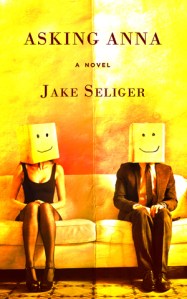
The Asking Anna paperback is out:

Wordpress cover image-3A couple people asked about the paper version of Asking Anna, and it’s now out. Take a look at the link.

(The original announcement is here.)

Links: Artists, sex, utility, antibiotics, books, hypocrisy, and more!

* From Marginal Revolution’s Tyler Cowen, and thus perhaps more cerebral and less salacious than might be otherwise expected: “Why don’t people have more sex?

* A lesson we have to learn, over and over again: “Not everyone is going to like the thing you made, and that’s okay:”

Consider this, about having perspective on criticism: If you enjoyed making a thing, and you’re proud of the thing you made, that’s enough. Not everyone is going to like it, and that’s okay. And sometimes, a person who likes your work and a person who don’t will show up within milliseconds of each other to let you know how they feel. One does not need to cancel out the other, positively or negatively; if you’re proud of the work, and you enjoyed the work, that is what’s important.Don’t let the fear of not pleasing someone stop you from being creative.

(The main situation in which it’s not okay is when a person acts as a gatekeeper or has the ability to block forward progress if they don’t like your work; this is a major and under-discussed problem in academia.)

* Why don’t French books sell abroad?

* “When We Lose Antibiotics, Here’s Everything Else We’ll Lose Too.” We’re losing antibiotics.

* Randomized Control Trials (RCTs) of Tennessee’s preschool program show that preschool doesn’t appear to improve the later school performance of those enrolled, or much of anything else.

* On the good news front: “Fed up with slow and pricey Internet, cities start demanding gigabit fiber.”

* “Overall, we Americans have a stronger attachment to U.S. dominance than to fair play or anyone’s rights.”

* An interview with the author, essayist and critic Daniel Mendelsohn; this is especially useful:

I think undergraduates should be kept away from Theory at all costs. I don’t think people should be allowed to even hear the word “theory” until they’re doing graduate work—for the very good reason that it’s impossible to theorise about texts before one has deep familiarity with them (not that that stopped anyone in the 1980s when I was in grad school). Undergraduates should be taught to have a clean appreciation of what texts say and how they say them, and learn how to write intelligently and clearly about that. If undergraduates had to have a model of criticism it ought to be popular criticism rather than traditional academic criticism.

* “The Stem and the Flower,” or, the distressing politicization of everyday life.

* This quote does not come from the sort of source you would expect it to come from: “When the history of how the United States became a dystopian, surveillance state is written no one will be able to say that we were not warned.”

* “The Other Side of the Story: When I was fourteen, I had a relationship with my eighth grade history teacher. People called me a victim. They called him a villain. But it’s more complicated than that.” This may tie into the first link in this list.