Reading How Fiction Works

I finished re-reading How Fiction Works a couple days ago—it is always a good time to re-read How Fiction Works—and realized that, every time I read it, I recognize a few more of the author-characters it mentions. This time, Effi Briest caught my eye: what was once another blank reference, noted and moved past, had now become freighted with meanings and impressions. The experience reminded me of how I used to feel going into bookstores or libraries. The real question for the younger me was, “How can anyone possibly make decisions among ten of thousands of choices?” There were so many books with authors I’d never heard of. How do you find the one you want to read among all of them? By reading thousands of dust jackets?

Now, I scan the shelves of bookstores and see more than names and cover art: this writer I’ve already read and didn’t like; this one I’ve already read and liked, but I’ve read all her work; this one I heard about through a blog post; this other one appeared on Bookworm and made his book sound boring. The challenge has changed from merely knowing something about what’s on the shelves to finding something I could actually want to read among many books I know I don’t want to read.

When I first read How Fiction Works in 2008, I didn’t stop at every reference to an author I didn’t know because I never would’ve gotten through the damn thing. Plus, as much as I love Wood’s criticism, I’ve also realized how different our tastes are; Wood quotes from Adam Smith writing in the eighteenth century regarding how writers use suspense to keep interest and says, “But the novel soon showed itself willing to surrender the essential juvenility of plot […]” I find that deeply wrong: a novel without plot is veering close to badly done philosophy. So many, though by no means all, of the novels he loves aren’t likely to have much in the way of plot. When I read amateur writing, I often notice the lack of any plot and often suggest the writer think about things like what the main character is reacting to, what the main character wants and why he can’t get it, what subsidiary characters want, and so on. A writer doesn’t, of course, need to be able to answer every one of those questions, but I get the impression a lot of beginning writers don’t ask them.

Wood actually comes very close to suggesting something similar when he writes

The unpractised novelist cleaves to the static, because it is much easier to describe than the mobile: it is getting these people out of the aspic of arrest and mobilised in a scene that is hard. When I encounter a prolonged ekphrasis like the parody above, I worry, suspecting that the novelist is clinging to a handrail and is afraid to push out.

But Wood’s definition of “push out” is probably different from mine, even if the ailment he diagnoses is the same. And it’s amazing to realize just how many of the things I inchoately knew before I read How Fiction Works are discussed, described, dissected, elaborated in the book. And now, as I said, when I come back to it, I find my gaps in knowledge filled in. Here’s another example of that, this time dealing with a critic:

Gabriel Josipovici discusses Beckett in [. . .] On Trust (2000). He points out that Foucault liked to quote from The Unnameable, as evidence of the death of the author: ‘No matter who is speaking, someone says, no matter who is speaking,’ wrote Beckett. Josipovici comments that Foucault forgets that ‘it is not Beckett saying this but one of his characters, and that the point about that character is that he is desperately seeking to discover who speaks, to recover himself as more than a string of words, to wrest an “I” from “someone says”.’

Gabriel Josipovici: he wrote Whatever Happened to Modernism?, a book I half-liked and wrote about at the link. Maybe one day I’ll read the book, recognize every reference, and wonder whatever happened to that person who first read it in a relative fog.

This Beautiful Life — Helen Schulman

I heard about This Beautiful Life in a New York Times review and immediately worried: the novel sounded similar to the novel I’m working on that doesn’t have a title (I’m referring to it as “The Teacher Novel”). But reading This Beautiful Life makes me happy because the Teacher Novel is definitely not worse and almost certainly better. This Beautiful Life is too frequently boring; it’s disconnected from itself (the very short first and last chapters are effective and engaging, however). Anita Shreve’s Testimony and Tom Perrotta’s Election cover similar territory far, far better.

Other comparisons work too. Reading the first long section of This Beautiful Life, which belongs to Liz, the mother, made me reread the first three chapters of The Great Gatsby, because Gatsby isn’t just better, it’s on a whole different plane, even though it’s also covering the banal problems of rich New Yorkers. Gatsby retains its ability to amaze, especially at how deftly Fitzgerald transitions from scene to scene. He’s so damn technically good that 1) I wonder / doubt if I’ll ever do anything as good and 2) Schulman looks unfortunate in comparison (funnily enough, Jake, the 15-year-old boy, reads Gatsby towards the end; I wonder if he learns anything).

Schulman avoids transitions by not writing much in scenes. There are some good sentences (one example: Liz, Jake’s mother, notes his height and says that “It was as if, suddenly, three extra vertebrae had been added to the staircase of his spine”) and amusing bits, but most of the novel isn’t composed of scenes, and the writing isn’t quite enough to make up for that. I feel like I’m reading weekend New York Times articles on overly yoga-ified Upper East Siders. The novel lacks the fiery pop at the end of Election‘s chapters, as it does tension. The father, Richard, has the strongest section, mostly because he actually does something, instead of sitting around being acted on.

Like Testimony, This Beautiful Life has the problem of having a single, main event, without any other plot points or subsidiary issues, but Testimony has more voice. It has more knowledge of itself. This Beautiful Life also got a moral problem: a 13-year-old girl named Daisy sends a 15-year-old guy named Jake a sex tape, and he forwards it to one person. Who cares? She did it willingly, and although she’s young it’s apparent she has sufficient knowledge and agency of what she’s doing to make the question of her agency unimportant. The novel is set in 2003, which is essential: if it were set closer to the present, the idea of a sex tape becoming a social conflagration beyond the confines of high school would be wildly improbable.

I feel like the New York Times reviewer, Maria Russo, read an entirely different book than I did, or hasn’t read This Beautiful Life’s predecessors. Schulman teaches in New York, and I wonder if getting the cover of the book review was a sweetheart deal with Russo, her agent, and/or the book review editor (if so, I’d love such a deal). Not everything that makes the NYT Book Review cover is aesthetically or intellectually interesting (here I’m thinking of Angelology, an utterly forgettable book). Russo assume that social and cultural mores are permanent (“What can the future hold for unformed, vulnerable kids who bumble their way into the lowliest realm of the permanent record that is the Internet? (Or, in Daisy’s case, reach it by simulating sex with a toy baseball bat.) Should their parents be held responsible, or are they equally victimized by the seductions and traps of digital life?”) instead of fluid. Russo gets to the idea that cultural mores, but not until the last paragraph. I would’ve liked a stronger historical sense. These criticisms may be due to the brevity of the venue: the NYT only allows so many words, and I think her review is in the neighborhood of 1,200.

I suspect that, if it hasn’t happened already, sexting will be pretty normal and not enough to drive plots in the near future. For guidance on changing mores, look to the past. In 1900 – ~1965, you could drive plots using the question of whether teenagers have sex, given how much of society was set up against that. Today, if you did the same, you’d have to use religious prohibition or something similar to drive the plot, which isn’t very satisfying because the solution (“stop being a religious wacko; your parents are unreasonable”) is obvious. Caitlin Flanagan get some, but not all of this—I’ve seen her work in The Atlantic. We’re seeing the phenomenon of “shocking” behavior becoming normal much faster than we used to, which makes me worried about the Teacher Novel, because it might not age well if behavior considered daring or inappropriate today becomes obvious tomorrow. Fortunately, I think the central questions avoid sex tape plots, but still: looking at changes throughout history make me wonder what’ll happen next.

For example, one grad seminar assigned Dreiser’s famous novel Sister Carrie, which was apparently shocking for its day (IIRC, it was published in 1900, though it might be a little later—1910?). Reading it now is banal. Who cares if a woman divorces one guy and marries another? I wonder if these narratives about teenage sex tapes will have the same effect in the nearish future, once people who’ve grown up with sending naked pictures of yourself as a standard practice; Penelope Trunk gets this, but she’s uncommonly opened minded, and I sense a generation gap (am I on the wrong side, I wonder?).

The first and last pages of This Beautiful Life are very good and describe Daisy. The sex acts that begin this novel (and Testimony) are effective attention-getters because most people don’t believe or want to believe that 12- and 14-year-old girls can be sexual (raising the question: have most people forgotten what it’s like to be 12 – 14?). The second paragraph is a single sentence: “Still think I’m too young?” It’s a provocation, but the description isn’t sexy: she has “a hunky ponytail” and “A little roll of ivory fat nestled above the waistband” of her skirt. The suggestion is powerful anyway, and the pages to follow are largely the lead-up and comedown from the two that begin the novel. This has the unfortunate side effect of draining narrative tension; Election avoids this problem through a shadow story about how the party happens, which isn’t revealed until the very end of the novel. This, along with the sheer diversity of voices, makes it a better novel.

Still, This Beautiful Life is a reminder that the novel as a genre is still going places movies and TV can’t or won’t. If a director portrayed a video of a girl who in this scene: “The breasts inside were small, and at first she covered them with her palms, fingers splayed like scallop shells. Then she unhooked the bra in front and they popped out as if on springs”, she’d be arrested for depicting someone under 18 in a sexualized circumstance with nudity. The director could hint and imply but couldn’t show what the novel describes.

I have to read the first paragraph of the second section ironically: “As with so many things of consequence, it all began with a party.” It seems highly unlikely that many “things of consequence” started with a party; an idea, a conversation, a scribble in a notepad, maybe, but a party? Seems improbable. Pages 10 and 11 of the hardcover have a lot of superfluous stuff. I took a picture of a page with my edits, where I remove sentences the book doesn’t need. In rereading of Gatsby, part of what’s so amazing is how essential most of it feels. So mysterious. We don’t even meet Gatsby until chapter three, and then by accident. One of the novel’s letdowns is in Chapter 6, where Nick suddenly regurgitates a bunch of stuff about Gatsby’s supposed background (this is similar to what Mark Sarvas mentioned in 2007: that it’s important not to become overawed by the great). Too much of the novel should be tightened like the face of the mothers Liz lives among. On page 100, “Richard felt the skin on his face tighten.” You could remove that sentence and lose nothing. There’s also a strange mistake: Schulman writes URLs as “feigenbaum/blogspot.com,” when Blogspot URLS are always in the form feigenbaum.blogspot.com. It’s minor, but it galls.

So do aspects of the characters. Take this early scene from Liz:

It’s your butt or your face—you can’t have both, Liz thought. Some movie star had said this; she’d read it or heard something like it somewhere, and had stored a smudged replica of the quote in the hash of celebrity trivia her brain had accumulated without effort, along with all the other stuff and nonsense that passed for knowledge these days from print magazines and whatever: TV, the Net, idle chitchat, the air . . . But it was true, about your butt or your face.

The “hash of celebrity trivia” is what’s so odd to me about Liz: she used to be an art historian. She got a PhD in art history. Yet little to no knowledge of art, art theory, aesthetics, or related subjects trickles into her thought. By now I’ve met lots and lots of academics, and the ones who stick it out to the PhD don’t do so for the money, which is practically nonexistent; they do do so for the love of their subject. It’s bizarre that Liz imparts so little of this in her thinking; she says that “her dissertation had distinguished itself because she’d focused on the synthesis of art, design, and dance in a new and radical way” {Schulman “Beautiful”@38}. But what way is that? How does it differ? Liz “couldn’t remember the subtitle” of that dissertation, which is understandable: titles are easy to forget. But much of the content appears to have gone the way of that subtitle. If art plays a real role in her present life, it’s well-hidden.

People’s professions cast shadows over their conversation, but Liz’s appears to be a veneer that lies no deeper than the letters after her name. What happened to all the knowledge she must have acquired? Why doesn’t she ever think in ideas? Characters content to surf on the world of everyday minutia are boring; one thing that sets science fiction apart from other kinds, at least in the view of Neal Stephenson, is its focus on ideas. He elaborates in this Salon interview, where he defines science fiction’s big tent as

Fiction that’s not considered good unless it has interesting ideas in it. You can write a minimalist short story that’s set in a trailer park or a Connecticut suburb that might be considered a literary masterpiece or well-regarded by literary types, but science fiction people wouldn’t find it very interesting unless it had somewhere in it a cool idea that would make them say, “That’s interesting. I never thought of that before.” If it’s got that, then science fiction people will embrace it and bring it into the big-tent view of science fiction. That’s really the role that science fiction has come to play in literature right now. In arty lit, it’s become uncool to try to come to grips with ideas per se.

Knowing something of celebrity gossip doesn’t automatically preclude one from having ideas, thinking about ideas, or thinking about what might go beyond the tiny halo of an individual life. Thinking about ideas also isn’t incompatible with worry about the body, sexual attractiveness, how others respond to the body, and so forth. But this moment is emblematic of why Liz, as a character, tends to be boring: she doesn’t have access to those ideas. The writing isn’t as crisp and mysterious as Fitzgerald’s (but then again, whose is?). The structure isn’t as sharp as Shreve’s or Perrotta’s.

If Liz had really been the house intellectual, the person who understands the deeper cultural structures underlying what her family is going through, she could’ve been a fascinating character. Instead she seems to have hung up her mind when she became a former. I suspect not all women do. The noun she uses in the passage above—”trivia”—is the problem: her life appears to have become trivia. This isn’t a fact that dooms her altogether, but if you can’t rise beyond trivia, then why bother? And I’m not asking that she cite Foucault or tedious theoretical windbags; I’m just asking for more awareness of her own situation. Give me some cool ideas about what things are about. Literature that endures has ideas; Jane Austen, whatever her faults, is constantly questioning how families and social relationships should work. Her characters are attuned to the minutest questions of status. I’d like to see the same here.

Liz has some faint idea of her problem, since she notes the “nonsense that passed for knowledge.” But it doesn’t pass for knowledge “from print magazine and whatever:” it passes for knowledge because she consumes it. Anytime she wants, she can skip US Weekly and pick up The Atlantic. But she doesn’t.

This passage isn’t bad on its own; if it were embedded in a story with more power, I’d take from it what I think Schulman was shooting for: Liz’s struggle with the wealthy but stultifying environment she’s in and can’t easily leave without harming her family and her husband’s work. It’s a worthy struggle, but a frustrating one because Liz should have the intellectual and financial tools to understand it. But she chooses not to use them, and a character who seems pointlessly helpless is a tedious character too. And Liz does have some real thoughts. In this scene of self-criticism, she’s looking at her ex-flings writing and says:

He was smart, funny, but still immature. He hadn’t seemed to have developed distance from his own dilemmas or learned how to structure a narrative. At what point did potential, budding and nascent, turn into stagnancy? At what point did stagnancy equal tragedy? Is that what made midlife unendurable for so many? Is that what made each and every day feel so damaging?

All this is plausible, and notice how she moves from the guy’s writing to her own life: she stats off talking with him, and by the second sentence you still think she’s talking about him. By the third—”At what point did stagnancy equal tragedy?”—you get the idea that she’s not talking about someone else. She’s talking about herself, as critics so often are when they write criticism. So she gets some self-analysis by the end of the story.

So does her son. Jake is uncommonly knowledgeable, like so many adolescents in fiction; he notes how teenagers mostly “walked around, calling out to one another, ‘S’up. S’up.’ It was rhetorical, not ever a question. Nothing was up, usually, unless something was. They were kids; they were terminally looking for something to do.” They don’t find it. At the very least, this passage feels dangerous, knowing what we know about the novel from the dust jacket and the first two pages. There’s a sense of a transgression. But you’ve read these scenes before, especially if you’re a regular young adult reader, but Jake’s crush on a girl of Chinese descent is endearing; he notices what she wears and “thought Audrey’s haircut made her look French, although he had no idea really what that meant.” Who does, really? Maybe someone who’s read La Seduction. That he wants Audrey drives him forward and toward Daisy, who wants him and sets about luring him via video. Lesson: people do strange things for love. Perhaps it’s a lesson we already know, but so it goes.

He understands Daisy slightly better than his mother does: Liz says of Daisy, “That poor, wretched, stupid girl. Marjorie says the mother’s always away somewhere, that even when she was little she was always picked up by a nanny.” As if someone who wasn’t picked up by a nanny would automatically never make a sex tape. Plus, Daisy presumably wouldn’t have made the tape if she didn’t think it was a good idea; perhaps she has a high discount rate, and adults, with lower discount rates, are thus unhappy because they’re judging someone they don’t understand. Her husband does the same thing, but intentionally, to a reporter. He says that of the video “It looked like a junior league Debbie Does Dallas. I don’t know where the girl learned this stuff.” The answer is obvious: the Internet. Of course, lots of people “learn” stuff of this nature from the Internet and turn out to be perfectly okay, as Daisy does.

But Richard understands something that he doesn’t want to define; he watches the video (all the adults do, and one gets a prurient swirl of surveillance). When he does, he uses standard moralistic language, but he also notes, basically, that it’s also hot, a way similar to some of the comments in Testimony, when either Mike or Rob is describing the tape of Sienna. If someone is being intellectually honest, they have to acknowledge that erotic power isn’t flipped on like a switch when one turns 16 or 18. In some people it develops early. When Richard sees the video, he also says:

And for all the video’s dismal raunch, its tawdriness, for all its sexual immaturity and unknowingness, there is something about the way this girl has revealed herself, the way that she has offered herself, truly stripped herself bare, that is brave and powerful and potent and ridiculous and self-immolating and completely nuts.

He’s right; the nuttiness, the sense of going beyond the bounds, gives the video its power (does this language sound familiar? It’s similar to how I described Ariel Sands’ Never the Face). In the end, there can be something about such a video. Richard doesn’t understand everything; he says that “It looked like a junior league Debbie Does Dallas. I don’t know where the girl learned this stuff.” The answer is obvious: the Internet. Of course, lots of people “learn” stuff of this nature from the Internet and turn out to be perfectly okay, as Daisy does. The novel needs to be set in 2003, because if it were set in 2011, a viral sex tape wouldn’t be so shocking, and I’m somewhat confident that high school students have developed antibodies for the event (from what students tell me, that’s true).

What’s normal today may not be normal tomorrow, and, thus, the worries about the tape might eventually be as strange to us as Seventeenth Century European schisms and wars. Manufactured drama around sex can make the amorality of Gossip Girl attractive by comparison. What would Blair say to Jake and Daisy?

Virtually everyone in this novel is reacting to things. Jake reacts to Daisy. Liz reacts to circumstances. Richard reacts to Jake. The only person who really acts on their own volition in the novel is Daisy; if anyone’s the hero, she is. That the hero gets to say so little is unfortunate. Notice how The Great Gatsby is driven by several great wants: Gatsby’s for Daisy; Daisy for excitement or some way out of her stultifying life with Tom (he who cites The Rise of the Coloured Empires), Nick’s for figuring out who Gatsby really is. Without all that want, like the voice of “I want, I want” in Henderson the Rain King, you wouldn’t have a story in The Great Gatsby. You’d have a series of still lifes. This Beautiful Life is more animated than a still life but less than The Great Gatsby. It shows so much promise, and The Great Gatsby keeps creeping up in it.


She’s gotten a lot of good press. The NYT review is above; the Paris Review blog interviewed her. The Washington Post has a banal review not worth linking to. Reading such reviews reminds me of why I like James Wood so much, even when I disagree with his assessments.

"You can do other things between the fun bits, you know"

A friend and I have an arrangement to exchange whatever substantial work we’ve written each Friday. It’s like an MFA program, without the pretension. She missed a week, saying:

Nice weather and boys, extension required.

Having some knowledge of such situations (as long as you replace “boys” with “girls”), I replied:

In my experience, you can only spend so much time in the sun before you burn and so much time in bed before, well, you need to do something else in the interim. If that latter bit weren’t true, we probably wouldn’t have iPhones, civilization, and all the other things that make the modern world wonderful or horrible or both.

Yeah, Freud got there first, but so what?

“You can do other things between the fun bits, you know”

A friend and I have an arrangement to exchange whatever substantial work we’ve written each Friday. It’s like an MFA program, without the pretension. She missed a week, saying:

Nice weather and boys, extension required.

Having some knowledge of such situations (as long as you replace “boys” with “girls”), I replied:

In my experience, you can only spend so much time in the sun before you burn and so much time in bed before, well, you need to do something else in the interim. If that latter bit weren’t true, we probably wouldn’t have iPhones, civilization, and all the other things that make the modern world wonderful or horrible or both.

Yeah, Freud got there first, but so what?

"Why do you write about books?"

A friend asked the question that formed the title of this post, and I gave her a half-formed answer. I’d like to give a three-quarter-formed answer, since I don’t think anyone can get more than maybe 90% of the way to one:

1) The most obvious and true answer is fairly high level and not useful: I like doing it. People who like doing something tend to do it, and I suspect the doing it will, over time, make them better at it. The leading practitioners in virtually any field appear to really like what they’re doing. Although I won’t call myself a leading practitioner of book blogging, doing it probably makes me a better writer than I’d be otherwise. Judging by search engine traffic and the number of subscribers, at least some number of people find this blog useful.

2) To work through my own sense of what works and doesn’t in novels. If you’re a novelist or would-be novelist, a lot of your criticism says as much about your own aesthetics and ideas as it does about the works you’re discussing. In The Shadow of the Wind, Nuria Monfort says, “Julián had once told me that a story is a letter the author writes to himself, to tell himself things that he would be unable to discover otherwise.” That’s also true of many bloggers.

3) To figure out what I really think about a book. One often learns by writing. This is (part of the reason) why schools assign essays and why academics are required to publish. When you write, you don’t merely record what you already think; you discover new things that you didn’t think, or didn’t realize that you thought. Think of Paul Graham in “The Age of the Essay:” “Expressing ideas helps to form them. Indeed, helps is far too weak a word. Most of what ends up in my essays I only thought of when I sat down to write them. That’s why I write them.”

4) To help other people figure out what they should read or use and why. My biggest challenge these days is probably finding enough time to read things I want to read. Related to that challenge is deciding what’s worth reading. Other people’s blogs and sites and advice help me with this, so I’d like to help others in turn. I can read an 800-word book review in a couple minutes. A 300-page book takes much longer, if it’s even worth trying. The magazine n+1 published an interesting and wrong piece called “Against Reviews that says, “[O]ur lives will end, sooner than we think, and our youth is already almost over. The self is not a renewable resource. If we wouldn’t describe a book to someone we wanted to sleep with, we shouldn’t write about it. It is time to stop writing—and reading—reviews. The old faiths have passed away; the new age requires a new form.” To me, this is an argument for book reviews: to save us from ourselves.

5) So I can have a ready made identity. “What have you been up?” people ask me, as I’m sure they ask you. I’m not so gauche as to say, “check out jseliger.wordpress.com and you’ll know,” but if someone does really want to understand what makes me tick better, they can find out pretty quickly.

In looking over those reasons, I notice that a lot of the answers center around personal reasons. I hadn’t really realized that most of my reasons for writing this blog were personal until I tried to articulate them. That’s an example of number three in action, right now, as I write.

Why do you read about books?

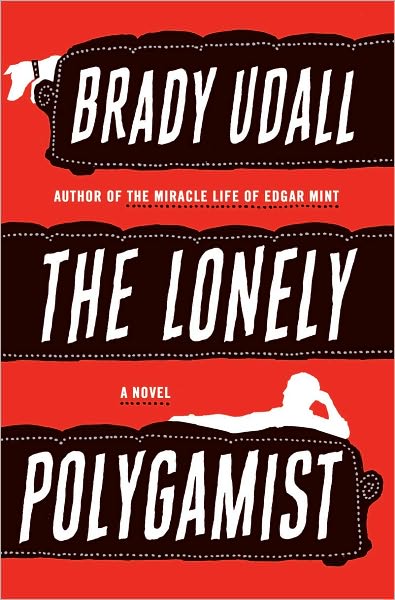
Brady Udall’s The Lonely Polygamist Interview: Part II

You can find part I of the interview here, including the context of this interview.

Jake Seliger: [Ideological conformity] seems like one of the conflicts between Beverley, who I think is homeschooling all of her children, and the—

Brady Udall: Right, Roland and Rose-of-Sharon, when all the other kids are at public school.

JS: Where they’re known as what Rusty is very aware of—as a Plig kid, which has a pretty obvious negative connotation.

BU: Polygamists face these kinds of feelings almost anywhere they live.

JS: It reminds me of—I went to high school outside of Seattle [in Bellevue, for those of you wondering]. At my high school, we had a relatively large Mormon population. There were also some—not a lot, but some—mainline Christians. The mainline Christians often thought the Mormons weren’t real Christians.

BU: Sure.

JS: And the Mormons would sometimes be a little, well—I mean, most of us were busy drinking and taking SATs and having sex, but—

BU: But that goes on and on. We’re out trying to convert the Baptists, and the Baptists are saying we’re not Christians. There’s going to be those conflicts everywhere. And more. Those conflicts exist in my own marriage. You know, it’s me and one wife. I just can’t imagine—you put two or three more wives in there.

JS: There’s also this establishment of what Golden’s life feels like. Early on, there’s a section that says, “Normally there would’ve been a crush of children waiting at the door, all of them shouting at once, pulling his clothes and asking what he brought them. The little ones standing on their heads, displaying some new bruise. Look at me! Look at me!” That little interjection there—look at me, look at me—is a lot of what’s going on among the children and among the wives. The wives are hanging back, waiting for their chance to lay claim on him, almost like he’s a piece of land. Just that phrase, “to lay claim on him—”

BU: Yeah, well that’s exactly it. The active verb is not his—it belongs to everybody else. And so he becomes more of a figurehead.

JS: Right.

BU: He’s like the president, you know what I mean? He is who you want him to be. But there’s a person there.

JS: When we enter his consciousness, we see his point of view, and he’s not really—he’s less concerned about dealing with each individual child and more concerned with Huila. He’s concerned the construction site. He’s concerned with his wives. It seems like the children are more concerned about him in many ways, than vice-versa.

BU: Yeah. He doesn’t have the wherewithal to deal with anybody individually. And I really wonder sometimes if the person who exists who can do this. You know what I mean? Maybe there is. I don’t know.

JS: It’s hard to wear the crown. Even if you want to be the king.

BU: I guess so. I just don’t know that this could be done. I don’t know where the cutoff. I was one of nine kids. My Dad did the best he could. But is it enough? What does a kid need? I’m not sure. I think it’s a pretty interesting question, actually. Most cultures, you know, want you to have more kids. Now we have two. Has it gotten any better? Have parents gotten better? Do kids become, you know, more mature, better readers now? It doesn’t seem like it. You know what I mean? I don’t know. . .

JS: What’s ideal. Or if there is such a thing.

BU: That’s what I’m saying. I don’t think there is. We’re telling ourselves that we think we know. It’s better to have fewer kids. I just went and said, is 28 obviously too many? I don’t know. It’s a good question.

JS: The issue of children is present because—in the interview you did with Powell’s Books, you said your characters were like having children. So what’s it like, then, having a child in the form of Golden, who’s in turn dealing with all the rest of these children?

BU: That’s a good question. As a writer, that’s very difficult. I look at myself as kind of a Golden. I put myself in his place, and I’d be like, “Damn.” So as a writer, dealing with all these characters, trying to keep track of them all, trying to understand what all their motivations are—it’s just a huge, daunting task. That’s why I write 1,400 pages. It was hard. But I guess I just wanted to do it right. And I had to go all out. I couldn’t do it halfway. I couldn’t easily. . .

JS: Abandon your literary children?

BU: I could have, you know, ten children. It would’ve made things easier, with only two wives, or three.

JS: But that would probably be less chaotic feeling.

BU: Yeah, that’s what I really wanted—that really big family. Because, you know, when I grew up, it was a family that wasn’t polygamous, but there were 16 kids. So it still happens. I want to go beyond anything that could naturally happen, in a regular American household. And it does, in polygamous households, around this country.

JS: Sixteen children goes back to the old Groucho Marx quote, I like my cigar but I take it out of my mouth every once in a while.

BU: [Laughing.] I haven’t heard that one.

JS: I’m surprised. It seems appropriate.

BU: It seems applicable, doesn’t it? I should mention that one to my Dad.

JS: Yeah.

BU: And we have versions of that, but yeah. But sometimes you wonder why. You see people with all these kids and sometimes the first question you want to ask is, “Why?”

JS: If you have a religious injunction against birth control, that’s where some of the culture gets going—

BU: That’s right, that’s right. And that’s an important part of all this. And you probably remember that Golden looks at the thing, the condoms, I remember the thing—it was imbued with the power of dark and benevolent Gods, or something like that, like a ring in a fantasy novel.

JS: That’s not at all how I view you. You know, you go into Rite Aid to buy 20—

BU: You know, with 28 kids—it’s such a possibility that’s not even available to you. That was the question—why would women have so many children? Well, that’s the whole point.

JS: Yet at the same time, that’s ultimately the tipping point for Trish to cheat.

BU: Absolutely.

JS: Because feels he’s not going to get the job done.

BU: He’s not going to get the job done. And that’s a very simple equation. You’re right. Their desires are at cross purposes. She wants to increase the family. He’s scared of the family. He doesn’t want it to increase anymore.

JS: He also has a million other things that are concerning him.

BU: Anyway, so that works out. That kind of conflict. That’s what story is. Put two characters in the same place with different desires, and that’s a story.

JS: I feel like I just walked into the Brady Udall creative writing seminar—

BU: Yes, yes, this is creative writing class.

JS: How do your students respond when you tell them variations on that theme?

BU: Well, they listen, but I don’t know if they always act. I just try to make it sound simple. They don’t seem to always believe me, that it’s that simple.

JS: It reminds me of your comment—I think you said, that’s the only thing worth addressing in literature—death and how we deal with the loss of people we care about.

BU: That’s right.

JS: Obviously, a fair amount of that comes in here. It sounds like you’re channeling Leslie Fiedler, in Love and Death in the American Novel. So my question would be, why death? Why not the love half of that as well?

BU: Well, obviously, there’s love and death. And love is the only thing that can overcome death. I think Fiedler talks about that. I’m just more interested in the death part. And the reason death is so meaningful is because of love. It all becomes the same thing. It wouldn’t matter if we didn’t love the people who go [I wonder if science fiction is exploring this space], who disappear from our lives. So love is a huge part of that. It’s not just death. I’m not as interested in romantic love. I don’t know why. I guess I’m just not a romantic person. I tend to leave that out. Even in this book, there’s certain kinds of romance going on, but I think it’s clear I’m not as interested in it. So it’s probably just a personal thing.

JS: Right. And the characters—they all seem to be driven by desire, but often not by desire for the person who they should want to desire.

BU: Right.

JS: You see that with Golden—

BU: We use other people to escape the people we should be with.

JS: Part of Rusty’s problem is his age, part is because of his circumstances—there is no one for him. No one who would be appropriate for him.

BU: Right. It’s totally true. His desires are totally inappropriate.

JS: And yet they make sense within the context.

BU: Sure. But if you think about it—for any 11-year-old kid, everything’s pretty much inappropriate. There’s no appropriate anything. Like most 11-, 12-, 13-year-old boys, he’s in a bad place.

JS: He’s in a particularly bad place, because even if he has an object of affection, and she’s another polygamist, she’s pretty strictly controlled.

BU: And June, June is kicked out. His group, someone shows affection for a certain girl, and that’s out of bounds.

JS: It seems like in some cases it would actually be harder for the girls to rebel. There’s a fairly strong hold to try to keep them. . .

BU: Absolutely. It’s almost impossible.

JS: So I don’t know what it would take, if you were a 16- or 18-year-old girl, to say, “Fuck this,”—

BU: “I don’t want this.”

JS: Do you have to call 911? Can you call 911?

BU: It’s much more difficult. It’s such an almost, I don’t want to say it’s wonderful. It is a great irony. In certain ways, the female has more power. It’s interesting stuff.

JS: The power of no, which it seems like they have.

BU: It’s power in a way, because they have a commodity. Which is horrible, obviously. They’re the ones, if you have five, six, seven wives, the more righteous and powerful you are. . . but the women become a commodity, and therefore have significant power.

JS: Assuming they manage to exercise it.

BU: Yeah, if they figure out how to do that.

JS: I believe there are a couple of older teenager girls in the novel.

BU: Sure.

JS: I love, by the way, the little family web at the front of the novel.

BU: Right, I made them do it. They wanted to just list it, but I made them do it that way.

JS: The thing is, instead of being a family tree, there’s a family web, with Golden at the center.

BU: Golden had to be at the center. That’s the whole point of it. That’s exactly the place he does not want to be.

JS: So it’s obviously not their story, but we don’t hear as much from those girls, the older kids. Em and Nephi are getting towards—

BU: If you remember, Em comes and stays with Trish for a while. She dresses up. She dances to the Beejees. But Beverley comes and shuts it down. So she has a little moment where she feels free, though.

JS: Perhaps Beverley is doing that because Beverley is thinking back to her own past.

BU: Yeah, sure. It’s the worst thing that she can see her daughter doing. Going anywhere near that sort of lifestyle. The world, or whatever.

JS: Here are some of my big, standard questions: What question do you wish interviews would ask and they never do?

BU: [Laughs.] Well. I wish I had a good, quick quip for that one, but I don’t.

JS: All right, I’ll give you my card. If you think of an answer, send me an e-mail.

BU: You probably want a real answer, and I don’t have one.

JS: Any kind of answer is okay.

BU: I get asked mostly about—you know. The same stuff. You do a good job, because you’re not asking all the same questions. You usually have to answer the same questions over and over again.

JS: Any time I interview a writer, I try to read at least a couple of other interviews so I don’t go over the same territory.

BU: Yes, and you’ve done a good job, sort of—what I like is talking about the book. Too often it’s about—and you see this in criticism—is a focus on the writer as opposed to the work. Which I have to say—I think it’s nearly useless. But people seem to find it interesting. That’s why there’s a magazine called People.

JS: People always ask you, “Do you use a Mac, or do you use a PC?”

BU: That’s right. They want to know. You know, I understand.

JS: I did see in one of your interviews, you said you like old typewriters.

BU: I don’t use a typewriter.

JS: Have you ever gotten a—for a while I used a keyboard called an IBM Model M, which is from the 80s. It’s got a very clicky. [We trade e-mail addresses.]

BU: I love that. The keyboard I have is that chunk, chunk-chunk chunk. You have to whack the keys to get it to respond.

JS: Do you have any final thoughts or things I should know?

BU: No, I don’t think so. I do appreciate the focus on the book, and the characters.

JS: I tried to talk about the language some.

BU: Language is very important to me. I’m trying to do two things at once. I don’t want the reader to notice the language, most of the time. But I’m trying to make language that’s, I don’t know, extraordinary. I don’t want it to disappear. I want the reader to sometimes go, “Wow.” To be moved by the language as much as the story itself. So that’s what most writers, anyway, look for—the Holy Grail. To have it both ways.

JS: I remember Stephen King, when someone said, “I want to be a writer,” or something like that, said, “Do you love sentences?”

BU: I love that. I love it. In the end, that’s all we have as writers. We just have words and sentences. We have nothing else. We don’t have pictures.

JS: Well—

BU: Yeah, you could. I mean, I might try that sometime. It might be easier than doing sentences. But I tell my students, you have to care for the sentence. You have to really care. Or your work’s not going to be worth that damn.

JS: I guess your last comment is, love sentences. I think that’s appropriate.

BU: Yeah, I like that. That’s appropriate.


No answer as to whether he got a different keyboard in response to this interview.

Brady Udall's The Lonely Polygamist Interview: Part II

You can find part I of the interview here, including the context of this interview.

Jake Seliger: [Ideological conformity] seems like one of the conflicts between Beverley, who I think is homeschooling all of her children, and the—

Brady Udall: Right, Roland and Rose-of-Sharon, when all the other kids are at public school.

JS: Where they’re known as what Rusty is very aware of—as a Plig kid, which has a pretty obvious negative connotation.

BU: Polygamists face these kinds of feelings almost anywhere they live.

JS: It reminds me of—I went to high school outside of Seattle [in Bellevue, for those of you wondering]. At my high school, we had a relatively large Mormon population. There were also some—not a lot, but some—mainline Christians. The mainline Christians often thought the Mormons weren’t real Christians.

BU: Sure.

JS: And the Mormons would sometimes be a little, well—I mean, most of us were busy drinking and taking SATs and having sex, but—

BU: But that goes on and on. We’re out trying to convert the Baptists, and the Baptists are saying we’re not Christians. There’s going to be those conflicts everywhere. And more. Those conflicts exist in my own marriage. You know, it’s me and one wife. I just can’t imagine—you put two or three more wives in there.

JS: There’s also this establishment of what Golden’s life feels like. Early on, there’s a section that says, “Normally there would’ve been a crush of children waiting at the door, all of them shouting at once, pulling his clothes and asking what he brought them. The little ones standing on their heads, displaying some new bruise. Look at me! Look at me!” That little interjection there—look at me, look at me—is a lot of what’s going on among the children and among the wives. The wives are hanging back, waiting for their chance to lay claim on him, almost like he’s a piece of land. Just that phrase, “to lay claim on him—”

BU: Yeah, well that’s exactly it. The active verb is not his—it belongs to everybody else. And so he becomes more of a figurehead.

JS: Right.

BU: He’s like the president, you know what I mean? He is who you want him to be. But there’s a person there.

JS: When we enter his consciousness, we see his point of view, and he’s not really—he’s less concerned about dealing with each individual child and more concerned with Huila. He’s concerned the construction site. He’s concerned with his wives. It seems like the children are more concerned about him in many ways, than vice-versa.

BU: Yeah. He doesn’t have the wherewithal to deal with anybody individually. And I really wonder sometimes if the person who exists who can do this. You know what I mean? Maybe there is. I don’t know.

JS: It’s hard to wear the crown. Even if you want to be the king.

BU: I guess so. I just don’t know that this could be done. I don’t know where the cutoff. I was one of nine kids. My Dad did the best he could. But is it enough? What does a kid need? I’m not sure. I think it’s a pretty interesting question, actually. Most cultures, you know, want you to have more kids. Now we have two. Has it gotten any better? Have parents gotten better? Do kids become, you know, more mature, better readers now? It doesn’t seem like it. You know what I mean? I don’t know. . .

JS: What’s ideal. Or if there is such a thing.

BU: That’s what I’m saying. I don’t think there is. We’re telling ourselves that we think we know. It’s better to have fewer kids. I just went and said, is 28 obviously too many? I don’t know. It’s a good question.

JS: The issue of children is present because—in the interview you did with Powell’s Books, you said your characters were like having children. So what’s it like, then, having a child in the form of Golden, who’s in turn dealing with all the rest of these children?

BU: That’s a good question. As a writer, that’s very difficult. I look at myself as kind of a Golden. I put myself in his place, and I’d be like, “Damn.” So as a writer, dealing with all these characters, trying to keep track of them all, trying to understand what all their motivations are—it’s just a huge, daunting task. That’s why I write 1,400 pages. It was hard. But I guess I just wanted to do it right. And I had to go all out. I couldn’t do it halfway. I couldn’t easily. . .

JS: Abandon your literary children?

BU: I could have, you know, ten children. It would’ve made things easier, with only two wives, or three.

JS: But that would probably be less chaotic feeling.

BU: Yeah, that’s what I really wanted—that really big family. Because, you know, when I grew up, it was a family that wasn’t polygamous, but there were 16 kids. So it still happens. I want to go beyond anything that could naturally happen, in a regular American household. And it does, in polygamous households, around this country.

JS: Sixteen children goes back to the old Groucho Marx quote, I like my cigar but I take it out of my mouth every once in a while.

BU: [Laughing.] I haven’t heard that one.

JS: I’m surprised. It seems appropriate.

BU: It seems applicable, doesn’t it? I should mention that one to my Dad.

JS: Yeah.

BU: And we have versions of that, but yeah. But sometimes you wonder why. You see people with all these kids and sometimes the first question you want to ask is, “Why?”

JS: If you have a religious injunction against birth control, that’s where some of the culture gets going—

BU: That’s right, that’s right. And that’s an important part of all this. And you probably remember that Golden looks at the thing, the condoms, I remember the thing—it was imbued with the power of dark and benevolent Gods, or something like that, like a ring in a fantasy novel.

JS: That’s not at all how I view you. You know, you go into Rite Aid to buy 20—

BU: You know, with 28 kids—it’s such a possibility that’s not even available to you. That was the question—why would women have so many children? Well, that’s the whole point.

JS: Yet at the same time, that’s ultimately the tipping point for Trish to cheat.

BU: Absolutely.

JS: Because feels he’s not going to get the job done.

BU: He’s not going to get the job done. And that’s a very simple equation. You’re right. Their desires are at cross purposes. She wants to increase the family. He’s scared of the family. He doesn’t want it to increase anymore.

JS: He also has a million other things that are concerning him.

BU: Anyway, so that works out. That kind of conflict. That’s what story is. Put two characters in the same place with different desires, and that’s a story.

JS: I feel like I just walked into the Brady Udall creative writing seminar—

BU: Yes, yes, this is creative writing class.

JS: How do your students respond when you tell them variations on that theme?

BU: Well, they listen, but I don’t know if they always act. I just try to make it sound simple. They don’t seem to always believe me, that it’s that simple.

JS: It reminds me of your comment—I think you said, that’s the only thing worth addressing in literature—death and how we deal with the loss of people we care about.

BU: That’s right.

JS: Obviously, a fair amount of that comes in here. It sounds like you’re channeling Leslie Fiedler, in Love and Death in the American Novel. So my question would be, why death? Why not the love half of that as well?

BU: Well, obviously, there’s love and death. And love is the only thing that can overcome death. I think Fiedler talks about that. I’m just more interested in the death part. And the reason death is so meaningful is because of love. It all becomes the same thing. It wouldn’t matter if we didn’t love the people who go [I wonder if science fiction is exploring this space], who disappear from our lives. So love is a huge part of that. It’s not just death. I’m not as interested in romantic love. I don’t know why. I guess I’m just not a romantic person. I tend to leave that out. Even in this book, there’s certain kinds of romance going on, but I think it’s clear I’m not as interested in it. So it’s probably just a personal thing.

JS: Right. And the characters—they all seem to be driven by desire, but often not by desire for the person who they should want to desire.

BU: Right.

JS: You see that with Golden—

BU: We use other people to escape the people we should be with.

JS: Part of Rusty’s problem is his age, part is because of his circumstances—there is no one for him. No one who would be appropriate for him.

BU: Right. It’s totally true. His desires are totally inappropriate.

JS: And yet they make sense within the context.

BU: Sure. But if you think about it—for any 11-year-old kid, everything’s pretty much inappropriate. There’s no appropriate anything. Like most 11-, 12-, 13-year-old boys, he’s in a bad place.

JS: He’s in a particularly bad place, because even if he has an object of affection, and she’s another polygamist, she’s pretty strictly controlled.

BU: And June, June is kicked out. His group, someone shows affection for a certain girl, and that’s out of bounds.

JS: It seems like in some cases it would actually be harder for the girls to rebel. There’s a fairly strong hold to try to keep them. . .

BU: Absolutely. It’s almost impossible.

JS: So I don’t know what it would take, if you were a 16- or 18-year-old girl, to say, “Fuck this,”—

BU: “I don’t want this.”

JS: Do you have to call 911? Can you call 911?

BU: It’s much more difficult. It’s such an almost, I don’t want to say it’s wonderful. It is a great irony. In certain ways, the female has more power. It’s interesting stuff.

JS: The power of no, which it seems like they have.

BU: It’s power in a way, because they have a commodity. Which is horrible, obviously. They’re the ones, if you have five, six, seven wives, the more righteous and powerful you are. . . but the women become a commodity, and therefore have significant power.

JS: Assuming they manage to exercise it.

BU: Yeah, if they figure out how to do that.

JS: I believe there are a couple of older teenager girls in the novel.

BU: Sure.

JS: I love, by the way, the little family web at the front of the novel.

BU: Right, I made them do it. They wanted to just list it, but I made them do it that way.

JS: The thing is, instead of being a family tree, there’s a family web, with Golden at the center.

BU: Golden had to be at the center. That’s the whole point of it. That’s exactly the place he does not want to be.

JS: So it’s obviously not their story, but we don’t hear as much from those girls, the older kids. Em and Nephi are getting towards—

BU: If you remember, Em comes and stays with Trish for a while. She dresses up. She dances to the Beejees. But Beverley comes and shuts it down. So she has a little moment where she feels free, though.

JS: Perhaps Beverley is doing that because Beverley is thinking back to her own past.

BU: Yeah, sure. It’s the worst thing that she can see her daughter doing. Going anywhere near that sort of lifestyle. The world, or whatever.

JS: Here are some of my big, standard questions: What question do you wish interviews would ask and they never do?

BU: [Laughs.] Well. I wish I had a good, quick quip for that one, but I don’t.

JS: All right, I’ll give you my card. If you think of an answer, send me an e-mail.

BU: You probably want a real answer, and I don’t have one.

JS: Any kind of answer is okay.

BU: I get asked mostly about—you know. The same stuff. You do a good job, because you’re not asking all the same questions. You usually have to answer the same questions over and over again.

JS: Any time I interview a writer, I try to read at least a couple of other interviews so I don’t go over the same territory.

BU: Yes, and you’ve done a good job, sort of—what I like is talking about the book. Too often it’s about—and you see this in criticism—is a focus on the writer as opposed to the work. Which I have to say—I think it’s nearly useless. But people seem to find it interesting. That’s why there’s a magazine called People.

JS: People always ask you, “Do you use a Mac, or do you use a PC?”

BU: That’s right. They want to know. You know, I understand.

JS: I did see in one of your interviews, you said you like old typewriters.

BU: I don’t use a typewriter.

JS: Have you ever gotten a—for a while I used a keyboard called an IBM Model M, which is from the 80s. It’s got a very clicky. [We trade e-mail addresses.]

BU: I love that. The keyboard I have is that chunk, chunk-chunk chunk. You have to whack the keys to get it to respond.

JS: Do you have any final thoughts or things I should know?

BU: No, I don’t think so. I do appreciate the focus on the book, and the characters.

JS: I tried to talk about the language some.

BU: Language is very important to me. I’m trying to do two things at once. I don’t want the reader to notice the language, most of the time. But I’m trying to make language that’s, I don’t know, extraordinary. I don’t want it to disappear. I want the reader to sometimes go, “Wow.” To be moved by the language as much as the story itself. So that’s what most writers, anyway, look for—the Holy Grail. To have it both ways.

JS: I remember Stephen King, when someone said, “I want to be a writer,” or something like that, said, “Do you love sentences?”

BU: I love that. I love it. In the end, that’s all we have as writers. We just have words and sentences. We have nothing else. We don’t have pictures.

JS: Well—

BU: Yeah, you could. I mean, I might try that sometime. It might be easier than doing sentences. But I tell my students, you have to care for the sentence. You have to really care. Or your work’s not going to be worth that damn.

JS: I guess your last comment is, love sentences. I think that’s appropriate.

BU: Yeah, I like that. That’s appropriate.


No answer as to whether he got a different keyboard in response to this interview.

Brady Udall Interview for The Lonely Polygamist: Part I

Brady Udall’s The Lonely Polygamist, follows a suite of characters orbiting around Golden Richards, a polygamist with four wives and more than two dozen children who is trying to keep his construction business afloat and manage a family that practically requires an MBA due to its size. The novel shies away from overt religious discussion and towards the day-to-day comic combat necessary to merely the family together and functional.

This interview was conducted in May 2010 at Changing Hands bookstore in Tempe, Arizona. Although this is an incredibly lame comment, it’s nonetheless true that I simply forgot to post it when other issues arose. It’s here now, however. As we got started, Udall mentioned Daughter of the Saints: Growing Up in Polygamy by Dorothy Allred Solomon.

Udall reminded me of someone slightly too small and far too wary to make it on a high school football team. He spoke with a paradoxical mix of certainty and exploration. The first half of the interview is below.

Jake Seliger: I was listening to Bookworm on the way up here. It’s a radio show on KCRW, and Michael Silverblatt was talking to Michael Cunningham, and Silverblatt said Cunningham’s book was really about the primal relationship between fathers and sons. I heard that and thought to myself, “That’s a lot of what’s going on in The Lonely Polygamist as well,” except I was too dense to notice it the first time through.

Brady Udall: There’s a lot of distractions. Right? There’s no doubt that one of the things I was interested is that Golden, the main character, is an only child abandoned by his father. And then, he manages to have 28 children of his own.

JS: Almost overcompensating.

BU: Yes, yes. But is no better a father because of it. And I think that’s where I’m interested. Numbers have nothing to do with it, really. It’s just there’s something in men—and this is a gross generalization, but we have difficulty taking care of our obligations, emotionally. That’s part of what the book is about: Golden’s not up to taking care of his obligations emotionally.

JS: He seems unable to deal with his emotions in relation to Royal [Golden’s father]. It seems that there’s this Royal-Golden-Rusty [Golden’s son]—I don’t want to call the eternal golden braid, but—

BU: Yeah, you look at the names and there’s something going on. There’s definitely something there, and somewhere in the book I talk about the curse of the father. And we all live with that in some way or another.

JS: Sometimes the absent father, too.

BU: Yeah. So that’s definitely part of what I was doing.

JS: You mentioned that it’s not an issue of numbers, but it seems like there’s something going on—when you scale a family from, say, a two-person couple, to four children, to twenty-eight children, it seems like something has to change there. There’s a passage about that I wrote down somewhere—I can’t find it right now—

BU: Well, I don’t know what it says, but it might be the passage that says something about, when you have 28 children, and you’re a father, you have to try to treat them all equally. Which is nearly impossible. Because he’s not up to the task—if you pat one kid on the head, then everybody’s going to have to have a pat on the head—at some point you can’t balance—

JS: It’s a matter of time.

BU: Yes. He’s just not up to the challenge. He doesn’t know how to manage this. Could he have managed it with three or four children? Maybe, I don’t know.

JS: It’s funny that you use the word “manage,” because it seems like at this scale you almost need to have a managerial mindset.

BU: You have to be a logistical genius of some kind.

JS: And it’s strange, because there’s section on page 21—early in the novel, and Golden says that “whenever he walked into one of his houses he felt more than ever like a stranger, an outlander unfamiliar with the customs of the place.” It seems like you almost have to be unfamiliar with the customs of a place if you’re doing this rotation.

BU: The thing I’d say about that, those houses aren’t his. The family is a stranger. The wives are controlling the houses. He’s just an intruder in some ways. And it makes some sense because at the center of everything, yet he’s on the outside of it all. Which I think is cool.

JS: It’s interesting too that you use that kind of language—the center of everything but outside of it all—because to my mind I almost hear an aspect of the religious part of the novel, because religion seems to influence everything that’s going on, and yet it doesn’t seem as constant a presence. So it’s like the center that’s also outside. I don’t know if you agree or not, but that’s what I was hearing.

BU: Religion dominates these people’s lives, but I try to avoid it as much as possible.

JS: Which you succeeded at.

BU: I tried to, so if I include that I’m going to have to write a book that’s 2,000 pages long.

JS: You said in another interview that this one started out at 1,400—

BU: Fourteen, and I did address some of the religious or spiritual stuff. But really what I’m interested in is really—and I’ve said it before—how, how do you do it? How does somebody manage this? And there’s enough there to easily fill 1,400 pages. Some of the more esoteric stuff got left out.

JS: I think when I was coming in, I expected religion to be more front and center, and more important than interpersonal politics. Maybe it’s unfair. I don’t know if my perception is off—I might be unfairly stereotyping a lot of these people.

BU: If you think about it, even for religious people, who would take their religion very seriously, the religion disappears in some ways. It’s just their life. And so when you write fiction, that’s what you tend to focus on—the details of everyday life. How people live, how people interact, is what I think as a fiction writer you really have to think about. That’s going to make interesting fiction. Ideas . . .

JS: Have to be embodied in the events—

BU: Right, right. You can’t—they talk about a novel of ideas. I don’t think there’s ever been a successful novel of ideas, to be honest with you. There’s no such thing. People make the attempt. I’ve always felt, if you’re going write about ideas, write an essay.

JS: Pick a different genre?

BU: Exactly.

JS: That’s funny, because I wrote this paper for one of my grad seminars on Melville’s Pierre, which—I don’t know what to call it besides being about ideas—

BU: I’ve never read it, so I don’t know.

JS: Because no one has read Melville after Moby-Dick, because he seems to—my academic adviser is a guy named Ed Dryden. He’s written a lot about Melville and argues that Melville wants to break with fiction after Moby-Dick.

BU: That’s interesting. I’ve never heard that. That’s why people don’t read Melville after Moby-Dick.

JS: Well, that’s how you get Pierre and Israel Potter and The Confidence Man, which are novels that as far as I can tell no one but academics read.

BU: I’ve read The Confidence Man, I can tell you that. I have virtually no memory of it.

JS: Maybe that says something if you have virtually no memory of it.

BU: Yeah.

JS: As far as religion goes, there’s also a book by a critic named J. Hillis Miller called The Disappearance of God. He argues that in the Nineteenth Century God basically goes from being an active presence in people’s lives in fiction to being an absent center.

BU: And it’s continued to this day. Not to ask you this question, but—

JS: Why not?

BU: Can you name any contemporary fiction writers who address God in the lives of people? It’s very rare.

JS: I wonder if they’re out there, but they’re being published by religious presses that I don’t read.

BU: It could be, but Flannery O’Connor was writing about this in a certain way.

JS: Or a lot of Catholic writers, like Evelyn Waugh or Graham Greene.

BU: Jewish writers don’t tend to write a lot about God. And it’s weird because America’s such a religious place. We’re not Europe. We’re very religious, yet if you read fiction of the past 50, 70 years, you’d never have any idea we’re a religious place.

JS: Yeah, or at least mainstream fiction. A lot of the Jewish writers are dealing with Judaism and Jewish culture more.

BU: Right. They’re not dealing with God. And it’s because it’s difficult, that’s really why. Most writers—I feel the same way—don’t feel like they have the authority to deal with such a large subject. But it’s still disturbing to see the lack of people—religious people—in fiction. And very often they’re the villain. And I’m not religious, so I’m not defending this in any way. I’m not a religious person.

JS: It’s like Michael Chabon’s book, The Yiddish Policemen’s Union. I don’t know if you’ve read it.

BU: Of course I’ve read it.

JS: The black hats, the Orthodox, are the villains.

BU: And he gets in trouble. Among Jews, he gets in trouble for his depiction.

JS: A little bit. But I don’t think he does like Philip Roth did—

BU: But people still get upset. I think one of the reason writers aren’t address it—if they don’t come from a religious background—I know this from experience—people get upset. If you’re going to depict the religion and religious people of that culture, they want you to depict it in a positive light. And if you don’t, they see it as betrayal.

JS: But it seems like people, oftentimes, whether they’re religious or not, reading about people in a positive light is boring. You want to read about foibles—

BU: That’s absolutely right. Life—fiction is about trouble. It’s about nastiness. It’s not about nice things. It never is.

JS: We have plenty of nastiness here—especially with Golden’s boss. Also with Rusty to some extent. Because he’s—

BU: He’s a little jerk. He’s not a kind—you know, there are idealized children in fiction. They’re education, they’re overly smart, they read in their spare time, I don’t know what. And you know, you don’t see that in real kids. A lot of them are little brats, like Rusty.

[Food shows up.]

Rusty’s a tough one.

JS: At the same time, he’s somewhat justified, and some of his behaviors are understandable. I mean, there’s the scene with his birthday party. And because there’s all these birthday parties—they get back to this individual / privacy issue. At that moment June says about Rusty, “I know he’s going to end up like me. No family, lost, wondering who he’s supposed to be with, what he’s supposed to do.” And it seems like a pretty accurate comment—this idea of lacking family or being lost. It’s easy to get lost in all these people.

BU: In families that large, you do get lost very easily. If you go along with the program, you’re okay, but some people aren’t cut out for that. You can be in trouble. And there’s no place for you. It’s especially true for the boys.

JS: Yeah. It never happens, but it seems like if Rusty were to go on, he’d be really lost, really wondering. Kind of like Golden.

BU: This happens to polygamous boys all the time. If you think about it, the math doesn’t work. There can’t be—all the boys can’t have four wives. All the men can’t have four wives. It just doesn’t work that way. So three out of those four men have to go somewhere else. They can’t hang around.

JS: It’s like what Tim Harford wrote about in The Logic of Life. He had a chapter called “The Marriage Supermarket,” where he develops a theoretical model of what happens if you have 20 men and 20 women who all want to marry. If you take one away from either side, the gender politics shift very rapidly. You can actually see stuff like this happening on college campuses, because now more women than men go to college.

BU: That’s right! It’s in our favor now. Well, too bad I’m not in school. You’ve got it better than we did.

JS: Yeah, and these shifts bring out different kinds of politics.

BU: It’s happening in China, where there are more boys born than girls. And that’s one of the inherent weaknesses of that culture—it’s just mathematics.

JS: And it’s a problem for the men and boys who will end up wandering, like Rusty probably will.

BU: You can end up with no place. You make one false move, you end up on the outs. That’s what happens.

JS: Even Golden growing up with his father, there was wandering for different reasons.

BU: There was a lot of unhappiness. And so there is a correlation between Golden and Rusty, obviously. I guess the way of thinking of it—it’s just easy to end up going over the edge.

JS: If Rusty gets away from the mob—if he survives—maybe he goes on.

BU: You could take it a long ways. Rusty’s sort of like the sacrificial lamb of the family. Somebody has to—something has to happen to bring this family back together. The one who doesn’t belong, is having the hardest time with the family—is the one who’s sacrificed for the greatest good.

JS: You have a feeling Rusty would not perceive it that way.

BU: No, no, the sacrificial virgin never does. It’s like, “Why me, man? Why am I getting thrown in the volcano? This sucks.”

JS: The issue of sacrifice is interesting to me. At the end—I think it’s the second-to-last page—we have Beverley’s voice, and she says, “She would spend the rest of her time tutoring Maureen and making peace with the other wives, to ensure that once she was gone the Richards family would soldier forward in harmony and righteousness until the promised day, on the others side of the vil, when they would be joined together again.” To me, I hear a lot of irony regarding what Bev really thinks, because if she really soldiers towards harmony and righteousness, that’s going to be a pretty big change.

BU: That’s true. The quote that I love—I just heard her say it—I don’t know if you know it—Mary Karr, she wrote The Liars’ Club—is that a dysfunctional family is any family with more than one person. Once the numbers start going up more—

JS: The possible connections go up exponentially.

BU: It goes exponential. So the chances are, that they will soldier forward in harmony and righteousness, believe me, are just about nil. They just added, not only a wife, but two new kids to the family. Good luck to them.

JS: Wastrels, who’re happy to get away—

BU: They’ll just take Rusty’s place. So yeah, there’s The Liars’ Club.

JS: I get the impression from the passages that I’ve seen from Beverley’s consciousness, she probably believes that.

BU: Oh yeah, she does. You have to.

JS: It explains some of her obsessive ordering of the household too.

BU: In the background that she comes from, she believes that if you obey all the rules and in righteousness, having rules and regulations keep anarchy at bay. That’s what she strives for throughout the book. She’s right in some ways. I suppose what I’m saying is that you can try all you want.

JS: Too much order is as stifling as anarchy, and that might be what’s driving Rusty. He’s unhappy.

BU: And it probably drives the other wives, who don’t agree with her approach. So that’s why they’re all fighting with her, because they don’t go that far. Those wives are born and raised in the principle. She’s a newcomer to it. If you’re a convert to something, you get fired up.

JS: The convert’s zeal. There’s a section about it. I can’t remember off the top of my head, but the conflicts between Beverley and the others is a conflict between the first and the others. It’s hard because there has to be a disciplinarian, but no one likes the disciplinarian.

BU: Yeah.

JS: Yet there has to be one.

BU: I can tell you that in my family I’m the disciplinarian, and nobody likes me. My wife’s like, the super safe place to go. I’m like Nurse Ratchet or someone like that. It’s the oldest story in the world, I guess. In this case, it’s the wife.

JS: Because of Golden’s job, and because of how he rotates, in The Lonely Polygamist it would have to be the wife, or the wives, because he’s not there enough.

BU: That’s the truth about anything. Pierre and I were talking to this—a guy who’s gone all the time, working his ass off—he’s not going to be around to have much influence at all, positive or negative. Without influence there’s no power. So the only power he has is to pick his clothes every day. But I’ve seen it in these families.

JS: The power and the attention, because there’s so many children—

BU: Exactly. Because the kids know where the power is. You know what? I don’t think it would be that different if it was a family of four kids, and their father is gone all the time. The mother’s the one who has the influence. He’s not there, he doesn’t develop what he needs to. The entire story and situation—everything that’s true of a family of four or five people is just amplified four or five times. To me that’s interesting for the sake of seeing how far we can take this. For me, it makes things clearer. It helps you see what I’d call a regular family a little bit more clearly when you exaggerate more.

JS: Even regular families seem to be steadily declining, if we mean by that a mom and dad and 2.1 kids and a golden retriever. It’s a smaller proportion—

BU: Right. What I love—let me back up. I’ve put it this way before: what fascinates me about polygamy is that you can look at it as this alternative thing. Like gay marriage. Or you can look at it like this chauvinistic, terribly old-fashioned, ridiculous, unfair way to live. So you want to look at it.

JS: It probably depends in part on where you grow up, and whether you can really make an independent decision about where you want to live. It seems like not everyone grows up as a polygamist gets that.

BU: Most of the polygamist communities are closed, so it makes it hard for people to make their own choices. That’s not true of all polygamist families. But again, the same could be said of many cultures and subcultures in this country and around the world.

JS: You have ideological conformity.

BU: Exactly. Within family, within a neighborhood.

More on fiction versus nonfiction

Most of the books I’ve been wanting to write about and not getting around to are nonfiction, and I’m not sure why this is. It might be because both good and bad nonfiction are easier to write about than good fiction. Good fiction demands attention and time, which are in chronically short supply for me and virtually everyone else. So I foolishly put off writing about good fiction and instead spread time among lesser though still interesting vessels (this post comes as a followup to Nonfiction, fiction, and the perceived quality race, which got started from the question, “The quality of fiction seems to be decreasing relative to the quality of non-fiction, or am I just biased against active fiction writers vs. dead ones?”).

I expend a lot of my time thinking about good fiction in the context of making my own novel writing better, instead of writing about what makes good fiction good on this forum. So even though I think a lot about good novels, I write about them in a different context. For instance, the last novel I finished stole from Alain de Botton’s On Love and Rebecca Goldstein’s The Mind-Body Problem; I’ve written about both books here, but not nearly to the proportion I’ve been thinking about. Alas: the novel I wrote got the most encouraging rejections, many along the lines of “I like it but can’t sell it.” If it had sold and eventually been published, I think it would be much easier for me to write about novels I care deeply about.

Even so, there are a bunch of novels—a couple by Michel Houellebecq, Elmore Leonard’s latest, Brady Udall’s The Lonely Polygamist, more about Robertson Davies—I mean to write about, but but they’re outnumbered by nonfiction. This might seem strange, coming from a person in English graduate school, where we study nonfiction all the time, and when we study fiction, it’s often more like studying nonfiction than we care to admit.

I also simply don’t read as much fiction as I used to; I wonder if fiction is most useful to the young (who are trying to figure out who they are and how the social world works) and the old (who are trying to figure out what this crazy thing they just did actually means). A lot of people in the middle don’t appear to derive as much immediate benefit from reading fiction, although I have no data on this idea.

Finally, I can often read nonfiction much faster than fiction. This isn’t a change, but it is true: nonfiction often telegraphs where it’s going, which makes skipping large sections easier. Being able to read faster also indicates that too many books are too long, as Cowen has argued in various places, but it nonetheless means I very seldom have to invest as much in deep, close reading. I wish more nonfiction books rose to the level of deep, close reading, but few do, relative to good fiction.

More books I don’t want to read: Theodor Fontane and Teju Cole

The New Yorker has been running a lot of reviews that describe novels I don’t want to read. The latest: Theodor Fontane’s, which Daniel Mendelsohn describes this way:

The topography of his plots is admittedly as flat and monotonous as the notoriously bland landscape of his Prussian homeland, Brandenburg (about which he lovingly wrote in a multivolume work). Most of “Cécile” is devoted to the excursions and the chitchat of those hapless tourists; there’s some gossiping, a halfhearted flirtation, and then everyone goes home to Berlin.

“Flat and monotonous” plots? The “excursions and the chitchat of [. . .] hapless tourists?” Give me the latest thriller about mindless warfare and assassination. Or about fast-talking urbanites and their tedious sexual lives. Or anything. Elsewhere, Mendelsohn says, “Even Fontane’s characters are plagued by a certain anxiety about having nothing very exciting to talk about.” That’s enough of a problem in real life, thanks: give me escapism!

Or there’s Teju Cole’s novel Open City, as described by James Wood:

So the novel does move in the shadow of W. G. Sebald’s work. While “Open City” has nominally separate chapters, it has the form and atmosphere of a text written in a single, unbroken paragraph: though people speak and occasionally converse, this speech is not marked by quotation marks, dashes, or paragraph breaks and is formally indistinguishable from the narrator’s own language. As in Sebald, what moves the prose forward is not event or contrivance but a steady, accidental inquiry, a firm pressurelessness (which is to say, what moves the prose forward is the prose—the desire to write, to defeat solitude by writing).

“A single, unbroken paragraph,” limited conversation (which means we’re stuck in someone’s mind), the lack, again of, “event or contrivance,” as if those are bad things, the mark of a second-rate artist who wants to see how people interact with more than themselves and how they respond to adverse events, like the kinds that sometimes happen in life.

I realize Wood doesn’t like plot: in How Fiction Works, he quotes from Adam Smith writing in the eighteenth century regarding how writers use suspense to keep interest and then says, “But the novel soon showed itself willing to surrender the essential juvenility of plot […]” I don’t think that’s good or that plot is essentially juvenile and tend to like novels in which the proverbial “something happens” and tend to dislike the ones that feel more like philosophy plus characters.