Links: The will to power, Peter Watts, chairs, prostitution, empathy, Beowulf, and more

* “Many men still buy into a false definition of power: feeling obligated to earn money that someone else spends while we die sooner—5.2 years sooner. That’s not power. That’s being a prisoner of the need for love and approval.”

* An interview with Peter Watts.

* “Are you sitting comfortably?” Which reminds me, I need to post a review of the Herman Miller Embody.

* “Dead Media Ain’t Dead: NYT Strikes,” which is on marketing and many other subjects that normally don’t interest me but damn this is compelling.

* An examination of three books criticizing the Ivy Leagues; I am pre-disposed to like them, but see Derek Huang’s comment here.

* The Economist favors legalizing prostitution.

* “What is it like to be a hot girl?

* Beowulf and the tension between Paganism and Christianity, which is a major topic in Sexual Personae and still an unreconciled (and perhaps unreconcilable) force in contemporary life.

* The suburbs made us fat.

* Calling all sad clowns: David Weigel on fame and depression.

What is college for? Matt Reed’s hypothetical and following the money

Matt Reed’s post “Parity” asks this, partially as a thought experiment and partially as a proposal: “What if every sector of higher education received the same per-student funding? Right now, the more affluent the student body, the more public aid money the sector receives.” He’s right. He goes on to say, “From a social-justice perspective, that’s counterintuitive.” He’s right about that too, and he eventually asks: “What is the argument for spending the most on those who have the most?”

I can’t guarantee this is the argument—and indeed there may not be one, since the higher-education system evolved by accident rather than being planned by design—but one possible answer is that the current system evolved primarily to subsidize and conduct research. If the purpose of the fiscal structure of universities attempts to maximize research rather than social justice, then it may make sense to spend the most money on universities and programs that produce a lot of research. That obviously isn’t community colleges, whatever their other merits.

The idea that universities are primarily about social justice seems to have come along later than the idea of universities as research labs. In the U.S. at least, universities have had a couple major phases: first primarily as seminaries for the clergy; then as finishing schools for the wealthy, which usually coexisted with ways of spreading knowledge about agriculture and teaching; then, during and after World War II, as research hubs; and in the last couple decades as ways of rectifying real or perceived inequality. Reed’s third paragraph starts with “From a social-justice perspective,” and that may not be the dominant perspective among legislators, whether state or national. Certainly during much of the Cold War period from 1945 – 1975, when money poured into universities per Louis Menand’s The Marketplace of Ideas, it wasn’t.

My dissertation is on academic novels and I’ve now read a huge amount of material related to the conception of universities from 1945 – the present. One persistent theme is that intelligent people in every era disagree both what universities as a whole are for and quite often on the discipline or department level what each discipline or department is for. In this respect Reed’s post is a continuation of this discussion.

My favorite answer about the question of what universities for has been attributed to various people, and here is one rendition: “a university is a happy place if the administration provides football for the alumni, parking for the faculty, and sex for the students.” Incidentally, in all three regards and certainly for the first and last, flagship public universities far outperform their Ivy League peers. It’s nice to be number one in some domains. Murray Sperber’s Beer & Circus argues that sports and sex have been central preoccupations for a very long time; perhaps nerds like me have the wrong perspective.

I wish I had a neat transition into this point, but I don’t while still thinking it important to note: tne problem or virtue with universities comes from the way all sorts of weird cross subsidies happen at all kinds of levels, to the point that I’m not sure it’s possible to disentangle what’s happening fiscally.

EDIT: Malcolm Gladwell’s article “The Order of Things, about the impossibility of ranking heterogeneous colleges in a fair or objective way, is also relevant here:

The U.S. News rankings turn out to be full of these kinds of implicit ideological choices. [. . .] There is no right answer to how much weight a ranking system should give to these two competing values. It’s a matter of which educational model you value more—and here, once again, U.S. News makes its position clear.

I admire Reed for raising the question. But it’s also important to recognize the priorities any division of resources like the one among colleges entails.

Briefly noted: The Magician’s Land — Lev Grossman

(For background see this 2009 post on The Magicians and this less positive post on its sequel, The Magician King. Without those for context this post won’t make sense, and, as with most books towards the end of a series, the latest only matters to those who have read the earlier.)

At the beginning of The Magician’s Land we see a metaphor for post-2008, or maybe post-1973, diminished expectations, when things that are supposed to happen to other people happen to us (“It’s a recession when your neighbor loses his job and a depression when you lose yours”):

Stuff like this was for people on the fringes of the magical world, people scrabbling to get in, or who’d lost their footing somehow and slipped out of the bright warm center of things, all the way out to the cold margins of the real world. All the way out to a strip mall in Hackensack in the rain. Things like this weren’t for people like him.

But they are, as literature reminds us. It can always get worse and at times the only thing we change is our reaction. Quentin is getting better at changing his reactions to circumstances and one could read the trilogy as a commentary on his shifting ability to do precisely that. As an alternate reading, it could be seen as the latest in a long line of works asking what is real: “This all seemed a hell of a lot more real than it had half an hour ago.”

MagiciansLandWelcome to the desert of the real. One professor in grad school, who otherwise took many dubious positions to the point of seeming like a character in an academic novel, liked to say that the real is what hurts. It’s a good working definition. I’d add that the real is what hurts or what works. The latter explains much of what’s wrong with philosophy, and its literary studies branches.

Quentin has also taken on some of the dullness of middle age, and though in the process he has gained the loss of most of his early petulance. Many of the description, including descriptions of family and friends, still resonate and hurt:

When he thought of his parents it was almost like they were old lovers, so distant now that he couldn’t even remember why his link to them had once seemed to real and urgent. They’d managed the neat trick of bringing up a child with whom they had absolutely nothing in common, or if there was something none of them had risen to the challenge of finding it.

Friends are arguably the family you choose, but friends are also hard to sustain in world of growth, evolution, and changing circumstances: people must grow together or apart, and in many cases friendships do not survive circumstances. One could be sad or stoic about such things.

The book raises other questions. What do the many odd metaphors and pop-culture references mean (“He’d been a good person, or good enough, but mostly what he’d showed Quentin was how to move through the universe while disturbing it as little as possible, and how to compile and maintain the world’s most complete collection of Jeff Goldblum movies on Blu-ray, apart, presumably from Jeff Goldblum’s” or “fairies thought all this military stuff was pretty silly, but they went along with it for the same reason that fairies ever did anything, namely, for the lulz”)? They undercut fantasy tropes but also make the characters highly associative. Another sample: “It was like a box with a whole herd of Schrödinger’s cats in it. With a little magical know-how you could alter the order in which your cards came out; with a little more you could guess what your opponent was going to play before she played it” (note that this comes just a few pages after Quentin explains his poverty—why not just do this in Vegas?).

Other notes: There is a MacGuffin. The initial plot about Quentin needing money seems unlikely; he has long had the same problem as the girls on Girls: he needs to get a job, or find a purpose greater than himself. Leading a generative life is important and yet we often get little guidance in this regard. One purpose of novels could be to give us guidance to leading a generative life. Novels show both failure and success, and arguably occasional transcendence towards a quasi godhood rarely if ever achieved by those of us outside books.

I would argue that Quentin succeeds or seems to at the end of The Magician’s Land—attend to that language about bridges and other connectors—but the possibility of success is there from the beginning, when Quentin finds himself in a bookstore, and “he felt at home in a bookstore. [. . . ] It didn’t matter where you were, if you were in a room full of books you were at least halfway home.” Bookstores represent what is effectively infinite possibility: they are like the Neitherlands, the world between the worlds.

I can’t get excited enough about the book to write extensively about it, which may say something about the book or may say something about this writer. Nonetheless, here is an interview on Vox. Here is Slate. Here is The Atlantic. Here is Grossman explaining how not to write your first novel. I think he said in my interview with him that publishing as an industry is no fair and fairly random, which the linked essay perhaps supports.


Note: This is based on a review copy.

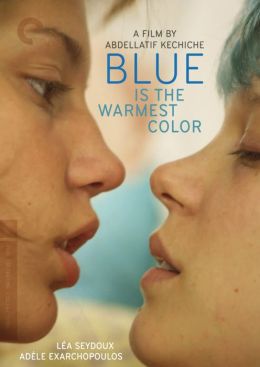
Thoughts on the movie “Blue is the Warmest Color”

* Domestic life is presented as boring and stultifying and contrasts strongly with erotic life, but is that really an uncommon message in most movies or novels? That being said Blue is the Warmest Color is very good at juxtapositions. It’s also the kind of movie that I should find horribly boring yet didn’t, and not primarily for the obvious reasons.

* “Traveling opens your mind,” a character says at the end, but does he mean “legs” as many people do when they speak to the virtues of travel? French art, based on my unrepresentative sample, depicts boredom well. Also, isn’t France supposed to be the land of tolerance? The New York Times depicts it that way.

Blue is the warmest color* The gawkiness of adolescence is depicted effectively; this is both a positive and negative at once. So too does the movie catch the faux knowingness and unwillingness to admit ignorance.

* Peak experiences count for a lot and yet how many people explicitly structure their lives around such experiences?

* Relatively few girls seem willing to embrace who they are in a sexual context; that is one reason the Duke porn freshman is interesting: she isn’t following the shame script. “Seem” may be key here.

* There are many more and longer soulful looks than there would be in an American movie but they tend to work. How much of attraction happens at the nonverbal level?

* This is hardly a novel idea but many social attacks on others are really projections of our own insecurities.

* Emma understands that there is no law in the arena. Adèle does not. She should read less Sartre and more Paglia.

* As a kid you’re judge but what you hope to do or accomplish, but at some point that flips and you’re judged by what you have accomplished. That transition is rarely announced either.

Movies as Modern Visual Art: Paglia, Stephenson, Cowen

In Glittering Images Camilla Paglia writes of George Lucas’s work:

Lucas says, “My films are basically the graphics”: “Everything is visual.” He views dialogue as merely “a sound effect, a rhythm, a vocal chorus in the overall soundtrack.” In structure, Star Wars unfolds as dynamic action sequences alternating with grand panoramic tableaux, including breathtaking cityscapes stacked with traffic skylanes. Lucas declares, “I’m not really interested in plots.” And elsewhere: “To me, the script is just a sketchbook, just a list of notes.”

Tyler Cowen notes that Transformers 4 may be best seen as an art movie. To accuse a movie like Transformers of being plotless or absurd is pointless because plot is not its point. The utter lack of anything resembling a coherent plot may explain why I thought the first one so stupid; it may also be that I failed to go into it with the proper frame of mind. Expecting something novelistic and getting something like a painting or dance is likely to disappoint. Among novels I tend to prefer ones with plots over ones that are about “consciousness” or similar highbrow topics.

Glittering_ImagesI am not necessarily opposed to movies as dance / art—Gravity (discussed by me at the link) has some Lucasian qualities but is also a plea for us to get off this planet—but there may be other implications.

Neal Stephenson, for example, has noticed the trend in movies towards either the visual (to use a positive term) or incoherence (to use my own feelings): in “Turn On, Tune In, Veg Out” he writes of how the changes in the Star Wars movies from 1977 to today also track changes in American culture, away from writing and dialogue and towards the visual. In the decade since he wrote his piece, it is hard not to see the general trends he describes as accelerating. His novel Anathem could be described in many ways, and one is a commentary on what mind happen if current trends regarding the divergence of the technical / literary / intellectual class (which is a class not defined by income) from everyone else. Paglia has not addressed this directly in a contemporary context as far as I can tell. She has a great deal of deserved scorn for what she calls word-obsessed, French theory laden academics, but in the overall scheme of American culture they’re a very small part of the picture.

Still, even in universities that are supposed to conserve knowledge and promote reading the movie temperament has made headway. In universities English professors are eager to show movies in class and have students write about movies instead of books; while that’s okay, I’m reminded of the phrase, “Writing about music is like dancing about architecture.”* There is always an impedance mismatch between writing and the subject of writing that does not exist in writing about other writing; the latter two inform each other in a way that writing about other subjects, including art, does not.

I’m not opposed to watching movies, or movie criticism, or courses about movie criticism or movie making, but the extent to which the people who are supposed to be teaching writing are using movies is another example of the trends Stephenson describes.

When I was a first-year grad student at the University of Arizona I was part of a small teaching group with other first years and one faculty facilitator. A girl and I got into a discussion about why I didn’t show movies in class, and I told her some of the above; watching movies in basic English classes is a waste of time. Reading is an essential part of writing, and people who don’t read can’t be good writers. Period. Most students have plenty of screen time but very little reading time. She said she thought I was wrong about the coevolution of reading and writing, so I sent her some studies demonstrating what is already obvious to every writer. She said didn’t care and was going to keep showing movies anyway. The exchange is symptomatic of deeper issues in academia itself. As Paglia might say, the culture has corrupted it, in ways that it shouldn’t be corrupted, rather than in ways it should be corrupted (which is a subject for another post).


* If so, the criticisms about modern action or blockbuster movies have incoherent plots or dialogue are no more meaningful than saying that dance or architecture have incoherent plots or dialogue. People like me, who like movies that make sense, don’t realize that we’re criticizing the wrong genre.

Links: Prostitution, Gladwell (these are not linked), parenting while poor, selfie-love

* “Study: Decriminalizing prostitution could drastically cut HIV infections,” which is sufficiently obvious that I almost don’t want to include it.

* Malcolm Gladwell:

Running teaches you about the inherent unfairness of the world. Two people can work exactly the same, in fact, one can be infinitely more devoted and train much harder and not do as well. An object lesson in how unfair life is.

The world is unfair but most people are better off treating it as if it is fair.

* A theory of where 50 Shades of Grey came from, with a strong emphasis on the word “theory.” I also think the pejorative connotations from the term “marketing” are going to fade over time, much as “sellout” was used derisively in the 1960s but by the 2000s could no longer be widely seen.

* “Another Challenge of Parenting While Poor: Wealthy Judges;” this sort of point is under-understood.

* “Without You I’m Nothing,” which has Paglian overtones for its intersection of culture and sexuality: “Rock stars are the gods of the last century.”

* “Selfie-Love,” by Clancy Martin of How to Sell fame; a friend from China told me that all Americans are hustlers, although she lives in New York, so her generalization may not be applicable to all ~300 million of us. Also, someone attempted to spit in my taxi the other day.

* The high cost of free parking.

* Little political drama is worth attending to, but this interview between the president and The Economist is interesting throughout. A sample:

The US security presence is always a source of ambivalence everywhere in the world. If we’re not there, people think we’re neglecting them. If we’re there, then they think we’re militarising a region.

Life: Art and civilization edition

“Civilization is defined by law and art. Laws govern our external behavior, while art expresses our soul.”

—Camille Paglia, Glittering Images; “innovation” should be added to her definition of civilization.

Links: Fiber, sex lives, suburbs, competition, food (which may all be linked)

* “Startup claims it will build fiber network in LA and wireless throughout US;” like everyone else I will express skepticism.

* “Why So Many People Care So Much About Others’ Sex Lives,” which makes a number of points I’ve observed at various times.

* “Don’t Send Your Kid to the Ivy League: The nation’s top colleges are turning our kids into zombies,” which matches my (anecdotal) experience.

* “Multiple Lovers, Without Jealousy: Polyamorous people still face plenty of stigmas, but some studies suggest they handle certain relationship challenges better than monogamous people do;” has anyone written the great polyamorous novel? Could anyone?

forgotten bike and pink woman* Suburban sprawl and bad transit can crush opportunity for the poor.

* Nicola Griffith: Who Owns SF?

* Dubious-seeming, but: “Are siblings obsessed with moral hazard?

* Germans Love Getting Naked at the Beach. So Should We. Maybe.

* “French Food Goes Down,” which I have heard independently from other sources; I find it interesting that many countries that start with or develop a major lead in some field eventually lose that lead. Think of Japan’s giants losing out in consumer electronics to Apple and Samsung.

* Important news rarely covered: “Rand Paul introduces bill to reform civil asset forfeiture;” for background and a terrifying story, see Taken: Under civil forfeiture, Americans who haven’t been charged with wrongdoing can be stripped of their cash, cars, and even homes. Is that all we’re losing?, in The New Yorker

* “What ‘Women Against Feminism’ Gets Right.”

* The power of Google used for evil, or, why I will never rely entirely on Gmail or associated services, and you shouldn’t either. Note however that the author is not blameless.

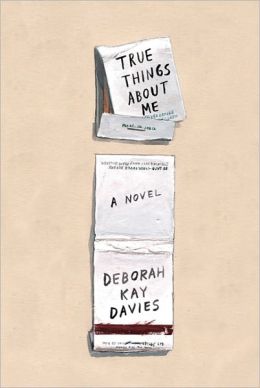
True Things About Me — Deborah Kay Davies

True Things About Me is disturbing and compelling, especially because it doesn’t want to explain. Its unnamed protagonist doesn’t want to explain. She just wants to act and in acting without explanation she may in some ways be truer to life, in which we so often act and then come up with rationalizations about why we acted after the fact. The disturbing implication of the novel may be that our reasons for doing things are opaque even to us and always will be. Like markets, we just can’t predict our own behavior.

True_things_about_meIn the novel the unnamed narrator has unplanned, unexpected sex with a man just out of prison who is registering for benefits. It is unexpected, a disjunction, a call to action in a mythic sense, and beyond the initial bang, so to speak, True Things About Me is at most loosely plotted. The scary thing about the story is not that it may be sick but that it may be normal, or at least more common than is commonly supposed, despite the evidence in fiction and art that few of us, Paglia aside, want to face. Much of the online commentary mentions “mental illness,” which is a comforting but wrong misreading. Desire can be neither legislated nor medicalized away. It will reemerge in different forms, and its verbal component is weak or nonexistent. When Alison, the narrator’s boring foil friend, wants to know what’s happening with the narrator, the narrator says “Somehow I couldn’t be bothered to explain it all.” “Somehow:” why bother analyzing what can’t be fully analyzed?

Her parents are either delusional or right; when the narrator invents a boyfriend for her parents’ benefit her mother says, “I just hope he’s a nice boy.” The irony is obvious. Her mother describes Alison as “so sensible,” which may read here as a synonym for boring. There may be no greater modern relationship sin than being boring or needy.* When madness intrudes in normal life we don’t know how to react, unless perhaps we live a continually mad life, like a different Alison, the protagonist in Story of My Life. For the narrator of True Things About Me everything is permitted and nothing matters, which may be the nature of modern adulthood for many nulliparous people.

For the narrator internal changes inspire external changes. After her encounter she thinks that “It seemed to me that I hadn’t looked at clothes properly before.” The clothes she buys says things other than what her old clothes presumably said: “a pair of low-slung cream linen trouser, and a scarlet and cream striped bustier” are new to her, and make one see fashion as part of the story. Silence is power, which is strange in a book composed of words; at one point she says that “He didn’t say much.” What and how he does counts.

Alison and her coworkers are twits. At one moment “They were talking about a television programme. Everyone was really into it. Alison was the most knowledgable.” There is nothing wrong with being into a TV show but in this context the TV show is a stand-in for a life the coworkers are too scared to live. The narrator becomes an outsider by dint of secret knowledge. She drifts away or is separated from from Alison’s world and that is arguably an improvement. Halfway through the novel she considers getting “back into the real world,” raising the usual question of what constitutes reality beyond knowing it when you see it.

In Nine and a Half Weeks one gets many sentences like “His face is blank. The gray pupils on which mine are focused reflect two miniature faces.” There are many descriptions of movement (same page: “I walk slowly across the carpet”) but few of feeling or context. Here is one extended, reasonably representative passage from True Things About Me, and it’s representative in both style and in raising questions about whether one should trust this narrator:

I began to see how it was, how it had always been. Alison was one of those types who loved to sit on the sidelines of someone else’s fascinating life and shout advice at them. She fed off me, and I let her. It made people like that feel even more smug about themselves when they could observe another human being struggling. Unravelling, if they were lucky. . . . She sounded like a second-rate actress in a daytime soap.

Who does the narrator sound like?

True Things About Me may be obliquely related to Susan Minot’s Rapture. Both could be construed as arguments that things don’t matter—people and experiences do. True Things About Me is also a commentary on soulless bureaucratic jobs and their deadening effects on the human condition.

At one point an old woman says, “That girl is on the game [. . .] living off immoral earnings. It’s disgusting. Someone ought to come round and investigate.” The contemporary term “hater” describes her well. The old woman hates the player because she is “living like she doesn’t have a care in the world. It shouldn’t be allowed.” Why not? The narrator doesn’t ask and the old woman doesn’t volunteer. The narrator is about to live without a seeming care in the world either. She leaves her work as an anonymous, Houellebecq-esque bureaucrat processing welfare claims forms to meet a dissolute but presumably sexy man. She blows off her friend, Alison, who is the voice of boredom, restraint, wisdom, and creation, to go “underground.”

There are numerous references to going underground, with connotations that go back to Persephone if not earlier. While there her mind “had stretched and blanked, like a washed sheet on a clothes line.” Is that how the best sexual encounters always happen? Maybe. But the metaphor can be extended through the novel, in which her mind is never really not “blank.”

True Things About Me is probably too uncomfortable to be of interest to most people; in this respect it resembles Never the Face, an underrated and under-known book. I imagine True Things About Me doing better in Europe than here, based solely on stereotype. The truth is out there, the book implies, and you will not like it.

See also Rebecca Barry’s NYT review, although she doesn’t get the novel and wants to throw around the word “abuse,” as if the novel is a cautionary, modern liberal, story about leading a sanitized life purged of dark impulses. Camille Paglia would be the ideal reviewer: she might not like the book—in some ways it may stick too close to the tradition—but she would get it.


* Reminder: Linking does not imply endorsement.

Life: The joy of walks edition

The history of innovation is replete with stories of good ideas that occurred to people while they were out on a stroll. (A similar phenomenon occurs with long showers or soaks in a tub; in fact, the original ‘eureka’ moment—Archimedes hitting upon a way of measuring the volume of irregular shapes—occurred in a bathtub.) The shower or stroll removes you from the task-based focus of modern life—paying bills, answering e-mail, helping kids with homework—and deposits you in a more associative state. Given enough time, your mind will often stumble across some old connection that it had long overlooked, and you experience that delightful feeling of private serendipity: Why didn’t I think of that before.

—Steven Berlin Johnson, Where Good Ideas Come From

One danger of  cell phones might be the way they keep you immersed in “the task-based focus of modern life,” at least if you let them; Johnson wrote Where Good Ideas Come From in 2010, and at the time smartphones weren’t ubiquitous.