Life: Living meaningfully edition

“While perhaps unintuitive, research that examines the differences between meaning and happiness finds that the things that give us a sense of meaning don’t necessarily make us happy. Moreover, people who report having meaningful lives are often more interested in doing things for others, while those who focus mostly on doing things for themselves report being only superficially happy.”

—Dan Ariely, Payoff. Here is a previous post on hearing him speak about Predictably Irrational in Seattle.

Links: Irrationality, concrete as a weapon, and why social media is terrible for multiethnic democracies

* “How Two Trailblazing Psychologists Turned the World of Decision Science Upside Down,” a really marvelous piece and one that feels highly relevant right now.

* “Never, never, never normalize this:” “It’s become depressingly clear the last few days that even many American liberals don’t understand the magnitude of what’s happened.”

* The Most Effective Weapon on the Modern Battlefield is Concrete.

* “Why social media is terrible for multiethnic democracies,” another of these important stories that’ll go unread by the people who really need to read them.

* Millennials are leaving coastal cities, choosing central ones. In short, the rent is too damn high.

*
Why social media is terrible for multiethnic democracies
, from Jonathan Haidt.

* To Mars, Not a Moment Too Soon.

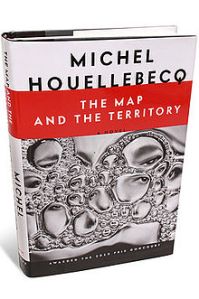
Briefly noted: The Map and the Territory — Houellebecq

The number of ideas in The Map and the Territory is too high to enumerate, and the novel is structurally weird, but it’s weird in a way that’s still functional. Like all of Houellebecq it’s fascinating, though not in a way that’s easy to describe, and it touches many Houellbecqian themes: The weakness of contemporary France; the need for tourism; the fight between stability and novelty; the status of the artist; the faux accepted role of the market as the arbiter of all value; the need to express sexuality and form relationships despite the futility of both acts. At least in this one a shocking unexpected terrorist bloodbath is not the denouement, however fitting and brutal it was in one of Houellebecq’s other novels.

Consider this:

Barely amiable in the first few minutes, the stocky estate agent went into a lyrical trance when he learned that Jed was an artist. It was the first time, he exclaimed, that he’d had the opportunity to sell an artist’s studio to an artist! Jed feared for a moment that he would declare his solidarity with authentic artists against the bourgeois bohemians and other such philistines who inflated prices, thus making artist’s studios inaccessible to artists, but what can you do? I can’t go against the truth of the market: it’s not my role. But fortunately this did not happen.

the_map_and_the_territoryThe notion of the “artist” has been made into a nostgalia item that was long ago marketized. Today’s artists still need cheap space, but they won’t find it in most “major” Western cities.

It may be that the best medium for a given time shifts. It was painting in the Renaissance, novels and what we now call classical music in the 19th Century, movies and what we now call pop music in the 20th Century, and maybe something like design in the 21st. Still, real artists ship and show their work:

You can work alone for years, it’s actually the only way to work, truth be told; but there always comes a moment when you feel the need to show your work to the world, less to receive its judgment than to reassure yourself about the existence of this work, or even of your own existence, for in a social species individuality is little more than a short piece of fiction.

Are we just neurons in a massive, transhuman brain, each of us thinking we are individual but actually just part of the mess, sending encoded messages from person to person via sound, light, or other mean? One sees Houellebecq’s taste for moving from the level of the individual outwards to the level of society or species. It’s a favorite move and one I see remarked on too infrequently.

It’s hard to convey the feeling of a Houellebecq novel from blockquotes alone, as the way sections connect do not feel like the way sections connect in other novels. Sometimes long times pass; few causal relationships, if any, are established. In that sense Houellbecq is a kind of anti-thriller, where everything is cause-effect in a way the real world isn’t.

Houellebecq’s pessimism seems easier to countenance given recent political events. One wonders if he will eventually be seen as a deeply political writer who connects the personal and political in ways that most trendy or PC writers don’t, or can’t.

Links: Tea, writers and money, the danger of autocrats, Apple and open source, and more

* How much did Russia’s classic writers earn? Not that much, in many cases.

* A Russian dissident explains exactly why Clinton’s concession speech is so dangerous.

* “Climate change may be escalating so fast it could be ‘game over’, scientists warn.”

* “
Donald Trump’s presidency is going to be a disaster for the white working class
.” File under “Decisions have consequences.”

* President Obama Should Shut Down the NSA’s Mass Spying Before It’s Too Late.

* “‘Maybe Americans Should Know What It’s Like to Have a Dictator.’” What I’ve been thinking and sometimes saying.

* From 2015: “American democracy is doomed:” “America’s constitutional democracy is going to collapse.”

* “Apple is doubling down on open source,” good news if it’s true.

* Prepare For Regime Change, Not Policy Change.

* Book reviewing used to be a blood sport. How has it become so benign and polite? Here are some of my thoughts. I like negative reviews.

* Tony Gebely’s Tea: A User’s Guide is out. Know what you’re getting: This is a book that “isn’t about all tea. It’s about specialty tea. Specialty tea production prioritizes quality over quantity.” Phrased differently, it’s a book for obsessive tea nerds, or just obsessive nerds who are now interested in tea. Much of it is definitional and encyclopedic. Expect many sentences like, “The goal of green tea production is to preserve the natural polyphenols in the leaves by preventing oxidation.” Most people are content to drink; this is a book for those who want to know.

Future Sex — Emily Witt

If there’s a word to characterize Witt’s overall tone or psychology, it’s “ambivalent.” She seems ambivalent about everything, except perhaps finding a life, which she wants, but she doesn’t know what she wants it to contain. On the first page she writes that “I had not chosen to be single but love is rare and it is frequently unreciprocated.” I’m not sure the first clause is true and am fairly sure the second isn’t: To some extent people choose love, at least once they leave adolescence where angst, drama, and pop music convince one that love is something that as an adult starts to seem ridiculous. She may experience a Marxism problem, like many women and not a few men. For her or her generation or her friends, “We were here by accident, not intention.” She goes to a bar where she “waited to be approached” (so much for 50 years of feminism?). Or:

To declare that I would organize my sexuality around the principle of free love seemed at times a pointless statement. I was unsure a declaration of pursuit had any effect on lived experience.

future_sex_wittMaking a “declaration” might not have any effect, but choosing to live one’s life the way one wants should presumably have an effect—or it would in a person of greater determination. In the blockquote above the word “organize” is also interesting. Is sexuality like a sock drawer, to-do list, or essay? Part of me hopes not but part of me wonders whether it might be.

Throughout Future Sex one wants more agency: things don’t just happen. You make them happen (or don’t). There is too much stumbling helplessly around. This will sound odd at first, but one could compare Future Sex to the Elon Musk biography, since Musk and Witt have opposite views about agency (and their ages are not so far apart). Musk views the future as something that individual humans make happen in the way those humans want to make happen. Witt views the future as something that’s imposed and that “just happens.” By using this framing device, one can probably intuit the side I prefer.

To be sure, it is fair that a person may not know exactly what they want, but if the moment of clarity hits then it’s time to make the future happen. Witt has something like that moment but appears to do nothing with it. Perhaps if she had, she’d have written a different book, about chasing down and spearing Mr. Right.

There are some paragraphs that feel oddly obvious, or maybe overly gender specific:

For a significant number of men, sex had its own intrinsic value and quantitative metrics, independent of the qualifications that determined whether you wanted to live with someone and adopt babies wit him. [. . . ] Someone like me, in contrast, believed that if I enjoyed going to a museum with a man the sexual attraction would just follow, without anybody having to talk about it.

I’d argue that that first clause applies to a significant number of women too. Or maybe Witt and I know different women.

Some sections are just outright hilarious. In maybe the best one, on Internet porn, Witt rivals David Foster Wallace’s “Big Red Son” for being a stranger in a strange land. Which is often funny:

I gathered that for performers, making more extreme pornography was like being a writer’s writer, where the value of the work was most apparent to other people immersed in the same field, and the respect one earned was of a different, more meaningful order than mainstream acclaim.

A perfect sentence perfectly expressed.

One chapter describes polyamory, or having sustained relationships with more than one person at a time, which sounds exhausting, leaving aside whatever merits the arrangement may have. Who has the energy? You may recall that Neil Strauss tried something along those lines in The Truth, although without thinking much about what he was doing or the personalities of those involved. Witt’s friends avoid some of that problem but not all of it; they still seem oddly flat.

Let me speak more of oddities: Oddly for a book about sex mores, wit an overlay of technology, there is no mention of the HPV vaccine, or the promising herpes vaccine, or the ongoing work on HIV vaccines. There is research into a chlamydia vaccine, based on work initially done for the koala vaccine. None are guaranteed but it is axiomatic that if you reduce the cost of a good or service you will increase the amount of it consumed. Reducing the “cost” of sex changes consumption: “From shame to game in one hundred years: An economic model of the rise in premarital sex and its de-stigmatisation” describes how and why mores changed in response to the development of antibiotics that turned many STIs from fatal or debilitating into minor ailments, along with increasing access to reliable condoms. All of these technologies change the way people behave by changing the associated risk curves. The polyamorous San Franciscans of today, who Witt writes about, would not be doing what they do without the life-saving antibiotics of yesterday. The vaccines of tomorrow will likely further shape behavior and preferences.

Maybe it is churlish to blame an already-complex book for what it chooses not to emphasize, but technology is more than smartphones and apps and Internet dating and porn videos. Technology is those things, yes, yet it’s much more than them.

Here’s an interview with Witt. And here’s the New Yorker, with an article that’s more summary than review. Witt is also on the Longform podcast, where she sounds different than I imagined but still tentative (like I imagined). There is an odd kinship between Future Sex and Michel Houellebecq’s novels, in that both discuss a present that once was a utopian future but has turned out to be less utopian than forecasters imagined.

The book. It’s okay. Which is kinda ambivalent. I liked it and am glad I read it. If you leave a copy sitting around your place you can expect the cover to start conversations with guests.
Links: If women wrote men the way men wrote women, some good news, some writerly news, some simple news

* “If Women Wrote Men the Way Men Write Women,” hilarious and much better than the title makes it sound.

* “Seattle skyline is tops in construction cranes — more than any other U.S. city.” Pretty cool.

* “If corporate money controls American politics, how did the Republican Party – the reputed party of business – manage to nominate a candidate whom almost no one in Big Business supports?” An excellent and mostly unasked question. Many people’s assumptions, including mine, are being revised this year. In 2010 I wrote a post about things I’ve been wrong about.

* “Canada’s cities call for $12.7-billion federal fix for housing crisis;” bizarrely, the word “supply” never increases, yet supply limits are likely making the rent too damn high.

* Penelope Trunk: Does feminism fail because women lie to each other about work?

* Is the Stigma of Having a Baby Outside of Marriage Disappearing? If so, is it due to celebrity influence? A perhaps important point for novelists.

* The audacious plan to bring back supersonic flight.

* “Here’s what happened when I challenged the PC campus culture at NYU,” or, how at least one university is encouraging students to become the thought police. Bizarre.

* “Forget fees: Dyson opens Britain’s first degree where students get paid,” an underrated idea.

* Charter schools that work, and why they work. Charter schools are oddly both overrated and underrated, but perhaps their biggest advantage over conventional school district setups is that bad ones can be closed and good ones can be replicated. Conventional public schools just shamble on, sometimes for decades, like zombie banks.

* “Donald Trump’s success reveals a frightening weakness in American democracy,” which is among the best pieces I’ve read on the election.

* “History Tells Us What Will Happen Next With Brexit And Trump,” distressing but also accurate:

My background is archaeology, so also history and anthropology. It leads me to look at big historical patterns. My theory is that most peoples’ perspective of history is limited to the experience communicated by their parents and grandparents, so 50-100 years. To go beyond that you have to read, study and learn to untangle the propaganda that is inevitable in all telling of history.

Students are endlessly surprised when I say that it’s difficult to really know anything without reading. Most don’t believe, I think. If nothing else, this year demonstrates the utter failure in teaching and professing history, or the learning of it by the general population.

Experiencing the consequences of diminished world trade:

All the fools who voted for Brexit and Trump may also have to live with the consequences of diminished world trade. It is one thing to claim that trade is bad; it is another to actually attempt to dramatically restrict or curtail it. We’ve been living with trade tailwinds for the last couple decades. Now we may get to experience the opposite.

In the meantime, the dollar and peso are both plunging, as are stocks. Trade is an incredible net good and yet both major political parties in the U.S. are rhetorically fleeing from it. So far it is rhetoric, anyway, but soon it may be policy.

Recession in 3…, 2…, 1…

Someone on Twitter observed that the best-case Trump scenario is that he’s too lazy, uninterested, or incompetent to do much in the next four years. Let us hope. Still, overall this is one of those scenarios in which we collectively deserve what we get.

The end of democracy?

It is scary to think that I may be watching the end of democracy in the United States, live.

At the very least this election demonstrates frightening weaknesses in the structure of the democracy itself. The Constitution may deserve less reverence than it is commonly accorded. And voters may be even less rational than even I thought. Brexit showed as much. Tonight may be worse, much worse, than that.

The education system—of which I am a small part—has also failed, at least in a mass sense. Maybe real education really isn’t plausible for the majority of people. A dark thought, but one that seems more plausible tonight than it was yesterday.

The number of people who really learn anything from history is small. We really art apt to repeat our past follies. We came through the darkness of the 1930s and 1940s only to flirt with a different form of it today.

Here is my maybe futile October 10 post, “Clinton or Johnson for president.”

EDIT: Here is Krugman asking, legitimately, whether we are a failed state.

“You can teach a lot of skills, but you can’t teach obsession”

There are many interesting moments in Ezra Klein’s conversation with Tyler Cowen but one in particular stands out, when Klein says that “You can teach a lot of skills, but you can’t teach obsession. There’s a real difference between somebody who is obsessed with the work they’re doing and someone who is simply skilled at the work they’re doing.” He’s right. You can’t teach people to be obsessed and over the medium to long term you can’t even pay them to be obsessed. Look for the people who are obsessed, even if it’s hard.

The larger context is:

Look for people who are desperate to be doing the thing they’re doing. I have often found really great people by finding people who either seemed or were literally doing what they need to be doing for free because nobody was yet paying them for it.

. . . You can teach a lot of skills, but you can’t teach obsession. There’s a real difference between somebody who is obsessed with the work they’re doing and someone who is simply skilled at the work they’re doing. I will take the obsession and teach the skills over getting the skills and having to teach the obsession.

Thinking about this now, it’s odd to me that more people, especially in hiring positions, don’t select more or better for obsession. That’s especially true in academia but it’s also true elsewhere. Now that I think about it explicitly I also realize that my essay “How to get your Professors’ Attention, Along With Coaching and Mentoring” is in part about how to if not fake obsession then at least demonstrate that the person seeking help or advice rises above indifference.

Life: What makers do

“Her response to any performance, any work of art, was the desire to make another, to make her own.”

—A.S. Byatt, The Children’s Book, which is on the whole both marvelous and exasperating.