What it’s like to be married to a dying man

My wife, Bess, wrote this. For more context, see “I am dying of squamous cell carcinoma, and the treatments that might save me are just out of reach.”

Jake is sitting on the couch beside me when he asks, “What’s it like being married to a dying man?” At first, I think I’ll be able to answer easily. I’ve been answering it implicitly for the last seven months, although I didn’t really know he was going to die, soon, until Friday, July 21—three days ago. I’ve been keeping a journal, so I’ve had a place to record the difficult, confusing, and sometimes banal details, like the pitch of the feeding tube beep, the smell of the hospital rooms, the myriad of administrative frustrations. But when Jake asks me what it’s like being married to a man who won’t be here in six months, for his 40th birthday, I’m speechless. I open and close my mouth a few times, because “what’s it like?” isn’t just about loss, although it partially concerns that, and it isn’t about regret, although that’s part of it too—and many other intrusive thoughts find their way unbidden into my stream of consciousness.

“What it’s like” is: it’s like gaining enormous, terrifying clarity. The moment when you realize the right path, the yes or no answer, the end of the debate. Clarity might sound great— don’t we all want clarity? But clarity is cruel, too. We’re fond of illusions, and we’re fond of fictions, which are themselves a sort of illusion. We lie to ourselves about how attractive, capable, intelligent we are. Staring into the face of what matters means reconciling with all the time you spent focusing on what didn’t. And it turns out, that was a lot of time. Why was I watching TV? Browsing Instagram? Holding my phone instead of a person? Fighting the silly fights? Prosecuting pointless arguments? Clarity shows that love matters, as does recognizing love, so that you can nurture it and appreciate it. Romantic love matters, but also friendship love. And yet so many of our daily behaviors and practices are antithetical to these clear, high-level principles.

With clarity came the realization that I’d done a lot wrong—time spent, for example, not recognizing love because I was nursing my own wounds and chasing some kind of made-up ideal, would be the great regret of my life, if I chose to carry it.

I’m an ER doctor, so I’m used to delivering existentially bad news, but no one I’ve given a life-threatening diagnosis to has turned to me and said: “I wish I’d held onto my grudges. Maybe one will come visit me in the hospital.” I’ve seen a lot of people die, or learn how close they are to death. The things they say and regret tend to be similar: not being kinder or more loving, not mending broken friendships and family ties, spending so much time at work (where I am, when they tell me these things). No one says: “Doc, I should’ve spent more time pursuing petty grievances.”

Clarity removes the opaqueness that leads to misunderstandings. How do we ever know another person? How can we? One woman in a Facebook group reported that, after a five-year cancer bout, her husband was dying and she’d never really loved him and he didn’t know (she didn’t think he knew).  What do you do with that? What was her life like? How did it take her so long to reach that conclusion?

My perspective is the opposite of that woman on Facebook: I really really love Jake, and now he’s being taken from me. For 15 years he’s been the greater part of my world. I used to think we couldn’t know another person. But in the last few days, I realized that much of what I have come to believe about both Jake and myself are true. We are human. So we’re petty and small and easily irritated. We too often resemble gerbils or hamsters in too small or too befouled a cage. We too often choose the wheel instead of the larger universe.

But we are also capable of profound intimacy and love and awe at another person. And I realize that, when I look at the measure of our almost 15 years together, it’s the angels of our better nature that’ve won. It’s a gift to sit with your regrets, and realize that they are not important. You can put them down. The future I’m walking into will be heavy enough without the extra baggage. And anyway, I don’t believe in checking bags.

Clarity after someone dies isn’t, I think, all that uncommon. Innumerable TV shows and novels explore what people do when faced with an unexpected loss that causes them to take stock, usually as it applies to their own life moving forward. Posthumous clarity focused only on yourself is like holding a bag you can never truly unpack, and the person motivating your change is gone, and only half the contents really belong to you. It’s a story with only one real hero, the person left behind.

But clarity when someone is still alive, when you have the gift of some time, is the most difficulty and incredible gift I have ever received. You’re not looking at yourself. You’re looking into the eyes of the other person, and seeing them, as well as yourself. And if you’re really lucky, you find that there isn’t much of a difference anymore.

So when Jake says to me “I don’t want to leave you,” I tell him, “You can never leave me, because I have parts of you that I will never give up, and that is what fills the spaces left by the parts of me you have taken.”

I don’t want those parts back, because they don’t belong to me anyway. Those, he takes.

I’m not the hero of my own story. He is. So are my parents, my friends, and the people who are going to make sure that I am carried forward into a future I cannot actually imagine and don’t yet know how to navigate.  It’s not about me, it’s about the network I’m embedded in. Trying to look into that future feels like looking into a haboob—a dust storm that we get here in Arizona, that turns everything from earth to sky into one solid, brown, inviolable wall. I don’t know how to find a path through that storm in a world where Jake isn’t here. Mostly because I can’t find my way out of a paper bag, having no sense of direction or geography, and still rely on Jake to guide me when we walk to the same corner drug store we have been going to for the last three years.

He is still sitting next to me while I type this, typing on his own computer, and we are reading over each others’ shoulders the way we have done for the last 15 years. The present is hard, but the path is clear: wake up, spend time with Jake, sleep, repeat. Past that? In the future? Who knows. 

Being married to a dying man inevitably, cruelly, means that one day soon he will be dead. I don’t really believe it, but he won’t be here beside me to edit another essay and run ideas by, go on walks at night and try to catch the lizards that hang out on the stucco walls of our apartment building, read to me before bed, pet my head when I’m anxious, and smack me on the ass when I’m climbing stairs in front of him, and yet, somehow, impossibly, I’ll still be here. Jake won’t be. The world will keep moving whether or not I feel like screaming for everything to stop. When that time comes, I will have help. My friends, my family, my network, my people: I’ve learned to quit being stubbornly independent and let people help me. But mostly, I will look inside myself, and find Jake still there, and once again he will help guide me to find my way.

If you’ve gotten this far, consider the Go Fund Me that’s funding Jake’s ongoing care. We’ve also written a number of other essays, including “Turning two lives into one, or, things that worry me about Bess, after I’m gone” and “Attachment is suffering, attachment is love.”


How do we evaluate our lives, at the end? What counts, what matters?

One estimate finds that about 117 billion anatomically modern humans have ever been born; I don’t know how accurate the “117 billion” number really is, but it seems reasonable enough, and about 8 billion people live now; in other words, around 7% of the humans who have ever lived are living now. I’ve had the privilege to be one. At current levels of technology, however, the gift must be given back, sooner or later, willingly or unwillingly, and sadly it seems that I will be made to give it back before my time. I have learned much, experienced much, made many mistakes, enjoyed my triumphs, suffered my defeats, and, most vitally, experienced love.* So many people live who never get that last one, and I have been lucky enough to. The cliche goes: “Don’t be sad because it’s over; be happy that it happened.” That is what I’m trying to do, at some moments more successfully than others. I try to focus on those ways I am so lucky and blessed, but I am often failing. Bess (my wife) and psychedelics taught me to love, and the importance of love, and yet too soon now I must give everything back. Too soon, but, barring that miracle, there is no choice.

What really matters, sustainably, over time?** Other people, and your relationships with other people. That’s it. That’s the non-secret secret. As the end approaches, you’re not going to care about your achievements or brilliance or power or lack thereof; you’re going to care about the people around you, and how you affected them, and how they affected you. That’s what will matter. I’m not saying you shouldn’t learn economics or calculus or programming or landlording, but all of those things, done optimally, will also bring you in touch with other people who are trying to hone and develop their skills in those domains. It’s not just the achievements, though the achievements matter, but the people collected and improved in the course of mastering a domain.

I’ve spent my life trying to learn to develop the skills necessary to connect with other people, which were, shall we say, not strong elements of my parents’ personalities. I’ve heard a cliché that goes something like: “What the rich know, the rest of us pay for learning with our youth.” I can’t find the true wording or source right now. It’s supposed to be about money, manners, and refinement, and so on, but the more generalizable version of it is more like: “The important life skills you lack growing up, you’ll need to learn later, or suffer without them.” So I had to learn how to relate to other people synthetically, on my own, and suffered greatly for it. Even something as seemingly simple as “maintain eye contact” or “search for common ground.” Since the inability to relate to and connect with other people was one of my great deficits, probably I overemphasize it now, like many people who have overcome challenge x and now relentlessly over-apply challenge x to everyone else.

There are a lot of things I wish I’d done differently, but it’s obviously too late now, when there are weeks or months left. But there’s also little to hide, or be ashamed of at the end. I did the things I did and made the friends I made and spent longer having fun in the city than was wise, letting the the time pass instead of focusing on having a family. So many parties, such high rent, so little time: I am a creature shaped by my times. Studied the easy thing instead of the valuable thing in school, too many student loans, foolishly believed the “you’re learning how to learn!” line (Andy Matuschak is 100x better on learning how to learn than most humanities undergrad majors, or things like shudder law school).

That is life, however. Beautiful and cruel. The two are inextricable. I made many mistakes and paid for them. The best thing I did was meet Bess, who is just the right person for me, to the point that people have said things to us like: “You two are really well-suited for each other” (and not meant it as a compliment). The truest mistakes are of the “not been as generous as I should have” or “decided to let those projects go” variety. The things undone and that will now never be done. But I feel lucky, at the end, to have heard from many people who say they love me and mean it, and who I can say that I love and mean it. When I hear that, I know the positives of my life outweigh the negatives.


* Bess edited this and wrote in a comment: “No matter what happens to me, loving and being loved by you has been the crowning experience of my life. I will think about our happy times when my own time comes. You have given me the greatest gift and we are so lucky, even now.”

** That’s essentially another form of the question: “What is the purpose of life?” The answer can’t be imposed from the outside, but I think its true shape takes the same form for most people.

A life-changing encounter with a man named Dan

This essay is by my brother, Sam.

In 2009, I had a life-changing encounter with a man named Dan; he was the top salesman at our company and left an indelible mark on my career. Dan was an impressive figure, standing at six feet four with a heroic build, fierce red hair, and striking green eyes. He possessed an air of confidence, always dressed impeccably, never seen with a loosened tie, even during late nights working on proposals. His crisp, white shirt occasionally had its sleeves rolled up, but he always exuded professionalism and ownership. People naturally gravitated towards him, stepping aside to listen to his words. Dan treated everyone with a warm smile and friendliness, be it the company president or the person serving us lunch at Subway. His positive attitude was unparalleled. Whenever asked how he was doing, his unwavering response was, “I have never been better”—and he genuinely meant it.

Then, one day, Dan received devastating news about one of his children, who passed away. He took some time off from work, but, upon his return, he walked into the building with his laptop in hand, his tie tightly knotted, and a radiant smile on his face. As we were close colleagues, I felt concerned and decided to visit his office that morning, closing the door behind me.

“How are you really doing?” I asked sincerely. “Is there anything I can do for you? I mean it, anything, just ask.”

With a grin, Dan replied, “You know, I’ve never been better,” tossing his empty Starbucks cup into a trash can across the room. I stood there in silence, processing his words.

“How?” I finally managed to ask. “How can you maintain such a positive outlook? How can you genuinely claim that you’ve never been better?”

Dan leaned in and spoke softly, capturing my full attention. “Listen carefully,” he began. “You don’t truly know anything about me or my life. You only think you do. Here’s something you must remember, and I won’t mention it again. Your attitude sucks. Frankly, I’m surprised they tolerate it here. Your attitude defines everything. It shapes your life. You think things are bad? Let me tell you, buddy, they could be a lot worse. A lot worse. You’re standing there, upset because a meeting didn’t go your way, dressed in your shirt and cheap tie. Well, go out and start digging sewers and tell me how much that meeting mattered today. And maybe, after digging sewers, you’ll get laid off and find yourself living in one, eating from a dumpster. You don’t know anything. So, listen up. When someone asks how you’re doing, there’s only one answer: ‘I’ve never been better.’ And you live your life as if it’s true because here’s the stone-cold truth — no matter how bad you think things are right now, they can always be worse. So, wake up and change your attitude. Right fucking now.”

With that, he leaned back in his chair, his smile returning as if nothing had happened. I stood there in stunned silence, my shirt drenched in sweat.

“I need more coffee,” Dan happily announced. “Care to join me? It’s on me. Sales always buys the damn coffee!”

We went to Starbucks in his new Mercedes, and while everything seemed unchanged for him, everything had changed for me. I realized I couldn’t fulfill Dan’s request within that job: so I mustered the courage to quit, eventually finding a position at another company. It was a terrifying move, as I had spent my entire professional career at the previous company.

As I was walking into the new office, the receptionist greeted me with a smile and asked how I was doing.

“I’ve never been better,” I replied, sporting a wide grin.

“Well, that’s a fantastic attitude,” she beamed. “You’ll fit right in here if you can maintain that!”

And so it went. I became the most cheerful and upbeat person in the company. Though I became the subject of jokes, I also became a beacon of hope for those feeling downtrodden. Unbeknownst to me, I’d joined a company on the verge of collapse, but, as things worsened, my attitude gained more attention. I rapidly climbed the ranks, despite lacking expertise in the company’s technology. Layoffs hit, one after another, but I survived each round despite being the most junior member. Perplexed, I asked my boss how this was possible.

“Well,” he explained, “During meetings to discuss layoffs, your name consistently comes up. You’re inexperienced and new to the company, making you the logical choice. However, each time, everyone decides you should stay. Your attitude is so positive that everyone wants you here. The president even said he’d prefer one average employee with a great attitude over five brilliant but gloomy experts. Attitude sells. So, you don’t have to worry. You’ll still be here long after I’m gone, until they turn off the lights, if you want to be.”

And so it unfolded. As things deteriorated, my promotions accelerated. Within 18 months, I became the senior member of the sales team. I became the face of the company’s improbable turnaround. And when things reached their breaking point (the turnaround effort was not enough), a friend offered me a job, and that very day, I walked out.

From my experience with Dan and the job after Dan, I developed a list of three priorities necessary for success in the workplace. Having spent considerable time in the business world, let me share these priorities:

  • Firstly, your boss. Your number one priority is to make your boss look good. This is not a joke.
  • Secondly, your company. Your top priority is to increase revenue. Following closely is improving profitability. These two priorities should guide your thoughts and actions.
  • Finally, yourself. Your primary priority is to maintain an unwaveringly positive attitude, self-confidence, and the appearance of success.

The third item is crucial for your career and life. No amount of education or expertise surpasses its significance in most circumstances. An employee with average skills and a positive attitude holds greater value than five brilliant but unpleasant individuals. As pilots say, “your attitude determines your altitude.” Maintaining a positive attitude at all costs ensures your success, as surely as day follows night. Failure is not an option.

Since then, I’ve strived to adhere to these priorities. Where I succeeded, they brought me great achievements. Where I faltered, they resulted in failure and misery. Attitude stands as the foremost determinant of success in life. You must consistently exhibit a positive attitude, no matter the circumstances. Because it’s true—no matter how dire things may seem, they can always be worse. Your attitude will dictate how you navigate through it all.

If I could impart one thing to anyone, regardless of their stage in life, it would be to always display a positive attitude. It holds immeasurable power in the universe.

The Second Avenue Subway, opening day

We have entirely too few epic engineering projects; to finally get to ride one is fun! Today the Second Avenue Subway, a century in the making, opened:

second avenue subway

The subway stops don’t feel like typical subway stops because they lack the grime that usually marks them in the same way cold marks the winter solstice.

second avenue subway 2

The active part of this round of subway construction began in 2007; while the subway should’ve opened years ago, it is nice to see it open at all. One gets a sense of the sublime from epic engineering works, and, as Zero to One argues, we’ve collectively lost faith in our ability to build big things and tackle serious problems. The new subway is evidence to the contrary.

Still, one hopes the next phase of the line goes better. Matt Yglesias explains some of this phase’s problems in “NYC’s brand new subway is the most expensive in the world — that’s a problem: The tragedy of the Second Avenue Subway.” On a per-mile basis the Second Avenue Subway is the by far the most expensive subway in the world, and it’s by far more expensive than similar projects in crowded first-world cities like London, Paris, and Tokyo. We’re not getting much bang-for-the-buck and that needs to change.

New York has so far been “Slow to Embrace Approach That Streamlines Building Projects.” Management and labor have been eagerly lining each other’s pockets. That’s particularly unfortunate because the infrastructure is desperately needed and has been desperately needed for decades if not longer.

Second Avenue Subway 3

To be sure, the stations are much more functional than most others, and their mezzanine levels impress. One wishes, however, for fewer mezzanines and more total stations.

Second Avenue Subway selfie art

As you can see above, someone thought through the selfie-friendly art that lines the stations.

Today is still a historic occasion and one does not so often get the chance to participate directly and obviously in history. It may be churlish to note this, but my train spent five to ten minutes waiting due to “train traffic ahead of us” between 63rd Street and 72nd Street. Some things may be new but others are too familiar.

Vote for Clinton or Johnson for president:

If polls are to be believed the presidential race was much closer than it should have been; they are widening now, but their previous narrowness is a travesty because Trump is unfit to be president. There are longer explanations as to why Trump is such a calamity and so unfit for office, like “SSC Endorses Clinton, Johnson, Or Stein” or many others, but perhaps the best thing I’ve read on Trump is “The question of what Donald Trump ‘really believes’ has no answer” (it came out before this weekend’s fiasco and I started this post before this weekend’s fiasco—I wish I’d posted this sooner). The “really believes” article is too detailed to be excerpted effectively but here is one key part:

When he utters words, his primary intent is not to say something, to describe a set of facts in the world; his primary intent is to do something, i.e., to position himself in a social hierarchy. This essential distinction explains why Trump has so flummoxed the media and its fact-checkers; it’s as though they are critiquing the color choices of someone who is colorblind.

Most of us are simultaneously trying to say something about the state of the world and trying to raise our place in it (or raise the place of our allies or lower the place of someone else). Particularly fact-based enterprises like science and engineering are notoriously averse to strongly positional-based enterprises like marketing and sales, where belief matters more than truth (or where belief is true, which is not true in engineering: It is not enough to believe that your bridge will remain standing). But Trump takes the basic way virtually all people signal their status to such an extreme that his speech and, it seems, mind are totally devoid of content altogether.

The number of people who would ordinarily be politically silent but who cannot be silent in the face of ineptness combined with cruelty is large. LeBron James endorses Clinton. Mathematician Terry Tao writes, “It ought to be common knowledge that Donald Trump is not fit for the presidency of the United States of America” (he’s right: it ought to be).

I’m not famous but will note that you should vote for Clinton or Johnson. This is not like any presidential election I’ve been alive for. The risks are real and the difference between Clinton and Trump is not one of policy. It is one of basic competence.

The situation is so bad that The Atlantic’s editors have endorsed Clinton—only the third time in the history of the magazine that it has endorsed a candidate for president (the other two were Lincoln and LBJ):

Donald Trump, on the other hand, has no record of public service and no qualifications for public office. His affect is that of an infomercial huckster; he traffics in conspiracy theories and racist invective; he is appallingly sexist; he is erratic, secretive, and xenophobic; he expresses admiration for authoritarian rulers, and evinces authoritarian tendencies himself. He is easily goaded, a poor quality for someone seeking control of America’s nuclear arsenal. He is an enemy of fact-based discourse; he is ignorant of, and indifferent to, the Constitution; he appears not to read.

The reviewIn ‘Hitler,’ an Ascent From ‘Dunderhead’ to Demagogue” is only superficially writing about Germany from 1931 – 45. It is really a commentary on Trump, like notes about how “Hitler as a politician … rose to power through demagoguery, showmanship and nativist appeals to the masses.” That’s part of Trump’s appeal. Or it was part of Trump’s appeal. One hopes that appeal is fading. The distressing thing is watching people fall for it (or did until recently), or view Trump as a way to express other grievances.

We collectively must not be willfully blind and the United States is better than Trump.

It is impossible to be even slightly skilled at close reading and not perceive Trump’s many weaknesses as a speaker, thinker, or human. If nothing else this election may be a test of the United States’ education level and the quality of its educational system. In all the other elections I’ve lived through, major politicians have had strengths and weaknesses, but none have been outright demagogues or dangerous to the fabric of democracy itself. This election is different and that’s why I’m writing this. America is better than this.

I hope to never again endorse political candidates, but when the structure and stability of the country itself is at risk it is a mistake not to say something, somewhere, publicly. Writing this post is itself depressing.

I’ve been writing for money

A couple readers have asked where I’ve been lately. The short answer is, “Writing for money.” So much writing-for-money that it crowds out other writing. I’m still reading—to me, reading and writing are always intimately connected—but all the excess words and attention have been going into proposals, and occasionally other projects, rather than to posts here. Hence the links posts: I’m still reading, something, and passing on the best stuff.

A friend and I have also been discussing the state of reading books in an age of distraction, and I’ve definitely noticed that a Kindle, Instapaper, and the many long-form sites out there are a killer confluence of technologies. At the margin I read much more long-form nonfiction than I used and fewer books than I used to. To be sure, I still read books and write them, but a book needs to be of higher quality than it once did if it’s to compete with the good, low-cost alternatives.

There are still many books that surpass this threshold. Insides Jokes and Seveneves come to mind.  There are numerous others. The best books still reward re-reading in a way few articles do. The best books bring a sensibility and depth to a topic in a way few articles do. The trick is finding those books, which seems as hard as it’s ever been.

I never thought I’d vote for Hillary Clinton, yet here I am:

I never thought I’d vote for Hillary Clinton, and I really never thought I’d be excited to do so, but here I am, voting for her today: It turns out that she’s by far the sanest choice in an insane landscape. Most political commentary is really about signalling (including people who say, “most political commentary is really about signalling,” since they’re making a point and trying to signal their intelligence). Still, to understand why I vote for sanity, consider Jonathan Rauch’s argument in “Political Realism: How Hacks, Machines, Big Money, and Back-Room Deals Can Strengthen American Democracy” and “Left-Leaning Economists Question Cost of Bernie Sanders’s Plans.” The former explains that it turns out some level of cash handouts actually make politics function much better.

Many of you may remember the fight over “earmarks” from the 2000s—that is, whether Congresspeople should be able to allocate cash for specific purposes in their districts. I thought eliminating earmarks would be a good idea. Turns out I was wrong: Eliminating earmarks means that it is much harder for party leaders to keep their members in line.

As a result, we get more and more moves towards ideological purity, at the expense of, you know, making the country run. Congress has broken down in the last decade or so in part because party leaders can’t discipline their followers by taking away money that should go to members’ districts. The Tea Party, and, on the left, Bernie Sanders, can become more prominent because of that issue.

I’m not the first person to notice this—”How to fix what ails Congress: bring back earmarks” is one good account—but it is a serious problem that has caused particular dysfunction among Republicans, who appear ready to nominate people who are manifestly unqualified for being a big-city mayor, let alone president.

Ideological purity turns out to be very bad. Jonathan Haidt’s “The top 10 reasons American politics are so broken” (and “The Ten Causes of America’s Political Dysfunction“), along with the paper he links to, “Why the Center Does Not Hold: The Causes of Hyperpolarized Democracy in America,” explains why.

The papers I’ve been citing also explain why it turns out that Obama has been a much better president than most people, including me, realized, or thought in advance. He’s an incrementalist, a negotiator, a thinker, and a realist—all traits that are not selected for amid political polarization. Clinton is too.

Trump and Sanders espouse opposing policies (to the extent Trump espouses any policies), but both are alike in that they are “outsiders” who want to tear down existing systems; they are both temperamentally similar in that they don’t want to work within existing systems. Both are poor traits in leaders and figureheads. We want evolutionaries, not revolutionaries.

It may simply be that, as Matt Yglesias argues, “American democracy is doomed.” I hope not, but the bout of insanity on right and left does not auger well.

I haven’t dealt much with the specifics of Sanders policies apart from the second link in this post because the short version of the critique is, “There’s no way to pay for all this stuff.” Or even a small amount of this stuff. Alvin Chang observes, probably correctly, that “Most Bernie Sanders supporters aren’t willing to pay for his revolution.” If you ask most people if they want more services, handouts, and stuff, they say yes. If you ask most people if they want lower taxes, they say yes. Stated in those terms, you can see the problem.

If you want to understand that people don’t want to pay higher taxes, look at where they’re moving. The major population growth metros are in Texas. Phoenix and Atlanta do really well too. People are moving to lower-cost states, and that should tell us something important about revealed preferences. Hell, I just voted in the New York primary, and I’d like to move to Austin or Nashville, chiefly for cost-of-living reasons.

As for Sanders and banks, the bigger issue than “big banks” is the “shadow” banking system, which I don’t fully understand, but I do understand well enough to know that Sanders is wildly focused on the wrong things.

Still, the last two paragraphs probably don’t matter because the vast majority of Sanders voters aren’t looking at policies; they’re looking at mood and feelings, and I doubt that 1 in 20 people who start this post will have gotten this far, because it’s wonkish, detailed, and not heavily mood affiliated. Out of the who, what, where, when, why, and how of politics, the “How” is often most important and least discussed.

“First, do no harm” is a good political rule, but it’s also kinda boring. I rarely write about politics because most of the time most politics in the U.S. are about incremental changes, about which I have some opinions, but those opinions aren’t important, and they’re as poorly thought out as the political opinions you see on Facebook. In the last couple presidential cycles, I’ve had opinions and voted accordingly, but the major party candidates have mostly been kinda okay. In 2012, Romney would’ve done some things differently from Obama, but I don’t think he would’ve been a total disaster.

This cycle is scary because at least two candidates would likely be total disasters. Yet people keep voting for those candidates and posting mood affiliated comments on them and so forth.

Praise, criticism, and hypocrisy around people you know

I got some pushback on two recent posts, in which I said “Bess Stillman is the best med school essay writer there is” and that Mate is good but that I’m not an unbiased observer. The basic thrust of the pushback is that I shouldn’t talk about books or services or people I have a direct connection to. But I don’t think it’s true: Dr. Stillman is the best person in her genre I’ve ever seen, and Mate is the book that young straight guys (and probably some older straight guys) need to read. It’s possible to praise those works without compromising intellectual integrity, and indeed if I thought either of their works weren’t good I’d be silent. Silence is often tact; I’m sure some people I know dislike or feel neutral towards Asking Anna or The Hook, and for the most part they’ve said nothing. But approval matters too, and Dr. Stillman’s admission consulting and Mate are worth your attention; attention is the scarcest commodity in the modern information economy and I don’t want to waste mine or yours.*

We live in an information-rich and insight-poor environment. Much of the writing masquerading as insight isn’t, really, and I want to imagine that I’m ever-so-slightly changing the ratio of information to insight. That happens not only around books or ideas I write about, but also about books or ideas or services by people I know—and there is still a key difference between people who I know in real life and people I don’t. For as long as humans are humans personal interactions will matter. That’s why I only do book interviews in person: there’s a different energy there that unlocks ideas not unlocked via written interviews. I’m not saying one medium is better than the other—they’re different—but I am saying the outcomes tend to be different in ways hard to define but easy to feel and notice.

Within this context, it’s possible to be silent when something is not worth attention and loud when something is. If you’re writing bad things about your significant other in a public space, you should really reconsider who you are married to, dating, or sleeping with. Actually, the person you are married to, dating, or sleeping with ought really to reconsider you. The place to offer (suitable delicately phrased) criticism is in private, not on the public Internet.

I of course am not the first person to discuss these matters and I won’t be the last. They’re matters tact, money, and interest, which never go out of style and are always a challenge for every era, and arguably moreso for ours. Authenticity is a bogus concept and yet it’s everywhere (and its bogosity makes it attractive to marketers and other people with shit to sell). I like to think I’m disinclined towards bullshit, in the Frankfurt sense, while still being able to speak to books, works, products, and services that I know through personal connections. So I include disclaimers about potential conflicts of interest where they’re relevant and otherwise try to say things that are true and interesting. The world has an eternal shortage of statements that are true and interesting.


* That’s also one reason why I no longer write negative reviews of books or other materials that are bad in uninteresting ways.

My next novel, THE HOOK, is out today

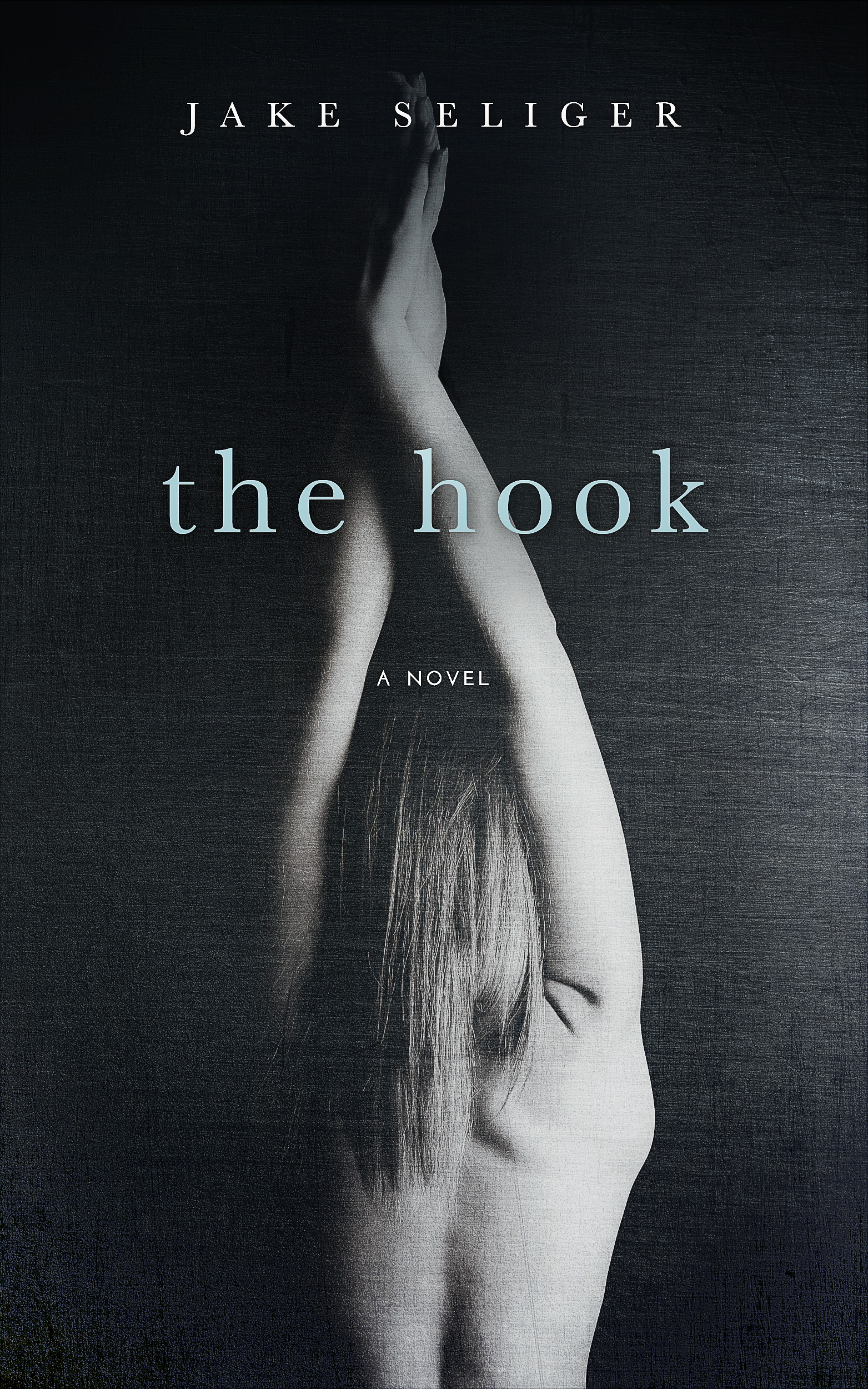
The HookMy latest novel, The Hook, is out today as a paperback and Kindle book. It’s even available on the iTunes Bookstore for the masochists among you. The Hook is fun and cheap and you should definitely read it. Here’s the dust-jacket description:

Scott Sole might be a teacher, but outside of school hours he likes to think he lives in the adult world. That’s why he indulges his sometime-girlfriend’s request to install an adjustable length hook in his apartment wall—of the sort appropriate for hanging people, not paintings. The project goes so well that, at her urging, he writes a blog post about it. Nobody cares about Scott’s blog—until three students find the post and think they can use it for their own purposes.

Each has a motive: Stacy wants to find out if there’s any truth in the whispers that Scott and her older sister had an affair during her sister’s senior year; Arianna thinks she can use it to weasel out of a semester-long writing assignment; and Sheldon wants a way onto the school newspaper to pad his college application. At the same time, one of Scott’s former students returns to his classroom as a student-teacher with a crush on her supervisor. But as accusations fly regarding the blog post, his students, and the rest of Scott’s less-than-perfect life, Scott discovers that once rumors begin, they’re as hard to stop as dirty pictures on the Internet. They might not just cost him his job, but his freedom. It turns out that a good hook can keep you reading, hold up a kinky girlfriend, and hang your career all at the same time.

My last novel, Asking Anna came out on January 17, 2014. In the last year I’ve quit some things and started others; written about a quarter of my next (likely) novel; read a lot; almost died; and wrote down too many ideas to execute in the next twenty years. But the Asking Anna announcement post is similar to this one, and everything I wrote then is still true:

I’ve been writing fiction with what I’d call a reasonably high level of seriousness since I was 19; I’d rather not do the math on how long ago that was, but let’s call it more than a decade. It took me four to six false starts to get to the first complete novel (as described in slightly more detail here) and another two completed novels to finish one that someone else might actually want to read. Asking Anna came a couple novels after that.

What else? Other writers warned me about bad reviews. They were right that I’d get them, but they were wrong about my reaction: I mostly view bad reviews as entertainment. This “review” may be the best in that respect: “This is surely one of the worst books I have ever read.the author envisions himself as being cerebral by using vocabulary that does not even have any place in the story.” I’m not sure how anyone would envision the author of a novel envisioning himself just through reading the novel in question, but life on the wilds of the Internet entails some pretty confusing commentary.

I’d also like to thank everyone reading this who bought a copy of Asking Anna, and everyone who has bought or is going to buy a copy of The Hook. Books exist to be read. It’s because of your support of Asking Anna that I’ve been able to bring out The Hook. If you’ve gotten this far, let me suggest that you stop by Goodreads and leave comments there.

Why bother observing inconsistencies?

A friend noticed that I tend to say things like this: “The number of people who are genuinely interested in this kind of social policy minutia is probably small, as the popular support for programs like UPK shows” and he asked: why bother if no one cares?

In some existential sense one could ask why anyone bothers doing anything. More specific to this case, I write to find out what I think—I’m not alone in this—and writing solely for yourself has a pointless, masturbatory quality. I also write the kinds of things I like to read, and to understand the world better. Not everyone is interested in that but I am and presumably many readers of this blog are.

Most ideas also have histories, and most beliefs about subjects outside of science don’t advance linearly.* They’re subject to fashion. So one way to determine current fault lines in social (and legal) thinking is to look at what other people in other places and other times have thought.

Take this example: In Sexual Personae Camille Paglia says that the Marquis de Sade’s work “demonstrates the relativism of sexual and criminal codes.” His major works were done more than 200 years ago. Is it not strange that the same points are made, over and over again, through the generations? One reading of this could be that posts like mine are useless: little changes, despite writers like me. Another could be that the optimist hopes tomorrow will be better, for some value of better, than today despite evidence to the contrary.

In Western society criminal codes are designed above all to regulate three things: violence, sex, and property. The relations among the three could be said to be the primary driver of life and hence literature. One could derive a general principle from lots of specific examples.

Virtually everything “big” starts small. This is true of startups, other businesses, novels, countries, and life itself (via evolution). In general it’s better to start with the specific and move towards the general. The more specific the better in most cases. While it is true that most people don’t especially care about hypocrisy, some do, and observing how a society or individual responds to hypocrisy or is hypocritical can be tremendously revealing. Some people don’t care about revelation, and that’s okay. My reasons for writing this blog and thinking about and observing things are similar to the ones Paul Graham enumerates:

I do it, first of all, for the same reason I did look under rocks as a kid: plain curiosity. And I’m especially curious about anything that’s forbidden. Let me see and decide for myself.

Second, I do it because I don’t like the idea of being mistaken. If, like other eras, we believe things that will later seem ridiculous, I want to know what they are so that I, at least, can avoid believing them.

Third, I do it because it’s good for the brain. To do good work you need a brain that can go anywhere. And you especially need a brain that’s in the habit of going where it’s not supposed to.

I tend not to get in too much “trouble” because I’m not well known enough to generate intense scrutiny or hate mail or misreadings. People misreading Graham are legion and frequently, unintentionally, hilarious. I don’t have nearly as many, but I still like to think I’m making a difference, however small, at the margins.


* This could be an argument for being in fields that unambiguously advance: at least you know when you’re right, as opposed to being merely morally fashionable.