Academic purity guilt and blogging

The Little Professor says:

Unlike some of the academics to whom Katherine Firth links in her post about the “Academic Purity Cult,” I’ve never received any professional pushback for blogging (well, aside from the people who don’t like something I’ve blogged, but that’s a different issue).

I have—a lot of it, in fact, at conferences and from professors. That may be in part because I’m a grad student or because of my department, but pretty much everyone in academia who has deigned to comment on the issue has disparaged blogging or any writing whatsoever that doesn’t entail peer-review. I find this bizarre because I see the primary activity of studying English being to read things, learn things through reading, write about things, and disseminate them—and the web is a very good medium for that, especially for anyone who wants to be read. Academic journals aren’t a good way to get people to read.

To me, the revealing comparison is to math, physics, CS and other fields: post to arXiv.org, say, and let the peer-review and publication catch up to the cutting-edge research. If a science-based academic learns something new, it’s imperative to get it out there as soon as possible! It’s important and treated as it’s important.

By contrast, most humanities profs appear at best indifferent and at worst hostile to those kinds of open processes, and they’re willing to endure months or years of delay between finishing a piece and seeing it published. Peer-reviewed journals won’t accept work previously published on blogs or other online forums. Evidently what we’re doing isn’t sufficiently important to others to be worth publishing in a timely manner. Instead we’re stuck in the mannerist world of journal publishing, and disdain for alternate modes of dissemination (like blogs) is part of that world. One word that keeps getting used by my professors about me is “journalistic” which they see as an insult (I by and large don’t write in deliberately obscured prose) but which I see as a quasi-compliment (I write in a way that other people can understand).

English literature doesn’t appear at all interested in “impact factors” or even readers, which I find strange given the accessibility of English, relative to, say, math proofs.

Popularity isn’t the only valuable metric for new work, but in contemporary academia it isn’t even considered. That should change.

EDIT: I’m not the only one to notice. This is from Gerald Graff’s 1979 book Literature Against Itself:

Where quantitative ‘production’ of scholarship and criticism is a chief measure of professional achievement, narrow canons of proof, evidence, logical consistency, and clarity of argument have to go. To insist on them imposes a drag upon progress. (97)

What matters is the quantity of work produced and where it is published, rather than whether it is right—or, as Graff says, “canons of proof, evidence, logical consistency, and clarity of argument.”

Bureaucratic Heroism

Merve Emre’s “Bureaucratic Heroism” is among the best pieces I’ve read about contemporary movies and fiction; it’s hard to excerpt because the entire piece feels essential and it makes many subtle points, but I will point to this:

Bureaucratic heroes are not cartoon heroes, heroes for children who do not yet understand that the social world places limits on their actions. Nor are they adolescent, “dark” heroes like Batman, alternately rebelling against and ingratiating himself to lame authority figures. Bureaucratic heroes are “ultrareal” heroes for working, law-abiding adults: beholden to, yet eager to please, the systems of governance in which they operate. The rules they follow are not universal rules of justice, morality, or even common sense. They are rules that only make sense—that are only justifiable—within a particular institutional context, be it the CIA, the CDC, the corporation, or Hollywood itself. They are rules that perpetuate the self-preserving logic of the institutions that articulate them in the first place

The last bit is especially important: the “self-preserving logic” that holds institutions together is also always incomplete and inadequate for dealing with the needs of the complex real world. Everyone in the institution still has to make judgment calls of various kinds, and, because those judgment calls often entail breaking the rules, they leave violators vulnerable to institutional censure later on (here’s one example of an absurd experience that comes from refusing to break the mindless rules; the phrase “Kafkaesque” is surely used in the modern world with the rise of the bureaucratic state and corporation).

Following those rules also often yields sub-optimal or absurd outcomes, as pretty much everyone in industrialized countries has experienced at some point or another. Yet institutions still need those rules, and, as Emre points out in the introduction to his piece, “[Contagion‘s] true hero turns out to be the CDC, a tight regiment of epidemiologists and administrators whose acts of heroism are largely bureaucratic in nature: functional and routine, incremental and hierarchically situated, and keyed to the collection of data.”

San_Francisco-1905Contagion, maybe not coincidentally, is one of the few really good movies I’ve seen in the last few years. It’s taut and plot-driven yet simultaneously thoughtful; too few movies rise above being stupid spectacles. There is a place for stupid spectacle but it’s not in practically every movie, which is the impression I get from most movie ads and reviews.

Novels are better in this respect, but even then relatively few plumb what modern bureaucracies are like; one thing I like about Tom Perrotta’s Election is his subtle but real portrayal of education politics. Francine Prose is similarly skilled in Blue Angel, in which sexual harassment tribunals in universities utterly fail to understand what actual human relationships are like. Automatic, incorrect assumptions about life and sexuality get applied in a way that distributes tremendous power to the potentially unhinged.

Perhaps the best novel I’ve read in the last year also has a bureaucratic, corporate facet: Ann Patchett’s State of Wonder, in which scientist Anneck Swenson wrangles the funders of her research as a jungle guide might wrangle a python. Most of the novel occurs among a remote Amazonian tribe, yet even there athletic company symbols and university apparel appear on people otherwise living a pre-agricultural existence. Swenson fits into the heroic mode described this way by Emre, as “a ‘cinema of volition’ whose narrative tensions trade on the clean break between the hero’s boundless animus and the inertia that surrounds him.” In this case the hero is a her, but Swenson does experience “boundless animus” and overcomes the bureaucratic inertia that simultaneously enables her by providing money and holds her back by demanding results.

Exploring the limits in art, writing, and science

In the poorly-titled but otherwise interesting essay “The Disquiet of Ziggy Zeitgeist: Unsettled by the sense that reality itself is dwindling, fading like sunstruck wallpaper,” Henry Allen says that “For the first time in my 72 years, I have no idea what’s going on,” because a lot of culture has splintered, for lack of a better term, and as a result “I don’t know what’s going on. I doubt that anyone does.”

That sense is a result of reaching boundaries or borders in many if not most artistic fields. In music, for example, John Cage famously “recorded” a track that is entirely silent. Composers have created songs or symphonies or whatever that seem indistinguishable from noise. Popular music’s last major style shift was the early 90s, with rap and grunge; since then, we’ve mostly heard dance-disco-hip-hop variations.

In the fine arts, the avant-garde is probably dead, as Camille Paglia has argued in various places for, what is perhaps not surprisingly, twenty years. What people call concept art or non-art or art from life appears indistinguishable from noise or pranks. Or, as Allen says, “Now I go to New York and look at a work of art in Chelsea and say: ‘Oh, that’s one of those.’ (Dripping, elephant dung, monochrome, squalor, scribbling.)”

Literature in some ways “got there” first, with Joyce (Finnegans Wake) and Beckett (whose novels are the whole of boredom) about which I wrote more in “Martin Amis, the essay, the novel, and how to have fun in fiction.” If you’re trying to write a novel that truly pushes the boundaries of the novel, you’re going to have a very hard time doing so while being comprehensible to readers.

OLYMPUS DIGITAL CAMERASex mores have fallen too: this weekend I’ve been reading Katherine Frank’s book Plays Well in Groups: A Journey Through the World of Group Sex, she describes gang bangs involving hundreds of participants, along with BDSM and assorted other sex adventures. Most people in developed countries have nothing between them and that, provided they want it. As a side note, she describes swingers who were featured on a TV show called Swing, and the swingers talked to the show’s crew, who said in this rendition that “We don’t know how you’ve done it but most people would kill to have this life.” But you don’t have to kill for that life: you only have to love for it, and most people probably could have it, or a version of it, if they want it. No murder necessary!

Porn has also reached limits or gotten asymptotically. The market has devolved from the monolithic Playboy to innumerable small, online outlets, some commercial and some not, and porn faces the same availability issues that any information does: perpetual availability. Although I’m not an expert, porn videos or pictures from, say, 2005 are still being passed around and viewed in 2013 and may continue to be in 2023. There is already more out there than a single person can digest and the amount is growing over time. Curating, searching, and sorting become the problem amid what is effectively infinite. If you want it, you can probably already find it, and if you don’t like what you find, you can probably make it for a couple hundred to a couple thousand dollars.

Video games are an intriguing exception to the trends described above. They’re a young medium, since they’ve only been popular in the last 30 to 40 years and have consequently seen a tremendous explosion in sophistication: compare Pong to a modern game versus a novel published in 1980 to a novel published in 2012. Video games also piggyback on growing computational capabilities. Video games, like the Internet, are still in relative infancy, and they appear to be very far from technical or comprehensibility limits.

I’m not saying that art or artists or culture is dead, but I am saying that the boundaries of comprehensibility have been reached in many fields. If I were more of a blowhard I would also pontificate about the role of the Internet in this—Allen picks 1993 by coincidence, perhaps, but 1993 was also just before the Internet reached the masses in the developed world. Within the next decade or two more than half of the people on the planet will probably get access, and that may further splinter culture. Already it’s possible for people with weird, niche interests to easily explore those interests, like Borgen, in the absence of social feedback.

Some fields, like math, appear inexhaustible. Others, like delivering things people want (which goes by the otherwise dull name “business”) appear if not inexhaustible then nearly so, since material desires keep expanding with GDP. I also doubt that art per se will ever be exhausted; the limits of comprehensibility don’t mean people will stop making art, only that we have to find ways to make it meaningful without being able to push constantly against a conservative establishment, which has been the animating force since Romanticism and now makes little sense.

The sex plot: a discussion for novelists and readers

I wrote to a friend:

I wonder about the extent to which novels in general are continuing to have trouble with sexual liberalization; so many major novels in the canon deal with that topic, but it’s much harder to use those tropes in a permissive age.

He replied: “This intrigues me, but I’m not sure what you mean. Can you elaborate?”

Yes!

The novel as a genre has tended to thrive on sexual repression, and has used steadily increasing sexual liberation as fuel for plots. Leslie Fiedler wrote about this in Love and Death in the American Novel, and Tony Tanner wrote about it in Adultery and the Novel. In taking courses about the novel as a genre, I was struck by how many times I heard or read phrases like, “X pushed the limits of the sexual mores of his / her day,” where X is any number of writers ranging from Richardson to Flaubert to Dreiser to Roth and Updike. (Weirdly, however, the Marquis de Sade has always been lurking beneath the history of the novel as a genre, mostly unacknowledged and often hidden from the reading public).

But working against sexual repression as such doesn’t really work so well as a plot device anymore because the barriers are mostly down. If you’re over age 18 today, you can more or less do whoever you want as long as they’re not under 18. This may be why professor-student plots are somewhat popular: it’s one of the few forbidden-but-plausible-and-not-gross relationships left.

There are only so many sexual lines one can cross, and too many books like 100 Strokes of the Brush Before Bed, to make the mere crossing of the few lines left all that interesting. When an entire society is set up to repress, re-channel, and control sexuality, a novel like Lady Chatterley’s Lover is shocking. In our society, it’s not. Today, if you want it, go get it—just don’t make promises you can’t keep. It’s not hard to live a life of constant sexual novelty and most parts of society won’t really censure you, provided that you don’t marry someone else, and even then lots of people divorce.

It’s much harder to get wring major consequences from affairs and what not. Don’t want to cheat? Don’t get married. It’s not impossible to use sex and romance plots—my to-be-self-published novel, Asking Anna, is a comedy about such subjects—to get material from these fields, but it’s a greater challenge than it used to be, and hard if not impossible to shock. A novel with the sexual politics of Stranger in a Strange Land wouldn’t have the same shock-value today then it did when it was published, though actually now that I think about it I still think it would raise a few eyebrows.

Some genres, like science fiction, don’t rely on sex plots as much, but even in SF sex plots are still often present. The growth of murder mysteries and thrillers may also represent some veering from sex plots, since premature death is still a big deal and is likely to remain so for the foreseeable future.

On a separate but related note, it also seems that many “literary” writers borrow SF-ish ideas. Think of Ian McEwan’s Solar. Not a great novel, but I liked a lot of what McEwan was doing by meshing discovery, politics, social ideas, environmentalism, science, and a not-very-nice character into one bunch. It’s McEwan, so the writing is good on a sentence-by-sentence level. The technical descriptions are also interesting and too uncommon in novels. I like the idea of writing about intellectual, social, technical, or business discovery as a motive. It’s underutilized as a driver of plot.

One section of Paul Graham’s essay “The Word ‘Hacker’” addresses this point and continues to have a profound impact on me:

Hacking predates computers. When he was working on the Manhattan Project, Richard Feynman used to amuse himself by breaking into safes containing secret documents. This tradition continues today. When we were in grad school, a hacker friend of mine who spent too much time around MIT had his own lock picking kit. (He now runs a hedge fund, a not unrelated enterprise.)

It is sometimes hard to explain to authorities why one would want to do such things. Another friend of mine once got in trouble with the government for breaking into computers. This had only recently been declared a crime, and the FBI found that their usual investigative technique didn’t work. Police investigation apparently begins with a motive. The usual motives are few: drugs, money, sex, revenge. Intellectual curiosity was not one of the motives on the FBI’s list. Indeed, the whole concept seemed foreign to them.

Most novels focus on money, sex, revenge. Why don’t they focus more on intellectual curiosity: perhaps how intellectual curiosity relates to money, sex, revenge, and similar topics? That seems like a fruitful avenue, especially because we might be moving towards a world where many people’s material needs are met, making money less immediately important; though of course many people are still driven by keeping up with the Joneses, in large swaths of the industrialized world we have plenty of money and plenty of stuff.

(A relevant side note about money: Among people interested in “game” and picking up women, it has become a common observation that additional money above the amount needed to buy drinks, dress reasonably well, and live independently doesn’t do much help most guys. A guy making $50,000 a year and a guy making $200,000 a year are mostly on a level playing field, and if the guy making $200,000 has to work 60+ hours a week, he’s at a disadvantage. Personalities and tenacity count far more than incomes, all else being equal. This could be seen as a variant on one of Geoffrey Miller’s points in Spent: Sex, Evolution, and Consumer Behavior.)

I don’t see money, sex, or revenge—and motives for revenge usually reduce to money and sex—becoming unimportant as long as humans remain humans and not brains in vats or on chips, but intellectual curiosity and a sense of wonder and discovery should be more emphasized in narrative. I think the tedium of Jonathan Franzen’s novels can in part be explained by the tedium of his characters: if those characters had a greater sense of discovery and possibility, they wouldn’t be so annoying. The other day I was listening to a friend describing single electron chain reactions in photosynthesis and how she misses research and life in the lab. It’s very interesting stuff, and the sort of thing that is rarely really discussed in novels.

But it should be!

Plus, the progression of science, technology, economics, and the attitudes that go along with them have ameliorated a lot of the money-revenge resource-distribution fights that used to define every aspect of human existence, instead of most aspects of human existence. To the extent major societal problems in the future are going to be solved—most obviously involving energy, but certainly involving other topics too—the solutions are going to come from intellectual curiosity and the intellectually curious. Maybe we, collectively, should be thinking about art that cultivates and glorifies those traits, instead of art that cultivates or glorifies simple status domination, or the ability to be cooler than the other guy or girl.

Another Paul Graham quote, from “How To Make Wealth:”

Making wealth is not the only way to get rich. For most of human history it has not even been the most common. Until a few centuries ago, the main sources of wealth were mines, slaves and serfs, land, and cattle, and the only ways to acquire these rapidly were by inheritance, marriage, conquest, or confiscation. Naturally wealth had a bad reputation.

Two things changed. The first was the rule of law. For most of the world’s history, if you did somehow accumulate a fortune, the ruler or his henchmen would find a way to steal it. But in medieval Europe something new happened. A new class of merchants and manufacturers began to collect in towns. Together they were able to withstand the local feudal lord. So for the first time in our history, the bullies stopped stealing the nerds’ lunch money. This was naturally a great incentive, and possibly indeed the main cause of the second big change, industrialization.

A great deal has been written about the causes of the Industrial Revolution. But surely a necessary, if not sufficient, condition was that people who made fortunes be able to enjoy them in peace. One piece of evidence is what happened to countries that tried to return to the old model, like the Soviet Union, and to a lesser extent Britain under the labor governments of the 1960s and early 1970s. Take away the incentive of wealth, and technical innovation grinds to a halt.

People still steal to get rich, and even more people make many movies and write many books about stealing, along with efforts to thwart thieves. Making stuff people want is, again, an under-explored avenue. It’s also harder to represent dramatically. The movie The Social Network does this successfully, albeit at the expense of accuracy; most of the important parts of Facebook actually happened in the heads of Zuckerberg and other programmers, not in interpersonal drama.

Still, The Social Network works as a movie, and it does something very different than yet another version of Fast & Furious, which is about sex, power, tribal loyalty, and blowing shit up—like most movies (sample from the link: “Like any reasonable person, I watch the Fast and the Furious film franchise primarily for its insights into moral philosophy and political economy. At a fundamental level, the franchise is about what Harvard philosopher Christine Korsgaard identifies in The Sources of Normativity as the ‘intractable conflicts” that arise from our conflicting practical identities'”). I like Solar despite its flaws in part because the protagonist, Michael, makes his money and gains status by discovering something that may turn out to be essential in solar panels.

Solar and The Social Network don’t deploy straightforward sex / family plots, and that’s refreshing. They’re part of an answer to the question of what happens in a world where you can, if you have sufficient skill or are sufficiently desirable, sleep with anyone who’ll have you? Because that’s the world most people above the age of 18 or 19 find themselves in. Marriage rates are dropping. Arguably the most interesting parts about marriage and children right now are economic: what’s happening with alimony and child support, and how those issues affect behavior and emotions.

Moreover, for the highly sexually experienced—people who’ve had their share of three-ways, sex work, group sex, etc.—the sex plot is going to be dull. Juvenile. If you’ve slept with five people in a week, agonizing over who you’re going to sleep with for the rest of your life isn’t going to seem that important. It’s going to be more important that you find someone who loves you but who also has an sufficient level of adventure compatibility. Arguably a more interesting question is what it takes to be a highly desirable person, which a lot of romance novels appear to be exploring (strangely enough) and how to become that desirable person if you aren’t already. Becoming the sort of person who can get the man / woman / men / women of your dreams is often more interesting than the immediate process of getting him / her / them.

Sex plots need a sense of the sacred attached to sex, along with the dangers of pregnancy that can be ameliorated by IUDs and other forms of birth control. Danger used to generate sacredness. Most people today still don’t want their significant others to sleep with random people, even though many obviously do anyway, but taking away or reducing the risk of pregnancy also reduces the fear and risk of affairs or multiple partners. One reason Vow: A Memoir of Marriage (and Other Affairs) got written is not just because of the affairs Plump and her husband have, but because he knocks up the other woman, or the other woman deliberately gets knocked up by him. Women tend to fear that their man will impregnate another woman and thus split his resources / time / affection, and men tend to fear that their woman will be impregnated by another man and thus stick them with the costs of raising another man’s child. While these fears can obviously be alleviated by the judicious use of birth control, not everyone is diligent about birth control and deeply seated fears aren’t always allayed by modern technologies laid over atavistic drives.

The highly adventurous and experienced probably don’t represent a hugely overwhelming portion of the general population, but they probably represent a portion that is either growing or coming out of the closet. Through divorce and other means, many people are already leading a serially monogamous and/or hypocritically adventurous life, though perhaps because they are bad at anticipating what temptation and desire feel like in the moment and good at rationalizing. The only thing missing is intellectual honesty, which may itself be rarer than fidelity.

There will probably always be challenges in admitting to fantasies or taboo desires, and it will probably always be difficult to find another person with roughly similar tastes, predilections, and preferences, but I’m not sure how easy it is to build a novel around those ideas. That question might be best answered in novel form.

Once you get away from the sex plot, where do novels go? Martha McPhee’s Dear Money is one successful recent example. Cryptonomicon is another. Solar, which I mentioned before, is a third. Ann Patchett’s State of Wonder is a fourth. More writers need to get this memo, and more readers need to use their attention to direct writers towards topics that matter instead of those that have been exhausted by the tradition.

Further discussion:

* Sexting and society: How do writers respond? Sample:

Questions like “What happens when people do things sexually that they’re not supposed to? How does the community respond? How do they respond?” are the stuff novelists feed on. They motivate innumerable plots, ranging from the beginnings of the English novel at Pamela and Clarissa all the way to the present.

Pamela and Clarissa are interesting as historical documents, but it’s not easy to project the modern mind backward into the dilemmas of someone with a very different set of social and intellectual concerns.

Lisa Levy, Alain de Botton and the meaning of intellectuals and their relationship to sex

Lisa Levy’s How to Be a Pseudo-Intellectual (actual title: “How To Think More (But Not Better): Alain de Botton’s School of Life”) isn’t really about de Botton’s How To Think More About Sex so much as it is about throwing rocks at de Botton’s intellectual middle road from the high road where most supposed scholars are unread, unloved, and unsexed.* It’s true that How To Think More About Sex is de Botton’s weakest book, to the point that I didn’t bother reviewing it because it’s so bad; any pop evolutionary psychology book from the last ten years offers more and better information, and sex is arguably the field least informed by the philosophy and philosophers most often in de Botton’s purview.

But his other books are fun and informative. Levy writes that “he often seems like a grad student who shows up to seminar having done just enough of the reading to participate by jumping on other people’s comments, but who never makes an original observation of his own.” Maybe “an original observation” is overrated in philosophy, especially compared to accessibility. Levy writes that “he tends to meander and summarize after a quotation rather than using it to drive his own argument forward,” but if de Botton meanders in an interesting way—which he usually does, in books like The Architecture of Happiness and his novel On Love, which is charming (a word that never appears among academics trying to prosecute dubiously original arguments)—then he’s at least doing one thing better than 90% of those allegedly being original. For one thing, he’s writing clearly enough to make a judgment about originality; how many doctoral dissertations and tenure books are written in impenetrable, deliberately misleading jargon, such that it’s difficult or impossible to tell whether an argument is original?

Most people trying to make “an original observation of [their] own” don’t seem to make actual original contributions but do bloviate quite a bit. If more people admitted to synthesizing and fewer had to pretend to originality, we’d probably live in a better original world. Levy says that “he’s not exactly Michel Foucault,” and I’d call that a very good thing.

That being said, however, Levy is right that “This might in fact be the most boring book ever written about sex.” Sex might also be the field that, of all that de Botton has addressed, philosophy is the least well-equipped to handle, especially compared to current psychology and biology.

Still, the funniest bits of The Consolations of Philosophy concern the number of aged philosophers in their twilight years who fall for vapid but hot teenage girls and adult women, which could arguably tell us more about the nature of life than all of their books combined; actions speak louder than words, as the cliché goes, and what one wants in the midst of composing a monumental manuscript may be different from what one wants when confronted with real people. De Botton describes how the 43-year-old Schopenhauer “turns his attentions to Flora Weiss, a spirited girl who has turned seventeen,” and feels “revolted” by his gift of white grapes. Nietzsche, similarly, faced rejection from “a twenty-three-year old, green-eyed blonde” named Mathilde Trampedach. From there, “a succession of similar rejections took their toll” in his marriage proposals, caused in part, perhaps, by “his extraordinarily large walrus mustache” and “his shyness.” Later still, he chased around a twenty-one-year-old hottie (my word), who “was more interested in Nietzsche as a philosopher than a husband.”

Perhaps we should consider philosophers’ work in light of their lives, and the lessons we should take are not necessarily those entombed in The World as Will and Representation or On the Genealogy of Morality. Alas, however, that de Botton might have instead worked to write original observations that go unread in a university library somewhere instead.


* Hannah Arendt and a few others famously excepted.

A slice of the mind of the Democratic National Committee, as revealed in a survey

The Democratic National sent me a political survey, and their cover letter said that I’m a registered Democrat (which I don’t think is true—if I recall correctly, I haven’t identified with any party, although I might be wrong; I’ve registered to vote in many places). My responses to the questions are less interesting than what the questions themselves reveal about the minds behind the Democratic party. One section of this survey, for example, says this:

_MG_9289

This section is also representative of the survey as a whole. Notice how most of the questions are about power and fighting against Republicans, rather than what sorts of things Democrats actually want to do with that power. The party seems more obsessed with its opponents than its agenda. The rest of the survey is similarly focused on Republicans.

A survey is just a survey, and it might only reflect the thinking of the people or consultants who it, rather than being an indication about what the Democratic Party as a whole. But if it does reflect the mainstream of the thinking in Democratic party, I don’t think the party is focused on what it should be focused on. Pursuing power for its own sake is a constant temptation in politics, and it often seems like politicians are more enraptured with power itself than with the specific forms that power takes.

The importance of signaling and Kickstarter: It’s not just the money

Movie star Zach Braff raised two million dollars on Kickstarter, and in the process a bunch of people on the Internet (and some who should know better) wrote critical commentary—this Reddit post is a decent summary of the slightly angry “Why is a rich celebrity seeking other people’s money?” point of view. Some people also used the Kickstarter to write reasonable, illuminating commentary, as Dan Lewis did in “Zach Braff, Amanda Palmer, and the New 90-9-1 Rule: The Indifferent, the Haters, and the Ones who Love You.

But, for the most part, one important and subtle factor about Kickstarter got lost: Kickstarter functions as an easy-to-use signaling mechanism. Lots of people on Internet forums and real life say, “I want to see Garden State II or Season 3 of popular TV show X” or whatever. But the cliché is true: talk is cheap, and lots of people will say lots of things when they have nothing at stake.

Kickstarter, however, lets people put their money where their mouths are: instead of saying, “I want to see or read X,” they can say, “I want to see or read X so bad that I’m willing to pay $10 to make it happen.” That $10 is much louder than 10,000 posts. The money is important in and of itself, yes, but it also demonstrates that your fans care enough to give the creator something valuable.

Although I didn’t especially care for Garden State when I saw it in college, I can see why it appeals. My favorite movies are definitely worth way more to me than the relatively small amount of money I paid to see them. (Or, as economists would say in their racy, lascivious language, my consumer surplus is high, while it was pretty low for a movie like Spring Breakers and outright negative for awful movies.) How much is a movie like Blade Runner or the underrated Kiss Kiss Bang Bang worth to me? I don’t know, but if the team behind a movie Kiss Kiss Bang Bang wanted to make another movie and tried Kickstarter, I’d give them some money (in Lewis’s term, I’m somewhere in the 9% of people interested but not super-fans; maybe I’m in the 12th to 15th percentile).

We’re still in the infancy of crowd-source funding, and it’s possible that we’ll see crowd-source funding morph towards being seen as an important signal too, and this blog post is a step in that direction.

Why corporations?

Arnold Kling asks: “Why Large Corporations?” I left a comment citing Peter Thiel’s answer:

Companies exist because they optimally address internal and external coordination costs. In general, as an entity grows, so do its internal coordination costs. But its external coordination costs fall. Totalitarian government is entity writ large; external coordination is easy, since those costs are zero. But internal coordination, as Hayek and the Austrians showed, is hard and costly; central planning doesn’t work.

The flipside is that internal coordination costs for independent contractors are zero, but external coordination costs (uniquely contracting with absolutely everybody one deals with) are very high, possibly paralyzingly so. Optimality—firm size—is a matter of finding the right combination.

This applies to corporations more generally, but large corporations presumably persist because they continue to solve this class of problem. Corporations also solve or ameliorate succession and other problems; one way of re-stating Thiel’s point is that corporations help align the interests of a lot of people in approximately the same direction. This mechanism obviously isn’t perfect, but it’s better than alternatives.

IMG_0298Skepticism of corporations is useful, but only when skeptics understand the problems corporations solve. I took a grad seminar on the Modernism / Postmodernism divide and was assigned the movie The Corporation, which is heavy on innuendo and rhetorical slight-of-hand and light on intellectual acuity. When the seminar discussed the movie, my classmates were happy to assume that corporations are evil—but they couldn’t identify why they exist, let alone offer coherent alternatives that don’t have obvious drawbacks. I’m not in love with the corporate legal form as some kind of ideal, but without a plausible alternative, feeling-based criticism isn’t terribly helpful. It’s like people who criticize coal power plants. . . and nuclear. . . and other viable, large-scale options.

In the seminar’s discussion, other students and the professor conflated publicly-traded corporations with privately traded ones and LLCs with C Corps, etc. (Incidentally, if you want to listen to something hilarious yet depressing, get a bunch of English grad students and professors together and tell them to talk about business). They also thought that all corporations exist solely to make money. That’s not true: Corporations do what their shareholders tell them to do. As far as I know, courts have decided that publicly traded companies need to maximize shareholder value, but single-owner corporations can do whatever the single owner or small group of owners wants them to.

Thiel says this about the advantages of starting a new corporation to accomplish some task:

The easiest answer to “why startups?” is negative: because you can’t develop new technology in existing entities. There’s something wrong with big companies, governments, and non-profits. Perhaps they can’t recognize financial needs; the federal government, hamstrung by its own bureaucracy, obviously overcompensates some while grossly undercompensating others in its employ. Or maybe these entities can’t handle personal needs; you can’t always get recognition, respect, or fame from a huge bureaucracy. Anyone on a mission tends to want to go from 0 to 1. You can only do that if you’re surrounded by others to want to go from 0 to 1. That happens in startups, not huge companies or government.

Usually, developing “new technology” dovetails with making money, but it doesn’t necessarily have to: you could in principle start a nonprofit technology company to conduct research or develop a product (in some businesses, competition between for- and non-profits is common: think of healthcare, or gyms). That no one or almost no one goes this route means that it could be an under-explored avenue for creative and technological success. Or it could be a deadend, and no one goes down it because doing so would be stupid.

Anytime someone describes sexual behavior as “dumb,” ask: Dumb in what timeframe?

In writing about the David Petraeus non-scandal, Adam Gopnik says, correctly, that “Benghazi is a tragedy in search of a scandal; the Petraeus affair is a scandal in search of a tragedy,” and, perhaps less correctly, this:

The point of lust, not to put too fine a point on it, is that it lures us to do dumb stuff, and the fact that the dumb stuff gets done is continuing proof of its power. As Roth’s Alexander Portnoy tells us, “Ven der putz shteht, ligt der sechel in drerd”—a Yiddish saying that means, more or less, that when desire comes in the door judgment jumps out the window and cracks its skull on the pavement.

But whether lust “lures us to do dumb stuff” depends on timeframe we’re looking at: if we do “dumb stuff” that results in our genes still existing, say, 200 years from now, then what’s dumb in the context of the next month may be “smart” from the context of a couple centuries from now. We’re evolutionarily primed to propagate our genes—that’s Richard Dawkins’ point in The Selfish Gene.

We also have to ask what happens in the very short term: presumably, in the minutes to hours that Petraeus and Broadwell were doing it (or anyone is “doing it”), they were making a very smart decision for themselves over those few minutes. One might be able to look at the quality of their decision making in terms of Philip Zimbardo and John Boyd’s The Time Paradox, and as being very good for the immediate present when they were doing it, not very good in the months or years after the scandal comes to light, and, depending on conception, very good over the very long term.

Don’t read this post and the books linked, then go out and cheat on your significant other only to say that your selfish genes and hedonistic time perspective “made” you do it. But do think about the intellectual context in which Portnoy’s claim exists, and how desire can function in the very long and short run.

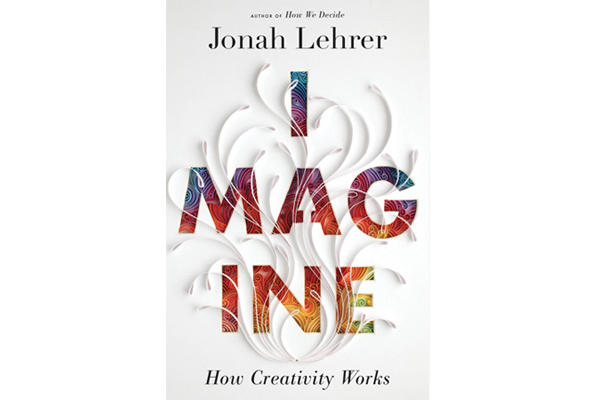
Jonah Lehrer’s Imagine is still worth reading

Jonah Lehrer, as is now well known, repeatedly misrepresented research and plagiarized other people’s writing in Imagine: How Creativity Works. But, as Roy Peter Clark points out, “Jonah Lehrer’s ‘Imagine’ is worth reading, despite the problems.” Clark goes on to say, “not all the sins [Lehrer commits . . .] are equally grievous,” but, despite that, “the reading of the book ‘Imagine’ helped me understand my world and my craft, and what else can you hope for from a non-fiction book.”

I’ve found the same thing after reading Imagine based on Clark’s endorsement. But reading it in light of Lehrer’s indiscretions reveals new potential layers of meaning, because a couple of passages have a very different resonance, like this one, about Shakespeare’s milieu:

His [Shakespeare’s] peers repeatedly accused him of plagiarism, and he was often guilty, at least by contemporary standards. What these allegations failed to take into account, however, was that Shakespeare was pioneering a new creative method in which every conceivable source informed his art. For Shakespeare, the act of creation was inseparable from the act of connection. {Lehrer “Imagine”@221}

Lehrer seems to be using the same method. But the age of the Internet makes tracking sources much, much easier than it used to be. And he goes on:

The point isn’t that Shakespeare stole. It’s that, for the first time in a long time, there was stuff worth stealing—and nobody stopped him. Shakespeare seemed to know this—he was intensely aware that his genius depended on the culture around him. {Lehrer “Imagine”@221}

In retrospect, this reads as a preemptive defense of Lehrer’s own method. But I don’t get why Lehrer made stuff up: most of what he invented doesn’t seem to be very important, and it’s the kind of peripheral material that makes for good reading but isn’t essential. Given contemporary attitudes towards plagiarism—the passages above show that he knows and understands those attitudes—why risk so much for so little gain? It’s like a millionaire stealing a pair of $20 jeans. Why tarnish success? I can imagine some possible answers to these questions, but none of them are very satisfying, and I ultimately want to ascribe Lehrer’s lies to simple human vanity.

Imagine is still pretty interesting. I doubt it’s a perfect book, and I wouldn’t cite Lehrer in my neuroscience PhD dissertation. But I am now conscious of the tension between free-form creative thought and focused attention to a particular, grinding problem (“We need structure or everything falls apart. But we also need spaces that surprise us. Because it is the exchanges we don’t expect, with the people we just met, that will change the way we think about everything”); I am conscious of the need for both longtime collaborators and for new faces; and I am conscious of how people with deep domain expertise may benefit from applying that expertise elsewhere. Some of Lehrer’s points, like his description of the virtues of cities or the eccentric greatness of Paul Erdos, are already familiar. But he helps me see them in new ways. A moment like this, for example, shows me something important about my own writing and creative work:

Friedrich Nietzsche, in The Birth of Tragedy, distinguished between two archetypes of creativity, both borrowed from Greek mythology. There was the Dionysian drive—Dionysus was the god of wine and intoxication—which led people to embrace their unconscious and create radically new forms of art. [. . .] The Apollonian artist, by contrast, attempted to resolve the messiness and impose a sober order onto the disorder of reality. Like Auden, creators in the spirit of Apollo distrust the rumors of the right hemisphere. Instead, they insist on paying careful attention, scrutinizing their thoughts until they make sense. Auden put it best: ‘All genuine poetry is in a sense the formation of private spheres out of public chaos.’ {Lehrer “Imagine”@64}

I am far more in the Apollonian mode than the Dionysian mode, but, perhaps for that reason, I’m fascinated by and perhaps even envious of Dionysian thinking, acting, and living. A novel like The Secret History thus becomes all the more important to me, because it has an Apollonian narrator, Richard, dealing with the aftermath of an attempt to reach Dionysian ecstasy. In the novel, not surprisingly, the outcomes are pretty bad, but the idea of deliberately trying to reach an ecstatic experience resonates with my temperament.

There are some moments that appear, on the surface, self-contradictory. Lehrer says, “The most creative ideas, it turns out, don’t occur when we’re alone. Rather, they emerge from our social circles, from collections of acquaintances who inspire novel thoughts. Sometimes the most important people in life are the people we barely know” {Lehrer “Imagine”@204}.

Earlier in Imagine, however, Lehrer discusses how many creative ideas when people are taking morning showers—where most are presumably alone. So do creative ideas emerge from chatting with others, or when our mind is a relaxed state that lets it make disparate connections among ideas? The answer appears to be “both,” but Lehrer doesn’t explicitly discuss the implied contradictions. I’m not saying he couldn’t reconcile them, but I am saying that someone should’ve pointed these kinds of contradictions out.

Even if all of Imagine’s research and stories are somehow wrong—and I don’t think they are—the book still offers novel ways to think about creativity and how to structure one’s life or work more effectively and in ways that I hadn’t foreseen. I wish the publisher hadn’t withdrawn it altogether. Used copies on Amazon now start at $25. It may be that the existing copies thus continue to rise in value because of their scarcity; alternately, readers might turn to pirate editions on the Internet, which I can only assume are easy enough to find (my book came from the University of Arizona’s library).