Nick Hornby in New York City for “Funny Girl”

Nick Hornby spoke at the Union Square Barnes and Noble on Wednesday, in support of his novel Funny Girl, parts of which he read and supported the claim to comedy in the title. Comedic writers may in general read more successfully than other sorts of writers, or perhaps Hornby is unusually engaging. His talk and the book suggested that perhaps obsession makes us interesting and shows who we are, though Sophie, the protagonist of the novel, has nothing in its beginning save what she wants to become.

Nick HornbyFunny Girl is well-observed (“He said that the bevy of beauties in front of him—and he was just the sort of man who’d use the expression ‘bevy of beauties’—made him even prouder of the town than he already was”) and a keen sense of absurdity shadows the opening of the novel (which is all I can comment on so far).

At one point Hornby said that “Acquiring a family of choice is the dream, isn’t it?” but the challenge of a family of choice may be that it is easier to choose to leave such a family than a genetically intertwined family. Some of his talk also implicitly asked why collaboration is simultaneously so hard yet so essential; the book explores that question on an interpersonal level but per Peter Watts it may also apply on a cellular level.

The audience questions were as usual mumbly democracy in action, but Hornby, like T. C. Boyle, seemed to like or fake liking them. Many, many of them took photos with their cellphones held up high, as depicted above; many saw Hornby through their phones as much as their eyes.

On a separate note, Hornby’s novel High Fidelity holds up well and among other things implies that lists are a way of eliding criticism, real knowledge, and rhetoric. This description however makes it sound boring when it is not.

Hornby Funny GirlHere is a Slate interview between Hornby and Dan Kois.

Life: Laughter and “Rapture” edition

“They were both laughing. Laughing made everything harmless and carefree and sweet. That’s the sort of idiot she was, taken by an easy laugh. Laughter took danger out of it. It was one way to get a woman: make her laugh. It disarms her and distracts her from the perils that may, and most likely do, lie ahead. Laughing throws a person’s balance off, and in that state she is more easily toppled.”

—Susan Minot, Rapture; I find the book funny although I’m not sure most people would. “thought it was funny” may be the ultimate subjective assertion. Rapture is available for $4 on Amazon, and for that price you should definitely read it if you think you’ll at all enjoy the subject matter. The product description makes it sound more gimmicky than it actually is.

The quote above is on page 17 and to me is the key to the novel.

Briefly noted: Decoded – Mai Jia

Here is The New Yorker on Decoded (“This unusual spy thriller has neither page-turning plot twists nor a master villain”) and here is The New York Times. The book is not bad, which I realize is damning, and it suffers in comparison to Cryptonomicon, a novel whose explanations of cryptography are brilliant. Both novels, interestingly and perhaps significantly, start with the parents or grandparents of the nominally central characters. There are comments in Decoded about the nature of stories:

It all happened so long ago that everyone who saw her suffer and die is now dead themselves, but the story of the terrible agony that she endured has been passed down from one generation to the next, as the tale of an appalling battle might have been.

How much are we to trust stories “passed down from one generation to the next?” Maybe only as little as we are to trust that cryptographic protocols have been properly implemented. The woman giving birth in this passage was part of a rich clan that, like most rich clans, can’t maintain its structure over time, since, “very few of the young people who had left were interested in returning to carry on the family business.” The family doesn’t get enmeshed in the new government, either, at least until the “hero,” Rong Jinzhen, comes along.

I’m looking for some evocative quote to give a sense of the writing, but it feels flat and there is very little dialogue. Perhaps I’m missing something as Tyler Cowen finds its compelling. Perhaps I’m blind to the novel’s psychology. But the book is too easy to put down and forget.

Interesting books I read this year

“The best books of the year” articles are useful but annoying: useful because there are often interesting books I missed but annoying because a book isn’t worth reading simply because it was published in a given year. So I’m doing a list not of books published this year but that I read this year and think deserve attention.

* Mating in Captivity by Esther Perel: Almost nothing in pop culture prepared anyone for long-term relationships, and Perel’s book is about many, many things, among them what happens after most novels, movies, and TV shows end. When it came out Tyler Cowen called it “the most dangerous book I read this year,” and that was in 2006. It is not a good book to admit to liking publicly.

* Arts & Entertainments by Christopher Beha, about a failed actor who becomes an inadvertent teacher who becomes an inadvertent amateur pornographer who becomes an inadvertent reality TV personage. I laughed, and the book’s final dialogues are still funny but also offer unexpected, powerful commentary on our time. Why isn’t this book more popular and getting more attention?

* The Power of Glamour by Virginia Postrel, about a latent yet pervasive phenomenon that was until recently underrated and even ignored by me.

* Related to The Power of Glamour, The Rosie Project, as recommended by Bill Gates. It starts promisingly and ends brilliantly, with me laughing at almost every page; if you know any geek, nerds, or programmers, you need to both read this and give it to them.

* The Great Man, by Kate Christensen, also very funny and with sentences that delight from start to finish.

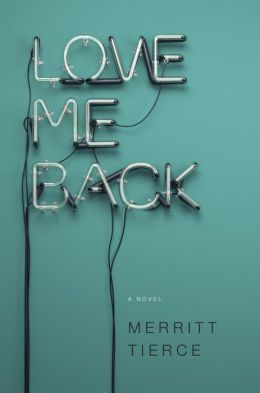
* Love Me Back by Merritt Tierce, another book that should be better known and hits many valences simultaneously.

* Zero to One by Thiel and Masters, which is notionally about startups but is really about the world.

* Echopraxia by Peter Watts, but do read Blindsight first. So good it’s hard to write about.

* Trust Me, I’m Lying, which I didn’t read when I first heard about it because I thought, “Meh, I already know.” I didn’t, and the prose is delightful. Note too the comments at the link.

* Bess adds Dear Leader: Poet, Spy, Escapee–A Look Inside North Korea, about a defector’s astonishing story. The sentences are strong, yet I feel like I already knew enough about North Korea prior to reading.

What have I missed?

Sharp Objects — Gillian Flynn

The first time through Sharp Objects I though it totally absurd, since the characters in it behave like fantastical morons perpetually rolling on ecstasy or akin to faeries from Jonathan Strange & Mr Norrell. The plausibility of the plot is so low that I almost gave up, exasperated.

But I kept reading the first time and was curious enough to reread the second time and realize that Sharp Objects is not about a realistic story of realistic detection; instead, it’s a mythic-Freudian* work about the anxiety that comes from two related phenomena: transitions to adulthood and the muddying of lines between the generations. Camille, the protagonist, is supposed to be an adult (she’s a reporter for paper, she covers murders, she pays the rent) but around her mother she acts like a child and around her 13-year-old sister she acts like a peer.
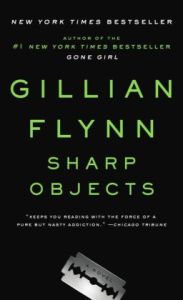
Sharp_ObjectsOnce this alternate reading became clear, Sharp Objects became pleasant. It’s not supposed to be realistic (or, if it is, it fails so badly at its purpose that it might as well be read my way). It’s a fairy tale with a bit of media critique thrown in, and it says that girls and women have the dark urges that are often absent from fiction and from the news. Camille needs to reconcile her family relationships and her family’s history in order to understand the murders she’s investigating. Conventional reportorial skills and abilities are of little use; at best one might say she employs some aspects of New or Gonzo Journalism, since she does in fact drop ecstasy at one point.

In the novel Camille is dispatched by her editor to her home town to investigate a murder that becomes a series of murders of girls. The novel signals its intentions early. Camille is describing the home town she came from, and she ends the first chapter with this:

When I was still in grammar school, maybe twelve, I wandered into a neighbor boy’s hunting shed, a wood-planked shack where animals were stripped and split. Ribbons of moist, pink flesh dangled from strings, waiting to be dried for jerky. The dirt floor was rusted with blood. The walls were covered with photographs of naked women. Some of the girls were spreading themselves wide, others were being held down and penetrated. One woman was tied up, her eyes glazed, her breasts stretched and veined like grapes, as a man took her from behind. I could smell them all in the thick, gory air.

At home that night, I slipped a finger under my panties and masturbated for the first time, panting and sick.

The blurred mental lines between sexuality, animals, reproduction, and early age remain a theme that runs through the novel.

Attention is also a scarce resource in the novel: Camille constantly seeks it from her mother, even at the risk of being dangerous, and also seeks it from men (at least at first). Her sister is repeating Camille’s experience. Parents are either absent (from page 21: “I wondered where their mother was”) or overwhelming. Family sexuality recurs; here is one early example, from Camille’s narration:

The Victorians, especially southern Victorians, needed a lot of room to stray away from each other, to duck tuberculosis and flu, to avoid rapacious lust, to wall themselves away from sticky emotions. Extra space is always good.

“Stray” is an exact quote. And if extra space is always good, why then does Camille go to her mother’s house? She returns to a point of danger in search of information, like Little Red Riding Hood entering the Wolf’s house. The novel itself keeps pointing to Fairy Tales. Amma, Camille’s sister, says:

now we’re reunited. You’re like poor Cinderella, and I’m the evil stepsister. Half sister.

A few pages later, Camille speaks with a boy who says that he saw a “woman” take the second girl, who turns up murdered. She thinks this of him:

What did James Capisi see? The boy left me uneasy. I didn’t think he was lying. But children digest terror differently. The boy saw a horror, and that horror became the wicked witch of fairy tales, the cruel snow queen.

No one believes that the killer is a woman because women don’t behave that way. But wicked and evil women are pronounced in fairy tales.

This details occurs in Camille’s mother’s house:

Walking past Amma’s room, I saw her sitting very properly on the edge of a rocking chair, reading a book called Greek Goddesses. Since I’d been here, she’d played at being Joan of Arc and Bluebeard’s wife and Princess Diana—all martyrs, I realized. She’d find even unhealthier role models among the goddesses. I left her to it.

There are more. These are enough.

Seemingly no one grows up in Sharp Objects. Nearly every woman in Wind Gap still gossips like she’s in high school. Growing up is hard and harder for some of us than others. Perhaps we never fully leave childhood behind. Camille can’t. Her sister Amma is in some ways eager to leave childhood (she behaves like a pro when it comes to the inciting the desires of men) but in other ways wants its protections. In our culture, she can legally at least get both,** and she behaves in both ways. At one moment Amma is behaving like an infant:

Amma lolled sleepy as a newborn in her blanket, smacking her lips occasionally. It was the first time I’d seen my mother since our trip to Woodberry. I hovered in front of her, but she wouldn’t take her eyes off Amma.

In others she doesn’t, as when she says that after her mother takes care of her, “I like to have sex.” Then:

She flipped up her skirt from behind, flashed me a hot pink thong.
“I don’t think you should let boys do things to you, Amma. Because that’s what it is. It’s not reciprocal at your age.”

Camille’s counsel is distinctly odd, coming from someone who did similar things at similar ages and, it would appear, for similar reasons. But she doesn’t at this moment have the power to break the familial cycle, with its hints and implications of incest. That waits until later.

Camille’s decision to enter this cauldron of weirdness reinforces the idea that Sharp Objects is more about family patterns and dynamics than detection. In one of the flimsier rationales in the book, Camille stays with her mother, her stepfather, and her adolescent sister, ostensibly for the sake of saving the paper money, but this decision is insane given her relationship to the family. That she continues to stay as events become more and more macabre and surreal are equally insane and implausible. Camille should leave, and that’s obvious to any sane reader and should be obvious to her. That she stays anyway indicates that the story has motives different than the ones I initially assumed.


* Freud has a much stronger mythic element to his work than is commonly supposed—and so I’m justified in using myth and Freud in this way. Much of his work is unfalsifiable, giving what is nominally a scientific body of work a distinctly literary quality, and the supposed universality of many of his concepts (the death drive, the Oedipus complex, etc.) are not supportable.

* Let me reproduce the footnote at the link:

As Judith Levine notes in Harmful to Minors: The Perils of Protecting Children from Sex: “One striking pair of contradictory trends: as we raise the age of consent for sex, we lower the age at which a wrongdoing child may be tried and sentenced as an adult criminal. Both, needless to say, are ‘in the best interests’ of the child and society.” And, as Laurie Schaffner points out in a separate essay collection, “[…] in certain jurisdictions, young people may not purchase alcohol until their twenty-first birthday, or may be vulnerable plaintiffs in a statutory rape case at 17 years of age, yet may be sentenced to death for crimes committed at age 15 [….]”

Laws [. . .] reflect race and gender norms: white girls are the primary target of age-of-consent laws, while African American youth are the target of laws around crime and delinquency. The contradictory trends are readily explained by something rather unpleasant in society.

I didn’t elaborate on what the “unpleasant” thing may be and won’t here, either, but you’re welcome to take a shoot at your best interpretation in the comments.

Sex, Drugs, and Cocoa Puffs: A Low Culture Manifesto — Chuck Klosterman

Pop-culture essays age in dog years while retaining the occasional long-term insight that stays fresh by accident. I’m reading Sex, Drugs, and Cocoa Puffs: A Low Culture Manifesto and mostly noticed age spots but also saw a few prescient moments, like this:

But Junod claims that he [made up details about Michael Stripe of R.E.M. in an article] in order to make people reevaluate how the press covers celebrity, and that’s valid. It’s valid because conventional celebrity journalism is inevitably hounded by two problems: Either the subject is lying, or the writer is guessing. Junod just happened to embrace both of those obstacles simultaneously.

The relationship of the Klosterman essay to say John Jeremiah Sullivan’s more recent Real World essay, “Leaving Reality” essay is obvious, but I think Kloosterman is also forgetting—or doesn’t want to simply say—that people read celebrity profiles in part because they want to be lied to. There is more than a little complicity in the lie, which changes the relations of the liar to the person being lied to. Or perhaps people want to feel false intimacy, which can be achieved partially through lying.

klostermanThe “subject” of these profiles—like the Michael Stripe one, or others in its genre—is probably trying mostly not to say or do anything that will make him or her look like an asshole when taken out of context. This can be shockingly hard to do, since the subject can’t tell when the writer is “guessing” or what the writer is “guessing.” In this context “guessing” can be another word for “interpretation.” One reason to read the New Yorker, incidentally, is that its writers appear to attempt to be scrumptiously fair and to avoid gossip—yet those are the very qualities that can give rise to accusations of being “boring.” One person’s boring is another’s accurate.

Imagine someone followed you around, all the time, for a couple of days and maybe for longer, and that the person has some bad will, or at least wants to make your life into a story. Could the person get some stuff that would make you look bad? Probably. I know that someone who could observe everything I wrote, and watch everything I do could make me look really bad. So smart celebrities avoid the real press, or only interact with the relatively small, non-jerk parts of the press—like The New Yorker.

Let’s take a specific example of an article about the world behind celebrity journalism: Sarah Miller’s hilarious “Anna Nicole Smith Kind of Made a Pass at Me.” I dramatically read parts of it to some friends the other night. This paragraph stands out in particular:

I wrote a first draft, in which, without spelling everything out, I attempted to give some real sense of that day. “I can’t publish this,” my editor said, and in her defense, I’m sure she was right. I wrote another version that made it sound like I’d had fun, which took hours and hours, because it was not real; writing something that is not real is not impossible, but it is very close to it. Through every long moment I worked on it I cursed myself for not taking that stupid trip to Magic Mountain, which would have made it all so much easier. Anyway, they published that version, and I got my money.

Miller describes what actually happened this way:

“Sarah Miller,” [Anna Nicole Smith] said, “You’ve got the prettiest blue eyes.” If we were in a movie, she’d have added, “I do declare.”

“Thank you,” I said formally.

“You ever had sex with a girl?”

It was none of her business, but I thought being honest might somehow give her back some of the dignity my mind had robbed her of, and I thought she might sense it, and that we might have a real conversation. “Yes, actually, Anna. I have.”

“Well, did you like it?” The word “like” lasted for several seconds.

“I actually did not,” I said. “It was a…misbegotten adventure.” I was pleased at how much I sounded like my father.

But that can’t be published, not at the time Miller was trying to get the story. Her editor, however, doesn’t want “real.” The number of readers who do is small. How many people watch PBS versus celebutainment shows? How many read The New Yorker versus US Weekly? The truth is hard and amusing fictions easy, so we choose the latter. In the introduction to Sex, Drugs, and Cocoa Puffs Klosterman writes that “accelerated culture [. . .] doesn’t speed things up as much as it jams everything into the same wall of sound. But that’s not necessarily tragic.” I’m not convinced there is such a thing as “accelerated culture,” but I am convinced that elements of what passes for low or contemporary or whatever culture do emerge from the collective decisions of millions of individuals.

But it is also worth stepping back and looking for larger patterns, which is what Klosterman almost but doesn’t quite do. He is a little too fond too of grand pronouncements. Like:

The main problem with mass media is that it makes it impossible to fall in love with any acumen of normalcy. There is no “normal,” because everybody is being twisted by the same forces simultaneously. You can’t compare your relationship with the playful couple who lives next door, because they’re probably modeling themselves after Chandler Bing and Monica Geller. Real people are actively trying to live like fake people, so real people are no less fake. Every comparison becomes impractical. This is why the impractical has become totally acceptable; impracticality almost seems cool.

What is an “acumen of normalcy?” I’m not sure either. I had to check Google for “Chandler Bing” and “Monica Geller.” And has it ever been the case that “real people” have not tried to model themselves on “fake people?” If you read major religious texts as fundamentally mythological, as I do, the answer is “no:” people have been trying to emulate the Christian Bible and the Old Testament for literally thousands of years. Early novels with melodramatic endings encouraged their readers to attempt to reenact those ending. We seek narrative fiction in order to learn how to live—and that isn’t at all new. I don’t think there has ever been as firm a normal as we’d like to project on the past.

Eventually, with paragraphs like the quoted section, one comes to the conclusion that either everything is “fake” or everything is “real”—which is the sort of conclusion high freshmen hit when they’re in their dorm rooms at 2:00 a.m. The next day they still get up for class and go to breakfast. What is one supposed to do differently if one decides that real people are fake?

Perhaps not surprisingly, the next essay in the Kloserman collection concerns the video game “The Sims.” Also not surprisingly, some SF writers have wondered what might happen if we get a wholly immersive and wholly fake world. One possible solution to the Fermi Paradox is that sufficiently advanced civilizations make video games that are so cool that they’d rather live in constructed worlds than explore the real universe.

That’s an interesting thought experiment, but like the high freshmen mentioned above no one does anything differently today based on it. Klosterman tells tales about meaningless arguments. Eventually, however, generative people come to realize that arguments that don’t lead to any sort of change or growth are pointless, and they get on with their lives. One sign of “low culture” may be that winning or losing the argument means nothing, and the participants should go build or make something instead.

Love Me Back — Merritt Tierce

Love Me Back is compelling, worth reading, and strange: it is a novel almost without psychology, in which the protagonist, Marie, acts without asking herself why she acts (“Whatever is in me that makes decisions is now full of an accretion of plaque”). It is a strange book too to read back-to-back with Peter Thiel and Blake Masters’s Zero to One: that book is about startups, innovation, change, and societies, while Love Me Back is about Sisyphean repetition, ancient industries, grunt labor, and sex. The two books o occupy different market worlds, and Thiel and Masters mention restaurants repeatedly as the sort of low-margin high-competition businesses one doesn’t want to be in. Marie is in the business from necessity and because it provides opportunities she wouldn’t have otherwise: opportunities for sex and drugs, and opportunities to turn her mind off and make the money she can’t or couldn’t make otherwise.

Love_Me_BackThe novel’s chronology is chopped in an appealing way: Marie starts the story as an experienced worker and then jumps back and forward. It’s disorienting in a way that perhaps mirrors the disorientation of service at a restaurant. She is observational, though, from the start, imagining a customer thinking, “Would I be like Jordan?”, since Jordan “was a young blond waitress liberated by one of her customers.” The word “liberated” is key and yet Marie doesn’t seem to want to be liberated: she wants not slavery but structure. The novel is partially addressed to her daughter, who Marie bears as a teenager and whose father is unnamed, and in one early encounter with a man who “reminded me of a hairless mole we’d seen at the zoo” she snorts coke and then says:

I imagined her sitting on the counter, her short legs hanging off, swinging. I went back into the bedroom and said, I’m sorry, I have to go, I’m not well. I was shaking and I felt beautiful. I thought how beautiful it was that I had only one garment to put back on, my black cocktail dress there on the floor. I pulled it over my head. I don’t wear underwear. See you, I said. He didn’t try to stop me.

There is no antecedent to the pronoun “her:” we infer that Marie is speaking of her daughter. For a moment Marie feels something; it isn’t obvious that she often feels beautiful despite the action she gets. She senses without articulating it the power of glamour (one of her first restaurant men wears aviators, an object Postrel specifically discusses at the link). Marie is ambiguous in general; at moment she says “I hated staying the night because it was always different in the morning.” Was it? Is it? Why? The party ends, yes, and perhaps the illusion can’t be sustained and Marie wants the illusion. But relationships of any duration are the breaking of the illusion and the creation of something else in its place.

It is impossible to intelligently discuss Love Me Back without mentioning sex and the restaurant business. When Marie begins she says:

That was the best body I ever had, and the worst mind. I was seventeen. I was slender and strong and I also had swollen C-cup breasts. [. . . ] my mind was an open sore. It was black. I couldn’t tell if I was deep inside it or totally outside it. I would imagine being fatally cleaved all day long.

She never stops imagining being “fatally cleaved,” or so it would appear. The next three paragraphs spoils the novel to a minor extent, but the novel ends with Marie’s description of her getting ready for work, in a “professional” manner (with “professional” repeated often enough to make us skeptical of the term) and she says:

He starches everything to spec, so my long bistro apron can stand on its own and the creases in my sleeves will be so pointy that even at ten thirty tonight when I walk up to my last table for the first time they will see those creases and they’ll trust me just a little. My name is Marie, and I’ll take care of you tonight.

She’s where she started. Nothing changes in the restaurant business, or change happens so slowly that it isn’t perceived by the workers in the business. The work is cyclical, mythic, like economics prior to the Industrial Revolution. Hence the jarring feeling of reading Thiel and Masters next to Tierce. Love Me Back is about elemental matters, sexual and economic, and their book is about change. Both are beautifully written but in very, very different ways; Love Me Back took longer to enter but its proffered rewards turned out to be real.

The restaurant business is ugly and fascinating and un-PC. One man, Christopher, dispenses this advice, before he fucks teenaged Marie: “There’s only two times in a restaurant: before and after. You walk in, you white-knuckle it, try not to fuck up till it’s over and then it’s over. You made your money or you didn’t.” The third time in a restaurant business might be when you write about it. Marie likes it because exhaustion keeps her from thinking: she is “always that heavy, iron kind of tired” and her “exhaustion was metallic.” She likes it. She doesn’t have to think and doesn’t want to, which is curious given another seemingly throwaway detail: Marie has been admitted to Yale but shows few real interests or abstract thoughts. What is she interested in? Art? Science? Startups? Philosophy? We don’t see much. Certainly plenty of otherwise vapid students with good grades and test scores get into high-status, highly marketed schools, but Marie seems an extreme example.

She does learn outside of work:

I learned a lot of things while I worked [at Chili’s]. I learned how to sweep aggressively and efficiently. I learned how to anticipate and consolidate, which is all waiting tables is. I learned how to use work to forget. I learned how to have an orgasm and I learned I was a bad wife.

Many of those things are not like other things; they are so disparate that one learns both much and little about Marie at once. Marie learns that “there were rules to being a waitress. The main one was don’t fuck up.” Arguably that’s a rule of relationships too; the lack of punctuation, italics, or some other separation between the word “was” and “don’t fuck up” is also characteristics of the novel’s overall tone, which is chatty but not shallow. It seems like one should tire of it by the end, but I didn’t.

Marie rejects the support system she has: she leaves her parents because they treat her daughter more like their daughter, and while when she first leaves “They didn’t live far from us” she “didn’t know what to report. I hate that I hate my life?” The language here is clever: a weaker writer would’ve simply said “I hate my life,” but hating that she hates her life makes sense, and makes me pause: she chose her life and as such it doesn’t make sense to hate it. She’s too smart for simple teenage hate, but the perpetual restaurant life and the perpetual need for cash don’t sound fun either. Reading between the lines might also make Love Me Back a very subtle argument for making IUDs widely available, since they are tremendously effective and safe. But that would require acknowledging what people and especially teenagers want, and we live in a culture where that doesn’t happen; Marie doesn’t quite want to acknowledge what she wants, either. Want is somewhere in the rush to perpetual action, whether at the job or through sex. Let’s not ask why.

I hesitate to include the above paragraph because it makes the novel sound like a policy brief, which it isn’t. But it will in some quarters be read as one. Marie’s poverty is too persistent; for one holiday she says that “Thanksgiving dinner was the rice and beans with the onion and Ro*Tel added for flavor, which is what we usually ate, and the pie. He said the pie was the best thing he had ever eaten in his life.” But that’s also the night her husband learns that “it hurts when I piss,” and Marie knows why: “I knew that I had given Danny chlamydia and I knew I’d slept with my husband since then.” That undercuts whatever domestic success Thanksgiving might otherwise have entailed. One of the guys she chooses to fuck is described this way:

On his chest the tattooed face of a pit bull he said was the best friend he’d ever had, on his left calf a beckoning, bare-titted mermaid. Over his entire back a flaming skull, the fire burning up toward the nape of his neck [. . .] On his wedding finger a black band where a ring would go.

He is signaling his beliefs and attitudes effectively. During a three-way with two men, neither of whom is her husband, Marie says that one “Held me in place like that and I kept myself taut against him almost as if I were trying to resist or get away but it was the best thing I had ever felt with a man.” The divorce is almost foreordained. The other guys are too good, the variety too fun. A different sort of person could say, “Be wary of marrying teenage mothers.”

Does Marie learn over the course of the book? I think not. She does, however, speak, and her voice keeps me reading, and keeps me thinking about Love Me Back after I’ve moved onto other books, other worlds, other words. Marie’s words stay with me. She is like the narrator in True Things About Me or Catherine Millet in The Sexual Life of Catherine M. bizarrely, powerfully honest. I wish I’d read all three books long ago—perhaps the trajectory described in detail here would have been faster. But then again I might not have had the base of knowledge I do know, and into which Marie’s life can be incorporated and seen for what it is, rather than what others wish it to be.


Love Me Back is too intense to be for everyone and yet as you can gather above I love it. Here is an interview with Tierce, and here is a visual review.

“Amazon is doing the world a favor by crushing book publishers”

I have read many lamentations about the evils of Amazon but have yet to see anyone effectively rebut Matt Yglesias’s points in “Amazon is doing the world a favor by crushing book publishers.” The section about marketing is particularly interesting, since seemingly everyone agrees:

When I was a kid, my father was a novelist as were both of my grandparents. So I heard a lot of stories about how useless publishers are at marketing books. Then I got to know other people who wrote books and they had the same complaints. Then I wrote a book, and their complaints became my complaints. But it’s easy to whine that other people aren’t marketing your product effectively. It took the Amazon/Hachette dispute to conclusively prove that the whiners are correct. [. . .]

The real risk for publishers is that major authors might discover that they do have the ability to market books.

Publishers also appear to be bad at identifying which books readers want to read and which books readers don’t want to read; we’re now going to find that out by writers writing and then releasing their books into the wild.

Incidentally, though, it’s hard for me to find good books that are either self-published or conventionally published; if you have any suggestions please email me.

See also “Tyler Cowen on Paul Krugman on Amazon on the buzz.”

Drugs Unlimited: The Web Revolution That’s Changing How the World Gets High — Mike Power

Drugs Unlimited is an excellent companion to Daniel Okrent’s Last Call, since both are about the madness of the laws that forbid or restrict mind-altering substances. But Drugs Unlimited shares a flaw and strength with Last Call, too: both books are repetitive, with tons of minute historical detail that feels easy to skip. Unless you wish to become an expert in the subject both are better checked out of libraries than bought.

Drugs Unlimited follows a pattern and cites many, many examples of that pattern: Chemist or enthusiast comes up with a novel drug or drug variation; people try and like it; governments eventually ban it (there are chapters devoted to “LSD in the 1960s, heroin in the 1980s and Ecstasy in the 1980s and 1990s”). The process then repeats, though we’re now in a stage in which it’s difficult for governments to ban or regulate every conceivable substance, leading to an online free-for-all.

Drugs_unlimitedShould you wish to enter the free-for-all Drugs Unlimited provides an introduction and useful guidance. Drugs have become more widely available than ever in the last ten years, and perhaps the most interesting thing about their availability has been their lack of impact on society, which continues to function. Nonetheless we get a chronicle of the new drug world: “Widely available and hugely popular, mephedrone was the first mass-market ‘downloadable’ drug, in the sense that it was, uniquely for the mass market, originally only available online.” That I’ve never heard of mephedrone makes me feel uncool.

It’s appropriate that I’m discussing this book on a blog, since Power writes:

Conventional academic research and government-sponsored investigations into attitudes and use patterns are being supplanted in their authority by the unmediated voices of users themselves, as social networks become central to the daily experience of a new generation of drug users.

He doesn’t cite Scott Rosenberg’s Say Everything: How Blogging Began, What It’s Becoming, and Why It Matters but he might as well: one could take out the word “drug” and replace it with “readers” or “listeners” or any number of other verbs. Still, there is a persistent feeling that “the unmediated voices of users” are better informed than the highly mediated voices of the media, or of academics.

Drugs Unlimited is also a media critique: “Saunders also detailed [Ecstasy’s] darker, more negative sides in an honest appraisal that was sorely lacking in mainstream coverage.” Or: “My responses to [Ecstasy] and its surrounding culture, and those of everyone I knew, were markedly different from the media’s representation of them.” Or: “hysterical media coverage of the perceive threats of new drugs and corresponding knee-jerk government action seem to be [. . .] guaranteed.”

Power likes drugs: he’s taken them, and he writes sensuously of the way “drugs can send users into bizarre internal spaces, imaginary realms where mind and body are dissociated from each other, and where the only limits to the experience are those of the imagination.” He should perhaps more strongly emphasize the dangers of mixing different drugs, since that along with poorly manufactured drugs is how people die. The extent to which schools, the “responsible” media, and other authority figures systematically lie about drugs is shocking. Although “Most People With Addiction Simply Grow Out of It. Why Is This Widely Denied?” came out after Drugs Unlimited, it would fit into Power’s narrative.

Drugs Unlimited is lightly technical, and you’ll find sentences like these: “PIHKAL reveals in practical detail the chemical synthesis and human dosage of hundreds of psychoactive substances, each of which are in the phenethylamine class.” The book is neither well nor poorly written. It would not surprise me, however, were copies to travel to many unexpected places and inspired many unexpected people. Perhaps you’re one.

Tyler Cowen on Paul Krugman on Amazon on the buzz

In “What is the welfare cost of Amazon supply restrictions on books?” Tyler Cowen writes on whether Amazon’s much-publicized maneuvers against publishers are welfare-enhancing or welfare-destroying; most of the former answers tend to come from readers and indie publishers, while most of the latter answers tend to come from publishers and established authors. I however was compelled to comment on a separate and to my mind under-discussed issue: the lack of any sense of history in most of these discussions.

The same class of writers who five years ago were aghast at the lack of support for literary fiction among publishers now decry Amazon; they’re supporting the same publishers who were until recently the cravenly commercial forces destroying “quality” literary fiction. “The plight of literary fiction” has been an evergreen essay topic for as long as I’ve been cognizant of literary culture. Literary fiction was (or is) in plight because publishers supposedly don’t support and readers are too busy masturbating to romance fiction or science fiction tech fantasies (or whatever) to read lit fic.

Tangentially, I’m also amazed that, in rereading the preceding sentence, it seems to make sense and flow nicely without any commas. Perhaps it is the influence of Steven Pinker’s The Sense of Style, which I bought naturally from Amazon and which has me thinking about nesting and recursion more than any time since CS 102.

The link in the preceding paragraph also goes to Amazon.