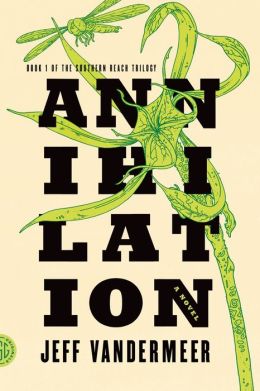
Annihilation — Jeff Vandermeer

Annihilation works and lives up to its hype but may not live up to predecessors like Solaris or Peter Watt’s brilliant, bizarre novel Blindsight. I say “may not” because Annihilation is a simpler book, which I say descriptively rather than derogatorily, written in an easy-to-understand style that isn’t as demanding as Blindsight. Because the protagonist of Annihilation knows very little, she doesn’t have the knowledge or vocabulary to explain what is happening to her. Most of the characters in Blindsight speak in sentences like this: “The geometry—it’s not so symmetrical. Looks almost like the Phaistos Disk.” The what disk? And the chapters skip confusingly around.

Annihilation_coverBlindsight is much harder SF, but the last third, like the novel as a whole, is as good as any fiction I’ve read, ever. It is a book that needs to be started again from the beginning to be understood, which is both a strength and weakness. One could say that Ulysses is the greatest novel ever written—I don’t think so, despite the commonness of the view—but it is also not for everyone or even most people.

Annihilation and Blindsight should be compared because they share an important theme: what happens when we can’t trust our own senses. Annihilation is scary not just because it’s about exploring the unknown but because the protagonist can’t trust memory, which can be directly manipulated in the novel. In a world without reliable memory it becomes impossible to know what you know or don’t. There is no real way to make sense of human life or to receive meaningful feedback from the environment.

This isn’t a totally new fear—Lovecraft’s stories often involve cosmic horror overcoming the senses of humans and causing madness in them, such that they can no longer rationally evaluate what they see and process with their senses. Descartes asked how we know what we know and how we can trust it in 1641’s First Meditation. The difference between then and the near future is the possibility of being able to systematically alter memories. Contemporary science fiction (and, increasingly, science), however, points out that we’re getting much closer to the point at which direct brain or sensory manipulation could be used to make it impossible to trust one’s senses. That sort of thing existing as a fantastical horror scenario is very different from knowing that it could be done to you and, almost as bad, you might not even know.

The narrator’s epistemological gaps are wide. She says: “We had also been assured that it was safe to live off the land if necessary.” Who had done the assuring? When? Why? The party reaches “the camp” and “set about replacing obsolete or damaged equipment.” What equipment is gone and what remains? The narrator doesn’t say. She hears “a lot, powerful moaning at dusk,” but no one tries to figure out what it is. Blindsight is a voyage of discovery; Annihilation is a voyage of strange passivity.

The part of the brain that deals with curiosity seems to have disappeared, and a few pages later the narrator says as much: that “Curiosity could be a powerful distraction.” For someone exploring the unknown, however, curiosity is a motivator, not a distraction. The term “unreliable narrator” is common, but it doesn’t describe Annihilation’s narrator, who better be termed “wildly delusional.” She seems not to search for explanations when the explanation might save her life and its lack might kill her. At times she is anti-rationalist:

I found the psychologist’s faith in measurements and her rationalization for the tower’s absence from maps oddly. . . endearing? Perhaps she meant only to reassure us, but I would like to believe she was trying to reassure herself. Her position, to lead and possibly to know more than us, must have been difficult and lonely.

Almost no one could know less than the narrator. She knows nothing at the beginning of the novel: of one of her party, she says “I think we all believed she came from some kind of management background.” I’d want to know more about someone I hired to edit proposals, let alone someone I’m accompanying into an unknown area long cut off from the rest of the world and human society. She realizes that “we might now be living in a kind of nightmare,” and that sense never goes away. Neither do questions about the narrator’s reliability; towards the end of the novel, she says:

It may be clear by now that I am not always good at telling people things they feel they have a right to know, and in this account thus far I have neglected to mention some details about the brightness. My reason for this is, again, the hope that any reader’s initial opinion in judging my objectivity might not be influenced by these details.

Worries about “objectivity” are standard fare in novels. The quality of the writing in Annihilation, on a sentence-by-sentence basis, is average, but the novel remains fun, even if the narrator’s ineptness is not to my taste. That the ineptness may be an artifact of whoever sent her is scarier than the things she sees, or think she sees, in Area X.

Creativity, Inc.: Overcoming the Unseen Forces That Stand in the Way of True Inspiration — Ed Catmull and Amy Wallace

Creativity, Inc. is an interesting book marred by consistently, distractingly bad writing. I read it based on John Siracusa’s review, which doesn’t mention style (and doesn’t quote). But writing about a book without discussing style is like writing about Apple’s laptops without mentioning it.

Many of Catmull’s stories are interesting; for example, he tells one about holding meetings around a long, narrow table that by its physicality tended to exclude people and produce hierarchy, especially since some people would get reserved seats. But he missed the problems at the time: “the seating arrangements and place cards were designed for the convenience of the leaders, including me. Sincerely believing that we were in an inclusive meeting, we saw nothing amiss because we didn’t feel excluded.”

But two of Creativity, Inc.’s main points—about the need to tolerate failure in the right circumstances and the need to foster a creative working environment—are dealt with by much better-written books: Megan McArdle’s The Up Side of Down: Why Failing Well Is the Key to Success and Steven Berlin Johnson’s Where Good Ideas Come From. Not surprisingly they’re both professional writers; either would’ve been a better choice to ghost / “assist” with his book, but they might’ve been a lot more expensive too.

The book should be great; instead, Creativity, Inc. is decent, with redeeming qualities. Had it been a Pixar movie subjected to the process Catmull describes, I think it would’ve been trashed or straightened out before hitting the metaphorical screen. Creativity, Inc. is so painful because it has the potential to be a monument rather than a moment. Its errors are elementary; its insights aren’t. In writing, it appears that Catmull doesn’t know what he doesn’t know. At Pixar he learned to know what he doesn’t know, but in writing he’s not there yet.

There are weird metaphors: “Sutherland and Dave Evans, who was chair of the university’s computer science department, were magnets for bright students with diverse interests, and they led us with a light touch.” So are they like magnets, which attract metal rapidly, or are they like human riding horses, which is probably where the “light touch” metaphor comes from? The mixing in this sentence is jarring. He has “a ringside seat” to ARPANET. Catmull writes that early film editors at Lucasfilm “couldn’t have been less interested in making changes that would slow them down in the short term.” But that seems unlikely: it’s almost impossible to get to a true zero level of interest. Chances are those editors could have been less interested, perhaps through hostility. In 1983, we learn that “George [Lucas] hadn’t lost an ounce of his ambition,” but how many ounces are there in the average person’s ambition? How many in Lucas’s? Talking about ambition in terms of ounces is common but whatever freshness and vitality the metaphor might have once had is gone. These examples come from the first 37 pages. There are so many other examples of weak writing and clichés that I stopped marking them.

Not every sentence must be brilliant or unexpected—that would be alienating—but some should be.

The best part of Creativity, Inc. is the last pages: “Afterword: The Steve We Knew:”

[Steve Jobs] used to say regularly that as brilliant as Apple products were, eventually they all ended up in landfills. Pixar movies, on the other hand, would live forever. He believed, as I do, that because they dig for deeper truths, our movies will endure, and he found beauty in that idea. John talks about ‘the nobility of entertaining people.’

It has fewer clichés, though I’m not sure why. Nonetheless, I wish the rest of the book had been more like the last ten pages. For the right person in the right industry at the right time, Creativity, Inc. is still worth reading. For the rest of us it’s a lesson in what might have and should have been.

Tampa — Alissa Nutting

Tampa starts with a bang, so to speak—the first line says, “I spent the night before my first day of teaching in an excited loop of hushed masturbation”—and also explains the narrator’s curious, never-resolved marital predicament: “I find it hilarious that people think Ford and I are the perfect couple based solely on our looks.” I find it curious that the narrator, who is obsessed with teenage boys, wanted to marry Ford or stay married to him. Her marriage exists for no reason outside of the needs of plot mechanics; there are occasional references to Ford’s money, but based on the novel Celeste has a single overriding focus on sex.

That focus doesn’t take a lot of money to maintain, and indeed it would be greatly enhanced by her divorcing Ford, or never marrying him. The closest we get to some kind of rationale, emotional or otherwise, is that “I hoped his wealth might provide me with a distraction, but this backfired—it left me with no unfulfilled urges but the sexual.” In 1900, it might have been very hard to “fulfill” sexual urges, but today that is not the case, and someone so single-mindedly focused on sex doesn’t need to be and shouldn’t be married. The “wealth” doesn’t seem to matter to her: other than name-checking one or two luxury items, money doesn’t seem to matter for Celeste. Explaining her husband to her teenage lover, she “didn’t have to feign indifference” and tells him “He’s just a husband.” Why bother? When Humbert Humbert married, he at least had a reason.

To be sure people are rarely fully rational and most of us are riven by conflicting desires, by Celeste’s desire to marry or stay marry makes little sense at the beginning of the novel and less as it goes on. Ford’s presence offers useful plot mechanic friction.

A novel like Dare Me works more effectively than Tampa because its protagonists are supposed to be vacuous twits. A twenty-six-year old with a classics degree, even a very horny one, should have more going on between her ears than Celeste does, and what’s between her ears shouldn’t harm what’s going on between her legs. She says, for example, that “At university I began throwing myself into classics studies, finding brief solace from my sexual frustrations in texts depicting ancient battles of fervent bloodshed.” But for someone interested in classics, she references them very rarely; her studies seem to have left no mark in her mind. Contrast that with a novel like Donna Tartt’s The Secret History, where Greek appears and an obsession with the past fuels the characters’ actions in the present. Those are characters whose thought is fully colored by classics. Here, classics get mentioned as empty window dressing, like material objects.

Toni Bentley deals with the money issue in The Surrender, her memoir of anal sex, where she says:

You let a man into your bowels—your deepest space, the space that all your life you are taught to ignore, hide, keep quiet about—and consciousness is born. Who needs diamonds, pearls, and furs? Those who’ve never been where I have been. The promised land, the Kingdom.

In asking “Who needs diamonds, pearls, and furs?”, she could be speaking for Celeste, who is also indifferent-seeming to possessions because she has her own “promised land,” albeit of a different though even more forbidden sort than Bentley’s (I say “even more forbidden” because while Bentley’s favorite act used to be illegal, it now mostly isn’t; while Celeste’s used to be not prosecuted, these days it is, thanks to feminists seeking equality in an instance where many teenage boys would probably be happy without it).

There are bizarrely hilarious moments in Tampa, as when Celeste narrates:

Sex struck me as a seafood with the shortest imaginable shelf life, needing to be peeled and eaten the moment the urge ripened. Even by sixteen, seventeen, it seemed that people became too comfortable with their desires to have any objectivity over their vulgar moments. They closed their eyes to avoid awkward orgasm faces, slipped lingerie made for models and mannequins onto wholly imperfect bodies.

Actually, sex is not at all like sea food in the sense Celeste describes, but we do see how Celeste totally misconceptualizes the world and thus a lot about her own, non-universal, proclivities. She also asks rhetorically, “Why did anyone pretend human relationships had value?”, when the better question is why she pretends they do, since most of us who aren’t sociopaths have obvious, readily available answers. Yet the metaphor is compelling, like enough of the writing in Tampa to make the book writing about. There are interesting questions about the extent to which desire clouds judgment, but that assumes the characters have any kinds of judgment in the first place, and the ones in Tampa mostly don’t.

Like Humbert Humbert, her obvious antecedent and another character with desire problems, Celeste is obsessed with guys on the cusp of manhood, and her chosen crush gets described in ways similar to Humbert’s nymphets: “I loved the lanky-limbed smoothness, the plasticity of his limbs, the way his frame shunned both fat and muscle.” The alliteration is there, but that kind of poetic style isn’t sustained. There is room in literature for a female Humbert, but she is not Celeste, and Jack is not Dolly. It is a novel with no animating soul beyond the purely carnal. I can appreciate the purely carnal but Celeste doesn’t even both arranging her life in ways that make sense (which may be why carnality is so often depicted in adolescents, who are still faced with strictures of schools and parents).

It is painful reading a book in which there is an obvious solution to an obvious problem that the protagonist doesn’t notice; Celeste’s situation in Tampa doesn’t rise to the TV trope “Too Dumb to Live,” but there should be a lesser term for characters who fail to perceive simple ways of dramatically improving their lots. In addition, Ford appears happy not having sex with—or having bad sex with—his wife. Marrying someone hot but sexually uninteresting doesn’t seem like a great deal, but we see little of him either.

I wanted Tampa to be a better novel; it wasn’t bad yet it feels wrong. I’m writing at length about the book because it’s not badly written and has a lot of promise. Tampa is not bad but should be better than it is. Books like that often generate the most response in me, because truly bad books aren’t worth bothering about and one runs out of empty superlatives with the good ones. There is so much promise, but Tampa isn’t quite executed in a way that makes sense. The supposed shock of what Celeste wants is a good premise that doesn’t go anywhere useful.

Daily Rituals: How Artists Work — Mason Currey

Daily Rituals is charming, and almost every entry feels like the right length; if anything, I would have liked each to be slightly longer, perhaps because the quirks and weirdnesses of the famous artists described provide justification for the quirks and weirdnesses of non-famous artists.

daily_ritualsThe answer to the title is “divergently,” but with some patterns. Many like walks, routines, and stimulants. Exasperation with TV is common, and even the non-writer artists tend to read. Many artists also exasperated lovers and spouses through their compulsions and tics. Given the low remunerative value of art and the low probability of success through recognition, being an artist is a compulsion for many of those described within—Currey even uses the word in his description of Patricia Highsmith: “Writing was less a source of pleasure for her than a compulsion, without which she was miserable.” Daily Rituals may be best read by anyone romantically entangled with or biologically related to artists, as well as any artists who want to justify their own weird predilections. I love it when people explain myself to me.

Currey wants to answer questions like, “are comfort and creativity incompatible, or is the opposite true: Is finding a basic level of daily comfort a prerequisite for sustained creative work?” But they don’t have answers, because artists work in all sorts of places in all sorts of ways. It’s like asking about alcoholics: people who really want to drink will drink in elegant bars like Pouring Ribbons or chug Natty Lites in a dark Chinatown alley. Most might prefer the former to the latter but will settle for the latter when necessary. Currey also writes:

“The book’s title is Daily Rituals, but my focus in writing it was really people’s routines. The word connotes ordinariness and even a lack of thought; to follow a routine is to be on autopilot. But one’s daily routine is also a choice, or a whole series of choices.

Most of the artists in here establish routines whenever they can, much like the writers in Writers on Writing. The number of people who need routine, who need defaults, speaks to its utility, among artists or anyone trying to accomplish a task with an artist’s dedication (like entrepreneurs, who might be the artists of the modern age). Distraction might also be handier than ever, giving rise to essays like “Disconnection Distraction:

Some days I’d wake up, get a cup of tea and check the news, then check email, then check the news again, then answer a few emails, then suddenly notice it was almost lunchtime and I hadn’t gotten any real work done. And this started to happen more and more often.

If you get into that habit, you’ll be well-informed on unimportant news and less likely to make the thing that becomes the news. One question you might ask is: “Are you reading or making the news?” Aim for the latter. The former isn’t wrong, exactly, and it’s worth reading a lot, but as a secondary, not a primary, activity. Reading the news on the Internet or checking e-mail are especially dangerous in this regard because they can feel like working though they’re not.

I mentioned the compulsive aspect of art. That reappears again and again. Currey writes of Simone de Beauvoir that “when she took her annual two- or three-month vacations, she found herself growing bored and uncomfortable after a few weeks away from her work.” Long, pointless idleness is is boring, like binging on TV, but that’s because most artists seem to like what they do, or like it like an addict likes. Voltaire’s secretary “estimated that, all told, they worked eighteen to twenty hours a day. for Voltaire, it was a perfect arrangement. ‘I love the cell,’ he wrote.”

Such stories may be why, in Currey’s words, “Looking at the achievements of past greats is alternately inspiring and utterly discouraging.” The line made me laugh because of the juxtaposition of opposites, but also because he’s expressing a fundamental truth: if you look at the work as work, it can be “discouraging,” since so many artists do so much of it, but if you look at it as an extended form of play, it should be “encouraging.” It should also be “encouraging” because you can do it too—if you want to. Which means the limiting factor between you and art is you—which oscillates back to discouragement.

Still, Daily Rituals is at its heart a manual for dealing with and/or understanding someone with an artistic disposition, which might be described as imagination and execution. A surprisingly large number of people seem to imagine that being an artist is all about the “imagination” part and not much at all about the execution part; wandering around coffeeshops, bars, and parties, doffing a funny hat, and making enigmatic pronouncements is not the majority of what being an artist, broadly defined, is about. It’s about results, and Daily Rituals is about getting them and enabling the conditions necessary to get them. “Necessary” is the key word: a condition may be necessary but not sufficient, and it’s possible to treat a daily ritual as an empty ritual with no real output.

There are also a fairly wide range of ways to succeed. Some artists do spend a lot of time drunk or at parties. At least one prefers to work hungover, which would make me crazy. The artists appear approximately split between those who like noise and those who prefer quiet. I’m among the latter and can barely believe that anyone really gets anything done in noisy coffeeshops, tapping on laptops, but enough successful writers have testified to the contrary that I’m forced to believe them. The fundamental idea remains, however, that artists are artists because of their output. That’s it.

Some passages in Daily Rituals are funny; you wouldn’t expect this book to be a comedy and yet I laughed frequently. Two examples:

[John Cheever] had what appears to have been an unusually robust sex drive (the actress Hope Lange, who had a brief affair with Cheever, said that he was ‘the horniest man [she] ever met’) combined with frequent bouts of impotence, probably brought on by his alcoholism but no doubt made worse by his sexual guilt and a frequently rocky marriage. All of this was distracting from his work, especially since Cheever placed a high value on the salutary effects of erotic release. He thought that his constitution required at least ‘two or three orgasms a week’ and he believed that sexual stimulation improved his concentration and even his eyesight: ‘With a stiff prick I can read the small print in prayer books but with a limp prick I can barely read newspaper headlines.’

or:

The German poet, historian, philosopher, and playwright [Friedrich Schiller] kept a drawer full of rotting apples in his workroom; he said that he needed their decaying smell in order to feel the urge to write.

Rereading Nick Hornby’s High Fidelity

I still laughed aloud many times at High Fidelity, although the jokes are almost all context-dependent and so can’t be quoted without causing a quizzical look that says, “You really think that’s funny?” Flipping through it doesn’t yield anything obvious, but I kept smiling at many moments. This is the closest I can get:

There were some nights with Laura when I’d kind of nestle into her back in bed when she was asleep, and I’d be filled with this enormous, nameless terror, except now I have a name for it: Brian. Ha, ha. OK, not really a name, but I can see where it came from, and why I wanted to sleep with Rosie the pain-in-the-arse simultaneous orgasm woman, and if that sounds feeble and self-serving at the same time—oh, right! He sleeps with other women because he has a fear of death!—well, I’m sorry, but that’s the way things are.

Rob’s voice and attitude carry the book, as does the writing, which is largely about nothing yet still moves rapidly from incident to incident, creating plot, which is easily overlooked in novels like this, such as Wilson’s Flatscreen. The continuous happening in the plot contrasts with the non-happening in many of the characters’ lives.

There are moments of astute observation too, as when Laura says “sometimes you need someone to lob into the middle of a bad relationship like a hand grenade and blow it all apart.” Which is true, even if the hand grenade is often made out to be the bad guy (or girl) in the relationship. Often the grenade is the bad guy. But sometimes he (or she) is the catalyst for doing what should have been done long before. When big, life-changing transitions stop happening on a regular basis, (from high school to college, college to grad school and/or work), it becomes distressingly easy to slip into a single path and lose the willingness necessary to make radical changes, whether in work, the mind, or love.

Rob basically knows as much:

None of us is young anymore, but what has just taken place could have happened when I was sixteen, or twenty, or twenty-five. We got to adolescence and just stopped dead; we drew up the map then and left the boundaries exactly as they were.

Life changes even if you don’t. This should be obvious. It takes Laura to tell him what he should already know; when Rob asks “So what should I be doing?”, she replies:

I don’t know. Something. Working. Seeing people. Running a scout troop, or running a club even. Something more than waiting for life to change and keeping your options open. You’d keep your options open for the rest of your life, if you could. You’d be lying on your deathbed, dying of some smoking-related disease, and you’ll be thinking, ‘Well, at least I’ve kept my options open.’

She’s right. Whatever else you’re doing, you should be doing something. But Rob doesn’t, mostly, and as a result his problems are largely self-imposed. He says:

It’s only beginning to occur to me that it’s important to have something going on somewhere, at work or at home, otherwise you’re just clinging on. [. . .] You need as much ballast as possible to stop you from floating away; you need people around you, things going on, otherwise life is like some film where the money ran out, and it’s just one bloke on his own staring into the camera with nothing to do and nobody to speak to, and who’d believe in this character then?

Rob lacks that intellectual ballast. He only listens to music and doesn’t play; at his level of obsession, connoisseurship and taste should pale compared to making (Rob hooks up with an American singer named Marie and says of her place, “thrillingly, there are two guitars leaning against the wall.” He could have two guitars leaning against his wall, although I think one would suffice). Still, I am struck by the extent to which many YouTube videos can be reduced to “one block on his own staring into the camera with nothing to do,” except talk to an audience that isn’t present. Jenna Marbles is a useful approximation of this idea.

There are moments of poignance and useful articulations of the obvious, as when Rob says:

You run the risk of losing anyone who is worth spending time with, unless you are so paranoid about loss that you choose someone unlosable, somebody who could not possibly appeal to anyone else at all.

Being overly fearful of loss increases the likelihood of loss, and Rob is disproportionately anxious. As a college student dating Charlie Rob is “fretful about my abilities as a lover,” and fifteen or so years later he is still fretful about his abilities as a lover. Eventually shouldn’t he just let the anxiety go and figure out what he’s doing? Though he apparently hasn’t in his economic life so perhaps his love and economic lives reflect each other. Rob is a sort of what-not-to-do when it comes to women. He even says, “There are still enough of the old-style, big-mouthed, self-opinionated egomaniacs around to make someone like me appear refreshingly different.” That might work for him, but the big-mouthed egomaniacs are the way they are because what they do tends to work (link is text but potentially NSFW).

For a guy who thinks a lot about his love life, and pop songs that are almost entirely about love, sex, and romance, Rob appears to know very little about actual women. Most pop culture, however, appears to be highly misleading on this score, which may explain why a pop-culture junkie like Rob is or has been highly misled. People who don’t make a concerted effort to learn about actual women. But this is true of much narrative art, especially American narrative art.

In my reading over the last few days, I’m struck by how much more pathetic Rob seems: as I said before, his problems are largely self-imposed, or imposed by his personality, and the solutions also must come from within. Rob fears the women he’s attracted to, like a fifteen-year-old; he goes to a small gig where Marie plays and afterwords she sells CDs: “We all buy one from her, and to our horror she speaks to us.” Most guys are happy to be talking to the people they’re attracted to, and the same obviously applies to women.

In addition, High Fidelity feels like a period piece: Rob owns a record store in an era when CDs and records are mainstream, and people who want to hear a particular song must track down a physical copy of it. Though I was born into that era it feels very long ago and foreign. So does the difficulty of getting ahold of people through the phone. The default state of more people as “alone” then. Computers are almost totally absent. It also feels highly PC, as when Rob recounts “a terribly unsound joke” that is only mildly funny and not really offensive. Why qualify it by saying that it’s “terribly unsound” when it’s not and when interesting humor by its nature is “unsound,” using Rob’s definition?

Why You Shouldn’t Trust Yelp Reviews

My Dad moved on Saturday, and the experience was horrible: the nominal “company” lied about whether the movers were employees or contractors, the movers themselves were inept and late, and they damaged a piece of furniture.

On Sunday my Dad wrote a nasty e-mail to the owner about the experience. On Monday he hadn’t heard anything, so he posted a scathing Yelp review. This afternoon—Tuesday—someone from the company called and said they’d refund the money if he took down the Yelp review.

My Dad paid $1,400 for the move. I hate to repeat myself, but it’s worth contemplating: The moving company found that a single negative Yelp review could be worth $1,400.

Why? As far as we can tell, the moving company consists of a guy with a telephone and a Yelp rating. He hires crews and rents trucks. If he loses his Internet ratings, he’s cooked.

Nonetheless, the important lesson for people on the Internet is that you shouldn’t trust Yelp and similar reviews.

One could argue that my Dad shouldn’t accept money to take down the review, but, as he observed, he’s not out to save the world from crappy movers.

Bowl of Heaven — Larry Niven and Gregory Benford

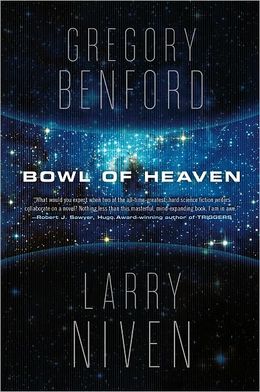
Bowl_of_heavenIt’s almost always a mistake to represent alien consciousness in science fiction. Aliens, if we ever encounter them, are likely to be so alien that we can’t or won’t understand them—not at first, and conceivably not ever. The bigger problem with representing alien consciousness in science fiction comes from the language that is doing the representing.

Language, as pretty much everyone who has ever learned a foreign one knows, shapes what and how you think, as does the culture that carried by that language. Languages, though translatable, have different flavors. And the aliens in Bowl of Heaven sound like the humans, who sound like each other, and all of whom sound like Americans. They can’t do much better than call the human-built spacecraft “boldly simple.” These are aliens who, even more than most aliens in fiction, feel like humans dressed in exotic garb and wielding exotic technology.

Arthur C. Clarke wisely avoided this problem in Rendezvous with Rama, which is one reason the first one is so good and the latter ones less so.

It’s very hard to create fully differentiated human characters, each with a style all their own. Few accomplish this, which is why most writers choose a single first-person narrator, or a limited third-person narrator. One accomplishment in a novel like Anita Shreve’s Testimony is that the characters don’t sound alike, as they do in, say, Tom Perrotta’s Election, or many of Elmore Leonard’s novels. Hell, the style of, say, Remains of the Day, Jonathan Strange & Mr Norrell, and Atonement are as different as they are because each of their authors is trying to achieve (and achieving) a very specific effect and way of thinking. Niven and Benford aren’t.

I got into Bowl of Heaven because Peter Watts blurbed it and wrote about it in Circling the Bowl. I should’ve paid more heed to the way he described it: “Bowl of Heaven resonates with me, not so much as a work of fiction but as an artefact of the publishing industry.” I can see why it wouldn’t resonate with him “much as a work of fiction,” because by that standard it doesn’t succeed well. I should’ve read his post more carefully and noticed that sentence, though he also notes that “Bowl of Heaven seems to have done just fine with the advance reviewers.”

_MG_9690-1Watts looked at Amazon reviews for the book and noticed that “27% of the reviews complain about sloppy editing and continuity errors.” I’m going to complain about sloppy editing too: a lot of my pages looked like the one on the right, in which extraneous words and sentences are crossed out. This is the sort of thing nearly all authors do on their own (many pages of my own work are filled with cross-outs), and that line and copy editors do too. Generally I ignore extraneous sentences in novels, because everyone commits a couple. But when page after page looks like the one depicted to the right, I get annoyed.

Anyway, Watts’s recommendation kept me reading despite editing problems, but I quit reading when the English-speaking aliens appeared, with all of their Capitalized Proper Nouns (“For Memor was not amid the fevered straits of the Change;” there are also mentions of “the Dancing,” “the Watchers,” and capital-A “Astronomers”). There’s better work out there: before Bowl of Heaven, make sure you’ve read Blindsight and Starfish first: those are Watts novels, and I don’t remember where I first learned about them, and both are hard to read at their beginnings but dazzling by their ends as pieces click into place.

To return to the language issue, novels like Bowl of Heaven tend to give SF a bad rep among lit-fic types, who are obsessively attentive to language and how people use language in very particular way. As I noted above, these authors aren’t attentive to those issues, and they also seem to have a confused point of view—and not one that’s intentionally confused for artistic effect, like Virginia Woolf. The effect feels like a mess: it seems like the novel is following Cliff from a first-person limited view, but then it slips into a paragraph or two with only things that Redwing, or other characters, could know. It’s the sort of thing that undergrads learn about in creative writing classes.

Maybe there’s an artistic purpose here, but if so I’m not seeing it. If not, it’s just a mistake, and seeing novels with many simple mistakes praised by many eminent science fiction writers will tend to subtly and unfairly devalue the genre as a whole.

The Generals — Tom Ricks

The Generals has one of the best qualities a general nonfiction book can have: it’s about a specific topic that it covers well, but its lessons and ideas also transcend its topic and apply to many others. Let me explain. Take this section, about General Patton:*

Even now, more than six decades after his death, Patton remains one of our most remarkable generals. ‘You have no balance at all,’ Marshall’s wife once scolded the young Patton, correctly, years before World War II. Maj. Gen. Ernest Harmon, one of his peers, wrote that he was ‘strange, brilliant, moody.’ The blustery Patton behaved in ways that would have gotten other officers relieved, but he was kept on because he was seen, accurately, as a man of unusual flaws and exceptional strengths. Marshall concluded that Patton was both a buffoon and a natural and skillful fighter.

Knowledge, skill, and expertise in one domain don’t necessarily transfer to other domains. A brilliant physicist may be a terrible marriage therapist, and vice-versa. Someone who is a “buffoon” might also have a compensating skill that makes up for their possible deficits. Paul Graham implicitly writes about this in Is It Worth Being Wise?:

‘wise’ means one has a high average outcome across all situations, and ‘smart’ means one does spectacularly well in a few. [. . .] The distinction is similar to the rule that one should judge talent at its best and character at its worst. Except you judge intelligence at its best, and wisdom by its average. That’s how the two are related: they’re the two different senses in which the same curve can be high.

A lot of people seem to have trade-offs between peaks and averages. Steve Jobs comes to mind: Walter Isaacson’s biography is rife with examples of Jobs being wrong, cruel, and occasionally outright stupid. His lows were low. But he got big, important stuff right—and not just right, but very, spectacularly right. He found (or made) the right environment for his skills. It’s almost impossible to imagine Jobs being a good employee at, say, Wal-Mart, or any large company that values homogeneity over creativity.

It’s obviously possible to have high averages and high peaks, but that doesn’t appear to be common. Really spectacular peaks often come in unusual packages. Those unusual packages are often easy to dismiss by someone not paying attention.

Unfortunately, as Ricks points out, America since the Korean War hasn’t judged its generals by their peaks or their averages: in fact, we haven’t judged generals on their competence much at all. That’s a tremendous, underappreciated problem. In Ricks’ description, the generals cut from the Marshall style were primarily “team players” who needed to work effectively with others and defer to the group. That’s not necessarily a bad thing; as Ricks says:

Perhaps those who rose highest in World War II were organization men. But for the most part they were members of a successful organization, with the failures among them weeded out instead of coddled and covered up. That would not be in the case in our subsequent wars, in which it would be more difficult to know what victory looked like or even whether it was achievable.

Different time periods reward different forms of industrial organization. If World War II rewarded “organization men,” many of today’s organizations reward people who figure out the weaknesses of large organizations, and then offer alternatives. But that can’t happen in the military, where the closest analogue to startups might be defense contractors and private, Blackwater-style armies. Those, however, have their own problems.

There’s also an analogy to teaching: almost no public school teacher is fired, ever, for bad teaching. Not being able to fire transparently terrible teachers is an impediment to getting better teachers, as almost anyone who’s ever been in a public school knows.

Organizations also need to focus on making sure that they’re focused on their major purpose, not on primarily serving the interests of the people inside them:

Trying to be fair to officers can be lethal to the soldiers they lead on the battlefield. The Army was using the Korean War to give the staff officers of the earlier war ‘their chance’ to command in combat—with disastrous results. Well before Chosin, the Army had recognized that it had a problem with inexperienced combat leadership in the war.

The problem is “inexperienced combat leadership,” but the solutions became worse in some respects than the problem itself. Fairness to one group can mean extreme unfairness to others, who often have much less of a voice. No one speaks for the enlisted men who are led by incompetent generals. (No one speaks for those led by an incompetent president, either, but that’s a separate issue related to larger American society.)

Misaligning incentives creates a deeper sense of rot; Ricks says that generals, by the post-Korean-War era,

were acting less like stewards of their profession, answerable to the public, and more like keepers of a closed guild, answerable mainly to each other. Becoming a general was now akin to winning a tenured professorship, liable to be removed not for professional failure but only for embarrassing one’s institution with moral lapses.

Notice what this says about Ricks’s view of the university: by comparing one system that advances mediocrity with tenure, he implies that tenure advances mediocrity. He doesn’t go on to explain why he uses the metaphor, because he assumes that his readers already believe as much. But tenured professors aren’t putting their students in life-or-death situations, and students can choose to pick a different department or university. Service members can’t. During World War II, as Ricks says, the road to victory and home led through Berlin and Tokyo. In recent wars, the road to victory has been murkier, the politico-military establishment mostly hasn’t selected generals adept at operating in the murk. The consequences are clear.

The Generals is too detailed for people who aren’t deeply interested in military affairs and history. It probably isn’t detailed enough for those who are immersed.

But it’s also the best intellectual explanation of why one should be wary of enlisting in today’s American military: you might get killed by someone incompetent but unaccountable on the basis of performance. Contemporary generals who lose wars and cost soldiers their lives are fêted. They “retire” to lucrative consulting gigs with defense contractors and lobbying firms. The soldiers are disabled or dead. To me that argues against becoming a soldier or junior officer. In most businesses, if you think your boss is an asshat, you can quit and start a rival firm. In the military, obeying is the only option, and no one is making sure that your boss is actually good at his job.

EDIT: B.J. Khalifah has an interesting letter in The Atlantic:

Thomas Ricks overlooked something important. Sadly, nobody becomes a general (or equivalent) in the military until they have served for many years. Most colonels are 50 by the time they get promoted. Many younger officers have experience and drive; as a group, they adapt well. Older officers are more cautious, members of the “cover your ass and do not make waves” category. They know how to manipulate the good-old-boy game. The service should be, but is not, a strict meritocracy. In effect, it follows union-style rules of seniority and time in grade. From second lieutenant to first lieutenant to captain is automatic. Some lousy officers have made it past captain to become major by being on court-martial or combat duty when they are promoted. The rules are not negotiable.

This contrasts hugely with startup and good corporate cultures, which judge people almost purely on merit. Successful startups have famously been founded by 18 year olds. Even law firm partners can be promoted within as little of five years of hiring, while associates frustrated by a firm’s practices can start their own. The military apparently doesn’t do that, and I haven’t seen any evidence that 50-year-old generals will necessarily be better than 26-year-old (hypothetical) generals. Certainly among startups this isn’t true.

The comparison isn’t perfect—markets reward innovators for making things people want, and the military doesn’t have a clear feedback loop. But at the moment almost no one is even discussing the issue, or making the comparison.


* The movie Patton is also remarkably good, especially the speech at the beginning. Patton doesn’t have the American character down correctly—Americans don’t love the sting of battle unless we’re provoked—but the speech demonstrates a lot about the man doing the speaking.

The bit about loving a winner and not tolerating a loser is also fascinating in light of The Generals: we’ve tolerated a lot of losers, like Donald Rumsfeld and Tommy Franks, and sacked winners like Eric Shinseki.

Dare Me — Megan Abbott

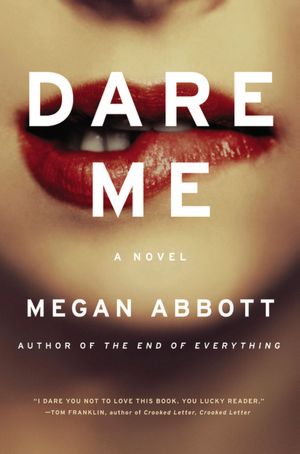
There’s something compelling about Dare Me that shouldn’t be compelling: stripped of its narrative voice, Dare Me is about teenage cheerleaders and their coach, who may as well be a teenager, competing to be the neighborhood’s queen bee. It’s unfair to summarize a novel like this—Lord of the Ring could be reduced to, “Midget chucks ring into mountain; local vagrant crowned king”—but it’s also useful, because interesting novels usually have characters who are trying to learn something about the world and who have larger ambitions to do things that will have more than just local effects.

Addy narrates the novel in an insistent present-tense voice that offers a sense of immediacy. Her primary aspiration, however, is to maintain her status on the cheer squad, chiefly as the “lieutenant” of the captain, Beth, who is the chief bad girl and doer of drugs, men, and deeds that Addy might want to do but can’t bring herself to. Beth, however, is stripped of her captaincy by the new Coach, who demands more from the girls than their previous coach:

Back then, we could hardly care, our moves so sloppy and weak. We’d just streak ourselves with glitter and straddle jump and shake our asses to Kanye. Everybody loved us. They knew we were sexy beyotches. It was enough.

But part of life is the “it” not being enough: skills count, more than merely being admired. Plus, contrary to what Addy thinks, it’s unlikely that “Everybody loved us.” The cheerleaders in Dare Me love themselves much more than any outsiders could possibly love them. And the cheerleaders never quite ask if they should want to be anything more than “sexy beyotches.” They certainly have a strong sense of sexuality, although sexuality in the novel is primarily used to express dominance among the various girls (and their Coach), rather than as an end in itself. The novel’s prime source of antagonism is between Beth and the new Coach, whom Beth describes this way: “Colette French [. . . ] Sounds like a porn star, a classy one who won’t do anal.” Beth tells us more about herself than she does about Coach: that she thinks about porn stars, that she has a dirty yet moralistic streak at the same time.

Most of the girls do. They want what most of us want, but that doesn’t stop them from castigating others. None of them recognize their own hypocrisy, and they probably wouldn’t care if someone did point that hypocrisy out to them. At one moment, Addy says, “Beth and I made loud comments across the gym about how Brinnie’s slutty sister got caught making out with the assistant custodian until Brinnie ran off to the far showers to cry.”

Women really do slut-shame each other much more vigorously than men slut-shame women. Addy doesn’t notice that, however. She only notices how she can use what she perceives to be raw power: the “loud comments” and the derogatory adjective, “slutty,” forming without much thought about what’s underneath her ideas. Despite what the two say about Brinnie’s sister, Addy also reports that “In eighth grade, no, summer after, at a beer party, Beth put her scornful little-girl mouth on Ben Trammel, you know where. I remember the sight.” Why is Beth’s mouth scornful? We don’t find out. But she says a moment later that “We don’t judge,” when the page prior Beth and Addy were judging Brinnie’s sister.

Dare Me, however, isn’t about consistency. It’s about inconsistency, expressed through power and dominance. Beth versus Coach, but sexuality is the weapon—not fists. The girls use it against each other, although I won’t describe how here. The only character who apparently isn’t competing is Addy. She doesn’t really get much in the novel, and she gives a weak excuse about why: “There’s not a lot to interest me at Sutton Grove High.” That’s another way of saying that being alone and being the cheer squad’s resident observer is more valuable to her than the experience of a “real” relationship. About Jordy, a boy at the school, the best Addy can summon is that “He looks like he’s thinking things [. . .] Like maybe he actually thinks about things.” Does that mean Addy and her friends don’t? And, if so, perhaps we again shouldn’t be reading about them. She does get with him, after a fashion, and his giving in disappoints Addy: “His wanting, so easily won—well, it bores me.” Everything does. The boredom she feels at his being “so easily won” is how guys end up affecting cruel uninterest in order to win women. But that’s another thing Addy doesn’t know. Her lack of sophistication is realistic but grating; there are answers to the questions she doesn’t know to ask.

She does know, however, that a military recruiter is aloof and thus desirable. He has a nickname that denotes his position: “Sarge, though, is above all this. All the girls are hurling themselves at him, but he never blinks, not once. He smiles, but his smile doesn’t really seem like a smile but the kind of thing you do with your mouth when you know everyone is watching.” He’s smiling that way because he has to, and he knows that the penalties for indulging in “the girls” who “are hurling themselves at him” is probably worse than the pleasure that he might gain from indulging them. There’s also a link between the two: by apparently standing above the girls making offers, he’s making himself more alluring. He contrasts with the “easily won” Jordy. The harder the prize, the sweeter the accomplishment, at least in Addy’s eyes, and hence the challenge of being a better cheerleader is the challenge of doing harder stunts, of doing more than “shak[ing] our asses to Kanye.”

The physicality of motion counts for a lot, and so does the wanting eyes Addy imagines her body inspiring. Addy thinks, “This is my body, and I can make it do things. I can make it spin, flip, fly.” She can also make it the object of male adoration, which, regardless of what else cheerleading might do, does that first. Addy also doesn’t perceive the way the boredom of her own life is partially of her own making, as when she says

Ages fourteen to eighteen, a girl needs something to kill all that time, that endless itchy waiting, every hour, every day for something—anything—to begin.
‘There’s something dangerous about the boredom of teenage girls.’

This is given like a law of the universe, an ahistorical fact that must be true of all times and places, like respiration. It isn’t. For all I know, in many hunter-gatherer tribes fourteen year olds were often mothers, or members of adult societies: their life had already begun. Addy is really commenting on contemporary Western society, even if she doesn’t have the language to realize it.

Has she read Paul Graham? Boredom is endemic to the high school experience. But boredom itself is dangerous to the mind, because it’s a waste of the planet’s most valuable resource: minds. I don’t need to rely on vague assertions like “There’s something dangerous;” I know what’s dangerous, in part because I was reading enough at the time to eventually learn how to use words to express complex ideas. Addy hasn’t gotten there yet.

That should make her an uncompelling narrator, but she isn’t. She’s naive in some ways, which shouldn’t be a surprise given her age, but she also observes the bad-girl behavior around her, and that bad-girl behavior is underappreciated in much of the larger society. Addy can also see what boys see, at times, as when she describes her teammate: “Emily whose balloony breasts and hip-cascades are the joy of all the boys, their ga-ga throats stretched to follow her gait, to stretch around corridor corners just to see that cheer skirt dance.” Addy’s awareness is a form of power, but it’s a limited form of power, and it’s counteracted by the limits that she accepts. The “endless itchy waiting” is imposed in part because we, collectively, don’t want to believe in the bad girl and want to see fourteen to eighteen year olds of both sexes as children, even when they’re clearly not. So we, collectively, take their autonomy away and are surprised when they’re unhappy. To return to Graham, in “Why Nerds Are Unpopular:”

What bothers me is not that the kids are kept in prisons, but that (a) they aren’t told about it, and (b) the prisons are run mostly by the inmates. Kids are sent off to spend six years memorizing meaningless facts in a world ruled by a caste of giants who run after an oblong brown ball, as if this were the most natural thing in the world. And if they balk at this surreal cocktail, they’re called misfits.

Addy doesn’t even bother with the “memorizing meaningless facts,” but she does accept high school as “the most natural thing in the world.” In her own way, she’s a misfit by believing in “this surreal cocktail,” and believing that the world of cheer is the only one that counts.

The only real hope of the society is that the “teenage girls” who Addy represents don’t realize the power of their bodies over men. Addy realizes it. Beth does too. They find cheer to be ridiculously helpful: Addy says that “It made things matter. It put a spine into my spineless life and that spine spread, into backbone, ribs, collarbone, neck held high.” If cheer is enough to make things matter, she must have a dull life—but she’s already established that she does.

She says that “Coach gave it all to us.” Meaning, in other words. And that “She was the one who showed me all the dark wonders of life, the real life, the life I’d only seen flickering from the corner of my eye.” But whose fault is it that Addy hasn’t seen “real life” before? And what is this “real life” that Addy keeps mentioning? It sounds like something she herself has constructed.

The questioning of what is “real,” however, reappears again and again in the novel. Addy says, “Could [Coach] see past all of that to something else, something quivering and real, something poised to be transformed, turned out, made?” Addy’s repeated use of “real” makes her seem convinced of her own unreality (“By Saturday practice [. . .] we’re already—some of us—starting to look forward to that pain, which feels like something real”). If it takes pain to be “real,” something in your life might be amiss. When the girls learn to do a pyramid, Addy says that “the momentum makes you realize that you are part of something. Something real.” Was she not part of something before? Does she have any theory or coherence beyond her theory of reality? She doesn’t, not really, and it takes death and rivalry to make something real.

Addy could say no to cheer and yes to Python, or sculpture, or the guitar, buts he doesn’t. She isn’t really interested in being real, in doing the things that other people might value. The only real value she, and Beth, offer to the world is sexuality, but they don’t even ask, really ask, what their sexuality means. At one point Beth says that “I’m not even interested in our lives.” This, however, raises an important point: Why should readers be? Addy as a narrator is one answer. The fact that she constructs a story out of something other than who gets to take the most popular boy to Prom is another. Her moments of inchoate realization is a third:

We’re all the same under our skin, aren’t we? We’re all wanting things we don’t understand. Things we can’t even name. The yearning so deep, like pinions over our hearts.

She should learn the names, and the things that most people most desire are obvious, money, sex, and social status, in some tangled, interdependent triangle. For a smaller but still significant number of people, intellectual curiosity is as or more important as those first three. Those things can be understood, especially by people who want to understand them. Addy doesn’t, or doesn’t have the intellectual context she needs to understand them. As someone very happy to be out of high school, I see a lot of the things that Addy doesn’t, though she should: she’s narrating the story from an unnamed future point, even as she drops into the present tense.

One problem with Addy or her narration is that we don’t know what any of these characters are like, other than mean and, in a petty, squabbling fashion, stupid. But Addy’s voice carries the novel, along with her fascination with Beth, which in Addy’s view is like staring at a serpent: fascinating, even as you hope it doesn’t bite. What do Addy and Beth do when they’re not cheerleading? What is Beth’s favorite color? If she had to answer the question, “What do you want to do when you grow up,” what might she say? Is the prospect of college or a technical school anything more than a distant glimmer in their eyes, along with a source of older boys?

To the extent Beth and Addy have character beyond their sexuality and social status, we don’t see it. If the slice of character we see is their primary character, then they’re not very nice people, and, perhaps worse, they’re not very interesting people. Beth is willing to violate taboo by sleeping with older men, which speaks well of her low opinion of convention, but is she willing to extend taboo violation to, say, playing the corporate game as hard as the cheer game, or cutting across gender stereotype to build web apps for bad girls? The interesting thing is not just her as a bad girl, but what she can do with being a bad girl.

Perhaps that kind of question is for the sequel. Dare Me deals in a surprisingly plausible murder plot, with Addy and the reader the last to know what all the other characters seem to. The frustrations of Addy and Beth as characters doesn’t prevent the book from being compelling, in part because the girls’ blindness to anything important seems characteristic of their age, time, and generation. That should be scary.

Coach’s husband, Matt French

There are men in the novel: the aforementioned Sarge, is one. The other major male character, Matt French, is Coach’s husband. He misallocates resources. Coach says, “Oh, you know him, he’s working. He never, ever stops.” On the next page: “He is always on his cell phone and he always looks tired.” Addy says, “He works very hard, and he’s not interesting at all.” This misallocation of time and energy leads his wife to seek sexual solace elsewhere, as it so often does, and Matt apparently doesn’t realize that she, like most women, need tending. If he won’t keep the garden, someone else will.

Predictably, someone else does. When the girls catch Coach in the act with another man, she explains that “what [. . .] I have is a real thing [. . .] A true thing.” By that standard, what she has with Matt must not be a true thing. It must not count. She excuses herself by saying, “I never thought I’d feel like this,” as if the invocation of feelings trumps any and every other consideration. The girls don’t challenge her. They probably believe the same thing.

But the affair is a commentary on Matt’s folly. He should cut work and increase sex. We never learn why he doesn’t, or anything about his job. He’s a pathetic ghost of a man who enables the fake world of high school, which his wife joins. Addy and Beth show little interest in him, while they show a lot of interest in Will. The only exception comes at a moment when Addy tries to imagine what Matt is like:

Poor Matt [French], in some airport or office tower in Georgia, some conference room someplace where men like Matt French go to do whatever it is they do, which is not interesting to any of us, but maybe it would be if we knew. Though I doubt it.

Except sometimes I think of him, and the soulful clutter in his eyes, which is not like Will’s eyes because Will’s eyes always seemed about Will. And Matt French’s seem only about Coach.

That he is only about Coach, and not about anything else, makes him seem weak and replaceable to her; still, Addy’s analysis appears to be wrong because Matt is really about work, at least as measured by time spent doing an activity. We don’t get enough information about Matt French’s thought process to understand why he ignores his wife in favor of constant work that appears to weaken, not strengthen, his relationship, and leave his wife bored and frustrated. It should be obvious to anyone who has observed the people around them or been in serious relationships that bored, sexually frustrated people will find ways to get their needs met.

To return to the point I raised in the first paragraph, the problem with realistic but limited perspective Beth, Addy, and Coach have is with the scope of their vision and concerns. Adam Gopnik’s essay “The Unreal Thing” encapsulates some of their problems:

In a long article on the first “Matrix” film, the Princeton philosopher James Pryor posed the question “What’s so bad about living in the Matrix?,” and, after sorting through some possible answers, he concluded that the real problem probably has to do with freedom, or the lack of it. “If your ambitions in the Matrix are relatively small-scale, like opening a restaurant or becoming a famous actor, then you may very well be able to achieve them,” Pryor says. “But if your ambitions are larger—e.g., introducing some long-term social change—then whatever progress you make toward that goal will be wiped out when the simulation gets reset. . . . One thing we place a lot of value on is being in charge of our own lives, not being someone else’s slave or plaything. We want to be politically free.”

For Beth, Addy, and Coach, political freedom isn’t important. Competing with each other is the only important thing. Their ambitions are so “small-scale” that they don’t matter. Their achievements will be “wiped out” when they leave high school, which is its own Matrix-like simulation, and the smarter, more aware residents know it. So do adults who remember what high school was like: Paul Graham says in “Lies We Tell Kids:”

By 15 I was convinced the world was corrupt from end to end. That’s why movies like The Matrix have such resonance. Every kid grows up in a fake world. In a way it would be easier if the forces behind it were as clearly differentiated as a bunch of evil machines, and one could make a clean break just by taking a pill.

I don’t think it’s a coincidence that he uses The Matrix as an analogue for high school. Both high school and The Matrix put a natural cap on ambition, which the better high school students will challenge. Beth, Addy, and Coach don’t challenge that system; Addy even thinks that it’s the only thing that matters: “God it must be terrible not to be on cheer. How would you know what to do?” You wouldn’t know what to do, but pretty much anything you do in lieu of cheer, aside from watching T.V., vegging out, or playing on Facebook is likely to be more substantive than cheer. But Addy is so firmly plugged in that she doesn’t recognize her “fake world,” to use Graham’s term, and maybe she can’t. Maybe, if she were a different sort of person, someone would point it out to her, like the teacher in The Perks of Being a Wallflower implicitly does. Cheer for Addy is a kind of Matrix-within-a-Matrix, a way of further shrinking her social and competitive world. Addy wants to give up the kind of political freedom Gopnik and Pryor are describing. Abrogating freedom makes her seem like a fool, or a slave to the conformity imposed most obviously by Beth; perhaps this is why Addy wants to be Beth’s lieutenant, and why she doesn’t aspire to be the top girl.

Not wanting to be the top girl makes sense. But wanting to be in a social milieu where all that matters is being the top girl makes less sense; it’s like aspiring to slavery, or perpetually wearing glasses with a red tint, such that you can’t experience the full richness of the world. Addy doesn’t realize that she’s wearing those glasses, and that, finally, makes her seem sad. She’s missing so much, and she doesn’t even realize it.
Back to Blood — Tom Wolfe

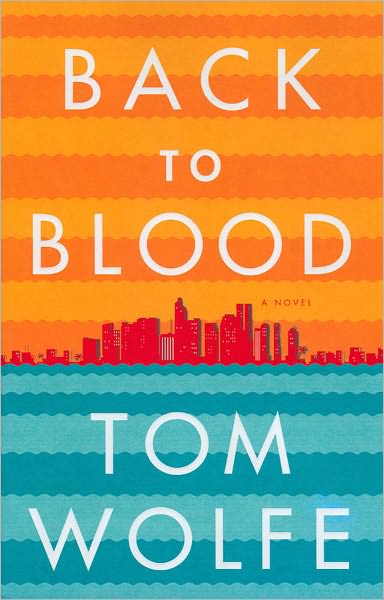
The real problem with Back to Blood is that you’ve already read it, most notably in The Bonfire of the Vanities and A Man in Full—and if you haven’t read those, you should start with them. Back to Blood has the same assortment of obsessions and interests: there is the child with an unusual name and an elite pedigree: “Last week he totally forgot to call the dean, the one with the rehabilitated harelip, at their son Fiver’s boarding school, Hotchkiss [. . .]” But does anyone still care about elite boarding schools? Does anyone still care about the Miami Herald other than the people who work there? The father of Fiver is the editor, and he thinks it is “one of the half-dozen-or-so most important newspapers in the United States” in an era when the era of newspapers has passed.

The Miami nightclub is named “Balzac’s,” after another Wolfe preoccupations. There is a prurient mention of girls who “were wearing denim shorts with the belt lines down perilously close to the mons veneris and the pants legs cut off up to. . . here . . .” Has anyone in the U.S. ever used the term mons veneris, outside of Tom Wolfe and medical schools? I think it appeared in I am Charlotte Simmons a couple of times too, and there it was even more improbable. And the word loins! In this case, “juicy little loins and perfect little cupcake bottoms.” I’ve heard loins described as loins before, but only by Tom Wolfe and the writers of the Bible. Someone born more recently than 1931 would use “pussy” if they wanted to be crude, “va jay jay” if they wanted to be hipster, or “vagina” if they wanted clinical directness. But not loins. No one but Tom Wolfe would use loins, and use it again and again.

Sometimes writers working out variations on ideas that iterate subtly book by book can work—Elmore Leonard is a good example. Others just feel like they’re repeating themselves. When I am Charlotte Simmons came out, I was in college and skipped class to read it, only to feel an increasing sense of disappointment with the wrongness of many scenes—like Charlotte feeling nervous about the cost of long distance calls. That was an anachronism. Most college students had free long distance by 2004. I would’ve let anyone who asked use my phone to call home. Or, for another example of reportorial wrongness, Charlotte gets a salvaged, pieced-together computer, like a salvaged car. By 2004, however, older but working computers were $25 on Craigslist, or outright given away by schools. These two examples are salient, but there were others, just as I am Charlotte Simmons repeated words, phrases, and ideas from Wolfe’s earlier books. It, and Back to Blood, repeatedly describe moments of cowardly prurience, with men likes wolves and women who didn’t want it or didn’t want to want it and submitted to it only reluctantly, like a female character from the 19th century and not at all like many of the contemporary women I know.

The period details in Back to Blood are wrong. Today, anyone cool would be driving a Tesla Roadster, or Fisker Karma, not a Ferrari 403; Ferraris might’ve been cool twenty years ago, but technology and culture have moved on. Then there’s the simply and wildly improbable: a French professor named Lantier thinks of his daughter that she wasn’t ready for “snobbery” because “She was at the age, twenty-one, when a girl’s heart is filled to the brim with charity and love for the little people.” Someone exposed to live students every semester is unlikely to think of their hearts as “filled to the brim with charity and love” for much of anything, except perhaps alcohol, condoms, iPhones, verbing nouns, and obsessive Facebooking. Not that there’s anything wrong with those things, but familiarity is a great slayer of illusions like Lantier’s belief about the hearts of most 21-year-old girls.

Back to Blood isn’t a bad book, but it has the same but lesser strengths of the earlier novels, with the same but exaggerated weaknesses of them. We’re told, not shown, that “Mac was an exemplar of the genus WASP in a moral and cultural sense,” without knowing why, if at all, that’s important. We’re told a lot of things, most of them not especially new if we’re familiar with the Wolfe oeuvre.

There are clever moments, as when Magdalena, in a fight with her Spanish-speaking mother (or, in Wolfe-land, Mother), resorts “to the E-bomb: English.” It’s a moment of geriatric cruelty, since “Her mother had no idea what colloquially meant. Magdalena didn’t, either, until not all that many nights ago when Norman used it and explained it to her. Her mother might know hang and possibly even slang, but the hang of slang no doubt baffled her, and the expression clueless was guaranteed to make her look the way she did right now, which is to say, clueless.” It’s clever, and the kind of cleverness that makes the scene fresh and unusual. It’s also the kind of cleverness missing in repeated references to the mons verneris, or to loins, or to high-end private schools.

Wolfe also gets and has gotten for decades the weirdness and power of modern media; its spotlight is restless yet powerful, and it plays a tremendous role in Bonfire. In Back to Blood, Nestor Camacho, a Miami cop, rescues a refugee from the mast of a ship and is recorded doing it; consequently, he becomes momentarily famous, such that: “Even now, at the midnight hour, the sun shone ’round about him.” The analogizing of fame to light seems obvious, even necessary, and although I don’t want to probe its deeper properties here I like how Wolfe avoids the spotlight metaphor, much as I didn’t a few sentences ago. Wolfe uses metaphor in an almost 19th Century fashion, usually effectively.

He gets the way civic booster types think of the arts not as a thing in and of themselves, but as a checkbox; an editor at the Miami Herald thinks that “Urban planners all over the country were abuzz with this fuzzy idea that that every ‘world-class’ city—world class was another au courant term—must have a world class cultural destination. Cultural referred to the arts. . . in the form of a world-class art museum” {Wolfe “Blood”@111}. He’s right, of course, but right in a generic way, like people are right about love being like a rose. If you’ve read anything about urban planning, or cities (and I have), you won’t be surprised at the editor’s knowledge, which he probably picked up in the same places I did, and which says very little about him as a character, exception that he, like so many Wolfe characters, is an information and status receptacle more than he is a person with his own needs and desires.

The complaint expressed throughout this post is similar to but a bit different than James Woods’, which concerns how Wolfe’s characters tend to speak in similar or identical registers, despite coming from wildly different backgrounds. That isn’t necessarily a weakness, but the verisimilitude of the characters must be maintained in novels that portray such startlingly different people in a similar register; that’s what Bonfire of the Vanities does and what Back to Blood doesn’t, quite. The earlier novel also doesn’t feel reported even if it was reported; the latter does, in the same way I am Charlotte Simmons misses the college milieu in a thousand subtle ways. If you swing, it doesn’t matter whether you miss the ball by a millimeter or a meter. The scrim of realism is pierced and the novel doesn’t quite work.

Wood also says that “Wolfe isn’t interested in ordinary life. Ordinary life is complex, contradictory, prismatic. Wolfe’s characters are never contradictory, because they have only one big emotion, and it is lust—for sex, money, power, status.” But this isn’t quite true: Wolfe is interested in ordinary life when it’s touched by big events, or ordinary life when its inhabitants have a powerful yearning for something other than ordinary life. That yearning, that drive, can be fascinating. Plus, there’s nothing wrong with writing about extraordinary life, which can be as fascinating, “complex, contradictory, prismatic.” Wood obviously isn’t making this argument, and I doubt he would make it in the kind of caricature I’m making it here, but it’s easy to draw this kind of false lesson from the Back to Blood review. Almost every Wood review is a momentary master class in the novel as a genre, which is why so many writers and would-be writers attend so carefully to them, and why it’s worth appending this brief commentary to a review that in some ways is more useful and interesting than the impressively hyped novel being discussed.

Back to Blood is drawing on capital built up from Wolfe’s earlier novels, and overall it leaves a sense of “Fool me once, shame on you; fool me twice, shame on me.” If another Wolfe novel appears, I don’t think I’m likely to be fooled again. There are better novels about the state of America—Gillian Flynn’s Gone Girl is one—even if they don’t announce themselves as tomes about the state of America. Given how the voices of Back to Blood don’t quite work and the book-report function doesn’t quite work, there are probably better uses of one’s reading time.