Bullshit politics in literary criticism: an example from Deceit, Desire, and the Novel

I’m reading Rene Girard’s great book Deceit, Desire, and the Novel (1961) and came to this:

Dostoyevsky [was] convinced [. . .] that Russian forms of experience were in advance of those in the West. Russia has passed, without any transitional period, from traditional and feudal structures to the most modern society. She has not known any bourgeois interregnum. Stendhal and Proust are the novelists of this interregnum. They occupy the upper regions of internal mediation, while Dostoyevsky occupies its lowest {Girard “Deceit”@44}.

By 1961, it was pretty damn obvious that Stalin had murdered millions of his own citizens in the 1920s and 1930s. It was pretty damn obvious that Russia was a totalitarian country, which I don’t really buy as a form of “the most modern society.” The political reality is simpler: Russian hasn’t really passed “from traditional and feudal structures.” It’s still a dictatorship, only this time it’s softer: Vladimir Putin doesn’t rule with an iron fist and direct gulags, but by co-opting putatively democratic institutions and controlling TV stations. Except for a period in the 1990s and perhaps the early 2000s, before Putin had completely solidified control, Russia was something other an autocracy or something close to it.

So a sentence like “Russia has passed, without any transitional period, from traditional and feudal structures to the most modern society” is about as wrong as one can get outside of the hard sciences, if a phrase like “most modern society” is to have any meaning at all. Given the choice between Russia and countries with “bourgeois interregnums” that manage not to murder their citizens, I’ll choose the latter any time. Most of the analysis in Deceit, Desire, and the Novel is so good that I pass over the occasional gaffe like the one above, but it’s symptomatic of where literary criticism goes wrong, which most often happens when it touches politics or economics in a naive or uninformed way.

If you’re interested in this sort of criticism, read Alan Sokal and Jean Bricmont’s Fashionable Nonsense: Postmodern Intellectuals’ Abuse of Science.

Edit: On the subject of Russia’s slide into autocracy, see also Russia’s Economy: Putin and the KGB State.

Sexting and society: How do writers respond?

In a post on the relative quality of fiction and nonfiction, I mentioned that fiction should be affected by how society and social life changes. That doesn’t mean writers should read the news de jour and immediately copy plot points, but it does mean paying attention to what’s different in contemporary attitudes and expression. I got to thinking about “sexting,” an unfortunate but useful portmanteau, because it’s an example of a widespread, relatively fast cultural change enabled by technology. (Over a somewhat longer term, “From shame to game in one hundred years: An economic model of the rise in premarital sex and its de-stigmatisation” describes “a revolution in sexual behaviour,” which may explain why a lot of contemporary students find a lot of nineteenth century literature dealing with sexual mores to be tedious.)

Laws that cover sexting haven’t really caught up with what’s happening on the ground. Penelope Trunk wrote a an article called The Joys of Adult Sexting, in which she does it and thinks:

And what will his friends think of me? Probably nothing. Because they have women sending nude photos of themselves. It’s not that big a deal. You know how I know? Because the state of Vermont, (and other states as well) is trying to pass a law that decriminalizes sending nude photos of oneself if you are underage. That’s right: For years, even though kids were sending nude photos of themselves to someone they wanted to show it to, the act was illegal—an act of trafficking in child pornography.

But sending nude photos is so common today that lawmakers are forced to treat it as a mainstream courting ritual and legalize it for all ages.

Sending a naked photo of yourself is an emotionally intimate act because of the implied trust you have in the recipient. When you act in a trusting way—like trusting the recipient of the photo to handle it with care and respect—you benefit because being a generally trusting person is an emotionally sound thing to do; people who are trusting are better judges of character.

Trunk’s last paragraph explains why, despite all the PSAs and education and whatever in the world, people are going to keep doing it: because it shows trust, and we want significant others to prove their trust and we want to show significant others we trust them. You can already imagine the dialogue in a novel: “Why won’t you send me one? Don’t you trust me?” If the answer is yes, send them; if the answer is no, then why bother continuing to date? The test isn’t fair, of course, but since when are any tests in love and lust fair?

Over time, as enough kids of legislators and so forth get caught up in sexting scandals and as people who’ve lived with cell phone cameras grow up, I think we’ll see larger change. For now, the gap between laws / customs and reality make a fruitful space for novels, even those that don’t exploit present circumstances well, like Helen Shulman’s This Beautiful Life. Incorporating these kinds of social changes in literature is a challenge and will probably remain so; as I said above, that doesn’t mean novelists should automatically say, “Ah ha! Here’s today’s headlines; I’m going to write a novel based on the latest sex scandal/shark attack/celebrity bullshit,” but novelists need to be aware of what’s going on. I wrote a novel called Asking Alice that got lots of bites from agents but no representation, and the query letter started like this:

Maybe marriage would be like a tumor: something that grows on you with time. At least that’s what Steven Deutsch thinks as he fingers the ring in his pocket, trying to decide whether he should ask Alice Sherman to marry him. Steven is almost thirty, going on twenty, and the future still feels like something that happens to other people. Still, he knows Alice won’t simply agree to be his long-term girlfriend forever.

When Steven flies to Seattle for what should be a routine medical follow up, he brings Alice and hits on a plan: he’ll introduce her to his friends from home and poll them about whether, based on their immediate judgment, he should ask Alice. But the plan goes awry when old lovers resurface, along with the cancer Steven thought he’d beaten, and the simple scheme he hoped would solve his problem does everything but.

Asking Alice is asking questions about changes in dating and marriage; if you write a novel today about the agonies of deciding who to marry with the metaphysical angst such a choice engendered in the nineteenth century, most people would find that absurd and untrue: if you get married to a Casaubon, you divorce him and end up in about the same circumstance as you were six months before you started. But a lot of people still get married or want to get married, and the question is still important even if it can’t drive the plot of a novel very well. It can, however, provide a lot of humor, and that’s what Asking Alice does.

A lot of literature, like a lot of laws, is also based on the premise that women don’t like sex as much as men, don’t or won’t seek it out, and are automatically harmed by it or wanting it. This is a much more tenuous assertion than it used to be, especially as women write directly about sex. A novel liked Anita Shreve’s Testimony, discussed extensively by Caitlin Flanagan here and by me here, engages that idea and finds it somewhat wanting. So does the work of Belle de Jour (now revealed as Dr. Brooke Magnanti), who basically says, “I worked as a hooker for a long time, didn’t mind it, and made a shit ton of money because I made a rational economic decision.” A lot of academic fiction premised on professors having sex with students examines the idea that female students can want/use sex just as much as men; this is how Francine Prose’s Blue Angel works, and Prose is a canny observer of what’s going on and how it connects to the past.

Note that women wrote all these examples, which I don’t think is an accident, since they’re probably less likely to put other women on pedestals than men are. I’ve been reading a lot of sex memoirs / novels written by women (Never the Face; Nine and a Half Weeks; two of Mary Karr’s memoirs, which are good but overrated; Abby Lee (British sex blogger); Elisabeth Eaves’ Bare) in part because I want to write better female characters. After reading a lot of this stuff, I’m even less convinced than I was that there are stereotypically “male” or “female” ways of thinking or writing about the world, but knowledge itself never hurts and I don’t regret the time spent. On a similar note, Janice Radway’s Reading the Romance is totally fascinating, even when Radway tries to explain away retrograde features of romances or how women are often attracted to high-powered, high-status men.

She write in a time before sexting, but I wonder if she’s thought about doing a Young Adult version using similar methodology today. For writers and others, sexting shows that teenagers can make their own decisions as people too, even if those are arguably bad decisions. To me, this is another generational gap issue, and one that will probably close naturally over time. One older agent said on the phone that maybe I needed a younger agent, because her assistant loved Asking Alice but she didn’t want to rep it.

Damn.

I’m old enough to have lived through a couple medium-scale social changes: when I was in high school, people still mostly talked to each other on the phone. In college, people called using cell phones and often communicated via IM. After college, I kept using phones primarily for voice, especially to arrange drinks / quasi-dates, until I realized that most girls have no ability to talk on the phone anymore (as also described Philip Zimbardo and the ever-changing dynamics of sexual politics). As I result, I’d now use text messages if I were arranging drinks and so forth. Around the time I was 23, I realized that even if I did call, women would text back. That doesn’t mean one should race out and change every phone conversation in a novel that features a contemporary 19-year-old to a text conversation (which would be tedious in and of itself; in fiction I write, I tend not to quote texts very often), but it’s the kind of change that I register. Things changed between the time I was 16 and 23.

I’m in the McLuhan, “the medium changes what can be said,” which means that the text is probably changing things in ways not immediately obvious or evident. Sexting is one such way; it lowers the cost of transmission of nude pictures to the extent that you can now do so almost instantly. Laws are predicated on the idea that balding, cigar-chomping, lecherous 40-year-old men will try and coerce 16-year-old girls outside cheer practice, not ubiquitous cell phone cameras. Most parents will instinctively hate the cigar-chomping 40-year-old. They will not hate their own 14-year-old. So you get for all sorts of amusement where laws, putative morals, conventional wisdom, technology, and desire meet. Still, when pragmatics meet parents, expect parental anger / protectiveness to win for the moment but not for all time. Nineteenth and twentieth century American culture is not the only kind out there. As Melvin Konner wrote in The Evolution of Childhood:

Contrary to some claims of cultural historians, anthropologists find that liberal premarital sex mores are not new for a large proportion of the cultures of the ethnological record and that liberal sexual mores and even active sexual lives among adolescents do not necessarily produce pregnancies. In fact, a great many cultures permit or at least tolerate sex play in childhood (Frayser 1994). Children in these cultures do not play ‘doctor’ to satisfy their anatomical curiosity—they play ‘sex.’ They do play ‘house’ as Western children do, but the game often includes pretend-sex, including simulated intercourse. Most children in non-industrial cultures have opportunities to see and hear adult sex, and they mimic and often mock it.

Perhaps our modern aversion to sex among adolescents is in part because of the likelihood of pregnancy, economic factors, and others. Given the slow but real outcry from places like the Economist and elsewhere, this might eventually change. That’s pretty optimistic, however. A lot of social and legal structures merely work “good enough,” and the justice system is certainly one of those: we’ve all heard by now about cases where DNA evidence resulted in exoneration of people accused of murder or rape. So maybe we’re now heading towards a world in which laws about sexting are unfair, especially given current practice, but the laws remain anyway because the law doesn’t have to be optimal: it has to be good enough, and most people over 18 probably don’t care much about it unless it happens to be their son or daughter who gets enmeshed in a legal nightmare for behavior that doesn’t result in tangible harm.

Something like a quarter to a third of American adults have smoked pot, but we still have anti-pot laws. America can easily afford moral hypocrisy, at least for now, and maybe sexting will be something like weed: widely indulged in, a rite of passage, and something not likely to result in arrest unless you happen to be unlucky or in the wrong situation at the wrong time. The force generation the prohibition—that is, parents engaging in daughter-guarding—might be much stronger than the force of individual rights, utilitarianism, or pragmatic observations about the enforcement of laws against victimless crimes that do not result in physical harm.

There’s more of the legal challenges around this in Ars Technica’s article “14-year old child pornographers? Sexting lawsuits get serious,” which should replace “serious” with “ridiculous.” In the case, a 14-year-old girl sent a 14-year-old boy a video of herself masturbating, and then her family sued his. But how does a 14-year-old be guilty of the sexual exploitation of children,” as is claimed by the girl’s family—if a 14 year old can’t consent to consent to this kind of activity, then a 14-year old also can’t have the state of mind necessary to exploit another one. Paradoxes pile up, of the sort described in Regulating Sex: The Politics of Intimacy and Identity, where the writers show how the age of consent has been rising as the age of being tried as an adult has been falling. Somewhere inside that fact, or pair of facts, there’s a novel waiting to be written.

Questions like “What happens when people do things sexually that they’re not supposed to? How does the community respond? How do they respond?” are the stuff novelists feed on. They motivate innumerable plots, ranging from the beginnings of the English novel at Pamela and Clarissa all the way to the present. When Rose and Pinkie are first talking to each other in Brighton Rock, Rose lies about her age: ” ‘I’m seventeen,’ she said defiantly; there was a law which said a man couldn’t go with you before you were seventeen.” Brighton Rock was published in 1938. People have probably been evading age-of-consent laws for as long as there have been such laws, and they will probably continue to do so—whether those laws affect sex or depictions of the body.

Adults have probably been reinforcing prohibitions for as long as they’ve existed. Consider this quote, from the Caitlin Flanagan article about Testimony linked above:

Written by a bona fide grown-up (the author turned 63 last fall), Testimony gives us not just the lurid description of what a teen sex party looks like, but also an exploration of the ways that extremely casual sex can shape and even define an adolescent’s emotional life. One-night stands may be perfectly enjoyable exercises for two consenting adults, but teenagers aren’t adults; in many respects, they are closer to their childhoods than to the adult lives they will eventually lead. Their understanding of affection and friendship, and most of all their innocent belief, so carefully nurtured by parents and teachers, that the world rewards kindness and fairness, that there is always someone in authority to appeal to if you are being treated cruelly or not included in something—all of these forces are very much at play in their minds as they begin their sexual lives.

In Testimony, the sex party occurs at the fictional Avery Academy; Shreve imagines Siena, the girl at the center of the event, as a grifter, eager to exploit her new status as victim so that she can write a killer college essay about it, or perhaps even appear on Oprah. For the most part, the boys are callous and self-serving.

Flanagan has no evidence whatsoever that “teenagers aren’t adults” other than bald assertion. That “they are closer to their childhoods than to the adult lives they will eventually lead” has more to do with culture than with biology, as Robert Epstein argues in The Case Against Adolescence: Rediscovering the Adult in Every Teen and Alice Schlegel and Herbert Barry argue in Adolescence: An Anthropological Inquiry, and even then, it depends on when a particular person hits puberty, how they react, and how old they are; nineteen-year olds are probably closer to their adults selves than thirteen-year olds. Saying that teenagers believe, according to an ethos created by teachers, that “the world rewards kindness and fairness,” indicates that Flanagan must have had a very different school experience than I did or a lot of other people did (for more, see “Why Nerds are Unpopular.”) As I recall, school was capricious, arbitrary, and often stupid; the real world rewards fulfilling the desires of others, whether artistically, financially, sexually, or otherwise, while the school world rewards jumping through hopes and mindless conformity. If I don’t like the college I go to, I can transfer; if I don’t like my job, I can quit; if I don’t like some other milieu, I leave it. In contrast, school clumps everyone together based on an accident of geography.

In Testimony, Shreve misses or chooses not to emphasize that Sienna enjoys the attention, and she’s not actually got much beyond that. She says that “I”m going to start a new life. I can be, like, Sienna. I can whoever I want” {Shreve “Testimony”@27}. In Rob’s voice, Sienna is described this way:

I remember that Sienna started moving to the beat, a beer in her hand, as if she were in a world of her own, just slowly turning this way and that, and moving her hips to the music, and little by little the raucous laughter started to die down, and we were all just watching her. She was the music, she was the beat. Her whole little body had become this pure animal thing. She might have been dancing alone in her room. She didn’t look at any of us, even as she seemed to be looking at all of us. There was no smile on her face. If it was a performance, it was an incredible one. I don’t think anyone in the room had ever seen anything like it. She was in this light-blue halter top with these tight jeans. The heels and her little jacket were gone already. You just knew. Looking at her, you just knew.

She took off her own clothes, and “We watched as she untied her halter top at the neck. The blue cloth fell to reveal her breasts. They were beautiful and firm and rounded like her face. You knew at that moment you were in for good [. . .]” Later, he says “It was group seduction of the most powerful kind.” Given how Mike, the headmaster, describes the video in the first section, it’s hard to see Sienna as lacking agency, or someone who’s coerced into her actions. That, in the end, is what I think makes the Caitlin Flanagans of the world so unhappy: if the Siennas will perform their dances and give it up freely and happily, does that mean other girls will have to chase the market leader? Will they have to acknowledge that a reasonably large minority of girls like the action, like the hooking up, like the exploring? If so, a lot of Western narratives about femininity go away, if they haven’t already. If you’re a novelist, you have to look at the diversity of people out there and the diversity of their desires. Shreve does this quite well. So does Francine Prose in Blue Angel. If you’re writing essays / polemics, though, you can questionable claim that teenagers are closer to their childhood selves all you want.

I like Flanagan’s writing because she’s good at interrogating what’s going on out there, but I’m not the first to notice her problems with politics; William Deresiewicz is more concise than I am when he writes Two Girls, True and False, but the point is similar. Flanagan wants to imply that all people, or all girls, are the same. They aren’t. The ones unhappy with the hookup culture are certainly out there, and they might be the majority. But the Siennas are too. To deny them agency because they’re 14 is foolish. Matthew, J. Dot’s father, says that “The irony was that if a few kids had done something similar at the college, they’d be calling it an art film.” He’s right. Things don’t magically change at 18. Our culture and legal system are designed around the fiction that everything changes at 18, when it actually does much earlier. The gap between puberty and 18, however, is a fertile ground for novelists looking for cultural contradictions.

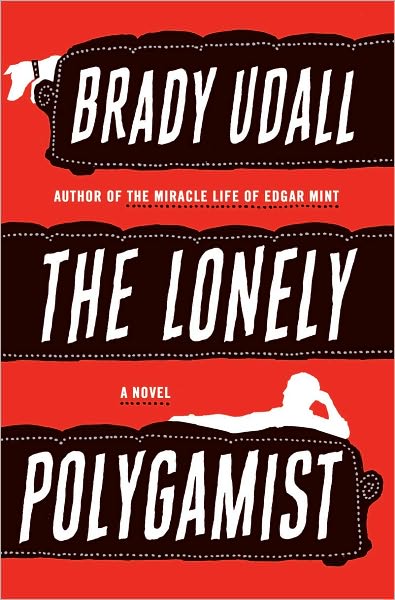
Brady Udall Interview for The Lonely Polygamist: Part I

Brady Udall’s The Lonely Polygamist, follows a suite of characters orbiting around Golden Richards, a polygamist with four wives and more than two dozen children who is trying to keep his construction business afloat and manage a family that practically requires an MBA due to its size. The novel shies away from overt religious discussion and towards the day-to-day comic combat necessary to merely the family together and functional.

This interview was conducted in May 2010 at Changing Hands bookstore in Tempe, Arizona. Although this is an incredibly lame comment, it’s nonetheless true that I simply forgot to post it when other issues arose. It’s here now, however. As we got started, Udall mentioned Daughter of the Saints: Growing Up in Polygamy by Dorothy Allred Solomon.

Udall reminded me of someone slightly too small and far too wary to make it on a high school football team. He spoke with a paradoxical mix of certainty and exploration. The first half of the interview is below.

Jake Seliger: I was listening to Bookworm on the way up here. It’s a radio show on KCRW, and Michael Silverblatt was talking to Michael Cunningham, and Silverblatt said Cunningham’s book was really about the primal relationship between fathers and sons. I heard that and thought to myself, “That’s a lot of what’s going on in The Lonely Polygamist as well,” except I was too dense to notice it the first time through.

Brady Udall: There’s a lot of distractions. Right? There’s no doubt that one of the things I was interested is that Golden, the main character, is an only child abandoned by his father. And then, he manages to have 28 children of his own.

JS: Almost overcompensating.

BU: Yes, yes. But is no better a father because of it. And I think that’s where I’m interested. Numbers have nothing to do with it, really. It’s just there’s something in men—and this is a gross generalization, but we have difficulty taking care of our obligations, emotionally. That’s part of what the book is about: Golden’s not up to taking care of his obligations emotionally.

JS: He seems unable to deal with his emotions in relation to Royal [Golden’s father]. It seems that there’s this Royal-Golden-Rusty [Golden’s son]—I don’t want to call the eternal golden braid, but—

BU: Yeah, you look at the names and there’s something going on. There’s definitely something there, and somewhere in the book I talk about the curse of the father. And we all live with that in some way or another.

JS: Sometimes the absent father, too.

BU: Yeah. So that’s definitely part of what I was doing.

JS: You mentioned that it’s not an issue of numbers, but it seems like there’s something going on—when you scale a family from, say, a two-person couple, to four children, to twenty-eight children, it seems like something has to change there. There’s a passage about that I wrote down somewhere—I can’t find it right now—

BU: Well, I don’t know what it says, but it might be the passage that says something about, when you have 28 children, and you’re a father, you have to try to treat them all equally. Which is nearly impossible. Because he’s not up to the task—if you pat one kid on the head, then everybody’s going to have to have a pat on the head—at some point you can’t balance—

JS: It’s a matter of time.

BU: Yes. He’s just not up to the challenge. He doesn’t know how to manage this. Could he have managed it with three or four children? Maybe, I don’t know.

JS: It’s funny that you use the word “manage,” because it seems like at this scale you almost need to have a managerial mindset.

BU: You have to be a logistical genius of some kind.

JS: And it’s strange, because there’s section on page 21—early in the novel, and Golden says that “whenever he walked into one of his houses he felt more than ever like a stranger, an outlander unfamiliar with the customs of the place.” It seems like you almost have to be unfamiliar with the customs of a place if you’re doing this rotation.

BU: The thing I’d say about that, those houses aren’t his. The family is a stranger. The wives are controlling the houses. He’s just an intruder in some ways. And it makes some sense because at the center of everything, yet he’s on the outside of it all. Which I think is cool.

JS: It’s interesting too that you use that kind of language—the center of everything but outside of it all—because to my mind I almost hear an aspect of the religious part of the novel, because religion seems to influence everything that’s going on, and yet it doesn’t seem as constant a presence. So it’s like the center that’s also outside. I don’t know if you agree or not, but that’s what I was hearing.

BU: Religion dominates these people’s lives, but I try to avoid it as much as possible.

JS: Which you succeeded at.

BU: I tried to, so if I include that I’m going to have to write a book that’s 2,000 pages long.

JS: You said in another interview that this one started out at 1,400—

BU: Fourteen, and I did address some of the religious or spiritual stuff. But really what I’m interested in is really—and I’ve said it before—how, how do you do it? How does somebody manage this? And there’s enough there to easily fill 1,400 pages. Some of the more esoteric stuff got left out.

JS: I think when I was coming in, I expected religion to be more front and center, and more important than interpersonal politics. Maybe it’s unfair. I don’t know if my perception is off—I might be unfairly stereotyping a lot of these people.

BU: If you think about it, even for religious people, who would take their religion very seriously, the religion disappears in some ways. It’s just their life. And so when you write fiction, that’s what you tend to focus on—the details of everyday life. How people live, how people interact, is what I think as a fiction writer you really have to think about. That’s going to make interesting fiction. Ideas . . .

JS: Have to be embodied in the events—

BU: Right, right. You can’t—they talk about a novel of ideas. I don’t think there’s ever been a successful novel of ideas, to be honest with you. There’s no such thing. People make the attempt. I’ve always felt, if you’re going write about ideas, write an essay.

JS: Pick a different genre?

BU: Exactly.

JS: That’s funny, because I wrote this paper for one of my grad seminars on Melville’s Pierre, which—I don’t know what to call it besides being about ideas—

BU: I’ve never read it, so I don’t know.

JS: Because no one has read Melville after Moby-Dick, because he seems to—my academic adviser is a guy named Ed Dryden. He’s written a lot about Melville and argues that Melville wants to break with fiction after Moby-Dick.

BU: That’s interesting. I’ve never heard that. That’s why people don’t read Melville after Moby-Dick.

JS: Well, that’s how you get Pierre and Israel Potter and The Confidence Man, which are novels that as far as I can tell no one but academics read.

BU: I’ve read The Confidence Man, I can tell you that. I have virtually no memory of it.

JS: Maybe that says something if you have virtually no memory of it.

BU: Yeah.

JS: As far as religion goes, there’s also a book by a critic named J. Hillis Miller called The Disappearance of God. He argues that in the Nineteenth Century God basically goes from being an active presence in people’s lives in fiction to being an absent center.

BU: And it’s continued to this day. Not to ask you this question, but—

JS: Why not?

BU: Can you name any contemporary fiction writers who address God in the lives of people? It’s very rare.

JS: I wonder if they’re out there, but they’re being published by religious presses that I don’t read.

BU: It could be, but Flannery O’Connor was writing about this in a certain way.

JS: Or a lot of Catholic writers, like Evelyn Waugh or Graham Greene.

BU: Jewish writers don’t tend to write a lot about God. And it’s weird because America’s such a religious place. We’re not Europe. We’re very religious, yet if you read fiction of the past 50, 70 years, you’d never have any idea we’re a religious place.

JS: Yeah, or at least mainstream fiction. A lot of the Jewish writers are dealing with Judaism and Jewish culture more.

BU: Right. They’re not dealing with God. And it’s because it’s difficult, that’s really why. Most writers—I feel the same way—don’t feel like they have the authority to deal with such a large subject. But it’s still disturbing to see the lack of people—religious people—in fiction. And very often they’re the villain. And I’m not religious, so I’m not defending this in any way. I’m not a religious person.

JS: It’s like Michael Chabon’s book, The Yiddish Policemen’s Union. I don’t know if you’ve read it.

BU: Of course I’ve read it.

JS: The black hats, the Orthodox, are the villains.

BU: And he gets in trouble. Among Jews, he gets in trouble for his depiction.

JS: A little bit. But I don’t think he does like Philip Roth did—

BU: But people still get upset. I think one of the reason writers aren’t address it—if they don’t come from a religious background—I know this from experience—people get upset. If you’re going to depict the religion and religious people of that culture, they want you to depict it in a positive light. And if you don’t, they see it as betrayal.

JS: But it seems like people, oftentimes, whether they’re religious or not, reading about people in a positive light is boring. You want to read about foibles—

BU: That’s absolutely right. Life—fiction is about trouble. It’s about nastiness. It’s not about nice things. It never is.

JS: We have plenty of nastiness here—especially with Golden’s boss. Also with Rusty to some extent. Because he’s—

BU: He’s a little jerk. He’s not a kind—you know, there are idealized children in fiction. They’re education, they’re overly smart, they read in their spare time, I don’t know what. And you know, you don’t see that in real kids. A lot of them are little brats, like Rusty.

[Food shows up.]

Rusty’s a tough one.

JS: At the same time, he’s somewhat justified, and some of his behaviors are understandable. I mean, there’s the scene with his birthday party. And because there’s all these birthday parties—they get back to this individual / privacy issue. At that moment June says about Rusty, “I know he’s going to end up like me. No family, lost, wondering who he’s supposed to be with, what he’s supposed to do.” And it seems like a pretty accurate comment—this idea of lacking family or being lost. It’s easy to get lost in all these people.

BU: In families that large, you do get lost very easily. If you go along with the program, you’re okay, but some people aren’t cut out for that. You can be in trouble. And there’s no place for you. It’s especially true for the boys.

JS: Yeah. It never happens, but it seems like if Rusty were to go on, he’d be really lost, really wondering. Kind of like Golden.

BU: This happens to polygamous boys all the time. If you think about it, the math doesn’t work. There can’t be—all the boys can’t have four wives. All the men can’t have four wives. It just doesn’t work that way. So three out of those four men have to go somewhere else. They can’t hang around.

JS: It’s like what Tim Harford wrote about in The Logic of Life. He had a chapter called “The Marriage Supermarket,” where he develops a theoretical model of what happens if you have 20 men and 20 women who all want to marry. If you take one away from either side, the gender politics shift very rapidly. You can actually see stuff like this happening on college campuses, because now more women than men go to college.

BU: That’s right! It’s in our favor now. Well, too bad I’m not in school. You’ve got it better than we did.

JS: Yeah, and these shifts bring out different kinds of politics.

BU: It’s happening in China, where there are more boys born than girls. And that’s one of the inherent weaknesses of that culture—it’s just mathematics.

JS: And it’s a problem for the men and boys who will end up wandering, like Rusty probably will.

BU: You can end up with no place. You make one false move, you end up on the outs. That’s what happens.

JS: Even Golden growing up with his father, there was wandering for different reasons.

BU: There was a lot of unhappiness. And so there is a correlation between Golden and Rusty, obviously. I guess the way of thinking of it—it’s just easy to end up going over the edge.

JS: If Rusty gets away from the mob—if he survives—maybe he goes on.

BU: You could take it a long ways. Rusty’s sort of like the sacrificial lamb of the family. Somebody has to—something has to happen to bring this family back together. The one who doesn’t belong, is having the hardest time with the family—is the one who’s sacrificed for the greatest good.

JS: You have a feeling Rusty would not perceive it that way.

BU: No, no, the sacrificial virgin never does. It’s like, “Why me, man? Why am I getting thrown in the volcano? This sucks.”

JS: The issue of sacrifice is interesting to me. At the end—I think it’s the second-to-last page—we have Beverley’s voice, and she says, “She would spend the rest of her time tutoring Maureen and making peace with the other wives, to ensure that once she was gone the Richards family would soldier forward in harmony and righteousness until the promised day, on the others side of the vil, when they would be joined together again.” To me, I hear a lot of irony regarding what Bev really thinks, because if she really soldiers towards harmony and righteousness, that’s going to be a pretty big change.

BU: That’s true. The quote that I love—I just heard her say it—I don’t know if you know it—Mary Karr, she wrote The Liars’ Club—is that a dysfunctional family is any family with more than one person. Once the numbers start going up more—

JS: The possible connections go up exponentially.

BU: It goes exponential. So the chances are, that they will soldier forward in harmony and righteousness, believe me, are just about nil. They just added, not only a wife, but two new kids to the family. Good luck to them.

JS: Wastrels, who’re happy to get away—

BU: They’ll just take Rusty’s place. So yeah, there’s The Liars’ Club.

JS: I get the impression from the passages that I’ve seen from Beverley’s consciousness, she probably believes that.

BU: Oh yeah, she does. You have to.

JS: It explains some of her obsessive ordering of the household too.

BU: In the background that she comes from, she believes that if you obey all the rules and in righteousness, having rules and regulations keep anarchy at bay. That’s what she strives for throughout the book. She’s right in some ways. I suppose what I’m saying is that you can try all you want.

JS: Too much order is as stifling as anarchy, and that might be what’s driving Rusty. He’s unhappy.

BU: And it probably drives the other wives, who don’t agree with her approach. So that’s why they’re all fighting with her, because they don’t go that far. Those wives are born and raised in the principle. She’s a newcomer to it. If you’re a convert to something, you get fired up.

JS: The convert’s zeal. There’s a section about it. I can’t remember off the top of my head, but the conflicts between Beverley and the others is a conflict between the first and the others. It’s hard because there has to be a disciplinarian, but no one likes the disciplinarian.

BU: Yeah.

JS: Yet there has to be one.

BU: I can tell you that in my family I’m the disciplinarian, and nobody likes me. My wife’s like, the super safe place to go. I’m like Nurse Ratchet or someone like that. It’s the oldest story in the world, I guess. In this case, it’s the wife.

JS: Because of Golden’s job, and because of how he rotates, in The Lonely Polygamist it would have to be the wife, or the wives, because he’s not there enough.

BU: That’s the truth about anything. Pierre and I were talking to this—a guy who’s gone all the time, working his ass off—he’s not going to be around to have much influence at all, positive or negative. Without influence there’s no power. So the only power he has is to pick his clothes every day. But I’ve seen it in these families.

JS: The power and the attention, because there’s so many children—

BU: Exactly. Because the kids know where the power is. You know what? I don’t think it would be that different if it was a family of four kids, and their father is gone all the time. The mother’s the one who has the influence. He’s not there, he doesn’t develop what he needs to. The entire story and situation—everything that’s true of a family of four or five people is just amplified four or five times. To me that’s interesting for the sake of seeing how far we can take this. For me, it makes things clearer. It helps you see what I’d call a regular family a little bit more clearly when you exaggerate more.

JS: Even regular families seem to be steadily declining, if we mean by that a mom and dad and 2.1 kids and a golden retriever. It’s a smaller proportion—

BU: Right. What I love—let me back up. I’ve put it this way before: what fascinates me about polygamy is that you can look at it as this alternative thing. Like gay marriage. Or you can look at it like this chauvinistic, terribly old-fashioned, ridiculous, unfair way to live. So you want to look at it.

JS: It probably depends in part on where you grow up, and whether you can really make an independent decision about where you want to live. It seems like not everyone grows up as a polygamist gets that.

BU: Most of the polygamist communities are closed, so it makes it hard for people to make their own choices. That’s not true of all polygamist families. But again, the same could be said of many cultures and subcultures in this country and around the world.

JS: You have ideological conformity.

BU: Exactly. Within family, within a neighborhood.

How could Twitter not change how protests happen?: Egypt and the history of the novel

There’s been a lot of talk about the role Twitter, text messaging, and other communication mediums are playing in the unfolding drama in Egypt. Malcolm Gladwell basically says the role isn’t great: “People with a grievance will always find ways to communicate with each other. How they choose to do it is less interesting, in the end, than why they were driven to do it in the first place.”

But I am not convinced this is true: by lowering the friction of communication, thus making it real-time and instantaneous, Twitter and other technological tools are almost certainly changing what is said. Quantity has a quality all its own, and how we speak has a habit of changing what we say.

Gladwell’s post (and others) remind me of the arguments in English literature the field around the development of the novel as a genre (see, for example this post on Steven Moore’s The Novel: An Alternative History). Basically, a lot of people want to argue about the development of the novel without taking into account the printing press.

To me this is silly because mass cheap printing was a precondition to the novel as we know it. Without that, we would have fictional prose narratives of some length, but we probably wouldn’t have them alluding to one another, we wouldn’t have large portions of the population reading them, and we wouldn’t have (relatively) large portions of the population with enough disposable income to avoid them. If you look at surviving works that we would now classify as fiction that were written prior to ~1600, almost all of them are religious in nature because only the church had the resources to fund writing, maintain large collections of writing, and bother writing anything down.

After ~1600 (or ~1500, if you prefer, but that’s about it), you have a lot of things written that would previously not have been considered “worth” writing down because writing and copying manuscripts was so expensive and time consuming. Technology did change what was said. How something was said changed what was said. Technology is doing the same thing now. I don’t know how the current drama will play out; if you looked at the printing press around the time it was first created, it was mostly used to print religious stuff (hence the “Gutenberg Bible”). Elizabeth Eisenstein’s The Printing Press as an Agent of Change describes some of this. By the nineteenth century, however, writers are grappling with the idea of a world without God, per J. Hillis Miller’s Form of Victorian Fiction, or a world where “God is dead,” to use Nietzsche’s famous and misunderstood proclamation: he wasn’t saying that people would stop believing in God or that would religion would stop being a force society, but rather that religious studies were a dead end and people would cease to attribute everything in their life to God or God’s will.

In 1500, the material published via printing press looked basically continuous with what came about in 1400. By 1850, things are looking pretty different, and the diversity of printed materials has fundamentally changed what people could say. The printing press allowed people with grievances, to use Gladwell’s formulation, to communicate with each other much more efficiently than they previously could, which leads to a lot of political, social, scientific, and philosophical developments that most of us living today approve of. How many of us want to return to being illiterate serfs toiling in fields for distant masters?

Gladwell is right in one sense: the media is probably overstating the importance of Twitter and SMS. But both of those still play an important role in what’s going on. Somehow, people with grievances against monarchs and dictators weren’t all that successful on average in the years prior to ~1600. After that, they got more and more successful, to the point where a fair bit of world’s population now lives without dictators. Part of the reason is because ideas about freedom and good governance could be disseminated cheaply, where before they couldn’t, and everyone spent most waking hours covered in shit, farming, and hoping they’re not going to starve to death in late winter / early spring.

Mark at the computing education blog says, “A particularly interesting anecdote for me is the below: That the Internet was turned off in Egypt, but the protests continued. So what role was Facebook and Twitter playing, really?” Depends on the timeframe. Various technological tools helped people initially organize and helped the conditions for organization come about. They will probably do so again in the future. In the long term, such tools will probably create the conditions for much larger projects that we only dimly perceive now. I would predict what those will be, but things have a habit of turning out much stranger than random prognosticators like me can predict.

Why unpublished novelists keep writing: why not? An answer as to why this one does

Alix Christie’s “We Ten Million” asks why unpublished novelists write, the number being an estimate of the number of unpublished novels out there (hat tip Heather Horn). Very few books get published; very few that do get any attention; very few of those even make any money; and delusion is a vital skill for many who continue writing. Rationally, most of these would-be writers would probably be better off if they quit writing and did something more economically and socially more productive with their time, like working for Wal-Mart, digging holes and filing them up, writing blogs about their cats, etc.

According to Horn, possible answers include: the idea of a craft, the importance of literature (even if it’s unread?), the need for story, and art as courage. I’m not sure I buy any of those, or any of Christie’s answers. I think the real reason is simpler: novelists keep writing because they basically like the act of writing novels. Publishing, fame, fortune, and all the rest would be nice, as they certainly would be for this unpublished writer with an inbox full of requests for fulls and partials (industry lingo for “send me the full manuscript” or “send me some chapters”) from agents, but the possibility of future and unlikely accolades don’t fuel the work on a daily basis. Instead, the daily drive to succeed is about the material itself. I’ve mentioned this famous quote before and will do so again: “Robertson Davies, the great Canadian novelist, once observed: ‘There is absolutely no point in sitting down to write a book unless you feel that you must write that book, or else go mad, or die.’ ”

The people writing unpublished novels are presumably doing so in lieu of going mad or dying. They feel they have to or need to write.

In a recent post, I wrote about an exchange with a friend who’s an undergrad:

A lot of my motivation comes from a fantasy of myself-as-_____, where the role that fills the blank tends to change erratically. Past examples include: writer, poet, monk, philosopher, womanizer. How long will the physicist/professor fantasy last? 

I replied:

This is true of a lot of people. One question worth asking: Do you enjoy the day-to-day activities involved with whatever the fantasy is? For me, the “myself-as-novelist” fantasy continues to be closer to fantasy than reality, although “myself-as-writer” is definitely here. But I basically like the work of being a novelist: I like writing, I like inventing stories, I like coming up with characters, plot, etc. Do I like it every single day? No. Are there some days when it’s a chore to drag myself to the keyboard? Absolutely. And I hate query letters, dealing with agents, close calls, etc. But I like most of the stuff and think that’s what you need if you’re going to sustain something over the long term. Most people who are famous or successful for something aren’t good at the something because they want to be famous or successful; they like the something, which eventually leads to fame or success or whatever.

“I basically like the work of being a novelist,” including the writing and so forth. That’s why I keep going. I think anyone who continues for any other reason is probably already mad, to use Davies’ term. Alternately, a lot of the would-be novelists out there are probably writing not because they want to get published, but to work out their inner demons, or signal something, or because they don’t know what else to do with their lives, or because they’re misinformed. They’re doing something other than really trying to write something that someone else might want to read.

I’m reminded of a passage from Norah Vincent’s nonfiction book Self-Made Man, in which she describes dressing like and passing as a man. Vincent, dressed as a man named “Ned,” describes going out with a woman met on an online dating site, who “was either the most conversationally inconsiderate person I’d ever met or the most socially impervious:”

Clearly she wasn’t ready to start dating again. She wasn’t looking for a relationship. She was looking for distraction and an ear to tell her troubles to. She didn’t have enough emotional energy left to get seriously involved with Ned [. . .]

A lot of would-be writers are probably doing much the same. I’d guess that relatively few of those ten million novels are publishable, or that many of the writers of those novels have any clue what something like publishable might mean (I didn’t when I started, which might’ve helped me; more on that below). As Laura Miller says regarding the “slush pile” of unsolicited queries agents and publishers get:

You’ve either experienced slush or you haven’t, and the difference is not trivial. People who have never had the job of reading through the heaps of unsolicited manuscripts sent to anyone even remotely connected with publishing typically have no inkling of two awful facts: 1) just how much slush is out there, and 2) how really, really, really, really terrible the vast majority of it is. Civilians who kvetch about the bad writing of Dan Brown, Stephenie Meyer or any other hugely popular but critically disdained novelist can talk as much trash as they want about the supposedly low standards of traditional publishing. They haven’t seen the vast majority of what didn’t get published — and believe me, if you have, it’s enough to make your blood run cold, thinking about that stuff being introduced into the general population.

So you can probably knock off at least 90% of those unpublished novels as not even being serious attempts, where “serious” means “at least thinking about what makes good novels good and bad novels bad.” Of those serious attempts, a lot of them are probably written by people who will one day be good but aren’t yet (Charlie Stross, the SF writer: “[. . .] I was averaging 1-2 novels a year, for very approximate values of “novel”. (They weren’t publishable. I was writing my million words of crap. You don’t want to read them, honest.)”). John Scalzi says something similar: “Writing an entire novel is something most people have to work up to,” and it’s really hard.

I started four novels and wisely abandoned them. I finally wrote two feature-complete novels in the sense that they started and had ends and had middles that led to the ends, kind of, but they were terrible, and I sent them to agents and got deservedly rejected. If you were one of those slush pile readers, I apologize, but those attempts were so far in the past that you’ve probably forgotten them. Then I wrote the last three novels over the last three or so years and started getting those requests for fulls and partials, which was a lot like the typical dating experience in that they ended with variations of “I like you, but not in that way.”

Nonetheless, I would like to think I can stand far enough back from myself to say that, at the very least, they’re publishable, and I think quite fun. Eventually I assume I will write something that gets a literary agent or press to agree with me—or I’ll go mad or die before that die arrives. Between now and the, I keep writing mostly because a) I’m an idiot (this shouldn’t be discounted) and b) I mostly like the work, as I described above. The second might seem a minor variation on what Christie says—”the only reason is my belief that I have got a story that I must tell”—but it’s a sufficiently important one that I’ll forward it here.

The function of stories in society and some of that other stuff is good, but I’m still guessing that my real reason (and, probably, hers) is that I like to write, which is slightly different from having a story to tell. I suspect the same is true of most artists and intellectuals and hackers; even most hacker/programmer types probably like the fact that they can change the world with their code, and so forth, but their big motivation is probably solving problems and writing code. Notice how the verb “writing” takes on a noun—code—that “writing prose” has lost. The word shows the similar impetus underlying both activities.

I’m not a hacker because, although I’ve written a little bit of code, I don’t like doing it all that much. If I did, it would’ve been vastly smarter to pursue that than it is to continue what I’m doing now. At least I’ve done enough to appreciate how hard it is to write code. And those write good code are rewarded for their skill. Good hackers, programmers, or computer scientists (pick your choice, each with its shades of connotation but denoting more or less the same activity) make a lot of money, and the smart ones often have an immediate, tangible effect on the world. This is sometimes but not always true of writers. But when I began writing fiction with some level of seriousness, I didn’t sit down and say to myself, “What is the optimal path?” I had some ideas and began typing. A depressingly large number of years later, I’m still doing the same basic thing in a way that might be detrimental to my own best interests. So why do I keep going? Why am I part of the ten million?

Because I like the work.

The Crying of Lot 49 — Thomas Pynchon

How do you describe the absence of coherence? It’s not easy, because you can’t really quote something only to point out what it is not. I bring up the point because The Crying of Lot 49 lacks coherence; it lacks a plot; it’s random in a way that is not random like life, but like life diced by a food processor; it’s the kind of tedious book you read primarily in order to tell others that you’ve read and understood it. I’m not the first to notice: James Wood cites Pynchon’s Mason & Dixon in “Human, All Too Inhuman: The smallness of the “big” novel.” The essay is now behind a paywall, but if you want a copy, send me an e-mail. And B.R. Myers has noticed the issue too, in A Reader’s Manifesto.

Let me try to cite an example. Chapter two of The Crying of Lot 49 conflates life and movies in something akin to parody. But it feels set nowhere—like most of the novel—and perhaps that’s intentional, because L.A. feels like nowhere; and one of the novel’s best sentences describes southern California well: “San Narciso lay further south, near L.A. Like many named places in California it was less an identifiable city than a grouping of concepts—census tracts, special purpose bond-issue districts, shopping nuclei, all overlaid with access roads to its own freeway.”

The nowhere of L.A., however, is a very particular kind of nowhere. I would give real context to the quote if I could figure out what the context might be. But we know that Oedipa is an executrix for an estate; Mertzger is an investigator or lawyer or something. Here’s the block:

‘Maybe it’s a flashback,’ Metzger said. ‘Or maybe he gets it twice.’ Oedipa removed a bracelet. So it went: the succession of film fragments on the tube, the progressive removal of clothing that seemed to bring her no nearer nudity, the boozing, the tireless shivaree of voices and guitars from out by the pool. Now and then a commercial would come in, each time Metzger would say, ‘Inverarity’s,’ or ‘Big block of shares,’ and later settled for nodding and smiling. Oedipa would scowl back, growing more and more certain, while a headache began to flower behind her eyes, that they found among all possible combinations of new lovers had found a way to make time itself slow down. Things grew less and less clear. At some point she went into the bathroom, tried to find her image in the mirror and couldn’t. She had a moment of nearly pure terror. Then remembered that the mirror had broken and fallen in the sink. ‘Seven years’ bad luck,’ she said aloud. ‘I’ll be 35.’ She shut the door behind her and took the occasion to blunder, almost absently, into another slip and skirt, as well as a long-leg girdle and a couple pairs of knee socks. It struck her that if the sun ever came up Metzger would disappear. She wasn’t sure if she wanted him to. She came back in to find Metzger wearing only a pair of boxer shorts and fast asleep with a hardon and his head under the couch. She noticed also a fat stomach the suit had hidden. On the screen New Zealanders and Turks were impaling one another on bayonets. With a cry Oedipa rushed to him, fell on him, began kissing him to wake him up. His radiant eyes flew open, pierced her, as if she could feel the sharpness somewhere vague between her breasts. She sank with an enormous sigh that carried all rigidity like a mythical fluid from her, down next to him; so weak she couldn’t help him undress her; it took him 20 minutes, rolling, arranging her this way and that, as if she thought, he were some scaled-up, short-haired, poker-faced little girl with a Barbie doll. She may have fallen asleep once or twice. She awoke at last to find herself getting laid; she’d come in on a sexual crescendo in progress, like a cut to a scene where the camera’s already moving. Outside a fugue of guitars had begun, and she counted each electronic voice as it came in, till she reached six or so and recalled only three of the Paranoids played guitars; so others must be plugging in.

The paragraph is one giant block in the novel as well. Notice the moments where the narrative skips: we get in the bathroom, impressionistic moments there, and then a sex scene that comes from nowhere, goes nowhere, and appears to mean nothing. Is this: “It struck her that if the sun ever came up Metzger would disappear” figurative? “Maybe,” which is the answer to most questions raised by The Crying of Lot 49, except for the question of whether you should read it.

There are moments of nice writing here: “a headache bean to flower behind her eyes.” I’d never thought about a headache that way, but it makes perfect sense, with the roots reaching into the mind. But it’s isolated from a larger narrative, or at least a larger narrative. It doesn’t connect to anything. We don’t know why the headache is important, unless it’s to signal the confusion of what’s coming next. But if everything is confusion, what are we supposed to take?

I’ve heard that The Crying of Lot 49 is about the corruption of all meaning, of the impossibility of escaping the system, the difficulty of representation, or something along those lines. I think such interpretations say more about the novel than it does about anything outside the novel. Perhaps The Crying of Lot 49 is a joke, chiefly on those who read it—which is to say, people taking literature classes in universities.

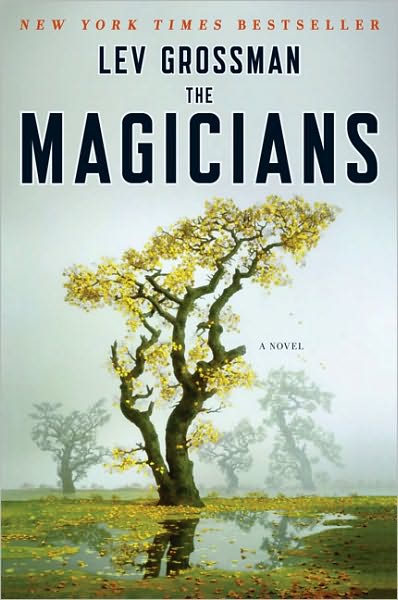
An interview with Lev Grossman, author of The Magicians and Codex, Part I

Lev Grossman’s book tour is just about finished, and I caught up with him at Changing Hands in Phoenix on June 10 to talk about The Magicians. In the novel, Quentin Coldwater is a bright and unhappy high school student searching for meaning, happiness, and a place in the world—which he thinks he’ll find when he receives an invitation to Brakebills, a college for magic. Unlike Hogwarts, however, classes are a grind, students are filled with angst, and sexual politics are everywhere.

As I wrote about the novel:

The Magicians is a surprise and delight: its language is not overly showy and yet often contains an unexpected surprise, especially at the ends of sentences, as this early description shows: “Quentin was thin and tall, though he habitually hunched his shoulders in a vain attempt to brace himself against whatever blow was coming from the heavens, and which would logically hit the tall people first.” Until the last clause, one could be reading any novel, fantasy or otherwise, but saying that a blow from heaven would hit the tall first gives us Quentin’s personality in a single line, and yet its ideas are spun coherently across the entire novel.

The following is an edited transcript, and any links were added by me after the interview:

Jake Seliger: I first read about The Magicians on John Scalzi’s blog, “Whatever.” I don’t know if you’ve met him or not, but he wrote about it and I thought “That’s exactly the book I want to read.”

Lev Grossman: He runs that features “The Big Idea.” I actually wrote that. I ran into him at the World Con—that is the convention—and we got to chatting. He’s a friendly fellow. He let me post something on the blog.

JS: I’m really glad you did. Not every book is one I’ve really loved. He posted about a book called Mistwood, which I thought was okay, but flat in a way. The premise is really interesting—instead of talking from the premise of a human who gains special powers and becomes more than she is, it discusses a summoned creature or magical being who’s becoming more human and doesn’t want to become human.

LG: That sounds like a great idea.

JS: Yeah. The execution is one I didn’t love. It was a first novel. It was a lot of fun. As far as The Magicians goes, I was struck that there’s this repeated expectation or hope of finding another world, that of course gets fulfilled. Even really early on, on page 8, Quentin says, when his interviewer’s “back was turned Quentin would stumble on a mysterious cabinet or an enchanted dumbwaiter or whatever, through which he would gaze with wild surmise on the clean breast of another world.” So he’s looking for these enchantments, and it seems like by the end of the novel that he finds or we find that we either make our enchantments or don’t make our enchantments. Do you agree? Or is my reading off?

LG: No, I think that’s fair enough. I think that for a very long time—an embarrassingly long time—instead of solving problems, I tended to buffer them. Something would come up and I would think, ‘Well, that sucks,’ but I’ll stick it in the buffer, and when I get to Narnia, I’ll basically clear out the whole buffer. And not literally Narnia, but I would decide that if a certain that was coming up—if I got into college, for example—it would solve everything and I would never have any problems again. So I would ever really solve problems: I would put them off and lay them away for a time when they would get solved by the course of events.

JS: That’s funny because it makes it sound like a very passive kind of action. “The course of events” would solve them rather than “I would solve them.”

LG: Oh, it is very passive. I was a very passive person for a very long time. I didn’t really understand how to engage with reality. I didn’t really grapple with it on a basic level. I just let it roll over me. As a result, I made a huge number of mistakes that I wish I hadn’t made. Events made them for me.

JS: I guess that got transposed to the novel.

LG: Yeah, well, writing The Magicians was in a way working through my acceptance of the fact that I never would get to Narnia. Quentin essentially does, and what happens to Quentin is that his problems come with him.

JS: Many of them.

LG: Yeah. And it turns out that action is required of him, in fact, to solve them. Or accept the fact that they’re insolvable.

JS: It seems that’s where a lot of the rhetoric about reality comes from. And not only the reality parts of it, but the two worlds or multiple worlds idea. One of the things I found really intriguing when I got to the end of the novel is when Emily Greenstreet [whose brother dies by becoming a Niffin and who has an affair with Professor Mayakovsky, leading him to be banished to Antarctica] reappears. There’s this wonderful line, and we learn that “In different ways they had both discovered the same truth: that to live out childhood fantasies as a grown-up was to court and wed and bed disaster.” It’s an intriguing sentence because the sexual language doesn’t seem like a mistake. Part of the issue is that incorporating sexuality in life is important and becomes a proximate cause because that’s what actually gets them to Fillory. Alice goes and sleeps with Penny [as revenge for Quentin sleeping with Janet].

LG: Obviously in this book I’m confronting a powerful literary forebear, namely C.S. Lewis. You only do that if you truly truly love the forebear in question. But, one of the things I find maddening about his books is this sense that magic and wonder and ultimately meaning are not compatible with sexual maturity. He’s so in love with childhood that he imagines that there is no such thing as magic once you get older, or if there is, then it’s a debased, ignorant, evil kind of magic, like the magician in The Magician’s Nephew. And I wanted to explore the idea—as Philip Pullman did before me—that coming of age, becoming a whole adult sexual being, entails not a loss of magic but a different kind of magic. A richer kind of magic.

JS: And one that doesn’t always go particularly well, either in the real world or in the novel itself. It seems to me that Quentin in Alice become almost victims of their own sexual politics, in a sort of game theory way. When Quentin sleeps with Janet, which he knows he shouldn’t’ve done but he does anyway, and then they get in this tit-for-tat—

LG: Right. No pun intended. Yeah, it’s true. Things turn out to be very much less than zero sum. It involves taking on a certain kind of risk that you do not have in childhood and accepting that risk.

JS: And the sense of risk is very real in the novel because people die and there are rules in it. The risk feels real that often times in fantasy novels it doesn’t because you know that good is somehow going to triumph in the end even if it’s not complete.

LG: The moment where I attempted in an almost self-conscious way to bring that into the book is when the beast appears in the classroom.

JS: Right. That’s exactly what I was referring to because it’s unexpected, and the teachers don’t know what’s going on. And then there’s speech—I’m pretty sure it’s Dean Fogg who gives it—where he basically says, “There are things out there we don’t know, we don’t understand.”

LG: I want it to feel less safe than Hogwarts. And that was one of the ways I tried to announce that. Here’s a being which is not even evil, necessarily, in a way that is comprehensible to us. It’s almost arbitrary.

JS: It’s chaotic or indifferent.

LG: Which is almost more terrifying, in a kind of mustachio-twiddling villain. And I very much wanted there not to be a Gandalf-like figure, who is able to explain what happened and assume the risk for the kids. Fogg is just about as lost as they are.

JS: To me what’s interesting is in Lord of the Rings, Gandalf almost never has complete explanations. When he leads [The Fellowship] into the Mines of Moria, he doesn’t know what’s down there. That’s part of what reminded me of the beast and the Mines of Moria. In Lord of the Rings, Gandalf doesn’t know everything. And he constantly says that—”I don’t necessarily know what’s going on,” and there’re conjectures and so forth, and that’s a lot of what the Council of Elrond is and some other places in the novel, where they’re always talking about what they don’t know and recognizing their own limitations.

LG: Yeah, that’s very true. I have a bad habit of underestimating Tolkien. He’s always better than I think he is—the Mines of Moria being a case in point.

JS: It’s somewhat dangerous talking to me about it because The Lord of the Rings is one of my favorite novels and I actually reread it about a month and a half ago, and this time around one thing that struck me is how funny it is, because they’re all these little jokes in there, and the relationship between Sam and Gollum is funny, and Pippin is ceaselessly getting in the way, and the relationship between Legolas and Gimli is very funny as well. Once they become friends, everyone is shocked at it: Galadriel goes, “This is a strange friendship!” People are constantly going, “An elf and a dwarf? This doesn’t make any sense!” and they just do their thing.

LG: It’s one of my major weaknesses as a fantasist. I never really came to—there’s almost no Tolkien in The Magicians

JS: There is that funny thing where Alice and Quentin are trying to get into the Physical Kids’ cottage—

LG: Right, right.

JS: —”speak, friend and enter.”

LG: It’s there. But I don’t really wrestle with Tolkien. I don’t understand him very well.

JS: How so?

LG: He’s just not easy pickings like Lewis is. Lewis wrote the Narnia novels—all of them—in the span of slightly over two years. And he’s an incredibly sloppy world builder, because Lewis’ threads are lying around all over the place.

JS: And you have Plover do some of the same things, especially when you describe the fifth novel. In The Magicians, Quentin describes the fifth Fillory novel as being unsatisfying because it just wanders off into nothing.

LG: Yeah. Plover wrote the second novel partly to plug the plot holes in the first one. Which was a vague allusion to The Magicians Nephew trying to explain what happens in The Lion, the Witch, and the Wardrobe, where the White Witch came from, which only ends up introducing a whole bunch of other plot holes. And just sort of, it’s turtles all the way down.

JS: “It’s turtles all the way down.” It’s funny you say that because it seems like Quentin is always look for some version of reality or happiness or whatever, but he doesn’t find it because—this is going to sound kind of trite—but he doesn’t find it because it’s either within you, or it’s not, and it’s not going to be imposed externally.

LG: Yeah, and he’s looking for some sort of safe, closed system, where risk is eliminated.

JS: If you don’t have religion, it seems like you don’t have that anywhere.

LG: Yeah. Well, I’m not very qualified to talk about religion. But certainly, I think what he ultimately has to do is become tolerant of risk and loss and imperfection. He has a tendency to say, “Oh shit, well that went wrong. This world sucks. I’m going to find another world, where it’s better.” But of course, he’ll just run forever—if that’s what he wants.

JS: Yeah, and it’s a little bit—the last world we see in The Magicians is when he’s at this firm he’s not particularly happy at, just making money. And he’s sitting there just before he’s rescued once again. He says, “With the coming of the bitter late fall weather the air-conditioning had gone silent and the heaters had sprung to life, and huge nebulae of steam curled off them in abstract whorls: hypnotic, silent, slowly turning shapes that never stopped and never repeated themselves. Smoke signals sent by no one, to no one, signifying nothing.” It seems like that becomes a metaphor for what Quentin is going through. Do you read a lot of Melville? Or a lot about Melville?

LG: I’ve read Moby-Dick.

JS: In PierrePierre‘s a terrible novel, don’t read it—but there’s a funny section where the narrator announces, “Silence is the only Voice of our God.” James Wood describes Parker’s biography and how “[…] it is not until very late in his story that [Parker] considers Melville’s difficult relationship to his inherited faith, a relationship which is the absent, sunless center of all his greatest fiction, poetry, and letters.” The idea of that “absent center” in Melville is about God, and it seems like Quentin’s case is more about himself. I had a question in there somewhere, I just lost it along the way.

LG: I don’t disagree with what you’re saying—

JS: I think it’s that line, “Smoke signals sent by no one, to no one, signifying nothing.” He doesn’t pick up on that thread of his observation.

LG: He’s attempting to grapple with a world charged with mean and found it intolerably painful. He sought out a world from which meaning has been almost completely expunged—and therefore risk of any kind.

JS: Can you say more about the meaning being expunged?

LG: Well, when you talk about meaning you automatically head into a thicket of solecisms.

JS: That’s true, and maybe that’s part of reason why it’s interesting to talk about it, if one can.

LG: Yeah, but what I mean to say is that there are no stakes in that world. Nothing means anything to him.

JS: In Brakebills, or the corporate world?

LG: In the corporate world. He’s shuffling fungible papers and there’s just nothing at stake.

JS: So how do we if we are modern office workers and we don’t happen to have magic within us, find some things to be at stake.

LG: Yeah.

JS: You’re looking at me with an expression that says, “I have no fucking idea, why are you asking me this?”

LG: There should be an answer. And of course, the office he’s working in is my office, in the Time-Life Building, and the heaters are across the street—that’s the view from my window. Actually, I think they might not be any more, because I moved offices.

JS: To me it sounds hopelessly glamorous, living in New York and working in a very large office building, because New York itself seems glamorous. Maybe that’s ridiculous, and it’s like me looking at New York is like Quentin looking at Fillory.

LG: I don’t know. Well, I guess that’s fair. It has glamorous bits. It has good restaurants.

JS: You distinctly not—

LG: Well, you know, I’ve been there for a while. It’s very expensive, living in New York.

JS: That’s why I didn’t apply to grad schools there.

LG: And it’s causing me—one has to make great sacrifices to maintain a lifestyle there. Recently I’ve become very aware of that.

JS: Have you ever heard of a woman named Penelope Trunk, who writes a blog called Brazen Careerist?

LG: No.

JS: She’s written pretty extensively about her time in New York and why she decided to move from there, which are essentially the reasons you’re describing: the tremendous, tremendous expense of living there makes it impractical.

LG: I have a daughter from my first marriage. If my daughter didn’t live in Brooklyn, I’d probably leave.

JS: But Quentin is busy trying to run away from Brooklyn, at the beginning, and thinks that Brooklyn is tremendously boring and there’s no meaning in Brooklyn. Which is funny, because New York has this romantic ideal in the American imagination of being the center of things and moving to the big city. Quentin is already there and he’s not happy and he wants to move somewhere magical. And then he moves to somewhere magical and he finds out that it’s not as glamorous as he thought either.

LG: Yeah, it’s kind of like moving from Brooklyn to Manhattan. If you live in Brooklyn, everything’s happening in Manhattan.

JS: And when you live in Manhattan, I wonder where everything’s happening. At a cooler party than where you’re at?

LG: Yeah, I don’t know. It’s happening in L.A. I don’t know. It’s always somewhere else though.

JS: Right. And the chase of it doesn’t seem to work out.

LG: It’s always happening at the secret after party you weren’t invited to. That’s where the action is.

JS: Yeah. I have to ask a question: have you ever read a book called Stumbling on Happiness, by Daniel Gilbert?

LG: I started it, but I didn’t finish it.

JS: Really? I’m surprised, because it feels like Quentin is always searching for happiness, and he has this happiness rhetoric going on. And he’s thinking a lot about his own happiness. I mean, there’s one bit pretty early when it says, “He was experimenting cautiously with the idea of being happy, dipping an uncertain toe into those intoxicatingly carbonated waters. It wasn’t something he’d had much practice at.” As though you get better at being happy like you get better at baseball. “It was just too fucking funny. He was going to learn magic! He was either the greatest genius of all time or the biggest idiot. But at least he was actually curious about what was going to happen to him next.” It seems like there are a couple of things going on in the book there: one, this idea of happiness, and two, what’s going to happen next to him, as opposed to what is he going to make happen.

LG: Yeah, that’s true. I guess there’s a passiveness built into that. Honestly, that comes out of—if you read my blog enough, you’ll find me crapping on about depression. While I was writing this book, I was going through therapy for the first time, and I was kind of understanding a little bit about how challenging it is to be happy. It requires an effort to organize your psyche in such a way that happiness is possible. Being depressed is very, very easy. It’s a zero-energy state.

JS: It seems like Quentin doesn’t learn how to organize his psyche in that way. Although going to Fillory or having Alice die might make it considerably harder.

LG: Yeah, well, I think he needs to learn how to mourn. I want to say in the Freudian sense, although now I don’t remember exactly what happens in Mourning and Melancholia, but he needs to learn how to process loss and process grief, rather than having it just stop him cold. I think that’s a lesson that he learns at the end.

JS: It’s funny, because if he does learn that lesson at the end, I didn’t necessarily read it that way because to me it seemed like he was still somewhat passive because he’s gone back to this office, and until Julia shows up and they break his window down and say, “Quentin, you need to come with us—”

LG: Well, he could’ve stayed. My mother thinks that he’s having a hallucination and he’s committing suicide.

JS: Really?

LG: She said it as if it was the most natural thing in the world—”That’s what you meant, right? He’s killing himself, and they’re not really real.” I said, “No.”

JS: I definitely didn’t read that into it, if that’s the question.

LG: I found that disturbing, coming from my mother.

JS: Right. Well, it must be strange hearing all the various interpretations of your books, some of which you’ve now heard from me and some of which you’ve heard from others too. And if we are talking books, you mentioned you reacting to C.S. Lewis in a kind of Harold Bloomian way. Have you read The Anxiety of Influence?

LG: I have, or rather I’ve read about the first 50 pages, which is all that I found comprehensible. Once—

JS: Once the jargon starts, you check out?

LG: Once the Greek starts, I lost it. But I got a lot out of those pages, and I found them to be very true, and very smart.

JS: How so?

LG: This idea of mapping the Oedipal struggle onto literary forebears, I simply find it to be true. And I’m aware that I probably work that way in a more self-conscious way than a lot of writers. And I’m also conscious that as Bloom points out, when one works that way, one is rarely grappling with the literary forebear him- or herself, but rather a caricature of that person one creates oneself for the purpose of then knocking it down.

JS: Like a literary straw man.

LG: Yeah, sure. Just so you have something to push against.

JS: It seems like people have always been pushing against Shakespeare. And you have a line from The Tempest as your epigraph, which I didn’t actually look up—

I’ll break my staff,
Bury it certain fathoms in the earth,
And deeper than did ever plummet sound
I’ll drown my book

What made you choose that? Or did it just sound cool?

LG: Number one, it sounded cool.

JS: That’s a good reason.

LG: It’s about renunciation. That’s the moment where Prospero decides, “I’ve passed the point of life where magic will be of use to me, and now I will return to terrestrial life,” you know, much as the children return from Narnia. And it’s a bit of a fake out, I guess, because it was never my intention to have Quentin give up magic for good. But I wanted him to confront that possibility very seriously.

JS: It’s interesting that you say that, because in giving up magic Quentin then feels as superior as he did when he originally took up magic. At the very end, he says, “To be honest, Quentin felt superior to anybody who still messed around with magic. They could delude themselves if they liked, those self-indulgent magical mandarins, but he’d outgrown that stuff.” Quentin is very touchy about status in the novel—

LG: Very, yeah.

JS: —just like people are in life. People are constantly jockeying for position: school, elsewhere, magically, sexually, and other hierarchies in the novel. Were you consciously shooting for this kind of status stuff and these kinds of status games, or were you just trying to represent the hyper-competitive? This is a somewhat dangerous question because I’m thinking forward ultimately towards a dissertation that might focus on signaling and status in novels—

LG: Really. That’s very interesting to me.

JS: How so?

LG: I’m very interested in that topic. Of course Quentin is a hyper-competitive individual. He’s not like a baseline human in that respect. He I think has a very tenuous grasp on his own self-esteem, and he’s always looking for ways in which he can rate himself above people around him.

JS: I wonder if having sex with Janet is part of that.

LG: Oh sure, yeah, God. I feel like, he must be very aware that—I think at that point, there’s a moment where Alice says, “You know Josh has slept with Janet.” I have a feeling that that fact went into his brain and kicked around for a while and he was like, “Are you kidding? Josh hit that? I have to be above Josh in some respect, and to do that, I want to sleep with Janet.”

JS: Of course, when they’re at Brakebills South, I believe Janet is involved in some of the orgies. But the sex at Brakebills South doesn’t seem to count, I guess.

LG: Yeah, but I think Quentin would’ve been upset if Alice were involved in that. But yeah, on some level—the idea that it doesn’t really count—I went back and forth as to whether that was realistic, or whether it was a bit—I don’t know.

JS: Which part was realistic?

LG: The idea that they would engage in these orgies. You know, I guess I went on in college, but I never got invited to those parties.

JS: Another one of those regrets?

LG: Yeah. The status thing. Status—this is getting way, way overly competitive—but realizing how obsessed I was with status was a big thing in therapy, where I had to deal with that.

JS: Well, the status thing is interesting to me because as far as I know, no one has tried to write any kind of study as to how it really functions in novels, but now that I’m more attuned to it, it seems to be going on all the time: between characters, and with characters up towards the reader. Quentin seems to be aware of this but seems to always view himself as low status. I have this comment about him feeling superior and looking down on those with magic, which feels to me very much like overcompensating.

LG: Yeah, I think he always feels both exalted and degraded, and he’s trying to hang onto the exalted part. He always suspects he’s being humiliated in some way. My wife and I actually play a game after we’ve gone out at a party or whatever, and we’ll try to identify as many status hierarchies that were in play in a given interaction as you can. Because there’s always multiple ones in play.

JS: Right. Which must be hard, because you have probably people jockeying for financial position, and artistic position, and sexual position, and probably others that one isn’t even aware of.

LG: Well, the bizarre thing is how completely differently men and women, or at least my wife and I, analyze these situations. I’ll say, “Oh, you know, this guy is a lot taller than that guy, and they must care a lot about that.” And Sophie says, “That’s baffling, that makes no sense.” And she’ll point out, “Oh, this person is pregnant and that person is pregnant and this person is engaged and that person is engaged,” and I’m sort of, “Well, so what?” But she would argue that for women that is a status marker.

JS: What is? Being pregnant or engaged?

LG: Yeah.

JS: That’s interesting. Did you ever read Neil Strauss’ book, The Game?

LG: I have to admit, I picked it up out of morbid curiosity. I didn’t read it through, but I leafed through it.

JS: So did I. In that, he talks about the endless status and peacocking things that go on. And there’s a part of me that wants to slip Quentin a copy of it and say, “Quentin, it’s okay.”

LG: Yeah.

JS: But he’s neurotic about some of the sexual aspects and the magical aspects, and they intertwine for him.

LG: Oh, yeah sure. Well, everybody—the most obvious status hierarchy that’s in play is who’s the better magician.

JS: The hierarchy thing gets interwoven with the power, and to go back to the Emily Greenstreet thing, when her and Quentin meet at the end, she goes, “They’re just kids!” And then there’s a funny little line, “Just thinking about that place now gives me the howling fantods.” I have no idea what a fantod is.

LG: That’s a David Foster Wallace expression. I think it’s taken from him.

JS: Yeah, well I’ve never actually loved his work, which might explain why I don’t know what a howling fantod is.

LG: I read it in David Foster Wallace, and only now does it occur to me that he probably made it up and it’s not a generally used idiom.

JS: Well, that’s words always get started. You use howling fantod and now maybe I’ll start using it on my blog or elsewhere, and now suddenly people know what a fantod is. [EDIT: my spellcheck didn’t flag the word “Fantod,” and the Oxford American Dictionary that comes with OS X 10.6 defines it as “a state or attack of uneasiness or unreasonableness : the mumbo-jumbo gave me the fantods. ORIGIN mid 19th cent.: of unknown origin.”]

LG: In retrospect I’m surprised the copy-editor didn’t flag it.

JS: Maybe she just thought it was a magical term. Anyway, it’s funny because she says, “They’re just kids with all that power.” It seems like the power there—all kids and all people have power in their own way, whether it’s sexual or whether it’s working on something. Kids have power over their bodies and their world: to be or to kill or to be killed, to work or not to work. And so, I don’t know, her complaint there about magic in particular seems like it starts to have a broader resonance. How do kids grow up and deal with whatever it is that they’re doing?

LG: Yeah, I suppose that’s true. To be honest, when I wrote that dialog, the only thing in my head was, “She’s completely right.” I mean, it’s insane the way that institution is run, and it’s amazing that the whole thing hasn’t erupted before now.

JS: What I started to expect when they got to Brakebills, is that probably if you gave a bunch of male teenagers unusual power, some of them would presumably try to rape or sexually harass some of the girls there. So I kept waiting for the administration not to know what to do about that. Like some combination of Anita Shreve’s Testimony and something else. But you never went that route.

LG: No, I know. And it’s entirely plausible I think to do so. Yeah. I didn’t go down that road.

JS: But the idea of teenagers having power, people in general having power, even if they don’t realize it—even without magic, teenagers have a certain amount of power, and part of what growing up seems to me to entail is learning whatever power you have and how you’re going to realize it.

LG: Yeah, well I think that’s very true.

JS: And that actually goes back to The Lord of the Rings, because in The Two Towers when Gandalf comes back, he says something like that to Gimli and Legolas and Aragorn: he says, “You guys have power of your own too, whether you realize it or not.” It’s this process of realization: it seems like Quentin sort of realizes he has power but doesn’t really still understand it or can’t grapple with it.

LG: Yeah, well, I think he’s very afraid to sort of embrace it. To accept it–I think it’s very difficult for him to accept that he is in fact a powerful being, a being who’s capable of action and very concerted action.

JS: Yeah. And it seems like he’s using magic to try and find reality. Really early in the novel, he says, “James opened the door. The cold air was a pleasant shock. It felt real. That was what Quentin needed: more reality. Less of this, whatever this was.” That word real just recurs over and over again in the novel. But I read that and wanted to say, “It seems to me that reality is wherever you are and whatever you make of it.”

LG: Yeah, I suppose. But that is a lesson that Quentin has yet to learn. He’d rather somebody else make it.

JS: Right, which is hard. But it’s like he’s on a search for reality as much as he’s on a search for magic.

LG: Yeah. I think that’s fair to say.

JS: Were you consciously thinking about that when you were writing Quentin? Or just saying, I’m trying to represent someone growing up and dealing with these situations?

LG: I’m talking to the characters and trying to emulate their behavior as accurately as he can. And then you go back and read and think about whatever that means.

JS: I think Steven King said something like that in On Writing, which is that he doesn’t consciously think about symbols, or metaphors, or that kind of thing when he’s in his first draft—he’s just trying to tell the story. Then he goes back through and says, “What might I have meant by this stuff?”

LG: I’ve heard that book is very good. I’ve never read it.

JS: Yeah, it is, it’s pretty interesting. Mostly it moves pretty quickly. Which I think is very nice. I certainly liked it. And that little comment obviously stuck in my mind enough to come out here, when he talks about symbols and how things work. Another thing that I noticed in The Magicians is that there were a lot of mentions of shit. Probably more than in any other fantasy novel I’ve read. Quentin smells “the faint, bitter odor of shit” when the interviewer dies. And you keep finding shit in the novel.

LG: It seemed important that there were strong whiffs of shit and sex in the first chapter, anyway.

JS: Right: Quentin also thinks that he’s not going to sleep with Julia, and that makes him unhappy.

LG: And he’s sort of, all hot for that paramedic lady.

JS: Who turns out to be Jane, right?

LG: Right. It goes back to this C.S. Lewis thing. I wanted to explore the idea that power begins with sex rather than ends with it.

JS: Probably because so many of us acquire power in order to deploy it to gain sex in one way or another. Or to gain the financial means we need to either acquire sex or attention.

LG: Yeah. Whereas in Narnia, of course, as soon as Susan puts on lipstick and nylons, that’s the end of Narnia for her.

JS: Well, in Harry Potter too, because it seems like the motives are all to defeat Voldemort rather than to be the star. It seems like Harry Potter is not being the star of the Quidditch team so he can get laid, but, at least based on the people I went to high school with, I’m guessing some of the football and basketball players liked their sport, yes, but—

LG: I don’t really understand the way sex works in the Harry Potter universe. It seems to be quite…

JS: Because it’s childish! And that’s what A.S. Byatt was writing about—which I don’t know if you’ve read her pieces critical of Harry Potter

LG: Yeah, I have.

JS: But you really like Harry Potter, from what I can gather from your blog.

LG: Yeah. Well I think Rowling makes distinct choices what it is that she’s going to deal with and what she isn’t. One of the most significant things to me is that she opted out of having Harry be a reader. Harry comes to Hogwarts without ever having read a fantasy novel in his life, which is flatly impossible. If he had grown up in that household, in the abusive step-family’s household, in that tiny room, all he would’ve done was to read his Narnia books to shreds, and then he’d have all these strange ideas when he got o Hogwarts about how magic is supposed to work.

JS: And then it doesn’t work out right.

LG: Yeah. He goes there as if he’s never read a book in his life.

JS: Yeah. It’s funny that you say that, because in the context of when I first read about The Magicians on Scalzi’s blog, I, of course, like a lot of English grad students, I’m a wananbe novelist-type, and I was about two-thirds of the way through a novel called A Glimmer in the Dark that also had people with special powers—but “magic” is ever named, of if it is named it’s mocked a little bit, like in Tolkien. So I was about two-thirds of the way through this and characters are constantly referencing fantasy novels, because they’ve read fantasy novels too. So when I first heard about The Magicians, I thought, “Oh, shit.” My second thought was of course, “Obviously I have to read this novel.” It was hilarious because I was thinking along the same lines.

LG: Yeah, well I’m sure there’s plenty of room to run with it. I think that that kind of—for lack of a better word, “literary self-awareness”—is a very productive angle for fantasy. I don’t see a lot of self-interrogation in fantasy novels. Which I don’t think is necessarily a criticism, I’m just very curious about it. When I read Watchmen for the first time, it was a very primal reading experience for me: to read a superhero story that aggressively attacked the very foundations of the conventions on which superhero stories are built. I fucking got off on that. That was very important to me. And the result was the realist superhero story I ever read.

That’s the end of the first part of the interview; you can read the second part here. A few follow-up thoughts:

Regarding the issue of solving problems:

I think that for a very long time—an embarrassingly long time—instead of solving problems, I tended to buffer them. Something would come up and I would think, ‘Well, that sucks,’ but I’ll stick it in the buffer, and when I get to Narnia, I’ll basically clear out the whole buffer. And not literally Narnia, but I would decide that if a certain that was coming up—if I got into college, for example—it would solve everything and I would never have any problems again. So I would ever really solve problems: I would put them off and lay them away for a time when they would get solved by the course of events.

I’m reminded of the song “Mo’ Money, Mo’ Problems,” which points out that success brings with it problems of its own, just of a different kind than what might’ve come before. It seems that people, especially young people, think that if they can just achieve “X,” where X might be success, or the significant other of their dreams, or money, or whatever, they will have it made.

But that doesn’t seem to happen very often in the real world: we swap one set of problems for another, unanticipated set, and happiness more often comes from within regardless of one’s circumstances. I’m stealing that idea from two major sources: Stumbling on Happiness, as mentioned in the interview, and Viktor Frankl’s Man’s Search for Meaning, about how he survived the Holocaust through withdrawing within himself. Neither idea is especially new—Stoic philosophy got at some of the same principles millennia ago—but both offer fresh takes on how and why these kinds of issues exist.

But relatively few people seem to understand this idea. Maybe I’m projecting my own feelings, and those I sense from friends and acquaintances, but it’s nonetheless what I sense.

Grossman says, that “I didn’t really understand how to engage with reality.” Neither do I, and I’m busy trying to stop that from happening, because it seems like that’s not always a positive thing.

As far as Hogwarts versus Brakebills, Hogwarts never seems that scary, and there aren’t very many unknown unknowns—that is, things about which the professors and students know absolutely nothing. That lessens the sense of horror and wonder.

There are known unknowns, like the power of various enemies, but very little of the truly terrifying things that are completely unexpected and dangerous. It’s one of many reasons why I don’t find Harry Potter satisfying. And most things in the world aren’t good or evil: they’re self-interested. Too few fantasy novels acknowledge that. Maybe too few novels in general acknowledge it, but to me it seems more prevalent in fantasy than literary fiction, and I think The Magicians is a useful corrective in that respect. I hope more fantasy novels will grapple with it. I would like to think that A Glimmer in the Dark, which I mentioned above, does, but whether it will see its way to publication at some point remains to be seen.

An interview with Lev Grossman, author of The Magicians and Codex, Part II

Note that this image is shamelessly stolen from Grossman's siteThis is the second part of an interview with Lev Grossman, author, most recently, of The Magicians, which is out in paperback. You can read part I here.

Jake Seliger: Just like in some ways The Magicians feels much realer than most other novels because it actually incorporates sex, and there are all these funny, dirty phrases—the kinds of things that buddies and I have talked about and that you hear around. Janet says, “I’m freezing my tits off,” at one point, and it’s like, “I know girls who talk like that.” But girls in fantasy novels never talk like that.

Lev Grossman: The first time I wrote the word “fuck” I could hear tens of thousands of elementary library sales just vanishing into mist. But that was the book I wanted to write.

JS: That’s a very good reason for writing it, because trying to write to the market seems like a fool’s errand in many respects.

LG: Yeah, I mean, I was happy to go on that errand, and I probably would have, but for some reason—I just couldn’t do it.

JS: Which in some ways is good, because maybe that’s what helped make the truer book that became what it is.

LG: I think that’s probably true, yeah. It’s a rare example of my not selling out in my life.

JS: Why a rare example?

LG: I’ve historically been drawn to large, powerful institutions like Harvard. I went to Yale. I joined Time Incorporated. These huge, monolithic institutions. I tend to embed myself in them. It seems very safe.

JS: I remember I read that people apparently thought that you could be a very buttoned up type, based on where you’ve gone to school, which I found interesting. I went to Clark University in Massachusetts, and in high school I was the co-editor of the newspaper, and one of the girls who was co-editor the year before me went to Harvard. I went to visit her, and I learned something very useful about the Harvard mystique: when Harvard kids are drunk or puking in the toilet or whatever, they look and act remarkably like everyone else.

LG: Yeah, they do that sober too. It’s a much less magical place than you would expect.

JS: I’m not sure I would expect it to be magical. Did you expect it to be?

LG: Yeah, but that’s because I was an idiot.

JS: That’s funny too, because I spent almost no time thinking about college when I was in high school, and I didn’t get particularly wonderful grades, and the future was just sort of like a gray mist that was out there.

LG: I was like this disgusting, grade-grubbing, Gollum-like creature who only thought about college. Colleges, of course, where I wouldn’t have any problems any more.

JS: I feel like I met you.

LG: Yes, you probably met me, and didn’t especially like me. I was so obsessed with that, and I didn’t think there would be any problems after that.

JS: We think there aren’t going to be any problems after moment X, and then there are. Quentin finds this out when he’s working—there are always these moments where magic is depicted as being really hard. Early on, The Magicians says, “Magic, Quentin discovered, wasn’t romantic at all. It was grim and repetitive and deceptive. And he worked his ass off and became very good at it.” It seems like this description can apply to a lot of life. The magic is really hard. It seems like accomplishing anything is really hard.

LG: It’s Quentin’s one gift, basically. He’s a real wonk. He works hard.

JS: I’m surprised he picks up magic tricks, as opposed to something like computer programming or math, which seems like they get analogized to magic—math seems analogous to math in the novel.

LG: My sister’s a mathematician, or she was, and my talent for math is just average. It seemed very magical, what she did, and it still kind of does.

JS: Computer programmers adopted the word “wizard” from fantasy novels. It’s in the Jargon File. If you’re a wizard, you’re a master because you can make the computer do something that it shouldn’t be able to do.

LG: It’s true. There aren’t many computers in The Magicians.

JS: It seems like you always need a way to have electricity not work [in fantasy novels]. When I was working on A Glimmer in the Dark, conveniently if you used the power, it would shut off electricity—because that often time makes for more satisfying drama. And for sword fights!

LG: It’s an absolutely essential cheat, and that was one of the big cheats in this book. I wanted Brakebills to look like a nineteenth-century country house, and I didn’t care what I had to do to make that happen. There’s no good reason.

JS: If you have the Internet, some of the romance of old books and that kind of thing—or having to memorize old spells—goes down. Because if you have a massive spell database, you would just read that. There’s no app for spells in The Magicians. The girl I’m dating is in med school, and she wants to get an iPhone because she needs an app that lists symptoms of diseases and stuff like that, so she queries “funny knee, runny nose, kidney problem, what does that mean?”

LG: There’s a series of fantasy novels, that I haven’t read, set in a world where electricity and magic are not incompatible, and, in fact, it is possible to do magic by running an app. Computers basically, when they execute code, they are capable of casting spells. That struck me as a really fascinating idea. And I was pissed that I didn’t think of it.

JS: It is a fascinating idea, but it also seems like one that can easily go wrong. Good fantasy often requires limits and places where power stops, so you don’t get into a God complex where you have a character who becomes God.

LG: I looked at that, when I read the premise, I thought, “My God, who the hell is going to take that on as their world?” I didn’t even know how you would start hashing out the rules.

JS: The Magicians feels so rules-based: there are limits, there are things that are unknown. That’s part of what’s so satisfying. It’s not like you’re constantly running up against a barrier and then you knock it right down.

LG: The question of the world being rule-governed is one that was really paramount to me. And I felt like I was negotiating between—something very weird happened, when you move from C.S. Lewis, to le Guin, to Rowling. In C.S. Lewis, magic is essentially miraculous. There are people who do magic, but they’re all evil, mainly Jadis, and the Magician, in The Magician’s Nephew.

JS: In Tolkien, Galadriel says to Sam, you use the same word—magic—to describe the deceits of the enemy as what I do. [Her actual quote is regarding the Mirror of Galadriel: “For this is what your folk would call magic, I believe; though I do not understand clearly what they mean; and they seem also to use the same word of the deceits of the Enemy. But this, if you will, is the magic of Galadriel” (Fellowship II, vii, 377).] For her it’s just something she does, not magic per se.

LG: Which is closer to my view. And then you move to le Guin, where magic literally is a language, and then to Rowling, where magic borders on the technological. It’s so completely rule governed that if you swish and you flick and you say, whatever you say.

JS: It seems very easy.

LG: It seems very easy, yes.

JS: And you’re reacting against that here with the rhetoric of magic being difficult, and the practice and the practice and the practice.

LG: Again, something that Rowling wasn’t interested in but I was. I wanted to know why magic was hard, and why some people could do it and some people couldn’t do it.

JS: There’s that speech that I believe Eliot gives toward the beginning

[Here’s the speech: “The reasons why most people can’t do magic? Well […] One, it’s very hard, and they’re not smart enough. Two, it’s very hard, and they’re not obsessive and miserable enough to do all the work you have to do to do it right. Three, they lack the guidance and mentorship provided by the dedicated and startlingly charismatic faculty of the Brakebills College for Magical Pedagogy. And four, they lack the tough, starchy moral fiber necessary to wield awesome magical energies calmly and responsibly. And five […] some people have all that stuff and they still can’t do it. Nobody knows why. They say the words, wave their arms, and nothing happens. Poor bastards. But that’s not us. We’re the lucky ones. We have it, whatever it is.”]

and then he gives five reasons, and the fifth reason is that some people just can’t do it for reasons that aren’t apparent. And there’s that aspect of mystery again.

LG: I couldn’t tie off all the threads.

JS: You shouldn’t tie off all the threads.

LG: Then magic ceases to be magical. It becomes mundane. It becomes thermodynamics. Or the magical equivalent thereof.

JS: They go to Fillory, and they find—at least Alice and a few others—can still manage to do magic, although the Circumstances and I believe some other things have changed. So they still manage to translate, and perform some bad-ass magic, for lack of a better term.

LG: They really have to recalibrate for Fillory, and they do so at different rates.

JS: Quentin at a lesser rate, it seems. But he manages to cast Magic Missiles. The Magic Missiles seem to be more devastating than they are in Dungeons and Dragons.

LG: They are effective. I think, yes, they are effective. Either those monsters are really, really low level. It’s a what—D4 damage? Something quite low. Quentin, he figures it out during his weird mourning period with the Centaurs. He gets quite leveled up during that period.

JS: We have to go back to that terminology of leveling up.

LG: It turns out, there really isn’t a better way of talking about it.

JS: Even though it feels much more organic than that in the novel, because they’re learning and what not. Although it’d be funny if they had a stat ring or something like that, because then of course everyone at Brakebills would do it, and they would start comparing whose is bigger.

LG: Oh, completely. The metrics aren’t quite that precise. They have a general idea, who is strong and who is weak.

JS: And then they’re always comparing each other, like people in actual classes. Who’s the smartest, who’s the most knowledgable, who’s the most capable, who gets laid the most?

LG: But then, you know, look at Josh, who’s sort of flukey. He has a lot of juice, or whatever you want to call it, it’s just he can’t deploy it reliably.

JS: Which is somewhat problematic […] As far as the actual moving to Fillory, Anaïs, she really gets off on the bloodlust aspect, the killing aspect, in an almost psychopathic way. Can you speak more to that, or is she just an unappealing character and that’s who she is?

LG: She represented a personality type that we hadn’t seen up to that point. Which is somebody who doesn’t have this American sentimental attitude toward violent conflict. Maybe it’s a European thing, coming out of a culture that remembers what it’s like to have wars on its own soil. Maybe she’s just sociopathic. I think she probably is.

JS: She mixes that up with sex too. There’s that line where someone says, did you see her looking over Dint’s shoulder? She was pressing her tit into it.

LG: She just has empathy problems, basically. She’s one of those people.

JS: She’s almost encouraged to have empathy problems because in the labyrinth there just seem to be monsters.

LG: I cut out a sustained ethical argument about whether they could kill the monsters or not. Just to keep the tedious—

JS: What made it tedious?

LG: Fantasy and morality—it’s hard to represent morality in a nuanced way in the context of the fantasy genre. Things rapidly trend toward a black and white. I was having trouble hanging onto the shades of gray.

JS: You did a very good job of hanging onto shades of gray. That’s part of what is satisfying.

LG: That was one of my goals. I feel like if there isn’t a powerful, single antagonist, like Voldemort, who magnetizes everything into poles, well, I wondered what it would be like. If you remove that term from the equation, suddenly, everything becomes more complex.

JS: And here it does so effectively. Martin seems to be driven mostly by power for its own sake. Or he’s moved beyond human morality and has become the monster or the Beast.

LG: As you might notice, Martin is connected emotionally to Quentin, and on some level, is a frightening vision of the person Quentin could’ve become. Somebody who’s obsessed with Fillory and remaining there and then not returning to Earth. It’s not worlds away from Quentin. Martin just made some very dark transactions in order to stay there.

JS: So we’re going back to the idea that there is some aspect of forbidden knowledge, or places that people shouldn’t go.

LG: Yeah.

JS: You say yeah, but in a way that makes you sound very unconvinced. Like there’s something more there.

LG: I’m trying to hold onto my status as the fantasy writer who’s into shades of gray. Martin is a very difficult character because I’m not happy often with the way fantasy novels portray evil. I don’t find—as much as I like Harry Potter—Voldemort to be an especially compelling villain. I think the White Witch actually really is. So it troubled me a lot, the question of Martin’s evil. A lot of, sort of, bad DNA in the fantasy genre.

JS: Bad DNA. You’ve used that term of “fantasy DNA” before. I think it was in another interview that you said, “Fantasy novels share so much DNA with each other anyway, because the convention of the genre are so firmly established, that you’re almost always reworking an idea somebody worked before you.” But it seems to me that you could take out fantasy and insert all genres, or all models. In Umberto Eco’s The Name of the Rose, I think it’s Adso who realizes that books talk to other books. And he realizes intertextuality. So why limit that comment to fantasy novels? And also, why DNA? Why that metaphor?

LG: That’s a good question. I think I’ve always been concerned with DNA because I have an identical twin, who, in theory, I share 100% of DNA with. Well, I stick to my guns about fantasy. Genres are by their nature conventional, that’s what makes them genres. But I stick to my guns with the idea that there is a higher degree of continuity between fantasy novels than between most other novels within a genre. I see more biodiversity—I don’t say this as a bad thing, fantasy is the genre that I love—but strictly in terms of raw biodiversity, I feel like I see more of that in science fiction, or comics, or detective fiction. Not that I’ve made a thorough survey of detective fiction. I don’t read it very much.

JS: It’s hard to read all genres, because there are so many books out there.

LG: There are so many things that are just really rock solid fantasy. Think of a dragon, a sword, magic castles, knights. The building blocks—it’s very easy to point to them.

JS: And if you can point to them, the novelist should be taking them away, or doing something weird or unusual with them. Which you’ve accomplished and is part of what I was shooting for in A Glimmer in the Dark.

LG: I would never presume to say what novelists should do. But that’s what I wanted to do. What happened to A Glimmer in the Dark by the way?

JS: I think I finished submitting it to agents in December, and a bunch of them took either partials or fulls. And then all of them eventually declined, for various kinds of reasons. Which to me always makes me slightly crazy, because I’ve been a wannabe novelist type for a while, and I’ve gotten in a cycle, where starting with the novel I wrote before Glimmer, I started getting a lot of bites. The first two novels I wrote that were actually feature complete and proper lengths and what not—now I realize weren’t actually very good. Although I thought they were better at the time. And then finally I wrote one called A Winter-Seeming Summer’s Night, which steals a line from the John Donne Poem: “So, lovers dream a rich and long delight, / But get a winter-seeming summer’s night.” It’s about two journalists at the University of Washington who investigate a maybe rape in the Greek system. Finally I figured out how plotting works, especially, and how character works, and with that I finally started getting requests for partials and fulls, and then I’d get back these rejections. One would say, “too much research.” Another would say, “Research is great but characters are dead.” All kinds of stuff. And with Glimmer I’ve gotten a lot of the same kinds of things. I got a lot of generic—well, not generic exactly, but ones that basically said, “I don’t like it, try someone else.”

LG: As irrational and non-meritocratic as the publishing system is—

JS: Writers are irrational as well, because if I was rational, I would stop writing.

LG: Well, the agent part of it is, I feel, the least well-organized, and it’s absurd how that works. It’s very difficult to crack that.

JS: After I got all these eventual rejections and what not, I was bitching and moaning and telling my girlfriend I was going to stop writing fiction and focus on academic or other things for a while because I was an idiot, which I am. Robertson Davies has this great line where he says [quoted in the Guardian], “Robertson Davies, the great Canadian novelist, once observed: ‘There is absolutely no point in sitting down to write a book unless you feel that you must write that book, or else go mad, or die.’ ” So I was bitching and telling her, I’m not going to do it anymore. Then we went to Seattle together and were sitting in French restaurant called Voila. I’m from Seattle, so she’d just met a lot of my friends. I looked at her and said, “Wouldn’t it be funny if you wrote a novel with a guy and a girl and they were thinking about getting married and the guy decided to make a game of it and poll all his friends?” This is not autobiographical. Should I get married or should I do? So I started writing Asking Alice […]

LG: That’s great.

JS: It’s a little bit like—I’ve been watching The Pacific on HBO, and they hit the beaches and get machine gunned. That’s a little bit how I feel. I take two steps on the beach and get machine gunned. I think this will be more of the same.

LG: I don’t know.

JS: There’s no answer to it. It’s very random and chaotic.

LG: I have to say, my first novel, Warp, was a complete failure. It only had representation because a woman I went to Yale with dropped out around the same time. I didn’t get a very successful agent except by accident.

[…]

Warp was a disaster. Codex, it took us a year and a half to sell it. It got 20-something rejections.

JS: So the rejection never stops.

LG: No. That was a cruel period. At a certain point you just have to ignore the data.

JS: Grad school is the same too, which everyone warns you about before you go to grad school. But you went and dropped out, if I recall. Were you ever a Derrida reader?

LG: Oh sure, yeah, I went to college in the late 80s, when he was all the rage.

JS: Did you ever read his essay “The Law of Genre?”

LG: No.

JS: What you were saying about genre earlier reminded me of it, because he says the law of genre is that genres are not to be broken, but we must break the law. I wish I could give a better account of it.

[…]

I was reading Codex on the way over here, and with Edward you see a lot of the same stuff Quentin’s going through.

LG: I suppose it’s inevitable.

JS: I don’t know if I’m like the fiftieth asshole to say, “Hey, I see your earlier book has some of the same themes as your later book.”

LG: I haven’t read Codex since it came out. My memory’s a bit fuzzy.

JS: Also, you have this question of childishness in Codex, and people are always accusing each other of that in The Magicians. […] It does seem dangerous to extend childhood unnecessary or unnaturally. That’s one of the things John Barth writes about: the dangers of trying to extend innocence past where it belongs. The Sot-Weed Factor is phenomenal.

LG: When I read Lost in the Funhouse when I was a freshman in college, I thought, my God, that person has said everything that I ever wanted to say in fiction, there’s no point in me going on.

JS: Funny how that can happen.

LG: And then I never connected with a book of his the same way.

JS: Did you try The Sot-Weed Factor?

LG: I did. He wrote a lot after that. […]

JS: Is there anything else you’d like to add or you’d like people to know?

LG: No one ever says anything in response to that, do they?

JS: Yeah! They say all kinds of stuff. [Here I tell a long story about working on my high school paper where this question saved my ass because I was interviewing someone who’d won a big jazz award, except I didn’t know why I was interviewing him. I learned some useful lessons in high school.]

LG: Once I interviewed Jack Nicholson, he was doing the press for—not As Good as It Gets. He was doing the press for a terrible movie. Something’s Gotta Give. Horrible movie. He had this interview or whatever, and the phone rang. The message was, this is Jack Nicholson, there’s something very important I forgot to mention. I called him back, left a message, but I never found out what it was.

JS: Bummer. […]

LG: I’m a big panicker. I never come up with anything good on the fly.


That’s the end of the interview, with a whimper, not a bang. Although Grossman did mention that, in this blog post, he stole the concept of Fuck-You Money from Cryptonomicon; I responded that that’s an excellent place to steal from.

A few other thoughts: I mentioned that “I remember I read that people apparently thought that you could be a very buttoned up type, based on where you’ve gone to school.” In person, Grossman’s not; if he was once, he’s shed that identity.

Grossman said, “I would never presume to say what novelists should do.” But I would stick to my assertion and would presume to say what novelists should do: something that isn’t already being done. Something that tries to break formulas to the extent possible. Something, in short, novel. I like quoting Milan Kundera’s assertion in The Curtain:

Every novel created with real passion aspires quite naturally to a lasting aesthetic value, meaning to a value capable of surviving its author. To write without having that ambition is cynicism: a mediocre plumber may be useful to people, but a mediocre novelist who consciously produces books that are ephemeral, commonplace, conventional—thus not useful, thus burdensome, thus noxious—is contemptible.

I think Kundera is a bit overwrought, but his point is taken: aspiring to be average, to merely use what’s been given to you—why bother?

Regarding Asking Alice: If you’re curious, as of this writing, the agent mentioned to Grossman said no, as did a bunch of others, and I think two agents have fulls or partials right now. I’m working on a new novel called One Step Into the Labyrinth, which I’m about 70,000 words into, and which is done in the style of Carlos Ruiz Zafón and set in an imaginary version of Seattle.

So you wanna be a writer: What Anthony Bourdain can tell you even when he’s not talking about writing

There’s a great essay called “So You Wanna Be a Chef” by Anthony Bourdain, who wrote Kitchen Confidential. Based on “So You Wanna Be a Chef,” culinary schools sound rather like MFA programs. Money drives both decisions, even when artistry is supposed to:

But the minute you graduate from school—unless you have a deep-pocketed Mommy and Daddy or substantial savings—you’re already up against the wall. Two nearly unpaid years wandering Europe or New York, learning from the masters, is rarely an option. You need to make money NOW.

You could replace “cooking” with “writing” and “being a chef” with “being a writer” in Bourdain’s essay and have more or less the same outcome. Going into the “hotels and country clubs” side of the business is like getting tenure as a professor. There are a few differences between the fields—you’re never too old to be a writer—but similarities proliferate. Like this:

Male, female, gay, straight, legal, illegal, country of origin—who cares? You can either cook an omelet or you can’t. You can either cook five hundred omelets in three hours—like you said you could, and like the job requires—or you can’t. There’s no lying in the kitchen.

You can either sit (or stand) at a computer for years, producing words, or you can’t. There’s no lying at the keyboard. If you want to be a writer, the keyboard is where you’re going to spend a lot of your time (Michael Chabon on book tour in Seattle for The Yiddish Policemen’s Union: “If you want to write a novel you have to sit on your ass.” I can testify that the same is true of writing a blog). All the chatter in the world about how how you prefer early Ian McEwan to late Ian McEwan isn’t going to help you produce words.

As with many disciplines, what’s important is not just being good or adequate—it’s being amazing. “There is, as well, a big difference between good work habits (which I have) and the kind of discipline required of a cook at Robuchon.” There is a big difference between good work habits and being an artist: a surprisingly large number of people can crap out a novel if given sufficient time and motivation. Milan Kundera in The Curtain:

Every novel created with real passion aspires quite naturally to a lasting aesthetic value, meaning to a value capable of surviving its author. To write without having that ambition is cynicism: a mediocre plumber may be useful to people, but a mediocre novelist who consciously produces books that are ephemeral, commonplace, conventional—thus not useful, thus burdensome, thus noxious—is contemptible.

This overstates the case: an indifferent or “mediocre” novel by a “mediocre novelist” does not tangibly hurt anyone, and its most likely fate is to be ignored—which is the most likely fate of any novelist. But the writer needs to aspire “to a lasting aesthetic value,” which means that merely existing and producing something isn’t enough. Hence my derogatory phrase: “crap out a novel.”

Instead of traveling to “Find out how other people live and eat and cook,” as Bourdain tells the chef to do, the writer must read widely and voraciously and omnivorously. If you’re writing in a genre, read the classics. If you’re a literary novelist, read some of the better genre fiction (it’s out there). Read books about writing. Read books not about writing to learn how the world works. Get out of your literary comfort zone with some frequency. You’ll need it.

Also wise: “Treating despair with drugs and alcohol is a time-honored tradition—I’d just advise you to assess honestly if it’s really as bad and as intractable a situation as you think.” Steven King writes in On Writing about his own problems with drugs. He points out that drinking or taking drugs doesn’t make you a writer—if you’re a writer, you might drink or take drugs, but skipping straight to the drugs doesn’t do anything for you.

The bottom line: creative fields and top performers in many disciplines appear to have more in common than not. From what I’ve read, the same basic dynamic described by Bourdain applies not just to cooking and writing, but to software hacking, most kinds of research, athletes, architecture, music, and most forms of art. Don’t pursue these fields unless you want to master them. And you probably don’t. And if you do, you might be better off not realizing how difficult they are before you start, because you might never start.

So you wanna be a writer: What Anthony Bourdain can tell you even when he's not talking about writing

There’s a great essay called “So You Wanna Be a Chef” by Anthony Bourdain, who wrote Kitchen Confidential. Based on “So You Wanna Be a Chef,” culinary schools sound rather like MFA programs. Money drives both decisions, even when artistry is supposed to:

But the minute you graduate from school—unless you have a deep-pocketed Mommy and Daddy or substantial savings—you’re already up against the wall. Two nearly unpaid years wandering Europe or New York, learning from the masters, is rarely an option. You need to make money NOW.

You could replace “cooking” with “writing” and “being a chef” with “being a writer” in Bourdain’s essay and have more or less the same outcome. Going into the “hotels and country clubs” side of the business is like getting tenure as a professor. There are a few differences between the fields—you’re never too old to be a writer—but similarities proliferate. Like this:

Male, female, gay, straight, legal, illegal, country of origin—who cares? You can either cook an omelet or you can’t. You can either cook five hundred omelets in three hours—like you said you could, and like the job requires—or you can’t. There’s no lying in the kitchen.

You can either sit (or stand) at a computer for years, producing words, or you can’t. There’s no lying at the keyboard. If you want to be a writer, the keyboard is where you’re going to spend a lot of your time (Michael Chabon on book tour in Seattle for The Yiddish Policemen’s Union: “If you want to write a novel you have to sit on your ass.” I can testify that the same is true of writing a blog). All the chatter in the world about how how you prefer early Ian McEwan to late Ian McEwan isn’t going to help you produce words.

As with many disciplines, what’s important is not just being good or adequate—it’s being amazing. “There is, as well, a big difference between good work habits (which I have) and the kind of discipline required of a cook at Robuchon.” There is a big difference between good work habits and being an artist: a surprisingly large number of people can crap out a novel if given sufficient time and motivation. Milan Kundera in The Curtain:

Every novel created with real passion aspires quite naturally to a lasting aesthetic value, meaning to a value capable of surviving its author. To write without having that ambition is cynicism: a mediocre plumber may be useful to people, but a mediocre novelist who consciously produces books that are ephemeral, commonplace, conventional—thus not useful, thus burdensome, thus noxious—is contemptible.

This overstates the case: an indifferent or “mediocre” novel by a “mediocre novelist” does not tangibly hurt anyone, and its most likely fate is to be ignored—which is the most likely fate of any novelist. But the writer needs to aspire “to a lasting aesthetic value,” which means that merely existing and producing something isn’t enough. Hence my derogatory phrase: “crap out a novel.”

Instead of traveling to “Find out how other people live and eat and cook,” as Bourdain tells the chef to do, the writer must read widely and voraciously and omnivorously. If you’re writing in a genre, read the classics. If you’re a literary novelist, read some of the better genre fiction (it’s out there). Read books about writing. Read books not about writing to learn how the world works. Get out of your literary comfort zone with some frequency. You’ll need it.

Also wise: “Treating despair with drugs and alcohol is a time-honored tradition—I’d just advise you to assess honestly if it’s really as bad and as intractable a situation as you think.” Steven King writes in On Writing about his own problems with drugs. He points out that drinking or taking drugs doesn’t make you a writer—if you’re a writer, you might drink or take drugs, but skipping straight to the drugs doesn’t do anything for you.

The bottom line: creative fields and top performers in many disciplines appear to have more in common than not. From what I’ve read, the same basic dynamic described by Bourdain applies not just to cooking and writing, but to software hacking, most kinds of research, athletes, architecture, music, and most forms of art. Don’t pursue these fields unless you want to master them. And you probably don’t. And if you do, you might be better off not realizing how difficult they are before you start, because you might never start.