A writer's complaint about realism

A writer friend: “I’ve suffered from too many books made boring in the name of realism to indulge it myself.”

Amen. If you have a trade-off between verisimilitude and cleverness, choose whichever will be the most fun. I’ll forgive hilarity but not tedium. Most of us are surrounded by boring people with incoherent, shallow thoughts all day long, and we don’t need to read about them too. Many of us are such people, however witty we may want or imagine ourselves to appear in our writing.

On "Amazon Signs Up Authors, Writing Publishers Out of Deal"

Seemingly everyone in the book “blogosphere” has something to say about Amazon Signs Up Authors, Writing Publishers Out of Deal, which points to Amazon’s growing presence not just in book retailing but in book publishing (“Amazon will publish 122 books this fall in an array of genres, in both physical and e-book form. [. . .] It has set up a flagship line run by a publishing veteran, Laurence Kirshbaum, to bring out brand-name fiction and nonfiction”). And that’s just its big-name efforts: it now offers a platform for any moron, including this one, to upload and publish eBooks.

Naturally, as someone mulling over options, I’ve been thinking about this stuff:

1) There are a couple of problems publishers have. One big problem is simple: they offer lousy standard royalties on eBooks. Publishers apparently offer a measly 17.5%, before the agent cut. Amazon, Barnes & Noble, Apple, and so forth will offer 70% (if the author is using an agent, presumably the agent gets a cut). Big-name authors can presumably get better deals, but probably not 70% deals. So an author can sell many, many fewer eBooks and still make more money.

2) Smart authors are probably thinking about whether publishers are going to be in business at all in anything like their current form five years from now. This means authors, especially younger ones, might not want to lock in their eBooks at a 17.5% royalty rate for the rest of their lives only to discover that, five or ten years from now, virtually no one is reading paper books and virtually no one is using conventional publishers in conventional ways. If you’re a writer and you have a longer-than-the-next-quarter outlook, this makes a lot of sense.

3) On a subject closer to home, publishers and agents probably have too many false negatives—that is, people who they should offer representation to but don’t. For a long time, those people simply had no real recourse: they went away or kept trying through the rejections. Lots of now-famous writers went through dozens or hundreds of rejections. If I one day become a now-famous writer, I’ll have the same rejection story. But we don’t know about the could-have-been-famous writers who had to give up for various reasons. Today, if writers are sufficiently determined, they can start selling on their own (I may fall into this category shortly) and see what happens. Chances are good that “nothing” happens, but chances are good that “nothing” happens in traditional publishing land too. But if something happens, it would be hard to imagine that writers used to taking home 70% will happily roll over and let publishers give them 17.5%.

4) Publishers more generally are facing a classic Innovator’s Dilemma-style problem: what happens when the old model is fading but the new one is less profitable in the short to medium term? You run the risk of startups and new-model companies overtaking your business, leaving you in the position of Kodak, old-school IBM, Polaroid, everyone who ever competed with Microsoft prior to about 2004, and innumerable other companies who’ve been killed by shifting markets.

5) Since the massive bloodletting at publishing companies in the 2008 – 2009 neighborhood, it seems to have gotten even harder to get the attention of publishers, which exacerbates numbers 3 and 4, and probably drives more people toward self-publishing, thus accelerating the overall dynamic.

The major publishers aren’t daft and know all this. But they are constrained and can’t do much about it. They can’t distinguish between standard slush and what I’d like to think is my own worthwhile stuff, because if they could, they wouldn’t say no to duds and pass on hits. So this may simply be the sort of thing everyone can see coming and no one can do anything about.

EDIT: This, from Jamie Byng, is worth remembering too: “Publishing is also about finding new talent, rigorous editing, championing the books you believe in, and all that doesn’t just disappear with digital books.” The essential challenge of writing remains even if the distribution changes.

EDIT 2: Literary agent Jane Dystel:

Last week while I was following up on a proposal I had out on submission to publishers, I heard back from a senior editor at one of the top six publishing houses. This person is someone who I consider to be very smart and who has great taste. I had sent him a proposal which he acknowledged was very well done and which covered a subject he was interested in. In turning it down, he sounded discouraged and demoralized as he said that the higher ups in his company were no longer allowing him to buy mid-list titles that in the past he had been able to turn into bestsellers. Rather, he said, they were only allowing him to buy “sure things,” which I took to mean books that can’t fail.

If this story is actually indicative of a general trend in publishing, the number of false negatives should be going up and, concomitantly, the number of writers willing to try new things should too.

On “Amazon Signs Up Authors, Writing Publishers Out of Deal”

Seemingly everyone in the book “blogosphere” has something to say about Amazon Signs Up Authors, Writing Publishers Out of Deal, which points to Amazon’s growing presence not just in book retailing but in book publishing (“Amazon will publish 122 books this fall in an array of genres, in both physical and e-book form. [. . .] It has set up a flagship line run by a publishing veteran, Laurence Kirshbaum, to bring out brand-name fiction and nonfiction”). And that’s just its big-name efforts: it now offers a platform for any moron, including this one, to upload and publish eBooks.

Naturally, as someone mulling over options, I’ve been thinking about this stuff:

1) There are a couple of problems publishers have. One big problem is simple: they offer lousy standard royalties on eBooks. Publishers apparently offer a measly 17.5%, before the agent cut. Amazon, Barnes & Noble, Apple, and so forth will offer 70% (if the author is using an agent, presumably the agent gets a cut). Big-name authors can presumably get better deals, but probably not 70% deals. So an author can sell many, many fewer eBooks and still make more money.

2) Smart authors are probably thinking about whether publishers are going to be in business at all in anything like their current form five years from now. This means authors, especially younger ones, might not want to lock in their eBooks at a 17.5% royalty rate for the rest of their lives only to discover that, five or ten years from now, virtually no one is reading paper books and virtually no one is using conventional publishers in conventional ways. If you’re a writer and you have a longer-than-the-next-quarter outlook, this makes a lot of sense.

3) On a subject closer to home, publishers and agents probably have too many false negatives—that is, people who they should offer representation to but don’t. For a long time, those people simply had no real recourse: they went away or kept trying through the rejections. Lots of now-famous writers went through dozens or hundreds of rejections. If I one day become a now-famous writer, I’ll have the same rejection story. But we don’t know about the could-have-been-famous writers who had to give up for various reasons. Today, if writers are sufficiently determined, they can start selling on their own (I may fall into this category shortly) and see what happens. Chances are good that “nothing” happens, but chances are good that “nothing” happens in traditional publishing land too. But if something happens, it would be hard to imagine that writers used to taking home 70% will happily roll over and let publishers give them 17.5%.

4) Publishers more generally are facing a classic Innovator’s Dilemma-style problem: what happens when the old model is fading but the new one is less profitable in the short to medium term? You run the risk of startups and new-model companies overtaking your business, leaving you in the position of Kodak, old-school IBM, Polaroid, everyone who ever competed with Microsoft prior to about 2004, and innumerable other companies who’ve been killed by shifting markets.

5) Since the massive bloodletting at publishing companies in the 2008 – 2009 neighborhood, it seems to have gotten even harder to get the attention of publishers, which exacerbates numbers 3 and 4, and probably drives more people toward self-publishing, thus accelerating the overall dynamic.

The major publishers aren’t daft and know all this. But they are constrained and can’t do much about it. They can’t distinguish between standard slush and what I’d like to think is my own worthwhile stuff, because if they could, they wouldn’t say no to duds and pass on hits. So this may simply be the sort of thing everyone can see coming and no one can do anything about.

EDIT: This, from Jamie Byng, is worth remembering too: “Publishing is also about finding new talent, rigorous editing, championing the books you believe in, and all that doesn’t just disappear with digital books.” The essential challenge of writing remains even if the distribution changes.

EDIT 2: Literary agent Jane Dystel:

Last week while I was following up on a proposal I had out on submission to publishers, I heard back from a senior editor at one of the top six publishing houses. This person is someone who I consider to be very smart and who has great taste. I had sent him a proposal which he acknowledged was very well done and which covered a subject he was interested in. In turning it down, he sounded discouraged and demoralized as he said that the higher ups in his company were no longer allowing him to buy mid-list titles that in the past he had been able to turn into bestsellers. Rather, he said, they were only allowing him to buy “sure things,” which I took to mean books that can’t fail.

If this story is actually indicative of a general trend in publishing, the number of false negatives should be going up and, concomitantly, the number of writers willing to try new things should too.

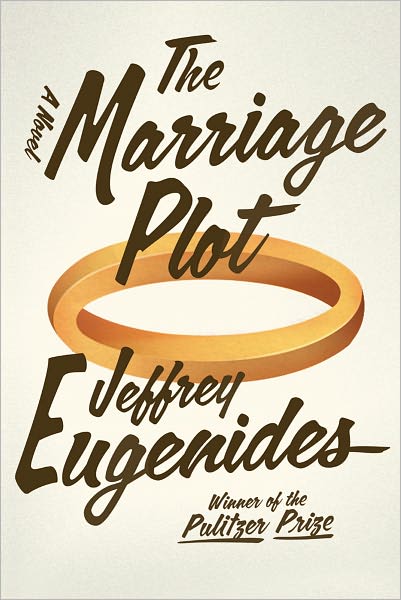
The Marriage Plot — Jeffrey Eugenides

The Marriage Plot is very competently done, and there’s nothing particularly wrong with it; some things may even be done particularly well. The problem is, as my faint praise indicates, a novel isn’t a student essay: it’s not enough for nothing to be particularly wrong. Something has to be smashing and fantastic for it to really matter. The Virgin Suicides, with its ceaseless questioning of what happened to the Lisbon sisters and its unusual narrative structure in the form of a chorus of outsider men who were once boys attempting to understand something they never quite can, had this quality. There’s a haunting, melancholy quality to the story and the way its told. Middlesex is imaginatively powerful because of Cal’s parents’ unusual relationship (does love conquer all, including biology?) and Cal’s own inter- or transexual state, which is so unusual amid novels that mostly cover straight people, occasionally cover gay people, but very seldom cover people whose bodies and minds don’t quite match like they should.

I keep copies of both Eugenides’ earlier novels, but I’m selling my copy of The Marriage Plot. I can’t imagine rereading it. In The Curtain, Milan Kundera wrote something that has long stayed with me because of how right he is:

Every novel created with real passion aspires quite naturally to a lasting aesthetic value, meaning to a value capable of surviving its author. To write without having that ambition is cynicism: a mediocre plumber may be useful to people, but a mediocre novelist who consciously produces books that are ephemeral, commonplace, conventional—thus not useful, thus burdensome, thus noxious—is contemptible.

Eugenides has that ambition. I concede The Marriage Plot might outlast its author. But I’m skeptical it will: the religious stuff Mitchell experiences doesn’t measure up, and the mostly banal problems faced by recent college graduates doesn’t quite live up to anything. Leonard is the only person with real problems, both in terms of his ailment (manic depression) and his work (as a biologist: he is confronting the natural world, and some of the most interesting sections describe both his efforts in taming yeast and his status in a science lab). Madeleine, like so many of us, is committed to love with a person who maybe isn’t worth it. In listening to her sister’s trouble, we find this: “like anyone in love, Madeleine believed that her own relationship was different from every other relationship, immune from typical problems.” She isn’t, and her relationship is more like that of other people than she’d like to imagine it to be. And The Marriage Plot is more like other novels than I want it to be.

There are long sections of background that we might not need. We find that “Leonard had grown up in an Arts & Crafts house whose previous owner had been murdered in the front hall.” Grisly, but not vital to the story. “[. . . ] Madeleine took the opportunity to make herself more presentable. She ran her hands through her hair, finger-combing it.” Nothing wrong with this: it’s just average. Maybe too Victorian. Later: “Ground personnel rolled a metal stairway up to the plane’s first door, which opened from inside, and passengers began disembarking.” Do we need this? Or can it be eliminated? On their own, these sentences are okay, and I’ve committed such sentences many times, despite Martin Amis warning me not to. I want to put this book on a diet, to convince it to render only the essential. Too much of it makes me want to cut more; I can also now say that the only thing worse than taking an essay test of your own is reading about someone else’s essay test, especially when that essay test involves religion.

There are also some strange sentences; this one makes me wonder if the last word is a typo: “Years of being popular had left her with the reflexive ability to separate the cool from the uncool, even within subgroups, like the English department, where the concept of cool didn’t appear to obtain.” What does “appear to obtain” mean? Perhaps it’s supposed to be “appear to apply.” The good ones are still good, though: “Dabney had the artistic soul of a third-string tight end.” I’ve met Dabneys. And I get what Madeleine gets: people who declaim one kind of hierarchy or status system are always setting up another, whether they recognize it or not. I also find it intriguing that Madeleine can be an intense reader and also intensely popular. The two seldom appear together in fiction. Perhaps the combination makes her an astute social reader of everyone but herself.

She also understands Mitchell, who acts as a beta orbiter for most of the novel. He provides her with extra male romantic attention mostly because he’s a fool, and she knows it on some level: “Mitchell was the kind of smart, sane, parent-pleasing boy she should fall in love with and marry. That she would never fall in love with Mitchell and marry him, precisely because of this eligibility, was yet another indication, in a morning teeming with them, of just how screwed up she was in matters of the heart.” Being “smart, sane” and “parent-pleasing” is another way of saying “boring.” He also doesn’t make a move when he’s effectively asked to. At one point, Madeleine takes Mitchell home and goes to his attic room wearing only an old shirt—then resents him for not making a move when he obviously wants to and she does too.

She has a point.

When Mitchell is too eligible, that “eligibility” gets held against him. And he buys into ideologies that encourage him to remain a fool. A priest says to Mitchell: “Listen, a girl’s not watermelon you plug a hole in to see if it’s sweet.” Tell that to most women who do the same of men. There are plenty of sexist assumptions in this statement alone to get a feminist writing an angry paper about women, innocence, desire, and sexuality. Perhaps you shouldn’t take romantic advice from someone sworn to a life of celibacy and thus ignorance in a realm that most of us take to be vitally important. To be fair, Mitchell mostly doesn’t, but that he’s seeking knowledge from a source like that tells us he doesn’t even know where to begin to look for help. And Madeleine exploits this weakness. She says, “[. . .] one night the previous December, in a state of anxiety about her romantic life, Madeleine had run into Mitchell on campus and brought him back to her apartment. She’d needed male attention and had flirted with him, without entirely admitting it to herself.”

Rather nasty. Even worse than he falls for it. The optimal solution for Mitchell: find another girl, ideally one hotter than Madeleine, and use the other girl as leverage. Moping around doesn’t get the girl. As Sean Connery says in an otherwise lousy movie called The Rock, “Losers always whine about their best. Winners go home and fuck the prom queen.” Mitchell hasn’t realized or internalized this. Contrast Mitchell’s neediness with that of his rival’s distance: “The more Leonard pulled away, the more anxious Madeleine became.” She’s desperate for Leonard, which enables him to make her like him even more. Mitchell is on the opposite side of this recusive dynamic. He should read Radway’s Reading the Romance, which describes how women like to read romance novels in which the heroine falls for major alpha males. Radway doesn’t use this term, of course, and works to explain away women’s preferences for alpha males, but the descriptions still shine through.

Still, there are funny bits to The Marriage Plot; on the same page where Madeleine assesses Mitchell as a beta, her mother says that she “saw a program about Indian recently,” as if “a program” on TV could convey much about the country—but wanting to say she’s seen it does convey a lot about her. She goes on to say, “It was terribly depressing. The poverty!” Mitchell says “That’s a plus for me [. . .] I thrive in squalor.” The unexpected reaction to Madeleine’s mother and reframing of expected values makes this funny and shows us that Mitchell isn’t the stiff he might otherwise appear to be. And the book isn’t the stiff it might otherwise be. It’s just not funny consistently enough or deep consistently enough. It’s a muddle, even when I do laugh at lines like, “Madeleine’s love troubles had begun at a time when the French theory she was reading deconstructed the very notion of love.” Love isn’t so easily eliminated, however: it only takes belief to sustain it.

And the characters are more self aware than I’ve sometimes depicted them here. Madeleine, for instance, knows that graduating from college, for a certain class of person who is expected to go to college, just isn’t that hard. On graduation day, “she wasn’t proud of herself. She was in no mood to celebrate. She’d lost faith in the significance of the day and what the day represented.” If college is mostly a test of showing up, it’s hard to blame her; and majoring in English probably isn’t very hard for most hard-core readers (it wasn’t for this one, anyway; to me reading was fun, which meant that I did so much more of it than most of my classmates that class itself wasn’t very hard). And she finds that the deconstructing education she receives isn’t much use when she’s confronted with the messy reality of interpersonal relationships, including her relationship with Leonard. Saying manic depression is a socially constructed discourse won’t get help like lithium will, even with lithium’s side effects.

Leonard’s stay at Pilgrim Lake, a biological research facility something like Cold Springs Harbor Laboratory, is among the novel’s most interesting sections. I would’ve liked it longer and Mitchell’s Indian sojourn shorter. Leonard is researching reproduction in yeast; this yields a predictable but impressive number of metaphors for human dilemmas. His work also can’t be solved by appeals to socially constructed discourse, and I suspect many of the scientists at the lab are more interesting than Madeleine at Mitchell. For example, Madeleine observes one of the very few female research scientists and observes:

Madeleine guessed that MacGregor [who just won a Nobel Prize] made people uneasy because of the purity of her renunciation and the simplicity of her scientific method. They didn’t want her to succeed, because that would invalidate the rationale for their research staffs and bloated budgets. MacGregor could also be opinionated and blunt. People didn’t like that it anyone, but they liked it less in a woman.

Tell us more about the “simplicity of her scientific method.” How does that relate to literary theory? Could we see MacGregor take more of an interest in Madeleine? Who are the people who “didn’t want her to succeed,” and how does she react to them? I wouldn’t want to turn the novel into Atlas Shrugged, but there are rich idea veins here that go unmined in favor of Mitchell’s noodlings. My suggestions are somewhat unfair, as I’m violating Updike’s first rule of book reviewing—”Try to understand what the author wished to do, and do not blame him for not achieving what he did not attempt”—but I think an exploration of gender in science more interesting than an exploration of gender and mating habits among relatively average 20-somethings. Maybe because I fit into that group I’m too close to the subject to find it remarkable, but I think the novel has a smaller-than-life quality to it, in the same way B. R. Myers describes Jonathan Franzen’s novel Freedom at the link:

One opens a new novel and is promptly introduced to some dull minor characters. Tiring of them, one skims ahead to meet the leads, only to realize: those minor characters are the leads. A common experience for even the occasional reader of contemporary fiction, it never fails to make the heart sink. The problem is not only one of craft or execution. Characters are now conceived as if the whole point of literature were to create plausible likenesses of the folks next door. They have their little worries, but so what? Do writers really believe that every unhappy family is special? If so, Tolstoy has a lot to answer for—including Freedom, Jonathan Franzen’s latest. A suburban comedy-drama about the relationship between cookie-baking Patty, who describes herself as “relatively dumber” than her siblings; red-faced husband Walter, “whose most salient quality … was his niceness”; and Walter’s womanizing college friend, Richard, who plays in an indie band called Walnut Surprise, the novel is a 576-page monument to insignificance.

The Marriage Plot is a much better novel than this, but one detects the same kinds of maladies at work: “dull minor characters,” a problem beyond “craft or execution” (which are, again, well done here), “little worries” for the most part (until an unconvincing ending), and a general feel that life is elsewhere. Around the same time, Bill Gates, Steve Jobs, Bill Joy, Richard Stallman, and many others were coalescing around Silicon Valley to change the world. I wouldn’t be communicating with you right now via this medium if it weren’t for their work. Which isn’t to say every novel set in the late 70s or early 80s should be about computers, technology, or technologists: but in the face of banality, I can’t help drifting toward thoughts of people whose work really, incredibly, resolutely matters.

Eugenides is clearly interested in the inner workings of people—the problem is that Mitchell and Madeleine do not have particularly interesting or engaging insides. Mitchell needs a copy of The Game to be time-warped to him, stat, and Madeleine needs to better realize what reading nineteenth-century novels should prime her to know: that she’s not the first person in the universe with unwise love decisions or family problems. Why doesn’t she better analyze her own situation in terms of the novels she loves so much? Why doesn’t she better realize that, yes, her life could be one of the fragments in Roland Barthes’ A Lover’s Discourse? It could be, as Eleanor Barkhorn says in “What Jeffrey Eugenides Doesn’t Understand About Women,” that Madeleine doesn’t have any real female friends, but I’m not convinced: I’ve met women who have few or no real female friends, and I don’t think that aspect of Madeleine’s life is unrealistic. The bigger problem is her lack of friends in general, so those friends can’t say the obvious to her: Why Leonard? Do you realize what you’re giving up? And if she does, and she gives up much of herself anyway, then the problem is her own blindness—a topic that I don’t find tremendously satisfying to read about, since it basically implies Madeleine is stupid. Characters can only be stupidly blinded by love for so long before one removed the “blinded” and turns “stupidly” back into a noun.

Most of my problems with the novel aren’t with its prose on a micro level, although it has those issues: it’s with the dearth of real ideas in the novel. It doesn’t quite go with the literary-theory-as-life metaphors, which drop out partway through. It doesn’t quite go with the alpha-beta-male decision that Madeleine faces. It doesn’t quite go with the manic-depression-as-serious-issue-maybe-linked-with-creativity issue that Leonard has. It’s a host of “almosts” that reminds me some of a sunnier version of Michel Houellebecq, especially in The Elementary Particles and Platform.

Houellebecq, however, is willing to engage in a kind of brutal realism—for lack of a better phrase—that Eugenides doesn’t get to. Yet that’s what the characters need: less understanding of their petty problems and more context, or a harder eye, or someone to smack Mitchell and Madeleine, then explain both their problems. I could explain their problems. I’ve met a million Mitchells and Madeleines. Hell, I used to be one in some respects. But the world has a habit of correcting your faults, if you’re paying attention to the signals the world is giving. Mitchell and Madeleine aren’t. That’s what makes them so unsatisfying. As three of the characters go, so does the very, very competent novel that doesn’t get past competence and into transcendence.


You can read my initial impressions here.

Thoughts on the first 100 pages of Jeffrey Eugenides' The Marriage Plot

1) I would have stopped reading The Marriage Plot if it weren’t also related to some of my academic work. It captures the feel of slogging through a 19th Century novel. As you might imagine, this isn’t a compliment.

2) Until about 100 pages in, no characters have real problems. They have fake, rich-college-student problems. I’m not opposed to such problems for the people experiencing them—I remember having similar ones and thinking they were significant at the time, too—but the real problem in the form of Leonard’s psychotic breakdown should arrive closer to page 40 or 50. Madeleine’s minor undergraduate affairs are much less interesting and hilarious than Karen Owen’s “An education beyond the classroom: excelling in the realm of horizontal academics” (which is a PowerPoint document). Owen’s work feels more honest.

3) If you want a better but less hyped novel about the undergraduate experience in an Ivy-League setting, try Tom Perrotta’s Joe College. Notice that you can also get the hardback for $4, shipped, from Amazon. Notice too how Danny in that novel has real problems: he’s a fish-out-of-water, his father’s business might be falling apart, and his actions have real consequences for him and others around him. He has to master a skill (being a lunch-truck driver) and understand that skill. Failure may result in his ejection from Edenic Yale. So far no one in The Marriage Plot has a real job; they’re like characters in Jane Austen. There may be consequences coming in the latter sections, but based on the dust jacket (a trip to India to find one’s self, a possible stint in grad school), I’m not optimistic.

4) Eugenides’ earlier novels both have major conflicts and problems from the beginning: Middlesex asks how to survive and adapt as a transexual (who as a group still have major problems in contemporary society, compared to average heterosexuals) and how to flee dictator-encumbered countries, while The Virgin Suicides (probably my favorite of Eugenides’ work) asks about what really happened to the Lisbon sisters—and, because of the very clever narrative structure, we can never really find out. It’s teasing yet effective, melancholy and happy, a meditation on how we understand the past, deal with love, grow up, don’t grow up, and much more. That last bit sounds grandiose and stupid, but in the context of the novel it’s not.

5) Given the timeline in the section I’ve read so far—late 1970s, early 1980s—I keep thinking about the most consequential thing happening in the world at that time: the personal computer revolution in Silicon Valley. Jobs, Wozniack, Gates, and millions of other, less famous names were building the future. This is an insanely unfair criticism of a novel, but it’s stuck in my mind anyway, like a background process that occasionally pops an alert into my consciousness: some people are doing real things. I dismiss the alert, but it’s set to go off occasionally anyway, and I don’t have the heart to sudo kill -9.

EDIT: I was reading Hacker News this morning and found this:

The offices of Zelnick Media were packed on a recent evening for #DigitalWes, an alumni gathering for the graduates of Wesleyan University who had made their way from jam bands and cultural theory to the warp-speed world of Silicon Alley. Guests nibbled shrimp and steak skewers while taking in a sumptuous view of midtown Manhattan from the roof deck. The hosts were Strauss Zelnick and his partner, Jim Freidlich, both class of ’79, whose Take Two Interactive has produced some of the best-selling and most controversial video games of the past decade.

Same demographic, same timeline, note the mention of “cultural theory.”

6) Reading The Game has spoiled me on excessive beta-male behavior. Watching Mitchell around the beautiful and distant Madeleine mostly makes me want to tell him what he’s doing wrong. The Game was published in 2005, so saying this about a novel set before The Game’s publication isn’t fair, but the book still crystalized for me a) what not to do, b) how to eliminate certain kinds of obviously unsuccessful mating behavior, and c) how to think systematically about useful principles in men dealing with women. Being a whiny hanger-on to a person with relatively high dating market value is not good for Mitchell or for Madeleine, the object of his desire. Note that this is not limited to men: I also have low tolerance for women who spend long periods of time throwing themselves on distant alpha males who at best hook up with and then dump them. Don’t want to be hooked up with and dumped? Don’t chase alpha males whose primary attraction appears to be their unattainability. I don’t love novels whose characters’ primary problems can be solved with a simple, one-line piece of advice that, if followed, will result in the solution to said problem.

7) Nineteenth-century novels are not good guides to behavior in the 21st century. Hell, they’re not even good guides to behavior in Brown in the 1979 – 1983 period. This is as true for Madeline and for others. Literary theory is also a pretty crappy guide to real life, which may be part of the reason theory’s hold on English departments has loosened in the last 30 years. Still, perhaps the most hilarious and best scene involves Madeleine throwing Roland Barthes’ A Lover’s Discourse, which alleges that there is no such thing as love, only the speaking of love, at the boy she loves.

8) I can follow the inside-baseball parts of literary theory (Barthes, Derrida, and other English-department heroes appear, mostly as signals of what various characters believe), but I doubt such things would be of great interest to anyone not in English departments. This relates to #5: it turns out that the really important stuff happening in this time period is happening among tech people, not among grad students in the humanities. A novel about someone who jumps from the one to the other might be interesting, and it could dramatize events with real consequences that don’t automatically revolve around sex and death. Intellectual curiosity is an underutilized motivation in fiction.

9) Another book to read if you want campus-war stuff: Richard Russo’s Straight Man, which is also much funnier.

EDIT: 10) See my full review here.

Reading How Fiction Works

I finished re-reading How Fiction Works a couple days ago—it is always a good time to re-read How Fiction Works—and realized that, every time I read it, I recognize a few more of the author-characters it mentions. This time, Effi Briest caught my eye: what was once another blank reference, noted and moved past, had now become freighted with meanings and impressions. The experience reminded me of how I used to feel going into bookstores or libraries. The real question for the younger me was, “How can anyone possibly make decisions among ten of thousands of choices?” There were so many books with authors I’d never heard of. How do you find the one you want to read among all of them? By reading thousands of dust jackets?

Now, I scan the shelves of bookstores and see more than names and cover art: this writer I’ve already read and didn’t like; this one I’ve already read and liked, but I’ve read all her work; this one I heard about through a blog post; this other one appeared on Bookworm and made his book sound boring. The challenge has changed from merely knowing something about what’s on the shelves to finding something I could actually want to read among many books I know I don’t want to read.

When I first read How Fiction Works in 2008, I didn’t stop at every reference to an author I didn’t know because I never would’ve gotten through the damn thing. Plus, as much as I love Wood’s criticism, I’ve also realized how different our tastes are; Wood quotes from Adam Smith writing in the eighteenth century regarding how writers use suspense to keep interest and says, “But the novel soon showed itself willing to surrender the essential juvenility of plot […]” I find that deeply wrong: a novel without plot is veering close to badly done philosophy. So many, though by no means all, of the novels he loves aren’t likely to have much in the way of plot. When I read amateur writing, I often notice the lack of any plot and often suggest the writer think about things like what the main character is reacting to, what the main character wants and why he can’t get it, what subsidiary characters want, and so on. A writer doesn’t, of course, need to be able to answer every one of those questions, but I get the impression a lot of beginning writers don’t ask them.

Wood actually comes very close to suggesting something similar when he writes

The unpractised novelist cleaves to the static, because it is much easier to describe than the mobile: it is getting these people out of the aspic of arrest and mobilised in a scene that is hard. When I encounter a prolonged ekphrasis like the parody above, I worry, suspecting that the novelist is clinging to a handrail and is afraid to push out.

But Wood’s definition of “push out” is probably different from mine, even if the ailment he diagnoses is the same. And it’s amazing to realize just how many of the things I inchoately knew before I read How Fiction Works are discussed, described, dissected, elaborated in the book. And now, as I said, when I come back to it, I find my gaps in knowledge filled in. Here’s another example of that, this time dealing with a critic:

Gabriel Josipovici discusses Beckett in [. . .] On Trust (2000). He points out that Foucault liked to quote from The Unnameable, as evidence of the death of the author: ‘No matter who is speaking, someone says, no matter who is speaking,’ wrote Beckett. Josipovici comments that Foucault forgets that ‘it is not Beckett saying this but one of his characters, and that the point about that character is that he is desperately seeking to discover who speaks, to recover himself as more than a string of words, to wrest an “I” from “someone says”.’

Gabriel Josipovici: he wrote Whatever Happened to Modernism?, a book I half-liked and wrote about at the link. Maybe one day I’ll read the book, recognize every reference, and wonder whatever happened to that person who first read it in a relative fog.

Links: Why Software Is Eating The World, reading for the plot, Brooklyn, the writer as hustler, Moleskine lies, and more

* Why Software Is Eating The World by Marc Andreessen—one of the most impressive essays I’ve read recently.

* Has plot driven out other kinds of story? The market’s stress on keeping stories moving means we’re in danger of losing some truer fictions. If anything, it seems like the opposite to me, but that might be an artifact of the books assigned in graduate school.

* How sad: “It’s a Pattern: London Rioters Are Leaving Bookstores Untouched.” Rather sad, this. When I’m in restaurants or out and about, I make sure to take expensive electronic devices with me if I have to leave for a short period, but I leave books on tables; they’re always untouched.

* File this under, “Really?”:

[Brooklyn] may own only a small sliver of America’s attention, but as Mr. Hughes writes, “more people live in Brooklyn than in San Francisco; Washington, D.C.; Boston; and Miami put together.”

As I wrote in an e-mail to a friend from the borough, “Maybe one day I will be there, with a $4 latte, a fixie, literary pretensions, and a jaunty hat.” Also, the linked essay, “I Write in Brooklyn. Get Over It, is fucking hilarious, as my students say.

* What happens to doctors who think outside the box? Answer: nothing good.

* Goodbye, cruel Word.

But: I’m not sure programs like Scrivener will be useful to most people, for reasons tangentially related to this post on Scrivener and Joyce.

A lot of people, based on the amateur writing I’ve seen, don’t need a fancier way of arranging words so much as they need to improve 1) the quality of their sentences and 2) how one event drives another in their plots. I worry especially regarding point 2) that Scrivener lets people work in parallel when they should be working in serial, with one event driving another organically. Too much amateur writing I see is, for lack of a better term, plotless: meandering around feelings, or random encounters, or designed to show how *deep* the author is—instead of telling a story.

Scrivener will help with some things, as I’ve written elsewhere, but I’m not sure it’s really enough for the vast majority of what writers and would-be writers are working on.

* On English as a language:

[. . .] there’s no subject, however technical or complex, that can’t be made clear to any reader in good English—if it’s used right. Unfortunately, there are many ways of using it wrong

This reminds me of the Grant Writing Confidential post How to Write About Something You Know Nothing About: It’s Easy, Just Imagine a Can Opener.

* Do Sex Offender Registries Reduce Crime? Answer: Probably not, or at best modestly, in part because such registries are too broad. As Tabarrok says:

Bear in mind that teenagers having sex with other teenagers, hiring or trying to hire a prostitute and even streaking can make a person fall under the sex offender statutes. Moreover, contrary to popular belief, sex offenders have low recidivism rates, much lower than for most other crimes.

* I Wrote It, Must I Also Hustle It? Apparently so.

* Does a Moleskine notebook tell the truth? Answer: probably not. I’ve been trying various notebooks over the last couple months and have probably settled on the Rhodia Webbie, an unfortunately named but quite nice notebook that appears much more durable than its competitors. More to follow.

This Beautiful Life — Helen Schulman

I heard about This Beautiful Life in a New York Times review and immediately worried: the novel sounded similar to the novel I’m working on that doesn’t have a title (I’m referring to it as “The Teacher Novel”). But reading This Beautiful Life makes me happy because the Teacher Novel is definitely not worse and almost certainly better. This Beautiful Life is too frequently boring; it’s disconnected from itself (the very short first and last chapters are effective and engaging, however). Anita Shreve’s Testimony and Tom Perrotta’s Election cover similar territory far, far better.

Other comparisons work too. Reading the first long section of This Beautiful Life, which belongs to Liz, the mother, made me reread the first three chapters of The Great Gatsby, because Gatsby isn’t just better, it’s on a whole different plane, even though it’s also covering the banal problems of rich New Yorkers. Gatsby retains its ability to amaze, especially at how deftly Fitzgerald transitions from scene to scene. He’s so damn technically good that 1) I wonder / doubt if I’ll ever do anything as good and 2) Schulman looks unfortunate in comparison (funnily enough, Jake, the 15-year-old boy, reads Gatsby towards the end; I wonder if he learns anything).

Schulman avoids transitions by not writing much in scenes. There are some good sentences (one example: Liz, Jake’s mother, notes his height and says that “It was as if, suddenly, three extra vertebrae had been added to the staircase of his spine”) and amusing bits, but most of the novel isn’t composed of scenes, and the writing isn’t quite enough to make up for that. I feel like I’m reading weekend New York Times articles on overly yoga-ified Upper East Siders. The novel lacks the fiery pop at the end of Election‘s chapters, as it does tension. The father, Richard, has the strongest section, mostly because he actually does something, instead of sitting around being acted on.

Like Testimony, This Beautiful Life has the problem of having a single, main event, without any other plot points or subsidiary issues, but Testimony has more voice. It has more knowledge of itself. This Beautiful Life also got a moral problem: a 13-year-old girl named Daisy sends a 15-year-old guy named Jake a sex tape, and he forwards it to one person. Who cares? She did it willingly, and although she’s young it’s apparent she has sufficient knowledge and agency of what she’s doing to make the question of her agency unimportant. The novel is set in 2003, which is essential: if it were set closer to the present, the idea of a sex tape becoming a social conflagration beyond the confines of high school would be wildly improbable.

I feel like the New York Times reviewer, Maria Russo, read an entirely different book than I did, or hasn’t read This Beautiful Life’s predecessors. Schulman teaches in New York, and I wonder if getting the cover of the book review was a sweetheart deal with Russo, her agent, and/or the book review editor (if so, I’d love such a deal). Not everything that makes the NYT Book Review cover is aesthetically or intellectually interesting (here I’m thinking of Angelology, an utterly forgettable book). Russo assume that social and cultural mores are permanent (“What can the future hold for unformed, vulnerable kids who bumble their way into the lowliest realm of the permanent record that is the Internet? (Or, in Daisy’s case, reach it by simulating sex with a toy baseball bat.) Should their parents be held responsible, or are they equally victimized by the seductions and traps of digital life?”) instead of fluid. Russo gets to the idea that cultural mores, but not until the last paragraph. I would’ve liked a stronger historical sense. These criticisms may be due to the brevity of the venue: the NYT only allows so many words, and I think her review is in the neighborhood of 1,200.

I suspect that, if it hasn’t happened already, sexting will be pretty normal and not enough to drive plots in the near future. For guidance on changing mores, look to the past. In 1900 – ~1965, you could drive plots using the question of whether teenagers have sex, given how much of society was set up against that. Today, if you did the same, you’d have to use religious prohibition or something similar to drive the plot, which isn’t very satisfying because the solution (“stop being a religious wacko; your parents are unreasonable”) is obvious. Caitlin Flanagan get some, but not all of this—I’ve seen her work in The Atlantic. We’re seeing the phenomenon of “shocking” behavior becoming normal much faster than we used to, which makes me worried about the Teacher Novel, because it might not age well if behavior considered daring or inappropriate today becomes obvious tomorrow. Fortunately, I think the central questions avoid sex tape plots, but still: looking at changes throughout history make me wonder what’ll happen next.

For example, one grad seminar assigned Dreiser’s famous novel Sister Carrie, which was apparently shocking for its day (IIRC, it was published in 1900, though it might be a little later—1910?). Reading it now is banal. Who cares if a woman divorces one guy and marries another? I wonder if these narratives about teenage sex tapes will have the same effect in the nearish future, once people who’ve grown up with sending naked pictures of yourself as a standard practice; Penelope Trunk gets this, but she’s uncommonly opened minded, and I sense a generation gap (am I on the wrong side, I wonder?).

The first and last pages of This Beautiful Life are very good and describe Daisy. The sex acts that begin this novel (and Testimony) are effective attention-getters because most people don’t believe or want to believe that 12- and 14-year-old girls can be sexual (raising the question: have most people forgotten what it’s like to be 12 – 14?). The second paragraph is a single sentence: “Still think I’m too young?” It’s a provocation, but the description isn’t sexy: she has “a hunky ponytail” and “A little roll of ivory fat nestled above the waistband” of her skirt. The suggestion is powerful anyway, and the pages to follow are largely the lead-up and comedown from the two that begin the novel. This has the unfortunate side effect of draining narrative tension; Election avoids this problem through a shadow story about how the party happens, which isn’t revealed until the very end of the novel. This, along with the sheer diversity of voices, makes it a better novel.

Still, This Beautiful Life is a reminder that the novel as a genre is still going places movies and TV can’t or won’t. If a director portrayed a video of a girl who in this scene: “The breasts inside were small, and at first she covered them with her palms, fingers splayed like scallop shells. Then she unhooked the bra in front and they popped out as if on springs”, she’d be arrested for depicting someone under 18 in a sexualized circumstance with nudity. The director could hint and imply but couldn’t show what the novel describes.

I have to read the first paragraph of the second section ironically: “As with so many things of consequence, it all began with a party.” It seems highly unlikely that many “things of consequence” started with a party; an idea, a conversation, a scribble in a notepad, maybe, but a party? Seems improbable. Pages 10 and 11 of the hardcover have a lot of superfluous stuff. I took a picture of a page with my edits, where I remove sentences the book doesn’t need. In rereading of Gatsby, part of what’s so amazing is how essential most of it feels. So mysterious. We don’t even meet Gatsby until chapter three, and then by accident. One of the novel’s letdowns is in Chapter 6, where Nick suddenly regurgitates a bunch of stuff about Gatsby’s supposed background (this is similar to what Mark Sarvas mentioned in 2007: that it’s important not to become overawed by the great). Too much of the novel should be tightened like the face of the mothers Liz lives among. On page 100, “Richard felt the skin on his face tighten.” You could remove that sentence and lose nothing. There’s also a strange mistake: Schulman writes URLs as “feigenbaum/blogspot.com,” when Blogspot URLS are always in the form feigenbaum.blogspot.com. It’s minor, but it galls.

So do aspects of the characters. Take this early scene from Liz:

It’s your butt or your face—you can’t have both, Liz thought. Some movie star had said this; she’d read it or heard something like it somewhere, and had stored a smudged replica of the quote in the hash of celebrity trivia her brain had accumulated without effort, along with all the other stuff and nonsense that passed for knowledge these days from print magazines and whatever: TV, the Net, idle chitchat, the air . . . But it was true, about your butt or your face.

The “hash of celebrity trivia” is what’s so odd to me about Liz: she used to be an art historian. She got a PhD in art history. Yet little to no knowledge of art, art theory, aesthetics, or related subjects trickles into her thought. By now I’ve met lots and lots of academics, and the ones who stick it out to the PhD don’t do so for the money, which is practically nonexistent; they do do so for the love of their subject. It’s bizarre that Liz imparts so little of this in her thinking; she says that “her dissertation had distinguished itself because she’d focused on the synthesis of art, design, and dance in a new and radical way” {Schulman “Beautiful”@38}. But what way is that? How does it differ? Liz “couldn’t remember the subtitle” of that dissertation, which is understandable: titles are easy to forget. But much of the content appears to have gone the way of that subtitle. If art plays a real role in her present life, it’s well-hidden.

People’s professions cast shadows over their conversation, but Liz’s appears to be a veneer that lies no deeper than the letters after her name. What happened to all the knowledge she must have acquired? Why doesn’t she ever think in ideas? Characters content to surf on the world of everyday minutia are boring; one thing that sets science fiction apart from other kinds, at least in the view of Neal Stephenson, is its focus on ideas. He elaborates in this Salon interview, where he defines science fiction’s big tent as

Fiction that’s not considered good unless it has interesting ideas in it. You can write a minimalist short story that’s set in a trailer park or a Connecticut suburb that might be considered a literary masterpiece or well-regarded by literary types, but science fiction people wouldn’t find it very interesting unless it had somewhere in it a cool idea that would make them say, “That’s interesting. I never thought of that before.” If it’s got that, then science fiction people will embrace it and bring it into the big-tent view of science fiction. That’s really the role that science fiction has come to play in literature right now. In arty lit, it’s become uncool to try to come to grips with ideas per se.

Knowing something of celebrity gossip doesn’t automatically preclude one from having ideas, thinking about ideas, or thinking about what might go beyond the tiny halo of an individual life. Thinking about ideas also isn’t incompatible with worry about the body, sexual attractiveness, how others respond to the body, and so forth. But this moment is emblematic of why Liz, as a character, tends to be boring: she doesn’t have access to those ideas. The writing isn’t as crisp and mysterious as Fitzgerald’s (but then again, whose is?). The structure isn’t as sharp as Shreve’s or Perrotta’s.

If Liz had really been the house intellectual, the person who understands the deeper cultural structures underlying what her family is going through, she could’ve been a fascinating character. Instead she seems to have hung up her mind when she became a former. I suspect not all women do. The noun she uses in the passage above—”trivia”—is the problem: her life appears to have become trivia. This isn’t a fact that dooms her altogether, but if you can’t rise beyond trivia, then why bother? And I’m not asking that she cite Foucault or tedious theoretical windbags; I’m just asking for more awareness of her own situation. Give me some cool ideas about what things are about. Literature that endures has ideas; Jane Austen, whatever her faults, is constantly questioning how families and social relationships should work. Her characters are attuned to the minutest questions of status. I’d like to see the same here.

Liz has some faint idea of her problem, since she notes the “nonsense that passed for knowledge.” But it doesn’t pass for knowledge “from print magazine and whatever:” it passes for knowledge because she consumes it. Anytime she wants, she can skip US Weekly and pick up The Atlantic. But she doesn’t.

This passage isn’t bad on its own; if it were embedded in a story with more power, I’d take from it what I think Schulman was shooting for: Liz’s struggle with the wealthy but stultifying environment she’s in and can’t easily leave without harming her family and her husband’s work. It’s a worthy struggle, but a frustrating one because Liz should have the intellectual and financial tools to understand it. But she chooses not to use them, and a character who seems pointlessly helpless is a tedious character too. And Liz does have some real thoughts. In this scene of self-criticism, she’s looking at her ex-flings writing and says:

He was smart, funny, but still immature. He hadn’t seemed to have developed distance from his own dilemmas or learned how to structure a narrative. At what point did potential, budding and nascent, turn into stagnancy? At what point did stagnancy equal tragedy? Is that what made midlife unendurable for so many? Is that what made each and every day feel so damaging?

All this is plausible, and notice how she moves from the guy’s writing to her own life: she stats off talking with him, and by the second sentence you still think she’s talking about him. By the third—”At what point did stagnancy equal tragedy?”—you get the idea that she’s not talking about someone else. She’s talking about herself, as critics so often are when they write criticism. So she gets some self-analysis by the end of the story.

So does her son. Jake is uncommonly knowledgeable, like so many adolescents in fiction; he notes how teenagers mostly “walked around, calling out to one another, ‘S’up. S’up.’ It was rhetorical, not ever a question. Nothing was up, usually, unless something was. They were kids; they were terminally looking for something to do.” They don’t find it. At the very least, this passage feels dangerous, knowing what we know about the novel from the dust jacket and the first two pages. There’s a sense of a transgression. But you’ve read these scenes before, especially if you’re a regular young adult reader, but Jake’s crush on a girl of Chinese descent is endearing; he notices what she wears and “thought Audrey’s haircut made her look French, although he had no idea really what that meant.” Who does, really? Maybe someone who’s read La Seduction. That he wants Audrey drives him forward and toward Daisy, who wants him and sets about luring him via video. Lesson: people do strange things for love. Perhaps it’s a lesson we already know, but so it goes.

He understands Daisy slightly better than his mother does: Liz says of Daisy, “That poor, wretched, stupid girl. Marjorie says the mother’s always away somewhere, that even when she was little she was always picked up by a nanny.” As if someone who wasn’t picked up by a nanny would automatically never make a sex tape. Plus, Daisy presumably wouldn’t have made the tape if she didn’t think it was a good idea; perhaps she has a high discount rate, and adults, with lower discount rates, are thus unhappy because they’re judging someone they don’t understand. Her husband does the same thing, but intentionally, to a reporter. He says that of the video “It looked like a junior league Debbie Does Dallas. I don’t know where the girl learned this stuff.” The answer is obvious: the Internet. Of course, lots of people “learn” stuff of this nature from the Internet and turn out to be perfectly okay, as Daisy does.

But Richard understands something that he doesn’t want to define; he watches the video (all the adults do, and one gets a prurient swirl of surveillance). When he does, he uses standard moralistic language, but he also notes, basically, that it’s also hot, a way similar to some of the comments in Testimony, when either Mike or Rob is describing the tape of Sienna. If someone is being intellectually honest, they have to acknowledge that erotic power isn’t flipped on like a switch when one turns 16 or 18. In some people it develops early. When Richard sees the video, he also says:

And for all the video’s dismal raunch, its tawdriness, for all its sexual immaturity and unknowingness, there is something about the way this girl has revealed herself, the way that she has offered herself, truly stripped herself bare, that is brave and powerful and potent and ridiculous and self-immolating and completely nuts.

He’s right; the nuttiness, the sense of going beyond the bounds, gives the video its power (does this language sound familiar? It’s similar to how I described Ariel Sands’ Never the Face). In the end, there can be something about such a video. Richard doesn’t understand everything; he says that “It looked like a junior league Debbie Does Dallas. I don’t know where the girl learned this stuff.” The answer is obvious: the Internet. Of course, lots of people “learn” stuff of this nature from the Internet and turn out to be perfectly okay, as Daisy does. The novel needs to be set in 2003, because if it were set in 2011, a viral sex tape wouldn’t be so shocking, and I’m somewhat confident that high school students have developed antibodies for the event (from what students tell me, that’s true).

What’s normal today may not be normal tomorrow, and, thus, the worries about the tape might eventually be as strange to us as Seventeenth Century European schisms and wars. Manufactured drama around sex can make the amorality of Gossip Girl attractive by comparison. What would Blair say to Jake and Daisy?

Virtually everyone in this novel is reacting to things. Jake reacts to Daisy. Liz reacts to circumstances. Richard reacts to Jake. The only person who really acts on their own volition in the novel is Daisy; if anyone’s the hero, she is. That the hero gets to say so little is unfortunate. Notice how The Great Gatsby is driven by several great wants: Gatsby’s for Daisy; Daisy for excitement or some way out of her stultifying life with Tom (he who cites The Rise of the Coloured Empires), Nick’s for figuring out who Gatsby really is. Without all that want, like the voice of “I want, I want” in Henderson the Rain King, you wouldn’t have a story in The Great Gatsby. You’d have a series of still lifes. This Beautiful Life is more animated than a still life but less than The Great Gatsby. It shows so much promise, and The Great Gatsby keeps creeping up in it.


She’s gotten a lot of good press. The NYT review is above; the Paris Review blog interviewed her. The Washington Post has a banal review not worth linking to. Reading such reviews reminds me of why I like James Wood so much, even when I disagree with his assessments.

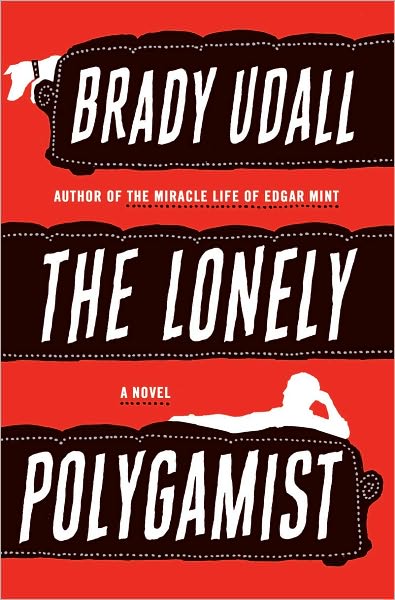
Brady Udall’s The Lonely Polygamist Interview: Part II

You can find part I of the interview here, including the context of this interview.

Jake Seliger: [Ideological conformity] seems like one of the conflicts between Beverley, who I think is homeschooling all of her children, and the—

Brady Udall: Right, Roland and Rose-of-Sharon, when all the other kids are at public school.

JS: Where they’re known as what Rusty is very aware of—as a Plig kid, which has a pretty obvious negative connotation.

BU: Polygamists face these kinds of feelings almost anywhere they live.

JS: It reminds me of—I went to high school outside of Seattle [in Bellevue, for those of you wondering]. At my high school, we had a relatively large Mormon population. There were also some—not a lot, but some—mainline Christians. The mainline Christians often thought the Mormons weren’t real Christians.

BU: Sure.

JS: And the Mormons would sometimes be a little, well—I mean, most of us were busy drinking and taking SATs and having sex, but—

BU: But that goes on and on. We’re out trying to convert the Baptists, and the Baptists are saying we’re not Christians. There’s going to be those conflicts everywhere. And more. Those conflicts exist in my own marriage. You know, it’s me and one wife. I just can’t imagine—you put two or three more wives in there.

JS: There’s also this establishment of what Golden’s life feels like. Early on, there’s a section that says, “Normally there would’ve been a crush of children waiting at the door, all of them shouting at once, pulling his clothes and asking what he brought them. The little ones standing on their heads, displaying some new bruise. Look at me! Look at me!” That little interjection there—look at me, look at me—is a lot of what’s going on among the children and among the wives. The wives are hanging back, waiting for their chance to lay claim on him, almost like he’s a piece of land. Just that phrase, “to lay claim on him—”

BU: Yeah, well that’s exactly it. The active verb is not his—it belongs to everybody else. And so he becomes more of a figurehead.

JS: Right.

BU: He’s like the president, you know what I mean? He is who you want him to be. But there’s a person there.

JS: When we enter his consciousness, we see his point of view, and he’s not really—he’s less concerned about dealing with each individual child and more concerned with Huila. He’s concerned the construction site. He’s concerned with his wives. It seems like the children are more concerned about him in many ways, than vice-versa.

BU: Yeah. He doesn’t have the wherewithal to deal with anybody individually. And I really wonder sometimes if the person who exists who can do this. You know what I mean? Maybe there is. I don’t know.

JS: It’s hard to wear the crown. Even if you want to be the king.

BU: I guess so. I just don’t know that this could be done. I don’t know where the cutoff. I was one of nine kids. My Dad did the best he could. But is it enough? What does a kid need? I’m not sure. I think it’s a pretty interesting question, actually. Most cultures, you know, want you to have more kids. Now we have two. Has it gotten any better? Have parents gotten better? Do kids become, you know, more mature, better readers now? It doesn’t seem like it. You know what I mean? I don’t know. . .

JS: What’s ideal. Or if there is such a thing.

BU: That’s what I’m saying. I don’t think there is. We’re telling ourselves that we think we know. It’s better to have fewer kids. I just went and said, is 28 obviously too many? I don’t know. It’s a good question.

JS: The issue of children is present because—in the interview you did with Powell’s Books, you said your characters were like having children. So what’s it like, then, having a child in the form of Golden, who’s in turn dealing with all the rest of these children?

BU: That’s a good question. As a writer, that’s very difficult. I look at myself as kind of a Golden. I put myself in his place, and I’d be like, “Damn.” So as a writer, dealing with all these characters, trying to keep track of them all, trying to understand what all their motivations are—it’s just a huge, daunting task. That’s why I write 1,400 pages. It was hard. But I guess I just wanted to do it right. And I had to go all out. I couldn’t do it halfway. I couldn’t easily. . .

JS: Abandon your literary children?

BU: I could have, you know, ten children. It would’ve made things easier, with only two wives, or three.

JS: But that would probably be less chaotic feeling.

BU: Yeah, that’s what I really wanted—that really big family. Because, you know, when I grew up, it was a family that wasn’t polygamous, but there were 16 kids. So it still happens. I want to go beyond anything that could naturally happen, in a regular American household. And it does, in polygamous households, around this country.

JS: Sixteen children goes back to the old Groucho Marx quote, I like my cigar but I take it out of my mouth every once in a while.

BU: [Laughing.] I haven’t heard that one.

JS: I’m surprised. It seems appropriate.

BU: It seems applicable, doesn’t it? I should mention that one to my Dad.

JS: Yeah.

BU: And we have versions of that, but yeah. But sometimes you wonder why. You see people with all these kids and sometimes the first question you want to ask is, “Why?”

JS: If you have a religious injunction against birth control, that’s where some of the culture gets going—

BU: That’s right, that’s right. And that’s an important part of all this. And you probably remember that Golden looks at the thing, the condoms, I remember the thing—it was imbued with the power of dark and benevolent Gods, or something like that, like a ring in a fantasy novel.

JS: That’s not at all how I view you. You know, you go into Rite Aid to buy 20—

BU: You know, with 28 kids—it’s such a possibility that’s not even available to you. That was the question—why would women have so many children? Well, that’s the whole point.

JS: Yet at the same time, that’s ultimately the tipping point for Trish to cheat.

BU: Absolutely.

JS: Because feels he’s not going to get the job done.

BU: He’s not going to get the job done. And that’s a very simple equation. You’re right. Their desires are at cross purposes. She wants to increase the family. He’s scared of the family. He doesn’t want it to increase anymore.

JS: He also has a million other things that are concerning him.

BU: Anyway, so that works out. That kind of conflict. That’s what story is. Put two characters in the same place with different desires, and that’s a story.

JS: I feel like I just walked into the Brady Udall creative writing seminar—

BU: Yes, yes, this is creative writing class.

JS: How do your students respond when you tell them variations on that theme?

BU: Well, they listen, but I don’t know if they always act. I just try to make it sound simple. They don’t seem to always believe me, that it’s that simple.

JS: It reminds me of your comment—I think you said, that’s the only thing worth addressing in literature—death and how we deal with the loss of people we care about.

BU: That’s right.

JS: Obviously, a fair amount of that comes in here. It sounds like you’re channeling Leslie Fiedler, in Love and Death in the American Novel. So my question would be, why death? Why not the love half of that as well?

BU: Well, obviously, there’s love and death. And love is the only thing that can overcome death. I think Fiedler talks about that. I’m just more interested in the death part. And the reason death is so meaningful is because of love. It all becomes the same thing. It wouldn’t matter if we didn’t love the people who go [I wonder if science fiction is exploring this space], who disappear from our lives. So love is a huge part of that. It’s not just death. I’m not as interested in romantic love. I don’t know why. I guess I’m just not a romantic person. I tend to leave that out. Even in this book, there’s certain kinds of romance going on, but I think it’s clear I’m not as interested in it. So it’s probably just a personal thing.

JS: Right. And the characters—they all seem to be driven by desire, but often not by desire for the person who they should want to desire.

BU: Right.

JS: You see that with Golden—

BU: We use other people to escape the people we should be with.

JS: Part of Rusty’s problem is his age, part is because of his circumstances—there is no one for him. No one who would be appropriate for him.

BU: Right. It’s totally true. His desires are totally inappropriate.

JS: And yet they make sense within the context.

BU: Sure. But if you think about it—for any 11-year-old kid, everything’s pretty much inappropriate. There’s no appropriate anything. Like most 11-, 12-, 13-year-old boys, he’s in a bad place.

JS: He’s in a particularly bad place, because even if he has an object of affection, and she’s another polygamist, she’s pretty strictly controlled.

BU: And June, June is kicked out. His group, someone shows affection for a certain girl, and that’s out of bounds.

JS: It seems like in some cases it would actually be harder for the girls to rebel. There’s a fairly strong hold to try to keep them. . .

BU: Absolutely. It’s almost impossible.

JS: So I don’t know what it would take, if you were a 16- or 18-year-old girl, to say, “Fuck this,”—

BU: “I don’t want this.”

JS: Do you have to call 911? Can you call 911?

BU: It’s much more difficult. It’s such an almost, I don’t want to say it’s wonderful. It is a great irony. In certain ways, the female has more power. It’s interesting stuff.

JS: The power of no, which it seems like they have.

BU: It’s power in a way, because they have a commodity. Which is horrible, obviously. They’re the ones, if you have five, six, seven wives, the more righteous and powerful you are. . . but the women become a commodity, and therefore have significant power.

JS: Assuming they manage to exercise it.

BU: Yeah, if they figure out how to do that.

JS: I believe there are a couple of older teenager girls in the novel.

BU: Sure.

JS: I love, by the way, the little family web at the front of the novel.

BU: Right, I made them do it. They wanted to just list it, but I made them do it that way.

JS: The thing is, instead of being a family tree, there’s a family web, with Golden at the center.

BU: Golden had to be at the center. That’s the whole point of it. That’s exactly the place he does not want to be.

JS: So it’s obviously not their story, but we don’t hear as much from those girls, the older kids. Em and Nephi are getting towards—

BU: If you remember, Em comes and stays with Trish for a while. She dresses up. She dances to the Beejees. But Beverley comes and shuts it down. So she has a little moment where she feels free, though.

JS: Perhaps Beverley is doing that because Beverley is thinking back to her own past.

BU: Yeah, sure. It’s the worst thing that she can see her daughter doing. Going anywhere near that sort of lifestyle. The world, or whatever.

JS: Here are some of my big, standard questions: What question do you wish interviews would ask and they never do?

BU: [Laughs.] Well. I wish I had a good, quick quip for that one, but I don’t.

JS: All right, I’ll give you my card. If you think of an answer, send me an e-mail.

BU: You probably want a real answer, and I don’t have one.

JS: Any kind of answer is okay.

BU: I get asked mostly about—you know. The same stuff. You do a good job, because you’re not asking all the same questions. You usually have to answer the same questions over and over again.

JS: Any time I interview a writer, I try to read at least a couple of other interviews so I don’t go over the same territory.

BU: Yes, and you’ve done a good job, sort of—what I like is talking about the book. Too often it’s about—and you see this in criticism—is a focus on the writer as opposed to the work. Which I have to say—I think it’s nearly useless. But people seem to find it interesting. That’s why there’s a magazine called People.

JS: People always ask you, “Do you use a Mac, or do you use a PC?”

BU: That’s right. They want to know. You know, I understand.

JS: I did see in one of your interviews, you said you like old typewriters.

BU: I don’t use a typewriter.

JS: Have you ever gotten a—for a while I used a keyboard called an IBM Model M, which is from the 80s. It’s got a very clicky. [We trade e-mail addresses.]

BU: I love that. The keyboard I have is that chunk, chunk-chunk chunk. You have to whack the keys to get it to respond.

JS: Do you have any final thoughts or things I should know?

BU: No, I don’t think so. I do appreciate the focus on the book, and the characters.

JS: I tried to talk about the language some.

BU: Language is very important to me. I’m trying to do two things at once. I don’t want the reader to notice the language, most of the time. But I’m trying to make language that’s, I don’t know, extraordinary. I don’t want it to disappear. I want the reader to sometimes go, “Wow.” To be moved by the language as much as the story itself. So that’s what most writers, anyway, look for—the Holy Grail. To have it both ways.

JS: I remember Stephen King, when someone said, “I want to be a writer,” or something like that, said, “Do you love sentences?”

BU: I love that. I love it. In the end, that’s all we have as writers. We just have words and sentences. We have nothing else. We don’t have pictures.

JS: Well—

BU: Yeah, you could. I mean, I might try that sometime. It might be easier than doing sentences. But I tell my students, you have to care for the sentence. You have to really care. Or your work’s not going to be worth that damn.

JS: I guess your last comment is, love sentences. I think that’s appropriate.

BU: Yeah, I like that. That’s appropriate.


No answer as to whether he got a different keyboard in response to this interview.

Brady Udall's The Lonely Polygamist Interview: Part II

You can find part I of the interview here, including the context of this interview.

Jake Seliger: [Ideological conformity] seems like one of the conflicts between Beverley, who I think is homeschooling all of her children, and the—

Brady Udall: Right, Roland and Rose-of-Sharon, when all the other kids are at public school.

JS: Where they’re known as what Rusty is very aware of—as a Plig kid, which has a pretty obvious negative connotation.

BU: Polygamists face these kinds of feelings almost anywhere they live.

JS: It reminds me of—I went to high school outside of Seattle [in Bellevue, for those of you wondering]. At my high school, we had a relatively large Mormon population. There were also some—not a lot, but some—mainline Christians. The mainline Christians often thought the Mormons weren’t real Christians.

BU: Sure.

JS: And the Mormons would sometimes be a little, well—I mean, most of us were busy drinking and taking SATs and having sex, but—

BU: But that goes on and on. We’re out trying to convert the Baptists, and the Baptists are saying we’re not Christians. There’s going to be those conflicts everywhere. And more. Those conflicts exist in my own marriage. You know, it’s me and one wife. I just can’t imagine—you put two or three more wives in there.

JS: There’s also this establishment of what Golden’s life feels like. Early on, there’s a section that says, “Normally there would’ve been a crush of children waiting at the door, all of them shouting at once, pulling his clothes and asking what he brought them. The little ones standing on their heads, displaying some new bruise. Look at me! Look at me!” That little interjection there—look at me, look at me—is a lot of what’s going on among the children and among the wives. The wives are hanging back, waiting for their chance to lay claim on him, almost like he’s a piece of land. Just that phrase, “to lay claim on him—”

BU: Yeah, well that’s exactly it. The active verb is not his—it belongs to everybody else. And so he becomes more of a figurehead.

JS: Right.

BU: He’s like the president, you know what I mean? He is who you want him to be. But there’s a person there.

JS: When we enter his consciousness, we see his point of view, and he’s not really—he’s less concerned about dealing with each individual child and more concerned with Huila. He’s concerned the construction site. He’s concerned with his wives. It seems like the children are more concerned about him in many ways, than vice-versa.

BU: Yeah. He doesn’t have the wherewithal to deal with anybody individually. And I really wonder sometimes if the person who exists who can do this. You know what I mean? Maybe there is. I don’t know.

JS: It’s hard to wear the crown. Even if you want to be the king.

BU: I guess so. I just don’t know that this could be done. I don’t know where the cutoff. I was one of nine kids. My Dad did the best he could. But is it enough? What does a kid need? I’m not sure. I think it’s a pretty interesting question, actually. Most cultures, you know, want you to have more kids. Now we have two. Has it gotten any better? Have parents gotten better? Do kids become, you know, more mature, better readers now? It doesn’t seem like it. You know what I mean? I don’t know. . .

JS: What’s ideal. Or if there is such a thing.

BU: That’s what I’m saying. I don’t think there is. We’re telling ourselves that we think we know. It’s better to have fewer kids. I just went and said, is 28 obviously too many? I don’t know. It’s a good question.

JS: The issue of children is present because—in the interview you did with Powell’s Books, you said your characters were like having children. So what’s it like, then, having a child in the form of Golden, who’s in turn dealing with all the rest of these children?

BU: That’s a good question. As a writer, that’s very difficult. I look at myself as kind of a Golden. I put myself in his place, and I’d be like, “Damn.” So as a writer, dealing with all these characters, trying to keep track of them all, trying to understand what all their motivations are—it’s just a huge, daunting task. That’s why I write 1,400 pages. It was hard. But I guess I just wanted to do it right. And I had to go all out. I couldn’t do it halfway. I couldn’t easily. . .

JS: Abandon your literary children?

BU: I could have, you know, ten children. It would’ve made things easier, with only two wives, or three.

JS: But that would probably be less chaotic feeling.

BU: Yeah, that’s what I really wanted—that really big family. Because, you know, when I grew up, it was a family that wasn’t polygamous, but there were 16 kids. So it still happens. I want to go beyond anything that could naturally happen, in a regular American household. And it does, in polygamous households, around this country.

JS: Sixteen children goes back to the old Groucho Marx quote, I like my cigar but I take it out of my mouth every once in a while.

BU: [Laughing.] I haven’t heard that one.

JS: I’m surprised. It seems appropriate.

BU: It seems applicable, doesn’t it? I should mention that one to my Dad.

JS: Yeah.

BU: And we have versions of that, but yeah. But sometimes you wonder why. You see people with all these kids and sometimes the first question you want to ask is, “Why?”

JS: If you have a religious injunction against birth control, that’s where some of the culture gets going—

BU: That’s right, that’s right. And that’s an important part of all this. And you probably remember that Golden looks at the thing, the condoms, I remember the thing—it was imbued with the power of dark and benevolent Gods, or something like that, like a ring in a fantasy novel.

JS: That’s not at all how I view you. You know, you go into Rite Aid to buy 20—

BU: You know, with 28 kids—it’s such a possibility that’s not even available to you. That was the question—why would women have so many children? Well, that’s the whole point.

JS: Yet at the same time, that’s ultimately the tipping point for Trish to cheat.

BU: Absolutely.

JS: Because feels he’s not going to get the job done.

BU: He’s not going to get the job done. And that’s a very simple equation. You’re right. Their desires are at cross purposes. She wants to increase the family. He’s scared of the family. He doesn’t want it to increase anymore.

JS: He also has a million other things that are concerning him.

BU: Anyway, so that works out. That kind of conflict. That’s what story is. Put two characters in the same place with different desires, and that’s a story.

JS: I feel like I just walked into the Brady Udall creative writing seminar—

BU: Yes, yes, this is creative writing class.

JS: How do your students respond when you tell them variations on that theme?

BU: Well, they listen, but I don’t know if they always act. I just try to make it sound simple. They don’t seem to always believe me, that it’s that simple.

JS: It reminds me of your comment—I think you said, that’s the only thing worth addressing in literature—death and how we deal with the loss of people we care about.

BU: That’s right.

JS: Obviously, a fair amount of that comes in here. It sounds like you’re channeling Leslie Fiedler, in Love and Death in the American Novel. So my question would be, why death? Why not the love half of that as well?

BU: Well, obviously, there’s love and death. And love is the only thing that can overcome death. I think Fiedler talks about that. I’m just more interested in the death part. And the reason death is so meaningful is because of love. It all becomes the same thing. It wouldn’t matter if we didn’t love the people who go [I wonder if science fiction is exploring this space], who disappear from our lives. So love is a huge part of that. It’s not just death. I’m not as interested in romantic love. I don’t know why. I guess I’m just not a romantic person. I tend to leave that out. Even in this book, there’s certain kinds of romance going on, but I think it’s clear I’m not as interested in it. So it’s probably just a personal thing.

JS: Right. And the characters—they all seem to be driven by desire, but often not by desire for the person who they should want to desire.

BU: Right.

JS: You see that with Golden—

BU: We use other people to escape the people we should be with.

JS: Part of Rusty’s problem is his age, part is because of his circumstances—there is no one for him. No one who would be appropriate for him.

BU: Right. It’s totally true. His desires are totally inappropriate.

JS: And yet they make sense within the context.

BU: Sure. But if you think about it—for any 11-year-old kid, everything’s pretty much inappropriate. There’s no appropriate anything. Like most 11-, 12-, 13-year-old boys, he’s in a bad place.

JS: He’s in a particularly bad place, because even if he has an object of affection, and she’s another polygamist, she’s pretty strictly controlled.

BU: And June, June is kicked out. His group, someone shows affection for a certain girl, and that’s out of bounds.

JS: It seems like in some cases it would actually be harder for the girls to rebel. There’s a fairly strong hold to try to keep them. . .

BU: Absolutely. It’s almost impossible.

JS: So I don’t know what it would take, if you were a 16- or 18-year-old girl, to say, “Fuck this,”—

BU: “I don’t want this.”

JS: Do you have to call 911? Can you call 911?

BU: It’s much more difficult. It’s such an almost, I don’t want to say it’s wonderful. It is a great irony. In certain ways, the female has more power. It’s interesting stuff.

JS: The power of no, which it seems like they have.

BU: It’s power in a way, because they have a commodity. Which is horrible, obviously. They’re the ones, if you have five, six, seven wives, the more righteous and powerful you are. . . but the women become a commodity, and therefore have significant power.

JS: Assuming they manage to exercise it.

BU: Yeah, if they figure out how to do that.

JS: I believe there are a couple of older teenager girls in the novel.

BU: Sure.

JS: I love, by the way, the little family web at the front of the novel.

BU: Right, I made them do it. They wanted to just list it, but I made them do it that way.

JS: The thing is, instead of being a family tree, there’s a family web, with Golden at the center.

BU: Golden had to be at the center. That’s the whole point of it. That’s exactly the place he does not want to be.

JS: So it’s obviously not their story, but we don’t hear as much from those girls, the older kids. Em and Nephi are getting towards—

BU: If you remember, Em comes and stays with Trish for a while. She dresses up. She dances to the Beejees. But Beverley comes and shuts it down. So she has a little moment where she feels free, though.

JS: Perhaps Beverley is doing that because Beverley is thinking back to her own past.

BU: Yeah, sure. It’s the worst thing that she can see her daughter doing. Going anywhere near that sort of lifestyle. The world, or whatever.

JS: Here are some of my big, standard questions: What question do you wish interviews would ask and they never do?

BU: [Laughs.] Well. I wish I had a good, quick quip for that one, but I don’t.

JS: All right, I’ll give you my card. If you think of an answer, send me an e-mail.

BU: You probably want a real answer, and I don’t have one.

JS: Any kind of answer is okay.

BU: I get asked mostly about—you know. The same stuff. You do a good job, because you’re not asking all the same questions. You usually have to answer the same questions over and over again.

JS: Any time I interview a writer, I try to read at least a couple of other interviews so I don’t go over the same territory.

BU: Yes, and you’ve done a good job, sort of—what I like is talking about the book. Too often it’s about—and you see this in criticism—is a focus on the writer as opposed to the work. Which I have to say—I think it’s nearly useless. But people seem to find it interesting. That’s why there’s a magazine called People.

JS: People always ask you, “Do you use a Mac, or do you use a PC?”

BU: That’s right. They want to know. You know, I understand.

JS: I did see in one of your interviews, you said you like old typewriters.

BU: I don’t use a typewriter.

JS: Have you ever gotten a—for a while I used a keyboard called an IBM Model M, which is from the 80s. It’s got a very clicky. [We trade e-mail addresses.]

BU: I love that. The keyboard I have is that chunk, chunk-chunk chunk. You have to whack the keys to get it to respond.

JS: Do you have any final thoughts or things I should know?

BU: No, I don’t think so. I do appreciate the focus on the book, and the characters.

JS: I tried to talk about the language some.

BU: Language is very important to me. I’m trying to do two things at once. I don’t want the reader to notice the language, most of the time. But I’m trying to make language that’s, I don’t know, extraordinary. I don’t want it to disappear. I want the reader to sometimes go, “Wow.” To be moved by the language as much as the story itself. So that’s what most writers, anyway, look for—the Holy Grail. To have it both ways.

JS: I remember Stephen King, when someone said, “I want to be a writer,” or something like that, said, “Do you love sentences?”

BU: I love that. I love it. In the end, that’s all we have as writers. We just have words and sentences. We have nothing else. We don’t have pictures.

JS: Well—

BU: Yeah, you could. I mean, I might try that sometime. It might be easier than doing sentences. But I tell my students, you have to care for the sentence. You have to really care. Or your work’s not going to be worth that damn.

JS: I guess your last comment is, love sentences. I think that’s appropriate.

BU: Yeah, I like that. That’s appropriate.


No answer as to whether he got a different keyboard in response to this interview.