Links: Standing desks, Elmore Leonard, leaving academia, bogus sexual assault numbers, and more

* A review of studies of standing desks; as you know I use a GeekDesk and am standing as I type this.

* An excellent piece on Elmore Leonard, one of my favorite writers, ever: Start with Get Shorty and Out of Sight, in that order. Like many writers and especially prolific writers his work is uneven, but as always the best more than excuses the worst. Few of us hit the high notes even once.

* “‘Quirkyalone’ Is Still Alone:” note this: “Lately I’ve been having a lot of conversations with friends who find themselves still single in their 30s and 40s and are starting to worry that it’s not [. . . ] New York City’s cruelly Darwinian dating scene or bad luck. It’s just them.” NYC isn’t “cruelly Darwinian:” it has the shape it does because of sex ratios and preferences. The article could be read profitably in tandem with my post on Date-onomics.

* Utter absurdity in the UN: “Fury after Saudi Arabia ‘chosen to head key UN human rights panel.’” This in a country where at least 50% of the population is systematically oppressed in a shocking, breathtaking way.

* The Plot Twist: E-Book Sales Slip, and Print Is Far From Dead.

* Hemingway in love.

* That college sexual assault survey you’ve seen going around? Likely bogus.

Briefly noted: “Mate” is out and it’s good — Tucker Max and Geoffrey Miller

As previously noted, Mate: Become the Man Women Want is out and it’s good.* As the book says in the introduction, “Your culture has failed you and the women you’re trying to meet.” The book is part of the remedy. When I read the draft a couple months ago I told Tucker, “I wish I could teleport a copy of Mate back in time and give it to my 13-year-old self, and then instruct him to read it once a year for the next decade.” That’s still true. If you know any teenage or early 20s guys who are likely straight, give them a copy of this book. It is not going to be useful for everyone and indeed I expect some of you to strongly dislike it. People like how-to in many fields but often not this one.

Mate_CoverThe book emphasizes empathy: “If you always try to understand the woman’s perspective—what they want, why they want it, and how to ethically give it to them—then you will find it much easier to become attractive to them, and you’ll be much more successful with your mating efforts.” There are no shortcuts. For a while I’ve been describing the empathy gap, because I increasingly think that the average man doesn’t much understand or try to understand the average woman—and vice-versa. That’s why books like Mate, or Self-Made Man: One Woman’s Year Disguised as a Man, are valuable: they work to close the empathy gap.

Parts of the book will be obvious to older guys who have their lives together—that showering and grooming are important will not be news, but most of us can also probably remember the shambling smelly kids in school. Other parts counteract some of the more dubious parts of our culture, like the claim that women are attracted most by money and that all women are “gold diggers.” For most women most of the time other things matter most, like how “individual women just your fuckability by your social network. So you had better have proof—social proof—that it exists.” Most people, men and women, who want a relationship reasonably want to know the person they’re having a relationship with, and that means knowing friends and family—and knowing they exist. Many of us have had the experience of sleeping with someone who keeps us totally separate from the rest of their lives. Sometimes that can be good—we don’t “count”—but for actual relationships it’s not.

There are still hilarious metaphors and comparisons, like “[A lot of guys think they need to have a ton of money,] then the women will just magically appear, like monarch butterflies to milkweed, flies to honey, rappers to Scarface posters.” But there are fewer of them: The book is entertaining but it leans informational. I at least felt rueful for my teenage and college self when I read some sections. Perhaps my favorite moment occurs two-thirds through the book, when Max and Miller are noting some of the artistic skills that women like, like music, storytelling, and, saliently for this quote, drawing:

The key thing here is to cultivate actual skill rather than indulge in modernist expressionism or abstract art. The poet John Ciardi pointed out, “Modern art is what happens when painters stop looking at women and persuade themselves they have a better idea.”

I’ve never read as concise and accurate description of why so much modern art is so bogus.

The bibliography is useful.


* As also previously noted, I now know Tucker well enough to not be an unbiased critic.

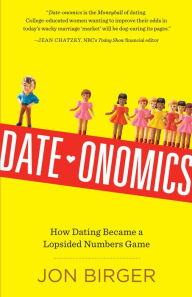
Briefly noted: Date-onomics: How Dating Became a Lopsided Numbers Game — Jon Birger

Date-onomics is charming and worth reading for anyone who is single, who is at risk of becoming single, or curious about how markets are created and how people interact with markets in this domain. Apparently there are relatively few members of that last group: “I realize that most people do not want to think about supply and demand when contemplating matters of the heart.” Perhaps is right, but rejecting knowledge seems to me like madness. Birger also notes that there “is an assumption that the perceived shortage of college-educated men [. . .] is actually a mirage.” Except that Birger says it’s not a mirage: there are more single college-educated women than men, especially in particular cities (like New York).

For men the simple takeaway might be: move to New York or an equivalent city with many more women than men in it. For women the simple takeaway might be: Silicon Valley, Seattle, and Denver are waiting for you, since in those areas straight women will have more market power than straight men.

The book, read properly, tells you where you should think about living and/or going to school. Guys working at big tech companies in particular should think carefully about the differences they’re likely to encounter between working the Bay Area versus working in those same companies’s New York City offices. Date-onomics attempts to solve an information asymmetry problem, since very few people actively consider how gender ratios affect their romantic, sexual, and reproductive lives. Search costs are high and underappreciated in dating.

Birger writes, “Why is it that women like Donovan struggle to find marriage-material men even as male counterparts with less going for them seem to have little trouble with the opposite sex?” Has Birger missed the vast literature on pickup artistry that’s emerged in the last two decades? Is he aware of the Tucker Max and Geoffrey Miller book Mate? For most men much of mating life seems to be a tremendous struggle, and it’s one Birger (mostly) dismisses. The dating sections of Norah Vincent’s Self-Made Man: One Woman’s Year Disguised as a Man are among the most compelling, because she tries being a man—noting that she expects to get all the advantages and pleasures of the “patriarchy” that she’d been told about for years in women’s studies classes and feminist books.

Instead Vincent finds struggle, rejection, and hardship—and she’s very happy to go back to being a woman. Being a man doesn’t turn out to be the patriarchal cornucopia she imagines, and that Birger implicitly imagines for men.

In Date-onomics, Birger refers repeatedly to “good men” (2), “ambitious men” (7), “eligible men” (13), “good single guys” (14), and meeting “a decent man” (29). There are others. Rarely does he consider what men might be looking for in a woman, or what the kinds of adjectives used in the preceding sentence might conceal. That framing is unfortunate.

It’s especially unfortunate because in the real world people who can assess themselves accurately, improve themselves reasonably, and compromise pragmatically tend to get decent results. Those who can’t, don’t. (From Date-onomics: “Problem is, wealthy women are far less likely than wealthy men to marry down”).

Despite that general fact, Birger argues that many of us don’t have the facts:

The North Carolina high school guidance counselor quoted in the last chapter told me that she has never once had a parent or student ask about the 60:40 ratio at UNC Chapel Hill—despite the fact that this gender ratio is now a dominant feature of UNC social life. “It’s not even on their radar,” the guidance counselor told me.

It should be.

He’s right: It should be. His book, and this blog post, is an attempt to put that issue on the radar. Women may, at the margin, want to go to engineering schools. Men on the margin of going to college or not may want to be aware that college is increasingly where the women are. Knowledge affects behavior, but it isn’t diffused through society uniformly or easily. Despite the many virtues of this book, many of the people who may most need to know what it says are unlikely to pick it up.

Date-onomics is at its best when it’s focusing on facts and anecdotes and at its worst when it’s barely aware of its own framing. That dark matter, though, is obvious to me. I wonder how many will miss it.

EDIT: Hello readers from The Browser! If you like this piece, you’ll probably also like my latest novel, THE HOOK. You should check it out at the link.

Where does personality come from?

In “Sentences to ponder, The Strong Situation Hypothesis,” Tyler Cowen quotes from a study:

This hypothesis, based on the work of Mischel (1977), proposes that personality differences are especially like to be outwardly expressed in “weak” situations offering no clear situational clues and a wide range of possibilities as to how to behave. Conversely, individual differences are expected to have less room for expression in “strong” situations where the choice of behavioral outcomes is severely limited and where everyone is bound to behave in a similar way.

That’s especially interesting to me because I’ve long said that many literary novels are concerned with family, love, politics, and the like because those are open-ended domains that tend to be places where personalities can be expressed. In many “flat” thrillers, by contrast, there is one obvious right thing to do (stop the bad guys, don’t let the nuclear device go off, etc.) and the only important question is whether the thing can be accomplished and how it can be accomplished. In that respect personality becomes backgrounded to the task at hand. The interior mental state of the characters become binary: They succeed or they fail. Their sense of interiority isn’t that important.

In a genre like science fiction one can see the thriller model at work in a novel like The Martian, in which survival is the only important question, and the broader model at work in a novel like Stranger in a Strange Land, or in many others. In real life, the kind of music a person who is starving to death likes is not very important, but the kind of music a person who is on a date likes may be very important.

Alternately, one could say that personality is a relatively high point on Maslow’s Hierarchy of Needs (whatever the other deficiencies of the hierarchy model).

(In another world, this point could be part of the “Character” chapter in How Fiction Works.)


I wrote a little more about this here, previously, in 2011.

Links: Leaving academia, conversations with Tyler, Internet degradation, hello rail, dematerialization, and more!

* “I have one of the best jobs in academia. Here’s why I’m walking away.

* Tyler Cowen in conversation with Luigi Zingales, by far the best link in this set.

* The Victory of Oliver Sacks.

* “We’re heading Straight for AOL 2.0.” Except for me: I’m still using blogs when no one else is.

* “The Future of New York City Transportation: Goodbye Cars, Hello Rails: Young people are driving the city towards a carless future.”

* “Did Scarlett Thomas Miss Her Chance? What happens when the stars don’t align for a gifted novelist.” I find these “dark matter” stories as fascinating if not more so than the major success stories.

* Maybe this global slowdown is different; the de-materialization angle, particularly in conjunction with the proliferation of buying off the Internet, is particularly plausible.

* “Bret Easton Ellis, The Art of Fiction No. 216.”

* “There Is No Excuse for How Universities Treat Adjuncts.” Except, you know, supply and demand.

* “America’s Fragile Constitution: The Founders misread history and established a dysfunctional system of government. A case for a little less reverence.” Or, things I’d never considered and now can’t un-consider.

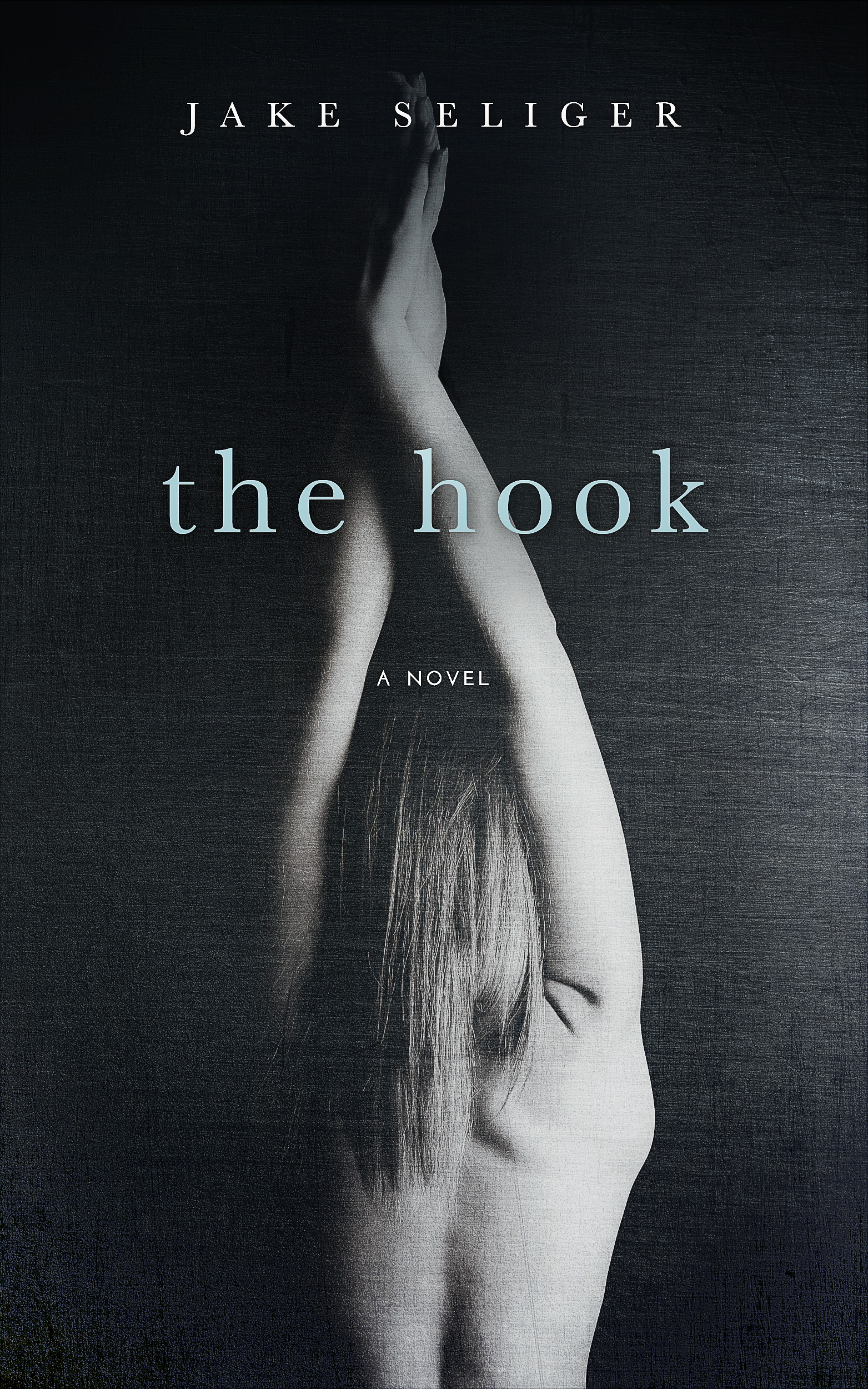
My next novel, THE HOOK, is out today

The HookMy latest novel, The Hook, is out today as a paperback and Kindle book. It’s even available on the iTunes Bookstore for the masochists among you. The Hook is fun and cheap and you should definitely read it. Here’s the dust-jacket description:

Scott Sole might be a teacher, but outside of school hours he likes to think he lives in the adult world. That’s why he indulges his sometime-girlfriend’s request to install an adjustable length hook in his apartment wall—of the sort appropriate for hanging people, not paintings. The project goes so well that, at her urging, he writes a blog post about it. Nobody cares about Scott’s blog—until three students find the post and think they can use it for their own purposes.

Each has a motive: Stacy wants to find out if there’s any truth in the whispers that Scott and her older sister had an affair during her sister’s senior year; Arianna thinks she can use it to weasel out of a semester-long writing assignment; and Sheldon wants a way onto the school newspaper to pad his college application. At the same time, one of Scott’s former students returns to his classroom as a student-teacher with a crush on her supervisor. But as accusations fly regarding the blog post, his students, and the rest of Scott’s less-than-perfect life, Scott discovers that once rumors begin, they’re as hard to stop as dirty pictures on the Internet. They might not just cost him his job, but his freedom. It turns out that a good hook can keep you reading, hold up a kinky girlfriend, and hang your career all at the same time.

My last novel, Asking Anna came out on January 17, 2014. In the last year I’ve quit some things and started others; written about a quarter of my next (likely) novel; read a lot; almost died; and wrote down too many ideas to execute in the next twenty years. But the Asking Anna announcement post is similar to this one, and everything I wrote then is still true:

I’ve been writing fiction with what I’d call a reasonably high level of seriousness since I was 19; I’d rather not do the math on how long ago that was, but let’s call it more than a decade. It took me four to six false starts to get to the first complete novel (as described in slightly more detail here) and another two completed novels to finish one that someone else might actually want to read. Asking Anna came a couple novels after that.

What else? Other writers warned me about bad reviews. They were right that I’d get them, but they were wrong about my reaction: I mostly view bad reviews as entertainment. This “review” may be the best in that respect: “This is surely one of the worst books I have ever read.the author envisions himself as being cerebral by using vocabulary that does not even have any place in the story.” I’m not sure how anyone would envision the author of a novel envisioning himself just through reading the novel in question, but life on the wilds of the Internet entails some pretty confusing commentary.

I’d also like to thank everyone reading this who bought a copy of Asking Anna, and everyone who has bought or is going to buy a copy of The Hook. Books exist to be read. It’s because of your support of Asking Anna that I’ve been able to bring out The Hook. If you’ve gotten this far, let me suggest that you stop by Goodreads and leave comments there.

Links: Houellebecq, literary fame, food, dating, language, and more!

* The next Houellebecq, Submission, comes out in the U.S. on October 20. I’ve not surprisingly preordered.

* “How Literary Fame Happens;” “luck” and “utility to future teaching priorities” are big parts of the answer.

* Why Millennials may be into food, from the comments.

* “What two religions show us about the modern dating ‘crisis;'” the scare quotes are mind because no “crisis” exists, but the data is interesting throughout. This article could be profitably read with Christian Rudder’s excellent Dataclysm: Love, Sex, Race, and Identity–What Our Online Lives Tell Us about Our Offline Selves.

* Edmund Wilson’s Big Idea: A Series of Books Devoted to Classic American Writing. The result of the Library of America, whose books I really like (as objects, I mean: their contents are wildly variable, unsurprisingly).

* “The Limits of Language: Wittgenstein explains why we always misunderstand one another on the Internet.” I especially like this: “Since pretty much no one can agree on anything about Wittgenstein, I’m going to present things in the spirit of Pears’ interpretation, with the caveat that you could probably find a philosopher somewhere who would disagree with every following sentence.” Literary critics suffer from the same problem. No one can even agree what’s good, let alone right!

* College Calculus: What’s the real value of higher education?

* “This week, I resigned from my position at Duke University…

Why aren’t there women on Ashley Madison?

A couple people wrote me about this, from the last links post: “Perhaps the least surprising point is that [Ashley Madison] has almost no women on it,” and said that that was surprising, and/or that I’m a jerk for what that implies.

Surprise is to some extent in the eye of the surprised party, so I won’t argue with that, but I will note that “Attractive women who have NSA, one-off sex with a large number of total strangers” is actually a job description (one could even strike the word “attractive”). Which is fine—I’m not against that job and support legalizing it and other freedoms, but whenever possible look at what markets say about what people or groups of people want in the aggregate. Plus, women who want to meet strangers on the Internet for those sorts of things, one-off or ongoing, can do so easily through more conventional methods (OK Cupid, Tinder, whatever—ones that are said to be less gross and more normal). As I understand it, the honestly dishonest ones can disclose their status pretty easily on Tinder and elsewhere, and guys looking for that sort of arrangement appear to be not hard to find, per the first sentence of this paragraph. Generalizations allow of course for exceptions, and at least one or two of the people writing to me sound like they are exceptions, or they are portraying themselves as exceptions.

The “look first to markets for data” point is useful in all sorts of contexts. The other day I was chatting with a friend who said there are already “Too many people” in New York City; I observed that, if that were true, we’d see housing prices falling, and we in fact see the opposite—implying that most people think there are too few people in New York, and are willing to pay for all the people here. One does not have this issue in, say, Detroit, or Cincinnati. My point did not go over well, but perhaps that’s why people who use markets to extract and act on data make a lot of money doing so.

Edit: “Almost None of the Women in the Ashley Madison Database Ever Used the Site” provides more detail, especially how virtually none of the “millions” of supposed accounts created by women had ever checked their internal mail or chat.

Links: Why intellectuals hate capitalism, fusion power, forgotten works, news on the news, Ashley Madison, and more!

* “Fiction, like sex, is messy. It’s complicating. Achieving softness and fluffiness doesn’t seem like much of a substitute.” Alain de Botton is so good. The book he is reviewing sounds less good.

* “Whole Foods’ John Mackey: Why Intellectuals Hate Capitalism,” a question that has interested me as long as I’ve heard English professors’s irrational slams on markets and commerce. “Understanding Elite Discontent” is also good on this subject.

* “New design could finally help to bring fusion power closer to reality.” Commercial-scale fusion would ameliorate numerous political and environmental problems.

* New York Review of Books Fills a Niche by Reviving Forgotten Works.

* “In substantial part, we like news in order to support talking about the news, and not so much because news communicates important information or insights.”

* “Take your unwanted dog to a shelter. If you have no other choice euthanize him. PLEASE, PLEASE, don’t “drop him off in the country.” A brutal story, which I’m tempted to quote from.

* “The Nearest Thing to Life by James Wood review – ‘the foremost literary enthusiast of our time.’” The book is excellent.

* “How RED Cameras Changed The [Movie] Game.”

* “Why Are Millennials So Obsessed With Food? The author Eve Turow argues that a generation’s taste for natural ingredients will shape the future of restaurants, grocery stores, and agriculture.” Still, I’m not convinced the underlying trend is correct; it’s always dangerous to generalize based on friends and acquaintances, but I appear to cook more than anyone else I know, and by a lot.

* The most interesting piece I’ve seen on the Ashley Madison hack, which is by Megan McArdle (the piece, not the hack; at least so far as I know she’s not behind the hack). Perhaps the least surprising point is that the site has almost no women on it. Edit: “Almost None of the Women in the Ashley Madison Database Ever Used the Site” provides more detail, especially how virtually none of the “millions” of supposed accounts created by women had ever checked their internal mail or chat.

Echopraxia — Peter Watts

Echopraxia is among the best books I’ve read, ever, and is as weird and good as its predecessor, Blindsight. If you haven’t read Blindsight start with it.

Like Blindsight, I had only some idea about what was happening throughout the first read and less about why. Why that is is itself an interesting: The characters in many books about “smart” people—let’s take Harry Potter as an example—seem like dumb people’s ideas of what smart people are like. In Science Fiction that’s often less true, and in Echopraxia it isn’t true at all. The novel is a smart person’s idea of what intelligence beyond human comprehension but still observable might be like. Too few novels have characters who feel intelligently intelligent, as opposed (possibly) to emotionally intelligent, or simply unintelligent. In many thrillers and detective novels characters are cartoonishly intelligent, through unearned insight; in this respect they have more in common with characters in, say, romance novels than with those in Echopraxia. That is a less popular subject than who is doing what to whom. References in Echopraxia range from Plato’s cave to Dawkins to imaginary future scientists. Minds are often analogized to computers, as in this moment the start of the novel, when vampires rebel against their jailers and creators:

She towered over Sachie like an insectile statue, motionless, even her breathing imperceptible. Moments from death and with nothing better to do, some subroutine in Sachie’s head ticked off the morphometrics: such inhumanly long limbs, the attenuate heat-dissipating allometry of a metabolic engine running hot.

echopraxia_coverWhat is “better to do” moments from death? And are subroutines the right metaphor for the brain? I don’t know, but Echopraxia asks what, if anything, is essential for “humans” (or whether “humans” are essential). The novel takes place fourteen years after the Firefall from Blindsight, but “Fourteen years is a long time for a species raised on instant gratification.” In this world zombies are real, some viral and some surgical: every consciousness is trying to get on top of and sometimes overwhelm another consciousness. Watts is fond of the third-person plural “they” without distinguishing who “they” are in a given moment or situation.

The form of the narrative mirrors the mental state of Brüks—that is, characters are continually having epiphanies that the readers must catch up with later, if we ever do (Why exactly is the Bicameral order being attacked, again, and, more importantly, by who? I think I can answer but am not entirely sure). This is disorienting and at least for me doesn’t stop being disorienting throughout the novel. Was it equally disorienting to write Echopraxia, I have to wonder?

The lack of pronoun referents goes deeper than an observation. One could see Watt’s novels as an extreme version of a theory from the introduction of Umberto Eco’s The Open Work:

[Modern open work] through its lack of conventional sense and order [. . .] represents by analogy the feeling of senselessness, disorder, “discontinuity” that the modern world generates in all of us. Thus, although open works are not the only kind of art to be produced in our time, they are the only kind that is appropriate to it; the conventional sense and order of traditional art reflects an experience of the world wholly different from ours, and deceive ourselves if we try to make this sense and order our own. (xiv)

In Echopraxia the structure of the book is not precisely shocking—it proceeds more or less chronologically through time, and its narrator is not as far as I can tell trying to be deceptive. But if the present has increased “the feeling of senseless, disorder, ‘discontinuity,'” then the post-human and fast-paced technological future will increase that sense further and faster, especially if and when humans create beings (I use the word because I lack a better one) incomprehensible to humans. The future’s experience in this reading will be a “world wholly different from ours,” and imaginative art is one way to prepare for the possibility of that future. For much of human history technology has been a positive force (though anyone caught in the battle of the Somme, or by Russia’s secret police, or by Agent Orange will have reason to disagree), but past returns are no guarantee of future returns.

Technology, Echopraxia implies, can turn myth or nightmare into fact. I did not catch any references to Pandora’s Box, perhaps because such a mythic allusion is too obvious in a book that eschews obviousness at virtually every level, but the applicability is obvious. In The Open Work, Echo writes that “Art knows the world through its own formative structures.” So does consciousness. But what if consciousness is in turn limited by its own formative structures? Verbal and written expression are already tremendously limited, which is part of what gives both, and especially written language, their powers. Addressing those limits in words themselves is a serious and perhaps impossible challenge.

Still, some points recur. The word “gut” appears at least three times that I counted, and maybe more. There is much discussion of “the species” and what traits or habits maintained it in the past but might not be useful in the distant future. There is no such thing as “nature” or “natural life,” and there are no guarantees that humanity as we know it will survive. That there is no real fundamental “you” or “me” is an ancient fear, and Echopraxia terrifies and confuses by saying: “Maybe this fear will yet come to pass.” One reading of the novel is as a description of the transition point from human to non-human. Michel Houellebecq’s The Elementary Particles engages similar themes but without overt death, and without the psychological manipulations of Watts. The Elementary Particles does not have the same kind of biohacking and especially viral biohacking. Echopraxia feels more about emergent phenomena and how difficult they are to control—which may explain why Jim Moore’s son Siri Keaton needed, for reasons essential to the story, to experience what he did.

Eco also says that “nowadays, in our technological civilization, objects have become so pervasive, so sophisticated, so autonomous that we feel threatened by them.” The distinction between “objects,” “life,” and “humans” is slowly breaking down. To take one personal example, I, like millions of other humans, have a piece of plastic inserted in my body. In my case, that plastic mimics bone. What happens when it mimics brain? What happens when the greatest threat from pervasive objects is not visible? The answers may be a long time coming and may not involves aliens or vampires.

Science fiction is different from most fiction in that most plots in most fiction devolve to posturing for wealth, sex, status, or political positioning. Echopraxia is particularly different, because it imagines a world so far from our own, and it imagines what a transition point from humans to non-humans might look like, both from the humans’s perspective and, to the extent possible, from the perspective of non- or trans-humans who wish to explain themselves, to the extent they can, to humans. Language is a funny thing; it relies on some level of shared referents in order to work, and trans-humans may come to utterly lack shared referents. Humans may bootstrap trans-humans into being—both because humans want to, and, as Echopraxia and Blindsight imply, because perhaps we must: we must keep advancing in order to try to save ourselves from ourselves.

There is much else to write about Watts. If a novel is a machine for generating interpretations, Echopraxia and Blindsight generate more than most. They are also beautiful, weird, and like no other books I’ve ever read.


Here is The LA Review of Books. Here is Watts on Reddit. Here is a Locus Online review. I don’t remember who first inspired me to read Watts but if I did I’d thank them.