Links: Paglia and feminists, screenshots from developers, it’s not the length but how you use it, and more

* “Donald Trump Really Doesn’t Want Me to Tell You This, But …“, the last piece I hope to post about this odious man.

* “Today’s feminists are so out of touch with how most women live, they might as well be on another planet,” by Julia Hartley-Brewer.

* Screenshots from developers: 2002 vs. 2015.

* “Books are becoming longer.” I wonder if this is true of self-published, ebook-first writers.

* The homeownership rate has plunged more than people realize.

* Camille Paglia Takes on Taylor Swift, Hollywood’s #GirlSquad Culture.

* A distressingly plausible account of why contemporary humanities academia is so bad.

* “ Urban jungle: wooden high-rises change city skylines as builders ditch concrete: Mass timber projects in Portland and New York City offer eco-friendly dwellings, but can ‘plywood on steroids’ actually catch on in the industry?”

* Afghanistan: ‘A Shocking Indictment’. It’s worse than you think.

* Still more Camille Paglia: “I am continually shocked and dismayed by the nearly Victorian notions promulgated by today’s feminists about the fragility of women and their naïve helplessness in asserting control over their own dating lives.” Among other many interesting things.

* “Why 18th century books looked like smartphone screens;” I’d like to see physically smaller, better-made books. My novels are specifically sized the way they are to make for easier reading.

* Why are there so many mattress stores?

* On Behind the Beautiful Forevers, by Katherine Boo.

Life: Belief edition

“It is difficult to believe in a thing when one is alone and there is no one to speak to.”

—Dino Buzzati, The Tartar Steppe. Truth has collective properties, and that’s one reason 1984 and similar political-informational dystopias are so scary: they prevent individuals from exploring or testing their beliefs. This same issue is part of the reason the best scholars worry about political correctness on campus, which attempts to stifle heretical ideas, rather than merely arguing that they are wrong.

On the “manosphere” or “Red Pill”

Someone wrote:

I’m a reader of your blog and enjoy your thoughts on a wide variety of things. I’ve gone in the deep end regarding the Red Pill, I just don’t know what to believe and I’m seriously doubting myself at this moment. I picked up a book called The Rational Male by Rollo Tomassi and while it has good stuff in it, I can’t shake the feeling that it treats women like objects and whores ready to move on to the next guy. My gut tells me that isn’t the case but I could be totally wrong. I guess I’m looking for a deep connection with another woman and in that denial phase with all this information. I was inspired by your articles “Getting good with women and how I’ve done almost everything in my life wrong,” thought you could have some answers. I’m lost and it all seems so insane, if this stuff is true.

First, I wrote about some of the issues with the communities formed by guys who lose or aren’t succeeding with women in “The appeal of ‘pickup’ or ‘game’ or ‘The Redpill’ is a failure of education and socialization” and Confessions of a Pickup Artist Chaser.

Second, men in the communities you’re referencing ends up in them because they’ve failed in sense. I am not the first to observe that the hardest core feminists and hardest core Red Pillers are more alike in tone and stridency than they’re like normal people who are curious.

Some readers and writers are mostly intellectually interested in the matters discussed by the communities. In many domains, it’s a bad idea to take advice without knowing something of the person giving the advice, what their interests are, so and forth. Taking advice from a pseudonymous stranger on the Internet who knows nothing of you and your life, while you know nothing or them or there life, is… unwise. As Gildor says in The Fellowship of the Ring:

” ‘… The choice is yours: to go or wait.’ [Gildor said.]
‘And it is also said,’ answered Frodo, ‘Go not to the Elves for counsel, for they will say both no and yes.’
‘Is it indeed?’ laughed Gildor. ‘Elves seldom give unguarded advice, for advice is a dangerous gift, even from the wise to the wise, and all courses may run ill. But what would you? You have not told me all concerning yourself; how should I choose better than you? But if you demand advice, I will for friendship’s sake give it.’ “

Gildor’s reluctance is the reluctance of wisdom.

Be wary of taking advice from anonymous strangers on the Internet with no stake in the outcome of the event itself (this includes taking advice from me, though I do at least use my real name). Some things in The Red Pill and the constellation of related sites are interesting and possibly true, but those things are dwarfed by nonsense, so relying on it for life guidance is at best perilous. What’s the incentive for posting there?

Online communities adversely select for pontificators, because doers are doing. I read the Rollo Tomassi book, The Rational Male, and it’s interesting in places. But it’s also badly written, badly edited, and badly laid out (the version I read suffered from all three). There’s a better book lurking in the book I read. Writing a good book, from the level of the individual word to the level of the book as a whole, is hard—which is why few people do it. Writing a good book is poorly remunerated relative to other activities that take similar time and dedication. On the whole, the number of people with the skills and grit necessary to learn to write a good book are better financially served doing other things. Robertson Davies famously said that the only reason to write a novel is because you feel like you must, or go mad, or die. Few writers have that drive. Maybe Tomassi will. Or maybe he’ll remain overly dogmatic.

Avoid dogma.

Finally, the people who really matter are the artists and the movers. Be one or the other or both. Talk to real people in real life. Get off the computer. The people on Reddit and Twitter and whatever succeeds those two have no sense of art or beauty. The really important things aren’t happening there: they’re happening in the actual world. Diversity exists and matters—not in the politically correct sense of the term “diversity,” but the real sense. Ideas do matter, but they matter most in art and science. If you aren’t taking an idea and spinning it into art, or science, or technology, or business, the idea doesn’t matter. How many angels dance on the head of a pin? For centuries theologians cared. No one does today. Choose what matters: there is some truth in the stuff you’re reading, but the whole story is bigger and broader than any of the reducers to celestial mechanics can imagine.

Becoming Freud: The Making of a Psychoanalyst — Adam Philips

Becoming Freud could be called “Reading Freud” or “Defending Freud,” because it has little to do with how Freud became Freud—there are decent, let alone good, answers to this question—and much to do with other matters, worthy in their own regard. The story—it is only tenuously a biography—is consistently elegant, though not in a flashy way; Philips reminds me of Louis Menand and the better New Yorker writers in general in this regard. Consider this: “Freud developed psychoanalysis, in his later years, by describing how it didn’t work; clinically, his failures were often more revealing to him than his successes.” Twelve words before the semicolon are balanced by eleven after, and the paradox of failure being more “revealing” than success is unexpected and yet feels right. As the same passage shows, Becoming Freud is also pleasantly undogmatic, unlike many modern-day Freudians, or people who claim Freud’s mantle or cite his work. I ran into some of those people in academia, and the experience was rarely positive on an intellectual level. Some were lovely people, though.

becoming_FreudIt is hard to get around how much Freud was wrong about, yet Philips manages this deftly by interpreting him interpreting others, rather than on his conceivably disprovable claims. Freud in this reading is literary. In Becoming Freud we get sentences like:

Freud’s work shows us not merely that nothing in our lives is self-evident, that not even the facts of our lives speak for themselves; but that facts themselves look different from a psychoanalytic point of view.

But this sounds like a description of language or of literary interpretation, rather than the final statement on the relation of facts to the mind.Plus, I’m not sure facts are all that different—but I sense that Philips would argue that’s because of Freud’s influence. Philips further tells us that “We spend our lives, Freud will tell us in his always lucid prose, not facing the facts, the facts of our history, in all their complication; above all the facts of our childhood.”

In short, Becoming Freud is closer to literary interpretation than to biography, much as Freud was closer to a literary critic than a psychologist. I’m not the first to notice that he writes of patients more like characters than like people. Philips reminds us that Freud’s “writing is studded with references to great men—Plato, Moses, Hannibal, Michelangelo, Leonardo da Vinci, Goethe, Shakespeare, among others—most of them artists; and all of them, in Freud’s account, men who defined their moment, not men struggling to assimilate to their societies. . .” These passages also, I think, show the book’s interpretative strengths and its sometimes exhausting qualities.

There is no real summing of Freud’s influence, when remains even when few will take his supposed science seriously. Yet despite the unseriousness of the science, talking therapy is still with us. The word “despite” seems appropriate in discussions of Freud: Despite the dubious effectiveness of talking therapy it remains in widespread use because we don’t have good alternatives. Many of us are socially isolated and lack friends; Bowling Alonew is prescient and TV and Facebook are not good substitutes for coffee or 3 a.m. phone calls. For centuries the West has valorized individual freedom and attempted to vaporize community bonds. We may be victims of our own success in this respect, and we’re now tasked with building communities based primarily on common interests. In therapeutic terms, we use the tools we have not because they are good but because they are better than nothing. Freud is in contemporary respects not good but he did articulate some of the ideas that would define the 20th Century. Getting a couple of major peaks is often more important than consistently being minorly right. I may be more inclined temperamentally towards the latter.

Sentences like this abound: “In this period of Freud’s life—as in any period in anyone’s life—the discrepancy between the documented and the undocumented life is striking, and can only be imagined.” Yet such issues sort of defeat the purpose of biography, no? It may also be why novelists like writing the lives of famous people: one gets to imagine their inner and outer selves without the pesky need for proof.

Philips’s Freud is an idealized person and for that reason I like this Freud better than most writers’s Freud. As Philips points out repeatedly the book is inadequate as a biography; he says all biographies are, which may be true to some extent, but the fewer the facts the less adequate the interpretations that might be drawn from them. Becoming Freud is similar to Alain de Botton’s Kiss & Tell, though Botton’s book is a novel. Here is The New Yorker’s take. There is a novel in there somewhere. We don’t know and likely can never know Freud. Few modern writers have such privilege, unless maybe they delete their entire email histories before they die.

There is not enough known about Freud to even make his biography feel novelistic. Whether this is good or bad depends on the reader.


News is comedy:

Luttwak spends much of his time at the computer. He follows the news closely and interprets it as an ongoing comedy.

That’s how I read the news, too, because to interpret it as other than a comedy is too depressing to contemplate for more than a second. The only consistently good news comes from the science and technology sections.

That dictators are, when viewed from the proper light, comedic has of course been long known, yet the dictators never themselves seem to realize this. Right now, in U.S. politics Trump is the funniest candidate in memory, and he also strikes one as one of the people least likely to recognize himself as comedic.

Links: Crime and punishment, the fiction we read, power and access, genius, Outlier, and more

* “Mom Who Overslept While Son Walked to School Could Get 10 Years in Prison.” More modern madness enabled by extreme wealth.

* “When Popular Fiction Isn’t Popular: Genre, Literary, and the Myths of Popularity,” or, “Which kinds of book actually sell?”

* How “New Nuclear” Power Could Save the Planet—If Regulators Would Allow It. And, in addition, How Solar Power Could Slay the Fossil Fuel Empire by 2030. Exciting times.

* “Access Denied: The media, after access:” an essay more interesting than the title implies, and it could be read profitably in tandem with Arts & Entertainments by Christopher Beha.

* “Ink & Inclination: Living on Paper: Letters from Iris Murdoch 1934–1995,” an excellent review though it does not make me want to read the work under review. I’ve not read much Murdoch. Where should I start?

* A Chance Encounter, Reddit Marketing, and Forever Pants: One Startup’s Story. I have a pair. They’re great!

* Blank Space: What Kind of Genius Is Max Martin?

* Why people are angry about rising college costs.

* Why Chris Blattman worries that experimental social science is headed in the wrong direction.

* Is There a Future for the Professions? The writer must be around Philip Roth’s age, because I never recognized the veneration of “the professions” found in many of Roth’s books. Today, “developer” matters, and most other fields just don’t. The phrase “barriers to entry” never appears. Neither does “student loans.”

* After Paris and Beirut, It’s Time to Rein in Saudi Arabia, a point made too infrequently.

* When nothing is cool: On why so much academic criticism is completely, wildly bogus and trend-driven.

* A 26-year-old MIT graduate is turning heads over his theory that income inequality is actually about housing.

Review: The CODE Keyboard (With Cherry MX “Clear” switches)

In the last three months, a bunch of people have written to ask if I’ve tried any keyboards since 2011’s “Further thoughts on the Kinesis Advantage, Unicomp Space Saver, and Das Keyboards” (evidently Google has brought my keyboard articles to the top of its search rankings again). The short answer is yes, but only one, and I bought it: the 87-key CODE Keyboard with Cherry MX “Clear” switches. The switches are slightly quieter than the Kinesis Advantage’s Cherry MX “Brown” switches, while still retaining excellent tactile feel. If I were using a conventional keyboard, I’d very slightly prefer the Unicomp Ultra Classic to the CODE keyboard, but in real-world usage the difference is tiny. Anyone who is noise sensitive or works in the same room as other people should use the CODE Keyboard, however, which is substantially quieter at little cost to feeling.

87-key CODE keyboard

There isn’t much more to say about the CODE Keyboard: it has backlighting, which is nice if you care about that sort of thing (I don’t). It comes in a 87-key version, which is also nice because it’s smaller and because many of us don’t need extensive number pad use. It feels durable and in the two or so years I’ve had it I haven’t detected wear. The Unicomp Ultra Classic has a slight edge in the durability rankings because its predecessors—the IBM Model M—have been in service for decades. Unicomp and IBM keyboards are so good that Unicomp suffers because it sells a product that doesn’t need to be replaced. The CODE Keyboard is likely to be similarly durable, though it’s only been on the market for a couple years. If it has any weaknesses they’re not apparent to me. The profile is close to as slim as it can be without compromising function. I’ve never been a fan of Apple’s chiclet-style keyboards, though they’re obviously necessary for laptops.

I haven’t been posting about keyboards, though, because companies haven’t been sending them lately—I guess that since Anandtech and Ars Technica have begun reviewing keyboards, a site targeting writers and readers rather than hackers and gamers gets bumped to the bottom of the priority queue. Outlet proliferation is even greater: there’s an active Reddit subsection devoted to them, and Googling “mechanical keyboards” brings up more background than I have time or inclination to digest. Writers also tend to be less vocal about their love for gadgets than tech people.

I’m also much less interested in experimenting with different keyboards because I don’t perceive much room for improvement over the good keyboards we have now. Until neural implants get developed and keyboards become as weird a curiosity as Victorian-era telegraph machines are today, we’ve probably gotten to be around as good as we’re likely to get.

87-key CODE keyboardWhen I first bought a Unicomp Ultra Classic I was in college and a couple tiny companies made mechanical keyboards, including Unicomp and Matias (whose early products were so screwed up I never tried the later ones). Today web startups are common and people are used to buying things online; dozen companies or more are making mechanical keyboards, and it’s hard to pick a bad keyboard. Any of them will be much better than the keyboards that ship with most computers.

Plus, as said earlier, the good options have mostly driven out the bad, or forced the weak early keyboards to be improved. Matias’s more recent keyboards apparently don’t have the ghosting that made earlier versions useless. Companies like Vortex are producing physically small keyboards that have programmable keys, as is the obnoxiously named POK3R. Other companies have produced wireless Bluetooth versions and versions with extra USB ports, neither of which matter to me. A profusion of ultra minor variations is a hallmark of maturity. Most of the keyboards still have Darth Vader or computer nerd aesthetics, but that probably speaks to their target audience. Except, possibly, for the CODE Keyboard, none of the current mechanical keyboards seem like Apple made them.

87-key CODE keyboardBut the real news is no news: a bunch of keyboards exist and they’re all pretty good. The word “slight” appears three times in the first two paragraphs because there aren’t clear winners. If you type a lot and aren’t interested in the minutia, get a CODE Keyboard and put the rest out of your mind. If you want a more ergonomic experience and have the cash, get a Kinesis Advantage and learn how to use it (and be ready for weird looks from your friends when they see it). Options are beautiful but don’t let them drive you mad.
Links: The new atomic age, universities, pens, The Joy of Drinking, and more!

* “The new atomic age we need,” a particularly useful piece given the venue.

* “Four tough things universities should do to rein in costs.” Or, alternately, “Four tough things columnists should do before writing about universities.” Can both be right? And at what margins? I tend to buy the first link more than the second.

* The Generic City: Boring landscapes impede on our biological need for intrigue. So why are so many buildings so hideous?

* University President: ‘This Is Not Day Care.’ A point that is useful and yet depressing that it is worth making.

* Why the ballpoint pen was such a big deal.

* What happens to countries that vote for socialists.

* SM on what’s happening among humanities peer-reviewed journals.

* In light of recent events: “A Land Without Guns: How Japan Has Virtually Eliminated Shooting Deaths. ”

* The Joy of Drinking.

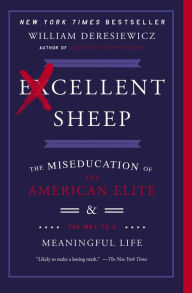
Briefly noted: Excellent Sheep: The Miseducation of the American Elite and the Way to a Meaningful Life — William Deresiewicz

Excellent Sheep is great though polemical—snide remarks about tech companies are neither true nor useful—and one gets a sense of its contents from “Solitude and Leadership: If you want others to follow, learn to be alone with your thoughts,” which went viral for the best of reasons (as opposed to the worst, which is more common). “Eros in the Classroom” is also good, though curiously erotically attenuated, and could be read profitably in tandem with Laura Kipnis’s “Sexual Paranoia Strikes Academe.” The two point to the need for satirization of contemporary academic mores, but that satirization is already so thorough that its failure to make much of a dent inside academia is obvious.

excellent_SheepBut Excellent Sheep is comprehensive, despite its overreach. But major orators know that if they have the audience the audience will forgive much, as such is the case here. The book is situated as one that fills a need and one that speaks to the author’s earlier self:

This book, in many ways, is a letter to my twenty-year-old self. It talks about the kinds of things I wish someone had encouraged me to think about when I was going to college—such as what the point of college might be in the first place.

I was like so many kids today (and so many kids back then.) I went off to college like a sleepwalker, like a zombie. College was a blank. College was the ‘next thing.’ [. . .] Up ahead were vaguely understood objectives: status, wealth, getting to the top—in a word, ‘success.’

I was perhaps slightly less blank but barely so. That being said, I often try to talk to current college students about what college is about and usually get resistance. So it may be that Deresiewicz’s twenty-year-old self wouldn’t listen to older Deresiewicz anyway. And, like almost any book of this sort, Excellent Sheep probably won’t be read by many of the students who could most benefit from reading it. Many who might be handed it might resist it. Slightly analogously, I’m struck by Emily Nussbaum’s description of Mary Gaitskill’s Bad Behavior: “In 1988, when her short-story collection Bad Behavior came out, it became a dorm-room bible for women I knew: Finally, here was a fiction writer unafraid to walk straight through the feminist battlefields of that very strange period.” I’ve assigned it before and it’s not been treated as a Bible; some students cottoned to it but some strongly resisted, though I also don’t think of it as dealing with “the feminist battlefields” of anything: I think of the stories as being about individuals, not dreary ideologies or ideological think-pieces.

Deresiewicz has a keen grasp of what’s happening in contemporary academia and, often, life itself. He writes of a “system,” or “a set of tightly interlocking parts,” including “private and affluent public high schools; the ever-growing industry of tutors and consultants, test-prep courses and enrichment programs; the admissions process itself; [. . .] the brand-name graduate schools and employment opportunities that come after the BA [. . .]” and of course much more. But this paragraph is the most interesting:

What that system does to kds and how they can escape from it, what it does to our society and how we can dismantle it—those are the subjects of this book. I was teaching a class at Yale on the literature of friendship. One day we got around to talking about the importance of being alone. The ability to engage in introspection, I suggested, is the essential precondition for living the life of the mind, and the essential precondition for introspection is solitude. My students took this in for a second—introspection, solitude, the life of the mind, things they probably had not been asked to think about before—then one of them said, with a dawning sense of self-awareness, “So are you just saying that we’re all just, like really excellent sheep?”

He goes on: “The system manufactures students who are smart and talented and driven, yes, but also anxious, timid, and lost, with little intellectual curiosity and a stunted sense of purpose.” I’ve noticed those things. They are of course not pervasive. But I also find them impossible to miss.

Excellent Sheep is a truer work of philosophy than 99% of the stuff published under the banner of “philosophy.”

Already I’ve chewed through a thousand words and two long blockquotes and have gotten to page three of Excellent Sheep. That should speak to the book’s quality. To attend to its every argument would be to almost write another book. As I said before, don’t trust everything. But do read it. It is also interesting to me that this article about Peter Thiel describes his mistrust of the education system, which partially evolved from his unhappiness with a track-based life and system. Yet this system persists for reasons, some of which Megan McArdle articulates in “What Really Scares Helicopter Parents.” The system has been in construction for decades. Startups are one route around them. Self-publishing is another. One can no doubt imagine more.

Many people are bad at being and bad at purpose. Including, possibly, me. Excellent Sheep challenges them, which is to say, us.


Links: Demography is destiny, how could you like that book?, open access, friendship, and more

* “As China’s Workforce Dwindles, the World Scrambles for Alternatives:” an underreported story.

* “How Could You Like That Book?” by Tim Parks:

No sooner have I articulated my amazement, my sense of betrayal almost, than I begin to feel insecure. Is it really possible that so many people I respect have got it wrong? Close friends as well. Am I an inveterate elitist? A puritan? Or resentful of other people’s success? Shouldn’t I perhaps relax and enjoy my reading a little more rather than approaching books with constant suspicion?

The world is full of people who admire books I don’t and vice-versa. When I tell students I found the first Hunger Games or Harry Potter books dull they’re astonished.

* “Open Access and the Power of Editorial Boards: Why Elsevier Plays Hardball with Deviant Linguists.” To me the most intersting thing is that equivalents of arXiv.org haven’t arise in the humanities. That may say more about the intellectual importance of the humanities than any other piece of data, information, or opinion.

* Why car dealers are reluctant to sell electric cars, a bit of ill news.

* Dream of New Kind of Credit Union Is Extinguished by Bureaucracy.

* “How our housing choices make adult friendships more difficult.”

* “The Yale Problem Begins in High School,” by Jonathan Haidt of The Righteous Mind fame. Notice especially the links Haidt offers.

* “‘Self and Soul’: Mark Edmundson’s biting critique of modern complacency.”

* “Literature vs genre is a battle where both sides lose,” an over-discussed topic maybe, but also a true one. Some points, like this one, are ridiculous: “But literary authors aren’t self-publishing their books on Kindle. Quite the opposite. They have a swish sounding publisher.” See also last year’s “Tyler Cowen on Paul Krugman on Amazon on the buzz:”

I’m most amazed at the way the same class of writers who five years ago were aghast at the lack of support for literary fiction among publishers are now the ones decrying Amazon and supporting the same publishers who were until recently the cravenly commercial forces destroying “quality” literary fiction.