Thoughts on Aaron Sorkin’s The Social Network

1) The movie, especially the first 30 minutes, is very good: the dialog is astonishingly quick. The details are right (I’ve been to AEP parties and used Emacs). The movie isn’t boring, though most of it consists of guys talking to each other. The various narrative threads are a good example of Steven Berlin Johnson’s essay “Watching TV Makes You Smarter” in action.

2) I suspect The Social Network hears about the same relationship to reality that Braveheart does to early Scotland or War and Peace does to Napoleon, which is to say very little. “The Face of Facebook” in The New Yorker shows this.

3) Lawrence Lessig’s review is mostly negative and says that the movie misses the point. He moves in the same kind of direction I do:

[…] what’s important here is that Zuckerberg’s genius could be embraced by half-a-billion people within six years of its first being launched, without (and here is the critical bit) asking permission of anyone. The real story is not the invention. It is the platform that makes the invention sing. Zuckerberg didn’t invent that platform. He was a hacker (a term of praise) who built for it. And as much as Zuckerberg deserves endless respect from every decent soul for his success, the real hero in this story doesn’t even get a credit. It’s something Sorkin doesn’t even notice.

This is true, but it’s also a bit like criticizing Romeo and Juliet for failing to accurately depict the real political scene of Italy. The point is the love story. But Lessig is probably right, although I’m not sure there’s a way to depict “the platform that makes the invention sing” and still tell a compelling story around human characters.

4) Compare Lessig’s review to those of Scott Adams (“It is the best movie I have ever seen”), David Denby (“This brilliantly entertaining and emotionally wrenching movie is built around a melancholy paradox”), and Fred Vogelstein. The latter is more about the reaction to the movie than the movie itself but is still worth reading.

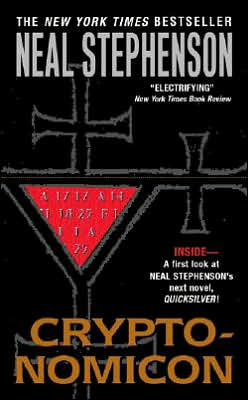
5) The Social Network is that rare movie about the people who are doing the most to change the world in the shortest amount of time of any group ever: nerds and hackers, who’ve largely built the world we now inhabit. Very few movies bother depicting nerds at all, and when they do, those nerds are usually peripheral to the action or not really nerds or completely untrue to nerds in real life. This isn’t just true in movies—it’s also true in fiction. One nice thing about novels like Neal Stephenson’s Cryptonomicon is that it incorporates hackers and a hacker’s mindset as few other novels I’ve read have. There are a zillion movies and books about love stories, bildungsroman, soldiers, criminals, cops, and lawyers. All these are lovely subjects for narrative art, but the incredibly dearth of such books about the hacker sub-culture is notable. I’m trying to fix this in my own small way; we’ll see if I’m successful.

Note that Gabriella Coleman wrote a piece for The Atlantic on “The Anthropology of Hackers;” it is good reading for anyone interested in the modern world.

6) Building off points 3 and 5, although The Social Network gets a lot of stuff right, especially the drama, it’s not an accurate portrayal of nerds and nerd subcultures (it can be a good movie without being an accurate portrayal). I would also guess that Zuckerberg, more than anything else, cares about code, which I don’t think most people can or want to understand. Maybe artists can, because I think a lot of the best artists care about their art more than anything else, which can be frustrating to people around them.

7) The tech and hacking communities are well aware of how the legal system and patent law are out of control and, in many respects, stifling innovation. Although patents never come up in The Social Network, perhaps it will raise awareness of the problems posed by the legal system.

8) I feel like I’ve met Zuckerberg. Not the literal Zuckerberg, of course, but I’ve met plenty of hardcore engineer and hacker types whose lack of social graces is probably not a cause or effect of their technical prowess, but may be an ancillary byproduct of wanting to make art or write code more than be socially adept.

EDIT: I wrote this October 13; on October 15, the New York Times published “Hey, That’s Me Up On That Screen,” which says, “For the newest class of entrepreneurs developing the next generation of Web-based companies, “The Social Network” is the first time many have seen their startup culture splashed on the big screen.” Compare that to my sixth point.

An interview with Lev Grossman, author of The Magicians and Codex, Part I

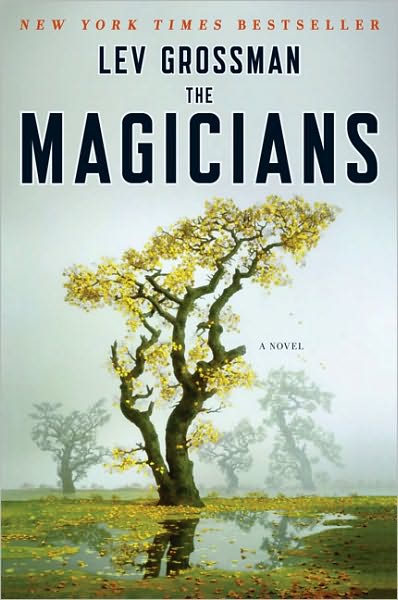
Lev Grossman’s book tour is just about finished, and I caught up with him at Changing Hands in Phoenix on June 10 to talk about The Magicians. In the novel, Quentin Coldwater is a bright and unhappy high school student searching for meaning, happiness, and a place in the world—which he thinks he’ll find when he receives an invitation to Brakebills, a college for magic. Unlike Hogwarts, however, classes are a grind, students are filled with angst, and sexual politics are everywhere.

As I wrote about the novel:

The Magicians is a surprise and delight: its language is not overly showy and yet often contains an unexpected surprise, especially at the ends of sentences, as this early description shows: “Quentin was thin and tall, though he habitually hunched his shoulders in a vain attempt to brace himself against whatever blow was coming from the heavens, and which would logically hit the tall people first.” Until the last clause, one could be reading any novel, fantasy or otherwise, but saying that a blow from heaven would hit the tall first gives us Quentin’s personality in a single line, and yet its ideas are spun coherently across the entire novel.

The following is an edited transcript, and any links were added by me after the interview:

Jake Seliger: I first read about The Magicians on John Scalzi’s blog, “Whatever.” I don’t know if you’ve met him or not, but he wrote about it and I thought “That’s exactly the book I want to read.”

Lev Grossman: He runs that features “The Big Idea.” I actually wrote that. I ran into him at the World Con—that is the convention—and we got to chatting. He’s a friendly fellow. He let me post something on the blog.

JS: I’m really glad you did. Not every book is one I’ve really loved. He posted about a book called Mistwood, which I thought was okay, but flat in a way. The premise is really interesting—instead of talking from the premise of a human who gains special powers and becomes more than she is, it discusses a summoned creature or magical being who’s becoming more human and doesn’t want to become human.

LG: That sounds like a great idea.

JS: Yeah. The execution is one I didn’t love. It was a first novel. It was a lot of fun. As far as The Magicians goes, I was struck that there’s this repeated expectation or hope of finding another world, that of course gets fulfilled. Even really early on, on page 8, Quentin says, when his interviewer’s “back was turned Quentin would stumble on a mysterious cabinet or an enchanted dumbwaiter or whatever, through which he would gaze with wild surmise on the clean breast of another world.” So he’s looking for these enchantments, and it seems like by the end of the novel that he finds or we find that we either make our enchantments or don’t make our enchantments. Do you agree? Or is my reading off?

LG: No, I think that’s fair enough. I think that for a very long time—an embarrassingly long time—instead of solving problems, I tended to buffer them. Something would come up and I would think, ‘Well, that sucks,’ but I’ll stick it in the buffer, and when I get to Narnia, I’ll basically clear out the whole buffer. And not literally Narnia, but I would decide that if a certain that was coming up—if I got into college, for example—it would solve everything and I would never have any problems again. So I would ever really solve problems: I would put them off and lay them away for a time when they would get solved by the course of events.

JS: That’s funny because it makes it sound like a very passive kind of action. “The course of events” would solve them rather than “I would solve them.”

LG: Oh, it is very passive. I was a very passive person for a very long time. I didn’t really understand how to engage with reality. I didn’t really grapple with it on a basic level. I just let it roll over me. As a result, I made a huge number of mistakes that I wish I hadn’t made. Events made them for me.

JS: I guess that got transposed to the novel.

LG: Yeah, well, writing The Magicians was in a way working through my acceptance of the fact that I never would get to Narnia. Quentin essentially does, and what happens to Quentin is that his problems come with him.

JS: Many of them.

LG: Yeah. And it turns out that action is required of him, in fact, to solve them. Or accept the fact that they’re insolvable.

JS: It seems that’s where a lot of the rhetoric about reality comes from. And not only the reality parts of it, but the two worlds or multiple worlds idea. One of the things I found really intriguing when I got to the end of the novel is when Emily Greenstreet [whose brother dies by becoming a Niffin and who has an affair with Professor Mayakovsky, leading him to be banished to Antarctica] reappears. There’s this wonderful line, and we learn that “In different ways they had both discovered the same truth: that to live out childhood fantasies as a grown-up was to court and wed and bed disaster.” It’s an intriguing sentence because the sexual language doesn’t seem like a mistake. Part of the issue is that incorporating sexuality in life is important and becomes a proximate cause because that’s what actually gets them to Fillory. Alice goes and sleeps with Penny [as revenge for Quentin sleeping with Janet].

LG: Obviously in this book I’m confronting a powerful literary forebear, namely C.S. Lewis. You only do that if you truly truly love the forebear in question. But, one of the things I find maddening about his books is this sense that magic and wonder and ultimately meaning are not compatible with sexual maturity. He’s so in love with childhood that he imagines that there is no such thing as magic once you get older, or if there is, then it’s a debased, ignorant, evil kind of magic, like the magician in The Magician’s Nephew. And I wanted to explore the idea—as Philip Pullman did before me—that coming of age, becoming a whole adult sexual being, entails not a loss of magic but a different kind of magic. A richer kind of magic.

JS: And one that doesn’t always go particularly well, either in the real world or in the novel itself. It seems to me that Quentin in Alice become almost victims of their own sexual politics, in a sort of game theory way. When Quentin sleeps with Janet, which he knows he shouldn’t’ve done but he does anyway, and then they get in this tit-for-tat—

LG: Right. No pun intended. Yeah, it’s true. Things turn out to be very much less than zero sum. It involves taking on a certain kind of risk that you do not have in childhood and accepting that risk.

JS: And the sense of risk is very real in the novel because people die and there are rules in it. The risk feels real that often times in fantasy novels it doesn’t because you know that good is somehow going to triumph in the end even if it’s not complete.

LG: The moment where I attempted in an almost self-conscious way to bring that into the book is when the beast appears in the classroom.

JS: Right. That’s exactly what I was referring to because it’s unexpected, and the teachers don’t know what’s going on. And then there’s speech—I’m pretty sure it’s Dean Fogg who gives it—where he basically says, “There are things out there we don’t know, we don’t understand.”

LG: I want it to feel less safe than Hogwarts. And that was one of the ways I tried to announce that. Here’s a being which is not even evil, necessarily, in a way that is comprehensible to us. It’s almost arbitrary.

JS: It’s chaotic or indifferent.

LG: Which is almost more terrifying, in a kind of mustachio-twiddling villain. And I very much wanted there not to be a Gandalf-like figure, who is able to explain what happened and assume the risk for the kids. Fogg is just about as lost as they are.

JS: To me what’s interesting is in Lord of the Rings, Gandalf almost never has complete explanations. When he leads [The Fellowship] into the Mines of Moria, he doesn’t know what’s down there. That’s part of what reminded me of the beast and the Mines of Moria. In Lord of the Rings, Gandalf doesn’t know everything. And he constantly says that—”I don’t necessarily know what’s going on,” and there’re conjectures and so forth, and that’s a lot of what the Council of Elrond is and some other places in the novel, where they’re always talking about what they don’t know and recognizing their own limitations.

LG: Yeah, that’s very true. I have a bad habit of underestimating Tolkien. He’s always better than I think he is—the Mines of Moria being a case in point.

JS: It’s somewhat dangerous talking to me about it because The Lord of the Rings is one of my favorite novels and I actually reread it about a month and a half ago, and this time around one thing that struck me is how funny it is, because they’re all these little jokes in there, and the relationship between Sam and Gollum is funny, and Pippin is ceaselessly getting in the way, and the relationship between Legolas and Gimli is very funny as well. Once they become friends, everyone is shocked at it: Galadriel goes, “This is a strange friendship!” People are constantly going, “An elf and a dwarf? This doesn’t make any sense!” and they just do their thing.

LG: It’s one of my major weaknesses as a fantasist. I never really came to—there’s almost no Tolkien in The Magicians—

JS: There is that funny thing where Alice and Quentin are trying to get into the Physical Kids’ cottage—

LG: Right, right.

JS: —”speak, friend and enter.”

LG: It’s there. But I don’t really wrestle with Tolkien. I don’t understand him very well.

JS: How so?

LG: He’s just not easy pickings like Lewis is. Lewis wrote the Narnia novels—all of them—in the span of slightly over two years. And he’s an incredibly sloppy world builder, because Lewis’ threads are lying around all over the place.

JS: And you have Plover do some of the same things, especially when you describe the fifth novel. In The Magicians, Quentin describes the fifth Fillory novel as being unsatisfying because it just wanders off into nothing.

LG: Yeah. Plover wrote the second novel partly to plug the plot holes in the first one. Which was a vague allusion to The Magicians Nephew trying to explain what happens in The Lion, the Witch, and the Wardrobe, where the White Witch came from, which only ends up introducing a whole bunch of other plot holes. And just sort of, it’s turtles all the way down.

JS: “It’s turtles all the way down.” It’s funny you say that because it seems like Quentin is always look for some version of reality or happiness or whatever, but he doesn’t find it because—this is going to sound kind of trite—but he doesn’t find it because it’s either within you, or it’s not, and it’s not going to be imposed externally.

LG: Yeah, and he’s looking for some sort of safe, closed system, where risk is eliminated.

JS: If you don’t have religion, it seems like you don’t have that anywhere.

LG: Yeah. Well, I’m not very qualified to talk about religion. But certainly, I think what he ultimately has to do is become tolerant of risk and loss and imperfection. He has a tendency to say, “Oh shit, well that went wrong. This world sucks. I’m going to find another world, where it’s better.” But of course, he’ll just run forever—if that’s what he wants.

JS: Yeah, and it’s a little bit—the last world we see in The Magicians is when he’s at this firm he’s not particularly happy at, just making money. And he’s sitting there just before he’s rescued once again. He says, “With the coming of the bitter late fall weather the air-conditioning had gone silent and the heaters had sprung to life, and huge nebulae of steam curled off them in abstract whorls: hypnotic, silent, slowly turning shapes that never stopped and never repeated themselves. Smoke signals sent by no one, to no one, signifying nothing.” It seems like that becomes a metaphor for what Quentin is going through. Do you read a lot of Melville? Or a lot about Melville?

LG: I’ve read Moby-Dick.

JS: In Pierre—Pierre‘s a terrible novel, don’t read it—but there’s a funny section where the narrator announces, “Silence is the only Voice of our God.” James Wood describes Parker’s biography and how “[…] it is not until very late in his story that [Parker] considers Melville’s difficult relationship to his inherited faith, a relationship which is the absent, sunless center of all his greatest fiction, poetry, and letters.” The idea of that “absent center” in Melville is about God, and it seems like Quentin’s case is more about himself. I had a question in there somewhere, I just lost it along the way.

LG: I don’t disagree with what you’re saying—

JS: I think it’s that line, “Smoke signals sent by no one, to no one, signifying nothing.” He doesn’t pick up on that thread of his observation.

LG: He’s attempting to grapple with a world charged with mean and found it intolerably painful. He sought out a world from which meaning has been almost completely expunged—and therefore risk of any kind.

JS: Can you say more about the meaning being expunged?

LG: Well, when you talk about meaning you automatically head into a thicket of solecisms.

JS: That’s true, and maybe that’s part of reason why it’s interesting to talk about it, if one can.

LG: Yeah, but what I mean to say is that there are no stakes in that world. Nothing means anything to him.

JS: In Brakebills, or the corporate world?

LG: In the corporate world. He’s shuffling fungible papers and there’s just nothing at stake.

JS: So how do we if we are modern office workers and we don’t happen to have magic within us, find some things to be at stake.

LG: Yeah.

JS: You’re looking at me with an expression that says, “I have no fucking idea, why are you asking me this?”

LG: There should be an answer. And of course, the office he’s working in is my office, in the Time-Life Building, and the heaters are across the street—that’s the view from my window. Actually, I think they might not be any more, because I moved offices.

JS: To me it sounds hopelessly glamorous, living in New York and working in a very large office building, because New York itself seems glamorous. Maybe that’s ridiculous, and it’s like me looking at New York is like Quentin looking at Fillory.

LG: I don’t know. Well, I guess that’s fair. It has glamorous bits. It has good restaurants.

JS: You distinctly not—

LG: Well, you know, I’ve been there for a while. It’s very expensive, living in New York.

JS: That’s why I didn’t apply to grad schools there.

LG: And it’s causing me—one has to make great sacrifices to maintain a lifestyle there. Recently I’ve become very aware of that.

JS: Have you ever heard of a woman named Penelope Trunk, who writes a blog called Brazen Careerist?

LG: No.

JS: She’s written pretty extensively about her time in New York and why she decided to move from there, which are essentially the reasons you’re describing: the tremendous, tremendous expense of living there makes it impractical.

LG: I have a daughter from my first marriage. If my daughter didn’t live in Brooklyn, I’d probably leave.

JS: But Quentin is busy trying to run away from Brooklyn, at the beginning, and thinks that Brooklyn is tremendously boring and there’s no meaning in Brooklyn. Which is funny, because New York has this romantic ideal in the American imagination of being the center of things and moving to the big city. Quentin is already there and he’s not happy and he wants to move somewhere magical. And then he moves to somewhere magical and he finds out that it’s not as glamorous as he thought either.

LG: Yeah, it’s kind of like moving from Brooklyn to Manhattan. If you live in Brooklyn, everything’s happening in Manhattan.

JS: And when you live in Manhattan, I wonder where everything’s happening. At a cooler party than where you’re at?

LG: Yeah, I don’t know. It’s happening in L.A. I don’t know. It’s always somewhere else though.

JS: Right. And the chase of it doesn’t seem to work out.

LG: It’s always happening at the secret after party you weren’t invited to. That’s where the action is.

JS: Yeah. I have to ask a question: have you ever read a book called Stumbling on Happiness, by Daniel Gilbert?

LG: I started it, but I didn’t finish it.

JS: Really? I’m surprised, because it feels like Quentin is always searching for happiness, and he has this happiness rhetoric going on. And he’s thinking a lot about his own happiness. I mean, there’s one bit pretty early when it says, “He was experimenting cautiously with the idea of being happy, dipping an uncertain toe into those intoxicatingly carbonated waters. It wasn’t something he’d had much practice at.” As though you get better at being happy like you get better at baseball. “It was just too fucking funny. He was going to learn magic! He was either the greatest genius of all time or the biggest idiot. But at least he was actually curious about what was going to happen to him next.” It seems like there are a couple of things going on in the book there: one, this idea of happiness, and two, what’s going to happen next to him, as opposed to what is he going to make happen.

LG: Yeah, that’s true. I guess there’s a passiveness built into that. Honestly, that comes out of—if you read my blog enough, you’ll find me crapping on about depression. While I was writing this book, I was going through therapy for the first time, and I was kind of understanding a little bit about how challenging it is to be happy. It requires an effort to organize your psyche in such a way that happiness is possible. Being depressed is very, very easy. It’s a zero-energy state.

JS: It seems like Quentin doesn’t learn how to organize his psyche in that way. Although going to Fillory or having Alice die might make it considerably harder.

LG: Yeah, well, I think he needs to learn how to mourn. I want to say in the Freudian sense, although now I don’t remember exactly what happens in Mourning and Melancholia, but he needs to learn how to process loss and process grief, rather than having it just stop him cold. I think that’s a lesson that he learns at the end.

JS: It’s funny, because if he does learn that lesson at the end, I didn’t necessarily read it that way because to me it seemed like he was still somewhat passive because he’s gone back to this office, and until Julia shows up and they break his window down and say, “Quentin, you need to come with us—”

LG: Well, he could’ve stayed. My mother thinks that he’s having a hallucination and he’s committing suicide.

JS: Really?

LG: She said it as if it was the most natural thing in the world—”That’s what you meant, right? He’s killing himself, and they’re not really real.” I said, “No.”

JS: I definitely didn’t read that into it, if that’s the question.

LG: I found that disturbing, coming from my mother.

JS: Right. Well, it must be strange hearing all the various interpretations of your books, some of which you’ve now heard from me and some of which you’ve heard from others too. And if we are talking books, you mentioned you reacting to C.S. Lewis in a kind of Harold Bloomian way. Have you read The Anxiety of Influence?

LG: I have, or rather I’ve read about the first 50 pages, which is all that I found comprehensible. Once—

JS: Once the jargon starts, you check out?

LG: Once the Greek starts, I lost it. But I got a lot out of those pages, and I found them to be very true, and very smart.

JS: How so?

LG: This idea of mapping the Oedipal struggle onto literary forebears, I simply find it to be true. And I’m aware that I probably work that way in a more self-conscious way than a lot of writers. And I’m also conscious that as Bloom points out, when one works that way, one is rarely grappling with the literary forebear him- or herself, but rather a caricature of that person one creates oneself for the purpose of then knocking it down.

JS: Like a literary straw man.

LG: Yeah, sure. Just so you have something to push against.

JS: It seems like people have always been pushing against Shakespeare. And you have a line from The Tempest as your epigraph, which I didn’t actually look up—

I’ll break my staff,
Bury it certain fathoms in the earth,
And deeper than did ever plummet sound
I’ll drown my book

What made you choose that? Or did it just sound cool?

LG: Number one, it sounded cool.

JS: That’s a good reason.

LG: It’s about renunciation. That’s the moment where Prospero decides, “I’ve passed the point of life where magic will be of use to me, and now I will return to terrestrial life,” you know, much as the children return from Narnia. And it’s a bit of a fake out, I guess, because it was never my intention to have Quentin give up magic for good. But I wanted him to confront that possibility very seriously.

JS: It’s interesting that you say that, because in giving up magic Quentin then feels as superior as he did when he originally took up magic. At the very end, he says, “To be honest, Quentin felt superior to anybody who still messed around with magic. They could delude themselves if they liked, those self-indulgent magical mandarins, but he’d outgrown that stuff.” Quentin is very touchy about status in the novel—

LG: Very, yeah.

JS: —just like people are in life. People are constantly jockeying for position: school, elsewhere, magically, sexually, and other hierarchies in the novel. Were you consciously shooting for this kind of status stuff and these kinds of status games, or were you just trying to represent the hyper-competitive? This is a somewhat dangerous question because I’m thinking forward ultimately towards a dissertation that might focus on signaling and status in novels—

LG: Really. That’s very interesting to me.

JS: How so?

LG: I’m very interested in that topic. Of course Quentin is a hyper-competitive individual. He’s not like a baseline human in that respect. He I think has a very tenuous grasp on his own self-esteem, and he’s always looking for ways in which he can rate himself above people around him.

JS: I wonder if having sex with Janet is part of that.

LG: Oh sure, yeah, God. I feel like, he must be very aware that—I think at that point, there’s a moment where Alice says, “You know Josh has slept with Janet.” I have a feeling that that fact went into his brain and kicked around for a while and he was like, “Are you kidding? Josh hit that? I have to be above Josh in some respect, and to do that, I want to sleep with Janet.”

JS: Of course, when they’re at Brakebills South, I believe Janet is involved in some of the orgies. But the sex at Brakebills South doesn’t seem to count, I guess.

LG: Yeah, but I think Quentin would’ve been upset if Alice were involved in that. But yeah, on some level—the idea that it doesn’t really count—I went back and forth as to whether that was realistic, or whether it was a bit—I don’t know.

JS: Which part was realistic?

LG: The idea that they would engage in these orgies. You know, I guess I went on in college, but I never got invited to those parties.

JS: Another one of those regrets?

LG: Yeah. The status thing. Status—this is getting way, way overly competitive—but realizing how obsessed I was with status was a big thing in therapy, where I had to deal with that.

JS: Well, the status thing is interesting to me because as far as I know, no one has tried to write any kind of study as to how it really functions in novels, but now that I’m more attuned to it, it seems to be going on all the time: between characters, and with characters up towards the reader. Quentin seems to be aware of this but seems to always view himself as low status. I have this comment about him feeling superior and looking down on those with magic, which feels to me very much like overcompensating.

LG: Yeah, I think he always feels both exalted and degraded, and he’s trying to hang onto the exalted part. He always suspects he’s being humiliated in some way. My wife and I actually play a game after we’ve gone out at a party or whatever, and we’ll try to identify as many status hierarchies that were in play in a given interaction as you can. Because there’s always multiple ones in play.

JS: Right. Which must be hard, because you have probably people jockeying for financial position, and artistic position, and sexual position, and probably others that one isn’t even aware of.

LG: Well, the bizarre thing is how completely differently men and women, or at least my wife and I, analyze these situations. I’ll say, “Oh, you know, this guy is a lot taller than that guy, and they must care a lot about that.” And Sophie says, “That’s baffling, that makes no sense.” And she’ll point out, “Oh, this person is pregnant and that person is pregnant and this person is engaged and that person is engaged,” and I’m sort of, “Well, so what?” But she would argue that for women that is a status marker.

JS: What is? Being pregnant or engaged?

LG: Yeah.

JS: That’s interesting. Did you ever read Neil Strauss’ book, The Game?

LG: I have to admit, I picked it up out of morbid curiosity. I didn’t read it through, but I leafed through it.

JS: So did I. In that, he talks about the endless status and peacocking things that go on. And there’s a part of me that wants to slip Quentin a copy of it and say, “Quentin, it’s okay.”

LG: Yeah.

JS: But he’s neurotic about some of the sexual aspects and the magical aspects, and they intertwine for him.

LG: Oh, yeah sure. Well, everybody—the most obvious status hierarchy that’s in play is who’s the better magician.

JS: The hierarchy thing gets interwoven with the power, and to go back to the Emily Greenstreet thing, when her and Quentin meet at the end, she goes, “They’re just kids!” And then there’s a funny little line, “Just thinking about that place now gives me the howling fantods.” I have no idea what a fantod is.

LG: That’s a David Foster Wallace expression. I think it’s taken from him.

JS: Yeah, well I’ve never actually loved his work, which might explain why I don’t know what a howling fantod is.

LG: I read it in David Foster Wallace, and only now does it occur to me that he probably made it up and it’s not a generally used idiom.

JS: Well, that’s words always get started. You use howling fantod and now maybe I’ll start using it on my blog or elsewhere, and now suddenly people know what a fantod is. [EDIT: my spellcheck didn’t flag the word “Fantod,” and the Oxford American Dictionary that comes with OS X 10.6 defines it as “a state or attack of uneasiness or unreasonableness : the mumbo-jumbo gave me the fantods. ORIGIN mid 19th cent.: of unknown origin.”]

LG: In retrospect I’m surprised the copy-editor didn’t flag it.

JS: Maybe she just thought it was a magical term. Anyway, it’s funny because she says, “They’re just kids with all that power.” It seems like the power there—all kids and all people have power in their own way, whether it’s sexual or whether it’s working on something. Kids have power over their bodies and their world: to be or to kill or to be killed, to work or not to work. And so, I don’t know, her complaint there about magic in particular seems like it starts to have a broader resonance. How do kids grow up and deal with whatever it is that they’re doing?

LG: Yeah, I suppose that’s true. To be honest, when I wrote that dialog, the only thing in my head was, “She’s completely right.” I mean, it’s insane the way that institution is run, and it’s amazing that the whole thing hasn’t erupted before now.

JS: What I started to expect when they got to Brakebills, is that probably if you gave a bunch of male teenagers unusual power, some of them would presumably try to rape or sexually harass some of the girls there. So I kept waiting for the administration not to know what to do about that. Like some combination of Anita Shreve’s Testimony and something else. But you never went that route.

LG: No, I know. And it’s entirely plausible I think to do so. Yeah. I didn’t go down that road.

JS: But the idea of teenagers having power, people in general having power, even if they don’t realize it—even without magic, teenagers have a certain amount of power, and part of what growing up seems to me to entail is learning whatever power you have and how you’re going to realize it.

LG: Yeah, well I think that’s very true.

JS: And that actually goes back to The Lord of the Rings, because in The Two Towers when Gandalf comes back, he says something like that to Gimli and Legolas and Aragorn: he says, “You guys have power of your own too, whether you realize it or not.” It’s this process of realization: it seems like Quentin sort of realizes he has power but doesn’t really still understand it or can’t grapple with it.

LG: Yeah, well, I think he’s very afraid to sort of embrace it. To accept it–I think it’s very difficult for him to accept that he is in fact a powerful being, a being who’s capable of action and very concerted action.

JS: Yeah. And it seems like he’s using magic to try and find reality. Really early in the novel, he says, “James opened the door. The cold air was a pleasant shock. It felt real. That was what Quentin needed: more reality. Less of this, whatever this was.” That word real just recurs over and over again in the novel. But I read that and wanted to say, “It seems to me that reality is wherever you are and whatever you make of it.”

LG: Yeah, I suppose. But that is a lesson that Quentin has yet to learn. He’d rather somebody else make it.

JS: Right, which is hard. But it’s like he’s on a search for reality as much as he’s on a search for magic.

LG: Yeah. I think that’s fair to say.

JS: Were you consciously thinking about that when you were writing Quentin? Or just saying, I’m trying to represent someone growing up and dealing with these situations?

LG: I’m talking to the characters and trying to emulate their behavior as accurately as he can. And then you go back and read and think about whatever that means.

JS: I think Steven King said something like that in On Writing, which is that he doesn’t consciously think about symbols, or metaphors, or that kind of thing when he’s in his first draft—he’s just trying to tell the story. Then he goes back through and says, “What might I have meant by this stuff?”

LG: I’ve heard that book is very good. I’ve never read it.

JS: Yeah, it is, it’s pretty interesting. Mostly it moves pretty quickly. Which I think is very nice. I certainly liked it. And that little comment obviously stuck in my mind enough to come out here, when he talks about symbols and how things work. Another thing that I noticed in The Magicians is that there were a lot of mentions of shit. Probably more than in any other fantasy novel I’ve read. Quentin smells “the faint, bitter odor of shit” when the interviewer dies. And you keep finding shit in the novel.

LG: It seemed important that there were strong whiffs of shit and sex in the first chapter, anyway.

JS: Right: Quentin also thinks that he’s not going to sleep with Julia, and that makes him unhappy.

LG: And he’s sort of, all hot for that paramedic lady.

JS: Who turns out to be Jane, right?

LG: Right. It goes back to this C.S. Lewis thing. I wanted to explore the idea that power begins with sex rather than ends with it.

JS: Probably because so many of us acquire power in order to deploy it to gain sex in one way or another. Or to gain the financial means we need to either acquire sex or attention.

LG: Yeah. Whereas in Narnia, of course, as soon as Susan puts on lipstick and nylons, that’s the end of Narnia for her.

JS: Well, in Harry Potter too, because it seems like the motives are all to defeat Voldemort rather than to be the star. It seems like Harry Potter is not being the star of the Quidditch team so he can get laid, but, at least based on the people I went to high school with, I’m guessing some of the football and basketball players liked their sport, yes, but—

LG: I don’t really understand the way sex works in the Harry Potter universe. It seems to be quite…

JS: Because it’s childish! And that’s what A.S. Byatt was writing about—which I don’t know if you’ve read her pieces critical of Harry Potter

LG: Yeah, I have.

JS: But you really like Harry Potter, from what I can gather from your blog.

LG: Yeah. Well I think Rowling makes distinct choices what it is that she’s going to deal with and what she isn’t. One of the most significant things to me is that she opted out of having Harry be a reader. Harry comes to Hogwarts without ever having read a fantasy novel in his life, which is flatly impossible. If he had grown up in that household, in the abusive step-family’s household, in that tiny room, all he would’ve done was to read his Narnia books to shreds, and then he’d have all these strange ideas when he got o Hogwarts about how magic is supposed to work.

JS: And then it doesn’t work out right.

LG: Yeah. He goes there as if he’s never read a book in his life.

JS: Yeah. It’s funny that you say that, because in the context of when I first read about The Magicians on Scalzi’s blog, I, of course, like a lot of English grad students, I’m a wananbe novelist-type, and I was about two-thirds of the way through a novel called A Glimmer in the Dark that also had people with special powers—but “magic” is ever named, of if it is named it’s mocked a little bit, like in Tolkien. So I was about two-thirds of the way through this and characters are constantly referencing fantasy novels, because they’ve read fantasy novels too. So when I first heard about The Magicians, I thought, “Oh, shit.” My second thought was of course, “Obviously I have to read this novel.” It was hilarious because I was thinking along the same lines.

LG: Yeah, well I’m sure there’s plenty of room to run with it. I think that that kind of—for lack of a better word, “literary self-awareness”—is a very productive angle for fantasy. I don’t see a lot of self-interrogation in fantasy novels. Which I don’t think is necessarily a criticism, I’m just very curious about it. When I read Watchmen for the first time, it was a very primal reading experience for me: to read a superhero story that aggressively attacked the very foundations of the conventions on which superhero stories are built. I fucking got off on that. That was very important to me. And the result was the realist superhero story I ever read.

That’s the end of the first part of the interview; you can read the second part here. A few follow-up thoughts:

Regarding the issue of solving problems:

I think that for a very long time—an embarrassingly long time—instead of solving problems, I tended to buffer them. Something would come up and I would think, ‘Well, that sucks,’ but I’ll stick it in the buffer, and when I get to Narnia, I’ll basically clear out the whole buffer. And not literally Narnia, but I would decide that if a certain that was coming up—if I got into college, for example—it would solve everything and I would never have any problems again. So I would ever really solve problems: I would put them off and lay them away for a time when they would get solved by the course of events.

I’m reminded of the song “Mo’ Money, Mo’ Problems,” which points out that success brings with it problems of its own, just of a different kind than what might’ve come before. It seems that people, especially young people, think that if they can just achieve “X,” where X might be success, or the significant other of their dreams, or money, or whatever, they will have it made.

But that doesn’t seem to happen very often in the real world: we swap one set of problems for another, unanticipated set, and happiness more often comes from within regardless of one’s circumstances. I’m stealing that idea from two major sources: Stumbling on Happiness, as mentioned in the interview, and Viktor Frankl’s Man’s Search for Meaning, about how he survived the Holocaust through withdrawing within himself. Neither idea is especially new—Stoic philosophy got at some of the same principles millennia ago—but both offer fresh takes on how and why these kinds of issues exist.

But relatively few people seem to understand this idea. Maybe I’m projecting my own feelings, and those I sense from friends and acquaintances, but it’s nonetheless what I sense.

Grossman says, that “I didn’t really understand how to engage with reality.” Neither do I, and I’m busy trying to stop that from happening, because it seems like that’s not always a positive thing.

As far as Hogwarts versus Brakebills, Hogwarts never seems that scary, and there aren’t very many unknown unknowns—that is, things about which the professors and students know absolutely nothing. That lessens the sense of horror and wonder.

There are known unknowns, like the power of various enemies, but very little of the truly terrifying things that are completely unexpected and dangerous. It’s one of many reasons why I don’t find Harry Potter satisfying. And most things in the world aren’t good or evil: they’re self-interested. Too few fantasy novels acknowledge that. Maybe too few novels in general acknowledge it, but to me it seems more prevalent in fantasy than literary fiction, and I think The Magicians is a useful corrective in that respect. I hope more fantasy novels will grapple with it. I would like to think that A Glimmer in the Dark, which I mentioned above, does, but whether it will see its way to publication at some point remains to be seen.

An interview with Lev Grossman, author of The Magicians and Codex, Part II

Note that this image is shamelessly stolen from Grossman's siteThis is the second part of an interview with Lev Grossman, author, most recently, of The Magicians, which is out in paperback. You can read part I here.

Jake Seliger: Just like in some ways The Magicians feels much realer than most other novels because it actually incorporates sex, and there are all these funny, dirty phrases—the kinds of things that buddies and I have talked about and that you hear around. Janet says, “I’m freezing my tits off,” at one point, and it’s like, “I know girls who talk like that.” But girls in fantasy novels never talk like that.

Lev Grossman: The first time I wrote the word “fuck” I could hear tens of thousands of elementary library sales just vanishing into mist. But that was the book I wanted to write.

JS: That’s a very good reason for writing it, because trying to write to the market seems like a fool’s errand in many respects.

LG: Yeah, I mean, I was happy to go on that errand, and I probably would have, but for some reason—I just couldn’t do it.

JS: Which in some ways is good, because maybe that’s what helped make the truer book that became what it is.

LG: I think that’s probably true, yeah. It’s a rare example of my not selling out in my life.

JS: Why a rare example?

LG: I’ve historically been drawn to large, powerful institutions like Harvard. I went to Yale. I joined Time Incorporated. These huge, monolithic institutions. I tend to embed myself in them. It seems very safe.

JS: I remember I read that people apparently thought that you could be a very buttoned up type, based on where you’ve gone to school, which I found interesting. I went to Clark University in Massachusetts, and in high school I was the co-editor of the newspaper, and one of the girls who was co-editor the year before me went to Harvard. I went to visit her, and I learned something very useful about the Harvard mystique: when Harvard kids are drunk or puking in the toilet or whatever, they look and act remarkably like everyone else.

LG: Yeah, they do that sober too. It’s a much less magical place than you would expect.

JS: I’m not sure I would expect it to be magical. Did you expect it to be?

LG: Yeah, but that’s because I was an idiot.

JS: That’s funny too, because I spent almost no time thinking about college when I was in high school, and I didn’t get particularly wonderful grades, and the future was just sort of like a gray mist that was out there.

LG: I was like this disgusting, grade-grubbing, Gollum-like creature who only thought about college. Colleges, of course, where I wouldn’t have any problems any more.

JS: I feel like I met you.

LG: Yes, you probably met me, and didn’t especially like me. I was so obsessed with that, and I didn’t think there would be any problems after that.

JS: We think there aren’t going to be any problems after moment X, and then there are. Quentin finds this out when he’s working—there are always these moments where magic is depicted as being really hard. Early on, The Magicians says, “Magic, Quentin discovered, wasn’t romantic at all. It was grim and repetitive and deceptive. And he worked his ass off and became very good at it.” It seems like this description can apply to a lot of life. The magic is really hard. It seems like accomplishing anything is really hard.

LG: It’s Quentin’s one gift, basically. He’s a real wonk. He works hard.

JS: I’m surprised he picks up magic tricks, as opposed to something like computer programming or math, which seems like they get analogized to magic—math seems analogous to math in the novel.

LG: My sister’s a mathematician, or she was, and my talent for math is just average. It seemed very magical, what she did, and it still kind of does.

JS: Computer programmers adopted the word “wizard” from fantasy novels. It’s in the Jargon File. If you’re a wizard, you’re a master because you can make the computer do something that it shouldn’t be able to do.

LG: It’s true. There aren’t many computers in The Magicians.

JS: It seems like you always need a way to have electricity not work [in fantasy novels]. When I was working on A Glimmer in the Dark, conveniently if you used the power, it would shut off electricity—because that often time makes for more satisfying drama. And for sword fights!

LG: It’s an absolutely essential cheat, and that was one of the big cheats in this book. I wanted Brakebills to look like a nineteenth-century country house, and I didn’t care what I had to do to make that happen. There’s no good reason.

JS: If you have the Internet, some of the romance of old books and that kind of thing—or having to memorize old spells—goes down. Because if you have a massive spell database, you would just read that. There’s no app for spells in The Magicians. The girl I’m dating is in med school, and she wants to get an iPhone because she needs an app that lists symptoms of diseases and stuff like that, so she queries “funny knee, runny nose, kidney problem, what does that mean?”

LG: There’s a series of fantasy novels, that I haven’t read, set in a world where electricity and magic are not incompatible, and, in fact, it is possible to do magic by running an app. Computers basically, when they execute code, they are capable of casting spells. That struck me as a really fascinating idea. And I was pissed that I didn’t think of it.

JS: It is a fascinating idea, but it also seems like one that can easily go wrong. Good fantasy often requires limits and places where power stops, so you don’t get into a God complex where you have a character who becomes God.

LG: I looked at that, when I read the premise, I thought, “My God, who the hell is going to take that on as their world?” I didn’t even know how you would start hashing out the rules.

JS: The Magicians feels so rules-based: there are limits, there are things that are unknown. That’s part of what’s so satisfying. It’s not like you’re constantly running up against a barrier and then you knock it right down.

LG: The question of the world being rule-governed is one that was really paramount to me. And I felt like I was negotiating between—something very weird happened, when you move from C.S. Lewis, to le Guin, to Rowling. In C.S. Lewis, magic is essentially miraculous. There are people who do magic, but they’re all evil, mainly Jadis, and the Magician, in The Magician’s Nephew.

JS: In Tolkien, Galadriel says to Sam, you use the same word—magic—to describe the deceits of the enemy as what I do. [Her actual quote is regarding the Mirror of Galadriel: “For this is what your folk would call magic, I believe; though I do not understand clearly what they mean; and they seem also to use the same word of the deceits of the Enemy. But this, if you will, is the magic of Galadriel” (Fellowship II, vii, 377).] For her it’s just something she does, not magic per se.

LG: Which is closer to my view. And then you move to le Guin, where magic literally is a language, and then to Rowling, where magic borders on the technological. It’s so completely rule governed that if you swish and you flick and you say, whatever you say.

JS: It seems very easy.

LG: It seems very easy, yes.

JS: And you’re reacting against that here with the rhetoric of magic being difficult, and the practice and the practice and the practice.

LG: Again, something that Rowling wasn’t interested in but I was. I wanted to know why magic was hard, and why some people could do it and some people couldn’t do it.

JS: There’s that speech that I believe Eliot gives toward the beginning

[Here’s the speech: “The reasons why most people can’t do magic? Well […] One, it’s very hard, and they’re not smart enough. Two, it’s very hard, and they’re not obsessive and miserable enough to do all the work you have to do to do it right. Three, they lack the guidance and mentorship provided by the dedicated and startlingly charismatic faculty of the Brakebills College for Magical Pedagogy. And four, they lack the tough, starchy moral fiber necessary to wield awesome magical energies calmly and responsibly. And five […] some people have all that stuff and they still can’t do it. Nobody knows why. They say the words, wave their arms, and nothing happens. Poor bastards. But that’s not us. We’re the lucky ones. We have it, whatever it is.”]

and then he gives five reasons, and the fifth reason is that some people just can’t do it for reasons that aren’t apparent. And there’s that aspect of mystery again.

LG: I couldn’t tie off all the threads.

JS: You shouldn’t tie off all the threads.

LG: Then magic ceases to be magical. It becomes mundane. It becomes thermodynamics. Or the magical equivalent thereof.

JS: They go to Fillory, and they find—at least Alice and a few others—can still manage to do magic, although the Circumstances and I believe some other things have changed. So they still manage to translate, and perform some bad-ass magic, for lack of a better term.

LG: They really have to recalibrate for Fillory, and they do so at different rates.

JS: Quentin at a lesser rate, it seems. But he manages to cast Magic Missiles. The Magic Missiles seem to be more devastating than they are in Dungeons and Dragons.

LG: They are effective. I think, yes, they are effective. Either those monsters are really, really low level. It’s a what—D4 damage? Something quite low. Quentin, he figures it out during his weird mourning period with the Centaurs. He gets quite leveled up during that period.

JS: We have to go back to that terminology of leveling up.

LG: It turns out, there really isn’t a better way of talking about it.

JS: Even though it feels much more organic than that in the novel, because they’re learning and what not. Although it’d be funny if they had a stat ring or something like that, because then of course everyone at Brakebills would do it, and they would start comparing whose is bigger.

LG: Oh, completely. The metrics aren’t quite that precise. They have a general idea, who is strong and who is weak.

JS: And then they’re always comparing each other, like people in actual classes. Who’s the smartest, who’s the most knowledgable, who’s the most capable, who gets laid the most?

LG: But then, you know, look at Josh, who’s sort of flukey. He has a lot of juice, or whatever you want to call it, it’s just he can’t deploy it reliably.

JS: Which is somewhat problematic […] As far as the actual moving to Fillory, Anaïs, she really gets off on the bloodlust aspect, the killing aspect, in an almost psychopathic way. Can you speak more to that, or is she just an unappealing character and that’s who she is?

LG: She represented a personality type that we hadn’t seen up to that point. Which is somebody who doesn’t have this American sentimental attitude toward violent conflict. Maybe it’s a European thing, coming out of a culture that remembers what it’s like to have wars on its own soil. Maybe she’s just sociopathic. I think she probably is.

JS: She mixes that up with sex too. There’s that line where someone says, did you see her looking over Dint’s shoulder? She was pressing her tit into it.

LG: She just has empathy problems, basically. She’s one of those people.

JS: She’s almost encouraged to have empathy problems because in the labyrinth there just seem to be monsters.

LG: I cut out a sustained ethical argument about whether they could kill the monsters or not. Just to keep the tedious—

JS: What made it tedious?

LG: Fantasy and morality—it’s hard to represent morality in a nuanced way in the context of the fantasy genre. Things rapidly trend toward a black and white. I was having trouble hanging onto the shades of gray.

JS: You did a very good job of hanging onto shades of gray. That’s part of what is satisfying.

LG: That was one of my goals. I feel like if there isn’t a powerful, single antagonist, like Voldemort, who magnetizes everything into poles, well, I wondered what it would be like. If you remove that term from the equation, suddenly, everything becomes more complex.

JS: And here it does so effectively. Martin seems to be driven mostly by power for its own sake. Or he’s moved beyond human morality and has become the monster or the Beast.

LG: As you might notice, Martin is connected emotionally to Quentin, and on some level, is a frightening vision of the person Quentin could’ve become. Somebody who’s obsessed with Fillory and remaining there and then not returning to Earth. It’s not worlds away from Quentin. Martin just made some very dark transactions in order to stay there.

JS: So we’re going back to the idea that there is some aspect of forbidden knowledge, or places that people shouldn’t go.

LG: Yeah.

JS: You say yeah, but in a way that makes you sound very unconvinced. Like there’s something more there.

LG: I’m trying to hold onto my status as the fantasy writer who’s into shades of gray. Martin is a very difficult character because I’m not happy often with the way fantasy novels portray evil. I don’t find—as much as I like Harry Potter—Voldemort to be an especially compelling villain. I think the White Witch actually really is. So it troubled me a lot, the question of Martin’s evil. A lot of, sort of, bad DNA in the fantasy genre.

JS: Bad DNA. You’ve used that term of “fantasy DNA” before. I think it was in another interview that you said, “Fantasy novels share so much DNA with each other anyway, because the convention of the genre are so firmly established, that you’re almost always reworking an idea somebody worked before you.” But it seems to me that you could take out fantasy and insert all genres, or all models. In Umberto Eco’s The Name of the Rose, I think it’s Adso who realizes that books talk to other books. And he realizes intertextuality. So why limit that comment to fantasy novels? And also, why DNA? Why that metaphor?

LG: That’s a good question. I think I’ve always been concerned with DNA because I have an identical twin, who, in theory, I share 100% of DNA with. Well, I stick to my guns about fantasy. Genres are by their nature conventional, that’s what makes them genres. But I stick to my guns with the idea that there is a higher degree of continuity between fantasy novels than between most other novels within a genre. I see more biodiversity—I don’t say this as a bad thing, fantasy is the genre that I love—but strictly in terms of raw biodiversity, I feel like I see more of that in science fiction, or comics, or detective fiction. Not that I’ve made a thorough survey of detective fiction. I don’t read it very much.

JS: It’s hard to read all genres, because there are so many books out there.

LG: There are so many things that are just really rock solid fantasy. Think of a dragon, a sword, magic castles, knights. The building blocks—it’s very easy to point to them.

JS: And if you can point to them, the novelist should be taking them away, or doing something weird or unusual with them. Which you’ve accomplished and is part of what I was shooting for in A Glimmer in the Dark.

LG: I would never presume to say what novelists should do. But that’s what I wanted to do. What happened to A Glimmer in the Dark by the way?

JS: I think I finished submitting it to agents in December, and a bunch of them took either partials or fulls. And then all of them eventually declined, for various kinds of reasons. Which to me always makes me slightly crazy, because I’ve been a wannabe novelist type for a while, and I’ve gotten in a cycle, where starting with the novel I wrote before Glimmer, I started getting a lot of bites. The first two novels I wrote that were actually feature complete and proper lengths and what not—now I realize weren’t actually very good. Although I thought they were better at the time. And then finally I wrote one called A Winter-Seeming Summer’s Night, which steals a line from the John Donne Poem: “So, lovers dream a rich and long delight, / But get a winter-seeming summer’s night.” It’s about two journalists at the University of Washington who investigate a maybe rape in the Greek system. Finally I figured out how plotting works, especially, and how character works, and with that I finally started getting requests for partials and fulls, and then I’d get back these rejections. One would say, “too much research.” Another would say, “Research is great but characters are dead.” All kinds of stuff. And with Glimmer I’ve gotten a lot of the same kinds of things. I got a lot of generic—well, not generic exactly, but ones that basically said, “I don’t like it, try someone else.”

LG: As irrational and non-meritocratic as the publishing system is—

JS: Writers are irrational as well, because if I was rational, I would stop writing.

LG: Well, the agent part of it is, I feel, the least well-organized, and it’s absurd how that works. It’s very difficult to crack that.

JS: After I got all these eventual rejections and what not, I was bitching and moaning and telling my girlfriend I was going to stop writing fiction and focus on academic or other things for a while because I was an idiot, which I am. Robertson Davies has this great line where he says [quoted in the Guardian], “Robertson Davies, the great Canadian novelist, once observed: ‘There is absolutely no point in sitting down to write a book unless you feel that you must write that book, or else go mad, or die.’ ” So I was bitching and telling her, I’m not going to do it anymore. Then we went to Seattle together and were sitting in French restaurant called Voila. I’m from Seattle, so she’d just met a lot of my friends. I looked at her and said, “Wouldn’t it be funny if you wrote a novel with a guy and a girl and they were thinking about getting married and the guy decided to make a game of it and poll all his friends?” This is not autobiographical. Should I get married or should I do? So I started writing Asking Alice […]

LG: That’s great.

JS: It’s a little bit like—I’ve been watching The Pacific on HBO, and they hit the beaches and get machine gunned. That’s a little bit how I feel. I take two steps on the beach and get machine gunned. I think this will be more of the same.

LG: I don’t know.

JS: There’s no answer to it. It’s very random and chaotic.

LG: I have to say, my first novel, Warp, was a complete failure. It only had representation because a woman I went to Yale with dropped out around the same time. I didn’t get a very successful agent except by accident.

[…]

Warp was a disaster. Codex, it took us a year and a half to sell it. It got 20-something rejections.

JS: So the rejection never stops.

LG: No. That was a cruel period. At a certain point you just have to ignore the data.

JS: Grad school is the same too, which everyone warns you about before you go to grad school. But you went and dropped out, if I recall. Were you ever a Derrida reader?

LG: Oh sure, yeah, I went to college in the late 80s, when he was all the rage.

JS: Did you ever read his essay “The Law of Genre?”

LG: No.

JS: What you were saying about genre earlier reminded me of it, because he says the law of genre is that genres are not to be broken, but we must break the law. I wish I could give a better account of it.

[…]

I was reading Codex on the way over here, and with Edward you see a lot of the same stuff Quentin’s going through.

LG: I suppose it’s inevitable.

JS: I don’t know if I’m like the fiftieth asshole to say, “Hey, I see your earlier book has some of the same themes as your later book.”

LG: I haven’t read Codex since it came out. My memory’s a bit fuzzy.

JS: Also, you have this question of childishness in Codex, and people are always accusing each other of that in The Magicians. […] It does seem dangerous to extend childhood unnecessary or unnaturally. That’s one of the things John Barth writes about: the dangers of trying to extend innocence past where it belongs. The Sot-Weed Factor is phenomenal.

LG: When I read Lost in the Funhouse when I was a freshman in college, I thought, my God, that person has said everything that I ever wanted to say in fiction, there’s no point in me going on.

JS: Funny how that can happen.

LG: And then I never connected with a book of his the same way.

JS: Did you try The Sot-Weed Factor?

LG: I did. He wrote a lot after that. […]

JS: Is there anything else you’d like to add or you’d like people to know?

LG: No one ever says anything in response to that, do they?

JS: Yeah! They say all kinds of stuff. [Here I tell a long story about working on my high school paper where this question saved my ass because I was interviewing someone who’d won a big jazz award, except I didn’t know why I was interviewing him. I learned some useful lessons in high school.]

LG: Once I interviewed Jack Nicholson, he was doing the press for—not As Good as It Gets. He was doing the press for a terrible movie. Something’s Gotta Give. Horrible movie. He had this interview or whatever, and the phone rang. The message was, this is Jack Nicholson, there’s something very important I forgot to mention. I called him back, left a message, but I never found out what it was.

JS: Bummer. […]

LG: I’m a big panicker. I never come up with anything good on the fly.


That’s the end of the interview, with a whimper, not a bang. Although Grossman did mention that, in this blog post, he stole the concept of Fuck-You Money from Cryptonomicon; I responded that that’s an excellent place to steal from.

A few other thoughts: I mentioned that “I remember I read that people apparently thought that you could be a very buttoned up type, based on where you’ve gone to school.” In person, Grossman’s not; if he was once, he’s shed that identity.

Grossman said, “I would never presume to say what novelists should do.” But I would stick to my assertion and would presume to say what novelists should do: something that isn’t already being done. Something that tries to break formulas to the extent possible. Something, in short, novel. I like quoting Milan Kundera’s assertion in The Curtain:

Every novel created with real passion aspires quite naturally to a lasting aesthetic value, meaning to a value capable of surviving its author. To write without having that ambition is cynicism: a mediocre plumber may be useful to people, but a mediocre novelist who consciously produces books that are ephemeral, commonplace, conventional—thus not useful, thus burdensome, thus noxious—is contemptible.

I think Kundera is a bit overwrought, but his point is taken: aspiring to be average, to merely use what’s been given to you—why bother?

Regarding Asking Alice: If you’re curious, as of this writing, the agent mentioned to Grossman said no, as did a bunch of others, and I think two agents have fulls or partials right now. I’m working on a new novel called One Step Into the Labyrinth, which I’m about 70,000 words into, and which is done in the style of Carlos Ruiz Zafón and set in an imaginary version of Seattle.

New Elmore Leonard novel: Djibouti

Elmore Leonard has a new novel coming out Tuesday: Djibouti. That means I’m going to lose Tuesday night and some of Wednesday.

Based the Amazon description, Djibouti sounds like a departure from Leonard’s usual lowlife habitats of Detroit, Miami, and sometimes Los Angeles. As the New York Times puts it:

In a book without a powerhouse plot but with plenty of the old familiar crackle, Mr. Leonard simply flies his principals to this exotic spot and then imagines which other opportunists might be drawn to the place. He hits pay dirt with a noisily ostentatious Texan named Billy Wynn, who can count a big boat, an elephant gun and a model named Helene among his favorite possessions. Helene, this book’s funniest character, is willing to sail around the world with Billy on the off chance that he will marry her and write her into his will.

Snapshot of the new workplace and the symbolic content of Karen Owen’s “horizontal academics”

Penelope Trunk’s “Snapshot of the new workplace: Karen Owen’s PowerPoint” is one of the very few insightful posts about “An education beyond the classroom: excelling in the realm of horizontal academics.” For those of you who haven’t been caught in the media blizzard, Karen Owen turned her sex life at Duke into a PowerPoint narrative. As Trunk says, “She has bullet points, charts, and graphs. How can you not admire a woman who can graph her sex life?”

Trunk is writing about the changing workplace, but the significance of this media event goes beyond that. I mentioned the story to a literary female friend and said that agents had started calling Owen. My friend read the PowerPoint and said that she couldn’t see where agents would go , and I replied that it didn’t matter: Owen is a hilarious (and unusually clear) writer. It’s harder to develop voice than any other trait; if you have voice, structure, plotting, and the like can follow, if the writer wants them bad enough. Owen might.

Notice too Owens’ command of genre: she combines PowerPoint (typically boring), a bloggy style (think Belle de Jour: The Diary of an Unlikely Call Girl) and narrative (which most PowerPoint presentations lack) to make something that defies expectation: PowerPoint is usually stodgy and bad; blogs are nice, but Bell de Jour doesn’t use graphs (to my knowledge); and the Owen’s subject (sex) is of near universal interest, especially when it violates conventional norms, which still exist enough for Owen to capture attention.

Of course, it’s easy to argue that this affair of the moment is trivial, and in the long term it certainly is. But the incident is also emblematic of larger changes. Karen Owen’s story isn’t only interesting because she’s a good writer or because she engages the questions of genre: it’s interesting because it marks an intersection or fault point between ways of living and codes of morality. Despite the sexual revolution, parents still engage in daughter guardian, per the 2008 Perilloux, Fleischman, and Buss journal article I’ve cited before, “The Daughter-Guarding Hypothesis: Parental Influence on, and Emotional Reactions to, Offspring’s Mating Behavior” (Evolutionary Psychology, 6, 217-233). They use strategies to restrict girls’ sexuality more than boys’, which probably contributes to the kinds of gender standards we see as adults.

Parents—who, by now, almost all came of age after the sexual revolution—still nonetheless attempt to shape the behavior of their offspring along more “traditional” lines than they might have wanted their own shaped. And that’s probably true beyond the sexual domain—consider what Paul Graham says in “Why To Not Not Start a Startup:”

… parents tend to be more conservative for their kids than they would be for themselves. This is actually a rational response to their situation. Parents end up sharing more of their kids’ ill fortune than good fortune. Most parents don’t mind this; it’s part of the job; but it does tend to make them excessively conservative. And erring on the side of conservatism is still erring. In almost everything, reward is proportionate to risk. So by protecting their kids from risk, parents are, without realizing it, also protecting them from rewards. If they saw that, they’d want you to take more risks.

“Parents tend to be more conservative for their kids” because parents will probably experience the ups more than the downs. Karen Owen presumably enjoyed her sex life (based on her description) and enjoyed writing her PowerPoint. Her parents probably derived near-zero pleasure from the former and a lot of grief from the latter, since she’s probably hiding out at home. For the rest of their lives, her parents will be hearing—”Karen Owen? Name rings a bell. Was she on TV for something?” and variations on that. Unless they’re unusually snarky, they’ll probably find it difficult to deal with queries about their offspring’s supposed failings.

Parents become “excessively conservative” for their children relative to themselves, and in protecting kids from the risks of sex, they also work to protect kids from its rewards. The same is probably true of work (as Graham says) and of expression: had Owen’s parents known about their daughter’s PowerPoint, they probably would’ve discouraged her from making it. But The same creative impulse that drove Owen to write her PowerPoint might also drive her in the working world, and that’s what Trunk wants to highlight.

I don’t see any route around these fundamental preference differences between parents and children. A lot of teenagers are, from what everyone has observed in popular culture, outraged at their parents’ seemingly cruel, capricious, and arbitrary rules. But those rules often have reasons behind them, as Perilloux, Fleischman, and Buss point out in the context of sex and Graham points out in the context of career, and when one looks at the cost-benefit analyses parents make, one begins to understand why parent-child conflicts exist: the two have different risk-reward profiles.

“Parent-Offspring Conflict over Mating: The Case of Mating Age“, another article from Evolutionary Psychology says that:

Parents and offspring have asymmetrical preferences with respect to mate choice. So far, several areas of disagreement have been identified, including beauty, family background, and sexual strategies. This article proposes that mating age constitutes another area of conflict, as parents desire their children to initiate mating at a different age than the offspring desire it for themselves.

Conflicts are built into the family relationship system and are not incidental to it. This is not especially new; in his famous 1974 paper, “Parent-Offspring Conflict,” Robert Trivers discusses the problem and its implication from the perspective of biology. But realizing that this is a feature, not a bug, was new to me when I started reading more about evolutionary psychology three years ago.

One can re-read many of the various complaints about “youth these days” as ones chiefly about how preferences change as people age: younger people want fun, sex, and freedom; older people with children want their children to successfully reproduce and pass on their genes and culture, but what “successfully reproduce” means is different for younger people than older people. That conflict can sometimes be read along generational lines even when it’s more about preferences of the child versus preferences of the parent. In that light, “The New Dating Game: Back to the New Paleolithic Age” is less about what’s inherently good or bad and more about how time preferences function and how people are afraid of change, especially if they fear that change will hurt their economic or reproductive success.

Still, the social world is changing, and a concrete manifestation of abstract change can often become a major topic because it is really a symbolic repository for large-scale fears, hopes, desires, and conflict. Penelope Trunk says that the Karen Owen incident—notice the fear-mongering phrase I use because I can’t think of a better one—is about changes in the workplace and workplace power dynamics.

And this isn’t the first time female sexuality, writing disseminated online, and the workplace have come together: Heather Armstrong got fired for writing in her blog, Dooce, and the term “Dooced” now means to be fired for something one has written online. That she also sometimes wrote about religion and sex probably didn’t help, but they probably also widened her audience, and people like talking about religion because religious practices often function as control and regulation for sexual ones. Anna Davies addresses similar issues in I’m done writing about my sex life: It was a great way for a young woman like me to get published. But the cost of sharing sordid tales became too high. It got her published because people like reading about it—and it’s got Owen “published,” too, although perhaps not in the manner and forum she would prefer.

In his book Say Everything: How Blogging Began, What It’s Becoming, and Why It Matters, Scott Rosenberg calls the chapter on Heather Armstrong “The Perils of Keeping it Real.” Karen Owen is now being forced to navigate the same perils, and I don’t think it a coincidence that female writers face greater perils than men. Then again, Rosenberg points out that a man named Cameron Barrett might be the first person to lose his job over a blog or proto-blog post, since he “was fired […] in 1997 when colleagues found a mildly off-color piece of short fiction he’d posted to his personal website.” The issue of “mildly off-color” material arises in other circumstances, and Rosenberg cites

[…] Ellen Simonetti, a flight attendant who got sacked by Delta Airlines in 2004, apparently because she’d posted photos of herself in uniform revealing a bit too much leg (though nothing that would put a PG rating at risk). There was senatorial aide Jessica Cutler, whose salacious tales of Capitol Hill liaisons gained notoriety for her anonymous blog, Washingtonienne, but cost her her job once Wonkette named her.

Regarding the blog world, Rosenberg says that “[…] there was plainly something about blogging itself that made it hazardous to employment. Perhaps it lulled people into thinking that words in a post had a uniquely protected status and could be cordoned off from the rest of existence.” But one could remove “blogging” and put “the Internet” in place of it, or one could just acknowledge that it can be harder to maintain separate, authentic selves in a world where the reproduction of data is nearly frictionless for a large proportion of the population. The forward button can put your PowerPoint anywhere and everywhere, assuming people want to read it, and social norms haven’t caught up to that.

In Raymond Chandler’s The Big Sleep, the plot revolves around nude pictures of the sexually avaricious Sternwood daughters and whether those pictures will be revealed publicly. Today, we’re moving toward a world in which so many people have already given nude pictures to friends or lovers that real social punishment is becoming increasingly untenable. But those norms aren’t changing so fast that someone like Karen Owen can’t be caught up in the shift. Trunk says that “The rules are all different” and that “[Owen] illustrates why men are afraid of twentysomething women.” She’s right, and it’s probably unfortunate that Owen has unwittingly found herself the catalyst for those shifts. With a blogger, or a writer like Anna Davies, one knows in advance that the act of writing puts one’s self in the public. Owen didn’t consciously realize that the act of writing and e-mailing her PowerPoint could do the same, unwittingly.

In a way, we’re all academics now, in that we’re all judged (and might be fired) for what we’ve written. There’s a flipside to that, however: we might find jobs because of how our writing demonstrates expertise. Karen Owen has probably made some jobs harder to acquire (it’s difficult to imagine her getting past the Google screen of your average high school principal if she wants to be a teacher), but she’s probably also opened up others: hence the calls from editors and agents if she wants to be some kind of writer. If I had a new media company of some kind, I’d be trying to find Karen Owen’s number. Sure, my last sentence sets me up for dirty jokes, but, more importantly, it shows how work and life are changing.

Gary Shteyngart on humor in the novel

Humor is what I have […] without humor, I can’t go on, and I doubt many of my readers would go on either. Humor is so important. I am here to have fun, too, with my work. I’m here to entertain people. Remember when you used to wake up and think well God, I gotta run to the bookstore and X’s book is coming out, I can’t wait to read it, it’s going to be funny, it’s going to be sharp, I can’t wait to get my hands on it. Somehow, that kind of literature has begun to escape. I mean, there’s a very kind of mass market literature, but a lot of the other kind of literature has become very academic. A lot of it is taught at MFA programs […] A lot of it can be beautifully sculpted, wonderfully written, like a a little Fabergé egg, and at the same time miss the vitality, the humor, the feelings of being in love, and the worry about death that often gives rise to the highest order of humor of all […] I want fiction to remain a vital force for entertainment, and not just for contemplation.

That’s from Shteyngart’s interview on Fresh Air. Maybe one problem is that, as Milan Kundera says in Encounter, “… only a sense of humor can discern the humorlessness in others.” The humorless can speak to each other more easily than the humorless can speak to the humored, or vice-versa. Or, as Christopher Hitchens writes in his memoir, Hitch-22, “[Martin Amis] once rebuked some pedantic antagonist by saying that the man lacked any sense of humor, but added that by this accusation he really intended to impugn his want of seriousness.” Maybe the ultimate seriousness is a return to the playful style of childhood, which gets beaten out and eventually re-embraced over time.

Robert Jordan, the Wheel of Time, and the world around him

“The End of the Story” concerns Robert Jordan and his epically bad fantasy series, The Wheel of Time. I’ve mentioned The Wheel of Time as being an important influence, “mostly for the worst,” although it eventually offered me something to react against. Still, from the ages of 12 – 15 or so, The Wheel of Time captivated me. I’d like to say, “I have no idea why,” but I do have some ideas, none of them flattering, and none of which I’d like to list.

My 12- – 15-year-old self is hardly alone: Jordan “sold more than 40 million books in his lifetime.” Whatever their merits, the people who bought those books in such numbers must have found something useful in them. But to me, the meta-phenomenon is sometimes more interesting than the phenomenon itself: Robert Jordan (or J.K. Rowling) aren’t particularly good writers, and Jordan is outright bad. Yet their popularity must say something about our culture, as difficult as it might be to ascertain what that something is.

Zach Baron tries to answer that question in “The End of the Story,” which is fascinating for its exploration of Jordan’s life and work. I kept waiting for him to talk about the writing itself: the first half of “The End of the Story” is notable for how it doesn’t cite examples from the work. As B.R. Myers said about Jonathan Franzen:

No doubt the rave reviews for Freedom will evince the same reluctance to quote from the text that we saw [with The Corrections]. Reviewers gave that book maximum points for sweep and sprawl while subtracting none for its slovenly prose, the short-windedness of each of its thousand “themes,” and the failure of the main story line to generate any momentum.

I don’t know if Myers is right about Franzen—I tried to read The Corrections not long after it came out and gave up—but Myers’ point about the disconnect between writing about books and citing what’s actually in them is well-taken.

For Jordan, there’s a very good reason for not quoting him: his writing isn’t very good. Baron does get there, mostly in the context of Jordan’s retrograde view of sexuality:

Jordan possessed an understanding of women so bankrupt it would make a seventh-grade boy weep. It was admirable that he tried: Jordan’s heroes were as liable to be female as male—more so, even—and most of the societies he depicted were either matriarchal or, at worst, equal opportunity.

But Jordan’s women do a lot of “sniffing,” usually loudly. They cross their arms under their breasts. Men to them are “wool-headed lummoxes” or “wool-brained mules.” (A disproportionately high number of women in the Wheel of Time are also lesbians—make of that what you will.) Jordan was not above describing rivals for the same man as “two strange cats who had just discovered they were shut up in the same small room.” That is, when he wasn’t making Borscht Belt jokes about their bad cooking, or spending pages describing their dresses. (In this respect, Jordan put romance novels to shame: the Wheel of Time without a doubt holds the record for inexplicably extended rhapsodies over brocaded silk, embroidery, hemlines, and necklines.) Mostly, what Jordan’s women are is the same: some combination of cold, willful, quick to take offense, and—around the right man—weak in the knees.

And fake: completely, totally, fake. The greatest fantasy in The Wheel of Time isn’t about magic—it’s about how women behave (or don’t). One thing that’s so refreshing about Lev Grossman’s The Magicians is that, unlike so much fantasy (Jordan, C.S. Lewis, and others) women are real, present, and not merely there to be props for men or otherwise manipulated. Rowling, whatever her weaknesses as a stylist, also does this well in Harry Potter, but that something resembling real female characters are sufficiently unusual to be notable is unfortunate.

This was a common enough and fair enough criticism that Jordan responded:

Jordan was never anything but unapologetic. “I’ve seen a lot of comment, apparently from men, that my female characters are unrealistic,” he once wrote. “That’s because women are, for the most part, consummate actresses who allow men to see exactly what they intend men to see. Get behind the veil sometimes, boys, and your hair will turn white.

The dupe here is not male critics of Jordan (like me, or, implicitly, Baron), but Jordan himself, who claims to pierce one “veil” but in doing so has created other, more pernicious ones, constructed from cardboard and perhaps more constricting than whatever one he previously imagined.

Then again, given his male characters’ silliness and hangups, maybe we shouldn’t say that Jordan has problems with female characters—he has problems with characters. It’s just that the ones about male characters aren’t as offensive because they don’t exist in a context of men being portrayed as helpless, stupid, or mostly asexual. Instead, they’re merely aesthetically offensive. Which is worse I leave as an exercise to the reader.

Hilarity in Delaware: Christine O’Donnell and J.R.R. Tolkien, sitting in a tree…

As almost everyone now knows, Christine O’Donnell won the Republican Senate primary in an upset, and, as almost everyone now knows and will forget six months from now, she’s also unintentionally hilarious. One of her better moments comes from a 2003 essay on Tolkien discussed in “The Republican Senate candidate’s analysis of “Lord of the Rings” reveals her views on feminine roles.” Unfortunately, Salon’s copy of O’Donnell’s essay has been removed, but not before I caught this bit: “Even as I researched this article, the only writings on Tolkien and feminism I found were on websites for freebee high school essays.”

As Jason Fisher said in an e-mail, “Not a promising opening. When the only writings you can find are high-school level, it’s a strong indication that your research techniques are only high-school level.” Indeed: by 2003, Jane Chance had published extensively on Tolkien. Splintered Light: Logos and Language in Tolkien’s World came out in 2002. Tolkien Studies hadn’t been founded yet, but a lot of the material cited by it stretches back decades.

Even if you couldn’t find that material for whatever reason, the number of books about gender, gender construction, and gender symbolism in fiction is simply staggering; much of it could be and is being productively applied to Tolkien.

I sometimes say to my students that there is a world of ideas beyond the Internet or not available on it. They often don’t believe me, or if they do, don’t act on that belief. Now at least there’s a concrete example of failing to act on that belief in action.

Since humor is in the air like pheromones, it’s worth pointing to the Borowitz Report: “Delaware Masturbators March Against O’Donnell.” Where’s that parody coming from? See Christine O’Donnell, masturbation socialist on Slate.

I seldom comment on politics because I think most political discussions are really about people signaling what they perceive their values to be, not about the exchange of real information or ideas about the world beyond the individual espousing a particular point of view. But the opportunity to do so here is too rich to ignore and has led to a very amusing juxtaposition of post tags, and with O’Donnell, even Frank Rich gets into the spirit, writing for the New York Times:

But history will always remember her for taking a fearless stand against masturbation, the one national pastime with more fans than baseball.

Our great country has truly come a very long way if being anti-masturbation is now coded as being anti-American. In a world where drug stores are selling sex toys, how could it not be?

Every so often politicians emerge for whom pot shots are the optimal method of engagement; Slate writes from the left and so mostly attacks Republicans, but this bit is pretty hilarious:

And I guess it was those terrible experiences that led her to spend her life telling girls never to feel lust, which is a sensible and realistic thing to recommend.

Just say no to fun has been working well for centuries, whether from the early Progressives on Prohibition, the modern-day versions of the, or the anti-sex Republicans. Telling people not to feel lust is pretty close to telling people not to feel hungry; sure, you find the occasional monk who manages to fast for very long periods of time and primarily eats tea, bread, and fruit. The rest of us, however, will ask you to pass the potatoes, be generous with the wine, and ask whether you’ve tried the sumptuous French-Vietnamese fusion place up the street, the one with the amazing Pho.

Every so often, my students imply (usually they don’t say it outright) that English classes don’t matter, that what they learn in school doesn’t matter, and that they’ll succeed regardless. And every so often, the world offers up a story that implies they may be right.Christine O’Donnell is one such example.

How to get coaching, mentoring, and attention

Introduction

Students regularly say that professors, teachers, coaches, mentors, and others don’t care about them or don’t offer real help and advice. In a recent discussion on the forum Hacker News, someone wrote, “[…] coaching/mentorship is probably found a lot more in a grad program than undergrad, where it’s pretty much nonexistent.” That commenter is somewhat right, but the deeper issue is that professors (and others with knowledge and competence) are most inclined to help people who won’t waste their time.

The challenge is to figure out who is going to waste time and who isn’t. Professors accomplish this through implicit tests. The challenge for you, the student who wants help, is to demonstrate that you’re worth the investment. I’m going to describe the incentives acting on both professors (or people with expertise) and students (or people seeking to develop expertise) and explain how to show that you’re better than the average student.

“How to get your Professors’ Attention” is biased towards universities because I’m a grad student in one and therefore more attuned to universities and the peculiar people who inhabit them. But this advice can be generalized to other situations where someone is knowledgeable and someone else is trying to seek knowledge or mentorship.

This essay is also biased toward English, which is my field. But if you’re working in computer science, for example, you’ll probably get more and better help if you walk into a professor’s office and say something like, “I’m having a problem with this program, which I suspect is related to X, but I’m not sure. I’ve tried sources Y and Z, which might be related, but I can’t figure out what’s going on. Am I missing something?” This will almost always go over better than saying, “Explain binary search trees to me” or “I don’t get this class,” which will probably yield a pointer to the relevant section of the book, with the instruction that you come back once you’ve read it and explain more explicitly where you’ve gotten lost.

Background

I majored in English and went to Clark University, where I think I got a lot of mentorship and connected with my professors. That might be because I took a lot of time to seek them out or because Clark is a small liberal arts school where professors are expected to interact with students. Even there, however, most, though not all, professors offered real mentorship/guidance to the extent the students seek it. When I was an undergrad, I was doing many of the things described in this essay, albeit unconsciously.

What do you care about?

The idea that professors don’t care about their students is a pernicious half-truth. Most professors do care about their students (otherwise they wouldn’t be professing), but professors know that many students don’t care about the subject or about learning—they care about grades. Professors don’t care about grades, and they often care about their students to the extent that their students care about learning.

If a student really wants to learn, the professor will usually help, but most students don’t—so the professor builds a wall between herself and her students to make sure that the only students who breach the wall are the ones who do care about learning. Professors do this through the tests described in the next section. Students often perceive this wall as indifference or callousness, when it’s really just a practical means of separating out the students whose primary goal is to get an A from the students whose primary goal is to understand why Ulysses was a major break from the tradition of the novel and why it became an emblematic text of modernism…

And so on. Life is complex and simple questions often have complex answers. Those complex answers are often found in the form of text, since good writing is far more idea-dense than speech can hope to be, which leads to my next point.

Books

Now I’m a grad student at the University of Arizona and tell my students the same thing: if they want to go beyond whatever is required in class, they should start by showing up in their professors’ office hours, ideally with somewhat smart or at least well-considered questions or comments. Most professors respond well to this and will often give recommendations on books to read and/or projects to work on. A few days ago I taught Paul Graham’s essay “What You’ll Wish You’d Known,” and students glommed onto this paragraph:

A key ingredient in many projects, almost a project on its own, is to find good books. Most books are bad. Nearly all textbooks are bad. So don’t assume a subject is to be learned from whatever book on it happens to be closest. You have to search actively for the tiny number of good books.

Professors are a good place to find good books because they’ve read so many. If you follow their recommendations and talk to them afterwards, coaching and mentorship relationships will be much more likely form. Demonstrate interest in their subject if you want their attention.

Obviously, there are exceptions, but this principle usually works reasonably well. If you show up in office hours and say “mentor me!” you’re probably not going to get much. But if you show up and ask questions x, y, and z, then read whatever the prof recommends, then come back, you’ll probably have a much better shot at their attention.

Another person on the Hacker News discussion said, “I get the impression that some undergraduates at some colleges do get good coaching and mentorship, and I would like to hear from other HN participants if they know of examples of that.” They’re right: some undergraduates do get good coaching and mentorship, but I suspect that depends less on the college or university and more on the undergraduate—and the undergraduate realizing how things work from her professors’ perspectives.

Reading

Professors tell you to read more or read particular books / essays for two reasons. The primary one is that reading is simply more information dense than talking, as mentioned earlier. Try this sometime: copy a half hour of TV news verbatim. You’ll find that it comes to maybe a page of text. To have a reasonable conversation, it often makes sense to read something related to the topic first, then talk about where to go from there. To learn more, read more. To learn faster, read more.

Secondarily, your professor will often recommend reading to test your seriousness. If she says, “Go read X and Y,” and you do, you’ve demonstrated that you’re not wasting the professor’s time and are genuinely interested in the topic. If you go away and don’t come back, you’ve demonstrated that you would’ve wasted her time had she spent an extra hour talking to you outside of class and office hours.

In English and related fields, a deep interest in reading is a pre-condition to doing other interesting things, like knowing about the world. It’s necessary but not sufficient. You don’t need to have read obsessively since you were 12 to catch my attention—but it does help if you say something like, “Oh, yeah, I read Heart of Darkness last summer and noticed the narrative structure, with Marlow telling the story to a random guy on the deck of the boat…” If you tell your computer science professors, “I’m working on a system to save and organize the comments I leave on blogs and read about this association algorithm…” they’re probably going to be more impressed than if you say that you’re ranked on the StarCraft II Battle.net ladder.

There are a handful of people who for whatever reason can’t get around to reading. But all of us make time for what’s important to us. If you can’t make time to read whatever your professor suggests, that indicates the topic isn’t of great importance to you—and therefore your professor shouldn’t waste time doing something that’s not important.

Once I had a student who said in class that he didn’t like to read fiction. Fair enough; not everyone does and it doesn’t offend me when others don’t share my vices. A week or two later, however, he wanted me to edit his 43 pages of Starcraft fan fiction; when I said that it isn’t possible to be a good writer without being a good reader, he didn’t believe me. Nonetheless I told him that if he read How Fiction Works and discussed it with me, I would read his Starcraft fan fiction. And I would have. He didn’t, of course, and acted like I I had kicked his puppy when I suggested that he prove himself.

To summarize: reading teaches you faster than talking can, and it efficiently sorts people who are willing to put in some time investment from those who aren’t. It’s necessary if you’re going to do interesting work.

Doing

People know I’m a wannabe “novelist” (as Curtis Sittenfeld said of her success with Prep in “The Perils of Literary Success,” “I was excited by the thought of no longer having to use air quotes when referring to myself as a ‘writer’ working on a ‘novel’ ”) with many rejection letters and near acceptances to prove how much of a wannabe I am. Sometimes friends and others say things like, “I want to be a novelist,” or “I want to write a novel.” I usually say, “Okay: start today.” Then I tell them: write Chapter One by date X (usually two or three days out) and send it to me.

I’ve probably made this offer to between one and two dozen people over the last couple years. One person has taken me up; she sent me Chapter One, I sent her some comments, and I didn’t hear back (we’re still friends; she says she’s writing other things). When people say they want to be better writers, I tell them what I told my Starcraft fan fiction writer: read James Wood’s How Fiction Works and Francine Prose’s Reading Like a Writer. The rare ones who read show me they’re serious.

By now, I’ve been trained to assume that most people who say things like “I want to write a novel” a) have no idea how hard it is to write a novel, b) how much harder it is to write a novel someone else might actually want to read, and c) the fact that, based on experience, most people who say, “I want to write a novel” are full of shit.

Almost everyone in the United States who wants a computer has one. If you have a working computer and two or three hours a day, you can write a novel. Nothing is stopping you: you don’t need a $10,000 piano. You don’t need a mass spectrometer.[1] You don’t need permission. You don’t need to pass a test. You don’t need to be told you’re special.

All you need to do is sit down and write every day for a couple of hours. Eventually, you’ll have a novel, or at least a very large pile of words. Few people really want to.[2]

Most people who say they do, don’t, just like most people who say they want to lose weight don’t read Michael Pollan’s In Defense of Food and then stop eating simple carbohydrates and highly processes meats. They say they want to lose weight and keep buying Coke. Comparing statements to actions reduces to, “I want to write a novel / lose weight, but not as much as I want to watch TV / drink soda.”

The funny thing is that both novel writing and losing weight are actually fields where relatively minor changes, accumulated over time, can lead to relatively large changes: try writing for one hour a day. Then two. Then three (maybe only on the weekends). Try to drink nothing but water (most drinks are just easily removed empty calories). Take most forms of bread out of your diet; eat fruit instead of candy. Go for a walk at the end of the day. You’ll eventually have a largish pile of words or drop some pounds. A large enough number of people do both to prove they’re possible—if you want them.

Your professors are asking themselves: “Does this student want it? Really want it?” The value of “it” varies by discipline, but the idea remains the same.

A lot of students say or imply they’re not ready or incapable to do a real project, or that they don’t have the time to do so. The former excuses about readiness might be true, but students should still start doing something. I wasn’t capable of writing a novel anyone wanted to read when I was 19—or even finishing one. It took me three tries to get a coherent, complete narrative together, which was still unpublishable. But I wouldn’t have the skills I have now if I hadn’t started trying then. Here’s Curtis Sittenfeld again, this time in an interview with The Atlantic: “I don’t think that you can learn to write a book except by writing a book.”

This isn’t just true of writing books. I didn’t start or stop my work based on what classes I was in or whether I was somehow authorized or trained to do what I was doing. In effect, I mostly trained myself, which I wouldn’t have done without all those early hours writing unpublishable crap. Most novelists tell the same story: lots of early crap and rejection that they ultimately overcome.

If you have a choice between building or making something and not building or making something, always choose “building or making something,” which will be more impressive than not trying even if you fail. Plus, if you look for it, you’ll see people in almost every field saying the same thing: the only way to learn is via the work itself. Here’s Patrick Allitt in I’m the Teacher, You’re the Student:

[. . .] but the way to improve as a teacher is by actually teaching; hypothetical situations or abstract discussions are too different from the real thing. The best you can hope for, short of actually getting down to the job, is to learn a handful of principles, on the one hand, and a handful of useful techniques, on the other.

You can learn those principles and techniques, but you still have to—above all—do. And your professors, like coaches and mentors, are looking for the people who will do whatever it takes. A lot of students say, “I’m just a student, and the president of club X, and I have homework to do, and I want to have sex with my boyfriend / girlfriend / neighbor / person-from-the-party-whose-name-I-forget, and my parents are breathing down my neck…” That might all be true, and all of those are fine things to do or worry about. I have to worry about many of them myself.

But you’ll only have more work over time, and the work done in college is nothing compared to the real work people do to support themselves. From what friends have told me, college schoolwork and life is nothing like the work of having a baby and being responsible for feeding and keeping alive a small, helpless, somewhat boring human. So in your professors’ minds, saying that you have so many responsibilities often reduces to an excuse not to start now. A base excuse. The best time to start anything is now. Today.

People who really want to do something… do it. Or they make changes so they can; you might notice that most people are not too busy to find time to date and/or have sex with the person of their dreams. But most people say they want to do something and then they don’t (I’ve repeated this a couple of times in the hopes that it sticks). Over time, others notice this (like me), and they start to assume that most people who say they want to do or know something are full of shit, in part because experts can’t distinguish at first glance who’s full of shit and who is genuine and thus worth investing in.

So experts assume that someone is full of shit until they prove otherwise. In the case of someone who wants to write a novel, I assume they’re no longer full of shit if they’ve written a complete first novel and started on a second one (the first one is almost certainly no good, although there might be useful lessons to draw from it. That was true for me). In the case of someone who wants to lose weight, I assume they’re full of shit until they start carrying around a Nalgene bottle and a bag of peanuts instead of a Coke and a Snickers. Your professors will start to think you’re not full of shit when you read the books they recommend, ask for more recommendations, read those, and come back for more.

In addition, if you do enough stuff, you’ll have something to bring to the table. A random person with no skills is less appealing than a random person who can say, “I’ll get your blog up and running” or “I’ll write the first draft of the boring NIH proposal for you” or even “I’m obsessed with coffee and will make you a single-original brew in a Chemex.” People who develop skills tend to develop the meta-skill of developing skills, and they’re more appealing because of the skills they already have.

Caveats

This basic advice won’t always work: some professors won’t pay any attention to you no matter what you do. They might be more interested in their own research than teaching, or they might be having personal problems, or they might be off in their own world, or they might be burned out. Some professors will go out of their way to try and inflict mentoring on students who don’t particularly want it, although I don’t think there are very many of these professors, especially in big public schools; most professors who try this approach will also probably encounter enough apathy to scale it back once they’re rebuffed enough times.

There are probably also variations by field: enough people have reported that professors in technical fields are less inclined to work with undergrads to make me wonder if there is some truth to this stereotype. I suspect that science professors just have a different mode of mentoring, which goes something like: “Come to the lab, we’ll see if you can do anything there.”[3] Most professors, however, will fall somewhere in the middle of this spectrum, and those are the professors who can most be reached via this guide. It would be very unusual to find a school where following the basic outline presented here will result in nothing.

A story…

I had a student who I’ll call “Joe.” He habitually wanted to hang out and chat after class. This is good: at first I interpreted it as meaning that he was intellectually curious and driven.

But as the semester went on, I got progressively more annoyed because he’d ask questions that couldn’t be reduced to sound bites. I kept telling him to drop by office hours if he wanted to really talk, but he never showed up. I’d suggest he read X, and when I asked him about it a week later, he’d say he’d been busy, but he was never too busy to waste ten or fifteen minutes of my time in class. We were reading Jane Austen’s Pride and Prejudice, and he said something about her place in literary history that was… unlikely, let us say, so I told him to read a few of the essays in the back of the Norton critical edition. I don’t think he did.

Before their first papers are due, I usually meet with my freshmen individually to go over their work. I close read, edit, talk to them about ideas, catch disastrously bad papers so they can be rewritten, and so on. Joe didn’t show up to his conference; he didn’t come to my office hours; and when I finally did read his paper, it had incredible howlers in terms of both fact and interpretation, my favorite being his assertion that the Toyota Prius is in some way like a perpetual motion machine, which demonstrated that he didn’t know anything about physics or perpetual motion machines or even general knowledge.

Joe got back a paper that was charitably graded, given its quality, and he dropped the class. Joe is an extreme example of a time waster: I think he would’ve been more than happy to chat for an hour after class each day, shooting the breeze while I had pressing concerns. I get at least one Joe every year. I separate Joe from students who want to learn by a) telling them to read something and b) seeing if they do it. The ones who do, I spend as much time talking to outside of class as they want—because I know they’re not wasting time. I love chatting with students who are engaged by the material and by life, and I’ll spend a lot of time with them, as long as they’re not bogus.

Criticism

Most of us don’t like being criticized: we’d prefer to imagine that we’re good at everything, that we don’t need the help of others, and that whatever we’re working on is perfect. Don’t change a thing! We get prickly when people try to help us and often denigrate the person giving us advice, assuming that person doesn’t understand our genius or is too hard a grader or has malice in their heart.

Grades are a form of criticism and a form of ranking you against other people: they’re a statement from your professor to you about how well the professor thinks you’ve mastered the material. Even in an era of rampant grade inflation, grades can still sting, and few students achieve a 4.0. A small but noisy minority of students will come back after every semester to fight about their grades, which is one of the least pleasant aspects of teaching.

Most people who are nominally looking for help in truth want to have their current ideas or beliefs gratified and validated. If professors offer real, constructive criticism, it’s often viewed as a personal attack. The student on the receiving end is then hostile to the critic; that hostility turns into negative responses on the end-of-semester evaluations, awkward moments when the professor and student run into each other on campus or at a bar, and so on.

Still, some fields are culturally disposed towards rapid, yes/no assessment. One friend who read this essay mention that his vector calculus professor often says things like, “No, you’re doing it wrong—here’s how it should be done.” My friend said it took him aback at first, and he realized that the professor’s honesty could be mistaken for cruelty and indifference. But the professor’s demeanor is actually about efficiency: he wants his students to get the right answer as fast as possible. Most of us aren’t used to being told we’re wrong on a regular basis, so we interpret this as hostility when it’s not.

“Don’t shoot the messenger” is a cliché because few people are capable of listening dispassionately to criticism, evaluating it, and ignoring it if they think it invalid and accepting it if they think it’s valid. Most of us suffer from some level of confirmation bias, which is a term psychologists use to describe what Wikipedia calls “a tendency for people to favor information that confirms their preconceptions or hypotheses regardless of whether the information is true.”[4] We all want to believe we are smart and capable. But we often aren’t, and we don’t like to accept it when people tell us this or imply it. When students do attempt something, fail, and accept credit, it’s almost as impressive as if they get it on the first try.

From the professor’s perspective, it’s easier to avoid giving the real criticism necessary for improvement. If you’re a student who wants to learn, you’ll need to demonstrate that you’re capable of taking criticism, that your ego is not overly inflated, and that you’re willing to accept that you don’t know everything and that you could be wrong. Some people never learn how to do this. Others do only after a great struggle. Professors will assume that you can’t take criticism until you show you can. This problem inhibits your professors from forming real bonds and sharing real knowledge with you, especially if that knowledge contradicts what you already believe to be true. If a professor gives you real commentary, use it to improve.

That doesn’t mean you have to believe your professor or take all the advice anyone gives you, but you should at least not be hostile to it. If the professor is right, modify your behavior; if the professor is wrong, pity them for their ignorance or incorrect interpretation. But don’t get angry because someone is trying to help you, however imperfectly.

Professors, and most people who do good or interesting work, need to have a peculiar temperament: they need an open mind (Paul Graham in “What You Can’t Say:” “To do good work you need a brain that can go anywhere”) but also the rigor not to become too infatuated with or attached to particular ideas. Few people achieve this balance, and very few people have the kind of openness that I associate with great intelligence, which manifests itself in a willingness to take in new ideas and be wrong when necessary. When I see these kinds of traits in anyone, they arrest my attention. This is doubly true for students, because so few students have or manifest them.

Real education

In “Who Are You and What Are You Doing Here?“, Mark Edmundson writes:

If you want to get a real education in America you’re going to have to fight—and I don’t mean just fight against the drugs and the violence and against the slime-based culture that is still going to surround you. I mean something a little more disturbing. To get an education, you’re probably going to have to fight against the institution that you find yourself in—no matter how prestigious it may be. (In fact, the more prestigious the school, the more you’ll probably have to push.) You can get a terrific education in America now—there are astonishing opportunities at almost every college—but the education will not be presented to you wrapped and bowed. To get it, you’ll need to struggle and strive, to be strong, and occasionally even to piss off some admirable people.

This guide is basically teaching you how “to fight,” because the regular education that you get solely from sitting in classes won’t be real impressive. You won’t learn as much from formal, explicit education as you will from informal, tacit education. Both have their place, but you have to go beyond the given to get the tacit education. That’s where the “struggle and strive” come from. If you’re perceptive and attending a big American school, you’ve probably noticed that you’re not getting much out of a 500- or 1,000-person lecture class.

Of course you aren’t—those classes are designed to balance the university’s budget, since they cost only marginally more to run than ten-person seminars, yet the university charges you, the student, the same amount per credit hour as it does to the ten seminarians. If you’re not perceptive or you just want to party and get laid, it probably doesn’t matter. But if you are that student who really wants to get something more than a particular kind of fun from the college experience, you need to know how to “get a terrific education,” which “will not be presented to you wrapped and bowed.” You have to take it for yourself—you have to prove yourself. In movies about sports, you may notice that the team or individual doesn’t get to the championship match or fight the first time it hits the field or enters the ring.

You won’t either. You have to prove to your professors and to others that you have what it takes. That you have tenacity, grit, strength. That you want the education, not merely the piece of paper at the end that says you’ve sat through four years of stultifying classes and managed not to fail out. Depending on your major, it’s shockingly hard to fail, as Richard Arum and Josipa Roksa show in Academically Adrift: Limited Learning on College Campuses.

It’s important to learn how to cultivate teachers. In A Jane Austen Education: How Six Novels Taught Me About Love, Friendship, and the Things That Really Matter, William Deresiewicz writes:

The need for teachers: there is something in the modern spirit that bridles at the notion. It seems inegalitarian, undemocratic. It injures our self-esteem, the idea of having to confess our incompleteness and submerge our ego beneath another person. It outrages our Romantic temper, which feels that the self is autonomous and the self is supreme. [ . . .] But Austen accepted it, even celebrated it. Nearly all of her heroines have teachers of one kind or another, and in her own life, we know, her mentors were many crucial.

Most teachers are not very good, despite our need for them. But we need to learn how much we need them, if we’re really going to do the things we want to do in our lives. We might be “autonomous,” but we also need to have someone else’s perspective and experience.

Conclusion

Many professors will help you, but you need to know how to make them want to help you. You need to learn how to signal a willingness to learn, which you can do mostly by formulating good questions and doing the reading or projects your professor suggests. As stated earlier, some professors won’t help you no matter what. They’re not very common, since if they didn’t have a strong desire to teach, they’d have gone into a more lucrative field, since there are few fields less lucrative than teaching at the university level (adjusted for education and opportunity costs). Many, however, will have been burned by students who are dilettantes and time wasters. You need to prove you’re not one of them and learn how to breach their defenses. This is a guide to doing so, but reading the guide is the easy part. The hard part is doing the reading and finishing the projects. That is up to you.

Thanks to Bess Stillman, Derek Huang, and Andrew Melton for reading this essay. For further reading, consider Excellent Sheep: The Miseducation of the American Elite and the Way to a Meaningful Life. Leading a meaningful life is not easily accomplished, and for evidence of that assertion I’d submit the tragically small number of people who seem to do so.


[1] But really, who doesn’t want one?

[2] Maybe they are afraid of ending up with that very large pile of words.

[3] They want to know: Are you competent? Can you do math? Will you break the $10,000 PCR machine? Okay, go play with chemicals, read this paper, get back to me in a week.

[4] Learning about confirmation bias is one of the first steps toward combating it, which Steve Joordens discusses in his lecture “You Can Lead Students to Knowledge, But How Do You Make Them Think?” The lecture is about critical thinking, but it’s really about how to think and why.

Computers and network effects: Why your computer is “slow”

“Going Nowhere Really Fast, or How Computers Only Come in Two Speeds” is half-right. Here’s the part that’s right:

[…] it remains obvious that computers come in just two speeds: slow and fast. A slow computer is one which cannot keep up with the operator’s actions in real time, and forces the hapless human to wait. A fast computer is one which can, and does not.

Today’s personal computers (with a few possible exceptions) are only available in the “slow” speed grade.

So far so good: I wish I didn’t have to wait as long as I do for Word to open documents or load or for OS X to become responsive after reboot. But then there’s the reason offered as to why computers feel subjectively slower in many respects than they did:

The GUI of my 4MHz Symbolics 3620 lisp machine is more responsive on average than that of my 3GHz office PC. The former boots (into a graphical everything-visible-and-modifiable programming environment, the most expressive ever created) faster than the latter boots into its syrupy imponade hell.

This implies that the world is filled with “bloat.” But such an argument reminds me of Joel Spolsky’s Bloatware and the 80/20 myth. He says:

A lot of software developers are seduced by the old “80/20” rule. It seems to make a lot of sense: 80% of the people use 20% of the features. So you convince yourself that you only need to implement 20% of the features, and you can still sell 80% as many copies.

Unfortunately, it’s never the same 20%. Everybody uses a different set of features.

Exactly. And he goes on to quote Jamie Zawinski saying, “Convenient though it would be if it were true, Mozilla [Netscape 1.0] is not big because it’s full of useless crap. Mozilla is big because your needs are big. Your needs are big because the Internet is big. There are lots of small, lean web browsers out there that, incidentally, do almost nothing useful.”

That’s correct; Stanislav’s 4MHz Symbolics 3620 lisp machine was/is no doubt a nice computer. But modern, ultra-responsive computers don’t exist not because people like bloat—they don’t exist because people in the aggregate choose trade-offs that favor a very wide diversity of uses. People don’t want to make the trade-offs that fast responsiveness implies in sufficient numbers for there to be a market for such a computer.

Nothing is stopping someone from making a stripped-down version of, say, Linux that will boot “into a graphical everything-visible-and-modifiable programming environment, the most expressive ever created faster than the latter boots into its syrupy imponade hell.” But most people evidently prefer the features that modern OSes and programs offer. Or, rather, they prefer that modern OSes support THEIR pet feature and make everything as easy to accomplish as possible at the expense of speed. If you take out their favorite feature… well, then you can keep your superfast response time and they’ll stick with Windows.

To his credit, Stanislav responded to a version of what I wrote above, noting some of the possible technical deficiencies of Linux:

If you think that a static-language-kernel abomination like Linux (or any other UNIX clone) could be turned into a civilized programming environment, you are gravely mistaken.

That may be true: my programming skill and knowledge end around simple scripting and CS 102. But whatever the weaknesses of Linux, OS X, and Windows, taken together they represent uncounted hours of programming and debugging time and effort. For those of you who haven’t tried it, I can only say that programming is an enormous challenge. To try and replicate all that modern OSes offer would be hard—and probably effectively impossible. If Stanislav wants to do it, though, I’d be his first cheerleader—but the history of computing is also rife with massive rewrites of existing software and paradigms that fail. See, for example, GNU/Hurd for a classic example. It’s been in development since 1990. Did it fail for technical or social reasons? I have no idea, but the history of new operating systems, however technically advanced, is not a happy one.

Stanislav goes on to say:

And if only the bloat and waste consisted of actual features that someone truly wants to use.

The problem is that one man’s feature is another’s bloat, and vice-versa, which Joel Spolsky points out, and that’s why the computer experience looks like it does today: because people hate bloat, unless it’s their bloat, in which case they’ll tolerate it.

He links to a cool post on regulated utilities as seen in New York (go read it). But I don’t think the power grid metaphor is a good one because transmission lines do one thing: move electricity. Computers can be programmed to do effectively anything, and, because users’ needs vary so much, so does the software. You don’t have to build everything from APIs to photo manipulation utilities to web browsers on top of power lines.

Note the last line of Symbolics, Inc.: A failure of heterogeneous engineering, which is linked to in Stanislav’s “About” page:

Symbolics is a classic example of a company failing at heterogeneous engineering. Focusing exclusively on the technical aspects of engineering led to great technical innovation. However, Symbolics did not successfully engineer its environment, custormers [sic], competitors and the market. This made the company unable to achieve long term success.

That kind of thinking sounds, to me, like the kind of thinking that leads one to lament how “slow” modern computers are. They are—from one perspective. From another, they enable things that the Lisp machine didn’t have (like, say, YouTube).

However, I’m a random armchair quarterback, and code talks while BS walks. If you think you can produce an OS that people want to use, write it. But when it doesn’t support X, where “X” is whatever they want, don’t be surprised when those people don’t use it. Metcalfe’s Law is strong in computing, and there is a massive amount of computing history devoted to the rewrite syndrome; for another example, see Dreaming in Code, a book that describes how an ostensibly simple task became an engineering monster.