On Las Vegas, briefly

In 2012 James Fallows wrote, “The Certainty of More Shootings.” As of October 2, this mass-shooting database lists 273 mass shootings in 2017. The policy response to mass-shootings has been indistinguishable from zero. After the Sandy Hook shooting, pundits observed that if we’re willing to tolerate the massacre of small children, we’re basically willing to tolerate anything. They seem to have been right. Now at least 50 are dead in Las Vegas.

It’s easy to blame “politicians” but politicians respond to voters. I fear that “The Certainty of More Shootings” is going to remain distressingly relevant for years, maybe decades, to come. I bet Fallows wishes that it could be relegated to a historical curiosity.

Even The Onion has a perennial for gun massacres: “‘No Way To Prevent This,’ Says Only Nation Where This Regularly Happens.”

If I were a camera company I’d be nervous

I’d be nervous because phone makers and especially Apple are iterating so fast on hardware and software that nearly everyone is going to end up using phone cameras, with the exception of some dedicated pros and the most obsessive amateurs. Right now the media is saturated with articles like, “How Apple Built An iPhone Camera That Makes Everyone A Professional Photographer.” Many of those articles overstate the case—but not by much.

To be sure, phone camera sensors remain small, but Apple and Google are making up for size via software; in cameras, as in so many domains, software is eating the world. And the response so far from camera makers has been anemic.

If I were a camera maker, I’d be laser focused on making Android the default camera OS and exposing APIs to software developers. Yet none seem to care.* It’s like none have learned Nokia’s lesson; Nokia was a famously huge cell phone maker that got killed by the transition smartphones and never recovered. I wrote this about cameras in 2014 and it’s still true today. In the last three years camera makers have done almost nothing to improve their basic position, especially regarding software.
“Not learning Nokia’s lesson” is a very dangerous place. And I like the Panasonic G85 I have! It’s a nice camera. But it’s very large. I don’t always have it with me. Looking at phones like the iPhone X I find myself thinking, “Maybe my next camera won’t be a camera.”

Within a year or two most phone cameras are likely to have two lenses and image sensors, along with clever software to weave them together effectively. Already Apple is ahead of the camera makers in other ways; some of those remain beneath the notice of many reviewers. Apple, for example, is offering more advanced codecs, which probably doesn’t mean much to most users, but implementing H.265 video means that Apple can in effect halve the size of most videos. In a storage- and bandwidth-constrained environment, that’s a huge win (just try to shoot 4K video and see what I mean). Camera makers should be at the forefront of such transitions, but they’re not. Again, Samsung’s cameras were out front (they used H.265 in 2015), but no one else followed.

Camera makers are going to be business-school case studies one day, if they aren’t already. They have one job—making the best cameras possible—and already Apple is doing things in a $1,000 smartphone (next year it will likely be $800) that camera makers aren’t doing in $2,000+ cameras.

That’s incredibly bad for camera makers but great for photographers. I may never buy another standalone camera because if phones do pictures and videos better, why bother?


* With the exception of Samsung, which had a brief foray into the camera world but then quit—probably due to a declining market and low margins. And Thom Hogan has been beating the Android drum for years, for good reason, and it appears that no decision makers are listening.

‘Maybe in 50 years there won’t be novels’

Claire Messud: ‘Maybe in 50 years there won’t be novels:’ As her fifth novel is published, the American writer warns that shrinking attention spans could prove the death of long fiction” makes an interesting point that is definitely plausible and may also be correct. Still, while average attention spans may be shrinking, elite attention spans may be as long as they ever were—they have to be to do good work. The people who make Twitter, Facebook, and SnapChat need intense concentration to do the work they do (everyone ought to at least attempt a programming class, if for no other reason than to understand the kind of mental effort it entails). If we’re going to keep the lights on, the Internet working at all, and the world running, we need to be able to concentrate long enough to really understand a topic deeply.

As fewer people can do this, the value of doing it rises. My own work as a grant writer depends on concentration; part of the reason we have a business is because most people can’t concentrate long enough to learn to write well and then apply that learning to grant applications. As I wrote in 2012, “Grant writing is long-form, not fragmentary.” Cal Newport makes a similar point, although not about grant writing, in Deep Work.

The contemporary tension between an attention-addled majority and a deep-working minority fuels Neal Stephenson’s novel Anathem. It’s not the most readable of novels because the made-up vocabulary of the future is so grating. The idea is a reasonable one (our present vocabulary is different from the past’s vocabulary, so won’t the same be true of the future?), but the novel also shows the technical problems that attempting to implement that idea entail. I wonder if Messud has read Anathem.

Anyway, to return to Messud, I suspect this is true: “That we can’t fathom other people, or ourselves, is the engine of fiction” and as long as it remains true there will be an appetite for novels among at least some people.

By the way, I’ve started a couple of Messud’s books and never cottoned to them. Maybe the flaw is mine.

Statistical analyses of literature: let’s see what happens

I got some pushback to the link on what heretical things statistics can tell us about fiction, and I’ve read pushback like it before: the objections tend to say that great literature can’t be reduced to statistics; big data will never replicate the reading experience; a novel is more than the sum of the words chosen. That sort of thing. All of which is likely true, but the more interesting question is, “What kinds of things is nobody doing in the study of fiction?” (Or words, or sentences, of writers’ oeuvres). Lots and lots of people, including me, closely study individual works and connect them to a smallish body of other works and ideas.

Over centuries, if not longer, thousands, if not millions, of people have engaged this practice. Not very many people have attempted to systematically examine thousands if not millions of works simultaneously. So that may tell us something the usual methods haven’t. It’s worth exploring that domain. And just because that domain is being explored, the more usual paths via close reading aren’t closed off.

In other words, don’t think that an argument along the lines of “x is interesting” means “we should always and only do x.”

At the moment, we also appear to be at the very start of the field. Maybe it’ll become extremely important and maybe it won’t. The potential is there. People have (arguably) been doing some form of close reading and analysis, even if the practice didn’t use those specific words, for millennia. Certainly for centuries. So I’d be pretty surprised to see statistical analyses produce whatever good material they’re likely to produce in just a decade or two.

Part of what art and analysis should do is be novel. Another part is “be interesting.” We’re looking for the intersection of those two zones.

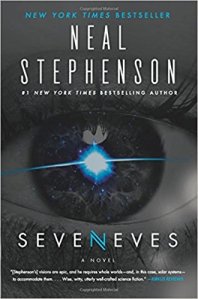
Lost technologies, Seveneves, and The Secret of Our Success

Spoilers ahead, but if you haven’t read Seveneves by now they probably don’t matter.

Seveneves is an unusual and great novel, and it’s great as long as you attribute some of its less plausible elements to an author building a world. One plausible element is the way humanity comes together and keeps the social, political, and economic systems functional enough to launch large numbers of spacecraft in the face of imminent collective death. If we collectively had two years to live, I suspect total breakdown would follow, leaving us with no Cloud Ark (and no story—thus we go along with the premise).

But that’s not the main thing I want to write about. Instead, consider the loss of knowledge that inherently comes with population decline. In Seveneves humanity declines to seven women living in space on a massive iron remnant of the moon. They slowly repopulate, with their descendants living in space for five thousand years. But a population of seven would probably not be able to retain and transmit the specialized knowledge necessary for survival on most parts of Earth, let alone space.

That isn’t a speculative claim. We have pretty good evidence for the way small populations lose knowledge. Something drew me to re-reading Joseph Henrich’s excellent book The Secret of Our Success, and maybe the sections about technological loss are part of it. He writes about many examples of European explorers getting lost and dying in relatively fecund environments because they don’t have the local knowledge and customs necessary to survive. He writes about indigenous groups too, including the Polar Intuit, who “live in an isolated region of northwestern Greenland [. . . .] They are the northernmost human population that has ever existed” (211). But

Sometime in the 1820s an epidemic hit this population and selectively killed off many of its oldest and most knowledgable members. With the sudden disappearance of the know-how carried by these individuals, the group collectively lost its ability to make some of its most crucial and complex tools, including leisters, bows and arrows, the heat-trapping long entry ways for snow houses, and most important, kayaks.

As a result, “The population declined until 1862, when another group of Intuit from around Baffin Island ran across them while traveling along the Greenland coast. The subsequent cultural reconnection led the Polar Intuit to rapidly reacquire what they had lost.” Which is essential:

Though crucial to survival in the Arctic, the lost technologies were not things that the Polar Intuit could easily recreate Even having seen these technologies in operation as children, and with their population crashing, neither the older generation nor an entirely new generation responded to Mother Necessity by devising kayaks, leisters, compound bows, or long tunnel entrances.

Innovation is hard and relatively rare. We’re all part of a network that transmits knowledge horizontally, from peer to peer, and vertically, from older person to younger person. Today, people in first-world countries are used to innovation because we’re part of a vast network of billions of people who are constantly learning from each and transmitting the innovations that do arise. We’re used to seemingly automatic innovation, because so many people are working on so many problems. Unless we’re employed as researchers, we’re often not cognizant of how much effort goes into both discovery and then transmission.

Without that dense network of people, though, much of what we know would be lost. Maybe the best-known example of technology loss happened when the Roman Empire fell, followed by the way ancient Egyptians lost the know-how necessary to build pyramids and other epic engineering works.

In a Seveneves scenario, it’s highly unlikely that the novel’s protagonists would be able to sustain and transmit the knowledge necessary to live somewhere on earth, let alone somewhere as hostile as space. Quick: how helpful would you be in designing and manufacturing microchips, solar panels, nuclear reactors, plant biology, or oxygen systems? Yeah, me too. Those complex technologies have research, design, and manufacture facets that are embodied in the heads of thousands if not millions of individuals. The level of specialization our society has achieved is incredible, but we rarely think about how incredible it really is.

This is not so much a criticism of the novel—I consider the fact that they do survive part of granting the author his due—but it is a contextualization of the novel’s ideas. The evidence that knowledge is fragile is more pervasive and available than I’d thought when I was younger. We like stories of individual agency, but in actuality we’re better conceived of as parts in a massive system. We can see our susceptibility to conspiracy theories as beliefs in the excessive power of the individual. In an essay from Distrust That Particular Flavor, William Gibson writes: “Conspiracy theories and the occult comfort us because they present models of the world that more easily make sense than the world itself, and, regardless of how dark or threatening, are inherently less frightening.” The world itself is big, densely interconnected, and our ability to change it is real but often smaller than we imagine.

Henrich writes:

Once individuals evolve to learn from one another with sufficient accuracy (fidelity), social groups of individuals develop what might be called collective brains. The power of these collective brains to develop increasingly effective tools and technologies, as well as other forms of nonmaterial culture (e.g., know-how), depends in part on the size of the group of individuals engaged and on their social connectedness. (212)

The Secret of Our Success also cites laboratory recreations of similar principles; those experiments are too long to describe here, but they are clever. If there are good critiques of the chapter and idea, I haven’t found them (and if you know any, let’s use our collective brain by posting links in the comments). Henrich emphasizes:

If a population suddenly shrinks or gets socially disconnected, it can actually lose adaptive cultural information, resulting in a loss of technical skills and the disappearance of complex technologies. [. . . ] A population’s size and social interconnectedness sets a maximum on the size of a group’s collective brain. (218-9)

That size cap means that small populations in space, even if they are composed of highly skilled and competent individuals, are unlikely to survive over generations. They are unlikely to survive even if they have the rest of humanity’s explicit knowledge recorded on disk. There is too much tacit knowledge for explicit knowledge in and of itself to be useful, as anyone who has ever tried to learn from a book and then from a good teacher knows. Someday we may be able to survive indefinitely in space, but today we’re far from that stage.

Almost all post-apocalyptic novels face the small-population dilemma to some extent (I’d argue that Seveneves can be seen as a post-apocalyptic novel with a novel apocalypse). Think of the role played by the nuclear reactor in Steven King’s The Stand: the characters in the immediate aftermath must decide if they’re going to live in the dark and regress to hunter-gatherer times, at best, or if they’re going to save and use the reactor to live in the light (the metaphoric implications are not hard to perceive here). In one of the earliest post-apocalyptic novels, Earth Abides, two generations after the disaster, descendants of technologically sophisticated people are reduced to using melted-down coins as tips for spears and arrows. In Threads, the movie (and my nominee for scariest movie ever made), the descendants of survivors of nuclear war lose most of their vocabulary and are reduced to what is by modern standards an impoverished language that is a sort of inadvertent 1984 newspeak.* Let’s hope we don’t find out what actually happens after nuclear war.

In short, kill enough neurons in the collective brain and the brain itself stops working. Which has happened before. And it could happen again.


* Check out the cars in Britain in Threads: that reminds us of the possibilities of technological progress and advancement.

Ninety-five percent of people are fine — but it’s that last five percent

How Airline Workers Learn to Deal with Passengers” reminds me of something I’ve noticed about teaching and consulting: 95% of people are fine, but that last 5% can occupy disproportionate time and mental energy.* There’s a temptation to become somewhat armored against that last 5%, which negatively impacts interactions with the vast majority of normal, reasonable people.

A lot of public-facing professions seem to have this problem, including emergency medicine doctors, cops, retail workers, and public school teachers. Because the bottom 5% can be noisy and time-consuming, a kind of misanthropy can set in, as one begins to think the few represent the whole—even if, intellectually, one knows it does not. Mental, psychological, and emotional armoring can reduce one’s overall effectiveness; this is particularly obvious in teaching, in which person-to-person connection plays a stronger role than it does in consulting.

Something about the human mind seems to make one negative interaction stand out more than 10 positive or normal interactions. I didn’t realize this at first, so a small number of negative experiences affected me much more than they should have. There’s a kind of crowding-out effect going on. Now, when I have to deal with someone who is unreasonable or at least not representative of the whole, I try to actively, consciously remind myself that they don’t represent the whole. Behind every irrationally unhappy person there are probably 49 to 99 normal people who aren’t giving me unwarranted grief.

Colleges in particular have been in the news lately, and a lot of people have read stories about crazy social justice warriors or censorious students—like the Middlebury College thing or the Halloween costumes at Yale brouhaha. Sure, these stories are in fact outrageous, but, again, they’re also salient because they’re unusual. Because they’re unusual, they make the news (and these kinds of events do represent a problem, though the problem tends to be overstated).

Friends and acquaintances sometimes ask me about the activists students suppressing speech. Yeah, I do, a little, but not very much. The vast, overwhelming majority of college students, seem to want what college students have always wanted: to learn something; to get by; to get a job when they’re done; to get laid; to learn something about themselves and the societies they live in; to make friends; to individuate from their families. You could add other items. Many students feel a vague sense of worry about being excellent sheep, and that worry is itself a sign of intellectual health. Most students, if they’ve thought about free-speech issues at all, vaguely support it. But a minority of well-organized and angry activists can make a lot more noise and news than the silent majority! As Nassim Taleb says, “The Most Intolerant Wins: The Dictatorship of the Small Minority.” A motivated minority, especially given the college-complaint apparatus, can create a lot of bureaucratic hassle.

Professors and other students often feel a kind of chilling effect, and one related to my essay, “How do you know when you’re being insensitive? How do you know when you’re funny?” Similar issues play out in many fields beyond teaching and consulting. One angry, unreasonable, or irrational customer or client drowns out a lot of generically happy or satisfied ones. Or consider “I was a landlord: This is what it taught me about people.” Landlords have to be prepared for worst-case scenarios, and that preparation bleeds into their everyday scenarios and interactions.

Teaching, especially at the K – 12 level, suffers from defensive posture problem. A teacher who tries to be honest and interesting risks the ire of his or her angriest, unhinged, or most ideological students (and, even worse, their parents). Almost no teacher gets in trouble for being boring, but a teacher can get in trouble or can get in trouble for being many values of “interesting.” Even I’ve had that problem, and I’m not sure I’m that interesting an instructor, and I teach college students. Students who complain about school being boring get told that school is supposed to be boring. Students who complain about school being interesting (or “offensive,” or whatever) get much more attention.

It’s easy for outsiders to say teachers should stand up to the vocal, unhappy minority. But it’s less easy to do that when a teacher relies on their job for rent and health insurance. It’s also less easy when the teacher worries about what administrators and principals will do and what could happen if the media gets involved or if the teacher gets demonized. It would be helpful for more administrations to make public statements like the University of Chicago’s, confirming a commitment to free speech and open inquiry.

Social media probably amplifies many of the problem traits described above by allowing the least-reasonable people to organize, scream, and (not infrequently) lie. I don’t know what, if any, solution exists to these problems, apart from most individuals to attempt to be as reasonable as possible and not succumb to the noisy but unhinged minority. Not much of a rallying cry, is it? No one, or almost no one, rallies for free speech and free inquiry.


* You can change the ratios some; I doubt the number of problem students reaches 10% in most scenarios, and I also doubt that the number declines below 2% (among professions that face the general public).

A field guide to Trump Resistance demonstrations

My father, Isaac, wrote this post.

As a young man, I was very involved in the antiwar movement, as well as other social justice causes. I went to many demonstrations, organized some, and spent two weeks registering African American voters in Natchez, MS during one Spring Break (I wasn’t smart enough to go to Fort Lauderdale). Like President Obama, I was trained by the Industrial Areas Foundation (IAF) as a community organizer and spent over a year working as a community organizer in a low-income African American neighborhood. You can read about my background as a true-believer radical at the link.

While I long ago hung up my demonstrating spurs, looking back over four decades to my activist and community organizing days gives me an unusual perspective on the sudden eruption of large street demonstrations by the Resistance to Trump.* This is my guide to Resistance fighters, who are willing to leave their coffee shops, yoga studios and Whole Foods for the suddenly trendy act of street demonstrations.

Not everyone in the thousands of people marching will necessarily share your desire for the peaceful exercise of group free speech. Some demonstrators likely have ulterior motives, whether they be the black masked anarchists who seem to love to break Starbucks windows, or, potentially much worse agent provocateurs. Such infiltrators could be aligned with some interest group, which could include Trump supporters, police—or, I suppose, even Putin, if you’re a conspiratorial sort.

As the protests grow, local cops and politicians, including Democrats, are going to be under increasing pressure to contain demonstrations to enable people to get to work, etc. It only takes a few agitators to turn a peaceful march into a riot. I know this first hand, as I was part of a demonstration of about 5,000 students protesting a speech by then HUD Secretary George Romney that suddenly turned ugly. Within a few minutes, some people in the crowd starting taunting the police and rushing the stage where Romney was speaking. A later investigation found that the people who rushed the stage were actually police agent provocateurs planted in the march. Waves of baton wielding cops moved on us from all sides. Tear gas canisters went flying. I got fairly badly tear gassed and retreated to a nearby classroom building to hide in a bathroom and wash my eyes, which is a different meaning for “sheltering” in place and a different meaning than today’s “safe space” advocates have in mind.

In a large march or demonstration, you’ll only see what happening immediately around you, and you can quickly get caught up in a riot without realizing that a riot is happening. Always be aware of your surroundings and who’s nearby.

Try to give yourself an escape route and be prepared to bolt. This is not the time for flip-flops and t-shirts. Wear running shoes, long pants, and a long sleeved shirt, since tear gas and CS gas (much stronger than tear gas and sometimes used by police), irritate the skin as well as the eyes. Carry a hanky and water bottle in case you need wash your eyes out if you get teargassed. Above all, resist the urge to get in the face of cops, throw projectiles or otherwise provoke police—they will use their batons to defend themselves and you might easily be handcuffed and carted off to jail.

Leave your babies, kids, and dogs at home. While pushing a stroller makes for great TV/Facebook/Instagram videos, kids and pets will be in extreme danger if a riot develops and you won’t be able to protect them.

The biggest danger is that counter-marchers will appear. So far, the Resistance marchers have had the field to themselves. Eventually, counter-marchers will start showing up. Over 60 million Americans voted for Trump and they also know how to use social media. Two opposing groups of peaceful demonstrators are not a problem, and police will usually try to keep them separated.

But just as there are anarchists aligned with the Resistance, some pro-Trumpsters may show up with ax handles and be intent on mayhem. Trump has fairly strong support among police unions, veterans, and bikers, for example, and these guys may show up ready to fight.

The police rank and file may also be more sympathetic to the counter-marchers than the Resistance and might just let the two groups tangle for a while. Or the police themselves can become the counter-marchers, like the Chicago Police Department at the Democratic Convention in 1968, which was later deemed a “police riot.” I don’t think any cops were disciplined, but hundreds of demonstrators were badly injured and the Chicago Seven faced years of litigation.

The free expression of political opinions is the bedrock of the American democracy and I’m all for showing opposition to the politics and politicians of the day. As the Rollings Stones said in “You Don’t Always Get What You Want,” “And I went down to the demonstration to get my fair share of abuse.” Don’t needlessly open yourself to abuse.


* I think conjuring up images of WW II France is overwrought, unless volunteers from Brooklyn and Santa Monica are going to parachute into coal country and disguise themselves by wearing red Make America Great hats, chewing tobacco, and driving Ford F-150s. If I were a community organizer on this project, I would use the term “Rebel Alliance” instead. The French Resistance were all white folk, while Star Wars goes for ethnic and inter-planetary species diversity.

Caught in the nerd-o-sphere or researcher bubble

In a Tweet Benedict Evans mentions, “I’m always baffled when people are surprised by charts like this. What do people think the world was like 250 years ago? Isn’t this obvious?”

mortality-chart

I replied, “I teach undergrads; it isn’t obvious to most, and most either don’t think about it or rely on TV-based historical fiction,” but that’s too glib; the chart’s demonstration of growing wealth is obvious to people who’ve read a lot of history and who’re immersed in the nerd-o-sphere or researcher bubble, but that’s a small part of the population. Most people don’t really, really think about or study history, and to the extent they think about it at all they rely on hazy, unsourced stereotypes.

I’ve read lots of student papers (and for that matter Internet comments) saying things like, “In the past, [claim here].” Some will even say, “In the old days…” In the margins I will write in reply, “Which years and geographic areas are you thinking about?” When I ask those kinds of questions in class students look at me strangely, like I’ve suddenly demanded they perform gymnastics.

The past really is a foreign country and unless someone has made the effort to learn about it directly, meta-learn how to learn, and learn how the people in a given time period likely thought, it can look like the present but with different clothes. That’s often how it’s presented in TV, movies, and pop fiction (see e.g. “Rules for Writing Neo-Victorian Novels“). To take one obvious example, characters in such TV shows and movies often have modern sexual and religious mores, ignoring that many of the sexual mores and rules of the last ~500 years of European and American history evolved because a) reliable contraception was unavailable or extremely limited, b) a child born to a single woman could end up killing both child and woman due to lack of money and/or food, and c) many STIs that are now treated with a quick antibiotic were death sentences.

In most countries today, people don’t worry about starving to death, so the kind of absolute poverty that’s stunningly declined in the last couple centuries takes a strong imaginative leap to inhabit. People also seem to experience hedonic adaptation, so the many things that make our lives easy and pleasant become invisible (that’s true of me too).

So the average person probably never thinks about what the world was like 250 years ago, and, if they do, they probably don’t have the baseline knowledge necessary to conceptualize and contextualize it properly. Those of us caught in the nerd-o-sphere and researcher bubble, like myself, do. Our sense of “obvious” shifts with the environment we inhabit and the education we’ve had (or the education we’re continuing all the time).

And about that education system. Years ago I used to read tech sites in which self-taught autodidacts would fulminate about the failures of the conventional school system and prophesize about how the liberation of information will remake the educational sector into a free intellectual utopia in which students would learn much faster and at their own pace, leading to peace, harmony, and knowledge; in this world, rather than being bludgeoned by teachers and professors, students would become self-motivated because they’d be unshackled from conventional curriculums. To some extent I believed those criticisms and prophecies. One day we would set students free and they’d joyously learn for the sake of learning.

Then I started teaching and discovered that the conventional school system exists to work on or with the vast majority of the population, which doesn’t give a fig about the joy of knowledge or intrinsic learning or whatever else Internet nerds and PhDs love. The self-taught autodidacts who wrote on Slashdot (back then) and Hacker News or Reddit or blogs today are a distinct minority and at most a couple percent of the total population. Often they were or are poorly served in some ways by the conventional education system, especially because they often have unusual ways of interacting socially.

Now, today, I’ve both taught regular, non-nerd students and read books like Geek Heresy: Rescuing Social Change from the Cult of Technology, and I’ve realized why the education system has evolved the way it has. Most people, left to their own devices, don’t study poetry and math and so on. They watch videos on YouTube and TV and play videogames and chat with their friends. Those are all fine activities and I’ve of course done all of them, but the average person doesn’t much engage in systematic skill- and knowledge-building of the sort that dedicated study is (ideally) supposed to do.

In short, the nerds who want to reform the education system are very different than the average student the system is designed to serve, in a way similar to the way the average person in the nerd-o-sphere or researcher bubble is likely very different from the average person, who hardcore nerds may not know or interact with very much.

I’m very much in that nerd-o-sphere and if you’re reading this there’s a high probability you are too. And when I write about undergrads, remember that I’m writing about the top half of the population in terms of motivation, cognition, and tenacity.

“David Brooks and the Intellectual Collapse of the Center”

David Brooks and the Intellectual Collapse of the Center” is excellent. I may be a small part of that intellectual center, to the point of writing a presidential endorsement post in October—something I’ve never done before, because the climate has never seemed to merit it. But given the potential for catastrophe, it seemed necessary. Some readers have complained about the increasing amount of political content on The Story’s Story, but given the worldwide political darkness that has been descending it seems necessary to attempt to understand it. I would like to go back to mostly ignoring politics apart from straightforward analysis.

And the problem of false equivalence is real, as Chait makes clear at the link: “official centrists would simply relocate themselves to the midpoint of wherever the parties happened to stand.” Yet official centrists should do more than triangulate. They (or we) haven’t done that. They (or we) have also been somewhat asleep over the last six or so years.

I certainly have been and am now attempting to make up for that slumber, in part because I’ve been so wrong about what I thought was politically possible or feasible. Though I’ve read The Myth of the Rational Voter, I didn’t entirely internalize its lessons. Though I’ve read about the extent to which irrationality pervades most human cognition, I didn’t think that we’d become so wildly irrational on a large-scale, public basis. Though I understand that most people know little about history, I didn’t appreciate the extent to which “little” really means “nothing.”

But knowing and understanding things may not matter very much, since we may be living in a post-literate age and I’m writing material that may go largely unread, especially by the people who most need to understand what’s happening.

Trump fears and the nuclear apocalypse

In a best-case Trump scenario, he bumbles around for four years doing not much except embarrassing himself and the country, but few substantive political changes actually occur; in the worst-case Trump scenario, however, Trump starts or provokes a nuclear war. Nuclear war is very bad and could conceivably extinguish the human race or at least wipe out the United States, as well as other countries. I still view nuclear war as unlikely, but it’s far more likely than I would’ve judged it three weeks weeks ago—and when I’ve mentioned increasing fear of nuclear war I’ve gotten a weirdly large amount of pushback.

Most of that pushback seems like wishful thinking. To understand the danger, Fred Kaplan’s The Wizards of Armageddon is a good book about nuclear policy and history, but Command and Control: Nuclear Weapons, the Damascus Accident, and the Illusion of Safety by Eric Schlosser is probably better for a first introduction to the subject. Command and Control details the (scarily) short lines between the president and launching, or attempting to launch, nuclear weapons is appallingly short.

To understand why Trump is scary, it is necessary to understand two things: 1. That in theory the president is supposed to be able to order a nuclear launch anywhere, at any time, and have missiles in the air within 30 minutes and 2. The way seemingly minor quarrels among countries have sometimes led to historically catastrophic outcomes.

Let us deal with the first point: while the president is supposed to be able to order an unprovoked nuclear attack at any time, there is at least some precedent for a gray area around nuclear weapons:

[I]n 1974, in the last days of the Watergate scandal, Mr. Nixon was drinking heavily and his aides saw what they feared was a growing emotional instability. His new secretary of defense, James R. Schlesinger, himself a hawkish Cold Warrior, instructed the military to divert any emergency orders — especially one involving nuclear weapons — to him or the secretary of state, Henry A. Kissinger.

It was a completely extralegal order, perhaps mutinous. But no one questioned it.

“Although Schlesinger’s order raised questions about who was actually in command,” Eric Schlosser writes in “Command and Control,” a 2013 book, “it seemed like a good idea at the time.”

This is at least a little heartening, as it implies that the generals in charge of executing nuclear launch commands simply will not do so unprovoked. The human nuclear bureaucracy and apparatus is itself hopefully not suicidal and homicidal. Still, that is a slender hope, as Alex Wellerstein describes in “The President and the bomb.”

To be sure, it’s also possible that Obama, Biden, and for that matter someone like Paul Ryan is having quiet conversations with the Secret Service and the military about what to do with a rogue nuclear launch order. Those quiet conversations might be unconstitutional, but if the choice is between constitutionality and the death of everyone and everything, one should hope that the few people charged with mechanically carrying out orders will second-guess those orders.

Beyond that, the history of World War I should scare us. World War I was a catastrophe that killed tens of millions of people and it was a war that no one wanted. I doubt most people have the faintest idea how World War I got started, and if you want to annoy your friends try asking them. Hell, I’m not even sure I could give a good answer. Still, consider some background reading:

* This is Tobias Stone’s “History Tells Us What Will Happen Next With Brexit And Trump.”

* Here is one description of “How Trump Could Realistically Start a Nuclear War.”

* Here is “The real danger,” also about the possibility of direct, great power wars.

* At the same time, see “Commander-In-Chief Donald Trump Will Have Terrifying Powers. Thanks, Obama.” It can be fun to have secret, unchecked powers when your guy is in office, but is incredibly dangerous when the other guy does.

Almost everyone has forgotten about World War I, but in the short prelude to it people acted like it was normal. Check out the sleepwalking into war described in the Hardcore History podcast, around 1:38. In the horrible late July and early August of 1914, people went on holiday and shopkeepers assured their customers that nothing untoward would happen (One sees similar noises in the normalization of Trump). World trade had been expanding for decades; everyone “knew” that war would be suicidal; it seemed implausible that the death of a minor noble would lead to conflagration.

A similar set of circumstances could happen today. The flashpoint could be in the South China Sea, which is a disputed area. It could be the Baltic states. It could be Syria. It could be almost anywhere that the U.S. could pointlessly clash with China or Russia. Trump is obsessed with revenge and in a skirmish or dispute between U.S. forces and Chinese or Russian forces, which escalates rapidly in a tit-for-tat fashion.

Like this scenario: a Chinese ship fires on a U.S. ship in the South China Sea. The U.S. ship flees with a few causalities and Trump orders an attack on a Chinese ship in retaliation. The ship sinks, and China cannot possibly accept disrespect and in turn sinks a sub and imposes trade sanctions. The U.S. rallies to the flag and does the same. Eventually China uses a supercav missile to take out a U.S. carrier.

One could spin out an infinite number of similar scenarios, which may develop very quickly, over the course of days or weeks. Tit-for-tat may be an attractive strategy for small bands of humans or proto-humans in hunter-gatherer or agricultural societies fighting each other. It could end the world in the nuclear age.

I’m not too worried about Trump and domestic policy. He is likely to do some bad and foolish things, but they are unlikely to be existential threats. I am worried about Trump and the end of the world. We haven’t even discussed the possibility of a flu pandemic or some other kind of pandemic. The Ebola crisis was much closer to a worldwide catastrophe than is commonly assumed now. At the start of a flu pandemic the United States may have to lead world in a decisive, intelligent way that seems unlikely to happen under Trump.

Maybe nothing catastrophically bad will happen. I hope so and think that will be true. But to pretend he is a “normal” politician (or to vote for him) is to be willfully blind to history and to the man himself. In darker moments I wonder: maybe we don’t deserve democracy or freedom. Those who will not even vote for it—and half the potential electorate didn’t vote—don’t deserve it. Maybe institutions will resist Trump for the next four years, or resist his most militaristic and dangerous impulses. Maybe they won’t.

Again, I think the likely scenario is that Trump bumbles for four years and gets voted out of office. But nuclear war is too far outside most people’s Overton window, so they won’t even consider it, much as the total destruction that preceded World War I was inconceivable by any of the belligerents—had they realized it they would not have marched off to war, and many of the soliders themselves would have dramatically resisted conscription; they marched to their own deaths.

If you are not scared you’re not paying attention.

We are one black swan event from disaster. The last worldwide, negative black swan event was arguably World War II. Perhaps the 71 years separating us from then is long enough to have forgotten how bad bad really is.

I don’t expect this post to change any minds. All of the information in it was available three weeks ago and that didn’t change shit. We’re surrounded by what political scientists politely call “low-information voters.” This is a post based on logic and knowledge and logic and knowledge played little role in the election. Maybe, outside of elite spheres, it plays little role at all in human life. I only hope that the apocalyptic scenario doesn’t come to pass. If it does, “I told you so” will be no comfort, as it wasn’t in the aftermath of World War I. In that war the prophets and historians were ignored, as they were in the 2016 election. Let us pray that some of the prophets and historians are wrong.