The Charlie Hebdo response:

Is here:

Charlie_Hebdo on the paris massacre

Still, it is not obvious to me that religion, especially in its modern Western forms, is intrinsically opposed to the other items on that list, all of which I support and ideally enact.

The Tyler Cowen response is “So many questions…” That was posted almost two days ago and more questions still remain than answers.

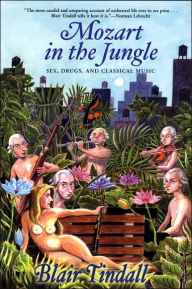
Briefly noted: Mozart in the Jungle — Blair Tindall

Mozart in the Jungle is surprisingly good and an ode to all the sex musicians have, the drugs musicians do (“I watched Janet bent over the desk to snort cocaine through a straw” occurs on page 2), and most notably a cautionary tale about the economics that underlie their industry. In Mozart in the Jungle Tindall succeeds as few do yet still barely succeeds enough to feed herself. The later sections, as she contemplates her own approaching infertility, she turns melancholy, because she knows that while others in her age group have families she has an oboe. Many adventures at age 22 are slogs at 40, and this is something many 22-year-olds know in passing but don’t feel till they’re much older.

Mozart_in_the_jungleTindall’s relative success still feels like failure to her, financially and, often, artistically. Megan McArdle’s recent post on journalism strikes many notes similar to Tindall’s; the two are both writing about glamour industries battered by changing economics and excess supply (facilitated by digital transmission) relative to demand. In Tindall’s case, the number of financially secure oboe players is probably in the single and low double digits. She makes that threshold, but only in an artistically tedious way. For her, the smart thing to do is get out. When she makes decisions as a 20-year-old, she fails to realize that as a 35- or 40-year-old she will want and feel different things.

In school she finds that “my classmates toiled harder over their textbooks than I did over my oboe, yet they didn’t receive the same special attention.” Attention, though, is a dangerous stimulant, and so too are other stimulants, here recalled and made comic by an older mind reviewing a younger event:

Jose took off the same black turtleneck and dashiki he wore every day, the odor of his unwashed body mixing with cheap musk. We kissed, embracing as the climate of Brahams’s G-minor quintet washed over us. Jose peeled away my top gently, caressing my shoulders, nuzzling my neck and pulling back the covers. I could see another woman’s menstrual blood smeared on the bottom sheet, but I let him push me back on the bedding.

It goes… okay. The gap between fantasy and reality recurs through the memoir, to the very end:

A young person who dreamily “wants to go to Juilliard” or “be a concert pianist” should research the reality of those statements. [. . .] I’m one of those part-time musicians now. When I do play music, it is a joy. The reality of performing full-time wasn’t the fantasy I’d imagined as a little girl. What offers me a meaningful life today are the infinite possibilities in our modern world, of which music is only one. Thousands of people have been influenced by the Sierra magazine articles I’ve written about environmental conservation.

Incidentally, that quote also sums my feeling about grad school in the humanities.

Tindall also wistfully sees her Upper West Side neighbors go from libidinously ravenous, providing her a voyeuristic thrill as they have continual passionate sex, to parents, while Tindall plays the oboe and can’t or won’t maintain long-term relationships as her child-bearing years slip away like leaves off a tree in Boston in autumn. The memoir also came out before Tindall stalked her ex-boyfriend, Bill Nye, so there may be more to her story and character than Mozart in the Jungle.

Thoughts on “The Martian,” the movie

* The Martian is thrilling and the best movie I’ve seen in recent memory. The people telling you to see it are right. It’s a definite win in 3D.

* Very few contemporary movies are pro-science and optimistic about the abilities of humans to get things done and solve big problems, as Michael Solana argues in “Stop Writing Dystopian Sci-Fi—It’s Making Us All Fear Technology” and Neal Stephenson argues here (and elsewhere). Although many of us fear what will happen technologically in the future, few of us would want to return to the technologies of the past—which will probably also be true in the future. Few contemporary movies depict engineers as heroes.

* The absence of SpaceX or an analogous company (Blue Origin, for example) seems odd, as private companies seem poised to win the race to Mars. The presence of China’s space agency seems wise, though.

* The movie is a lesson in perspective: most of us are mired in minutia instead of thinking about how to concretely make the world a better place, one day at a time. Spacecraft happen through trillions of tiny decisions. What have you done, today, to make the world a slightly better place? (Imagination can count.)

* The Martian depicts “ah-ha!” moments well, in ways that are compatible with Steven Berlin Johnson’s Where Good Ideas Come From. I also didn’t expect to hear phrases like “The Hohmann transfer window” used correctly.

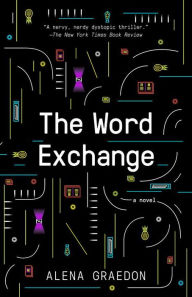
Briefly noted: The Word Exchange — Alena Graedon

The best criticism of this novel is “Human, All Too Inhuman,” in which James Wood, among other things, defines hysterical realism. “Human, All Too Inhuman” was written before The Word Exchange but still applies to it. The novel is good on a sentence-by-sentence level but is poorly and tediously plotted; malformations on the macro level are hard to describe but easily noticeable. I’ll happily start the next Graedon novel because this one shows much promise. The Word Exchange concerns a near-future world in which Anana works with her father, Doug, on the world’s last paper dictionary. Her father disappears, the Dictionary as a product and institution are attacked, and Anana needs to find out why. Yet on page 75 she writes:

But this was no ordinary book burning. Our digital corpus was also being dismantled, by pale, nimble hands. Who, I wondered, would want to destroy the Dictionary? Did Doug know? Was that why he’d vanished?

Word_Exchange_cover this point something more should have happened than random thoughts, discussions about Hegel, Anana’s time in college, her relationship with pseudo-friend Max, and many other threads so random that one has to wonder if or when they’ll cohere.

The novel channels many others: Stephenson, Gibson, even Carlos Ruiz Zafón, all of whose complete works you should try first, especially Snow Crash and Pattern Recognition.

There are echoes, maybe unintentionally, of The Name of the Rose (think of the moment when Ubertino and William are speaking together and William says, “I like also to listen to words, and then I think about them,” which one could say also of Anana and the other characters in The Word Exchange, though they lack Williams’s rigor.) Yet that novel, for all its abstruse Catholic metaphysics, is bound by a murder; people like murder stories because the stakes are plain: Death is bad, preventing it is good, and murderers need to be subjected to justice. In The Word Exchange no stakes are clear. By page 130 the narrative is still wandering and navel gazing; it’s only in the 130 – 140 range that things start to cohere, slightly.

Writers are fond of murder for a reason; if not murder, then comedy, and though there is a disappearance in The Word Exchange there is no murder. John Updike’s novelistic alter ego Bech knows the draw of murder:

Murdering critics is something most writers, I suspect, have wanted to do. The device of poisoning an envelope flap was used, I discovered later, in an episode of Seinfeld, but by then it was too late, my die was cast.

Art imitates other art even unintentionally. Murder and mystery are good too to emulate, and The Word Exchange is conscious, maybe too conscious, of its emulations. It is not consciousness enough of the pleasures of narrative, of structure, of figuring out the “why” and not just the “how.”

In The Word Exchange I want less… Brooklyn? It’s hard to choose an adjective. The novel feels written or narrated by a bright and precocious but ultimately annoying student who has not yet learned how to be in the world. Even the acknowledgements page is annoying, beginning as it does with “I have a real community of minds to thank.” As opposed to a false community of minds? Why not just say, “Group of people?” The sheer number of people thanked may be indicative of the problems with the story: Too many people said too many things and no central person adequately controlled the outcome.

The praise for The Word Exchange indicates why one can’t trust critics.

Briefly noted: “Mate” is out and it’s good — Tucker Max and Geoffrey Miller

As previously noted, Mate: Become the Man Women Want is out and it’s good.* As the book says in the introduction, “Your culture has failed you and the women you’re trying to meet.” The book is part of the remedy. When I read the draft a couple months ago I told Tucker, “I wish I could teleport a copy of Mate back in time and give it to my 13-year-old self, and then instruct him to read it once a year for the next decade.” That’s still true. If you know any teenage or early 20s guys who are likely straight, give them a copy of this book. It is not going to be useful for everyone and indeed I expect some of you to strongly dislike it. People like how-to in many fields but often not this one.

Mate_CoverThe book emphasizes empathy: “If you always try to understand the woman’s perspective—what they want, why they want it, and how to ethically give it to them—then you will find it much easier to become attractive to them, and you’ll be much more successful with your mating efforts.” There are no shortcuts. For a while I’ve been describing the empathy gap, because I increasingly think that the average man doesn’t much understand or try to understand the average woman—and vice-versa. That’s why books like Mate, or Self-Made Man: One Woman’s Year Disguised as a Man, are valuable: they work to close the empathy gap.

Parts of the book will be obvious to older guys who have their lives together—that showering and grooming are important will not be news, but most of us can also probably remember the shambling smelly kids in school. Other parts counteract some of the more dubious parts of our culture, like the claim that women are attracted most by money and that all women are “gold diggers.” For most women most of the time other things matter most, like how “individual women just your fuckability by your social network. So you had better have proof—social proof—that it exists.” Most people, men and women, who want a relationship reasonably want to know the person they’re having a relationship with, and that means knowing friends and family—and knowing they exist. Many of us have had the experience of sleeping with someone who keeps us totally separate from the rest of their lives. Sometimes that can be good—we don’t “count”—but for actual relationships it’s not.

There are still hilarious metaphors and comparisons, like “[A lot of guys think they need to have a ton of money,] then the women will just magically appear, like monarch butterflies to milkweed, flies to honey, rappers to Scarface posters.” But there are fewer of them: The book is entertaining but it leans informational. I at least felt rueful for my teenage and college self when I read some sections. Perhaps my favorite moment occurs two-thirds through the book, when Max and Miller are noting some of the artistic skills that women like, like music, storytelling, and, saliently for this quote, drawing:

The key thing here is to cultivate actual skill rather than indulge in modernist expressionism or abstract art. The poet John Ciardi pointed out, “Modern art is what happens when painters stop looking at women and persuade themselves they have a better idea.”

I’ve never read as concise and accurate description of why so much modern art is so bogus.

The bibliography is useful.


* As also previously noted, I now know Tucker well enough to not be an unbiased critic.

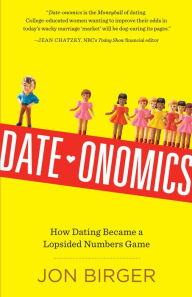
Briefly noted: Date-onomics: How Dating Became a Lopsided Numbers Game — Jon Birger

Date-onomics is charming and worth reading for anyone who is single, who is at risk of becoming single, or curious about how markets are created and how people interact with markets in this domain. Apparently there are relatively few members of that last group: “I realize that most people do not want to think about supply and demand when contemplating matters of the heart.” Perhaps is right, but rejecting knowledge seems to me like madness. Birger also notes that there “is an assumption that the perceived shortage of college-educated men [. . .] is actually a mirage.” Except that Birger says it’s not a mirage: there are more single college-educated women than men, especially in particular cities (like New York).

For men the simple takeaway might be: move to New York or an equivalent city with many more women than men in it. For women the simple takeaway might be: Silicon Valley, Seattle, and Denver are waiting for you, since in those areas straight women will have more market power than straight men.

The book, read properly, tells you where you should think about living and/or going to school. Guys working at big tech companies in particular should think carefully about the differences they’re likely to encounter between working the Bay Area versus working in those same companies’s New York City offices. Date-onomics attempts to solve an information asymmetry problem, since very few people actively consider how gender ratios affect their romantic, sexual, and reproductive lives. Search costs are high and underappreciated in dating.

Birger writes, “Why is it that women like Donovan struggle to find marriage-material men even as male counterparts with less going for them seem to have little trouble with the opposite sex?” Has Birger missed the vast literature on pickup artistry that’s emerged in the last two decades? Is he aware of the Tucker Max and Geoffrey Miller book Mate? For most men much of mating life seems to be a tremendous struggle, and it’s one Birger (mostly) dismisses. The dating sections of Norah Vincent’s Self-Made Man: One Woman’s Year Disguised as a Man are among the most compelling, because she tries being a man—noting that she expects to get all the advantages and pleasures of the “patriarchy” that she’d been told about for years in women’s studies classes and feminist books.

Instead Vincent finds struggle, rejection, and hardship—and she’s very happy to go back to being a woman. Being a man doesn’t turn out to be the patriarchal cornucopia she imagines, and that Birger implicitly imagines for men.

In Date-onomics, Birger refers repeatedly to “good men” (2), “ambitious men” (7), “eligible men” (13), “good single guys” (14), and meeting “a decent man” (29). There are others. Rarely does he consider what men might be looking for in a woman, or what the kinds of adjectives used in the preceding sentence might conceal. That framing is unfortunate.

It’s especially unfortunate because in the real world people who can assess themselves accurately, improve themselves reasonably, and compromise pragmatically tend to get decent results. Those who can’t, don’t. (From Date-onomics: “Problem is, wealthy women are far less likely than wealthy men to marry down”).

Despite that general fact, Birger argues that many of us don’t have the facts:

The North Carolina high school guidance counselor quoted in the last chapter told me that she has never once had a parent or student ask about the 60:40 ratio at UNC Chapel Hill—despite the fact that this gender ratio is now a dominant feature of UNC social life. “It’s not even on their radar,” the guidance counselor told me.

It should be.

He’s right: It should be. His book, and this blog post, is an attempt to put that issue on the radar. Women may, at the margin, want to go to engineering schools. Men on the margin of going to college or not may want to be aware that college is increasingly where the women are. Knowledge affects behavior, but it isn’t diffused through society uniformly or easily. Despite the many virtues of this book, many of the people who may most need to know what it says are unlikely to pick it up.

Date-onomics is at its best when it’s focusing on facts and anecdotes and at its worst when it’s barely aware of its own framing. That dark matter, though, is obvious to me. I wonder how many will miss it.

EDIT: Hello readers from The Browser! If you like this piece, you’ll probably also like my latest novel, THE HOOK. You should check it out at the link.

Briefly noted: Why The Allies Won – Richard Overy

Why the Allies Won is just right in every way: just the right level of detail; just the right level of analysis; just the right tone; just the right amount of acknowledgment of other points of view; just the right level of specifics versus general lessons. Regarding that last, consider this: “By December [1941] the Panzer armies were using horses again. These were rates of loss never anticipated by German leaders. Little thought or preparation had gone into the question of what to do if the quick campaign of annihilation failed. The German army too needed to modernise in 1942.” Lesson: Always consider the worst-case scenario. What do you do if things go spectacularly wrong? It’s a lesson the Bush administration didn’t learn before invading Iraq. It’s a lesson many of us don’t learn romantically: If we entwine ourselves with this person, move for this person, marry this person, what should we do if things go totally wrong? What’s a best worst-case outcome? Humans seem to find it almost impossible to ask this. The Germans didn’t ask this. Stalin didn’t either when he agreed to a non-aggression pact with Germany. Few asked about worst-case scenarios before World War I.

why the allies wonTom Ricks’s The Generals has a similar quality. If you have to choose between books I’d say take The Generals but they’re both excellent. Overy has a charm and flow in his writing that is difficult to convey via a single quote; for example, he writes that “Despite numerous warnings from sources even the Soviet intelligence authorities could have regarded as unimpeachable, Stalin insisted to the very last moment that Hitler would not attack. He thought he had the measure of his fellow dictator. The shock was complete.” Those sentences cascade from longer to short. The words “unimpeachable” and “measure” are somehow just right but not totally obvious. The last sentence is as short as it can be and completely evocative. Overy writes sentences like, “On the face of things, no rational man in early 1942 would have guessed at the eventual outcome of the war. In the jargon of modern strategy, the Allies faced the worst-case scenario.” The word “rational” does a lot of work in that first sentence: to unpack it here would be too wordy, but in some sense describing how that rational man turned out to be wrong is the book’s job.

Hardcover editions in good shape are cheaply available on Amazon.

Thoughts on the TV show “UnREAL”

* UnREAL is shockingly good until the end of the sixth episode, at which point it devolves, and it’s shockingly good despite the network on which it airs. How’d I find it? I can’t remember. One could read Arts & Entertainments in conjunction with the show.

* In highbrow literary culture “creative nonfiction” and “memoir” are terms that map to “I can make shit up if it works for the story, while being loosely true.” By now readers don’t expect “creative nonfiction” and “memoir” to actually be true, so making some shit up is okay because of the wink-wink situation between reader and writer. “Reality” TV does the same thing, with producers and people on the show acting like joint authors. The stories are about truthiness, not fact. Joseph Heath describes the pervasiveness of truthiness and why that’s bad in Enlightenment 2.0: Restoring sanity to our politics, our economy, and our lives. In reality TV truthiness at least doesn’t have real consequences. In politics it does. Maybe that’s why I prefer art to politics.

unreal_poster* The term “selection bias” is important when thinking about reality TV: What kind of person aspires to get on reality TV? Probably not a person representative of all people in all places and probably one who makes for good TV rather than good-for-other-things.

* Like The Americans, the show has a small group of passionate fans, but I’ve seen very little about it in the larger media.

* Until the end of the sixth episode UnREAL was willing to go to the distance in terms of watching bad or amoral people do bad or amoral things. The seventh episode was unwatchably bad. Shows and books can recover from such missteps. EDIT: The eighth episode was a return to form.

* There is a greater family resemblance between UnREAL and the HBO show Entourage than may be obvious at first glance, or from the status markers around each show.

Lurid & Cute — Adam Thirlwell

No one knows anything and no one beyond the protagonist has any consciousness in Lurid & Cute. It’s the sort of book whose good reviews make one learn to distrust good reviews. The book is not bad. It just sort is, as if someone hoovered up the thoughts of a bright but unambitious hipster and failed to organize them adequately. The narrator isn’t as intellectually associative as someone like Roland Barthes or Camille Paglia, whose styles can sometimes be forgiven for their insights.

Perhaps unsurprisingly I’ve been unable to sell Lurid & Cute on Amazon, where repeated price drops get matched by bots with excess inventory. Sometimes the market speaks and it’s wrong; other times, it speaks and it’s right. The novel starts cleverly:

I liked the bright vibe. But also I knew that although I liked the vibe it was not the vibe of my usual bedroom, just as the girl who was sleeping beside me in what seemed to be a hotel room was not my happy wife. It was that kind of problem situation, and while I acknowledge that some people would not feel that this is after all so bad – and that waking beside a person who is not ethically your own is just the usual way most humans enter the moral realm and therefore, kiddo, live with it – still, I could not be so suave.

But it goes nowhere, albeit in a way that’s hard to describe. The preceding sentences are representative: Thirlwell or his narrator is fond of length, and if you too are fond of length and of digression loosely related to whatever is kind of at hand, you may like it too. The style is often simultaneously too normal and too weird: “The entire history of my wasted time seemed sad to me, like it turned out to be a menace where no menace seemed to be visible, and I berated myself that, vigilant as I always was for signs of menace, I had not noticed that the true menace was right there [. . . ]” The book seems to offer itself as an example of wasted time, too, on par with the YouTube videos mentioned on page 22, but maybe its point is that time wasted and time well-spent are similar. Or more likely the point is the lack of a point, in which case there better be a great story in there. There isn’t here.


Try Merritt Tierce’s Love Me Back instead. That novel stays with me long after I finished. It’s a novel about struggle that’s not a struggle to read, a novel indirectly about politics that doesn’t slap readers in the face with politics, a novel about sex as it’s had now without being polemical. There’s so much there and so little in Lurid & Cute.

Thoughts on “Hot Girls Wanted,” the Netflix documentary

Is it a sign of getting older that, more than seeing the hot girls featured be nude, I want to see them take economics, psychology, and human sexuality classes? I’m not ideologically or otherwise opposed to porn—quite the opposite, actually—but I am opposed to ignorance and Hot Girls Wanted is arguably about that subject, rather than its putative subject. The girls followed remind me of my least sophisticated students and do not seem to have a sense of future (or life trajectories) or past (and where their industry comes from). Often on this blog I write about the perils of academia, but if this is the alternative then academia looks really, really good. Ignorance has tremendous costs and rarely are those costs made as stark as they are in Hot Girls Wanted.

That being said, I wish the filmmakers had asked more questions about what these girls would otherwise be doing. What’s their opportunity cost? At what margin are they operating? They are getting paid for what they do, and from what I’ve heard, usually after a couple drinks, from women I know who’ve been in adjacent industries the college hookup scene is often not much better or more satisfying than getting paid.

hot_girls_wantedThe New York Times (and similar publications) has a trope: some Bad Trend occurs and then the writer adds, “Women and minorities hurt most.” Hot Girls Wanted deploys a similar frame; although perhaps being a porn actress is for many women not the world’s best job, it is possible for straight women to have straight sex on camera and make a lot of money, which isn’t even an option available to the vast majority of men. How many attractive 18- and 19-year-old guys would love to make a couple hundred or thousand dollars to have sex on camera? I haven’t done a formal study but let me guess “a lot.” Yet those jobs don’t or barely even exist. Having an option to trade heterosexual sex for money is still valuable, even if the makers of Hot Girls Wanted disapprove and/or think women don’t really have the agency necessary to consent to the job.

To me the girls seem sad not because they’re doing porn, exactly, but because they’re ignorant and don’t understand what they’re doing. How was their relationship with their high school teachers? My reactions to them doing porn would actually be similar if they were doing, say, currency trading: The people on the other ends of the trade are not there to help them. If you want to trade currency you really need to understand what you’re doing. Failure to know will have real consequences. Porn is similar in this way.

Hot Girls Wanted could be compared and contrasted with Belle de Jour’s work. Both are about women in sex work but the tones couldn’t be different. Belle de Jour already had gone through British undergrad. She was (and probably is) an intense reader. She knew much better what she was doing when she started working.

There are intelligent, empowered ways of being in the industry depicted in Hot Girls Wanted, but they are not evident here. It is at best very difficult to protect people from being from themselves, and attempting to do so usually has distortionary outcomes in other areas that make the protection itself not worthwhile. Arguably much of the sexual revolution since the 1960s is a demonstration of this, and we’re now seeing the outcome in terms of family and economic structure (link goes to Robert Putnam’s latest book). The wonk-o-sphere is abuzz about family structure issues but I wonder how many, if any, wonk-o-sphere members will connect them to Hot Girls Wanted. People want what they want and the elite pundit class, left, right, and Alpha Centauri is maybe not good so good at understanding or emphasizing this.

You will not learn much from Hot Girls Wanted. That said I don’t regret watching and my interest did not waver.