Summary Judgement: Sweet Tooth — Ian McEwan

For a novel about a spy, Sweet Tooth is surprisingly slack. Maybe it’s slack in defense of realism. The cause eludes me, since the writing is as customarily crisp as the story isn’t. Excellent quotes are easy, from the first page, with this description of Serena’s father, an Anglican Bishop: his “belief in God was muted and reasonable, did not intrude much on our lives and was just sufficient to raise him smoothly through the Church hierarchy and install us in a comfortable Queen Anne House.” The parents are distant to the point of barely believable indifference: much later in the novel, Serena thinks, “Would the Bishop even notice I’d been away?” She’s free of parents, like an orphan in a 19th Century novel or a teenager in a contemporary TV show.

That doesn’t detract from the aforementioned beauty, like this, to go back to the second page: “We liked to think of ourselves as bad girls, but actually we were rather good.” Serena, on learning about the difficulties of writing, “went for important walks,” the silliness and accuracy of the phrase “important walks” working so well to conceptualize her state of mind and what many people with intellectual dispositions end up doing.

But the beauty of sentences eventually feels like backdrop when a second or third act fails to develop. The novel ends with a great, revisionary secret, the sort of secret that powers PhD dissertations more often than it does readerly love. We’ve seen these surprise techniques before—most notably in Atonement, but also, after a fashion, On Chesil Beach.

Like many writers, including this one, McEwan, through Serena, is at least interested in and perhaps obsessed by what reading and books do to people. Serena works in books as much as she’s a spy and sleeps with authors (which is the sort of practice I’d like to encourage). She notes what she reads and how she reads it. The book becomes about a love of books, but it does so to the point that the occupant of this book becomes dull. What does the book talk add up to? I’m a person sympathetic to books and book talk, but in Sweet Tooth the answer is “not much.” It becomes easy to lose focus midway through. Sure, for Serena, reading is how she both constructs and understands her world, but then you have to, you know, go do something. That’s not to say that she isn’t artful or funny. Consider this problem, about Jeremy, Serena’s first lover who turns out, predictably, to prefer men:

I wanted him to have a secret and shameful desire that only I could satisfy. I wanted to make this lofty, courteous man all mind. Did he want to smack my backside, or have me smack his? Was he wanting to try on my underwear? This mystery obsessed me when I was away from him, and made it all the harder to stop thinking about him when I was supposed to be concentrating on the maths. Colette was my escape.

Colette was her escape, but into what and from what? From mysteries? From something she can’t quite articulate, perhaps. And Serena, as a narrator, is also willing to ostentatiously tell us that she’s older and wiser now: “What I took to be the norm—taut, smooth, supple—was the transient special case of youth. To me, the old were a separate species, like sparrows or foxes. And now, what I would give to be fifty-four again!” This intrusion of the future self reminds us that we’re reading something from the future of events, with two pairs of eyes: the eyes of the undergraduate Serena and the eyes of the much older Serena, imagining her younger self from a position of greater articulacy and knowledge. Done too often, though, it becomes tedious. The notes in my copy trail off as the novel advances, and as I hope for Serena to become more than an acted-upon reporter of events. Her own life feels like it happened to someone else. Later in the novel, much later, the reason for this is revealed. But the view at the end of a long trail doesn’t always redeem the journey. The reason is clever, cerebral, not expected and not forced, and doesn’t make me want to read Sweet Tooth again, unless the next reading is part of some academic project about the usual sorts of academic things.

Serena says this of her reading habit:

All thanks to my mother, I didn’t stop reading. I’d never read much poetry or any plays at school, but I think I had more pleasure out of novels than my university friends, who were obliged to sweat over weekly essays on Middlemarch or Vanity Fair. I raced through the same books, chatted about them perhaps, if there was someone around who could tolerate my base level of discourse, then I moved on. Reading was my way of not thinking about maths. More than that (or do I mean less?), it was my way of not thinking.

Reading can be a powerful way of not thinking. I know from experience, even if most people think of reading as a highbrow, intensely intellectual activity these days. It isn’t, necessarily. And the assigned essay can be a chore instead of a pleasure. Serena wants it to be a pleasure:

My needs were simple. I didn’t bother much with themes or felicitous phrases and skipped fine descriptions of weather, landscapes, and interiors. I wanted characters I could believe in, and I wanted to be made curious about what was to happen to them. Generally, I preferred people to be falling in and out of love, but I didn’t mind so much if they tried their hand at something else. It was vulgar to want it, but I liked someone to say ‘Marry me’ by the end. Novels without female characters were a lifeless desert. Conrad was beyond my consideration, as were most stories by Kipling and Hemingway. Nor was I impressed by reputations. I read anything I saw lying around. Pulp fiction, great literature and everything in between—I gave them all the same rough treatment.

Simple intellectual and erotic needs might be easier to fulfill than complex ones, in one sense, but also harder, in the way that a simple task executed perfectly may be harder than a complex task executed with a margin for error. Still, Serena should have known that it isn’t vulgar to want love and marriage and plot. It’s vulgar that professors and highbrow critics might make her think it is vulgar to want those things, to want fiction that might be, to use that overused term, “relatable.” That one might be able to follow effectively. Serena isn’t a close reader, or someone practicing towards being a professional.

But she is someone who learns how to be through books, which makes her different from someone who learns how to be from in other ways, or someone who never learns how to be. She says, “I caused amusement among my Newnham friends studying English when I told them that Valley of the Dolls was as good as anything Jane Austen ever wrote. They laughed, they teased me for months. And they hadn’t read a line of Susann’s work.” Her friends are snobby and dismissive. Given the choice between snobby and unrefined but passionate, I’ll take the latter. The difference between those becomes a running issue, as when Serena begins to write a little column, and, like bloggers, something unfortunate happens: “I had written half a dozen jaunty pieces when something went wrong. Like many writers who come by a little success, I began to take myself too seriously.”

It’s a narrow act, the stance that straddles too serious and not serious enough. When I’m waffling between them, I try for “not serious enough:” after all, we’re talking about fiction here, not life and death. But for Serena the two become bound together because of her work. That’s an interesting theme; if only the plot were drilled more vigorously through the loam of Serena’s mind and story.

About the University of East Anglia (UEA): Why you shouldn’t go

About the University of East Anglia (UEA): Why you shouldn’t go

In 2005 I made a mistake by studying abroad at the University of East Anglia (UEA) in Norwich, England. The school was—and still could be—a study-abroad factory that marketed itself to foreign students because foreign students paid a lot more in tuition than English students. The school is consequently incentivized to pursue the international market. A friend and I were sufficiently peeved about the low quality of the school that we wrote an illustrated guide that warned our friends away from going to UEA.

Some recent discussion made me dig up “About UEA: What You Should Know Before You Go.” Reading it now, I see weaknesses in my skills as a nascent writer (I want to edit my younger self) but think the document might still be valuable for undergrads seeking UEA-related information. The photos convey some of the bleakness of that university; I remember the day I said, “Fuck it, I should put these journalism skills to use because I have to tell people about this” and went around campus to shoot them. By which point I realized I’d been conned by UEA’s marketing and that I should tell what the UEA experience is actually like.

Back then I didn’t have a blog—although I should have; I was writing a lot—so I only sent “About UEA” to other undergrads I knew who were prospective UEA students. Today, the combination of a blog and Google mean that “About UEA” could retain some value, which it definitely won’t on my hard drive. Perhaps I can save others from making my mistake.

That experience also informed “Europe, the United States, living standards, GDP, and the University of East Anglia (UEA),” and UEA also made me predisposed to believe Richard Posner’s comments about the shabbiness of England in the 1980s. From the perspective of Norwich in 2005, things hadn’t changed much.

Have they now? Maybe. I have no desire to find out firsthand. If you’re an American or Canadian student currently studying at UEA, however, you should leave a comment.

Before I went, I also noticed that my peers who studied abroad at UEA said they had a great time. After I came back, in more candid conversations, many of the same peers admitted to experiences much closer to mine. Culturally, I think we have a script that says study abroad must be a transformational, transcendental experience that changes everything about a person. It must be “fun” (and I put scare quotes around fun in a very Houellebecq way). It must be amazing. People who don’t have fun or don’t experience transcendence are viewed as defective or simply grumpy. Explaining what was wrong with UEA couldn’t happen in a casual conversation. The problems with it were obvious but weren’t acknowledged. This piece is an effort to rectify that silence.

EDIT: I’m pretty sure UEA administrators or PR people are monitoring the comment thread.

The place of literary criticism

A second Zadie Smith quote, also from Changing My Mind: “Here’s the funny thing about literary criticism: it hates its own times, only realizing their worth twenty years later.” This is remarkably close to what I wrote to a friend not long ago, concerning why I like blogging despite the fact that I’m also enmeshed in an academic context that only values peer-reviewed articles and books: “English profs always show up to a fire long after the house has been burned down and the fire already long extinguished.”

Blogging, if the blogger is any good, offers the possibility of getting to the fire when it’s still going, or even building a fire of your own. Maybe in twenty years this will be more widely recognized.

Life: Love edition

“[T]he choice one makes between partners, between one man and another (or one woman and another) stretches beyond romance. It is, in the end, the choice between values, possibilities, futures, hopes, arguments (shared concepts that fit the world as you experience it), languages (shared words that fit the world as you believe it to be) and lives.”

—Zadie Smith, Changing My Mind

Life: Movie edition

“Nostalgia is history filtered through sentiment.”

—David Denby, Do the Movies Have a Future?

(Also: “Humiliation is the most vivid emotion of youth, so in memory it becomes the norm.”)

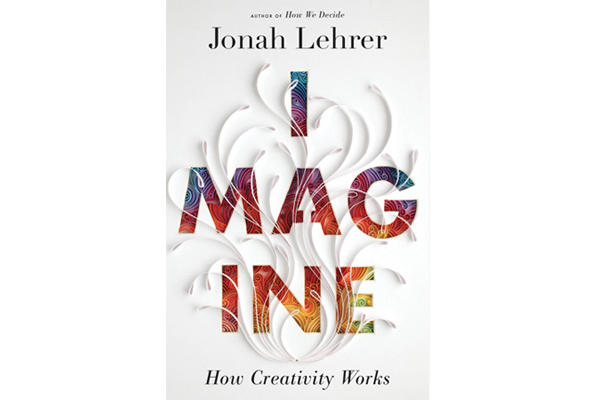
Jonah Lehrer’s Imagine is still worth reading

Jonah Lehrer, as is now well known, repeatedly misrepresented research and plagiarized other people’s writing in Imagine: How Creativity Works. But, as Roy Peter Clark points out, “Jonah Lehrer’s ‘Imagine’ is worth reading, despite the problems.” Clark goes on to say, “not all the sins [Lehrer commits . . .] are equally grievous,” but, despite that, “the reading of the book ‘Imagine’ helped me understand my world and my craft, and what else can you hope for from a non-fiction book.”

I’ve found the same thing after reading Imagine based on Clark’s endorsement. But reading it in light of Lehrer’s indiscretions reveals new potential layers of meaning, because a couple of passages have a very different resonance, like this one, about Shakespeare’s milieu:

His [Shakespeare’s] peers repeatedly accused him of plagiarism, and he was often guilty, at least by contemporary standards. What these allegations failed to take into account, however, was that Shakespeare was pioneering a new creative method in which every conceivable source informed his art. For Shakespeare, the act of creation was inseparable from the act of connection. {Lehrer “Imagine”@221}

Lehrer seems to be using the same method. But the age of the Internet makes tracking sources much, much easier than it used to be. And he goes on:

The point isn’t that Shakespeare stole. It’s that, for the first time in a long time, there was stuff worth stealing—and nobody stopped him. Shakespeare seemed to know this—he was intensely aware that his genius depended on the culture around him. {Lehrer “Imagine”@221}

In retrospect, this reads as a preemptive defense of Lehrer’s own method. But I don’t get why Lehrer made stuff up: most of what he invented doesn’t seem to be very important, and it’s the kind of peripheral material that makes for good reading but isn’t essential. Given contemporary attitudes towards plagiarism—the passages above show that he knows and understands those attitudes—why risk so much for so little gain? It’s like a millionaire stealing a pair of $20 jeans. Why tarnish success? I can imagine some possible answers to these questions, but none of them are very satisfying, and I ultimately want to ascribe Lehrer’s lies to simple human vanity.

Imagine is still pretty interesting. I doubt it’s a perfect book, and I wouldn’t cite Lehrer in my neuroscience PhD dissertation. But I am now conscious of the tension between free-form creative thought and focused attention to a particular, grinding problem (“We need structure or everything falls apart. But we also need spaces that surprise us. Because it is the exchanges we don’t expect, with the people we just met, that will change the way we think about everything”); I am conscious of the need for both longtime collaborators and for new faces; and I am conscious of how people with deep domain expertise may benefit from applying that expertise elsewhere. Some of Lehrer’s points, like his description of the virtues of cities or the eccentric greatness of Paul Erdos, are already familiar. But he helps me see them in new ways. A moment like this, for example, shows me something important about my own writing and creative work:

Friedrich Nietzsche, in The Birth of Tragedy, distinguished between two archetypes of creativity, both borrowed from Greek mythology. There was the Dionysian drive—Dionysus was the god of wine and intoxication—which led people to embrace their unconscious and create radically new forms of art. [. . .] The Apollonian artist, by contrast, attempted to resolve the messiness and impose a sober order onto the disorder of reality. Like Auden, creators in the spirit of Apollo distrust the rumors of the right hemisphere. Instead, they insist on paying careful attention, scrutinizing their thoughts until they make sense. Auden put it best: ‘All genuine poetry is in a sense the formation of private spheres out of public chaos.’ {Lehrer “Imagine”@64}

I am far more in the Apollonian mode than the Dionysian mode, but, perhaps for that reason, I’m fascinated by and perhaps even envious of Dionysian thinking, acting, and living. A novel like The Secret History thus becomes all the more important to me, because it has an Apollonian narrator, Richard, dealing with the aftermath of an attempt to reach Dionysian ecstasy. In the novel, not surprisingly, the outcomes are pretty bad, but the idea of deliberately trying to reach an ecstatic experience resonates with my temperament.

There are some moments that appear, on the surface, self-contradictory. Lehrer says, “The most creative ideas, it turns out, don’t occur when we’re alone. Rather, they emerge from our social circles, from collections of acquaintances who inspire novel thoughts. Sometimes the most important people in life are the people we barely know” {Lehrer “Imagine”@204}.

Earlier in Imagine, however, Lehrer discusses how many creative ideas when people are taking morning showers—where most are presumably alone. So do creative ideas emerge from chatting with others, or when our mind is a relaxed state that lets it make disparate connections among ideas? The answer appears to be “both,” but Lehrer doesn’t explicitly discuss the implied contradictions. I’m not saying he couldn’t reconcile them, but I am saying that someone should’ve pointed these kinds of contradictions out.

Even if all of Imagine’s research and stories are somehow wrong—and I don’t think they are—the book still offers novel ways to think about creativity and how to structure one’s life or work more effectively and in ways that I hadn’t foreseen. I wish the publisher hadn’t withdrawn it altogether. Used copies on Amazon now start at $25. It may be that the existing copies thus continue to rise in value because of their scarcity; alternately, readers might turn to pirate editions on the Internet, which I can only assume are easy enough to find (my book came from the University of Arizona’s library).

Don’t Go to Law School (Unless) — Paul Campos

Paul Campos saves what might be the best paragraph of Don’t Go To Law School (Unless): A Law Professor’s Inside Guide to Maximizing Opportunity and Minimizing Risk for the very end of the book, so I’m going to invert his structure and start with it:

Have you ever said to yourself, “I don’t know what to do with my life – so I’m going to spend three years of it going deeply and irreversibly into debt, in a quite possibly futile attempt to enter a profession that I have no actual desire to join?” I bet you haven’t, because who would ever say something that idiotic? Every year, however, thousands of people are perfectly capable of doing something that idiotic. If they weren’t, half the law schools in the country would be out of business tomorrow.

We’ve looked into the mirror and seen the enemy, and the enemy is ourselves. Sure, someone else might hand us the weapons we use to mutilate ourselves—that is, student loans—but someone who hands you a loaded gun isn’t obligating you to shoot yourself in the foot. Perhaps they shouldn’t have handed you the gun, but they did, and you can’t wholly blame that person for your mistake. It sure is more fun, however, to blame someone else for your mistakes than it is to stand up and say, “I’m an idiot and I’ve made bad life choices.”

I, however, am idiot and made a bad life choice—but I quit law school after one year, based largely on bad assumptions, fear, stupid desire, anachronistic beliefs about the legal market, and various other factors I’d rather not examine in detail. The problems with law school are slowly becoming better known: “for more than 30 years now the market for legal services has been contracting relative to the rest of the economy.” The basic problem is that law schools have been raising tuition faster than the rate of inflation for decades, and the legal market is a well-defined and studied one: there are about twice as many credentialed lawyers being minted as there are jobs for them to enter.

You don’t have to be a mathematician to realize that some of those would-be lawyers are going to be left out. In the last, they would have been left with relatively little debt, which would have made arguments like “a law degree will open doors even if you don’t practice law” at least somewhat plausible and mildly tenable. Now those kinds of arguments aren’t. There are lots of common, bad reasons people go to law school: “Like a lot of other people, I went to law school I couldn’t think of anything better to do. At the time I applied I was three years removed from my undergraduate days as a somewhat aimless English major,” and, though this may sound odd, law school itself doesn’t prepare people for practicing law.

That wasn’t really a problem when tuition was cheap and proto-lawyers could work cheaply for a couple years to learn the trade. Now the stakes are high and law school’s inadequacies are a huge problem, because having more than $100,000 in law school debt that can’t be discharged through bankruptcy will hurt people for decades, especially if they can’t get the training necessary to actually practice law. As Campos says, “The two most important practical skills that any lawyer working in private practice must possess are the ability to acquire clients, and to get them to pay their bills, which happens to be two things that most legal academics have never done in their lives.”

There’s little pressure, at least right now, to change the system. There’s little pressure legal academics to learn these kinds of skills and impart them to their students. The only way I can see to create that kind of pressure is by convincing enough people not to go to law school that the schools themselves start receiving market pressure to reform. Without that pressure, they can simply continue.

Campos is a law professor and has spent the last year and a half writing about the problems in law school on the blog Inside the Law School Scam, which is like porn for academic eggheads. It’s got lots of well-researched money shots. But, also like porn, too much of it all at once is enervating, and by now the larger point—don’t go to law school—is or should be well-known. For people considering law school, the only real question can be answered with a binary: Should I go to law school? The answer is almost certainly “no.” For most people, ITLSS only needs to be read once: the problems of law schools are most pressing for law school insiders, not for the rest of us. We need to know that “most people currently attending law school would be better off not doing so.”

And it’s intellectually honest to admit as much: “I’ve become increasingly aware that my ridiculously good job is being paid for by people who are increasingly unable to get the kinds of jobs they came to law school to get.” But relatively few insiders are willing to admit that the systems they participate in and propagate aren’t good for outsiders. That’s one reason Campos’s book is so admirable. It’s also uses stories but eschews relying exclusively on them and focuses instead on money.

The more I pay attention to the world, the more I see how much money and financial constraints underlie a lot of surface phenomena. In an ideal world, money is a strong proxy for value; a company like Google or Apple is worth a lot because both provide a lot of value to people. The education world, however, has broken that link, and the breakage is getting worse with time.

I wonder how long it’s going to take until some law school decides to utterly reverse course and simply say that it’s going to have ugly buildings, a small library, huge class sizes, and very low tuition—say, $10,000 a year. Or $9,500. The professor-to-student ratio would be something like 1:100, and there’d be a dean and virtually no other administrative support or special programs. But this model would focus on being sustainable and making sure that students don’t face penury at the end of law school.

Instead of working to compete with the current model that almost all law schools employ (or deploy), Jake’s hypothetical would do the opposite, and be proud of getting people a legal education for under $30,000 in tuition, with a maximal focus on employability following graduation and a minimum focus on student loans (I’d also love to see open-source textbooks). They could advertise their alternate strategy, and maybe have a blog that explains the ways the conventional system is set up to screw students.

As far as I know, a couple of schools try the “admit everybody and charge them a lot” model, but few try the “admit many, but charge them a little model.” The notorious Thomas M. Cooley Law School does the former, and no one who knows anything about law school will go there, but they charge $54,000 per year right now. There might be institutional or ABA-imposed barriers that I’m unaware of. Still, if that kind of model is successful, it could at least challenge the hegemony of the Harvard-Yale-Stanford model of law school, which is untenable and getting worse.

See also “The specious reasoning in Lawrence M. Mitchell’s ‘Law School Is Worth the Money‘” and “Why You Should Not Go to Law School.” Do not listen to your parents, for whom law school might’ve made financial sense, or your friends’s empty congratulations, because most of your friends don’t know any better. Law school enrollments have plummeted since their 2008 high, for good reason.

Here’s an interview with a Columbia law grad who quit law for a coding bootcamp. Skipping law school would’ve made more sense, but news about how bad the legal market is relative to the tech sector has not percolated through the entire country (yet).

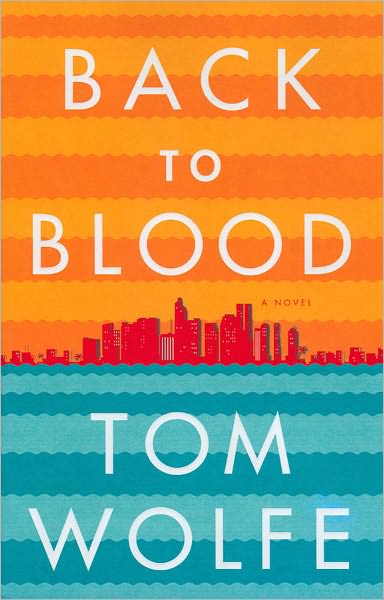
Back to Blood — Tom Wolfe

The real problem with Back to Blood is that you’ve already read it, most notably in The Bonfire of the Vanities and A Man in Full—and if you haven’t read those, you should start with them. Back to Blood has the same assortment of obsessions and interests: there is the child with an unusual name and an elite pedigree: “Last week he totally forgot to call the dean, the one with the rehabilitated harelip, at their son Fiver’s boarding school, Hotchkiss [. . .]” But does anyone still care about elite boarding schools? Does anyone still care about the Miami Herald other than the people who work there? The father of Fiver is the editor, and he thinks it is “one of the half-dozen-or-so most important newspapers in the United States” in an era when the era of newspapers has passed.

The Miami nightclub is named “Balzac’s,” after another Wolfe preoccupations. There is a prurient mention of girls who “were wearing denim shorts with the belt lines down perilously close to the mons veneris and the pants legs cut off up to. . . here . . .” Has anyone in the U.S. ever used the term mons veneris, outside of Tom Wolfe and medical schools? I think it appeared in I am Charlotte Simmons a couple of times too, and there it was even more improbable. And the word loins! In this case, “juicy little loins and perfect little cupcake bottoms.” I’ve heard loins described as loins before, but only by Tom Wolfe and the writers of the Bible. Someone born more recently than 1931 would use “pussy” if they wanted to be crude, “va jay jay” if they wanted to be hipster, or “vagina” if they wanted clinical directness. But not loins. No one but Tom Wolfe would use loins, and use it again and again.

Sometimes writers working out variations on ideas that iterate subtly book by book can work—Elmore Leonard is a good example. Others just feel like they’re repeating themselves. When I am Charlotte Simmons came out, I was in college and skipped class to read it, only to feel an increasing sense of disappointment with the wrongness of many scenes—like Charlotte feeling nervous about the cost of long distance calls. That was an anachronism. Most college students had free long distance by 2004. I would’ve let anyone who asked use my phone to call home. Or, for another example of reportorial wrongness, Charlotte gets a salvaged, pieced-together computer, like a salvaged car. By 2004, however, older but working computers were $25 on Craigslist, or outright given away by schools. These two examples are salient, but there were others, just as I am Charlotte Simmons repeated words, phrases, and ideas from Wolfe’s earlier books. It, and Back to Blood, repeatedly describe moments of cowardly prurience, with men likes wolves and women who didn’t want it or didn’t want to want it and submitted to it only reluctantly, like a female character from the 19th century and not at all like many of the contemporary women I know.

The period details in Back to Blood are wrong. Today, anyone cool would be driving a Tesla Roadster, or Fisker Karma, not a Ferrari 403; Ferraris might’ve been cool twenty years ago, but technology and culture have moved on. Then there’s the simply and wildly improbable: a French professor named Lantier thinks of his daughter that she wasn’t ready for “snobbery” because “She was at the age, twenty-one, when a girl’s heart is filled to the brim with charity and love for the little people.” Someone exposed to live students every semester is unlikely to think of their hearts as “filled to the brim with charity and love” for much of anything, except perhaps alcohol, condoms, iPhones, verbing nouns, and obsessive Facebooking. Not that there’s anything wrong with those things, but familiarity is a great slayer of illusions like Lantier’s belief about the hearts of most 21-year-old girls.

Back to Blood isn’t a bad book, but it has the same but lesser strengths of the earlier novels, with the same but exaggerated weaknesses of them. We’re told, not shown, that “Mac was an exemplar of the genus WASP in a moral and cultural sense,” without knowing why, if at all, that’s important. We’re told a lot of things, most of them not especially new if we’re familiar with the Wolfe oeuvre.

There are clever moments, as when Magdalena, in a fight with her Spanish-speaking mother (or, in Wolfe-land, Mother), resorts “to the E-bomb: English.” It’s a moment of geriatric cruelty, since “Her mother had no idea what colloquially meant. Magdalena didn’t, either, until not all that many nights ago when Norman used it and explained it to her. Her mother might know hang and possibly even slang, but the hang of slang no doubt baffled her, and the expression clueless was guaranteed to make her look the way she did right now, which is to say, clueless.” It’s clever, and the kind of cleverness that makes the scene fresh and unusual. It’s also the kind of cleverness missing in repeated references to the mons verneris, or to loins, or to high-end private schools.

Wolfe also gets and has gotten for decades the weirdness and power of modern media; its spotlight is restless yet powerful, and it plays a tremendous role in Bonfire. In Back to Blood, Nestor Camacho, a Miami cop, rescues a refugee from the mast of a ship and is recorded doing it; consequently, he becomes momentarily famous, such that: “Even now, at the midnight hour, the sun shone ’round about him.” The analogizing of fame to light seems obvious, even necessary, and although I don’t want to probe its deeper properties here I like how Wolfe avoids the spotlight metaphor, much as I didn’t a few sentences ago. Wolfe uses metaphor in an almost 19th Century fashion, usually effectively.

He gets the way civic booster types think of the arts not as a thing in and of themselves, but as a checkbox; an editor at the Miami Herald thinks that “Urban planners all over the country were abuzz with this fuzzy idea that that every ‘world-class’ city—world class was another au courant term—must have a world class cultural destination. Cultural referred to the arts. . . in the form of a world-class art museum” {Wolfe “Blood”@111}. He’s right, of course, but right in a generic way, like people are right about love being like a rose. If you’ve read anything about urban planning, or cities (and I have), you won’t be surprised at the editor’s knowledge, which he probably picked up in the same places I did, and which says very little about him as a character, exception that he, like so many Wolfe characters, is an information and status receptacle more than he is a person with his own needs and desires.

The complaint expressed throughout this post is similar to but a bit different than James Woods’, which concerns how Wolfe’s characters tend to speak in similar or identical registers, despite coming from wildly different backgrounds. That isn’t necessarily a weakness, but the verisimilitude of the characters must be maintained in novels that portray such startlingly different people in a similar register; that’s what Bonfire of the Vanities does and what Back to Blood doesn’t, quite. The earlier novel also doesn’t feel reported even if it was reported; the latter does, in the same way I am Charlotte Simmons misses the college milieu in a thousand subtle ways. If you swing, it doesn’t matter whether you miss the ball by a millimeter or a meter. The scrim of realism is pierced and the novel doesn’t quite work.

Wood also says that “Wolfe isn’t interested in ordinary life. Ordinary life is complex, contradictory, prismatic. Wolfe’s characters are never contradictory, because they have only one big emotion, and it is lust—for sex, money, power, status.” But this isn’t quite true: Wolfe is interested in ordinary life when it’s touched by big events, or ordinary life when its inhabitants have a powerful yearning for something other than ordinary life. That yearning, that drive, can be fascinating. Plus, there’s nothing wrong with writing about extraordinary life, which can be as fascinating, “complex, contradictory, prismatic.” Wood obviously isn’t making this argument, and I doubt he would make it in the kind of caricature I’m making it here, but it’s easy to draw this kind of false lesson from the Back to Blood review. Almost every Wood review is a momentary master class in the novel as a genre, which is why so many writers and would-be writers attend so carefully to them, and why it’s worth appending this brief commentary to a review that in some ways is more useful and interesting than the impressively hyped novel being discussed.

Back to Blood is drawing on capital built up from Wolfe’s earlier novels, and overall it leaves a sense of “Fool me once, shame on you; fool me twice, shame on me.” If another Wolfe novel appears, I don’t think I’m likely to be fooled again. There are better novels about the state of America—Gillian Flynn’s Gone Girl is one—even if they don’t announce themselves as tomes about the state of America. Given how the voices of Back to Blood don’t quite work and the book-report function doesn’t quite work, there are probably better uses of one’s reading time.

Bad academic writing: Rebecca Biron and the Mexican drug war in PMLA

In “It’s a Living: Hit Men in the Mexican Narco War,” Rebecca E. Biron writes:

Hit men in the twenty-first-century Mexican drug war engage in paid labor at the extreme end of capitalist exploitation. By “extreme end,” I mean the period of late hyper- capitalism in which transnational profit seeking trumps national as well as international regulatory systems designed to serve broad social stability. I also mean the outer limits of how capitalist interests use (up) human beings [. . .]

But “the twenty-first-century Mexican drug war” isn’t a good example of capitalism at work: to the extent that capitalism is about selling people things they actually want, with a (relatively) limited amount of state control, drugs should be legal: there’s a willing buyer, a willing seller, and no intermediary who gets hurt. Yet the state—which is conventionally associated with communism / socialism—prohibits drug use, using the logic of “serv[ing] broad social stability” and similarly bogus euphemisms.

If anything, the hit men should be considered exploited by state policies around prohibition, rather than capitalism or capitalists.

Plus, if exploitation is inherent capitalism, what kind of economic or political system doesn’t or hasn’t involved exploitation? And I’m not talking about a theoretical one: I’m talking about a real example in the real world. I don’t think any exist, at least in any meaningful sense. Although the U.S. and Western Europe certainly aren’t without warts and blemishes, both historical and contemporary, it’s notable that the Soviet Union exterminated millions of its own citizens in a calculated, industrialized fashion. The Soviet Union also engaged in foreign conquest and terror to a vastly greater extent than the U.S. did or, today, could even aspire to.

How to update Letterbox for Max OS X after the latest 10.6.8 security patch:

When Apple released the most recent 10.6.8 security patch, that patch broke Letterbox (see also here), an insanely useful Mail.app plugin that allows all three Mail.app panels to be viewed vertically. This view maximizes screen real estate, which is very important for those of us on widescreen displays—which is to say, virtually all Mac users. But this 2010 OS X Daily post describes how to work around the last breakage caused by an Apple update. These are their instructions, except for the addition of two new UUIDs that I found for the latest version of 10.6.8:

* From the Finder, hit Command+Shift+G and enter ~/Library/Mail/ then hit Go
* Open Bundles (Disabled) rather than Bundles – note: if you have already opened Mail, the plugin is disabled, if you haven’t opened Mail yet, it will be in Bundles
* Right-click on Letterbox.mailbundle and select “Show Package Contents”
* Now open the “Contents” folder inside the Letterbox.mailbundle contents
* Using a text editor, open Info.plist (you can use TextEdit, don’t use Word)
* Scroll to the bottom of the Info.plist file and look for “SupportedPluginCompatibilityUUIDs” which is surrounded by key tags, below that will be a bunch of hex strings surrounded by string tags
* Add the following two strings to the bottom of the list (inside the array tags):

<string>064442B6-53C0-4A97-B71B-2F111AE4195B<string>
<string>588FF7D1-4310-4175-9980-145B7E975C02<string>

That’s the important part. The rest is fairly simple:

* Save these changes to the Info.plist file
* Go back to the Mac OS X desktop and hit Command+Shift+G again, then enter ~/Library/Mail/
* You’ll see these two folders again: Bundles and Bundles (Disabled), what you need to do is move the Letterbox.mailbundle plugin from the (Disabled) folder to the Bundles folder. Do this just by dragging the file from one folder window to the other.
* Relaunch Mail.app

You can also navigate to the folder ~/Library/Mail/Bundles on your own, without using the “Go” command.

A lot of people—especially the nerds likely to use Letterbox—have probably already moved to 10.7 or 10.8, though I still haven’t and am unlikely to in the foreseeable future.