Part 1 is here, although “Edible food-like substances and the need to swallow again” is meant to stand alone. Part III is here.
I went into the May 25 surgery that unexpectedly took my entire tongue weighing around 155 to 160 lbs. When I came to, I probably didn’t weigh much less than I had when the anesthesia hit, but I felt like the heft of my body had been replaced with the weight of all that had gone wrong, and I was what was left over. Insubstantial. Without appetite.[1] Although it’s a cliché that you feel dread in “the pit of your stomach,” I instead felt dread in my nasal cavity—a horrible nasal tube was anchored with a stitch into my right nostril. It snaked up my nose and down my esophagus, terminating in my stomach.[2] Tube feeds were how I “swallowed,” although I had no agency in the process: a nurse pressed a button on the machine and the machine pumped food, regardless of my feelings or sensations.
Any calories had to go in through that tube. To say I hated consuming calories via nasal tube is an understatement. If I’d had an “off, forever” switch available to me in those first days after surgery, I’d likely have flicked it. Instead, I had oxycodone and dilaudid, which weren’t as good as an “off” switch, but adequate doses did make me feel like I was nowhere. Like most medical treatments, though, oxycodone and dilaudid come with a cost: opioids are severely constipating, and taking them may have led to what was one of the most dangerous moments after surgery.
In the hospital, it felt like every 10 minutes something or other had to happen: medications, cleanings, probings, vitals. “Tube feeds” weren’t just unpleasant because of the uncomfortable tube— the feeds themselves were a source of both pain and nausea. The word “feed,” makes me sound like I went from being a man to some kind of farm animal or hamster or alien. Or may an alien hamster farm animal? Before the surgery I never once looked at Bess and said, “Hey, why don’t we sit down to feed,” or “Baby, let’s go out to feed.” And if I ever did, I was joking.
The tube feeds made me nauseous and gave me terrible reflux. Part of the problems no doubt came from the surgery trauma and all the drugs I was on. But the ingredients in the substance itself couldn’t have helped. I had two choices, or assignments, depending on who was in command of the tube feed situation on a given day: either Nutren® 2.0 (made by Nestle Health Science) or Boost® Balanced Nutritional Drinks. Calling “Boost” a “nutritional drink” is like calling a junkyard a “pristine Redwood forest.” Boost’s website lists the ingredients as “WATER, GLUCOSE SYRUP, SUGAR, MILK PROTEIN CONCENTRATE, CANOLA OIL, AND LESS THAN 2% OF COCOA. [. . .]” I don’t think humans are supposed to eat diets rich in glucose syrup (which is just another sugar), sugar (this is also a sugar), and canola oil (the writer and gadfly Gary Taubes wrote a persuasive book called The Case Against Sugar). Whatever the problems I was having with digestion, I don’t think those problems were aided by vitamin-infused liquid sugar solutions.
I was barely alive and unsure about which side of the life-death line I would wind up on, which was not an ideal position for investigating alternatives to Nutren® or Boost®. At some point, a few days after the surgery, interventional radiology installed a PEG tube, and that installation let doctors remove the nasal tube. Getting the nasal tube out was an improvement, although injecting Nutren® or Boost® via PEG tube wasn’t, as you’d imagine, a real satisfying eating experience. In the hospital, I got enough calories to not die, and I guess that was enough from a medical perspective, if not a human one.
The Mayo ENTs said I’d likely be able to swallow again one day, albeit by blending food. I didn’t believe them. I couldn’t imagine much of a future and drifted in a present defined by either miserable, excruciating pain and nausea, or by opioids that allowed me to feel like I didn’t exist. I got out of the hospital in early June, and food injections continued to be a massive struggle, in part because I didn’t get the right injection pump until two weeks after discharge. My digestion improved when a friend suggested I try “Liquid Hope,” a liquid food product made from actual foods. The ingredients include ones I actually ate before the surgery: “Filtered water, organic garbanzo beans, organic green peas, organic carrots, organic hydrolyzed pea protein.” Garbanzos, peas, and carrots are good for humans in the way “hydrolyzed palm oil” is not.
For someone who prides himself on cooking and likes to try lots of different foods, this period was hard, and made harder by the belief I wouldn’t eat for life. I didn’t get to swallow again until late July, when Mayo speech pathologist Jessica Gregor showed me that I could, despite my reluctance and fear of choking, and she lovingly bullied me (that is Bess’s phrase) into choking down a glass of melted, diluted ice cream. It was the first thing I’d tasted in two months. It was a revelation. By then the trache tube was out of my throat and the trache wound had healed. I wrote about those first swallows in “On being ready to die, and yet also now being able to swallow slurries—including ice cream:”
With Jessica, I swallowed some ice cream slurry: the Van Leeuwen’s honeycomb flavor. We melted it and blended it with some extra milk, to thin it. And, although I was intensely skeptical that this would result in a meaningful sensory experience, there are taste buds at the back of the throat and esophagus. So I could taste ice cream. Since that night I’ve tried lots of things. Anything acidic, like lentil-soup slurry with too much lemon, doesn’t work well yet. Anything salty, same problem. But savory foods work and so do sweet ones. There’s a fun bakery and wine shop in Tempe called Tracy Dempsey Originals that we’ve been going to. Tracy Dempsey makes spectacular ice cream flavors—particularly her cardamom with fig jam. It turns out I can eat things like cookies and brownies if they’re blended with milk or coffee.
Over many months of practice I’ve gotten pretty good at swallowing. Swallowing isn’t like it was before the surgery, but I can taste foods at the back of my throat and, to a lesser extent, in my cheeks. I’m much better at handling acid, salt, and spice than I was when I wrote “On being ready to die.”
One of the scarier moments hit in the first few days after I began swallowing again. I was trying to drink water, and some of it got caught in my airway—I don’t know how, exactly. Bess was home and heard me making some horrible noise like a fish on a boat. She ran over to help but didn’t know what to do, as there wasn’t much to do, and she justifiably feared worsening the choking problem. I think she pounded on my back as I alternated between trying to expel the water and take a breath. I couldn’t get a breath in. I don’t remember which happened first, or how, though I do remember thinking: “I’m about to die by drowning.” And I remember the desperate gasps as I began to get air again. I’d wrongly thought water would be easier than solids, but melted ice cream was, for a while, the only thing that required a mere struggle, as opposed to a titanic struggle.
I’d lost so much taste and texture sensation when I lost my tongue, just as I’d lost much of my life’s animating energy, along with one of my chief means of hanging out with friends and friends-to-be, but enough taste sensation remained for me to enjoy the ice cream. Although that enjoyment was mixed with the terror of drowning.
Part III will continue in a few days.If you’ve gotten this far, consider the Go Fund Me that’s funding ongoing care.
[1] Appetite for anything: food, sex, life, status—all the things that make us human and keep us going.
No sane person wants their tongue removed, but having it out and not being able to swallow has particularly awful resonances for me: I’ve been into food and cooking since I was a teenager, and “going out to dinner” was the most common form of going out for Bess and me. “Having friends over for dinner” was our most common form of socializing. I chronically experimented with new food and gadgets in the kitchen. What can I make with fish sauce? Is the sous vide machine worth it? Can an air fryer replace the oven for many dishes? Will the capers in cauliflower piccata alienate our guests?
After the surgery, the questions changed. Would I meaningfully survive at all? In that first week after the surgery, I felt I should be dead. What would happen to me? Would any semblance of normal life be achievable?
I like to eat—or, rather, liked to eat—and, at current levels of technology, everyone needs food. So why not combine what I like to do, what everyone needs to do, and what I can afford to do? “Come over for dinner” is low stakes: eat for an hour and discuss the projects we’re working on, the things we’ve learned lately, or the ideas we’ve been having. Then go somewhere else, or do something else, or finish the work.
Most people experience diminishing marginal returns from hanging out: the first hour might be great, the second okay, and the third drags. How many times have you wanted to leave some event that was good for a while but ceased being so, yet you felt socially obligated to? For this reason, a time constraint, true or not, improves a lot of meetings: “Let’s go for that walk at 3:00, but I have to run by 4:00.” A lot of us aren’t that interesting, or don’t vibe as well with one another as we could or should, or aren’t working on projects that are fun to share.
Things are past the optimal point when phones come out and videos or whatever start being passed back and forth. For some reason, a lot of people want to fill the time they have with hanging out, but my ideal is different: we should hang out for the right amount of time—which is, I think, usually the length of a long meal—and that’s typically not all day, even if theoretically all day is available. Because the ice cream is there doesn’t mean all of it should be eaten; because the day is there doesn’t mean the whole thing should be spent.[1]
That a lot of us aren’t maximally interesting is a weakness mostly ignored in David Brooks’ book How to Know a Person: The Art of Seeing Others Deeply and Being Deeply Seen, as I describe in “The quality of your life is the quality of the people you get to know.” Yet Brooks says some people are better at eliciting the best in others, and that we can consciously improve our ability to elicit the best. I want to think I am one of those people, and that the act of feeding people interesting things helps to bring out the best in them, but, if I’m being honest or realistic, I’m likely not.
Before the May 25 cancer surgery that took my tongue, I’d been lifting weights, steadily but poorly, for a decade, and that habit is in part responsible for me pulling through the horrific aftermath of the surgery. The more physically robust a person is, the greater the margin for pain and for recovery—and I feel like I barely made it through the long, brutal surgical recovery period, which constituted the whole summer, followed by chemo in July and August, and then by an indolent infection in September and October. I weighed 175 lbs before my first cancer surgery, in October 2022, and bottomed out in the 133 – 136 range last summer. Now I’m hovering between 138 – 142, despite extensive, annoying, continuous efforts to eat more, via both mouth and feeding tube injection. Eating can be a pleasure or pain, but eating for weight gain isn’t fun, particularly when the weight gain is elusive.
For months, food has stolen too much focus from me, because I need to avoid missing meals to maximize calories. Did I just wake up? Time to make a smoothie, or blend some leftovers, and then inject a bag of Liquid Hope through my feeding tube. Is the sun scooching past its zenith, which means lunch time is a little behind me? Then some calories need to go in. Are we getting past 8:00 p.m.? That’s a potential problem because of acid reflux if I lie down too soon after eating. Whatever else I’m doing, or learning, or concentrating on, there’s an annoying cognitive process weighing my food needs running in the back of my mind. Weight training can help me gain weight, yes, but to make the weight training effective, I have to consume enough calories—with “enough” tending to mean “somewhat more than I’ve been able to ingest on any given day.” Since I can’t chew or swallow normally, food must be blended with water for either injection or swallowing, and water reduces caloric density.
Eating is important, but, as noted, I hope to augment food with lifting. Before that first surgery, I could rep 145 lb on the squat fairly easily, and I was working my deadlift reps towards 225 lbs—”two plates,” in meathead parlance.[1] Not a lot, but better than no training. When I got back into the gym maybe a month after my first partial glossectomy in November 2022, I felt like I could barely lift my arms, and had to re-start with the bar on the squat rack, and 15 lbs training bumpers on either side of the deadlift hex bar. I started re-building as best I could, though I knew that radiation therapy would probably knock me back again.
In being knocked back, I feel some kinship with the totality of humanity. For most of human existence, humans have been building up all kinds of tribes, structures, and/or civilizations, only to be knocked back by weather, climate change, internal dissension, greed, barbarians, technological regression, disease, or some other force. It’s only since the Industrial Revolution that humans have managed to mostly transcend the condition of agricultural misery and paucity, though we might wind up in such horrifying conditions again, via nuclear war or plague or some other malady. As individuals, we’re less robust than contemporary societies or cultures, and we’re prone to setbacks like the ones I’ve experienced. I suspect that how a person responds to setbacks says something about them; my view is that the appropriate response to adversity is to persist, even futilely, even as one possibly rages against the dying light.
That philosophical outlook is evident in me going to the gym despite feeling wretched and janky. To not go is to risk not replenishing my margin for future, and (realistically) inevitable setbacks. To not go means there is worse to come. Sure, as long as the clinical trial drug petosemtamab keeps working, I can probably hover in the 140 lbs range without risk of organ failure or starvation. Apart from being skeletally thin, the other worry is the next bump in the road. What if I need another surgery? What if there’s more chemo in my future—which I expect before the end, even if “more chemo” is an effort to hold the line as I exit one clinical trial and before beginning another? What if a clinical-trial drug causes nausea? What if re-irradiation comes, and the pain that already accompanies swallowing worsens? I list the known unknowns: the unknown unknowns are infinite.
As I write this, I take a break to check my weight: 140.1 lbs. Not great but could be worse. The last week hasn’t been ideal regarding the gym : on Monday I was wrapped up in a project, Tuesday I flew to San Diego and got settled there, Wednesday I had a petosemtamab infusion, Thursday I flew home, Friday I withdrew from the prescribed dexamethasone—a steroid—that is supposed to help prevent infusion reactions to petosemtamab, and today, Saturday, I finally got in to do overhead press, hangs, and the leg press. I should’ve squatted but delayed, making excuses. The fire that used to inspire me to pump iron is gone. Meatheads speak of the “pump” when they lift; Arnold Schwarzenegger described it in Pumping Iron:
The greatest feeling you can get in a gym or the most satisfying feeling you can get in the gym is the pump. Let’s say you train your biceps, blood is rushing in to your muscles and that’s what we call the pump. Your muscles get a really tight feeling like your skin is going to explode any minute and its really tight and its like someone is blowing air into your muscle and it just blows up and it feels different, it feels fantastic. It’s as satisfying to me as cumming is, you know, as in having sex with a woman and cumming. So can you believe how much I am in heaven? I am like getting the feeling of cumming in the gym; I’m getting the feeling of cumming at home; I’m getting the feeling of cumming backstage; when I pump up, when I pose out in front of 5000 people I get the same feeling, so I am cumming day and night. It’s terrific, right? So you know, I am in heaven.
I personally haven’t experienced the level of, um, endorphin rush that Arnold describes—I suspect few people do, or gyms would be packed—but I’ve gotten a pale imitation of the physical satisfaction he cites. My occupations have been thinky and sedentary, and running or lifting contrasts with sitting in the chair or standing and typing. Unfortunately, whatever physical pleasures lifting once brought have dissipated. Now, it’s more chore than not. An important chore, but a chore. It used to be fun. I used to know how to make it fun. I’m sad that that sense of fun is gone, and I’ve not really been able to rekindle it.
I was reading Tyler Cowen and Daniel Gross’s book Talent: How to Identify Energizers, Creatives, and Winners Around the World, and in it they write: “You can open doors for other people at relatively low cost (perhaps zero cost) to yourself just by making some options more vivid to them.… You embody something, and that something will stir some others into action” (237). That’s a lot of what Bess and I are doing when we write about clinical trials, where getting the wrong answer means death: thus, our extensive focus on it, and the healthcare system more broadly. We’re trying to open doors, especially for people who are sick or who don’t realize what their options are.
Right now, according to “The pharma industry from Paul Janssen to today: why drugs got harder to develop and what we can do about it,” apparently “Only 6% of cancer patients take part in clinical trials nationally in the US, for instance, and the number is generally lower in other countries and for other conditions.” A lot of cancer patients don’t need clinical trials and are healed by existing treatments, but, even granting that standard-of-care often works, 6% seems low—it may be low because of poor guidance combined with fatalism. If my experience is representative,[1] a lot of cancer patients aren’t getting adequate help understanding the system and finding a trial. Bess and I only succeeded in finding a clinical trial to keep me alive because of our own perseverance and obsessiveness; we were explicitly encouraged by multiple oncologists not to bother and to let me die. My primary oncologist at the Mayo Clinic Phoenix offered zero guidance, aid, or advice. I can’t tell how common this is, though feedback so far seems to indicate the answer might be “pretty common.” For a normal person without some of our traits, background, and resources, getting an optimal clinical trial would be far harder, if not impossible—and it was already hard for us. I’m still puzzled that more people with poor prognoses on standard-of-care treatments aren’t working to get the best clinical trials they can.
What’s the barrier? Mindset, and discouragement from oncologists, is probably one problem. A guy named Richard Chen, whose profile says he wrote two books on clinical trial recruitment, said: “First, FDA’s remit is not, and has never been, to get therapies to patients.” He also said: “Its primary mission first and foremost, is to prevent unsafe drugs from injuring patients.” If the FDA’s remit isn’t to get therapies to patients, that’s bad, and its remit should change. The second comment is pure, unintentional comedy. Right now, I’m a dead man walking. The FDA is preventing “unsafe” drugs from injuring me, so that I can be “injured”—which is to say, killed—by a recurrent/metastatic squamous cell carcinoma infestation. If I’m injured or killed by a drug, that’s not so different from my ultimate trajectory anyway, and the knowledge that can be created from my situation might accelerate treatments and save the next guy’s life.
Despite extreme information problems and a complete absence of federal oversight, surgery seems to work well. Compared to similar patients on the waiting list, 2.3 million life years were saved by organ transplants over 25 years. The WHO claims that “surgical interventions account for 13% of the world’s total disability-adjusted life years.” Coronary artery surgery extends lifespan by several years for $2300 a year. Cataract surgery and LASIK can massively improve quality of life for a few thousand dollars.
Regarding drugs, particularly drugs for people who are already effectively dead, like me, we should be moving closer to a surgical model.
I think Chen is a smart and well-meaning person. But he’s so bureaucratized, and he’s so imbibed the FDA’s line, that he doesn’t realize the Kafkaesque absurdity of telling me, a dying man who’s failed all standard therapies, that the FDA is protecting me from potentially unsafe drugs, so that I can safely die of cancer. If the FDA didn’t flex their paternalism quite so aggressively, terminal patients could at least consent to try something that might help them, which is better odds than trying nothing and waiting for a certain end. Look, if the FDA wants to have long trial periods for dubious drugs like those meant to lower cholesterol or whatever, fine. Once a person has a fatal diagnosis, however, that person is probably, like me, a lot more inclined to take a flyer on what’s available and see what happens. And we should be allowed to do that. We’re terminal, not without capacity. If the FDA’s remit is, ultimately, preventing patient injury, maybe they should ask themselves if they’re causing injury with their current approach?
Knowledge among patients and oncologists seems to be another barrier, according to “Why drugs got harder to develop:”
Many patients are willing to take part in clinical trials in principle, but awareness is poor. About 50% of the time when patients are invited to clinical trials they accept, but 90% are never invited to participate, mainly because most patients are not treated in settings that conduct trials. Patients are also not necessarily aware of or educated about the benefits of trials, and how they may enable them to access a high standard of care. Leading clinical research centres often have too many studies and not enough patients. When it comes to the trial itself, the site may be far from where the patient lives, requiring them to travel or even relocate for the duration of the trial — without adequate support for doing so.
Poor awareness is consistent with my experience—no one explicitly told me to seek clinical trials. Bess writes about the dearth of oncologists referring their patients to clinical trials in “Please be dying but not too quickly: part three” and I’ve written about this issue as well, but, as I mentioned above, if I’d followed my then-oncologist’s guidance, I’d have done some palliative chemo and then died. That doesn’t seem like an optimal outcome. If I die, Bess will be lonely. In spaces like oncology, I’d expect patients to be more like me—that is, highly motivated to attempt to not die. I don’t wholly understand what’s going on, which is why I titled my last essay on the subject “Puzzles about oncology and clinical trials.”
I guess (or infer from behavior) that most oncologists aren’t penalized or rewarded for helping their patients find and enter clinical trials. In the emergency room, a doctor who routinely misses heart attacks or strokes will find his or her license attacked and him or herself in a court room. In oncology, there’s apparently no real effort to consistently help patients who’ve exhausted standard treatments. It’s not, I guess, part of the professional elements of the profession, which I find surprising. Sure, many patients are likely elderly and too sick to pursue clinical trials, but a fair number must be like me: motivated and able to undertake somewhat arduous efforts to prevent or delay death.
One reason too few people participate may be logistical:
To get enough patients to fill up large trials companies need to conduct trials at multiple sites. The more sites involved in a trial, the greater the logistical complexities involved in coordinating that the protocol is executed appropriately across sites, the data is collected to a good standard, and the drug is distributed to all sites as needed. This all increases costs. More sites also increases variance in execution, and improper trial conduct can delay or even sink a development program. According to data from Tufts university, >80% of trials fail to recruit on time, actual enrolment times are typically around double the planned timelines, and ~50% of terminated trials result from recruitment failures. An estimated 11% of trial sites fail to recruit a single patient, and another 37% don’t reach their target enrollment criteria.
There are efforts to create “virtual” trial sites—in other words, to allow clinical trials to proceed at local sites that reach some minimum threshold of competence. To use myself as an example, if the petosemtamab trial I’m doing at UCSD included a real virtual site component, petosemtamab could be shipped to HonorHealth in Scottsdale or one of the Ironwood Cancer Centers in Chandler, and I could receive my infusions and monitoring locally, with the data reported to UCSD and/or Merus (the drug company). Although that would mean “more sites involved in a trial,” it also means less responsibility at each site. The “recruitment failures” issue is interesting in light of the fact that almost no trial sites seem to do basic, modern marketing.
I’m not hugely optimistic about fomenting real change. Real change is slow in a society like the United States, which has been characterized since the 1970s overwhelmingly by complacency, stasis, and status-quo bias. One sees that in our inability to build new housing, our inability to build new ships for the Navy, our refusal to accelerate subway development, our preference for interminable litigation over infrastructure, the Jones Act, the FDA, dishonest and tuition-seeking universities, and the innumerable other veto players who, like Richard Chen, are great at saying “no” and unable to say “yes.” I hope we can build O’Neill Habitats that will allow a re-opening of the frontier and a new space where the dreamers who are tired of hearing “no” can instead create a new polity where it’s possible to say “yes.” The United States is huge on safetyism instead of true safety—and human flourishing.[2] We can and should do better. I doubt we will, however, because the people who most need FDA reform are dead. They’re not writing. They’re not doing podcasts. They’re not agitating Congress.
Still, sometimes change happens, and the bureaucratic inertia is somehow overcome. For example, voucher and charter schools seem to continue to ascend, despite entrenched and intense monied union interests opposing them, and decades after their intellectual foundations were laid. Marijuana legalization seemed unlikely until it happened. Psychedelics look like they’re on the path to medical legalization, at the very least, and possible general legalization; based on my experiences, psychedelics are both safer and far more interesting than alcohol. SpaceX has revolutionized the space game, and I’d have incorrectly predicted failure. Tesla is the sole bulwark against state-affiliated and subsidized Chinese companies owning the entire electric car market. Who knows what’s possible? I don’t hope for this, but if someone in some senator or senior house member’s family gets cancer, and that senator or house member learns what I’ve learned, FDA reform might become a vital issue for that person. Few people I’ve seen online have defended the current system (there are some—just not a lot).
The fact that the current ossified, slow system has persisted as long as it has is an argument for it continuing. Good enough is good enough, right? Moreover, the way the press responds to events helps perpetuate stasis: if a drug has negative side effects, including potentially death, that gets plastered all over the news. Investigations are launched. Scapegoats are sought. If a drug works, and saves lives, the response is muted. The articles go unread. The beneficiaries are happy but don’t start campaigning for more and better medical treatment, faster. One person who dies from a drug outweighs one hundred who might be saved by another. It reminds me of all the press given to any kind of airline accident, even one without casualties, while 40,000 people a year die in car crashes, without most of them making headlines.
An extraordinarily damning overview of the way things operate currently, that puts everything we complain about from within the industry into perspective. Thanks for sharing this Brad [Hightower—mentioned above] – as you say, a must read that underlines how we must all work together to improve things.
It might be a damning overview, but it also turns out that seemingly everyone working in or adjacent to clinical trials knows about the problems already. That includes everyone from the researchers themselves to the drug companies to the hospitals to the oncologists to the support staff. If a lot of people have known for a long time how bad the system is, and no one has managed to coordinate sufficiently to make substantial improvements, that implies that the problems will persist. Can Bess and I be the catalysts that finally galvanize some change? That’d be great, and yet I’m pessimistic. There’s a saying in investing: “The market can stay irrational longer than you can stay solvent.” Call this Seliger’s Law: “A broken system can stay broken for longer than people have the time, energy, and ability to try fixing it.”
Still, Bess and I would like to try to make the world a better place, to the extent we can, and within whatever limits our abilities and skills may impose, and trying to nudge the clinical trial system into a better equilibrium is part of our effort. It’s too late to save my tongue, but it may not be too late to save the tongues and lives of others. In an alternate world, petosemtamab, or a cancer vaccine, would’ve been approved and available in Oct. 2022. I’d have gotten surgery, and then petosemtamab, which is way less toxic than chemotherapy. Maybe that wouldn’t’ve saved my tongue—but maybe it would’ve. Oncologists are reluctant to use chemotherapy, but modern alternatives like petosemtamab should help people like me in the future.
Cancer vaccines exist, though trials are moving achingly slowly. A company called Transgene is testing a cancer vaccine called TG4050 on patients with initial head and neck cancer diagnoses—the same diagnosis I had in Oct. 2022. TG4050 is moving to a Phase 1b and 2 trial; according to the company, “The compelling initial Phase I data presented with NEC at ASCO 2023 showed that all evaluable patients treated with TG4050 monotherapy developed a specific immune response and remained disease-free.” I wish I’d remained disease-free; instead, I have no tongue and am likely to die soon.
Despite my pessimism, “Why drugs got harder to develop” says:
Yet, even though there are major forces pushing against drug developers, there is a sense that the industry is still underperforming, and that it could do more. One reason for optimism can be seen in the recent flattening of the slope of Eroom’s law following decades of declining productivity. It remains to be seen whether the recent uptick is a sustained turnaround or not. The pessimistic view is that it is illusory, a result of how drugmakers have side-stepped fundamental productivity issues by focusing on developing drugs for niche subpopulations with few or no options where regulators are willing to accept less evidence, it’s easier to improve on the standard of care, and payers have less power to push back on higher prices: rare disease and oncology in particular. It’s no coincidence that investment has flowed into areas where regulatory restrictions have been relaxed and accelerated approvals are commonplace: 27% of FDA drug approvals in 2022 were for oncology, the largest therapeutic area category, and 57% were for rare/orphan diseases.
That seems better than nothing. Maybe Congress and/or the FDA is responding to the Richard Chin logic I note above. The FDA has created systemic problems, and it can also create systemic solutions. For example, the FDA doesn’t really account for the time-value of money,[3] which is especially important in a high-interest-rate environment:
As a more general point, it would help if regulators could be more predictable and transparent in their decision making. In a survey of drug and device industry professionals, 68% said that the FDA’s unpredictability discouraged the development of new products. It can be hard to predict how regulators will react to a certain dataset in the context of high unmet need, so companies can be inclined to ‘submit for approval and pray’, even after receiving negative feedback on the data package from regulators during prior interactions.
“Hard to predict” means that many people stop pushing a drug before they start. Companies are competing for investable cash with all other companies; the more time-consuming (read: expensive) the FDA makes the process, the fewer drugs will even be attempted. “Why drugs are harder to develop” suggests the FDA be more accountable to patients:
A straightforward start to improve transparency across the industry would be for the FDA to disclose the formal ‘complete response letters’ (CRLs) issued when they reject a drug which contain the reasons for rejection. Making this information public would give future developers insight into the regulator’s thinking on a disease, with minimal downsides. How companies represent their CRLs to the broader market today is often misrepresentative of the actual reasons for rejection, potentially misleading patients as well as future investors and drug developers in the indication.
I’m not the only one thinking about reform; pretty much everyone in the industry is. To return to a point I raised at the beginning of this essay, reforms could also make clinical trials easier for patients to access. Bess and I spent thousands of dollars and countless hours learning how the clinical trial system works and then how to participate. Initially, no one comprehensively helped us on this journey; my original oncologist at the Mayo Clinic Phoenix was and likely still is sluggish. Mayo Phoenix has a great ENT department but appears to be poor in oncology, which is surprising for an organization with a reputation for cancer care. Bess and I had to learn what we know piecemeal, which is part of the reason we’re trying to describe comprehensively what we’ve learned and how other people’s experiences can be made better.
The best trial for head and neck cancers is petosemtamab, and that trial is being hosted at UCSD. Bess and I are lucky enough to have the resources necessary to get me there twice a month from Arizona for infusions, thanks in large part to the generosity of friends and strangers who’ve contributed to the Go Fund Me. I’ve been saying that being sick for an extended period of time has at least three components to it: health itself; financial well-being; and managing healthcare. Drop any one of the three and the other two are likely to fall too. Very few people can help my health or healthcare directly, but the contributors to the Go Fund Me have made the financial challenges easier.
What’d make things better for everyone, however, is reforms like virtual trial sites. The healthcare team at UCSD has been great, but being infused locally would negate the need to be away from home six days a month, the cost of flights, hotel, and the huge energy expenditure all that entails. The process of getting a clinical trial medication can and should be less expensive and arduous than it is. I can see why most people who might want to participate in the better clinical trials for their illness run out of money and energy to pursue those trials. Bess and I were ready to move anywhere. Fortunately, we’ve not had to move somewhere expensive and far from family and friends. We were ready to, though. We may still have to one day—and maybe, but hopefully not, soon.
Both of us also wish that there were greater transparency around which trials are doing well in terms of patient outcomes and which trials aren’t doing so well. We’ve learned via experience that right now, there’s no substitute for establishing care at a bunch of sites and listening to the oncologists there. Oncologists running trials will often tell you how things are going for trials that’ve been running for a while. If they’re enthusiastic about a trial, it’s often because they see a lot of patients doing well on it. They have observational data that outside docs and institutions have to wait months, maybe years, to get wind of.
Sometimes they’ll also steer patients away from trials that aren’t producing enough positive results. I’m grateful to the docs who’ve quietly advised us against floundering drugs. Some oncologist meetings produce non-public intel about which trials are most promising, provided enough patients have received the drug in question; the oncologists won’t know much if you’re like the first or fifth or tenth human to be dosed with a novel substance, but a lot of these trials have built up years of data. If a site has run through dozens or as many as 100+ patients, the oncologists will have a sense of whether it’s working, even if nothing “official” has been released.
This is one of innumerable tiny facts and practices about effectively participating in clinical trials that we’ve discovered. I’ve never read anyone else who’s put out things like this, just like I’ve never read anything remotely like Bess’s clinical trial guide-essay, “Please be dying, but not too quickly.” Somehow, a lot of this essential information isn’t making it into the larger information ecosystem. The lack of quality information has been driving my writing over the last five months, including my last essay, “On not being a radical medicine skeptic, and the dangers of doctor-by-Internet.” We collectively can and should be doing better. I’m trying to be part of the solution. In reading this, and passing it to others, you’re part of the solution, too.
See also Alex Tabarrok’s “Conditional Approval for Human Drugs,” in which he says “I think that the FDA’s excellent arguments for conditional approval apply to human drugs as well as to (other) animal drugs and even more so when we recognize that human beings have rights and interests in making their own choices.” And he also ends on a hopeful note: “Dare I say it, but could the FDA be lumbering in the right direction?”
[1] Which I hope it isn’t, and yet the emails I’ve been getting indicate that my experience is distressingly common.
[2] The book Where is My Flying Car? by J. Storrs Hall is good on this. We should have so many nuclear power plants that power is almost too cheap to meter, we should have O’Neill Habitats that re-open the political frontier in order to let the non-complacent gather and advance the human condition, and we should have progressed much further in curing cancer and making biology a variable rather than a constant. That we’re content to creep and crawl on the earth rather than soar into the heavens is an indictment of our whole society. Too many lawyers, too few makers.
[3] Bess asked what the time-value of money is. Briefly, it’s how much an investment or investor would lose or gain from alternatives. Take a simple example: you can invest a million dollars in a company running a clinical trial, or in a money-market fund paying 5% a year. If you invest in the money market fund, you wind up with $1,050,000 at the end of the year. If FDA delays cost you a year, you’ve effectively lost the $50,000—you have more like $950,000! Inflation matters in these calculations, too.
This is also why delays to housing construction are so evil.
Suicide is a one-way valve: once done, it can’t be undone. I’d known the May 25 surgery that took my tongue would be hard and have a long recovery period, but I didn’t understand what “hard” and “long” truly meant, and during that post-operative June and July, when the level of physical misery was not, for me, compatible with life—not long term—I told Bess about “the question.” But if I delayed, the choice could always be made later. Knowing the option for exit remained allowed me to keep living, or whatever that simulacrum of living was, to see how things played out, despite how bleak life was. Many burdens can be borne for a short time, provided that there’s legitimate hope for a brighter future. Maybe there was. Maybe there wasn’t. I wouldn’t know if I was dead.
Back then I’d look at the man in the mirror, bloated, hideous, covered with stitches and thought, though I knew the answer: who or what is that? I’d expected to lose half my tongue to cancer, but when I awoke from surgery, I discovered the whole thing gone, along with some important nerves in my neck. For more than a month, I wasn’t able to breathe comfortably. Mucus production dominated my life, apparently due in part to the loss of the cancerous nerves. The days I spent in the hospital after the surgery were among the darkest in my life, and all the darker because of a thought: What if it doesn’t get better than this? The question wasn’t rhetorical. I saw the answer whenever I looked into the void.
Though I knew the answer, I didn’t like it. Worse than what I saw in the mirror was what I felt: an inability to be comfortable, in any position, anywhere. Breathing hurt, and I felt like I was drowning all the time. It wasn’t possible to clear sufficient mucus from my airway or nasal passages to breathe. Waterboarding is a form of torture, and, while I hope never to experience it directly, the descriptions I’ve read of it resonate with what I felt after the surgery. I was dependent on machines to keep me relatively alive. One day I hope man and machine can merge in a beautiful symbiosis, but my partial merger with the machine world was not like that—yes, they kept me alive, but I was fighting them, and they were fighting me, rather than us working together towards some greater mechanical whole.
If anything kept me alive, it was Bess. Every moment hurt, but I saw how fiercely she clung to the idea that things might get better. She was so diligent about caring for my wounds, cleaning the surgical sites, and monitoring my progress; it had to be because she expected progress. She might’ve been subconsciously motivated because she’s a doctor and can’t ignore a medical task, or, alternately, she was deluded by love and false hope. But her own optimism helped me understand there was a chance things would get better, however much everything, moment by moment, hurt. Which was good, because things hurt. A lot. I breathed through a trache tube in my throat that was constantly clogging and suffocating me. Pushing bags of liquid food through my PEG tube using a pump was a relentless struggle. I barely had the energy to walk across the room. The level of absolute, continuous exhaustion is hard to convey to anyone who’s not been through something analgaous. With normal exhaustion, sleep is curative. I couldn’t even sleep well because I couldn’t breathe well.
The pain wasn’t solely physical; it was also the pain of trying to understand where I fit into the world and how to live; not just existentially but quite literally how to manage simple day-to-day tasks that were now impossible. When I got out of the hospital, I immediately faced a barrage of fucked-up bureaucracy: the hospital and medical suppliers kept calling me and wouldn’t talk to Bess without my verbal consent, which I couldn’t give, because I couldn’t speak. Insurance wanted to fight. We weren’t sent home with the right food pump. It took two weeks to get said pump. Most adults figure out how to exist in the sometimes-insufferably bureaucratic society we inhabit; I couldn’t do so, because I couldn’t speak, or think, or move. David Brooks just wrote an essay, “Death by a Thousand Papercuts,” that captures a little of what I felt:
[Administrators’] power is similar to what Annie Lowrey of The Atlantic has called the “time tax.” If you’ve ever fought a health care, corporate or university bureaucracy, you quickly realize you don’t have the time for it, so you give up. I don’t know about you, but my health insurer sometimes denies my family coverage for things that seem like obvious necessities, but I let it go unless it’s a major expense. I calculate that my time is more valuable.
My time wasn’t valuable[1] but I lacked the means to pay the time tax. I was already suffering so severely in the physical realm that I didn’t have the wherewithal to fight for the pump and the food and medications. Even now, I’m facing potential mystery bills generated by United Healthcare; the person at the Mayo Clinic who is supposed to interface with the specialty pharmacy says the specialty pharmacy won’t talk to her[2], and, while the specialty pharmacy hasn’t generated any bills directly to me yet, I sense that they’re coming. Maybe it sounds absurd to be talking of bureaucracy in an essay about suicide, but probably it makes sense to anyone whose entire life has ever been at the mercy of one[3]. Bureaucracy can be a form of exhaustion and misery. It eats at your resolve. It’s its own kind of slow death.
During the summer, I couldn’t see a way forward towards a better life, and I knew that if I couldn’t get to a better, more tolerable life, I wouldn’t want to live further. Bess worried horribly about me, though I did promise her that I wouldn’t leave without telling her first. She worked frantically to keep me here, and to make life as good as it could be, given the privations of the surgery and cancer. She did as well as anyone could. But the suffering persisted. I don’t know precisely where the line was between “tolerable” and “intolerable” except that I was on the wrong side immediately after the surgery. Probably each person has to decide for him or herself where the line is. I don’t generally favor suicide—I prefer hope to despair, life to death, success to failure—but I don’t consider it taboo or unthinkable, either. Life and human consciousness are in general good, and, as far as we can tell, rare in the universe. They should be fostered, though not at the expense of all other values and costs.
In the months after the surgery, I felt like I had no slack—no physical slack, no energetic slack, no intellectual slack. I hardly had the ability to do anything or to think anything. Commonplace tasks felt like climbing the Himalayas. And I was besieged by tasks: doctor appointments, wound care, antibiotics, food, managing the healthcare team and system. I didn’t have energy or attention for anything. Life’s pleasures, whether normal or small, weren’t available: sleep, rest, food, coffee, sex, showers. I was technically alive but felt like I shouldn’t be.
There’s a weird tendency for people to view others persisting despite suffering as if they’re watching the vapid inspiration videos infesting social media like so many varmints. They fantasize that suffering serves a purpose. It teaches us…something, beyond itself, I guess. Wisdom, or something. I think that’s true of some kinds of suffering, like completing a project at the limits of one’s abilities, or other activities that generate mental fortitude and knowledge. Other kinds of suffering, like medical suffering, seem more pointless. I’ve learned that medical suffering sucks, but I knew that going in. I don’t think I’m a better or wiser or more enriched person for having been through what I’ve been through; I’ve just been miserable. That kind of adversity isn’t worth the price of adversity.
I could construct a bogus story in which I’ve learned from the suffering of the last year, but I don’t think it’d be true. It’d just be a form of cope. Bess confirms that, for every person she sees who beatifically (and irrationally) convinces themselves that their suffering has a purpose, there are five more who are miserable and mean about the hand they’re dealt. She confirms I’m not miserable or mean,[4] but I am a realist. If I’ve learned anything, it’s what I already knew: technology is good; cancer is bad; using technology to defeat cancer and other forms of human immiseration is good. We should accelerate technological progress in the pursuit of improving human flourishing. In another world, a world with less FDA intransigence and blockage, I’d have gotten Transgene’s TG4050 cancer vaccine after my first surgery, and it would’ve prevented the recurrence that took my tongue. Fortunately, the FDA has been diligently protecting me from being harmed, and it has thus ensured that cancer will kill me. Thank you, FDA.
If suffering has done anything, it’s made me more willing to speak out for the importance of technological acceleration, and for the need to give people the option to take more risks and block fewer technologies. We can’t build AI to improve the human condition soon enough. Forty thousand people a year die in car crashes; if AI plus LIDAR leads to self-driving cars, great. MobileEye and Luminar are leaders in self-driving cars, but the other efforts to build out AI and, eventually, the machine god, shouldn’t be discounted.
I don’t know when I consciously realized that I might be doing well enough to ask myself more questions about how I might live as opposed to when I might choose to die—probably sometime in August or September. Improvements have been slow—so slow. I learned to swallow slurries again. For a long time, every swallow was a struggle. I choked so severely on water in late July or early August that I thought I might die. Bess witnessed it, and pounded on my back to attempt to help me, and said she found that episode terrifying, because the Heimlich maneuver isn’t efficacious against drowning.
As I became somewhat better able to breathe, and the number of medical appointments began to decline, I also planned for another set of privations in the form of chemotherapy. What happened on May 25 is called “salvage surgery.”[5] I guess the surgery salvaged my life, at the expense of my tongue, which had been replaced it with a flap of muscle from my thigh. But the flap felt like an inert, alien thing, that constantly alerted my brainstem to a foreign threat inside my own mouth. It was immobile and insensate and yet I felt it, constantly. Was I what had been salvaged? It sure didn’t feel like it.
Failure to eliminate head and neck cancer in the first go-round is extremely bad, though my surgeon, Dr. Hinni, got clean margins in May. The question became: should I do any chemotherapy in an attempt to eliminate any remaining cancer cells? No one gave us a clear answer, because one doesn’t exist: Bizarrely, no one had comprehensively studied the question. Almost all the oncologists Bess and I consulted with said they either didn’t know the answer, and most said that the choice was really 50/50. It seemed we had to “decide what we wanted,” which seemed like a great way to run a Montessori preschool, but a less great way to decide on life-altering cancer care. Oncologists are strangely loathe to provide real, data-driven recommendations. There’s a lot of misplaced hope and enthusiasm for debilitating therapies, while, at the same time, thinking outside the box seems to be viewed with unearned futility.
I looked at the odds of surviving a second recurrence—essentially zero—and decided to go for chemo. My first chemo infusion was scheduled for July 24, and on July 21 I got CT scans to see whether I could begin performing jaw exercises that might improve my mobility; those scans showed the recurrence and metastases. That horrible surgery had bought a mere two months. Chemo went from “maybe curative” to “palliative, and an attempt to buy time.” I was barely healed enough from surgery when the chemo began, and so the physical improvements were setback by chemo.
Yet even though the chemo was miserable, I’d gotten better enough to have pulled back from the brink. I was getting a little better at swallowing. I was able to breathe without constant, continual pain. The PEG tube that protruded from my stomach was a constant bother, but one that was manageable enough. Progress was just slow. Unbelievably slow. Every day, I pressed forward as best I could. I used the exercise bands. I walked a little farther. I tried to push in as much nutrition as possible. I adjusted medications to help me sleep. Most importantly, I spent time with Bess. The purpose of life is other people. For me, that’s presently instantiated by being with Bess, by being with friends and family, and by writing. The writing is an attempt to help others, especially the people who are facing their own cancers. Oncologists apparently aren’t, as a group, going to do enough to help people who need clinical trials, so I’m stepping into that gap.
There’s a common distinction between surviving and thriving. Many people who survive traumatic or horrifying events never thrive after. Esther Perel has spoken about the difference between Holocaust survivors who managed to thrive after, as her parents seemed to, versus those who didn’t, as two of my grandparents seemed not to.[6] I’ve been trying to thrive, as best as I can discern how, with the aid of Bess, and despite the challenges of the incurable disease that’s killing me, held at bay right now only by the clinical trial petosemtamab.
For now, not exiting was the right decision, thanks to the aid I received and am recreiving from many others around me. I’m trying to lead a generative, positive life with what time I have left, and writing is a key part of that effort. Few people understand how bad the FDA is, or the degree to which the FDA is retarding progress in oncology in particular, and consequently letting cancer patients die. Perhaps there are too few faces to associate with the statistics about cancer deaths, and so I’m attempting to associate a single person with the bureaucratic edifice that is the FDA, killing through its nominal mission to “protect.”
One day, maybe soon, may not, it will be time to enter the one-way portal. The preferred, antiseptic modern term is “death with dignity.” But the people around me and with me keep me alive, and show that we really do live for one another. The physical challenges are still great, but not as severe as they were last summer. I’m able to get up and engage in meaningful activity most days. I don’t want to be a burden—a burden on family, friends, or society, and by my own judgment I think myself not too great a burden for others. That line will likely be crossed in the next year, but it’s not been crossed yet. And the clinical trial I’m participating in—and the one after it, and, if that one is successful enough, the one after it—is generating the data necessary to make effective cancer drugs available to other people. My role is small—I’m not inventing the drug, I’m not manufacturing it, I’m not setting up the trials themselves—but it is a role, and it is one someone has to fulfill. Fulfilling it generates some meaning in my life, and meaning is an essential component of thriving. Maybe there will be other roles for me, before the end.
I’ll probably never be as effective as I was before the cancer, but I’ve been working, every day, at being more effective and less of a burden to the degree that I can achieve either. There’s plenty of physical pain in my life—as I write this, I have cuts on the pads of my fingers that won’t heal, I’m bleeding or barely not bleeding from my toenails, and my lower lip cycles between cracking and bleeding from those cracks. But the pain is bearable enough. I can breathe well enough. I’m able enough to write. So much has been taken, though enough remains for me to remain. I still believe what I wrote in “I know what happens to me after I die, but what about those left behind?”:
At some point, the suffering may be too much, and then I hope to exit by my own hand, gracefully, not having been wholly unmanned by disease. “Unmanned:” it’s an old-fashioned word, and one that appears in the appendices of The Lord of the Rings, when it is time for Aragorn to department the world. His wife Arwen pleads with Aragorn “to stay yet for a while” because she “was not yet weary of her days.” Aragorn asks her if she would have him “wait until I wither and fall from my high seat unmanned and witless.” I didn’t imagine that I might face the same question so soon, and yet it’s here, before me, and I hope to depart before the pain robs me of my mind and leaves me witless and suffering. Aragorn says that “I speak no comfort to you, for there is no comfort for such pain within the circles of the world.” And that I fear is true of Bess, too, that there will be no true comfort for her pain. Her parents will help her, our friends will help her, she will not be alone—and yet the pain at the moment of my own departure will remain.
Aragorn and by extension Tolkien understood death with dignity. For a lot of the summer, I felt unmanned and witless. Now I’m sufficiently manned and witted to be writing this, to be cooking, and to consider a future I probably won’t get, but I might. I don’t want to be caught off guard by success, like a teen boy whose efforts to get laid work when he thought they never would. The incremental improvements have added up, and suicide is an all-or-nothing proposition. The decision not to die last summer was the right one. The show goes on. Life goes on. For now, I am a part of it.
[1] In the monetary sense: my marginal product of labor then was $0/hour. Bess wants me to point out that my time is inherently valuable to me as a human being.
[2] The specialty pharmacy also told her that they won’t talk to us. “They don’t speak directly to customers.” When the bill comes, I guess I’ll just send it back with an explanation that if they won’t interface with me, I won’t interface with them. Something tells me that will change their policy.
[4] Some of the nurses on the post-surgery recovery floor told Bess I was nice. I was trying to do unto others as I’d have them do unto me, and I hope I succeeded.
[5] The term for the surgery after the first surgery to remove head and neck cancer, and associated adjuvant treatment like radiation, fails
[6] They died before I was born, so I have no ability to judge for myself.
If you find this piece worthwhile, consider the Go Fund Me that’s funding ongoing cancer care.
A story from Dan Luu, from back when he “TA’ed EE 202, a second year class on signals and systems at Purdue:”
When I suggested to the professor that he spend half an hour reviewing algebra for those students who never had the material covered cogently in high school, I was told in no uncertain terms that it would be a waste of time because some people just can’t hack it in engineering. I was told that I wouldn’t be so naive once the semester was done, because some people just can’t hack it in engineering.
This matches my experiences: when I was a first-year grad student in English,[1] my advisor was complaining about his students not knowing how to use commas, and I made a suggestion very similar to Luu’s: “Why not teach commas?” His reasoning was slightly different from “some people just can’t hack it in engineering,” in that he thought students should’ve learned comma usage in high school. I argued that, while he might be right in theory, if the students don’t know how to use commas, he ought to teach them how. He looked at me like I was a little dim and said “no.”
I thought and still think he’s wrong.
If a person doesn’t know fundamentals of a given field, and particularly if a larger group doesn’t, teach those fundamentals.[2] I’ve taught commas and semicolons to students almost every semester I’ve taught in college, and it’s neither time consuming nor hard. A lot of the students appreciate it and say no one has ever stopped to do so.
Usually I ask, when the first or second draft of their paper is due for peer editing, that students write down four major comma rules and a sample sentence showcasing each. I’m looking for something like: connecting two independent clauses (aka complete sentences) with a coordinating conjunction (like “and” or “or”), offsetting a dependent word, clause, or phase (“When John picked up the knife, …”), as a parenthetical (sometimes called “appositives” for reasons not obvious to me but probably having something to do with Latin), and lists. Students often know about lists (“John went to the store and bought mango, avocado, and shrimp”), but the other three elude them.
I don’t obsess with the way the rules are phrased and if the student has gotten the gist of the idea, that’s sufficient. They write for a few minutes, then I walk around and look at their answers and offer a bit of individual feedback. Ideally, I have some chocolate and give the winner or sometimes winners a treat. After, we go over the rules as a class. I repeat this three times, for each major paper. Students sometimes come up with funny example sentences. The goal is to rapidly learn and recall the material, then move on. There aren’t formal grades or punishments, but most students try in part because they know I’m coming around to read their answers.
We do semicolons, too—they’re used to conjoin related independent clauses without a coordinating conjunction, or to separate complex lists. I’ll use an example sentence of unrelated independent clauses like “I went to the grocery store; there is no god.”
I tell students that, once they know comma rules, they can break them, as I did in the previous paragraph. I don’t get into smaller, less important comma rules, which are covered by whatever book I assign students, like Write Right!.
Humanities classes almost never teach editing, either, which I find bizarre. I suspect that editing is to debugging as writing is to programming (or hardware design): essential. I usually teach editing at the sentence level, by collecting example sentences from student journals, then putting them on the board and asking students: “what would you do with this sentence, and why?” I walk around to read answers and offer brief feedback or tips. These are, to my mind, fundamental skills. Sentences I’ve used in the past include ones like this, regarding a chapter from Alain de Botton’s novel On Love: “Revealed in ‘Marxism,’ those who are satisfying a desire are not experiencing love rather they are using the concept to give themselves a purpose.” Or: “Contrast is something that most people find most intriguing.” These sentences are representative of the ones first- and second-year undergrads tend to produce at first.
I showed Bess an early version of this essay, and it turns out she had experiences similar to Luu’s, but at Arizona State University (ASU):
My O-chem professor was teaching us all something new, but he told me to quit when I didn’t just understand it immediately and was struggling. He had daily office hours, and I was determined to figure out the material, so I kept showing up. He wanted to appear helpful, but then acted resentful when I asked questions, “wasting his time” with topics from which he’d already moved on, and which I “should already understand”.
He suggested I drop the class, because “O-Chem is just too much for some people.” When I got the second-highest grade in the class two semesters in a row, he refused to write me a letter of recommendation because it had been so hard for me to initially grasp the material, despite the fact that I now thought fluently in it. My need for extra assistance to grasp the basics somehow overshadowed the fact that I became adept, and eventually offered tutoring for the course (where I hope I was kinder and more helpful to students than he was).
Regarding Bess’s organic chemistry story, I’m reminded of a section from David Epstein’s book Range: How Generalists Triumph in a Specialized World. In his chapter “Learning, Fast and Slow” Epstein writes that “for learning that is both durable (it sticks) and flexible (it can be applied broadly), fast and easy is precisely the problem” (85). Instead, it’s important to encounter “desirable difficulties,” or “obstacles that make learning more challenging, slower, and more frustrating in the short term, but better in the long term.” According to Epstein, students like Bess are often the ones who master the material and go on to be able to apply it. How many students has that professor foolishly discouraged? Has he ever read Range? Maybe he should.
Bess went on:
Dan’s story also reminds me of an attending doctor in my emergency medicine program; she judged residents on what they already knew and thought negatively of ones who, like me, asked a bunch of questions. But how else are you supposed to learn? This woman (I’m tempted to use a less-nice word) considered a good resident one who’d either already been taught the information during medical school, or, more likely, pretended to know it.
She saw the desire to learn and be taught—the point of a medical residency— as an inconvenience (hers) and a weakness (ours). Residency should be about gaining a firm foundation in an environment ostensibly about education, but turns out it’s really about cheap labor, posturing, and also some education where you can pick it up off the floor. When I see hospitals claiming that residency is about education, not work, I laugh. Everyone knows that argument is bullshit.
We can and should do a better job of teaching fundamentals, though I don’t see a lot of incentive to do so in formal settings. In most K – 12 public schools, after one to three years most teachers can’t effectively be fired, due to union rules, so the incentive to be good, let alone great, is weak. In universities, a lot of professors are, as I noted earlier, hired for research, not teaching. It’s possible that, as charter schools spread, we’ll see more experimentation and improvement at the ˚K –12 level. At the college and graduate school level, I’d love to see more efforts at instructional and institutional experimentation and diversity, but apart from the University of Austin, Minerva, the Thiel Fellowship, and a few other efforts, the teaching business is business-as-usual.
Moreover, there’s an important quirk of the college system: Congress and the Department of Education have outsourced the credentialing of colleges and universities to regional accreditation bodies. Harvard, for example, is accredited by “The New England Association of Schools and Colleges (NEASC).” But guess who makes up the regional accreditation bodies? Existing colleges and universities. How excited are existing colleges and universities to allow new competitors? Exactly. The term for this is “cartel.” This point is near top-of-mind because Marc Andreessen and Ben Horowitz emphasized it on their recent podcast regarding the crises of higher education. If you want a lot more, their podcast is good.
Unfortunately, my notions of what’s important in teaching don’t matter much any more because it’s unlikely I’ll ever teach again, given that I no longer have a tongue and am consequently difficult to understand. I really liked (and still like!) teaching, but doing it as an adjunct making $3 – $4k / class has been unwise for many years and is even more unwise given how short time is for me right now. Plus, the likelihood of me living out the year is not high.
In terms of trying to facilitate change and better practices, I also don’t know where, if at all, people teaching writing congregate online. Maybe they don’t congregate anywhere, so it’s hard to try and engage large numbers of instructors.
Tyler Cowen has a theory, expounded in various podcasts I’ve heard him on, that better teachers are really here to inspire students—which is true regarding both formal and informal education. Part of inspiration is, in my view, being able to rapidly traverse the knowledge space and figure out whatever the learner needs.
Until we perfect neural chips that can download the entirety of human knowledge to the fetal cortex while still in utero, no one springs from the womb knowing everything. In some areas you’ll always be a beginner. Competence, let alone mastery, starts with desire and basics.
[2] Schools like Purdue also overwhelmingly select faculty on the basis of research and grantsmanship, not teaching, so it’s possible that the instructors don’t care at all. Not every researcher is a Feynman, to put it lightly.
In part 1 I wrote about the struggles that come with complex healthcare problems, like the cancer that’s killing me, the efforts to treat it, and the numerous ancillary problems those treatments have caused. I lacked meaningful guidance on important topics like clinical trials or how to significantly decrease the incapacitating side effects of chemotherapy. I had to seek out other interventions that would significantly improve my quality of life, like a low-profile mic-key PEG tube. Instead of being guided by experts, I often had to crowd-source recommendations and double-check (and drive) treatment plans, or else so much would have fallen through the cracks. I’d likely be dead. My experiences should help guide others in similar situations, so they can better advocate. But I’m not a radical skeptic and, though I’d like to see improvements in healthcare and other institutions, I also don’t see fantastic alternatives at present levels of technology. If you find this piece worthwhile, consider the Go Fund Me that’s funding ongoing care.
What I’m suggesting isn’t the same as getting your medical degree from Dr. Google
Patients love to tell doctors what to do, and it drives doctors crazy. Online, and sometimes in the legacy media, you might’ve seen quotes from doctors complaining about know-it-all patients who attempt to incorrectly drive treatment. Demanding inadvisable treatment isn’t just bad for the doctor’s sanity; it’s bad for the patient’s health outcomes. Bess, to cite one example who happens to be sitting next to me as I write this, is barraged by ER patients demanding antibiotics for their viral illness or steroids for their chronically sore backs—even though these treatments won’t address the problem and may cause real harm—all because the patient “knows their body,” evidence-based medicine be damned. Many, if not most, people aren’t great at gathering and evaluating evidence, or reading, and even doctors don’t appear to be great at statistical literacy.
I’m sympathetic to doctors’ views regarding patient knowledge or lack thereof, especially when doctors are trying to protect patients from unnecessary medications with real and serious side effects, and yet, at the same time, I continue to be (stupidly, foolishly) surprised at all the things not being done by the doctors who’re supposed to be driving my care. The first time something negative happens can reasonably be a surprise; the eighth time should not. They’re the experts and I’m the amateur, so why am I outperforming them in important ways? If Bess and I don’t drive, there’s no one behind the wheel, and that’s bad. Beyond my individual case, there’s also a larger question: What happens to trust in doctors as a whole when so many individual doctors aren’t providing the guidance or care they should?
Martin Gurri wrote a now-famous and excellent book called The Revolt of the Public and the Crisis of Authority in the New Millennium. It’s about, among other things, the loss of confidence in institutions of all sorts, including doctors and medical institutions. If you’re trying to understand the present better, The Revolt of the Public is a great, essential read. Patients need to listen to their doctors, yes, but for healthcare to benefit patients, doctors also need to listen to their patients. I’m not supposed to be an expert in every aspect of healthcare, and yet, as described in Part I, Bess and I have done and caught a bunch of things that the people who’re supposed to catch and do those things haven’t. In Poor Charlie’s Almanack, Charlie Munger wrote that “If, in your thinking, you rely entirely on others—often through purchase of professional advice—whenever outside a small territory or your own, you will suffer much calamity. And it is not just difficulties in complex coordination that will do you in.”* While it’s true that relying entirely on others isn’t a great idea, we all have to rely on others to some extent, and I’ve had to rely heavily on what doctors, nurses, physicians assistants, and others tell me. It’s hard to know what I don’t know.
Doctors go to school for four years and residency for a minimum of three. So why have I, a writer, had to double check so much? Why have so many of the plans that have kept me alive revolved around suggestions that Bess and I have made to oncologists and other experts—plans and treatments that wouldn’t have otherwise been considered? Bess and I did almost all the work and all the learning about clinical trials to keep me alive. It’s sub-optimal for me to do the double-checking because I don’t know everything the doctors know, or what I don’t know. Bess is an ER doctor and so doesn’t know oncology well. Still, Bess would agree that it only takes one minute for a doctor to ask him or herself: “if I was in my patient’s position, is there anything I can do to simply and easily make their situation better?”
I’m not anti-doctor. This isn’t a screed about how doctors are dumb (they’re not, in the main). Although I’m not writing a screed, I am describing what I’ve faced and experienced in trying to not die, including many of the unflattering parts. After I die, I know Bess will be consumed by crushing existential loneliness, and I want to delay that day as long as possible. Delaying that day as long as possible means that Bess and I are constantly fighting to get the care that doctors haven’t been providing. Bess has been able to keep a close eye on most emergent medical matters, and she’s activated the doctor-network to beg for help from peers in Facebook medical groups. She’s banged down the digital doors of so many oncologists, trying to crowd-source a sense of whether the path we’re on makes sense (we appreciate the help, I want to emphasize: many of you have literally been lifesavers).
We’ve gotten some real medical oncology help, to be sure: a head and neck oncologist at Mayo Rochester named Dr. Kat Price has been hugely helpful in clinical trials, chemotherapy regimen questions, and other matters. Dr. Assuntina Sacco at UCSD understands the clinical trial landscape and is more knowledgeable than we are about what’s out there. Both have, I think, asked themselves what they would want in my situation. But they’ve been the exception, not the rule, which seems crazy to Bess and to me—I guess we live in a crazy upside-down world. By writing about what I’ve seen and experienced, I’m trying to help others, and to warn them of the many challenges Bess and I have faced and, based on experience, are likely to continue to face.
On Wednesday at Mayo I got unscheduled CT scans, and they show that the squamous cell carcinoma tumors in both my neck and lungs are (mostly) smaller, relative to August 13. There are some new tumors in the lungs,* which is obviously not ideal, but the shrinkage of most tumors is really good. Two tumors in my neck appear somewhat larger, but that could be secondary to the biopsies performed on those tumors as part of the UCSD petosemtamab clinical trial, since biopsies can cause an inflammatory response that can’t be distinguished from new tumor burden via CT.
One other significant piece of evidence supports the theory: that I remain headache-free is a mark in the “this is likely inflammation” column. Regular readers may recall that I didn’t have any treatment for most of September, due to the six-week washout period 🤮 required for the petosemtamab trial, and by the end of that washout period I was getting ominous headaches that later resolved without intervention, apart from the petosemtamab.
Bess sent a CD containing the CT scan data files to UCSD, because I assume Dr. Sacco, my oncologist there, will want the UCSD radiologists to look at them too.** It’s conceivable that the UCSD radiologists will have a materially different read than the Mayo ones, but I’d guess differences will be small. Considering how many of my guesses about the cancer have been wrong, I should probably quit guessing, but I’m still doing it. If my cancer were a prediction market using real money, I’d be broke by now from getting so much wrong.
“But Jake,” you might ask after reading the preceding paragraphs, “you said previously that your CT scans are scheduled for today? What gives?”
I’m glad you ask, or might ask, or accept me putting words in your mouth for purposes rhetorical: on Wednesday morning I woke up and, per the usual, trundled half-asleep to the kitchen. As I’ve done hundreds of times since the May surgery that took my tongue, I drank some water and expelled the mucus plugs in my throat. I grabbed the faucet to wash away the results, but said results woke me right up because I saw something bizarre: the mucus plugs were…red. Red? Why red? Is that blood? Sure looks like blood. Looks like blood came out of my throat. There more where that came from? What’s the cause?
I called to my personal physician: “Can you come look at something?” Much later, Bess said that “Can you come look at something?” has become her least-favorite query, especially if it’s coming from the bathroom or, now, the kitchen, because it usually means something confusing or bad (or both) is on my body, in my body, or coming out of my body. In the moment, Bess examined the bottom of the sink and said, authoritatively, indeed with all the authority that comes from medical school and a decade and a half in medicine: “That looks like blood.” I concurred, though without her authority. If you’re the sort of person who wants to see for yourself, scroll to the very bottom of this essay for the pictures. They’re deliberately way down there so that people who don’t want to see them are less likely to.
She dropped immediately into doctor mode and started quizzing me, to the point that I felt like I was a multiple-choice medical exam. I told her: no pain, no trouble breathing, no idea apart from the obvious where it’s coming from. She used a phone light to look in my mouth. Nothing. For the first time in a while, she didn’t poke anything with or without warning me first. Possibly, because she was afraid of irritating whatever was the source of this morning’s exciting new symptom. I spit some more, hacking much more gently this time, and we didn’t see much that was bloody, but we didn’t have a cause. I tasted a little blood in the back of my throat. I’ve probably not become a vampire with an insatiable desire for humans, unless the vampire part of my nature also includes amnesia (Bess’s reports of fang marks on her upper arm are patently false: fake news, nothing to see here).
What to do? We planned to go to the ER, because active bleeding in the throat is not good. I’ve not been to medical school except through proximity, but “active bleeding in the throat is not good” was my expert medical opinion. As we got ready, Bess thought to call the Mayo ear, nose, and throat (ENT) department, because the likely outcome of the ER visit would be an ENT consult, in which an ENT resident comes down to the ER and does a “scope.” A “scope” means spraying some numbing medication into the nose and then sliding a tiny camera up there and then snaking it down the throat. If you’ve cleared a drain, the action is not dissimilar. It’s not a fun, comfortable process, but I’ve now had it done a bunch of times and it’s not the worst procedure either.
Before we left for the ER, Bess got an ENT appointment with a PA at 11:00 a.m. Great: easier than the ER—cuts out the middleman. I sent a Mayo portal message to Dr. Hinni’s account, which is usually monitored by a nurse. Dr. Hinni is the surgeon who led both my surgeries; coincidentally, I’d seen him Monday for a routine follow-up. He’d looked around in my mouth with a little mirror and said I look great. It must be disappointing to be a doctor, doing all this great work, only to have the great work you’ve done up and die on you. Maybe it’s like carving pumpkins or ice sculptures, knowing that the work is doomed to transience. Anyway, the hoi polloi like yours truly use the Mayo portal, but Bess is among the exalted elect who work for Mayo, and on whom the Mayo light shines down always, so she sought her favorite backdoor: she checked Microsoft Teams, that blesséd communication tool of Mayo insiders, and saw that Dr. Hinni’s PA, Tony Mendez, was online, so she shot him a message, along with the photos showing what had come out of me.
Tony replied within a few minutes saying we could come right in, but Bess didn’t see that message, so we went in for the 11:00 a.m. appointment. Fortunately, Tony was available then, which matters for continuity of care and speed of care, since he’s already familiar with me and my many maladies. We’d have a lot less catch-up with him than with someone new.
Tony scoped me, as expected, and the scope didn’t show much; he didn’t even spot the fangs that I of course don’t have. He saw some granulation tissue in one or two spots, which indicates something healing or scabbing over. Granulation tissue is relatively good, Tony explained, because tumors don’t granulate over. Tumors just cause more problems, and it didn’t immediately appear like a tumor was pushing into my throat. It does not take advanced degrees to know that is good.
He pressed firmly on each of the tumors on either side of my neck without warning (what is it with medicals poking you without telling you first?) while the scope was in my throat, and he was relieved to see that the necrotic tumor tissue that’s been draining out of the left side of my neck since the events narrated in “What in the hole is this? A medical mystery story” wasn’t draining inward. One side of the throat showed some peculiar ridges that could be the result of a tumor pressing in, but that could also be from any number of other things, including a problematic hyoid bone. A hyoid bone horn could be poking in. That day I learned that not only rhinoceroses, Satan, and brass instrument sections have horns: the hyoid bone does too.
Not finding active bleeding was good, but Tony was concerned that an artery could be leaking blood. The lingual artery ends prematurely and was cauterized as part of the massive May 25 surgery, so it was a prime candidate. In medicine there’s a term called a “sentinel bleed,” which basically means a relatively small bleed from a vessel that precedes a massive, very dangerous bleed from that same vessel. It’s like noticing a small leak in a submarine and going, “That leak is not likely to stay small.” It’s like hearing the floor creak in a horror movie moments before the jump shot of the monster bursting forth from the closet. It’s like all sorts of terrible metaphors—the sound of shattering glass, a strange flash of light, the sudden smelling of toast— that would make you say “huh, that’s strange” before everything collapses.
Anyhow, metaphors aside, sentinel bleeds can happen with aneurysms in particular: a little blood in the brain causes a headache, and that precedes the fatal aneurysm. If you ever suddenly feel “the worst headache of your life,” get you to an ER ASAP and tell the triage nurse “I’m feeling the worst headache of my life,” cause it might herald an aneurysm.
In my case, Tony wanted to check for bleeding with a contrast-enhanced CT scan, that would make the vessels light up and reveal any leaks or signs of a tumor eroding into the vessel. He didn’t think that such a bleed was likely, but it was possible, and fatal if it occurs. Catching it would allow emergency surgery to tie off or attempt to cauterize the vessel, or, more likely, to give interventional radiology a chance to perform an “embolization,” in which they use a catheter to seal off the vessel with a coil or some kind of plugging material (I am told that “spackle” is not the correct term). Even so, the surgery or embolization could fail because tissue behaves badly secondary to radiation and tumors. If I were bleeding and elected for surgery, I might still die, but I’d have a shot. Bess and I told Tony that on Monday, Nov. 20 (that is, today), I was supposed to get some CT scans anyway, so he threw the chest and abdomen CTs on too. Why get contrast injected twice in a ~five-day span?
So Bess and I walked to scheduling, where a nice woman named Jenny mounted a spirited effort to get me a CT scan slot. Mayo is good at many things, but getting scans done expeditiously is often not one. Jenny wore bright blue contact lenses over her brown eyes, which gave her a kind of uncanny-valley-meets-mystical appearance, and it felt a little like she’d been hired direct from Arrakis to work the Mayo front desk. She sent me to have my creatinine—a measure of kidney function—drawn by the lab, since healthy creatine levels are a requirement for receiving the IV contrast I’d require for the scans.
The only available CT appointment was initially 5:10 p.m., but Bess worked the system some by intimating, vociferously but not inaccurately, that, if I needed emergency surgery, it would be best to find out during business hours. Jenny got the Mayo Scottsdale campus to slide me in. Score! We drove over. I wanted to stop on the way at J L Patisserie for snacks,*** but J L was barely yet distinctly too far out of the way. At Mayo Scottsdale I got into the CT area quickly, although the IV necessary to deliver contrast had me crying and whimpering from the pain of needle insertion. My veins are by now well scarred: they may be prominent, but they’re horribly damaged, like some political figures. Anyway, the IV did its job and I got scanned.
The first paragraphs of this essay relay what the scans found, since that’s the most important thing and in almost all writing, you should start with the most important thing. People are TERRIBLE at this. I remember this conversation between Tyler Cowen and Dave Barry on the subject:
BARRY: There are certain fundamental things that businesspeople have trouble with [in their writing].
COWEN: What’s the main thing they get wrong from the business mentality?
BARRY: OK, the most consistent mistake . . . not mistake, but inefficiency of business writing — and it was very consistent — is the absolute refusal on the part of the writer to tell you right away what message he or she is trying to deliver. I used to say to them, “The most important thing you have to say should be in the first sentence.” And “Oh, no, you can’t. I’m an engineer. We did a 10-year study, this is way too complicated.”
And inevitably, they were wrong. Inevitably, if they really thought about it, they were able to, in one sentence, summarize why it was really important. But they refused to do that because the way they found out was by spending 10 years of study and all this data and everything, and that’s the way they wanted everyone to look at what they did. They wanted their supervisors to go plowing through all they had done to come to this brilliant conclusion that they had come to.
Today’s top takeaway, for example, is that the tumors in my body are mostly smaller, so I lead with it. The tumors-being-smaller thing is good from a longevity perspective and alleviates some immediate logistical challenges because I’ll continue petosemtamab for two additional months, barring the unexpected. Being ill admittedly means expecting the unexpected; I didn’t have “hacking up some blood from my throat” on my expectations list for last week. The good news about the CT scans is more important than the fact that we got the results of the CT scans while we were in the parking lot of a juice place called Kaleidoscope, picking up a cherry smoothie whose cherry pieces Bess thought looked a little too much like the blood I’d brought up that morning. She thought the observation a little gross, but interesting from a thematic perspective (ER doctors routinely compare foods to things they’ve seen at work, which does not always make them popular dinner guests).
After Bess and I got home, Tony called us to say that he showed the CT scans to Dr. Hinni, and together they traced the arteries in the neck and concluded that there don’t appear to be any bleeds there, or any tumor eroding or compressing the vessels. Great news! The radiologist, Tony, and Hinni have all looked carefully at my insides, from the outside, and concluded that important parts of my insides are likely to stay in their proper channels.
So what happened? We’ll never know for sure. Some causes could include that 1. I’ve been hacking too hard in attempts to expel mucus, or 2. the petosemtamab is affecting the skin inside my throat as well as the skin on my body, or 3. granulation tissue (which can show up even months after surgery, particularly in people who have already been messed up by radiation). Whatever the cause or causes, if the bleeding doesn’t seriously recur, then the blood I hacked up somewhat random episode in an illness that’s been a relentless parade of boredom and pain, punctuated by terrifying and annoying episodes.
Instead of doing the writing Bess and I were supposed do on Wednesday, we spent a bunch of time in the hospital. To be sure, I don’t want to sound ungrateful for that, and not dying was and is good. Things went about as well and as fast as they could have, given the circumstances. We both got lucky, and the system worked. Tony was great! As he’s been since we met him. And yet we were still gone for like six hours, taking care of business—the business, that is, of healthcare. “The more things go wrong, the more things going wrong,” which went up last week, is highly congruent with the recent episode.
That night, to celebrate the good news from the scans Bess picked up some takeout from what used to be one of our favorite restaurants, FnB, and the food was…okay. The last bunch of times we’ve either been there (Bess) or gotten takeout from there (me), the food has felt a little phoned in. It’s never been bad, but we find ourselves looking at a dish of, say, shaved kohlrabi, cheddar cheese, lettuce, and horseradish, and we think: “Well shit, we can make that in a few minutes and for a lot less than $20.” The food used to be consistently magical, and in the last, I don’t know, six months, maybe more, it’s been less exciting. By now it’s hit that nexus of “less exciting” and “more expensive” that make us look elsewhere. Bess confirms that, although the months of disappointment with FnB correlate to my months without a tongue, the food quality has declined even when the dishes are eaten with physiologic structures intact. The Arizona challenge remains, however, in that there aren’t a lot of good or even interesting-looking restaurants, let alone really good ones, let alone great ones. I may have spent two months unable to eat via mouth, and now I can only do slurries, but I want to at least try for interesting slurries, while I can.
I have to fly to Houston on Nov. 27 to see MD Anderson on Nov. 28, and then fly home Nov. 29. Today we’re going to San Diego for a petosemtamab infusion, the week after, Houston, the week after that, San Diego again. Being sick is a full-time job—Wednesday’s adventure is thematically consistent with this—except one that you pay for instead of being paid. At least the CT scans indicate that I’ll get to spend more time with Bess, and with you, for which I’m grateful.
* In radiologist-speak: “New areas of nodularity and patchy airspace disease in the lung bases.” It appears that the radiologist caught two new nodules: “New 6 mm nodule in the right lower lobe” and “New nodularity and patchy airspace disease in the posterior left lower lobe.” But if a bunch are also “stable or decreased from prior,” that’s pretty good.
** That the most-efficient way to send medical imaging is still via plastic disc is insane, but that insanity is not today’s topic and it will have to wait for another time. The whole “share medical records via the EHR system” thing still doesn’t work seamlessly, to put it lightly.
*** Bess says that I am “like a Labrador retriever in human form.” This furthers her argument, I realize. My tail does wag at the prospect of one of their chocolate cookies.
When you’re robust and things go wrong, recovery happens quickly: the hamstring aches for a few days, then returns to functionality. The broken arm is an annoyance, but the cast comes off and it’s not hard to hit the gym and build back strength. The cold or flu might linger, but it dissipates. I used to be robust and, like most robust people, I unconsciously assumed robustness as the natural state of my world. Now I’m not, and the painful premature slide from robustness to fragility is foregrounded every day. After my initial Oct. 20, 2022 surgery, I recovered relatively fast; sure, I woke up with a piece of my tongue gone, but I could swallow watery smoothies the night of. I rapidly got up and walked unaided. Though the surgery aftermath and recovery were uncomfortable, I could perform the bodily functions necessary for discharge from the hospital—namely, peeing. So, I peed the night of, which got marked in my medical chart, and the day after the surgery I got to go home. I achieved independence fast.
Back then I had a lot of physical margin for illness: I lifted weights, I didn’t eat much sugar, I used a Levels Health glucose monitor (rice is much worse for glucose levels than I’d realized). The surgery could have been much harder and thus the subsequent recovery harder, but it wasn’t and my baseline level of health made me better prepared than if I’d ignored nutrition and motion. I had some social margin, too: I was in a relationship with my now-wife, Bess,* who helped tremendously: it’s hard to do life alone, and it’s harder still when sick.
Bess was there when the news came down that the tumor showed bad features, like “perineural invasion” (PNI) and “extension through the base of the mouth into the geniohyoid,” and I got assigned radiation therapy to the head and neck. During the roughest stretch I was taking 10 – 15mg of Oxycodone every three hours, on top of gabapentin,** Tylenol, and ibuprofen. Yet I’d prepped for radiation, too, as best I could: I resumed going to the gym as soon as I could, and I ate as much as I could get down in order to try gaining weight.
During an education session about the radiation process, Dr. Patel, the radiation oncologist, emphasized the need to conscientiously comply with radiation mitigation strategies and avoid, if possible, hospitalization for radiation side effects. He said something interesting—well, he’s an interesting person who says many interesting things, but this one stood out—the people who wind up hospitalized and struggling are usually the ones who are alone. No one is watching and helping, and they consequently don’t have the strength or ability to mitigate the potentially devastating radiation side-effects. Having stumblingly endured radiation with help, I see how and why someone without help wouldn’t be able to do all that needs to be done. Apparently, there are a lot more of those people than I’d naively thought. The articles and books about the increasingly loneliness and disconnection of Americans are manifested in the healthcare system.
During radiation I suffered from many maladies, but not loneliness or lack of aid. Bess, for example, made me a steady diet of Kodiak Cakes and smoothies. The Kodiak Cakes were the unanticipated, relatively high-protein staple of my diet. Usually I cook, but Bess ensured that I ate even when the thought of food made me feel a range from “ennui” to “dread.” Thanks to Bess and my family, I had not only the physical robustness, but some social and financial robustness, too.
When you’re fragile, one thing going wrong cascades into other things going wrong. That first cancer surgery wasn’t pleasant, and I wouldn’t recommend it to friends, but it was successful, in that Dr. Hinni, the ENT who performed the surgery, got clean margins and removed lymph nodes (none cancerous) from the left side of my neck. The radiation series left me with a literally stiff neck and other weaknesses, but, as I wrote in “Life, swallowing, tasting, and speaking after a total glossectomy (meaning: I have no tongue)” the damage leaned cosmetic more than structural. I tried to recover from the radiation, and I did well enough to teach an English class that began the first week of February, 2023.
In Antifragile: Things That Gain From Disorder, Nassim Taleb claims that “Some things benefit from shocks; they thrive and grow when exposed to volatility, randomness, disorder, and stressors and love adventure, risk, and uncertainty. Yet, in spite of the ubiquity of the phenomenon, there is no word for the exact opposite of fragile.” He’s right in that “Some things benefit from shocks” (emphasis added) but, if the human body benefits from the shock of having part of one’s tongue removed, and then radiation therapy, I’m not aware of it and haven’t experienced any benefit. Some stressors, like the squat and deadlift, are good for the body. Others, like tongue removal or chemotherapy, are not, though they’re better than cancer. Taleb says that “Complex systems are full of interdependencies—hard to detect—and nonlinear responses.” Cancer likely qualifies as the sort of thing that creates a nonlinear, negative response. Friends and acquaintances have expressed shock and worry that I’m the one who got hit with squamous cell carcinoma (SCC) of the tongue: I have no risk factors and a bunch of relatively healthy habits.
After the recurrence and the “salvage surgery” that left me tongue-less, I’ve become fragile. Immediately after the surgery, I couldn’t walk unaided, because a huge piece of muscle and tissue had been removed from my left thigh to create the “flap” of tissue that inertly replaced my tongue. A fall would likely have been fatal. The last essay I wrote, “What in the hole is this? A medical mystery story,” is essentially about the dangerous medical cascades I’m prone to. Someone poor experiences a financial shock as a disaster someone with more money can withstand or even barely notice; someone sick experiences even a minor medical problem as a disaster, because, after a certain critical mass of illness, no setback is actually minor:
As of October 20, I’ve undergone a year of medical harassment / treatment, though I’m unlikely to undergo another. I’ve been conditioned by experience to always expect a new problem. Perhaps the most recent is Augmentin causing a fungal infection in a place where one really does not want a fungal infection.
The preceding paragraph also helps explain why travel is no fun. Friends have asked if I want to do a dream vacation. I see where they’re coming from, but until recently I was relentlessly exhausted by surgery, chemotherapy, and infection. I’m doing somewhat better, but I still feel on the verge of catastrophe. Weight is part of it: I’ve lost around 40 lbs and worry about starvation. That is not a joke. Most of my calories are injected into my peg tube, and I “eat” from pouches of Liquid Hope. The TSA won’t let Liquid Hope pouches through airport security theater, so I have to check them in a bag. If I show up somewhere and my bag—containing the food I have to eat, the syringes I have to use to inject it, and so forth—doesn’t, that’s an immediate crisis. I can’t buy peg-tube food in a grocery store. If I don’t have, or lose, medications like antibiotics when I need them, that’s a crisis. I don’t know what the next potential crisis might be, but I want to avoid it. Acquiring Covid on an airplane or in an airport could result in a crisis.
Crisis, disaster: those are always lurking in my mind, sometimes consciously and sometimes unconsciously, and everything I do or, more often, don’t do is controlled and informed by the disaster worry. The number of things I can do shrinks, and the number I can’t grows. I mourn what I could do in the past and can’t now, though I seek to emphasize the positive aspects of the here and now. Fragility means feeling like my body is betraying me, every day. It’s looking in the mirror and seeing a half-dead ghoul looking back. It’s the cruelty of disfiguration. It’s the choking on food. It’s the full body rash and my skin cracking and peeling from the petosemtamab infusions, it’s the cuts on my thumbs and heels that won’t heal properly. It’s the fear of catching a cold, because I already have so many problems with mucus. It’s the social isolation, “social isolation” being another term for “social fragility,” because speaking is now so hard that casual chat isn’t casual and subsequently doesn’t happen. The words coming out of my mouth trip over each other like drunks incoherently trying and failing to get out of a car successfully.
The sick really inhabit their own—our own—world. Beyond being isolating, it’s the world of missed connections. I read the David Brooks book How to Know a Person: The Art of Seeing Others Deeply and Being Deeply Seen, and it describes the fragility of true, intimate connection and how you can miss a momentary something and inadvertently degrade the moment:
I realized that I have to work on my ability to spot the crucial conversational moments in real time. I have to learn how to ask the questions that will keep us in them, probing for understanding.
It’s easy to miss these moments in conversations with friends, and it’s almost impossible to force them. We can try to set up conditions for the crucial conversations, but truly having those conversations is unpredictable, like good ideas: good ideas sometimes arrive at the most unexpected moments, but the people who are actively seeking them out and trying to harvest them are more likely to find them. My ability to seize the promising conversational moments has been retarded, though not yet entirely eliminated. I’m still trying to have Brooks’ crucial conversations with friends, however much I sense the relentlessly missed connections. I say something that’s too garbled to be understood; my friend stops and asks for clarification; we never quite achieve the right rhythm. Brooks speaks of talking to a dinner partner who said that: “He’d be in the middle of an important meeting with someone and his mind was always going back to reconsider something that had already happened or leaping forward to think about something he had to do later in the day.” Too late, Brooks realizes:
That was an important confession! I should have stopped him to ask him how he had become aware that he had this weakness, had this flaw marred his relationships, how did he hope to address the problem?
The moment is lost to time. For me, fragility means so many of those moments are lost to time, or they never happen due to exhaustion, nausea, and the challenges of speaking at all. I try to compensate via writing, but the writing is still a compensation. Most people don’t like writing and can’t maintain relationships primarily through text. I have a few friends who are like me and can, but I recognize that that ability is rare and weird.
My life feels like it has, and I have, been reduced and reduced and reduced. One friend wrote to me that: “NO, SUFFERING DOES NOT MAKE YOU LESS HUMAN.” He’s probably right, and yet I waver in believing him. Suffering might be the human condition, the link that binds us, but in limiting the way I connect with other humans, it somehow makes me feel both far from everyone else and also further from myself. Maybe my friend is right and being human means being isolated by the unique experience of our own personal decline and mortality. We ultimately face it alone, together.
Still, it’d be nice to feel like the “together” part isn’t being degraded by my deficits. You miss something in the conversation, and that miss degrades the connection a little. The parallel to the body’s fragility is probably obvious, but, to make it explicit, fragility means that missing something might initiate a crisis that ruins your body altogether. It might mean dying. It means losing days and days to medical treatment. A single ER visit for a dislodged PEG tube, the replacement of which takes two minutes now that the tract is fully formed, still somehow eats up at least five hours of a day. That’s five hours I don’t have to spare, but at least the PEG tube replacement is a simple repair (I know: I sound like a bike in the shop). At what point is something beyond repair? At what point am I reaching the point of no return? Do you always know the tipping point? I don’t think I do, not now, but the final tipping point is close, and at some unknown, lurking point soon I’ll fall forever.
** Gabapentin dampens nerve response and consequently has the unfortunate side effect of dampening sexual ability and response to near non-existent, so it’s testament to the discomfort of radiation that I continued to take every dose on a fixed schedule.
Check out that petosemtamab rash: apparently, most EGFR inhibitors cause rashes.
Three weeks ago, Bess and I noticed what we assumed to be three large whiteheads on the right side of my neck. “Weird,” we thought, “but the petosemtamab is provoking an acne-like rash, and whatever that is, since it looks like acne, it’s probably part of the rash caused by the drug.” I’m sensitive to growths on my neck, given that there are four or more tumors in there, and I’ve received radiation on it, and it’s been operated on multiple times. My range of neck motion is maybe 30% of what it was before cancer. Anyway, Bess and I talked to Dr. Sacco, my oncologist at UCSD, about the apparent whiteheads before the last petosemtamab infusion, and Dr. Sacco gave Bess the go-ahead to lance the whiteheads with a sterile needle.
A procedure! ER docs like Bess love procedures. She once did a thoracotomy, which requires the doctor cut through the patient’s fourth and fifth intercostal space, spread the ribs with a “rib spreader” (it is what you think), and use their hands to manually pump the heart. In movies and novels, it’s always the villain who wants to hold someone else’s still-beating heart in their hands, but in real life sometimes the heroes get to do it. Anyway, this procedure was less involved. Bess cadged a needle from an appropriate source that’ll go unnamed here and gleefully lanced me the day after we saw Dr. Sacco, cackling the whole time about how “she who wields the sword, has the power.”* I was afraid but did not die, though a bunch of gunk flowed out when Bess massaged the area after the lancing. Bess didn’t know precisely what the gunk was. It seemed thicker, more copious, and less odorous than would be expected from a small abscess. Whatever it might have been, it was out and we hypothesized that that was probably good. The experience was moderately painful, and I tried to think about other, positive things, like mild sun on the beach, or a viewquake, or nutritious-yet-tasty foods like peanut butter.
As you’d assume from a lifetime of imbibing competently created narratives, I am not in fact introducing the idea in the previous paragraphs only to let it peter out. I more or less successfully focused on matters other than my neck until a week from last Friday night, or, more technically, Saturday morning, when I woke up at 4:00 a.m. I went through the usual drink-water-and-hack-up-mucus drill, which is unpleasant but also now a consistent part of my life, and I was getting ready to inject a small amount of nature’s sleep aid into my peg tube when I reached up to scratch my shoulder and felt something wet and slimy.
Even my sleep-addled brain registered “wet and slimy” as notable. “Shit,” I thought. “What’s that?” Wet spots out of place (heretofore known as WSOP) are often medically ominous. In the bathroom, I flipped the light on, annoyed that I was probably destroying my ability to get back to sleep, but I also saw hummus-like goo along my right shoulder and neck. I understood that there was almost no way the WSOP could be hummus, which has never dripped on me from the ceiling; to enjoy hummus, I’ve always had to work for it, and I’ve never had it, or chocolate, or peanut butter, drip spontaneously on me, or from me, for my own delectable satisfaction.
“Whatever that is, it can’t be good,” I thought. I went to the bedroom and woke Bess, but I mixed up the order of things I told her: instead of saying: “I am okay, but can I show you something?”, like I ought to have, I said: “Can I show you something?” Seeing her go from “sleepy” to “alarmed” in the space of my sentence, I properly added: “I am okay.” Considering how quickly she jumped out of bed, I don’t think she believed me. She’s highly skeptical of anything that comes out of a patient’s mouth (or mine), in the manner of most ER doctors. Doctors hear too many medically implausible or impossible stories. She followed me into the bathroom and examined the WSOP running along my neck and shoulder, and she agreed that that couldn’t be good. Learning that she too thought that that couldn’t be good made me feel better about my medical judgment., but not better about the actual situation. Though it couldn’t be good, Bess also couldn’t say exactly what it was (useless ER doctors). It wasn’t fluid like pus, and it didn’t smell like necrotic tissue. It also, thankfully, wasn’t bleeding, or squirting or spurting or any other number of alarming gerunds that would have required a call to 911. She called upon her considerable medical prowess to confirm that 1. there was a small hole and deduced that 2. the small hole was where the substance was coming from. I felt reassured.
She pressed on the area around the hole without warning, also in the manner of ER doctors, to see if more would come out. More did. The mystery was at least partially solved. Apart from the hole, the right side of my neck had also been getting steadily redder over time, and we couldn’t help noticing that the redness seemed to have accelerated. Yet I was breathing, didn’t have a fever, and wasn’t showing any signs of septic shock, so a 4:00 a.m. ER trip wasn’t merited. We cleaned up the WSOP goo that had erupted from the side of my neck and went back to bed. Once we’d determined the need for immediate, emergent medical intervention wasn’t necessary, the next-best clinical step was “ignore it and go back to bed.” We’d look again in the morning.
Saturday morning, we saw that the goo had continued to leak all over me in the night. I’d gone from the general “feeling bad” that I’d been suffering to “feeling totally awful, as if I was being colonized by some alien organism.” The hole was still there and the skin around it had gotten redder and angrier, which made me think I’d have to go the ER despite not wanting to. The bottom half of my face was hideously swollen, too. Choose your animal analogy: rabbit, chipmunk, bulldog. Bess assumed a skin infection. I was wondering: “Why does this shit always happen to me on the weekend?” The peg tube has spontaneously come out of stomach twice, and both times on a Saturday, necessitating ER visits when interventional radiology (IR) wasn’t readily available to put a new tube in the hole. Going to the ER is expensive and time consuming, and it’s where the sick people are.
Bess tried to contact UCSD’s oncology department, but, it being Saturday, no one was home, so she tried ear, nose, and throat (ENT). Got a resident! He said the hummus-spewing volcano might be a necrotic, infected lymph node, and as soon as Bess heard that she realized that that read could be right. If the problem was a necrotic lymph node, that also means an abscess running deeply and dangerously into my neck was less likely. The resident asked us to send pics and said he’d call his attending, Dr. Califano,** and get back to us. Bess took a bunch of pics in which I look close to as hideous as I’ve ever looked.
Hours passed. Bess and I debated going into the ER despite having already begun the grinding of the medical gears. A CT could rule out a deep abscess, and I was feeling increasingly bad. But going to the ER sucks even if you’re being paid to work there, and it sucks worse as a patient paying to be there. Around 2:00 p.m., we got antsy and Bess called the ENT back. The resident picked up and said he was about to call us back—a likely story— to say Califano agrees that it’s likely a necrotic lymph node surrounded by a raging skin infection and that I should start an antibiotic called Augmentin.
We didn’t manage to acquire the Augmentin until 6 p.m. that night, and I injected it into my peg tube right away. By Sunday morning, I was feeling better and the swelling had declined some. Despite the experience being bad, it probably would’ve been worse if it’d happened Tuesday, when I was scheduled to fly to San Diego. I was being infused with petosemtamab on Wednesday and then, conveniently, seeing Dr. Califano for a repeat biopsy required by the study. There was (and still is) an enormous tumor growing out from the left side of my neck anyway, so I figured it ought to be easy to punch.***
“Easy,” I read in the preceding paragraph. “How much of the cancer and treatment experience so far has been easy?” I’m not a believer in fate, and yet I superstitiously felt like I was whacking Fate with a rolled-up magazine and daring it to bite me. (For once, Fate did not bite me, and the biopsy was in fact easy.)
With the infection identified—and the hummus-like WSOP determined to be whatever goo makes up an angry lymph node—I also understood why I’d been so torporous in the preceding weeks. I kept getting up absurdly late and being unable to function for hours. At most I’d have a few hours of relative energy. I’d berate myself and say: “This isn’t you. This isn’t like you. Who are you?” And then I’d sit in an exhausted haze instead of doing that which needs to be done. I read an inspiring book called Grant’s Final Victory: Ulysses S. Grant’s Heroic Last Year (you might’ve heard it alluded to in the Daily Stoic podcast), and Grant appears to have died from a squamous cell carcinoma of the tongue, caused by cigars. Grant spent much of that year writing his memoirs, hoping they’d provide financial security to his family. He and I are unalike in many ways, but this we have in common.
Grant wrote with a pen, I write with a Kinesis Advantage 360 keyboard featuring Box White switches, but the basic thrust of trying to write a memoir in hopes that it helps those who come after is similar. I get, too deeply, this problem:
Of the doctors, at this point the microbiologist and surgeon George Shrady spent the most time with Grant. He tried to keep his visits brief, because he sensed how much Grant wanted to press on with his daily writing.
Doctors back then and doctors today suck up a damned lot of time! Fortunately, my personal physician is also my best editor and reader. She is in fact reading this over my shoulder right now, as is her wont.
Anyway, Grant was worse off than me in many dimensions, and yet his writing example is one I need to better follow. The infection took a lot out of me, and Bess speculates that it was an “indolent” infection. My ears perked when she said that, because “indolent” typically means something like “wanting to avoid activity or exertion; lazy.” I’d been feeling indolent for weeks, but I’d not known that bacterial infections could also be lazy. But, ah-ha, there is a second definition! “Medicine (of a disease or condition) causing little or no pain. (especially of an ulcer) slow to develop, progress, or heal; persistent.” The infection caused little pain and didn’t progress much, thus allowing it to linger and sap me of vitality.
Being ill makes me feel like there’s always something: surgery, chemotherapy, travel, and now infection. Or maybe I should add: “and now Augmentin,” because the Augmentin is doing bad things to my stomach and digestive tract. Better than death but still frustrating. At the end of Tom Wolfe’s novel The Bonfire of the Vanities, Sherman McCoy, former bond trader and master of the universe, protests to reporters that “I have nothing to do with Wall Street and Park Avenue. I’m a professional defendant. I’ve undergone a year of legal harassment, and I’ll undergo another.” I’m now a professional patient, which is to say a professional sick person. As of October 20, I’ve undergone a year of medical harassment / treatment, though I’m unlikely to undergo another. I’ve been conditioned by experience to always expect a new problem. Perhaps the most recent is Augmentin causing a fungal infection in a place where one really does not want a fungal infection.
The preceding paragraph also helps explain why travel is no fun. Friends have asked if I want to do a dream vacation. I see where they’re coming from, but until recently I was relentlessly exhausted by surgery, chemotherapy, and infection. I’m doing somewhat better, but I still feel on the verge of catastrophe. Weight is part of it: I’ve lost around 40 lbs and worry about starvation. That is not a joke. Most of my calories are injected into my peg tube, and I “eat” from pouches of Liquid Hope. The TSA won’t let Liquid Hope pouches through airport security theater, so I have to check them in a bag. If I show up somewhere and my bag—containing the food I have to eat, the syringes I have to use to inject it, and so forth—doesn’t, that’s an immediate crisis. I can’t buy peg-tube food in a grocery store. If I don’t have, or lose, medications like antibiotics when I need them, that’s a crisis. I don’t know what the next potential crisis might be, but I want to avoid it. Acquiring Covid on an airplane or in an airport could result in a crisis. Some opportunities, if they aren’t seized in the moment, are forever foreclosed. I don’t want to sound boring, but a lot of my life entails trying to think a little ahead of health problems. For me, the best days are ones with maximum energy and minimum problems. Ideally, ones where my lymph nodes don’t explode. I hope to have more of those, before the end.
* Okay, this didn’t actually happen, but it’d be funny if it had.
** I keep mistyping his name as “Dr. California.”
*** As in, punch biopsy. I’m not suggesting that Dr. Califano was going to punch me in the neck with his fists. He seems like a lover, not a fighter, but I can’t be sure, and will try not to elicit violence from him.

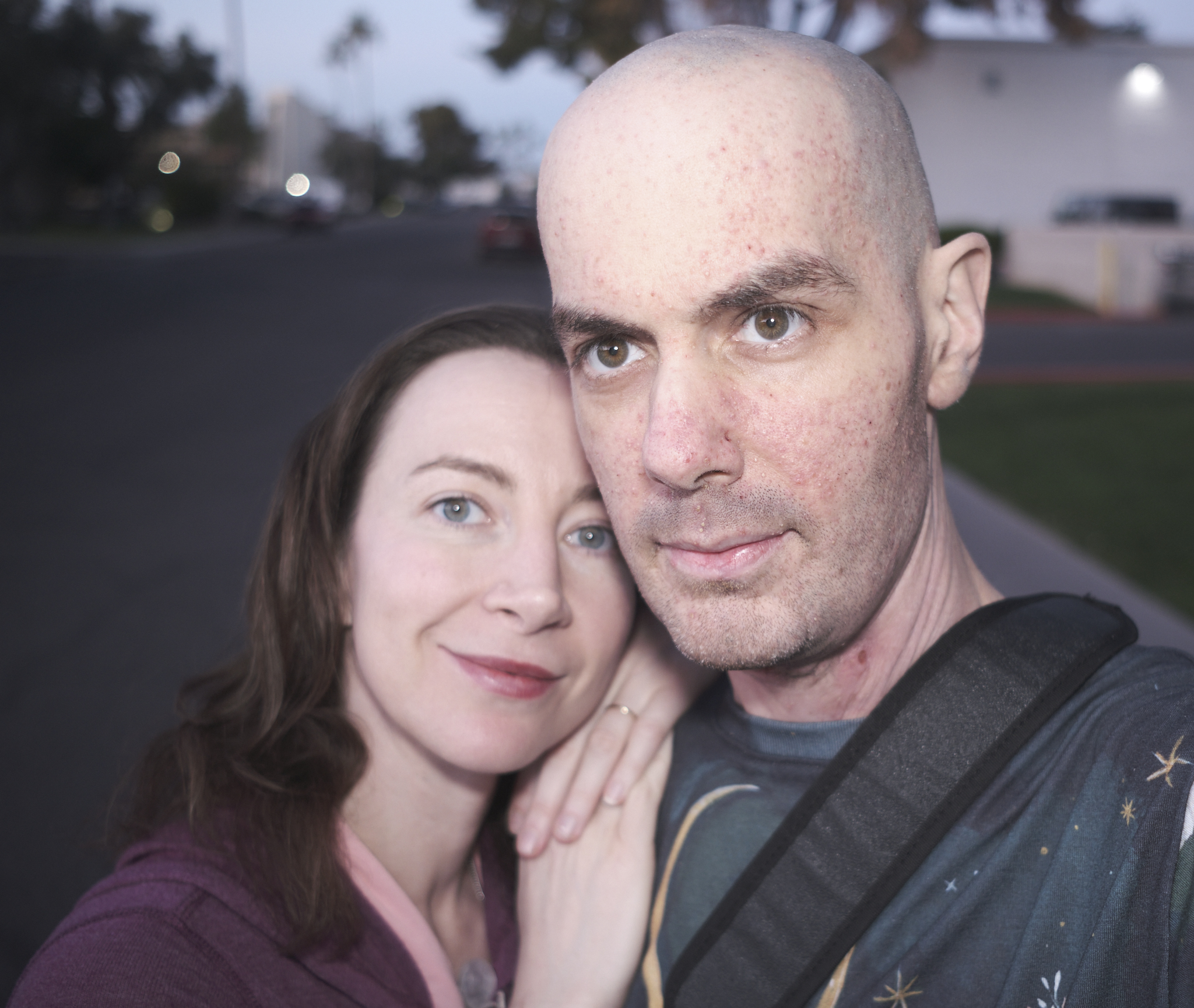


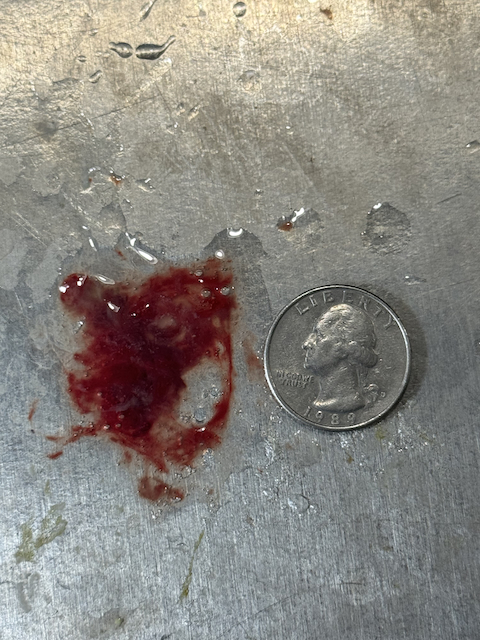


 The Story's Story