Links: The politics of resistance, cars, Peter Watts on Westworld, reading, traffic patterns, and more

* “We’re about to see states’ rights used defensively against Trump,” a frequently misunderstood point.

* “Investors Get Ready for the Coming Electric Car Revolution.”

green_machine-0460* “Russia and the Threat to Liberal Democracy: How Vladimir Putin is making the world safe for autocracy.” File under, “Headlines I never thought I’d see.”

* Peter Watts on Westworld. Here is me on Watts’ Blindsight.

* GM begins delivering the first Chevy Bolts. Good news and an important milestone.

* The Iago problem.

* Doug Lemov on reading, a podcast.

* “Why Obamacare enrollees voted for Trump,” a weird and fascinating piece of journalism as well as further confirmation of The Myth of the Rational Voter.

* “Why So Few Resisted Hitler,” which has striking applications today.

* Fear is a totally rational reaction to the Donald Trump presidency.

* “Los Angeles Drivers on the 405 Ask: Was $1.6 Billion Worth It?” The answer is “probably not,” and we can never build enough freeways because of induced demand. The only real way to improve transport is via subways.

* “Will the man running a sex party like a startup be able to leave anyone satisfied?” I would love a two-year moratorium on the word “disrupt” and ideally for the word “startup” to mean what it actually means.

Links: Russia, nuclear fusion, phage therapy, diamonds, and more!

* “The dying Russians,” from 2014, a tremendously sad piece. Yet it also has important geopolitical implications for the U.S.: Russia is a shrinking country almost entirely dependent on oil. As time goes on, the U.S.’s position gets better and Russia’s gets worse.

* The Input Club: Meet The Guys Looking To Disrupt The Keyboard Industry. See previous keyboard reviews.

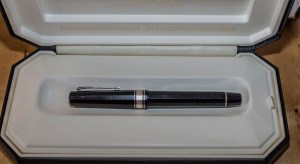
the pen is mightier?

* After 60 years, is nuclear fusion finally poised to deliver?

* “Making sense of modern pornography,” from the New Yorker and likely SFW.

* “Will Viruses Save Us From Superbugs? When antibiotics failed a severely ill patient, it was a pond virus that saved him.” Beautiful, inspiring, hopeful.

* “An Unsung Hero of the Nuclear Age: Maj. Harold Hering and the forbidden question that cost him his career.” Brilliant, scary, important, and tied to “Trump fears and the nuclear apocalypse.”

* Lab-Grown Diamonds Come Into Their Own.

* Russia plants porn in dissidents’ computers. I will take this opportunity to recommend Three Felonies A Day (again). Theoretically, if someone—anyone—sends a nude photo of a person under age 18 to your phone, you are guilty of a felony. Something to think about in an age of ever-expanding government and police powers.

* “Eight miles of water: underground with Manhattan’s new aquatic lifeline,” an awesome infrastructure project that ought to get more attention.

Links: The post-literacy age, Eco on fascism, literary studies, everything matters, books, and more!

* “Donald Trump, the First President of Our Post-Literate Age.” I’m reminded too of “Twilight of the Books,” from 2007 and now bizarrely, powerfully prescient.

* A charming guide to choosing books.

* “How Stable Are Democracies? ‘Warning Signs Are Flashing Red.’

cute_dog

* A conversation with Martin Amis, which is really excellent. See here for another.

* Umberto Eco on fascism, from 1995, an essay that I never thought would be relevant again but here we are.

* There’s a reason authoritarians usually begin by assailing the press.

* “What’s Wrong With Literary Studies? Some scholars think the field has become cynical and paranoid.” Finally! Good news.

* Everything mattered: lessons from 2016’s bizarre presidential election.

“David Brooks and the Intellectual Collapse of the Center”

David Brooks and the Intellectual Collapse of the Center” is excellent. I may be a small part of that intellectual center, to the point of writing a presidential endorsement post in October—something I’ve never done before, because the climate has never seemed to merit it. But given the potential for catastrophe, it seemed necessary. Some readers have complained about the increasing amount of political content on The Story’s Story, but given the worldwide political darkness that has been descending it seems necessary to attempt to understand it. I would like to go back to mostly ignoring politics apart from straightforward analysis.

And the problem of false equivalence is real, as Chait makes clear at the link: “official centrists would simply relocate themselves to the midpoint of wherever the parties happened to stand.” Yet official centrists should do more than triangulate. They (or we) haven’t done that. They (or we) have also been somewhat asleep over the last six or so years.

I certainly have been and am now attempting to make up for that slumber, in part because I’ve been so wrong about what I thought was politically possible or feasible. Though I’ve read The Myth of the Rational Voter, I didn’t entirely internalize its lessons. Though I’ve read about the extent to which irrationality pervades most human cognition, I didn’t think that we’d become so wildly irrational on a large-scale, public basis. Though I understand that most people know little about history, I didn’t appreciate the extent to which “little” really means “nothing.”

But knowing and understanding things may not matter very much, since we may be living in a post-literate age and I’m writing material that may go largely unread, especially by the people who most need to understand what’s happening.

Links: Political failure, love in the age of smartphones, academic influence, space, and more!

* “What Americans Against Trump Can Learn from the Failures of the Israeli Opposition.”

* “She phubbs me, she phubbs me not: Smartphones could be ruining your love life.” See also me, from 2012, “Facebook and cellphones might be really bad for relationships

* “Maybe America is simply too big,” something I too have been wondering.

* Potential Conflicts Around the Globe for Trump, the Businessman President.

* “Goodbye to Barack Obama’s world: It is the failing of liberal technocrats to think reason governs how people act.”

* Let’s colonize Titan.

* “Oil Industry Anticipates Day of Reckoning: Prospect of ‘peak demand’ prompts debate and long-term planning by global producers.” Good.

* “College Students Want to Kill Foreign Language Requirements.” It would seem that whatever utility it once served has gone away, and the arguments as to why it should remain are weak.

* Why academics are losing relevance in society – and how to stop it.

* “Trump’s lies have a purpose. They are an assault on democracy.

Links: The warm north pole, resistance done right, the new intellectuals, and the need to read

* “The North Pole is an insane 36 degrees warmer than normal as winter descends.” Which may be the most important story on the planet right now—not the election, not Apple’s latest moves, not whether some celebrity is sunbathing topless. And: “An expert’s view on unusually warm Arctic temperatures.” In the 2030s we will not be able to say we weren’t warned.

* “The End of Identity Liberalism: Our fixation on diversity cost us this election — and more.” Unlikely to be true and simultaneously long overdue.

* Luigi Zingales: “The Right Way to Resist Trump.” Five years ago he wrote “Dodging the Trump Bullet: Americans—and Republicans—are lucky that the Donald has bowed out.” If I saw that earlier piece at all I probably laughed at it. I was wrong. Here is a conversation between Luigi and Tyler.

* “NIH Scientists Identify Potent Antibody That Neutralizes Nearly All HIV Strains.”

* “The New Intellectuals: Is the academic jobs crisis a boon to public culture?“, surprisingly good and captures many of my feelings about peer review. It’s amazing to me that more people don’t understand the opportunity cost of grad school and simply start by teaching high school instead, which is far more remunerative than attempting to become a humanities professor (for most people).

* “The President and the bomb.” If you aren’t scared you aren’t paying attention.

* How the thoughts and actions of J L Austin live on. Austen’s book How to Do Things with Words is one of the few good things that came out of grad school.

* “Blame the Banks for All Those Boring Chain Stores Ruining Your City.” Title sounds stupid but the content is not.

* The Need to Read.

Links: Irrationality, concrete as a weapon, and why social media is terrible for multiethnic democracies

* “How Two Trailblazing Psychologists Turned the World of Decision Science Upside Down,” a really marvelous piece and one that feels highly relevant right now.

* “Never, never, never normalize this:” “It’s become depressingly clear the last few days that even many American liberals don’t understand the magnitude of what’s happened.”

* The Most Effective Weapon on the Modern Battlefield is Concrete.

* “Why social media is terrible for multiethnic democracies,” another of these important stories that’ll go unread by the people who really need to read them.

* Millennials are leaving coastal cities, choosing central ones. In short, the rent is too damn high.

*
Why social media is terrible for multiethnic democracies
, from Jonathan Haidt.

* To Mars, Not a Moment Too Soon.

Links: If women wrote men the way men wrote women, some good news, some writerly news, some simple news

* “If Women Wrote Men the Way Men Write Women,” hilarious and much better than the title makes it sound.

* “Seattle skyline is tops in construction cranes — more than any other U.S. city.” Pretty cool.

* “If corporate money controls American politics, how did the Republican Party – the reputed party of business – manage to nominate a candidate whom almost no one in Big Business supports?” An excellent and mostly unasked question. Many people’s assumptions, including mine, are being revised this year. In 2010 I wrote a post about things I’ve been wrong about.

* “Canada’s cities call for $12.7-billion federal fix for housing crisis;” bizarrely, the word “supply” never increases, yet supply limits are likely making the rent too damn high.

* Penelope Trunk: Does feminism fail because women lie to each other about work?

* Is the Stigma of Having a Baby Outside of Marriage Disappearing? If so, is it due to celebrity influence? A perhaps important point for novelists.

* The audacious plan to bring back supersonic flight.

* “Here’s what happened when I challenged the PC campus culture at NYU,” or, how at least one university is encouraging students to become the thought police. Bizarre.

* “Forget fees: Dyson opens Britain’s first degree where students get paid,” an underrated idea.

* Charter schools that work, and why they work. Charter schools are oddly both overrated and underrated, but perhaps their biggest advantage over conventional school district setups is that bad ones can be closed and good ones can be replicated. Conventional public schools just shamble on, sometimes for decades, like zombie banks.

* “Donald Trump’s success reveals a frightening weakness in American democracy,” which is among the best pieces I’ve read on the election.

* “History Tells Us What Will Happen Next With Brexit And Trump,” distressing but also accurate:

My background is archaeology, so also history and anthropology. It leads me to look at big historical patterns. My theory is that most peoples’ perspective of history is limited to the experience communicated by their parents and grandparents, so 50-100 years. To go beyond that you have to read, study and learn to untangle the propaganda that is inevitable in all telling of history.

Students are endlessly surprised when I say that it’s difficult to really know anything without reading. Most don’t believe, I think. If nothing else, this year demonstrates the utter failure in teaching and professing history, or the learning of it by the general population.

Links: Adjuncts, materialism, the cost of parking, Zadie Smith, dictators, Robin Hanson, and more!

* “Travels in [Feminist?] Pornland,” in Granta and by Andrea Stuart.

* Mr. Money Mustache buys an Electric Car.

* “Adjunct vulnerability is at the heart of the safe space debate;” I actually have a different reading, and the title imperfectly reflects the deeper content of the article. The “safe space” debate and political correctness more generally is an overreaction to past ills (and real ills). Too much of an initially good thing can make the thing bad, and yet too few people point this out.

* “Non-materialistic millennials and the Great Stagnation,” or, how the smartphone in particular has replaced a lot of “stuff.” In 2007 Paul Graham wrote “Stuff,” which seems truer today than ever.

* “The High Cost of Residential Parking: Every time a new building includes space for cars, it passes those costs on to tenants.”

* Too many old people may explain stagnant economies and innovation.

* “Reading Jane Jacobs Anew,” an excellent piece and don’t be discouraged by the title.

* “Zadie Smith’s ‘Swing Time’—a successful return to her roots” (and much talk about Smith’s ambivalent relationship to the novel that made her name). I’ve tried White Teeth twice and given up each time.

* “Why People Fall for Charismatic Leaders: A new book explores how fear, uncertainty, and group psychology lead people to believe leaders who say false things.”

* “The Unintended Consequences of Law: How did the entire state of California price itself out of the market for entry-level home buyers?”

* Is Robin Hanson too far ahead of his time?

* “The Government’s Addiction to ‘Secret Law.’

* Parking Lots Are an Incredible Waste of Space. Here’s How to End Them.

* “It Could Happen Here: Democracy is facing setbacks around the world, but there hasn’t been reason to doubt America’s resilience—until now.” That’s part of the reason why this election has been uniquely dangerous.

* “Natural selection in our species during the last two millennia;” evolution has not stopped and modern life may actually accelerate it.

* “Will the United States become a nation of renters?” I find the relentless focus on property ownership bizarre, given all the drawbacks it entails, and indeed most of the people who seem to think it a good idea cannot even articulate the (many) drawbacks.

Links: Material goods, durable goods, housing goods, old people and innovation, publishing, and more!

* “Trying to Solve the L.E.D. Quandary:” How can one build a business selling items that last for decades?

* Mr. Money Moustache: “So I Bought an Electric Car…

* “Non-materialistic millennials and the Great Stagnation,” or, how the smartphone in particular has replaced a lot of “stuff.” In 2007 Paul Graham wrote “Stuff,” which seems even truer today. Oddly, though, average dwelling size in the U.S. keeps increasing.

* “The High Cost of Residential Parking: Every time a new building includes space for cars, it passes those costs on to tenants.” A timely reminder for affordable housing advocates and anyone working in housing justice.

* Too many old people may explain stagnant economies and innovation.

* “Reading Jane Jacobs Anew,” an excellent piece and don’t be discouraged by the title.

* “Comprehensive new data challenges the cultural consensus on public housing. For all their flaws, housing projects can have remarkable positive effects on the children who grow up in them.” Don’t believe the consensus on public housing.

* “ The Publishing Gamble That Changed America: The Late Barney Rosset on Fighting for Lady Chatterley’s Lover,” and the fight against censorship in general (still ongoing in a few quarters).

* How an enormously clever landlord gets rid of rent-controlled tenants in NYC, or, yet another example of rent control’s perverse outcomes. There is a comic novel in here, though.