For many people, taking a psychedelic like psilocybin is one of the most revelatory, profound, bizarre, beautiful, notable experiences of their lives. I’m one. It’s hard to enumerate all the things psychedelics have done with me, to me, and for me, but, given that a metastasizing squamous cell carcinoma is likely to end me, reducing my fear of death is a big one—albeit not a virtue I imagined would be germane so early in my life. I thought I’d have many more bike rides, walks with my wife, Bess, cups of coffee, and books to read—but treatment-refractory cancer means that I’ve been hit with the existential slap sooner than most. In another essay I testified about the powerful effects psychedelics have had on me:
Part of being ready to die comes, I think, from psychedelics; I wrote in “How do we evaluate our lives, at the end? What counts, what matters?”: “Bess and psychedelics taught me to love, and the importance of love, and yet too soon now I must give everything back.” There’s a longer, yet-to-be-written essay about how psychedelics cause me to see myself as a tiny instantiation of the vast, interconnected human whole, which will comfortingly go on even when I flicker out.
Michael Pollan’s book How to Change Your Mind is great and also covers a lot of existential territory. I’m looking for a copy to quote from and can’t find it, because I’ve given so many copies away. Pollan describes the way psychedelics are being used palliatively for end-of-life care, which is, strangely where I now find myself. Fortunately, I have a Kindle copy, and now I can authoritatively say that Pollan writes about how “researchers [have] been giving large doses of psilocybin—the active ingredient in magic mushrooms—to terminal cancer patients as a way to help them deal with their ‘existential distress’ at the approach of death.” Moreover, for many people, “psychedelics [help] to escape the prison of self.” I guess I can say that psychedelics prophylactically assuaged my fear of death, the way Zofran might be taken to prevent nausea.
Even before the present circumstances, from psychedelics I learned how not just to know but to deeply feel and internalize that we’re all part of the show for such a short time, and then it’s someone else’s turn, and that is okay. Until science radically expands healthy lives—which will be great, but it’s not clear whether we’re near to or far from that series of breakthroughs—we’re not here for long, and then we yield up the gift, whether willing with grace or unwillingly with fear.
In How To Change Your Mind, Pollan writes that he “interviewed at length more than a dozen people who had gone on guided psychedelic journeys” and found that, like me:
For many of [the people he interviewed about their psychedelic experiences], these were among the two or three most profound experiences of their lives, in several cases changing them in positive and lasting ways. To become more “open”—especially at this age, when the grooves of mental habit have been etched so deep as to seem inescapable—was an appealing prospect. And then there was the possibility, however remote, of having some kind of spiritual epiphany. Many of the people I’d interviewed had started out stone-cold materialists and atheists, no more spiritually developed than I, and yet several had had “mystical experiences” that left them with the unshakable conviction that there was something more to this world than we know—a “beyond” of some kind that transcended the material universe I presume to constitute the whole shebang. I thought often about one of the cancer patients I interviewed, an avowed atheist who had nevertheless found herself “bathed in God’s love.”
During my first psychedelic journey, I epiphanically understood visual art for the first time. Time and space seemed malleable. I saw life as a series of information problems or logic gates, and the stripping away of life’s surface to see what’s underneath helped me not fear the unknown. Logically, I understand that there’s no reason one should cause the other—that stripping the surface should help me not fear the unknown, including death—and yet that is how things unfolded for me. Feelings became more real to me. Like many people, my ego dissolved and allowed me to merge with all of life. Dying ceased being scary.
I emerged from that psychedelic with a great appreciation for love, which, along with progress and continuous improvement, is one of the great binding forces of the universe. But love can’t be indiscriminate: any person should be judicious in who they bind to. So many people don’t seem open to love, or to understand that it is an action verb and a skill that should be cultivated, and so their capacity for love shrivels like an unwatered plant. Maybe they’re not being giving enough, but being too giving and accepting of others, which puts a person at risk of scammers, parasites, and similar problems. Too much defensiveness can be just as problematic as too little.
Although I’m not in my 50s (like most of the Pollan interviewees; I’m also extraordinarily unlikely to ever reach that age), psychedelics dramatically increased my self-perceived openness. I don’t wholly know what I think about life after death or what is beyond material experience, but, regardless of what there is or isn’t, psychedelics unlocked a sense of human and technological sublime—and that sense of the sublime lets me see my own smallness in the world, and yet I also have seen that my contributions to the world are unique (like everybody’s, but that’s okay). The sublime revealed itself using what was already in my mind. Psychedelics seems to access my subconscious too, in ways I don’t expect, and psychedelics helped me see myself as lucky in numerous ways—including lucky to have experienced the psychedelic mind state itself, before the end. That sense of gratitude sustains me now, through the horrors of treatment and the loss of the tongue.
I don’t know whether many of the feelings and senses of revelation that psychedelics facilitate are true. They may not be. It may also be that the “truth” or falseness of the psychedelic mindset is irrelevant, like asking if purple sounds good. Psychedelics seem to temporarily short-circuit the logical mind in order to let the imaginative / feeling mind wholly take over, which can, I’d guess, be scary for some people, at least if they’re not being guided effectively, or if they’re not in a safe “set and setting,” to use the preferred psychedelic lingo. I come out of the psychedelic head space and feel utterly different—but am I, or is the feeling a lie? Does the question matter, or do the answers?
It could be that the psychedelic reinforces what’s already there. For example, I was interested in stoic philosophy and life before I took psychedelics, and the taking of psychedelics may simply have reinforced some of the notions I’d already absorbed from books—being ready to die, if that is one’s fate, seems like a stoic stance (particularly given Seneca’s socially meaningful auto-termination). Perhaps the psychedelics only slightly ratcheted up the underlying tendency.
I’ve spent most of my life being a thinker more than a feeler, but taking psychedelics balanced me out. It let me do both, and to reconcile apparent opposites. When I was young I think I worked to repress my emotions as a survival mechanism in a milieu that, to put it lightly, didn’t reward emotional expression. That isn’t uncommon, I suspect, since many people who experiment with psychedelics or therapy (and ideally both: psychedelics and MDMA appear to be incredible, underutilized therapeutic tools) find themselves better able to be emotionally expressive and better able to accept the love and affection of others. A lot of us are emotionally shriveled, for reasons I don’t want to speculate on here (despite my penchant for dubious speculation), and treatments that can help that are scarce. Therapy and support groups work for some people, but both work better with psychedelics. Once psychedelics make it through the FDA gauntlet, thanks to the work of the Multidisciplinary Association for Psychedelic Studies (MAPS), we’ll look back on non-psychedelic therapy as not terribly effective—it’ll be like comparing shamanism to medicine. Shamanism may be an interesting topic of study, but if there’s actually something wrong with you, you want the medicine.
Bess eavesdropped on some of the above paragraphs and then came up to me and gave me a hug and a squeeze and said: “I don’t want to do the world without you. You stay.” She gave me a hard slap on the ass and told me it’s decided. I hope she’s right. I’m trying hard to stay, however much psychedelics have made me accept death, without being suicidal or wanting to court death. If I had the skillset to work on treatments to radically extend life, I’d work on them, and I encourage others who have those skillsets to keep working. It may be that understanding and defeating aging and cancer are ultimately the same thing. I don’t have the expertise to evaluate those claims, but they seem plausible from the outside.
I have no fear of death whatsoever. I used to do a little experiment for the fun of it in my elevator here, when I go down to the first floor. I can control the elevator so when I go in, I shut out the lights and I’m in total darkness. I think, when I get to the first floor that I’m going to be dead. As I go down, I think, I had such an interesting life, I got to be a movie director, have a wife and children, had so much fun with them, got to be in the wine business, go through everything, and as I’m lost in all these interesting thoughts, the door opens on the first floor and I’m not dead. I walk out.
Psychedelics are for me like Coppola’s elevator. Many people take a psychedelic and have the experience of dying while in the psychedelic head space, where it doesn’t bother them. During the psychedelic experience, time also seems to halt, and one hour turns into years.
I’m deliberately not describing the content of psychedelic trips: that content usually seems banal to outside observers, and words are notoriously for capturing the feelings generated in the psychedelic state. Hearing about other people’s psychedelic experiences is like hearing about other people’s vacations—rarely satisfying. The people who can make their vacations vivid find work as travel writers. The shaping of experience through the craft of language is hard, and for psychedelics inadequate.
The last two times I’ve taken psychedelics, I’ve set the same intention before starting: to accept death. But the psychedelic experience is unpredictable; sometimes you get what you get, not what you think you need, and the result is strange and peculiar and worth doing. Both trips were generative and beautiful, though if I learned anything about accepting death, it’s that I’ve probably already done it. Life is a strange trip. The thing I can’t accept, and that will likely trouble me until the last moments, is that I don’t want to abandon Bess, and that I am worried she will be lonely, and no psychedelic can stop that fear and pain. Psychedelics may help many things but can’t help all things. Though I’ve been talking to all of our friends and family about supporting Bess after I pass, I know that she’ll be desperately lonely in a way no psychedelic can ameliorate, and I’ll be dead and so unable to do anything to alleviate the existential pain she’ll likely carry with her always.
Here is Tyler Cowen on why he doesn’t personally use psychedelics. Those reasons seem fine for him but are probably not generally applicable. As Cowen says, there are also probably diminishing returns to psychedelics, which is consistent with most things human do.
One way to see the virtues of this attitude is by process of elimination: What’s the alternative? Wallowing in bad days in which I accomplish and achieve nothing important? Getting angry about things I can’t control, and things that will remain the same whether I’m angry about them or not?* Lamenting that which cannot be, and will not be no matter how much I wish it so? Nothing will bring my tongue back. Bemoaning my fate will not avert it (though I’m also not passively accepting fate: as described below, I appear to be in a clinical trial for a novel, promising drug that targets squamous cell carcinoma of the tongue). The likelihood of another decade of life is not literally 0.0, but it’s under one percent and would require a series of near-miracles via clinical trials. Bess and I are pursuing that path; realistically, though we’re doing everything we can do, “everything” will almost certainly not be enough to achieve substantially longer life.
There’s a term for the people who get excessively upset about things beyond their control: children. Or emotionally immature adults (a subject I know too much about). I’m not saying I’m an emotionless robot or that you should be one; when I got the news on July 21 about the fatal recurrence and metastases, Bess and I spent the weekend crying and talking and crying some more. Premature death is bad and efforts to prevent it are good; stoicism is not lying down and accepting whatever happens. During that weekend we felt a lot. During the past two months, we’ve felt a lot—including gratitude that I’ve made it two months, since, on July 21, it wasn’t clear that I would. But there is a time for feeling things and a time for doing things (Aurelius tells us that “you have within you something stronger and more numinous than those agents of emotion which make you a mere puppet on their strings”), and I try to focus on doing the things that need to be done (like writing this essay), because most good days are composed of doing things. As long as I have the health and energy to act, I will act. Bess seems to have figured out how to get a lot of things done while feeling things strongly, which seems like playing on a hard-mode setting, but what she’s doing appears to be nonetheless effective for her. She says she’s always operating in feelings mode—and has described herself as “a large sack of feelings on legs”—which initially baffled me, but now I see is just an integral part of who she is and how she is in the world.
In some obvious ways, life changes because of a fatal diagnosis. Treatment and treatment options become high priorities. Planning for the far future, like 401(k) contributions, are dropped. Many of the micro social jockeying and status awareness (or anxiety) almost disappears. The time horizon shrinks. When we’re young, most interactions that could lead to friendships, business opportunities, etc., assume that there are decades in front of both parties, and that assumption doesn’t hold for me. What I do with the time granted to me has changed. But some things remain the same: whether there are a few months left or six decades left, the goal is still to win the individual day in ways that are still congruent with a full life.
I’m deliberately vague about what a “good day” is, and what “winning” the day looks like, because different people are going to have different definitions. For me, right now, the good days are the ones I get to spend with Bess, and the ones I—or more often both of us—spend writing (we are each other’s ideal readers). The bad days are ones when I let the feeling of obligation guide me, or when I let up on what I’ve called the “moratorium on banalities,” or ones when I give up and don’t try to be generative. Either fortunately or through the direction of will, I’ve had few days when I’ve given up and not tried to be generative. Some days, I’ve been legitimately too tired or sick to act: recovery after the May 25 surgery took a long time. Chemotherapy is brutal and debilitating. A medication called olanzapine inadvertently made me sleep for like 14 hours, and then left me feeling like a zombie for days. But those are the exceptions. Given my proclivities and obsessions and training, the good days most often entail finish an essay, which is what I’m doing now.
The bad days are, for many people, probably more similar to each other than the good days. They’re the days when nothing generative happens. They’re the days when we don’t use space-repetition software to memorize. They’re the days that disappear in the fog of distraction, or a haze of smoke from whatever someone might literally be smoking. Or the days that disappear in other kinds of mental hazes caused by ingestible substances, or doom scrolling, or media consumption. They’re the days you check Facebook or Instagram or email too much, and then watch a little TV, and then it’s back to the social media grind, and then it’s dinner time, and then you’re tired, and then it’s bedtime.
I’m not saying people shouldn’t take breaks or vacations. Both are good and have their place; Marcus Aurelius wrote: “No retreat offers someone more quiet and relaxation than that into his own mind, especially if he can dip into thoughts there which put him at immediate and complete ease.” When Bess reads this part, though, she chimes in: “Clearly Marcus Aurelius didn’t have generalized anxiety disorder. Who are these people whose own minds offer them quiet and relaxation? How did they get these minds? Where can I get one? Can I have one right now?” But I have a very long break in front of me, the eternal break, and so right now I’m not much searching for breaks from writing. For me, writing offers some of Aurelius’s quiet and relaxation in the mind.
Fundamentally, stoicism tells us to control what we can control, and accept that many things are beyond our control. The squamous cell carcinoma is largely beyond my control; with the October 20 surgery and the radiation in December and January, it seemed as defeated as the Gauls by the Romans. I wish I’d investigated the strange and painful patch on my tongue sooner, but I can’t turn back time and so try to thrust that issue from my mind.
I can control aspects of what I do next, but not what everyone else does next. One doctor at a clinical trial center, for example, decided that I’m not eligible for her trial because my cancer hasn’t progressed far enough on chemotherapy, and I needed to “fail” it before I was eligible. That seems like a misreading to me (Bess and I will have a lot more to say on this subject in our essay about clinical trials), but her view is out of my control, and, moreover, we’d gotten traction with another oncologist at another medical center who was and is gung-ho.
When Bess and I have been pursuing clinical trials, we’ve tried to master the process despite knowing that we may master the process and yet not achieve the desired outcomes. Finding the maximally good clinical trial is literally a life and death issue, which is concomitantly stressful. The present likely outcome is death: recurrent and/or metastatic head and neck squamous cell carcinoma (R/M HNSCC) is almost always fatal, and current treatment options are palliative. So the stakes are very high and only part of the process is under our control.
Some new treatments might do substantially better, which is welcomed in a world where a “successful” treatment might help 30% of patients live a few extra months. R/M HNSCC is refractory to treatment, and the version infesting me grows particularly fast and, from the start, has shown “perineural invasion”— it occupies nerves and uses them to spread. My getting into one of the better clinical trials depends on those other people, like oncologists, primary investigators, anonymous drug company reps, or site coordinators.
It’s been challenging to navigate the bureaucracy and system. In a slightly different world, the trial I appear to be in now may have closed or rejected me. The first time Bess and I inquired about the trial I’ll be starting, it was closed to new patients—a seeming defeat. Then, we got word that the trial happened to have new spots open a few days before my appointment to establish care at that hospital. If it was still closed to me, I’d continue to work the issue, but I’d also try to accept with as much equanimity as I can what is and what can’t be changed. Bess has had less success with equanimity, and, while her own struggle with acceptance manifests as her single-mindedly working towards getting me into the right trial, now the question has shifted from the active “will I get into one?” to the passive “will it work, once the drug is infused?” Without as much to do, Bess doesn’t conceal well how much she struggles with accepting my fate, and what that means for her own.
I’m writing this particular sentence Sept. 8; in one critical way, it’s not been a great day: CT scans show some tumor size increases, despite chemotherapy. One hopes that chemo will shrink the tumors. But what am I going to do differently with this news? Nothing. I’m going to keep going, and doing everything I can to facilitate the trial happening, and to spend time with Bess. I’m going to keep trying to string together as many positive days in a row as possible.
I can’t control that I can’t chew, swallow, or speak normally, but I can try to mitigate these deficits as best I can—I can get speech therapy in an attempt to maximize my intelligibility and verbal legibility. I can write down the phonemes that most trouble me and attempt to find alternate ways to vocalize them. I can’t chew, but I can use a Vitamix or other blenders to create slurries that I can swallow and taste. I can practice the swallowing techniques that minimize choking and improve my ability to swallow foods that are more whole than they’d otherwise be.
Few of us are maximizing the things that are within our control, including me. We can and should try to do better. We should try to be more resilient.
Stoicism may be a philosophy, but it came before the science/philosophy split, and before “philosophy” became a byword for ineffective talkers. “Wordcels,” in modern Internet meme parlance. Stoicism is about living and doing, to the greatest possible extent. I was reading the Albert Camus entry in The Stanford Encyclopedia of Philosophy and came across this, about Camus’s The Myth of Sisphyus:
What then is Camus’s reply to his question about whether or not to commit suicide? Full consciousness, avoiding false solutions such as religion, refusing to submit, and carrying on with vitality and intensity: these are Camus’s answers. This is how a life without ultimate meaning can be made worth living.
I’m doing my best to achieve full consciousness and to carry on with vitality and intensity, most notably via writing and love. I can taste coffee again, which helps achieve a life of vitality and intensity. When I was closest to saying no to life and yes to the void, it was because I couldn’t achieve full consciousness or carry on with any vitality or intensity. For me, there is some minimum viable mind-body state that I dipped below in May and June. To get above that minimum again is good.
I was talking my sister, Rachel, and said to her a variant of what you’ve been reading in this essay: “I’m trying to be stoic about it: doing everything I can, while accepting that much is outside my control.”
“You’re doing a hell of a job,” she replied, “I wish I had the mental resilience you exhibit.” (Okay, this was via text, and I’ve added the periods.) She went on: “I told you this when I saw you, but it inspires me.”
“The alternative—falling apart, screaming, crying, I don’t know—what’s the point?” I said. “It just makes what days I have worse. Life goal is to have as many strings of good days as possible. Even if I don’t have a lot of good days, I want still to max out those I get.” (I use periods in texts, which I’m told makes me overly serious, or sarcastic, or otherwise off-putting.)
“It all makes sense, but it’s not common to be rational in a situation like yours. It’s admirable.”
“I don’t even know if it’s rational per se, so much as me trying to live the best life I can, given the circumstances.”
What’s rational? I don’t fully know. Philosophers tie themselves in knots trying to define it; most of us think we know it when we see it, but otherwise go about our days and lives, trying to take small steps towards a much better world.**
Given what seems like the virtues of stoicism, why is it so hard to implement for so many people—myself included? I’m not sure and the question is a genuine one that I don’t have an answer to. There must be something evolutionarily adaptive about the vicissitudes of random emotions, for the non-stoic reactions and the non-stoic life to be so common. Or maybe it’s counter-adaptive, but vestigial. If the Stoics had known about the amygdala, nestled inside the oldest part of our lizard-brain, responsible for our fight or flight response and a great deal of our fear and decision making, could they have given us some practical guidance as to how to overcome that ancient programming in our minds?
I don’t think stoicism is everything. I can think of some apparent downsides:
* Does stoic philosophy discourage totally feeling one’s emotions? I think there can be a trade-off here; there obvious counterargument is that stoics encourage the feeling of one’s emotions, but not being ruled by them. Feel what you feel, but don’t let feelings rule actions. It’s a subtle but important distinction. “What if you feel you should act on your feelings?” is a tricky one, especially when, sometimes, not accepting a situation can lead to actually changing it (as Bess and I are trying to do with the clinical trial).
* Aurelius doesn’t have a sense of science, the scientific method, or progress. It’s unfair to expect him to, because those notions don’t really get kindled until the Renaissance, but the invention of science is one of the greatest human achievements ever. That achievement occurred after the main stoics were writing.
* Letting stoicism become a dogma instead of a set of adaptable ideas and practices. That’s a risk of almost set of ideas, however, whatever their label.
On July 21, when I got news of the new tumors in my neck and lungs, I didn’t know whether I had only weeks to live. Given the speed of recurrence between the end of radiation in January and the hot PET scan in April, and the speed of the second recurrence between the May 25 surgery and the July 21 CT scans, “weeks to live” was plausible. I rapidly prepared Bess, my family, and friends for my possible demise. The presence of tumors in the lungs scared Bess and me.
Chemo had already been scheduled for July 24, and I went through with it; initially, Bess and I had hoped that chemo would sterilize any cancer cells that remained after the May 25 surgery. Instead, chemo morphed into that palliative effort to buy more time. Have we actually bought that time, or has chemo taken our money and run faster than a crypto scammer? I’ll find out in December, when the first set of CT scans after the clinical trial drug has had time to work—or not. So far, chemo hasn’t shrunk most of the tumors, though it’s likely kept them from growing too rapidly.
Marcus Aurelius died at age 58, of what the notes in my copy of Meditations characterizes as a short final illness of “only a week or so—and the exact cause of his death is not known.” Aurelius’s last entry reads:
Mortal man, you have lived as a citizen in this great city. What matter if that life is five or fifty years? The laws of the city apply equally to all. So what is there to fear in your dismissal from the city? There is no tyrant or corrupt judge who dismisses you, but the very same nature that brought you in. It is like the officer who engaged a comic actor dismissing him from the stage. “But I have not played my five acts, only three.” “True, but in life three acts can be a whole play.”
Early death was more common in the ancient world than it is in the contemporary rich world, and Aurelius, given how much time he spent at war, must have been particularly familiar with it. Yet even today, we are all, sooner or later, dismissed from the city. Yet I disagree that it matters not whether one lives as a citizen in the great city that is life for five years or fifty: fifty is generally better. But I am not going to get all five acts and so have to be content with the acts I’ve had.
The life goal is the same whether there are 30 days or 30,000 ahead, though the means may be differ. All of us know, intellectually, that, given the present level of scientific progress, we’re going to die. Given that, are we living the life we should be living? If not, why not?
I wrote that “Stoic philosophy is a companion to adversity.” Life is about handling adversity, which all of us face, in many forms. In that sense, stoicism is a companion to life.
And you might be interested in me appearing on The Daily Stoic podcast:
Ryan speaks with Jake Seliger about how his cancer diagnosis and having his tongue removed have changed his perspective on life, why he is prioritizing people much more highly than work now, how he is making every single minute count, what he is trying to communicate with his recent outpouring of creativity, accepting death, and more.
I listened to the podcast after I wrote most of this essay, and the podcast starts with Aurelius’s final meditation—a logical place to go, given the topic.
* Anger is almost always a bid for better treatment: used sparingly and appropriately it can work. All of us have seen the long-term results in people who overused anger and consequently become isolated by it. Sometimes business titans can get away with a lot of anger (Jobs, Musk), but most people can’t most of the time. A lot of us are aware of people who were raised by parents with anger problems. Children can’t defend themselves.
** Stolen from the tagline to Marginal Revolution.
On May 25, I had a massive surgery that made me feel like I should be dead; the surgery left me without a tongue, without some teeth in the bottom of my jaw, and without important nerves in my neck. The surgery left my wife, Bess (we’d married the night of May 24, hours after learning that our surgeon had opened a slot on the 25th), in a panic. I was supposed to lose only half my tongue, but that is not what happened—this is Bess’s description, from her perspective:
The second, “salvage” surgery lasted twelve hours. Around hour ten, I started to wonder if Jake wasn’t ever getting off the table. When Dr. Hinni finally called me in to tell me they were able to remove all the cancer, I was elated. He got what surgeons call “clean margins.” Then Dr. Hinni explained that, because the cancer had grown in the short time between the April scans and May surgery, he’d had to remove Jake’s entire tongue, not just half—and with it, Jake’s ability to speak, to swallow, to taste—and the relief was replaced by horror. I blacked out for a moment. Jake wouldn’t want this. I walked into the hot night air and hyperventilated in the parking lot. We hadn’t even considered the possibility that Jake might lose his entire tongue. I wondered what I would have done if Dr. Hinni had called me with an update and asked me if they should move forward with the removal? I threw up in the parking lot and felt sick relief that they hadn’t.
In a panic, I called the one person I could think of: our speech pathologist, a woman named Jessica Gregor. She reassured me that, if the surgery hadn’t removed Jake’s entire voice box, he’d likely be able to speak after a fashion again. And swallow some liquids. She told me not to give up hope, and that the road would be long, but that not everything I feared and expected would come to pass. The surgical margins were free of disease. The cancer was gone. I needed to focus on that.
I spent the first night in the hospital sitting awake at Jake’s bedside, certain that he’d decide to die after learning the news. He didn’t want to live like this. It seemed entirely possible to me that he would just decide not to.
Going into the surgery, I knew that that Dr. Hinni (the ear, nose, and throat (ENT) surgeon leading the surgery) would do what he considered necessary to remove all cancerous tissue; he is one of the heroes of this saga, both for taking me as a patient in the first place and for squeezing me into his schedule on May 25. I was supposed to be operated on on June 7 or 8, though I doubt I would have made it that long. Even if I survived, how far would the cancer have spread in those two extra weeks?
Preliminary CT scans suggested that the cancer was, at most, a few months old, and those scans showed a tumor at the left base of my tongue, not the right. The approach to a unilateral one-sided mass is a hemiglossectomy—the removal of half the tongue—although Bess and I also knew that the cancer might affect my larynx, which meant a real chance I’d awaken without a voicebox.
My cancer moves unusually quickly: once Dr. Hinni performed a split mandibulotomy and flayed my neck open to assess the cancer, he found that the tumor had rapidly grown, leaving only 20 percent of the tongue tissue unaffected. Unfortunately, that affected 80 percent included both of the major tongue arteries. Without blood supply, tissue can’t live. So Dr. Hinni was forced to removed my entire tongue, or it would have become necrotic, dying and also killing the reconstructive “flap” made out of thigh tissue.
What follows is, as my brother Sam put it, a “devastating and horrific account, made even scarier because it’s real life.” But although the path was and is arduous, there have been real improvements: I can taste, I can swallow slurries, and there are moments of everyday life that pass for normal. I want to tell the truth as best I can, and that is going to include many dark moments. But read to the end: there is some light, and many people helped me along the way.
After she talked to Dr. Hinni and Jessica Gregor, Bess sought guidance online. She didn’t find much, and that’s why I’m writing this essay: to describe what the process of getting through the post-surgical moment is like, and to describe what the new reality is like on the other side. I’m dwelling on the challenges of the surgery and its aftermath to emphasize how hard the surgery is and how long recovery takes; I wasn’t prepared for either. But in seeking others’ experiences online, Bess wanted to know: What’s the range of responses like? What would not having a tongue be like—endurable, or unendurable? Would I yearn to end things, even if I technically survived? She found clinician opinions, but little from the people without tongues, yet It was the patient’s side she wanted to hear most.
No sane person wants their tongue removed, but having it out and not being able to swallow has particularly awful resonances for me: I’ve been into food and cooking since I was a teenager, and “going out to dinner” was the most common form of going out for Bess and me. “Having friends over for dinner” was our most common form of socializing. I chronically experimented with new food and gadgets in the kitchen. What can I make with fish sauce? Is the sous vide machine worth it? Can an air fryer replace the oven for many dishes? Will the capers in cauliflower piccata alienate our guests?
After the surgery, the questions changed. Would I meaningfully survive at all? In that first week after the surgery, I felt I should be dead. What would happen to me? Would any semblance of normal life be achievable? Was Jessica Gregor right, or was she exaggerating the probability of me doing well in order to help Bess cope in the moment? Bess is an ER doctor, and she’s therefore suspicious of comforting medical optimism, having admittedly doled out some excess optimism she didn’t quite believe while eliding the worst of the bad news. Bess knew Jessica wouldn’t lie outright, but, in the course of the squamous cell carcinoma takeover, both of us have heard a lot of optimistic projections that did not turn out. Jessica said I’d speak and swallow, but how much and how well?
In the days following the surgery, the prognosis seemed grim to both Bess and to me. The “flap” that had been installed in my mouth registered in my brain as an alien presence, even though it was constructed from my own tissue (it’s made of tissue taken from the quadricep muscle, fat, skin, and hair—the hair keeps growing even after being relocated to the oral cavity, though I don’t feel the hairs). Imagine feeling like there’s a frog, or wad of fabric, wedged into your mouth all the time; you’d instinctively want to expel it, right?
The flap is made deliberately enormous at first because it loses bulk over time, and the goal is to eventually have a tongue-shaped mass of flesh in the mouth. The flap isn’t innervated, and so it doesn’t move, but the bulk is necessary for future speech and swallowing. In retrospect, the many hours and microvascular surgery required to place the flap is itself based on the expectation that it will help a patient regain function, since the cosmetic effects are minor unless someone is peering inside your mouth.
The flap is made of me, but it’s inert and insensate. But when I woke up from surgery, and in the weeks after, it set off alarm bells of “wrong” inside my brain. In the early days, my feeling-brain wanted it out of my mouth, however much my thinking brain understood its purpose. Flap challenges were on top of many others: I was swollen from the surgery and felt like I should be dead, despite being technically alive. I was a “pain person,” barely surviving on a steady diet of oxycodone and Dilaudid and Oxycodone and Tylenol and antibiotics. My body was riddled with holes and tubes: two drainage tubes from my left leg. Two drainage tubes from one side of my neck. A feeding tube down my nose (it was stitched into my nose). An intravenous (IV) line piercing my skin (it was replaced a few days after the surgery by a peripherally inserted central catheter (PICC) line—and I was awake for the placement). A tracheostomy tube let me breathe, since the post operative swelling would have otherwise cut off my airway above the tube, suffocating me, but the trache was also prone to clogging with mucous (of which I produced more because of the surgical inflammation and thicker because of post-radiation changes).
A catheter emerged from the tip of the penis, which is as horrible a sensation as you might imagine, and the taking out of it worse than it merely being in place. The surgical wounds weren’t exactly holes, but they made me feel less whole and less human. Twenty-seven staples crawled up my left upper leg, holding the skin together from where they removed my flesh to create the flap. Screws in my jaw and stitches in the flap, the lower lip, the chin, and the neck held the skin of my face and neck together.
In the first 48 or 72 hours—I can’t remember now—a nurse had to come in every hour with a “doppler” device, which looked a bit like a metal pen, and put it in my mouth to check the flap’s blood supply. It’s not common, but some postoperative flaps die because the artery feeding them blood doesn’t take. The flap can sometimes be saved surgically, if the problem is detected early enough.
Despite my run of bad luck, the flap maintained its blood supply and the surgeons were also able to drain a subcutaneous saliva collection that threatened the flap. I didn’t think I could go through another surgery. I could barely move, but within a day or two I could get up, with the assistance of a nurse, who would wrap me with a giant belt to make sure I didn’t fall over and die. Walking was a key part of the recovery, and so I needed to walk as much as possible despite the pain, the fatigue, and the general misery. Bess and my dad spent a lot of time in that hospital room. Apart from the flap surviving, the other key success of that period was me being able to walk, and not falling. My internal monologue—the interior mental voice that has accompanied me for as long as I can remember—shut off. I don’t remember precisely when it restarted, but I think it was around the 12th day.
Night might have been the worst: I was dependent on opioids to sleep but simultaneously aware of the cost of opioids. Mental fog is one cost. Constipation is another. To leave the hospital, I needed to be able to conduct normal elimination activities. I’d vaguely heard the term “suppository” before but had never wished to know more, until I had to use one. Each day seemed to bring its own horrors. Eventually, I had to conduct an impromptu “self-disimpaction” of the bowels. Nurses are apparently not supposed to engage in this medical act, so a few days after the surgery I found myself alone in the bathroom at midnight, caught between “going” and “not going,” and unable to close up shop but also unable to eliminate. I worried about the strain rupturing something. Somehow I got through. At the end I panted and sweated like someone who’d barely survived an ultra-marathon. In retrospect, I realize that although tube feedings tend to cause diarrhea in most people, I was not most people and should have been on a more aggressive regimen of stool softeners and laxatives to counteract my sensitivity to the constipating opioids.
Given what the post-operative process was like, I think it understandable why I was down on living. Besides living itself, I wondered: how would I make a living? A life? With the present being so dark, I couldn’t anticipate the future being much better. I didn’t want to disappoint Bess, or my family, or my friends, but I also felt I’d be in the hospital forever. And what would happen when I got out? I would be helpless. The gains that slowly began to accrue, like walking an extra fifty feet, barely registered. Bess cheered me on and walked along side me with an enthusiasm normally reserved for someone on the last mile of the NYC marathon. I couldn’t understand her excitement: I shuffled like a zombie, my left leg weakened from the taking of muscle. Inability to sleep due to snot and mucus meant that I lived in a foggy haze. Any food I ingested came from a horrible Nestlé product called “Nutren® 2.0.” Sample ingredients, taken from the Nestlé Health Science (science?) Nutren® 2.0 website:
I don’t think humans are meant to survive on sugar (not just one kind, but two are listed there), soy, palm kernel oil, and canola oil. I’ve never heard anyone recommend to a convalescing patient that they will get better faster on, exclusively, McDonald’s and ice cream (though you wouldn’t know it from reading hospital menus). But the Nutren® 2.0 edible food-like substance was on hand and probably easier on my stomach than real food. The Nutren® 2.0 first got injected by naso-gastric tube, a sensation that felt like postnasal drip I was expected to eat; maybe six or seven days after the surgery, interventional radiology (IR) punctured a hole through my abdomen and into my stomach to place a peg tube. That was better than the nose tube, except for the process of having it placed.
After 12 days in the hospital, I got released. Dr. Nagle—who’d made the flap—said that I didn’t need to stay and that the flap seemed to have taken. The release should have been sweet, but I feared going home, and I feared doing something wrong. Bess and I had been trained by nurse educators in how to clean the trache tube, how to suction the trache tube, to clean the suction device, how to replace the band holding the trache tube, how to deal with trache-related breathing emergencies, how to use a misting machine to keep the trache tube moist at night, how to watch for infection, how to change the packing dressing in the incision under my chin that helped saliva drain from the mouth, and whatever other essential skills we needed for me to go home. Adding to the complexity, although I was able to keep my vocal chords, the trache provided air below the level of my vocal chords, so I was unable to speak while it was in. Communication had to be done with a text-to-speech app on my phone, the MacOS text-to-speech feature on my computer, frantic hand gestures, or by writing on some type of pad. I had to keep taking antibiotics twice a day. The chin incision packing had to be changed twice a day. Despite Bess’s medical training, she wasn’t used to the chronic care of a trache or PEG tube, so both of us faced a learning curve. There were other medications I needed, now forgotten but then essential. I had a disturbing rash on what nurses euphemistically called my “peri area.” Doing anything wrong could lead to painful fatality, or infection, or other complications.
The first days home, I got numerous phone calls from seemingly everyone employed by the Mayo Clinic, and some from people not, like specialty pharmacies. Bess answered the calls and quickly began to sound annoyed: “Do you realize that Jake had a total glossectomy and can’t speak?” Yes, Mayo was aware. Yes, they had a department largely devoted to removing not just patient’s tongues, but their larynx and vocal chords as well. No, no one at Mayo considered how to handle this situation, despite Mayo’s large ENT patient population.
I got released, yes, but without a good food pump. It turns out that there are two common food pumps: a Kangaroo Joey Pump, which sucks, and I don’t know how it stays on the market apart from, I guess, FDA approval, and a Moog Infinity Pump, which is better, but seemingly wasn’t available at the time I needed it. If Bess and I had been smarter, we would’ve bought an Infinity Pump; instead, we didn’t get one until two weeks after discharge. There’s a long, hellacious story about the struggle to get a reliable food pump I could use, and then something approximating real food (if you have to “eat” via peg tube, Functional Formularies’ Liquid Hope product is what you want, since it’s composed of recognizable ingredients that might offer some nutritional value), but this essay is already too long and the process of getting what I needed proved miserably bureaucratic and difficult. It wasn’t Mayo’s finest hour. Before October of 2022, when a first surgery removed the first SCC tumor, I weighed around 175 pounds, which is slender but not skeletal for a guy who is 6’2″. I exited the hospital in June 2023 after that massive surgery weighing about 144 lbs. Two weeks after struggling to get any calories at all, and struggling with a barrage of appointments, I weighed in the 134 to 137 lbs range—so low that I was flirting with “death by starvation” territory.
On that 12th day after the surgery, I also walked unaided for the first time. I walked as much as I could, every day. I walked slowly, but I walked. I didn’t really notice me getting a little bit stronger day by day, but I’m told by Bess that I did. The darkness stayed with me; without Bess, I think I would have succumbed to it. She told me that, if I made that decision, she would understand, but that she desperately wanted me to stay, and to promise her that I would tell her before taking the path into the final dark. That I am here to write this shows I did not. But I was close. So close. I didn’t feel like I’d ever get better.
After maybe four weeks of being home, I got a “passy-muir valve,” which allows air to exit a trache tube but no air to enter. That was in preparation for me getting the trache tube removed. It also allowed me to breathe through my nose and mouth, bringing air to my vocal chords, which let me speak, after a fashion, again. “Practice speaking” is more accurate than “speaking,” but I began trying. Friends and family were astonished. My larynx hadn’t been totally removed, and my vocal chords were cancer-free, which gave me some opportunity to say some words. A lot of phonemes escaped me, but some comprehensible words escaped me too. A week or two after I got the passy-muir valve, I got a “cap” to put over the trache; I wore it consistently during the day, but coughing attacks made it hard to wear at night. It facilitated somewhat better speech. By mid-July, about seven weeks after leaving the hospital, Dr. Nagle pulled the trache tube out and put a bandage over the site. I’m apparently a fast healer, despite prior radiation (six weeks of adjuvant IMRT radiation to the tongue and bilateral neck to a dose of 60 Gy over 30 fractions, from Dec. 1 2022 to Jan. 13 2023: it, along with the initial surgery, was supposed to be curative), because within a few days the wound had closed.
Swallowing without a tongue is tricky. Do it wrong and whatever you swallow goes into your lungs, causing coughing and possibly worse. But when someone without a tongue, who hasn’t swallowed for two months, learns how to swallow again, the moment of swallowing includes a sense that something is going into the lungs, even if nothing is.
There’s a trick to swallowing after your tongue has been taken: you have to tilt your head back, initiate the swallow, swallow strongly and deliberately without hesitation, and then do a throat-clearing sound and motion. That throat-clearing sound and motion forces air up and out of the lungs, closing the epiglottis in a move called a “glottal stop,” which effectively closes off the airway and makes the esophagus the only option for food to travel through. If there’s any material thing in the way, like recently swallowed food slurry, then the air will also help that substance be routed into the stomach, not the lungs.
With Jessica lovingly, but firmly, insisting that I get over myself and knock back a shot of melted ice cream like a freshman at their first frat party, I successfully swallowed the ice cream slurry: Van Leeuwen’s honeycomb flavor. We melted it and blended it with some extra milk, to thin it. And, although I was intensely skeptical that this would result in a meaningful sensory experience, I tasted it. I tasted the ice cream. I was shocked. Anatomically, yes, I understood there are taste buds at the back of the throat and esophagus. I just didn’t expect things to taste almost normal.
Since that night I’ve tried lots of things. Anything acidic, like lentil-soup slurry with too much lemon, doesn’t work well yet. Anything salty, same problem. But savory foods work and so do sweet ones. There’s a fun bakery and wine shop in Tempe called Tracy Dempsey Originals that we’ve been going to. Tracy Dempsey makes spectacular ice cream flavors—particularly her cardamom with fig jam. It turns out I can eat things like cookies and brownies if they’re blended with milk or coffee.
Rough, crumbly, and dry things aren’t any good, but anything that can be made into a smooth, pretty consistent slurry, I should be able to eat. Suddenly I’m talking with Bess about stopping by FnB (our favorite restaurant in Arizona, and conveniently down the street from us) to order food and blend it. We tried that too soon—I wasn’t ready yet—but will try again. That is the human struggle: to fail, to learn, and to try again. The universe is vast, cold, and indifferent, and it wants to eat you. But I’d like to eat, too. And being given the chance to do so again, when I thought I would go the rest of my life without flavor, is no small thing.
After that coaching session, Jessica did a “Fluoroscopic Swallow Study,” which essentially means taking an x-ray video of me swallowing, to see where the swallowed substance goes. The study confirmed that I’m not swallowing into my lungs, though, until I practiced swallowing for a month, every time I swallowed, I felt like I might be. The sensation that food is going down the airway, even when it’s not, made me wary of swallowing, but I kept doing it. You may sense a theme in this essay: things sucked, but I kept practicing even the things that sucked hard at the time, and, gradually, over time, things got a little better. If you’re facing a total glossectomy, get a speech-language pathologist (SLP). I don’t know how to evaluate the quality of SLPs, but they’ll make your recovery easier.
Since those first days of swallowing, I’ve managed to tolerate acids and salts better. Spicy is still hard, but even that is seeing some improvement. I over-indulged on sweets and am now building back up to savory foods. When I wrote the paragraphs quoted above, in August, I couldn’t yet deal with even pretty small food particles in blended slurries. Everything had to be blended smooth. Now I can handle some particulate matter, like imperfectly blended broccoli florets, or the rough parts of roasted sweet potatoes. I still have to blend, and I still wind up adding an absurd amount of water, but I can swallow. Despite taking months of intention and practice, I’m doing it. Love is a practice; so is swallowing, and walking, and writing, and many other things worth doing.
Unfortunately, the cancer was not gone forever and definitively returned on July 21, when CT scans showed around eight new, distinct tumors—four in the neck and four in the lungs. Those are almost certainly going to kill me; the slowness of the FDA in approving clinical trials and many other things means that the treatments that might be efficacious against recurrent / metastatic head and neck squamous cell carcinoma (R/M HNSCC) aren’t here.
The HNSCC hasn’t come from anywhere obvious; I have no known family history of cancer. I don’t smoke, drink heavily, or chew tobacco. The tumor was HPV negative. It seems merely unlucky.
I write this three and a half months after the surgery. Progress has been incremental but real. From walking in the hospital after the surgery to swallowing every day once I learned that I can, I’ve managed to slowly—agonizingly slowly—improve. I’ve pulled back slightly from the brink of the void, which I described in “On being ready to die, and yet also now being able to swallow slurries—including ice cream.” The ability to register taste seems to be improving, too. The darkness that clouded the hospital stay is still with me, but lessened somewhat by progress. Life, swallowing, tasting, and speaking are all worse than they were before the total glossectomy; to say otherwise would be both folly and untrue. To deny improvement would also be untrue, though. If you are contemplating the call of the void, you can always make that decision tomorrow, but that decision, made and executed today, cannot ever be unmade.
If you or someone you know have experienced the horror that is a total glossectomy, I don’t and can’t know whether your trajectory will be like mine. Each person is different, and how life will work varies based on age, initial condition when starting the surgical process, and other factors I can’t think of right now. I hope that, soon, personalized vaccines like Moderna’s mRNA-4157 become the standard-of-care for a first-line defense. If the FDA cared more about patients, and less about bad press from letting potentially deleterious treatments through the system, by now something like mRNA-4157 would probably be approved.
In this alternative world, after the first surgery in October 2022, my tumor would have been sent to Moderna for genetic sequencing. Moderna would sequence the tumor and then create a vaccine based on the tumor’s characteristics. The vaccine would’ve shipped to Mayo, and my doctor would have injected it into me three to six weeks after surgery. This strategy will likely dramatically reduce recurrences. One day, I hope for many fewer glossectomies than there are now. I missed that revolution and will probably die because of it. Hardly anyone cares about the patients dying for lack of effective treatments. I guess we’ll soon be dead and buried in the invisible graveyards, and not making noise to politicians.
Without Bess, I doubt I’d exist right now, and you’d not be reading this. For someone older—I don’t know exactly how old—a palliative approach may be better than the surgical one. The recovery would just be too hard. It’s difficult to write that, but life is full of difficulty, brutality, and unfairness. We like to pretend that we can live forever and that medicine can fix us, but, at current levels of science and technology, neither is necessarily true. We’re getting medical advances every day, despite FDA slowness and intransigence. Cancer, however, still maims and kills. I’ve been maimed, and soon I will die, but until then I can still write.
And if you’re living with the aftermath of a total glossectomy, please leave a comment or send an email, particularly if there’s anything I’ve omitted or forgotten to discuss. I’m really writing this for search engines; Bess turned to them and, as I said above, found too little about what life is like after the total glossectomy, from the perspective of the person without the tongue. Perhaps most people who have total glossectomies don’t live long, or long enough to write about it. I have some extra time and am compelled to write, so I thought I’d speak to my experience, and maybe help others in a similar situation. The path is very hard, but, for many people, there is a meaningful life at the far end.
Despite two surgeries, radiation, and chemotherapy, I am for now still ticking.
“Are you taking care of yourself?” Francesca asks. It’s a fair question: my husband, Jake, is dying of a metastasizing squamous cell carcinoma. I say I don’t know whether I’m taking care of myself, and Francesca asks if I’ve gotten enough “me time.”
I think Francesca means: Am I sleeping? Eating? Bathing? I sniff an armpit, and peek down at my waistline. I’m down to 116 pounds, a weight I haven’t seen since senior year of high school, but my hair isn’t harboring small critters and I smell nice, like Dr. Bronner’s peppermint body wash.
I’ve heard the questions about taking care of myself before, but when well-meaning friends ask if I’m taking some time for myself—an analogue of asking if I’m taking care of myself—I laugh. My big concern is that I’m about to get way too much time to myself.
“I bet you look killer in a swimsuit,” Francesca says, to make me smile, not because she means it. She’s Italian, so what she really means is that if she weren’t 2,500 miles away, she’d force feed me pasta until I felt the full force of her calories and affection (which are the same). Only a select few people have asked “Are you taking care of yourself?” and meant it. Some know that my new figure is secondary to the stress and starvation diet I’d accidentally adopted when Jake’s tongue was surgically removed due to a recurrence of that squamous cell carcinoma, and they still say I look good from having lost weight.
Like it’s a consolation prize.
I defend myself to Francesca, saying, “Listen, not a single tooth has fallen out in the last three months, and it appears that I still have most – but realistically, not all – of my hair. Which has a white patch now.”
She makes a clucking sort of tut-tut sound, like I’m a simple child, and asks, “How can you take care of him if you don’t take care of yourself?”
Easily. I like spending time with him. I worry that, soon, he’ll either be killed by cancer or suffer so much that he justifiably chooses to exit. So many people have equated self-care with me taking some time away from the apartment, the hospital, the appointments—time away from Jake—that I get the impression a surprisingly large number of people don’t much like their spouses or long-term significant others. Being away from him, especially right now, isn’t a relief, it’s punitive. Francesca and I chat some more and she admonishes me to make sure that someone takes care of the “caregiver.” And then Francesca goes back to her life and I go back to reading, researching, trying to find some magical combination of medications or the perfect clinical trial that might save Jake. I want to fix. I want to find the right thing to do.
And, I believe, so do the people asking me the dreaded self-care questions. They are nice people who care about me. They want to figure out the right thing to do and to say. They also want to fix it. A clinical trial might help, but barring that, the best most of us can do is sit with the situation and be present. Sometimes, most of the time, there is no right thing to say. And that’s fine. Some situations suck and there are no words to make them not suck and there is nothing people can do to make them not suck. American culture infuses us with the desire to help and fix and suggest (things I’ve done too), but some situations can’t be helped or fixed or suggested away, and the hardest thing to do is to sit in discomfort with the truth.
On a recent evening walk with one of our closest friends, the day before that friend left to go home to New York, Jake said to him, “I’m sorry if I’m not very good at saying goodbye, but it’s my first time dying, I’m learning as I go.” It’s my first time doing this, too. At first I’m not sure what to say to friends who want to know if I’m taking care of myself.
Lately, I’ve been thinking a lot about what “care” means. When (numerous) hospital people call, they usually ask if I’m Jake’s “caregiver.” This translates, I guess, into wanting to know if I’m the person who makes sure he doesn’t pass out when he gets up to go to the bathroom after chemo, grinds his meds for his peg tube, and worries about keeping the areas around various post-op wires and tubes clean. They confirm that they can call my number to schedule appointments, review test results, and schedule delivery of medical supplies.
They’ve never asked me if I am the person who takes his hand in the dark while he’s sleeping and whispers to him that we’re connected forever by an eternal golden braid. He doesn’t have a tongue any more, having had a “total glossectomy”—which is medical terminology for “cut out the whole tongue”—meaning he can’t chew at all, or swallow normally. They never ask if I’m the person who burst into tears with joy when he learned to swallow again, a little bit, and managed to get down a pureed cookie a few days ago; he actually tasted the cookie with just the tastebuds left on his hard palate and esophagus. They’ve certainly never asked if I am the person who tells him that not only is he loved, but who gives him a solid grope and reminds him that he’s still very, very sexy.
You can hire “caregivers” online. It’s a job description consisting mostly of a hospital’s definition. I don’t think—though I could be wrong—that they provide a few of the services I render, but not the best ones, not the loving ones.
If caregiving is officially about physical and administrative upkeep—what do people think I, a person who doesn’t pass out when she goes to the bathroom, can swallow pills, and has no tubes to clean—need to do to care of myself?
What secret things do I need to whisper to myself in the dead of night to keep from falling apart?
Because that’s really what the question about taking care of myself is: What am I doing to make sure that I make it through this experience in one piece? For him, and for myself.
If the internet and well-meaning friends are to be believed, the well from which I give is running dry, but I’ll have more energy after a massage, a glass of wine with a girlfriend, a dinner out, a few hours a week in the gym to get some endorphins going, and a therapist. A therapist who’ll charge me $250 and hour to tell me I should sleep, get a massage, a glass of wine with a girlfriend, and exercise to get some endorphins going.
“No, you’re wrong, the therapist will help you figure out what it is you need,” one of my other well-meaning friends says. Well, what I need is for Jake to not die. And that is probably outside of the therapist’s scope of practice. But because I love this well-meaning friend, I say, “I’ll think about it.”
I think I find the question of “self-care” so absurd because no amount of meditation or yoga can or will change the fundamental truth: watching the person you love die means accepting that parts of you die with them. You can’t save them. You can’t save yourself. I will never be the same. I suspect accepting that truth is the most caring thing I can do for myself.
The night before Jake went into the hospital to have a massive surgery to remove his cancerous tongue (a surgery that involved splitting his lip and jaw in two, flaying his face and neck open, and replacing his tongue with a “flap” of tissue from his thigh), we got married. He was having debilitating headaches and I wasn’t convinced he was going to make it through the night, or through surgery; I’ve never been so relieved to see another human being as I was when I saw his swollen, anesthetic-addled face in the post-anesthesia care unit (PACU). Alive.
All I wanted to do was sit sentinel in the hospital to make sure he stayed that way. Not just as a physician (though being one certainly helps), but as his new wife.
For the first few nights in the hospital, a nurse came every hour to check the flaps’ blood supply. Nurses responded to call lights. Nurses made sure he had his meds. You couldn’t have asked for more attentive care, or a better nurse-to-patient ratio—especially with today’s hospital staffing. The point is, despite the platinum-level care, I couldn’t relax unless I was in the room—watching, waiting to see if he needed anything, and quickly.
For the two weeks after his total glossectomy, the nurses would tell me I should go home to get some sleep. His Ear Nose and Throat doctor, Michael Hinni, who is probably the most considerate surgeon I’ve ever met, told me that I wasn’t allowed to stay in the hospital 24/7, because I needed to get some rest. I needed take care of myself. There were those words again.
And yet, I inflated my Exped MegaMat camping pad and wedged it across the reclining chair the hospital provides for family to sleep on.* There, during the day, I could make sure Jake knew he had company. I could monitor meds and orders, I could talk to the doctors, I could double-check what was happening—even though the doctors and nurses were already keeping track of everything. At night, I could press a button to call the nurses if he had a mucous plug in his the tracheostomy tube (“trache”) and felt like he was suffocating. If I could only rest when I knew he was within reach, I wasn’t going to get any sleep at home. How could I, when I’d be wondering: what was happening at the hospital? Was Jake okay? What if he wasn’t? How does anyone think that the simple act of being physically distant from the situation makes the mental load better, not worse? Being there was taking care of myself.
Of course, the one night I was convinced to go home and sleep, Jake almost passed out alone in the bathroom, while he was attempting a stool “self-disimpaction,” due to constipation caused by the opiates he needed for pain control. The nurses apparently wouldn’t help with that, and didn’t stay in the bathroom with him; although it sounds like the butt of jokes, for someone just after surgery, self-disimpaction is a dangerous act. Knowing I could have helped was the end to further nights in my own bed. We want so badly to have control, and, while I didn’t think I could stop bad things from happening, I wanted to be there to stop them from being worse. It was for me as much as for him. Really, it was more for me.
I’m an ER doctor. ER docs are routinely expected to care for patients when they themselves are in labor. Or have appendicitis. Or have a fever of 102. Or are emotionally distraught from worrying that their husband is going to die. As long as you show up to take care of others, that’s all that counts in emergency rooms. Some colleagues asked how Jake was doing, and if I was okay—often in the kind of tone that assumed I’d respond in the affirmative. Because that’s an implied part of the job: being okay, even when you’re not.
I spent over a decade being expected to separate my personal needs from my ability to address the needs of others. That never appeared in employee handbooks but it was everywhere, a cultural miasma that seemed bizarrely opposed to what medicine is supposed to be about. I wasn’t used to the type of concern I was getting once I crossed the threshold from doctor to patient’s spouse upstairs. It was strange. Didn’t you just do what you had to do, and then push through the moment when you thought you couldn’t? Didn’t you dissociate? Isn’t that how you survive?
Near the end of the hospital stay, Jake and I watched videos describing how to take care of the various new medical devices Jake would need to breathe and to eat and to take pills. There was a video for caring for the trache. Another video for how to care for the peg tube, the peg tube being the tube that connects the outside with the inside of his stomach. For the rest of his life, he’ll ingest most calories through the peg tube. There was even a video describing how to carefully crush a pill using the plastic crusher (spoiler alert: twist to the right and don’t use your teeth, both of which also apply to beer bottles).
Jake survived the surgery and the hospital recovery, and I survived too. I’m writing this in August 2023, and we’re both at home, but the cancer has returned: at least four locally recurrent tumors in his neck, and possibly two metastases in his lungs. I don’t know how long Jake has, and part of the answer depends on finding a good clinical trial. Trying to find one of the better clinical trials is my self-care right now; almost no one survives long with what Jake has. Recurrent head and neck squamous cell carcinoma (HNSCC) kills. Chemo may give him more time, measured in months, but it isn’t curative. Nothing we have is. Barring a miracle that seems increasingly out of reach, he’s going to die.
So I find myself missing those simple, clearly digestible videos about trache care and peg tube cleaning and pill cutting. I wonder, where’s the video that tells you how to find the clinical trial that will put your terminal husband into magical remission? Where’s the video that tells you how hard it is to hold your husband’s hand when he says goodbye to his closest friends, one after another, for the last time? How do you to plan to have a baby he’ll probably never meet? How do you deal with the tears when you talk about cremation, because it’s relatively eco friendly, and getting a plaque on a park bench in New York City, so people have somewhere to go when they want to be with him? Why isn’t there a primer on how to say goodbye to him yourself?
The truth is, right now caring for Jake is mostly a matter of the heart and of logistics. In the month after surgery, and during the first week of his first round of chemotherapy, a lot of my attention was spent monitoring physical practicalities. Then, he improved. Before the cancer circus started, Jake was an energetic person—in the gym, riding bikes, taking long walks, extolling the virtues of the standing desk, working, learning, doing. For a dying man, he’s still surprisingly lively, and very much himself. The other day, for example, he moved a bike that had been living in our common room into his office, and when I asked what had happened to the bike, he innocently asked: “What bike?” And he continued to obstinately pretend not to have known about the bike in our apartment until I finally thought to check the office. He looked extremely entertained. This is normal Jake behavior, and I was equal parts infuriated and relieved by it. I should’ve known better by now and checked the office right away.
He makes me dinner in the Instant Pot, most often using the slow cooker setting. After peg tube feeds, we go on walks. We still have moments when we talk about ideas and books, and where we read together. We’re a book club hiding in a marriage. I cry a lot—I am what I am—and mostly, I spend the bulk of my day on the Sisyphean task of searching for clinical trials.
It’s good to have a project. Without something to focus on, I’m like one of those domesticated African Grey parrots who pluck their own feathers out for want of something to do. I try to do as many of these things within reaching distance of Jake. Even better if I can have a hand or an entire limb draped over him.
We are trying to carry things out the way we always have—together. Jake says he’ll make me dinner until he can’t. Both of us fear that the moment he can’t is coming, soon. I puree him pastries and call about clinical trials. I cannot feel more loved than when Jake hands me a bowl of lentil soup, and the act of eating becomes a comfort to me. I’ll be 117 pounds in no time. And, hopefully, he feels something similar when I get his name added to another trial waitlist and oversee appointment scheduling. Finding ways to take care of him is taking care of myself. And vice-versa. Being asked if we’re taking care of ourselves, is, in itself, a form of being cared for by others, from afar. I’ll try to hear less of the actual question and more the intent: We’re worried about you both. We hope you’re doing as well as you can, day-by-day, until the darkness takes him.
So now, when I’m asked: Are you taking care of yourself? I’ll answer, honestly, “no.” This isn’t the time for self-care; I have decades of that in front of me. We’re caring for each other.
*If you’re never slept on one of these chairs, know that they’re terrible, and they’re also ubiquitous. Eventually in your life, you you’ll probably sleep on one, for tragic reasons similar to mine, and, when you do, realize that the one un-padded area is the one where you hip will land if you try to sleep on your side. But the camping pad, along with a blanket wedged underneath the parts that dip, turn those chairs into a passable sleeping surface. Try to remember this information, because the most important thing is that this sleeping surface will be five feet from the person you love most.
Language is imprecise. Push words too far and they fall apart. This is annoying, for obvious reasons, but also interesting, for artistic ones, and Amis does “a great deal of polishing” in these pieces, “trying to make myself clearer, less ambiguous, and more precise.” And sometimes, I think, imprecise or allusive in interesting ways. As a writer he also confronts the way words also contain a lot of historical residue. Amis mentions Northrop Frye, “a literary philosopher-king to whom I owe fealty.” Fealty: a curious word associated with the Middle Ages and a set of social-economic circumstances that don’t exist in Western Europe or the United States anymore. I’m sure Amis knows it’s a curious word and one that does strange work, here. A lot of Amis words do strange work and that’s part of the reason we like him.
To me, if you’ve not read nonfiction Amis, you’re best off starting with The War Against Cliché, which changed the direction and tenor of my own work. My affection for War may be a historical accident: right work, right time, right mind for a major collision. But it may be that good, and it offers some context for The Rub of Time. The essay that most stands out to me may be the one on Larkin: suddenly, I want to read him, and that’s a great effect of a great essay. “No: Larkin is not a poet’s poet. He is of course a people’s poet, which is what he would have wanted. But he is also, definingly, a novelist’s poet. It is the novelists who revere him.” I’d never thought so. Yet now I do.
Amis gets humor: this will make his own work age well, I think, particularly in an age when momentary political rage too often replaces humor. The humorous Amis is not readily quotable, though, because he’s too contextual. On Twitter, rage seems more common than comedy, when in life the opposite seems true. The smartest people I know seem much fonder of comedy than outrage. And the replacement by outrage of comedy in contemporary universities seems one of their problems, and yet one that no one is doing anything to address. Comedy pierces conventional pieties, of the sort that seem very popular on campus.
Some essays are, in my view, wildly skippable—like the one on a Republican National Convention, or the Trump one. Both the RNC and Trump are fact-free zones; to the extent either generates what might be termed “ideas,” those ideas are too unmoored from something like reality to be worth considering. The best one can hope for regarding the current incarnation of the Republican party is resounding defeat in 2018 and 2020, which leads to a reformation. Then again, I would’ve hoped for the same in 2014 and 2016, by which point the madness in the party had manifested itself, and it didn’t happen. A million intellectually sophisticated essays have done near zero to affect voting outcomes. Which is disheartening to someone who likes writing and reading such essays: if an essay falls in a forest, and no one reads it, does it make a sound?
And some Amis essays are just dated. The porn industry moves fast, and “In Pornoland” is useful historically and to someone interested in the history of the industry, but given that it was published in 2000, it feels its age. The first four paragraphs are hilarious, though, and I won’t quote them so as to not spoil the effect.
Amis is a noticer in his fiction and a noticer in his nonfiction: it’s fun to see the expert doing his thing. He’s done the reading, like most people haven’t. He’s got the context for the reading. He writes that, “Accusing novelists of egotism is like deploring the tendency of champion boxers to turn violent.” He also acknowledges when things have changed. He wrote a long piece on the actor John Travolta, but the postscript notes that “As it turned out, Travolta’s resurgence lacked staying power.” Lacking staying power, however, “is not to be compared with the death of Jett Travolta, in 2009 (a seizure, related to his autism). Jett was 16.” That’s how the piece ends, now: with perspetive, which can sometimes be absent in writing about celebrities.
Amis makes me want to be a better writer. I hope he does the same for you.
Excuse the awkward headline and focus on the content in “The right really was coming after college next.” Relatively few people point out that college has been coming after the right for a very long time; sometimes college correctly comes after the right (e.g. Iraq War II), but the coming after is usually indiscriminate. I’ve spent my entire adult life hearing professors say that Republicans are stupid or people who vote for Romney or whoever are stupid. Perhaps we ought not to be surprised when the right eventually hits back?
A few have noticed that “Elite colleges are making it easy for conservatives to dislike them.” A few have also noticed that we ought to be working towards greater civility and respect, especially regarding ideological disagreement; that’s one purpose of Jonathan Haidt’s Heterodox Academy. Still, on the ground and on a day-to-day level, the academic vituperation towards the right in the humanities and most social sciences (excluding economics) has been so obvious and so clear that I’m surprised it’s taken this long for a backlash.
Because I’m already imagining the assumptions in the comments and on Twitter, let me note that I’m not arguing this from the right—I find that I’m on the side of neither the right nor the left, in part because neither the right nor the left is on my side—but I am arguing this as someone who cares about freedom of speech and freedom of thought, which have never been free and have often been unpopular. It’s important to work towards understanding before judgment or condemnation, even though that principle too has likely never been popular or widely adopted.
It seems to me that homogeneous, lockstep thought is dangerous wherever it occurs, and increasingly it appears to be occurring in large parts of colleges. One hopes that the colleges notice this and try to self-correct. Self-correction will likely be more pleasant than whatever political solution might be devised in statehouses.
Over in the Seattle section of Reddit someone asked, “Millennials of Seattle: Do you believe that you have a future in this city?”* My answer started small but grew until it became an essay in and of itself, since “Seattle” is really a stand-in for numerous other cities (like NYC, LA, Denver, and Boston) that combine strong economies with parochial housing policies that cause the high rents that hurt younger and poorer people. Seattle is, like many dense liberal cities, becoming much more of a superstar city of the sort Edward Glaeser defines in The Triumph of the City. It has a densely urbanized core, strong education facilities, and intense research, development, and intellectual industries—along with strict land-use controls that artificially raise the cost of housing.
Innovation, in the sense Peter Thiel describes in Zero to One, plus the ability to sell to global markets leads to extremely high earning potential for some people with highly valuable skills. But, for reasons still somewhat opaque to me and rooted in psychology, politics, and law, (they’re somewhat discussed by Glaeser and by Tyler Cowen in Average is Over), liberal and superficially progressive cities like Seattle also tend to generate the aforementioned intense land-use controls and opposition to development. This strangles housing supply.
The combination of high incomes generated by innovation and selling to global markets, along with viciously limited housing supply, tends to price non-superstars out of the market. Various subsidy schemes generate much more noise than practical assistance for people, and markets are at best exceedingly hard to alter through government fiat. So one gets periodic journalistic accounts of supposed housing price “crises.” By contrast to Seattle, New York, or L.A., Sun Belt cities are growing so fast and so consistently because of real affordable housing. People move to them because housing is cheap. Maybe the quality of life isn’t as high in other ways, but affordability is arguably the biggest component of quality of life. Issues with superstar cities and housing affordability are well-known in the research community but those issues haven’t translated much into voters voting for greater housing supply—probably because existing owners hate anything that they perceive will harm them or their economic self-interests in any way.
Somewhat oddly, too, large parts of the progressive community seem to not believe in or accept supply and demand. Without understanding that basic economic principle it’s difficult to have an intelligent discussion about housing costs. It’s like trying to discuss biology with someone who neither understands nor accepts evolution. In newspaper articles and forum threads, one sees over and over again elementary errors in understanding supply and demand. I used to correct them but now mostly don’t bother because those threads and articles are ruled by feelings rather than knowledge, per Heath’s argument in Enlightenment 2.0, and it’s mentally easier to demonize evil “developers” than it is to understand how supply and demand work.
Ignore the many bogeymen named in the media and focus on market fundamentals. Seattle is increasingly great for economic superstars. Most of them probably aren’t wasting time posting to or reading Reddit. If you are not a superstar Seattle is going to be very difficult to build a future in. This is a generalized problem. As I said earlier, voters don’t understand basic economics, and neither do reporters who should know better. Existing property owners prefer to exclude rivalrous uses. So we get too little supply and increasing demand—across a broad range of cities. Courts have largely permitted economic takings in the form of extreme land-use control.
Seattle is the most salient city for this discussions, but Seattle is also growing because San Francisco’s land-use politics are even worse than Seattle’s. While Seattle has been bad, San Francisco has been (and is) far worse. By some measures San Francisco is now the most expensive place in the country to live. For many Silicon Valley tech workers who drive San Francisco housing prices, moving to Seattle immediately increases real income enormously through the one-two punch of (relatively) lower housing prices and no income tax. Seattle is still a steal relative to San Francisco and still has many of the amenities tech nerds like. So Seattle is catching much of San Francisco’s spillover, for good reason, and in turn places like Houston and Austin are catching much of Seattle’s spillover.
Overall, it’s telling that Seattlites generate a lot of rhetoric around affordable housing and being progressive while simultaneously attacking policies that would actually provide affordable housing and be actually progressive. Some of you may have heard the hot air around Piketty and his book Capital in the 21st Century. But it turns out that, if you properly account for housing and land-use controls, a surprisingly large amount of the supposed disparity between top earners and everyone else goes away. The somewhat dubious obsession that progressives have with wealth concentration is tied up with the other progressive policy of preventing normal housing development!
This is a problem that’s more serious than it looks because parochial land-use controls affect the environment (in the sense of global climate change and resource consumption), as well as the innovation environment (close proximity increases innovation). Let’s talk first about the environment. Sunbelt cities like Phoenix, Houston, Dallas, and Atlanta have minimal mass transit, few mid- and high-rise buildings, and lots and lots of far-flung sub-divisions with cars. This isn’t good for the amount of carbon in the atmosphere, or for the amount of driving that people have to do, but warped land-use controls have given them to us anyway, and the easiest way to get around those land-use controls is to move to the periphery of an urban area and build there. Instead of super energy efficient mid-rises in Seattle, we get fifty tract houses in Dallas.
Then there’s the innovation issue. The more general term for this is “economic geography,” and the striking thing is how industries seem to cluster more in the Internet age. It is not equally easy to start a startup anywhere; they seem to occur in major cities. It isn’t even equally easy to be, say, a rapper: Atlanta produces a way disproportionate number of rappers (See also here). California’s San Fernando Valley appears to be where anyone who does porn professional wants to go. New York still attracts writers, though now they’re exiled to distant parts of the boroughs. My own novels say, “Jake Seliger grew up near Seattle and lives in New York City” (though admittedly I haven’t found much of a literary community here, which is probably my own fault). And so on, for numerous industries, most of them too small to have made a blip on my radar.
These issues interest me both as an intellectual matter and because they play into my work as a grant writer. Many of the ills grant-funded programs are supposed to solve, like poverty and homelessness, are dramatically worsened by persistent, parochial local land-use policies. Few of the superficial progressives in places like Seattle connect land-use policies to larger progressive issues.
So we get large swaths of people priced out of those lucrative job markets altogether, which (most) progressives dislike in theory. Nominal progressives become extreme reactionaries in their own backyards, which ought to tell us something important about them. Still, grant-funded programs that are supposed to boost income and have other positive effects on people’s lives are fighting against the tide . Fighting the tide is at best exceedingly difficult and at worst impossible. I don’t like to think that I’m fighting futile battles or doing futile work, and I consider this post part of the education process.
Few readers have gotten this far, and if you have, congratulations! The essence of the issue is simple supply and demand, but one sees a lot of misunderstanding and misinformation in discussions of it.
In addition, I don’t expect to have much of an impact. Earlier in this essay I mentioned Joseph Heath’s Enlightenment 2.0: Restoring sanity to our politics, our economy, and our lives, and in that book he observes that rationalists tend to get drown out by immediate, emotional responses. In this essay I’m arguing from a position of deliberate reason, while emotional appeals tend to “win” most intuitive arguments.
By the way: In Seattle itself, as of 2015 about two-thirds of Seattle’s land mass is reserved for single-family, detached houses. That’s insane in almost any city, but it’s especially insane in a major global city. Much of Seattle’s affordability problem could be solved or ameliorated by something as simple as legalizing houses with adjoining walls and no setback requirements. The housing that many people would love is literally illegal to build.
Finally, one commonly hears some objections to any sort of change in cities:
* “It’s ugly / out of character for the neighborhood:” As “How Tasteless Suburbs Become Beloved Urban Neighborhoods” explains, it takes about 50 years for design trends to go from “ugly” or “tacky” to “historic.” It’s hard to rebut people saying “that is ugly!” except by saying “no it isn’t!”, but one can see that most new developments are initially seen as undesirable and are eventually seen as normal. “Character” arguments, when made by owners, are usually code for “Protect my property investment.” It’s also not possible to protect the “character” of neighborhoods.
The key is to let more development happen in the in-demand, centrally located areas where the economic benefits are largest and the ecological costs the smallest, not just “transitional” neighborhoods and the exurban fringe. Take the existing stacks of apartments for rich people and replace them with taller stacks. Then watch the money roll in.
If gentrification is unfair—and maybe it is—the only real solution is to build as much housing as people want to consume, which will lower real prices towards the cost of construction. Few contemporary cities pursue this strategy, though. No other strategy will work.
* I’m reading “Millennials” as referring to people under age 30 who have no special status or insider connections. Few will have access to paid-off or rent-controlled housing in superstar cities. They’ll be clawing their way from the bottom without handouts. In cities like New York and San Francisco, a few older people have voted themselves into free stuff in the form of rent control. Most Millennials won’t have that.
This essay started its life as an e-mail to a student who wanted to know if all writing was, on some level, “just subjective,” which would imply that grading is bogus and so is much of what we do in English classes. I didn’t have time to offer a nuanced explanation of what makes good writing good, so I wrote to him later that night. He didn’t reply to the e-mail.
I was thinking about our conversation and realized that I have more to say about the issues of subjectivity and skill in writing: as you observed, there’s an element of subjectivity in judging what’s good writing and what isn’t. But it’s also worth noting that dominant opinions change over time—a lot of the writing from the 18th and 19th Century, for example, was considered “good” if it contained long sentences with balanced, nested clauses, and such stylistic preferences are one reason why a lot of contemporary students have trouble reading such material today, because most of us value variety in sentence structure and value less complexity less.
This is normally the place where I could go off on a rant about social media and cell phones and texting speak and how the kids these days are going to hell, but I’ll avoid that because it doesn’t appear true overall and certainly isn’t true regarding writing. The trend, including among professional writers writing for other expert writers, has been towards simpler structures and informality (which may speak about the culture as a whole).
That being said, if you want to write a paper full of long, windy clauses and abstruse classical allusions, I’m not going to stop or penalize you and may even reward you, since few if any students write in such a fashion, and I (like most contemporary people) value novelty. The number of people imitating James Boswell may be too small! As long as the content is strong, I’m willing to roll with somewhat unusual stylistic quirks, and I’m fairly pluralistic in my view of language use.
So how do you, the seeker, figure out what good writing is? You practice, you read, you think about it, you practice some more, like you would if you were learning to play a guitar. You look at how the writing of other people works, or doesn’t. I’ve never heard guitar instructors say that their students say all music is subjective; playing the guitar appears to be transparently hard, in the sense that you know you’re bad at it, in a way that writing isn’t. Still, if you’d like to know a lot more about good writing, take a look at Francine Prose’s Reading Like a Writer, James Wood’s ıHow Fiction Works, and Jan Venolia’s Write Right!
When you’re done with those, move on to B. R. Myers’ A Reader’s Manifesto. When you’re done with that, move on to the New York Times’ series Writers on Writing. Collectively, these books will teach you that every word counts and every word choice says something about the writer and the thing the writer is conveying, or trying to convey. Not only that, but every word changes, slightly, the meaning of every word around it. Good writers learn to automatically, subconsciously ask themselves, “Does this word work? Why? Why not? How should I change it? What am I trying to convey here?”
Eventually, over time, skilled writers and thinkers internalize these and other ideas, and their conscious mind moves to other issues, much like a basketball player’s shot happens via muscle memory after it’s been practiced and tweaked over 100,000 repetitions.
Skilled writers are almost always skilled readers, so they have a fairly large, subconscious stock of built-in phrases, ideas, and concepts. Somewhere along the line I’ve read a fair amount about how athletes practice and how athletes become good (perhaps some of that material came from Malcolm Gladwell’s Outliers, or Mihaly Csikszentmihalyi’s Flow: The Psychology of Optimal Experience). I know how important practice and repetition are to any skill-based human endeavor. So I combined the idea of skill with writing and skill in basketball, since many students are more familiar with sports than with writing. Where did that analogy come from? I don’t know, exactly, but it’s there now, along with the idea that analogies are good, and explaining what I’m doing is good, and so are many other things.
To return to the athletic analogy, skill in sports also has a subjective element. Is Lebron James now better than Michael Jordan was when Jordan ruled? You can have this argument with morons in bars all day long. I’ve heard it and find it particularly tedious because the outcome is so unimportant. But both players are very clearly good, and at the top of their peers in their respective eras. The comparison at least makes sense.
One could also argue about whether Elmore Leonard or Alain de Botton is the better writer, although I would argue that they’re too different to make that a fruitful comparison; Elmore Leonard would be better matched against someone like Raymond Chandler or Patricia Highsmith. But Leonard and de Botton are both fantastically better writers than most freshmen; for one thing, most freshmen haven’t yet mastered the mechanical parts of writing, like how to use commas consistently and correctly (if they wish to), let alone higher questions about vocabulary, metaphor, and so on.
If you really want to get better, spend a lot of time reading, writing, and thinking about those activities. Then look back at your earlier work and judge its quality for yourself. Few students think the first draft of their first paper is as good as the final draft, and I tend to agree. Few people who consciously work throughout their lives think their work as, say, 20-year-old students is as good as their work at age 30.
With regard to thesis statements, good ones tend to have some aspect of how a text (I hate the term “text,” but it fits here) shows something (“Free-indirect speech in ‘She Wasn’t Soft. . .'”), what a text shows, usually symbolically (“is used to demonstrate how Paula and Jason, despite being a couple, really disdain each other”) and have some larger point to make (“which shows that what people think and how people behave don’t always match”).
That’s not a great thesis statement because I’m doing it quickly and freeform; a better one might say something like, “The use of free-indirect speech in ‘She Wasn’t Soft’ demonstrates that Paula is actually soft, despite her repeated claims to the contrary, and that Jason and Paula’s mutual loathing sustains their relationship, despite what they say.” That’s still not the sort of thesis statement I’d use to write a publishable academic paper, but it’s closer. Many if not most student papers are missing one of those elements. Not every thesis needs all three, but they’re not bad ideas to check for.
Over time and with experience, I’ve developed, and you’ll develop, a fairly good eye for thesis statements. Eventually, when you’re sufficiently practiced, you won’t necessarily use explicit thesis statements—your thesis will be implied in your writing. Neal Stephenson doesn’t really have an explicit thesis statement in “Turn On, Tune In, Veg Out,” although his last line may function as one, and Roland Barthes definitely doesn’t have an explicit one in “The Brain of Einstein.” Thesis statements aren’t necessarily appropriate to all genres, all the time.
When I started teaching, I thought I was going to be a revolutionary and not teach thesis statements at all. I wrote about that experience here. The experiment didn’t work. Most undergrads need thesis statements. So I started teaching them, and student papers got better and more focused, and I’ve been doing so ever since.
Your question or questions are about the inherent challenges of writing, and those don’t have easily summarized answers. The problem also comes from language. Language itself is imprecise, or, alternately, layered with meaning; that’s where so much humor and misunderstanding comes from (and humor could be considered a kind of deliberate misunderstanding). I’ve read about how, when computer scientists tried to start making translation systems and natural-language processing systems, they ran into the ambiguity problem—and that problem still hasn’t been fully solved, as anyone who’s tried to use text-to-speech software, or Google translate, can easily find (I wish I could find any citations or discussions regarding this issue; if you happen to run across any, send them over).
This line of questioning also leads into issues of semiotics—how signs, signaling, and reception function—and the degree of specificity necessary to be good. Trying to specify every part of good writing is like trying to specify every aspect of good writing: you get something like McDonald’s. While McDonald’s does a lot of business, I wouldn’t want to eat there, and it’s pretty obvious that something is lost is the process (Joel Spolsky’s article “Big Macs vs. the Naked Chef” (sfw) also uses McDonald’s as a cautionary tale, this time for software developers; you should definitely read it).
I’m going to interrupt this essay to quote from Joel:
The secret of Big Macs is that they’re not very good, but every one is not very good in exactly the same way. If you’re willing to live with not-very-goodness, you can have a Big Mac with absolutely no chance of being surprised in the slightest.
Bad high school teachers often try to get students to write essays that are not very good in exactly the same way. I’m trying to get students, and myself, to write essays that are good and that a human might want to read. This guarantees that different students will approach the problem space in different ways, some more successfully than others, and different essays are going to be good in different ways. I’m trying to get students to think about the process and, more broadly, to think not just about the solutions, but about the domain; how you conceptualize the problem domain will change what you perceive as the solution. Learning to conceptualize the problem domain is an essential part of the writing process that’s often left out of high school and even college. That being said, if you ever find yourself in front of 20 or 30 novice writers, you’ll quickly see that some are much better than others, even if there’s much wiggle room between a C and C+.
I don’t get the sense that students who are unhappy with their grades are unhappy out of a deeply felt and considered sense of aesthetic disagreement about fundamental literary or philosophical principles. I suspect I feel this way partially because I have a fairly wide or broad sense of “good” writing—or at least writing good enough to get through undergrad English classes, and someone with sufficient sophistication and knowledge to make a good argument about aesthetics or the philosophy of writing would be very unlikely to get a sufficiently low mark to want to argue about it. Rather, I think most students who are unhappy about their grades just want better grades, without doing the thinking and writing necessary to get them.
These issues are compounded by the a meta-issue: many if not most K – 12 English (and other humanities) teachers are bad. And many of them aren’t that smart or knowledgeable (which tends to overlap with “bad”). So a lot of students—especially those on the brighter side—inchoately know that their teachers are bad, and that something stinks, and therefore they conclude that English is bogus anyway, as are related fields. This has a lot of unfortunate consequences on both the individual and societal level; books like C.P. Snow’s The Two Cultures are one manifestation of this larger problem.
In general, I’d like for people to try and get along, see each other’s points of view, and be tolerant—not only in fields like religion and politics, but also things like the humanities / sciences, or reason / emotion, or any number of the other possibly false binaries that people love to draw for reasons of convenience.
If you think I’m completely wrong about what makes good writing (and what makes writing good), you have a huge world out there and can judge the reaction to your writing. Twilight and The Da Vinci Code are poorly written novels, yet millions of people have read and enjoyed them—many fewer than have read Straight Man, one of my favorite novels and one that’s vastly better written. Who’s right: the millions of teenage girls who think they’re in love with the stilted, wooden prose that makes up Edward, or me, who sees the humor in a petulant English department? It depends on what you mean by “right.” If I were a literary agent or editor, I would’ve passed on both Twilight and The Da Vinci Code. Definitions of “good” are uncertain, and the ones I embrace and impose on students are worth questioning. If you can at least understand where I’m coming from and why I hold the views I do, however, I’ll consider my work a relative success.
Most people’s conception of “good” differs at different points in their lives; I’m in my 20s and view writing very differently than I did in my teens. I would be surprised if I view writing the same way in my 40s. One major change is that I’ve done so much reading, and probably will do so much reading. Someone who doesn’t read very much, or doesn’t challenge themselves when they do read, may find that their standards don’t change as much either. I could write much more on this point alone, but for the most part you’ll have to trust me: your tastes will probably change.
This email is a long way of saying, “I’m not trying to bullshit you, but the problem domain itself is hard, and that domain is not easy to explain, without even getting into its solution.” The gap between “fact” and “opinion” is blurry, but writers who attend carefully to what another writer says will have more detailed opinions than those who don’t.
The short version of this email is “trust me,” or, alternatively, spend the next ten years of your life pondering and contemplating these issues while reading about them, and then you’ll have a pretty good grasp of what good writing means. Writing is one of these 10,000 hour skills in that it probably takes 10,000 hours of deliberate practice to get good. Start now and you’ll be better in a couple years.
The first time through Sharp Objects I though it totally absurd, since the characters in it behave like fantastical morons perpetually rolling on ecstasy or akin to faeries from Jonathan Strange & Mr Norrell. The plausibility of the plot is so low that I almost gave up, exasperated.
But I kept reading the first time and was curious enough to reread the second time and realize that Sharp Objects is not about a realistic story of realistic detection; instead, it’s a mythic-Freudian* work about the anxiety that comes from two related phenomena: transitions to adulthood and the muddying of lines between the generations. Camille, the protagonist, is supposed to be an adult (she’s a reporter for paper, she covers murders, she pays the rent) but around her mother she acts like a child and around her 13-year-old sister she acts like a peer.
Once this alternate reading became clear, Sharp Objects became pleasant. It’s not supposed to be realistic (or, if it is, it fails so badly at its purpose that it might as well be read my way). It’s a fairy tale with a bit of media critique thrown in, and it says that girls and women have the dark urges that are often absent from fiction and from the news. Camille needs to reconcile her family relationships and her family’s history in order to understand the murders she’s investigating. Conventional reportorial skills and abilities are of little use; at best one might say she employs some aspects of New or Gonzo Journalism, since she does in fact drop ecstasy at one point.
In the novel Camille is dispatched by her editor to her home town to investigate a murder that becomes a series of murders of girls. The novel signals its intentions early. Camille is describing the home town she came from, and she ends the first chapter with this:
When I was still in grammar school, maybe twelve, I wandered into a neighbor boy’s hunting shed, a wood-planked shack where animals were stripped and split. Ribbons of moist, pink flesh dangled from strings, waiting to be dried for jerky. The dirt floor was rusted with blood. The walls were covered with photographs of naked women. Some of the girls were spreading themselves wide, others were being held down and penetrated. One woman was tied up, her eyes glazed, her breasts stretched and veined like grapes, as a man took her from behind. I could smell them all in the thick, gory air.
At home that night, I slipped a finger under my panties and masturbated for the first time, panting and sick.
The blurred mental lines between sexuality, animals, reproduction, and early age remain a theme that runs through the novel.
Attention is also a scarce resource in the novel: Camille constantly seeks it from her mother, even at the risk of being dangerous, and also seeks it from men (at least at first). Her sister is repeating Camille’s experience. Parents are either absent (from page 21: “I wondered where their mother was”) or overwhelming. Family sexuality recurs; here is one early example, from Camille’s narration:
The Victorians, especially southern Victorians, needed a lot of room to stray away from each other, to duck tuberculosis and flu, to avoid rapacious lust, to wall themselves away from sticky emotions. Extra space is always good.
“Stray” is an exact quote. And if extra space is always good, why then does Camille go to her mother’s house? She returns to a point of danger in search of information, like Little Red Riding Hood entering the Wolf’s house. The novel itself keeps pointing to Fairy Tales. Amma, Camille’s sister, says:
now we’re reunited. You’re like poor Cinderella, and I’m the evil stepsister. Half sister.
A few pages later, Camille speaks with a boy who says that he saw a “woman” take the second girl, who turns up murdered. She thinks this of him:
What did James Capisi see? The boy left me uneasy. I didn’t think he was lying. But children digest terror differently. The boy saw a horror, and that horror became the wicked witch of fairy tales, the cruel snow queen.
No one believes that the killer is a woman because women don’t behave that way. But wicked and evil women are pronounced in fairy tales.
This details occurs in Camille’s mother’s house:
Walking past Amma’s room, I saw her sitting very properly on the edge of a rocking chair, reading a book called Greek Goddesses. Since I’d been here, she’d played at being Joan of Arc and Bluebeard’s wife and Princess Diana—all martyrs, I realized. She’d find even unhealthier role models among the goddesses. I left her to it.
There are more. These are enough.
Seemingly no one grows up in Sharp Objects. Nearly every woman in Wind Gap still gossips like she’s in high school. Growing up is hard and harder for some of us than others. Perhaps we never fully leave childhood behind. Camille can’t. Her sister Amma is in some ways eager to leave childhood (she behaves like a pro when it comes to the inciting the desires of men) but in other ways wants its protections. In our culture, she can legally at least get both,** and she behaves in both ways. At one moment Amma is behaving like an infant:
Amma lolled sleepy as a newborn in her blanket, smacking her lips occasionally. It was the first time I’d seen my mother since our trip to Woodberry. I hovered in front of her, but she wouldn’t take her eyes off Amma.
In others she doesn’t, as when she says that after her mother takes care of her, “I like to have sex.” Then:
She flipped up her skirt from behind, flashed me a hot pink thong.
“I don’t think you should let boys do things to you, Amma. Because that’s what it is. It’s not reciprocal at your age.”
Camille’s counsel is distinctly odd, coming from someone who did similar things at similar ages and, it would appear, for similar reasons. But she doesn’t at this moment have the power to break the familial cycle, with its hints and implications of incest. That waits until later.
Camille’s decision to enter this cauldron of weirdness reinforces the idea that Sharp Objects is more about family patterns and dynamics than detection. In one of the flimsier rationales in the book, Camille stays with her mother, her stepfather, and her adolescent sister, ostensibly for the sake of saving the paper money, but this decision is insane given her relationship to the family. That she continues to stay as events become more and more macabre and surreal are equally insane and implausible. Camille should leave, and that’s obvious to any sane reader and should be obvious to her. That she stays anyway indicates that the story has motives different than the ones I initially assumed.
* Freud has a much stronger mythic element to his work than is commonly supposed—and so I’m justified in using myth and Freud in this way. Much of his work is unfalsifiable, giving what is nominally a scientific body of work a distinctly literary quality, and the supposed universality of many of his concepts (the death drive, the Oedipus complex, etc.) are not supportable.
* Let me reproduce the footnote at the link:
As Judith Levine notes in Harmful to Minors: The Perils of Protecting Children from Sex: “One striking pair of contradictory trends: as we raise the age of consent for sex, we lower the age at which a wrongdoing child may be tried and sentenced as an adult criminal. Both, needless to say, are ‘in the best interests’ of the child and society.” And, as Laurie Schaffner points out in a separate essay collection, “[…] in certain jurisdictions, young people may not purchase alcohol until their twenty-first birthday, or may be vulnerable plaintiffs in a statutory rape case at 17 years of age, yet may be sentenced to death for crimes committed at age 15 [….]”
Laws [. . .] reflect race and gender norms: white girls are the primary target of age-of-consent laws, while African American youth are the target of laws around crime and delinquency. The contradictory trends are readily explained by something rather unpleasant in society.
I didn’t elaborate on what the “unpleasant” thing may be and won’t here, either, but you’re welcome to take a shoot at your best interpretation in the comments.
An interview between me and Tucker Max about how I used to suck with women and now I’m okay went up on his Mating Grounds podcast. This essay grew out of my notes for that podcast.
Context and environment
Surroundings matter enormously in many contexts, and dating is a major one. Enough people who are dating form a dating market, and you should see this podcast and its transcript for details about markets. It can be important to change contexts if the current context is bad. Particularly bad contexts for straight guys include the military, engineering schools, rural areas, and Silicon Valley. My high school context was very bad and my college context very good. The ratio of men to women in a given situation has more short-term impact on success or failure than almost any other variable.
Let me tell another story to illustrate this. My fiancée went to Arizona State University for undergrad and she says that at ASU she didn’t like the pretty one, which is baffling to me. Maybe she felt that way presumably because a lot of the culture there revolves around sorority girls, bleached blond hair, and so forth. Nonetheless that she feels she got little attention seems insane to me.
Still, now we’re in New York City, and other guys hit on her all the time; she might be in the right cultural environment for her temperament. There are lots of attractive people in New York, but there’s a much stronger intellectual, change-the-world vibe than there is in Arizona (or L.A.).
The above paragraphs remind me of another point that’s applicable when you, the guy reading this, starts to get successful: If you’re going to be with a high-status, attractive woman, other guys are going to hit on her. If she responds to that in a really positive way you have a problem. But it’s going to happen. If you’re in a relationship you’ll find other women hitting on you too, albeit usually in a less obvious and less overt way. In high school and college, a lot of the smartest guys have exit options ready to go in the event they leave their relationship or their girlfriend leaves them; girls like guys with options and like guys who other girls have approved.
It’s also possible to check on girls in a relationship in a reasonable way. For example, we were part of a group in Arizona, and one guy was my fiancée’s colleague, and he eventually moved away. A couple years later they were chatting on Facebook, and he was like, “Are you still with Jake?” She said yes, and he replied, “Well, that’s too bad. If you break up, call me.” Which is a way you hit on someone without being a giant asshole about it. She told me about it and I was like, “Well, that’s fair.” People do break up for various reasons.
This illustrates another point: if you’re with a woman who wants to leave, she’s going to leave, either cleanly and reasonably or in a foot-dragging, poisonous way. You can’t force a person to stay. Desirable people are always in short supply. Learning to live with loss is part of learning to live with success.
To return to market issues, I don’t think I would’ve thrived at ASU or the University of Arizona as an undergrad: the bro-ish frat types seem to be optimized for those schools, and I wasn’t either one. I didn’t aspire to go to them. If you’re like I was in high school, you shouldn’t either, regardless of whether your friends are a fratty, party-down types. I did reasonably really well with women in college because I was a) athletic by the standards of my school, b) had learned a lot through painful trial and error in high school, and c) my school was about 60% female and 40% male. That meant there were always single girls around who were looking for guys. Friends who went to engineering schools had the opposite experience, since those schools were 60 – 70% male; some would have been better served romantically by majoring in engineering at big public schools.
If you’re in high school you’ll likely find it difficult or impossible to dramatically change your environment in the short term. There aren’t good solutions for you. Sorry. I don’t believe in telling comforting lies, however, and I do believe that some problems don’t have real or good solutions. I wish I’d admitted so earlier.
Miscellaneous
* The way a girl who says no will sometimes say yes if you find another girl. If one girl says no, move on. It is at best extremely difficult and more likely impossible to change someone’s initial response. To the extent it can be done, it can be done through rivalry.
* It is very hard, if not impossible, to fix most broken people. Don’t try. If you get with a girl who has very serious mental health problems, or makes very bad choices, let her be someone else’s problems. You don’t need to fix the world, and broken people can be dangerous. If you’re a straight guy you’re presumably not too worried about dating guys who are fundamentally broken, but women with serious mental issues can be really bad.
If you identify someone like this, let her go. If you’re inexperienced you might be bad at identifying this kind of person, but if you do, keep your distance. Move on. Don’t return their emails, texts, and phone calls.
* I’ve gone through very promiscuous phases and very monogamous phases, and this is probably typical of a lot of college / urban young people who aren’t participating in some religious sub-culture and who are paying attention to sex and dating.
* Most of the world’s major religions discourage sex for reasons that probably made sense in say the year 1,000 but may or may not make sense anymore. Decide for yourself whether a set of rules and principles for running a society in the year 1,000 make sense in a modern, urbanized, industrialized society.
* I’d emphasize this: “a shockingly large amount of human social life, or like intellectual life, or other life boils down to trying to prove that you’re not a moron and trying to test to see if other people are.” The sooner you learn to do this, the better.
* So much of life consists of defaults. Understanding and in some circumstances getting away from those defaults is vital. The Internet can actually help enormously in this regard by making a lot of information much more available—for those willing to seek it.
* Schools like prestige because it makes the schools look good; parents like prestige for similar reasons, and because they want their children to be economically independent. But prestige isn’t necessarily that good or important for average people. Success in school isn’t essential to success with women. Prestige as conceived by schools and parents isn’t necessary or often even helpful for success with women, and it may be counterproductive. In the long term we’re all dead and there is no absolute definition for prestige.
* What people say and what people do are often vastly different. What they do counts ten times as much as what they say. Take note of people whose behaviors habitually don’t match their words. With women, if she wants to be with you but does anything else except be with you, she doesn’t want to be with you. In this and many life domains, it should be HELL YES or no.
* When someone says no, take it gracefully and move on. “No” is permission and encouragement to do other things.
* You will very rarely if ever truly know another human being, and another human being will rarely if ever truly know you. Accept it and be ready to be surprised.
In most domains I’m not the best. You don’t have to be the “best” either. I’m not the best athlete, I’m (probably) not the best intellectual (depending on one’s definition), I don’t make the most money, I don’t have the coolest job, I’m not the most outgoing, I’m not the best conversationalist, I don’t have the best sense of humor. But in all of these domains I’m above average and by now I’ve been above average for a long time, and that’s a huge advantage over guys who don’t even try. Success in any domain starts with trying.
But trying can be scary because it comes with it the possibility of failure. It took me a long time to embrace failure as a part of the process that leads to success. The link in the preceding sentence goes to Megan McArdle’s book The Up Side of Down: Why Failing ell is the Key to Success. In it she writes of the “deep, soul-crushing periods of misery following stupid mistakes that kept me awake until the small hours of the morning in a fog of anxiety and regret.” But while that was obviously horrible:
It was only later—much later—that I saw the wreckage of my previous hopes become the foundation for something bigger and better.
Writers in particular are terrible procrastinators because they were good at English in school. They know on some level that no actual piece of writing is as good as it seems in their heads. The trick in becoming a productive writer is to either have tons of deadlines or to realize that an actualized piece of writing is always better than a perfect piece of writing that only exists in the head. And “Falling short: seven writers reflect on failure” is a great piece in which seven writers reflect on failure. Success also rarely comes from not failing, since not failing implies not trying; success comes from failing, learning, and then trying again. In the real world there are no no-lose propositions.
In most domains, even the ones I’m now “good” at, I’ve failed in some respect, and I’m still not the best. But that’s okay. For most guys, being the absolute best at a thing is overrated compared to being above average in a range of domains. During my initial interview with Tucker I related the story of Scott Adams, who has said he’s not the best artist and he’s not the funniest guy but he combines both effectively in Dilbert (he also discusses the role of failure in his own life). Combining disparate skills is still underrated. Steven Berlin Johnson’s book Where Good Ideas Come From is good on this subject.
Most guys don’t have to be the best athlete or musician. They should, however, be better than other guys, and the amount of effort it takes to be “better” is often much smaller than anticipated (and also depends on the comparison group). I’m not and never have been the best athlete, but by now I’m probably better than 80% of other guys simply because I care enough to run and lift. This is a huge, key advantage, because women do evaluate men based on physicality, especially in short-term situations; arguably women can afford to be choosier than men in short-term situations because women are warier of those situations.
Anyway, as I said earlier, this essay was supposed to be a couple notes but it turned into more, in part because I suffer from logorrhea and in part because most of the content in this essay is already drifting around in my head.

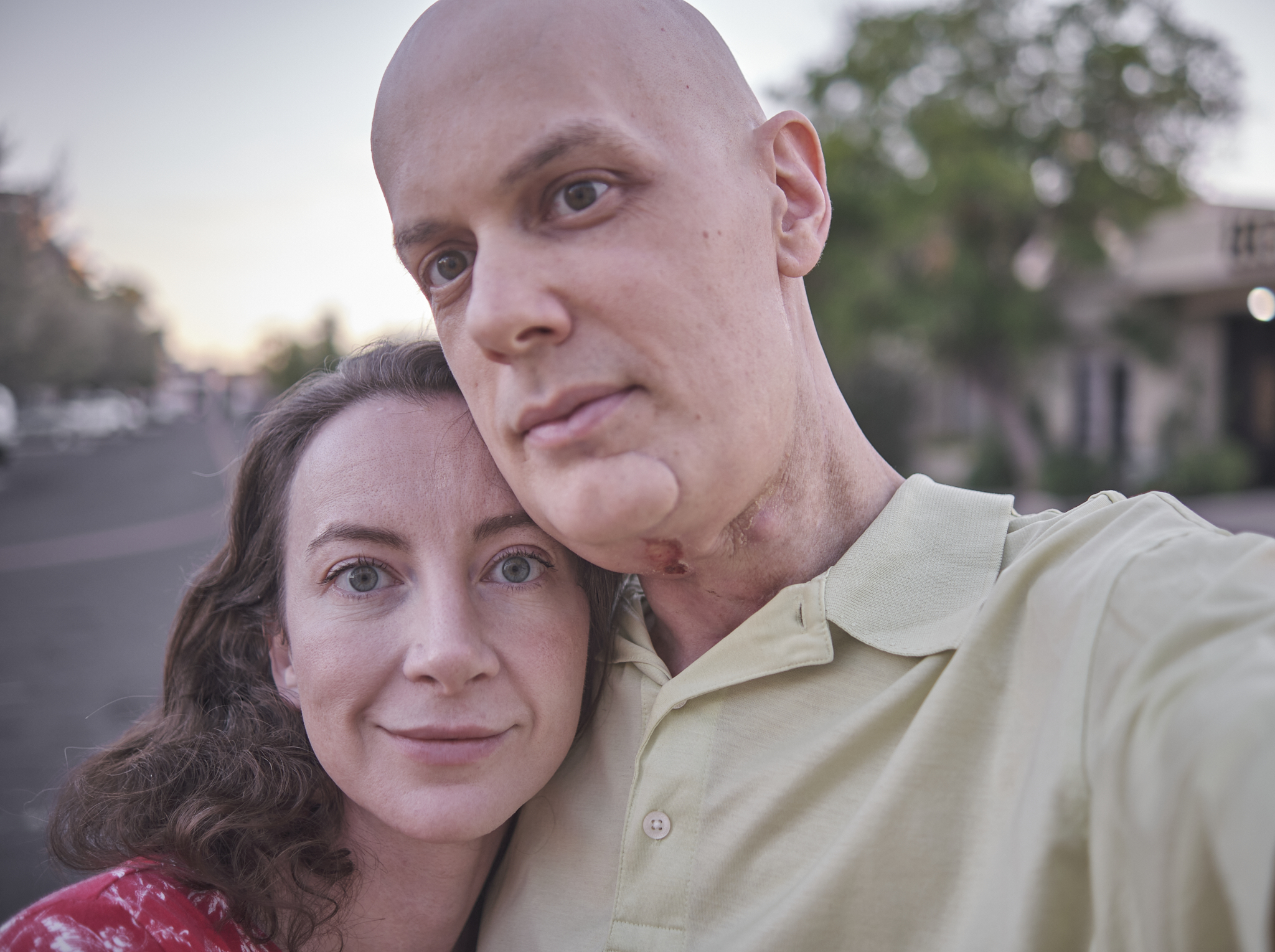


 To me, if you’ve not read nonfiction Amis, you’re best off starting with


 The Story's Story