Links: Making sense, the long game, schools and symbols, blogs and science and more

* From the New Yorker, “Making Sense of Modern Pornography: While the Internet has made porn ubiquitous, it has also thrown the industry into severe decline.” The article is not as good as it could be but it is worth reading.

* “How Bolivia became a drug war success story—after ousting Uncle Sam.”

* “Whatever We Dig Up, We’ll End Up Buried,” a fascinating piece whose title does not do it justice.

* American against itself: does the future belong to authoritarians, left and right?

* “A Librarian Left $4 Million to His University. It Spent $1 Million on a Football Scoreboard.” Relative to the total budgets of universities this is not so bad, and remember that fancy dorms are not the reason tuition is skyrocketing, but the symbolism of this is vital.

* “Trumpism Is the Symptom of a Gravely Ill Constitution: No matter what happens in November, the sickness may be terminal.” In other words, we may be reaching the limits of non-parliamentary political systems, though there is no good way to get from where we are now to where we might like to be.

* Someone followed one of my Amazon links and then proceeded to buy an ebook version of Booty Camp Dating Service (no link here, sorry, but I did find the product page description amusing).

* On the role of blogs in the science reputation crisis.

* Old book, new look: why the classics are flying off the shelves. Maybe. Dubiously.

* “Want to hold police accountable? The evidence is clear: film them. Always.” Otherwise, cops can basically do anything, up to and including murder.

* “A beginner’s guide to socialist economics” (and why capitalism kicks its ass).

* “The Game at 10: Reflections From a Recovering Pickup.” See also me on The Truth, Strauss’s latest book.

Briefly noted: The Magicians, re-read, and the TV show

The Magicians holds up well (and the link goes to my original review). What stands out still is the relentless focus of Quentin on happiness: I’d guess that the word appears at last a dozen times, and maybe more, in the novel—too often for anyone who is actually happy to think about it. Quentin’s melancholia is a sort that, if it can be cured, cannot be cured in the ways in which he is attempting to cure it. Don’t be fooled by the magical trappings: the novel is still primarily psychological.

Between now and then The Magicians has been made into a disappointing TV show; that show has high points and funny moments but it cannot overcome a fundamental problem that is illustrative for other writers: it advances all of the characters’ ages by five to ten years, which defeats much of the point and pleasure of the book. The book is about coming of age. It is stuffed with references like this one, from late in it, when (I don’t think this gives anything away) most of the main characters make it to Fillory: “For all the glory of their high and noble purpose, it felt like they were going on a summer-camp nature hike, or a junior high field trip, with the kids goofing on and the two counselors looking dour and superior and grown-up and glaring them back into life when they strayed too far” (one decent definition of being grown-up is that you are no longer concerned with appearing grown up (or not)). It is hard to feel glorious and “noble” when you are being supervised by adults who’ve really seen the world, as Dint and Fen (their guides) have, or apparently have.

Characters who are in the 22 – 30 age range are less likely to analogize their lives to summer camps or junior high field trips. This may seem like a minor point at first. In the show, the characters are still angsty, but at their age their style of angst no longer makes any sense, as they ought to have decently developed, decently resilient personalities by then. That they do not is the flaw the show never manages to overcome.

To be sure, The Magicians tv show does have excellent individual moments, but they don’t add up to much. The actor who plays Penny in particular is a standout (unfortunately, there is something off about the one who plays Quentin). Mostly, the show is an exercise in showing why HBO is so good at its shows and the SyFy channel is so not good at its shows. The Magicians as a TV show is a weak show with a strong one lurking obviously within it, which may be the most frustrating kind. The ones that are transparently bad are just passing phenomena. The ones that are transparently good offer their pleasures. The ones that could be good pain.

Links: Quiet revolutions, Mary Gaitskill, why tuition is actually rising, Love Me Back, and more

* “The Chevrolet Bolt Is a Quiet Revolution: It makes electric vehicles plausible in a way no other car has.”

* Me on on Gillian Flynn’s Sharp Objects, a book I didn’t get the first time I read it.

* “Fancy Dorms Aren’t The Main Reason Tuition Is Skyrocketing:” in public schools, it’s state-level cuts. In private schools, it’s tuition discounting: All those $40K – $60K prices are used to soak the rich families, while most students get discounts in some form.

* “Addressing Peak Energy Demand with the Tesla Powerpack,” or, consider the more direct headline: “Tesla Wins Massive Contract to Help Power the California Grid.”

* “Never the End: Jennifer Sears interviews Mary Gaitskill.” Her story collection Bad Behavior is still excellent; her novels strike one as over-long short stories.

* Merritt Tierce: “I Published My Debut Novel to Critical Acclaim—and Then I Promptly Went Broke: On the dark side of literary fame.” She wrote Love Me Back, and I wrote one of those positive reviews (which is at the link). This should be a cautionary tale for anyone who thinks that the conventional publishing industry will solve their financial problems.

* “The Thrill of Losing Money by Investing in a Manhattan Restaurant.” It is amazing to me that as many people as do go into restauranting.

* A theory of why people say or think they “hate” the media so much, which simultaneously implies that people love the media.

* “To the four policemen who beat me for checking the health of a sick man in their custody,” it is distressing that my first instinct is to add, “More of the usual” to this story (hat tip Chris Blattman).

Links: Efficient plot hypothesis, Megan Abbott, honey traps, affording to live, and more

* “The efficient plots hypothesis,” on how writers should deal with plot, among many other topics.

* How Megan Abbott Spends Her Sundays; you may remember her from this essay about her novel Dare Me.

* “Novels in Third Places: The Case for More Classrooms in Our Literature.”

* “The Brilliant MI6 Spy Who Perfected the Art of the ‘Honey Trap:’ During WWII, Betty Pack used seduction to acquire enemy naval codes.” She also worked to free Spanish fascists. By the way, John le Carré has a new biography out.

* “‘An aggressive proposal that touched a lot of nerves’: Why Gov. Brown’s plan to stem the housing crisis failed.” And why California is going to continue to be ludicrously expensive for a long time to come.

* “How Did G.M. Create Tesla’s Dream Car First?” An incredible, unexpected story.

* It’s time to talk about Byron again; a much more hilarious and fascinating piece than you may be expecting.

* Building bigger roads actually makes traffic worse.

* “Can U.S. Cities Compensate for Curbing Sprawl by Growing Denser?” So far, no; we are choosing sprawl instead.

* “Jay Z: ‘The War on Drugs Is an Epic Fail.’” Seems obvious, but when notable people say it it becomes news again.

Briefly noted: Swimming Across — Andy Grove

Swimming Across will probably be of niche interest to most, with those most interested likely to be the World War II crowd and the high tech crowd. I don’t know how much they intersect, but Grove survived the war to become a titan of the tech industry. Most who know of him don’t know that he and his family barely survived the Holocaust; Hungary, where Grove was born, allied with the Nazis, then got rolled over by Soviets. Grove eventually got out, and we are all the beneficiaries of his departure:

Stalin died in March 1953, and a gradual relaxation of totalitarian controls took place. Over the next few years, this process accelerated until it culminated in a rebellion against the Communist government—the Hungarian revolution of October 1956.

The revolt lasted for thirteen days and was then put down by Soviet armed forces. Many young people were killed; countless others were interned. Some two hundred thousand Hungarians escaped to the West.

I was one of them.

Oddly, despite Hungary’s long experience with totalitarianism, it has now elected, more or less fairly, a would-be dictator and strongman named Viktor Orban. One can imagine Grove’s reaction to Orban and the historical amnesia that allowed him to come to power, but after Grove got out he never went back. He says he isn’t entirely sure why. I would guess that someone forced to flee by the roof is unlikely to willingly return by the front door.

Swimming Across an oddly moving book, though the story is simply told. I wonder if Grove will be mostly forgotten over time, as most of us are, despite his contributions. Still, Swimming Across is of humane and technological interest; so far most of the books about the rise of the tech industry have not been of literary interest. A book like The Intel Trinity is intelligently reported but is no Making of the Atomic Bomb. Too bad. It’s still good. But not quite there, and not quite enough to go beyond a technical history. Swimming Across is closer to there—the “there” that is hard to define but easy to know once it’s seen.

Swimming Across may also be a good book for Americans to read right now, in the midst of declinist political narratives. When Grove arrives he writes:

The skyscrapers looked just like pictures of America. All of a sudden, I was gripped by the stunning realization that I truly was in America. Nothing had symbolized America more to me than skyscrapers; now I was standing on a street, craning my neck to look up at them.

He goes far; the U.S. is the fundamental platform on which he builds.

Since Grove’s death there have been many tributes to him; this is one of my favorite.

Links: The imagined self, cameras, interviews, Alan Moore, and more

* “Divine Indigestion: The endlessly fabulized American self,” on American novels, among other things.

* “With the iPhone 7, Apple Changed the Camera Industry Forever.” I still have an use an Olympus EM-10 II camera, which is horribly named but delightful to use.

* “To Launch a Nuclear Strike, Clinton or Trump Would Follow These Steps,” an utterly terrifying article: “About five minutes may elapse from the president’s decision until intercontinental ballistic missiles blast out of their silos, and about fifteen minutes until submarine missiles shoot out of their tubes.” Nonetheless I like to think that Americans would not follow launch orders unless they were sure that someone else had launched first or was about to do so.

* Why I don’t do more writer interviews.

* “Alan Moore: By the Book,” as hilarious and marvelous as you imagine it to be.

* Is This the Tipping Point For Electric Cars? Charging stations are proliferating.

* Despite SpaceX setback, future of private space exploration is bright.

* “If drivers expect to be prosecuted for committing offences [against cyclists] they suddenly stop committing them,” a totally unsurprising yet still important point.

* “I’m Joining Stripe to Work on Atlas,” which is actually about the crazy logistical hurdles facing small businesses.

* “How the careless errors of credit reporting agencies are ruining people’s lives.”

Idea Makers: Personal Perspectives on the Lives & Ideas of Some Notable People — Stephen Wolfram

Idea Makers is charming and not for everyone. Its introduction is accurate:

in my own life I”ve seen all sorts of ideas and other things develop over the course of years—which has given me some intuition about how such things work. And one of the important lessons is that however brilliant one may be, every idea is the result of some progression or path—often hard won. If there seems to be a jump in the story—a missing link—then that’s just because one hasn’t figured it out.

idea_makersThe book is also pleasant because Wolfram does not adhere to the false art-science dichotomy. He’s “spent most of my life working hard to build the future with science and technology.” At the same time, “two of my other great interests are history and people.” Idea Makers covers all four and to some extent asks where good ideas come from. Wolfram has met numerous interesting, unusual, and special people, and his stories are close the ideal ones you’d hear in a bar after two drinks.

Some sections introduce ideas that are counterintuitive or that I wasn’t aware of, like “mathematicians—despite their reputation for abstract generality—like most scientists, tend to concentrate on questions that their methods succeed with.” From this one might think the best way forward is to concentrate on developing new methods, or applying old methods to radically different fields. The quality of someone’s work may also not be apparent immediately, which is a better-known idea but still finds itself here: “At the time… Turing’s work did not make much of a splash, probably largely because the emphasis of Cambridge mathematics was elsewhere.”

Other thinkers were different: John von Neumann, for example, “was not particularly one to buck the system: he liked the social milieu of science and always seemed to take both intellectual and other authority seriously.”

Or:

Despite his successes, [George] Boole seems to have always thought of himself as a self-taught schoolteacher, rather than a member of the academic elite. And perhaps that helped in his ability to take intellectual risks. Whether it was playing fast and loose with differential operators in calculus, or finding ways to bend the laws of algebra so they could apply to logic, Boole seems to have always taken the attitude of just moving forward and seeing where he could go, trusting his own sense of what was correct and true.

Measuring the extent to which a person admires or respects received authorities / hierarchies against the extent to which a person disregards them could be an interesting project.

Each section of Idea Makers covers someone in science, math, or technology. This is not amenable to quotation, but each section feels the appropriate length and like it has the appropriate focus.

Some facts are simply tragic. Ada Lovelave died from what was likely cervical cancer; today the HPV vaccine largely protects its recipients from that disease. Most deaths are tragic on a local level; Ada Lovelace’s death is tragic on a global level, given how much she contributed and how much more she might have contributed.

Refreshingly, the quality of the physical book—its paper and binding—is unusually high, maybe because it’s put out by Wolfram Press: The company cares about longevity and quality in a way that most commercial publishers would do well to emulate. Stephen Wolfram himself often consults centuries-old pages, and in one illustration we see him using an iPhone to photograph an artifact. It is not a stretch to imagine him imagining someone photographing (or using some other advanced technology) to photograph the work he publishes today.

Links: Reading, advice, literature in other forms, schools, floods, cars, and other apocalyptic matters

* “My dirty little secret: I’ve been writing erotic novels to fund my PhD: Don’t breathe a word, my mentor advised me. They were right – I’ve had some odd reactions from the few colleagues I’ve told.”

* “We Are Reading Less Literature,” maybe. But: “The Internet Has Not Killed the Printed Book. Most People Still Prefer Them.” I wish printed books used better-quality paper.

* “The Art of Advice-Giving;” I’m somewhat baffled by the popularity of advice columns, since most of the people with problems seem to have obvious solutions to those problems. They’re like drop-dead dumb crime novels. Dan Savage is an exception, though.

* The literary fiction of investor letters. “Philosophy” may be a more appropriate genre.

* “Nicholson Baker, Substitute Teacher,” about what I think I’d feel if I taught K – 12. I also work for a lot of superintendents and school administrators in a grant writing capacity, and the experience has not given me great optimism about the quality of American education. It is striking how often promises to teach reading and writing effectively are themselves poorly written and argued.

* “The Campus Left and the Alt-Right Are Natural Allies: It’s unlikely that either movement has the cultural power or breadth of appeal to take down liberalism on its own. But taken together, they make a fearsome foe.” Too few people are standing up for freedom of thought and inquiry.

* “Flooding of Coast, Caused by Global Warming, Has Already Begun;” important and underappreciated news.

* “People in Los Angeles are getting rid of their cars.” I’m not sure I believe it.

* Even the New York Times editorial board has figured out that police unions impede justice and let bad cops proliferate. A rare victory for reason over politics.

* “Tesla envy grips Germany’s giants: But Porsche, Audi, BMW and Mercedes are ready to respond.” Good news.

* “A Return to Print? Not Exactly.” Or, don’t necessarily trust the headlines.

Links: Malthusians are wrong, the physical Internet, France, knowledge wants to be free, and more!

* “The New New Malthusians: The fear of too little gives way to the fear of too much.” It is possible that we’re on an S-curve ultimately headed to zero, but the history of catastrophic predictions has so far not been correct.

* “Architecture for the Internet: A look inside a carrier hotel in Manhattan — a building where different ISPs and network companies check in with one another.” See also Neal Stephenson’s insane, magisterial “Mother Earth Mother Board.”

* “‘Hot’ Sex & Young Girls” by Zoë Heller, a review that ought to be even harsher than it is: “History has taught us to be wary of middle-aged people complaining about the mores of the young. The parents of every era tend to be appalled by the sexual manners of their children (regardless of how hectic and disorderly their own sex lives once were, or still are)” and “neither [book] entirely avoids the exaggerations, the simplifications, the whiff of manufactured crisis that we have come to associate with this genre.” I suppose “the kids aren’t all right” is a genre that always has sold and probably always will sell.

* “Graduate Students, the Laborers of Academia;” academics, virtually all of whom favor unions in other industries, do not like them in their own. Schadenfreude.

* “OpenBSD 6.0: why and how,” about the operating system.

* “French PM suggests naked breasts represent France better than a headscarf;” I laughed.

* “Architecture for the Internet: A look inside a carrier hotel in Manhattan — a building where different ISPs and network companies check in with one another.”

* “Economists Profit by Giving Things Away:” In short, economists publish their work freely online and that work isn’t hidden behind pay gates. So that means anyone can get ahold of it, which isn’t true in many other fields. This gives economists outsized influence. I find the publishing practices of academics in English lit bizarre in this respect.

Candace Bushnell’s “Sex and the City” is distinctly contemporary

A reader suggested that in light of Date-onomics I get a copy of the original Sex and the City book. I see why. Though published in 1996, it feels shockingly contemporary, like something you’d read in New York Magazine, or Slutever, or 1,001 other places. If Sex and the City were a little more explicit (Bushnell prefers “unmentionable” to “penis” or “cock,” for example) and added in references to smartphones, Instagram, texting etiquette, and online dating, it would still have the basic set of issues and problems and challenges and behaviors of 2016. The tone of the stories feels bloggy and podcast-y (which is a descriptive observation, not a slur).
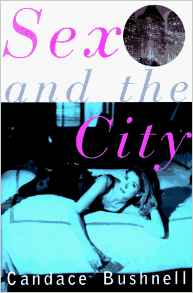
sex_and_the_cityOn the Internet you really can say whatever the fuck you want, including “fuck,” and becoming accustomed to that makes Sex and the City feel a little linguistically reticent. To be sure, it goes a lot of places in terms of description but it doesn’t get to all the explicit places the online-only writers do; Sex and the City generally stops at the bedroom door and resumes at the restaurant recap the next day.

Being originally part of a newspaper also means that the lows aren’t quite as low as the online writers, many of whom don’t have anyone to edit their material or tell them that piece x is filler and ought to be cut. But they also don’t have editors to tell them that piece x is in “bad taste,” which means that bad taste as a concept barely exists (here I am tempted to list some examples, but if you keep your eye around the Internet you’ll find some on your own). I hate the word “heteronormative,” but Sex and the City is more heteronormative than online writers are.

What else? Some modern books about love, sex, and dating often have a harder data edge: that’s the point of Dataclysm and Date-onomics. The big way our knowledge has collectively grown in the last twenty years in this domain comes from the revealed preferences of online dating. That lets us know things less through gossip and more through how people behave, at least in online interactions.

It is common to read claims about how the Internet has changed everything, and while data tells us a lot, the basic challenges that emerge in Sex and the City remain. Still, I prefer a Straussian reading of Sex and the City in which guys read the books in order to discover how they should present themselves, market themselves, and be.

Perhaps the book’s most important theme is the need for novelty and stimulation, maybe because novelty-seekers are drawn to New York, despite the city’s costs and many inconveniences. Boredom is a great sin: “You get tired of being around anyone after a while” (63). Or: “Miranda checked the labels: Savile Row—boring” (90). Or: “While many women would have killed to have a date with Scotty, the TV producer, Camilla told me she had been bored” (105). Or: “I already have too many Chanel bags. They bore me” (109; what do you do for the person who has everything, which is a larger number of people than is commonly assumed?). Or: “Where’s the new place to go? I want to make sure my ward here has a good time this evening. I think she’s bored” (141). Or: “The truth is, he bored me” (198).

Boredom is part of a simple paradox at the heart of many of the stories—a paradox prevents some of the characters from getting off the party carousel: “this was the kind of life she’d grown up believing she could have, simply because she wanted it. But the men you wanted didn’t want it, or you; and the men who did want it were too boring” (85). And there is no way in Bushnell’s world to avoid that paradox. Men might want to think about it too, and how it affects their own choices. The characters in Sex and the City are experiencing the problems and fruits of freedom: “[Edith] Wharton thought no one could have freedom, but [Henry] James knew no one wanted it,” and “Freedom’s unpalatable qualities are hard to accept.” So too is accepting the choices one makes. In first three quarters of the book, Samantha Jones makes occasional appearances to disparage her dates and men in general. By page 181, “Lately, Sam had been complaining about not having a boyfriend.” Er. She spends most of book engaging in boyfriend-incompatible thoughts and behaviors.

The women in Sex and the City are chronically outraged by male behavior while chronically and simultaneously rewarding it with sex. The phrase “revealed preferences” is relevant.

Snobbery is ever-present (“She’s like an auto mechanic from nowhere’sville”), almost a sport, in a way that would be hard to take, at least for me, in real life. The brand-name snobbery is much more irksome than much of the bedroom material.

Used copies on Amazon are cheap and plentiful, for good reason. It’s a fun, historically interesting read, but once is enough. Re-selling it is too time consuming for me, but I’m donating it to a thrift shop which will probably recycle it back onto Amazon.