Links: Russia, nuclear fusion, phage therapy, diamonds, and more!

* “The dying Russians,” from 2014, a tremendously sad piece. Yet it also has important geopolitical implications for the U.S.: Russia is a shrinking country almost entirely dependent on oil. As time goes on, the U.S.’s position gets better and Russia’s gets worse.

* The Input Club: Meet The Guys Looking To Disrupt The Keyboard Industry. See previous keyboard reviews.

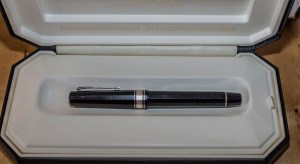
the pen is mightier?

* After 60 years, is nuclear fusion finally poised to deliver?

* “Making sense of modern pornography,” from the New Yorker and likely SFW.

* “Will Viruses Save Us From Superbugs? When antibiotics failed a severely ill patient, it was a pond virus that saved him.” Beautiful, inspiring, hopeful.

* “An Unsung Hero of the Nuclear Age: Maj. Harold Hering and the forbidden question that cost him his career.” Brilliant, scary, important, and tied to “Trump fears and the nuclear apocalypse.”

* Lab-Grown Diamonds Come Into Their Own.

* Russia plants porn in dissidents’ computers. I will take this opportunity to recommend Three Felonies A Day (again). Theoretically, if someone—anyone—sends a nude photo of a person under age 18 to your phone, you are guilty of a felony. Something to think about in an age of ever-expanding government and police powers.

* “Eight miles of water: underground with Manhattan’s new aquatic lifeline,” an awesome infrastructure project that ought to get more attention.

Briefly noted: Dreamland: The True Tales of America’s Opiate Epidemic — Sam Quinones

Dreamland is well-reported and consistently interesting, but its chapters are chopped into tiny pieces that interrupt narrative flow—the word dream is disrupted. Many if not most chapters are around 800 to a thousand words, yet the book covers several important threads: the rise and marketing of Oxycontin maker Purdue Pharmaceutical; the drug sales practices of Xalisco natives who figure out how to game the U.S. legal and immigration systems; and the insatiable love Americans have for drugs.

dreamlandDespite the chopped narrative problem, however, Dreamland covers important developments around opioid addiction and its origins. The better sections are arresting; for example, the description of the Xalisco traffickers could be from a business case study, as the Xalisco organizations respond to a number of different factors: supply and demand, a difficult regulatory environment, and unique managerial challenges (the best business case studies are themselves little novels, with the artistry that implies).
In many forgotten cities, most of the wealthy top has left or disappeared, most of the productive middle has moved to a relative handful of cities and suburbs, and many of those who remain are poor. While elite cities accrue service-sector advantages and develop information economies, many other places that existed for agriculture or manufacturing are suffering, and there’s no real way to help them. As a result, “Remaining behind was a thin slice of educated people. They found work in the schools or the hospitals, in some way or other tending to those for whom the factory closings were the beginning of an American nightmare.” “Nightmare” is too strong a word here—one thinks of Behind the Beautiful Forevers—but the challenges seem insurmountable over the short term.

“Nightmares” is not the only linguistic misfire. Some of the writing is cliché: “Two Portsmouths exist today.” You will have heard the “two [geographic area]” terminology. Some sentences are merely banal. Too many say things like, “I learned, too, that envidia—envy, jealousy—was a destructive force in the rancho.” Is there any society for which that is not true? Every society experiences envy, hate, jealousy, striving, signaling, and so on.

In the Two Portsmouths,

One is a town of abandoned buildings at the edge of the Ohio River. The other resides in the memories of thousands in the town’s diaspora who grew up during its better years and return to the actual Portsmouth rarely, if at all.

Heroin remains a statistical phenomenon for me, maybe because of where I live. I’ve never known anyone who has admitted to doing it and I’ve never been offered it. No one I know has died from it. It’s just… out there, somewhere, mostly in the media (which is maybe a reason to read less news, not more). Yet it’s killing tens of thousands of people a year. Dreamland takes this data from statistical abstraction to specific people.

Be ready to notice more after you’ve read Dreamland. For example, the Wall Street Journal just published “For Small-Town Cops, Opioid Scourge Hits Close to Home,” this time about a common drug named fentanyl.

Dreamland’s ending disappoints, maybe because there is no real solution short to the problem. Decriminalization and better treatment options may help but will not cure. The policy recommendations Quinones offers amount to “more of the same.” We may see improvements at the margins but are unlikely to see a solution to the problem of humans liking mind-altering substances.

Here is Isaac’s take on Dreamland. Here is Tyler Cowen on rural America, suggesting we “Support a voluntary temperance movement for zero alcohol, zero drugs.” It’s not for me but I take the reasoning seriously and it’s clear that large numbers of people can’t handle alcohol or drugs, for whatever reasons, and that the pharmacological utopians of the ’60s and ’70s were wrong, or wrong about the experiences of many people.

Links: The post-literacy age, Eco on fascism, literary studies, everything matters, books, and more!

* “Donald Trump, the First President of Our Post-Literate Age.” I’m reminded too of “Twilight of the Books,” from 2007 and now bizarrely, powerfully prescient.

* A charming guide to choosing books.

* “How Stable Are Democracies? ‘Warning Signs Are Flashing Red.’

cute_dog

* A conversation with Martin Amis, which is really excellent. See here for another.

* Umberto Eco on fascism, from 1995, an essay that I never thought would be relevant again but here we are.

* There’s a reason authoritarians usually begin by assailing the press.

* “What’s Wrong With Literary Studies? Some scholars think the field has become cynical and paranoid.” Finally! Good news.

* Everything mattered: lessons from 2016’s bizarre presidential election.

“David Brooks and the Intellectual Collapse of the Center”

David Brooks and the Intellectual Collapse of the Center” is excellent. I may be a small part of that intellectual center, to the point of writing a presidential endorsement post in October—something I’ve never done before, because the climate has never seemed to merit it. But given the potential for catastrophe, it seemed necessary. Some readers have complained about the increasing amount of political content on The Story’s Story, but given the worldwide political darkness that has been descending it seems necessary to attempt to understand it. I would like to go back to mostly ignoring politics apart from straightforward analysis.

And the problem of false equivalence is real, as Chait makes clear at the link: “official centrists would simply relocate themselves to the midpoint of wherever the parties happened to stand.” Yet official centrists should do more than triangulate. They (or we) haven’t done that. They (or we) have also been somewhat asleep over the last six or so years.

I certainly have been and am now attempting to make up for that slumber, in part because I’ve been so wrong about what I thought was politically possible or feasible. Though I’ve read The Myth of the Rational Voter, I didn’t entirely internalize its lessons. Though I’ve read about the extent to which irrationality pervades most human cognition, I didn’t think that we’d become so wildly irrational on a large-scale, public basis. Though I understand that most people know little about history, I didn’t appreciate the extent to which “little” really means “nothing.”

But knowing and understanding things may not matter very much, since we may be living in a post-literate age and I’m writing material that may go largely unread, especially by the people who most need to understand what’s happening.

Life: Jokes and philosophy edition

“[Heidegger’s students] found him funny, but he did not share the joke because his sense of humour was somewhere between peculiar and non-existent. It didn’t matter: his clothes, his rustic Swabian accent and his seriousness only heightened his mystique.”

—Sarah Bakewell, At the Existentialist Cafe, a delightful book I almost didn’t read and a much more pleasurable, informative read than the philosophers it describes.

Links: Political failure, love in the age of smartphones, academic influence, space, and more!

* “What Americans Against Trump Can Learn from the Failures of the Israeli Opposition.”

* “She phubbs me, she phubbs me not: Smartphones could be ruining your love life.” See also me, from 2012, “Facebook and cellphones might be really bad for relationships

* “Maybe America is simply too big,” something I too have been wondering.

* Potential Conflicts Around the Globe for Trump, the Businessman President.

* “Goodbye to Barack Obama’s world: It is the failing of liberal technocrats to think reason governs how people act.”

* Let’s colonize Titan.

* “Oil Industry Anticipates Day of Reckoning: Prospect of ‘peak demand’ prompts debate and long-term planning by global producers.” Good.

* “College Students Want to Kill Foreign Language Requirements.” It would seem that whatever utility it once served has gone away, and the arguments as to why it should remain are weak.

* Why academics are losing relevance in society – and how to stop it.

* “Trump’s lies have a purpose. They are an assault on democracy.

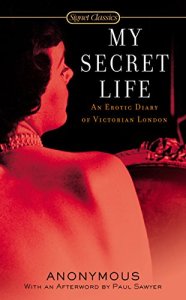
My Secret Life — Anonymous

My Secret Life is a bizarre, disturbing, amazing, fascinating work of Victorian-era pornography. It is anachronistic to label it with a “trigger warning” but it is the rare work that actually deserves the warning; it recounts in great detail the author’s erotic experiences from youth to old age. My Secret Life feels like a book sort of thing that probably wouldn’t get assigned to undergrads today. Still, it is strange and curious enough for me to write about it here (I learned of it via The Voyeur’s Motel, a book that may be considered part of the same genre as My Secret Life). Originally published in or around 1902, it was 11 volumes (!), and the abridged edition I linked to is a single volume that still feels exhausting by its end.

my_secret_lifeIt’s hard to believe that all of My Secret Life is true, and it’s also hard to believe that it is wholly imagined. Today one might call it “creative nonfiction,” which seems to be a phrase that loosely means or connotes truthy, or specious, or “I need to make shit up to make the narrative more compelling.”

The interest in and curiosity about matters generally veiled was great then and remains great now, though today it maybe takes different shapes. There are ceaseless reportorial sections in My Secret Life, and moments when the narrator finds that someone, “One evening being unusually communicative,” explained the matter of “buggery.” That explanation comes from a woman named Camille; the narrator “went there when I wanted a quiet chat and information about sexualities.” That interest appears insatiable, even as its nuances eventually dull the reader’s senses due to repetition.

The need to report and imagine seem relentless. During one extended period with a single woman, the narrator says that “when not thinking of Charlotte, [I] spent my time in writing baudy words and sketching cunts and pricks with pen and ink.” So he is either engaged in the act or considering it in some other way. His work is almost Internet-ready, going even to anonymity.

Some challenges seem eternal, as when the narrator praises a women in this way:

Moreover she was not always plaguing me for money—asking me to pay this, or to lend her to pay that—which is the common habit and trick of harlots from high to low—I felt at sea when Sarah was gone, and recollect that for a month or so I was chaste.

That “chaste” month seems unusual in the narrator’s life, though his whole life seems unusual; that it may be more usual than is usually assumed may be part of the book’s frisson. Still, one hopes that the many vile things the narrator does are not eternal.

My Secret History is an easy book for skipping sections, as the narrator never seems to grow, change, learn, or seriously struggle. As he is at seven, so he is at seventy. But maybe the larger point is that the nature of humanity as a whole may change less than we might like, and that non-technological progress is rarer than we like to think and perhaps barely existent at all.

Links: The warm north pole, resistance done right, the new intellectuals, and the need to read

* “The North Pole is an insane 36 degrees warmer than normal as winter descends.” Which may be the most important story on the planet right now—not the election, not Apple’s latest moves, not whether some celebrity is sunbathing topless. And: “An expert’s view on unusually warm Arctic temperatures.” In the 2030s we will not be able to say we weren’t warned.

* “The End of Identity Liberalism: Our fixation on diversity cost us this election — and more.” Unlikely to be true and simultaneously long overdue.

* Luigi Zingales: “The Right Way to Resist Trump.” Five years ago he wrote “Dodging the Trump Bullet: Americans—and Republicans—are lucky that the Donald has bowed out.” If I saw that earlier piece at all I probably laughed at it. I was wrong. Here is a conversation between Luigi and Tyler.

* “NIH Scientists Identify Potent Antibody That Neutralizes Nearly All HIV Strains.”

* “The New Intellectuals: Is the academic jobs crisis a boon to public culture?“, surprisingly good and captures many of my feelings about peer review. It’s amazing to me that more people don’t understand the opportunity cost of grad school and simply start by teaching high school instead, which is far more remunerative than attempting to become a humanities professor (for most people).

* “The President and the bomb.” If you aren’t scared you aren’t paying attention.

* How the thoughts and actions of J L Austin live on. Austen’s book How to Do Things with Words is one of the few good things that came out of grad school.

* “Blame the Banks for All Those Boring Chain Stores Ruining Your City.” Title sounds stupid but the content is not.

* The Need to Read.

Perfect Rigor: A Genius and the Mathematical Breakthrough of the Century — Masha Gessen

Perfect Rigor is the best and most fascinating book I’ve read recently, and it is the sort of book I often seek but too rarely find. The story concerns Grigory Perelman, the man who solved the Poincaré Conjecture and whose eccentricities and life history may or may not be related to his mathematical faculty but certainly make for bizarre, enlightening, and entertaining reading.

perfect_rigorPerelman was born into Soviet Russia, a place where the professional study and practice of math were frequently under peril. Soviet math survived Stalinism and the horror of the Soviet Union more generally in part from luck and in part from need, but they suffered from being cut off from the rest of the math world. Still, as Gessen writes:

mathematicians as a group slipped by the first rounds of purges because mathematics was too obscure for propaganda. Over the nearly four decades of Stalin’s reign, however, it would turn out that nothing was too obscure from destruction.

Plus, modern wars cannot be fought successfully without mathematicians. Many, many mathematicians. Math has another useful property from the perspective of Communists living in a resource-deprived, poorly organized society: good math can be done even in conditions of relative privation (which may not be true of, say, engineering).

So math in Russia survived Stalin, even while many other fields suffered. There is a fascinating historical counter-narrative in which Russia evades Communism and Germany evades Nazism via World War I not happening, or not happening the way it did. In that alternate world, tens of millions of people live and contribute to the betterment of humanity. Instead of that world, however, we have the world that World War I bequeathed us and the countless people lost to murderous state machines.

Perelman and his direct family at least were not killed. And in the Soviet Union, math continued to be practiced freely, or mostly freely:

In the after-hours lectures and seminars, the mathematical conversation in the Soviet Union was reborn, and the appeal of mathematics to a mind in search of challenge, logic, and consistency once again became evident. “In the post-Stalin Soviet Union it was one of the most natural ways for a freethinking intellectual to seek self-realization,” said Grigory Shabat, a well-known Moscow mathematician. “If I had been free to choose any profession, I would have become a literary critic. But I wanted to work, not spend my life fighting the censors.”

It was good to do math because there was so little else to do. The many pleasures offered by American or Western European work were not available. Creative freedoms were minimal. Math was among the few places a person could be creative.

Some sections Perfect Rigor are just novel and unknown to me, descriptions of a sub-culture that I’d never thought properly about:

Competitive mathematics is more like a sport than most people imagine. It has its coaches, its clubs, its practice sessions, and, of course, its competitions. Natural ability is necessary but entirely insufficient for success: the talented child needs to have the right coach, the right team, the right kind of family support, and, most important, the will to win. At the beginning, it is nearly impossible to tell the difference between future stars and those who will be good but never great.

I wonder how necessary “the will to win” is, especially given how much later in the book Gessen describes the professional world of math in different terms: “The mathematics community in the United States, and even the world, is very small and very peaceful.” Still, leaving that potential issue aside, the analogy to sport is a powerful one, since sports are more familiar to the average person than math.

More details: Gessen writes of herself:

My own first-grade teacher, in a neighborhood on the outskirts of Moscow that looked just like Perelman’s neighborhood on the outskirts of Leningrad, actually made me pretend my reading skills were as poor as the other children’s, enforcing her own vision of conforming to grade level.

Russia’s many afterschool math clubs did non conform to this bizarre, Harrison Bergeron vision. Which may be why Russia could continue to produce prodigious mathematicians even as much of the rest of its society decayed under the cruelties and absurdities of Communist rule. Those cruelties and absurdities are well-known, and they emerge in the way the Soviet Union sought contradictory goals:

The entire Soviet system of secondary education was based on the concept of uniformity: everyone was to be taught the same thing at the same time, using the same textbooks. But the Soviet Union still craved international prestige—in fact, that need became more and more pronounced as the technological rivalries of the second half of the century heated up.

Uniformity and excellence are mutually exclusive. As often happens, when ideology and reality diverge, ideology gives way, as it did to some extent for Perelman’s school. His school

let him avoid confronting the fact that he lived among humans, each with his or her own ideas and thoughts, to say nothing of emotions and desires. Many gifted children realize with a start as they mature that the world of ideas and the world of people compete for their attention and energy.

Perelman, it appears, never had to choose one over the other. He’s spent his life firmly in the world of ideas, rarely dealing with the world of humans. It is hard to say whether the world or humans or ideas is stranger; presented properly, either can seem strange. Perelman’s life seems strange but also pure and beautiful in a way that I would at times like to emulate but cannot, any more than I think he could emulate my life.

Perfect Rigor speculates some about Perelman’s motives and personality, or personalities, but cannot know them certainly. Sergei Rukshin is Perelman’s first serious math coach, and even very early he is happy with one of Perelman’s interests, or lack of interests: “He was never interested in girls,” unlike many of his classmates, who were caught “doing something as undignified and distracting as kissing a girl.” Life is about trade-offs and on some level Perfect Rigor encourages us to consider some of the tradeoffs some high-level mathematicians make (though not all: Feynman, for example, devotes some stories in Surely You’re Joking, Mr. Feynman! to understanding women).

Maybe lack of sexual interest is in part from the demand side as much as the supply side. Perelman himself is, when he is young, “an ugly duckling among ugly ducklings,” though that changes a little when he is older. One wonders about the links, if any, between physical appearance and math (or other intellectual) skill. The vigorous rejection of “surface” matters seems common among high achievers, though I wonder if I’m letting myself be subject to the availability heuristic.

Used copies of Perfect Rigor on Amazon are gloriously cheap. I don’t know how I missed the book when it first appeared in 2009.

Trump fears and the nuclear apocalypse

In a best-case Trump scenario, he bumbles around for four years doing not much except embarrassing himself and the country, but few substantive political changes actually occur; in the worst-case Trump scenario, however, Trump starts or provokes a nuclear war. Nuclear war is very bad and could conceivably extinguish the human race or at least wipe out the United States, as well as other countries. I still view nuclear war as unlikely, but it’s far more likely than I would’ve judged it three weeks weeks ago—and when I’ve mentioned increasing fear of nuclear war I’ve gotten a weirdly large amount of pushback.

Most of that pushback seems like wishful thinking. To understand the danger, Fred Kaplan’s The Wizards of Armageddon is a good book about nuclear policy and history, but Command and Control: Nuclear Weapons, the Damascus Accident, and the Illusion of Safety by Eric Schlosser is probably better for a first introduction to the subject. Command and Control details the (scarily) short lines between the president and launching, or attempting to launch, nuclear weapons is appallingly short.

To understand why Trump is scary, it is necessary to understand two things: 1. That in theory the president is supposed to be able to order a nuclear launch anywhere, at any time, and have missiles in the air within 30 minutes and 2. The way seemingly minor quarrels among countries have sometimes led to historically catastrophic outcomes.

Let us deal with the first point: while the president is supposed to be able to order an unprovoked nuclear attack at any time, there is at least some precedent for a gray area around nuclear weapons:

[I]n 1974, in the last days of the Watergate scandal, Mr. Nixon was drinking heavily and his aides saw what they feared was a growing emotional instability. His new secretary of defense, James R. Schlesinger, himself a hawkish Cold Warrior, instructed the military to divert any emergency orders — especially one involving nuclear weapons — to him or the secretary of state, Henry A. Kissinger.

It was a completely extralegal order, perhaps mutinous. But no one questioned it.

“Although Schlesinger’s order raised questions about who was actually in command,” Eric Schlosser writes in “Command and Control,” a 2013 book, “it seemed like a good idea at the time.”

This is at least a little heartening, as it implies that the generals in charge of executing nuclear launch commands simply will not do so unprovoked. The human nuclear bureaucracy and apparatus is itself hopefully not suicidal and homicidal. Still, that is a slender hope, as Alex Wellerstein describes in “The President and the bomb.”

To be sure, it’s also possible that Obama, Biden, and for that matter someone like Paul Ryan is having quiet conversations with the Secret Service and the military about what to do with a rogue nuclear launch order. Those quiet conversations might be unconstitutional, but if the choice is between constitutionality and the death of everyone and everything, one should hope that the few people charged with mechanically carrying out orders will second-guess those orders.

Beyond that, the history of World War I should scare us. World War I was a catastrophe that killed tens of millions of people and it was a war that no one wanted. I doubt most people have the faintest idea how World War I got started, and if you want to annoy your friends try asking them. Hell, I’m not even sure I could give a good answer. Still, consider some background reading:

* This is Tobias Stone’s “History Tells Us What Will Happen Next With Brexit And Trump.”

* Here is one description of “How Trump Could Realistically Start a Nuclear War.”

* Here is “The real danger,” also about the possibility of direct, great power wars.

* At the same time, see “Commander-In-Chief Donald Trump Will Have Terrifying Powers. Thanks, Obama.” It can be fun to have secret, unchecked powers when your guy is in office, but is incredibly dangerous when the other guy does.

Almost everyone has forgotten about World War I, but in the short prelude to it people acted like it was normal. Check out the sleepwalking into war described in the Hardcore History podcast, around 1:38. In the horrible late July and early August of 1914, people went on holiday and shopkeepers assured their customers that nothing untoward would happen (One sees similar noises in the normalization of Trump). World trade had been expanding for decades; everyone “knew” that war would be suicidal; it seemed implausible that the death of a minor noble would lead to conflagration.

A similar set of circumstances could happen today. The flashpoint could be in the South China Sea, which is a disputed area. It could be the Baltic states. It could be Syria. It could be almost anywhere that the U.S. could pointlessly clash with China or Russia. Trump is obsessed with revenge and in a skirmish or dispute between U.S. forces and Chinese or Russian forces, which escalates rapidly in a tit-for-tat fashion.

Like this scenario: a Chinese ship fires on a U.S. ship in the South China Sea. The U.S. ship flees with a few causalities and Trump orders an attack on a Chinese ship in retaliation. The ship sinks, and China cannot possibly accept disrespect and in turn sinks a sub and imposes trade sanctions. The U.S. rallies to the flag and does the same. Eventually China uses a supercav missile to take out a U.S. carrier.

One could spin out an infinite number of similar scenarios, which may develop very quickly, over the course of days or weeks. Tit-for-tat may be an attractive strategy for small bands of humans or proto-humans in hunter-gatherer or agricultural societies fighting each other. It could end the world in the nuclear age.

I’m not too worried about Trump and domestic policy. He is likely to do some bad and foolish things, but they are unlikely to be existential threats. I am worried about Trump and the end of the world. We haven’t even discussed the possibility of a flu pandemic or some other kind of pandemic. The Ebola crisis was much closer to a worldwide catastrophe than is commonly assumed now. At the start of a flu pandemic the United States may have to lead world in a decisive, intelligent way that seems unlikely to happen under Trump.

Maybe nothing catastrophically bad will happen. I hope so and think that will be true. But to pretend he is a “normal” politician (or to vote for him) is to be willfully blind to history and to the man himself. In darker moments I wonder: maybe we don’t deserve democracy or freedom. Those who will not even vote for it—and half the potential electorate didn’t vote—don’t deserve it. Maybe institutions will resist Trump for the next four years, or resist his most militaristic and dangerous impulses. Maybe they won’t.

Again, I think the likely scenario is that Trump bumbles for four years and gets voted out of office. But nuclear war is too far outside most people’s Overton window, so they won’t even consider it, much as the total destruction that preceded World War I was inconceivable by any of the belligerents—had they realized it they would not have marched off to war, and many of the soliders themselves would have dramatically resisted conscription; they marched to their own deaths.

If you are not scared you’re not paying attention.

We are one black swan event from disaster. The last worldwide, negative black swan event was arguably World War II. Perhaps the 71 years separating us from then is long enough to have forgotten how bad bad really is.

I don’t expect this post to change any minds. All of the information in it was available three weeks ago and that didn’t change shit. We’re surrounded by what political scientists politely call “low-information voters.” This is a post based on logic and knowledge and logic and knowledge played little role in the election. Maybe, outside of elite spheres, it plays little role at all in human life. I only hope that the apocalyptic scenario doesn’t come to pass. If it does, “I told you so” will be no comfort, as it wasn’t in the aftermath of World War I. In that war the prophets and historians were ignored, as they were in the 2016 election. Let us pray that some of the prophets and historians are wrong.