Are you taking care of yourself?

This essay is by my wife, Bess.

“Are you taking care of yourself?” Francesca asks. It’s a fair question: my husband, Jake, is dying of a metastasizing squamous cell carcinoma. I say I don’t know whether I’m taking care of myself, and Francesca asks if I’ve gotten enough “me time.”

I think Francesca means: Am I sleeping? Eating? Bathing? I sniff an armpit, and peek down at my waistline. I’m down to 116 pounds, a weight I haven’t seen since senior year of high school, but my hair isn’t harboring small critters and I smell nice, like Dr. Bronner’s peppermint body wash.

I’ve heard the questions about taking care of myself before, but when well-meaning friends ask if I’m taking some time for myself—an analogue of asking if I’m taking care of myself—I laugh. My big concern is that I’m about to get way too much time to myself.

“I bet you look killer in a swimsuit,” Francesca says, to make me smile, not because she means it. She’s Italian, so what she really means is that if she weren’t 2,500 miles away, she’d force feed me pasta until I felt the full force of her calories and affection (which are the same). Only a select few people have asked “Are you taking care of yourself?” and meant it. Some know that my new figure is secondary to the stress and starvation diet I’d accidentally adopted when Jake’s tongue was surgically removed due to a recurrence of that squamous cell carcinoma, and they still say I look good from having lost weight.

Like it’s a consolation prize.

I defend myself to Francesca, saying, “Listen, not a single tooth has fallen out in the last three months, and it appears that I still have most – but realistically, not all – of my hair. Which has a white patch now.”

She makes a clucking sort of tut-tut sound, like I’m a simple child, and asks, “How can you take care of him if you don’t take care of yourself?”

Easily. I like spending time with him. I worry that, soon, he’ll either be killed by cancer or suffer so much that he justifiably chooses to exit. So many people have equated self-care with me taking some time away from the apartment, the hospital, the appointments—time away from Jake—that I get the impression a surprisingly large number of people don’t much like their spouses or long-term significant others. Being away from him, especially right now, isn’t a relief, it’s punitive. Francesca and I chat some more and she admonishes me to make sure that someone takes care of the “caregiver.” And then Francesca goes back to her life and I go back to reading, researching, trying to find some magical combination of medications or the perfect clinical trial that might save Jake. I want to fix. I want to find the right thing to do.

And, I believe, so do the people asking me the dreaded self-care questions. They are nice people who care about me. They want to  figure out the right thing to do and to say.  They also want to fix it. A clinical trial might help, but barring that, the best most of us can do is sit with the situation and be present. Sometimes, most of the time, there is no right thing to say. And that’s fine. Some situations suck and there are no words to make them not suck and there is nothing people can do to make them not suck. American culture infuses us with the desire to help and fix and suggest (things I’ve done too), but some situations can’t be helped or fixed or suggested away, and the hardest thing to do is to sit in discomfort with the truth.

On a recent evening walk with one of our closest friends, the day before that friend left to go home to New York, Jake said to him, “I’m sorry if I’m not very good at saying goodbye, but it’s my first time dying, I’m learning as I go.” It’s my first time doing this, too. At first I’m not sure what to say to friends who want to know if I’m taking care of myself.

Lately, I’ve been thinking a lot about what “care” means. When (numerous) hospital people call, they usually ask if I’m Jake’s “caregiver.” This translates, I guess, into wanting to know if I’m the person who makes sure he doesn’t pass out when he gets up to go to the bathroom after chemo, grinds his meds for his peg tube, and worries about keeping the areas around various post-op wires and tubes clean. They confirm that they can call my number to schedule appointments, review test results, and schedule delivery of medical supplies.

They’ve never asked me if I am the person who takes his hand in the dark while he’s sleeping and whispers to him that we’re connected forever by an eternal golden braid. He doesn’t have a tongue any more, having had a “total glossectomy”—which is medical terminology for “cut out the whole tongue”—meaning he can’t chew at all, or swallow normally. They never ask if I’m the person who burst into tears with joy when he learned to swallow again, a little bit, and managed to get down a pureed cookie a few days ago; he actually tasted the cookie with just the tastebuds left on his hard palate and esophagus. They’ve certainly never asked if I am the person who tells him that not only is he loved, but who gives him a solid grope and reminds him that he’s still very, very sexy.

You can hire “caregivers” online. It’s a job description consisting mostly of a hospital’s definition. I don’t think—though I could be wrong—that they provide a few of the services I render, but not the best ones, not the loving ones.

If caregiving is officially about physical and administrative upkeep—what do people think I, a person who doesn’t pass out when she goes to the bathroom, can swallow pills, and has no tubes to clean—need to do to care of myself?

What secret things do I need to whisper to myself in the dead of night to keep from falling apart?

Because that’s really what the question about taking care of myself is: What am I doing to make sure that I make it through this experience in one piece? For him, and for myself.

If the internet and well-meaning friends are to be believed, the well from which I give is running dry, but I’ll have more energy after a massage, a glass of wine with a girlfriend, a dinner out, a few hours a week in the gym to get some endorphins going, and a therapist. A therapist who’ll charge me $250 and hour to tell me I should sleep, get a massage, a glass of wine with a girlfriend, and exercise to get some endorphins going.

“No, you’re wrong, the therapist will help you figure out what it is you need,” one of my other well-meaning friends says. Well, what I need is for Jake to not die. And that is probably outside of the therapist’s scope of practice. But because I love this well-meaning friend, I say, “I’ll think about it.”

I think I find the question of “self-care” so absurd because no amount of meditation or yoga can or will change the fundamental truth: watching the person you love die means accepting that parts of you die with them. You can’t save them. You can’t save yourself. I will never be the same. I suspect accepting that truth is the most caring thing I can do for myself.  

The night before Jake went into the hospital to have a massive surgery to remove his cancerous tongue (a surgery that involved splitting his lip and jaw in two, flaying his face and neck open, and replacing his tongue with a “flap” of tissue from his thigh), we got married. He was having debilitating headaches and I wasn’t convinced he was going to make it through the night, or through surgery; I’ve never been so relieved to see another human being as I was when I saw his swollen, anesthetic-addled face in the post-anesthesia care unit (PACU). Alive.

All I wanted to do was sit sentinel in the hospital to make sure he stayed that way. Not just as a physician (though being one certainly helps), but as his new wife.

For the first few nights in the hospital, a nurse came every hour to check the flaps’ blood supply. Nurses responded to call lights. Nurses made sure he had his meds. You couldn’t have asked for more attentive care, or a better nurse-to-patient ratio—especially with today’s hospital staffing. The point is, despite the platinum-level care, I couldn’t relax unless I was in the room—watching, waiting to see if he needed anything, and quickly.

For the two weeks after his total glossectomy, the nurses would tell me I should go home to get some sleep. His Ear Nose and Throat doctor, Michael Hinni, who is probably the most considerate surgeon I’ve ever met, told me that I wasn’t allowed to stay in the hospital 24/7, because I needed to get some rest. I needed take care of myself. There were those words again.

And yet, I inflated my Exped MegaMat camping pad and wedged it across the reclining chair the hospital provides for family to sleep on.* There, during the day, I could make sure Jake knew he had company. I could monitor meds and orders, I could talk to the doctors, I could double-check what was happening—even though the doctors and nurses were already keeping track of everything. At night, I could press a button to call the nurses if he had a mucous plug in his the tracheostomy tube (“trache”) and felt like he was suffocating. If I could only rest when I knew he was within reach, I wasn’t going to get any sleep at home. How could I, when I’d be wondering: what was happening at the hospital? Was Jake okay? What if he wasn’t? How does anyone think that the simple act of being physically distant from the situation makes the mental load better, not worse? Being there was taking care of myself.

Of course, the one night I was convinced to go home and sleep, Jake almost passed out alone in the bathroom, while he was attempting a stool “self-disimpaction,” due to constipation caused by the opiates he needed for pain control. The nurses apparently wouldn’t help with that, and didn’t stay in the bathroom with him; although it sounds like the butt of jokes, for someone just after surgery, self-disimpaction is a dangerous act. Knowing I could have helped was the end to further nights in my own bed. We want so badly to have control, and, while I didn’t think I could stop bad things from happening, I wanted to be there to stop them from being worse. It was for me as much as for him. Really, it was more for me.

I’m an ER doctor. ER docs are routinely expected to care for patients when they themselves are in labor. Or have appendicitis. Or have a fever of 102. Or are emotionally distraught from worrying that their husband is going to die. As long as you show up to take care of others, that’s all that counts in emergency rooms. Some colleagues asked how Jake was doing, and if I was okay—often in the kind of tone that assumed I’d respond in the affirmative. Because that’s an implied part of the job: being okay, even when you’re not.

I spent over a decade being expected to separate my personal needs from my ability to address the needs of others. That never appeared in employee handbooks but it was everywhere, a cultural miasma that seemed bizarrely opposed to what medicine is supposed to be about. I wasn’t used to the type of concern I was getting once I crossed the threshold from doctor to patient’s spouse upstairs. It was strange. Didn’t you just do what you had to do, and then push through the moment when you thought you couldn’t? Didn’t you dissociate? Isn’t that how you survive?

Near the end of the hospital stay, Jake and I watched videos describing how to take care of the various new medical devices Jake would need to breathe and to eat and to take pills. There was a video for caring for the trache. Another video for how to care for the peg tube, the peg tube being the tube that connects the outside with the inside of his stomach. For the rest of his life, he’ll ingest most calories through the peg tube. There was even a video describing how to carefully crush a pill using the plastic crusher (spoiler alert: twist to the right and don’t use your teeth, both of which also apply to beer bottles).

Jake survived the surgery and the hospital recovery, and I survived too. I’m writing this in August 2023, and we’re both at home, but the cancer has returned: at least four locally recurrent tumors in his neck, and possibly two metastases in his lungs. I don’t know how long Jake has, and part of the answer depends on finding a good clinical trial. Trying to find one of the better clinical trials is my self-care right now; almost no one survives long with what Jake has. Recurrent head and neck squamous cell carcinoma (HNSCC) kills. Chemo may give him more time, measured in months, but it isn’t curative. Nothing we have is. Barring a miracle that seems increasingly out of reach, he’s going to die.

So I find myself missing those simple, clearly digestible videos about trache care and peg tube cleaning and pill cutting. I wonder, where’s the video that tells you how to find the clinical trial that will put your terminal husband into magical remission? Where’s the video that tells you how hard it is to hold your husband’s hand when he says goodbye to his closest friends, one after another, for the last time? How do you to plan to have a baby he’ll probably never meet? How do you deal with the tears when you talk about cremation, because it’s relatively eco friendly, and getting a plaque on a park bench in New York City, so people have somewhere to go when they want to be with him? Why isn’t there a primer on how to say goodbye to him yourself?

The truth is, right now caring for Jake is mostly a matter of the heart and of logistics. In the month after surgery, and during the first week of his first round of chemotherapy, a lot of my attention was spent monitoring physical practicalities. Then, he improved. Before the cancer circus started, Jake was an energetic person—in the gym, riding bikes, taking long walks, extolling the virtues of the standing desk, working, learning, doing. For a dying man, he’s still surprisingly lively, and very much himself. The other day, for example, he moved a bike that had been living in our common room into his office, and when I asked what had happened to the bike, he innocently asked: “What bike?” And he continued to obstinately pretend not to have known about the bike in our apartment until I finally thought to check the office. He looked extremely entertained. This is normal Jake behavior, and I was equal parts infuriated and relieved by it. I should’ve known better by now and checked the office right away.

He makes me dinner in the Instant Pot, most often using the slow cooker setting. After peg tube feeds, we go on walks. We still have moments when we talk about ideas and books, and where we read together. We’re a book club hiding in a marriage. I cry a lot—I am what I am—and mostly, I spend the bulk of my day on the Sisyphean task of searching for clinical trials.

It’s good to have a project. Without something to focus on, I’m like one of those domesticated African Grey parrots who pluck their own feathers out for want of something to do. I try to do as many of these things within reaching distance of Jake. Even better if I can have a hand or an entire limb draped over him.

We are trying to carry things out the way we always have—together. Jake says he’ll make me dinner until he can’t. Both of us fear that the moment he can’t is coming, soon. I puree him pastries and call about clinical trials. I cannot feel more loved than when Jake hands me a bowl of lentil soup, and the act of eating becomes a comfort to me. I’ll be 117 pounds in no time. And, hopefully, he feels something similar when I get his name added to another trial waitlist and oversee appointment scheduling. Finding ways to take care of him is taking care of myself. And vice-versa. Being asked if we’re taking care of ourselves, is, in itself, a form of being cared for by others, from afar. I’ll try to hear less of the actual question and more the intent: We’re worried about you both. We hope you’re doing as well as you can, day-by-day, until the darkness takes him.

So now, when I’m asked: Are you taking care of yourself? I’ll answer, honestly, “no.” This isn’t the time for self-care; I have decades of that in front of me. We’re caring for each other. 

If you’ve gotten this far, consider the Go Fund Me that’s funding ongoing care.


*If you’re never slept on one of these chairs, know that they’re terrible, and they’re also ubiquitous. Eventually in your life, you you’ll probably sleep on one, for tragic reasons similar to mine, and, when you do, realize that the one un-padded area is the one where you hip will land if you try to sleep on your side. But the camping pad, along with a blanket wedged underneath the parts that dip, turn those chairs into a passable sleeping surface. Try to remember this information, because the most important thing is that this sleeping surface will be five feet from the person you love most.

Links: Building things fast, do intellectuals matter?, and more!

* Ezra Klein on the importance of building, and building fast, to the American project and to individual well-being.

* On the Framework 16′ modular laptop. An impressive device and with great Linux support.

* “China notes, July ’23: on technological momentum.” By Dan Wang and, so, characteristically good.

* “How Much Do Intellectuals Matter?” In this case, be deceived, maybe even pleasantly, by the title.

* NEPA really is a problem for clean energy.

* If We Want a Shift to Walking, We Need to Prioritize Dignity. In this article, “dignity” and “safety” are basically synonyms.

* Michael Nielsen’s impressively developed “quick” thoughts on research.

* “America’s Fiscal Time Bomb Ticks Even Louder.” And the collective response is: “LOL, whatever.” Kind of like global warming.

* “How the Recession Doomers Got the U.S. Economy So Wrong.”

* The Voyeur’s Motel by Gay Talese. Which we perhaps all live in today?

If you’re involved in drug development and have first-hand knowledge of the FDA’s torpor, get in touch

The title says it: if you’re involved in drug or medical development and have experienced the FDA’s torpor, or vengeance, consider getting in touch; anonymously is fine. I want to make explicit something a few people caught in “I am dying of squamous cell carcinoma, and the treatments that might save me are just out of reach:” many of the people with first-hand knowledge of the costs of the FDA’s slowness don’t want to speak out about it, even anonymously. They’re justifiably worried about their lives and careers, as well as what appears to be the FDA’s penchant for punishing companies or individuals who criticize or want to reform it. So the people who know most about the problem are incentivized not to speak up about it, kind of like the way mafioso were discouraged from discussing what they knew for fear of retribution. Some of them will talk about their experiences and knowledge over beer or coffee, but they won’t go further than that.

There are reform efforts and at least three serious people I now know of who are working on books about the invisible graveyard that I’m likely to join soon—and perhaps become a mascot for: a million deaths are a statistic but one is a tragedy, as they say. If the life and death of one man can stand for the millions who have died, maybe people will pay more attention. So if you have any direct experience that you’re willing to share, including anonymously, consider doing your bit for reform.

Some of that experience might include:

* General FDA slowness and lack of responsiveness.
* The sense of vendetta—that criticizing the FDA in public, especially over specific decisions, will lead to retribution later.
* Patients who wish to try drugs but can’t.
* Scientists, doctors, or companies that deliberately slow down what they’re doing.
* Whatever else I might be missing.

Many observers are aware of these problems but also the extent to which many people with rich specifics are reluctant to share those specifics, for good reason. I will respect anonymity and am aware of people working on projects designed to help FDA reform—and, hopefully, to save the lives of people like me, who are suffering from maladies that are likely curable with existing technologies, if the FDA made those technologies legal to consistently test and try, and if the FDA worked harder to make the existing trial process faster, easier, and more transparent.

The FDA situation is a specific example of the country’s love of process and bureaucracy, rather than a love of effectiveness and success. We’re suffering from huge bureaucratic drag in doing anything; we see the same general problem recur in building out subways or other forms of transportation infrastructure, in building new electricity transmission lines, in permitting new electrical generating capacity, in building new housing, in the Nuclear Regulatory Commission (NRC), and in the FDA. Works in Progress is a good publication covering these kinds of issues. We’re stuck with the sclerotic processes implemented in the ’70s instead of the dynamic, transparent, and far faster processes we should have today. We’re all suffering the results, some of us more acutely (like yours truly, who is doing for lack of large-scale, deployed, and debugged customized vaccine technology) and some of us less directly.

Anything that is small enough to build in a factory and ship via container is cheap and abundant; anything that requires opaque regulatory approvals or that goes into the body is expensive and tragically scarce. Ezra Klein and Derek Thompson are writing a book presently titled Abundance: What Progress Takes, which is about this subject and which I’d write about if I were likely to last until April 2024.

Practitioners on the ground, like doctors, see the deaths of their patients. The FDA is more concerned about political issues. There’s nothing like watching people die to alter your risk tolerance.

The author may be doing poorly, but he still exists, as of Aug. 2, 2023.

What it’s like to be married to a dying man

My wife, Bess, wrote this. For more context, see “I am dying of squamous cell carcinoma, and the treatments that might save me are just out of reach.”

Jake is sitting on the couch beside me when he asks, “What’s it like being married to a dying man?” At first, I think I’ll be able to answer easily. I’ve been answering it implicitly for the last seven months, although I didn’t really know he was going to die, soon, until Friday, July 21—three days ago. I’ve been keeping a journal, so I’ve had a place to record the difficult, confusing, and sometimes banal details, like the pitch of the feeding tube beep, the smell of the hospital rooms, the myriad of administrative frustrations. But when Jake asks me what it’s like being married to a man who won’t be here in six months, for his 40th birthday, I’m speechless. I open and close my mouth a few times, because “what’s it like?” isn’t just about loss, although it partially concerns that, and it isn’t about regret, although that’s part of it too—and many other intrusive thoughts find their way unbidden into my stream of consciousness.

“What it’s like” is: it’s like gaining enormous, terrifying clarity. The moment when you realize the right path, the yes or no answer, the end of the debate. Clarity might sound great— don’t we all want clarity? But clarity is cruel, too. We’re fond of illusions, and we’re fond of fictions, which are themselves a sort of illusion. We lie to ourselves about how attractive, capable, intelligent we are. Staring into the face of what matters means reconciling with all the time you spent focusing on what didn’t. And it turns out, that was a lot of time. Why was I watching TV? Browsing Instagram? Holding my phone instead of a person? Fighting the silly fights? Prosecuting pointless arguments? Clarity shows that love matters, as does recognizing love, so that you can nurture it and appreciate it. Romantic love matters, but also friendship love. And yet so many of our daily behaviors and practices are antithetical to these clear, high-level principles.

With clarity came the realization that I’d done a lot wrong—time spent, for example, not recognizing love because I was nursing my own wounds and chasing some kind of made-up ideal, would be the great regret of my life, if I chose to carry it.

I’m an ER doctor, so I’m used to delivering existentially bad news, but no one I’ve given a life-threatening diagnosis to has turned to me and said: “I wish I’d held onto my grudges. Maybe one will come visit me in the hospital.” I’ve seen a lot of people die, or learn how close they are to death. The things they say and regret tend to be similar: not being kinder or more loving, not mending broken friendships and family ties, spending so much time at work (where I am, when they tell me these things). No one says: “Doc, I should’ve spent more time pursuing petty grievances.”

Clarity removes the opaqueness that leads to misunderstandings. How do we ever know another person? How can we? One woman in a Facebook group reported that, after a five-year cancer bout, her husband was dying and she’d never really loved him and he didn’t know (she didn’t think he knew).  What do you do with that? What was her life like? How did it take her so long to reach that conclusion?

My perspective is the opposite of that woman on Facebook: I really really love Jake, and now he’s being taken from me. For 15 years he’s been the greater part of my world. I used to think we couldn’t know another person. But in the last few days, I realized that much of what I have come to believe about both Jake and myself are true. We are human. So we’re petty and small and easily irritated. We too often resemble gerbils or hamsters in too small or too befouled a cage. We too often choose the wheel instead of the larger universe.

But we are also capable of profound intimacy and love and awe at another person. And I realize that, when I look at the measure of our almost 15 years together, it’s the angels of our better nature that’ve won. It’s a gift to sit with your regrets, and realize that they are not important. You can put them down. The future I’m walking into will be heavy enough without the extra baggage. And anyway, I don’t believe in checking bags.

Clarity after someone dies isn’t, I think, all that uncommon. Innumerable TV shows and novels explore what people do when faced with an unexpected loss that causes them to take stock, usually as it applies to their own life moving forward. Posthumous clarity focused only on yourself is like holding a bag you can never truly unpack, and the person motivating your change is gone, and only half the contents really belong to you. It’s a story with only one real hero, the person left behind.

But clarity when someone is still alive, when you have the gift of some time, is the most difficulty and incredible gift I have ever received. You’re not looking at yourself. You’re looking into the eyes of the other person, and seeing them, as well as yourself. And if you’re really lucky, you find that there isn’t much of a difference anymore.

So when Jake says to me “I don’t want to leave you,” I tell him, “You can never leave me, because I have parts of you that I will never give up, and that is what fills the spaces left by the parts of me you have taken.”

I don’t want those parts back, because they don’t belong to me anyway. Those, he takes.

I’m not the hero of my own story. He is. So are my parents, my friends, and the people who are going to make sure that I am carried forward into a future I cannot actually imagine and don’t yet know how to navigate.  It’s not about me, it’s about the network I’m embedded in. Trying to look into that future feels like looking into a haboob—a dust storm that we get here in Arizona, that turns everything from earth to sky into one solid, brown, inviolable wall. I don’t know how to find a path through that storm in a world where Jake isn’t here. Mostly because I can’t find my way out of a paper bag, having no sense of direction or geography, and still rely on Jake to guide me when we walk to the same corner drug store we have been going to for the last three years.

He is still sitting next to me while I type this, typing on his own computer, and we are reading over each others’ shoulders the way we have done for the last 15 years. The present is hard, but the path is clear: wake up, spend time with Jake, sleep, repeat. Past that? In the future? Who knows. 

Being married to a dying man inevitably, cruelly, means that one day soon he will be dead. I don’t really believe it, but he won’t be here beside me to edit another essay and run ideas by, go on walks at night and try to catch the lizards that hang out on the stucco walls of our apartment building, read to me before bed, pet my head when I’m anxious, and smack me on the ass when I’m climbing stairs in front of him, and yet, somehow, impossibly, I’ll still be here. Jake won’t be. The world will keep moving whether or not I feel like screaming for everything to stop. When that time comes, I will have help. My friends, my family, my network, my people: I’ve learned to quit being stubbornly independent and let people help me. But mostly, I will look inside myself, and find Jake still there, and once again he will help guide me to find my way.

If you’ve gotten this far, consider the Go Fund Me that’s funding Jake’s ongoing care. We’ve also written a number of other essays, including “Turning two lives into one, or, things that worry me about Bess, after I’m gone” and “Attachment is suffering, attachment is love.”


How do we evaluate our lives, at the end? What counts, what matters?

One estimate finds that about 117 billion anatomically modern humans have ever been born; I don’t know how accurate the “117 billion” number really is, but it seems reasonable enough, and about 8 billion people live now; in other words, around 7% of the humans who have ever lived are living now. I’ve had the privilege to be one. At current levels of technology, however, the gift must be given back, sooner or later, willingly or unwillingly, and sadly it seems that I will be made to give it back before my time. I have learned much, experienced much, made many mistakes, enjoyed my triumphs, suffered my defeats, and, most vitally, experienced love.* So many people live who never get that last one, and I have been lucky enough to. The cliche goes: “Don’t be sad because it’s over; be happy that it happened.” That is what I’m trying to do, at some moments more successfully than others. I try to focus on those ways I am so lucky and blessed, but I am often failing. Bess (my wife) and psychedelics taught me to love, and the importance of love, and yet too soon now I must give everything back. Too soon, but, barring that miracle, there is no choice.

What really matters, sustainably, over time?** Other people, and your relationships with other people. That’s it. That’s the non-secret secret. As the end approaches, you’re not going to care about your achievements or brilliance or power or lack thereof; you’re going to care about the people around you, and how you affected them, and how they affected you. That’s what will matter. I’m not saying you shouldn’t learn economics or calculus or programming or landlording, but all of those things, done optimally, will also bring you in touch with other people who are trying to hone and develop their skills in those domains. It’s not just the achievements, though the achievements matter, but the people collected and improved in the course of mastering a domain.

I’ve spent my life trying to learn to develop the skills necessary to connect with other people, which were, shall we say, not strong elements of my parents’ personalities. I’ve heard a cliché that goes something like: “What the rich know, the rest of us pay for learning with our youth.” I can’t find the true wording or source right now. It’s supposed to be about money, manners, and refinement, and so on, but the more generalizable version of it is more like: “The important life skills you lack growing up, you’ll need to learn later, or suffer without them.” So I had to learn how to relate to other people synthetically, on my own, and suffered greatly for it. Even something as seemingly simple as “maintain eye contact” or “search for common ground.” Since the inability to relate to and connect with other people was one of my great deficits, probably I overemphasize it now, like many people who have overcome challenge x and now relentlessly over-apply challenge x to everyone else.

There are a lot of things I wish I’d done differently, but it’s obviously too late now, when there are weeks or months left. But there’s also little to hide, or be ashamed of at the end. I did the things I did and made the friends I made and spent longer having fun in the city than was wise, letting the the time pass instead of focusing on having a family. So many parties, such high rent, so little time: I am a creature shaped by my times. Studied the easy thing instead of the valuable thing in school, too many student loans, foolishly believed the “you’re learning how to learn!” line (Andy Matuschak is 100x better on learning how to learn than most humanities undergrad majors, or things like shudder law school).

That is life, however. Beautiful and cruel. The two are inextricable. I made many mistakes and paid for them. The best thing I did was meet Bess, who is just the right person for me, to the point that people have said things to us like: “You two are really well-suited for each other” (and not meant it as a compliment). The truest mistakes are of the “not been as generous as I should have” or “decided to let those projects go” variety. The things undone and that will now never be done. But I feel lucky, at the end, to have heard from many people who say they love me and mean it, and who I can say that I love and mean it. When I hear that, I know the positives of my life outweigh the negatives.


* Bess edited this and wrote in a comment: “No matter what happens to me, loving and being loved by you has been the crowning experience of my life. I will think about our happy times when my own time comes. You have given me the greatest gift and we are so lucky, even now.”

** That’s essentially another form of the question: “What is the purpose of life?” The answer can’t be imposed from the outside, but I think its true shape takes the same form for most people.

I am dying of squamous cell carcinoma, and the treatments that might save me are just out of reach

If you find this piece worthwhile, consider the Go Fund Me that’s funding ongoing cancer care.

Alex Tabarrok writes about how “when the FDA fails to approve a good drug, people die but the bodies are buried in an invisible graveyard.” I’d like to make that graveyard a little bit more visible because I’m going to be buried in it, in a few weeks or months. A squamous cell carcinoma tumor appeared on my tongue last September; the surgery for it occurred in October, followed by radiation in December – January, but the tumor reappeared at the base of my tongue in April. A massive surgery on May 25 appeared to produce “clean margins” (that is, no tumor cells remained where the surgeon operated), albeit at huge cost: I have no tongue any more, just a “flap” of muscle where it used to be, and no ability to swallow solid foods ever again. Monday I’m starting chemotherapy, but that’s almost certainly going to fail, because a CT scan shows four to six new gross tumors, four in my neck and two, possibly, in my lungs.

So what might help me? MRNA tumor vaccines. Head and neck squamous cell carcinomas (HNSCC) are notoriously treatment resistant, and mRNA vaccines have shown huge promise. Why aren’t they happening faster? Because the FDA is slow. There are some trials underway (here is one from Moderna; here is another), and, although I’m trying to enroll, I may be too late, since my cancer moves so aggressively. The FDA was loathe to approve initial mRNA human trials, even when those trials would have been full of people like me: those who are facing death sentences anyway.

Here is one story, from “Why the FDA Has an Incentive to Delay the Introduction of New Drugs:”

In the early 1980s, when I headed the team at the FDA that was reviewing the NDA for recombinant human insulin, . . . we were ready to recommend approval a mere four months after the application was submitted (at a time when the average time for NDA review was more than two and a half years). With quintessential bureaucratic reasoning, my supervisor refused to sign off on the approval—even though he agreed that the data provided compelling evidence of the drug’s safety and effectiveness. “If anything goes wrong,” he argued, “think how bad it will look that we approved the drug so quickly.” (41)

The problem is that delaying mRNA cancer vaccines kills people like me.

We need to have a much stronger “right to try” presumption: “When Dying Patients Want Unproven Drugs,” we should let those patients try. I have weeks to months left; let’s try whatever there is to try, and advance medicine along the way. The “right to try” is part of fundamental freedom—and this is particularly true for palliative-stage patients without a route to a cure anyway. They are risking essentially nothing.

When I am dead and buried at least those who I love and who love me will know the FDA protected me and millions of others like me from ourselves. Thanks, FDA. But the dead do not vote and do not agitate for change, so the system is likely to grind on.

In computer science there is a convention in which one’s first program prints “Hello, world.” Now it is my turn to write “Goodbye, world.” I’m crying as I write this and am sorry to have to go so soon. I have to give back the gift, though with great sadness.

Here is more about the FDA being slow and bureaucratic.

EDIT: Thank you for all the comments and emails. Many of you have asked what you can do to help, and one possible answer is to consider the Go Fund Me that’s funding ongoing care. Apart from that, I’m being treated at the Mayo Clinic Phoenix, and they have a system set up for donations to support clinical trials, so maybe that is another answer; I hope that, in the future, others won’t have to go through what I’m going through.

You may like some of the other essays I’ve written, like “I know what happens to me after I die, but what about those left behind?“, or that Bess has written, like “How much suffering is too much?”

Jake Seliger, possible figurehead for the invisible graveyard of men and women killed by the FDA's slowness
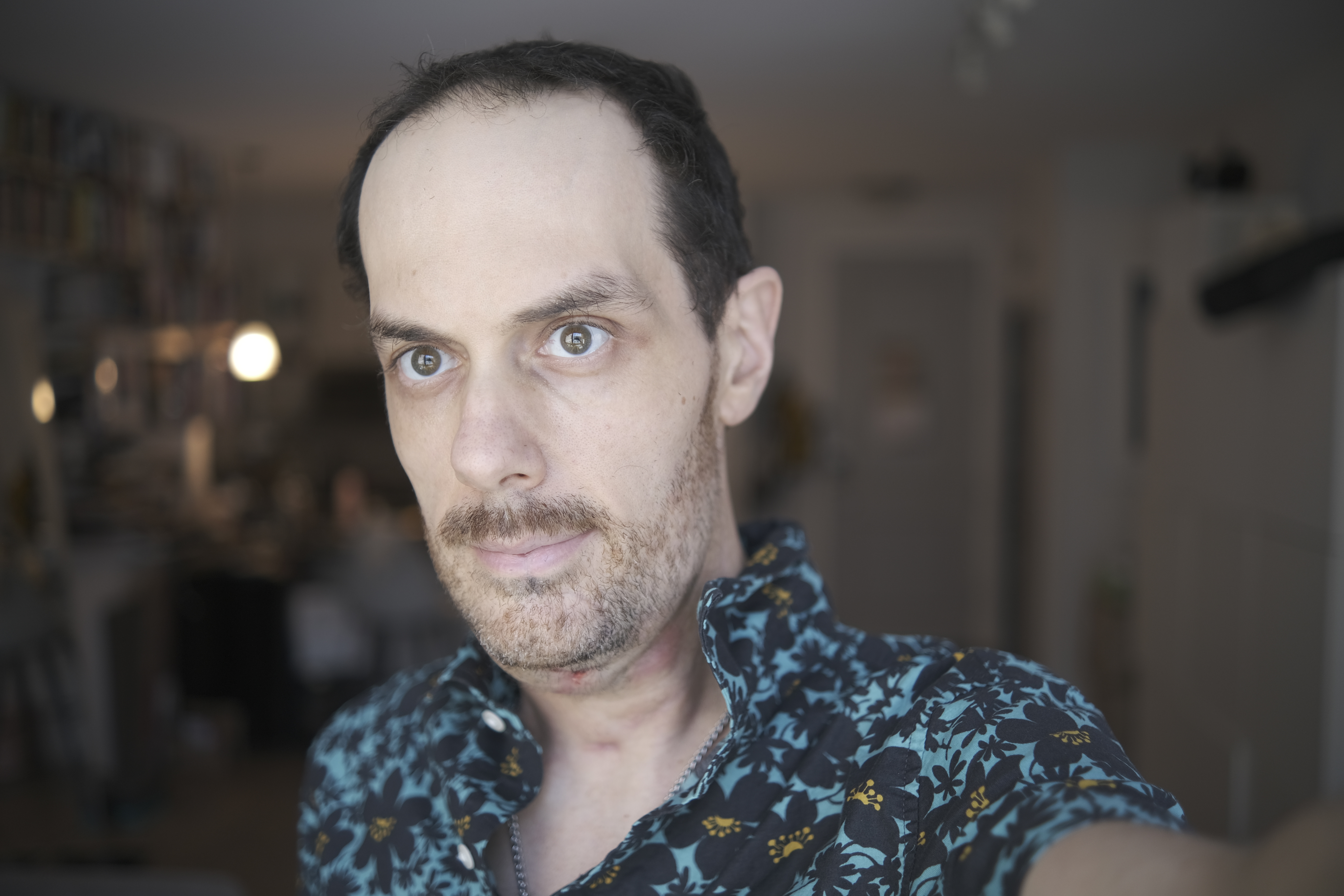
The author on July 22, 2023, when he is, or was, still alive.

Links: Some cancer things, but also some other things

* “Slow, Costly Clinical Trials Drag Down Biomedical Breakthroughs.” This is particularly relevant to me right now because the breakthroughs I need to survive are on the horizon but not here yet.

* On the absurd cancer drug shortage, and the fragile supply chains enabling it.

* How Woke Led to Cultural Decadence. Maybe. But trends bring counter-trends too, right?

* Heat pumps are important.

* What It Will Take to Deter China in the Taiwan Strait.

* Is a Revolution in Cancer Treatment Within Reach? First 80% of the article is great, and the last 20% is terrible.

* “Castration, gang-rape, forced nudity: How Russia’s soldiers terrorise Ukraine with sexual violence.” The level of ignorance and folly that comes from the “Why are we support Ukraine?” crowd is borderline unbelievable, but then one remembers that they’re suffering from partisanship brain.

* Interview with China specialist Dan Wang.

* The Princess Bride at 50. The book is more than a little curious, and an artifact of its time.

* Suddenly, it looks like we’re in a golden age for medicine.

* The year I tried to teach myself math.

* “From the Hoover Dam to the Second Avenue subway, America builds slower.” And that is bad. Speed is good.

Global warming is here and it’s everyone’s fault

Maybe you’ve seen: “The 15 hottest days, in the world’s hottest month.”

It’s not like we weren’t warned: Nasa scientist James Hansen testified to Congress in 1988 about what was coming. We ignored it. By now, it’s everyone’s fault.

It’s the fault of:

* People who have spent decades voting against nuclear power.

* People who support NEPA. People who have never heard of NEPA.

* NIMBYs who work and vote to keep the vast majority of domiciles car-dependent.

* NIMBYs who make sure we can’t build more housing in dense, green cities like NYC (where I used to live, but moved, due to affordability issues).

* People who vote against bike lanes.

* People who could have picked the smaller vehicles and didn’t.

* People who could have picked up the bikes and didn’t.

* People who could have installed solar and didn’t.

* People who vote against mass transit (“It will never be practical”).

* Me. I only have so much effort to push into resisting the efforts of hundreds of millions if not billions of other people who are enacting the system. I try to resist but it’s hard for one person.

* People who realize that they’d like to live differently but are pushed into that single exurban direction by the legal and regulatory structure of American and, often, Canadian life.

Even the people who’d like to live greener—without a car, without relentless parking lots blighting the landscape, without having to live in single-unit housing—mostly can’t, in the United States. Or if we can, we’re merely moving the next marginal candidate who’d like to live densely into the exurbs of Phoenix, Dallas, Houston, Miami, and so on. Those are the places where it’s legal to build housing, so that’s where most people are going. I’ve moved from New York to Phoenix because I can afford the latter and can (barely) afford the former. Most of Phoenix is impossible without a car, and dangerous on a bike. It’s tragic, and I’d love to see change, but the system is forcing me in a particular direction and it’s incredibly expensive to try resisting it.

It’s the fault of no one, and everyone. There are some green shoots of change happening, albeit slowly, but we needed to get serious about nuclear power and the removal of non-safety zoning restrictions decades ago. We didn’t, and now the price is showing up. We need to get serious today, but we’re not.

Because fault is diffused, most of us, me included, feel there’s nothing substantial we can do—so we do nothing. Years pass. The problems worsen, though we can justify to ourselves that the problems are just headlines. Insurance becomes hard to get. The deniers set up their own alternative universes, where information only confirms and never disconfirms their worldviews. The bullshit asymmetry principle plays out: “The amount of energy needed to refute bullshit is an order of magnitude bigger than that needed to produce it.”

“What if scientists have over-predicted the consequences of global warming?” people ask. The flipside is never considered: “What if they’re underpredicting the consequences?”

The system goes on. Maybe solar, wind, and geothermal get cheap fast enough to partially save us. Maybe direct air capture (DAC) of carbon dioxide proceeds fast enough.

But maybe it doesn’t. And then the crisis will be all of our faults. And no one’s.

Links: Debt of many kinds, if you are properly considering many of these stories

* “US public debt is projected to reach 181% of American economic activity in 30 years.” As with climate change, no one, or at least not the median voter, seems to care about this, which I find strange.

* California strip malls were upzoned last Saturday. A small step in the right direction.

* 2023 geothermal update. Generally good news.

* Unfuckable Hate Nerds: Yes, young men are losers. They deserve sympathy, not contempt.” A topic not much considered in this way.

* Geeks, mops and sociopaths: the death of subcultures.

* “Tony Soprano and the Jungian Death Mother.”

* “The Hypocrisy of Mandatory Diversity Statements: Demanding that everyone embrace the same values will inevitably narrow the pool of applicants who work and get hired in higher education.”

* “The mystery of microbes that live inside tumours.”

* “Earth hit an unofficial record high temperature this week – and stayed there.” Have you subscribed to ClimeWorks yet, or another carbon-removal company like Project Vesta? If not, maybe it’s time. Maybe it’s past time.

* Dan Ariely is bad, it seems.

* How much transparency in government is good? Maybe less than is commonly assumed, right now.

* How to blow up a timeline.

* “Americans’ Confidence in Higher Education Down Sharply.” I saw people on Twitter observing that making higher-ed an avowedly partisan project may then generate typical partisan splits about its value.

A life-changing encounter with a man named Dan

This essay is by my brother, Sam.

In 2009, I had a life-changing encounter with a man named Dan; he was the top salesman at our company and left an indelible mark on my career. Dan was an impressive figure, standing at six feet four with a heroic build, fierce red hair, and striking green eyes. He possessed an air of confidence, always dressed impeccably, never seen with a loosened tie, even during late nights working on proposals. His crisp, white shirt occasionally had its sleeves rolled up, but he always exuded professionalism and ownership. People naturally gravitated towards him, stepping aside to listen to his words. Dan treated everyone with a warm smile and friendliness, be it the company president or the person serving us lunch at Subway. His positive attitude was unparalleled. Whenever asked how he was doing, his unwavering response was, “I have never been better”—and he genuinely meant it.

Then, one day, Dan received devastating news about one of his children, who passed away. He took some time off from work, but, upon his return, he walked into the building with his laptop in hand, his tie tightly knotted, and a radiant smile on his face. As we were close colleagues, I felt concerned and decided to visit his office that morning, closing the door behind me.

“How are you really doing?” I asked sincerely. “Is there anything I can do for you? I mean it, anything, just ask.”

With a grin, Dan replied, “You know, I’ve never been better,” tossing his empty Starbucks cup into a trash can across the room. I stood there in silence, processing his words.

“How?” I finally managed to ask. “How can you maintain such a positive outlook? How can you genuinely claim that you’ve never been better?”

Dan leaned in and spoke softly, capturing my full attention. “Listen carefully,” he began. “You don’t truly know anything about me or my life. You only think you do. Here’s something you must remember, and I won’t mention it again. Your attitude sucks. Frankly, I’m surprised they tolerate it here. Your attitude defines everything. It shapes your life. You think things are bad? Let me tell you, buddy, they could be a lot worse. A lot worse. You’re standing there, upset because a meeting didn’t go your way, dressed in your shirt and cheap tie. Well, go out and start digging sewers and tell me how much that meeting mattered today. And maybe, after digging sewers, you’ll get laid off and find yourself living in one, eating from a dumpster. You don’t know anything. So, listen up. When someone asks how you’re doing, there’s only one answer: ‘I’ve never been better.’ And you live your life as if it’s true because here’s the stone-cold truth — no matter how bad you think things are right now, they can always be worse. So, wake up and change your attitude. Right fucking now.”

With that, he leaned back in his chair, his smile returning as if nothing had happened. I stood there in stunned silence, my shirt drenched in sweat.

“I need more coffee,” Dan happily announced. “Care to join me? It’s on me. Sales always buys the damn coffee!”

We went to Starbucks in his new Mercedes, and while everything seemed unchanged for him, everything had changed for me. I realized I couldn’t fulfill Dan’s request within that job: so I mustered the courage to quit, eventually finding a position at another company. It was a terrifying move, as I had spent my entire professional career at the previous company.

As I was walking into the new office, the receptionist greeted me with a smile and asked how I was doing.

“I’ve never been better,” I replied, sporting a wide grin.

“Well, that’s a fantastic attitude,” she beamed. “You’ll fit right in here if you can maintain that!”

And so it went. I became the most cheerful and upbeat person in the company. Though I became the subject of jokes, I also became a beacon of hope for those feeling downtrodden. Unbeknownst to me, I’d joined a company on the verge of collapse, but, as things worsened, my attitude gained more attention. I rapidly climbed the ranks, despite lacking expertise in the company’s technology. Layoffs hit, one after another, but I survived each round despite being the most junior member. Perplexed, I asked my boss how this was possible.

“Well,” he explained, “During meetings to discuss layoffs, your name consistently comes up. You’re inexperienced and new to the company, making you the logical choice. However, each time, everyone decides you should stay. Your attitude is so positive that everyone wants you here. The president even said he’d prefer one average employee with a great attitude over five brilliant but gloomy experts. Attitude sells. So, you don’t have to worry. You’ll still be here long after I’m gone, until they turn off the lights, if you want to be.”

And so it unfolded. As things deteriorated, my promotions accelerated. Within 18 months, I became the senior member of the sales team. I became the face of the company’s improbable turnaround. And when things reached their breaking point (the turnaround effort was not enough), a friend offered me a job, and that very day, I walked out.

From my experience with Dan and the job after Dan, I developed a list of three priorities necessary for success in the workplace. Having spent considerable time in the business world, let me share these priorities:

  • Firstly, your boss. Your number one priority is to make your boss look good. This is not a joke.
  • Secondly, your company. Your top priority is to increase revenue. Following closely is improving profitability. These two priorities should guide your thoughts and actions.
  • Finally, yourself. Your primary priority is to maintain an unwaveringly positive attitude, self-confidence, and the appearance of success.

The third item is crucial for your career and life. No amount of education or expertise surpasses its significance in most circumstances. An employee with average skills and a positive attitude holds greater value than five brilliant but unpleasant individuals. As pilots say, “your attitude determines your altitude.” Maintaining a positive attitude at all costs ensures your success, as surely as day follows night. Failure is not an option.

Since then, I’ve strived to adhere to these priorities. Where I succeeded, they brought me great achievements. Where I faltered, they resulted in failure and misery. Attitude stands as the foremost determinant of success in life. You must consistently exhibit a positive attitude, no matter the circumstances. Because it’s true—no matter how dire things may seem, they can always be worse. Your attitude will dictate how you navigate through it all.

If I could impart one thing to anyone, regardless of their stage in life, it would be to always display a positive attitude. It holds immeasurable power in the universe.