Don’t Fuck With My Money; or How I Stuck it to the Man and You Can Too!

A friend wrote this story and sent it to me, which I post both as a warning and for its own sake.

rack_city_3Police officers have a long and storied history of lying during arrests, on police reports, and even perjuring themselves under oath. They’ve lied about me, in front of me. As Americans, we’re fortunate to live in a country where the burden of proof lies upon the law enforcer instead of the lawbreaker. This is why routine traffic stops should follow strict protocols. Even ruthless murderers have gone free because of technicalities. My particular story contains more of the former (protocol violation) and none of the latter (murder), but if you follow my recommendations you may find yourself where I was this morning—at the end of a gavel hearing the words, “Case dismissed.”

Throughout my life, I’ve had piss-poor luck when it comes to getting caught by authority figures. I nearly got suspended in middle school for de-pantsing a friend in biology class. Freshman year I was suspended for dicking around in English class (and inexplicably promoted to an honors class as a result). Junior year was a whirlwind of parties, subpar oral sex, and death threats from parents of said subpar fellatio perpetrators. The cherry on top of this year was a cold, rainy weekend in November where the police caught me drinking before a football game with a freshman girl. The very next night, I had the supreme idea that I should drink a beer and get behind the wheel of a drug dealer’s car. This left me with one DUI, a narrowly avoided felony possession charge, a night in jail, and $10,000 subtracted from my parents’ bank account.

In college I had a few brush-ins with the law. A couple of fake ID charges, a minor in possession conviction, and assault charges (dropped because I was defending myself, of course). My point is this: I clearly never had a future as a cat burglar, or any other kind, and learned that I have the dubious ability to get caught every time I do something bad and/or illegal.

I live in Los Angeles now, a city which not only thrives on the fumes of automobiles but willfully ignores the need for public transportation. About 45 minutes south of LA lies the idyllic, WASP-y cove of Newport Beach, made famous by moronic reality television depicting the spoiled teenagers and the neurotic housewives who produced them. One of my best friend-girls, “Anastasia”—not her real name, but it’s equally stripper-esque—was dating one of Newport’s denizens and invited me to join her on his massive yacht for Memorial Day. She promised enough silicone to keep me afloat for days should the boat sink, and unlimited expensive booze served by nubile models and tennis instructors. Needless, to say, I agreed.

I invited “Kelly,” another of my best friend-girls along for the ride. Kelly is the rarest kind of woman in LA: an attractive blonde with a brain better served for advanced biochemical formulae than destroying douchey pseudo-actors in Hollywood, but she regularly used it for both (this will be important later).

The day passed as you might expect: I hopped onto an 80-foot yacht with thirty incredibly attractive women and five men I didn’t know, and I proceeded to drink and eat my way into perpetual bliss. Just kidding—you wouldn’t expect that unless you’ve been living in Los Angeles for long enough to meet these types. I met Anastasia’s boyfriend, “Alladin”—the owner of the boat. Curious about his opulent lifestyle, I asked him what he did for a living. He mumbled something about buying and selling “web properties.” I was in a similar industry at the time, but I elected not to press for details: I’ve learned many things in LA, and one of them is that if someone can’t explain to you what he does for work, you probably don’t want to know.

Several glasses of a champagne, a few beers, a couple Grey Goose and tonics, at least five makeout sessions with some of the MILFier attendees, and one botched threesome attempt in the captain’s cabin later, we found ourselves heading back to shore. We ordered enough Chinese food to feed a clan of Hutts and watched the sun go down over Newport Harbor. Three hours later, after Kelly and I made the expert determination that I hadn’t imbibed for several hours and thus was capable of driving, we said our goodbyes.

This was my first mistake of the day, aside from failing my attempt at a threesome. Kelly and I were busy jabbering about how awesome our day was and how we couldn’t wait for our next yachting adventure. About fifteen minutes after getting on the 405 freeway (known as the “four or five hours” to LA residents), Kelly noticed a black-and-white pacing us. I remained calm—I wasn’t speeding and, to my knowledge, I was no longer drunk.

It turns out that the opposite was true in the eyes of the law.

The cop, who will henceforth be known as Officer Dipshit, turned on his flashers and directed me to get off the freeway. Before I could let out the breath I didn’t realize I was holding, he’s yelling at me over his PA system. Within five minutes he’s at my window telling me he detects the odor of alcohol and administering a preliminary eye test (without my consent) known ominously as the “Nystagmus.” He’s asking me to exit the vehicle. He’s asking me to submit to voluntary tests. Remembering my first encounter with a potential DUI in Washington State, and the video “Never Talk to the Police,” I raise my hand and emphatically state, “I REFUSE.”

Police don’t like their authority being questioned. They especially dislike it when a citizen knows his rights and chooses to exercise them. Read these words very carefully: voluntary DUI tests are designed for you to fail. You can be Michael Phelps or Usain Bolt on a midsummer’s day in 2012, sober as a rock, and still fail the tests. DUI tests were created to stack evidence against you in order to give the officer a defensible reason for arresting you. Let me repeat: if you have had anything to drink, ANYTHING AT ALL, do not submit to these tests.

Some of you are familiar with Tucker Max’s work, but most of you haven’t read his poignant piece (written with friend and business partner Nils Parker) about the different types of people who become cops. My arresting officer was certainly a “High School Napoleon”—5’4”, 220 lbs of seething, blubbery vengeance for all the wedgies and rejections from women throughout his life. I’m not stupid enough to be disrespectful to a cop. Should you find yourself in my position, do what I did: give him short, courteous answers, do not admit any guilt, and above all do not submit to his tests, no matter how much he tries to scare you.

Upon rejecting his voluntary DUI tests, Officer Dipshit threw his pad into the air and informed me of my imminent arrest. He pushed me against the car as he slammed the cuffs on my wrist, whispering that his colleagues had “Fucked up bigger guys than me,” and tightened the steel links until my hands went numb. I knew that I was in for a joyous night. The officer then proceeded to threaten Kelly, telling her that he was going to arrest her too, asking her if she would like to spend a night in jail. The only thing I was guilty of thus far was driving a red sports car with a hot blonde in the passenger seat.

I was arrested, taken to the police station, and booked for DUI. After sixteen miserable hours, I was released to my disappointed mother. Eventually they got around to testing my blood. You must submit to this test, otherwise you’ll be automatically convicted of a DUI and your license revoked for a year, but you want to have it administered at the police station. The results wouldn’t be known for weeks, but it turns out that my Blood Alcohol Content was .09, otherwise known as the equivalent of a little more than a beer per hour. In the eyes of the law, I was intoxicated. It doesn’t matter if you think you’re drunk. It only matters what your blood says (Dexter Morgan would appreciate this sentiment).

After receiving a citation for a DUI, you have a few options. You can go to your hearing, plead guilty, go to your alcohol classes, attend the M.A.A.D. panel, install the breathalyzer in your car, and deal with a suspended license for six months. Most people choose this—especially the ones that have an egregiously high BAC. All told, your first DUI will cost around $5,000 even if you choose not to hire a lawyer. This doesn’t count the peripheral costs, like explaining to your employer why your license is suspended, telling your date why you have to blow into a tube before you can start your car, or attempting to bum rides from your friends while you’re carless.

I hired a lawyer and went to war with Officer Dipshit. The truth is that most of you won’t be able to do anything about your DUI. Your case will be open and shut, the same kind of case that passes through municipal courts hundreds of thousands of times a year in the U.S. However, there are a few things that you can exploit to your advantage:

  1. If you were smart, you didn’t take the voluntary tests. Now the officer has to prove that he had a legitimate reason to pull you over in the first place.
  2. Your lawyer should subpoena the dashboard video of your arrest. Ever gotten stoned and watched an episode of COPS? It’s hilarious, right? Not so much when you’re the perp. Luckily for you, most states require police to videotape their arrests—thanks, Rodney King!
  3. The dashboard video will sometimes allow you to systematically refute most of the cop’s police report. As I mentioned in the opening paragraph, police will almost always embellish or outright lie on the police report. In my case, the cop claimed that I was speeding, swerving, driving erratically, refused to pull over, stumbled upon getting out of the vehicle, displayed an aggressive demeanor, and generally acted like a drunk lunatic. None of this was true. Cops, incidentally, are trying to eliminate the ability of citizens to record them, because they dislike objective evidence that documents their actions.

My lawyer built a case against Officer Dipshit, culminating in this morning’s hearing. Officer Dipshit took the stand and said all the “facts” in his police report were accurate. The police report was inadmissible as evidence – the dashboard video, however, was admissible, and showed him contradicting himself. Officer Dipshit lied his way into a corner, and the prehistoric judge presiding over the hearing ruled that he was an idiotic, lying, power-tripping asshole, just as we suspected all along.

Total costs:

Lawyer fees: $5,000

Hours spent worrying: countless

The look on the cop and district attorney’s faces when they realize that their asses have been handed to them on a silver platter: priceless

Your life lesson: Don’t talk to cops, and learn how to fight the system.
About the University of East Anglia (UEA): Why you shouldn’t go

About the University of East Anglia (UEA): Why you shouldn’t go

In 2005 I made a mistake by studying abroad at the University of East Anglia (UEA) in Norwich, England. The school was—and still could be—a study-abroad factory that marketed itself to foreign students because foreign students paid a lot more in tuition than English students. The school is consequently incentivized to pursue the international market. A friend and I were sufficiently peeved about the low quality of the school that we wrote an illustrated guide that warned our friends away from going to UEA.

Some recent discussion made me dig up “About UEA: What You Should Know Before You Go.” Reading it now, I see weaknesses in my skills as a nascent writer (I want to edit my younger self) but think the document might still be valuable for undergrads seeking UEA-related information. The photos convey some of the bleakness of that university; I remember the day I said, “Fuck it, I should put these journalism skills to use because I have to tell people about this” and went around campus to shoot them. By which point I realized I’d been conned by UEA’s marketing and that I should tell what the UEA experience is actually like.

Back then I didn’t have a blog—although I should have; I was writing a lot—so I only sent “About UEA” to other undergrads I knew who were prospective UEA students. Today, the combination of a blog and Google mean that “About UEA” could retain some value, which it definitely won’t on my hard drive. Perhaps I can save others from making my mistake.

That experience also informed “Europe, the United States, living standards, GDP, and the University of East Anglia (UEA),” and UEA also made me predisposed to believe Richard Posner’s comments about the shabbiness of England in the 1980s. From the perspective of Norwich in 2005, things hadn’t changed much.

Have they now? Maybe. I have no desire to find out firsthand. If you’re an American or Canadian student currently studying at UEA, however, you should leave a comment.

Before I went, I also noticed that my peers who studied abroad at UEA said they had a great time. After I came back, in more candid conversations, many of the same peers admitted to experiences much closer to mine. Culturally, I think we have a script that says study abroad must be a transformational, transcendental experience that changes everything about a person. It must be “fun” (and I put scare quotes around fun in a very Houellebecq way). It must be amazing. People who don’t have fun or don’t experience transcendence are viewed as defective or simply grumpy. Explaining what was wrong with UEA couldn’t happen in a casual conversation. The problems with it were obvious but weren’t acknowledged. This piece is an effort to rectify that silence.

EDIT: I’m pretty sure UEA administrators or PR people are monitoring the comment thread.

Why “Man’s Search for Meaning” and Viktor Frankl

I recommend Viktor Frankl’s Man’s Search for Meaning to a fair number of people in a wide array of contexts, and one of my students asked why I included him in a short list of books at the back of the syllabus. Though I’ve mentioned him on blog a number of times (see here for one example), I hadn’t really considered why I admire his book and so wanted to take a shot at doing so.

As Frankl says, we’re suffering from a bizarre dearth of meaning in our everyday lives. One can see this in the emptiness that a lot of people report feeling and, more seriously, in suicide rates. In material terms, people in Western societies have never been as well off as we are today—and most of Asia and Latin America, along with much of Africa, are catching up with surprising speed. Yet in “spiritual” terms (I hate that much-abused word but can think of no better one—metaphysical, perhaps?) many of us aren’t doing so well, which is odd, given the cornucopia of goods and opportunities around us. I think Frankl tries to teach us how to better actualize our lives—we truly don’t live by bread alone—and I think he has a keen sense of the malaise many of us feel. I’ve struggled with these issues too and think Frankl’s treatment of them is a good one.

One can see another version or statement of this general problem in Louis CK’s much-linked bit “Everything is amazing right now and nobody is happy.” It has 7 million views, and while YouTube views are hardly a good metric for importance or content, I think CK’s bit has gone viral because he’s touching a profound problem that many people feel, even if they don’t articulate it, or usually won’t articulate to themselves or others.

Many people also seem to feel isolated (see Putnam’s possibly flawed Bowling Alone for one account). Yet because they feel isolated, they have no one to talk to about feeling isolated! The paradox worsens isolation, and there isn’t an obvious outlet for these kinds of feelings or problems. Plus, technology seems to enable crappier and more tenuous relationships, when many of us really want the opposite. That’s partly a problem of the person using the technology—we can talk to anyone, anywhere despite many of us having nothing to say—but technology also pushes use to use it in particular ways, which is one of my points about how Facebook is bad for relationships.

And people are mostly on their own in dealing with this. Schools, as they’re widely conceived of right now, are largely seen as job-training centers, rather than as places to figure out how you should live your life. So they’re not very helpful. Religion or religious feeling is one answer for some people, but religious thinking or feeling isn’t very satisfying for me and a growing number of people.

I don’t know what is helpful—problems are often easier to see than solutions—but Frankl offers a framework for thinking about leading a meaningful existence through attempting to do the best with what you’ve got and choosing an aim for your life, however small or absurd (Hence: “Nietzsche’s words, ‘He who has a why to live for can bear with almost any how,’ could be the guiding motto for all psychotherapeutic and psychohygienic efforts regarding prisoners. Whenever there was an opportunity for it, one had to give them a why—an aim—for their lives, in order to strengthen them to bear the terrible how of their existence”).

Frankl and Louis CK are hardly the only people to notice this—All Things Shining: Reading the Western Classics to Find Meaning in a Secular Age is a contemporary example of a book tackling similar basic concepts from a different angle. Stumbling on Happiness and The Happiness Hypothesis are others. The fact that this problem persists across decades and arguably becomes more urgent means that I don’t think these books will be the last. As Frankl says in a preface:

I do not at all see in the bestseller status of my book so much an achievement and accomplishment on my part as an expression of the misery of our time: if hundreds of thousands of people reach out for a book whose very title promises to deal with the question of a meaning to life, it must be a question that burns under the fingernails.

The GeekDesk / writing space 2012 post:

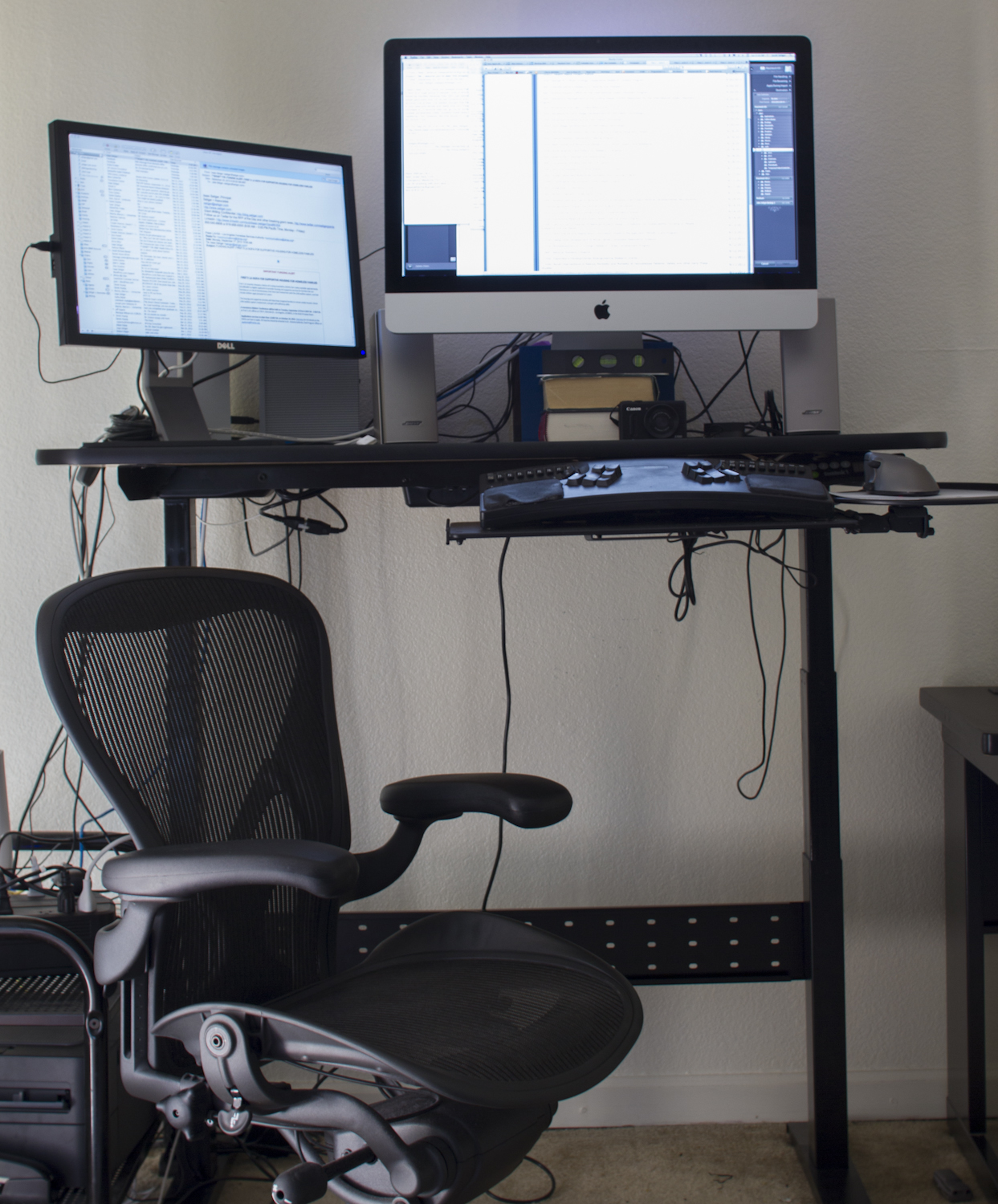
Since my 2010 writing space post, quite a bit has changed. Here’s the new setup, viewed from a couple of angles, with an explanation below the photos:

Those of you who looked carefully, or even not very carefully, probably noticed something unusual: the desk is at two different heights. That’s because I’ve been using a GeekDesk for long enough to form an opinion on it, which is that I’d be reluctant to go back to a regular desk or a purely standing desk. I’ll write a longer review when I have more time, but the preceding sentence tells you most of what you need to know.

The other salient upgrade is from a 24″ iMac to a 27″ iMac with an SSD and a conventional hard drive. This machine inspired me to write “Mac OS 10.7 is out today, and I don’t care because ‘In the Beginning was the Command Line,’” because computers have now, finally, become “fast enough” and “good enough for my purposes. It’s taken a long time! I keep meaning to get a better stand than a pair of books, but that’s the sort of project that’s very easy to delay, indefinitely, until tomorrow.

The keyboard remains the same, and it’s hard to see what could make me replace the Kinesis Advantage. Its keys still feel new. The speakers aren’t very interesting, although they are external and thus better than the built-in ones, but they’re probably wasted on me because I don’t listen to music all that often, and they’re overkill for movies or TV shows. The external monitor is a 23” Dell with an IPS display, although I can’t remember the model number and don’t feel like looking it up. It’s a fine panel, but not very interesting. The lights on the back of the iMac are cheap Antec Halo LED lights, which are supposed to reduce eyestrain in dark rooms. Not sure if they actually do. I suspect turning down the iMac from “blinding” to “tolerate” would have as strong an effect.

You can see a Canon s100, which usually rides in my pocket. Sony now makes a better version of the s100—the RX100—but the RX100 is also $300 more. In a couple of shots there’s also a boring iPhone. If I weren’t on a family plan, I’d probably get a cheap Android phone, because I use maybe 5% of its features. Unless you’re doing a LOT of sexting, I don’t think I see the point in getting a more expensive “smart” phone over a less expensive one.

There’s also an Aeron, which is better for me than their recent Embody. Reasons for why I say that will follow when I have more time.

Why do Europeans dress better than Americans?

In “Europeans Dress Better Than Americans: Fact,” bangsandabun writes that “I stated on Twitter the other day that North Americans dress badly and it ruffled a few feathers. I don’t even see this as a debatable point. The evidence speaks for itself.” I think he’s right, despite the danger of assuming American and European differences based on casual observation.

Bob Unwin speculates about why Americans might dress worse and things the difference is historical, except for this: “different signaling aims (more internal cultural diversity and weaker class distinctions; male clothing needing to be less ‘gay’ and more conventional.”

I haven’t spent enough time in Europe to judge fashion. But I do have a certain amount of “fashion blindness” that I used to take pride in (more on that later), and even now I don’t care about the subject enough to notice fashion most of the time. Plus, living in Arizona makes fashion blindness much, much worse: it’s too damn hot to wear anything more than shorts and a t-shirt for five months of the year, which obviates much of the fashion impetus, especially for men. For women, “fashion” tends to mean “clingy and revealing” in the heat, which I like but don’t think is especially fashionable; it’s more of a physical fitness signal. Still, when I lived in Seattle I didn’t see a much stronger fashion impetus than I do here in Arizona, so I don’t think weather is the whole explanation.

My friend Derek Huang just got back from a year in Germany and mentioned wanting to learn how to tailor clothes a couple weeks ago, so I sent him the above links and asked for his thoughts about whether Europeans are more stylish:

Definitely. Especially in Paris, I felt really out of place. Part of it was just going to a bunch of museums, seeing vibrant colors and designs that pop out, and then seeing that in the stuff people wear. (“That scarf is so Monet”). It’s still a pretty big status symbol over there (Europe). Less so in Spain, where they dress more American. I think American fashion is very much centered around casual-individualism. And that can be pulled off well, but it is also a license to just DGAF. The fashion in Europe is much more constrained. There are certain things you just don’t do, so I feel attention to detail is so much important as a way of standing out.

And I’m at the stage right now where I can talk enthusiastically about this stuff, but every day I wear a T-shirt and walk around in flip flops. I want to tailor my own stuff so I can learn what works for me, what doesn’t. Fashion is like applied art + social theory which is potentially interesting.

But then again there are only so many hours in a day, and if I’m in a culture where time otherwise spent worrying about clothing can be spent working on physics, then that’s an advantage.

Also, there was a good point in one comment about greater stylistic diversity in the U.S. If there are lots of social groups, then it’s more important to signal that you’re in a certain group than it is to try to be “better dressed.” It’s analogous to the diversity of contemporary music. Back when music was all just white Europeans, we could talk a lot about who was clearly better, who was a genius composer, etc. but now music is so broad, that we have less collective effort funneled into trying to improve things along a narrow subset of possible styles. I have noticed that you see more creative, wacky stuff around the University of Arizona than around Heidelberg, but there’s also more general mediocrity and some truly hideous fashion choices.

I like the analogy about music: It’s hard to evaluate a rapper, an indie rocker, a DJ, and a classical composer, because, while they’re also doing something that stimulates the ear in an aesthetically pleasing audiological fashion, that’s about all they have in common. Car analogies are apt too: a truck is not automatically better than a sports car, but it may be appropriate in a different situation.

The point about clothes that actually fit is also a good one. I don’t even really know enough to know what good fit means for me, or for most people, although it might be one of these “I-know-it-when-I-see-it” kinds of things, in the same way most people will instinctively recognize good writing over bad writing, without necessarily being able to explain which is better.

In addition, in the U.S. I think there’s a West Coast, technical-elite culture that disdains fashion as fakery and that valorizes the cult of you-are-what-you-do. I can imagine my more technically minded friends saying that the compiler doesn’t care whether your socks and shoes match. Technical accomplishments are transparent in their effectiveness, while fashion is closer to sales or persuasion, in that it’s much more interpretive and less binary. Therefore your clothes shouldn’t matter (in my imagination, Apple employees are better dressed than their counterparts elsewhere, because of the firm’s focus on design; I have no idea if that’s accurate, however), and I don’t know of any technical people who are renowned for their fashion sense; if anything, fashion becomes anti-fashion, since Bill Gates is or was notoriously indifferent to fashion, and Mark Zuckerberg is famous for wearing hoodies and flipflops. Yet both are among the most important people of their generations.

It’s also possible that most people only have a certain amount of energy to devote to taste or aesthetic matters, and Americans allocate their energy elsewhere; in the case of tech people, the “elsewhere” might be the beauty of their code. Personally, I’m most concerned with writing prose that sounds like faint wind chimes being caressed on a cool autumn evening.* Derek wants to spend his limited mental energy and attention thinking about physics. I want to spend mine thinking about literature and writing. Fashion may be a distraction from these pursuits, rather than a complement to them. But I wouldn’t mind having a small number of simple, comfortable things to wear that don’t make me look like I rolled out of bed in the morning. I may have found those things—the perfect, perfect-fitting black T-shirt, and size-30 Lucky Jeans—but they were found mostly through serendipity.

Anyway, I didn’t used to think fashion important at all, but now I’m less sure: signaling is much more powerful than I used to imagine, and my priorities have shifted in important ways since I developed a strong anti-fashion bias as a teenager living outside of Seattle. Now I wonder if that anti-fashion bias is holding me back, because people are very quick to evaluate based on all kinds of things, including clothes.

When I began learning how to salsa dance, I wore rubber-soled shoes (this is not a good idea). Eventually a friend showed me how to pick better shoes, and I bought very nice dress shoes that were three to four times as expensive as any shoe I’d ever worn before. Women started complimenting me on my shoes. I assume that, for any person who vocalizes an opinion about fashion or related matters, at least another ten people probably notice but don’t say anything. But I also had to worry more about shoe maintenance: they need wooden inserts to maintain their shape when I’m not wearing them. They’re less comfortable than running shoes or Vibram Five-Fingers. They need to be polished regularly. Nonetheless, the difference in how people perceived me was and is undeniable. If something as simple as shoes can cause this much change, I wonder what else I’m missing by simply not being observant enough.

Still, I can’t deny the culture in which I live. In “The New Pants Revue,” Bruce Sterling points out that “Jeans and tactical pants are the same school of garment. They’re both repurposed American Western gear. I’m an American and it’s common for us to re-adapt our frontier inventions.” By way of full disclosure, I now wear “Tactical Shorts” regularly, as silly as I feel writing that out, and so far their durability has been excellent. Sterling is obviously pointing in the direction of hidden historical factors, and I think there is an American suspicion of highfalutin apparel that couldn’t be worn on farms or factories, despite the fact that most of us, myself include, spend much more time in Office Space-style offices with climate control, ergonomic chairs, and limited exposure to sharp objects.

Note that I don’t wear tactical shorts with the nice shoes.

I wonder if, over time, Europe is becoming more influenced by U.S. fashion indifference, or if the U.S. is becoming more influenced by European fashion, or if we’re in a fairly steady state of mutual difference. I also wonder if people in the U.S. would be better served by paying more attention to fashion, at least at the margin.

See also “Why Americans dress so casually.”


* Present sentence excluded.

EDIT: I wonder if technology will lower the cost of fashion sufficiently to encourage Americans to become more fashionable (or “dress better” in American parlance). Articles like “Hot Collars: I got three custom shirts online. I’ll never buy off the rack again,” about the online custom-clothing companies Indochino, J. Hilburn, and Blank Label, make me think this is at least possible.

EDIT 2: As commenter Marcus points out, I’m incorrectly conflating “fashion” and “aesthetics,” which are really separate issues. He’s correct, and his comment is worth reading.

This is frustrating: A domain name camper took jseliger.wordpress.com, and the dangers of relying on wordpress.com.

I looked at this site’s statistics at wordpress.com a few minutes ago and saw only a handful of hits from today. Apparently the jseliger.wordpress.com domain expired in April, and, although I thought it would automatically renew because of the blogging bundle I’d bought through WordPress, it apparently didn’t.

Instead, a spammy and nasty domain registrar named GoDaddy.com took it. Apparently, however, they’re likely to charge a very large amount of money to get it back—which means it’s probably gone forever, and the innumerable people who linked to jseliger.wordpress.com at various points in the last two years are feeding the GoDaddy beast.

I’d be lying if I said that this didn’t hurt.

This is frustrating: A domain name camper took jseliger.com, and the dangers of relying on wordpress.com.

I looked at this site’s statistics at wordpress.com a few minutes ago and saw only a handful of hits from today. Apparently the jseliger.com domain expired in April, and, although I thought it would automatically renew because of the blogging bundle I’d bought through WordPress, it apparently didn’t.

Instead, a spammy and nasty domain registrar named GoDaddy.com took it. Apparently, however, they’re likely to charge a very large amount of money to get it back—which means it’s probably gone forever, and the innumerable people who linked to jseliger.com at various points in the last two years are feeding the GoDaddy beast.

I’d be lying if I said that this didn’t hurt.

EDIT: GoDaddy also has a fake “domain bid” service for about $75, which they’ll use to “negotiate” with the registrant—which is a subsidiary of their own organization!

Design.Y Notebook Review: The Record 216

EDIT: I sent an e-mail to Design.Y about the binding breakage described below, and they sent me a new notebook. I’ll write another update when I’ve filled the new one.

EDIT 2: The new one broke too. I’m not going to use these anymore and am switching to the much cheaper and much more durable Rhodia Webnotebooks mentioned below.  

The most salient feature of the Design.Y “Record 216”* is its price, which varies with the Yen-to-dollar exchange rate but currently hovers around $70 with shipping. Those of you who can do simple math are probably thinking that this is about 35 times greater than a drugstore pocket notebook and fives times a Rhodia Webbie. I want the Design.Y notebooks to be five times better. Hell, I want them to be twice as good. But while the notebook is certainly a lovely object that’s been lovingly packed, like a florist’s rose or an undertaker’s corpse, the Record 216 suffers from one major flaw: the paper is too thin.

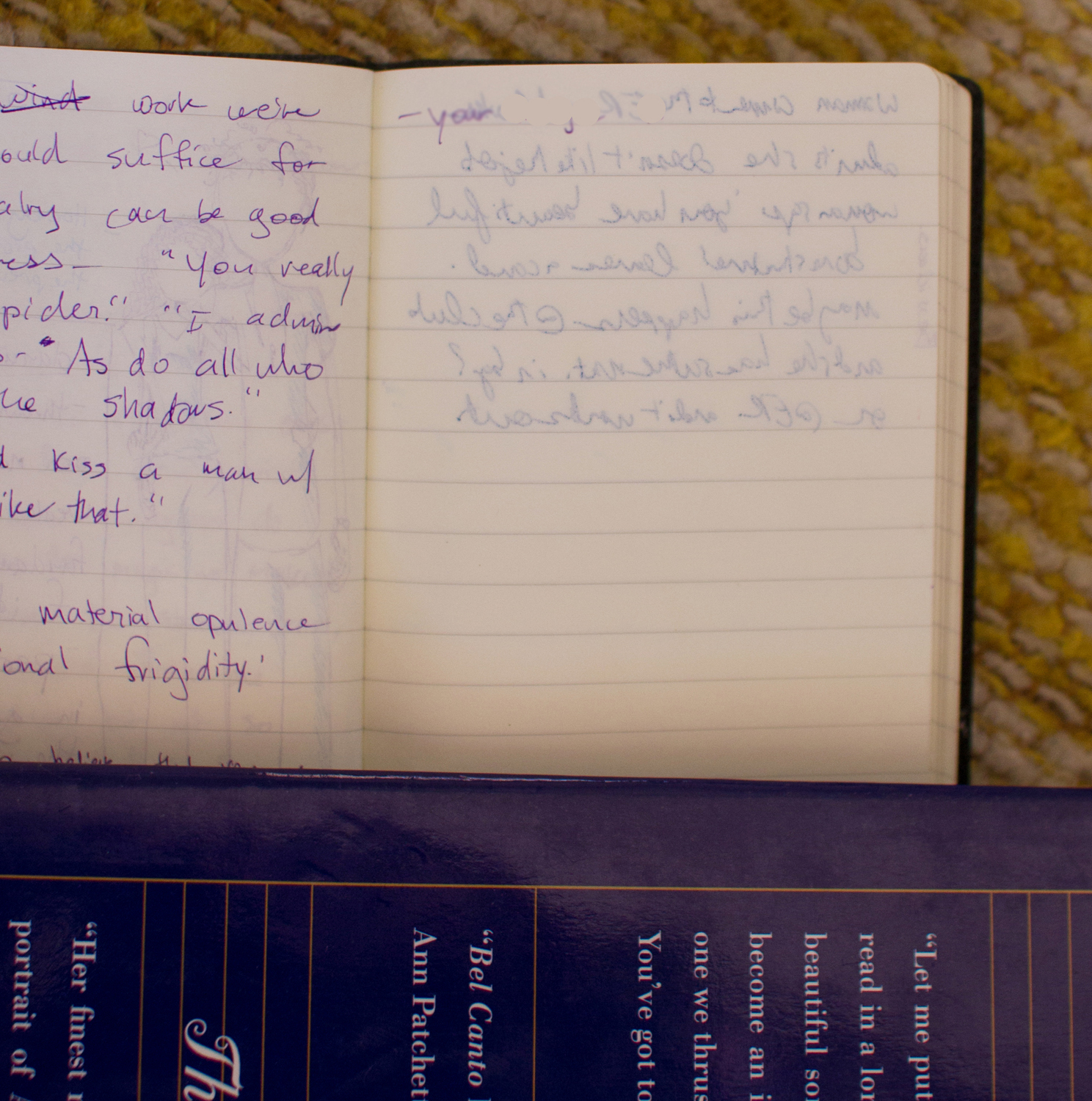
I’m constantly crinkling it or creasing the corners or bending the middle when I mean to turn the page (see the photo below for an example). The paper is definitely a joy to write on, but a heavier version would be an improvement; thinner is not always better, as anorexia counselors will remind us. Some pens will bleed through, as shown in the picture to the right. The bleeding problem is not great with my fountain pen, but then I use a extra-fine nib that’s about as slender, if not more so, as the Pilot G2. Users of thicker nibs may have concomitantly greater problems. Still, I can forgive the bleed-through problem. It’s the lightness that bugs me, and the way I subconsciously worry about bending a page when I’m merely trying to turn it.

Almost everything else about the notebook is incredible. It’s been in my pocket for months without suffering any problem greater than a frayed band. The size, at 5.3″ by 3.1″, is quite handy, and I’ve come to like it better than the standard 5.5 x 3.5 size of Rhodia Webbies, Guildhall, Leuchtturm 1917, or Moleskine. The 3.1″ width makes it feel much more portable at no cost to usability; if anything, the sense of a long, narrow column is an enhancement. The line spacing on the page is neither too great (as it is on the Rhodia) nor too small, and lines extend to the edge of the page, as they should. The cover has a very slight lip that doesn’t distract. The Design.Y notebook also sits flat “out-of-the-box,” so to speak, and doesn’t suffer from the stiffness of a fresh Rhodia or Moleskine. That stiffness declines with age, but it’s still present. The binding is strong and supple.

These features don’t quite make up for the paper thinness or price, however. I only go through one notebook every six to twelve months, but even so, $70 is a substantial hit for what is basically a consumer trifle. A lovely consumer trifle, but with a fatal flaw that makes justifying its price difficult. Perfection is difficult, and the Rhodia Webbie isn’t perfect: its lines should extend to the end of the page and its lines should be closer to one another. If I were Steve Jobs, I’d be driven mad by these problems. Fortunately, I’m not, but it’s clear that Design.Y has noticed some of the same things Apple has. In the Walter Isaacson biography of Jobs, he writes: “Early on, Mike Markkula had taught Jobs to ‘impute’—to understand that people do judge a book by its cover—and therefore to make sure all the trappings and packaging of Apple signaled that there was a beautiful gem inside.” Design.Y does the same. The company even includes a sheath of extra paper with a hand-written note. I can’t help noticing that one flaw in the gem, however, that keeps me from wanting to give myself over to an otherwise shining light.

As you can probably tell, I want the notebook to be better than it is. A Japanese craftsman named Hiroshi Yoshino makes them (this also explains why their price is denominated in Yen) using “Tomoe River” paper, which the website accurately describes as “very thin and lightweight.” I wouldn’t want him to switch to the Rhodia’s tank-like paper. But something heavier and less bendable would make the Record 216 the perfect notebook.

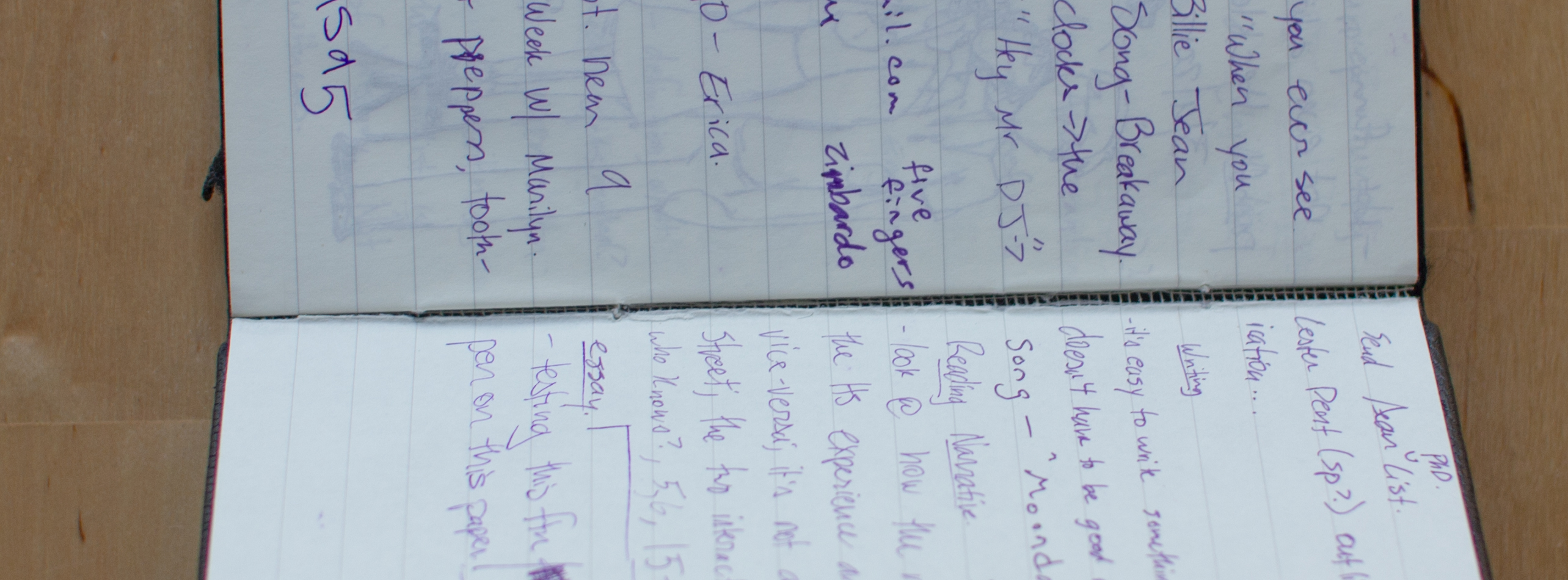
EDIT: Unfortunately, the front and back of my notebook began to split after about five months of normal use:

And, to me, this disqualifies the Model 216 for day-to-day use; I haven’t had the problem with Rhodia Webnotebooks. Although I wish the Rhodia’s lines went to the edge of the page, and its paper is perhaps slightly too thick, I think the trade-offs—especially accounting for price—make it a better choice. A $70 notebook better be perfect. This one isn’t, and its durability is especially distressing.


* Or “Model 216,” depending on which part of the website you’re reading. Chalk this up to charming translation idiosyncrasies.

The accidentally bent page.

I’ve been working:

A couple of readers have written to ask why I’ve posted very little over the last couple of weeks. The answer is simple: I’ve been writing for people who pay me to do it. Whoever gives me money automatically moves to the top of the writing pile.

I've been working:

A couple of readers have written to ask why I’ve posted very little over the last couple of weeks. The answer is simple: I’ve been writing for people who pay me to do it. Whoever gives me money automatically moves to the top of the writing pile.