The Hollywood Economist: The Hidden Financial Reality Behind the Movies — Edward Jay Epstein

Edward Jay Epstein has perhaps the best, most consistent explanations of why a lot of movies are bad and how Hollywood actually works, which is quite different from how Hollywood is portrayed in the movies and media. The most recent excellent example of this isn’t in book form yet—it’s in an essential post called Role Reversal: Why TV Is Replacing Movies As Elite Entertainment, which explains why a lot of the better TV shows (The Sopranos, Rome, Entourage, True Blood—pretty much half of HBO’s output) are better than most movies: cable stations are now capable of targeting smaller, relatively discerning audiences, while movies, for the most part, aren’t. Until recently, the opposite was true. Read the post to learn why. See Alex Tarrabok’s post for an explanation that includes a nice demand curve graph.

Cable stations are, in essence, able to cater to adults. They’re not beholden to a censorship board that goes by the name MPAA. So they portray things like sex that many people are afraid of exposing teenagers to—better to let them see violence and explosions instead. As Epstein says in The Hollywood Economist: The Hidden Financial Reality Behind the Movies, “We may live in an anything-goes age, but if a studio wants to make money, it has to limit how much of ‘anything’—at least anything sexually explicit—it shows on the big screen.” Virtually everyone has seen porn by the time they graduate from high school, if not middle school today, but movies that want “to make money” can’t show people in real relationships, which tend to include sex.

This fact of studio life is a fact of life despite the dearth of real data on the supposed danger of sex; as Judith Levine points out in Harmful to Minors: The Perils of Protecting Children from Sex:

Evidence of the harm of exposure to sexually explicit images or words in childhood is inconclusive, even nonexistent. The 1970 U.S. Commission on Obscenity and Pornography, the ‘Lockhart commission,’ uncovered no link between adult exposure to pornography and bad behavior and called for dismantling legal restrictions on erotica. Not only did the panelists fail to find harm to children viewing erotic, moreover, they went so far as to suggest it could ‘facilitate much needed communication between parent and child over sexual matters.’

But is this a real change? Epstein says yes:

In the early days of Hollywood, nudity—or the illusion of it—was considered such an asset that director Cecil B. DeMille famously made bathing scenes an obligatory ingredient of his biblical epics. Nowadays, nudity may be a decided liability when it comes to the commercial success of a movie. The top twenty-five grossing films since 2000—including such franchises as Spider-Man, Lord of the Rings, Shrek, Harry Potter, Batman, and The Incredibles, contained no sexually oriented nudity. In fact, this absence of sex—at least graphic sex—is often key to the success of Hollywood’s moneymaking movies since it increases the potential audience of children in both the domestic and foreign markets. To be sure, directors may consider a sex scene artistically integral to their movie, but studios almost always have the right to exercise the final cut, and, if they want to maximize the potential revenue, they have to consider three factors.

Those factors include the rating system, the power Wal-Mart exerts on DVD sales (the company’s sales “accounted for nearly one-quarter of” DVD sales in 1997, and television censorship through the Federal Communications Commission, which regulates what can be shown on most non-cable TV stations. Taken together, these factors mean that Hollywood studios are most profitable when they don’t include nudity. But when they are most profitable, they are not necessarily producing the most artistically interesting material.

Note that merely showing nudity doesn’t make a movie artistic, and it’s obviously possible to make masterpieces without showing nudity. But the fact that Hollywood means that large-scale commercial movies are cut off from an important aspect of most people’s lives. And Hollywood executives wonder why their industry is being completely trashed by the Internet: not only can people pirates movies, but they can see as many naked people as they want with a single Google search. Sure, those naked people usually lack stories and decent lighting, but at least they’re available. To judge from what the average multiplex shows, you’d never know this, or you’d only know through implication. It’s like The Apartment happened and, while we’ve moved somewhat forward, we’ve not moved as much as we’d like to imagine.

Unless, of course, you’re watching HBO.

Epstein lists the “Midas Formula” that movie executives use:

1. They are based on children’s fare stories, comic books, serials, cartoons, or, in the case of Pirates of the Caribbean, a theme park ride.

2. They feature a child or adolescent protagonist (at least in the establishing episode of the franchise).

3. They have a fairy-tale-like plot in which a weak or ineffectual youth is transformed into a powerful and purposeful hero.

4. They contain only chaste, if not strictly platonic, relationships between the sexes, with no suggestive nudity, sexual foreplay, provocative language, or even hints of consummated passion. (This ensures the movie gets the PG-13 or better rating necessary for merchandising tie-ins and for placing ads on children’s TV programming.)

5. They include characters for toy and game licensing.

6. They depict only stylized conflict—though it may be dazzling, large-scale, and noisy, in ways that are sufficiently nonrealistic and bloodless (again allowing for a rating no more restrictive PG-13).

7. They end happily, with the hero prevailing over powerful villains and supernatural forces (and thus lend themselves to sequels).

8. They use conventional or digital animation to artificially create action sequences, supernatural forces, and elaborate settings.

9. They cast actors who are not ranking stars—at least in the sense that they do not command dollar-one gross-revenue shares.

Now, none of these are wrong in and of themselves—but they result in movies that deal with only a relatively small part of the human experience. Some movies, of course, get made that go beyond this, but the focus on such movies is probably detrimental to movies that aspire to be art. And a vicious cycle gets started: people who have real taste watch fewer movies because the movies are worse.

As movies get worse, studio executives realize they need to pander to teenagers, who can be lured out (“The studios zero in on teens not because they necessarily like them, or even because the teens buy buckets of popcorn, but because they are the only demographic group that can be easily motivated to leave their home”). Even this might no longer be as true, since video games are claiming a steadily larger proportion of teenage time, and every hour spent playing Halo is an hour not spent on a movie. As studios focus on comic book movies for teenagers, people with taste stop going to see them as often. They make sure they have subscriptions to HBO, if they care about that sort of thing. People like write unread blog posts like “Why are so many movies awful?” And the cycle continues. But at least The Hollywood Economist explains, clearly, lucidly, and quickly, why so many weekends in a row can pass with me wondering, “When will a movie I actually want to see come out?”

Thoughts on Aaron Sorkin’s The Social Network

1) The movie, especially the first 30 minutes, is very good: the dialog is astonishingly quick. The details are right (I’ve been to AEP parties and used Emacs). The movie isn’t boring, though most of it consists of guys talking to each other. The various narrative threads are a good example of Steven Berlin Johnson’s essay “Watching TV Makes You Smarter” in action.

2) I suspect The Social Network hears about the same relationship to reality that Braveheart does to early Scotland or War and Peace does to Napoleon, which is to say very little. “The Face of Facebook” in The New Yorker shows this.

3) Lawrence Lessig’s review is mostly negative and says that the movie misses the point. He moves in the same kind of direction I do:

[…] what’s important here is that Zuckerberg’s genius could be embraced by half-a-billion people within six years of its first being launched, without (and here is the critical bit) asking permission of anyone. The real story is not the invention. It is the platform that makes the invention sing. Zuckerberg didn’t invent that platform. He was a hacker (a term of praise) who built for it. And as much as Zuckerberg deserves endless respect from every decent soul for his success, the real hero in this story doesn’t even get a credit. It’s something Sorkin doesn’t even notice.

This is true, but it’s also a bit like criticizing Romeo and Juliet for failing to accurately depict the real political scene of Italy. The point is the love story. But Lessig is probably right, although I’m not sure there’s a way to depict “the platform that makes the invention sing” and still tell a compelling story around human characters.

4) Compare Lessig’s review to those of Scott Adams (“It is the best movie I have ever seen”), David Denby (“This brilliantly entertaining and emotionally wrenching movie is built around a melancholy paradox”), and Fred Vogelstein. The latter is more about the reaction to the movie than the movie itself but is still worth reading.

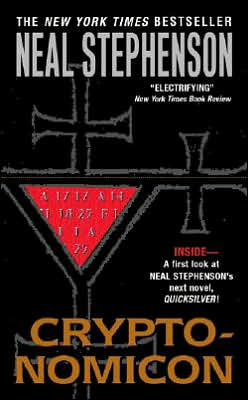
5) The Social Network is that rare movie about the people who are doing the most to change the world in the shortest amount of time of any group ever: nerds and hackers, who’ve largely built the world we now inhabit. Very few movies bother depicting nerds at all, and when they do, those nerds are usually peripheral to the action or not really nerds or completely untrue to nerds in real life. This isn’t just true in movies—it’s also true in fiction. One nice thing about novels like Neal Stephenson’s Cryptonomicon is that it incorporates hackers and a hacker’s mindset as few other novels I’ve read have. There are a zillion movies and books about love stories, bildungsroman, soldiers, criminals, cops, and lawyers. All these are lovely subjects for narrative art, but the incredibly dearth of such books about the hacker sub-culture is notable. I’m trying to fix this in my own small way; we’ll see if I’m successful.

Note that Gabriella Coleman wrote a piece for The Atlantic on “The Anthropology of Hackers;” it is good reading for anyone interested in the modern world.

6) Building off points 3 and 5, although The Social Network gets a lot of stuff right, especially the drama, it’s not an accurate portrayal of nerds and nerd subcultures (it can be a good movie without being an accurate portrayal). I would also guess that Zuckerberg, more than anything else, cares about code, which I don’t think most people can or want to understand. Maybe artists can, because I think a lot of the best artists care about their art more than anything else, which can be frustrating to people around them.

7) The tech and hacking communities are well aware of how the legal system and patent law are out of control and, in many respects, stifling innovation. Although patents never come up in The Social Network, perhaps it will raise awareness of the problems posed by the legal system.

8) I feel like I’ve met Zuckerberg. Not the literal Zuckerberg, of course, but I’ve met plenty of hardcore engineer and hacker types whose lack of social graces is probably not a cause or effect of their technical prowess, but may be an ancillary byproduct of wanting to make art or write code more than be socially adept.

EDIT: I wrote this October 13; on October 15, the New York Times published “Hey, That’s Me Up On That Screen,” which says, “For the newest class of entrepreneurs developing the next generation of Web-based companies, “The Social Network” is the first time many have seen their startup culture splashed on the big screen.” Compare that to my sixth point.

Thoughts on Aaron Sorkin's The Social Network

1) The movie, especially the first 30 minutes, is very good: the dialog is astonishingly quick. The details are right (I’ve been to AEP parties and used Emacs). The movie isn’t boring, and this is especially surprising since most of it is guys talking to each other. The various narrative threads are a good example of Steven Berlin Johnson’s essay “Watching TV Makes You Smarter” in action.

2) I suspect The Social Network hears about the same relationship to reality that Braveheart does to early Scotland or War and Peace does to Napoleon, which is to say very little. “The Face of Facebook” in The New Yorker shows this.

3) Lawrence Lessig’s review is mostly negative and says that the movie misses the point. In fact, he moves in the same kind of direction I do:

[…] what’s important here is that Zuckerberg’s genius could be embraced by half-a-billion people within six years of its first being launched, without (and here is the critical bit) asking permission of anyone. The real story is not the invention. It is the platform that makes the invention sing. Zuckerberg didn’t invent that platform. He was a hacker (a term of praise) who built for it. And as much as Zuckerberg deserves endless respect from every decent soul for his success, the real hero in this story doesn’t even get a credit. It’s something Sorkin doesn’t even notice.

This is true, but it’s also a bit like criticizing Romeo and Juliet for failing to accurately depict the real political scene of Italy: that’s not the point. The point is the love story. But Lessig is probably right, although I’m not sure there’s a way to depict “the platform that makes the invention sing” and still tell a compelling story around human characters.

4) Compare Lessig’s review to those of Scott Adams (“It is the best movie I have ever seen”), David Denby (“This brilliantly entertaining and emotionally wrenching movie is built around a melancholy paradox”), and Fred Vogelstein. The latter is more about the reaction to the movie than the movie itself but is still worth reading.

5) The Social Network is that rare movie about the people who are doing the most to change the world in the shortest amount of time of any group ever: nerds and hackers, who’ve largely built the world we now inhabit. Very few movies bother depicting nerds at all, and when they do, those nerds are usually peripheral to the action or not really nerds or completely untrue to nerds in real life. This isn’t just true in movies—it’s also true in fiction. One nice thing about novels like Neal Stephenson’s Cryptonomicon is that it incorporates hackers and a hacker’s mindset as few other novels I’ve read have. There are a zillion movies and books about love stories, bildungsroman, soldiers, criminals, cops, and lawyers. All these are lovely subjects for narrative art, but the incredibly dearth of such books about the hacker sub-culture is notable. I’m trying to fix this in my own small way; we’ll see if I’m successful.

Note that Gabriella Coleman wrote a piece for The Atlantic on The Anthropology of Hackers that’s good reading for anyone interested in the modern world.

6) Building off points 3 and 5, although The Social Network gets a lot of stuff right, especially the drama, I’m not convinced that it’s the best possible portrayal of nerds and nerd subcultures. I would also guess that Zuckerberg, more than anything else, cares about code, which I don’t think most people can or want to understand. Maybe artists can, because I think a lot of the best artists care about their art more than anything else, which can be frustrating to people around them.

7) The tech and hacking communities are well aware of how the legal system and patent law are out of control and, in many respects, stifling innovation. Although patents never come up in The Social Network, perhaps it will raise awareness of the problems posed by the legal system.

8) I feel like I’ve met Zuckerberg. Not the literal Zuckerberg, of course, but I’ve met plenty of hardcore engineer and hacker types whose lack of social graces is probably not a cause or effect of their technical prowess, but may be an ancillary byproduct of wanting to make art or write code more than be socially adept.

EDIT: I wrote this October 13; on October 15, the New York Times published “Hey, That’s Me Up On That Screen,” which says, “For the newest class of entrepreneurs developing the next generation of Web-based companies, “The Social Network” is the first time many have seen their startup culture splashed on the big screen.” Compare that to my sixth point.

Notes on Christopher Nolan’s Inception

I saw Christopher Nolan’s Inception last week and noticed a couple of strange or notable tendencies:

* The almost complete lack of computers: I think one or two peep out, but otherwise this movie could’ve been made in 1980. Or 1970.

* The equally anachronistic portrayal of what a “chemist” (really an anesthesiologist) works like. His shop could be an alchemist’s lair circa 1500.

* The movie, like DiCaprio’s earlier Shutter Island, recalls Descartes’ first meditation, in which the philosopher questions how we can trust our senses and how we know what we know. The answer: on some level we can’t. But Shutter Island and Inception both posit a world where we have enough evidence to engage the first meditation because there is some evidence we can’t trust our senses.

Obviously, Inception isn’t the first movie or book to ask these kinds of questions; The Matrix came out more than a decade ago, and Adam Gopnik treats it subtly in the linked New Yorker article.

* The almost complete absence of sexuality. The criminal team is composed almost entirely of hypercompetent men devoted solely to their job; the one attractive young woman gets virtually no sexual attention. Neither does anyone else. Their technocratic devotion is nearly perfect—perhaps a fantasy of our own competence and ability to discard what we might otherwise call distraction.

Notes on Christopher Nolan's Inception

I saw Christopher Nolan’s Inception last week and noticed a couple of strange or notable tendencies:

* The almost complete lack of computers: I think one or two peep out, but otherwise this movie could’ve been made in 1980. Or 1970.

* The equally anachronistic portrayal of what a “chemist” (really an anesthesiologist) works like. His shop could be an alchemist’s lair circa 1500.

* The movie, like DiCaprio’s earlier Shutter Island, recalls Descartes’ first meditation, in which the philosopher questions how we can trust our senses and how we know what we know. The answer: on some level we can’t. But Shutter Island and Inception both posit a world where we have enough evidence to engage the first meditation because there is some evidence we can’t trust our senses.

Obviously, Inception isn’t the first movie or book to ask these kinds of questions; The Matrix came out more than a decade ago, and Adam Gopnik treats it subtly in the linked New Yorker article.

* The almost complete absence of sexuality. The criminal team is composed almost entirely of hypercompetent men devoted solely to their job; the one attractive young woman gets virtually no sexual attention. Neither does anyone else. Their technocratic devotion is nearly perfect—perhaps a fantasy of our own competence and ability to discard what we might otherwise call distraction.

(500) Days of Summer with, as a bonus, Alain de Botton's On Love

(500) Days of Summer is about the mating habits of angsty hipsters. Said hipsters are endlessly concerned with the nature of love in a deep, romantic fashion when they should be thinking more about the mechanics of how and why someone is actually attracted to another person. To heal the anxiety that hipsters feel about attraction and love, I would prescribe Belle de Jour, Neil Strauss’ The Game, and Kundera’s The Unbearable Lightness of Being, which, taken together, remind one that the important thing about love is having enough game to get someone else to love you, not merely mooning over another person—which is more likely to drive them away than attract them.

In (500) Days of Summer, Tom does the mooning and Summer is indifferent and perhaps callous to his puppyish attention. Tom wants romance so bad that his 11-year-old sister says, “Easy Tom. Don’t be a pussy” at one point. We’re thinking the same thing, although perhaps not in those words, which are given to the sister chiefly, I assume, for getting a laugh out of the incongruity of hearing her say them. In the next scene, Tom asks Summer, “What are we doing?” The better question, at least for the audience, is, “Should we care?” If Tom doesn’t get with Summer—who manifests no special or particular interests, talents, abilities, thoughts, capability, or expertise—there are another thousand girls right behind her, exactly like her, who are also part of the quirk genre, as described in the linked Atlantic article:

As an aesthetic principle, quirk is an embrace of the odd against the blandly mainstream. It features mannered ingenuousness, an embrace of small moments, narrative randomness, situationally amusing but not hilarious character juxtapositions (on HBO’s recent indie-cred comedy Flight of the Conchords, the titular folk-rock duo have one fan), and unexplainable but nonetheless charming character traits. Quirk takes not mattering very seriously.

Quirk is odd, but not too odd. That would take us all the way to weird, and there someone might get hurt.

Over time, quirk gets boring and reminds you why you like the real feeling of, say, King Lear, or the plot of The Usual Suspects. The mopey plight of undifferentiated office workers is less compelling, and, once sufficiently repeated, it feels like disposable culture: another story about two modern people with no serious threats to their existence save the self-imposed ones that arise chiefly from their minds.

Love stories about the relatively pampered can work: I watched (500) Days of Summer because a bunch of students mentioned it in relation to Alain de Botton’s On Love. But the novel is better: a philosophically minded and self-aware narrator is fascinating precisely because he is aware of the ridiculousness of his own predicament and the randomness of love. He has a therapist and a philosophy professor in his mind. The dichotomy between how he should feel (she’s just another girl) and how he does (transformed through love!) fuels much of the comedy, as does the narrator’s tendency toward self-sabotage thanks to Marxism as applied to love: he would never want to be a member of any club that would have him as a member. Tom would, apparently, sign up to be a member of any club that would have him as a member. His lack of interiority makes him boring. His lack of exteriority makes the movie boring.

Whoever wrote (500) Days of Summer must have read On Love (Tom is a wannabe architect and gives Alain de Botton’s The Architecture of Happiness as a gift) and wanted to do a film version, or at least steal from it. Stealing from On Love, by the way, is a brilliant idea: the novel still leaves much territory to be explored, and it’s probably impossible to draw a complete map to represent the problems that love provide. But the interior commentary that makes the novel special can’t be effectively represented on screen. So we’re stuck with two people whose averageness is painful and unleavened by any real sense of awareness of their own situation. One of my favorite passages from On Love goes:

But there wasn’t much adventure or struggle around to be had. The world that Chloe and I lived in had largely been stripped of possibilities for epic conflict. Our parents didn’t care, the jungle had been tamed, society its disapproval behind universal tolerance, restaurants stayed open late, credit cards were accepted almost everywhere, and sex was a duty, not a crime.

On Love is acknowledging that the stuff that makes good fiction has largely been evacuated from modern love stories. In doing so, I laughed with recognition and at the narrator’s neuroticism about his own love stories. Moments like this abound in On Love and make it such a wonderful novel. Moments like this are absent in (500) Days of Summer, which make it a tedious movie.

Thoughts on James Cameron's Avatar and Neal Stephenson's "Turn On, Tune In, Veg Out"

Despite reading Greg Egan’s brilliant review of Avatar, I saw the movie. The strangest thing about Avatar is its anti-corporate, anti-technological argument. Let me elaborate: there are wonderful anti-corporate, anti-technological arguments to be made, but it seems contrived for them to be made in a movie that is, for the time being, apparently the most expensive ever made; virtually all mainstream movies are now approved solely on their profit-generating potential. So a vaguely anti-corporate movie is being made by… a profit-driven corporation.

The movie is among the most technically sophisticated ever made: it uses a crazy 2D and 3D camera, harnesses the most advanced computer animation techniques imaginable, and has advanced the cinematic state-of-the-art. But Avatar’s story is anti-technological: humans destroyed their home world through environmental disaster and use military might to annihilate the locals and steal their resources. Presumably, if Avatar’s creators genuinely believed that technology is bad, the movie itself would never have been made, leading to a paradox not dissimilar for those found in time travel movies.

Avatar also has a bunch of vaguely mythical elements, including some scenes that look like the world’s biggest yoga class. The Na’avi, an oppressed people modeled on American Indians, or at least American Indians as portrayed in 20th Century American movies, fight against an interstellar military using bows, arrows, horses, and flying lizards. They live in harmony with the world to an extent that most Westerners can probably barely conceive of, given that more people probably visit McDonald’s than national parks in a given year.

So why are we fascinated with the idea of returning to nature, as though we’re going to dance with wolves, when few of us actually do so? Alain de Botton’s The Architecture of Happiness may offer a clue: he cites Wilhelm Worringer’s essay, “Abstraction and Empathy,” which posits that art emphasizes, in de Botton’s words, “[…] those values which the society in question was lacking, for it would love in art whatever it did not possess in sufficient supply with in itself.” We live (presumably) happy lives coddled in buildings that have passed inspection, with takeout Chinese readily available, and therefore we fantasize about being mauled by wild beasts and being taken off the omnipresent grid, with its iPhones and wireless Internet access. We live in suburban anomie and therefore fantasize about group yoga. We make incredibly sophisticated movies about the pleasures of a world with no movies at all, where people still go through puberty rituals that don’t involve Bar Mitzvahs, and mate for life, like Mormons.

Neal Stephenson wrote a perceptive essay called “Turn On, Tune In, Veg Out,” which examines the underlying cultural values in the older and newer Star Wars films. I would’ve linked to it earlier but frankly can’t imagine anyone returning here afterwards. Therefore I’ll quote an important piece of Stephenson:

Anakin wins that race by repairing his crippled racer in an ecstasy of switch-flipping that looks about as intuitive as starting up a nuclear submarine. Clearly the boy is destined to be adopted into the Jedi order, where he will develop his geek talents – not by studying calculus but by meditating a lot and learning to trust his feelings. I lap this stuff up along with millions, maybe billions, of others. Why? Because every single one of us is as dependent on science and technology – and, by extension, on the geeks who make it work – as a patient in intensive care. Yet we much prefer to think otherwise.

Scientists and technologists have the same uneasy status in our society as the Jedi in the Galactic Republic. They are scorned by the cultural left and the cultural right, and young people avoid science and math classes in hordes. The tedious particulars of keeping ourselves alive, comfortable and free are being taken offline to countries where people are happy to sweat the details, as long as we have some foreign exchange left to send their way. Nothing is more seductive than to think that we, like the Jedi, could be masters of the most advanced technologies while living simple lives: to have a geek standard of living and spend our copious leisure time vegging out.

The tedious particulars of modern technological life are both embraced and avoided in Avatar too. The villain, rather than being political chaos, organized oppression, ignorance, entropy, or weak/ineffective institutions, to name a few of the real but abstract contemporary bad guys, is instead replaced by an army / mercenary commander who might be at home in Xe Services / Blackwater USA. The military villainy and disdain for superior firepower in Avatar is especially odd, given that the United States has held the technological advantage in major wars for at least a century; the people watching Avatar are probably also the ones who support our troops. The studio that made Avatar probably cares more about quarterly statements than about the environment. The movie villains, however, apparently aren’t being restrained by an intergalactic EPA.

Avatar is really a Western about the perils of modernity, but it gets contemporary politics utterly wrong—or perhaps it would be more accurate to say that contemporary politics are utterly absent. There is no intergalactic criminal court or committee for the protection of indigenous peoples, which seems like a probable development for a race nursed on Star Trek and post-colonialism and that is advanced enough to travel the stars. In the contemporary United States, a bewildering array of regulations govern activities that might have an environmental impact on communities; the National Environmental Policy Act (NEPA), for example, requires that federal agencies to monitor and report on their activities. Such regulations are growing, rather than shrinking. They’re a staple bogeyman of right-wing radio.

But in Avatar, decisions aren’t made at the future equivalent of the Copenhagen summit. Instead, they’re fought in battles reminiscent of World War I, or the Civil War, leavened with some personal combat. The battles are jarring but anachronistic, although maybe Iraq War II: The Sequel would’ve turned out better if George Bush and Saddam Hussein had dueled with swords, but that’s not how wars are fought any more. And when one side has machine guns and the other side doesn’t, you get something as nasty as World War I, where all the élan, spirit, and meditation in the world didn’t stop millions of people from dying.

My implicit argument isn’t perfect: Avatar does criticize our reliance on oil through the parable of the cleverly named “unobtainium,” but the thrust of the movie is unambiguous. We want to fantasize that solutions are as simple as putting a hole in the right guy, which will make things right again. That’s probably a comforting notion, and an easy one to fit into a two- to three- hour movie with a three-part arc, but it’s also a wrong one, and one that ignores or abstracts the world’s complexity. The people who tend to rule the world are the ones who pay attention to how the world really is, rather than how it was, or how they would like it to be. The real question is whether we are still people who see how the world is.