Briefly noted: Kindle Voyage

For a while I’ve had a Kindle Voyage. It’s functional and the screen is nice. Not much has changed since this 2010 post. Amazon still has no good system for organizing and sorting books, and Amazon doesn’t want you to use desktop computers and that shows in their whole ecosystem design.

The Voyage hardware is, at best, slightly better than the last Kindle iteration I used. Really, though, the improvements are so marginal that I can’t imagine anyone buying the new version unless their old one dies or is lost, as happened to me: Amazon will often knock some money off the new version if you ask them to “repair” the old version. To get the discount, Amazon requires that you send the broken Kindle to them. I don’t know what happens after that. Probably Amazon trashes it, but I’d like to imagine that it’s refurbished.

A lot about the Kindle Voyage is okay. There’s little to love. If you’re going to bother buy a Kindle the Voyage is a better choice than the regular Kindle Paperwhites because it has buttons, albeit buttons that aren’t as prominent or tactile as I’d like.

I don’t use the Kindle for books much, because I still prefer paper and Instapaper is my killer app. At the margins, I now read more nonfiction and fewer books in general, including novels. You’ve probably read or noticed that too many popular nonfiction books are just unsatisfactorily elongated articles. Preferring to read those rather than just clicking the “buy book” button is easier with Instapaper.

This review is thorough and says most of what I’d say. I don’t know how people produce many thousands of words in Kindle reviews. It’s a device without a personality. Which isn’t bad: It just is. There are good use cases for it, but not for me using it.

I still find button presses annoyingly too easy.


People can believe in madness for surprisingly long periods of time:

I’m re-reading Zero to One, and one of its early points has surprising salience to politics right now. Collective madness is one of the book’s themes; Thiel notes that “Dot-com mania was intense but short—18 months of insanity from September 1998 to March 2000.” During that time, Thiel says he knew a “40-something rad student” who “was running six difference companies in 1999.” Yet:

Usually, it’s considered weird to be a 4o-year-old graduate student. Usually, it’s considered insane to start a half-dozen companies at once. But in the late ’90s, people could believe that was a winning combination.

That chapter, “Party Like It’s 1999,” starts with a quote from Nietzche: “Madness is rare in individuals—but in groups, parties, nations, and ages it is the rule.” Is it so rare in individuals? I see people doing insane-seeming things all the time. Going to grad school in the humanities is one (I did that, by the way, although I at least had a well-developed backup plan). Continuing to date transparently bad people is another.  Imagining the world to be a fundamentally stable place is a third, though one that has less immediate interpersonal relevance.

Still, the problem of collective insanity is a real one with lots of historical precedence. Hugo Chavez was originally elected fairly in Venezuela. Putin was originally elected fairly in Russia. Erdoğan was originally elected Prime Minister of Turkey fairly. In all three cases, the people spoke… wrongly. Horribly wrongly, and in ways that were at least somewhat clear at the time. Much as I hate to violate Godwin’s Law, the National Socialists were originally elected, or at least gained legitimate parliamentary seats. Mythologically, vampires must be invited into the home. The greatest danger is not the thing that should transparently be resisted. The greatest danger is the thing blithely accepted to the inner circle.

The U.S. has historically eschewed demagogues. Charles Lindergh never became president. Neither did Huey Long. The closest we’ve gotten in recent memory is Richard Nixon. The U.S. has historically eschewed outright incompetents too. But madness in groups, parties, and nations can persist for surprisingly long periods of time. It can be weirdly persistent, especially because, as Thiel argues implicitly throughout Zero to One, it’s very hard to really think for yourself. I’m not sure I do it well. There is a kind of Dunning-Kruger Effect for thinking for yourself.

That’s the context for why thinking people are scared about Trump as president. He’s manifestly unfit and unqualified, and yet it’s not uncommon for people to elect demagogic incompetents. Andrew Sullivan thinks we’ve never been as good a breeding ground for tyranny as we are now. That’s overstating the case—the 1930s were far more dangerous—but the argument itself is a reasonable one, and that itself is scary. We may be collectively partying like it’s 1999, and not in a good way.

I don’t write this from a partisan perspective or out of partisan animus. This blog rarely deal with direct political issues (though it often touches meta-politics). I’m politically disaffected; neither major party represents me or has the right ideas to move the country forward. Yet the recurrence of collective madness in history scares me. It should scare you too. The next American presidential election should, one hopes, deal such a terrific blow to the forces of madness that have taken over one party in particular that it is forced to re-constitute itself in the next four years.

Re-reading Cryptonomicon

It’s still excellent, and it’s so excellent that it’s one of the books I re-read when I can’t find anything good to read. The density of Cryptonomicon’s ideas and the strange (at first) construction of its plot makes it a particularly promising re-reading, since getting the full effect the first time through is almost impossible.

CryptonomiconThe novel is very fond of explaining things and so are its characters. “Things” seems like a vague, loose word here but it’s appropriate given the diversity of explanation. To list the topics that come up would be too tedious for this post but would be in keeping with the novel. Take one example, as a character explains startup financing in the ’90s:

We begin with nothing but the idea. That’s what the NDA is for—to protect your idea. We work on the idea together—put our brainpower to it—and get stock in return.

Except that, as we know now, ideas aren’t that important (the execution is important) and the best ideas are usually mocked at first. But the rest is pretty accurate, and the dialogue shows that the characters have ideas, share ideas, care about ideas, and fight over ideas. Ideas—actual ideas, as opposed to what many intellectuals think of as ideas—don’t appear often in novels. To the extent they do, ideas usually appear as grand abstractions tediously embodied in specific characters.

Skip some sections if they don’t speak to you the first time through; they may later, though the famous Cap’n’Crunch scene still does little for me, or to me.

Few books describe real nerd culture:

“You have jet lag now?” Goto asks brightly—following (Randy assumes) a script from an English textbook. He’s a handsome guy with a winning smile. He’s probably in his forties, though Nipponese people seem to have a whole different aging algorithm so this may be way off.
“No,” Randy answers. Being a nerd, he answers such questions badly, succinctly, and truthfully. He knows that Goto essentially does not care whether Randy has jet lag or not. He is vaguely conscious that Avi, if he were here, would use Goto’s question as it was intended—as an opening for cheery social batter. Until he reached thirty, Randy felt bad about the fact that he was not socially deft. Now he doesn’t give a damn. Pretty soon he’ll probably start being proud of it.

Conversation is a skill and it’s a skill most nerds don’t develop, which may be why they face troubles in dating. Nerds spend lots of time with machines and to some extent that time begins to shape their minds to think like machines.

The psychologies of innovators and deep thinkers may not be viable subjects for literary writers, or, if they are, I haven’t seen the fruit of those writers’ labor.

Most novels that are called “novels of ideas” are actually not. Finding a novel of ideas embedded congenially in a novel of intense action is unusual, especially when most novels of ideas are actually novels of navel gazing. Cryptonomicon also violates many of the rules one hears from MFA types and is useful for that reason: many “novels” are not actually novel.

Copies are available for $.01 on Amazon (which means $4 with shipping), and that’s a steal.

Briefly noted: Leviathan Wakes — James S. A. Corey

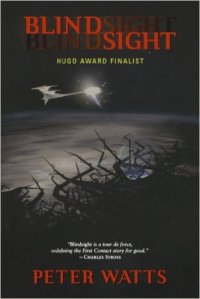
Leviathan Wakes is defiantly, definitely okay; the biggest problem with it isn’t the novel itself but having already read Blindsight, which its some similar notes but is just a much, much better novel.

Leviathan Wakes is big on game theory, empathy, and political questions. They start early—”The temptation to have an unexplained comm failure, erase the logs, and let the great god Darwin have his way was always there” happens on page 14—and don’t really relent. Still, I dislike the implication that “the great god Darwin” thinks that individuals and small groups are inwardly selfish; evolution has also endowed us with the ability to cooperate, and humans are super-cooperators, alone among animals.

Leviathan_WakesBut the divisions among people may change shape and form, but they always remain, at least as long as we live in a world of economic scarcity. In Leviathan Wakes, Earthers, Martians, and Belters (those who grow up and/or live in the Asteroid Belt) are the primary divisions. I write this in 2016, and in the current European and American political systems there are spasms around divisions that, viewed from the proper perspective, will seem trivial. The other day I heard someone say that Trump has a point about immigrants. I agreed and amplified, suggesting that he do something about the filthy, lazy Irish and Italians, with their Papist ways and mooching dispositions. The guy I was talking to didn’t know what to do with that; the Know Nothing Party may be gone, but its ideas live on for as long as humans have a powerful psychological need to divide ourselves into tribes.

In Leviathan Wakes some descriptions are good (on a space station, “The air smelled beery with old protein yeast and mushrooms” or “The circle of life on Ceres was so small you could see the curve”), but the text can usually be described as nondescript. It’s rarely bad but rarely stellar. For example, the sentence after the one about the circle of life on Ceres is “He liked it that way,” which is representative of the novel’s language.

The sense of mystery is strong, though, and mostly excuses the sentences. You’ve read worse. You’ve read better. The plot gets sillier as the novel progresses.

What else? There is a convenient magic drive that gets people from place to place relatively rapidly. It’s hard to imagine that genetic engineering won’t have re-made the human species by the time we develop advanced space stations with room for millions of people. Did people in 1750 imagine that in 2000 we’d still be riding horses and firing muskets? Because imagining 2250 without substantial genetic engineering is hard (unless there’s an apocalypse in the meantime, which is also possible).

Leviathan Wakes is guilty of many of Charlie Stross’s space opera clichés, but I mostly forgive it. I just can’t imagine wanting to re-read it.

Straight to Hell: True Tales of Deviance, Debauchery, and Billion-Dollar Deals — John Lefevre

Masters of one medium, like Twitter, aren’t necessarily masters of another medium, like the 80,000-word memoir. They can be but don’t have to be. Lefevre mastered Twitter, but his long-form game is not as strong. That being said I did laugh when reading Straight To Hell; I feel like I couldn’t drink anywhere near the amount Lefevre does, or take anywhere near the amount of drugs. I don’t imagine I’d want to be friends with him. As he puts his life philosophy, “As we see it, if you’re dumb enough to get caught cheating, you probably don’t belong on Wall Street.”* That sounds like a sentence from a Bernie Sanders rally. It isn’t.

Straight_To_HellLeFevre writes, “From my experience, the rich and unscrupulous tend to make for entertaining company.” Speaking of political connections, he could be talking about Donald Trump, which is part of the reason he makes a popular, evil presidential candidates (and I don’t use the word “evil” lightly, but he is evil: the evil of pure id, untempered by knowledge or self-awareness). Straight to Hell has more political resonances than it should, and that may help explain its popularity, as it works on readers’ subconscious.

Still, LeFevre’s company is often entertaining, and the best one can say about his scruples is that he makes public what many would like to be private. The speaker of unpleasant truths has a kind of honor. The book is his unpleasant truths, though it is often about the unpleasant truths he dodged (“Now I know for sure, this deal is never going to work. But I still don’t want to be the one who gets blamed for killing it.”) Machiavelli has a vital role in history for a reason.

Even for people like me, who don’t see money as evil, LeFevre will make them want to see money as evil. (Consider how Sylvia Nasar puts it in Grand Pursuit: The Story of Economic Genius: “Historically, money had been seen as powerful, desirable, very likely evil, and mysterious, like natural calamities or epidemics.”) Money can be earned in ways that tend to benefit humanity or, in LeFevre’s world, in ways that tend to be about rent seeking and stealing pieces of the pie, rather than earning them, or expanding the size of the pie. Finance here looks like the latter part. That being said one doesn’t and maybe can’t know whether LeFevre’s book is representative, any more than a movie like Bad Teacher is representative of the teaching industry.

Straight To Hell is a memoir about signaling. The finance world presented in it has descended to an almost-pure signaling hell, in which there is no content, only surface. Hence the ceaseless references to luxury brands and luxury-brand schools. The two have become synonymous, however much humanities-department Marxists may want to deny it. There is a weird kinship between high school memoirs or novels and Straight To Hell. American high schools are painful because there is no content to shape form. Lefevre’s finance world is similar. In it, seniority beats skill (count the number of times the word “senior” appears). Many American high schools are so bad because there is no financially viable way to start an alternative high school that can siphon off smarter students and parents. Banks, in Straight To Hell, operate the same way. If contemporary investment banks operate anything like the way Lefevre depicts them operating, then “fin tech” (or “financial technology companies and products,” to use a phrase du jour) should be a ripe opportunity for startups, because the banks, and their personnel and culture, are so internally fucked up that smart startups ought to be able to eat them.

Unless, of course, regulatory and other barriers kill startups before the startups can really succeed. Still, anyone investing in financial companies should read Straight to Hell. It ought to give them courage, if it’s accurate. I can’t really judge whether it is. I’m too far from the industry. It seems unlikely, but unlikely things turn out to be true all the time. It seemed unlikely that the U.S. government would massively spy on virtually all of its citizens, but Snowden showed that it does. It seemed unlikely that an electric car startup could succeed, but Tesla showed that it can. I won’t discount Straight to Hell without trying to triangulate its portrayals. Still, if it is to be believed then many bankers are redistributing money to escorts and drug dealers. Not that I’m opposed, necessarily, to either group, but it is interesting given recent noise about financial inequality to see money flow from the rich to middle-skill service providers (though the book is not conceptualized or framed in that way; still, often the most interesting parts of a book are those that are unintended).

One could write an interesting piece comparing temperaments in Houellebecq and LeFevre. One could also write an interesting piece comparing Thiel in Zero to One and LeFevre. As Thiel notes, in a discussion about why startups (and other companies) must incentivize their employees with stock and other methods that align incentives:

Cash is attractive. It offers pure optionality: once you get your paycheck, you can do anything you want with it. [. . .] A cash bonus is slightly better than a cash salary—at least it’s contingent on a job well done. But even so-called incentive pay encourages short-term thinking and value grabbing. Any kind of cash is more about the present than the future.

zero to oneStraight to Hell can be seen as a document about “value grabbing” and about living in the hedonistic present. The value grabbing is not purely financial, either: It’s also sexual. The team lives or dies by the current roadshow. Slickness rules. One could also compare Straight to Hell and Zero to One in terms of humor versus earnestness. Zero to One has its moments of humor (think of the brief section comparing hipsters to the Unabomber, or the part about Richard Branson and the naked windsurfing model) but the preponderance of the book is about how to make serious, real improvements in the quality of life for all humans. Straight to Hell is about getting a bonus and getting your dick wet (concern over women’s pleasure is mostly absent, or I’d add something appropriate for women as well). There is nothing intrinsically wrong about either and indeed both have concerned me greatly at various points, but there is something distinctly sublunar about the relentlessness of those concerns, and the way one never looks up from the bonus or the girl or the meal.

Is it a satire? Is the joke on me because I don’t get it? There is much like, “There’s no justice in this world—a valuable lesson to learn at a young age, especially if you want to end up on Wall Street.” Is it bravado, trolling, or truth? After many words I still don’t know.


* If they’ll cheat someone else, they’ll cheat you when they get a chance.

My Amazon review of Peter Watts’s Blindsight

People read Amazon reviews and Watts reads his, so I left this one.

Listen to the positive reviews: Blindsight is one of the most stunning and incredible novels I’ve read, ever, and that’s among all novels, not just SF. To describe Blindsight is not to do it justice: Like Ulysses, the plot can be summarized but the texture of it cannot really be conveyed save through the reading itself. Ulysses might be summarized as, “Neurotic man wanders through Dublin, gets stuck in his own head.” In that sense, Blindsight might be summarized as “The link between humans and post-humans encounters aliens, and nothing will ever be the same.

BlindsightBlindsight is on my mind because I just finished Leviathan Wakes by James S. A. Corey. It’s a competent, fun novel. It’s even good at times. But it covers territory similar to Blindsight’s, only less mind-blowing. It’s less developed. One can have literary blind sight and enjoyable read Leviathan Wakes, as I did, but reading them next to each other will show that something is missing from Leviathan Wakes. One needs total vision and a third eye to get Blindsight. To be sure, most people never reach enlightenment. But without reading it, you’ll never know if you can get there, or if you’ll be left at the foothills like most of us are.
The world is very different from ours in key ways but doesn’t yet have AI; before Firefall, Siri Keeton, narrator, who is supposed to have no feelings and only observation, is doing this:

I’d been liaising for a team at the Kurzweil Institute, a fractured group of cutting-edge savants convinced they were on the verge of solving the quantum-glial paradox. That particular log-jam had stalled AI for decades; once broken, the experts promised we’d be eighteen months away from the first personality upload and only two years from reliable Human-consciousness emulation in a software environment. It would spell the end of corporeal history, usher in a Singularity that had been waiting impatiently in the wings for nigh on fifty years.

But it hasn’t arrived. Not yet. Not in Blindsight’s world, which is also Siri’s world. To us it’s an odd one:

You hire people like me; the crossbred progeny of profilers and proof assistants and information theorists.

In formal settings you’d call me Synthesist. On the street you call me jargonaut or poppy. If you’re one of those savants whose hard-won truths are being bastardized and lobotomized for powerful know-nothings interested only in market share, you might call me a mole or a chaperone.

He works in “the rotational topology of information and the irrelevance of semantic comprehension.” Oddly, that may be what a lot of us do: understanding surfaces without understanding depth, if “surface” and “depth” have any meaning at all. That’s one of the (many) question Blindsight asks (Leviathan Wakes asks political economy and cooperation questions). To restate many of them would take many thousands of words. That is another way the novel is like Ulysses.

Links: HIV stories, High Output Management, Bloomberg, the accusation, writers, and more

* “The forgotten survivors of AIDS,” a shocking and moving story, or rather set of stories, that you should probably not read if you’re at work.

* “Andy: Introduction to High Output Management,” a book I haven’t read but that’s on the list.

* “The Risk I Will Not Take” by Michael Bloomberg, a moment of useful nobility in a presidential race that has on one side been unusually tawdry.

* Stories like this are part the reason it is not smart for men to become teachers. In 2014 I wrote “Why don’t more men go into teaching? Fear of The Accusation.”

* “The Spiritual Shape of Political Ideas,” excellent throughout, and the next section is related to the quote above:

Our social and political life is awash in unconsciously held Christian ideas broken from the theology that gave them meaning, and it’s hungry for the identification of sinners—the better to prove the virtue of the accusers and, perhaps especially, to demonstrate the sociopolitical power of the accusers. Moreover, in our curious transformation from an honor culture into a full-fledged fame culture over the past century, we have only recently discovered that fame proves just as fragile as honor ever was, a discovery hurried along by the lightning speed of the Internet. Twitter and Facebook may or may not be able to make someone famous, but they can certainly make someone infamous in the blink of an eye. And because sinners’ apologies never receive the same publicity as their sins, the Internet both casts its targets from the temple and leaves them out there, lost among the profanities.

* The average “writer” makes £11,000 a year (well under $20,000), and other items of note in this piece. Short version: Don’t attempt to be a writer! Be a “something else” who also writes.

* Hilariously: “Gun-Rights Advocate Who Posed With Small Child and Gun Was Shot by Her 4-Year-Old on Tuesday.”

* “What planet is Young Thug from?“, a different piece than the sort of fare usually posted here.

* “Big solar is heading for boom times in the US.” More good energy news.

* “There has never been a better time to take a long-term view and use technology to solve major problems, and we’ve never needed the solutions more than we do right now.” See also my Grant Writing Confidential post on how to turn that general advice into specific funding: “Should your startup seek Small Business Innovation Research (SBIR) grants?

All Things Shining: Reading the Western Classics to Find Meaning in a Secular Age — Hubert Dreyfus and Sean Kelly

The first chapter of All Things Shining is strong and so is the second, on David Foster Wallace, but the book gets duller as it goes on, sustaining as it does its readings based on other books. There is something curiously empty about it, like a modern art museum that is much duller than a celebrity’s Instagram account. It is too well mannered. Academia’s mores rules. All Things Shining encourages us to find shining meaning in things but it itself doesn’t feel shiningly meaningful, as even sections like Lewis Hyde’s The Gift do.

Deciding that something is boring is easier than fully understanding why something is boring. I haven’t quite figured out the “Why” question regarding All Things Shining. The book does remind one of why great novels endure; story is still powerful and narratives without story are hard to sustain, especially when many claims seem somewhat dubious:

Modern life can seem to be defined by [uncertainty]. An unrelenting flow of choices confronts us at nearly every moment of our lives, and most of us could admit to finding ourselves at last occasionally wavering. Far from being certain and unhesitating, our lives can at the extreme seem shot through with hesitation and indecision, culminating in choices finally made on the basis of nothing at all.

I said that this is “somewhat dubious” because it is, even if we do face many choices. At bottom we each have to choose for ourselves what is important, and then pursue that thing. It might be pleasure or technology or words or research or money. Universals are likely absent and “The burden of choice is a peculiarly modern phenomenon. It proliferates in a world that no longer has any God or gods, nor even any sense of what is sacred and inviolable, to focus on our understanding of what we are.” The “burden of choice” also comes from the fact that many of us can pay the rent and pay for food, which leaves us with more time for self-contemplation. Maybe too much time.

I’m fond of telling students that you know you’re an adult when you realize that, if you can’t pay the rent and pay for food, you won’t have anywhere to live or anything to eat. Sometimes a focus on base material conditions is helpful. And forgetting that a very large number of people are justifiably focused on this issues is sometimes too easy for tenured academics.

Some paragraphs are both useful and yet I wonder what polls would say:

The Greeks of Homer’s era lived intense and meaningful lives, constantly open to being overwhelmed by the shining presence of the Olympian gods. As happy polytheists, their world was the opposite of our contemporary nihilistic age.

Did the average Greek of Homer’s era live intense and meaningful lives? What about their children? What happened when their children died? Or was the average Greek covered in shit (link likely safe for work), slaving away to support a tiny number of nobles who focused on political games, consuming the marginal product of labor of the peasants, and fighting pointless, zero-sum wars with other nobles?

Still, the book has some interesting sections, and it is a deeper discussion of its issues than you’ll find on most of the Internet The discussions of craftsmanship are glancing but perhaps most interesting. Maybe if Wallace had conceptualized himself first as a craftsman and then as an everything else things would have gone better. Maybe not, though, and it’s hard to criticize one of the most truthful writers of his generation for not doing even better than he did.

Man’s search for meaning goes on.

Onwards.

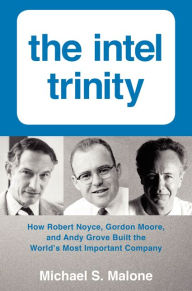
Briefly noted: The Intel Trinity: How Robert Noyce, Gordon Moore, and Andy Grove Built the World’s Most Important Company — Michael S. Malone

The Intel Trinity is another of these books that one wishes were better written but that remains interesting throughout nonetheless. For one thing, I bought the party line about Intel being essentially indomitable from its inception to the present. It wasn’t (“Frankly, the evidence argues that Intel may have been the most successful technology company ever founded by a dysfunctional start-up team—certainly by such a team that stayed together”). The book also injects ideas about history and legacy into a very contemporary culture:

Thanks to the amnesia of Silicon Valley and the digital world, [Robert Noyce] had almost been forgotten by each subsequent generation of techies as they elbowed their way to fame at a thousand dot-com companies, and then at Google, Facebook, and Twitter.

Intel_TrinityOver time, “Silicon Valley had finally and unexpectedly become history,” at least to its founders. Over a long enough time period anything becomes history, although Alan Kay famously said, “I also happen to believe in history. The lack of interest, the disdain for history is what makes computing not-quite-a-field. [. . . Computing is] complete pop culture. I’m not against pop culture. Developed music, for instance, needs a pop culture.”

It will take many more books and maybe many more years before it becomes less of a pop culture, if it ever does. The Intel Trinity is history, but the paper quality of the hardcover is oddly poor, as if the publishers themselves imagined the book to be non-essential and disposable. That contrast between the historical comments and the quality of the physical object itself is odd.

Still, it does trace the story of Intel from its beginnings and from the Fairchild exodus. Fairchild employees were apparently more dissolute and fun than modern tech company workers, or at least compared to the image of modern tech workers:

Just to repeat the anecdotes of the era is insufficient. There were endless after-work drunken gatherings at the nearby Wagon Wheel saloon, where women employees were hustled, marriages were broken, feuds were fed, and in time, employees were stolen by competitors.

Intel itself, however, was apparently less exciting, at least for most people.

The Intel Trinity also points to some of the reasons why Silicon Valley has been so hard to dislodge as a startup capitol (much as NYC is still a publishing capitol, despite outrageously high housing costs): “between 1967 and 1973, [hundreds of new companies] created not only a vast and prosperous business-technology community, but also the greatest start-up company incubator the world had ever seen” (59). At a time when most people were focused on free love and the word “start-up” to connote a new company didn’t really exist, northern California was blossoming. That’s a tremendous head start that’s hard to overcome today and will be hard to overcome tomorrow, despite San Francisco’s completely insane politics.

I haven’t yet got to the stories of Noyce, Moore and Grove. The latter has the most flabbergasting story, since he barely escaped World War II-era Hungary, when Hungary first fought on the side of the Germans, then was occupied by Germany, then was occupied by the Soviets, and eventually had its fledgling democracy crushed by the Soviets. Grove was Jewish and his survival story is amazing enough to have made me order his memoir, Swimming Across, which Malone draws from.

One has to wonder why the Intel trinity is less famous than, say, Bill Gates. I think the answer is simple: there were three of them. Larry Page and Sergey Brin are less famous than Gates, though their company is at least as important, largely because I think the press needs a single person to deify and to hate. Multiple founders makes the process of adulation and despair harder to conduct. Mark Zuckerberg is perhaps the most famous modern startup founder because he stands alone in the spotlight. This reading owes something to Zero to One, which is as much about culture and it is about startups. Culture is everywhere, even in technology, as Malone reminds us.

Links: Collapse, economic behavior, vaccine success, academic nonsense, and more!

* “Preparing for the Collapse of the Saudi Kingdom.”

* “Divorce laws and the economic behavior of married couples,” an underappreciated point.

* “Vaccine Has Sharply Reduced HPV in Teenage Girls, Study Says.” This one verges on the obvious, but it’s worth reiterating. Vaccines really are a public health free lunch.

* A Long Game: On how California cities became as screwed up as they are, and how to fix them.

* Mindsets for Thinking about Innovation In — and Competition from — China:

China’s largest online/ebook publishing company, Yuewen Group, which has over three million digital books in its catalogue. More notable than the scale here however is how the company monetizes: Chinese readers can pay per every 1000 words (sort of like by chapter), and have been able to do so for more than half a decade.

Brilliant. This is one advantage of avoiding path dependence.

* The Smartest Book About Our Digital Age Was Published in 1929:

The key driver of change, as Ortega sees it, comes from a shocking attitude characteristic of the modern age—or, at least, Ortega was shocked. Put simply, the masses hate experts. If forced to choose between the advice of the learned and the vague impressions of other people just like themselves, the masses invariably turn to the latter. The upper elite still try to pronounce judgments and lead, but fewer and fewer of those down below pay attention.

* “Do teens read seriously anymore?” I can’t tell, but even when I was a teen reading seriously seemed like a thing that only I did. The default meaning of “reading” may also be changing.

* Academic Drivel Report: Confessing my sins and exposing my academic hoax.