Links: Malaria vaccines will save lives, the need to build, and more!

* “First malaria vaccine slashes early childhood mortality: Huge analysis of RTS,S in Africa shows it decreased toddler deaths by 13%.” Tremendous, hugely important news, and much more important than 99%+ of what’s in the headlines.

* How science often actually works. :(

* “Why America Doesn’t Build: Even green-energy projects get quashed by local opposition.” Relatedly: a good thread on how California “environmentalists” are overwhelmingly not. This might be easier to read, and it doesn’t require a Twitter login.

* “How to Prevent Gun Massacres? Look Around the World.” We’d rather live-action role play macho toughness than not be shot, which seems like a bad tradeoff to me.

* “The Sinking Submarine Industrial Base.” Part of the preparation for losing a war over Taiwan, or possibly the Philippines.

* “The Extremist’s Gambit Helps Explain Why Hamas Attacked Now.” Not just more of the same: depressing, but also interesting.

* “Open source news is the future of journalism.” One quote: “What the incident showed is that in a race to the truth between professional journalists and self-organizing investigators online, all of whom had access to the same public materials, the journalists lost by a long shot.” And they continue to lose.

* “When the Music Stopped: An Inside Look at the Hamas Assault on the Trance Festival.”

* “On Writing (or not): Bad habits and why the voice in my head needs to kindly shut up.”

The isolating gap between speaking and being heard  

Before the massive surgery that left me without a tongue, I used to read to Bess at night to get her to fall asleep; I mentioned that practice in “I know what happens to me after I die, but what about those left behind?“:

Some books, like my copies of The Lord of the Rings or The Name of the Rose, she’ll obviously want. They’re favorites of mine, and I read both out loud to her—Bess is a nervous, difficult sleeper, and reading to her helps her relax into sleep. For The Lord of the Rings, I gave Pippin an absurdly lisping voice that often made Bess protest that I should “read him normally,” as if her nightly protests weren’t part of the fun. For The Name of the Rose, I spoke all of William of Baskerville lines in my best Scottish accent, poorly but enthusiastically imitating Sean Connery.

I got started reading to Bess when we lived in New York City and she was working emergency medicine “locums tenens” shifts* upstate, where the pay and schedule were better than the City’s. I can’t remember what inspired me, but one night we were on the phone, and I picked up a copy of Robertson Davies’ The Deptford Trilogy and began reading to her. They’re peculiar books that I shouldn’t like, about dysfunctional Canadian beta males trying to explain away their lack of libidinous zest, and yet I do: it must be the writing. Whatever draws me to The Deptford Trilogy worked on Bess too, and even when she returned from the upstate wilds I kept reading to her. I sleep readily and easily, so it was easy for me to offer up a few pages, pausing when Bess would start squawking and reacting to the story. She often accused me of inserting absurdisms into the text, and she’d insist on seeing the page itself. More often than not the text was there, but sometimes it mysteriously vanished between the moment I read it and the moment Bess looked for it.

I’d read until Bess seemed to be asleep or on her way to sleep. She finds my voice soothing, if sometimes monotone, which might be what made it such a useful soporific. The following night, I’d often have to rewind a few paragraphs to find the last spot Bess remembered. Sometimes I’d teasingly demand a summary of the previous night’s action, and express dismay if she’d forgotten key points.

Apart from Bess traveling,** sustained interruptions to the reading were rare before Oct. 20 2022, when I got the first surgery on my tongue. That surgery went relatively smoothly and easily: I didn’t have to have a “flap” composed of muscle tissue grafted onto the remains of my tongue. The surgical margins on the tongue itself were clear. I lost the lymph nodes on the left side of my neck, but none were cancerous. The day after the surgery I got discharged from the hospital. I could swallow. I don’t remember how long it took me to regain speech, but I did expeditiously, and radiation therapy was supposed to eliminate any errant cancerous cells that the surgery might have missed. I seemed to be on the road to wellness.

Regular readers know the outcome: instead of moving on with my life, the cancer recurred, a salvage surgery failed but took my tongue, and now there is a race between experimental treatments that might keep me alive for some extra months and the cancer that will almost certainly kill me soon. My body is doing poorly along many dimensions, although on a day-to-day basis I’m feeling somewhat better than I was after the savage May 25 salvage surgery, or during the two rounds of chemo.

Instead of working with my body, I constantly feel like I’m fighting it. I’ve also learned something essential about life management: I should take a sleeping aid, like Benadryl or marijuana, when I wake up in the middle of the night and can’t get back to sleep. Most nights I wake up after two to four hours needing to clear my airway of mucus, a violent, noisy act not conducive to gliding back into a relaxing bed. Too little sleep leaves me half alive in the morning, and then in a gray fog all day, and thus not very communicative. Speaking demands a lot of conscious attention in a way it didn’t used to, and when I’m already exhausted I find generating that speech hard. It’s difficult to have positive overall days without enough sleep. Bess has offered to read to me at night, but being read to doesn’t hold the same appeal.

Today I can speak again, after a fashion and with that conscious attention I mentioned, though I can tell that people hear me and wonder if I’m mentally disabled. My voice has that “is this guy okay?” quality. I used to pitch clients over the phone, but, even if I somehow, improbably live long enough for work to become an issue again, I won’t be able to. Not easily, and not without warning clients that I don’t have a tongue and sound very strange. A lot of life has been digitized, but the internet hasn’t fully resolved the problem of people wanting to have an actual conversation before they wire five figures to someone who is scarcely more than a website and phone number. Pitch calls offer the opportunity to showcase skills on the fly, too; I’ve learned enough about batteries, geothermal energy, and related topics to tell war stories about past jobs. But for me, most conversations with new people entail a lot of them saying “what?” or “can you repeat that?” A lot of them pretend to understand. I’ve gotten used to incomprehension in casual contexts, but incomprehension in business contexts means not making the sale. Who and what am I then?

The main type of person I run into who is impressed with my ability to speak is ear, nose, and throat surgeons. Them, and head and neck cancer oncologists. Those two groups understand that, relative to most people who have their whole tongues removed, I sound great! Spectacular, even. Drs. Hinni and Nagle, who removed the tongue and constructed the “flap” that I now have in place of a tongue, did incredible work. I’m their Statue of David, their Sistine Chapel. Their artistry is to be commended and appreciated. Even Jessica Gregor, the Mayo Clinic speech therapist, was amazed by my oratorial prowess at our first post-operative session, although “prowess” may be too strong a word for “being more than vaguely intelligible.” But she sees a lot of glossectomy patients and so knows the range of outcomes far better than me. I thought she was just being kind and optimistic, but it turns out the vast majority of patients struggle to be understood even by those closest to them. But to the non-cognoscenti, when I start talking I can see the “Is this guy developmentally disordered?” question being silently asked. Almost any ambient noise renders me incomprehensible. A shop or restaurant plays music? Forget it, no one will understand more than a few words I manage to emit, in my turkey-like gobble.

Technology can ameliorate the problem a little, and apps like Speechify can translate text to voice in a way that mimics natural speech and intonation. Those apps can even recreate famous voices. Maybe I would actually increase client retention if I used the “Snoop-Dogg” voice for business. More realistically, I find myself wondering what work and career might look like if some miracle clinical trial drug combination manages to keep me alive, against the odds, for years rather than months. I should’ve gotten disability insurance, but it’s too late for “should’ve.” It’s not my nature to give up, yet right now I also don’t see a great path forward. The past me is gone, and now I have to deal with the present me, however broken I may be.

I halfheartedly tried voice banking before the surgery. There’ve been clunky, inefficient programs around for ALS patients for the last five years or so. But “voice banks,” which make recordings of specific phonemes via scripts you read aloud and recreates a voice that sort-of sounds like you tend to stutter and sound robotic. I also didn’t prepare for losing my tongue and didn’t expect to lose it. The night before my unexpected total glossectomy, I downloaded one such voice bank app but only had an opportunity to record 100 sentences—enough to sound slightly like I was trapped in a computer but couldn’t get out. It was a little uncanny valley, a little horror flick, and too slow to be useful. Apple is coming out with an app soon that’ll do the same thing, and if it’s based on voicemails and recordings, that could conceivably help.

None of these programs help with inevitable latency. Latency kills the cadence of a conversation. Good conversation is a delicate thing; great conversation even more so. I’ve tried to converse vis keyboard and speech-to-text, but the rhythm is almost always all wrong. A sympathetic friend and I can do it, but we’re people who, instead of dancing, keep walking into each other and falling into holes. Just as losing my ability to eat disconnects me from a key part of the human experience, so too does losing the ability to have a simple conversation.

I can still read a little bit to Bess. Though it’s painful to ask the muscles of my mouth and throat to strain and move so strangely by speaking, it’s probably good for me to keep exercising my voice, particularly in a world where my universe has shrunk so much. Many sick people report shrinking universes, and I’m among them. The shrinkage is everywhere except for medical appointments: I don’t teach undergrads any more; I don’t pitch clients; I rarely catch up with friends on the phone, because I’m so hard to understand; even issuing commands to my car via voice, like “navigate to Sky Harbor Airport” doesn’t work. For some peculiar reason, the car has always preferred spoken commands from Bess, even before the surgery. A bunch of phonemes are still hard or impossible for me; “k” sounds, for example, I can’t enunciate. “L” and “w” are also tricky. A lot of people smile and look at me blankly when I speak, clearly unable to interpret the sounds, but not wanting to admit it. Interestingly, the group that seems to best comprehend what I’m trying to say seems to be people who work with a lot of international talent and who are thus used to a variety of accents. I did appear on The Daily Stoic podcast, which is fun, and that podcast gives you a sense of what I sound like. Bess thinks that I sound clear and intelligible.

In “How do you say goodbye?” I said:

Bess hears subtleties in my voice that I feel are overshadowed by the struggle of enunciating the phonemes themselves, especially with no tongue to help me phonate. Bess hears me more than anyone else and understands the sounds I emit better than anyone else, through pure exposure. Much like parents can understand the seemingly unintelligible squawks of their toddlers via practice and exposure, Bess will translate what I’m saying to those who can’t make out the syllables I’m trying to pronounce. How are they supposed to understand my tone when they can hardly understand my words, garbled by a lack of tongue? Somehow, Bess can. Further complicating the difficulty of saying goodbye is the physical challenge of speaking.

Last night, I tried reading to Bess before bed. She was feeling antsy, and we were halfway through a copy of Elmore Leonard’s novel Be Cool before the surgery, so I picked it up. She lay there with an eye mask on her eyes and the half-smile she gets when she’s expecting to be entertained. I did the “Chili Palmer” voice the best I could—a staccato, sort of hyped-up New Jersey Sopranos reject-actor voice. Bess laughed at me. She’s reliably amused by the absurd voices, although the one I do for Chili Palmer isn’t as mirth-inducing as the one I did for Pippin.

One of the great things about Bess: if I find something that makes her laugh, I can just keep pushing that same button, seemingly forever, and she’ll enjoy it every time. Bess followed my reading, though, or seemed to, and when I switched to a female character she noted, amused, that “every woman you’ve ever read to me sounds the same.” Which felt like a ridiculous thing to say—of course I don’t sound the same as I did, and my female characters must sound different too. I have no tongue. My words slurred and I strained. But Bess has said she doesn’t see me like a cancer patient most of the time, and so perhaps she doesn’t hear me as one either. I’ll never sound “normal” again, and probably I’ll never meaningfully work again, but, at least with Bess, I know she listens when I speak, which makes a difference in helping to just feel like, well, myself. Maybe it’s not principally how you speak that matters: maybe it just helps to know that someone really hears you.

If you’ve gotten this far, consider the Go Fund Me that’s funding ongoing care. If you or someone you know is going through cancer and needs to understand the clinical trial process, this is what happened to me.


* I don’t know why the absurd Latin phrase persists in the field, apart from path dependence, but doctors who work “locums” shifts aren’t employed full-time at the hospital. A placement agency usually finds the docs, qualifies the docs, and gets the docs credentialed at a given site. Since there’s a shortage of doctor and residency slot because of the lobbying from the American Medical Association (AMA), docs get higher pay than they would without that shortage. Most docs don’t suffer through four years of med school and three or more of residency to live in rural areas, so rural areas are continually importing docs from fun cities.

** She frolicked at Burning Man one summer, and I didn’t read to her at all while she was there. In retrospect, I should’ve recorded a couple hours of book and told her to listen to 10 or 15 minutes a night.

Links: On what matters, as opposed to what’s foregrounded

* “What Was Literary Fiction?” See also me, on the death of literary culture.

* Racism at literary journals: “Literary Submission Policies Shouldn’t be Color-Coded.” This seems obvious. On Substack, no one has to know who you are or what you look like.

* “On Having Children: The Most Private Choice We Make Has Potent Public Consequences.” I think there’s a big time preference issue here: having kids is great in the long term but very hard in the short term. That, and we’ve made housing very, very expensive. See also this catalogue of fertility matters. Information-dense, which is great!

* “Learning from Houston: It’s clear that the city’s permissive housing development policies help with affordability.”

* Paul Graham’s new essay, “Superlinear Returns.” He’s the best essayist of the age.

* “The Techno-Optimist Manifesto.” Beautiful, needed, and important.

* Carbon capture pipeline nixed after widespread opposition. In case you’re wondering whether we’re serious about climate change. We’ve just experienced the hottest summer on record, and 2023 is the hottest year on record.

* Apple won’t let Jon Stewart talk about China. Anything you get from Apple comes from a company that puts the priorities of the CCP first.

* Get an ebike cause they’re fun. Mine is fun! You should try one.

* Why Big Money Can’t Easily Change Campus Politics.

* “A Digital Pornutopia, Part 1: The Seedy-ROM Revolution The Digital Antiquarian.”

* Orwell’s Inner Party: The man behind the myth.

* On ambition and encouraging ambition. Nothing in in the essay is proven or causal but it’s interesting nonetheless.

“Please be dying, but not too quickly: a clinical trial story”

Please be dying, but not too quickly: a clinical trial story” is Bess’s latest essay, and it describes 1. how I got into the petosemtamab clinical trial, which is among the better I could have gotten in; 2. how the process of finding a good clinical trial functions, which is useful for anyone in a position similar to the one Bess and I were in July, and 3. how the clinical trial process can and should be improved. People are dying (I’m one of them) while patients, doctors, and drug companies struggle against a system that appears to have evolved in a dysfunctional direction. We can and should do better.

How do you say goodbye?

I’ll admit a disappointing answer up front: I don’t know. Because I’m dying, I’ve been saying goodbye a lot, but even after a bunch of practice I still don’t know how to say it. Humans have to learn how to say all sorts of unpleasant and unhappy things; as I write this, terrorists have broken into Israel and murdered hundreds, if not thousands, of civilians. Someone will have to call their families and say: “Your brother | sister | son | daughter | cousin | friend is dead.” One Israeli 13-year old’s whole family was murdered. Someone had to tell him. And then time continues its perpetual beat, and the people who’d been living and animate will transition from the small percentage of humans who are alive to the much larger percentage who are not. I get the relative luxury of saying goodbye, of thinking about how it should be done.

I wrote in “How do we evaluate our lives, at the end? What counts, what matters?“:

One estimate finds that about 117 billion anatomically modern humans have ever been born; I don’t know how accurate the “117 billion” number really is, but it seems reasonable enough, and about 8 billion people live now; in other words, around 7% of the humans who have ever lived are living now. I’ve had the privilege to be one. At current levels of technology, however, the gift must be given back, sooner or later, willingly or unwillingly, and sadly it seems that I will be made to give it back before my time. I have learned much, experienced much, made many mistakes, enjoyed my triumphs, suffered my defeats, and, most vitally, experienced love. So many people live who never get that last one, and I have been lucky enough to. The cliche goes: “Don’t be sad because it’s over; be happy that it happened.” That is what I’m trying to do, at some moments more successfully than others. I try to focus on those ways I am so lucky and blessed, but I am often failing.

Despite not knowing how to tell people I’m dying, I feel like I have to, because the alternative is worse; I’ve heard of cancer patients who tell no one, and then the shock strikes their friends and family at the end. All else equal, I prefer to do it via essay: one gets a fullness and richness that speech or text message seem to lack. There’s a consistency, too, when sharing the same document with friends and family, in that everyone I love understands what I’m thinking and feeling. Probably I should read these essays aloud and upload them. Overall, I’ve learned to do it plainly and straightforwardly, if possible. It’s a stunning blow to most people who know me, but it’s better delivered with minimal rhetorical cover. Then there is time for the rest. I’ve told many people that I’m dying and yet I still feel like I’m no good at it.

I may have learned this “do it now, and fast” lesson from Bess: she told a story called “How to say it,” in which she describes her (sadly extensive) experience in telling people grisly news: your abdominal pain isn’t gas, it’s cancer; the cancer you thought you’d defeated is back and has metastasized everywhere; the infection that was in your bladder is now in your blood; there is nothing more medicine can effectively do for you other than refer you to palliative care; and, most notably, with declaring death:

I take your family to a quiet room, with Kleenex. Then I say the word “dead.” Not “expired,” because you were a person, not milk. And not “passed on,” because families always want to believe you were just transferred to another hospital. “Dead.” I have to say it.

That’s all they really taught us in medical school about how to deliver bad news. A one-hour lecture. So we learned by watching our teaching physicians. We were their constant audience in a sort of theater of the bereaved: lurking near doorways and family rooms and the hospital’s ER, noting how soft they made their voices, when they patted someone on the back, how much technical jargon did they use before getting to the word “dead.”

When you train to become a doctor, they don’t really teach you about death. They tell you how to prevent it, how to fight it, how to say it—but not how to face it.

Doctors are often the border agents of life and death. A lot of modern, industrialized people, like yours truly, don’t have a lot of direct experience with birth and death. Fertility rates are tragically low (housing prices and exclusionary zoning stifle them), and most of us avoid death where we can. My family is tiny, so I missed the passing of elderly relatives when I was young. Bess is an emergency medicine doctor, though, and so she often has to say it. The word “dead” is key. She doesn’t take on the emotional challenge of the dying, though, because to do so would render her ineffective at preventing premature death as best she can:

The first time I had to be the one to break bad news to a family, I was in my last year of residency training. I remember having to do it in the patient’s room, because his adult daughter refused to leave his bedside. So I said, “I’m sorry. He’s dead. We did everything we could.” Then I was supposed to give her a few moments alone, but I was paralyzed. Rooted to the spot by a feeling of failure and loss. When I looked at the bed, I was imagining what it would be like if that was my father. My supervisor must have realized what was happening, because she grabbed me by the arm and dragged me out the door.

“Don’t you ever do that again,” she said. “Don’t pretend that grief is yours when it’s not. One day, you’ll be where she is. But if it’s not the person you love on the table, say you’re sorry, mean it, and then you have to walk away.”

Her emergency medicine attending physician was right, and now Bess is, in a sense, where that patient’s family was. At work, she’s learned to deliver the bad news calmly but firmly, stamp out any ill-conceived hope born of desperation, and offer to get social work or the chaplain in to help the family. Then she goes onto the next patient, who might have come in for something as minor as an ingrown toenail. Their grief can’t be hers. Patients who get bad news about cancers get passed to oncologists, who have to be tragically familiar with saying goodbye. Lots of doctors have to figure out how to say it.

I like the way Dr. Hinni did it: when I got the horrible news about the recurrence, Bess or I texted him with the news. Telling him seemed polite: he’d done so much impressive work on me, and so we thought he’d want to know how the story turns out. We messaged him on Friday, July 21, and the first chemo round was scheduled for Monday, July 24. Our friend Fiona flew into town for it. Dr. Hinni must either not have been operating that day or had a relatively minor operation—I was once, in October 2022, a relatively minor operation by his standards—because he stopped by in the afternoon. I was snowed under by anti-nausea drugs and so was asleep when he got to the infusion center; I woke up and said hi. He may have been holding Bess’s hand. He came over and held my hand and said he was sorry. I understood: he’d done everything he could.

I asked a futile question I was pretty sure I already knew the answer to: “I assume there’s nothing else to do surgically, right?” My neck already felt like I was in a tight noose. The first surgery and then the radiation had taken so much out of me. The second surgery felt like it had taken whatever margin was left. Dr. Hinni confirmed that, no, he couldn’t do anything more: any attempt to remove the tumors would likely spread them further. He understood, and I understood. I don’t know how long he’s been a surgeon, but I have to think he’s in his 50s, and thus he’s seen a lot of patients whose cases didn’t go the way he’d like. Beyond the confirmation of the obvious and the statement that he’s sorry, there wasn’t much to say. There was the comfort of a hand being held, and the sense of tragedy, and then he wished us well and went out into the world, to help those who can still be surgically helped.

There’s something to the low-speech approach.

“Words are inadequate” many friends and acquaintances have (correctly) said to me; they know I’m a writer, but I don’t think that’s why they say they don’t have the words. I agree with them about how there are no words, apart from the simple and elemental ones, like “I love you” or “I know I will be gone, but I will also miss you.” The big elemental feelings don’t handle contractions, I guess. Maybe that’s one way to say goodbye: with fewer contractions, and more feeling in the voice. “Feeling in the voice” is hard for me, because, without my tongue, I sound like a goose being strangled whenever I speak, or a trumpet manipulated by a poor musician.

Bess claims that I actually have more vocal modulation now than I did before, an assertion I’m extremely skeptical of. She says—and I mostly deny—that I had a tendency to be monotone, responding often to her sharing of exciting news with the reply, “great,” said in a tone similar to that of someone learning their sexual prowess is best described as “resoundingly okay.” Bess further claims she could identify my emotional timbre based on other cues, but that vocal tone was never my primary form of emotional conveyance.* Yet back when I still had a tongue and read novels to her at night to help her sleep, the voices that I gave to the characters often made her laugh. (“Yes, but you made their voices purposefully different than your personal default,” she protests when she reads this.)

The point is, even today Bess hears subtleties in my voice that I feel are overshadowed by the struggle of enunciating the phonemes themselves, especially with no tongue to help me phonate. Bess hears me more than anyone else and understands the sounds I emit better than anyone else, through pure exposure. Much like parents can understand the seemingly unintelligible squawks of their toddlers via practice and exposure, Bess will translate what I’m saying to those who can’t make out the syllables I’m trying to pronounce. How are they supposed to understand my tone when they can hardly understand my words, garbled by a lack of tongue? Somehow, Bess can. Further complicating the difficulty of saying goodbye is the physical challenge of speaking.

There’s the difficulty of how to find the right words to say goodbye and the things that I don’t want to leave unsaid before the end. Maybe my struggle with physical speech is one reason I feel like I get closer to the core of what I’m trying to say when I write the email updates to friends and family—or these essays. I don’t have to stop to repeat myself, or have Bess explain what I said, or manage the frustrations of premonitory small talk (a while ago, I declared a “moratorium on banality”). Speaking is also physically painful, and although I have a “use it or lose it” approach, there’s still an opportunity cost to conversation. Writing the right words also means that the people they’re intended for can read them now, and again later, whether I’m here or not. They’re less ephemeral than a chat, though I’m aware too that they often don’t generate the same feeling as spoken speech. Yet some written words generate a lot of feeling; for example, Bess has a little shoebox in which she’s kept every card and note I’ve ever written for her. I imagine she’ll go back to those in the years to come when she wants to feel my love for her. She’ll probably re-read these essays too, as they’re a kind of summa of my life and feelings and sensibility. Textually, there will always be a chance to have another goodbye, in a way that spoken words can’t achieve (unless they’re recorded, I guess). My words might be inadequate, but having them is still better than not—both for me and for those who I leave behind.

There are other ways I’ve tried to say goodbye: I’ve been making videos for Bess. She’s given me a list of things she things she thinks she’ll need to hear (figuring out what those things might be is a harder project than she anticipated), so that she can pull up one of the short videos I’ve made for her on the topic and listen to it when she needs to hear me and hear me telling her she can do it. I’ve made videos for when she’s feeling lonely, or when she needs encouragement, or when she can’t sleep.

My siblings asked for a copy of my signature, and then tattooed it on their forearms so that I’m somewhat literally “signing off.” Rachel and Sam say this way, I’ll always quite literally be with them.** And this month, Bess and I are (hopefully successfully) making embryos for IVF so that, while I am taking leave of this life, we’re also making a new one and sending the beauty of human consciousness into the future. This is a particularly hard way to say goodbye, but it’s also a hopeful one. There’s a future to look forward to, even if I’m not in it in the way that Bess and I anticipated, or hoped.

There are probably more ways to say goodbye that I haven’t tried, or thought of, and I’m open to hearing what people need. If friends and family have something in particular that would satisfy them, and I can manage it, I’ll do it. Saying goodbye isn’t something that I have to figure out solely by myself, even though I’m the one going. I said in the essay about psychedelics easing the path to the other side that I find myself comforting others about my impending demise more than I get comfort from them. Goodbye could be the opposite: I take more than give. Goodbye is relational. It’s something that is figured out between myself and the person—or people— I’m saying it to. Death is forever, but the memory of me and of saying goodbye will live on as long as the people I have known and love do.

So that’s my take on how to say goodbye: I said I don’t know at the start this essay, and I still don’t (really) know at the end. If you know, let me know. I’ll be here for a bit, but soon I’ll be saying those truly final goodbyes and then it will be too late. So don’t wait: I don’t have time. Could be that you don’t, either. None of us do, not really, which is why you should do the thing you’ve always wanted to do while you can (provided it doesn’t harm other people or have significant negatives). On July 21, I didn’t know whether I had only weeks left to live, and so maybe I jumped the starter gun on saying goodbye. But I wanted to tell the people who are important to me what I felt while I could. Tell people you love that you love them. Encourage them to live in blessedness and to live generative lives. Doing so won’t take many words, but “I love you” is what matters, in death as in life.

Maybe goodbye is not really something that’s said, but something that’s done, and I’m trying to do goodbye, which seems to be done most often speechlessly, sitting with people, our thoughts on one another but few words coming out, because those words don’t work. I’m reminded of a scene when, at the end of The Lord of the Rings, the elves are passing out of Middle-earth forever, and with them will go Gandalf and many fair things and the memories of the Elder Days; after the fall of Sauron, Celeborn and Galadriel are traveling with some of the remaining Fellowship members:

They had journeyed thus far by the west-ways, for they had much to speak of with Elrond and with Gandalf, and here they lingered still in converse with their friends. Often long after the hobbits were wrapped in sleep they would sit together under the stars, recalling the ages that were gone and all their joys and labours in the world, or holding council, concerning the days to come. If any wanderer had chanced to pass, little would he have seen or heard, and it would have seemed to him only that he saw grey figures, carved in stone, memorials of forgotten things now lost in unpeopled lands. For they did not move or speak with mouth, looking from mind to mind; and only their shining eyes stirred and kindled as their thoughts went to and fro.

I’m not a grey figure carved in stone or a memorial of forgotten things now lost in unpeopled lands, but this part of my life feels a lot like a living memorial to the rest of it. Though Bess and I are, hopefully, starting vital new works, there’s a strong sense that I have far more past than future. A miracle is possible, but I’m assuming I’ll remain in line with the statistics describing my disease progression. And so I’m trying to say goodbye, even if that speech is often done not by speaking from the mouth, but by being with friends and family and each of us looking from mind to mind, and wishing that the end were not here so prematurely.

Sometimes words work, as when Bess and I sealed our covenant with “I do” before the night of the total glossectomy surgery that she justifiably thought might take me from her forever. It didn’t, though, and that’s why we’re in what soccer fans call “added time.” Or, as I’ve been calling it, our “bonus time.” Time I’m using as best I can, despite the sense that the words “as best I can” still aren’t adequate, and the cruelty of premature departure cannot be assuaged.

If you’ve gotten this far, consider the Go Fund Me that’s funding ongoing care.


* Often I show affection via cooking: that I can’t eat anything apart from blended slurries hurts particularly in my case.

** My brother, Sam, wrote this:

The location itself was also deliberate, at least for me. Those who survived the Holocaust often pointed to their arms when saying “never forget.”

When people see my right arm, they often ask: “What’s the meaning behind those tattoos?” And I tell them: one of them is the Tree of Life encircling the world, and the other is the Seed of Life from sacred geometry/eastern mysticism. The theme of my tattoos on my right arm was always supposed to be representative of life. But there is no life without death, and now I have your signature there too.

When people ask me, “what’s that scribble on your forearm?” I can now answer: my brother’s signature. And then I will tell them about you, who you are (were), who you aspired to be.

I guess it’s my way to never forget.

How do you say goodbye

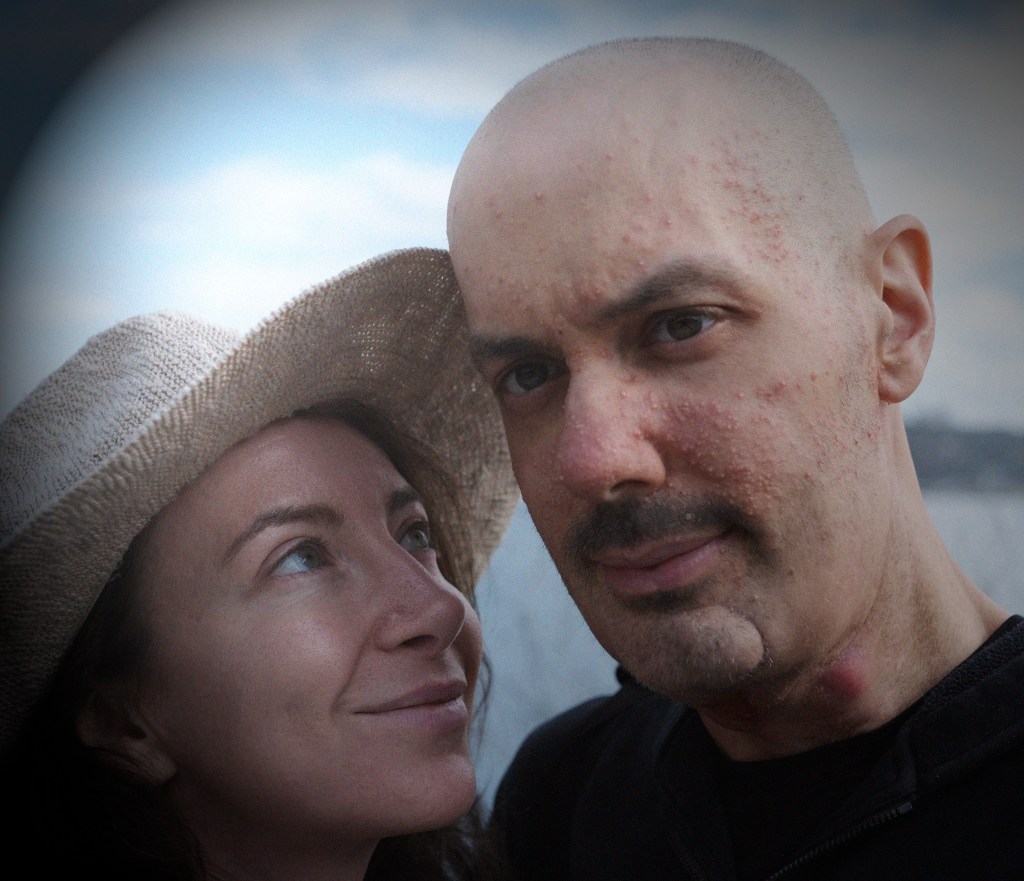
The characteristic petosemtamab rash covers my face; a tumor is visibly erupting on my neck.

Links: The possibilities of radical energy abundance, the need for tunneling machines, and more!

* “Cancer expert given experimental treatments for incurable brain tumour describes ‘phenomenal’ results.” Vague article but also indicative of how much faster we can and should be moving in terms of treatment: let people with fatal diagnoses, like mine, try.

* “The Evolution of Tunnel Boring Machines.” A topic important for human flourishing, given how antithetical sitting in traffic is to human flourishing. Interestingly, in American cities, only L.A is serious about building out or expanding a mass-transit system. New York is too dysfunctional to accomplish much.

* Schadenfreude, but: “How Rupert Murdoch Decided to Dump Tucker Carlson.” It’s like watching orcs fighting orcs.

* Exclusionary colleges don’t want the poor, which is obvious, and much of the chaff exclusionary colleges blow into the information ecosystem helps to obscure that idea and focus on other debates.

* On Larry McMurtry. Notice: “McMurtry can seem like a figure from another era. He came of age in a literary economy that allowed for the slow building of a career.”

* “September was the most anomalously hot month ever.” For another take, see “World breaches key 1.5C warming mark for record number of days.” And the collective response is to…shrug, it seems.

* New Zealand proposal to allow medical treatments approved by other countries. The U.S. should do the same: we need faster pharmaceutical research. If we had it, the treatments that might save my life would already be here.

* Andrew Weeks’ ALS diary. Interesting in general but especially for someone facing a deadly disease.

* You’re not going to like what comes after Pax Americana.

* When Hamas tells you who they are, believe them.

* Unmasking Malevolence: On Evil: Inside Human Violence and Cruelty. This was, I believe, published before the Hamas terrorist attack.

* “America Needs to Build More (and Better) Ships.”

* “Radical Energy Abundance.” It’s good, and possible to imagine this in the near future, thanks primarily to solar and batteries.


How To Efficiently Advance Your Software Engineering Career [Guest Post]

This guest essay is by my former student Nathan Lin.

At age 30 I was able to retire from my software engineering career to pursue my interest in day trading. I had advanced rapidly as a software engineer, climbing through multiple promotion cycles. Combined with some good luck and timing, by my 30th birthday I had enough of a bankroll saved for the next 5 years.

I didn’t start my career in Big Tech, although I did end my almost decade-long career there. I’ve worked in various sized companies with as few as 50 engineers to over 30,000. What I discuss here should work regardless of the size of company.

I didn’t knowingly create this framework of expectation management at the time. Only by reflecting back on my career and identifying the recurring themes am I now able to put a name and a method to it. It’s largely inspired by Jake’s essay on How to get coaching, mentoring, and attention, which I read in college, and changed the trajectory of my academic and professional career.

My framework of expectation management is built on the same foundations, and is like a “Part 2” applied to software engineering. 

Cycles

A key part of the framework of expectation management requires you to understand cycles. Cycles continuously repeat themselves throughout your career, and it is imperative that you understand:

  1. What cycle are you at in your career? (The primary cycle)
  2. What cycle are you at in your specific job? (The secondary cycle)

Just as the seasons change and pass, so too does your location in the cycle change, and that location determines how you must manage expectation and performance. Note that the primary cycle also applies to other corporate 9 ­– 5 jobs:

  1. The novice (0-2 years)
  2. The intermediate (2-4 years)
  3. The expert (4-10 years)
  4. The guru (10+ years)

These cycles apply not only to you where you are at in your career, but also where you are at in your job. I discovered this first-hand as I followed the software engineering maxim of moving every 18 months to maximize compensation. There’s always a “rampup period” where, even though you may have a few years of industry experience, you’re given time to learn your new employer’s technology stack.

After that period, you’re expected to perform at a meaningful level. And after even more time, you’ll be expected to handle expert-level questions and solve tough problems. The cycle is compressed from years to months compared to the career cycle. I call this the secondary cycle:

  1. The novice (1-4 months)
  2. The intermediate (4-12 months)
  3. The expert (12 – 36 months)
  4. The guru (36+ months)

If you want to advance rapidly, you must know your location in both cycles, and destroy the expectations placed on you. The expectations are cycle-driven and tacitly acknowledged. The industry itself is aware of these cycles, as this is how roles and expectations are defined. However, these cycles are never really explicitly discussed, which is what makes exceeding expectations and rapidly advancing difficult. I’m trying to make tacit knowledge explicit. Most CS programs don’t include class called “the software engineer career,” but maybe they should.

The secondary cycle is reflexive, based on your location in the primary cycle. So, if you’re a novice who just graduated college as a 22-year old, you may be given 4 months at your first job to be brought up to speed. Some companies will even give slightly more. But as you progress to intermediate and expert, you’ll be expected to ramp up faster.

After all, if you’ve been in software for 8 years, why would it take you 4 months to ship your first meaningful pull request?

Expectations

Understanding the actual expectations is the last piece before getting to the framework. The framework itself is quite easy to apply once you understand cycles and expectations.

You must understand the cycle you’re in so that you figure out the expectations for both the primary and secondary cycles. They’re pretty much identical, so I’ll discuss the primary cycle:

  1. The novice – junior engineer
    1. Requires supervision and frequent check-ins
    1. Needs to be told what to do next
    1. Sees the 10 foot view
  2. The intermediate – midrange engineer
    1. Requires minimal supervision
    1. Capable of self-direction and identifying the next task in a larger project
    1. Sees the 100 – 1,000 foot view
  3. The expert – senior engineer
    1. Supervises intermediates and novices
    1. Plans entire projects to solve business needs
    1. Sees the 1,000 – 10,000 foot view
  4. The guru – staff/principal engineer
    1. Supervises experts, intermediates and novices
    1. Plans large-scale initiatives that break down into projects, coordinates with multiple teams to do so
    1. Sees the 10,000 – 100,000 foot view

Another way of viewing the cycle: at the novice level, you’ll always have someone you can ask for help. If you get stuck, ask your mentor/team lead/a senior engineer. But as you advance, you work on harder and harder problems and the number of people you can ask for help approach 0 at the expert and guru levels.

When you get to those levels, you are the one person you can approach for help, and you must ultimately figure out the answers by yourself. Note that you can (and should) consult other experts for ideas. Peers often spark new perspectives and ideas. In the end, however, you’ll have to do the heavy lifting yourself.  

The Framework

The framework is actually very straightforward:

  1. Find your location in the career cycle
  2. Find your location in the secondary cycle
  3. Exceed expectations

Now, you don’t necessarily have to exceed expectations. This really depends on your goals and how motivated you are. You don’t have to do it the way I did it, working 60+ hours a week to climb furiously. I had a goal in mind and I was determined to get after it. 

If you enjoy the 9-5 corporate life, there’s nothing wrong with meeting, instead of exceeding, expectations as the third step. The 9 – 5 corporate life can yield a great career, and if you know which companies have a healthy work life balance, you can have a very fulfilling job.

How do you exceed expectations? I only gave a high-level summary, so you may have some trouble with the details. But the rough idea can be found in Jake’s essay: prove to your team, especially your team lead and manager, that you’re here to get shit done. 

And the only way to prove that is to actually do it. This is where the rubber meets the road, and where the buck stops. Delivering results is the measure by which all top-level performers measure themselves and others by. So you must start speaking their language. The easiest way to do this is to deliver a small result as fast as possible, in your first week if you’re experienced, or your first month if you are a new graduate.

I’ve found fixing a low-risk bug, or improving test coverage especially reliable.

This is where the concept of cycles comes into play if you want to do this efficiently. You can quickly demolish expectations when you first arrive at a new job. Expectations are low, your team is giving you space to learn, so this is therefore the most logical place for you to make a first impression.

The beautiful thing is that this small result compounds. You’ve established a foothold in the codebase, and it’s now easier to work outwards from there. There may be some starting effort to establish the initial foothold, but it’ll pay off as the next pull request becomes easier. And as you continue to add code and make improvements, you’ll end up holding entire swaths of the codebase in your head.

Word on the team will travel fast. Good engineers are hard to find, and your mentor will mention your results to your manager. Your manager will begin to pay attention to your development. You may end up working on projects designed to promote you to the next level. And you may work with the heavy hitters on your team, and it won’t be a coincidence.

Skills compound over time. Mentorship opportunities open up to those most worthy of them. Life isn’t always fair, but over time, merit wins more often than not.

Promotions

If you want a promotion you must exceed expectations. At a certain point in time, you must begin signaling the attributes of the next rank above you, which requires two things. First, you must be proficient in your existing role, and second, you must begin to model the people on your team who are already at that next level.

Reverse engineer the next role, and ask yourself: “What does someone in that role do that I don’t?” So if you’re a junior engineer and you wish to become a midrange engineer, start proactively taking on tasks. Identify the next logical step to do without waiting for your mentor/team lead to give you the task. 

There’s an element of critical thinking here where you should ask, “What’s the next thing I should work on to efficiently move the project towards the finish line?”

Ship some code, then go back and refactor it, or move to the next task: “This is in a part of the codebase I was just in, I’m already familiar with these files.” 

Model the people who are already at the level you want to be at. If you think the way they think and code the way they code, then you’ll automatically begin operating at their level. They’ll see how you do it in code review and they’ll think, “Wow, she coded it the same way I would have. She’s pretty smart”. These people are also usually the ones your manager will solicit to determine if you’re ready. 

This brings me to my promotion rule: The more frequently you signal you are ready, the faster you’ll get promoted.

The Resting Rate

I haven’t talked about when to take a break. If you continue to smash expectations day after day, week after week, you’ll undoubtedly burn out (I speak from experience). When’s the ideal time to take a breather? There are actually a few places to strategically do so.

The first is after your team ships a major project. Everyone is happy: the project is complete, the deadline has been met. On most teams, the workload lightens substantially. Don’t do what I did and take on more work to keep padding your resume. There will be plenty of that down the line, so take a breather.

The second is after advancing through a phase in the cycle. But doesn’t this look bad if you get promoted and your work output drops? No, because never in my career have I seen someone demoted or put on a plan right after they were promoted. Your manager and skip level have gone through weeks/months of work to promote you, HR is involved with your compensation increase, so demotion or similar would look terrible on all parties involved. 

Now, I’m not saying to slack off and do nothing. But take a breather. If it doesn’t get done today, that’s okay. Your career will last for decades. This is something I did not really understand. 

I thought that in order to advance, I had to signal I was at the next step every single day. I suspect this is something that plagues a lot of other high performers in tech, causing burn out.

It’s true that the more you signal you’re at the next level, the faster you’ll get noticed and promoted. But there’s also a ceiling to the amount of signal you give off. There’s a point at which all the additional signal you produce will be ignored.

This is due to factors outside of your control, such as bureaucracy or company/HR policy. So you should really push as close as you can to this ceiling, and then no further. Additional effort at this point will be wasted. If you want to make it to staff/principal level, this is really important. You don’t want to be burned down to the ground by the time you make it. 

Why It Works

Several key quotes from Jake’s essay have stood the test of time in my career and life in general:

“…professors (and others with knowledge and competence) are most inclined to help people who won’t waste their time.”

“If a student really wants to learn, the professor will usually help, but most students don’t—so the professor builds a wall between herself and her students to make sure that the only students who breach the wall are the ones who do care about learning.”

“Secondarily, your professor will often recommend reading to test your seriousness…If you go away and don’t come back, you’ve demonstrated that you would’ve wasted her time had she spent an extra hour talking to you outside of class and office hours.”

This is why I recommend you immediately fix a small bug or improve code coverage. You’re going to be asked to do this anyway. Everyone is busy, and no one has time to sit you down (unless you are a recent grad) and walk you through the codebase. If you do this proactively, you’ll have taken one more item off their plate and shown, in a small way, that you’re worth their time.

The wall to getting a top performer to mentor you might even be more difficult to breach than a professor. Every minute of time spent talking to you is a minute she could be spending on advancing her career for a big raise or promotion.

You’ll often be shooed away with a simple bug fix. And if you come back asking trivial questions that can be answered by the README or a cursory glance at the code, their guard immediately goes up. How are you worth their time if you demonstrate you’re not capable of the basics?

But if you come back with a pull request, and a follow-up question about the architectural design of the system, now you’re showing you’re worth their time. You’ve produced the result and you’ve dug deep enough into the code to ask a harder question.

You have shown you are worth their time, maybe they could learn something from you. 

“People who really want to do something… do it. Or they make changes so they can… But most people say they want to do something and then they don’t. Over time, others notice this (like me), and they start to assume that most people who say they want to do or know something are full of shit.”

This is why you must signal you are at the next level for a promotion, and why you must signal often. 

Do you know how many times a year your manager gets asked for a promotion? It happens all at once, during the annual performance review, and it won’t get brought up again until the next year. Most people will get rejected and complain to their spouse, “Ah my damn manager doesn’t want to give me that promotion”.

But if you make it a recurring theme in your 1:1s, and you ask, “How am I progressing towards the next level?”, then the question sounds very different. Don’t just ask your manager to be put on a project. Find a problem that needs to be solved, come up with a plan of attack, and then build a proof of concept.

People react in one of two ways when expectation does not match reality. When reality is worse, they’re angry and disappointed. When it’s better, they are happy and excited. And that’s why expectation management works, because you’re demonstrating that reality is better. 

Completing The Cycle

I don’t want to drag this out and turn it into career management advice, so I’ll end on a few notes on advancing as efficiently as possible. 

First, you have to advance through the cycle no matter what. You can’t remain a novice forever or you’ll get fired. At best you’ll never reach your potential. If you’ve been in the industry for 10 years but produce the results of a novice, you’ll be viewed with suspicion because you’re breaking the expectation in the wrong direction.

Second, you don’t have to push as hard as I did if you don’t want to. The key is to work backwards and figure out your goals, then match your signaling frequency to that goal. 

There will be so many more projects down the line. Don’t tunnel vision on padding your resume and working 24/7. It’s okay to rest, and relax, because this is the natural cycle of things. 

Third, you have to know when, where, and how much to signal. 

When you are fighting to make it to expert status, you will need to signal more often. You have the energy and vitality to do so when you’re young. When you reach expert status, the game is more about conserving energy. You can decide whether or not you want to reach true guru status, or stay at your current level. Both are acceptable.

Thanks for reading. I hope this helps you, both in your career, and in your life, the way Jake’s essay helped me. 
“Forever is such a short, long time”

Forever is such a short, long time” is Bess’s latest essay. It starts this way:

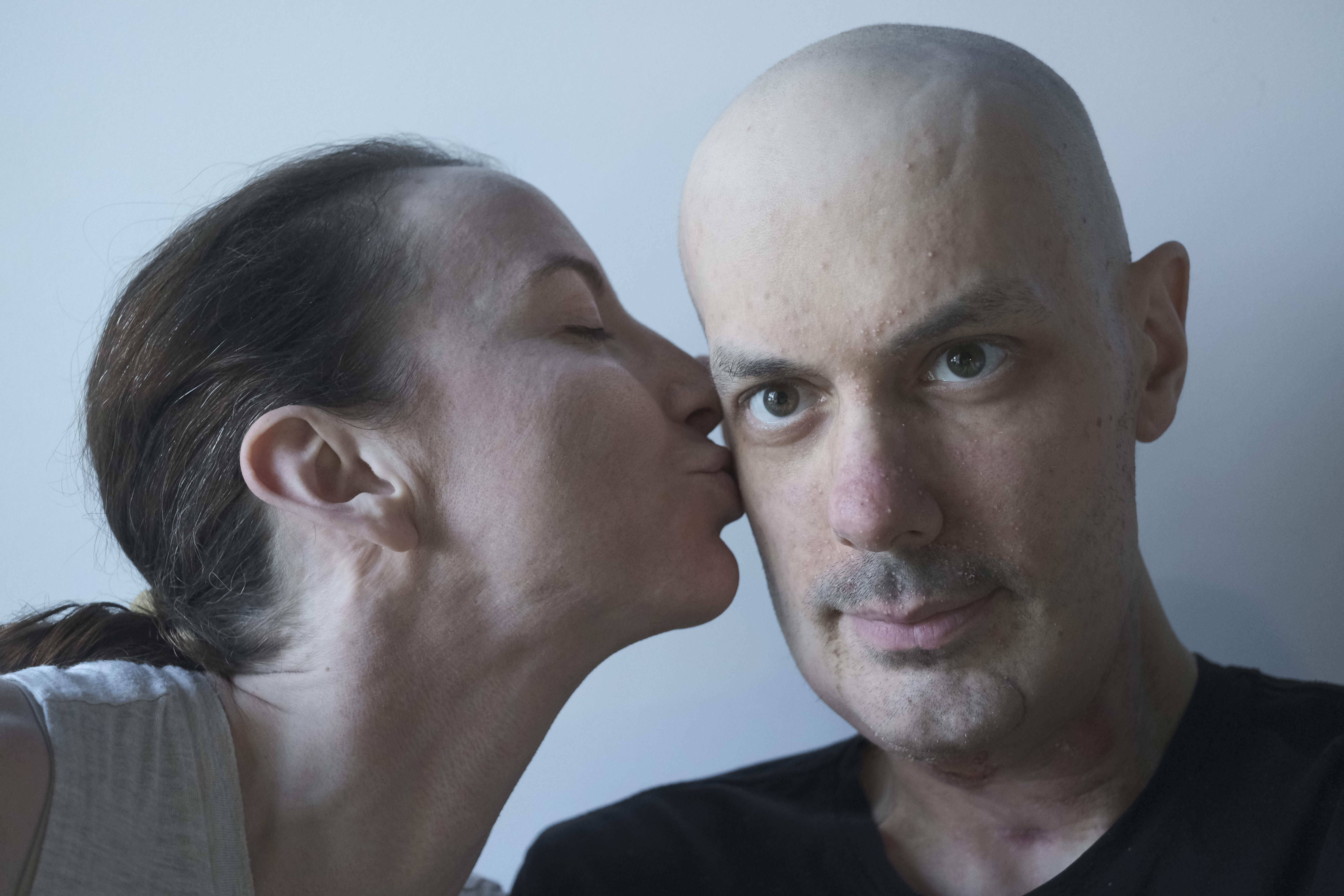
Jake and I look at each other and say, “I will love you forever.” But Jake is dying of a squamous cell carcinoma, so while “forever” is supposed to be a very long time, our actual time horizon is so very short.  

We married on May 24, 2023, the night before a huge surgery that was supposed to cure his recurrent squamous cell carcinoma of the tongue. Our impromptu wedding was in the courtyard of our apartment building, beside the empty pool, and underneath a second-floor stranger’s patio; we’d chosen the spot because those neighbors had had fairy lights strung up for ambience. In the background, in lieu of a string quartet, were jokes and distorted laughter from a drag queen hosting bingo across the street at an open-air bar called The Hot Chick. Our friend-slash-quickly-ordained-online-officiant Smetana had to raise her voice to recite the ChatGPT-composed ceremony (she did a beautiful job).

We didn’t have rings to exchange because we hadn’t yet bought any: Jake’s surgery had been scheduled for June 8 but was moved up, probably because his surgeon, Dr. Michael Hinni, thought Jake might not make it to June 8. I worried about the same issue, because Jake was getting visibly, alarmingly worse day by day. I’d been watching him, as a doctor and wife, and I didn’t know whether he’d make it through the surgery (or the night).

Read the rest.

Links: Spacecraft, the psychology of psychology, perspectives on death, and more!

* This is Astral Codex Ten on the first Elon biography. It’s germane to the new biography by Walter Isaacson—I’ve read about half of the Isaacson one, and all of the Vance one—in that specifics about Elon may have changed in the last seven or eight years, but the essentials have not. He’s still brilliant and insanely hard working, and he still takes enormous risks and likes emotional chaos. His description of his father as “evil” seems apt. The material from the end of that biography to the present is different in the sense that Elon is building the Model 3 and more advanced rockets, but the same in the sense of underlying drives, character, etc.

* Doing business in Japan. One of these essays that’s about far more than its title. Also, from a different writer: “Notes on not liking Japan as much as everyone said we would.”

* MDMA history.

* “A review of Number Go Up, on crypto shenanigans.”

* Trying to get people to go vegetarian. Look at the illustrative picture: that’s part of the challenge. Social desirability bias is real, for both vegetarianism and polyamorism. Yet most of us are hypocrites when it comes to kindness towards animals, like dogs, that are in front of us, and incredible cruelty towards animals that aren’t in front of us.

* “I’m so sorry for psychology’s loss, whatever it is.” What does one do with a discipline that bears too much resemblance to astrology? What is the psychology of psychology? The psychology of psychologists?

* “My death is close at hand. But I do not think of myself as dying.” ($, WaPo). And, also, “As my end nears, I crave the soul-to-soul connection of seeing friends in person.” H/t Ryan Holiday. What is a good life? So much of it is most truly about connecting to other people, one way or another. The Internet, used well, facilitates those connections. You and I are connecting right now.

* “The case against (most) books.” Not wholly convincing but interesting, and applicable to the many books that should in fact be articles (Astral Codex Ten is great at sheering books to an appropriate size). Hanania cites Marcus Aurelius’s Meditations:

it’s all basic stuff like “don’t worry about what others think of you,” and “control your emotions.” Maybe it was mind-blowing the first time someone said these things, and it’s definitely sort of cool that a Roman Emperor can communicate with you across two millennia. But I’m 100% certain that if you gathered some passages from Marcus Aurelius and hired a halfway intelligent blogger to produce content made to sound like Marcus Aurelius, nobody would be able to tell the difference.

Is Meditations “all basic stuff?” Then why do so many of us have trouble implementing it, if it’s basic? “But anything intelligent or insightful they said you’ve probably absorbed already through run-of-the-mill blogs and self-help books, shorn of all the stupid things that inevitably made their way into their writings.” I’d be curious to see examples from the “run-of-the-mill blogs” or self-help books. This is me on Stoic philosophy.

* Impulse Space CEO Tom Mueller talks early days at SpaceX, moon bases and a booming space industry.

spacecraft and the psychology of psychology

The body’s betrayal and the struggle to gain weight

I stand on the scale and it flashes 137.8 lbs, which elicits cursing because 137.8 lbs is dangerously low and I’ve been trying, futilely, to gain. Though I’m dying at an accelerated rate from metastatic squamous cell carcinoma of the tongue, inadequate calorie intake risks accelerating the death timeline, which makes the day-by-day eating stakes high. Most of us eat in ways that are optimized for pleasure and convenience, not longevity, and we eat too much food because it’s delicious. When we down that extra bowl of pasta and grab that cookie, we don’t think those choices will be fatal soon. For me, though, there’s a tight feedback loop between missing scheduled calorie intake and hitting a dangerously low weight that leads to body shutdown.

I have to remind myself that missing meal injections—most calories are infused into my body via a peg tube that inserts directly into my stomach—will quickly become a serious problem. Chemotherapy especially leads people to under-eat, and, while I don’t have more chemo immediately scheduled, I’d be surprised if I’m totally done with chemo. Surgeries and chemotherapy have, together, severed much of the mind-body connection between food and me, and the results are weird, since I don’t feel hunger despite losing weight. Most of us, I think, live within some kind of tolerable harmony with our bodies, as I did prior to losing my tongue and neck lymph nodes and much else; instead of fighting some external foe, I feel like I’m constantly fighting myself—and losing.

I feel like I’m losing against my body and slowly losing my ability to live. A year ago I weighed 175, but since that time I’ve been sliding into the abyss of illness. Though I try to get out, each step is like a step into scree, such that even the efforts to get out of the abyss merely causes me to slide further in. It’s a peculiar experience: one day, before the first surgery, I’m healthy, and then there’s a brief interregnum (like, I imagine, a city that knows the war will soon arrive), and then, because of the surgery and recovery time and subsequent treatments, I’m never healthy again. There are a few moments when I seemed to be improving, but never back to the pre-surgery baseline, and my new “baseline” keeps changing for the worse after each major surgery or new treatment. However much I try, cancer and responses to cancer beat me down and make a normal relationship with my body a memory.

I got diagnosed with squamous cell carcinoma of the tongue in Sept. 2022, followed by the removal of the initial 9mm tumor on Oct. 20. Radiation therapy followed in December and January; radiation therapy didn’t work but, predictably, caused unwanted weight loss. That weight loss wasn’t so big a deal until a routine PET scan on April 26, 2023 showed a hot spot in my neck that eventually and tragically led to a total glossectomy (“total glossectomy” is the fancy medical term meaning “removing the whole tongue”). During cancer and similar medical maladies, many if not most people feel their body is betraying them, and I’m not excepted. Until that total glossectomy, I managed to maintain weight effectively enough given the circumstances.

The total glossectomy surgery was an order of magnitude worse than anything I’d ever been through, and I didn’t expect it, either: I thought I would lose half my tongue, not the whole thing. But the tumor had burrowed into the blood vessels in my tongue, meaning that the whole organ had to go. The surgery’s immediate aftermath was and, as of this writing, still is the darkest period of my life; during the first recovery week in the Mayo post-surgery ward, I felt like I should be dead despite being technically, formally alive. The sense of living death made me not want to exist at all. When I went into the hospital on May 25, I was close to 160 lbs, despite that radiation treatment on my head and neck. I apparently did relatively well at radiation (I say, as if it’s some personal virtue rather than random chance): the inside lining of my mouth, tongue, and throat didn’t slough off, and, with enough oxycodone and viscous lidocaine for the mouth, I could eat some chia pudding and some Kodiak cakes dipped in maple syrup. To the surprise of the radiation oncology team, a few solid or solid-ish foods were easier than smoothies, which burned.

Between January and May I tried to eat more than I typically would, and I trained with barbells, yet I didn’t gain much weight. I wasn’t worried, though, because the ear, nose, and throat (ENT) surgeon who performed the October surgery and the radiation oncologist who supervised what you’d expect given his specialty thought I was cured. I assumed they, and the Mayo Clinic tumor board at which my case was discussed, would be right. I’d not read things like this: “Most patients are diagnosed with a locally advanced disease and treated with strategies integrating surgery, chemotherapy, and radiotherapy. About 50% of these patients will experience a recurrence of disease.” I’m not sure what qualifies as “locally advanced,” but, although my tumor showed evidence of “perineural invasion” (meaning: it had invaded nerves in the tongue), it hadn’t spread to lymph nodes in the neck. I was considered stage 2, only because the tumor very slightly extended into the floor of my mouth. Not all news from the first surgery was good, yet my presentation wasn’t as bad many people’s, and I didn’t realize that recurrence is more common than I’d been led to believe.*

By the time I got out of the hospital on June 5, after 11 days and without a tongue, I weighed just 146 lbs. Getting calories in was that hard. For the first days after surgery, a tube went in my nose and into my stomach, and an edible food-like substance called “Nutren” or “Nutren 2.0” could be injected through the nose tube. Being fed through the nose is as comfortable as it sounds, and injecting food that way reliably triggered nausea, even with zofran, so I didn’t get many calories. Imagine the feeling of swallowing nasal backdrip as the only way to access nutrients and you’ll have a sense of the “nasogastric tube” diet experience. Early on, too, I was just barely hanging on, and food injections weren’t a top priority. Maybe a week after the surgery I got a PEG (percutaneous endoscopic gastrostomy) tube placed in my stomach, but the nausea persisted—I think I’d gotten out of the practice of eating.

Once I got out of the hospital, the Case Managers at the Mayo Clinic Phoenix, where I was being treated, couldn’t get me the infusion pump I needed, and Bess and I made a critical mistake in not buying one ourselves. For vital equipment, I discovered the hard way that it’s better to buy an extra one than risk not having it. A “Moog Infinity Pump” is the right pump, it turns out, and costs about $600—yet it took us two weeks to get one. The ordeal of getting out of the hospital with a new PEG tube, a tracheostomy tube, and limited preparation for everyday life is too long and elaborate to get into here. But during those two weeks I wasn’t getting enough calories, and I dropped to around 137 lbs. Each drop seemed shocking and dangerous—how much more could lose before I went into organ failure? one pound? two? five?—and yet I remained corporeal. Now I’ve stabilized in that 140 lbs range—still far too light, but, for the time being, slightly functional.

Why can’t I gain weight? Bess speculates that my tumors may be highly catabolic, which means that they’re using a lot of calories and essentially stealing them from the rest of my body: “Cancer-associated malnutrition is driven by reduced dietary intake and by underlying metabolic changes (such as inflammation, anabolic resistance, proteolysis, lipolysis and futile cycling) induced by the tumour and activated immune cells.” So it may be that, just as I’m at war with my body, my body is at a civil war with itself.

I mentioned that the mind-body connection was, if not severed, then attenuated. I don’t or rarely feel hunger. I don’t feel satiation, which is the other side of hunger. In late July I learned to swallow slurries again, which meant I could get some of the pleasure of taste, but everything I swallow has to be mixed with enough water for me to get the food down, and the water reduces calorie density. Sweet food, more than savory food, seems to activate the taste receptors that remain (in the back of my throat, esophagus and hard palate). In the war against the tumors that are extracting calories and nutrients from my fat and muscle and food, I have to inject calories and eat, but it’s an intellectual knowledge, like knowing I need to practice with spaced-repetition software to augment long-term memory, or someone who is wavering on their instrument needing to pick it up and play. The immediate animal sense of hunger is absent.

The food cravings that have characterized my life, and most people’s lives, don’t exist, or barely do; today, when they come on, I have to suppress them. I can’t eat pizza. Bess did pick up a pie from Doughbird and blended it, but the result didn’t satisfy. I can’t handle spicy, so the noodles, buns, and other food at nearby Din Tai Fung in San Diego are probably out. At Taste of the Himalayas, I’ll have to ask for the food not to be spicy. Anything that depends on texture doesn’t work that well. The VitaMix’s real utility is turning things like broccoli and cheddar into the same texture as pudding, once enough water is added to the blending container. Food blended into a slurry is far better than not being able to consume anything by mouth, but it lacks the satisfactions of normal eating. Food has become a major art form in the United States, perhaps taking the place of visual art (which descended into visual noise decades ago: industrial design has supplanted “visual art”) or music (which has become ubiquitous and caught in re-treats), and it was an art form I happily participated in. Now I’m excluded from it, permanently. Not having food cravings that can be satisfied sets me apart from the typical life experience, too. Most Americans are trying to keep their weight stable or lose weight; it’s the cancer patients like me who struggle in the opposite direction.

Most days I feel gnarly, which further discourages me from eating. I want the headaches and exhaustion to go away; the persistent, shooting pain that’s been brewing and expanding in my right ear distracts me even now, as I write this sentence.

I can’t lift weights much any more either. I used to go to the gym a couple times a week, alternating two major lifts with one or two minor lifts. It worked well enough, though I never got really good and have struggles with hamstring, hip, and lower back mobility—too much time sitting and not enough time stretching. Since May, I’ve spent more time in beds and sitting on couches than I ever have before. Keytruda seems to exhaust me. Life seems to exhaust me. Maybe it’s the tumors stealing all those calories that exhausts me. Whatever it is, the burning drive to lift weights has abated, along with the sense of my future.

I sit too much. A lot of what calories I get in me come via pump, and the pump takes half an hour to an hour to inject food. Sitting seems like the most natural position when this happens. But then I get the muscle, joint, and ligament problems that come from sitting. And my left quadricep hasn’t recovered from being raided for material to make the “flap” that takes the place of my tongue. I’ve tried to lightly jog to make a crosswalk light, and my left leg nearly buckles underneath me. I can’t pant properly through my mouth. Maybe this is a gym-related issue, but my mouth dries out almost instantly when I try to breathe through it. The bodily indignities add up.

The mucus in my throat has been bad enough to make me consider auto-termination. It makes eating worse, because food gets caught in the mucus, which chokes me, sometimes to the point where I actually can’t breathe for an alarming period of time, and then I have to hack the mucus up, and I can see the swallowed food caught in it. No matter how much water I drink, no matter how much I nebulize saline when it comes time to hack up the morning’s mucus, I can still see flecks of whatever I ate the night before in it.

There are a lot of moments in cancer treatment when you don’t know whether you’re experiencing victory or defeat. The weight issue is one of those: I celebrate when I see it peak above 140, and yet I can’t seem to get it sustainably, consistently above there. The tumor seems to increase metabolic demand and thus consume the calories that should be going to the rest of my body.

Despite all I’ve written above, in some ways I was well-prepared for the physical misery of cancer and cancer treatment. For the last 15 years, I’ve eaten minimal sugar or simple carbs like bread. In high school and college I ran; in the last decade, I’ve shifted to lifting weights, though poor mobility meant persistent struggles with the squat and deadlift, however—it turns out that some people, like me, can’t turn decades of time sitting or running into good squat mechanics without mobility training. When real physical adversity came, I could lose a lot of weight and still physically function. As hard as walking was that first month out of surgery, I was better prepared than most people for walking by the physical training preceding surgery. My struggle against my body is brutal, and yet likely easier than the average person’s because of the reserve I built before becoming ill.

I wish I could find some poetic, beautiful way to end this essay—an epiphany, a wrapping up, a hopeful note on the triumph of the human spirit over tumoric adversity. I can’t right now, though, maybe because I’m too tired, too wasted away, and too unlikely to ameliorate either condition before the end. The struggle will go on, but I’m pretty sure there’s no victory for me. At the end of The Lord of the Rings, Frodo is too damaged by the weapons and devices of the enemy to stay in and enjoy the Shire, which he spent six books and 500,000 words attempting to save. He takes ship from the Grey Havens to Valinor, where he can find peace. I don’t live in Middle-earth and for me there no Grey Havens, no ships, no Valinor, and, in all likelihood, no victory over this foe residing in my neck and lungs. That is my burden, and I try not to dwell on aspects of it that will not change, but I also acknowledge the unabating misery that wars with the love for and connection to other people, the things which keep me here even when I long for a peace that I darkly suspect will come only one way.

If you’ve gotten this far, consider the Go Fund Me that’s funding ongoing care.


* I’m now in a clinical trial that’s testing a bispecific antibody called “petosemtamab.” If you’d like to see a lot of preliminary data on petosemtamab, this presentation from April 2023 offers it: 29 out of 49 patients were still alive after 11.5 months, which is an amazing rate in recurrent / metastatic (R /M) HNSCC. The goal, I think, is to be able to offer petosemtamab, and/or Moderna’s mRNA-4157, before and after the first surgery—upon or close to initial patient presentation. That should reduce recurrence rates, and petosemtamab and mRNA-4157 don’t have the toxicity profile of chemotherapy or radiation, so they should be able to be given even to patients like me, who seemed to be at lower recurrence risk. It’s too late for me, but I hope there are many fewer “total glossectomies” in the future than there are now, thanks to early petosemtamab and/or Keytruda/pembrolizamab.