Links: If women wrote men the way men wrote women, some good news, some writerly news, some simple news

* “If Women Wrote Men the Way Men Write Women,” hilarious and much better than the title makes it sound.

* “Seattle skyline is tops in construction cranes — more than any other U.S. city.” Pretty cool.

* “If corporate money controls American politics, how did the Republican Party – the reputed party of business – manage to nominate a candidate whom almost no one in Big Business supports?” An excellent and mostly unasked question. Many people’s assumptions, including mine, are being revised this year. In 2010 I wrote a post about things I’ve been wrong about.

* “Canada’s cities call for $12.7-billion federal fix for housing crisis;” bizarrely, the word “supply” never increases, yet supply limits are likely making the rent too damn high.

* Penelope Trunk: Does feminism fail because women lie to each other about work?

* Is the Stigma of Having a Baby Outside of Marriage Disappearing? If so, is it due to celebrity influence? A perhaps important point for novelists.

* The audacious plan to bring back supersonic flight.

* “Here’s what happened when I challenged the PC campus culture at NYU,” or, how at least one university is encouraging students to become the thought police. Bizarre.

* “Forget fees: Dyson opens Britain’s first degree where students get paid,” an underrated idea.

* Charter schools that work, and why they work. Charter schools are oddly both overrated and underrated, but perhaps their biggest advantage over conventional school district setups is that bad ones can be closed and good ones can be replicated. Conventional public schools just shamble on, sometimes for decades, like zombie banks.

* “Donald Trump’s success reveals a frightening weakness in American democracy,” which is among the best pieces I’ve read on the election.

* “History Tells Us What Will Happen Next With Brexit And Trump,” distressing but also accurate:

My background is archaeology, so also history and anthropology. It leads me to look at big historical patterns. My theory is that most peoples’ perspective of history is limited to the experience communicated by their parents and grandparents, so 50-100 years. To go beyond that you have to read, study and learn to untangle the propaganda that is inevitable in all telling of history.

Students are endlessly surprised when I say that it’s difficult to really know anything without reading. Most don’t believe, I think. If nothing else, this year demonstrates the utter failure in teaching and professing history, or the learning of it by the general population.

Experiencing the consequences of diminished world trade:

All the fools who voted for Brexit and Trump may also have to live with the consequences of diminished world trade. It is one thing to claim that trade is bad; it is another to actually attempt to dramatically restrict or curtail it. We’ve been living with trade tailwinds for the last couple decades. Now we may get to experience the opposite.

In the meantime, the dollar and peso are both plunging, as are stocks. Trade is an incredible net good and yet both major political parties in the U.S. are rhetorically fleeing from it. So far it is rhetoric, anyway, but soon it may be policy.

Recession in 3…, 2…, 1…

Someone on Twitter observed that the best-case Trump scenario is that he’s too lazy, uninterested, or incompetent to do much in the next four years. Let us hope. Still, overall this is one of those scenarios in which we collectively deserve what we get.

The end of democracy?

It is scary to think that I may be watching the end of democracy in the United States, live.

At the very least this election demonstrates frightening weaknesses in the structure of the democracy itself. The Constitution may deserve less reverence than it is commonly accorded. And voters may be even less rational than even I thought. Brexit showed as much. Tonight may be worse, much worse, than that.

The education system—of which I am a small part—has also failed, at least in a mass sense. Maybe real education really isn’t plausible for the majority of people. A dark thought, but one that seems more plausible tonight than it was yesterday.

The number of people who really learn anything from history is small. We really art apt to repeat our past follies. We came through the darkness of the 1930s and 1940s only to flirt with a different form of it today.

Here is my maybe futile October 10 post, “Clinton or Johnson for president.”

EDIT: Here is Krugman asking, legitimately, whether we are a failed state.

“You can teach a lot of skills, but you can’t teach obsession”

There are many interesting moments in Ezra Klein’s conversation with Tyler Cowen but one in particular stands out, when Klein says that “You can teach a lot of skills, but you can’t teach obsession. There’s a real difference between somebody who is obsessed with the work they’re doing and someone who is simply skilled at the work they’re doing.” He’s right. You can’t teach people to be obsessed and over the medium to long term you can’t even pay them to be obsessed. Look for the people who are obsessed, even if it’s hard.

The larger context is:

Look for people who are desperate to be doing the thing they’re doing. I have often found really great people by finding people who either seemed or were literally doing what they need to be doing for free because nobody was yet paying them for it.

. . . You can teach a lot of skills, but you can’t teach obsession. There’s a real difference between somebody who is obsessed with the work they’re doing and someone who is simply skilled at the work they’re doing. I will take the obsession and teach the skills over getting the skills and having to teach the obsession.

Thinking about this now, it’s odd to me that more people, especially in hiring positions, don’t select more or better for obsession. That’s especially true in academia but it’s also true elsewhere. Now that I think about it explicitly I also realize that my essay “How to get your Professors’ Attention, Along With Coaching and Mentoring” is in part about how to if not fake obsession then at least demonstrate that the person seeking help or advice rises above indifference.

Life: What makers do

“Her response to any performance, any work of art, was the desire to make another, to make her own.”

—A.S. Byatt, The Children’s Book, which is on the whole both marvelous and exasperating.

Apple finally releases new laptops:

Apple finally released new laptops, about four to six months after they should’ve. Still, the upgrades are impressive and if you’ve been on the fence or otherwise waiting, now’s the time. As usual, Apple’s hard drives are too small and their hard drive upgrade prices are usurious. People who want a Mac laptop and don’t want to pay full price should see sweet discounts on used and refurbished models in the next couple weeks.

I’m still using an iMac as a primary computer, so the announcements don’t affect me much. And my most important piece of Mac-only software is Devonthink Pro, which I still use according to a variation on this scheme, originally conceived by Steven Berlin Johnson (though he no longer uses DTP).

macbookpro_newOtherwise, many writers swear by Scrivener. I wrote The Hook in Scrivener, and due to the structure of that novel it was extremely useful. But for most novels I don’t find it essential; I don’t think most scenes can (or should) be reshuffled at will, which probably limits its utility.

Scrivener’s appeal for nonfiction projects is much more apparent to me. A couple months ago I finished the Grant Writing Confidential book manuscript (details to follow), and if most of the book hadn’t already existed  in the form of blog posts I would’ve used Scrivener as an organization tool.

In other laptop news, Dell has been producing Linux-native XPS laptops for a couple years, as does a smaller manufacturer called Purism. Given Apple’s lack of interest in non-smartphone products, it’s not a bad idea for Mac users to keep an eye on what everyone else is doing.

Links: Adjuncts, materialism, the cost of parking, Zadie Smith, dictators, Robin Hanson, and more!

* “Travels in [Feminist?] Pornland,” in Granta and by Andrea Stuart.

* Mr. Money Mustache buys an Electric Car.

* “Adjunct vulnerability is at the heart of the safe space debate;” I actually have a different reading, and the title imperfectly reflects the deeper content of the article. The “safe space” debate and political correctness more generally is an overreaction to past ills (and real ills). Too much of an initially good thing can make the thing bad, and yet too few people point this out.

* “Non-materialistic millennials and the Great Stagnation,” or, how the smartphone in particular has replaced a lot of “stuff.” In 2007 Paul Graham wrote “Stuff,” which seems truer today than ever.

* “The High Cost of Residential Parking: Every time a new building includes space for cars, it passes those costs on to tenants.”

* Too many old people may explain stagnant economies and innovation.

* “Reading Jane Jacobs Anew,” an excellent piece and don’t be discouraged by the title.

* “Zadie Smith’s ‘Swing Time’—a successful return to her roots” (and much talk about Smith’s ambivalent relationship to the novel that made her name). I’ve tried White Teeth twice and given up each time.

* “Why People Fall for Charismatic Leaders: A new book explores how fear, uncertainty, and group psychology lead people to believe leaders who say false things.”

* “The Unintended Consequences of Law: How did the entire state of California price itself out of the market for entry-level home buyers?”

* Is Robin Hanson too far ahead of his time?

* “The Government’s Addiction to ‘Secret Law.’

* Parking Lots Are an Incredible Waste of Space. Here’s How to End Them.

* “It Could Happen Here: Democracy is facing setbacks around the world, but there hasn’t been reason to doubt America’s resilience—until now.” That’s part of the reason why this election has been uniquely dangerous.

* “Natural selection in our species during the last two millennia;” evolution has not stopped and modern life may actually accelerate it.

* “Will the United States become a nation of renters?” I find the relentless focus on property ownership bizarre, given all the drawbacks it entails, and indeed most of the people who seem to think it a good idea cannot even articulate the (many) drawbacks.

Links: Material goods, durable goods, housing goods, old people and innovation, publishing, and more!

* “Trying to Solve the L.E.D. Quandary:” How can one build a business selling items that last for decades?

* Mr. Money Moustache: “So I Bought an Electric Car…

* “Non-materialistic millennials and the Great Stagnation,” or, how the smartphone in particular has replaced a lot of “stuff.” In 2007 Paul Graham wrote “Stuff,” which seems even truer today. Oddly, though, average dwelling size in the U.S. keeps increasing.

* “The High Cost of Residential Parking: Every time a new building includes space for cars, it passes those costs on to tenants.” A timely reminder for affordable housing advocates and anyone working in housing justice.

* Too many old people may explain stagnant economies and innovation.

* “Reading Jane Jacobs Anew,” an excellent piece and don’t be discouraged by the title.

* “Comprehensive new data challenges the cultural consensus on public housing. For all their flaws, housing projects can have remarkable positive effects on the children who grow up in them.” Don’t believe the consensus on public housing.

* “ The Publishing Gamble That Changed America: The Late Barney Rosset on Fighting for Lady Chatterley’s Lover,” and the fight against censorship in general (still ongoing in a few quarters).

* How an enormously clever landlord gets rid of rent-controlled tenants in NYC, or, yet another example of rent control’s perverse outcomes. There is a comic novel in here, though.

Briefly noted: All That Is Man — David Szalay

I don’t get the book at all, but James Wood likes it and lays out the reasons why at the link. After about a third I gave up, thinking, “Who cares?” Maybe you’ll know, and get it.

I’m on to re-reading All the King’s Men, which is still essential and beautiful and alternates between sounding like it’s narrated by God and by the greatest political hack ever. An appropriate thing around election time.

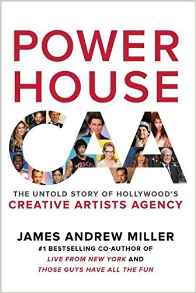
Powerhouse: The Untold Story of Hollywood’s Creative Artists Agency — James Andrew Miller

There is a really excellent book lurking inside Powerhouse: The Untold Story of Hollywood’s Creative Artists Agency, but it is condemned to be of niche interest because it’s told as an “oral history,” which means interviews with the various participants are stitched together, often banally. One hopes for something like The Making of the Atomic Bomb or The Power Broker and instead gets interviews mostly devoid of context and insights. The strengths and weaknesses of the format shine through, but one mostly sees weaknesses: there isn’t enough context for many of the decisions; the narrative continuity authors impose is lose; the damn thing is just too long; too many people don’t say the right thing, exactly, so what they say must be used anyway.

powerhouseSo why write about it at all? The book is going to be of great interest to anyone involved in startups, law firms, consulting practices, or changing industries. CAA rode a number of waves and mastered a number of key and unusual businesses practices, and it perceived how to adapt to a changing media and business landscape in a way that most of its competitors did not. In another world this could be a Harvard Business Review case study.

The movie business continually changes, and CAA is founded and then evolves based on those changes. For example, the book’s hero is probably Michael Ovitz, or the pairing between Ovitz and fellow agent Ron Meyer. Ovitz says, “The thesis for CAA that we developed was to be able to play roulette with a chip on every number, odd and even, red and black.” That worked. CAA emerged from the William Morris agency, which “was an incredibly rigid, compartmentalized business. Pay scales were incredibly unfair. There was little entrepreneurialism.”

At CAA, the opposite occurred: Agents were incentivized to cooperate; clients were (relatively) shared; initiative was rewarded. When the first five agents left William Morris, Ovitz says this about their departure:

Sam Weisbord loved Judy and he loved me, but he looked at me and said, ‘You’ve really screwed yourself this time.’ That’s what he said to me. I learned an amazing lesson from that moment. If he’d started that meeting differently, attempted to check his ego at the door, told me he didn’t want to lose me, and then offered me an insane amount of money, there was at least one chance in a thousand I would have stayed. Instead, he did me a favor, because instead of being compassionate or even making me feel guilty, he pissed me off. He attacked me and tried to belittle me. There was no way I was going to stay.

Oops.

CAA remained cooperative within the organization and competitive outside it—a difficult balancing act, because wildly competitive people often want to compete everywhere, all the time, even in ways that are inefficient.

CAA comes up with clever branding strategies. For example, when the agency started most scripts were sent from studios to agencies, and agencies then further distributed the scripts. CAA stripped the existing covers and replaced those covers with their own. So every script started to look like it came from CAA, rather than the studio. A small point but a clever one, and one that is a synecdoche for the agency as a whole.

They also do one simple thing right: pay:

We always made it a point to take really good care of the agents who worked for us. They were all overpaid. We wanted to reward them and also make sure no one else in town could afford them. We would literally ask each other, ‘How much could this person get somewhere else?’ and we’d give them 30 percent more. There were a good chunk of our agent making over a million dollars in the late ’80s.

We’ve seen the same problem among nonprofit and public agencies: They frequently underpay grant writers, and that’s part of the reason Seliger + Associates exists. You’ve also probably seen the articles going around about how manufacturers can’t find the skilled workers they need (here and here are examples from one second of search).

So the strong material is present in Powerhouse, but there is too much Hollywood gossip and status raising (or, less commonly, lowering). Too many passages like Ridley Scott saying, “Goldie Hawn brought me breakfast, and she was hysterically funny. She made it clear how much she wanted the part.” And, on the same page, “Geena Davis had gotten ahold of the script and I met her for tea at the Four Seasons where she made her case” (shouldn’t there also be a comma?). Passages like these help explain why a book that does a little too little to explain the movies and shows themselves can still be 700 pages. 700 fluffy pages, but in the long middle it’s hard to get excited about long-dead deals that don’t delve deeply into something important beyond the deal itself. There is good detail and excess and too often we get excess.

EDIT: Here is a longer treatment, in the London Review of Books.