Thoughts on the movie “Gone Girl” by David Fincher

Some minor spoilers are below.

Gone Girl is great and you should see it, albeit not on a first or even second date. The spirit and structure of the book are there, and the pivotal murder scene didn’t “feel” as much to me in the book but sure did in the movie. The casting is perfect. The theater was full and there were lines both to buy tickets and to snag a decent seat; I haven’t noticed lines for movies in years.

* The movie is by, for, and about adults, and it’s about adults in an intelligent but well-plotted way. Few modern movies even attempt to hit all those buttons; TV has primarily assumed that role. Attitudes towards and depiction of sexuality are fundamentally adult, not in a pornographic sense but rather in a post-adolescence sense that one finds more often in novels than movies.

* We are often interested, in art and life, in the concept of being “likable,” but that concept is often both poorly defined and easily manipulated. Yet it persists, and Gone Girl effectively criticizes it and criticizes the media more generally by extension the people who create the media—which is to say, “us.”

* Both movie and book work for many reasons, one being that they take existing tensions and faults in many relationships and magnify them by an order of magnitude. A lot of people will walk out of Gone Girl and into discussions about character and compromise. One does not see that in movies about saving the world, in which the good guys are obviously good and the bad guys bad for all the usual reasons.

* Though I’m usually loath to use this term, Desi is the ultimate beta male. Arguably there is no alpha male in the book or movie, with the possible exception of Tanner Bolt, and one could read book or movie as critiquing the “alpha male” ideal.

* David Fincher made Gone Girl and The Social Network, both of which are among the best movies in recent memory.
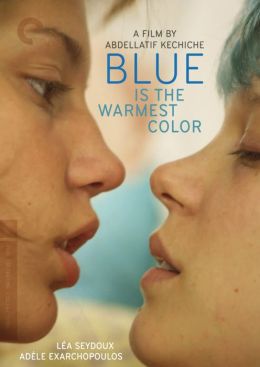
Thoughts on the movie “Blue is the Warmest Color”

* Domestic life is presented as boring and stultifying and contrasts strongly with erotic life, but is that really an uncommon message in most movies or novels? That being said Blue is the Warmest Color is very good at juxtapositions. It’s also the kind of movie that I should find horribly boring yet didn’t, and not primarily for the obvious reasons.

* “Traveling opens your mind,” a character says at the end, but does he mean “legs” as many people do when they speak to the virtues of travel? French art, based on my unrepresentative sample, depicts boredom well. Also, isn’t France supposed to be the land of tolerance? The New York Times depicts it that way.

Blue is the warmest color* The gawkiness of adolescence is depicted effectively; this is both a positive and negative at once. So too does the movie catch the faux knowingness and unwillingness to admit ignorance.

* Peak experiences count for a lot and yet how many people explicitly structure their lives around such experiences?

* Relatively few girls seem willing to embrace who they are in a sexual context; that is one reason the Duke porn freshman is interesting: she isn’t following the shame script. “Seem” may be key here.

* There are many more and longer soulful looks than there would be in an American movie but they tend to work. How much of attraction happens at the nonverbal level?

* This is hardly a novel idea but many social attacks on others are really projections of our own insecurities.

* Emma understands that there is no law in the arena. Adèle does not. She should read less Sartre and more Paglia.

* As a kid you’re judge but what you hope to do or accomplish, but at some point that flips and you’re judged by what you have accomplished. That transition is rarely announced either.

Movies as Modern Visual Art: Paglia, Stephenson, Cowen

In Glittering Images Camilla Paglia writes of George Lucas’s work:

Lucas says, “My films are basically the graphics”: “Everything is visual.” He views dialogue as merely “a sound effect, a rhythm, a vocal chorus in the overall soundtrack.” In structure, Star Wars unfolds as dynamic action sequences alternating with grand panoramic tableaux, including breathtaking cityscapes stacked with traffic skylanes. Lucas declares, “I’m not really interested in plots.” And elsewhere: “To me, the script is just a sketchbook, just a list of notes.”

Tyler Cowen notes that Transformers 4 may be best seen as an art movie. To accuse a movie like Transformers of being plotless or absurd is pointless because plot is not its point. The utter lack of anything resembling a coherent plot may explain why I thought the first one so stupid; it may also be that I failed to go into it with the proper frame of mind. Expecting something novelistic and getting something like a painting or dance is likely to disappoint. Among novels I tend to prefer ones with plots over ones that are about “consciousness” or similar highbrow topics.

Glittering_ImagesI am not necessarily opposed to movies as dance / art—Gravity (discussed by me at the link) has some Lucasian qualities but is also a plea for us to get off this planet—but there may be other implications.

Neal Stephenson, for example, has noticed the trend in movies towards either the visual (to use a positive term) or incoherence (to use my own feelings): in “Turn On, Tune In, Veg Out” he writes of how the changes in the Star Wars movies from 1977 to today also track changes in American culture, away from writing and dialogue and towards the visual. In the decade since he wrote his piece, it is hard not to see the general trends he describes as accelerating. His novel Anathem could be described in many ways, and one is a commentary on what mind happen if current trends regarding the divergence of the technical / literary / intellectual class (which is a class not defined by income) from everyone else. Paglia has not addressed this directly in a contemporary context as far as I can tell. She has a great deal of deserved scorn for what she calls word-obsessed, French theory laden academics, but in the overall scheme of American culture they’re a very small part of the picture.

Still, even in universities that are supposed to conserve knowledge and promote reading the movie temperament has made headway. In universities English professors are eager to show movies in class and have students write about movies instead of books; while that’s okay, I’m reminded of the phrase, “Writing about music is like dancing about architecture.”* There is always an impedance mismatch between writing and the subject of writing that does not exist in writing about other writing; the latter two inform each other in a way that writing about other subjects, including art, does not.

I’m not opposed to watching movies, or movie criticism, or courses about movie criticism or movie making, but the extent to which the people who are supposed to be teaching writing are using movies is another example of the trends Stephenson describes.

When I was a first-year grad student at the University of Arizona I was part of a small teaching group with other first years and one faculty facilitator. A girl and I got into a discussion about why I didn’t show movies in class, and I told her some of the above; watching movies in basic English classes is a waste of time. Reading is an essential part of writing, and people who don’t read can’t be good writers. Period. Most students have plenty of screen time but very little reading time. She said she thought I was wrong about the coevolution of reading and writing, so I sent her some studies demonstrating what is already obvious to every writer. She said didn’t care and was going to keep showing movies anyway. The exchange is symptomatic of deeper issues in academia itself. As Paglia might say, the culture has corrupted it, in ways that it shouldn’t be corrupted, rather than in ways it should be corrupted (which is a subject for another post).


* If so, the criticisms about modern action or blockbuster movies have incoherent plots or dialogue are no more meaningful than saying that dance or architecture have incoherent plots or dialogue. People like me, who like movies that make sense, don’t realize that we’re criticizing the wrong genre.

Thoughts on the movie “Nymphomaniac”

* Unlike the movie I’m going to put the moneyshot at the beginning and say it’s boring; we left maybe halfway through “Vol. 1”.

Nymphomaniac* That being said the movie is mostly a comedy. Perhaps this is a function of living in New York, but I’d guess that at least a third of the audience was laughing at parts probably not intended to be funny, like the primal scream from a famous actress directed at her cheating husband. She also got the best line, asking that the children be allowed to see “the whoring bed.”

* The allegedly nymphomaniacal protagonist, Joe, doesn’t seem to have much fun doing what she’s doing, so why bother?

* The movie is consistent with the idea that women are the chief guardians of each other’s sexuality (see further, e.g. Leora Tanenbaum’s book subtitled Growing Up Female with a Bad Reputation).

* The lighting is often amateurish, deliberately at first I thought, but less so as the movie went on. Perhaps I’ve been spoiled by Hollywood. Jittery camerawork has a more obvious artistic purpose in that it mirrors Joe’s internal turmoil about her actions.

* Despite point one in this post, Nymphomaniac still asks, “Do most people lead dull lives?”

Thoughts on the movie “Particle Fever”

* Particle Fever is surprisingly and pleasantly tense, even for me, who knew the “outcome” in advance. There is more at stake in this movie than most thrillers about murders and bombs, etc.

* The axing of the SSC is one of the great political and technological travesties of our time and almost no one appreciates it. Relatedly, financial questions are among the dumbest and most common that can be asked of basic science projects, perhaps because asking intelligent questions requires knowledge.

Particle fever* No one wears suits and Particle Fever could be an ad for Apple, since almost every physicist uses Mac laptops and iMacs peek from desks (Steve Jobs would be proud). In the larger society almost everyone has access to the same machines but what people choose to do with them differs greatly. One could even say there is a story not about income inequality but about intellectual inequality there, and if I were a certain kind of writer I would launch myself from that topic into a screed.

* What matters more than knowing stuff? And who is working on something really important?

* It is not easy to make documentaries that go beyond “this happened, then this happened,” which may be why most people don’t care much for them.

* That humanity can build the Large Hadron Collider (LHC) is itself amazing and more amazing than most monuments. Same with the International Thermonuclear Experimental Reactor (ITER). There may be a great documentary at ITER too.

* There are many status hierarchies to be climbed and the most commonly climbed ones may not be the best. Which one are you climbing? If you don’t know that’s not a good sign and someone else has probably determined the answer for you, without your consent.

Thought on the HBO show “True Detective”

* It’s actually a comedy that just hasn’t been appreciated as such. It’s also about friendship more than it’s about whodunit; in this respect it is like many buddy detective shows. Finally, and related to the first two sentences, how many male friendships have involved Eskimo brotherhood?

Thoughts on the movie “In a World. . .”

* It’s surprisingly fun! I wouldn’t’ve guessed that a movie about voice-over artists would be compelling but this one is; half the reviews start this way and they’re right. Friends kept mentioning In a World. . . and I’m glad they did.

* In modern dating among young unattached people aggression wins: when in doubt err on the side of greater aggression. Few movies seem to emphasize this. Like Love, Actually, In a World over-relies on adolescent angst about making a move.

* I don’t see uptalk / babytalk as being as prevalent as it is in the movie. Perhaps I hang out with the wrong crowd?

* Voice itself, regardless of content, conveys tremendous information that I don’t think most people consciously consider.

* The micro-world or niche is an underrated setting for movies and sometimes books.

* Does celebrity affect / infect every field now? Does every field have groupies? Roosh may right that the future of game is fame, however niche.

* In a World. . . is unusually willing to be awkward without resolution. This is not a criticism.

Love, Actually: Make a move already

After reading a spate of essays about Love, Actually (“Loathe, Actually,” “The Six Cinematic Crimes of ‘Love Actually,’” “Love Actually Is the Least Romantic Film of All Time“) I watched the movie and realized that none of the writers nail what started bothering me halfway through. It isn’t the gender politics of the movie, which are primarily disliked for the usual reason: people in reality behave differently than writers of essays and feminists would like them to behave. It’s because the characters in Love Actually are stuck at age 15.

The movie’s plot is essentially a series of attraction deferments: someone feels attraction, often quite strongly, and then doesn’t act on it. Instead of going up and saying, “Let’s get a drink later” or “let’s see a movie,” they blush and stutter and wonder. One character says, “takes me ages to get the courage up” to even talk to the other one. That’s a real problem I had when I was, say, 15, and would respond to attraction by hiding.

Why do teenagers do this? They’re stuck in a nasty social situation: high school. They’re inexperienced idiots. That described me fairly well.* There also might be good evolutionary reasons to avoid making romantic moves unlikely to be requited: for most of human history, humans lived in relatively small bands, and making a romantic move was probably a potentially dangerous and life-changing experience. Today, it’s relatively minor, and if one person says no you just move on to the next one. Humiliation is minor and generally forgotten by everyone except the person turned down. We live in a world so different than our ancestral environment that it’s hard to remember how poorly adapted we are to modern life.

The above paragraph might be wrong—it’s a just-so story, and I’m not even sure how to test these ideas—but it is plausible. Still, most of us realize what’s effective in modern life and start doing that as we get older, rather than persisting in endless crushes. In many domains a “no” is actually better than not knowing, or a “maybe,” since a “no” means that you can go on to find someone who says “yes.” Getting to “no” has value in itself.

In life most of us realize that missed opportunities just sort of suck—so when they arise, you seize them. Instead, the characters in Love, Actually pointlessly defer them; in real life, the opposing party often comes up with a boyfriend or girlfriend in the interim. But in movie-land, it all works out, and everyone gets laid. The fellow with the hot Portuguese flatmate should’ve tried speaking the language of love while he was there.

One definition of stupidity is the failure to learn from experience. But the experiences of the characters in the movie are so limited that there isn’t enough screen time for the ups and downs more typical of romantic comedies. All the characters, regardless of their age, also seem to have very little life experiences. The 50-year-olds are mentally 16, but with wrinkles. They lack the forthrightness uncommon in teens but fairly common by… let me make up a number and say 24.

Love Actually isn’t a terrible movie—I laughed, sometimes, and frequently when the exasperated, washed-up singer had to do his hilarious bit—but I can’t see wanting to watch it again. It was also British, which meant there were more nude scenes than an equivalent American movie would have, and those are always welcome. I also get that its characters are, if not caricatures, then at least “broadly drawn.”


* Some people would argue that it still does describe me.

Thoughts on the movie Gravity

* Gravity is the best movie I’ve seen in a long time and possibly the first to really make 3-D live up to its possibilities (Avatar, discussed at the link, was okay but overrated).

* Most movies described as “thrillers” use the term to connote a serial killer or supernatural beast or government conspiracy as the generator of primal fear of death, and yet to me they aren’t all that thrilling. Most feel silly and artificial. By contrast Gravity is one of the tensest, thrilling movies I’ve seen.

* The movie feels big—sublime, even.

* Few narrative works, whether movies or novels or TV shows, are genuinely about man versus nature.

* Few contemporary narrative works glorify astronauts or scientists (Contagion is an exception) or make people want to be one. Gravity is an exception. I’m amazed that it got made at all.

* One underlying message may say that we have to get off this planet or die on it or die trying. Rebirth is a potent motif in narrative art, as observed by Campbell, Frazer, and others; one could even argue that birth is a dominant motif in evolutionary biology. In Gravity it is enable by technology.

Thoughts on the movie Closed Circuit

* The movie, though still ridiculous, is less ridiculous than it would’ve been even a year or two ago. Yet it is less stupid than most movies of its type while still living up to its “thriller” designation. Most movies feel like a waste of time and this one did not.

* The language abuses Orwell described in 1946 are still alive in 2013, although in movies it’s easy to let those moments slide right by.

* I confirmed that I was not the only person disappointed by the lack of a sex scene, which was set up and then sadly unconsummated.

* Many if not most of us have secrets, and I wonder what the world will look like when the secrets of the watchers get revealed.