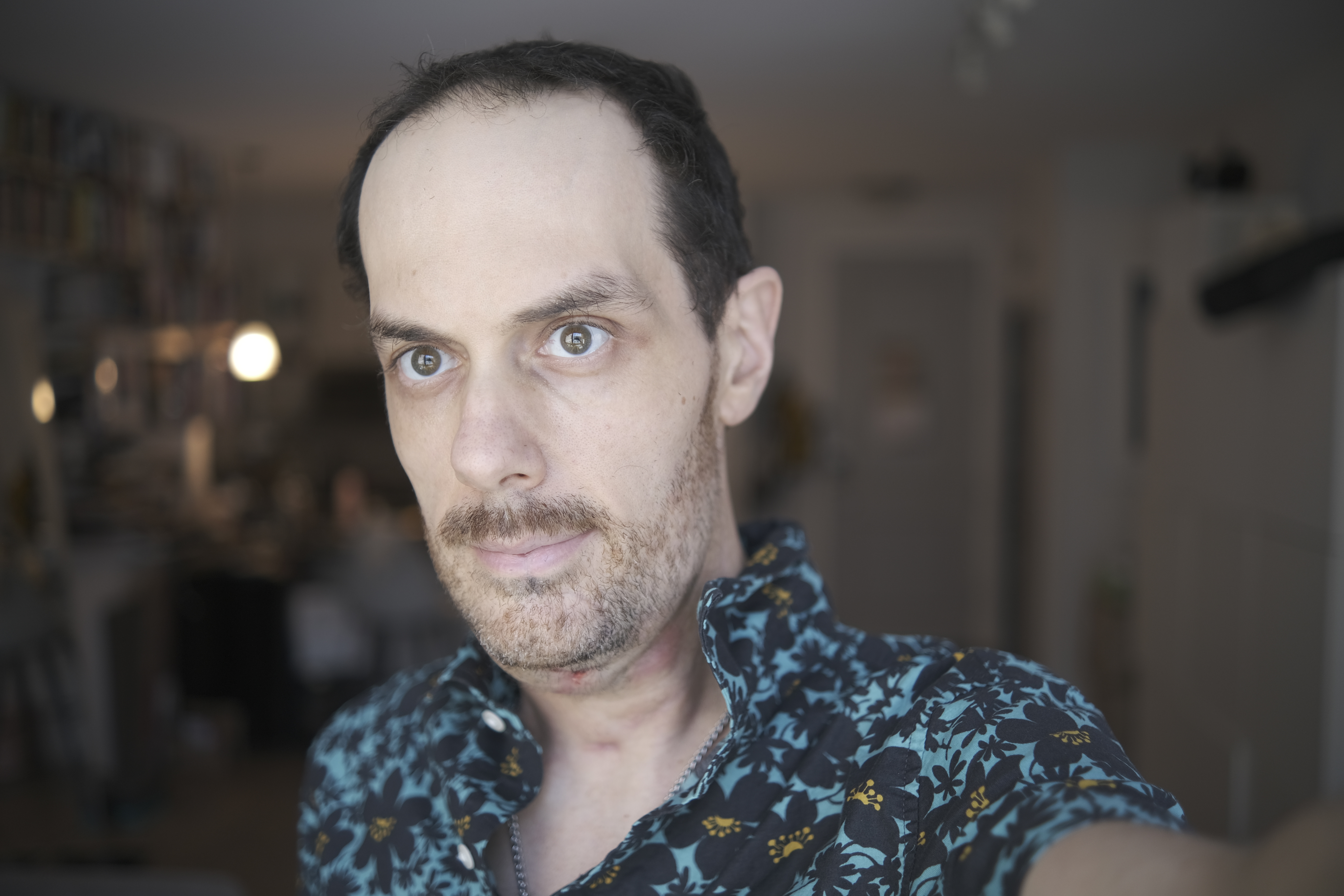
On being ready to die, and yet also now being able to swallow slurries—including ice cream

Part of being ready to die comes, I think, from psychedelics; I wrote in “How do we evaluate our lives, at the end? What counts, what matters?”: “Bess (my wife) and psychedelics taught me to love, and the importance of love, and yet too soon now I must give everything back.” There’s a longer, yet-to-be-written essay about how psychedelics cause me to see myself as a tiny instantiation of the vast, interconnected human whole, which will comfortingly go on even when I flicker out. Michael Pollan’s book How to Change Your Mind is great and also covers a lot of existential territory. I’m looking for a copy to quote from and can’t find it, because I’ve given so many copies away. Pollan describes the way psychedelics are being used palliatively for end-of-life care, which is, strangely where I now find myself. Fortunately, I have a Kindle copy, and now I can authoritatively say that Pollan writes about how “researchers [have] been giving large doses of psilocybin—the active ingredient in magic mushrooms—to terminal cancer patients as a way to help them deal with their ‘existential distress’ at the approach of death.” Moreover, for many people, “psychedelics [help] to escape the prison of self.” I guess I can say that psychedelics prophylactically assuaged my fear of death, the way Zofran might be taken to prevent nausea.

Even before the present circumstances, though, from psychedelics I learned how not just to know but to deeply feel and internalize that we’re all part of the show for such a short time, and then it’s someone else’s turn, and that is okay. Until science radically expands healthy lives—which will be great, but it’s not clear whether we’re near to or far from that series of breakthroughs—we’re not here for long, and then we yield up the gift, whether willing with grace or unwillingly with fear. But the other part of being ready to die comes from how much living physically sucks for me, much of the time, with a lot of struggles concerning breathing and mucus.

The breathing and mucus are related; if you’ve spent much time around me, you’ve seen and heard that I’m endlessly trying to hack up mucus—and sometimes succeeding. If you’ve not spent much time around me, take my word for it, and enjoy that no demonstration videos are included. I’m constantly attempting to clear the back of my throat and spit mucus up. The attempts to hack up and spit out mucus can sort of work for a short period of time, but even when I hack up a huge blob of mucus, the feeling of needing to do so again, or drowning, returns within a few minutes. Often, I’m attempting to hack up mucus that won’t quite come out. I struggle for hours against some plugs, knowing that they’re in my throat but unable to expel them. It feels like I’m heroically and single-handedly supporting the Kleenex industry with all the tissues I’m going through.

I can never breath normally. Never. Not even when things are going relatively well. Contemplate what that means. You’re probably breathing normally right now, and not even noticing that you’re breathing, which is what my life was like until the massive May 25 surgery, which left me without a tongue. The prior surgery in October 2022—my first for the squamous cell carcinoma—and even the IMRT radiation from December 2022 to January 2023 were not easy, but I’ve described them to friends as “predominantly cosmetic damage.” My body repaired itself tolerably well in response to the first bout of treatment. By March 2023 I could speak and swallow within spitting distance of normal. Recovery wasn’t instantaneous but most of my original functions and functioning returned. Strangers might have wondered about the neck scar, where Dr. Hinni,* the ENT who led the surgery, removed all the lymph nodes from the left side, because squamous cell carcinomas of the neck usually metastasize first to the lymph nodes. Those lymph nodes were all clean, leading Dr. Hinni to think that, after a successful surgery where the margins were clear, and radiation to kill any remaining errant cancerous cells, I’d be healed.

During my first appointment with Dr. Hinni, in September or October 2022, after reviewing treatment options, he leaned forward, took my hand, patted me on the shoulder and said, “Don’t worry. This isn’t going to be what kills you.” If this were a novel, an editor would chide me for a too-obvious Chekhov’s gun. “Everyone knows what will happen if you write this,” the editor would say. But I didn’t anticipate my life would be narrated by a heavy-handed horror author. Joke’s on us. On April 26, 2023, the first post-treatment PET scan showed a hot spot that turned out to be a squamous cell carcinoma at the base of the tongue. Half the tongue was supposed to come out, and be replaced with a “flap” of muscle taken one of my quadriceps. Instead, when Dr. Hinni got into the surgery, he found that the cancer had spread across the base of the tongue, invading not only the left lingual artery, which provides blood flow to the left side of the tongue, but the right lingual artery as well. Without those arteries, the tongue can’t survive.

Dr. Hinni also discovered that the tumor had extensive perineural invasion—meaning it latched on to, and probably traveled to the base of my tongue through, important nerves controlling neck muscles and oropharyngeal sensation. Some of those cancerous nerves had to come out, and I guess at least one controlled mucus, because today I feel like a mucus factory. The inflammation from the massive surgery and the tumors creates yet more mucus. The radiation, which, while minimally affecting my cancer, left me with the gift of salivary gland changes, so now my body produces a particularly thick, sticky mucus. I can’t properly feel that mucus because I’m missing sensation in half my interior oropharynx. Because of the surgery and nerve removal, I can’t swallow normally to clear the mucus. It’s difficult to wrap my head around the knowledge that I can’t feel half my throat, because it’s hard to imagine a more pronounced feeling than the one I live with day in, day out. This mutant mucus either gets created in my mouth or throat, or flows relentlessly downwards from the back of nose.

Consequently, every breath enters my nose or mouth and triggers a Rube-Goldberg-like chain reaction of misery. The mucus captures my attention and sends a signal that says: “Hey, you can’t breathe correctly. Attend to this.” With every breath, that signal registers, encouraging me to try to clear my throat or else warning my conscious mind that I might not be able to breathe. This happens all day, every day, as if on a mechanism whose trigger to start the process over is the moment I finally clear my airway. It’s like being in an ER with a beeping airway machine that never shuts off, ever, and that can’t be fixed or silenced. While I tried to dismiss earlier surgery and radiation as “cosmetic damage,” despite the struggles they brought, that massive May 25 surgery is “structural damage.”

I’m like Sisyphus pushing his boulder up the hill, except the boulder is mucus, which seems worse—at least a boulder doesn’t stick to the hill. I’m a little better at swallowing than I used to be, but I can’t tilt my head back much to get enough of an assist from gravity, because my neck is so tight from surgeries, from scar tissue, and from radiation. Swallowing—one of the acts that might help—is made far harder by neck tightness. My neck is getting tighter, not looser, over time, because radiation scarring tends to present many months after the treatment. And the area is filled with post-operative scar tissue. And, maybe most importantly, this is where the tumors are growing. I’m trapped in this tightening, constricting, gooey head-and-neck system that I can’t escape from and that causes me to constantly be spitting into tissues or sinks or the ground or whatever other appropriate receptacle I can find.

My neck, and my universe, feel steadily more constricted.

When I’m infusing food—which eats like four hours, daily—through the peg tube in my stomach, the mucus problems become worse, as if my body is readying itself to take food in through the mouth, but none comes via the oral route. When I wake up in the morning, or at night, I’m dry, and the mucus plugs are even harder to expel than they are during the day. When I try to speak, I’m often stymied by mucus rattling around and preventing my vocal chords from vibrating freely. To speak, I must try to hack up mucus first, which isn’t a great way to start or have a conversation.

So often I feel disgusting all day, every day, because of the endless effort to hack up mucus. Sometimes I succeed. It’s gross for me, and it’s gross for whoever might be around me; friends are very polite to say that it’s fine, and I appreciate the politeness, but even if it’s fine for them, it’s disgusting for me. I leave trails of spit-out saliva and spit-up tissues wherever I go. All day I’m physically weak. All day my body hurts from lack of motion. Those cancerous nerves had important functions, and, while I obviously understand why they had to be removed, they’re part of the irreparable structural damage, which can’t be wholly assuaged. If you’ve guessed that these physical problems lead to poor sleep, you are correct. I’m very different, in worse ways, than I was.

When the tracheostomy tube came out—I had what amounts to a plastic breathing tube sticking out of the base of my neck for six or seven weeks after the surgery—I thought that I was making irreversible progress. Instead, getting the trache removed did increase comfort and wholeness because there wasn’t a foreign body poking into and out of my neck, but I also had to learn to suffer breathing through and battling the mucus,, I don’t want that tube back, but it did bypass the mucus junction.

I look for upsides. I let Bess’s love succor and sustain me, I try to make progress, I have moments when I laugh, I celebrate the wins—and yet the base fact of being irreparably damaged remains. The struggles with breathing remain. The persistent intrusive thoughts about whether this thing, life, is worth it, remain. They’re not questions therapy can help with. They’re questions intrinsic to the damage.  

Without those nerves between my neck and mouth and nose, and without a good ability to swallow, my lot is constantly fighting the mucus attacks. I feel like a human mucus factory. What’s the end of this? When is the end? Sometimes, I’m ready for it.

Look, since you’re probably thinking it, and before you point it out, let me say that I’m aware that there’s worse suffering in the world than hacking up mucus and feeling like I can’t breathe. There are displaced persons in war-torn countries, and persons who may have experienced horrible brutality or seen horrible brutality visited on their families or friends. There is the savagery and prosecutable cruelty the Russian military is inflicting on and in Ukraine. Comparatively, there are people worse off than me who seem to find ways forward towards meaningful lives. In some ways, my material universe is still impressive, and I’m blessed with love.

Napoleon Chagnon’s memoir Noble Savages: My Life Among Two Dangerous Tribes — the Yanomamo and the Anthropologists talks about what everyday life among the Yanomaö, a series of native peoples and tribes then living in Brazil and Venezuela, is like. Chagnon says he is “not ashamed to admit that” when he first met the Yanomamö, “had there been a diplomatic way out, I would have ended my fieldwork then and there.” The physical circumstances were that tough. Chagnon writes: “imagine the hygienic consequences of camping for about three years in the same small place with two hundred companions without sewers, running water, or garbage collection, and you get a sense of what daily life is like among the Yanomamö. And what it was like for much of human history, for that matter.” To Chagnon, the village smells of “decaying vegetations, dog feces, and garbage.” Yanomamö men appear to spend a lot of their lives with “strands of dark green snot [dripping or hanging] from their nostrils” because of their fondness for snorting a hallucinogenic drug called ebene. Men continually engage in small-group warfare and a huge proportion of adult men die in war, at the hands of other humans. A huge proportion of adult women die in childbirth, and many are abducted and then forcibly married to one of their abductors or into their abductors’ group. And that is normal life. Maybe that was normal life for most humans in most of human history, as Chagnon notes. I’ve never spent much time fantasizing about living in a past time, because life then was overwhelmingly filthy, mostly impoverished, and there wasn’t access to basic antibiotics, let alone chemotherapy, radiation and clinical trials.  A future era? That I can and do imagine. I also imagine that I would’ve quit fieldwork even without a diplomatic way out. Maybe not on the first day, but as close to it as I could get.

“Normal” is a tricky word. Wherever we grow up is normal. Normal for me, now, means dealing with the mucus and drowning sensations. I feel recent suffering keenly. Enough suffering makes a person feel less than human, including me. Humans can get used to so much; can I get used to my problems? I’m not the first to wonder, as Bess did: “How much suffering is too much?” Viktor Frankl wrote extensively about suffering and human life, most notably in Man’s Search for Meaning (a favorite book). “Yes to Life: Viktor Frankl survived the Holocaust and created a new psychology in which the search for meaning—not pleasure or power—is mankind’s central motivational force,” by Samuel Kronen, is about Frankl, and it describes how “Life carries the potential for meaning under any circumstance.” I buy that argument, albeit with a heavy emphasis on the word “potential.” The gap between the potential and actual is often large, and it’s up to the individual to find and create meaning in life.

Frankl’s endurance and his apparent ability to not merely survive but to thrive is exemplary; I’m not sure how well I’d do after finding that “Except for his younger sister, who managed to flee the country, everyone in his immediate family, including his pregnant wife, Tilly, died in the Holocaust.” In Frankl’s version of psychotherapy, which he called logotherapy, “One could even say that the meaning of life is other people.” So how does one go on when the other people who are most important to you are murdered? Frankl’s life and writings are his answer. Like Dan, he seems to have developed a stunning ability to go on and remain positive in the face of adversity. As much as I admire Frankl, I find myself leaning away from this: “No amount of anguish or adversity can truly take away our humanity, he says. Being human precedes our capacity to be productive, functional, or even mentally sound.” I wonder whether being human is a binary thing or a matter of degrees; I lean towards the latter, which you can see in my comment about how enough suffering makes a person feel less than human.

I’m not able, or maybe willing, to sustain the positivity and meaningfulness of Frankl or Dan. At some point, to my mind and temperament, it’s not worth going on. But I can’t precisely demarcate point where there’s too much suffering or too much privation, though I’ve considered many scenarios. That I’m still here, right now, indicates the present privations aren’t too much. Not yet. Much has been taken from me, but I still have Bess’s love. I can still locomote. Speech is garbled but possible. Every day I’m trying to make a good and generative day, and I remind myself that there are many things I can’t control, but, as both Frankl and the Stoics emphasize, I can control my attitude.

Despite the mucus, I have some victories: I can swallow some food and have gotten steadily better at swallowing. Maybe a month ago, my friend and speech pathologist (in that order) Jessica Gregor helped teach me to swallow again. Swallowing without a tongue is tricky. Do it wrong and whatever you swallow goes into your lungs, causing coughing and possibly worse. But when someone without a tongue, who hasn’t swallowed for two months, learns how to swallow again, the moment of swallowing includes a sense that something is going into the lungs, even if nothing is.

There’s a trick to swallowing after your tongue has been taken: you have to tilt your head back, initiate the swallow, swallow strongly and deliberately without hesitation, and then do a throat-clearing sound and motion. That throat-clearing sound and motion forces air up and out of the lungs, closing the epiglottis in a move called a “glottal stop,” which effectively closes off the airway and makes the esophagus the only option for food to travel through. If there’s any material thing in the way, like recently swallowed food slurry, then the air will also help that substance be routed into the stomach, not the lungs.

With Jessica, I swallowed some ice cream slurry: the Van Leeuwen’s honeycomb flavor. We melted it and blended it with some extra milk, to thin it. And, although I was intensely skeptical that this would result in a meaningful sensory experience, there are taste buds at the back of the throat and esophagus. So I could taste ice cream. Since that night I’ve tried lots of things. Anything acidic, like lentil-soup slurry with too much lemon, doesn’t work well yet. Anything salty, same problem. But savory foods work and so do sweet ones. There’s a fun bakery and wine shop in Tempe called Tracy Dempsey Originals that we’ve been going to. Tracy Dempsey makes spectacular ice cream flavors—particularly her cardamom with fig jam. It turns out I can eat things like cookies and brownies if they’re blended with milk or coffee.

Rough, crumbly, and dry things aren’t any good, but anything that can be made into a smooth, pretty consistent slurry, I should be able to eat. Suddenly I’m talking with Bess about stopping by FnB (our favorite restaurant in Arizona, and conveniently down the street from us) to order food and blend it. We tried that too soon—I wasn’t ready yet—but will try again. That is the human struggle: to fail, to learn, and to try again. The universe is vast, cold, and indifferent, and it wants to eat you. But I’d like to eat too. And being given the chance to do so again, when I thought I would go the rest of my life without flavor, is no small thing.

The victories aren’t complete. The mucus still interrupts eating: anything I swallow seems to get trapped in mucus. I swallow some food, and, when I’m done, I have to hack up food-infused mucus. There’s no clear path, I guess, from mouth to stomach without traversing a mucus swamp. The mucus swamp seems to increase the drowning sensations from slurries, and the sensation that food is going down the airway, even when it’s not. Jessica did a “Fluoroscopic Swallow Study,” which essentially means taking an x-ray video of me swallowing, to see where the swallowed substance goes. It confirmed that I’m not swallowing into my lungs, though every time I swallow I feel like I might be. That sensation, like the drowning sensation from mucus accrual, is disconcerting, but what can I do about it? Very little, it seems. Mucinex, suction, saline nebulizers and increasing my water intake does something, sort of, but not enough. For however long I live—and Bess has a good lead on a clinical trial, as well as an essay in the works about how the clinical trial process actually works (and how insane the process is)—the drowning sensation will be haunting me.

But I do get to taste some ice cream again, before the end.

If you’ve gotten this far, consider the Go Fund Me that’s funding ongoing care.


See also: “How much suffering is too much?

* If you have the misfortune of having a head or neck squamous cell carcinoma and live in the Phoenix area then, as of this writing, you want Dr. Hinni or Dr. Chang at Mayo to operate on you. Many things in my life have gone wrong, but Dr. Hinni operating on me is one of the things that’s gone relatively right.
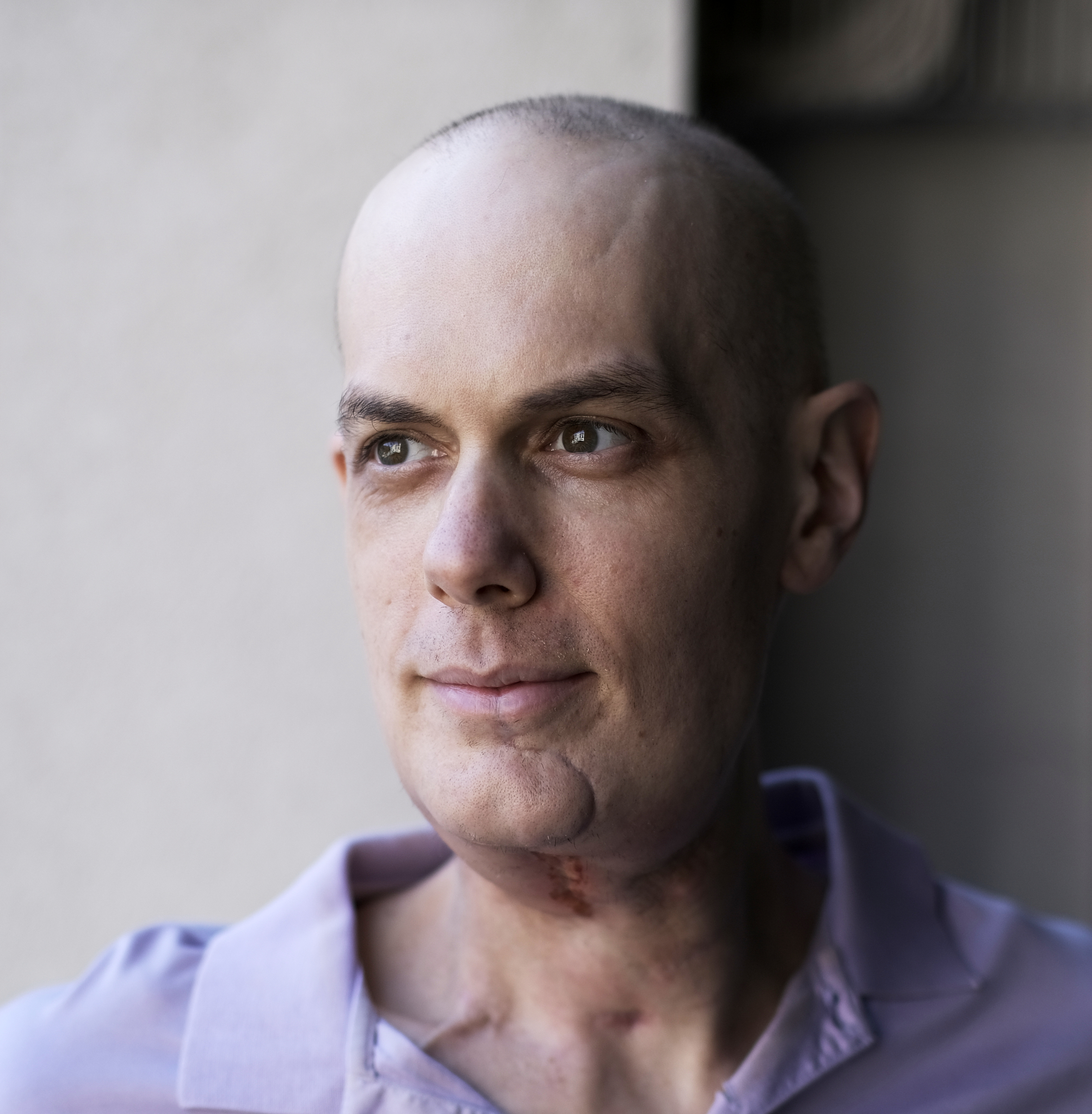
Links The True Believer, effective discipline, the great (cultural) stagnation, and more!

* China’s defeated youth.

* “Without Belief in a God, But Never Without Belief in a Devil: On The True Believer: Thoughts on the Nature of Mass Movements.” Are you a True Believer?

* “How to discipline kids effectively.” On incentives and behaviorism, among other things. Skinner gets a shoutout.

* “In 1970, Alvin Toffler Predicted the Rise of Future Shock—But the Exact Opposite Happened.” A culture-focused great stagnation essay.

* “Asphalt Wasteland: Maybe parking really does explain the world.”

* “Moderna reveals Claudin18.2 ambitions via cancer vaccine, solid tumor CAR-T combo plans.” Does the tongue count as part of the digestive system? There’s no mention of head and neck squamous cell carcinoma here, alas.

* “The two kinds of progressives: Moralists vs. pragmatists.” I’m wildly on the pragmatist side: “As Democrats have become more upscale, they. . .have become less interested in forming big tent electoral coalitions to maximize the odds of welfare state expansion and more interested in ideological purity and uncompromising moral stands. Because the uncompromising moral stand is more appealing if you are not personally counting on Medicaid expansion to make a concrete difference in your life.” I also have the old-fashioned view that politics is about solving collective problems rather than personal expression.

* Becoming a magician.

* “Why Britain doesn’t build.”

* Colorado works to ameliorate its housing crisis by moving housing decisions to the state level and increasing the freedom of landowners to build.

* “Celebrating Marginal Revolution’s 20th Anniversary.” An amazing and tremendous achievement.

* “Steel industry makes ‘pivotal’ shift towards lower-carbon production.” The shift is towards electric arc furnaces and away from blast furnaces.

* The NIMBY tax on Britain and America. (Financial Times, $; Archive Today link). “Supersized costs and bloated durations are not unrelated.” And:

The result of this vicious circle of objections, delays and in some cases outright cancellations of large parts of the projects as the costs mount is that both countries — but especially Britain — are suffering from massive under-delivery on transport infrastructure, causing a huge drag on productivity.

I know what happens to me after I die, but what about those left behind?

I keep thinking about what happens to my wife, Bess, after I die; there’s a recurrent image in my mind, about what happens to her after I’m gone, that I can’t seem to shake. Bess once started a story this way:

I know what happens after you die.
I take your family into a quiet room, with Kleenex, and then I say the word “dead.” Not “expired” (because you are a person, not milk), and not “passed on,” because families always want to believe that just means I transferred you to another hospital.
Dead.
I have to say it.
That’s basically all they taught us about how to deliver bad news in medical school. A one-hour lecture.
When you train to become a doctor, they don’t really teach you about death. They tell you how to prevent it, how to fight it, how to say it—but not how to face it.

She’s an ER doctor, so she’s delivered a lot of bad news to a lot of families—her line of work delivers bad news like OB-GYNs deliver babies. She tells families about death, and sometimes coroners, but she doesn’t go home with the family. She doesn’t think deeply about what that dead person’s life meant, because she can’t, and it’s not her job to. She doesn’t go through that person’s things, chucking or donating almost everything that someone used to construct and execute a life. We spend so much time buying, storing, corralling, searching, sorting, and thinking about stuff, and then we perish and what happens?

I mean that in a literal way: I die from that squamous cell carcinoma in my neck and lungs, and then what? What happens to Bess? In the short term there is a lot of crying. Friends and family are, I hope, there to comfort her. Probably I’ve been helped to the other side by hospice, or, alternately, the pain has gotten bad enough that I’ve chosen to end things. I hope, too, that we’ve said everything there is to say between us, because Bess and I have a deal, a rule, an agreement: to leave nothing unsaid. Whatever it is we want to say, we say. This may not be a common way to face death. Bess is in a bunch of doctor-related Facebook groups, including some about relationships and some about terminal illness, she reports that a lot of couples don’t seem to have relationships in which they can say what they most deeply feel and believe. Instead, they seem not to like each other much, or to focus on quotidian aspects of their lives up to the very end. How must that feel to the person left behind?

There must be a sense of unfinished business, of things never unlocked, of it being suddenly and permanently too late to get out whatever a person most truly feels and thinks. A lot of The Presentation of Self in Everyday Life is, justifiably and rightly, about damping and tamping down feelings and one’s deepest convictions, in the pursuit of getting along, paying the bills, advancing science, and so on. Adults can’t run around constantly feeling big feelings, except maybe for the occasional manic artist or lunatic writer. We need to get stuff done. But there are times, like when we’re dying, or marrying, or watching birth, or giving birth, or taking MDMA with someone we love, to step back, feel things, and express what’s there.

To be clear, Bess and I are working hard to delay the moment of death—it looks like Bess has helped find me the optimal clinical trial—but the odds of lasting more than a year, if that, border on “miraculous.” I don’t want to be delusionally optimistic, inanely pretending that things are not as they are. I do want to cultivate the optimism and perspective described by Dan in this story, but I also want to prepare, as best I can, myself and Bess and everyone else around me, for what’s to come. And the speaking about what is to happen is part of that.

I don’t know precisely how the end will come, and oncologists are deliberately quiet and vague about the specifics. They say it’s different for everyone, which is probably just true enough for them to justify to themselves the saying of it, and the evading of the question’s heart. Internet searches have filled that void, although, unless you have specific need to know, I recommend against learning what death by head and neck cancer is like for the person dying.

At some point, the suffering may be too much, and then I hope to exit by my own hand, gracefully, not having been wholly unmanned by disease. “Unmanned:” it’s an old-fashioned word, and one that appears in the appendices of The Lord of the Rings, when it is time for Aragorn to department the world. His wife Arwen pleads with Aragorn “to stay yet for a while” because she “was not yet weary of her days.” Aragorn asks her if she would have him “wait until I wither and fall from my high seat unmanned and witless.” I didn’t imagine that I might face the same question so soon, and yet it’s here, before me, and I hope to depart before the pain robs me of my mind and leaves me witless and suffering. Aragorn says that “I speak no comfort to you, for there is no comfort for such pain within the circles of the world.” And that I fear is true of Bess, too, that there will be no true comfort for her pain. Her parents will help her, our friends will help her, she will not be alone—and yet the pain at the moment of my own departure will remain.

Then what happens? What happens after I depart, whether at home or hospital or some other place? When I’m gone, I don’t see any point of being buried in a random cemetery, but dealing with the corporeal matter is probably the easy part, relative to the emotional stakes. I don’t want to leave Bess bereft of direction: I like the idea of a low-impact set of remains management, and one that symbolizes becoming part of the earth again. Conventional cemeteries probably made sense at a time in history when most people never traveled more than a few miles from where they were born and most families were large and interconnected, but they don’t seem to make much sense to me today. Conventional cemeteries seem like a tremendous waste of space, particularly in cities.

I’ve read that the Japanese have a system in which a person’s grave site is rented, not “owned,” and a person’s remains remain in the site for as long as someone pays a nominal fee—something like $20/year. When no one is left to pay the nominal fee, the site is re-used for whoever is next. Doing this ensures that not too much urbanized land is poorly used. This system seems good to me, but it’s not the American system. I’m fond also of the idea of being put in a mushroom suit and made into mushrooms, but that strategy seems to have gotten a lot of PR and yet isn’t used much.

Out of the plausible and easier outcomes, I like the idea of cremation best: then Bess can turn me into plants and/or mushrooms as she grows them (in Arizona, one has to interact with a funeral business, which is a regulatory scam, but that’s a rant for another time). When she’s got a new plant or mushroom cake, she can put bits of me into the soil. In addition to being cremated and being made one with nature again, I checked, and it’s possible to sponsor a bench in a New York City park for a not-ridiculous amount of money. So I’d like a bench sponsored for me, in Stuyvesant Park on 2nd Avenue and 16th Street. That’s a few minutes from all three apartments we lived in in the city. Whoever is in the neighborhood can come sit with me—or perhaps “on” me. Whoever wants to say hi can bring some coffee and pour a little on the ground for me, and read on a book on the Jake memorial bench. Our friend Josef stopped by to scout the park; his report listed five plausible plaque sites, with the ideal in his estimation being:

1. Outer edge, West Park. I think this is the best spot. Nice view. There’s a free book box nearby to see what people want to share and read. Quiet street behind rather than the main street. Tree behind the bench providing some shade, though it’s less full than many others.

I’m sold.

Cremation and a bench memorial seem more meaningful than conventional options, like a pointless burial in a pointless cemetery in a random place that isn’t home to me. Plus, I’m fundamentally an American, and we make shit up as we go along. Our main tradition is “let’s make up traditions.” Which is what I’m doing.

So Bess now knows what happens to me after I die.

And what happens then? I sound like a child, repeating the “And what happens then?” question, but I think about it. Bess and I have an apartment containing the physical stuff of our lives together. Bess has made it a home, which is good, since I’m too lazy to pick the art on the wall or keep the plants alive or put a cheerful blue rug on the floor. I’d live with a computer and a bed and some folding bookshelves and kitchen gear and not enough other things to make a housing unit a home. Our apartment has been a good enough, verging on outright “good,” place for us to live—the only place we’ve lived since leaving our true home in New York—but it’s not somewhere she’ll want to stay after I’m gone. There’s a transient feeling to our apartment itself and the apartment building we’re living in; no one lives here for long. We’ve probably lived here longer than we should have, but moving is a schlep and Bess has done a lot of work to make our place nice. We’ve got complementary skillsets, which makes her losing me even harder. We’ve planned to move out once we have a kid, but that process has proven more challenging than expected (which is a topic that could get its own essay, and might).

When Aragorn chooses to pass on (if I were a doctor talking to his family, I’d say “die”), Arwen goes forth from his tomb, “and the light of her eyes was quenched,” and she goes out of the city, never to return. Bess will one day leave what is now our home—the place where we lived happily for years—and she’ll go when all the stuff that makes up our lives has been boxed up to be moved or discarded. What will that process be like for her? Painful, I have to think, given how memories will suffuse so many otherwise inanimate objects. I’ve offered to donate the clothes I’m not wearing any more and otherwise tidy up my physical things, but she’s refused. She wants to do it herself.

I’ve also offered to donate some of the unruly number of books I’ve been foolishly carting around, but she’s refused that too, saying she wants to choose which ones to keep—especially the ones I’ve written in, which is most of them. She won’t need the geothermal energy textbook I’ve used when writing proposals, I think, or the books I’ve not gotten to, or the Python programming book I’ve not given the attention it deserves, but I’ll leave them. She’s claimed that she’s “keeping them all,” and that she “wants them all.” This doesn’t seem pragmatic to me, but I won’t be here to vote.

Some books, like my copies of The Lord of the Rings or The Name of the Rose, she’ll obviously want. They’re favorites of mine, and I read both out loud to her—Bess is a nervous, difficult sleeper, and reading to her helps her relax into sleep. For The Lord of the Rings, I gave Pippin an absurdly lisping voice that often made Bess protest that I should “read him normally,” as if her nightly protests weren’t part of the fun. For The Name of the Rose, I spoke all of William of Baskerville lines in my best Scottish accent, poorly but enthusiastically imitating Sean Connery. I’ve put Bess on the accounts she needs to be on and entrusted her with the vital computer passwords. She knows where the pictures are (I shoot most of the photos—there are those complementary skills, again), and she knows the organizational scheme, which is important because organization isn’t among Bess’s strengths. In searching for and researching clinical trials, though, she’s practically been a project manager: when the stakes are highest, she does what needs to be done. She’s helping to delay the day when she’ll walk out of our home for the last time, and into whatever the future will hold for her. I think she’ll live with her parents for a bit, and maybe fly to the East Coast and stay with friends for a few weeks at a time. I think that one day she’ll be ready to love again, and she’s promised to at least be open to the possibility.

As hard as it is to write this essay—I’m crying as I type—I’m sure it’ll be harder to live. Bess tells me that she feels lucky to love me so much. Not everyone gets that. She feels lucky; I feel at least as lucky.

Maybe she will walk through the empty rooms of our home one more time, thinking of all the life we lived in them. Some of our friends—Josef, Martha, others–have promised that she won’t be alone for the task of discarding and packing and moving, and I hope they adhere to that promise.

This is the image that recurs to me: Bess looking around for the last time, Bess shutting the door for the last time, Bess walking down the hall for the last time, Bess walking out of the building for the last time, Bess being alone and me not being able to do anything about it.

If you’ve gotten this far, consider the Go Fund Me that’s funding ongoing care.

Links: Life’s terror and beauty. Also, the need to build more and faster

* Life is so terrible and beautiful at the same time.

* “The Age 30 Crisis and Seasons of a Man’s Life.” Linked more to the first link than may be apparent at first glance.

* “America’s Long, Tortured Journey to Build EV Batteries.” (Bloomberg, $).

* “Conservatism as an Oppositional Culture?”

* “To speed scientific progress, do away with funding delays.”

* “Brits are less productive because it is too hard to build stuff.” Being able to build things is good, and not being able to is bad. Similarly—both guys are even named Sam!—”Why is Britain poor, especially compared to France?” Answer: a vetocracy even worse than the one that exists in much of the U.S. In the meantime, Finland has substantially ameliorated its homelessness challenges by building a lot of housing. It’s frustrating to watch easily solvable problems, with current and even quite old technologies, go unsolved. In fields like computer science, the easy problems get solved, because of, among other things, the lack of veto points.

* “$7,200 for Every Student: Arizona’s Ultimate Experiment in School Choice.” It’s possible many public school personnel have overplayed their hands.

* Making mechanical keyboards in China. I’m fond—overly fond, to the point of wasteful pointlessness—of mechanical keyboards, and am now using a Kinesis Advantage keyboard as modded by Upgrade Keyboards. If you’re susceptible to keyboard gear-acquisition syndrome (GAS), don’t visit Upgrade Keyboards.

* “The Coming Apart Case for Less Entitlements.”

* Arts & Entertainments by Christopher Beha. A fun book, and a light one (deceptively light, maybe) of the sort I wish there were more of.

Trying to be human, and other mistakes

It’s hard and maybe impossible to have a rich or full life without understanding other people, and, being at the end of my life, I’m thinking about what I missed. “Understanding other people” is one thing I missed, in part because “understanding other people” is really made up of many different skills. But I came to understand that a big part of understanding other people—one that I was bad at for a long time—is noticing them. “Noticing” sounds simple, right? And yet notice how bad a fair number of people are at it. I’m not the first to notice how important noticing is; Noam Dworman, who owns the Comedy Cellar, said:

People pick up on very slight cues in an instinctual level — kind of analogous to pheromones, I guess — that they can’t account for. They don’t know they’re doing it. It probably affects who seems like a likable person, unlikable, who you trust. There’s a million different ways these things present themselves, but it’s real. It’s very real. I would say some people are oblivious to these clues, and they probably suffer for that during their lives.

That resonates with me because I was very bad, for a very long time, at picking up those slight cues on an instinctual level—probably because I come from a family consisting of people who range from “terrible at picking them up” to “apparently unable to, like prosopagnosia for social life.” I’m not sure there’s a great way to describe briefly how to pick up slight cues on an instinctual level—if there were, it wouldn’t be hard—but I learned later than most how to do it. Recognition of a problem helps resolve it, and it took me until I was in my twenties to even recognize the problem, so I was behind in both seeing the problem and in fixing it.

No one is perfect, but as with anything human, some people are better at recognizing instinctual social cues than others. Standup comedians, if Dworman is to be believed, are or become better than most. Combined with other social defects like an inferiority complex and too little time simply being around other people, not picking up cues led me to a lot of unhappiness, and, when I was younger, I couldn’t even diagnose the source of the unhappiness, let alone fix it.

Now I see the errors clearly, and, where I am, it’s also easier to speak to mistakes; maybe it’s easier to recognize those mistakes, too, or the ego drops some of its daily defenses because there’s no long-term internal or external reputation to protect. The existential slap hits and then how much more is there to conceal? What is the point of concealing mistakes and whatever one’s truest feelings may be at this point? You want the people who mean something to know how much they mean, before the end.

In “How do we evaluate our lives, at the end? What counts, what matters?”, I speak implicitly about mistakes when I say that “What really matters, sustainably, over time? Other people, and your relationships with other people.” A lot of us, including me, forget this or never learn it. Narcissism is one way of never learning the lesson about other people. There are others, some pathological but most likely not. Most are everyday misses, from inattention or ignorance or ego or busy-ness or the thousand other things composing everyday life. I’m also not the only person to have noticed that normal conversations can (and should) be made better.

Being too open to other people is probably another form of mistake: life is about other people, but there’s got to be a balance. It’s poisonous to give away too much value, but it’s also poisonous to be too miserly and closed off. Being closed off was my fault when younger; it was like I wanted to connect but lacked the interface to do so. It took a long time to build that interface, and not having it earlier on was one of my mistakes. One of the things I found most helpful in building that interface was simple experiment and effort: try, see what works, and if something works do more of it, and if something doesn’t try less. Stated that way it seems obvious, but I didn’t have good models for those basics. There’s a recognizable flow to normal conversation that some people don’t get. They monologue or fade. They never quite get the flow. It took me a long time to get the flow and to better empathize with and model other people.

I think the average person is too closed off, or open in the wrong way, and maybe doesn’t realize it: the closed off are frequently protecting themselves at the cost of vulnerability, and all it takes it a few minutes scrolling on social media to see that having full-access to a person’s every thought and feeling also doesn’t translate into real intimacy. Social media is so often anti-social. And a significant minority of people, like some of my family, either don’t realize that social skills can be taught, learned, and practiced, or realize that but don’t do anything with it. Knowing something but doing nothing in response to it isn’t so different from not knowing it.

My family has trouble with eye contact, even though “Eye contact marks the rise and fall of shared attention in conversation.” And “Eye contact may be a key mechanism for enabling the coordination of shared and independent modes of thought, allowing conversation to both cohere and evolve.” The authors find that “eye contact signals when shared attention is high.” If you don’t make consistent eye contact with someone when you’re facing that person, you’re telling them that you’re not paying attention to them, and they shouldn’t pay attention to you. Some people never learn this and thus never think to teach their kids or younger relatives to make eye contact. And then the lack of eye contact reduces coordination and friendship. Miss one key skill and the tower of social skills comes tumbling down, or is never built in the first place. “When we’re not routinely socializing, we feel that something is amiss.” When we don’t even know how to socialize effectively, because we’ve not been taught it and not observed good examples of it, we also feel that something is amiss. And that’s what I felt for a lot of my life, without being able to understand what I was missing.

Reading is the main thing that helped me undo many early problems and pathologies. I find the people who don’t read somewhat astounding. Some of them have good, socially functional families and so maybe need less book-based modeling, but there is so much to know about the world, and reading is the widest funnel—the widest aperture—we have for taking that in. Until Neuralink is ready, we have the word. This is supposed to be an essay about mistakes, but amidst many life errors, I was also inadvertently doing some things right, and inchoately searching for answers without being able to rightly articulate the questions.

I did a lot of learning via reading (and a lot of escapism via reading), but I don’t think most people learn what they’re missing through books; they learn other ways. Dworman, for example, says that standup comedians are “smarter than most people. They’re still less easy to offend. They’re still much better company. They’re still much better conversations, much less boring small talk.” Very little small talk is fine but why not skip to the big talk? Somewhere I figured that out and have tried to adopt it, and to ask the invasive questions that do a good job of repelling the people I want to repel and attracting the people I want to attract. I want to get out of the exurbs of chat and into the dense core of cities, where the action is.

For that reason, I recently proclaimed a moratorium on banality for any visitors. Now is the time—and there won’t be much more— for me and the people I love to say the things we need to say to each other, while we still can. There isn’t time to discuss the weather, or look at that cute dog photo, or wax poetic on the lack of flavorful tomatoes at the grocery store. Bypassing the warm-up of introductory chit-chat can be uncomfortable, particularly for people not used to expressing whatever they really feel, but goodbyes are inherently uncomfortable. I’ve said to friends that this is my first time dying, so I don’t know exactly what to do. Neither do they. Some have no practice saying anything real or true. But it’s better to wade into uncertainty together, and connect meaningfully, even when it’s hard. Big talk is hard. Worthwhile things often are. To avoid it, means choosing separation over discomfort. Some people want to be on their huge lots separate from everyone else, I guess, but loneliness is a common cost to that, and we’re seeing the rise of the lonely. Maybe we should get out into the world, in all senses, more.

Comedians only like to hang out with comedians, and they die a thousand deaths when they have to go to a dinner with people who are not comedians. They really don’t like it, because they cut out all the nonsense.

That’s what dying tells us, too: cut the nonsense and find the sense that matters. It’s not everything. I’m still doing some things that might be trivial in some sense, like reading. But reading is core to who I am, as an infovore and information processor; not being able to read or think after the major May 25th surgery was debilitating and even humiliating to me. I couldn’t be the person who I am, and who I am supposed to be. The voice in my head shut off. I felt like the proverbial vegetable. The eventual return of the voice in my head made me feel more alive again, even when I couldn’t speak and could barely move. There was a way forward. To me, reading is one of the essences of it, if it’s done well. If I have interesting things to say—things comedians might like to hear—I have them to say because I read a lot.

For much of my life, I didn’t get the instinctual social cues that underpin social life, and it took me a long time to recognize that; but I wonder too, what mistakes am I making now, that I won’t recognize for another 10 – 20 years? Which is to say, ever? What am I not noticing? What am I not noticing that I’m not noticing? Alas, I won’t live long enough to know. That’s one of my burdens, for now, until the burden is unfairly and prematurely taken from me.

If you’ve gotten this far, consider the Go Fund Me that’s funding ongoing care.

Links: Paul Graham interview, the nature of Germany, the depredations of the car, and more!

* “To most people, reading and writing are boring and unimportant.” It starts:

Robin Hanson says: “… folks, late in life, almost never write essays, or books, on ‘what I’ve learned about life.’ It would only take a few pages, and would seem to offer great value to others early in their lives. Why the silence?”

Interestingly, or not, I’ve been working on essays and posts along these lines.

* Paul Graham interviewed by Tyler Cowen on Ambition, Art, and Evaluating Talent. Excellent.

* On the Marble Cliffs. Which is also a history of Germany. And a history of Europe. And some other things.

* “China hacked Japan’s sensitive defense networks, officials say.”

* “I thought I wanted to be a professor. Then, I served on a hiring committee.”

* How the car came to L.A., and destroyed it.

* The frontiers of tunnel boring. We should have more subway tunnels and tragically don’t.

* “America’s Top Environmental Groups Have Lost the Plot on Climate Change.” “But as the pace of electrification picks up, new clean energy projects are facing opposition from what seems like an unlikely source: large environmental organizations.” The extent to which environmental groups have achieved the opposite of their stated, intended effects is amazing; their opposition to nuclear power, for example, meant we spent decades relying on coal and then gas.

* Too much comfort is itself bad.

* “How does credit card debt collection actually work?

* How Institutional Review Boards (IRBs) block medical breakthroughs. Congruent and consistent with my complaints about the FDA slowing medical discovery and dissemination, which I’m now paying for with my life.

Regrets:

I read Ryan Holiday’s “24 Things I Wish I Had Done Sooner (or my biggest regrets)” and thought I’d steal adapt the format; I wrote these quickly, with the goal of getting out answers—sort of like “Influential books (on me, that is).”

* Not trying to have kids sooner—much sooner.

* Not fundamentally growing up sooner—much sooner.

* Wasting time in humanities grad school (this is identical to the second point). It was fun at the time but the opportunity cost was so, so high.

* Student loans (which is also related to the second point). Not realizing that large parts of the higher ed system are powerful, important, and legitimate, but large parts of it are scams. Schools themselves obfuscate this basic point, which now seems so obvious to me; despite how obvious this is, no one cares enough to fix it. The student-loan system means schools have no skin in the game and incredible incentives to get students in the door, but no incentives to care what happens after they graduate. This is bad.

* There are lots of things that no one cares enough to fix, or that have established interest groups preventing fixes, and sometimes that’s just how the world is. Bullshit often wins, but it’s a mistake to let it win in your life.

* Not being able to connect normally with other humans (a family failure and one that, when young, I couldn’t even identify, let alone rectify). Diagnosis is a critical part of improvement and it took me way too long to diagnose some of those underlying problems. This regret is linked to a lot of other ones.

* Choosing what I rightly perceived to be the easy way with work.

* Short-term priorities over long-term ones.

* What matters long term? Family and people.

* What doesn’t? Stuff you buy. Status of a shallow sort. Whatever you imagine other people think of you (it doesn’t matter; all that remain is how you make them feel).

* Not knowing about or accessing the power of psychedelics. For a long time I imbibed and accepted the ’60s or ’70s narrative that psychedelics were for losers and could make you go mad. Michael Pollan’s book How To Change your Mind was essential here.

* Being afraid to be a beginner again.

* Chasing the projects of youth too far and too long.

* Being overly accepting of the “age is just a number” idea. There’s some truth in this saying, but a lot of cope, and it’s possible to get the truth without the cope. Most of us prefer the cope, however.

* There’s a lot I can’t control—including most things—but I can control my attitude. If I choose to. The “choosing to” is hard.

* You’re the sum of the five people you’re closest to and with whom you spend the most time. So choose well. I’ve often not.

* Smart, competent people congregate in particular places, and I wish I’d spent more time in those places and less time not in those places.

* Pretty much no one accomplishes as much alone as they do in groups dedicated in common goals and mutual improvement. I’ve spent a lot of my life searching for and not quite finding those kinds of groups, which makes me think about what I could’ve done differently.

* In different times and places, different important things are happening. I got overly interested in the dying dregs of literary culture, and have underinvested in what’s uniquely happening now. There’s still some utility in literary culture, but there’s a lot more elsewhere.

* You can’t do two things at once and multitasking is closer to no-tasking. Pick whatever you’re working on and ride it out. Cultivate flow.

* Some people are not going to get it and need firm boundaries. When you, or I, identify those people, pick the boundaries and hold them. The people who don’t get it also often least understand and respect boundaries.

* Life’s complicated and people have all kinds of things going on. Whatever people are doing probably makes sense from their perspective. Which doesn’t make what they’re doing right, but it may make it comprehensible.

* I don’t regret time spent building, making, and doing things. I do regret excess time passively consuming, particularly video.

* Habits compound. Including bad ones. The bad ones I regret, although I won’t list them here.

* Impatience with the right people is really bad. So is losing one’s temper with the right people.

* Incentives matter.

* Abundance is good and scarcity bad. Work towards abundance but don’t be ruled by material things either.

* No one, including me, gets to the end and is happy about staying on top of email. But don’t totally neglect logistics either. They have their place, typically at the end of the day.

* The people who win are the ones who love and master the details. And the ones who master the right ones. I too often mastered the wrong ones (like the aforementioned investing in the dregs of literary culture).

* Something else I don’t regret, and a common pitfall avoided: wasting a lot of time on “social” media, TV, and other forms of semi-addictive junk. I’ve made mistakes

* Being mean when I didn’t need to be, which is almost all of the time.

* Understanding that tact can, properly used, enable directness.

* Not looking into that thing on my tongue in July 2022, when I first noticed it, but that is very specific to me and probably not generalizable.

Reading through these, I realize that a lot of them are more about my generation than me as an individual: I made a lot of the same dumb mistakes a lot of other people made. When I was young, I thought I was different, and totally in control of my own destiny—and everyone else probably thought so too. And yet it turns out that I erred in extremely common, boring ways.

Links: Building things fast, do intellectuals matter?, and more!

* Ezra Klein on the importance of building, and building fast, to the American project and to individual well-being.

* On the Framework 16′ modular laptop. An impressive device and with great Linux support.

* “China notes, July ’23: on technological momentum.” By Dan Wang and, so, characteristically good.

* “How Much Do Intellectuals Matter?” In this case, be deceived, maybe even pleasantly, by the title.

* NEPA really is a problem for clean energy.

* If We Want a Shift to Walking, We Need to Prioritize Dignity. In this article, “dignity” and “safety” are basically synonyms.

* Michael Nielsen’s impressively developed “quick” thoughts on research.

* “America’s Fiscal Time Bomb Ticks Even Louder.” And the collective response is: “LOL, whatever.” Kind of like global warming.

* “How the Recession Doomers Got the U.S. Economy So Wrong.”

* The Voyeur’s Motel by Gay Talese. Which we perhaps all live in today?

If you’re involved in drug development and have first-hand knowledge of the FDA’s torpor, get in touch

The title says it: if you’re involved in drug or medical development and have experienced the FDA’s torpor, or vengeance, consider getting in touch; anonymously is fine. I want to make explicit something a few people caught in “I am dying of squamous cell carcinoma, and the treatments that might save me are just out of reach:” many of the people with first-hand knowledge of the costs of the FDA’s slowness don’t want to speak out about it, even anonymously. They’re justifiably worried about their lives and careers, as well as what appears to be the FDA’s penchant for punishing companies or individuals who criticize or want to reform it. So the people who know most about the problem are incentivized not to speak up about it, kind of like the way mafioso were discouraged from discussing what they knew for fear of retribution. Some of them will talk about their experiences and knowledge over beer or coffee, but they won’t go further than that.

There are reform efforts and at least three serious people I now know of who are working on books about the invisible graveyard that I’m likely to join soon—and perhaps become a mascot for: a million deaths are a statistic but one is a tragedy, as they say. If the life and death of one man can stand for the millions who have died, maybe people will pay more attention. So if you have any direct experience that you’re willing to share, including anonymously, consider doing your bit for reform.

Some of that experience might include:

* General FDA slowness and lack of responsiveness.
* The sense of vendetta—that criticizing the FDA in public, especially over specific decisions, will lead to retribution later.
* Patients who wish to try drugs but can’t.
* Scientists, doctors, or companies that deliberately slow down what they’re doing.
* Whatever else I might be missing.

Many observers are aware of these problems but also the extent to which many people with rich specifics are reluctant to share those specifics, for good reason. I will respect anonymity and am aware of people working on projects designed to help FDA reform—and, hopefully, to save the lives of people like me, who are suffering from maladies that are likely curable with existing technologies, if the FDA made those technologies legal to consistently test and try, and if the FDA worked harder to make the existing trial process faster, easier, and more transparent.

The FDA situation is a specific example of the country’s love of process and bureaucracy, rather than a love of effectiveness and success. We’re suffering from huge bureaucratic drag in doing anything; we see the same general problem recur in building out subways or other forms of transportation infrastructure, in building new electricity transmission lines, in permitting new electrical generating capacity, in building new housing, in the Nuclear Regulatory Commission (NRC), and in the FDA. Works in Progress is a good publication covering these kinds of issues. We’re stuck with the sclerotic processes implemented in the ’70s instead of the dynamic, transparent, and far faster processes we should have today. We’re all suffering the results, some of us more acutely (like yours truly, who is doing for lack of large-scale, deployed, and debugged customized vaccine technology) and some of us less directly.

Anything that is small enough to build in a factory and ship via container is cheap and abundant; anything that requires opaque regulatory approvals or that goes into the body is expensive and tragically scarce. Ezra Klein and Derek Thompson are writing a book presently titled Abundance: What Progress Takes, which is about this subject and which I’d write about if I were likely to last until April 2024.

Practitioners on the ground, like doctors, see the deaths of their patients. The FDA is more concerned about political issues. There’s nothing like watching people die to alter your risk tolerance.

The author may be doing poorly, but he still exists, as of Aug. 2, 2023.

How do we evaluate our lives, at the end? What counts, what matters?

One estimate finds that about 117 billion anatomically modern humans have ever been born; I don’t know how accurate the “117 billion” number really is, but it seems reasonable enough, and about 8 billion people live now; in other words, around 7% of the humans who have ever lived are living now. I’ve had the privilege to be one. At current levels of technology, however, the gift must be given back, sooner or later, willingly or unwillingly, and sadly it seems that I will be made to give it back before my time. I have learned much, experienced much, made many mistakes, enjoyed my triumphs, suffered my defeats, and, most vitally, experienced love.* So many people live who never get that last one, and I have been lucky enough to. The cliche goes: “Don’t be sad because it’s over; be happy that it happened.” That is what I’m trying to do, at some moments more successfully than others. I try to focus on those ways I am so lucky and blessed, but I am often failing. Bess (my wife) and psychedelics taught me to love, and the importance of love, and yet too soon now I must give everything back. Too soon, but, barring that miracle, there is no choice.

What really matters, sustainably, over time?** Other people, and your relationships with other people. That’s it. That’s the non-secret secret. As the end approaches, you’re not going to care about your achievements or brilliance or power or lack thereof; you’re going to care about the people around you, and how you affected them, and how they affected you. That’s what will matter. I’m not saying you shouldn’t learn economics or calculus or programming or landlording, but all of those things, done optimally, will also bring you in touch with other people who are trying to hone and develop their skills in those domains. It’s not just the achievements, though the achievements matter, but the people collected and improved in the course of mastering a domain.

I’ve spent my life trying to learn to develop the skills necessary to connect with other people, which were, shall we say, not strong elements of my parents’ personalities. I’ve heard a cliché that goes something like: “What the rich know, the rest of us pay for learning with our youth.” I can’t find the true wording or source right now. It’s supposed to be about money, manners, and refinement, and so on, but the more generalizable version of it is more like: “The important life skills you lack growing up, you’ll need to learn later, or suffer without them.” So I had to learn how to relate to other people synthetically, on my own, and suffered greatly for it. Even something as seemingly simple as “maintain eye contact” or “search for common ground.” Since the inability to relate to and connect with other people was one of my great deficits, probably I overemphasize it now, like many people who have overcome challenge x and now relentlessly over-apply challenge x to everyone else.

There are a lot of things I wish I’d done differently, but it’s obviously too late now, when there are weeks or months left. But there’s also little to hide, or be ashamed of at the end. I did the things I did and made the friends I made and spent longer having fun in the city than was wise, letting the the time pass instead of focusing on having a family. So many parties, such high rent, so little time: I am a creature shaped by my times. Studied the easy thing instead of the valuable thing in school, too many student loans, foolishly believed the “you’re learning how to learn!” line (Andy Matuschak is 100x better on learning how to learn than most humanities undergrad majors, or things like shudder law school).

That is life, however. Beautiful and cruel. The two are inextricable. I made many mistakes and paid for them. The best thing I did was meet Bess, who is just the right person for me, to the point that people have said things to us like: “You two are really well-suited for each other” (and not meant it as a compliment). The truest mistakes are of the “not been as generous as I should have” or “decided to let those projects go” variety. The things undone and that will now never be done. But I feel lucky, at the end, to have heard from many people who say they love me and mean it, and who I can say that I love and mean it. When I hear that, I know the positives of my life outweigh the negatives.


* Bess edited this and wrote in a comment: “No matter what happens to me, loving and being loved by you has been the crowning experience of my life. I will think about our happy times when my own time comes. You have given me the greatest gift and we are so lucky, even now.”

** That’s essentially another form of the question: “What is the purpose of life?” The answer can’t be imposed from the outside, but I think its true shape takes the same form for most people.