I’m entering hospice. It’s time, and realistically past time. The squamous cell carcinoma tumors are growing, and the two doses of spot radiation I got on June 10 and 12 have utterly destroyed whatever quality of life I had. This weekend, a nurse came by and did some planning with Bess and me. Our extensive efforts to find and start another clinical trial have turned out to be futile, and I’ve withdrawn from the next-best potential clinical trial, BGB-A3055 in Dallas, at NEXT Oncology, because there’s no feasible way for me to do it (the people at NEXT, however, are and have been amazing: if you’re looking at clinical trials or live in Dallas, schedule a consult). HonorHealth in Scottsdale, where I live, has a TScan slot, but my physical condition remains terrible for essentially the reasons I’ve written about so extensively that there’s no need to belabor them. My days and nights are filled with unrelenting coughing, hacking, and pain. My whole jaw area is numb, likely from tumor growth. I wonder how much (or many?) of the headache I’m experiencing actually come from tumors, rather than coughing and other problems.
Why hospice? Bess wants the support, after I’m done. There are rules and bureaucracy even in death, and although she admits to being bad at asking for help, she feels overwhelmed now, and certainly will be later. Her bandwidth, she says, is only for me. The details about what comes after are too much, and too distracting.
I’ll keep reading messages until close to the end, though I may not have the strength or presence of mind to reply. I exist in a hazy, druggy fog. I’ve heard Tyler Cowen say in podcasts that he finds the fascination with people’s last words to be overblown, because at the end of life people are rarely at their cognitive peaks and often forget the constraints and desires that drove much of their lives (I’m paraphrasing and have probably gotten some nuance incorrect).
One virtue of a prolonged end is that I feel like I’ve said everything I have to say. I don’ t know that I have a favorite, but I’m fond of “I know what happens to me after I die, but what about those left behind?” Same with “How do we evaluate our lives, at the end? What counts, what matters?” I’m tempted to keep citing others, but if you scroll down into the archives you will find them. I meant to turn these essays into a memoir, but that is a project never to be completed by me. Bess assures me that she’s going to complete the project and do her best to get it published. We’ve created so much together in the process of building our life, and Bess says that doesn’t need to stop just because I’m not physically here, and that putting both our baby and our book into the world gives her immediate future the purpose that she’ll badly need.
Though having my life cut short by cancer is horrible, I’ve still in many ways been lucky. Most people never find the person who completes them, I think, and I have. I’ve been helped so much. Numerous oncologists have gone above and beyond. Many people, friends and strangers, have asked if there is anything they can do to help. The #1 thing is to support Bess and our soon-to-be-born daughter, Athena, whatever “support” may mean—the most obvious way is the Go Fund Me, as any remaining funds will go to Athena. I wish she could grow up with her father, but that is not an option. Being a single mom is hard;[1] growing up without a parent is hard; I cannot see what Athena’s future holds, except that I think and hope it will be bright, even though I will not be in it, save for the ways in which friends and family promise to keep me alive for her.
If you want to donate to research, I don’t know the absolute best place, but one good-seeming choice is the Arc Institute: “Arc researchers pursue both curiosity-driven exploration and goal-oriented research. The institute will initially focus on complex diseases, including neurodegeneration, cancer, and immune dysfunction.” They don’t have a turn-key donation page up yet, however, so send them an email and ask: “Why not?” I also got a lot of care under Dr. Assuntina Sacco at UCSD’s Moores Cancer Center, which does have a turn-key donation page. Let’s make the future better in every way than the past. Donations can be made in memory of someone who has passed.
The gift must be given back, sooner or later, willingly or unwillingly, and sadly it seems that I will be made to give it back before my time. I have learned much, experienced much, made many mistakes, enjoyed my triumphs, suffered my defeats, and, most vitally, experienced love. So many people live who never get that last one, and I have been lucky enough to.
One friend wrote to me: “You did good—when the time comes, I hope that brings you additional peace.” Many of us don’t get what I’ve had: the opportunity to live a full, generative life with people who I love and who love me back. Yet I was able to have all of it, for a time.
[1] Though if anyone can do it, and find a way to do it successfully, it will be Bess.
Bess and I felt so very smart. In April, we congratulated ourselves for navigating the healthcare system to get two doses of spot radiation that, in conjunction with clinical trial drug PDL1V, likely shrunk, and perhaps temporarily eliminated, the squamous cell carcinoma tumors in my neck that have been strangling me to death for the last year. Between bad scans in March 2024 and entering the PDL1V trial on April 15, two new tumors erupted from the left side of my jaw. Their size made me doubt whether PDL1V would have enough time to work at all, and so we sought adjunct radiation in the hopes of buying more time. Moreover, some evidence shows that the chemo part of PDL1V may make tumors more susceptible to radiation.
Clinical trials prefer that patients get only the treatment offered by the trial. Still, many allow exceptions for things like spot radiation, in order to help patients improve their quality of life and live long enough to see whether the trial drug is working. So Bess and I coordinated between the Mayo Clinic-Phoenix, which, if I have a primary care site, is it, and START-Utah, where PDL1V was being offered, to get up to five doses of spot radiation on the most ominous appearing neck tumors. This is where having lung mets comes in handy: because there were non-neck markers of disease, and the study could measure those as well.
I got a radiation dose on April 20, and another on April 22, but the PDL1V and the radiation together made me so sick that I quit after the two radiation doses. Yet those two treatments were enough: we almost immediately saw liquefied tumor begin draining through a fistula in my skin. The bulky noose of my other, deeper tumors visibly shrank from where they’d been pressing outwards on my neck’s vital structures. It was an incredible reversal. My breathing improved. I could eat most blended foods by mouth, even slightly spicy ones. Bess and I took walks in the evening, anticipating that maybe I’d live long enough to meet our daughter when she arrives in October.
A month of unanticipated optimism culminated in Bess and I traveling to Berkeley for the Manifest conference. We walked miles a day, enjoyed the cooler weather, and met with other internet writing wonks. I met people with whom I’d been trading e-mails and DMs for years. I hoped I was introducing Bess to the weirdos and writers who are her people. In-person access to the world of generative ideas and arguments is slim in Arizona, but now she knows how to find her people remotely. The future seemed to be opening a crack.
If some is good, more must be better, right? I thought about whether radiation and PDL1V together might be able to eliminate the tumors in my neck, so we arranged my remaining sessions of spot radiation. We returned from Berkeley on June 10 and drove straight to Mayo. Maybe I’d get two or three more doses of radiation, another few rounds of PDL1V to really put the screws to the leftover cancer cells, and then I’d enter a future of maintenance immunotherapy. It felt as if we’d not only found, but forged, the secret key that would open the door to the rest of our lives together.
“Positivity culture” is tricky to define but easy to feel, especially for someone like me, whose fatal cancer diagnosis elicits many responses rooted in the desire to evade the discomfort of imminent mortality or to seek false control because true control is out of reach. I notice positivity culture in responses from friends, family, strangers, and strangers on the Internet who say “look at the bright side” or “other people have it worse” or “you are lucky in some ways.” It’s the people who say I should stifle or cut off “negativity.” Though those people are not wholly wrong, they’re also missing a lot.
Positivity culture is adjacent to therapy culture, which I’m also ambivalent about: therapy is useful to some people in some circumstances, but for many it’s become a crutch and, often, a form of narcissistic dysfunction that denies true obligation to other people, as therapy itself becomes a replacement for authentic relationships and family. Real friendships and relationships aren’t about what happens when things are happy and convenient; they’re about what happens during difficulty, strife, and inconvenience. Who are you when things get hard? “Plenty of People Could Quit Therapy Right Now: Except in rare cases, treatment shouldn’t last forever” says:
There’s reason to believe that talk therapy in the absence of acute symptoms may sometimes cause harm. Excessive self-focus—easily facilitated in a setting in which you’re literally paying to talk about your feelings—can increase your anxiety, especially when it substitutes for tangible actions.
Therapy can promote self-absorbed navel-gazing. It’s like people who read too much and do too little: there’s an optimal amount of reading, which is less than I did in my teens or twenties. Too little, and a person is ignorant and not adequately benefiting from the learning of others. Too much, and a person is inert, without a perspective and drive of his own, too mired in the words of others. Some positive encouragement is good, particularly when depression leads to inaction and further problems. Too much is denial. Balance can be hard, but I see a default to excess, false cheerfulness.
“Why Positivity Culture is A Problem” is stashed behind a paywall now, but its author identifies cultural tendencies similar to those I’ve noticed. Another, congruent view is articulated in “The Opposite of Toxic Positivity: ‘Tragic optimism’ is the search for meaning during the inevitable tragedies of human existence, and is better for us than avoiding darkness and trying to ‘stay positive.’” “Tragic optimism” seems to me close to a stoic attitude, which admits sadness into life without being dominated by sadness. Look, I like optimism. Being around optimists is often more fun than being around dour pessimists. I just don’t want optimism to bleed into folly or inanity. The lines are blurry.
Gratitude is good. Having some perspective is good, even though I’m not sure what “having perspective” means. From a sufficiently cosmic perspective, our lives can look kind of pointless and meaningless, which seems bad, and maybe it’s better to imbue life with a meaning that doesn’t intrinsically exist. Maybe the optimal amount of perspective is as tricky a line as the right amount and kind of positivity.
I recently read “The Optimists Ended up in Auschwitz.” As you can infer from the title, the people who looked on the bright side didn’t flee Germany in the 1930s, and the people who were less convinced of the goodness of the mob ran, survived, and passed on their genes. Optimism is often but not always warranted, and pessimism exists because bad things do in fact happen, and, if we ignore them, we can die.
Too much catastrophizing seems just as bad as putting a happy spin on everything. If you always, then you stand still as the problem runs over you. When I first had pain on my tongue, I thought I’d bitten it. Bess identified nothing abnormal on the tongue’s surface, and so it seemed reasonable to wait and see if it improved instead of giving into hypochondria and rushing to the hospital like the patients Bess sees in the ER every time they feel a small twitch or twinge. The pain continued, and I saw a strange patch of skin on my tongue, and that stimulated me to act (albeit too slowly). During my most recent infusion of PDL1V, I talked to a guy who said he noticed pimple-size mass erupt on his hip, and over weeks it grew to the size of a saucer. His response to that and other symptoms was apparently to see a chiropractor and acupuncturist. I found his story baffling, though I know from listening to doctors’ stories that denial is powerful.[1]
When someone pitches positivity to me, I know there’s a kind of self-interest lurking in the pitch.[2] Most of us prefer to hang out with someone who’s upbeat to someone who is dour. Yet negative people are often funnier—better able to see life’s absurdities, which is to say human absurdity. I’ve gotten a lot of positive feedback on the humor in my cancer writing, and that humor germinates, I think, in my cantankerous side. It’s not that I actively try to cultivate cantankerousness—I’m no Larry David[3]—but I have to notice the negative, often absurdist facets of the healthcare system. At the same time, emotional honesty compels me to speak, maybe too voluminously, about the pain of premature death for those left behind. That pain just sucks. There’s no compensating wisdom. Occasionally, the more things suck, the better fodder they are for dark humor. That’s sometimes life. Bess reassures me that, when I think some of the things coming out of my mouth—or usually, keyboard— are “too dark,” I should just ask her to repeat some of what emergency healthcare workers say on a near-daily basis and I’ll be in excellent company.
In the U.S., we’re bad at dealing with things that just suck. Pain and adversity often teach nothing except how to access the angry, petty aspects of our natures. A friend recommended It’sOK That You’re Not OK: Meeting Grief and Loss in a Culture That Doesn’t Understand by Megan Devine; the book is useful, though it should really be a 5,000- or 10,000-word article.[4] It starts: “The way we deal with grief in our culture is broken.” How so? Devine says: “Platitudes and advice, even when said with good intentions, came across as dismissive, reducing such great pain to greeting card one-liners.” The intentions are good, but they misfire because “Our culture sees grief as a kind of malady: a terrifying, messy emotion that needs to be cleaned up and put behind us as soon as possible.” Sometimes life is terrifying and messy—themes Bess often describes in her work as an ER doc[5]— and Devine argues that grief often can’t be assuaged, except perhaps by time; although “most people approach grief as a problem to be solved,” grief is often not solvable at all, let alone in the short term. The perspective that grief, an inevitable part of the human experience for everyone except sociopaths, is a “problem” is itself a large part of the problem. Get a fundamental cultural supposition wrong and everything that follows is going to feel wrong.
Instead, Devine says grief is deeply felt, and often continues to be felt for longer than it “should be” (however long that is), and often the best thing for friends and family to do is nothing but sit and be present. I guess they can stand and be present, too. Most of us are uncomfortable and impatient with grief, so the advice to buck up, move past it, stay positive, etc., is really about making the person speaking feel better—not the griever. According to Devine, “Even our clinicians are trained to see grief as a disorder rather than a natural response to deep loss.” The commonplaces people say are detrimental, not helpful, in Devine’s model: “Platitudes and cheerleading solve nothing. In fact, this kind of support only makes you feel like no one in the world understands.” Is it true support? When friends and family inadvertently reach for clichés, the effect is the opposite.
Sometimes things happen for no discernible reason. Sometimes things happen and there is nothing to be learned from them. I for one think I’ve learned nothing from having cancer or losing my tongue, apart from the obvious, like “both suck.” Neither has made me stronger, better, more empathetic, or anything else positive. I’m not a better person. I don’t appreciate life more. People have told me my writing about my experience is helping other people, which is good, but writing about my illness has taught me that I’d prefer to be writing about something else in order to help people. It’s all bad, no good. I’d prefer not to have whatever wisdom pain might impart. Devine says: “As a culture, we don’t want to hear that there are things that can’t be fixed. As a culture, we don’t want to hear that there is some pain that never gets redeemed.” Instead, we want people to be positive and look on the bright side, even when both are lies.
Devine says that “Talking with people in new grief is tricky. During the first year, it’s so tempting to say that things get better.” There’s sometimes some truth to this: things are better for me right, now, today, than they were in June to August 2023. But they’re forever going to be worse than they were before cancer. To claim otherwise is not to put a positive spin on things; it’s to be willfully delusional. Positivity easily shades into delusion. “There are some events that happen in life that cause people to cross a threshold that forever changes them, whether they seek out their transformation or not.” I like that Devine is willing to imply that transformation can be bad. Sometimes there isn’t compensation for suffering. Sometimes suffering is, tautologically, just suffering. Not everything is meaningful and trying to impose meaning on it—or trying to impose meaning on it for the person experiencing it, so that you can feel that, should the same happen to you, it would be meaningful and not just arbitrary and terrifying—can backfire.
Being sad or unhappy or similar is telling us something. Sometimes it’s telling us to change. Sometimes it’s telling us something else, I think. Sometimes the feeling is just wrong, as is our potentially myopic interpretation of a situation, and, when a feeling is wrong, that’s when positivity culture may help. But negativity isn’t always wrong or pathological, and improvements come from realizing something is not going right and then fixing it. Or recognizing that something can’t be fixed, and the time is now to sit with the unhappiness.
To reiterate, I’m not against positivity and, like most people, I’d prefer most of the time to be around positive people than negative ones. But I also prefer to be around truthful, accurate people more than the delusionally optimistic, and though I can’t firmly mark the line between them, I know it when I see it. I appreciate what the friends who tell me to excise the negative are saying, even when I don’t follow their suggestions. Sliding into darkness and then the void is easy. Many aspects of my life do in fact suck, particularly compared to my life before the cancer diagnosis. Perhaps paradoxically, part of what’s allowed me to keep going is to acknowledge and be honest about what is going wrong, while trying to focus on the things that remain that are going right: mostly my relationships with other people, Bess, and still being able to write and contribute. Seeing that there are things to live for doesn’t negate or cushion the blows from the things that make living awful and hard, but neither do the things that have made me consider auto-termination negate the things that are still good.
The worst parts of the positivity people are the ones who reject sickness, setback, and ailment altogether—the “fair-weather friends” of cliché. The people who are “friends” with you, but when something slightly inconvenient comes along, they don’t want to hear about it—they’re obviously not friends, not in any significant sense of the word.
Sitting with someone who is ill, talking about it frankly, and the new challenges and fears it creates, puts the sitter in a position of closeness with the ill person, and therefore closeness with that person’s illness or loss. “If it’s happening to this guy, it could happen to me,” those clinging to the security blanket of positivity culture seem to be thinking. But, even for those who aren’t made uncomfortable by the thought of their own fragility, listening to someone’s personal experience with illness establishes a kind and depth of intimacy most people just aren’t really interested in. We’re a culture of surface, not depth. We more frequently say, “Hey, how’re you doing?” to people while we’re actively in transit, unable and unwilling to stop and hear a real answer. “I’m fine,” is rarely the truth, but it’s easy to imagine the discomfort we’d cause by answering, “My marriage is on the rocks and I’m worried about my last performance review, I could really use a friend to talk with over coffee.” We know the person asking doesn’t really want to know. I’m fond of saying in response to “How’re you doing?” that “I’m dying, which is painful and quite bad. How are you?”[6] Positivity culture is often a canned response to deflect and discourage real conversation. It’s a cutoff in the guise of the curative powers of pretend. It’s faux-connection. It’s bullshit. And our conversations are already infused with too much bullshit. I’ve already imposed a moratorium on banalities. Bullshit might be considered banalities’ equally useless relational first cousin.
Everything is not fine, not all the time. Not for me. Not for you. Though the gradations of “not fine” vary, shutting our eyes against the inevitable instead of finding a way to weave it into our lives, use it to forge connections with other equally fragile human beings, and use that knowledge to generate connection, is shutting our eyes against our own humanity. Sometimes a seemingly sunnier, happier perspective is an alienating, temporarily comforting lie.
The Buddhists have a meditation on death called “Maranasati.” You lie there for a while and dwell on the fact that, barring technological innovation like the Singularity, you’re going to bite it one day. You stop deluding yourself that you’re not a part of the human condition. Like many worthwhile things, Maranasati isn’t meant to be comfortable, even if you pay $30 to be led through the meditation in a fancy downtown LA yoga studio smelling of Frankincense and populated by flexible twenty-somethings who inspire thoughts very different than those of meeting your untimely end. Sometimes embracing the uncomfortable brings a paradoxical comfort, and sometimes embracing what appears to be comfort is just wallowing in bullshit.
[3] Larry David, and other comedians, being interesting examples of people who other people like to hang around typically because of their generative negativity.
[4] The excessively length and repetitiveness is a symptom of the publishing industry’s pathologies, but that’s a rant for some other time.
[5] On the flight to Manifest, the nerd conference associated with the Manifold prediction markets, Bess and I sat near a guy who works as some kind of project manager for constructing data centers. He said he likes working on buildings because the process is so much cleaner and neater than working on or with humans. Working in the ER might melt his mind, since so much of it is the antithesis of clean or neat.
[6] Bess has a half-finished essay on this tendency, and the tendency of people not to listen. When I answer in a chirpy voice, “I’m dying, which is pain and quite bad,” some people go, “That’s great man, good to hear it.” Listening is a rare skill.
Most of the “alternative” cancer care groups are quacks and charlatans pitching dubious diets, but “most” is not “all” and an outfit in Mexico called “The Williams Cancer Institute” caught my attention because they’re offering legitimate treatment—for example, they’ll inject legitimate immunotherapy agents like Opdivo straight into tumors.[1] They’ll also perform Pulsed Electric Field (PEF) ablation, which has some research showing potential efficacy; PEF may stimulate tumor antigen release in a way that allows immunotherapies to identify the tumor antigens and thus attack the tumors themselves. The possibility of tumor response from PEF and immunotherapy is real, as opposed to the “eat our special diet” people, or the “energy” healing people, or the homeopathy people.[2]
In “The financial costs of healthcare costs, or, is keeping me alive worth it?”, I wrote about whether from a society-wide perspective the care I’ve been consuming passes a reasonable cost-benefit analysis. But that essay primarily assumes a system in which health insurance or a public healthcare system is paying—I’ve also faced the question more concretely, because the Williams Institute is in Mexico and all payments are cash. Is $200,000 for treatment that would probably not cure me worthwhile?
Get cancer[1] and you’ll be inundated with advice about food, most wrong and much contradictory: avoid sugar; processed food kills; meat promotes cancer; ketogenic diets are incompatible with cancer; milk is dangerous; milk is healing; cancer is impeded by vegetables; honey is good; tea is safe; coffee is dangerous; tumors like Adderall. I think people latch onto diet-based advice, like they do prayer, as a mechanism of control, even if the mechanism is faulty, in a situation where any control is highly medical and scientific and thus beyond the typical person’s abilities. Today, the most common form of nutrition advice is to avoid sugar, even though no evidence suggests that a low-sugar diet will eliminate or reduce cancer (“cutting out all sugars doesn’t actually fight existing tumors”)[2]. Sure, it’d be nice if one could follow a particular diet advice in order to eliminate tumors. “It’d be nice” is not the same as “it is true.”
There’s a human tendency to crave control even if craving control isn’t well correlated with true control over a chaotic, uncertain world. One sees this, for example, in people who erroneously think driving is safer than flying—a driver has some control, but, on a per-mile basis, flying is way safer. We imagine that that we’ll evade the drunk driver, the woman distracted by her smartphone, the dude yelling at his kids. In reality, we don’t control the cars and distracted drivers around us. By contrast, no amateurs fly large planes, the pilots are sober experts, and the FAA extensively digs into any crash to figure out how to prevent the same thing from happening again.
We collectively (and bizarrely, in my view) accept 40,000+ car fatalities every year in the U.S. alone. To me this is insane, but I’m the weirdo in that most people don’t think statistically and accept the fact that people they know and sometimes will be seriously hurt or killed in car crashes. In Sweden, however, there’s an effort to understand the factors underlying serious car crashes, and, because of that effort, “Today, Sweden has some of the lowest rates of road traffic fatalities in the world.” In the U.S. and much of the world, we tend to blame individual drivers, instead of systems; systems, however, can (and should) be improved. In Sweden, “officials were no longer allowed to design roads for idealised drivers who never became distracted or exceeded the speed limit. They had to make roads for real people who made mistakes.” Drivers still drive, but the roads are built to limit the ability of people to kill and maim one another. Real control happens at the level of the system.
I’m not saying striving for control is bad; given the frantic, relentless efforts Bess and I have put into keeping me alive, it’d be peculiar and hypocritical if I did. Striving for greater control is good, but grasping at illusions is not, particularly if those illusions are deleterious to the desired outcome, like, for me, staying alive via clinical trials. Individuals influence their cancer risks; not smoking, or not smoking much, is an obvious way. And it is true that high sugar intake is a risk factor for developing cancer. Once someone has cancer, though, eating sugar (or not), or eating meat (or not) isn’t going to affect the cancer’s course. What will is the usual: surgery, chemotherapy, radiation therapy, oncology treatments (like the bispecific antibody I got, or the antibody drug conjugate (ADC) I’m on now). I’ve been on a low-sugar diet for more than a decade, and that didn’t stop a squamous cell carcinoma from growing in my tongue. There’s a correlation between a low-sugar diet and avoiding cancer, but it’s far from r = 1.0.
In March I learned that the previous clinical trial I’d been on, petosemtamab, had stopped working, and the tumors in my neck were an average of 20% bigger: a lot of growth in an ominously small space. That news set off a furious, exhausting, consuming effort to find the next clinical trial; pick the right one, and I’d get more time with Bess. Pick wrong, and die. The eventual answer was PDL1V, a Seagen-Pfizer antibody-drug conjugate (ADC) that has caused and is causing a lot of side effects—but it’s also working. On April 4 and 5 I got CT scans to qualify for the PDL1V trial, and the CT scans were ugly: the radiologist reported “Progression of disease including tumor interval enlargement and increased extent” and found “enhancement” or “worsening” in every tumor, as well as some lymph nodes. Two large lumps grew from the left side of my neck and jaw. Every day, I felt worse, and headaches began in the last week of March or first week of April. I wasn’t sure whether I’d make it to the next treatment. In mid-March, Bess and I debated whether I should get a round of systemic chemotherapy in order to increase the probability of me living long enough to reach the next treatment. PDL1V, however, requires no more than two previous lines of systemic therapy, and we learned that Seagen-Pfizer would consider an extra round of chemo, even the same chemo that I received in August and September 2023, as a new “line” of therapy—rendering me ineligible for PDL1V.
Right now, from a society-wide perspective, the healthcare I’ve been getting to keep me temporarily alive against a squamous cell carcinoma onslaught probably fails the cost-benefit test.[1] In the short term, resources are finite and the tremendous financial cost of care likely isn’t worth the benefit of my life, relative to the costs of other interventions that would heal people with less serious maladies and longer life expectancies. Probably it sounds strange for me to say: “Keeping me alive isn’t justified,” but I think it worthwhile to be intellectually rigorous and honest even about sensitive matters like the literal monetary value of life. In some abstract metaphysical sense, human life might be beyond value, but we practically put a price tag on lives and risk to life all the time (example: “Studies of real-world situations produce relatively consistent results, suggesting that average Americans value a year of life at $100,000 to $300,000”).
I don’t have a strong view about the particular numbers, but the general principle is sound, and outfits like Givewell.org search “for the charities that save or improve lives the most per dollar.” Givewell’s top charities right now are for malaria prevention (“In 2022, we directed funding to the Malaria Consortium to support this program at an estimated average cost-effectiveness of $5,000 per life saved”) and vitamin A deficiency amelioration (“In 2022, we directed funding to Helen Keller International to support this program at an estimated average cost-effectiveness of $5,000 per life saved”). Unfortunately, “charities” like Greenpeace prefer to murder children by holding up “golden rice” that has vitamin A in it, but you can read more about that terrible choice at the link. Five-thousand dollars is less than the cost of a typical treatment I receive, but the mystery statements I get from my insurance companies indicate that more than $5,000 is being spent on me per month (though the numbers have more than a whiff of the made-up about them).[2] Recurrent / metastatic head and neck squamous cell carcinoma (R / M HNSCC) is incurable, too, so extra dollars don’t buy much time, and the time they do buy is degraded by pain, fatigue, inability to swallow, and so on.
The big caveat to saying that I’m not worth keeping alive, though, outside the value the people who love me claim I provide, is that I’m also generating data for clinical trials helps move the state-of-the-art forward. Participating in the MCLA-158 / petosemtamab trial, for example, yielded one more data point showing that petosemtamab shrinks notoriously hard-to-treat R / M HNSCC. By pursuing treatment through clinical trials, I’m helping others in the future (more on that later). Still, my quality of life is low, and while treatment has been extending my life, it almost certainly won’t lead to remission. Even if a clinical-trial drug somehow leads to complete remission, I’ll never be able to sleep or speak normally again. Life without good speech or sleep or swallowing or chewing is not easy, yet I’m trying to continue to contribute to the human enterprise within the many limitations I’m subject to. A few months ago, my brother casually referred to me being disabled, and I was momentarily confused: Who was he talking about? But he was in fact right: I’m disabled and unlikely to ever be able to think or work in the way I did before losing my tongue, which also lowers the value of any healthcare I receive.[3]
Some of these musings are adapted from Derek Parfit’s Reasons and Persons, and more directly from Peter Singer, who is I think the first to posit hypotheticals along the lines of “You are wearing an expensive suit and shoes worth many thousands of dollars. You see a child drowning in a pond. Would you leap in to save the child, and ruin your suit in the process?” Everyone says yes. But then why not donate the same amount of money to save a child in Somalia, or wherever? Aren’t those two morally and logically equivalent? Yet hardly anyone lives that way, myself included. There is some kind of immediacy bias in the human mind, where something proximate to us registers as more vital than something distant in space and time.
The rejoinder to the idea that one should curtail status consumption to donate to save distant people is usually something like: “They are poor and their healthcare systems work poorly due to social and government dysfunction; fix that dysfunction so that they become rich and the apparent trade-off will go away.” Countries like South Korea and Taiwan used to be desperately poor and now are rich because they adopted smart policies. Nothing is stopping many African countries from doing the same. India abandoned autarky and embraced markets, and now it is far richer than it used to be. Countries like Syria and Iran are not poor due to a lack of donations, they’re poor due to horrific governance by Assad and mad, freedom-hating mullahs.
Hypothetically, even a billionaire would probably hesitate to pay $1 billion for a single extra day of life; the vain and egotistical would prefer to build a monument or something, versus one day more. Most of the world’s poorest people would find a way to pay $1 if it could extend their life by five years. Between those extremes lie real-world tradeoffs, which are of course hardly ever so clean.
Insurance further muddies matters, because if someone else is picking up the tab, most of us want more treatment than we would otherwise. European countries with public health systems solve this problem through committees that decide which treatments are worth it; they also wrangle with drug companies to set price caps (the U.S. is the market in which drug companies make all their money, and consequently the FDA is the limiting factor on new treatments, which is why I complain so much and so vociferously about them). It’s not surprising that I personally would prefer other people pay more for me, and I personally would like to pay lower premiums, while everyone else would like the same for themselves. Moral hazard is operating. The U.S. has mostly chosen a high-cost, high-care regimen, while European countries have mostly chosen a lower-cost, lower-care regimen, which limits care for the walking dead like myself.
Scott Alexander observes that he’s “seen patients with terminal illnesses who are very happy they chose to just let it progress and not spend their last few years in medical trials, and other patients who are very happy that medical trials gave them another year or two with their family and whatever else they were trying to accomplish.” For me, I’m continuing to do clinical trials for the sake of Bess, and spending more time with Bess. Absent her, I’d have taken the opioid road in June 2023. Recovery from the total glossectomy demanded 24/7 care that I wouldn’t have been able to receive from anyone else, and I wouldn’t really have had enough to live for. We humans really live for one another,[4] and without other people and especially love, why bother?
Some of the healthcare I’ve received easily passes the cost-benefit test. Take the R / M HNSCC that’s killing me: I got a partial glossectomy in Oct. 2022. Mine had some high-risk features, but I was assured that, with radiation therapy, it wouldn’t recur (Bess recalls the exact words being, “Don’t worry, this won’t be what kills you”). If it hadn’t recurred, the costly surgery and radiation would’ve led to many more years of positive, fulfilling life. Hardly anyone will find surgery and radiation pleasant, but they left me without substantial, disabling deficits. In retrospect, however, I obviously should’ve been given chemo with the radiation, but at the time I was pleased to not need chemo, and I foolishly didn’t look deeper into the data on recurrence—which is common for HNSCC—and I didn’t seek second opinions. Some of those second opinions might’ve said: “Get the chemotherapy.”
Docs are justifiably reluctant to impose systemic chemo because of the side effects, and they have to weigh present bodily ravages against theoretical future ones when coming up with a treatment plan. But the future of cancer treatment is much less violent. Transgene, for example, has a personalized vaccine that is supposed to prevent HNSCC recurrence: “In the head and neck cancer trial to date, all patients treated with TG4050 have remained disease-free, despite unfavorable systemic immunity and tumor micro-environment before treatment.” That’s a tremendous boon, particularly if it doesn’t involve the deleterious side effects of chemo or radiation. Most of these personalized vaccines have essentially no side effects. Moderna’s mRNA-4157 platform looks great, not only in R / M HNSCC, but in melanoma and lung too. Right now mRNA-4157 is only being tested in the recurrent / metastatic setting, as far as I know, but the logical time to use it is probably when initial surgeries are done: cut the cancer, sequence it, and then vaccinate against it to prevent recurrence. Technology is going to reduce the trade-offs between “painful, difficult treatments with difficult short- and long-term side effects” and “successfully eliminating cancer.”
The future, which I’m distinctly though barely missing, is going to be brighter than the present. I’m reading a biography of Richard Feynman, whose first wife died of tuberculosis (TB) in part because the scientific / medical establishment wasn’t able to get its act together regarding antibiotics: “the first clinical trial of streptomycin” began with only two patients in the fall of 1944, despite TB being a death sentence. And it wasn’t until August 1945 “that the Mayo trial had expanded to as many as thirty patients.” Finally, “In 1947 streptomycin was released to the public”—two years too late for Arline Feynman.
Arline was at the end of the era of deadly bacterial infections; I’m at the end of one era of cancer treatment and the dawn of another, but I’m going to miss surviving because I’m a few years too early, and because the FDA so effectively blocks innovation, even for those of us with terminal illnesses who are happy to trial a new drug when the alternative is certain death. The terminally ill are not incompetent children incapable of understanding risks and giving consent, and the paternalism of the FDA, which intends to protect us from potential pharmaceutical harm, does so by choosing death as the lesser evil for patients like me, instead of giving us the choice to risk theoretical harm in exchange for the possibility of a longer, better life. We should have a meaningful right to try.
Letting patients try isn’t just potentially good for the health of patients, it’s a financially sound decision for everyone: Pharma companies want to sell drugs. Insurance companies could save the extensive costs of ongoing treatments by supporting payment for innovative therapies like cancer vaccines that prevent recurrences. Since 45% of cancer diagnoses are in patients aged 20 – 64 years old, it would benefit the government by having a large chunk of taxpayers able to rejoin the workforce. That’s money in everyone’s pocket. That’s human flourishing, which the FDA is blocking.
There are other substantial, lesser-discussed costs to consider: for example, many trials are only available at a handful of hospital or clinic sites around the country, and finding an appropriate trial, even for patients in large metro areas with research-heavy institutions, means having to travel to the trial. I’ve not only been spending insurance companies’ money (“insurance companies’ money” is another way of saying “almost everyone’s money”); I’ve also had to pay for flights, accommodations, and incidentals to receive any treatment at all via clinical trials. We’d live in a better world if the FDA and drug companies would move to virtual, decentralized clinical trials, in which instead of me expensively shipping myself to a trial site, the drug company ships the drug in question to a local site that passes whatever quality metrics might be necessary, and I get treated locally.
Many potential sites already exist. HonorHealth Research is one, located in the Phoenix area about a fifteen-minute drive from me, and it seems like a reputable place for clinical trials. There’s no reason I can discern for not being able to ship the drug products to HonorHealth, give them specific instructions (“8mg of dexamethasone 1h prior to infusion, 50mg of Benadryl, watch for infusion reactions…”) and then have the doctors and nurses at HonorHealth carry out those instructions. Unfortunately, right now that’s not how the system works, and so I wind up on a lot of airplanes, when a 200ml bag of petosemtamab or PDL1V or whatever could instead be shipped to Phoenix.[5] The carbon footprint of flying me around has to be far greater than that of flying something that is like 1/200th of my mass. America is not easy on the environment and so much superfluous flying makes things harder, despite my subscription to ClimeWorks’ direct air carbon capture service.[6]
Beyond that, not all care is automatically covered by insurance, and Bess and I have to make hard decisions about what might be worthwhile and what might not be. I’m thinking especially of circulating tumor DNA tests, as well as tumor DNA testing; though DNA tests can identify targetable mutations that could guide me to effective treatments, they are considered “not medically necessary” by insurance companies. Not medically necessary for whom?[7]
I don’t know if there’s a takeaway from this essay, other than that life is hard and many decisions aren’t easy. I also appreciate everyone who has donated to the Go Fund Me my brother set up, and which has allowed me to pursue clinical trials and live far longer than I would’ve otherwise. Bess and my family and my friends appreciate that, too! A future in which personalized vaccines prevent the hardship I’ve experienced, and the death I’m to experience shortly, is also good, and the FDA is bad for holding back medical progress and inflicting so much misery on me. We can and should do better, rather than letting poorly structured bureaucratic mandates harm and kill thousands, if not millions, of people like me annually.
[2] I have not yet been eradicated, but neither has malaria, despite the charges. I’d wager that cancer will eradicate me before humans eradicate malaria, alas. There are malaria vaccines rolling out now, which is a tremendous advance in terms of human flourishing, and yet malaria vaccines wind up not dominating the news, which focuses on picayune status fights among political actors.
[3] I’m still dancing for my bread! Hence this new essay.
[4] Which is one of the many problems with pervasive narcissism.
[5] This is likely the FDA’s hand, because any misstep from an “approved” lab or site or infusion center might mean a multi-million dollar loss, as the data is considered unreliable. There are sites that spend years trying to open a study, but are denied, because of a minor squabble with something in their lab that doesn’t meet mystery criteria. Since most hospital-quality labs across the country are capable of performing the same clinical testing, I find it hard to believe that this is actually a clinical concern. Anything that makes the system slower, worse, and more expensive reeks of FDA regulation.
[6] Despite the present precarity of the biosphere, and the fact that we’re blowing by a 1.5 degree C temperature rise from pre-industrial times, I’d like the future of humanity to be positive. Hardly anyone is remotely serious about making happen, however. Indifference and lassitude are human nature, I infer. I’m not exempt.
[7] “Not medically necessary” is sometimes insurance company shorthand for “It’s more cost effective for you to die than for us to pay for this, even if there is established evidence that it could lead to scientifically validated treatment(s) for you.”
The saga of switching from the petosemtamab clinical trial to the PDL1V trial is crazy upon crazy, but while the logistical nightmare hints at our personal frustration, the story didn’t express the emotional and psychological struggles of trying to stay alive. With so much of the system feeding into the craziness, I started to wonder: is this what finally makes me lose my mind? Or what finally terminates my will to persist?
My grip on sanity in an insane medical bureaucracy came from other bastions of reason amidst the chaos, and from the aid of many others. The vast majority of people Bess and I have interacted with, including oncologists, trial nurses, admin staff, and others, have been supremely helpful. With only a small number of exceptions, we’ve overwhelmingly encountered people who’ve gone above and beyond duty to help us! I want to emphasize that, and to highlight that I’ve not lost all perspective, or a sense of gratitude. Most individuals have been fantastic, even if the system sometimes contorts those efforts into appearing like roadblocks.
The opaqueness of information causes new, unexpected problems, even as someone is trying to solve a different problem for us: many games of telephone, in which Bess or I ask something, then someone else asks an oncologist, then an oncologist asks the trial sponsor, then the sponsor gets back to the oncologist, then the oncologist tells someone at the site, then someone at the site tells us, with all the latency this implies. Sometimes we then have to retell that information to someone else at Mayo, or UCSD, or another trial site. Sure, I get why pharma companies don’t want the unwashed masses pinging them all the time, but the net result of information opacity is a lot of drag, during which small delays compound into larger, life-threatening delays. Things could be worse! There’s also an alternate world in which this is much harder than it’s been. But, more importantly, there’s also one in which it’s easier and the trial system more humane. Information is digital, so why are we constantly calling people to relay on it?
So much of my cancer treatment experience consists of “if only the doctor were in town.” I got delayed starting Keytruda in May due to oncologist absence at Mayo, without anyone really covering for him. The May 25 surgery was almost delayed into June due to a doctor vacation. In the period between Mar. 13 and Apr. 15, the missing information from MDA—the doctor was on vacation— caused tremendous struggle. I obviously don’t begrudge doctors getting vacation, and I have been told that doctors are somewhat human too.[1] But the lack of adequate, specialty-appropriate backup, has meant that anything short of an acute medical emergency that requires the ER, or pre-scheduled chemo, has to wait until the “main doc” returns. Which is to say, everything grinds to a halt, no matter how time-sensitive, for at least a couple of weeks.
In another world, someone at MDA covering for the vacationing doc in mid-March would’ve looked at my chart in response to my message, seen that I’d consulted with the main doc a few months before to discuss the trail and said: “Yeah we have PDL1V, and we’ll get you in.” I would’ve flown out, qualified, and circumvented much of what followed. Coverage isn’t really coverage if the standard of care is reduced to the barest minimum, or simply instructions to wait. The people making these staffing decisions must have never been in a situation where two weeks might be the difference between life or death for themselves or someone they love. Maybe in some specialties, a delay isn’t optimal but won’t lead to death. In oncology, days matter when fighting an aggressive tumor.
Despite describing what my life—our lives—has been like, I know that in some ways I’m lucky relative to other people in my position. I may be exhausted and hurting, but I’m still able to travel. Without Bess, I would’ve walked the opioid road unapologetically long ago (and as still be my fate). In The Fellowship of the Ring, as the Fellowship is about to depart Rivendell, Elrond says: “You will meet many foes, some open, and some disguised; and you may find friends upon your way when you least look for it.” I’ve found many friends and many people who have helped me when I least looked for it. As I wrote above, an incredible number of doctors, nurses, administrators, and others have made sure I always had somewhere to turn while thousands of people (!), most not friends or family, have donated to the Go Fund Me (GFM) my brother set up. I’ve had many struggles, but the GFM has meant that money mostly hasn’t been so far, despite numerous flights, five-figure genetic testing bills, and all the other money struggles that debilitating illness foments. Many, many people have proffered help and support—you know who you are, and I thank you, though not here by name, and think of you.
Despite these real advantages, which I don’t want to be churlish about—Bess and I appreciate the many people who’ve helped us—there’s been too much to deal with. I’ve let emails drop when I shouldn’t have, and every spare, exhausted neuron fires its energy towards the clinical trial process. At night, when we decide we can’t do any more, I try to read and find reading too difficult and unsatisfying because my mind has been hosed by a combination of fighting cancer and working all day to survive. I’d call Netflix’s adaptation of 3 Body Problem a soporific, but exhaustion itself instead functions that way. We’re good at keeping track of information, yet despite being good, we’re paranoid: what if we misplace or forget something essential? What should we know that we don’t know we should know? And how would we know that we don’t know it?
We’re like detectives from cop novels, forever wondering if the most important datum will be one we don’t notice. We’re continuously double- and triple-checking things, to minimize the risk of missing a vital message. We can tell that we sometimes annoy doctors, nurses, and admins with our checking (and double and triple checking) into matters, but we’ve also found that no one else will do what we do. Finding out that Seagen was having meetings to update their trial rules a few days after getting clearance to do a pre-trial round of chemo, and then double checking with two different sites after the meeting, prevented me from being disqualified. If we hadn’t followed meeting dates, known that rules might change, and then double and triple checked the answer (which had changed), I might still be hunting for a trial. It might be too late. I’m still alive because UCSD had the petosemtamab trial, but a secondary reason is that we were diligent enough to establish care and make sure I could get into that trial. We want to relax, but when inattention means death, it’s hard to.
The non-design of what we call the “clinical trial system” is apparent in information transmission. So little information that could easily be exposed to the public on websites is exposed. I put quotes around “clinical trial system” because it’s not really a system—it appears to have evolved as a set of kludges, and those kludges frustrate. All of the trial information is in databases. It would not be hard to call the database from a website. “PDL1V—5 possible slots.” Someone gets a slot? Update the database to say that “Doe, John” is now in the trial. And then have trial.slots == 4 display on the website. I’m not even a programmer and could likely figure out how to make this work.[2]
A system like this is far more efficient than having prospective trial participants call and email to find out whether slots are open and when they might be open. The Internet is quite old! “Create, read, update and delete” processes are old. Instead of querying a database and showing the results on a website, Bess and I have to call trial sites to query administrative persons by voice. This is not efficient. The meta lesson may be that in many fields, the application of the simple, decades-old technologies remain un- or underapplied. One thesis driving Y Combinator and many venture capitalists is that the application of simple technologies can yield lopsided returns.
A number of “insiders” in the clinical trial system reached out to Bess after she posted her essay about our first trial-search saga, and when she posed the question of why it’s so hard to find trial slots, many admitted that drug companies don’t want people to know. Apparently, speed in successfully filling trials, and how many patients are currently in a trial, tells competitors where a company likely is on their trial timeline. This information can affect where competitors put their money or their time. They protect that information even as it seems to make their own studies harder to run and fill.
If Bess ever moves to offering clinical-trial guidance services full time, part of what she might do is put all the information she gathers privately on a public website. Does someone tell her the PDL1V kickoff meeting is the week of Apr. 1, and first dosing for the “c” arm is Apr. 15? Put it online! VaccinateCA would be the model. She just read this paragraph and excitedly whispered, “I’ll be the clinical trial vigilante,” with a gleam in her eye usually reserved for unstoppable pet projects.
My brother read a version of essay and observes:
The lack of information about these trials seems like cruel and unusual punishment. Problems like these have been solved by the private technology industry. If Yelp and Google can figure out how to manage petabytes of data from local businesses, then surely the richest country in the history of the world can shore up its technological IP like ClinicalTrials.gov. There is no excuse for an important government website to have a rotten foundation of garbage data.
The things Bess and I most want, maybe even need, to do are getting deferred endlessly by hunting and pecking for information that should be readily available on websites, but isn’t. This seems to waste the extremely valuable time of oncologists, too—and trial managers, trial nurses, and so forth. How many people are like me, except that they give up much sooner? Or do they die while waiting, or experience too much disease progression?
Throughout writing about the clinical-trial process, between July 2023 and now, I’ve tried to give readers a sense of hope balanced by a sense of what the process is like. “I’m going to beat it,” was my big thought when Bess and I first embarked.
That was before my hands and feet hurt as much as they do now.
That was also when I thought I’d have to go through the elaborate trial-learning process once, not at least three times.
That was before I realized just how miserable flying is for someone like me, who needs to wear an n95 mask to avoid getting sick but who also needs to constantly spit, because I don’t have a tongue and my whole nasal-throat-mouth apparatus doesn’t work properly.
Just now, I had to pause writing to hack up a bunch of mucus—the same sort of mucus plug that I have to hack up dozens of times a day, and the type that has previously inspired thoughts of auto-termination because of physical misery. That was before I realized too that the attitude and culture of some of the biggest institutions is: “Do it our way, and suffer.” It seems like a lot of people don’t realize how hard it is to travel when sick, when I can’t eat without blending food, when every step hurts. The most meaningful time I have right now is spent with Bess, family, and friends—none of which happens when I’m on flights or at appointments.
Don’t get me wrong: I’m happy to do hard things that are necessarily hard. It’s the pointlessly hard things that feel intolerable. There are intrinsically hard things: writing well, startups, discovering nature’s secrets. Then there are incidentally hard things, like badly designed products or bureaucracy, and the latter are almost infinitely more frustrating in part because they are pointless, or nonsensical, or casually cruel. People respond to Kafka’s The Trial because it depicts this world of random misery. The first kind of hard thing doesn’t bother me, or I think most people, but the second is maddening because of the way it destroys human flourishing and wastes resources. Pointless waste is awful and that’s what I’ve been experiencing for the last few weeks. And there are people who defend this awful system. They say it “protects” me, from myself I guess.
These systems have evolved without patient input. Any temporary success leads to more hard. Even what should be relatively small problems ripple through the whole system. Not being able to do the things that I’m supposed to be here to do endlessly frustrates. The fight against the pain and fatigue in my body and mind are bad. All of us should be trying to enhance human progress and human flourishing, in however imperfect and cockeyed a way. The last five weeks have not been that for me.
Being alive at all right now is a surprise and blessing, I’m well aware. Petosemtamab bought five months of relatively low worry, and, from mid-December to mid-March, relatively good days. “Relatively” is doing a lot of work there, because compared to my pre-cancer universe, days were bad. But compared to being dead or utterly incapacitated, they were pretty good, and you can see from the writing I’ve done that I managed to engage in some generative activities.[3]
I hate that these are probably the last months of my life and I’m spending them fighting bureaucracy. Relentless, crushing bureaucracy. Which studies? What am I eligible for? Which are open? Can we do telemedicine appointments? The slog feels more like a fight against the mud. “You’re eligible—just kidding!” Trying to decide what might be good. Blockages. People on vacation. Faxes. Demands that I fly places for ten-minute conversations. Moloch. Consuming all our time and attention. The truth is that what we’re doing is unlikely to work, but we’re trying to maximize the probability that it does. Meticulous record keeping. Every call, every message, when it happened, who it was with, what the person said. Example: MDA promise to do video calls. Now ignored. Demanding huge numbers of records up front. Epic partially solves this! Use it! Moving target. Never the same. Not what I want to spend what’re realistically my last months doing. Alternative is to take something locally and from there hope. This is why some oncologists say trials aren’t worth it; at first I didn’t believe them, and yet now I must concede they have a point. But I shouldn’t have to choose between frustration in the attempt to get more time, or a quick, inevitable decline. Everything takes a week or two. Endless emails, calls, everything. Medical bills strewn across my home. Being forced away from Bess, my siblings, friends. Care Everywhere exists! No one uses it! Why not? Easier ways exist.
Every time I’m like: we’re almost at the end! I’m not. There’s fractally more bullshit. Nothing is reliable. It didn’t have to be like this. We didn’t have to work ourselves ragged to get here. We didn’t have to start establishing care again. Record transfer should be easy. Finding clinical trials is like someone throwing pebbles at my head: the first isn’t so bad but by the hundredth you start to wonder if it’s worth it. The opioid road begins to look more appealing again. Balance it against the decent probability that none of this works anyway.
I see why people give up—take whatever’s closest and hope for the best. It’s like being a mortal fighting Morgoth in The Silmarillion: you can keep fighting, but probably there’s no winning condition. The end result of fighting is…more fighting (arguably this essay is part of the fight). Against nameless and faceless medical ethicists. Against whoever decides how many lines of systematic therapy a person can have. Against the FDA edifice and its preening satisfied bureaucrats.
The latency involved means we have to pursue many options at once. If you wait until you have definitive answers, it’s too late. We must pursue multiple concurrent possibilities, because we don’t know what’ll work out. This is itself a resource drain, but, since we can’t get information about what’s available, we’re stuck looping through appointments to try and understand the trial landscape.
Even trying to explain this is hard. “Why didn’t you do x?” people ask, and inevitably we have, requiring further explanation as I try to move them through the idea maze we’ve been traversing. And people within the system don’t recognize how seemingly small problems or requests cascade into new problems. I admit to my resolve wavering. I wrote to friends and family on Apr. 6:
I’ve been thinking about whether to end treatment, or scale it back to whatever is available locally in Phoenix, which is much the same thing, given that only phase 1a dose-finding trials are available. Treatment mainly produces more treatment: more flying, more struggle, more exhaustion, more needle pokes. What I choose may not matter, though, because I did manage to get new CT scans, and the results in the neck are bad. Really bad. I may have chosen the next step wrong; I probably should’ve gotten chemo and let go of Seagen’s PDL1V. I may not even be eligible for PDL1V because of the requirement that my life expectancy be a minimum of three months.
There are lessons in this for others going through trials, and their friends and family who may be helping them. One important lesson is, I think, “You are not alone,” and that, in many cases, “You are not the problem.” The system is the problem. I’d love to get it improved.
Completing this essay feels miraculous. On top of the general exhaustion from growing tumors and poor sleep, the PDL1V’s main side effect is fatigue. I didn’t feel it on Apr. 15, when it was infused. The night of Apr. 17, though, I got home around 7:00 p.m. local time and could barely move. Fortunately, Bess had ordered some Ethiopian food and blended it for me. The next day, I did get out of bed, but not much else happened. Brain fog set in. This essay, which I’ve been intermittently working on for weeks, took on the character of climbing Mt. Denali, when in fact it’s just a guy typing at a keyboard. On Saturday, I began replying in earnest to emails that needed attention days prior, and apologizing for unreturned texts. The excuses are real but still excuses.
I’m reading Freeman Dyson’s book Disturbing the Universe (the first half is good; the second, not so much), and found this, about Dyson’s early relationship with Richard Feynman (Surely You’re Joking, Mr. Feynman! is also highly recommended):
In that little [hotel] room, with the rain drumming on the dirty window panes, we talked the night through. Dick talked of his dead wife, of the joy he had had in nursing her and making her last days tolerable, of the tricks they had played together on the Los Alamos security people, of her jokes and her courage. He talked of death with an easy familiarity which can come only to one who has lived with spirit unbroken through the worst that death can do. (59)
“With spirit unbroken:” that is my hope for those who exceed me.
If you’ve gotten this far, consider the Go Fund Me that’s funding ongoing care. In addition, this essay is really for everyone who has encouraged me to keep going, and for everyone who is wrangling, fighting, and struggling with the clinical trial system: you are not alone, and, as I wrote in the body of the essay, the problem is probably not you. If you are looking for more, see also “You Do Not Own This.”
[2] As my brother observes, two-way APIs have been a thing for decades. The problems I’m writing about are policy problems. The base data is not accurate, and there are no penalties for non-compliance, and no apparent rules around the updating of information for potential patients in clinical trials. Clinicaltrials.gov is surely a product of the same disaster artists behind the original healthcare.gov.
In software, we refer to the backend of an application as the “infrastructure.” The U.S.’s physical infrastructure is crumbling; the same is unfortunately true for its software. We should prioritize solving digital challenges by asking for help from the brilliant minds behind user-centric software. This is a classic problem in data science.
[3] I also edited Bess’s work, and I sometimes wrote down funny, interesting things she’d say, and then give her a potential outline for an essay. Bess is an amazing writer who often struggles to get started or to see the way forward from a blank page. She’s getting better at it than she used to be, but external boosts still help her.
Part 1 is mostly about what happened as Bess and I raced against tumor growth to find a new clinical trial that might keep me alive. Part 2 is here, and it is mostly about how this process feels and what could be done differently—and better. If you find this essay useful or interesting, consider the Go Fund Me that’s funding ongoing care.
I thought we were so smart and so well-prepared: Bess and I knew that, if I’m to stay alive, I’d need to swiftly pivot to another clinical trial the moment petosemtamab failed to control the eight squamous cell carcinoma tumors in my neck and lungs. Bess wrote the definitive guide on how to do just that; I’ve written about the extensive work we did between November and January, establishing care at additional hospital systems and even flying out to MD Anderson (MDA) in Houston, to make sure that we’d be ready—just like the French were ready to confront the Germans at the Maginot Line[1] in 1940. In pursuit of that “staying alive” goal, we did so much.[2]
On Mar. 13, we leapt into action, because CT scans showed that the tumors in my neck had grown by 20% since January. We knew that failing to plan is planning to fail, and we’d not made that mistake. Back in November, an oncologist at MDA had been enthusiastic about a Seagen clinical trial of an antibody drug conjugate (ADC) called PDL1V—she cited PDL1V as showing great results in head and neck cancers.[3] Furthermore, Dr. Sacco, my oncologist at UCSD (who dosed me with petosemtamab), had said that UCSD would be getting the Seagen ADC trial in January. Consequently, Bess and I thought we had two good, viable sites for the Seagen trial and felt reassured because of the double coverage. We wouldn’t have to repeat the mad scramble of July and August. We’re pros now, anticipating the pitfalls that made the first search for a trial so trying and so desperate. We also planned for me to get a single dose of chemo to potentially retard tumor growth between trials. We were prepared.
At least, we thought we were prepared.
All of our plans fell apart, and this is the tale of woe of those plans falling apart, and how we tried to maximize the probability of me not dying within a month or two by framing and executing new plans in a fearsome rush against time. Given how fast the cancer has progressed, I may be compromised before a new clinical-trial drug has time to work.
The same week we discovered the petosemtamab had stopped working, we also learned that implementation of the Seagen trial at UCSD had been delayed into mid-April. Unfortunate, we thought, but that’s why we’d readied backup; I messaged MDA in an attempt to get into their Seagen trial. The oncologist I’d met was on vacation, however, and wouldn’t be back until the week of March 25. People go on vacation all the time—wasn’t there someone else I could talk to? I asked if anyone was covering for her, but apparently no one was, and the nurse I corresponded with said I’d have to fly out to see whether MDA might have an appropriate trial, and trial slot.
I was confused, because I’d flown to Houston in November to establish care at MDA to avoid having to scramble in exactly this scenario. Plus, flying is expensive and draining, and I was feeling abysmal. Although I’d been told the previous in-person trip would grant me future remote telemedicine visits, I couldn’t get an appointment. Given how time sensitive cancer can be, saying: “Wait two weeks, and we’ll see” seems not ideal to me. I learned that the MDA phase 1 trial team was considered a different department than the oncologist which I’d seen, and so they (again) wanted me to fly out for basic screening. Maybe the oncologist I’d seen could act as a liaison to find out if the Seagen trial had available slots worth traveling to MDA for, but she was unreachable.
Bess and I have learned not to wait. The healthcare system often moves slowly, and it’s good to be agentic. Insufficient agency is how people die while waiting for some indifferent bureaucrat to get back to them, or for some other bureaucratic process to spin up before the rapidly dividing cancer cells spin someone down.
We began contacting the oncologists we’d met with during the first search. One oncologist warned us that the Seagen trial was so bad that she’d closed it early, because the ADC didn’t work for long and caused so many side effects. What? We were confused. How could we be getting such different views from the oncologist at MDA versus the oncologist whose hospital had closed the trial early?
Nothing made sense. In our efforts to triangulate (quadrangulate? Octa-angulate? We were talking to a lot of people), we eventually met an oncologist at the Fred Hutchinson Cancer Research Center in Seattle (“Fred Hutch”). But when he referenced the NCT for what we thought of as “the Seagen trial” from him, it turned out to be a different trial than PDL1V. That trial was for “SGNTV-001,” not PDL1V! Bess and I thought we were pursuing one Seagen ADC trial when there were (and are) actually two—or really more than two:
* “SGNTV” is Efficacy and Safety Study of Tisotumab Vedotin for Patients With Solid Tumors (innovaTV 207).
* But PDL1V is “A Study of SGN-PDL1V in Advanced Solid Tumors.”
* I’m jumping ahead, but there is at least one other possible Seagen trial, of sigvotatug vedotin (SGN-B6A), that is recruiting and for which I seem to be qualified.
It turns out that saying “I’m looking for the Seagen head and neck cancer ADC trial” is like saying “I’m looking for food.” What sort of food, in what quantity, for how many people, at what cost? We didn’t realize this, and it took us an embarrassingly time to understand it. We weren’t the only ones who were confused. The PIs at various sites didn’t seem to realize that there were multiple Seagen trials, because no one site had more than a single Seagen trial. Since most PIs don’t refer to their trials by NCT, but by the drug company sponsoring the trial, discussing “The Seagen Trial,” meant that both we and the PIs could have what seemed to be a successful conversation about two different Seagen trials. Both trials are ADC trials, making them even more easily confused.
So the oncologist who’d closed the trial early had been talking about SGNTV—Tisotumab Vedotin. Fred Hutch in Seattle had SGNTV slots. UCSD, we found out, was supposed to open an SGNTV site. MDA had PDL1V but not SGNTV. The oncologist at Fred Hutch also said that SGNTV had successfully shrunk a lot of tumors (good), that it had proved durable in some but not a lot of patients (not as good), and that the side effect profile was pretty bad, with a fair number of patients having to exit the trial because of ocular side effects in particular.
Moreover, both SGNTV and PDL1V have peculiar rules that exclude a lot of patients from clinical trials: patients can have at most two previous systemic lines of therapy in the recurrent/metastatic setting. Last summer and early fall, I received pembrolizumab (Keytruda) and two cycles of chemotherapy, which consisted of carboplatin and paclitaxel. Then I got petosemtamab. The pembro and chemo were received at the same time, and can, if looked at properly, be considered part of the same line of therapy. If I was given SGNTV, I’d have three systemic lines of therapy and be ineligible for PDL1V. And the same in reverse. Sophie’s Choice!
Still, the oncologist at Fred Hutch said that I’m eligible for SGNTV, he had a slot for SGNTV, and he thought SGNTV a reasonable choice. Without knowing whether I might be able to get a PDL1V slot at MDA, or somewhere else, Bess and I debated and elected to go ahead and do SGNTV, risking the ocular and other side effects. But then we heard back from him the next day: “You’re over the limit on lines of therapy.” But the rules on clinicaltrials.gov said “no more than 2,” which is exactly what I’d had. That confused us, so we asked for more detail, and he replied that SGNTV “will not allow more than 1 line of treatment in the metastatic setting, that is why you are not eligible, its independent of how we count the chemo.” Huh? I’d read the clinicaltrials.gov requirements.
Much later, we learned from Dr. Sacco that there are rules upon rules: different “arms” of the SGNTV trial have different eligibility criteria. I was eligible for Arm C, I think, but not most of the other arms. Still, we were interested to see if anyone else interpreted the rules differently, which, as we learned during the first search back in July, happens routinely. We sought SGNTV at sites in Oregon and Stanford. One said the SGNTV is closed, and the other said I’m not eligible due to limits on prior lines of therapy, confirming that updates to the rules don’t have to be updated on ClinicalTrials.gov. Around the same time, someone helped us to learn that the UCSD trial would either not open or not open in time for it to be relevant for me.
So we gave up on SGNTV and wheeled around to seek PDL1V.[4]You may recall that I mentioned wanting to get a single dose of chemo in as a bridge between trials, to prevent the tumors from ballooning or killing me. I didn’t get that chemo dose immediately, however, because a lot of drug companies are bizarrely finicky about things like interpreting the meaning of lines of therapy, and I didn’t want to inadvertently render myself ineligible for good trials. If you’re already exhausted by the barrage of issues and considerations, don’t be discouraged: you’re not alone. I’m exhausted by this process, and for me the wrong answer is fatal. I’ve barely written between Mar. 18 and now because the clinical-trial process, combined with increasing fatigue and pain, have occupied almost all of my time, attention, and energy. I’ve done tiny amounts of Twitter between phone calls and research bouts, but I’ve not managed anything substantive because of my focus being stolen. Bess has been similarly quiet, for similar reasons, and because she’s begun working full-time in the emergency room again.
Anyway, to return to the PDL1V issue, two of the more proximate sites were available under the same umbrella organization, the START Center for Cancer Care: one site in San Antonio, the other in Salt Lake City.[5] Both START sites were incredibly responsive: both nearly immediately confirmed that they would host PDL1V, pre-screened me for eligibility, and started the paperwork process (“the paperwork process” is frustrating but universal, in our experience so far). Neither START site would make me fly out before the required in-person consent. I wouldn’t have to travel until they’d officially reserved and confirmed a spot; START said that making patients fly out just for screening is unnecessarily cruel to patients who are already overwhelmed and suffering: a kindness that did not go unnoticed. We were told that the new arm of PDL1V—the “c” arm—would likely be open in mid-April. I think we learned that sometime in the Mar. 20 – 26 timeframe, but I don’t have the energy now to search through dozens of notes and hundreds of disparate emails for answers that aren’t of fundamental importance to the story.
While this was going on—I’m telling the story somewhat out of order, because maintaining the precise order would make it even more exhaustingly minute than it already is—we were also making appointments with some of the other oncologists and hospital systems. A surprising one is Hackensack Hospital, which is part of Meridian Health. If you have head and neck cancer and live in the northeast, it turns out that there are three essential hospital systems. Two are obvious: Memorial-Sloan Kettering (MSK) in New York City and Dana Farber in Boston, and our experiences with both have been fantastic (not because there is less bureaucracy, but because the doctors we dealt with there were not completely beholden to it). The third is Hackensack, whose quality appears to rest primarily on the capabilities of Dr. Gutierrez, who is invested in choosing a few, but quality, trials, accepts initial telemedicine visits, and seems to understand that speed matters in rapidly progressing diseases. I’d not have guessed Hackensack Hospital would be a great place for head and neck cancer clinical trials, and I would’ve been wrong. From Dr. Gutierrez at Hackensack, we learned about an immunotherapy trial called BGB-A3055 (I didn’t invent the naming nomenclature). BGB-A3055 has no lines-of-treatment restrictions and an arm of it that includes tislelizumab (another pembro-like antibody) is supposed to open in April.
So BGB-A3055 was another possibility, although I think it just recently entered phase 1b and there’s little or no published data on it. Around the time we were learning about BGB-A3055 from Dr. Gutierrez, we also met an oncologist named Dr. Weight at Sarah Cannon in Denver. Dr. Weight told us about a trial for ABBV-400, another ADC that uses a different mechanism than PDL1V, and said that it has also shown some success in some head and neck patients. A downside of all these phase 1b studies is that there’s little published data, which makes comparisons difficult. Oncologists almost never give numbers: “We dosed 10 patients, and the disease control rate in phase 1a was 50%.” Instead, they’ll be vague, but they’ll also indicate why they think their top trials are their top trials. Strangely—or perhaps not strangely—we found more preliminary data was provided to investors by the drug companies in investor reports, than was given to oncologists or patients. We shared slides from investor pitches with oncologists, who were also surprised to see even early spider graphs of data that hadn’t crossed their desk.[6]
Bess and I spent a lot of time debating the sometimes gnomic descriptions of various trials—it’s like listening to people talk about wines: is “oaky” good while “tannic” is bad? “Mineral forward” versus “fruit notes?” I have no idea. We had to decide between oncologists who have seen “some responses” in head and neck, versus the ones who have seen “good responses.” Or the others who have seen “some activity.”
We also had to figure out what might available. BGB-3055 would open in April—around the same time as PDL1V. There was also a site called NEXT in Dallas that was offering the trial. ABBV-400 was immediately available, which was attractive. I found a single slide from a Feb. 29 Pfizer presentation to investors, via a Google search that brought me to a biotech investor’s tweet:
While this was going on, we kept trying to get MDA’s phase 1 clinical trials department to recommend some trials to us, but they wouldn’t. Bess faxed all my information to MDA (healthcare systems use the world’s fax machines and pagers, stuck as they are in the past), with pleas for a return e-mail or phone call, but none came. She also tried leaving messages with the department, and cold e-mailing PIs. No luck. We’ve learned that if someone won’t, or can’t, spend the cash and energy to show up in person, MDA isn’t the right place. This is surprising to me, given how hard flying is for many cancer patients, how expensive cancer is, and given the fact that we’re not living in 1995 and have digital records, but at some point the organization behaves how it behaves and the culture is what it is. We did get some unexpected help from someone at MDA (thank you! you know who you are), who tried to facilitate conversations between us and the right departments, but even that person couldn’t break through the bureaucracy. By the time we finally heard back from the oncologist at MDA, START was already moving me along the qualification process for PDL1V. Plus, the MDA oncologist said I wasn’t eligible for PDL1V. Bess and I were baffled, and might have asked why she thought I wasn’t eligible, but she’d turned off the “reply” feature in MDA’s EHR; it didn’t seem worth starting a new message thread. I was already tracked to start at START.
We decided to focus on PDL1V, the main reason being that, if I got another trial, I’d lose it forever due to the lines-of-therapy limitation; BGB-3055 and ABBV-400 don’t have lines-of-therapy limitations. Secondarily, that Pfizer slide shows three-quarters of patients responding to it, which is good by HNSCC standards. Somewhere in this ordeal, we also asked START if I could do a round of chemo and still qualify for PDL1V. START-San Antonio initially thought the answer was yes: getting a round of the exact same chemo I’d had in summer 2023 should be fine. We made appointments.
START-Utah thought the same based on what was written in their provider guidelines (we’ve learned to double check whenever possible). But Pfizer had scheduled a meeting later in the week to discuss updated guidelines, which mean the guidelines might be different in four days, and the answer obsolete. Bess asked if they could confirm with Seagen’s “medical liaison,” who makes the final eligibility decisions. The tumors in my neck were visibly growing, so I was worried about whether I’d make it to mid-April, and even a delay of a few days could affect my “washout period” and the timing when I could start the trial. But I delayed while waiting for their answer. Pfizer’s decision: Any more chemo will count as a new line of therapy. If we hadn’t known to ask about the meeting, to ask for the medical liaison, to clarify and clarify again, I’d have lost a potential spot. We shelved the plan to get chemo.
In slightly good news, we were told that, if a patient fails the previous line of therapy, there is only a two-week washout period. So I could at least get one more round of petosemtamab, on the off chance that I wasn’t entirely resistant, which Dr. Sacco agreed to arrange. I flew back to San Diego on Mar. 28 for an infusion on Mar. 29. Did that infusion do anything? Probably not, but maybe, and it was something. Bess and I were watching the tumors in my neck grow larger seemingly by the day. At least the petosemtamab had kept the tumors in my lungs more or less in check.
Dr. Sacco also said that many trials will let patients get some spot radiation in an attempt to shrink tumors enough for the patient (me) to survive. We contacted Dr. Patel at Mayo Phoenix about this, and he was like: “Makes sense! Let’s do it.” We told him about the back-and-forth regarding whether I’d actually be eligible, and he’s clearly seen this game played before, because attitude was: “Let’s schedule a simulation so that you can get your mask made and be ready.” Beautiful. And easy! I got the radiation simulation Apr. 4
START told us that Pfizer was holding a kickoff meeting the first week of April. That meeting happened, and we planned to target START-Utah, since Utah is closer to Arizona than San Antonio. There was some kind of unspecific institutional review board (IRB) holdup as well. Ultimately, START said that I could get consented on Apr. 8, so I got a last-minute (meaning: $$$) ticket to Utah for Apr. 7. Unfortunately, START doesn’t have its own CT machine on site, so getting the mandatory CT scans became yet another logistical challenge; I will spare the details, apart from saying that something as simple as getting CT scans locally couldn’t go smoothly, resulting in a seven-hour day to get 60 seconds’ worth of scans, an experience that might seem minor in the grand scheme of suffering, but which showcases the accumulation of seemingly minor problems that together become crushing. It was exhausting. I was exhausted. I am exhausted. You are probably exhausted just reading this.
I was so exhausted that I considered whether I wanted to terminate treatment, or just do local phase 1a trials, which is nearly equivalent to terminating treatment, because 1a dose-finding trials start with such low concentrations of active medicine that, even if the medication ultimately works, the initial people who get it probably won’t see a response. I was sick. I was tired. I was sick and tired of fighting bureaucracy. Bess and I spent a month continuously wrangling an inefficient, balky medical system. The void felt better than continuing the fight—not the fight against cancer, but the fight against the balkanized clinical-trial system.
Ultimately, I went through with the PDL1V trial, flying to Utah on Apr. 14 and receiving the first dose on Apr. 15. The worst parts of the process were behind me. It’s saying something when the “worst part” isn’t the actual infusion of a largely untested study drug. It isn’t even the fatigue that followed. But I want to spend as much time with Bess as I can, before the curtain falls, as it will likely will soon enough. I worry that I’ll get hit with a pulmonary embolism (PE), stroke, cardiac event, sudden breach of critical blood vessels by tumors—and I’ll feel a sudden pain in my head or neck, then nothing. PDL1V could delay that moment.
In “The Council of Elrond” from The Fellowship of the Ring, Gandalf gives an account of his captivity by the traitorous Saruman, and he says: “May Elrond and the others forgive the length of it.” May you forgive the length of this account.[7] It gives a flavor of my life, but it may also prove educational to patients who are suffering as I have—firstly from cancer and other dread diseases, but secondly from the process of searching for treatment.
[1] “Ligne Maginot” in French, according to Wikipedia.
[2] In my case, cancer also chose to take the Belgian route, bypassing our defenses and leading to my personal Dunkirk, except even more disastrous.
[3]ADCs are hot in oncology because results so far show them as being efficacious and with fewer side effects than things like chemotherapy. One description says ADCs “couple two therapies, basically work like guided missiles. A toxic warhead is strapped to a missile that homes in on and drops its payload on a specific tumor.” PDL1V contains a chemo agent called MMAE, which Wikipedia says shows “potency of up to 200 times that of vinblastine.” Seagen is a, or the, leader in ADCs, and Pfizer just bought it for $43 billion, which is a vote for ADCs’ potential.
[4] We were also interested in a small-molecule called NT219, but that drug had completed its phase 1b trial and hasn’t yet moved to phase 2 or approval—so another promising candidate from our previous research was lost to us.
[5] Dr. Sacco also recommended an ADC trial, if possible, because of the amount of research (and money) are indications that that mechanism of action is likely to work.
[6] One reader suggests: “The Hippocratic oath may be incompatible with capitalism if shareholders continue to be prioritized over the researchers who desperately need this data in order to make informed decisions for patients like me.” My view is different: the FDA rules that drive and create this insane process are imposed by government. The drug companies want to sell drugs! I want to take drugs. For fatal diseases like R / M HNSCC, there should be basic safety studies—essentially phase 1a and 1b studies—and from there oncologists should be allowed to prescribe novel therapies.
[7] Gandalf’s captivity is not just physical but also involves psychological dimensions as he deals with isolation, uncertainty, and deception. Cancer patients face emotional and mental torment, dealing not only with their physical illness but also with the psychological burden of managing their treatment process, which is often opaque—and, in my case, unending, or rather ending only in death. Most of the clinical trials see a tiny number of patients get “complete response,” or the apparent elimination of their cancers, but that is so rare that I’m discounting it for myself.
The four tumors in my neck grew by an average of about 20% from Jan. 16 to Mar. 11—and that’s after they shrank by about 20% between Sept. 27, when I got my first dose of the bispecific antibody petosemtamab, and Jan. 16. Existing published data shows that “Of the patients who responded [to petosemtamab], the median DOR was 6.0 months.” I’m a bit under the six-month mark, and three neck tumors are substantially larger:
* 38 x 27 mm -> 43 x 33 mm
* 29 x 16 mm -> 35 x 18 mm
* 22 x 14 mm -> 29 x 21 mm
(I don’t understand how radiologists evaluate a three-dimensional object like a tumor with two-dimensional measurements,[1] but radiologists are, like pathologists, part of the hidden, antisocial,[2] subterranean section of the medical system, rarely interacting with humans (or light), sleeping by day and waking by night, and subsisting on a diet primarily of human blood, supplemented by small mammals when none is available.[3] So I’ve not gotten a chance to ask what’s up with the two-measurements thing when there ought to be three.)
No tumor is yet impinging on critical structures, which is nice, although one is poking out of my neck, which is less nice. One oddity is that my lung tumors are stable and one even seems to have resolved, despite the growth of the tumors in my neck. Dr. Sacco, my oncologist at UCSD, said she’s never seen a patient’s lung and neck tumors diverge in response like mine. If that means anything, I don’t know what.
So now Bess and I back to scrambling for a new trial—and “scrambling” is the right word, despite all of our effort to avoid having to scramble. Most trials mandate a 30-day washout period,[4] and I got my last petosemtamab infusion on March 13, and thus a goal is to receive the new trial drug by Monday, April 15. I thought I had two good options for a Seagen trial of an antibody-drug conjugate (ADC): one at UCSD at one at MD Anderson (“MDA”) in Houston. I thought (incorrectly, it appears) that UCSD would host Seagen’s “A Study of SGN-PDL1V in Advanced Solid Tumors,” but there are two issues: one is that there are actually two different Seagen trials that I’m eligible for. The other is that there’ve been delays in opening a Seagen trial at UCSD. My tumors are growing too fast to wait around to see when it might open. Some trial sites report years’ worth of delays for something as finicky as “the drug company doesn’t like the hospital’s supplier of saline,” or something equally ludicrous. Maybe an astrologer told Seagen now isn’t an auspicious time?
You may have read the above paragraphs and thought: “Seagen trial one, Seagen trial two, who cares?” But the difference may be critical to whether I live or die. Few people understand how maddening and challenging the clinical-trial system can be, which is part of the reason I’m describing what’s happening to me. The SGNTV trial is one that, back in August or September, a research oncologist who hosted an SGNTV trial site told us wasn’t looking so good.
We listen carefully to oncologists and take what they say seriously. But data from 2022 says that “Tisotumab Vedotin Shows Promising Efficacy and Manageable Toxicity Profile in Phase 2 Study of SCCHN:” “Results from the phase 2 innovaTV 207 study (NCT03485209) showed a confirmed objective response rate (ORR) of 16% and an overall disease control rate of 58%, along with a tolerable safety profile.” By the standards of recurrent/metastatic squamous cell carcinoma (R / M HNSCC), 60% is pretty good. An abstract from 2023 reports that “15 pts with SCCHN were treated” and “Confirmed ORR was 40%.” “Stable disease” also qualifies as “pretty good” by R / M HNSCC, and “ORR” doesn’t include patients who have “stable disease.” “Stable disease” is anything that is plus or minus thirty percent in size from the original. The disease control rate of petosemtamab was around 70%, and petosemtamab is arguably the most promising drug for what I have.
Should I try for PDL1V, or SGNTV? Although finding an open trial site is a challenge, so is ranking the trials. PDL1V is being held at MDA, where I also established care back in November (I wrote about that in “Finally, some good tumor news, but, also, hacking up blood is probably bad”). But the physician with whom I established care there is out of town until Mar. 25. MDA has, let us say, not made it easy to consult with someone else about a PDL1V trial slot. Waiting two weeks and then finding out that there isn’t a slot available at MDA could be fatal. Bess and I are working to figure out if we can talk to someone else at MDA about a PDL1V trial slot. None of the other 12 places I established care are hosting either of these trials, so we’re back to searching on clinicaltrials.gov for other host sites and trying to beg our way in quickly.
Is SGN-PDL1V likely to be better than SGNTV-001? PDL1V began in 2022, and SGNTV began in 2018, so PDL1V is newer. Are clinical trials like graphics cards, in that newer is better? I don’t know. The oncologist who said SGNTV didn’t look great said so in 2023, but more data has presumably been generated between September and now.
The third drug is NT219. We’re trying to get an appointment at Cedars-Sinai hospital in LA to learn more about it. There’s hardly any published data about NT219. UCSD had an NT219 trial, but that’s not open any more. Has NT219 failed? On clinicaltrials.gov, no sites are listed as recruiting. Drug companies keep early data close to their chests. The best bet is to talk to a clinical investigator involved in the trial and hope they drop an information nugget, or make a vague hand motion indicating whether a drug is doing well or poorly. Many, but not all, are loath to say, “My observation is that x% of patients are responding to the drug,” and the ones who do play a heavily weighted role in my deciding how best not to die.
“Not dying” is hard. I’ve got an appointment at a PDL1V site in Salt Lake City, Utah, at South Texas Accelerated Research Therapeutics (START)—Rocky Mountain. The organization’s name may be “South Texas” but that the site is in Utah. I’m also working on getting into START—San Antonio. The variability among hospitals in terms of intake and acceptance is massive—both START sites, like UCSD, have made getting appointments and getting into their systems straightforward. It’s almost as if they realize they’re a research institution and want research subjects. I can’t decide if it’s mostly individual initiative within the systems that accounts for differences, or if organizational culture between different hospital organizations accounts for how patient-friendly versus patient-hostile hospital sites are. A lot of clinical trial insiders complain about the difficulty of patient recruitment, and, given how hard it is to get into a study after saying “Hey, I’d really like to be in this study,” I have a few ideas as to why.
If I were in charge of clinical trials, I’d be working hard to make patient intake easy—a subject I talk about in “Puzzles about oncology and clinical trials.” Those puzzles continue to puzzle. Among businesses that sell to consumer, there’s a rabid obsession with user interface and user experience (UI/UX), because getting those wrong can lead to outcomes that range from “make less money” to “go bankrupt.” In a lot of medical situations, there seems to be no conscious, deliberate effort at improving UI/UX or intake. And after a decade and a half of promises about health-record sharing via electronic medical records (EMRs), I still wind up sending a ton of PDFs to intake coordinators, who then, I assume, manually attach them to the local EMR. One PDL1V site, UC Davis, requires that all records be faxed to them. This is not a joke. The records they request run to 100+ pages. UC Davis, as the name implies, is part of the University of California system—as is UCSD. I’d imagine they’d be able to pull records from another UC hospital, but no. Fax or die. Faxing it is.
You may think that me describing the clinical-trial process is pointlessly, tediously boring, but I’m doing it most of all for other people in similar situations. Don’t give up! Persevere despite the struggle. You are not alone. The system should be fixable, and, though I personally can’t fix them, I can explain my experience and thus hopefully shed light on the process in a way that helps others.
Between late December and March, life had slowly slid into a new normal. Although I’m not physically well compared to where I was before the cancer recurrence, I had more energy than I did in that bleak period of surgical recovery and systemic chemotherapy. A low bar, but one I managed to shuffle over. I’ve managed to do a lot of writing, and to help Bess do a lot of writing. I’ve been emailing advice and guidance to other people with cancer who are navigating clinical trials. I’ve been trying to live a positive, meaningful life.
It feels like my Interregnum Is over, and I’m back to wondering If this Is It. I know, intellectually, that I may be able to survive the month-long washout period, and that the next trial drug may work. But I also know that the month-long washout period may be long enough to get bone or brain metastases. The next trial drug may not work. And, even if it does, after the PDL1V trial, there is no other highly promising trial that I’m aware of. There are some okay trials in phase 1a, but most 1a trials don’t really work. NT219 requires that participants have had no more than two systemic lines of therapy, and SGNTV has the same requirement. So doing PDL1V means I won’t be able to do the other two. I might have to move to New Jersey for a drug called RAPA-201.
There are a huge number of issues to track, and limited information. We’re seeking more information but often not getting it. Life is usually an incomplete-information game. It’s more statistics and less calculus. Sometimes, one makes life-or-death decisions based on incomplete information.
I recently read an interesting though flawed memoir called The Trading Game, by Gary Stevenson, and the narrator describes the eponymous game that helps get him a job as a currency trader:
The trading game was supposed to be a simulation of trading, but actually, it was just a numbers game.
It ran using a special deck of seventeen numbered cards: some higher, some lower. In case you ever want to play it yourself, the full deck of cards was a -10, a 20, and all the numbers 1 through 15. Each player is dealt their own card, which they could look at, and then another three cards are placed, face down, in the center of the table. The game works by players essentially making bets against each other on what will be the total numerical value of the eight cards in the game (each of five players has one card, plus the three in the middle).
Conceptually, you can think of it like this: you are all buying and selling some asset and the total value of that asset is the sum of the cards in the game. You only have certain information (your own card); more information (the cards in the middle) is revealed as the game goes on. If you have a high card, say the 15, or the 20, then that gives you inside information that the total will probably be quite high, so you want to make “buy” bets that it’s a high total. If you have a low card like the -10 you probably want to make “sell” bets that the total is low. If you get a middle card like a 6 or a 7, then I guess you’ll have to make something up.
The betting system Is mainly what made the game a “trading game,” Ie It was designed to mimic the way that traders make bets in the markets: “price-making” and “price-taking” using “two-way markets.”
I feel like I’m playing the clinical-trial game. Instead of numbers on cards, I know there’s a large pot of hidden efficacy data that I can’t access. It’s siloed in databases run by hospitals or drug companies. Occasionally, some of that data is released publicly, and it becomes common knowledge. Often, however, I don’t know whether a given clinical trial is -15, or 20, or, most commonly, somewhere in between. Petosemtamab was close to a 20—maybe a 15 or something. I’m trying to trade on what public data exists, and what I can glean from conversations with oncologists, to make the optimal decision.
The analogy is inexact, but I wonder what happens to the people who don’t fully realize the kind of “game” that’s being played with their lives. If their oncologist even brings up the option of clinical trials (few actively refer patients to studies), it’s probably to whatever happens to be available at the hospital where they practice, regardless of the quality of the drug.
And the FDA doesn’t care; the FDA’s goal is to make itself look good, or as not-bad as possible, regardless of the number of people who fill the invisible graveyard while waiting for potential treatments to fatal disease. People running the trials are at the mercy of the incentives set by the FDA within the system. Some individuals within the system are amazing, and that fact is part of the reason I’ve been telling people with head and neck cancer to establish care at UCSD if doing so is feasible and reasonable. My top-level feeling, though, remains what I wrote about in “Who cares about your healthcare? What’s commonly overlooked in the ‘health’ care system:” no one is going to care as much as you and your family.
If you’ve gotten this far, consider the Go Fund Me that’s funding ongoing care. As you can infer, I probably have a lot of flights in my future.
[1] Bess read this and said that radiologists look at the two longest vectors. But that leaves a lot of room for the third axis, doesn’t it?
[2] I kid: I assume radiologists are as social as any other sort of doctor, though I can’t be sure because I hardly ever interact with them.
[3] Although I was kidding about the antisocial thing, this part is serious.
[4] During the washout period, I’ll ideally also be “screened” for study eligibility—CTs, MRIs, PET scans, labs, palm reading, awaiting drug-company sponsor approval. Not having to go through the process of waiting for appointments to establish care at new cancer centers can shave a few weeks off the process.


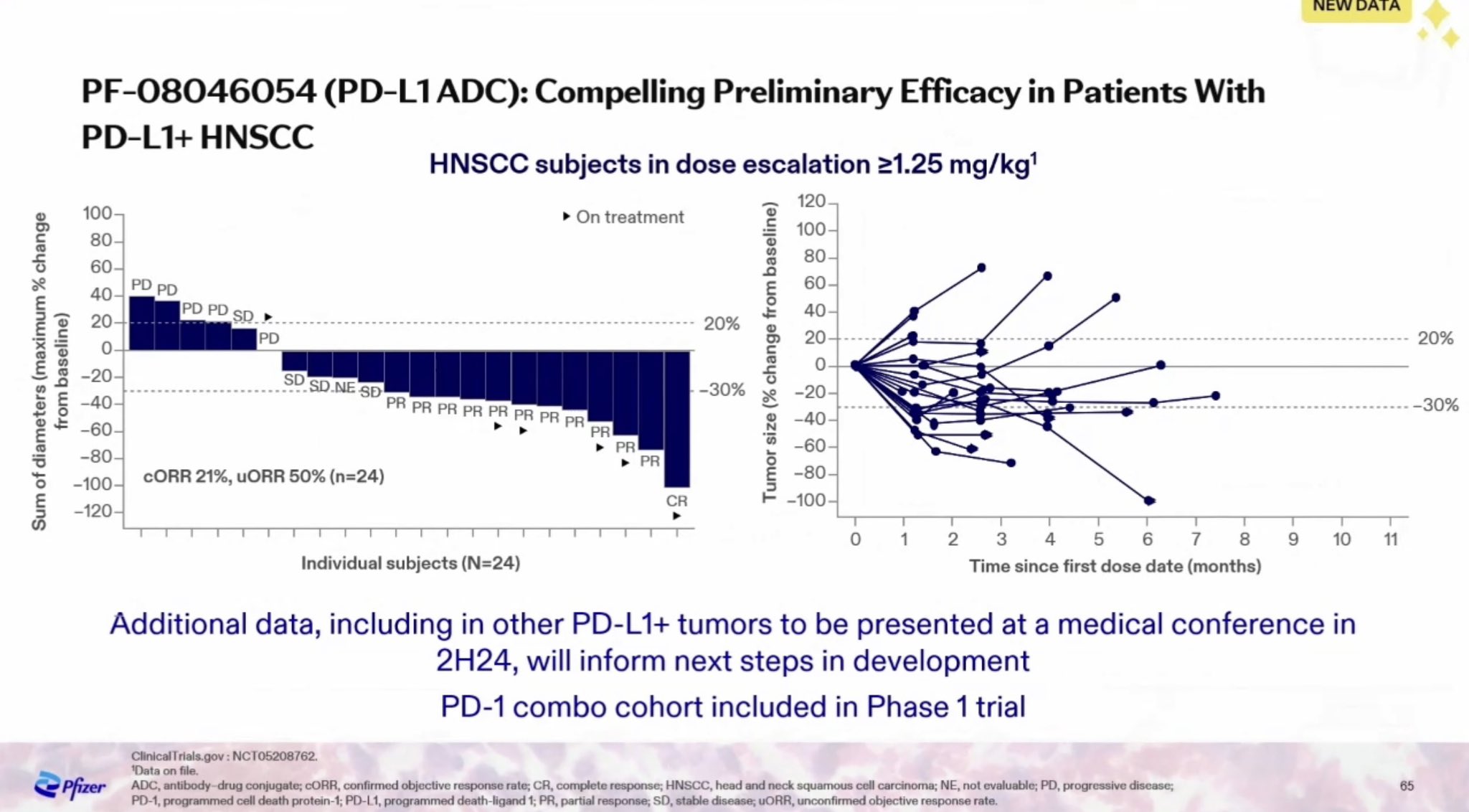
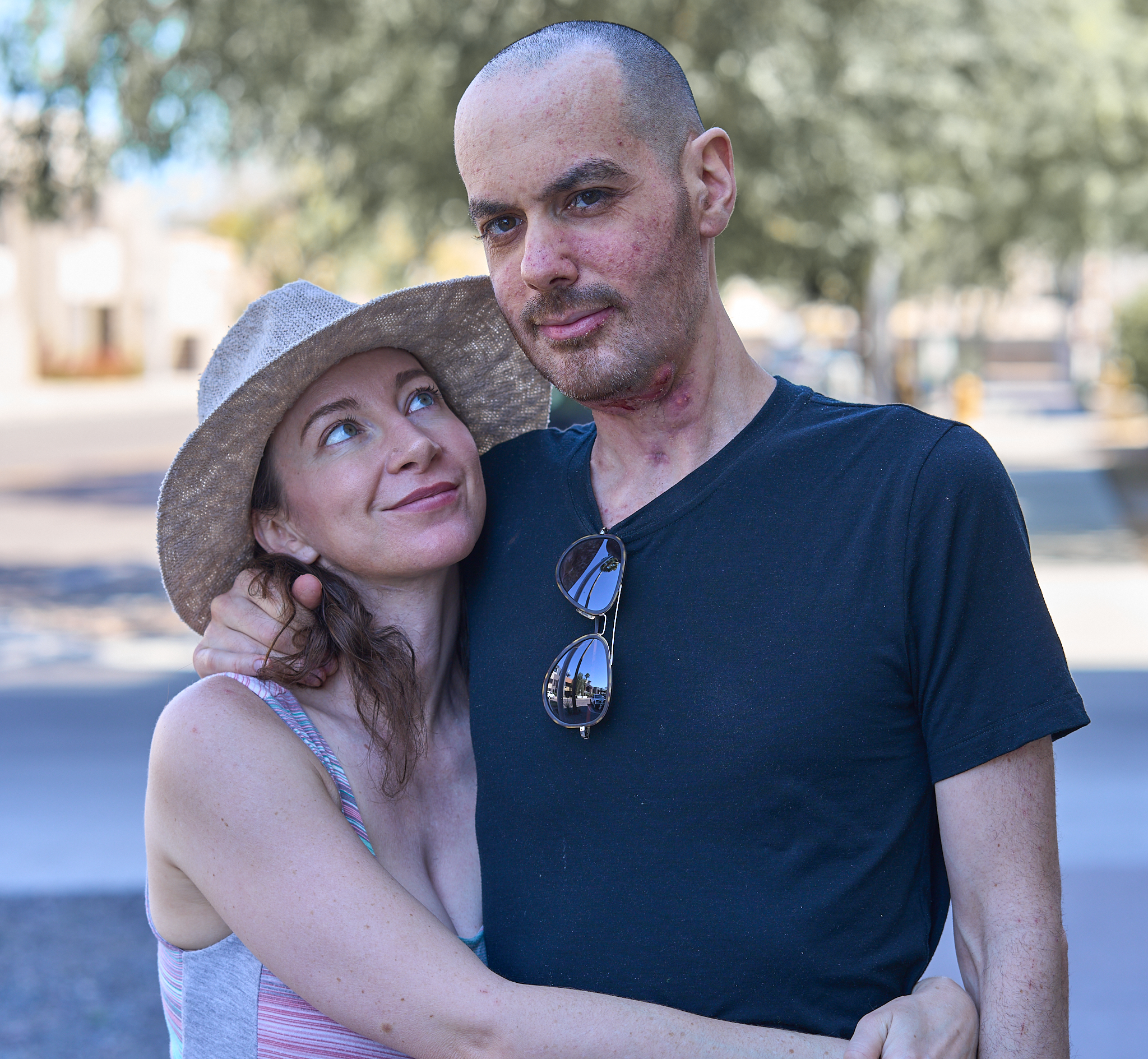

 The Story's Story