“Days of Awe: The clinical trial drug that might save my husband’s life” is Bess’s latest essay. It’s great!

“Days of Awe: The clinical trial drug that might save my husband’s life” is Bess’s latest essay. It’s great!
A lot of doctors have been reading the squamous cell carcinoma saga, and they keep asking for clinical detail about what’s going on. Although they don’t literally say: “The emotional love story is great and all, but we really want to know about disease progression and the clinical plan,” I get that that’s what they’re yearning for deep in their souls. It doesn’t make them unromantic—if anything, their commitment to medicine is equivalent to that of a great love, outlasting most actual relationships (if the physician divorce rate is to be believed).
On Wednesday I started a clinical trial of petosemtamab (MCLA-158) at the University of California-San Diego Medical Center. Early data is promising: 31 out of 43 patients in a previous trial saw their tumors either shrink or stay the same size.* Relative to the recurrent / metastatic squamous cell carcinoma of the head and neck (R / M HNSCC) baseline, that’s really good! Relative to more successful cancer treatments, having only 16 out of 43 patients see their tumors shrink is—well, the math is what it is. Still, petosemtamab is a plausible path forward, and a plausible path forward didn’t exist until recently.
The article about early data says: “Of the patients who responded, the median [duration of response] DOR was 6.0 months.” If I—or, rather, my tumors—respond to petosemtamab, I can expect the treatment to keep the tumors in check for about six months. It’s possible to get lucky and have the petosemtamab affect the tumors longer, and it’s obviously also possible that petosemtamab will stop working before six months, if it works at all. From what I’ve gathered, the long-term plan for oncologists and patients is to combine petosemtamab with immunotherapies like pembrolizumab, and possibly with chemotherapies, to see if petosemtamab generates synergistic responses. I’m getting 1100mg of petosemtamab every two weeks; 1100mg and 1500mg doses are being tested.
Bess and I have also been thinking about what to do if two-month or three-month CT scans show petosemtamab failing to contain the tumors: Magrolimab is a possible answer. RAPA-201 at Hackensack University Medical Center is another. There are other clinical study drugs at UCSD that may be conceivable routes forward. A fecal transplant from a pembrolizumab responder combined with additional pembrolizumab is also possible: this sounds ridiculous but it’s a real line of research, especially in Europe. A casual search shows articles like “The potential of fecal microbiota transplantation in oncology” and “Efficacy of Responder-derived Fecal Microbiota Transplant (R-FMT) and Pembrolizumab in Anti-PD-1 Refractory Patients with Advanced Melanoma.” Most research appears to be in melanoma thus far, but not all of it. Changing the tumor microenvironment might lead to significantly improved responses to treatments, which means that the unreliable markers clinicians currently use to guide treatment might not matter as much as the cellular environment around the tumor.
A patient who isn’t responding to a life-saving treatment like pembrolizumab might become someone who does, just by having the poop from a responder put in their colon via colonoscopy. Sign me up! This potential door was opened by Bess and Dr. Jamie Bering, a Mayo gastroenterologist who is currently wading through tons of red tape to both get the approval to perform the treatment on me, and to find a responder to “donate.” Both these things require FDA and IRB approval—a glacially slow process—and, two months in, neither have given the thumbs up. Right now, my default path is dying within twelve months and more likely eight (in July, I didn’t know how fast the cancer was moving or whether chemo would temporarily halt it, and I consider all the time since the massive May surgery to be “bonus time”), so there’s no real downside to experimenting.
As far as I can tell, petosemtamab shows some similarities to another antibody called BCA101, since both drugs target EGFR mutations. BCA101 wasn’t available when Bess and I were working to find the right clinical trials, so the petosemtamab trial is where I’m at. Bess is working on a monster essay about the clinical trial process, which is full of detail about the insanity of the process from the patient’s perspective. Though it seems odd to me, petosemtamab is presently only available at UCSD in the United States, despite there being a bunch of trial sites in Europe. There’s presumably a behind-the-scenes reason.
I don’t think I’ve stated clearly and in order what happened, and how it happened:
* Late summer 2022: I notice a sensitive area in the back left side of my tongue. I suspect I bit the tongue by accident and that it’s slow to heal. But the area doesn’t heal, and I eventually see a community ear, nose and throat (ENT) doctor named Jacob Ossoff at Valley ENT in Scottsdale. He orders a biopsy. The first attempt at biopsy is unsuccessful due to the excruciating pain from essentially trying to cut out a piece of my tongue with minimal numbing medication. Bess canvasses doctors online, and apparently “not much numbing medication” is standard of care and many other doctors think ENTs are sadists. Around Sept. 26 we get the biopsy news: squamous cell carcinoma. Ossoff and his partner refer me to Michael Hinni at the Mayo Clinic, who specializes in surgeries that include a “flap”—that is, taking a piece of muscle from another part of the body and implanting it into the tongue.
* Oct. 20, 2022: Dr. Hinni cuts out the carcinoma using a Co2 laser (very futuristic) and gets clean margins. No flap is necessary. The carcinoma is 9mm deep and displays “perineural invasion,” which means that it’s invaded nerves in the tongue. These count as “high-risk features” that argue for radiation. Given what’s happened since, I wish we’d done chemo along with the radiation, but at the time I was pleased to avoid chemo. I get to leave the hospital the day after surgery. Physician notes observe: “T2N0M0 oral tongue SCC with PNI, LVSI, and aggressive pattern of invasion status post left partial glossectomy and left modified radical neck dissection receiving adjuvant RT.”
* Dec. 1, 2022 to Jan. 13, 2023: Intensity Modulated Radiation Therapy (IMRT); 30 fractions; 6,000 cGy.
* April 26, 2023: PET scan is hot, and we hope it’s osteomyelitis. A fine needle biopsy and a core biopsy are both inconclusive. A surgical biopsy on May 11 reveals a cancer recurrence. Throughout May, I get steadily more severe headaches and steadily greater fatigue.
* May 22, 2023: Start pembrolizumab.
* May 25, 2023: Total glossectomy; Dr. Hinni leads the surgery and his colleague, Tom Nagle, makes the flap from muscle in my leg. This surgery was supposed to be a hemiglossectomy—losing half the tongue—but the tumor had sprinted across my tongue and invaded both lingual arteries (the main blood vessels supplying the tongue), so my entire tongue had to be removed. So I woke up with the “flap” instead of a tongue. It’s better than dying, although I wasn’t so sure at the time. I understood going in that the surgery plan was a plan, not a guarantee.
*July 21, 2023: A CT scan shows a recurrence in the neck and metastases in the lungs. The CT was supposed to be checking on post -operative bone healing, to see whether I could do any jaw-stretching exercises after the surgery. Bess and I had spent a lot of time in June and July trying to decide whether we should add chemo on top of pembrolizumab; oddly, no one has rigorously tested whether chemo is helpful for people with R / M HNSCC who get salvage surgery with clean margins. We know that chemo kills some HNSCC cells, even if it does not remove gross tumors. So, in theory, chemo may remove errant cancer cells. But we don’t have firm evidence. Some oncologists said we should do pembrolizumab only; some said chemo is a 50-50 option, or a reasonable option, and we elected for it. Life moved faster than us, however.
* July 24, 2023: Pembrolizumab/chemo: Paxitaxel and Carbolatin.
* August 14, 2023: Another pembrolizumab/chemo round.
* Sept. 5: I’m scheduled for another round here, but instead we have a six-week washout period for the petosemtamab trial. So I skip the pembro and chemo. I do okay, physically, until around Sept. 15, when headaches begin to assault me again, and fatigue increases.
The petosemtamab exclusion criteria include: “Any systemic anticancer therapy within 4 weeks or 5 half-lives whichever is longer of the first dose of study treatment. For cytotoxic agents that have major delayed toxicity ( e.g. mitomycin C,nitrosoureas), or anticancer immunotherapies, a washout period of 6 weeks is required.” So I thought I’d only have a four-week washout period, since carboplatin and paclitaxel have relatively short half lives. I did fairly well for four weeks after pembro/chemo, and then the headaches started up.
* September 27: First dose of petosemtamab. Ongoing headaches make daily life a challenge. Petosemtamab doesn’t appear to generate any side effects, but by Oct. 3 I get a gnarly rash on my chest, back, and face, with extensive itching on the face.
* There’s a copy of the presentation itself here.

For many people, taking a psychedelic like psilocybin is one of the most revelatory, profound, bizarre, beautiful, notable experiences of their lives. I’m one. It’s hard to enumerate all the things psychedelics have done with me, to me, and for me, but, given that a metastasizing squamous cell carcinoma is likely to end me, reducing my fear of death is a big one—albeit not a virtue I imagined would be germane so early in my life. I thought I’d have many more bike rides, walks with my wife, Bess, cups of coffee, and books to read—but treatment-refractory cancer means that I’ve been hit with the existential slap sooner than most. In another essay I testified about the powerful effects psychedelics have had on me:
Part of being ready to die comes, I think, from psychedelics; I wrote in “How do we evaluate our lives, at the end? What counts, what matters?”: “Bess and psychedelics taught me to love, and the importance of love, and yet too soon now I must give everything back.” There’s a longer, yet-to-be-written essay about how psychedelics cause me to see myself as a tiny instantiation of the vast, interconnected human whole, which will comfortingly go on even when I flicker out.
Michael Pollan’s book How to Change Your Mind is great and also covers a lot of existential territory. I’m looking for a copy to quote from and can’t find it, because I’ve given so many copies away. Pollan describes the way psychedelics are being used palliatively for end-of-life care, which is, strangely where I now find myself. Fortunately, I have a Kindle copy, and now I can authoritatively say that Pollan writes about how “researchers [have] been giving large doses of psilocybin—the active ingredient in magic mushrooms—to terminal cancer patients as a way to help them deal with their ‘existential distress’ at the approach of death.” Moreover, for many people, “psychedelics [help] to escape the prison of self.” I guess I can say that psychedelics prophylactically assuaged my fear of death, the way Zofran might be taken to prevent nausea.
Even before the present circumstances, from psychedelics I learned how not just to know but to deeply feel and internalize that we’re all part of the show for such a short time, and then it’s someone else’s turn, and that is okay. Until science radically expands healthy lives—which will be great, but it’s not clear whether we’re near to or far from that series of breakthroughs—we’re not here for long, and then we yield up the gift, whether willing with grace or unwillingly with fear.
In How To Change Your Mind, Pollan writes that he “interviewed at length more than a dozen people who had gone on guided psychedelic journeys” and found that, like me:
For many of [the people he interviewed about their psychedelic experiences], these were among the two or three most profound experiences of their lives, in several cases changing them in positive and lasting ways. To become more “open”—especially at this age, when the grooves of mental habit have been etched so deep as to seem inescapable—was an appealing prospect. And then there was the possibility, however remote, of having some kind of spiritual epiphany. Many of the people I’d interviewed had started out stone-cold materialists and atheists, no more spiritually developed than I, and yet several had had “mystical experiences” that left them with the unshakable conviction that there was something more to this world than we know—a “beyond” of some kind that transcended the material universe I presume to constitute the whole shebang. I thought often about one of the cancer patients I interviewed, an avowed atheist who had nevertheless found herself “bathed in God’s love.”
During my first psychedelic journey, I epiphanically understood visual art for the first time. Time and space seemed malleable. I saw life as a series of information problems or logic gates, and the stripping away of life’s surface to see what’s underneath helped me not fear the unknown. Logically, I understand that there’s no reason one should cause the other—that stripping the surface should help me not fear the unknown, including death—and yet that is how things unfolded for me. Feelings became more real to me. Like many people, my ego dissolved and allowed me to merge with all of life. Dying ceased being scary.
I emerged from that psychedelic with a great appreciation for love, which, along with progress and continuous improvement, is one of the great binding forces of the universe. But love can’t be indiscriminate: any person should be judicious in who they bind to. So many people don’t seem open to love, or to understand that it is an action verb and a skill that should be cultivated, and so their capacity for love shrivels like an unwatered plant. Maybe they’re not being giving enough, but being too giving and accepting of others, which puts a person at risk of scammers, parasites, and similar problems. Too much defensiveness can be just as problematic as too little.
Although I’m not in my 50s (like most of the Pollan interviewees; I’m also extraordinarily unlikely to ever reach that age), psychedelics dramatically increased my self-perceived openness. I don’t wholly know what I think about life after death or what is beyond material experience, but, regardless of what there is or isn’t, psychedelics unlocked a sense of human and technological sublime—and that sense of the sublime lets me see my own smallness in the world, and yet I also have seen that my contributions to the world are unique (like everybody’s, but that’s okay). The sublime revealed itself using what was already in my mind. Psychedelics seems to access my subconscious too, in ways I don’t expect, and psychedelics helped me see myself as lucky in numerous ways—including lucky to have experienced the psychedelic mind state itself, before the end. That sense of gratitude sustains me now, through the horrors of treatment and the loss of the tongue.
I don’t know whether many of the feelings and senses of revelation that psychedelics facilitate are true. They may not be. It may also be that the “truth” or falseness of the psychedelic mindset is irrelevant, like asking if purple sounds good. Psychedelics seem to temporarily short-circuit the logical mind in order to let the imaginative / feeling mind wholly take over, which can, I’d guess, be scary for some people, at least if they’re not being guided effectively, or if they’re not in a safe “set and setting,” to use the preferred psychedelic lingo. I come out of the psychedelic head space and feel utterly different—but am I, or is the feeling a lie? Does the question matter, or do the answers?
It could be that the psychedelic reinforces what’s already there. For example, I was interested in stoic philosophy and life before I took psychedelics, and the taking of psychedelics may simply have reinforced some of the notions I’d already absorbed from books—being ready to die, if that is one’s fate, seems like a stoic stance (particularly given Seneca’s socially meaningful auto-termination). Perhaps the psychedelics only slightly ratcheted up the underlying tendency.
I’ve spent most of my life being a thinker more than a feeler, but taking psychedelics balanced me out. It let me do both, and to reconcile apparent opposites. When I was young I think I worked to repress my emotions as a survival mechanism in a milieu that, to put it lightly, didn’t reward emotional expression. That isn’t uncommon, I suspect, since many people who experiment with psychedelics or therapy (and ideally both: psychedelics and MDMA appear to be incredible, underutilized therapeutic tools) find themselves better able to be emotionally expressive and better able to accept the love and affection of others. A lot of us are emotionally shriveled, for reasons I don’t want to speculate on here (despite my penchant for dubious speculation), and treatments that can help that are scarce. Therapy and support groups work for some people, but both work better with psychedelics. Once psychedelics make it through the FDA gauntlet, thanks to the work of the Multidisciplinary Association for Psychedelic Studies (MAPS), we’ll look back on non-psychedelic therapy as not terribly effective—it’ll be like comparing shamanism to medicine. Shamanism may be an interesting topic of study, but if there’s actually something wrong with you, you want the medicine.
Bess eavesdropped on some of the above paragraphs and then came up to me and gave me a hug and a squeeze and said: “I don’t want to do the world without you. You stay.” She gave me a hard slap on the ass and told me it’s decided. I hope she’s right. I’m trying hard to stay, however much psychedelics have made me accept death, without being suicidal or wanting to court death. If I had the skillset to work on treatments to radically extend life, I’d work on them, and I encourage others who have those skillsets to keep working. It may be that understanding and defeating aging and cancer are ultimately the same thing. I don’t have the expertise to evaluate those claims, but they seem plausible from the outside.
I read an interview with the movie director Francis Ford Coppola where he says:
I have no fear of death whatsoever. I used to do a little experiment for the fun of it in my elevator here, when I go down to the first floor. I can control the elevator so when I go in, I shut out the lights and I’m in total darkness. I think, when I get to the first floor that I’m going to be dead. As I go down, I think, I had such an interesting life, I got to be a movie director, have a wife and children, had so much fun with them, got to be in the wine business, go through everything, and as I’m lost in all these interesting thoughts, the door opens on the first floor and I’m not dead. I walk out.
Psychedelics are for me like Coppola’s elevator. Many people take a psychedelic and have the experience of dying while in the psychedelic head space, where it doesn’t bother them. During the psychedelic experience, time also seems to halt, and one hour turns into years.
I’m deliberately not describing the content of psychedelic trips: that content usually seems banal to outside observers, and words are notoriously for capturing the feelings generated in the psychedelic state. Hearing about other people’s psychedelic experiences is like hearing about other people’s vacations—rarely satisfying. The people who can make their vacations vivid find work as travel writers. The shaping of experience through the craft of language is hard, and for psychedelics inadequate.
The last two times I’ve taken psychedelics, I’ve set the same intention before starting: to accept death. But the psychedelic experience is unpredictable; sometimes you get what you get, not what you think you need, and the result is strange and peculiar and worth doing. Both trips were generative and beautiful, though if I learned anything about accepting death, it’s that I’ve probably already done it. Life is a strange trip. The thing I can’t accept, and that will likely trouble me until the last moments, is that I don’t want to abandon Bess, and that I am worried she will be lonely, and no psychedelic can stop that fear and pain. Psychedelics may help many things but can’t help all things. Though I’ve been talking to all of our friends and family about supporting Bess after I pass, I know that she’ll be desperately lonely in a way no psychedelic can ameliorate, and I’ll be dead and so unable to do anything to alleviate the existential pain she’ll likely carry with her always.
If you’ve gotten this far, consider the Go Fund Me that’s funding ongoing care.
Here is Tyler Cowen on why he doesn’t personally use psychedelics. Those reasons seem fine for him but are probably not generally applicable. As Cowen says, there are also probably diminishing returns to psychedelics, which is consistent with most things human do.

* Twitter has become bad for finding something to read; maybe Substack notes will be better? Here’s another take on the subject.
* “Houston, we have a solution: Houston was notorious for its sprawl. But it has seen a gentle density revolution since the 1990s. Allowing neighborhoods to opt out of citywide reforms was crucial in its transformation.” People are overwhelmingly moving to the places that build housing, and away from places like NYC and California, which aren’t.
* Related to the above: Tokyo is the big city that’s still affordable. How does Tokyo do it? By building lots of housing and setting zoning laws at the national level, which preempts NIMBYs. We could learn a lot from Tokyo, and we should be doing better.
* More but also sobering things about that California startup city. I still want to move to said city. The optimism in attempting to do something new and interesting is to be commended.
* “Beware the False Prophets of War.” Few of the people predicting defeat in Ukraine have reconciled with what’s happened in the last year and a half.
* Victories for the school-choice movement. Given the venue, it’s not surprising that the author can’t quite confront the “why now?” question.
* “MDMA-assisted therapy for moderate to severe PTSD: a randomized, placebo-controlled phase 3 trial.” It works—really well!
* How to talk about books you haven’t read. I naturally wanted to correct “Baskerville” to “William of Baskerville” or “Brother William,” but the point is not reading The Name of the Rose, right? One time I was with Bess at a drinks thing for prospective residents in Bess’s emergency medicine program. Bess and I were chatting with one of the candidates and he mentioned that he loved short stories. I asked which authors he likes. He was like, “Hemingway.” Great. “What’s your favorite Hemingway story?” He couldn’t name one! I thought I was making conversation, not trying to interrogate him. Eventually I was like, “I mean, ‘Big Two-Hearted River’ is one I admire,” and we moved on.
Maybe it was just nerves. I don’t know.
* “Whatever the United Auto Worker (UAW) Strike Outcome, Tesla Has Already Won.” (WSJ, $) The unionization in some northern states is insane; maybe it made sense at some point in the distant past, but it doesn’t any more. Meanwhile, the EU is afraid of Chinese car companies—for good reason. The legacy systems are breaking down. I saw a famous Robert Nozick quote on Twitter: “It is illuminating to consider why unions don’t start new businesses, and why workers don’t pool their resources to do so.” They also don’t seem to accept stock options—yet stock is part of the Tesla comp package, which aligns incentives.
* “Elon Musk’s business ties deserve more scrutiny: Across industries, executive after executive has chosen the PRC over free speech.” It’s interesting to see what he’ll criticize the U.S. for, versus what he’ll criticize China for.

“It Only Takes 200 Joules To Restart A Heart” is Bess’s latest essay, and it’s great.
Her essays on The Story’s Story are here.

An essay in honor of me appearing on Ryan Holiday’s The Daily Stoic podcast.
If Marcus Aurelius got cancer, I like to think he’d be reasonably stoic about it. Since my tongue cancer diagnosis, I’ve found myself reaching for his and other stoic philosophers’ work as a companion to adversity. You’ll see stoic ideas threaded through the essays my wife and I have been writing about my fatal cancer diagnosis: “Every day I’m trying to make a good and generative day, and I remind myself that there are many things I can’t control, but, as both Frankl and the Stoics emphasize, I can control my attitude.”
One way to see the virtues of this attitude is by process of elimination: What’s the alternative? Wallowing in bad days in which I accomplish and achieve nothing important? Getting angry about things I can’t control, and things that will remain the same whether I’m angry about them or not?* Lamenting that which cannot be, and will not be no matter how much I wish it so? Nothing will bring my tongue back. Bemoaning my fate will not avert it (though I’m also not passively accepting fate: as described below, I appear to be in a clinical trial for a novel, promising drug that targets squamous cell carcinoma of the tongue). The likelihood of another decade of life is not literally 0.0, but it’s under one percent and would require a series of near-miracles via clinical trials. Bess and I are pursuing that path; realistically, though we’re doing everything we can do, “everything” will almost certainly not be enough to achieve substantially longer life.
There’s a term for the people who get excessively upset about things beyond their control: children. Or emotionally immature adults (a subject I know too much about). I’m not saying I’m an emotionless robot or that you should be one; when I got the news on July 21 about the fatal recurrence and metastases, Bess and I spent the weekend crying and talking and crying some more. Premature death is bad and efforts to prevent it are good; stoicism is not lying down and accepting whatever happens. During that weekend we felt a lot. During the past two months, we’ve felt a lot—including gratitude that I’ve made it two months, since, on July 21, it wasn’t clear that I would. But there is a time for feeling things and a time for doing things (Aurelius tells us that “you have within you something stronger and more numinous than those agents of emotion which make you a mere puppet on their strings”), and I try to focus on doing the things that need to be done (like writing this essay), because most good days are composed of doing things. As long as I have the health and energy to act, I will act. Bess seems to have figured out how to get a lot of things done while feeling things strongly, which seems like playing on a hard-mode setting, but what she’s doing appears to be nonetheless effective for her. She says she’s always operating in feelings mode—and has described herself as “a large sack of feelings on legs”—which initially baffled me, but now I see is just an integral part of who she is and how she is in the world.
In some obvious ways, life changes because of a fatal diagnosis. Treatment and treatment options become high priorities. Planning for the far future, like 401(k) contributions, are dropped. Many of the micro social jockeying and status awareness (or anxiety) almost disappears. The time horizon shrinks. When we’re young, most interactions that could lead to friendships, business opportunities, etc., assume that there are decades in front of both parties, and that assumption doesn’t hold for me. What I do with the time granted to me has changed. But some things remain the same: whether there are a few months left or six decades left, the goal is still to win the individual day in ways that are still congruent with a full life.
I’m deliberately vague about what a “good day” is, and what “winning” the day looks like, because different people are going to have different definitions. For me, right now, the good days are the ones I get to spend with Bess, and the ones I—or more often both of us—spend writing (we are each other’s ideal readers). The bad days are ones when I let the feeling of obligation guide me, or when I let up on what I’ve called the “moratorium on banalities,” or ones when I give up and don’t try to be generative. Either fortunately or through the direction of will, I’ve had few days when I’ve given up and not tried to be generative. Some days, I’ve been legitimately too tired or sick to act: recovery after the May 25 surgery took a long time. Chemotherapy is brutal and debilitating. A medication called olanzapine inadvertently made me sleep for like 14 hours, and then left me feeling like a zombie for days. But those are the exceptions. Given my proclivities and obsessions and training, the good days most often entail finish an essay, which is what I’m doing now.
The bad days are, for many people, probably more similar to each other than the good days. They’re the days when nothing generative happens. They’re the days when we don’t use space-repetition software to memorize. They’re the days that disappear in the fog of distraction, or a haze of smoke from whatever someone might literally be smoking. Or the days that disappear in other kinds of mental hazes caused by ingestible substances, or doom scrolling, or media consumption. They’re the days you check Facebook or Instagram or email too much, and then watch a little TV, and then it’s back to the social media grind, and then it’s dinner time, and then you’re tired, and then it’s bedtime.
I’m not saying people shouldn’t take breaks or vacations. Both are good and have their place; Marcus Aurelius wrote: “No retreat offers someone more quiet and relaxation than that into his own mind, especially if he can dip into thoughts there which put him at immediate and complete ease.” When Bess reads this part, though, she chimes in: “Clearly Marcus Aurelius didn’t have generalized anxiety disorder. Who are these people whose own minds offer them quiet and relaxation? How did they get these minds? Where can I get one? Can I have one right now?” But I have a very long break in front of me, the eternal break, and so right now I’m not much searching for breaks from writing. For me, writing offers some of Aurelius’s quiet and relaxation in the mind.
Fundamentally, stoicism tells us to control what we can control, and accept that many things are beyond our control. The squamous cell carcinoma is largely beyond my control; with the October 20 surgery and the radiation in December and January, it seemed as defeated as the Gauls by the Romans. I wish I’d investigated the strange and painful patch on my tongue sooner, but I can’t turn back time and so try to thrust that issue from my mind.
I can control aspects of what I do next, but not what everyone else does next. One doctor at a clinical trial center, for example, decided that I’m not eligible for her trial because my cancer hasn’t progressed far enough on chemotherapy, and I needed to “fail” it before I was eligible. That seems like a misreading to me (Bess and I will have a lot more to say on this subject in our essay about clinical trials), but her view is out of my control, and, moreover, we’d gotten traction with another oncologist at another medical center who was and is gung-ho.
When Bess and I have been pursuing clinical trials, we’ve tried to master the process despite knowing that we may master the process and yet not achieve the desired outcomes. Finding the maximally good clinical trial is literally a life and death issue, which is concomitantly stressful. The present likely outcome is death: recurrent and/or metastatic head and neck squamous cell carcinoma (R/M HNSCC) is almost always fatal, and current treatment options are palliative. So the stakes are very high and only part of the process is under our control.
Some new treatments might do substantially better, which is welcomed in a world where a “successful” treatment might help 30% of patients live a few extra months. R/M HNSCC is refractory to treatment, and the version infesting me grows particularly fast and, from the start, has shown “perineural invasion”— it occupies nerves and uses them to spread. My getting into one of the better clinical trials depends on those other people, like oncologists, primary investigators, anonymous drug company reps, or site coordinators.
It’s been challenging to navigate the bureaucracy and system. In a slightly different world, the trial I appear to be in now may have closed or rejected me. The first time Bess and I inquired about the trial I’ll be starting, it was closed to new patients—a seeming defeat. Then, we got word that the trial happened to have new spots open a few days before my appointment to establish care at that hospital. If it was still closed to me, I’d continue to work the issue, but I’d also try to accept with as much equanimity as I can what is and what can’t be changed. Bess has had less success with equanimity, and, while her own struggle with acceptance manifests as her single-mindedly working towards getting me into the right trial, now the question has shifted from the active “will I get into one?” to the passive “will it work, once the drug is infused?” Without as much to do, Bess doesn’t conceal well how much she struggles with accepting my fate, and what that means for her own.
I’m writing this particular sentence Sept. 8; in one critical way, it’s not been a great day: CT scans show some tumor size increases, despite chemotherapy. One hopes that chemo will shrink the tumors. But what am I going to do differently with this news? Nothing. I’m going to keep going, and doing everything I can to facilitate the trial happening, and to spend time with Bess. I’m going to keep trying to string together as many positive days in a row as possible.
I can’t control that I can’t chew, swallow, or speak normally, but I can try to mitigate these deficits as best I can—I can get speech therapy in an attempt to maximize my intelligibility and verbal legibility. I can write down the phonemes that most trouble me and attempt to find alternate ways to vocalize them. I can’t chew, but I can use a Vitamix or other blenders to create slurries that I can swallow and taste. I can practice the swallowing techniques that minimize choking and improve my ability to swallow foods that are more whole than they’d otherwise be.
Few of us are maximizing the things that are within our control, including me. We can and should try to do better. We should try to be more resilient.
Stoicism may be a philosophy, but it came before the science/philosophy split, and before “philosophy” became a byword for ineffective talkers. “Wordcels,” in modern Internet meme parlance. Stoicism is about living and doing, to the greatest possible extent. I was reading the Albert Camus entry in The Stanford Encyclopedia of Philosophy and came across this, about Camus’s The Myth of Sisphyus:
What then is Camus’s reply to his question about whether or not to commit suicide? Full consciousness, avoiding false solutions such as religion, refusing to submit, and carrying on with vitality and intensity: these are Camus’s answers. This is how a life without ultimate meaning can be made worth living.
I’m doing my best to achieve full consciousness and to carry on with vitality and intensity, most notably via writing and love. I can taste coffee again, which helps achieve a life of vitality and intensity. When I was closest to saying no to life and yes to the void, it was because I couldn’t achieve full consciousness or carry on with any vitality or intensity. For me, there is some minimum viable mind-body state that I dipped below in May and June. To get above that minimum again is good.
I was talking my sister, Rachel, and said to her a variant of what you’ve been reading in this essay: “I’m trying to be stoic about it: doing everything I can, while accepting that much is outside my control.”
“You’re doing a hell of a job,” she replied, “I wish I had the mental resilience you exhibit.” (Okay, this was via text, and I’ve added the periods.) She went on: “I told you this when I saw you, but it inspires me.”
“The alternative—falling apart, screaming, crying, I don’t know—what’s the point?” I said. “It just makes what days I have worse. Life goal is to have as many strings of good days as possible. Even if I don’t have a lot of good days, I want still to max out those I get.” (I use periods in texts, which I’m told makes me overly serious, or sarcastic, or otherwise off-putting.)
“It all makes sense, but it’s not common to be rational in a situation like yours. It’s admirable.”
“I don’t even know if it’s rational per se, so much as me trying to live the best life I can, given the circumstances.”
What’s rational? I don’t fully know. Philosophers tie themselves in knots trying to define it; most of us think we know it when we see it, but otherwise go about our days and lives, trying to take small steps towards a much better world.**
Given what seems like the virtues of stoicism, why is it so hard to implement for so many people—myself included? I’m not sure and the question is a genuine one that I don’t have an answer to. There must be something evolutionarily adaptive about the vicissitudes of random emotions, for the non-stoic reactions and the non-stoic life to be so common. Or maybe it’s counter-adaptive, but vestigial. If the Stoics had known about the amygdala, nestled inside the oldest part of our lizard-brain, responsible for our fight or flight response and a great deal of our fear and decision making, could they have given us some practical guidance as to how to overcome that ancient programming in our minds?
I don’t think stoicism is everything. I can think of some apparent downsides:
* Does stoic philosophy discourage totally feeling one’s emotions? I think there can be a trade-off here; there obvious counterargument is that stoics encourage the feeling of one’s emotions, but not being ruled by them. Feel what you feel, but don’t let feelings rule actions. It’s a subtle but important distinction. “What if you feel you should act on your feelings?” is a tricky one, especially when, sometimes, not accepting a situation can lead to actually changing it (as Bess and I are trying to do with the clinical trial).
* Aurelius doesn’t have a sense of science, the scientific method, or progress. It’s unfair to expect him to, because those notions don’t really get kindled until the Renaissance, but the invention of science is one of the greatest human achievements ever. That achievement occurred after the main stoics were writing.
* Letting stoicism become a dogma instead of a set of adaptable ideas and practices. That’s a risk of almost set of ideas, however, whatever their label.
On July 21, when I got news of the new tumors in my neck and lungs, I didn’t know whether I had only weeks to live. Given the speed of recurrence between the end of radiation in January and the hot PET scan in April, and the speed of the second recurrence between the May 25 surgery and the July 21 CT scans, “weeks to live” was plausible. I rapidly prepared Bess, my family, and friends for my possible demise. The presence of tumors in the lungs scared Bess and me.
Chemo had already been scheduled for July 24, and I went through with it; initially, Bess and I had hoped that chemo would sterilize any cancer cells that remained after the May 25 surgery. Instead, chemo morphed into that palliative effort to buy more time. Have we actually bought that time, or has chemo taken our money and run faster than a crypto scammer? I’ll find out in December, when the first set of CT scans after the clinical trial drug has had time to work—or not. So far, chemo hasn’t shrunk most of the tumors, though it’s likely kept them from growing too rapidly.
Marcus Aurelius died at age 58, of what the notes in my copy of Meditations characterizes as a short final illness of “only a week or so—and the exact cause of his death is not known.” Aurelius’s last entry reads:
Mortal man, you have lived as a citizen in this great city. What matter if that life is five or fifty years? The laws of the city apply equally to all. So what is there to fear in your dismissal from the city? There is no tyrant or corrupt judge who dismisses you, but the very same nature that brought you in. It is like the officer who engaged a comic actor dismissing him from the stage. “But I have not played my five acts, only three.” “True, but in life three acts can be a whole play.”
Early death was more common in the ancient world than it is in the contemporary rich world, and Aurelius, given how much time he spent at war, must have been particularly familiar with it. Yet even today, we are all, sooner or later, dismissed from the city. Yet I disagree that it matters not whether one lives as a citizen in the great city that is life for five years or fifty: fifty is generally better. But I am not going to get all five acts and so have to be content with the acts I’ve had.
The life goal is the same whether there are 30 days or 30,000 ahead, though the means may be differ. All of us know, intellectually, that, given the present level of scientific progress, we’re going to die. Given that, are we living the life we should be living? If not, why not?
I wrote that “Stoic philosophy is a companion to adversity.” Life is about handling adversity, which all of us face, in many forms. In that sense, stoicism is a companion to life.
If you’ve gotten this far, consider the Go Fund Me that’s funding ongoing care.
And you might be interested in me appearing on The Daily Stoic podcast:
Ryan speaks with Jake Seliger about how his cancer diagnosis and having his tongue removed have changed his perspective on life, why he is prioritizing people much more highly than work now, how he is making every single minute count, what he is trying to communicate with his recent outpouring of creativity, accepting death, and more.
I listened to the podcast after I wrote most of this essay, and the podcast starts with Aurelius’s final meditation—a logical place to go, given the topic.
* Anger is almost always a bid for better treatment: used sparingly and appropriately it can work. All of us have seen the long-term results in people who overused anger and consequently become isolated by it. Sometimes business titans can get away with a lot of anger (Jobs, Musk), but most people can’t most of the time. A lot of us are aware of people who were raised by parents with anger problems. Children can’t defend themselves.
** Stolen from the tagline to Marginal Revolution.
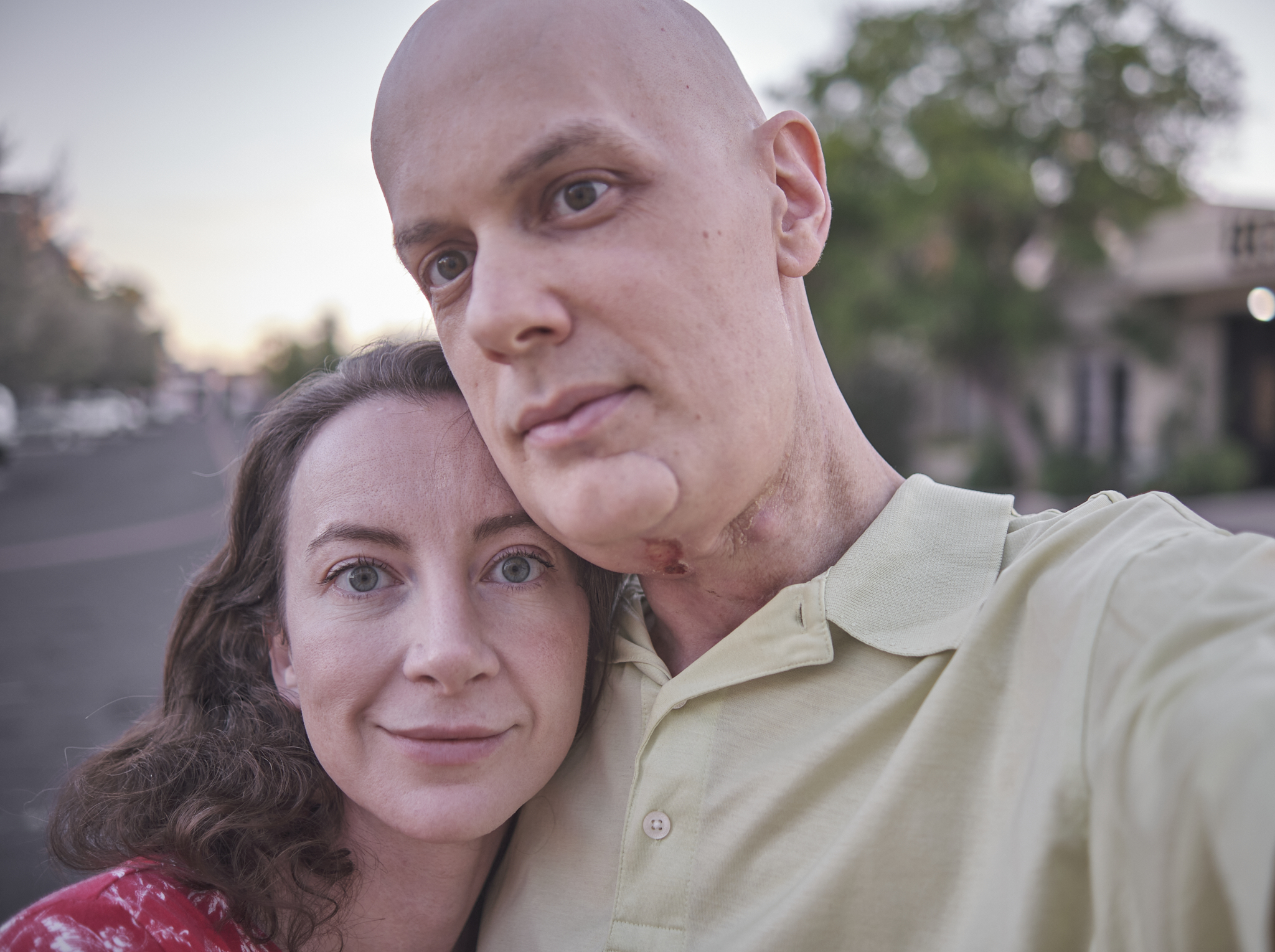
My wife, Bess, has a new essay on her Substack: “On Writing (or not): Part One: Bad habits and why the voice in my head needs to kindly shut up.” It’s great! I recommend subscribing. Dying of cancer is bad, but I love reading Bess’s work, and so her recent writing binge is a tiny, but real, consolation.
Her last piece on The Story’s Story is “Seeing as a doctor, seeing as a wife.”
* How awesome would a built-from-scratch city in the Bay Area be? Intensely walkable and bikeable and designed to feel like Paris or the West Village. Sign me up!
* “Is Ukrainian Victory Closer Than You Might Think?” Argues that Ukraine only has to get close enough for its weapons to reach east-west Russian rail and road supply lines for Ukraine to squeeze out Russian troops to the west.
* 2012 as a major turning point in the world. It’s like 1973.
* Antonio García Martínez (AGM) visits Israel and covers the Israeli protests. Much I disagree with but very interesting.
* On Buck Mason t-shirts, some of which are made in the U.S. I looked at them; for that price, I’d rather do something like Wool and Prince, since those have the advantage of smell resistance. Both companies should make slim-cut shirts.
* “How to ease the seemingly endless pain of prolonged grief.” Hard to read at times and yet highly relevant to present circumstances. :(
* Dating Roundup: This Is Why You’re Still Single. Step one is trying. The people who fail overwhelmingly don’t try. The default path may now be bad, but the path for people who try, and who develop resilience, may be very good.
* The fall of the college wage premium. Matches my anecdotal experiences and observations regarding the marginal college student.
* “Home insurers cut natural disasters from policies as climate risks grow.”
* “You’ve got a friend in me:” an emergency room story.
* “Our climate change debates are out of date.” On the growth of solar, wind, and batteries, and their tremendous fall in price. But, at the same time: “Earth had hottest three-month period on record, with unprecedented sea surface temperatures and much extreme weather.”
On May 25, I had a massive surgery that made me feel like I should be dead; the surgery left me without a tongue, without some teeth in the bottom of my jaw, and without important nerves in my neck. The surgery left my wife, Bess (we’d married the night of May 24, hours after learning that our surgeon had opened a slot on the 25th), in a panic. I was supposed to lose only half my tongue, but that is not what happened—this is Bess’s description, from her perspective:
The second, “salvage” surgery lasted twelve hours. Around hour ten, I started to wonder if Jake wasn’t ever getting off the table. When Dr. Hinni finally called me in to tell me they were able to remove all the cancer, I was elated. He got what surgeons call “clean margins.” Then Dr. Hinni explained that, because the cancer had grown in the short time between the April scans and May surgery, he’d had to remove Jake’s entire tongue, not just half—and with it, Jake’s ability to speak, to swallow, to taste—and the relief was replaced by horror. I blacked out for a moment. Jake wouldn’t want this. I walked into the hot night air and hyperventilated in the parking lot. We hadn’t even considered the possibility that Jake might lose his entire tongue. I wondered what I would have done if Dr. Hinni had called me with an update and asked me if they should move forward with the removal? I threw up in the parking lot and felt sick relief that they hadn’t.
In a panic, I called the one person I could think of: our speech pathologist, a woman named Jessica Gregor. She reassured me that, if the surgery hadn’t removed Jake’s entire voice box, he’d likely be able to speak after a fashion again. And swallow some liquids. She told me not to give up hope, and that the road would be long, but that not everything I feared and expected would come to pass. The surgical margins were free of disease. The cancer was gone. I needed to focus on that.
I spent the first night in the hospital sitting awake at Jake’s bedside, certain that he’d decide to die after learning the news. He didn’t want to live like this. It seemed entirely possible to me that he would just decide not to.
Going into the surgery, I knew that that Dr. Hinni (the ear, nose, and throat (ENT) surgeon leading the surgery) would do what he considered necessary to remove all cancerous tissue; he is one of the heroes of this saga, both for taking me as a patient in the first place and for squeezing me into his schedule on May 25. I was supposed to be operated on on June 7 or 8, though I doubt I would have made it that long. Even if I survived, how far would the cancer have spread in those two extra weeks?
Preliminary CT scans suggested that the cancer was, at most, a few months old, and those scans showed a tumor at the left base of my tongue, not the right. The approach to a unilateral one-sided mass is a hemiglossectomy—the removal of half the tongue—although Bess and I also knew that the cancer might affect my larynx, which meant a real chance I’d awaken without a voicebox.
My cancer moves unusually quickly: once Dr. Hinni performed a split mandibulotomy and flayed my neck open to assess the cancer, he found that the tumor had rapidly grown, leaving only 20 percent of the tongue tissue unaffected. Unfortunately, that affected 80 percent included both of the major tongue arteries. Without blood supply, tissue can’t live. So Dr. Hinni was forced to removed my entire tongue, or it would have become necrotic, dying and also killing the reconstructive “flap” made out of thigh tissue.
What follows is, as my brother Sam put it, a “devastating and horrific account, made even scarier because it’s real life.” But although the path was and is arduous, there have been real improvements: I can taste, I can swallow slurries, and there are moments of everyday life that pass for normal. I want to tell the truth as best I can, and that is going to include many dark moments. But read to the end: there is some light, and many people helped me along the way.
After she talked to Dr. Hinni and Jessica Gregor, Bess sought guidance online. She didn’t find much, and that’s why I’m writing this essay: to describe what the process of getting through the post-surgical moment is like, and to describe what the new reality is like on the other side. I’m dwelling on the challenges of the surgery and its aftermath to emphasize how hard the surgery is and how long recovery takes; I wasn’t prepared for either. But in seeking others’ experiences online, Bess wanted to know: What’s the range of responses like? What would not having a tongue be like—endurable, or unendurable? Would I yearn to end things, even if I technically survived? She found clinician opinions, but little from the people without tongues, yet It was the patient’s side she wanted to hear most.
No sane person wants their tongue removed, but having it out and not being able to swallow has particularly awful resonances for me: I’ve been into food and cooking since I was a teenager, and “going out to dinner” was the most common form of going out for Bess and me. “Having friends over for dinner” was our most common form of socializing. I chronically experimented with new food and gadgets in the kitchen. What can I make with fish sauce? Is the sous vide machine worth it? Can an air fryer replace the oven for many dishes? Will the capers in cauliflower piccata alienate our guests?
After the surgery, the questions changed. Would I meaningfully survive at all? In that first week after the surgery, I felt I should be dead. What would happen to me? Would any semblance of normal life be achievable? Was Jessica Gregor right, or was she exaggerating the probability of me doing well in order to help Bess cope in the moment? Bess is an ER doctor, and she’s therefore suspicious of comforting medical optimism, having admittedly doled out some excess optimism she didn’t quite believe while eliding the worst of the bad news. Bess knew Jessica wouldn’t lie outright, but, in the course of the squamous cell carcinoma takeover, both of us have heard a lot of optimistic projections that did not turn out. Jessica said I’d speak and swallow, but how much and how well?
In the days following the surgery, the prognosis seemed grim to both Bess and to me. The “flap” that had been installed in my mouth registered in my brain as an alien presence, even though it was constructed from my own tissue (it’s made of tissue taken from the quadricep muscle, fat, skin, and hair—the hair keeps growing even after being relocated to the oral cavity, though I don’t feel the hairs). Imagine feeling like there’s a frog, or wad of fabric, wedged into your mouth all the time; you’d instinctively want to expel it, right?
The flap is made deliberately enormous at first because it loses bulk over time, and the goal is to eventually have a tongue-shaped mass of flesh in the mouth. The flap isn’t innervated, and so it doesn’t move, but the bulk is necessary for future speech and swallowing. In retrospect, the many hours and microvascular surgery required to place the flap is itself based on the expectation that it will help a patient regain function, since the cosmetic effects are minor unless someone is peering inside your mouth.
The flap is made of me, but it’s inert and insensate. But when I woke up from surgery, and in the weeks after, it set off alarm bells of “wrong” inside my brain. In the early days, my feeling-brain wanted it out of my mouth, however much my thinking brain understood its purpose. Flap challenges were on top of many others: I was swollen from the surgery and felt like I should be dead, despite being technically alive. I was a “pain person,” barely surviving on a steady diet of oxycodone and Dilaudid and Oxycodone and Tylenol and antibiotics. My body was riddled with holes and tubes: two drainage tubes from my left leg. Two drainage tubes from one side of my neck. A feeding tube down my nose (it was stitched into my nose). An intravenous (IV) line piercing my skin (it was replaced a few days after the surgery by a peripherally inserted central catheter (PICC) line—and I was awake for the placement). A tracheostomy tube let me breathe, since the post operative swelling would have otherwise cut off my airway above the tube, suffocating me, but the trache was also prone to clogging with mucous (of which I produced more because of the surgical inflammation and thicker because of post-radiation changes).
A catheter emerged from the tip of the penis, which is as horrible a sensation as you might imagine, and the taking out of it worse than it merely being in place. The surgical wounds weren’t exactly holes, but they made me feel less whole and less human. Twenty-seven staples crawled up my left upper leg, holding the skin together from where they removed my flesh to create the flap. Screws in my jaw and stitches in the flap, the lower lip, the chin, and the neck held the skin of my face and neck together.
In the first 48 or 72 hours—I can’t remember now—a nurse had to come in every hour with a “doppler” device, which looked a bit like a metal pen, and put it in my mouth to check the flap’s blood supply. It’s not common, but some postoperative flaps die because the artery feeding them blood doesn’t take. The flap can sometimes be saved surgically, if the problem is detected early enough.
Despite my run of bad luck, the flap maintained its blood supply and the surgeons were also able to drain a subcutaneous saliva collection that threatened the flap. I didn’t think I could go through another surgery. I could barely move, but within a day or two I could get up, with the assistance of a nurse, who would wrap me with a giant belt to make sure I didn’t fall over and die. Walking was a key part of the recovery, and so I needed to walk as much as possible despite the pain, the fatigue, and the general misery. Bess and my dad spent a lot of time in that hospital room. Apart from the flap surviving, the other key success of that period was me being able to walk, and not falling. My internal monologue—the interior mental voice that has accompanied me for as long as I can remember—shut off. I don’t remember precisely when it restarted, but I think it was around the 12th day.
Night might have been the worst: I was dependent on opioids to sleep but simultaneously aware of the cost of opioids. Mental fog is one cost. Constipation is another. To leave the hospital, I needed to be able to conduct normal elimination activities. I’d vaguely heard the term “suppository” before but had never wished to know more, until I had to use one. Each day seemed to bring its own horrors. Eventually, I had to conduct an impromptu “self-disimpaction” of the bowels. Nurses are apparently not supposed to engage in this medical act, so a few days after the surgery I found myself alone in the bathroom at midnight, caught between “going” and “not going,” and unable to close up shop but also unable to eliminate. I worried about the strain rupturing something. Somehow I got through. At the end I panted and sweated like someone who’d barely survived an ultra-marathon. In retrospect, I realize that although tube feedings tend to cause diarrhea in most people, I was not most people and should have been on a more aggressive regimen of stool softeners and laxatives to counteract my sensitivity to the constipating opioids.
Given what the post-operative process was like, I think it understandable why I was down on living. Besides living itself, I wondered: how would I make a living? A life? With the present being so dark, I couldn’t anticipate the future being much better. I didn’t want to disappoint Bess, or my family, or my friends, but I also felt I’d be in the hospital forever. And what would happen when I got out? I would be helpless. The gains that slowly began to accrue, like walking an extra fifty feet, barely registered. Bess cheered me on and walked along side me with an enthusiasm normally reserved for someone on the last mile of the NYC marathon. I couldn’t understand her excitement: I shuffled like a zombie, my left leg weakened from the taking of muscle. Inability to sleep due to snot and mucus meant that I lived in a foggy haze. Any food I ingested came from a horrible Nestlé product called “Nutren® 2.0.” Sample ingredients, taken from the Nestlé Health Science (science?) Nutren® 2.0 website:
WATER, CORN SYRUP, CALCIUM-POTASSIUM, CASEINATE (FROM MILK), MEDIUM-CHAIN TRIGLYCERIDES, (FROM COCONUT AND PALM KERNEL OIL), MALTODEXTRIN, SUGAR, CANOLA OIL, SOY LECITHIN, CORN OIL
I don’t think humans are meant to survive on sugar (not just one kind, but two are listed there), soy, palm kernel oil, and canola oil. I’ve never heard anyone recommend to a convalescing patient that they will get better faster on, exclusively, McDonald’s and ice cream (though you wouldn’t know it from reading hospital menus). But the Nutren® 2.0 edible food-like substance was on hand and probably easier on my stomach than real food. The Nutren® 2.0 first got injected by naso-gastric tube, a sensation that felt like postnasal drip I was expected to eat; maybe six or seven days after the surgery, interventional radiology (IR) punctured a hole through my abdomen and into my stomach to place a peg tube. That was better than the nose tube, except for the process of having it placed.
After 12 days in the hospital, I got released. Dr. Nagle—who’d made the flap—said that I didn’t need to stay and that the flap seemed to have taken. The release should have been sweet, but I feared going home, and I feared doing something wrong. Bess and I had been trained by nurse educators in how to clean the trache tube, how to suction the trache tube, to clean the suction device, how to replace the band holding the trache tube, how to deal with trache-related breathing emergencies, how to use a misting machine to keep the trache tube moist at night, how to watch for infection, how to change the packing dressing in the incision under my chin that helped saliva drain from the mouth, and whatever other essential skills we needed for me to go home. Adding to the complexity, although I was able to keep my vocal chords, the trache provided air below the level of my vocal chords, so I was unable to speak while it was in. Communication had to be done with a text-to-speech app on my phone, the MacOS text-to-speech feature on my computer, frantic hand gestures, or by writing on some type of pad. I had to keep taking antibiotics twice a day. The chin incision packing had to be changed twice a day. Despite Bess’s medical training, she wasn’t used to the chronic care of a trache or PEG tube, so both of us faced a learning curve. There were other medications I needed, now forgotten but then essential. I had a disturbing rash on what nurses euphemistically called my “peri area.” Doing anything wrong could lead to painful fatality, or infection, or other complications.
The first days home, I got numerous phone calls from seemingly everyone employed by the Mayo Clinic, and some from people not, like specialty pharmacies. Bess answered the calls and quickly began to sound annoyed: “Do you realize that Jake had a total glossectomy and can’t speak?” Yes, Mayo was aware. Yes, they had a department largely devoted to removing not just patient’s tongues, but their larynx and vocal chords as well. No, no one at Mayo considered how to handle this situation, despite Mayo’s large ENT patient population.
I got released, yes, but without a good food pump. It turns out that there are two common food pumps: a Kangaroo Joey Pump, which sucks, and I don’t know how it stays on the market apart from, I guess, FDA approval, and a Moog Infinity Pump, which is better, but seemingly wasn’t available at the time I needed it. If Bess and I had been smarter, we would’ve bought an Infinity Pump; instead, we didn’t get one until two weeks after discharge. There’s a long, hellacious story about the struggle to get a reliable food pump I could use, and then something approximating real food (if you have to “eat” via peg tube, Functional Formularies’ Liquid Hope product is what you want, since it’s composed of recognizable ingredients that might offer some nutritional value), but this essay is already too long and the process of getting what I needed proved miserably bureaucratic and difficult. It wasn’t Mayo’s finest hour. Before October of 2022, when a first surgery removed the first SCC tumor, I weighed around 175 pounds, which is slender but not skeletal for a guy who is 6’2″. I exited the hospital in June 2023 after that massive surgery weighing about 144 lbs. Two weeks after struggling to get any calories at all, and struggling with a barrage of appointments, I weighed in the 134 to 137 lbs range—so low that I was flirting with “death by starvation” territory.
On that 12th day after the surgery, I also walked unaided for the first time. I walked as much as I could, every day. I walked slowly, but I walked. I didn’t really notice me getting a little bit stronger day by day, but I’m told by Bess that I did. The darkness stayed with me; without Bess, I think I would have succumbed to it. She told me that, if I made that decision, she would understand, but that she desperately wanted me to stay, and to promise her that I would tell her before taking the path into the final dark. That I am here to write this shows I did not. But I was close. So close. I didn’t feel like I’d ever get better.
After maybe four weeks of being home, I got a “passy-muir valve,” which allows air to exit a trache tube but no air to enter. That was in preparation for me getting the trache tube removed. It also allowed me to breathe through my nose and mouth, bringing air to my vocal chords, which let me speak, after a fashion, again. “Practice speaking” is more accurate than “speaking,” but I began trying. Friends and family were astonished. My larynx hadn’t been totally removed, and my vocal chords were cancer-free, which gave me some opportunity to say some words. A lot of phonemes escaped me, but some comprehensible words escaped me too. A week or two after I got the passy-muir valve, I got a “cap” to put over the trache; I wore it consistently during the day, but coughing attacks made it hard to wear at night. It facilitated somewhat better speech. By mid-July, about seven weeks after leaving the hospital, Dr. Nagle pulled the trache tube out and put a bandage over the site. I’m apparently a fast healer, despite prior radiation (six weeks of adjuvant IMRT radiation to the tongue and bilateral neck to a dose of 60 Gy over 30 fractions, from Dec. 1 2022 to Jan. 13 2023: it, along with the initial surgery, was supposed to be curative), because within a few days the wound had closed.
In late July, Jessica stopped by our apartment, and she coached me into swallowing some ice cream:
Swallowing without a tongue is tricky. Do it wrong and whatever you swallow goes into your lungs, causing coughing and possibly worse. But when someone without a tongue, who hasn’t swallowed for two months, learns how to swallow again, the moment of swallowing includes a sense that something is going into the lungs, even if nothing is.
There’s a trick to swallowing after your tongue has been taken: you have to tilt your head back, initiate the swallow, swallow strongly and deliberately without hesitation, and then do a throat-clearing sound and motion. That throat-clearing sound and motion forces air up and out of the lungs, closing the epiglottis in a move called a “glottal stop,” which effectively closes off the airway and makes the esophagus the only option for food to travel through. If there’s any material thing in the way, like recently swallowed food slurry, then the air will also help that substance be routed into the stomach, not the lungs.
With Jessica lovingly, but firmly, insisting that I get over myself and knock back a shot of melted ice cream like a freshman at their first frat party, I successfully swallowed the ice cream slurry: Van Leeuwen’s honeycomb flavor. We melted it and blended it with some extra milk, to thin it. And, although I was intensely skeptical that this would result in a meaningful sensory experience, I tasted it. I tasted the ice cream. I was shocked. Anatomically, yes, I understood there are taste buds at the back of the throat and esophagus. I just didn’t expect things to taste almost normal.
Since that night I’ve tried lots of things. Anything acidic, like lentil-soup slurry with too much lemon, doesn’t work well yet. Anything salty, same problem. But savory foods work and so do sweet ones. There’s a fun bakery and wine shop in Tempe called Tracy Dempsey Originals that we’ve been going to. Tracy Dempsey makes spectacular ice cream flavors—particularly her cardamom with fig jam. It turns out I can eat things like cookies and brownies if they’re blended with milk or coffee.
Rough, crumbly, and dry things aren’t any good, but anything that can be made into a smooth, pretty consistent slurry, I should be able to eat. Suddenly I’m talking with Bess about stopping by FnB (our favorite restaurant in Arizona, and conveniently down the street from us) to order food and blend it. We tried that too soon—I wasn’t ready yet—but will try again. That is the human struggle: to fail, to learn, and to try again. The universe is vast, cold, and indifferent, and it wants to eat you. But I’d like to eat, too. And being given the chance to do so again, when I thought I would go the rest of my life without flavor, is no small thing.
After that coaching session, Jessica did a “Fluoroscopic Swallow Study,” which essentially means taking an x-ray video of me swallowing, to see where the swallowed substance goes. The study confirmed that I’m not swallowing into my lungs, though, until I practiced swallowing for a month, every time I swallowed, I felt like I might be. The sensation that food is going down the airway, even when it’s not, made me wary of swallowing, but I kept doing it. You may sense a theme in this essay: things sucked, but I kept practicing even the things that sucked hard at the time, and, gradually, over time, things got a little better. If you’re facing a total glossectomy, get a speech-language pathologist (SLP). I don’t know how to evaluate the quality of SLPs, but they’ll make your recovery easier.
Since those first days of swallowing, I’ve managed to tolerate acids and salts better. Spicy is still hard, but even that is seeing some improvement. I over-indulged on sweets and am now building back up to savory foods. When I wrote the paragraphs quoted above, in August, I couldn’t yet deal with even pretty small food particles in blended slurries. Everything had to be blended smooth. Now I can handle some particulate matter, like imperfectly blended broccoli florets, or the rough parts of roasted sweet potatoes. I still have to blend, and I still wind up adding an absurd amount of water, but I can swallow. Despite taking months of intention and practice, I’m doing it. Love is a practice; so is swallowing, and walking, and writing, and many other things worth doing.
Unfortunately, the cancer was not gone forever and definitively returned on July 21, when CT scans showed around eight new, distinct tumors—four in the neck and four in the lungs. Those are almost certainly going to kill me; the slowness of the FDA in approving clinical trials and many other things means that the treatments that might be efficacious against recurrent / metastatic head and neck squamous cell carcinoma (R/M HNSCC) aren’t here.
The HNSCC hasn’t come from anywhere obvious; I have no known family history of cancer. I don’t smoke, drink heavily, or chew tobacco. The tumor was HPV negative. It seems merely unlucky.
I write this three and a half months after the surgery. Progress has been incremental but real. From walking in the hospital after the surgery to swallowing every day once I learned that I can, I’ve managed to slowly—agonizingly slowly—improve. I’ve pulled back slightly from the brink of the void, which I described in “On being ready to die, and yet also now being able to swallow slurries—including ice cream.” The ability to register taste seems to be improving, too. The darkness that clouded the hospital stay is still with me, but lessened somewhat by progress. Life, swallowing, tasting, and speaking are all worse than they were before the total glossectomy; to say otherwise would be both folly and untrue. To deny improvement would also be untrue, though. If you are contemplating the call of the void, you can always make that decision tomorrow, but that decision, made and executed today, cannot ever be unmade.
If you or someone you know have experienced the horror that is a total glossectomy, I don’t and can’t know whether your trajectory will be like mine. Each person is different, and how life will work varies based on age, initial condition when starting the surgical process, and other factors I can’t think of right now. I hope that, soon, personalized vaccines like Moderna’s mRNA-4157 become the standard-of-care for a first-line defense. If the FDA cared more about patients, and less about bad press from letting potentially deleterious treatments through the system, by now something like mRNA-4157 would probably be approved.
In this alternative world, after the first surgery in October 2022, my tumor would have been sent to Moderna for genetic sequencing. Moderna would sequence the tumor and then create a vaccine based on the tumor’s characteristics. The vaccine would’ve shipped to Mayo, and my doctor would have injected it into me three to six weeks after surgery. This strategy will likely dramatically reduce recurrences. One day, I hope for many fewer glossectomies than there are now. I missed that revolution and will probably die because of it. Hardly anyone cares about the patients dying for lack of effective treatments. I guess we’ll soon be dead and buried in the invisible graveyards, and not making noise to politicians.
Without Bess, I doubt I’d exist right now, and you’d not be reading this. For someone older—I don’t know exactly how old—a palliative approach may be better than the surgical one. The recovery would just be too hard. It’s difficult to write that, but life is full of difficulty, brutality, and unfairness. We like to pretend that we can live forever and that medicine can fix us, but, at current levels of science and technology, neither is necessarily true. We’re getting medical advances every day, despite FDA slowness and intransigence. Cancer, however, still maims and kills. I’ve been maimed, and soon I will die, but until then I can still write.
If you’ve gotten this far, consider the Go Fund Me that’s funding ongoing care.
And if you’re living with the aftermath of a total glossectomy, please leave a comment or send an email, particularly if there’s anything I’ve omitted or forgotten to discuss. I’m really writing this for search engines; Bess turned to them and, as I said above, found too little about what life is like after the total glossectomy, from the perspective of the person without the tongue. Perhaps most people who have total glossectomies don’t live long, or long enough to write about it. I have some extra time and am compelled to write, so I thought I’d speak to my experience, and maybe help others in a similar situation. The path is very hard, but, for many people, there is a meaningful life at the far end.

I’ve told Bess that, given the current circumstances, my job is easier than hers: all I have to do is die. She has the hard part; she has to live and figure out how to go on. Death’s severing of connections feels particularly acute for the people who are most attached to other people, and especially the person most wired into the person dying. Bess is most wired into me, and she’s also more anxious than me, such that I’ve been comforting her. Maybe this seems odd, for the person dying of cancer to be comforting the one who isn’t, but it works for us.
Last night, while I was sitting on the couch reading Paved Paradise: How Parking Explains the World,* Bess was holding my leg, weeping as a wave of anticipatory grief crested on her in the sudden, unanticipated ways it often seems to, and I observed that I’m facing my end with more equanimity than she is. She enthusiastically agreed, and at least I got her to laugh for a moment and abort the crying (though she’s welcome to cry as much and as often as she needs to).
What had started these tears was a realization that, if Bess has a hard time writing an essay after I’m gone, I won’t be here to help her organize it—a truth that, I keep reminding her, isn’t a good excuse for her not giving me pages now. But it’s not just editing that I won’t be here to do. A bunch of mostly overlapping worries haunt me, because I feel like Bess and I have gone long past “complementary skills” (though we do have those) and into “utter enmeshment that can only be broken with great damage.” In life I try not to damage Bess, and yet in death there’s little choice. I’m trying to find ways to preemptively comfort her and support her now, while I still can, so that she can call upon my love to help her through the coming darkness—but I still can’t choose not to die of cancer.
Over time, some couples grow into each other such that their minds partially merge; I read a spiritual dimension into this, but you don’t have to. “Grow into each other” is doing a lot of work in that sentence: words or phrases like “merging,” “conjoined minds,” “interdependence,” “co-dependence” (though without its usual negative or pathologic connotation), or, my favorite, “connected by an eternal golden braid” work too. Even before Neuralink allows brain-to-computer and eventual brain-to-brain interfaces, Bess and I know each other’s minds without a physical cable running between us, and so I’m worried that the impending loss of me will be like the loss of part of Bess’s brain. For most people, the loss of a spouse or partner is devastating.** For Bess, I fear the loss will be worse than average, and her recovery will be harder.
To be sure, I think recovery will happen for Bess, and that she’ll find love again (as I’ve instructed her to do, for her own sake), but I worry about complicated or prolonged grief. There’s an intellectual dimension of loss, too, because Bess so often thinks by talking to me. Some people think by writing, or walking, or sitting still and concentrating. Bess’s preferred thinking method seems to be chatter. She has friends and family she chatters with, but I’m her primary target. She’s almost physically hurt when I can’t listen to her ideas right then and there, in the moment. So I try to be open to listening as much as possible, though sometimes work or the need to execute my own writing gets in the way. Soon, it’ll be death that gets in the way.
These are some of the things that worry me:
* Writing and editing. I’ve been Bess’s writing coach and editor, particularly as of late. When Bess is writing, I’ve been telling her that, rather than getting in her own way, she can just write what she’s thinking. Whatever she’s thinking, she can write that down. Admittedly I find this statement and advice a little peculiar, because what does she write about if not what she’s thinking? Is she supposed to write what she isn’t thinking? That’d be a neat trick and if she can write what she isn’t thinking, I’d encourage it purely from a novelty perspective. I confirm that she can in fact write what she thinks, and that people will be interested in what she’s writing—or they won’t. No one is interested in everything. No piece of writing appeals to everyone. But Bess’s potential capabilities are enormous, and, if she can get out of her own way enough to execute, she’ll do great. A lot of what I do regarding encouragement is simply encouraging her to get out of her own way. Her process is like the bike-fall meme:

My job is to get her to stop stopping herself by putting that stick between her spokes. Who will do that job when I’m gone? Sasha Chapin is one answer, and he’s not the only editor out there. But the solution when I’m gone probably won’t be sitting on the couch with her or going on walks with her.
* Memory. I seem to remember things more, or better, or at least differently than Bess. Names of people or of places. Things we’ve done. Her memory is partially stored inside me. My memory of her is stored inside me, and by that I mean that I see her as others can’t, because of our long shared history:
But when Jake looks at me, he sees me at 25, showing up to our first date in a grey mini-dress, black boots and red lipstick. He sees me at 29 in a striped bra and panty set in our 35th story Seattle hotel room, pressing me against the cold glass. And he also sees me as I am now. I’m all these ages at once, as he is to me. Love isn’t just blind to ugliness, but to decay. Look at two 80-year-olds gazing at each other like teenagers and you’ll know what I mean. When I lose Jake, I’ll lose someone ever seeing me throughout all my ages again. I’ve said that parts of me will die with him, and I don’t just mean parts of my heart and the parts of my personality that act in relation to his. I mean entire eras of my life, all the views he was privy to, and therefore, much of my youth, goes as well. No one—even if I find love again one day, as Jake has urged me to do—will ever look at me at see me at 32, skinny dipping on a trip to Gunnison nude beach in New Jersey with a group of friends, laughing at how cold the water is under the sun of a hot summer day.
There are trivial things, too. The other night, we were watching the TV show Invasion (which is pretty good so far, and there should be more stories about alien contact, and more stories with hardware programmers as heroes), and there’s a character named Caspar. Almost all of you will probably have no idea what I’m talking about when I say that I joked to Bess that Kaspar Juul should be covering the alien invasion, with help from his sidekick Katrine Fønsmark. Juul and Fønsmark are characters on the Danish TV political show Borgen, which isn’t bad, but sadly the mothership never lands and no massive antenna dishes play major roles in the show. No one does any heroic programming. Still, it’s a show we watched a decade ago, and we’ve had so much time to build up this dense knowledge of each other.
* Ergonomics. Bess has had chronic problems with typing, because her arms hurt her. Looking closely at her, I see that she tends to contort herself like a circus performer or perch like a buzzard when she’s trying to write. She has a sit-stand desk but rarely stands. When she does stand (usually at my urging), she stands like a human flamingo, perched on her left leg with her right leg bent at the knee, which is pointing to the right, with the sole of her foot pressing against her upper inner left thigh. I believe, in yoga, this is called “tree pose.” Paula Tursi, our favorite yoga teacher from New York City, would be proud, but I don’t see how tree pose can possibly be ergonomic. To Bess’s credit, sometimes she switches legs. I encourage something more stable, but who will tell her to stand, and then tell her not to stand like a flamingo, when I’m gone?
Now that she’s been writing a lot, she’s been struggling again. So I helped her get and set up a Kinesis split keyboard. The split keyboard reveals some of her bad typing habits, like never typing with the pinky finger on her left hand. Now she sits with her elbows at a slightly greater than 90 degree angle. She’s got an external monitor. Adding these little things up seems to ameliorate many of her problems. She’s thrilled to be introduced to these tiny changes that seem second-nature to me. She says she’d’ve never discovered them on her own. She would have kept on suffering, like one of her patients too stubborn to see a doctor. I’m concerned about her extensor tendons. No one else will be, she says sadly, inciting more tears.
What other things do I know that Bess will need to know one day, and that I won’t be able to say to her, or help her with?
* Cooking. I do more cooking, even now, and Bess is too prone to forgetting to eat. She’ll not eat all day and then let pasta be dinner. To be sure, Bess can and does cook—she prefers to make elaborate, amazing meals, of the sort I can’t fully appreciate any more because I can’t chew, but she tends to ignore a lot of the day-to-day cooking that I’ve specialized in. She jokes that she brags about my cooking to her colleagues, whenever she hears someone complain about a spouse who doesn’t do their share of the housework.
“I know what you mean,” she’ll say. “Sometimes I get home after a shift and it takes Jake an extra 15 minutes to get dinner on the table.” Then she’ll sigh exaggeratedly. Another way our minds have merged: we both enjoy entertaining ourselves by sometimes inciting very minor agitation in others.
Since losing my tongue and ability to eat solid foods, I’ve evolved into making a lot of Instant Pot slow-cooker meals. The Indian slow-cooker cookbooks I’ve found are very useful.
When I was in the hospital recovering from the massive May 25 surgery, and then, when I first got home and could barely function, Bess later admitted that she barely ate anything because I wasn’t able to eat. Even though she knew I didn’t begrudge her, she didn’t want to eat in front of me, flaunting her ability to do a basic human action that I’d lost. And, besides, she didn’t have an appetite. She seemed to melt right along with me, losing 20 lbs over in a month. Only when I began cooking for her, and to blend my own food in a Vitamix, did she began eating. She said she felt like I was giving her permission to eat in front of me. And with me. I could only eat via tube.
And then there are beans. Bess was never a bean person: she didn’t love the smell or texture of canned beans, and making beans on the stove is too much a hassle and time commitment. She’s prone to forgetting whether gas stoves are on, though the excellent induction stovetop we’re using now reduces that risk. Plus, the induction stove doesn’t produce noxious indoor fumes like archaic gas stoves. On our first date, we were going to a movie, and she nervously confessed that she couldn’t remember if she’d left the stove on. Later, she told me that she struggled between two warring mental states: concern that I’d think she was crazy to think that she thought she was going to burn her apartment down, and concern that she actually might burn her apartment. In the end, lack of renters insurance motivated her confession. We turned around, missed the showing we’d planned, and checked her stove (it was off). But that was okay. Being a little scattered is one of her numerous charms. I’m getting off topic, because this paragraph started off talking about beans, but the point is that she didn’t love beans until I started buying from Rancho Gordo, which specializes in quality and heirloom beans (they also sell an amazing red popping corn); I was so enthusiastic that I signed up for their quarterly bean club. A friend calls me “bean man.” The Instant Pot cooks them fast. And they taste and smell better. Maybe they’re more nutritious, too, and they don’t have whatever chemicals are used to seal a can’s lining.
* Outdoor drying. The other day, Bess washed a new blanket. I suggested she leave it on the deck, since we live in Arizona and leaving wet garments or blankets outside will leave them rapidly dry, especially in the summer. She wanted to use the dryer instead and had to run it through three times, delaying her ability to go to bed. At the end she said she should’ve left it outside.
* Lifting heavy objects or opening jars: This is a standard male-female issue: I’m considerably better and more able to lift heavy objects and open jars, but, instead of asking for help, Bess often struggles and sweats then stares at me with wide-eyed wonderment when I casually pop open the jar. Sometimes I will please her by telling her that she loosened it for me. Mostly, I just like the way she looks at me as if I’ve returned to the cave fire dragging a mastodon behind me and she’s about to show her gratitude when we get under the deerskins.
* Gadget discovery: The Instant Pot, induction stovetop, and Kinesis keyboard have already been mentioned. I’d be remiss to miss the Zojirushi rice cooker, though. Perfect rice or lentils, every time, with no effort. One and a half cups water to one cup brown rice. One a quarter cups water to one cup green or black caviar lentils. It’s great. She’d have missed the sit-stand desk revolution if I hadn’t nudged her towards a sit-stand desk—which she doesn’t use in standing mode as much as she ought to, but I bet that will change.
* Sleeping at night. Bess is a bad sleeper and she sleeps better when she’s next to me. Five or six years ago, I discovered that reading to her in bed helps her fall asleep. I read her the entirety of The Deptford Trilogy and The Lord of the Rings, as well as multiple Elmore Leonard books (Get Shorty is the best one) and Lonesome Dove. I did all the voices, too, which sometimes made her laugh too hard to sleep. I can’t read Bess to sleep effectively anymore, but she says that being beside me helps her sleep. Even if she seems wide awake and busy near bedtime, if I say I’m going to bed, she’ll hop up and be under the covers, awaiting a cuddle before I’ve managed to get my shirt off. She likes sleeping next to me so much so that she resists sleeping in the office bed, despite me making more noise snoring than I ought to. She insists that Bose Sleep Buds completely solve this problem.***
* Love and affection. Bess thrives on both and I yield them up to her. Sometimes, if I want to let her feel like she’s had a little struggle, I let her think she’s forced me to yield them up, which gives her a sense of accomplishment.
* Geography. Thanks to the advent of universal GPS—a tremendous scientific and engineering triumph that almost no one steps back to appreciate today—geography sense isn’t as important as it once was, but Bess’s sense of direction is peculiar, and one might say close to altogether absent. Even with the phone speaking directions, she’s prone to missing turns or not knowing where to walk. I once asked her if she likes not having anybody else in the car because she’s just come to absolute peace with getting lost all the time. She didn’t even hesitate when she said yes. She calls me her GPS. She will never know which way is north.
* Medical questions. She’s done four years of med school and three years of residency and a decade of being an emergency medicine attending physician, but she’ll often ask me medical questions. Should she use the liquid bandage? Does this thing look serious to me? Do you think (insert symptom here) means I’m getting sick? My medical education consists of listening to her do questions for medical exams, listening to her stories and our friends’ stories, and sneaking into some drug rep dinners by pretending to be a doctor (the one about TPA, a stroke medication, is particularly vivid because Bess claims I raised my hand at the wrong time). She’s performed a thoracotomy—a rare, Hail-Mary procedure in which the doctor cuts open a person’s chest and attempts to use their hands to beat the heart:
With a fifteen blade, I slice deeply from his nipple all the way down to the bed. I grab the scissors, cut through his intercostal muscles, take the rib-spreaders, put them between his ribs, and crack his chest open. There’s a huge gush of blood. And then a moment of stillness, like the second after a lightning strike. Even his blood smells metallic, like ozone. I reach into his chest and put my hands around his still heart and begin pumping it for him, feeling for damage.
Then I slip my fingers down the length of his aorta and it is so riddled with holes that the frayed pieces disintegrate in my hands.
She treats pneumothoraxes and the obstructive shock they cause, also by cutting through the patient’s chest wall to puncture the patient’s pleural space to insert a chest tube. With all that medical experience, she has not internalized that I don’t know if she’s getting sick. I never know. I tell her that and she still wants my opinion. Despite her wealth of medical knowledge and my paucity of it, I’m still her second opinion about many medical issues.
* Book judgment. Bess has shaken off most of her bad MFA interests and habits, but she’s still prone to buying books that have no plot, or are political statements rather than novels, or otherwise aren’t any fun. Bad books affect her writing negatively; good books, positively. I’ve told her that, the next time a book from the McSweeney’s book-of-the-month club arrives, she’s to chuck it and read the first Elmore Leonard novel she can get her hands on.
* General comfort. Bess has said: “The only person who can comfort me over everything happening around your cancer is the person it’s happening to.” Right now, I can (and do) comfort Bess. She nods her head when I ask her if she feels that I’m doing a good job. After I’m gone, friends and family will try to comfort her. I’ve told her as much, and she replies that they won’t be me, and that the only person who can comfort her then will be a person who is gone. I hope that the many ways I’m showing her love now, and trying to prepare her now, will be enough. I’ve been making videos for her, so that when she needs my comfort, she can pull those videos up on her phone, and have a sense memory of me holding her and petting her head while I tell her it will be okay. It will be okay. If there turns out to be any way of reaching her, she knows I’ll do it. She has said she’ll look for me in dreams, since she’s a lucid dreamer.
* Eye masks, dishwashers, and ear plugs: This group is unashamedly a grab bag; Bess didn’t use eye masks for sleep until she saw me using them. Eye masks turn any room into a dark room. Dishwashers reduce the time wasted on dishes, but Bess’s parents apparently don’t believe in efficiency and so they’d never used one, and neither did Bess until she saw me using one. Ear plugs make noisy bars and restaurants tolerable. All three are quality-of-life improvements.
Some of these are minor and merely illustrative, to the point where the reader may be rolling his eyes; suggesting Bess leave a blanket outdoors isn’t on par with editing her work or functioning as her memory. Small actions add up. Small inconveniences and annoyances can become large problems, such as the wrong keyboard turning into a tendonitis and turning into her not being able to write or work. Fun fact: the most important part of a doctor’s life and career hasn’t, for years, been patient care—it’s actually keeping the electronic medical records (EMR) up to date. Kill a couple patients? Frowned upon, but also, eh, it happens. Screw up the computerized record keeping that allows hospitals to bill insurance? That’s a crisis and fireable offense. I exaggerate only slightly.
Not everything I show Bess takes. She wisely eschewed the Vibram Five Fingers (“toe shoes”) when I went through a period of misplaced enthusiasm. She did show me how to pick up a pen from the ground with my toes, a trick I could execute in those shoes, to the horror of students. She likes to travel and wisely ignored my arguments for travel being overrated. There are probably others that I can’t think of right now, but the overall trend is for us to show and share things to one another and for those things to be incorporated into and enhance our lives. When I’m gone that process will break down, and, with it, I worry that Bess will live a worse life, not just from loneliness but from not continually being exposed to the process of discovery that I automatically undertake.
The physical stuff matters, sure—the keyboards or the induction stove—but the loss of processing power and future growth are worse. She helps me grow and I help her. My own growth trajectory is going to be shut off by death, but hers will, I hope, continue. Without me, I worry that growth trajectory will be truncated.
This essay is nominally about Bess, but it’s really about how to have and grow a relationship. How to have and grow a life. No, come to think of it, not one life—two.
* What? Even while dying, I’m allowed to have some intellectual and policy-wonk inclinations.
** There are obviously exceptions, like the people planning to divorce anyway, or the people who stay together out of convenience or habit or lethargy or any number of other sad, if common and practical reasons.
*** Bess says that the keys to saving a (sleeping) relationship in the bedroom takes two things: Separate blankets and some kind of quality personalized white-noise-maker.

 The Story's Story